3,500 products added recently
Page 26 - 2nd Grade Worksheets
Provide your second graders with worksheets that promote growth in literacy, numeracy, and critical thinking. These resources align with curriculum standards and offer engaging activities. Incorporate them to strengthen understanding and encourage enthusiasm for learning.
Reading Comprehension Fiction Set 2 Sample - Chasing Pheasants (Word)
ELA, Reading, Reading Comprehension, Common Core, ESL, Language Development, Creative Writing, Writing, Resources for Teachers, Grade 2, 3, Worksheets & Printables, Worksheets, Writing Prompts, Assessments, Teacher Tools, Tests, Quizzes and Tests
Reading Comprehension Passages Fiction Set 2 Sample Overview Fascinating reading comprehension passages, each with an array of activities included. Stories are written for the modern classroom and topics are designed to promote enthusiasm from each student. Each lesson contains a mixed questions section to check understanding, a vocabulary or spelling activity to help remember key language introduced, and a writing exercise. Full answer keys are provided. For a more detailed overview, check the section under the links at the bottom of this description. Passages Include 9.Chasing Pheasants: Tony and his father have a great idea...or so they think! Word Version This is the Word editable version. This download is available in GOOGLE Docs, GOOGLE Forms, GOOGLE Slides. PDF, PPT, WORD. FULL CATALOG OF DOWNLOAD LINKS HERE Grade 2/3 Links Fiction Set 1 - Nature Google Docs Google Forms Google Slides PDF PPT Word Guided Reading Materials Fiction Set 2 - Animals Google Docs Google Forms Google Slides PDF PPT Word Guided Reading Materials Fiction Set 3 - Food Google Docs Google Forms Google Slides PDF PPT Word Guided Reading Materials Fiction Set 4 - School Google Docs Google Forms Google Slides PDF PPT Word Guided Reading Materials Fiction Set 5 - Friends Google Docs Google Forms Google Slides PDF PPT Word Guided Reading Materials Fiction Set 6 - Family Google Docs Google Forms Google Slides PDF PPT Word Guided Reading Materials Fiction Set 7 - Sports Google Docs Google Forms Google Slides PDF PPT Word Guided Reading Materials Nonfiction Set 1 - Technology Google Docs Google Forms Google Slides PDF PPT Word Guided Reading Materials Nonfiction Set 2 - Nutrition Google Docs Google Forms Google Slides PDF PPT Word Guided Reading Materials Nonfiction Set 3 - Animals Google Docs Google Forms Google Slides PDF PPT Word Guided Reading Materials Reading Passages Overview Each passage is especially written for Grade 2-3 students, including key vocabulary required for this age group. Topics are varied and are accompanied by colorful graphics. Topics are meant to educate, yet entertain the modern student. These passages are perfect for the modern classroom. Whereas textbooks can become outdated in no time, any changes to technology or the world will result in updates to this product. Mixed Questions The mixed questions section of each lesson includes a variation of fivecomprehension, vocabulary and math questions. In addition, key reading strategies are frequently covered including cause & effect, summarizing, compare & contrast and making conclusions. Three of the questions will be MCQs and two will require a written response of some kind. Full answers and example responses appear at the end of the lesson. Spelling & Vocab Each reading passage contains a variety of words and phrases designed for Grade 2-3 students. Spelling and vocab activities provide the opportunity to build fluency with these words. As it can become quite mundane doing the same activities over and over, each lesson in a set will contain a different spelling and vocab activity . Writing Prompts Writing prompts are designed to continue the theme or lessons learned in the story. Students are persuaded to write in a variety of ways and each prompt includes several cues to help. As with the spelling/vocab section, writing prompts will vary. This includes research pieces, reading responses, poetry and creative writing prompts. Full Answer Keys Full answer keys and sample responses are provided so no matter how busy you are, you know you're covered! Mixed question answers provide evidence from the text, math questions contain the relevant workings. Answers are designed for use by the teacher, but also suitable as a handout to the student. Additional File One lesson will have an additional file. This is something fun to extend the lesson with. For similar downloads and other frees, do check out Cored Group on TeachSimple.
Author Cored Education
Tags Elementary, Reading, Comprehension, Vocabulary, Answers, Ccss, Common Core, Spelling, Writing, Passages
Social Skills Word Searches (PDF)
ELA, Language Development, Vocabulary, Spelling, ESL, Resources for Teachers, Social Skills, Special Resources, Grade 2, 3, 4, 5, Worksheets & Printables, Worksheets, Teacher Tools, Centers, Activities, Word Searches
Wordsearch Series This wordsearch series is designed for students in grades 2–5. Each set of wordsearches is built around a clear vocabulary theme, helping students develop word recognition, improve spelling, and boost topic-related understanding through engaging visual puzzles. Every wordsearch also includes a fun hidden shape for students to guess—adding an interactive twist to traditional vocabulary practice. These wordsearches are student-friendly, classroom-ready, and perfect for integrating into literacy warmups, seasonal units, fast-finisher tasks, or home learning extensions. Each puzzle reinforces themed vocabulary in a playful, structured format that keeps learners motivated. Social Skills Word Search Word List 1. Kindness and Respect Kind, Share, Help, Nice, Fair, Smile, Listen, Thank 2. Communication Talk, Ask, Say, Chat, Answer, Voice, Words, Quiet 3. Making Friends Friend, Wave, Hi, Play, Laugh, Group, Together, Fun 4. Good Manners Please, Excuse, Sorry, Welcome, Respect, Wait, Polite, Honest 5. Working Together Team, Help, Share, Try, Fair, Listen, Job, Strong 6. Solving Problems Brainstorm, Listen, Create, Adjust, Discuss, Decide, Solve, Confidence PDF Version Other versions will appear here when available. Follow the store for the lastest on new products. How to Use These Wordsearches These wordsearches are ideal for: Morning work or early finisher bins Vocabulary centers or anchor activities Holiday or seasonal review lessons Independent literacy stations or take-home enrichment Each puzzle includes a themed word list and a shaped grid for students to complete. Word directions may vary (horizontal, vertical, diagonal), and answer keys are included for easy checking. Optional vocabulary challenges or writing tasks can be added to extend the learning experience. Whether you're reviewing key vocabulary, exploring a seasonal topic, or offering fun literacy practice, these wordsearches provide a flexible and engaging tool to support vocabulary growth in grades 2–5. More Social Skills Themed Products CROSSWORDS FULL CATALOG OF DOWNLOAD LINKS HERE Themed Word Search Links Addition PDF Animals PDF Around the Home PDF Birthday PDF Candy PDF Christmas PDF Cinco de Mayo PDF Clothes PDF Colors PDF Days and Months PDF Division PDF Earth Day PDF Easter PDF Easy Word Searches PDF Fall PDF Father's Day PDF Food PDF Geography (Set 1) PDF Geography (Set 2) PDF Geography (Set 3) PDF Graduation PDF Health PDF History (Set 1) PDF History (Set 2) PDF History (Set 3) PDF Human Body PDF Kindness PDF Life Skills PDF Mother's Day PDF Multiplication PDF Science Word Searches (Set 1) PDF Science Word Searches (Set 2) PDF Science Word Searches (Set 3) PDF Shapes PDF Social Skills PDF Spring PDF Sports PDF St. Patrick's Day PDF Subtraction PDF Summer PDF Thanksgiving PDF Transport PDF Valentine's Day PDF Winter PDF Wordsearches in Depth Structure Each wordsearch is crafted around a focused sub-theme and includes a visual puzzle shaped like a related object (e.g., balloon, gift, snowman). Students complete each puzzle using the provided themed word list, strengthening both content knowledge and spelling skills in a highly engaging format. Each completed set includes: A shaped wordsearch puzzle with 10 vocabulary words A student instruction guide with search directions (horizontal, vertical, diagonal) An answer key for teacher support or student self-checking A Did You Know? fact connected to the theme for enrichment or discussion Themes Included The wordsearches cover a wide range of fun, age-appropriate themes, including: Seasons & Holidays (e.g., Halloween, Easter, Valentine’s Day) Math Concepts (e.g., Addition, Number Words) Everyday Topics (e.g., Animals, Weather, School) Special Units (e.g., Health, Earth Day, Sports, Kindness) Each topic is selected to reflect students’ real-life experiences and interests while reinforcing literacy skills and content understanding in a playful, visual way. For similar downloads and other frees, do check out Cored Group on TeachSimple.
Author Cored Education
Rating
Tags Vocabulary, Spelling, Social Skills, Communication, Making Friends, Word Searches, Ela Word Searches, Word Search, Social Skills Word Searches, Social Skills Word Search
Earth Day Counting Sequence Puzzles
Math, Numbers, Preschool, Kindergarten, Grade 1, 2, Worksheets & Printables, Worksheets
Earth Day Counting Sequence Puzzles Engage young learners in building number sense with this set of 45 Earth Day-themed counting sequence puzzles. Students will strengthen skills in rote counting, number order, and one-to-one correspondence. The resources feature 5 different earth-friendly pictures, each available as "Count by 1s," "Count by 2s", "Count by 5s," and "Count by 10s" puzzles. Educators can utilize them as printable math center activities, individual student worksheets, or manipulatives for whole class instruction. With numbers ranging from 1-100, these puzzles allow flexibility to tailor to early learning needs. Children will delight in the hands-on practice assembling sequenced pieces while reinforcing foundational math concepts.
Author Cherry Workshop
Tags Earth Day, Counting, Counting Puzzles, Numbers, Math
Writing And Comprehension Practice: Zoggy In The Lion Pen (4-8 years)
ELA, Language Development, Phonics, Preschool, Kindergarten, Grade 1, 2, Worksheets & Printables, Worksheets
Writing and Comprehension Practice: Zoggy in the Lion Pen (4-8 years) This unique educational resource is designed to foster phonics, reading, and writing skills. Specifically curated for young learners from Kindergarten to Grade 2, this resource provides engaging phonic writing and comprehension worksheets that sync flawlessly with the Zoggy in the Lion Pen book. About The Workbook The 24-page PDF workbook presents a range of follow-up activities after each story section. These activities aim to reinforce letter sounds taught within the stories. Activities include: Tracing and writing letters and words Spellings learning Simple comprehension exercises related to story content Zoggy—an intriguing alien character with impressive computer skills—is introduced in these narratives, making these lessons more engaging for children while they explore new sounds, double consonant blends, and vowel digraphs. The consistent exposure to such foundational elements paves a strong way towards mastering intricate language arts lessons later on. Fitting Into Classroom Instruction Methods This practice set seamlessly fits into various classroom instruction methods like whole group teaching or smaller study groups based on learning pace differentiation. It is also suitable as an independent study guide or homework assignment reinforcing what was learned during class hours. Mission Spelling Zero Program This workbook is part of Mission Spelling Zero-an effective seven-level structured course that optimizes spelling & reading abilities for your child/children right from preschool through grade 2. Reinforces handwriting skills Takes first steps into sentence construction practices available via dynamic game formats This consolidated learning impacts positively further on higher-grade English competencies.
Author Guinea Pig Education
Tags Phonics, Reading Skills, Writing Skills, Comprehension Activities, Early Learning
Reading Comprehension Passages Fiction Set 4 - School Presentable PDF
ELA, Reading, Reading Comprehension, Common Core, Language Development, Spelling, Vocabulary, Writing, Children’s Literature, Literature, Grade 2, 3, Worksheets & Printables, Worksheets, Writing Prompts, Assessments, Teacher Tools, Tests, Quizzes and Tests, Centers, Activities
Reading Comprehension Passages Fiction Set 4 Snapshot Title: Title not stated Genre: Fiction (school-themed short stories with comprehension practice pages) Subject: Reading (ELA) Primary Topic: School life, friendships, and growing up Estimated Guided Reading Level (A–Z): P What This Teaches Best Friendship and honesty: Characters learn that keeping secrets can hurt friendships, and that being open with friends matters. Adjusting to new school experiences: Several stories focus on first days, new teachers, and learning to feel comfortable in a new class or school. Rules, fairness, and inclusion: A playground conflict shows how students challenge unfair “rules” and end up playing together. Perseverance and goal-setting: A student works hard—mostly alone—to win a school compost contest despite teasing and setbacks. Strong comprehension routine with support pages: Each story is followed by mixed questions, vocabulary/spelling work, and writing prompts tied to story details (note: one answer-key item lists “confident” where the activity word is “confidently”). Learning Goals Students will recount key events from a selected story in a logical sequence using details from the text. Students will describe a character’s feelings and motivations and explain how they change across the story. Students will identify the story’s message/lesson and support it with evidence from the text. Students will explain cause-and-effect relationships (what happened and why) shown in the stories. Students will determine word meanings using context clues from the surrounding sentences. Students will respond in writing to a prompt connected to a story’s events or theme. Passages Include 1.Don't Tell Anyone: Cherie likes to keep secrets, but her friends don't. 2.Roger's Luck: Roger never wins at anything. Will that change today? 3.Starting Third Grade: Mike feels uneasy at starting a new school year. 4.Bridget's New School: Bridget tries (and fails) to fit in at her new school. 5.Changing the Rules: Jenna changes the rules on her first day. 6.My Love of Art: Read about the author's love of art class in this lesson. PRESENTABLE PDF VERSION Run it like a slide show straight from a PDF, with no PowerPoint or extra software needed, just open, project, and teach. Other versions are available in the links list below or in the full catalog. FULL CATALOG OF DOWNLOAD LINKS HERE For similar downloads and other frees, do check out Cored Group on TeachSimple.
Author Cored Education
Rating
Tags Elementary, Reading, Comprehension, Vocabulary, Common Core, Spelling, Writing, Passages, Reading Centers, Reading Comprehension Assessments
Social Skills Stories, 10 Basic Skills {Mini} Stories For Pre-2nd
Special Resources, Life Skills, Preschool, Kindergarten, Grade 1, 2, Worksheets & Printables, Worksheets
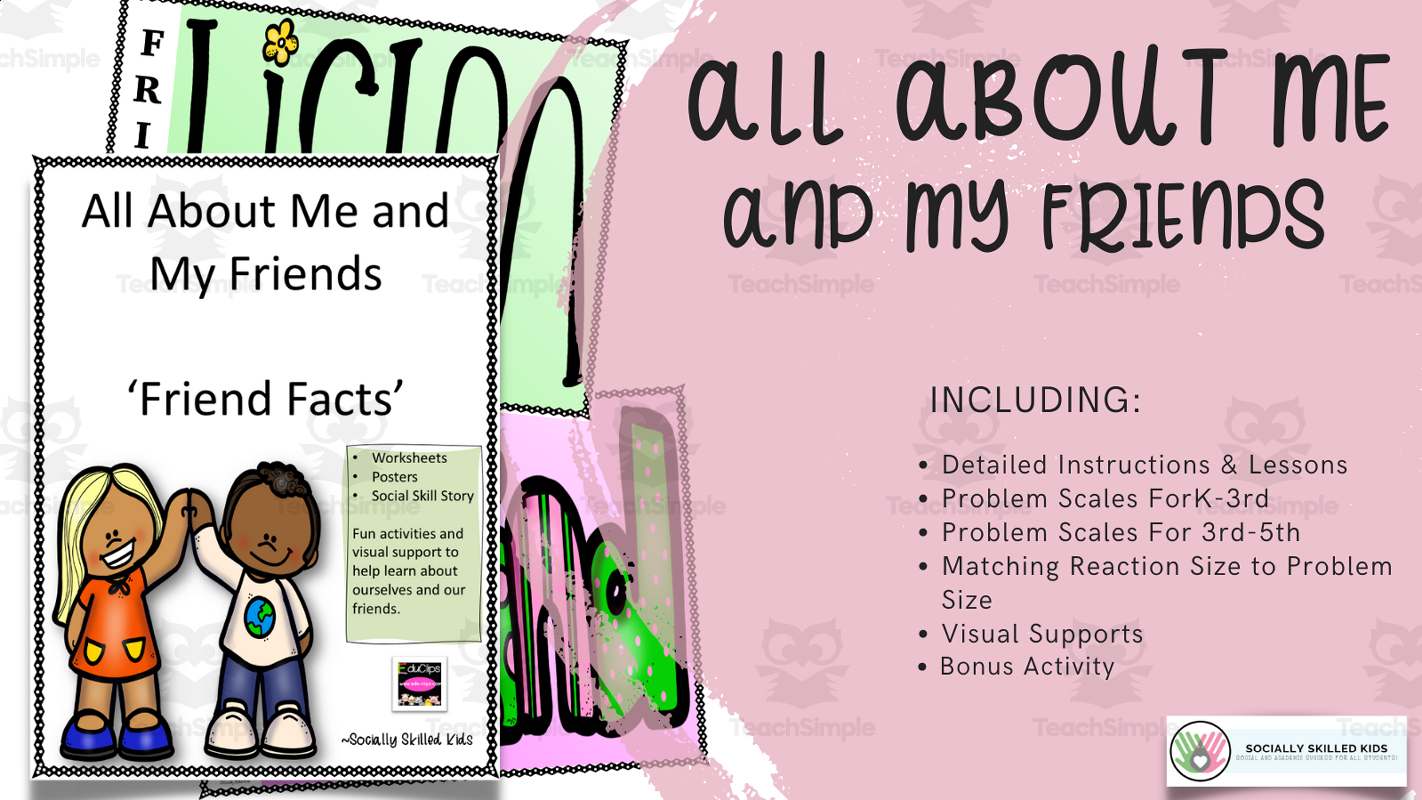
Social Skills Stories, 10 Basic Skills {Mini} Stories for Pre-2nd The Social Skills Stories, 10 Basic Skills {Mini} Stories for Pre-2nd is an educational resource specifically designed to assist students in developing essential social skills. Presented as a series of short and straightforward stories, this teaching aid utilizes clear language to make it easy for learners to understand complex behaviors and attitudes. This resource can be beneficial not only to regular elementary education students but also provides support for children who may struggle with cognitive, emotional or behavioral challenges. Infused with empathy and understanding, these entertaining mini stories have successfully been used as part of the curriculum for special education programs benefiting students with ADHD and autism. Scenarios Incorporated 'I Will NOT Hit Or Push People' 'I Can Follow Directions' 'I Can Use A Talking Voice' 'I Can Pay Attention' 'I Can Be A Good Friend' 'I Can Be Flexible' ' I Can Raise My Hand In School' ' I Can Clean Up My Mess' ' I can Say , I'm Sorry '. Each scenario is available both in full color format perfect for classroom use and also as a coloring book companion . The latter offers opportunities not only for leisurely coloring activities but can be used as engaging homework assignments or shared during parent-child reading times at home. Covering general life skills often regarded as challenging by young learners in preschool through the second grade, these narrated experiences engage readers on their level while explaining why certain behaviors are deemed socially acceptable. Assembling best teaching practices into convenient PDF worksheets format that's user-friendly across various platforms; teachers globally have reported witnessing positive behavioral changes among their pupils after implementing these mini-stories into their lecture schedules. In classrooms or homeschool setups alike - whether flying solo or teaming up in small groups - children using this pedagogical tool will appreciate how each story illustrates the simple yet persuasive power of practicing healthy social habits on an everyday basis. Engage young minds and spark compelling conversations around social skills development using this reliable teaching resource.
Author Socially Skilled Kids
Tags Social Skills, Mini Stories, Teaching Aid, Special Education, Behavior Management
Guided Reading Level P - Animal Camouflage (with Lesson Plan)
ELA, Resources for Teachers, Reading Comprehension, Reading, Pre-Reading, Language Development, Animals, Life Sciences, Science, Vocabulary, Grade 2, 3, 4, Worksheets & Printables, Worksheets, Teacher Tools, Centers, Activities, Literacy Readers, Quizzes, Quizzes and Tests, Assessments
This Guided Reading Book - Animal Camouflage (Level P) with lesson plan includes: Guided Reading Color Label (front cover x1) This is a quick way to match the book’s demands to what students can generally handle.. The overall goal is to use the level/color to pick books for several smaller groups. To qualify for a certain level, a student is expected to read a book from that level with about 90–94% accuracy. If a student is consistently accurate and understands, move up a level. If the student is struggling at that level, drop down and add more support. Each student will improve at completely different rates, but it is generally one of the best ways to check progress across the class. DOWNLOAD THE CATALOG TO VIEW ALL GUIDED READING BOOKS AVAILABLE (SORTED LEVELS A-Z) Pre-Reading Question (x1) Teacher asks the prompt aloud, can be while showing the cover or first page. Students share what they already know, or make educated guesses from the cover. Prompt them to use the target vocabulary. Write some of their responses on the board to look back at during the reading. Vocabulary Words (x5) Introduce the five words, best doing it one at a time. Start by saying it, while students repeat and then see if anyone knows what it means before reading further. Read through the meaning and try to briefly connect each word to a picture or gesture so it’s meaningful. Ask students to flip through the book pages and point to where they see each of the vocabulary words. While reading the book pause upon coming across one of the vocab words or read the sentence twice to make sure students understand the word has appeared. Optional: Ask students to raise hands whenever they see/hear one of the new words. Guided Reading Pages (x10) Check the book snapshot (below) for: primary topic - do you need to prep extra reading or intro materials on this? what is taught best - decide on 1-2 bullets to focus on, use the prompt or words provided here for best results. learning goals - what you are checking for students to be able to do after the session, elicit answers using prompts or words provided. key vocabulary (see section above). questions overview - so you know what is coming up and if you need to prep extra materials to assist understanding. Run the lesson You may have already looked at a few of the pages together, but you can show them some of the pictures again first to set meaning. Depending on how much time you have and how familiar your students are with guided reading class, you may want to read the book aloud first with the group first. Students whisper or partner read, while you listen in. If time, do it as a group, one student reading a page each. Use the guided page’s prompts to coach: “Check the picture / does it make sense?” “Point under the words / try the first sound” “Reread the sentence smoothly”. Try to focus more on one student per session (rotating every time), so you can work out if they are ready to move up or need to move down a level. Comprehension Questions (back cover x3) This is your way to check that students didn’t just say the words, but actually understood the text. First, let students answer by pointing to the page/picture and saying a short sentence. After any answer, follow with: “Show me where you found that in the text.” In bigger groups, have partners answer first (10–20 seconds), then call on 2–3 students to share. Differentiation tips: Emerging speakers/struggling readers: oral + pointing On-level: oral in a full sentence Higher: one written sentence or draw + label Book Snapshot Title: A Guide to Animal Camouflage Genre: Nonfiction (informational text) Subject: Life Science / Reading (Informational Text) Primary Topic: How animals use camouflage to survive and hunt Estimated Guided Reading Level (A–Z): P What This Book Teaches Best What camouflage is and why it matters: Camouflage helps animals blend into their environment to stay safe from predators or sneak up on prey. Types of camouflage with clear examples: Background matching (toad), disruptive coloration (zebras), mimicry (stick insect), countershading (sea animals), and active camouflage (octopus). How animals change to match conditions: Seasonal changes in the Arctic fox’s coat and rapid changes in the octopus’s appearance. Camouflage for defense and hunting: The text shows camouflage protecting animals and helping hunters like the orchid mantis. Adaptations and survival: Camouflage is presented as an adaptation that helps animals survive and thrive in their homes. Learning Goals Students will explain what camouflage is and how it helps animals survive. Students will describe background matching and use the toad example from the text. Students will explain how disruptive coloration in zebra stripes can confuse a predator. Students will describe mimicry using details about the stick insect. Students will compare seasonal camouflage in the Arctic fox with countershading in sea animals. Students will describe how active camouflage works in the octopus and how the chameleon’s color-changing can help it stay hidden. Key Vocabulary From the Text camouflage — colors, patterns, or shapes that help an animal blend in. predators — animals that hunt other animals for food. texture — how a surface feels or looks. mimicry — when an animal looks like a different object. countershading — dark top and light belly that help hide in water. Discussion Prompts Pre-reading question: Why might an animal need to blend into its environment to survive? Comprehension questions: What does the text say camouflage helps animals do? Comprehension questions: How do zebra stripes make it difficult for a hunting lion to target one zebra? Comprehension questions: How does countershading help sea animals blend in from above and from below? Printing Tips 1. Best Printing Method (Recommended) “Booklet” Printing (Best if Available) If your printer or PDF viewer supports Booklet Printing , use this. Settings to use: Print mode: Booklet Paper size: Letter or A4 (either works) Orientation: Landscape Print on both sides: Yes Flip on: Short edge Scaling: Fit to printable area Booklet subset: First test: Front sides only Then: Back sides only This will automatically: Pair pages correctly Put the cover on the outside Align everything for folding After printing, fold in half and staple along the spine . 2. If “Booklet” Printing Is NOT Available You can still print this correctly with manual duplex printing . Step-by-step: Open the PDF. Choose Print . Set: Orientation: Landscape Pages per sheet: 1 Print on both sides: Yes Flip on: Short edge Print all pages . Because each PDF page already contains two facing book pages, the result will still fold cleanly into a book. Thousands of Cored Education products are included with your TeachSimple membership. Download links and encyclopedia index available here.
Author Cored Education
Rating
Tags Reading Comprehension, Reading Passages, Reading, Guided Reading, Guided Reading Lesson Plan, Guided Reading Activity, Pre-reading, Science Lesson Plans, Life Science, Animals
Printable Stars for Bulletin Boards
Creative Arts, Art, Grade 1, 2, 3, 4, Worksheets, Worksheets & Printables
Get your hands on printable stars, both lined and unlined, perfect for your projects and presentations. Available in two sizes, you can choose between a full-page star or two medium-sized stars per page. Whether it's for plays, projects, bulletin boards , or sparking creativity in creative writing, these stars are versatile for various uses. This package includes: ✅ 5 large stars in various styles ✅ 5 medium-sized stars in different styles (2 per page) ✅ 2 large stars in different styles with accompanying lines ✅ 2 medium-sized stars in various styles with lines I hope you and your students find this resource enjoyable and useful for your activities! Printable Stars for Bulletin Boards | Printable Stars for Bulletin Boards | Printable Stars for Bulletin Boards | Printable Stars for Bulletin Boards | Printable Stars for Bulletin Boards | Printable Stars for Bulletin Boards | Printable Stars for Bulletin Boards | Printable Stars for Bulletin Boards | Printable Stars for Bulletin Boards | Printable Stars for Bulletin Boards | Printable Stars for Bulletin Boards | Printable Stars for Bulletin Boards | Printable Stars for Bulletin Boards | Printable Stars for Bulletin Boards | Printable Stars for Bulletin Boards | Printable Stars for Bulletin Boards |
Author Soumara Siddiqui
Tags Printable Stars, Stars, Bulletin Board, Stars For Bulletin Boards, Printable Star
Nonfiction Text Features Writing Packet 87 pgs (9 parts)
ELA, Writing, Grade 2, 3, 4, 5, Worksheets & Printables, Worksheets
This is a packet of Writing Paper with Nonfiction Text Features. PDF There are 9 parts to this packet: 1. Cover page templates. There are 11 different pages to choose from. 2. Planning page templates. There are 9 different pages to choose from. There are 2 completed examples here – one for cars and one for computers. These templates are great to prepare for writing because they will encourage students to brainstorm. Students can utilize these for any topic. The planning pages will help them think about what should be included in an introduction, plan for 4 chapters, and learn how to write an effective conclusion. 3. Table of Contents page templates. There are 6 different pages to choose from. 4. About the Author templates. There are 6 different pages to choose from. 5. Writing pages. There are 8 different pages to choose from. 6. Glossary page templates. There are 3 different pages to choose from. 7. Diagram page templates. There are 8 different pages to choose from. Some of the diagrams include a Life Cycle Diagram, Bar Graph, and Pie Chart Diagram. 8. Fun facts page templates. There are 2 different pages to choose from. 9. Print & Go Packet. This set of pages makes a complete writing packet. If you just want a quick and easy way to print a whole writing packet that you can staple and pass out. It includes the following pages below: ● Cover page ● Table of contents ● About the author page ● Introduction page ● Chapters 1-4 ● Conclusion ● Fun Fact Page ● Diagrams page ● Glossary
Author CraftEdPrints
Tags Nonfiction, Text Features, Writing Packet, Writing Prompts, Story Elements, Planning Pages, Graphic Organizers, Table Of Contents, About The Author, Nonfiction Introduction Examples
UK/Aus English Subject-Verb Agreement Practice - Year 2-3 (Word)
ELA, Language Development, ESL, Grammar, Common Core, Resources for Teachers, Grade 1, 2, Worksheets & Printables, Worksheets, Assessments, Teacher Tools, Tests, Quizzes and Tests
THIS IS THE UK/AUS ENGLISH SPELLING VERSION. CHECK THE CATALOG FOR THE ORIGINAL AMERICAN ENGLISH VERSION. Subject-Verb Agreement Grammar Practice MCQS: 8 lessons, 120 MCQS, 36 pages ELA MCQS Overview: In this series of lessons, students will embark on an engaging journey to explore the grammar skills that make our language vibrant and expressive. These lessons are crafted to help students identify, comprehend, and effectively apply language arts skills in both writing and speech. This UK/Aus English version is especially useful for schools, teachers, and families working with British-based spelling and language conventions. It is a helpful option for classrooms using UK curriculum expectations, international programmes influenced by British English, or any setting where learners need to practise the correct capitalisation and punctuation forms for that version of English. Subject-Verb Agreement Overview: Includes: Intro to Subject-Verb Agreement Match Subject to Verb Match Verb to Subject Additional Practice Word Version This is the Word editable and version. This download is available in GOOGLE Docs, GOOGLE Forms, GOOGLE Slides. PDF, PPT, WORD, check the links below for more details. FULL CATALOG OF DOWNLOAD LINKS HERE ELA Review Questions Overview Each review test includes three answer choices for every question, which helps keep things simple and manageable for students. The layout is clear and easy to follow, so students can focus on the questions instead of figuring out what to do. A few pictures are included on each test to make the pages feel a little more inviting and less overwhelming. A review sheet is also included, giving students a chance to go back over many of the main skills covered in the resource. Introduction or Example Sheet Each topic comes with an introduction or example sheet to look at before students begin. This gives students a clear starting point and helps them feel more prepared. It also lets them see what to expect before moving into the main work. For many students, it is a helpful way to quickly refresh the key ideas before they start practicing on their own. Full Answer Keys Full answer keys are included to make marking and checking work faster and easier. Sample responses are also provided where needed, especially for open-ended tasks. This can be a real time-saver on busy days and makes the resource more practical to use. Everything is there to help make planning, teaching, and checking student work feel a little more straightforward. For similar downloads and other frees, do check out Cored Group on TeachSimple.
Author Cored Education
Rating
Tags Elementary, Reading, Comprehension, Vocabulary, Answers, Ccss, Common Core, Spelling, Writing, Passages
Reading Comprehension on Position and Motion of Objects (Google Drive)
ELA, Reading, Reading Comprehension, Common Core, ESL, Language Development, Vocabulary, Physics, Science, Grade 2, 3, 4, Worksheets, Worksheets & Printables, Assessments, Teacher Tools, Tests, Quizzes and Tests
Reading Passages on Position and Motion of Objects for Physical Science Position and Motion of Objects: Reading Passages Physical Science incorporates science literacy seamlessly into your teaching plans. The pack not only facilitates learning in crucial scientific domains but also offers an engaging variety of questions to reinforce comprehension. Focused on essential topics like motion, forces, and sound, these passages serve as a dual-purpose educational tool. By integrating this resource, you'll be able to tackle key scientific concepts while also honing your students' reading skills. The diverse set of questions that follow each passage—spanning multiple-choice, analytical, and more—provide a comprehensive approach to understanding both the text and the scientific principles it covers. What's inside? Part 2 - Position & Motion of Objects. Reading Passage 1: Position, Distance, and Motion Reading Passage 2: Pushing and Pulling Forces Reading Passage 3: Sound, Hearing, and Force Reading Passage 4: Characteristics of Sound Product Info: 23 PAGES (Docs Version: US English with Answer) & 4 FORMS (Self-Grading) 112 SLIDES Teaching Duration: 2 Weeks Science Reading Comprehension Outline: Targeted for students in 3rd and 4th grades, these reading passages are enhanced with illustrations and graphs to elucidate critical points. Each lesson aligns with the Common Core State Standards, allowing you to integrate science reading practice effortlessly, knowing that minimal preparation is needed on your part. Each passage comes with a variety of questions in different formats, including multiple-choice formats, data analysis, and fill-in-the-blanks. The topics covered strike a balance between engaging content and core curriculum-based science subjects. Versatile in application, these lessons are suitable for a variety of settings such as whole-class instruction, morning activities, independent desk work, small group discussions, contingency plans for substitute teachers, homework assignments, or even special holiday-themed tasks. FULL CATALOG OF DOWNLOAD LINKS HERE Grade 3/4 Links: Physical Science Part 1 - Properties of Objects and Materials Google Docs/Slides/Forms PDF PPT Word Free Supplementary Pack Accompanying Videos Physical Science Part 2 - Position and Motion of Objects Google Docs/Slides/Forms PDF PPT Word Free Supplementary Pack Accompanying Videos Physical Science Part 3 - Light, Heat, Electricity, Magnetism Google Docs/Slides/Forms PDF PPT Word Free Supplementary Pack Accompanying Videos Life Science Part 1 - Characteristics of Organisms Google Docs/Slides/Forms PDF PPT Word Free Supplementary Pack Accompanying Videos Life Science Part 2 - Life Cycles of Organisms Google Docs/Slides/Forms PDF PPT Word Free Supplementary Pack Accompanying Videos Life Science Part 3 - Organisms and Environments Google Docs/Slides/Forms PDF PPT Word Free Supplementary Pack Accompanying Videos Earth Science Part 1 - Properties of Earth Materials Google Docs/Slides/Forms PDF PPT Word Free Supplementary Pack Accompanying Videos Earth Science Part 2 - Changes in the Earth and Sky Google Docs/Slides/Forms PDF PPT Word Free Supplementary Pack Accompanying Videos Earth Science Part 3 - Objects in the Sky Google Docs/Slides/Forms PDF PPT Word Free Supplementary Pack Accompanying Videos For similar products and other frees, do check out Cored Group on TeachSimple .
Author Cored Education
Rating
Tags Science, Elementary, Reading, Comprehension, Vocabulary, Physics, Physical Science, Reading Comprehension Assessments, Science Assessments, Vocabulary Assessments
Summer Count By 10
Math, Numbers, Preschool, Grade 1, 2, Worksheets & Printables, Worksheets
Summer Count By 10 Product Overview Summer Count By 10 is an educator resource made specifically for early learners, kindergarteners, and grade 1-2 students. With a unique summer-themed twist, this product serves as a delightful source of learning no matter what the season is. The Contents: Worksheet One: The first worksheet encourages the young minds to count by tens while tracing numbers on octopus illustrations. This worksheet combines visual stimulation with fine motor skill practice. Worksheet Two: The second worksheet , along with counting and tracing numbers on octopi as in Worksheet One, asks students to identify missing numbers significantly strengthening their numerical recognition skills. This well-crafted resource can serve various teaching environments ranging from group class activities to small study groups or even one-to-one teaching platforms like homeschooling where fostering basic Math skills becomes essential. Simplicity of Access: The exclusive PDF file format of these worksheets ensures an easy transition across devices; there’s absolutely no need for special software! Packed with content that aids in expanding mathematical comprehension and number familiarity among younger learners – the 'Summer Count By 10' exudes functionality flexibility making it an essential addition to any educator’s toolkit.
Author Cherry Workshop
Tags Summer Math, Counting By Tens, Early Learners, Visual Learning, Ocean Theme
Life Skills Mazes (PDF)
ELA, Language Development, Vocabulary, Spelling, ESL, Resources for Teachers, Life Skills, Special Resources, Grade 2, 3, 4, 5, Worksheets & Printables, Worksheets, Teacher Tools, Centers, Activities, Mazes
Maze Series This maze series is designed for students in grades 2–5. Each set features a clear, kid-friendly theme with scene-based mazes that students first navigate, then complete by drawing a few target words from a simple word list. Pages come in varied styles and graduated difficulty, with an optional “color it in” step—and some themes invite quick calculations to match the task. These mazes are student-friendly, classroom-ready, and perfect for literacy warmups, seasonal units, fast-finisher bins, centers, sub plans, or home learning extensions. The playful, structured format builds problem-solving, attention to detail, and fine-motor control while reinforcing themed content in a motivating way. Note: Unlike many themed products, not all word-list words appear on the maze pages. To support full vocabulary coverage, we’ve released a companion word list you can find in the links section. Life Skills Word List 1. Being Responsible Chores, Listen, Help, Clean, Safe, Work, Try, Plan 2. Daily Routines Wake, Dress, Eat, Brush, Pack, Wash, Sleep, Rest 3. Social Skills Share, Wait, Ask, Say, Kind, Polite, Friend, Smile 4. Problem Solving Think, Fix, Try, Ask, Choice, Learn, Plan, Strong 5. Money and Shopping Money, Save, Spend, Shop, Price, Coin, Bill, Earn 6. Safety Skills Stop, Look, Listen, Helmet, Seatbelt, Cross, Hot, Help PDF Version Other versions will appear here when available. Follow the store for the lastest on new products. How to Use These Mazes Perfect for: Morning work or early-finisher bins Literacy or STEM centers Holiday/seasonal review lessons Independent stations, sub plans, or take-home enrichment More Life Skills Themed Products CROSSWORDS WORD SEARCHES FULL CATALOG OF DOWNLOAD LINKS HERE Themed Mazes Links Addition PDF Animals PDF Around the Home PDF Birthday PDF Candy PDF Christmas PDF Cinco de Mayo PDF Clothes PDF Colors PDF Days and Months PDF Division PDF Earth Day PDF Easter PDF Easy Mazes PDF Fall PDF Father's Day PDF Food PDF Geography (Set 1) PDF Geography (Set 2) PDF Geography (Set 3) PDF Graduation PDF Health PDF History (Set 1) PDF History (Set 2) PDF History (Set 3) PDF Human Body PDF Kindness PDF Life Skills PDF Mother's Day PDF Multiplication PDF Science (Set 1) PDF Science (Set 2) PDF Science (Set 3) PDF Shapes PDF Social Skills PDF Spring PDF Sports PDF St. Patrick's Day PDF Subtraction PDF Summer PDF Thanksgiving PDF Transport PDF Valentine's Day PDF Winter PDF Mazes in Depth Structure Each maze is crafted around a focused sub-theme. Students navigate the maze, encountering branches and cul-de-sacs that build attention and planning. Most pages include a tiny follow-up box—students draw or label 2–3 target words from a small word box, add a quick count, or color in the scene—so the activity reinforces both content and skills in a highly engaging format. Each completed set includes: A themed maze page. A simple student instruction strip. An answer key showing the solved path for teacher support or self-checking Themes Included These mazes cover a wide range of fun, age-appropriate themes, including: Seasons & Holidays (e.g., Halloween, Easter, Valentine’s Day) Math-Lite Connections (e.g., quick counts, number words) Everyday Topics (e.g., Animals, Weather, School) Special Units (e.g., Health, Earth Day, Sports, Kindness) Each topic reflects students’ real-life experiences and interests while strengthening problem-solving, visual scanning, and fine-motor control in a playful, highly visual way. Easy extensions (optional): Time it: solve once in pencil, then try to beat the time in pen Retell the route using sequence words (first, next, then, finally) Count intersections or turns and graph the results Write a 1–2 sentence mini-story about the scene using the target words Design a tiny maze in the corner for a partner to solve Differentiation tips: Offer a finger-trace pass before pencils for emerging learners Highlight the borders of the correct region on first attempts Use thicker-line versions or simpler pages to build confidence Pair roles: “navigator” gives directions; “driver” traces the path For similar downloads and other frees, do check out Cored Group on TeachSimple.
Author Cored Education
Rating
Tags Vocabulary, Spelling, Life Skills, Daily Routines, Social Skills, Problem Solving, Safety Skills, Life Skills Mazes, Maze, Mazes
Skip Counting by 6 Worksheets
Math, Patterns, Kindergarten, Preschool, Grade 1, 2, Worksheets & Printables, Worksheets
Skip Counting by 6 Worksheets The Skip Counting by 6 Worksheets is a captivating teaching resource made to support young learners develop their math skills. Suitable for students in Preschool, Kindergarten, Grade 1 and Grade 2, this tool also caters to early learning. This resource is packed with special worksheets that help kids learn patterns and number recognition through skip counting. The product offers practice pages that facilitate counting by sixes from six up to sixty round off to one hundred twenty. Included in one convenient PDF file are colored posters that visually elucidate the concept of counting by sixes. An alternative black and white poster also provides an additional visual support for better understanding this basic mathematical pattern. We Understand Teacher's Needs! We value educators! That’s why we have provided an answer key within these worksheets - smoothening the assessment process thus encouraging self-guided learning allowing children independently verify their work. Ideal for homework assignments or extra post-lesson practice. Versatility at its Best! Adaptable enough for both a large-class instruction or smaller group activities within your classroom setting - these vibrant worksheet injects creativity into routine arithmetic lessons while strengthening foundational maths ability. Daily Warm-ups: Kickstart each class on a high note with our worksheets as initiatory exercises. Home Assignments: Utilize these resources as tasks that consolidate information learnt during lessons. Extra Holiday work: Even away from school, keep your students engaged with our seasonal-themed tasks. In a nutshell, the Skip Counting by 6 Worksheets offer a fun yet systematic way to reinforce math competencies while maintaining young learners' interest – supplying value throughout your teaching day.
Author Soumara Siddiqui
Tags Skip Counting, Math Patterns, Number Recognition, Worksheets, Practice Pages
1st 100 Fry Sight Words Worksheets & Activities, #51-60, SET 5
ELA, Reading, Language Development, Spelling, Writing, Preschool, Grade 1, 2, Worksheets & Printables, Worksheets
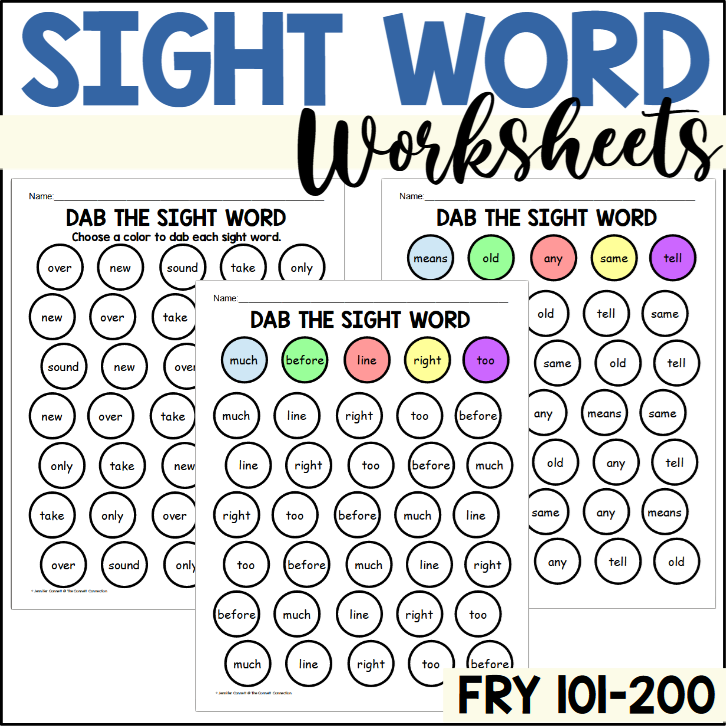
1st 100 Fry Sight Words Worksheets & Activities, #51-60, SET 5 This resource Includes Sight Words Worksheets for 10 words (51-60) of 1st 100 Fry Sight words list. These Worksheets are NO PREP, fun and engaging worksheets, perfect for sight words recognition, sight words practice and revision. These worksheets include 8 unique activities for each Sight Word. These activities are fun and will motivate kids to ace their Sight words. The activities included are - Trace the word Write the word Color / Decorate the Sight Word Find it ( Circle the Sight Word ) Words Included - will, up, other, about, out, many, then, them, these, so These Worksheets are easy to use and can be used for different purpose, such as morning work, Sight Words Book etc. These can be used for individual work, group work, or at Homeschool. This is a must have resource to teach students sight words while having fun. The 8 activities included motivate kids to learn their sight words and give them more practice by repetition. Activities like coloring is fun and engaging for kids and they will also learn the word in the process. While as activities like tracing and writing will develop their fine motor skills and reinforce the sight word spelling and vocabulary with repetition. These Worksheets are No Prep & easy to use, perfect for Sight Words Recognition. These Worksheets are also perfect for Sight Words Assessment . Teachers can test the kid's knowledge of sight words while reinforcing them with these simple Worksheets. Download it today and let your kids ace their Sight Words while having Fun. You Will Receive 1 PDF 10 Pages 8.5" x 11" (U.S. Letter Size) You may also like - 1st 100 Fry Sight Words Worksheets, SET 5 # 1 to 10 1st 100 Fry Sight Words Worksheets, SET 5 # 11 to 20 1st 100 Fry Sight Words Worksheets, SET 5 # 21 to 30 1st 100 Fry Sight Words Worksheets, SET 5 # 31 to 40 1st 100 Fry Sight Words Worksheets, SET 5 # 41 to 50 1st 100 Fry Sight Words Worksheets, SET 5 # 51 to 60 1st 100 Fry Sight Words Worksheets, SET 5 # 61 to 70 1st 100 Fry Sight Words Worksheets, SET 5 # 71 to 80 1st 100 Fry Sight Words Worksheets, SET 5 # 81 to 90 1st 100 Fry Sight Words Worksheets, SET 5 # 91 to 100
Author TeacherYouWant
Tags Sight Words , Sight Words Practice, Fry's First 100, Sight Words Activites, Fry Sight Words, 11-20, First Grade, Kindergarten, Pre-k, Second Grade
Guided Reading Level H - How Animals Stay Warm (with Lesson Plan)
ELA, Resources for Teachers, Reading Comprehension, Reading, Animals, Life Sciences, Science, Pre-Reading, Language Development, Vocabulary, Kindergarten, Grade 1, 2, Worksheets & Printables, Worksheets, Teacher Tools, Centers, Activities, Literacy Readers, Quizzes, Quizzes and Tests, Assessments
This Guided Reading Book - How Animals Stay Warm (Level H) with lesson plan includes: Guided Reading Color Label (front cover x1) This is a quick way to match the book’s demands to what students can generally handle.. The overall goal is to use the level/color to pick books for several smaller groups. To qualify for a certain level, a student is expected to read a book from that level with about 90–94% accuracy. If a student is consistently accurate and understands, move up a level. If the student is struggling at that level, drop down and add more support. Each student will improve at completely different rates, but it is generally one of the best ways to check progress across the class. DOWNLOAD THE CATALOG TO VIEW ALL GUIDED READING BOOKS AVAILABLE (SORTED LEVELS A-Z) Pre-Reading Question (x1) Teacher asks the prompt aloud, can be while showing the cover or first page. Students share what they already know, or make educated guesses from the cover. Prompt them to use the target vocabulary. Write some of their responses on the board to look back at during the reading. Vocabulary Words (x5) Introduce the five words, best doing it one at a time. Start by saying it, while students repeat and then see if anyone knows what it means before reading further. Read through the meaning and try to briefly connect each word to a picture or gesture so it’s meaningful. Ask students to flip through the book pages and point to where they see each of the vocabulary words. While reading the book pause upon coming across one of the vocab words or read the sentence twice to make sure students understand the word has appeared. Optional: Ask students to raise hands whenever they see/hear one of the new words. Guided Reading Pages (x10) Check the book snapshot (below) for: primary topic - do you need to prep extra reading or intro materials on this? what is taught best - decide on 1-2 bullets to focus on, use the prompt or words provided here for best results. learning goals - what you are checking for students to be able to do after the session, elicit answers using prompts or words provided. key vocabulary (see section above). questions overview - so you know what is coming up and if you need to prep extra materials to assist understanding. Run the lesson You may have already looked at a few of the pages together, but you can show them some of the pictures again first to set meaning. Depending on how much time you have and how familiar your students are with guided reading class, you may want to read the book aloud first with the group first. Students whisper or partner read, while you listen in. If time, do it as a group, one student reading a page each. Use the guided page’s prompts to coach: “Check the picture / does it make sense?” “Point under the words / try the first sound” “Reread the sentence smoothly”. Try to focus more on one student per session (rotating every time), so you can work out if they are ready to move up or need to move down a level. Comprehension Questions (back cover x3) This is your way to check that students didn’t just say the words, but actually understood the text. First, let students answer by pointing to the page/picture and saying a short sentence. After any answer, follow with: “Show me where you found that in the text.” In bigger groups, have partners answer first (10–20 seconds), then call on 2–3 students to share. Differentiation tips: Emerging speakers/struggling readers: oral + pointing On-level: oral in a full sentence Higher: one written sentence or draw + label Book Snapshot Title: How Animals Stay Warm Genre: Nonfiction (informational) Subject: Life Science Primary Topic: Animal ways to stay warm in cold places Estimated Guided Reading Level (A–Z): H What This Book Teaches Best Animals must stay warm to live in places with snow and ice. Body coverings can help animals stay warm (thick fur and feathers that trap heat). Some animals use body fat for warmth (blubber acts like a “warm blanket” and keeps cold water from reaching the body). Animals can use behaviors to stay warm (penguins huddle close and share body heat; some animals go underground; some sit in the sun). Learning Goals Explain why animals must stay warm to live in snow and ice. Describe how thick fur helps keep warm air near an animal’s skin. Describe how blubber helps animals stay warm, including in icy water. Describe how feathers help birds stay warm by trapping heat. Identify actions animals take to stay warm (huddling, going into a burrow, sitting in the sun). Key Vocabulary From the Text arctic — very cold, snowy place. blubber — thick fat under skin that helps keep warm. feathers — soft bird covering that helps trap heat. huddle — stand very close together in a group. burrow — a deep hole an animal digs to go underground. Discussion Prompts Pre-reading question: What are some ways animals might stay warm when it is very cold? Comprehension questions: Why must animals stay warm to live in snow and ice? Comprehension questions: How does blubber help a seal swim in the icy ocean? Comprehension questions: What do penguins do in a group to stay warm? Printing Tips 1. Best Printing Method (Recommended) “Booklet” Printing (Best if Available) If your printer or PDF viewer supports Booklet Printing , use this. Settings to use: Print mode: Booklet Paper size: Letter or A4 (either works) Orientation: Landscape Print on both sides: Yes Flip on: Short edge Scaling: Fit to printable area Booklet subset: First test: Front sides only Then: Back sides only This will automatically: Pair pages correctly Put the cover on the outside Align everything for folding After printing, fold in half and staple along the spine . 2. If “Booklet” Printing Is NOT Available You can still print this correctly with manual duplex printing . Step-by-step: Open the PDF. Choose Print . Set: Orientation: Landscape Pages per sheet: 1 Print on both sides: Yes Flip on: Short edge Print all pages . Because each PDF page already contains two facing book pages, the result will still fold cleanly into a book. Thousands of Cored Education products are included with your TeachSimple membership. Download links and encyclopedia index available here.
Author Cored Education
Rating
Tags Reading Comprehension, Reading Passages, Reading, Guided Reading, Guided Reading Lesson Plan, Guided Reading Activity, Pre-reading, Vocabulary, Animals, Life Science
Jewelry Reading Comprehension Passage - Cored Ed Encyclopedia
ELA, Reading Comprehension, Reading, Language Development, History, Social Studies, Science, Physics, Life Sciences, Earth and Environmental Sciences, Grade 2, 3, 4, 5, Worksheets & Printables, Worksheets, Teacher Tools, Centers, Activities, Writing Prompts, Assessments, Quizzes and Tests, Quizzes, Lesson Plans
This Jewelry reading comprehension with lesson plan includes: Visualization (on the front cover) Start your lesson by taking a minute to think and share something about the topic. Read the script aloud (slowly), perhaps prepare some music or sound effects. Student close their eyes and let their imaginations wander. Students open their eyes, read the question aloud and give them a few minutes to complete. Ask a few students to share or keep answers until the end to compare with what they learn in the passage. Quick pause—thousands of Cored Education products are included with your TeachSimple membership. Download links and encyclopedia index available here. Pre-Reading Trivia Students will write down one thing they already know about the subject and then read five more facts and discuss. These facts are fun, and the students will enjoy learning about the subject before reading more. Give 1 minute for students to write what they already know (no pressure—best guess is fine). Read the five facts together. After each fact, do ask a student for their opinion, was it surprising? Set a purpose by asking students to highlight/underline one fact they want to learn more about during the reading. Reading Passage The text is a high-interest reading passage with set paragraphs, roughly three to four paragraphs long. It contains a variety of themes about the topic, anywhere from history to technology. The passage is between 250 and 350 words in length. First, ask students to look at the headings and see what they’ll learn about today. What do they know about the topic/heading? First read options: Teacher read-aloud (best for support). Partner reading (paragraph by paragraph). While reading, students underline important details, and vocabulary words they think may come up in the questions section. Mixed Questions The first question page contains four multiple-choice questions, each with a choice of four answers, and three written response questions that require a sentence or two from the student. Students complete the mcqs first independently, then review quickly as a class. For the 3 written responses, try to get students giving the answer with some form of evidence: “I think ___ because the text says ___.” If students get stuck, send them back to check the passage. Vocabulary Questions Practice seven key words from the text in this section across two activities. First section is scrambled words where students will unscramble three words given a clue for each. The second section is a word to meaning matching activity. Before starting, have some students read out words they underlined in the passage. Ask students to say the word and read aloud the sentence(s) around each word. Ask students to do scrambled words and the matching exercise in pairs then go through answers as a class. For the scrambled spelling task, get four pairs to come up to the board and write the words for extra practice with the other student reading out the clue. For the matching task, prompt students to give full sentences: “I matched ___ with ___ because ___.” Creative Writing In this question, the student will be required to write a five to eight sentence paragraph on a question related to the topic. Before starting, ask students write down 3 key ideas they are going to include in their piece. Ask students for ideas to share around the class to help those struggling. Pro writing expectations: 5–8 sentences At least 2 facts or details from the passage At least 2 vocabulary words from the previous page Students read their paragraphs while classmates listen for facts and vocabulary words. Extension Activities This page is optional for fast finishers or to take home. There are several activities, each one requiring a different skill. Do some, do none, do all, completely optional - but you will feel reassured knowing every possibility is planned for. Includes summary writting question and additional facts. Answer Key There are answers for the multiple-choice questions, written response questions have sample answers, vocabulary answers and if there is a summary question then a sample summary will be provided as well. Lesson Plan Included Customized lesson plan for this lesson is included. Lesson Snapshot Title: Jewelry Genre: Nonfiction (informational text) Subject: Reading (Informational Text) / Social Studies Primary Topic: Jewelry history, materials, meaning, and sparkle Estimated Guided Reading Level (A–Z): R What This Lesson Teaches Best Explains that people made and wore jewelry long ago using shells, teeth, and bone, and includes evidence archaeologists found (seashells with holes worn smooth). Shows how new tools changed jewelry-making by shaping gold into beads, bracelets, and pieces worn close to the skin. Introduces where gems come from (hard minerals from the earth and some from living things, like pearls and amber). Describes how cutting gems into flat faces called facets increased sparkle and how factories later made fake gems. Emphasizes that jewelry can matter because of symbols, faith, celebrations, and memories—not only because it is bright or rare. Learning Goals Describe evidence the passage gives that very old shell beads were worn as jewelry. Explain how tools helped people shape gold into jewelry long ago. Identify where different gems can come from (earth minerals or living things) using details from the text. Explain how facets changed the way gems looked and why they started to “dance and flash.” Describe reasons people wear jewelry today (faith, celebration, marking life moments, memories). Key Vocabulary From the Text archaeologists — scientists who study the human past. ceremonies — special events held for a purpose. minerals — natural, nonliving materials from the earth. facets — flat faces cut on a gemstone. amber — hardened sticky tree sap used as a gem. FULL CATALOG OF DOWNLOAD LINKS AND ENCYCLOPEDIA INDEX HERE
Author Cored Education
Rating
Tags Vocabulary, Reading Comprehension, Reading Passages, Lesson Plans, Ela Lesson Plans, Reading Comprehension Lesson Plans, Pre-reading, Science Lesson Plans, Earth Science, Physics
ADDITION AND SUBTRACTION WITHIN 10 - Ten Worksheets - FARM Theme
Math, Numbers, Preschool, Kindergarten, Grade 1, 2, Worksheets, Worksheets & Printables
1. Introduction As is known, the process of teaching addition and subtraction to children is very fundamental and basic for their cognitive and mathematical development. For this reason, I have created this fantastic worksheet to reinforce the topic of addition and subtraction in a didactic way and with the farm theme, a very attractive topic for your children. 2.Objective The objective of this sheet encompasses the following aspects: - Develop logical thinking: As is known by educational agents, addition and subtraction encompass the understanding of various abstract concepts as well as the application of logical rules. In this way, by learning these operations, our students will develop logical reasoning and problem-solving skills, which will contribute to their cognitive development. -Motivate basic mathematical skills: By teaching your students these skills from an early age, you will be establishing a solid foundation for later learning other more advanced mathematical operations such as multiplication or division. -You will improve concentration and memory: By solving these problems and/or mathematical operations, your students will solve mathematical problems that require memory and concentration, which will benefit not only their academic aspect in the area of mathematics, but will also favor their general ability. to remember information and concentrate. -You will promote abstract thinking: You must remember that addition and subtraction not only involve the manipulation of numbers, but also the understanding of abstract concepts such as the relationship between numbers and the idea of quantity. This type of abstract thinking will be essential for the intellectual development of children and will lay the foundation for learning more advanced concepts in mathematics and other disciplines. 3.Order, scheme and stages - Introduce your class with a relaxing dynamic, a song or some strategy related to the farm, then give your children the worksheet individually. Ask them to use their pencil and eraser to solve the activity . 4.Grades or ages This game and/or worksheet is dedicated to children ages 5 to 8, who are learning to carry out their first mathematical activities, based on simple operations such as addition and subtraction. 5. Form of application I suggest that you print this sheet in full color and in A4 format, you must print the sheet for each of your students. Ask your students to have their pencil and eraser on hand to solve the worksheets. 6. Answer keys This game does not require answers. 7.Use text labels additions, subtractions, addition, subtraction, basic mathematical operations, basic operations, math worksheets, math for children. 8.Rules Specified above. 9.File types The archive is in PDF format. 10.Number of pages This document contains 10 pages.
Author EDITORIAL LAURA EDUCA
Tags Addition, Subtraction, Math Worksheets
Reading Passages on Position and Motion of Objects (Presentable PDF)
ELA, Reading, Reading Comprehension, Science, Physics, Common Core, ESL, Language Development, Vocabulary, Grade 2, 3, 4, Worksheets & Printables, Worksheets, Assessments, Teacher Tools, Tests, Quizzes and Tests, Centers, Activities
Reading Passages on Position and Motion of Objects for Physical Science Snapshot Genre: Nonfiction Subject: Physical Science Primary Topic: Motion, forces, sound, hearing, and sound properties Estimated Guided Reading Level (A–Z): M What This Teaches Best It explains position, distance, motion, speed, grids, and coordinates in clear everyday language. It teaches that forces are pushes and pulls and gives examples including pedaling, braking, steering, gravity, and magnetism. It connects sound to vibration and shows how sound waves move through air to the ear and brain. It teaches how tone and volume depend on compressions and the force of air against the eardrum. Learning Goals Students will describe position and use coordinates to identify location on a grid. Students will explain how distance and time are used to describe speed. Students will identify examples of push, pull, gravity, and magnetism as forces. Students will explain how vibrations create sound waves. Students will compare high and low tone and explain what makes sounds louder or quieter. Part 2 - Position & Motion of Objects. Reading Passage 1: Position, Distance, and Motion Reading Passage 2: Pushing and Pulling Forces Reading Passage 3: Sound, Hearing, and Force Reading Passage 4: Characteristics of Sound PRESENTABLE PDF VERSION Run it like a slide show straight from a PDF, with no PowerPoint or extra software needed, just open, project, and teach. Other versions are available in the links list below or in the full catalog. FULL CATALOG OF DOWNLOAD LINKS HERE Grade 3/4 Links: Physical Science Part 1 - Properties of Objects and Materials Google Docs/Slides/Forms PDF PPT Word Free Supplementary Pack Accompanying Videos Physical Science Part 2 - Position and Motion of Objects Google Docs/Slides/Forms PDF PPT Word Free Supplementary Pack Accompanying Videos Physical Science Part 3 - Light, Heat, Electricity, Magnetism Google Docs/Slides/Forms PDF PPT Word Free Supplementary Pack Accompanying Videos Life Science Part 1 - Characteristics of Organisms Google Docs/Slides/Forms PDF PPT Word Free Supplementary Pack Accompanying Videos Life Science Part 2 - Life Cycles of Organisms Google Docs/Slides/Forms PDF PPT Word Free Supplementary Pack Accompanying Videos Life Science Part 3 - Organisms and Environments Google Docs/Slides/Forms PDF PPT Word Free Supplementary Pack Accompanying Videos Earth Science Part 1 - Properties of Earth Materials Google Docs/Slides/Forms PDF PPT Word Free Supplementary Pack Accompanying Videos Earth Science Part 2 - Changes in the Earth and Sky Google Docs/Slides/Forms PDF PPT Word Free Supplementary Pack Accompanying Videos Earth Science Part 3 - Objects in the Sky Google Docs/Slides/Forms PDF PPT Word Free Supplementary Pack Accompanying Videos For similar products and other frees, do check out Cored Group on TeachSimple .
Author Cored Education
Rating
Tags Science, Elementary, Reading, Comprehension, Physics, Physical Science, Reading Centers, Reading Comprehension Assessments, Science Assessments, Vocabulary Assessments
The Easy English Series Book 4: Easy Punctuation
ELA, Language Development, ESL, Preschool, Grade 1, 2, 3, 4, Worksheets & Printables, Worksheets
This workbook is a 53-page download geared toward elementary students who have little to no experience with the English language. These worksheets are simple, clear and concise and give students multiple opportunities to succeed. Students will practice with punctuation and creating sentences using capital letters, question marks, commas and so much more.
Author Ready-Ed Publications
Tags ESL Worksheet, ESD Worksheet, English Workbook, Punctuation Worksheet, Grammar Lesson
Explore France
Social Studies, Geography, Grade 2, 3, 4, 5, Worksheets & Printables, Worksheets
Explore France provides students with an engaging introduction to French geography and culture. This 30-page teaching resource begins by activating students' prior knowledge before guiding them to label images and read informative passages about major French landmarks, cities, food, and customs. Students then apply their learning through a variety of skill-building activities including comprehension questions, coloring pages, flashcard games, comic panels, and creative writing prompts that encourage students to imagine what life in France might be like. Explore France is well-suited for differentiated instruction with options for whole class, small group, or independent work. This versatile cross-curricular resource seamlessly combines social studies content with literacy skill development for grades 2-5.
Author Learn it ANY way
Tags France, Paris, Eiffel Tower, Reading, Vocabulary
The Sand Castle: Learn Endings ...tion & ...ture
ELA, Language Development, Phonics, Kindergarten, Preschool, Grade 1, 2, Worksheets & Printables, Worksheets
The Sand Castle: Learn Endings ...tion & ...ture This is a beneficial teaching resource aimed at facilitating reading and phonics proficiency for children of all ages, specifically those aged four years and up. Whether it's reluctant older readers age seven and above, students with learning difficulties or children using English as a second language, this product has them covered. An engaging narrative stars Sam on his adventures in The Sand Castle. It lends itself perfectly to one-on-one settings or small groups. Systematically introducing the 44 phonic sounds within the text that one must master for understanding 80% of words in English. Reinforcing stories like 'The Bouncing Castle' and 'The Famous Cousin From The Country' encourage active engagement from students as they identify hidden sounds while progressively learning complex middle sounds. Eventually preparing young readers for solo books like Roald Dahl's 'George's Marvellous Medicine' and 'Fantastic Mr Fox'. Key Features: Cut-out practice pages matching words with images or phrases. Straightforward resources featuring fun color sketches appealing directly to youngsters. Packs can be selected based on sound requirements - no particular order needed. Suggested Order: Tackle initial sounds (word-building with three or four-letter words) if introducing to complete non-readers. Proceed onto specific phonics sounds such as ch, sh etc., Move onto more complex ones like tion le etc., Last stage comprises prefixes & suffixes progression. This pack titled"The Sand Castle: Learn Endings …tion & …ture", includes study about phonics endings -tion (as in imagination) and -ture (as in capture), including a deeper insight into silent letters. You will find instructions within the pack to guide the teaching process, from practicing sound several times for familiarity to reading sentences and matching words with pictures. Available as a 24-page PDF, this pack is an ideal choice for preschool, kindergarten children, and those in grades one and two enrolled specifically in Language Arts courses or homeschool curriculum focusing on Phonics. As a type of worksheet teaching aid, it aids students’ reasoning abilities as well as their auditory learning style.
Author Guinea Pig Education
Tags Reading Proficiency, Phonics, Language Acquisition, Interactive Learning, Teaching Resource
Capitalization Practice and Activities, 1st Grade Grammar Worksheets
ELA, Grammar, Writing, Reading, Grade 1, 2, 3, Worksheets, Worksheets & Printables
Capitalization Practice and Activities for 1st Grade Help 1st grade students master capitalization with this engaging 10-page workbook. Carefully designed for early learners, these no-prep printables allow children to practice capitalizing names, geographical locations, the pronoun "I", and sentence starters. Simply distribute the age-appropriate pages for in-class work, small group instruction, or at-home practice aligned to grade 1 curriculum standards. With focused opportunities to apply rules for capital letters, young writers build good habits to strengthen literacy foundations. This straightforward resource works for many settings like general education, special education, homeschools and more. Build student confidence in using capitals correctly through independent writing skill development.
Author TeacherYouWant
Tags 1st Grade, Morning Work, Capitalization, Grammar Worksheets, Name Capitalization
Reading Comprehension Fiction Set 5 Sample Best at Being a Friend Docs
ELA, Reading, Common Core, Reading Comprehension, ESL, Language Development, Vocabulary, Children’s Literature, Literature, Writing, Grade 2, 3, Worksheets & Printables, Worksheets, Writing Prompts, Centers, Activities, Assessments, Teacher Tools, Tests, Quizzes and Tests
Reading Comprehension Passages Fiction Set 5 Sample Overview Fascinating reading comprehension passages, each with an array of activities included. Stories are written for the modern classroom and topics are designed to promote enthusiasm from each student. Each lesson contains a mixed questions section to check understanding, a vocabulary or spelling activity to help remember key language introduced, and a writing exercise. Full answer keys are provided. For a more detailed overview, check the section under the links at the bottom of this description. Passage Included 5.Best at Being a Friend: Second place again, but there is one thing Tara is best at. Docs Version This is the Docs editable and fillable version. This download is available in GOOGLE Docs, GOOGLE Forms, GOOGLE Slides. PDF, PPT, WORD. FULL CATALOG OF DOWNLOAD LINKS HERE Grade 2/3 Links Fiction Set 1 - Nature Google Docs Google Forms Google Slides PDF PPT Word Guided Reading Materials Fiction Set 2 - Animals Google Docs Google Forms Google Slides PDF PPT Word Guided Reading Materials Fiction Set 3 - Food Google Docs Google Forms Google Slides PDF PPT Word Guided Reading Materials Fiction Set 4 - School Google Docs Google Forms Google Slides PDF PPT Word Guided Reading Materials Fiction Set 5 - Friends Google Docs Google Forms Google Slides PDF PPT Word Guided Reading Materials Fiction Set 6 - Family Google Docs Google Forms Google Slides PDF PPT Word Guided Reading Materials Fiction Set 7 - Sports Google Docs Google Forms Google Slides PDF PPT Word Guided Reading Materials Nonfiction Set 1 - Technology Google Docs Google Forms Google Slides PDF PPT Word Guided Reading Materials Nonfiction Set 2 - Nutrition Google Docs Google Forms Google Slides PDF PPT Word Guided Reading Materials Nonfiction Set 3 - Animals Google Docs Google Forms Google Slides PDF PPT Word Guided Reading Materials Reading Passages Overview Each passage is especially written for Grade 2-3 students, including key vocabulary required for this age group. Topics are varied and are accompanied by colorful graphics. Topics are meant to educate, yet entertain the modern student. These passages are perfect for the modern classroom. Whereas textbooks can become outdated in no time, any changes to technology or the world will result in updates to this product. Mixed Questions The mixed questions section of each lesson includes a variation of fivecomprehension, vocabulary and math questions. In addition, key reading strategies are frequently covered including cause & effect, summarizing, compare & contrast and making conclusions. Three of the questions will be MCQs and two will require a written response of some kind. Full answers and example responses appear at the end of the lesson. Spelling & Vocab Each reading passage contains a variety of words and phrases designed for Grade 2-3 students. Spelling and vocab activities provide the opportunity to build fluency with these words. As it can become quite mundane doing the same activities over and over, each lesson in a set will contain a different spelling and vocab activity . Writing Prompts Writing prompts are designed to continue the theme or lessons learned in the story. Students are persuaded to write in a variety of ways and each prompt includes several cues to help. As with the spelling/vocab section, writing prompts will vary. This includes research pieces, reading responses, poetry and creative writing prompts. Full Answer Keys Full answer keys and sample responses are provided so no matter how busy you are, you know you're covered! Mixed question answers provide evidence from the text, math questions contain the relevant workings. Answers are designed for use by the teacher, but also suitable as a handout to the student. Additional File One lesson will have an additional file. This is something fun to extend the lesson with. For similar downloads and other frees, do check out Cored Group on TeachSimple.
Author Cored Education
Tags Elementary, Reading, Comprehension, Vocabulary, Answers, Ccss, Common Core, Spelling, Writing, Digital Centers