



3,487 products added recently
2nd Grade Worksheets
Provide your second graders with worksheets that promote growth in literacy, numeracy, and critical thinking. These resources align with curriculum standards and offer engaging activities. Incorporate them to strengthen understanding and encourage enthusiasm for learning.

 Show filters

Ancient Rome Reading Comprehension Passage - Cored Ed Encyclopedia
ELA, Language Development, Reading Comprehension, Reading, Social Studies, History, History: Ancient, Writing, Pre-Reading, Vocabulary, Grade 2, 3, 4, 5, Worksheets & Printables, Worksheets, Teacher Tools, Centers, Activities, Writing Prompts, Assessments, Quizzes and Tests, Quizzes, Lesson Plans
This ancient Rome reading comprehension with lesson plan includes: Visualization (on the front cover) Start your lesson by taking a minute to think and share something about the topic. Read the script aloud (slowly), perhaps prepare some music or sound effects. Student close their eyes and let their imaginations wander. Students open their eyes, read the question aloud and give them a few minutes to complete. Ask a few students to share or keep answers until the end to compare with what they learn in the passage. Quick pause—thousands of Cored Education products are included with your TeachSimple membership. Download links and encyclopedia index available here. Pre-Reading Trivia Students will write down one thing they already know about the subject and then read five more facts and discuss. These facts are fun, and the students will enjoy learning about the subject before reading more. Give 1 minute for students to write what they already know (no pressure—best guess is fine). Read the five facts together. After each fact, do ask a student for their opinion, was it surprising? Set a purpose by asking students to highlight/underline one fact they want to learn more about during the reading. Reading Passage The text is a high-interest reading passage with set paragraphs, roughly three to four paragraphs long. It contains a variety of themes about the topic, anywhere from history to technology. The passage is between 250 and 350 words in length. First, ask students to look at the headings and see what they’ll learn about today. What do they know about the topic/heading? First read options: Teacher read-aloud (best for support). Partner reading (paragraph by paragraph). While reading, students underline important details, and vocabulary words they think may come up in the questions section. Mixed Questions The first question page contains four multiple-choice questions, each with a choice of four answers, and three written response questions that require a sentence or two from the student. Students complete the mcqs first independently, then review quickly as a class. For the 3 written responses, try to get students giving the answer with some form of evidence: “I think ___ because the text says ___.” If students get stuck, send them back to check the passage. Vocabulary Questions Practice seven key words from the text in this section across two activities. First section is scrambled words where students will unscramble three words given a clue for each. The second section is a word to meaning matching activity. Before starting, have some students read out words they underlined in the passage. Ask students to say the word and read aloud the sentence(s) around each word. Ask students to do scrambled words and the matching exercise in pairs then go through answers as a class. For the scrambled spelling task, get four pairs to come up to the board and write the words for extra practice with the other student reading out the clue. For the matching task, prompt students to give full sentences: “I matched ___ with ___ because ___.” Creative Writing In this question, the student will be required to write a five to eight sentence paragraph on a question related to the topic. Before starting, ask students write down 3 key ideas they are going to include in their piece. Ask students for ideas to share around the class to help those struggling. Pro writing expectations: 5–8 sentences At least 2 facts or details from the passage At least 2 vocabulary words from the previous page Students read their paragraphs while classmates listen for facts and vocabulary words. Extension Activities This page is optional for fast finishers or to take home. There are several activities, each one requiring a different skill. Do some, do none, do all, completely optional - but you will feel reassured knowing every possibility is planned for. Includes summary writting question and additional facts. Answer Key There are answers for the multiple-choice questions, written response questions have sample answers, vocabulary answers and if there is a summary question then a sample summary will be provided as well. Lesson Plan Included Customized lesson plan for this lesson is included. Lesson Snapshot Title: Ancient Rome Genre: Nonfiction (informational reading passage) Subject: Social Studies (Ancient Civilizations) / Reading (Informational Text) Primary Topic: From early settlement to empire and lasting influence Estimated Guided Reading Level (A–Z): S Support pages noted in the PDF: visualization prompt, pre-reading trivia, mixed questions, vocabulary activities, creative writing prompt, extension activities + “final facts,” and an answer key (some “final facts” add details not stated in the passage). What This Lesson Teaches Best How early life near the Tiber River and a busy meeting space (a forum) helped a town form and grow. How Rome changed its government from kings to a republic, including the role of the Roman Senate and citizen voting in assemblies. How roads, alliances, and shared rules/traditions helped Rome spread across Italy and beyond. How Rome became an empire connected around the Mediterranean Sea , including aqueducts for fresh water and public gathering places like the Colosseum . How Rome’s ideas continued even after the western empire fell, with laws and building styles reused and ruins like the Roman Forum reminding people of the past. Learning Goals Students will describe how the passage explains the early growth of Rome from river paths into a forum. Students will identify what happened in 509 BC and name the new form of government described. Students will explain how the passage connects roads, alliances, and shared rules/traditions to Rome’s expansion. Students will describe what changed in 27 BC when Augustus took control, using details from the text. Students will explain, using the passage, what aqueducts carried and why crowds gathered in major public places. Students will describe what happened to the western empire in the 400s AD and how Roman ideas continued afterward. Key Vocabulary From the Text republic — a government citizens vote in. Senate — a group that debates important choices. empire — many lands under one ruler. aqueducts — long channels that carry fresh water. provinces — faraway areas ruled as part of an empire. FULL CATALOG OF DOWNLOAD LINKS AND ENCYCLOPEDIA INDEX HERE
Author Cored Education
Rating
Tags Vocabulary, Reading Comprehension, Reading Passages, Lesson Plans, Ela Lesson Plans, Reading Comprehension Lesson Plans, Pre-reading, History, Ancient History Lesson Plans, History Lesson Plans

Science Reading Passages on Changes in the Earth and Sky Fillable PDF
Science, Earth and Environmental Sciences, Earth Sciences, Common Core, ESL, Language Development, ELA, Reading Comprehension, Reading, Space, Grade 2, 3, 4, Tests, Quizzes and Tests, Teacher Tools, Assessments, Worksheets, Worksheets & Printables, Diagrams, Centers, Activities
Science Reading Passages on Changes in the Earth and Sky Snapshot Genre: Nonfiction Subject: Science (Earth Science / Space Science) Primary Topic: Earth changes, weather, and motion in space Estimated Guided Reading Level (A–Z): R What This Teaches Best It helps students compare slow Earth changes such as weathering and erosion with fast changes such as volcanoes, landslides, and earthquakes. It explains cause and effect in Earth systems, including how magma forms volcanoes and how faults can lead to earthquakes. It teaches key weather concepts such as air pressure, wind, humidity, air masses, and fronts. It introduces scientific tools and measurements by showing how thermometers, barometers, hygrometers, and seismographs are used. It builds understanding of motion in space through rotation, orbit, period, distance, and the scale of the solar system. Learning Goals Students will compare slow changes and fast changes to Earth’s surface. Students will explain how volcanoes, earthquakes, and landslides can change Earth quickly. Students will describe how differences in air temperature and air pressure affect weather. Students will identify the tools used to measure temperature, air pressure, humidity, and movement in Earth’s crust. Students will explain the difference between Earth’s rotation and Earth’s orbit. Students will use text information to describe the size and motion of the solar system. Part 2 - Changes in the Earth and Sky Reading Passage 1: Slow Changes to the Earth's Surface Reading Passage 2: Fast Changes to the Earth's Surface Reading Passage 3: The Atmosphere and Weather Reading Passage 4: Measuring Temperature, Air Pressure, and Humidity Reading Passage 5: The Motion of Objects in the Universe FILLABLE PDF VERSION Worksheet-style pages, but with type-in answer boxes so students can complete and save their work digitally. Other versions are available in the links list below or in the full catalog. FULL CATALOG OF DOWNLOAD LINKS HERE Grade 3/4 Links: Physical Science Part 1 - Properties of Objects and Materials Google Docs/Slides/Forms PDF PPT Word Free Supplementary Pack Accompanying Videos Physical Science Part 2 - Position and Motion of Objects Google Docs/Slides/Forms PDF PPT Word Free Supplementary Pack Accompanying Videos Physical Science Part 3 - Light, Heat, Electricity, Magnetism Google Docs/Slides/Forms PDF PPT Word Free Supplementary Pack Accompanying Videos Life Science Part 1 - Characteristics of Organisms Google Docs/Slides/Forms PDF PPT Word Free Supplementary Pack Accompanying Videos Life Science Part 2 - Life Cycles of Organisms Google Docs/Slides/Forms PDF PPT Word Free Supplementary Pack Accompanying Videos Life Science Part 3 - Organisms and Environments Google Docs/Slides/Forms PDF PPT Word Free Supplementary Pack Accompanying Videos Earth Science Part 1 - Properties of Earth Materials Google Docs/Slides/Forms PDF PPT Word Free Supplementary Pack Accompanying Videos Earth Science Part 2 - Changes in the Earth and Sky Google Docs/Slides/Forms PDF PPT Word Free Supplementary Pack Accompanying Videos Earth Science Part 3 - Objects in the Sky Google Docs/Slides/Forms PDF PPT Word Free Supplementary Pack Accompanying Videos For similar products and other frees, do check out Cored Group on TeachSimple .
Author Cored Education
Rating
Tags Science, Elementary, Reading, Comprehension, Reading Centers, Science Assessments, Reading Comprehension Assessments, Vocabulary Assessments, Earth Science

Beginner AI Chatbot Safety & Prompt Practice Worksheets
Resources for Teachers, Classroom Management, Community Building, Technology, Science, Computer Science, Engineering, Research, Special Resources, Social Emotional Learning (SEL), Preschool, Grade 1, 2, 3, 4, 5, 6, Teacher Tools, Lesson Plans, Presentations, Assessments, Worksheets & Printables, Flashcards, Worksheets, Word Searches, Writing Prompts, Workbooks
This professionally designed 36-page AI Chatbot Safety and Prompt Practice Workbook provides educators and parents with the comprehensive guidance needed to help their 6–9 year-old students develop literacy skills while learning how to safely work with AI chatbots as powerful tools rather than friends, maintain safe digital boundaries, protect their personal identifiable information (PII), create clear and effective prompts using the “Three-Part Recipe”, practice digital kindness, verify the accuracy of AI-generated content, and develop strong literacy skills through the use of iterative questioning. This resource can be used in any learning environment including traditional classrooms, homeschooling, after-school programs, or family time on electronics. Key features include: - Aligned with the Piaget and Vygotsky constructivist theory and early literacy standards - Ten printable worksheets (e.g. fill-in-the-blank, matching, true/false, scenario) - Teacher/parent guide with theory, case studies, and strategies for implementation - Visual aids (e.g. mind maps, flowcharts), and the "Digital Safety Ecosystem" infographic - Complete answer key for easy assessment - No-prep, print-and-go format (PDF) - Ideal for introducing safe use of ChatGPT/AI tools, prompt engineering, and digital citizenship prior to students' access to full AI tools. Why Parents and Schools Are Interested To Use It : -Creates a lifetime of Real World safety habits around Digital use by teaching children to never share names, addresses, schools or emotions with AI preventing privacy issues before they happen. -Allows for Literacy development through AI use. Making writing Prompts fun iterative writing exercises will enhance vocabulary, specificity, sentence structure and critical thinking. -Cost effective for busy parents and teachers who can print everything out with a simple to follow directions, pictures and answer key - great for morning work, tech centers S.E.L. lessons or home school tech units. -Removes worries about AI in the classroom by providing a structured researched based blueprint for educators and families to use to introduce chat-bots without the fear of misuse or becoming overly reliant upon. -Fun and easy for children to learn about safety through stories, fun Prompts and activities, "Digital Detective" activity, so they will actually look forward to learning and following safe and responsible use of digital technology. Target Audience / Students Grades : Kindergarten & 4th/5th Grades are not targeted (English). The curriculum is developed with 1st through 3rd grade (ages 6-9) only - early elementary children who are in the concrete operational cognitive development stage; therefore, the curriculum utilizes concrete metaphors (e.g.; recipe, blueprint, vault, shield), large print for worksheets, and has scenarios appropriate for a given age, such as bats/frogs/knights/dinosaurs. This is not appropriate for kindergarten or 4th grade and beyond as the language and activity levels are too elementary for 4th and older students, and also too advanced for pre-k. Copyright/Terms and Use : The content of these pages is under copyright by Syed Hammad Rizvi, and it is for your personal use or classroom use only (meaning only one person will use it) You may not change or share any portion of these pages with anyone else or post them online for others to find and download. If you would like to share this resource with someone else or would like to share it with your colleagues, please purchase an additional license from Teachsimple. Your compliance with this Copyright/Terms of Use will greatly help us in continuing to provide content/resources. Syed Hammad Rizvi would like to express his thanks for purchasing these products.
Author Creative Book Store
Rating
Tags Ages6to9, Grades1to3, AISafetyForKids, ChatGPTForKids, AIForElementary, PromptEngineeringForKids, KidsAged6to9, AIForAges6to9, EarlyElementaryAI, DigitalLiteracyWorksheets

Math Fact Fluency Mastery Sheets
Math, Addition and Subtraction, Addition, Subtraction, Algebra, Calculus, Decimals, Fractions, Measurements, Multiplication and Division, Grade 1, 2, 3, 4, 5, 6, 7, 8, Worksheets & Printables, Workbooks, Worksheets, Writing Prompts, Word Searches, Teacher Tools, Assessments, Lesson Plans, Graphic Organizers, Presentations
The Math Facts Fluency Mastery Sheets-PRO (Professional Edition) is a complete (53 page) digital PDF resource that includes a variety of structured worksheets, instructional strategies, visual aids, & answer keys to help students build automaticity in addition, subtraction, multiplication, and division. This Professional Edition of the Math Facts Fluency Mastery Sheets were specifically designed to help students practice math fact fluency from basic facts (0-5) to advanced operations (6-12) including, regrouping; fact families; mixed operations; & timed drills. The Math Facts Fluency Mastery Sheets have been specifically designed to provide scaffolded modules that allow students to progress from concrete to abstract materials. Included are: number lines, arrays, part-part-whole diagrams; multiplication tables; and real-world word problems all of which support Elementary Math Standards. Finally, each of the 53 pages includes a baseline assessment; progress monitoring chart; implementation instructions for parents/teachers; and full answer keys to make grading easy. The Math Facts Fluency Mastery Sheets provide an ideal way to provide students with 5-10 minutes daily of deliberate practice for increasing their math fluency, eliminating finger counting, reducing cognitive load while preparing them for multi-digit math, fractions, and algebra. The Math Facts Fluency Mastery Sheets are perfect for use in the classroom, homeschooling; tutoring; & intervention groups in order to increase students' confidence in math and speed through deliberate practice. Why Parents and Schools Appreciate It Tested Method With No Guesswork – The clear mastery pattern, leveled practice exercises, timed benchmarks and answer keys enable teachers and parents to assess children's progress in minutes with absolutely no preparation. Fast Pain-Free Confidence – All kids can go from counting on fingers to having graduated to automatic recall in 5 to 10 minutes a day therefore reducing 'math anxiety' and allowing their brain to be focused on solving word problems or doing advanced maths Multi-Sensory Visual Aids – Abstract mathematics become concrete with the aid of using arrays, number lines, fact family charts, and other concrete models making it easier for visual learners, ESL students/learners, and students in the Special Education Program. Flexible Usage – Used in the classroom, homeschool, tutor (school breaks), summer review etc., has parent implementation ideas along with ability to track data for the benefit of school administration. Professional Quality – 53 pages of printable resources inclusive of strategies to enhance student learning outcomes that will be visible in report cards and standardized tests. Target Audience of the Resource (Based on a Study of the Complete Resource) : A resource that targets students in Grade 1–4 grades. (Most aligned to students in grades 2–3.) Addition Fundamentals (0 to 5) + Advanced Addition (6 to 12) + Addition Basics (0 to 5). Used by kindergarten/first grade students through second grade. Advanced Subtraction (up to four-digit regrouping) + Multiplication Foundations (0 to 5) . Used by second and third grade students. Multiplication Mastery (6 to 12) + Division Basics (1 through to 5) + Division Mastery (6 through to 12) + Mixed Operations Used by students in fourth and fifth grades. Therefore, it can be used to remediate fourth-grade students or to enrich first-grade students, but since this early mastery resource is based on developing fact fluency, it is ideally positioned for students in second or third grades. Copyright/Terms of Use This book was published copyright owned by Syed Hammad Rizvi for personal/single classroom use only; any alteration, redistribution or sale of this resource in any format including digital would constitute an infringement of copyright law. You are welcome to use this resource in your own classroom, but cannot share with another teacher unless you purchase additional rights through Teachsimple. Thank you for honoring these terms of use! Syed Hammad Rizvi is happy to provide this resource.
Author Creative Book Store
Rating
Tags MathFactFluency, MathFluency, ElementaryMath, MathWorksheets, MathMastery, AdditionSubtractionMultiplicationDivision, TimedMathDrills, MathFacts, FactFamilies, MathFactFluencyWorksheets
Gasoline Reading Comprehension Passage - Cored Ed Encyclopedia
ELA, Reading Comprehension, Reading, Science, Technology, Earth and Environmental Sciences, Pre-Reading, Language Development, Vocabulary, Physics, Grade 2, 3, 4, 5, Worksheets & Printables, Worksheets, Teacher Tools, Centers, Activities, Writing Prompts, Assessments, Quizzes and Tests, Quizzes, Lesson Plans
This gasoline reading comprehension with lesson plan includes: Visualization (on the front cover) Start your lesson by taking a minute to think and share something about the topic. Read the script aloud (slowly), perhaps prepare some music or sound effects. Student close their eyes and let their imaginations wander. Students open their eyes, read the question aloud and give them a few minutes to complete. Ask a few students to share or keep answers until the end to compare with what they learn in the passage. Quick pause—thousands of Cored Education products are included with your TeachSimple membership. Download links and encyclopedia index available here. Pre-Reading Trivia Students will write down one thing they already know about the subject and then read five more facts and discuss. These facts are fun, and the students will enjoy learning about the subject before reading more. Give 1 minute for students to write what they already know (no pressure—best guess is fine). Read the five facts together. After each fact, do ask a student for their opinion, was it surprising? Set a purpose by asking students to highlight/underline one fact they want to learn more about during the reading. Reading Passage The text is a high-interest reading passage with set paragraphs, roughly three to four paragraphs long. It contains a variety of themes about the topic, anywhere from history to technology. The passage is between 250 and 350 words in length. First, ask students to look at the headings and see what they’ll learn about today. What do they know about the topic/heading? First read options: Teacher read-aloud (best for support). Partner reading (paragraph by paragraph). While reading, students underline important details, and vocabulary words they think may come up in the questions section. Mixed Questions The first question page contains four multiple-choice questions, each with a choice of four answers, and three written response questions that require a sentence or two from the student. Students complete the mcqs first independently, then review quickly as a class. For the 3 written responses, try to get students giving the answer with some form of evidence: “I think ___ because the text says ___.” If students get stuck, send them back to check the passage. Vocabulary Questions Practice seven key words from the text in this section across two activities. First section is scrambled words where students will unscramble three words given a clue for each. The second section is a word to meaning matching activity. Before starting, have some students read out words they underlined in the passage. Ask students to say the word and read aloud the sentence(s) around each word. Ask students to do scrambled words and the matching exercise in pairs then go through answers as a class. For the scrambled spelling task, get four pairs to come up to the board and write the words for extra practice with the other student reading out the clue. For the matching task, prompt students to give full sentences: “I matched ___ with ___ because ___.” Creative Writing In this question, the student will be required to write a five to eight sentence paragraph on a question related to the topic. Before starting, ask students write down 3 key ideas they are going to include in their piece. Ask students for ideas to share around the class to help those struggling. Pro writing expectations: 5–8 sentences At least 2 facts or details from the passage At least 2 vocabulary words from the previous page Students read their paragraphs while classmates listen for facts and vocabulary words. Extension Activities This page is optional for fast finishers or to take home. There are several activities, each one requiring a different skill. Do some, do none, do all, completely optional - but you will feel reassured knowing every possibility is planned for. Includes summary writting question and additional facts. Answer Key There are answers for the multiple-choice questions, written response questions have sample answers, vocabulary answers and if there is a summary question then a sample summary will be provided as well. Lesson Plan Included Customized lesson plan for this lesson is included. Lesson Snapshot Title: Gasoline Genre: Nonfiction (informational text) Subject: Science Primary Topic: What gasoline is, how it works, and impacts Estimated Guided Reading Level (A–Z): Q What This Lesson Teaches Best Explains what gasoline is and why it must be handled carefully because it “can catch fire very easily.” Describes how gasoline helps a car engine work (a spark burns gasoline in a controlled way to move parts that turn the wheels). Traces a brief history of gasoline’s changing value (from “leftover” in 1859 to useful once automobiles appeared in 1892). Introduces the idea of octane ratings and how they relate to engine “knocking” and early ignition. Connects gasoline use to environmental effects (vapors can pollute; burning creates gases including carbon dioxide) and mentions cleaner travel choices. Learning Goals Students will identify what gasoline is and where it comes from (petroleum/crude oil from deep underground). Students will describe how gasoline is used inside a car engine to help make the wheels turn. Students will explain how gasoline changed from being thrown away to becoming a valuable fuel. Students will explain what “octane” measures and how it relates to engine knocking. Students will describe two ways gasoline can affect the air (vapors and burning gases). Students will name choices mentioned in the text for using less gasoline (electric vehicles, bikes, buses, walking). Key Vocabulary From the Text gasoline — fuel liquid used in many cars. petroleum — thick oil material gasoline is made from. crude — raw oil from deep underground. kerosene — lamp fuel people wanted in 1859. octane — rating showing resistance to early ignition. FULL CATALOG OF DOWNLOAD LINKS AND ENCYCLOPEDIA INDEX HERE
Author Cored Education
Rating
Tags Vocabulary, Reading Comprehension, Reading Passages, Lesson Plans, Ela Lesson Plans, Reading Comprehension Lesson Plans, Pre-reading, Science Lesson Plans, Earth Science, Physics

Phonics / Digraphs for 1st and 2nd Grade: Beginning, Middle, and Ending Sounds
ELA, Reading, Reading Comprehension, Grammar, Language Development, Phonics, Pre-Reading, Grade 1, 2, Worksheets & Printables, Worksheets, Teacher Tools, Lesson Plans
This unit focuses on the Beginning, Middle and Ending Digraph sounds. Learning how to read can be the most challenging activity for many students and for a teacher. A digraph in the English language are two letters put together that represents a single sound or phoneme. Understanding that the combination of letters can make one sound can be difficult to master and requires repetitive practice of reading and writing these words with these sounds. There are other phonics units that I sell that focuses on the Beginning Digraph sounds, and one that focuses on just the Ending Digraph sounds. Reading can be made easier with these phonic helps that repeatedly encourage students to practice these Beginning, Middle and Ending Digraph sounds. Activities include reading comprehension and identifying the digraphs in their reading, writing their answers to questions regarding the paragraph, identifying additional digraph words in sentences using a word bank, matching words with pictures, spinning a paperclip activity where students will write the word with the digraph sound, and lastly a fun wordsearch with the digraph words. These activities are for each digraph so there is plenty of opportunities for students to practice their comprehension reading skills and phonic sounds. Students will practice the following Beginning, Middle and Ending Digraph sounds: ch, sh, th, wh, and ph. Teachers can use this resource in whole group, individually with students, students can practice with each other in centers, or they can be assigned as homework. Worksheets are also differentiated for each Beginning, Middle and Ending Digraph sound for all young learners which makes it perfect for all 1st - 2nd graders. A total of 33 pages full of reading and phonic activities. Along with reading and writing, there are matching, cutting, and pasting activities. Word searches and spin and make a word activity are also a part of this packet which make learning to read these phonic sounds entertaining for young learners. For a list of other phonics and grammar activities, click on the following links: CVC Word Families for Beginning Readers: Stamp it, Make it, Trace it, and Write it CVC Words | Short Vowel Phonics | Word Families for K- 2nd Grade Phonics for 1st and 2nd Grade: Help Students Learn Long A Words: AY, AI, A_E, EIGH, EY, and EA Phonics for 1st and 2nd Grade: Help Students Learn Long E Words: EE, EA, E_E, and Y Phonics for 1st and 2nd Grade: Help Students Learn Long I Words: I_E, IE, IGH, and Y Phonics for 1st and 2nd Grade: Help Students Learn Long O Words: O_E, OA, OW, OE, and OUGH Phonics for 1st and 2nd Grade: Help Students Learn Long U Words: U_E, EW, OO, UE, UI and OU Phonics / Digraphs for 1st and 2nd Grade: Beginning, Middle, and Ending Sounds Phonics / Digraphs for 1st -2nd: Ending Sounds: CK, NG, SH, TH, and NK Phonics / Digraphs for 1st and 2nd Grade: Beginning Sounds: SH, TH, WH and PH Phonics: R-Controlled Words for 1st and 2nd Grade and Early Readers
Author K-5 Treasures
Tags Digraphs, Beginning Sounds, Ending Sounds, Phonics, Digraph Words, Ph Words, Th Words , Sh Words, Ch Words, Phonics Digraphs
Oxygen Reading Comprehension Passage - Cored Ed Encyclopedia
ELA, Language Development, Resources for Teachers, Reading Comprehension, Reading, Pre-Reading, Writing, Science, Physics, Chemistry, Grade 2, 3, 4, 5, Worksheets & Printables, Worksheets, Teacher Tools, Centers, Activities, Writing Prompts, Assessments, Tests, Quizzes and Tests, Quizzes
This oxygen reading comprehension contains the following: Visualize on the Cover (Teacher Read Aloud Script) Start your lesson by taking a few moments to visualize the topic and share thoughts or feelings about it. Pre-Reading Trivia Students will write down one thing they already know about the subject and then read five more facts and discuss. These facts are fun, and the students will enjoy learning about the subject before reading more. Reading Passage The text is a high-interest reading passage with set paragraphs, roughly three to four paragraphs long. It contains a variety of themes about the topic, anywhere from history to technology. The passage is between 250 and 350 words in length. Mixed Questions The first question page contains four multiple-choice questions, each with a choice of four answers, and three written response questions that require a sentence or two from the student. Vocabulary Questions Practice seven key words from the text in this section across two activities. First section is scrambled words where students will unscramble three words given a clue for each. The second section is a word to meaning matching activity. Creative Writing In this question, the student will be required to write a five to eight sentence paragraph on a question related to the topic. Extension Activities This page is optional for fast finishers or to take home. There are several activities, each one requiring a different skill. Do some, do none, do all, completely optional - but you will feel reassured knowing every possibility is planned for. Includes summary writting question. Answer Key There are answers for the multiple-choice questions, written response questions have sample answers, vocabulary answers and if there is a summary question then a sample summary will be provided as well. FULL CATALOG OF DOWNLOAD LINKS AND ENCYCLOPEDIA INDEX HERE Lesson Snapshot Title: Oxygen Genre: Nonfiction (informational text) Subject: Science (Chemistry / Earth & Life Science) + Reading Informational Text Primary Topic: Discovery, role, and uses of oxygen Estimated Guided Reading Level (A–Z): S What This Lesson Teaches Best How scientists in the 1770s noticed a “new gas” through clues like a candle flaring brighter and a mouse staying active longer than in ordinary air. How Lavoisier’s careful weighing helped show that “air” is made of parts, leading to naming oxygen and explaining burning and rusting as oxidation . How oxygen is invisible yet makes up about 21% of Earth’s atmosphere , and how bodies use it while breathing out carbon dioxide . How photosynthesis helps balance gases: leaves take in carbon dioxide and water, make sugar, and send oxygen back into the air. Where oxygen is found and how people use it (as O and often O₂ , in air and also “locked into” water/sand/rocks, used in hospitals , factories , and rockets ). Learning Goals Students will describe what Joseph Priestley did and what clues suggested the gas was different from ordinary air. Students will explain why Lavoisier weighed jars, metals, and air before and after heating them. Students will explain what the passage says oxidation helps explain. Students will describe the exchange between humans and plants involving oxygen and carbon dioxide. Students will identify at least two places oxygen can be found or used, based on the text. Key Vocabulary From the Text dephlogisticated — Priestley’s name for oxygen under an old fire theory. mercuric — related to mercury; part of “mercuric oxide” in the text. oxidation — a process that explains burning and rusting. atmosphere — the blanket of gases around Earth. photosynthesis — plants make sugar and send oxygen back into the air. Cored Ed Encyclopedia Overview The Cored Ed Encyclopedia is a weekly series of lessons that you can pick up and use right away. These short readings fit into whatever time you have available. Each one includes a warm-up, a reading, and a set of questions, but it’s flexible — you can do just the reading, the full lesson, or skip the writing section if you need to. Each lesson focuses on a single topic so students don’t get lost. The writing is clear but never childish, making it perfect for grades two through five. Topics range from animals and science to history, inventions, and everyday things. No matter the level of the student, everyone should take away at least one new idea or fact from each lesson. The materials are easy to print, easy to explain, and require no setup. They work well for whole-class teaching, partner work, or independent study.
Author Cored Education
Rating
Tags Vocabulary, Spelling, Reading Comprehension, Reading Passages, Reading, Creative Writing, Reading Strategies, Writing Prompts, Oxygen, Physical Science
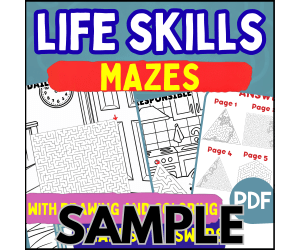
Life Skills Maze: 1 Page Sample (PDF)
ELA, Language Development, Vocabulary, Spelling, ESL, Resources for Teachers, Life Skills, Special Resources, Grade 2, 3, 4, 5, Worksheets & Printables, Worksheets, Teacher Tools, Centers, Activities, Mazes
THIS IS A ONE PAGE SAMPLE OF A SIX PAGE MAZE DOWNLOAD FULL SIX MAZE DOWNLOAD INFORMATION: Maze Series This maze series is designed for students in grades 2–5. Each set features a clear, kid-friendly theme with scene-based mazes that students first navigate, then complete by drawing a few target words from a simple word list. Pages come in varied styles and graduated difficulty, with an optional “color it in” step—and some themes invite quick calculations to match the task. These mazes are student-friendly, classroom-ready, and perfect for literacy warmups, seasonal units, fast-finisher bins, centers, sub plans, or home learning extensions. The playful, structured format builds problem-solving, attention to detail, and fine-motor control while reinforcing themed content in a motivating way. Note: Unlike many themed products, not all word-list words appear on the maze pages. To support full vocabulary coverage, we’ve released a companion word list you can find in the links section. Life Skills Word List 1. Being Responsible Chores, Listen, Help, Clean, Safe, Work, Try, Plan 2. Daily Routines Wake, Dress, Eat, Brush, Pack, Wash, Sleep, Rest 3. Social Skills Share, Wait, Ask, Say, Kind, Polite, Friend, Smile 4. Problem Solving Think, Fix, Try, Ask, Choice, Learn, Plan, Strong 5. Money and Shopping Money, Save, Spend, Shop, Price, Coin, Bill, Earn 6. Safety Skills Stop, Look, Listen, Helmet, Seatbelt, Cross, Hot, Help PDF Version Other versions will appear here when available. Follow the store for the lastest on new products. How to Use These Mazes Perfect for: Morning work or early-finisher bins Literacy or STEM centers Holiday/seasonal review lessons Independent stations, sub plans, or take-home enrichment More Life Skills Themed Products CROSSWORDS WORD SEARCHES FULL CATALOG OF DOWNLOAD LINKS HERE Themed Mazes Links Addition PDF Animals PDF Around the Home PDF Birthday PDF Candy PDF Christmas PDF Cinco de Mayo PDF Clothes PDF Colors PDF Days and Months PDF Division PDF Earth Day PDF Easter PDF Easy Mazes PDF Fall PDF Father's Day PDF Food PDF Geography (Set 1) PDF Geography (Set 2) PDF Geography (Set 3) PDF Graduation PDF Health PDF History (Set 1) PDF History (Set 2) PDF History (Set 3) PDF Human Body PDF Kindness PDF Life Skills PDF Mother's Day PDF Multiplication PDF Science (Set 1) PDF Science (Set 2) PDF Science (Set 3) PDF Shapes PDF Social Skills PDF Spring PDF Sports PDF St. Patrick's Day PDF Subtraction PDF Summer PDF Thanksgiving PDF Transport PDF Valentine's Day PDF Winter PDF Mazes in Depth Structure Each maze is crafted around a focused sub-theme. Students navigate the maze, encountering branches and cul-de-sacs that build attention and planning. Most pages include a tiny follow-up box—students draw or label 2–3 target words from a small word box, add a quick count, or color in the scene—so the activity reinforces both content and skills in a highly engaging format. Each completed set includes: A themed maze page. A simple student instruction strip. An answer key showing the solved path for teacher support or self-checking Themes Included These mazes cover a wide range of fun, age-appropriate themes, including: Seasons & Holidays (e.g., Halloween, Easter, Valentine’s Day) Math-Lite Connections (e.g., quick counts, number words) Everyday Topics (e.g., Animals, Weather, School) Special Units (e.g., Health, Earth Day, Sports, Kindness) Each topic reflects students’ real-life experiences and interests while strengthening problem-solving, visual scanning, and fine-motor control in a playful, highly visual way. Easy extensions (optional): Time it: solve once in pencil, then try to beat the time in pen Retell the route using sequence words (first, next, then, finally) Count intersections or turns and graph the results Write a 1–2 sentence mini-story about the scene using the target words Design a tiny maze in the corner for a partner to solve Differentiation tips: Offer a finger-trace pass before pencils for emerging learners Highlight the borders of the correct region on first attempts Use thicker-line versions or simpler pages to build confidence Pair roles: “navigator” gives directions; “driver” traces the path For similar downloads and other frees, do check out Cored Group on TeachSimple.
Author Cored Education
Rating
Tags Vocabulary, Spelling, Life Skills, Daily Routines, Social Skills, Problem Solving, Safety Skills, Life Skills Mazes, Maze, Mazes
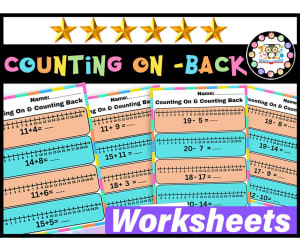
Counting On & Back Addition Subtraction Number Line Worksheets
Math, Addition and Subtraction, Addition, Subtraction, Counting, Early Math, Basic Operations, Kindergarten, Preschool, Grade 1, 2, 3, Worksheets & Printables, Worksheets, Workbooks, Activities, Centers, Experiments
This interactive and attractive setCounting On & Back Addition Subtraction Number Line Worksheets Pages learners develop their original Counting On & Back Addition Subtraction Number Line Worksheets this set contains 79 pages in this set, each in each a different Digraphs Counting On & Back Addition Subtraction Number Line Worksheets of dedicated Counting On & Back Addition Subtraction Number Line Worksheets Pagesto ensure a fun and structured approach to using a fun and type of work that useful; Each card is fun this edited set ofCounting On & Back Addition Subtraction Number Line Worksheets is built in an elegant style that attracts attention this interactive and attractive set of Counting On & Back Addition Subtraction Number Line Worksheetsdesigned to help young learners develop their originalCounting On & Back Addition Subtraction Number Line Worksheets skills through Counting On & Back Addition Subtraction Number Line Worksheets sexercises This set contains 79 pages. these printable Worksheets offer useful courses, this provides a useful course-rich practice, it is designed to help using resource grade 2 easily to learn about activities Counting On & Back Addition Subtraction Number Line Worksheets a fun and interactive manner. A collaborative learning activity added students. PDF format
Author LAMO
Rating
Tags Activities, Centers, Worksheets, Math, Basic Operations, Homework
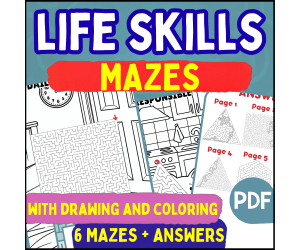
Life Skills Mazes (PDF)
ELA, Language Development, Vocabulary, Spelling, ESL, Resources for Teachers, Life Skills, Special Resources, Grade 2, 3, 4, 5, Worksheets & Printables, Worksheets, Teacher Tools, Centers, Activities, Mazes
Maze Series This maze series is designed for students in grades 2–5. Each set features a clear, kid-friendly theme with scene-based mazes that students first navigate, then complete by drawing a few target words from a simple word list. Pages come in varied styles and graduated difficulty, with an optional “color it in” step—and some themes invite quick calculations to match the task. These mazes are student-friendly, classroom-ready, and perfect for literacy warmups, seasonal units, fast-finisher bins, centers, sub plans, or home learning extensions. The playful, structured format builds problem-solving, attention to detail, and fine-motor control while reinforcing themed content in a motivating way. Note: Unlike many themed products, not all word-list words appear on the maze pages. To support full vocabulary coverage, we’ve released a companion word list you can find in the links section. Life Skills Word List 1. Being Responsible Chores, Listen, Help, Clean, Safe, Work, Try, Plan 2. Daily Routines Wake, Dress, Eat, Brush, Pack, Wash, Sleep, Rest 3. Social Skills Share, Wait, Ask, Say, Kind, Polite, Friend, Smile 4. Problem Solving Think, Fix, Try, Ask, Choice, Learn, Plan, Strong 5. Money and Shopping Money, Save, Spend, Shop, Price, Coin, Bill, Earn 6. Safety Skills Stop, Look, Listen, Helmet, Seatbelt, Cross, Hot, Help PDF Version Other versions will appear here when available. Follow the store for the lastest on new products. How to Use These Mazes Perfect for: Morning work or early-finisher bins Literacy or STEM centers Holiday/seasonal review lessons Independent stations, sub plans, or take-home enrichment More Life Skills Themed Products CROSSWORDS WORD SEARCHES FULL CATALOG OF DOWNLOAD LINKS HERE Themed Mazes Links Addition PDF Animals PDF Around the Home PDF Birthday PDF Candy PDF Christmas PDF Cinco de Mayo PDF Clothes PDF Colors PDF Days and Months PDF Division PDF Earth Day PDF Easter PDF Easy Mazes PDF Fall PDF Father's Day PDF Food PDF Geography (Set 1) PDF Geography (Set 2) PDF Geography (Set 3) PDF Graduation PDF Health PDF History (Set 1) PDF History (Set 2) PDF History (Set 3) PDF Human Body PDF Kindness PDF Life Skills PDF Mother's Day PDF Multiplication PDF Science (Set 1) PDF Science (Set 2) PDF Science (Set 3) PDF Shapes PDF Social Skills PDF Spring PDF Sports PDF St. Patrick's Day PDF Subtraction PDF Summer PDF Thanksgiving PDF Transport PDF Valentine's Day PDF Winter PDF Mazes in Depth Structure Each maze is crafted around a focused sub-theme. Students navigate the maze, encountering branches and cul-de-sacs that build attention and planning. Most pages include a tiny follow-up box—students draw or label 2–3 target words from a small word box, add a quick count, or color in the scene—so the activity reinforces both content and skills in a highly engaging format. Each completed set includes: A themed maze page. A simple student instruction strip. An answer key showing the solved path for teacher support or self-checking Themes Included These mazes cover a wide range of fun, age-appropriate themes, including: Seasons & Holidays (e.g., Halloween, Easter, Valentine’s Day) Math-Lite Connections (e.g., quick counts, number words) Everyday Topics (e.g., Animals, Weather, School) Special Units (e.g., Health, Earth Day, Sports, Kindness) Each topic reflects students’ real-life experiences and interests while strengthening problem-solving, visual scanning, and fine-motor control in a playful, highly visual way. Easy extensions (optional): Time it: solve once in pencil, then try to beat the time in pen Retell the route using sequence words (first, next, then, finally) Count intersections or turns and graph the results Write a 1–2 sentence mini-story about the scene using the target words Design a tiny maze in the corner for a partner to solve Differentiation tips: Offer a finger-trace pass before pencils for emerging learners Highlight the borders of the correct region on first attempts Use thicker-line versions or simpler pages to build confidence Pair roles: “navigator” gives directions; “driver” traces the path For similar downloads and other frees, do check out Cored Group on TeachSimple.
Author Cored Education
Rating
Tags Vocabulary, Spelling, Life Skills, Daily Routines, Social Skills, Problem Solving, Safety Skills, Life Skills Mazes, Maze, Mazes

Jugglers Reading Comprehension Passage - Cored Ed Encyclopedia
ELA, Reading Comprehension, Reading, Language Development, History, Social Studies, Geography, Pre-Reading, Vocabulary, Spelling, Grade 2, 3, 4, 5, Worksheets & Printables, Worksheets, Teacher Tools, Centers, Activities, Writing Prompts, Assessments, Quizzes and Tests, Quizzes, Lesson Plans
This Jugglers reading comprehension with lesson plan includes: Visualization (on the front cover) Start your lesson by taking a minute to think and share something about the topic. Read the script aloud (slowly), perhaps prepare some music or sound effects. Student close their eyes and let their imaginations wander. Students open their eyes, read the question aloud and give them a few minutes to complete. Ask a few students to share or keep answers until the end to compare with what they learn in the passage. Quick pause—thousands of Cored Education products are included with your TeachSimple membership. Download links and encyclopedia index available here. Pre-Reading Trivia Students will write down one thing they already know about the subject and then read five more facts and discuss. These facts are fun, and the students will enjoy learning about the subject before reading more. Give 1 minute for students to write what they already know (no pressure—best guess is fine). Read the five facts together. After each fact, do ask a student for their opinion, was it surprising? Set a purpose by asking students to highlight/underline one fact they want to learn more about during the reading. Reading Passage The text is a high-interest reading passage with set paragraphs, roughly three to four paragraphs long. It contains a variety of themes about the topic, anywhere from history to technology. The passage is between 250 and 350 words in length. First, ask students to look at the headings and see what they’ll learn about today. What do they know about the topic/heading? First read options: Teacher read-aloud (best for support). Partner reading (paragraph by paragraph). While reading, students underline important details, and vocabulary words they think may come up in the questions section. Mixed Questions The first question page contains four multiple-choice questions, each with a choice of four answers, and three written response questions that require a sentence or two from the student. Students complete the mcqs first independently, then review quickly as a class. For the 3 written responses, try to get students giving the answer with some form of evidence: “I think ___ because the text says ___.” If students get stuck, send them back to check the passage. Vocabulary Questions Practice seven key words from the text in this section across two activities. First section is scrambled words where students will unscramble three words given a clue for each. The second section is a word to meaning matching activity. Before starting, have some students read out words they underlined in the passage. Ask students to say the word and read aloud the sentence(s) around each word. Ask students to do scrambled words and the matching exercise in pairs then go through answers as a class. For the scrambled spelling task, get four pairs to come up to the board and write the words for extra practice with the other student reading out the clue. For the matching task, prompt students to give full sentences: “I matched ___ with ___ because ___.” Creative Writing In this question, the student will be required to write a five to eight sentence paragraph on a question related to the topic. Before starting, ask students write down 3 key ideas they are going to include in their piece. Ask students for ideas to share around the class to help those struggling. Pro writing expectations: 5–8 sentences At least 2 facts or details from the passage At least 2 vocabulary words from the previous page Students read their paragraphs while classmates listen for facts and vocabulary words. Extension Activities This page is optional for fast finishers or to take home. There are several activities, each one requiring a different skill. Do some, do none, do all, completely optional - but you will feel reassured knowing every possibility is planned for. Includes summary writting question and additional facts. Answer Key There are answers for the multiple-choice questions, written response questions have sample answers, vocabulary answers and if there is a summary question then a sample summary will be provided as well. Lesson Plan Included Customized lesson plan for this lesson is included. Lesson Snapshot Title: Jugglers Genre: Nonfiction (informational text) Subject: Reading (Informational Text) / Social Studies / Arts Primary Topic: Juggling across history and repeating patterns Estimated Guided Reading Level (A–Z): S What This Lesson Teaches Best Traces juggling through time and places (ancient Egypt, China, Greece/Rome, Europe, and today). Uses a historical example (an Egyptian tomb painting) to explain evidence of early juggling and what it suggests about audiences. Highlights performance skills jugglers show—control, timing, courage—and how crowds can understand the act “without any words.” Explains change over time: juggling’s reputation in Europe after the Roman Empire weakened, and how modern circuses brought it into the spotlight. Emphasizes the repeating pattern at the heart of juggling (throw, wait, catch, repeat) and connects it to learning rhythm with patience. Learning Goals Describe what the Egyptian tomb painting shows and why the passage calls it an early picture of toss juggling. Explain how juggling was used to impress or amaze people in different cultures mentioned in the text. Describe how some people in Europe viewed jugglers later and explain what the skill did instead of disappearing. Identify the basic juggling pattern named in the passage and explain why it matters. Compare where a juggler might perform today (stage, circus ring, sidewalk) and explain what stays the same. Key Vocabulary From the Text tomb — a place where someone is buried. audiences — groups of people watching a performance. festivals — celebrations with events and crowds. rhythm — a steady beat or timing pattern. wrongdoing — doing something people believe is wrong. FULL CATALOG OF DOWNLOAD LINKS AND ENCYCLOPEDIA INDEX HERE
Author Cored Education
Rating
Tags Vocabulary, Reading Comprehension, Reading Passages, Lesson Plans, Ela Lesson Plans, Reading Comprehension Lesson Plans, Pre-reading, Social Studies Lesson Plans, History, Geography

Candy Reading Comprehension 1 Lesson Sample Google Docs
ELA, Language Development, Resources for Teachers, Vocabulary, Spelling, Reading Comprehension, Reading, Early Math, Math, Common Core, Grade 2, 3, 4, 5, Worksheets & Printables, Worksheets, Teacher Tools, Centers, Activities, Assessments, Tests, Quizzes and Tests, Word Problems, Writing Prompts
THIS IS A ONE LESSON FREE SAMPLE OF THE FOLLOWING PRODUCT: Themed Reading Comprehension Passages Series - Candy This reading comprehension series is built for grades 2 to 5 and keeps things simple, clear, and easy to use. Every title follows a fun, kid-friendly theme and comes with two passage levels, one written for grades 2 to 3 and a more challenging version for grades 4 to 5. Students then work through a mix of follow-up pages that check understanding in different ways: multiple-choice questions, short written responses, scrambled words, a quick summary, and a theme-based word problem. Answer keys are included, so prep stays minimal. Each resource also comes in nine classroom-friendly formats, so you can choose what fits your setup: print or digital, editable or ready to go, and even self-grading options. Because the layout stays consistent, it is easy to plug into whole-class lessons, small groups, literacy centers, morning work, fast finisher tubs, sub plans, or home learning. It is a straightforward way to build comprehension, practice reading skills in context, and strengthen written responses without adding extra steps for you. Candy Lesson List Note: This product has titles different to those in the rest of the themed series. 1. Candy Types 2. Candy Flavors 3. Candy Shapes and Colors 4. Candy Ingredients 5. Candy Fun Facts GOOGLE DOCS VERSION Editable worksheet-style pages in the cloud, ideal for sharing, commenting, and assigning through Google Classroom. Other versions are available in the links list below or in the full catalog. How to Use These Lessons Perfect for: Morning work or early-finisher bins Guided reading blocks or comprehension warmups Literacy centers or small-group rotations Holiday/seasonal review lessons Independent stations, sub plans, or take-home enrichment More Candy Themed Products CROSSWORDS WORDSEARCHES MAZES FULL CATALOG OF DOWNLOAD LINKS HERE Themed Reading Links Addition Animals Around the Home Birthday FORMATS: -FORMAL ASSESSMENT VERSION -PRESENTABLE PDF -PPT -SLIDES - PDF -FILLABLE PDF -WORD -FORMS -DOCS SUPPLEMENTARY MATERIALS (COMING SOON): -VISUAL READING PASSAGE VIDEO -GUIDED LEARNING VIDEO -LESSON PLANS Candy FORMATS: -FORMAL ASSESSMENT VERSION -PRESENTABLE PDF -PPT -SLIDES -PDF -FILLABLE PDF -WORD -FORMS -DOCS SUPPLEMENTARY MATERIALS (COMING SOON): -VISUAL READING PASSAGE VIDEO -GUIDED LEARNING VIDEO -LESSON PLANS Christmas Cinco de Mayo Clothes Colors Days and Months Division Earth Day Easter Easy Mazes Fall Father's Day Food Geography (Set 1) Geography (Set 2) Geography (Set 3) Graduation Health History (Set 1) History (Set 2) History (Set 3) Human Body Kindness Life Skills Mother's Day Multiplication Science (Set 1) Science (Set 2) Science (Set 3) Shapes Social Skills Spring Sports St. Patrick's Day Subtraction Summer Thanksgiving Transport Valentine's Day Winter Free One Lesson Themes Chinese New Year Lunar New Year Halloween Pink Shirt Day Independence Day Juneteenth President's Day Groundhog Day Readings in Depth Structure Each resource is built around a focused sub-theme within the broader topic. Students read two leveled passages (Grades 2–3 and Grades 4–5), then move through a short, consistent sequence of activities that checks understanding and keeps momentum: multiple-choice, brief written responses, a scrambled-words review, a compact summary task, and a light theme-linked word problem. The flow is predictable for students, but varied enough to feel fresh across topics. Each completed resource includes: Two differentiated reading passages (lower and upper level) A multiple-choice comprehension page Short written-response questions A scrambled-words or quick vocabulary check A brief summary activity A simple, theme-connected word problem Answer keys for fast marking and easy self-checking Nine classroom-friendly formats, including print, editable, digital, and self-grading options Themes Included These readings span a wide range of age-appropriate, high-interest topics, such as: Seasons and celebrations Real-world science and nature Community, character, and life skills Everyday high-frequency themes students already enjoy Each title connects to familiar experiences while strengthening comprehension, vocabulary in context, and clear written expression. Easy extensions (optional): Read twice: first for gist, second to highlight key details Write two “right there” questions and swap with a partner Create a 3-bullet fact list or mini mind map Turn the summary into a 3-sentence retell using sequence words Add one extra math question connected to the topic Compare the two levels: what details appear in both? Differentiation tips: Pre-teach 2–3 key words with quick examples Offer sentence starters for written responses Use partner reading: one reads aloud, one tracks evidence Allow highlighting or underlining before answering questions Provide a shorter chunking option for students who need breaks Encourage confident readers to justify answers with a quoted detail For similar downloads and other frees, do check out Cored Group on TeachSimple.
Author Cored Education
Rating
Tags Vocabulary, Spelling, Candy, Candy Activities, Writing Prompts, Word Problems, Reading Comprehension, Candy Reading, Candy Passages, Reading Passages
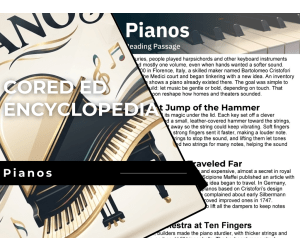
Pianos Reading Comprehension Passage - Cored Ed Encyclopedia
ELA, Language Development, Resources for Teachers, Reading Comprehension, Reading, Pre-Reading, Writing, Strategies, Music, Creative Arts, Grade 2, 3, 4, 5, Worksheets & Printables, Worksheets, Teacher Tools, Centers, Activities, Writing Prompts, Assessments, Tests, Quizzes and Tests, Quizzes
This pianos reading comprehension contains the following: Visualize on the Cover (Teacher Read Aloud Script) Start your lesson by taking a few moments to visualize the topic and share thoughts or feelings about it. Pre-Reading Trivia Students will write down one thing they already know about the subject and then read five more facts and discuss. These facts are fun, and the students will enjoy learning about the subject before reading more. Reading Passage The text is a high-interest reading passage with set paragraphs, roughly three to four paragraphs long. It contains a variety of themes about the topic, anywhere from history to technology. The passage is between 250 and 350 words in length. Mixed Questions The first question page contains four multiple-choice questions, each with a choice of four answers, and three written response questions that require a sentence or two from the student. Vocabulary Questions Practice seven key words from the text in this section across two activities. First section is scrambled words where students will unscramble three words given a clue for each. The second section is a word to meaning matching activity. Creative Writing In this question, the student will be required to write a five to eight sentence paragraph on a question related to the topic. Extension Activities This page is optional for fast finishers or to take home. There are several activities, each one requiring a different skill. Do some, do none, do all, completely optional - but you will feel reassured knowing every possibility is planned for. Includes summary writting question. Answer Key There are answers for the multiple-choice questions, written response questions have sample answers, vocabulary answers and if there is a summary question then a sample summary will be provided as well. FULL CATALOG OF DOWNLOAD LINKS AND ENCYCLOPEDIA INDEX HERE Lesson Snapshot Title: Pianos Genre: Nonfiction (informational text) Subject: Music (Performing Arts) / Reading Informational Text Primary Topic: How the piano was invented and improved Estimated Guided Reading Level (A–Z): S What This Lesson Teaches Best How the piano idea began around 1700 in Florence, Italy , with Bartolomeo Cristofori trying to make music “gentle or bold” depending on touch. How the piano’s key action works: a mechanism sends a leather-covered hammer to strike strings, then pulls back so the string keeps vibrating . How dampers stop strings from ringing—and lifting them lets tones ring longer. How information spread the invention: Scipione Maffei published an article with a diagram , leading builders like Gottfried Silbermann to make pianos based on Cristofori’s design. How the piano grew for bigger spaces: sturdier builds and a wider range from about four octaves to 88 keys , changing where music could be played (homes, schools, apartments, stages). Learning Goals Students will explain why Cristofori began tinkering with a new keyboard instrument around 1700. Students will describe how a key triggers the hammer-and-string action using details from the passage. Students will explain how a player’s touch can make the sound softer or louder according to the text. Students will identify how Maffei helped the piano idea travel and name one builder mentioned who made pianos afterward. Students will describe how the piano’s keyboard range changed over time and state the number of keys many pianos have today. Key Vocabulary From the Text harpsichords — older keyboards that stayed mostly one volume. inventory — a recorded list that showed a piano existed. mechanism — moving parts that make the piano action work. dampers — parts that stop strings from ringing. octaves — groups of notes used to describe keyboard range. Cored Ed Encyclopedia Overview The Cored Ed Encyclopedia is a weekly series of lessons that you can pick up and use right away. These short readings fit into whatever time you have available. Each one includes a warm-up, a reading, and a set of questions, but it’s flexible — you can do just the reading, the full lesson, or skip the writing section if you need to. Each lesson focuses on a single topic so students don’t get lost. The writing is clear but never childish, making it perfect for grades two through five. Topics range from animals and science to history, inventions, and everyday things. No matter the level of the student, everyone should take away at least one new idea or fact from each lesson. The materials are easy to print, easy to explain, and require no setup. They work well for whole-class teaching, partner work, or independent study.
Author Cored Education
Rating
Tags Vocabulary, Spelling, Reading Comprehension, Reading Passages, Reading, Creative Writing, Reading Strategies, Writing Prompts, Music, Pianos
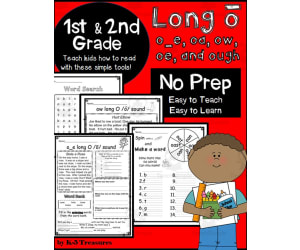
Phonics for 1st and 2nd Grade: Help Students Learn Long O Words: O_E, OA, OW, OE, and OUGH
ELA, Grammar, Language Development, Phonics, Reading, Grade 1, 2, Worksheets & Printables, Worksheets, Teacher Tools, Lesson Plans
This unit focuses only on the Long O sounds. Learning how to read can be the most challenging activity for students and for a teacher. Understanding that the combination of letters can make the same vowel sound requires lots of repetitive practice of reading and writing these words with these sounds. There are other phonics units that I sell that focuses on each of the long vowels with a combination of different letters. Reading can be made easier with these phonic helps that repeatedly encourage students to practice these Long O sounds. Activities include: - Reading comprehension and identifying the Long O in their reading - Writing their answers to questions regarding the paragraph - Identifying additional Long O words in sentences using a word bank - Matching words with pictures - Spinning a paperclip activity where students will write the word with the Long O sound - and lastly a fun wordsearch with variations of Long O words. These activities are for each long vowel words that are focused on the Long O sounds so there are plenty of opportunities for students to practice their comprehension reading skills and phonic sounds. Students will practice the following Long O Word sounds: O_E, OA, OW, OE, and OUGH. Teachers can use this resource in whole group, individually with students, students can practice with each other in centers, or these worksheets can be assigned as homework. Worksheets are also differentiated for each Long O sounds for all young learners which makes it perfect for all 1st - 2nd graders. A total of 31 pages full of reading and phonic activities. Along with reading and writing, there are matching, cutting, and pasting activities. Word searches and spin and make a word activity are also a part of this packet which make learning to read these phonic sounds entertaining for young learners. For a list of other phonics and grammar activities, click on the following links: CVC Word Families for Beginning Readers: Stamp it, Make it, Trace it, and Write it CVC Words | Short Vowel Phonics | Word Families for K- 2nd Grade Phonics for 1st and 2nd Grade: Help Students Learn Long A Words: AY, AI, A_E, EIGH, EY, and EA Phonics for 1st and 2nd Grade: Help Students Learn Long E Words: EE, EA, E_E, and Y Phonics for 1st and 2nd Grade: Help Students Learn Long I Words: I_E, IE, IGH, and Y Phonics for 1st and 2nd Grade: Help Students Learn Long O Words: O_E, OA, OW, OE, and OUGH Phonics for 1st and 2nd Grade: Help Students Learn Long U Words: U_E, EW, OO, UE, UI and OU Phonics / Digraphs for 1st and 2nd Grade: Beginning, Middle, and Ending Sounds Phonics / Digraphs for 1st -2nd: Ending Sounds: CK, NG, SH, TH, and NK Phonics / Digraphs for 1st and 2nd Grade: Beginning Sounds: SH, TH, WH and PH Phonics: R-Controlled Words for 1st and 2nd Grade and Early Readers
Author K-5 Treasures
Tags Phonics, Grammar, Vowel Sounds, Long Vowel Sounds, Reading, Long O Sounds, 1st Grade, 2nd Grade, Long O Words, Long O Words With Oe
Icebergs Reading Comprehension Passage - Cored Ed Encyclopedia
ELA, Reading Comprehension, Reading, Language Development, History, Social Studies, Science, Physics, Earth and Environmental Sciences, Pre-Reading, Grade 2, 3, 4, 5, Worksheets & Printables, Worksheets, Teacher Tools, Centers, Activities, Writing Prompts, Assessments, Quizzes and Tests, Quizzes, Lesson Plans
This Icebergs reading comprehension with lesson plan includes: Visualization (on the front cover) Start your lesson by taking a minute to think and share something about the topic. Read the script aloud (slowly), perhaps prepare some music or sound effects. Student close their eyes and let their imaginations wander. Students open their eyes, read the question aloud and give them a few minutes to complete. Ask a few students to share or keep answers until the end to compare with what they learn in the passage. Quick pause—thousands of Cored Education products are included with your TeachSimple membership. Download links and encyclopedia index available here. Pre-Reading Trivia Students will write down one thing they already know about the subject and then read five more facts and discuss. These facts are fun, and the students will enjoy learning about the subject before reading more. Give 1 minute for students to write what they already know (no pressure—best guess is fine). Read the five facts together. After each fact, do ask a student for their opinion, was it surprising? Set a purpose by asking students to highlight/underline one fact they want to learn more about during the reading. Reading Passage The text is a high-interest reading passage with set paragraphs, roughly three to four paragraphs long. It contains a variety of themes about the topic, anywhere from history to technology. The passage is between 250 and 350 words in length. First, ask students to look at the headings and see what they’ll learn about today. What do they know about the topic/heading? First read options: Teacher read-aloud (best for support). Partner reading (paragraph by paragraph). While reading, students underline important details, and vocabulary words they think may come up in the questions section. Mixed Questions The first question page contains four multiple-choice questions, each with a choice of four answers, and three written response questions that require a sentence or two from the student. Students complete the mcqs first independently, then review quickly as a class. For the 3 written responses, try to get students giving the answer with some form of evidence: “I think ___ because the text says ___.” If students get stuck, send them back to check the passage. Vocabulary Questions Practice seven key words from the text in this section across two activities. First section is scrambled words where students will unscramble three words given a clue for each. The second section is a word to meaning matching activity. Before starting, have some students read out words they underlined in the passage. Ask students to say the word and read aloud the sentence(s) around each word. Ask students to do scrambled words and the matching exercise in pairs then go through answers as a class. For the scrambled spelling task, get four pairs to come up to the board and write the words for extra practice with the other student reading out the clue. For the matching task, prompt students to give full sentences: “I matched ___ with ___ because ___.” Creative Writing In this question, the student will be required to write a five to eight sentence paragraph on a question related to the topic. Before starting, ask students write down 3 key ideas they are going to include in their piece. Ask students for ideas to share around the class to help those struggling. Pro writing expectations: 5–8 sentences At least 2 facts or details from the passage At least 2 vocabulary words from the previous page Students read their paragraphs while classmates listen for facts and vocabulary words. Extension Activities This page is optional for fast finishers or to take home. There are several activities, each one requiring a different skill. Do some, do none, do all, completely optional - but you will feel reassured knowing every possibility is planned for. Includes summary writting question and additional facts. Answer Key There are answers for the multiple-choice questions, written response questions have sample answers, vocabulary answers and if there is a summary question then a sample summary will be provided as well. Lesson Plan Included Customized lesson plan for this lesson is included. Lesson Snapshot Title: Icebergs Genre: Nonfiction (informational passage) Subject: Reading (Informational Text) / Earth Science Primary Topic: How icebergs form, drift, and change Estimated Guided Reading Level (A–Z): R What This Lesson Teaches Best Key facts about iceberg floating: ice is lighter than seawater and most of an iceberg is below the surface (about 90% underwater). How icebergs form from glaciers on land, including the process called calving when a piece breaks away at the sea. Human safety and history connections: the Titanic tragedy and how the International Ice Patrol began sending warnings to ships. How icebergs change shape over time (waves at the waterline, meltwater weakening from above) and why scientists track them (ocean currents, changing polar ice). Using headings to organize information into focused sections (formation, safety/history, observation/science clues). Learning Goals Explain why most of an iceberg is hidden under the ocean’s surface. Describe how snow becomes hard glacier ice and how a new iceberg forms. Define calving using details from the passage. Identify what happened in 1912 and how it led to safer travel for ships. Describe two ways an iceberg can change shape and one reason scientists watch iceberg paths. Key Vocabulary From the Text seawater — ocean water with salt in it. surface — the top layer of something. glacier — a huge, slow-moving river of ice. calving — when a piece breaks off a glacier. currents — moving flows of ocean water. FULL CATALOG OF DOWNLOAD LINKS AND ENCYCLOPEDIA INDEX HERE
Author Cored Education
Rating
Tags Vocabulary, Reading Comprehension, Reading Passages, Lesson Plans, Ela Lesson Plans, Reading Comprehension Lesson Plans, Pre-reading, History, Science Lesson Plans, Earth Science

Jewelry Reading Comprehension Passage - Cored Ed Encyclopedia
ELA, Reading Comprehension, Reading, Language Development, History, Social Studies, Science, Physics, Life Sciences, Earth and Environmental Sciences, Grade 2, 3, 4, 5, Worksheets & Printables, Worksheets, Teacher Tools, Centers, Activities, Writing Prompts, Assessments, Quizzes and Tests, Quizzes, Lesson Plans
This Jewelry reading comprehension with lesson plan includes: Visualization (on the front cover) Start your lesson by taking a minute to think and share something about the topic. Read the script aloud (slowly), perhaps prepare some music or sound effects. Student close their eyes and let their imaginations wander. Students open their eyes, read the question aloud and give them a few minutes to complete. Ask a few students to share or keep answers until the end to compare with what they learn in the passage. Quick pause—thousands of Cored Education products are included with your TeachSimple membership. Download links and encyclopedia index available here. Pre-Reading Trivia Students will write down one thing they already know about the subject and then read five more facts and discuss. These facts are fun, and the students will enjoy learning about the subject before reading more. Give 1 minute for students to write what they already know (no pressure—best guess is fine). Read the five facts together. After each fact, do ask a student for their opinion, was it surprising? Set a purpose by asking students to highlight/underline one fact they want to learn more about during the reading. Reading Passage The text is a high-interest reading passage with set paragraphs, roughly three to four paragraphs long. It contains a variety of themes about the topic, anywhere from history to technology. The passage is between 250 and 350 words in length. First, ask students to look at the headings and see what they’ll learn about today. What do they know about the topic/heading? First read options: Teacher read-aloud (best for support). Partner reading (paragraph by paragraph). While reading, students underline important details, and vocabulary words they think may come up in the questions section. Mixed Questions The first question page contains four multiple-choice questions, each with a choice of four answers, and three written response questions that require a sentence or two from the student. Students complete the mcqs first independently, then review quickly as a class. For the 3 written responses, try to get students giving the answer with some form of evidence: “I think ___ because the text says ___.” If students get stuck, send them back to check the passage. Vocabulary Questions Practice seven key words from the text in this section across two activities. First section is scrambled words where students will unscramble three words given a clue for each. The second section is a word to meaning matching activity. Before starting, have some students read out words they underlined in the passage. Ask students to say the word and read aloud the sentence(s) around each word. Ask students to do scrambled words and the matching exercise in pairs then go through answers as a class. For the scrambled spelling task, get four pairs to come up to the board and write the words for extra practice with the other student reading out the clue. For the matching task, prompt students to give full sentences: “I matched ___ with ___ because ___.” Creative Writing In this question, the student will be required to write a five to eight sentence paragraph on a question related to the topic. Before starting, ask students write down 3 key ideas they are going to include in their piece. Ask students for ideas to share around the class to help those struggling. Pro writing expectations: 5–8 sentences At least 2 facts or details from the passage At least 2 vocabulary words from the previous page Students read their paragraphs while classmates listen for facts and vocabulary words. Extension Activities This page is optional for fast finishers or to take home. There are several activities, each one requiring a different skill. Do some, do none, do all, completely optional - but you will feel reassured knowing every possibility is planned for. Includes summary writting question and additional facts. Answer Key There are answers for the multiple-choice questions, written response questions have sample answers, vocabulary answers and if there is a summary question then a sample summary will be provided as well. Lesson Plan Included Customized lesson plan for this lesson is included. Lesson Snapshot Title: Jewelry Genre: Nonfiction (informational text) Subject: Reading (Informational Text) / Social Studies Primary Topic: Jewelry history, materials, meaning, and sparkle Estimated Guided Reading Level (A–Z): R What This Lesson Teaches Best Explains that people made and wore jewelry long ago using shells, teeth, and bone, and includes evidence archaeologists found (seashells with holes worn smooth). Shows how new tools changed jewelry-making by shaping gold into beads, bracelets, and pieces worn close to the skin. Introduces where gems come from (hard minerals from the earth and some from living things, like pearls and amber). Describes how cutting gems into flat faces called facets increased sparkle and how factories later made fake gems. Emphasizes that jewelry can matter because of symbols, faith, celebrations, and memories—not only because it is bright or rare. Learning Goals Describe evidence the passage gives that very old shell beads were worn as jewelry. Explain how tools helped people shape gold into jewelry long ago. Identify where different gems can come from (earth minerals or living things) using details from the text. Explain how facets changed the way gems looked and why they started to “dance and flash.” Describe reasons people wear jewelry today (faith, celebration, marking life moments, memories). Key Vocabulary From the Text archaeologists — scientists who study the human past. ceremonies — special events held for a purpose. minerals — natural, nonliving materials from the earth. facets — flat faces cut on a gemstone. amber — hardened sticky tree sap used as a gem. FULL CATALOG OF DOWNLOAD LINKS AND ENCYCLOPEDIA INDEX HERE
Author Cored Education
Rating
Tags Vocabulary, Reading Comprehension, Reading Passages, Lesson Plans, Ela Lesson Plans, Reading Comprehension Lesson Plans, Pre-reading, Science Lesson Plans, Earth Science, Physics

Phonics / Digraphs for 1st and 2nd Grade: Beginning Sounds: SH, TH, WH and PH
ELA, Reading, Reading Comprehension, Grammar, Language Development, Phonics, Strategies, Pre-Reading, Grade 1, 2, Worksheets & Printables, Worksheets, Teacher Tools, Lesson Plans
This unit focuses only on the Beginning Digraph sounds. Learning how to read can be the most challenging activity for many students and for a teacher. A digraph in the English language are two letters put together that represents a single sound or phoneme. Understanding that the combination of letters can make one sound can be difficult to master and requires repetitive practice of reading and writing these words with these sounds. There are other phonics units that I sell that focuses on the Ending digraph sounds, and one that focuses on all three digraph sounds in the Beginning, Middle and End. Reading can be made easier with these phonic helps that repeatedly encourage students to practice these Beginning Digraph sounds. Activities include reading comprehension and identifying the digraphs in their reading, writing their answers to questions regarding the paragraph, identifying additional beginning digraph words in sentences using a word bank, matching words with pictures, spinning a paperclip activity where students will write the word with the digraph sound, and lastly a fun wordsearch with the beginning digraph words. These activities are for each digraph so there is plenty of opportunities for students to practice their comprehension reading skills and phonic sounds. Students will practice the following Beginning Digraph sounds: sh, th, wh, and ph. Teachers can use this resource in whole group, individually with students, students can practice with each other in centers, or they can be assigned as homework. Worksheets are also differentiated for each Beginning Digraph sound for all young learners which makes it perfect for all 1st - 2nd graders. A total of 26 pages full of reading and phonic activities. Along with reading and writing, there are matching, cutting, and pasting activities. Word searches and spin and make a word activity are also a part of this packet which make learning to read these phonic sounds entertaining for young learners. For a list of other phonics and grammar activities, click on the following links: CVC Word Families for Beginning Readers: Stamp it, Make it, Trace it, and Write it CVC Words | Short Vowel Phonics | Word Families for K- 2nd Grade Phonics for 1st and 2nd Grade: Help Students Learn Long A Words: AY, AI, A_E, EIGH, EY, and EA Phonics for 1st and 2nd Grade: Help Students Learn Long E Words: EE, EA, E_E, and Y Phonics for 1st and 2nd Grade: Help Students Learn Long I Words: I_E, IE, IGH, and Y Phonics for 1st and 2nd Grade: Help Students Learn Long O Words: O_E, OA, OW, OE, and OUGH Phonics for 1st and 2nd Grade: Help Students Learn Long U Words: U_E, EW, OO, UE, UI and OU Phonics / Digraphs for 1st and 2nd Grade: Beginning, Middle, and Ending Sounds Phonics / Digraphs for 1st -2nd: Ending Sounds: CK, NG, SH, TH, and NK Phonics / Digraphs for 1st and 2nd Grade: Beginning Sounds: SH, TH, WH and PH Phonics: R-Controlled Words for 1st and 2nd Grade and Early Readers
Author K-5 Treasures
Tags Beginning Sounds, Phonics , Sh Words, Th Words, Wh Words, Ph Words, Reading , Digraph Words, Th Digraphs, First Grade Digraphs

Droughts Reading Comprehension Passage - Cored Ed Encyclopedia
ELA, Reading Comprehension, Reading, Science, Technology, Social Studies, History, Earth and Environmental Sciences, Life Sciences, Geography, Grade 2, 3, 4, 5, Worksheets & Printables, Worksheets, Teacher Tools, Centers, Activities, Writing Prompts, Assessments, Quizzes and Tests, Quizzes, Lesson Plans
This droughts reading comprehension with lesson plan includes: Visualization (on the front cover) Start your lesson by taking a minute to think and share something about the topic. Read the script aloud (slowly), perhaps prepare some music or sound effects. Student close their eyes and let their imaginations wander. Students open their eyes, read the question aloud and give them a few minutes to complete. Ask a few students to share or keep answers until the end to compare with what they learn in the passage. Quick pause—thousands of Cored Education products are included with your TeachSimple membership. Download links and encyclopedia index available here. Pre-Reading Trivia Students will write down one thing they already know about the subject and then read five more facts and discuss. These facts are fun, and the students will enjoy learning about the subject before reading more. Give 1 minute for students to write what they already know (no pressure—best guess is fine). Read the five facts together. After each fact, do ask a student for their opinion, was it surprising? Set a purpose by asking students to highlight/underline one fact they want to learn more about during the reading. Reading Passage The text is a high-interest reading passage with set paragraphs, roughly three to four paragraphs long. It contains a variety of themes about the topic, anywhere from history to technology. The passage is between 250 and 350 words in length. First, ask students to look at the headings and see what they’ll learn about today. What do they know about the topic/heading? First read options: Teacher read-aloud (best for support). Partner reading (paragraph by paragraph). While reading, students underline important details, and vocabulary words they think may come up in the questions section. Mixed Questions The first question page contains four multiple-choice questions, each with a choice of four answers, and three written response questions that require a sentence or two from the student. Students complete the mcqs first independently, then review quickly as a class. For the 3 written responses, try to get students giving the answer with some form of evidence: “I think ___ because the text says ___.” If students get stuck, send them back to check the passage. Vocabulary Questions Practice seven key words from the text in this section across two activities. First section is scrambled words where students will unscramble three words given a clue for each. The second section is a word to meaning matching activity. Before starting, have some students read out words they underlined in the passage. Ask students to say the word and read aloud the sentence(s) around each word. Ask students to do scrambled words and the matching exercise in pairs then go through answers as a class. For the scrambled spelling task, get four pairs to come up to the board and write the words for extra practice with the other student reading out the clue. For the matching task, prompt students to give full sentences: “I matched ___ with ___ because ___.” Creative Writing In this question, the student will be required to write a five to eight sentence paragraph on a question related to the topic. Before starting, ask students write down 3 key ideas they are going to include in their piece. Ask students for ideas to share around the class to help those struggling. Pro writing expectations: 5–8 sentences At least 2 facts or details from the passage At least 2 vocabulary words from the previous page Students read their paragraphs while classmates listen for facts and vocabulary words. Extension Activities This page is optional for fast finishers or to take home. There are several activities, each one requiring a different skill. Do some, do none, do all, completely optional - but you will feel reassured knowing every possibility is planned for. Includes summary writting question and additional facts. Answer Key There are answers for the multiple-choice questions, written response questions have sample answers, vocabulary answers and if there is a summary question then a sample summary will be provided as well. Lesson Plan Included Customized lesson plan for this lesson is included. Lesson Snapshot Title: Droughts Genre: Nonfiction (informational text with headings) Subject: Earth Science / Life Science / Reading (Informational Text) Primary Topic: What drought is, types, effects, and tracking Estimated Guided Reading Level (A–Z): Q What This Lesson Teaches Best Defines drought as a stretch of time when a region is drier than normal and can last from days to years. Explains types of drought (meteorological vs. hydrological) and describes what changes in streams, reservoirs, and groundwater. Uses concrete signs/evidence of drought (no puddles, dull grass, cracked ground, animals traveling farther, rivers showing more rocks). Connects history to learning: the Dust Bowl in the 1930s and how it led to soil-saving methods and drought indices. Introduces modern monitoring and responses (rain gauges, river sensors, satellites; fixing leaks, reusing water, collecting rain). Learning Goals Students will define drought using the book’s description and time frames. Students will identify signs of drought described in the passage (e.g., puddles, grass, cracked ground, rivers). Students will explain the difference between meteorological drought and hydrological drought using text evidence. Students will describe what happened during the Dust Bowl and why it mattered for tracking dryness. Students will describe ways droughts are monitored today and one way communities can respond. Key Vocabulary From the Text meteorological — related to weather and rainfall or snow. hydrological — related to water in rivers, reservoirs, and underground. groundwater — water stored under the ground. indices — numbers used to compare and track dryness. evapotranspiration — water moving from land and plants into air. FULL CATALOG OF DOWNLOAD LINKS AND ENCYCLOPEDIA INDEX HERE
Author Cored Education
Rating
Tags Vocabulary, Reading Comprehension, Reading Passages, Lesson Plans, Ela Lesson Plans, Reading Comprehension Lesson Plans, Pre-reading, Science Lesson Plans, Geography, Earth Science
Marshmallows Reading Comprehension Passage - Cored Ed Encyclopedia
ELA, Language Development, Resources for Teachers, Reading Comprehension, Reading, Pre-Reading, Writing, Strategies, Physics, Science, Grade 2, 3, 4, 5, Worksheets & Printables, Worksheets, Teacher Tools, Centers, Activities, Writing Prompts, Assessments, Tests, Quizzes and Tests, Quizzes
This marshmallows reading comprehension contains the following: Visualize on the Cover (Teacher Read Aloud Script) Start your lesson by taking a few moments to visualize the topic and share thoughts or feelings about it. Pre-Reading Trivia Students will write down one thing they already know about the subject and then read five more facts and discuss. These facts are fun, and the students will enjoy learning about the subject before reading more. Reading Passage The text is a high-interest reading passage with set paragraphs, roughly three to four paragraphs long. It contains a variety of themes about the topic, anywhere from history to technology. The passage is between 250 and 350 words in length. Mixed Questions The first question page contains four multiple-choice questions, each with a choice of four answers, and three written response questions that require a sentence or two from the student. Vocabulary Questions Practice seven key words from the text in this section across two activities. First section is scrambled words where students will unscramble three words given a clue for each. The second section is a word to meaning matching activity. Creative Writing In this question, the student will be required to write a five to eight sentence paragraph on a question related to the topic. Extension Activities This page is optional for fast finishers or to take home. There are several activities, each one requiring a different skill. Do some, do none, do all, completely optional - but you will feel reassured knowing every possibility is planned for. Includes summary writting question. Answer Key There are answers for the multiple-choice questions, written response questions have sample answers, vocabulary answers and if there is a summary question then a sample summary will be provided as well. FULL CATALOG OF DOWNLOAD LINKS AND ENCYCLOPEDIA INDEX HERE Lesson Snapshot Title: Marshmallows Genre: Nonfiction Subject: Science (informational reading) Primary Topic: How marshmallows become foam; heat and pressure Estimated Guided Reading Level (A–Z): N What This Lesson Teaches Best Explains what a marshmallow is (a sweet foam) and how tiny air bubbles get trapped inside. Describes the process of making marshmallow mixture turn “fluffy” as it is beaten and thickens. Builds word knowledge through the origin of the name “marshmallow” from the marsh mallow plant and its “root sap.” Connects cause-and-effect in simple “food science”: heat toasts the outside and melts the inside; air pressure can make marshmallows puff up or shrink. Provides aligned support pages (trivia, questions, vocabulary tasks, writing, and extensions) that reuse the passage’s key ideas and terms. Learning Goals Explain why a marshmallow is called a “foam” using details from the text. Describe how air gets trapped in marshmallow ingredients while they are whipped or beaten. Tell why marshmallows are dusted with cornstarch. Explain where the word “marshmallow” comes from, based on the passage. Describe what heat does to a marshmallow over a fire or in hot chocolate. Describe how changes in air pressure can make marshmallows change size. Key Vocabulary From the Text Gelatin — ingredient that helps mixture set and hold bubbles. Cornstarch — powder dusted on marshmallows so they don’t stick. Cylinders — tube shapes, like short, round rolls. Sap — sticky liquid from a plant’s root. Pressure — force of air that can make bubbles shrink or grow. Cored Ed Encyclopedia Overview The Cored Ed Encyclopedia is a weekly series of lessons that you can pick up and use right away. These short readings fit into whatever time you have available. Each one includes a warm-up, a reading, and a set of questions, but it’s flexible — you can do just the reading, the full lesson, or skip the writing section if you need to. Each lesson focuses on a single topic so students don’t get lost. The writing is clear but never childish, making it perfect for grades two through five. Topics range from animals and science to history, inventions, and everyday things. No matter the level of the student, everyone should take away at least one new idea or fact from each lesson. The materials are easy to print, easy to explain, and require no setup. They work well for whole-class teaching, partner work, or independent study.
Author Cored Education
Rating
Tags Vocabulary, Spelling, Reading Comprehension, Reading Passages, Reading, Creative Writing, Reading Strategies, Writing Prompts, Physics, Marshmallows
Reading Passages on Properties of Objects and Materials (Google Drive)
ELA, Reading, Reading Comprehension, Language Development, Vocabulary, Common Core, ESL, Physics, Science, Grade 2, 3, 4, Centers, Activities, Assessments, Teacher Tools, Presentations, Tests, Quizzes and Tests, Worksheets, Worksheets & Printables
Reading Passages on Properties of Objects and Materials for Physical Science This comprehensive package Properties of Objects and Materials: Reading Passages Physical Science enables your students to practice reading strategies and learn essential science topics for the week. All of this is made easier by the fact that the bulk of the work is already completed for you. Physical properties and states of matter are the focus of the reading materials. What's inside? Part I Passage 1: Observable Physical Properties of Objects & Materials Passage 2: Measuring Physical Properties Passage 3: Classification of Matter Passage 4: States of Matter Passage 5: Change of Phase Product Info: 28 PAGES (Docs Version: US English with Answers) & 5 FORMS (Self-Grading) & 134 SLIDES Teaching Duration: 2 Weeks Science Reading Comprehension Outline: Designed especially for 3rd and 4th graders, these science reading passages are packed with helpful illustrations and graphs that bring each topic to life. Every lesson is aligned with Common Core standards, so you can feel confident knowing you’re hitting key skills—without needing to prep for hours. Each passage includes a mix of question types, like multiple choice, data analysis, and fill-in-the-blank, giving students meaningful practice while keeping things fresh and fun. The science topics are both exciting and curriculum-based, making them perfect for reinforcing what you're already teaching. These lessons are super flexible—you can use them during whole-class instruction, morning work, independent practice, small groups, homework, or even as no-fuss sub plans or holiday assignments. FULL CATALOG OF DOWNLOAD LINKS HERE Grade 3/4 Links: Physical Science Part 1 - Properties of Objects and Materials Google Docs/Slides/Forms PDF PPT Word Free Supplementary Pack Accompanying Videos Physical Science Part 2 - Position and Motion of Objects Google Docs/Slides/Forms PDF PPT Word Free Supplementary Pack Accompanying Videos Physical Science Part 3 - Light, Heat, Electricity, Magnetism Google Docs/Slides/Forms PDF PPT Word Free Supplementary Pack Accompanying Videos Life Science Part 1 - Characteristics of Organisms Google Docs/Slides/Forms PDF PPT Word Free Supplementary Pack Accompanying Videos Life Science Part 2 - Life Cycles of Organisms Google Docs/Slides/Forms PDF PPT Word Free Supplementary Pack Accompanying Videos Life Science Part 3 - Organisms and Environments Google Docs/Slides/Forms PDF PPT Word Free Supplementary Pack Accompanying Videos Earth Science Part 1 - Properties of Earth Materials Google Docs/Slides/Forms PDF PPT Word Free Supplementary Pack Accompanying Videos Earth Science Part 2 - Changes in the Earth and Sky Google Docs/Slides/Forms PDF PPT Word Free Supplementary Pack Accompanying Videos Earth Science Part 3 - Objects in the Sky Google Docs/Slides/Forms PDF PPT Word Free Supplementary Pack Accompanying Videos For similar products and other frees, do check out Cored Group on TeachSimple .
Author Cored Education
Rating
Tags Science, Elementary, Reading, Comprehension, Vocabulary, Physics, Physical Science, Reading Comprehension Assessments, Science Assessments, Self Assessment
Division Word Search: 1 Page Sample (PDF)
ELA, Language Development, Resources for Teachers, Vocabulary, Spelling, Numbers, Early Math, Math, Division, Multiplication and Division, Grade 2, 3, 4, 5, Worksheets & Printables, Worksheets, Teacher Tools, Centers, Activities, Word Searches
THIS IS A ONE PAGE SAMPLE OF A SIX PAGE WORD SEARCH DOWNLOAD FULL SIX PAGE WORD SEARCH DOWNLOAD INFORMATION This wordsearch series is designed for students in grades 2–5. Each set of wordsearches is built around a clear vocabulary theme, helping students develop word recognition, improve spelling, and boost topic-related understanding through engaging visual puzzles. Every wordsearch also includes a fun hidden shape for students to guess—adding an interactive twist to traditional vocabulary practice. These wordsearches are student-friendly, classroom-ready, and perfect for integrating into literacy warmups, seasonal units, fast-finisher tasks, or home learning extensions. Each puzzle reinforces themed vocabulary in a playful, structured format that keeps learners motivated. Division Word Search Word List 1. Basic Division Two, Three, Four, Five, Six, Seven, Eight, Nine 2. Dividing by 3 and 4 One, Three, Five, Six, Seven, Eight, Nine, Ten 3. Dividing by 5 and 6 Two, Three, Four, Six, Seven, Eight, Nine, Ten 4. Dividing by 7 and 8 One, Two, Four, Five, Six, Seven, Eight, Nine 5. Dividing by 9 and 10 Two, Three, Four, Five, Six, Seven, Eight, Nine 6. Larger Division Numbers Eleven, Twelve, Thirteen, Fourteen, Fifteen, Sixteen, Seventeen, Eighteen PDF Version Other versions will appear here when available. Follow the store for the lastest on new products. How to Use These Wordsearches These wordsearches are ideal for: Morning work or early finisher bins Vocabulary centers or anchor activities Holiday or seasonal review lessons Independent literacy stations or take-home enrichment Each puzzle includes a themed word list and a shaped grid for students to complete. Word directions may vary (horizontal, vertical, diagonal), and answer keys are included for easy checking. Optional vocabulary challenges or writing tasks can be added to extend the learning experience. Whether you're reviewing key vocabulary, exploring a seasonal topic, or offering fun literacy practice, these wordsearches provide a flexible and engaging tool to support vocabulary growth in grades 2–5. More Division Themed Products CROSSWORDS FULL CATALOG OF DOWNLOAD LINKS HERE Themed Word Search Links Addition PDF Animals PDF Around the Home PDF Birthday PDF Candy PDF Christmas PDF Cinco de Mayo PDF Clothes PDF Colors PDF Days and Months PDF Division PDF Earth Day PDF Easter PDF Easy Word Searches PDF Fall PDF Father's Day PDF Food PDF Geography (Set 1) PDF Geography (Set 2) PDF Geography (Set 3) PDF Graduation PDF Health PDF History (Set 1) PDF History (Set 2) PDF History (Set 3) PDF Human Body PDF Kindness PDF Life Skills PDF Mother's Day PDF Multiplication PDF Science Word Searches (Set 1) PDF Science Word Searches (Set 2) PDF Science Word Searches (Set 3) PDF Shapes PDF Social Skills PDF Spring PDF Sports PDF St. Patrick's Day PDF Subtraction PDF Summer PDF Thanksgiving PDF Transport PDF Valentine's Day PDF Winter PDF Wordsearches in Depth Structure Each wordsearch is crafted around a focused sub-theme and includes a visual puzzle shaped like a related object (e.g., balloon, gift, snowman). Students complete each puzzle using the provided themed word list, strengthening both content knowledge and spelling skills in a highly engaging format. Each completed set includes: A shaped wordsearch puzzle with 10 vocabulary words A student instruction guide with search directions (horizontal, vertical, diagonal) An answer key for teacher support or student self-checking A Did You Know? fact connected to the theme for enrichment or discussion Themes Included The wordsearches cover a wide range of fun, age-appropriate themes, including: Seasons & Holidays (e.g., Halloween, Easter, Valentine’s Day) Math Concepts (e.g., Addition, Number Words) Everyday Topics (e.g., Animals, Weather, School) Special Units (e.g., Health, Earth Day, Sports, Kindness) Each topic is selected to reflect students’ real-life experiences and interests while reinforcing literacy skills and content understanding in a playful, visual way. For similar downloads and other frees, do check out Cored Group on TeachSimple.
Author Cored Education
Rating
Tags Vocabulary, Spelling, Division, Math, Division Activities, Word Searches, Division Word Searches, Word Search, Math Word Searches, Math Word Search
Geography Word List Posters - Set 1 (PDF)
ELA, Language Development, Vocabulary, Spelling, ESL, Resources for Teachers, Geography, Social Studies, Grade 2, 3, 4, 5, Worksheets & Printables, Worksheets, Teacher Tools, Centers, Activities, Posters, Classroom Decor
Word List Poster Series This word list poster series is designed for students in grades 2–5. Each printable focuses on a clear, kid-friendly theme and features 8 target vocabulary words with short, student-friendly meanings or fun facts. The clean layout works as both an anchor chart and a write-in sheet, giving students a quick, visual reference they can revisit during centers and independent work. These posters are student-friendly, classroom-ready, and perfect for warmups, vocabulary walls, sub plans, or take-home reference. Display a single poster to support the day’s lesson, or group several to build a themed wall across your unit. Note: Each poster is a companion piece to its matching themed product in the series—pair it with the corresponding maze, wordsearch, or activity pack for a consistent set of 8 focus words. Geography Set 1 Word List 1. Countries of the World Canada, Brazil, China, India, Egypt, France, Japan, Mexico 2. Famous Cities New York, Paris, London, Tokyo, Sydney, Cairo, Rome, Rio 3. Famous Landmarks Eiffel Tower, Great Wall, Statue of Liberty, Colosseum, Taj Mahal, Mount Everest, Amazon River, Grand Canyon 4. Continents and Oceans Asia, Africa, Europe, Australia, Antarctica, Pacific, Atlantic, Indian 5. Natural Wonders Niagara Falls, Grand Canyon, Mount Everest, Amazon Rainforest, Sahara Desert, Great Barrier Reef, Victoria Falls, Northern Lights 6. Landforms and Geography Terms Mountain, River, Desert, Island, Peninsula, Volcano, Valley, Glacier PDF Version Other versions will appear here when available. Follow the store for the lastest on new products. How to Use These Word List Posters Perfect for: Morning work or early-finisher bins Vocabulary centers or anchor walls Holiday/seasonal review lessons Independent stations, sub plans, or take-home reference More Geography Themed Products Geography Crosswords (Set 1) PDF Geography Crosswords (Set 2) PDF Geography Crosswords (Set 3) PDF Geography Word Searches (Set 1) PDF Geography Word Searches (Set 2) PDF Geography Word Searches (Set 3) PDF Geography Mazes (Set 1) PDF Geography Mazes (Set 2) PDF Geography Mazes (Set 3) PDF FULL CATALOG OF DOWNLOAD LINKS HERE Themed Word List Posters Links Addition PDF Animals PDF Around the Home PDF Birthday PDF Candy PDF Christmas PDF Cinco de Mayo PDF Clothes PDF Colors PDF Days and Months PDF Division PDF Earth Day PDF Easter PDF Easy Word List Posters PDF Fall PDF Father's Day PDF Food PDF Geography (Set 1) PDF Geography (Set 2) PDF Geography (Set 3) PDF Graduation PDF Health PDF History (Set 1) PDF History (Set 2) PDF History (Set 3) PDF Human Body PDF Kindness PDF Life Skills PDF Mother's Day PDF Multiplication PDF Science (Set 1) PDF Science (Set 2) PDF Science (Set 3) PDF Shapes PDF Social Skills PDF Spring PDF Sports PDF St. Patrick's Day PDF Subtraction PDF Summer PDF Thanksgiving PDF Transport PDF Valentine's Day PDF Winter PDF Word List Posters in Depth Structure Each poster is built around a focused sub-theme and presents 8 target words with short, student-friendly meanings or fun facts. The clean A4 portrait layout works as an anchor chart on your board or as a student reference at desks. These posters are designed as companion pieces to the matching themed products (mazes, wordsearches, activity packs), so the same vocabulary stays visible across your unit. Each poster set includes: A themed word list poster with 8 words + brief meanings/facts A clean, high-contrast layout for easy printing and display Space that can double as write-in/draw-to-show-meaning during centers Themes Included Seasons & Holidays (e.g., Halloween, Easter, Valentine’s Day) Everyday Topics (e.g., Animals, Weather, School) Math & Science Connections (e.g., Number Words, Simple Machines) Special Units (e.g., Health, Earth Day, Sports, Kindness) Each topic reflects real-life experiences and interests while strengthening vocabulary recognition and content understanding in a clear, visual way. Easy extensions (optional) Sketch it: students draw a quick icon for each word Sort it: group words by category (e.g., actions, objects) Star it: highlight “I already know” vs. “I’m learning” words Match it: point to examples in a reading, video, or picture set Say it: brief oral definition or example sentence during share-out Differentiation tips Pre-teach 2–3 anchor words; add the rest later in the week Offer picture cues or gestures for emerging readers/ELLs Let students choose 4 of 8 to focus on first, then build up Color-code by part of speech or concept family for quick scanning For similar downloads and other frees, do check out Cored Group on TeachSimple.
Author Cored Education
Rating
Tags Vocabulary, Spelling, Geography, Countries Of The World, Famous Cities, Famous Landmarks, Natural Wonders, Continents And Oceans, Word Lists, Geography Word Lists

Subtraction Word Searches (PDF)
ELA, Language Development, Resources for Teachers, Vocabulary, Spelling, ESL, Subtraction, Addition and Subtraction, Math, Grade 2, 3, 4, 5, Worksheets & Printables, Worksheets, Teacher Tools, Centers, Activities, Word Searches
Wordsearch Series This wordsearch series is designed for students in grades 2–5. Each set of wordsearches is built around a clear vocabulary theme, helping students develop word recognition, improve spelling, and boost topic-related understanding through engaging visual puzzles. Every wordsearch also includes a fun hidden shape for students to guess—adding an interactive twist to traditional vocabulary practice. These wordsearches are student-friendly, classroom-ready, and perfect for integrating into literacy warmups, seasonal units, fast-finisher tasks, or home learning extensions. Each puzzle reinforces themed vocabulary in a playful, structured format that keeps learners motivated. Subtraction Word Search Word List 1. Basic Subtraction One, Two, Three, Four, Five, Six, Seven, Eight 2. Subtracting from 10-20 Nine, Ten, Eleven, Twelve, Thirteen, Fourteen, Fifteen, Sixteen 3. Subtracting from 20-40 Seventeen, Eighteen, Nineteen, Twenty, Twenty-One, Twenty-Two, Twenty-Five, Twenty-Eight 4. Larger Subtraction Problems Thirty, Thirty-Two, Thirty-Five, Forty, Forty-Two, Forty-Five, Fifty, Fifty-Five 5. Up to 100 Sixty, Sixty-Five, Seventy, Seventy-Five, Eighty, Eighty-Five, Ninety, Ninety-Five 6. Larger Subtraction Numbers One Hundred, One Hundred Ten, One Hundred Twenty, One Hundred Fifty, One Hundred Seventy, Two Hundred, Two Hundred Fifty, Three Hundred PDF Version Other versions will appear here when available. Follow the store for the lastest on new products. How to Use These Wordsearches These wordsearches are ideal for: Morning work or early finisher bins Vocabulary centers or anchor activities Holiday or seasonal review lessons Independent literacy stations or take-home enrichment Each puzzle includes a themed word list and a shaped grid for students to complete. Word directions may vary (horizontal, vertical, diagonal), and answer keys are included for easy checking. Optional vocabulary challenges or writing tasks can be added to extend the learning experience. Whether you're reviewing key vocabulary, exploring a seasonal topic, or offering fun literacy practice, these wordsearches provide a flexible and engaging tool to support vocabulary growth in grades 2–5. More Subtraction Themed Products CROSSWORDS FULL CATALOG OF DOWNLOAD LINKS HERE Themed Word Search Links Addition PDF Animals PDF Around the Home PDF Birthday PDF Candy PDF Christmas PDF Cinco de Mayo PDF Clothes PDF Colors PDF Days and Months PDF Division PDF Earth Day PDF Easter PDF Easy Word Searches PDF Fall PDF Father's Day PDF Food PDF Geography (Set 1) PDF Geography (Set 2) PDF Geography (Set 3) PDF Graduation PDF Health PDF History (Set 1) PDF History (Set 2) PDF History (Set 3) PDF Human Body PDF Kindness PDF Life Skills PDF Mother's Day PDF Multiplication PDF Science Word Searches (Set 1) PDF Science Word Searches (Set 2) PDF Science Word Searches (Set 3) PDF Shapes PDF Social Skills PDF Spring PDF Sports PDF St. Patrick's Day PDF Subtraction PDF Summer PDF Thanksgiving PDF Transport PDF Valentine's Day PDF Winter PDF Wordsearches in Depth Structure Each wordsearch is crafted around a focused sub-theme and includes a visual puzzle shaped like a related object (e.g., balloon, gift, snowman). Students complete each puzzle using the provided themed word list, strengthening both content knowledge and spelling skills in a highly engaging format. Each completed set includes: A shaped wordsearch puzzle with 10 vocabulary words A student instruction guide with search directions (horizontal, vertical, diagonal) An answer key for teacher support or student self-checking A Did You Know? fact connected to the theme for enrichment or discussion Themes Included The wordsearches cover a wide range of fun, age-appropriate themes, including: Seasons & Holidays (e.g., Halloween, Easter, Valentine’s Day) Math Concepts (e.g., Addition, Number Words) Everyday Topics (e.g., Animals, Weather, School) Special Units (e.g., Health, Earth Day, Sports, Kindness) Each topic is selected to reflect students’ real-life experiences and interests while reinforcing literacy skills and content understanding in a playful, visual way. For similar downloads and other frees, do check out Cored Group on TeachSimple.
Author Cored Education
Rating
Tags Vocabulary, Spelling, Math, Subtraction, Basic Subtraction, Word Searches, Word Search, Subtraction Word Searches, Math Word Searches, Math Word Search
Candy Reading Comprehension 1 Lesson Sample Word
ELA, Language Development, Resources for Teachers, Vocabulary, Spelling, Reading Comprehension, Reading, Early Math, Math, Common Core, Grade 2, 3, 4, 5, Worksheets & Printables, Worksheets, Teacher Tools, Centers, Activities, Assessments, Tests, Quizzes and Tests, Word Problems, Writing Prompts
THIS IS A ONE LESSON FREE SAMPLE OF THE FOLLOWING PRODUCT: Themed Reading Comprehension Passages Series - Candy This reading comprehension series is built for grades 2 to 5 and keeps things simple, clear, and easy to use. Every title follows a fun, kid-friendly theme and comes with two passage levels, one written for grades 2 to 3 and a more challenging version for grades 4 to 5. Students then work through a mix of follow-up pages that check understanding in different ways: multiple-choice questions, short written responses, scrambled words, a quick summary, and a theme-based word problem. Answer keys are included, so prep stays minimal. Each resource also comes in nine classroom-friendly formats, so you can choose what fits your setup: print or digital, editable or ready to go, and even self-grading options. Because the layout stays consistent, it is easy to plug into whole-class lessons, small groups, literacy centers, morning work, fast finisher tubs, sub plans, or home learning. It is a straightforward way to build comprehension, practice reading skills in context, and strengthen written responses without adding extra steps for you. Candy Lesson List Note: This product has titles different to those in the rest of the themed series. 1. Candy Types 2. Candy Flavors 3. Candy Shapes and Colors 4. Candy Ingredients 5. Candy Fun Facts WORD VERSION Fully editable worksheet-style pages, so you can tweak text, add instructions, and adapt for your class. Other versions are available in the links list below or in the full catalog. How to Use These Lessons Perfect for: Morning work or early-finisher bins Guided reading blocks or comprehension warmups Literacy centers or small-group rotations Holiday/seasonal review lessons Independent stations, sub plans, or take-home enrichment More Candy Themed Products CROSSWORDS WORDSEARCHES MAZES FULL CATALOG OF DOWNLOAD LINKS HERE Themed Reading Links Addition Animals Around the Home Birthday FORMATS: -FORMAL ASSESSMENT VERSION -PRESENTABLE PDF -PPT -SLIDES - PDF -FILLABLE PDF -WORD -FORMS -DOCS SUPPLEMENTARY MATERIALS (COMING SOON): -VISUAL READING PASSAGE VIDEO -GUIDED LEARNING VIDEO -LESSON PLANS Candy FORMATS: -FORMAL ASSESSMENT VERSION -PRESENTABLE PDF -PPT -SLIDES -PDF -FILLABLE PDF -WORD -FORMS -DOCS SUPPLEMENTARY MATERIALS (COMING SOON): -VISUAL READING PASSAGE VIDEO -GUIDED LEARNING VIDEO -LESSON PLANS Christmas Cinco de Mayo Clothes Colors Days and Months Division Earth Day Easter Easy Mazes Fall Father's Day Food Geography (Set 1) Geography (Set 2) Geography (Set 3) Graduation Health History (Set 1) History (Set 2) History (Set 3) Human Body Kindness Life Skills Mother's Day Multiplication Science (Set 1) Science (Set 2) Science (Set 3) Shapes Social Skills Spring Sports St. Patrick's Day Subtraction Summer Thanksgiving Transport Valentine's Day Winter Free One Lesson Themes Chinese New Year Lunar New Year Halloween Pink Shirt Day Independence Day Juneteenth President's Day Groundhog Day Readings in Depth Structure Each resource is built around a focused sub-theme within the broader topic. Students read two leveled passages (Grades 2–3 and Grades 4–5), then move through a short, consistent sequence of activities that checks understanding and keeps momentum: multiple-choice, brief written responses, a scrambled-words review, a compact summary task, and a light theme-linked word problem. The flow is predictable for students, but varied enough to feel fresh across topics. Each completed resource includes: Two differentiated reading passages (lower and upper level) A multiple-choice comprehension page Short written-response questions A scrambled-words or quick vocabulary check A brief summary activity A simple, theme-connected word problem Answer keys for fast marking and easy self-checking Nine classroom-friendly formats, including print, editable, digital, and self-grading options Themes Included These readings span a wide range of age-appropriate, high-interest topics, such as: Seasons and celebrations Real-world science and nature Community, character, and life skills Everyday high-frequency themes students already enjoy Each title connects to familiar experiences while strengthening comprehension, vocabulary in context, and clear written expression. Easy extensions (optional): Read twice: first for gist, second to highlight key details Write two “right there” questions and swap with a partner Create a 3-bullet fact list or mini mind map Turn the summary into a 3-sentence retell using sequence words Add one extra math question connected to the topic Compare the two levels: what details appear in both? Differentiation tips: Pre-teach 2–3 key words with quick examples Offer sentence starters for written responses Use partner reading: one reads aloud, one tracks evidence Allow highlighting or underlining before answering questions Provide a shorter chunking option for students who need breaks Encourage confident readers to justify answers with a quoted detail For similar downloads and other frees, do check out Cored Group on TeachSimple.
Author Cored Education
Rating
Tags Vocabulary, Spelling, Candy, Candy Activities, Writing Prompts, Word Problems, Reading Comprehension, Candy Reading, Candy Passages, Reading Passages