3,929 products added recently
6th Grade Worksheets
Assist your sixth graders in transitioning smoothly into middle school with worksheets that cover essential subjects and study skills. These resources foster independence and critical analysis. Incorporate them to guide students through new academic demands.
Scientist Thomas Henry Huxley Fact Sheet, Quiz + Exercises | PDF + H5P
Life Sciences, Science, Biology, STEM, History: World, History, Social Studies, Animals, Biographies, Grade 6, 7, 8, 9, Worksheets, Worksheets & Printables, Quizzes, Quizzes and Tests, Teacher Tools, Projects, Activities
Discover Thomas Henry Huxley – The Scientist Who Defended Evolution Did you know that Thomas Henry Huxley was one of the strongest supporters of Charles Darwin’s theory of evolution? Often called "Darwin’s Bulldog," he passionately defended the idea of natural selection and helped shape the way we understand science today. Huxley was not only a brilliant biologist but also a dedicated educator who believed that science should be accessible to everyone. This teaching resource introduces your grades 7–10 students to Huxley’s fascinating life and contributions. Designed for a 45-minute lesson, it includes engaging explanations, interactive exercises, and creative tasks to help students explore his impact on biology and science communication. What’s Included: Concise Informational Text: A clear and engaging overview of Thomas Henry Huxley’s role in science. Fact Sheet Activity: Encourages students to organize knowledge and work creatively. Quiz with Solutions: Promotes fun, interactive learning and self-assessment. Additional Exercises: Students can create their own questions and collaborate in pairs to deepen their understanding. Flexible Formats: Includes a color and black-and-white printable PDF, as well as interactive H5P tasks for digital learning. Why You’ll Love This Resource: Time-Saving: Perfect for teachers who need a ready-to-go, well-structured lesson. Versatile Use: Ideal for biology, history of science, or cross-curricular lessons in English and science classes. Promotes Independence: Solutions are included, allowing students to check their work and explore the topic at their own pace. Interactive and Engaging: Tasks are designed to keep students actively involved while learning about Thomas Henry Huxley’s legacy. Whether you use it for a regular lesson, substitute teaching, or as part of a digital learning activity, this resource will make Thomas Henry Huxley’s contributions come alive for your students. Bring Thomas Henry Huxley’s fascinating world of science into your classroom and inspire your students to see history and science in a whole new light! Have fun exploring the world of science with your students! Warmly, Lernfitness Did You Know? I teach with a certified therapy dog, and together we focus on creating a positive and inspiring learning environment.
Author Lernfitness
Tags Science, Biology, Famous Scientists Lesson, H5P, Interactive Science Exercises, STEM, History, Scientists, Evolution, Thomas Henry Huxley
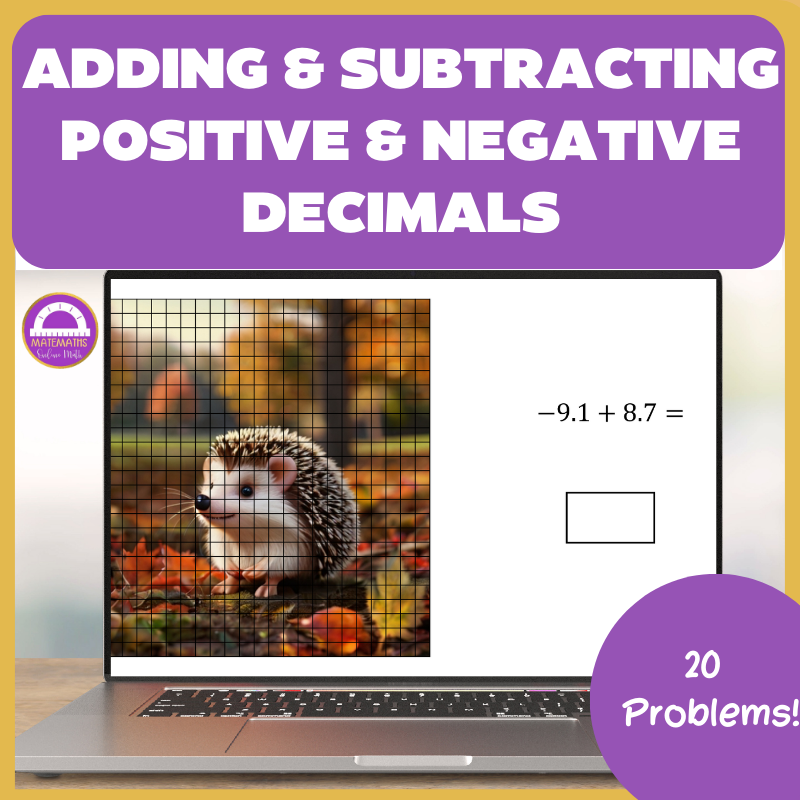
6th Grade Multiply and Divide Rational Numbers Guided Notes & Practice
Math, Decimals, Grade 5, 6, 7, Worksheets, Worksheets & Printables, Teacher Tools, Presentations
This set of guided notes covers how to multiply and divide rational numbers (integers, decimals, and fractions) and is aligned to Common Core standard 6.NS.3. Students will be able to multiply and divide positive and negative decimals and fractions. Each section includes guided notes (including models, sample problems, and explanations), tips and tricks, and practice problems. This resource will help you keep your instruction focused on multiply and divide rational numbers. multiply and divide Rational Numbers is no prep – just print and teach! No fluff – just clear, direct instruction! What’s Included 2 Pages of Guided Notes Clear explanations with worked examples that show students how to: multiply and divide integers with the same and different signs Interpret results in real-world contexts (temperature, money, elevation) Perfect for whole-class instruction, small groups, or interactive notebooks. Guided Practice (10 Problems) Students practice each concept in a structured way before moving on. Problems are intentionally sequenced so students build confidence as they go. Independent Practice (20 Problems) Students apply their understanding to: multiply and divide integers Operations with fractions and decimals Multi-step rational number expressions Real-world word problems Absolute value within operations Problems gradually increase in complexity, helping students strengthen both skill and confidence. Complete Answer Key Makes grading quick and simple, or allows students to self-check and reflect on mistakes. Pro Tips Included Helpful reminders and teacher notes address common misconceptions. Skills Covered Students will practice: multiply and divide integers multiply and divide fractions and decimals (positive and negative) Understanding absolute value in the context of operations CCSS Aligned: 6.NS.C.5, 6.NS.C.6, 6.NS.C.7 Why Teachers Love This Resource No Prep | Print & Go Clear, student-friendly layout. Step-by-step instructions that supports struggling learners Ideal for classwork, homework, intervention, or review Works beautifully for guided instruction and interactive notebooks This resource is perfect for introducing operations with rational numbers, reinforcing the concept after initial instruction, or reviewing before assessments. If you want your students to stop guessing with signs and start understanding what they’re doing, this lesson will make a real difference.
Author Matemaths
Rating
Tags Matemaths, Guided Notes, Worksheet, Decimals, Rational Numbers
Reading Passages on Plate Tectonics and Rock Cycle (Google Drive)
Science, Earth and Environmental Sciences, Earth Sciences, Common Core, ESL, Language Development, ELA, Vocabulary, Reading Comprehension, Reading, Grade 5, 6, 7, Diagrams, Teacher Tools, Assessments, Presentations, Tests, Quizzes and Tests, Worksheets, Worksheets & Printables, Centers, Activities
Reading Passages on Plate Tectonics and Rock Cycle for Earth Science Plate Tectonics and Rock Cycle: Reading Passages Earth Science - Enhance your assessment process with this ready-to-use science reading passage pack. Featuring enjoyable topics and themes, it's tailored to ensure students not only practice but also deepen their scientific understanding in preparation for tests. With questions meticulously aligned to the Common Core State Standards (CCSS), the pack dives into intriguing subjects such as circuits, electricity, and energy sources. It's a must-have resource for educators aiming to make learning both fun and fruitful. What's inside? Part 1 - Plate Tectonics & Rock Cycle Reading Passage1: Plate Tectonics Reading Passage2: Rock Cycle Erosion and Deposition Reading Passage3: Properties of Rocks and Minerals Reading Passage4: Geological Time Product Info: 26 PAGES (Docs Version: US English with Answers) 4 FORMS (Self-Grading) 150 Slides Teaching Duration: 2 Weeks Science Reading Comprehension Outline: Introducing a comprehensive resource tailored for 5th and 6th graders, this product offers enriching reading passages supplemented with illustrative pictures and graphs to clarify key concepts. Aligned with the Common Core State Standards (CCSS), it offers a hassle-free approach to teaching, given that the bulk of the preparation is already done for you. The passages present a diverse set of questions – from multiple choice to data analysis and fill-in-the-blanks. This ensures a rich blend of high-interest content and fundamental curriculum-based science themes. With its versatility, you can seamlessly integrate these lessons into various classroom settings, whether it's whole class discussions, morning exercises, independent desk tasks, small group engagements, contingency plans for substitute teachers, regular homework assignments, or even themed activities for holidays. FULL CATALOG OF DOWNLOAD LINKS HERE Grade 5/6 Links: Physical Science Part 1 - Physical and Chemical Properties Google Docs/Slides/Forms PDF PPT Word Free Supplementary Pack Accompanying Videos Physical Science Part 2 - Motion and Energy Google Docs/Slides/Forms PDF PPT Word Free Supplementary Pack Accompanying Videos Physical Science Part 3 - Electricity and Magnets Google Docs/Slides/Forms PDF PPT Word Free Supplementary Pack Accompanying Videos Life Science Part 1 - Cells, Reproduction and Genetics Google Docs/Slides/Forms PDF PPT Word Free Supplementary Pack Accompanying Videos Life Science Part 2 - Human Body Systems Google Docs/Slides/Forms PDF PPT Word Free Supplementary Pack Accompanying Videos Life Science Part 3 - Plant Parts and Ecosystems Google Docs/Slides/Forms PDF PPT Word Free Supplementary Pack Accompanying Videos Earth Science Part 1 - Plate Tectonics and Rock Cycle Google Docs/Slides/Forms PDF PPT Word Free Supplementary Pack Accompanying Videos Earth Science Part 2 - Ocean Exploration and Natural Resources Google Docs/Slides/Forms PDF PPT Word Free Supplementary Pack Accompanying Videos Earth Science Part 3 - Weather and Solar System Google Docs/Slides/Forms PDF PPT Word Free Supplementary Pack Accompanying Videos For similar products and other frees, do check out Cored Group on TeachSimple .
Author Cored Education
Rating
Tags Science, Elementary, Reading, Comprehension, Vocabulary, Answers, Ccss, Digital Centers, Earth Science
Sentence Structure Supplementary Materials Grade 5-6 (PDF)
ELA, Language Development, ESL, Grammar, Common Core, Resources for Teachers, Grade 5, 6, 7, Worksheets & Printables, Worksheets, Quizzes and Tests, Teacher Tools, Tests, Assessments, Lesson Plans
Sentence Structure Supplementary Materials Note: This download DOES NOT include the tests themselves. You can still make use of these materials without them but they are recommended. Download in a format of your choice in the "Links" section below. In the Supplementary Pack Interactive Ice Breakers: Engaging warm-up activities that introduce students to key ELA concepts, such as quick capitalization corrections and punctuation challenges. Guided Practice: Structured teacher-led exercises that reinforce grammar and punctuation rules, helping students identify and apply them correctly in sentences. Group and Partner Tasks: Collaborative activities where students work together to edit sentences, correct capitalization, and improve punctuation through peer discussion and teamwork. Independent Worksheets: Carefully designed worksheets that provide focused practice, allowing students to apply learned concepts and refine their skills independently. Exit Tasks: Quick assessments at the end of each lesson, prompting students to reflect on what they’ve learned and apply their knowledge in writing and editing tasks. Links Sentences Clauses Phrases Predicates Additional Practice Google Docs Google Forms Google Slides PDF PPT Word FULL CATALOG OF DOWNLOAD LINKS HERE Grade 5/6 Links: Capitalization & Punctuation Google Docs Google Forms Google Slides PDF PPT Word Free Supplementary Materials Pack Adjectives Google Docs Google Forms Google Slides PDF PPT Word Free Supplementary Materials Pack Nouns Google Docs Google Forms Google Slides PDF PPT Word Free Supplementary Materials Pack Pronouns Google Docs Google Forms Google Slides PDF PPT Word Free Supplementary Materials Pack Verbs Google Docs Google Forms Google Slides PDF PPT Word Free Supplementary Materials Pack Prefixes & Suffixes Google Docs Google Forms Google Slides PDF PPT Word Free Supplementary Materials Pack Sentence Structure Google Docs Google Forms Google Slides PDF PPT Word Free Supplementary Materials Pack Subject Verb Agreement Google Docs Google Forms Google Slides PDF PPT Word Free Supplementary Materials Pack Tenses Google Docs Google Forms Google Slides PDF PPT Word Free Supplementary Materials Pack Context Clues Google Docs Google Forms Google Slides PDF PPT Word Free Supplementary Materials Pack Defining Words Google Docs Google Forms Google Slides PDF PPT Word Free Supplementary Materials Pack Fill in the Blanks Google Docs Google Forms Google Slides PDF PPT Word Free Supplementary Materials Pack Homophones Google Docs Google Forms Google Slides PDF PPT Word Free Supplementary Materials Pack Synonyms Google Docs Google Forms Google Slides PDF PPT Word Free Supplementary Materials Pack ELA Review Questions Overview Questions have three answer choices. There are a handful of pictures on each test for aesthetic purposes, as well as a review sheet covering most of the topics covered in the product. Introduction or Example Sheet Each topic will include an introduction or example sheet to go through first with your students. Full Answer Keys Full answer keys and sample responses are provided so no matter how busy you are, you know you're covered! For More Like This For similar downloads and other frees, do check out Cored Group on TeachSimple.
Author Cored Education
Tags Elementary, Answers, Ccss, Common Core, Grammar, Tests, Test Prep, Assessment, Grade 5, Grade 6
Defining Words Supplementary Materials Grade 5-6 (PDF)
ELA, Language Development, ESL, Common Core, Resources for Teachers, Vocabulary, Grade 5, 6, 7, Worksheets & Printables, Worksheets, Quizzes and Tests, Teacher Tools, Tests, Assessments, Lesson Plans
Defining Words Supplementary Materials Note: This download DOES NOT include the tests themselves. You can still make use of these materials without them but they are recommended. Download in a format of your choice in the "Links" section below. In the Supplementary Pack Interactive Ice Breakers: Engaging warm-up activities that introduce students to key ELA concepts, such as quick capitalization corrections and punctuation challenges. Guided Practice: Structured teacher-led exercises that reinforce grammar and punctuation rules, helping students identify and apply them correctly in sentences. Group and Partner Tasks: Collaborative activities where students work together to edit sentences, correct capitalization, and improve punctuation through peer discussion and teamwork. Independent Worksheets: Carefully designed worksheets that provide focused practice, allowing students to apply learned concepts and refine their skills independently. Exit Tasks: Quick assessments at the end of each lesson, prompting students to reflect on what they’ve learned and apply their knowledge in writing and editing tasks. Links Matching Words to Definition Matching Definition to Words Accurately Defining Meanings More Defining Word Practice Google Docs Google Forms Google Slides PDF PPT Word FULL CATALOG OF DOWNLOAD LINKS HERE Grade 5/6 Links: Capitalization & Punctuation Google Docs Google Forms Google Slides PDF PPT Word Free Supplementary Materials Pack Adjectives Google Docs Google Forms Google Slides PDF PPT Word Free Supplementary Materials Pack Nouns Google Docs Google Forms Google Slides PDF PPT Word Free Supplementary Materials Pack Pronouns Google Docs Google Forms Google Slides PDF PPT Word Free Supplementary Materials Pack Verbs Google Docs Google Forms Google Slides PDF PPT Word Free Supplementary Materials Pack Prefixes & Suffixes Google Docs Google Forms Google Slides PDF PPT Word Free Supplementary Materials Pack Sentence Structure Google Docs Google Forms Google Slides PDF PPT Word Free Supplementary Materials Pack Subject Verb Agreement Google Docs Google Forms Google Slides PDF PPT Word Free Supplementary Materials Pack Tenses Google Docs Google Forms Google Slides PDF PPT Word Free Supplementary Materials Pack Context Clues Google Docs Google Forms Google Slides PDF PPT Word Free Supplementary Materials Pack Defining Words Google Docs Google Forms Google Slides PDF PPT Word Free Supplementary Materials Pack Fill in the Blanks Google Docs Google Forms Google Slides PDF PPT Word Free Supplementary Materials Pack Homophones Google Docs Google Forms Google Slides PDF PPT Word Free Supplementary Materials Pack Synonyms Google Docs Google Forms Google Slides PDF PPT Word Free Supplementary Materials Pack ELA Review Questions Overview Questions have three answer choices. There are a handful of pictures on each test for aesthetic purposes, as well as a review sheet covering most of the topics covered in the product. Introduction or Example Sheet Each topic will include an introduction or example sheet to go through first with your students. Full Answer Keys Full answer keys and sample responses are provided so no matter how busy you are, you know you're covered! For More Like This For similar downloads and other frees, do check out Cored Group on TeachSimple.
Author Cored Education
Tags Elementary, Answers, Ccss, Common Core, Tests, Test Prep, Assessment, Grade 5, Grade 6, Vocabulary
Joseph John Thomson – The Discovery of the Electron
Life Sciences, Science, STEM, Social Studies, Biographies, Inventors, Basic Science, Physics, Chemistry, Technology, Grade 6, 7, 8, 9, 10, 11, Worksheets, Worksheets & Printables, Quizzes, Quizzes and Tests, Teacher Tools, Projects, Activities
Joseph John Thomson – The Discovery of the Electron Comprehension Activities A ready-to-use science resource for grades 7–10 (PDF + H5P) ⚛️📘 A printable and digital resource for grades 7–10 science and cross-curricular teaching 🧪🧠 This classroom resource introduces students to Joseph John Thomson, the physicist who discovered the electron and helped shape our modern understanding of atomic structure. His work not only earned him a Nobel Prize, but also laid the groundwork for the atomic models students learn about in middle and high school. The material is designed to be easy to use – even if you’re short on prep time. The reading text is short and accessible, followed by a structured worksheet and quiz questions. It’s suitable for science lessons focused on atomic theory or the history of chemistry, but it also works well in substitute teaching settings since students can work through it independently. Included in this resource: A short informational text on J.J. Thomson A profile worksheet to help students summarize key points Quiz questions (with solution key) Two extension activities: – Students write their own questions based on the reading – Exchange and answer a partner’s questions File formats: – PDF (for printing or digital use) – DOCX (editable, text only) – H5P version (interactive, for learning platforms) How I use it in class: I like using materials like this at the start of a unit on atomic structure or when we discuss the development of scientific models. It gives students a chance to see how our current understanding has evolved – and reminds them that science is built on the ideas of real people. The H5P version allows for digital delivery and self-checking, making it great for homework or blended learning. It also gives students the chance to reflect, work at their own pace, or collaborate in pairs. Quick to prepare, easy to adapt – and a great way to connect abstract content to the scientists who helped shape it. Have fun exploring the world of science with your students! Warmly, Lernfitness Did You Know? I teach with a certified therapy dog, and together we focus on creating a positive and inspiring learning environment.
Author Lernfitness
Rating
Tags Science, Famous Scientists Lesson, H5P, Interactive Science Exercises, STEM, Scientists, Chemistry, Joseph John Thomson, Electron, Atomic Structure
Ocean Plastic Pollution – Data Analysis & Advocacy Sheets
Science, Earth and Environmental Sciences, Earth Sciences, Environmental Science, Geology, Space, Life Sciences, Nature & Plants, STEM, Human Body, Grade 6, 7, 8, 9, 10, 11, 12, Worksheets & Printables, Workbooks, Worksheets, Word Searches, Teacher Tools, Assessments, Lesson Plans, Quizzes and Tests, Quizzes, Tests
This 55-page comprehensive, interdisciplinary curriculum will allow you to turn your classroom into an environmental action lab focused on ocean plastic pollution. Designed to bridge cutting-edge marine science with civic advocacy, it provides students with opportunities to move beyond passive learning and into actual environmental action based on evidence. The curriculum consists of three phases that take students through a complete educational process. In Phase 1, Theoretical Framework gives students all of the background knowledge necessary for them as citizens to become advocates for change through evidence-based advocacy strategies (i.e., the Coriolis Effect; chemical properties of polymers; biodegradability; accumulation and magnification of toxins in food webs; marine ecosystems) designed using science and basic tenets of physics & chemistry that are used in designing marine policies. In Phase 2, Application Phase, students have the opportunity to apply what they have learned through 10 worksheets that require analytical thinking skills (i.e., interpreting data sets; calculating numbers; ecological reasoning; evaluating corporations' environmental claims) in the creation of project proposals, respectively, regarding greenwashing, greenhouse gas emission reductions. In Phase 3, Instructional Materials, teacher support is provided (i.e., graphic organizers; rubric; answer keys with rational explanations; pacing guide; differentiation strategies, etc.) for successful implementation of the curriculum across disciplines. Students will have the opportunity to analyze real-world examples of ocean plastic pollution facts, including: the Great Pacific Garbage Patch, Henderson Island, Midway Atoll; develop a quantitative analysis of the rate of time it takes for PVC plastic to decompose; create maps showing the locations of the locations of plastic and non-plastic debris along ocean currents; analyze data related to the successful clean up of beaches and oceans and use such information in forming international legislation that seeks to eliminate as much plastic pollution as possible through public awareness campaigns such as "I Love My Ocean" public service announcements etc. Students compose policy memos formally addressed to elected representatives. The materials will help students build skills and competencies in the areas of data literacy, systems thinking, scientific writing, persuasive communication and authentic political agency through a pressing global issue — marine plastic pollution. Topics Covered: Environmental Science, Earth Science, Marine Biology, Chemistry (Polymer Science), Economics, Civics/Government, ELA (Persuasive Writing, Research), Mathematics (Data Analysis, Percent Calculations, Unit Conversions). You will get: Theoretical Resource: Four Chapters (Pgs. 1 - 10); Structured Worksheets for Students (10 Worksheets with 100+ Questions) (Pgs. 11 - 22); Three High Contrast Pedagogical Visual Diagrams (Lifecycle Flowchart, Bar Chart, Advocacy Framework); Complete Comprehensive Answer Keys for Each Question with Model Response; Graded Rubric (100 Point) for Final Policy Memo Project; Flexible Pacing Guide (20 days of Instruction in a 4 week period); Strategies for Differentiation for 3 Learner Profiles; Cross Curricular Activity Connection (Science, ELA, Math, C.S.S., Art); Teacher's Resource List (documentaries, interactive tools, essential readings); Final Note to Educators with Pedagogy Philosophy. Keywords: ocean plastic pollution, microplastics worksheet, marine debris, environmental science curriculum, ocean gyres lesson, bioaccumulation, biomagnification, greenwashing, single use plastics, Extended Producer Responsibility, policy memo project, STEM environmental education, data analysis science, middle school science, high school environmental science, science resources, civic advocacy project, ocean conservation, sustainability education, plastic pollution unit. PARENTS/TEACHERS ENJOY THIS CURRICULUM VERSION: Interdisciplinary - Covers Several Subjects with One Resource. This PDF Combines Science, Math Writing (ELA), Economics, Social Studies, & Civics into a Single Resource - Teachers Save Time By Not Having to Create Multiple Lesson Plans. Provides Cross-Curricular Value - Administrators/Parents Can Easily See Cross-Curricular Value of Lesson. Teaches Real-World Skills, Not Just Testing. Students Learn to Analyze Data Sets, Recognize Corporate Greenwashing, Develop Legislation &Write Policy Memos to Real See Elected Officials Using Many of the Same Skills That Will Benefit Them as They Enter College/Career &Participate In A Democratic Society. Ready for Implementation- Complete Answer Keys with Detailed Model Responses; Grading Rubric (100 Points), Pacing Guide (4 weeks); Differentiation Strategies for 3 Different Learner Profiles; Cross-Curricular Connections for This Curriculum Make Implementation Possible Immediately After Prep Work is Finished. Addresses An Urgent, Student-Motivating Issue. Ocean plastic pollution is one of the most obvious environmental crises our kids face; this curriculum connects with the concern they currently have & creates meaningful, engaging learning through rigorous science & civic engagement vs passive acknowledgment of a problem. Sufficiently Rigor for Advanced Students While Use Infrastructure to Support Struggling Learners - There Are Strategies for Supporting Struggling Readers, Advanced Learners Please Readers, English Language Learners Located In The Resource. TARGET STUDENT GRADE LEVELS : This PDF is appropriate for the following grade levels based on an in-depth study of various types of complexity factors: vocabulary (CPV), level of math (CPSM), level of writing (CPW), and level of conceptual depth (CPD). Primary Target Grades 7-10 Core Worksheets for Grades 7-8: Worksheets are intended for core subject teachers scaffolding; fill-in-the-blank and short answer sections of worksheets allow for guided reading. Independent Engagement for Grades 9-10: Students will have the ability to fully engage in all theoretical materials, perform calculations, write policy memorandums, and create advocacy campaigns. Secondary Target Grades 11-12 (AP Environmental Science/AP Language) Advanced students in all areas of study will benefit from the economic analysis, sections on international law, critique of greenwashing, and sections on writing policy briefs at college preparatory level. Also Appropriate for: Gifted/Advanced Programs (grades 6 and up) Environmental Clubs/Extracurricular Programs (all ages) College Level Environmental Science 101 (Community College Level) Adult Education/Homeschool (Middle School & High School Level) Copyright/Usage Terms : Despite being created by Syed Hammad Rizvi, this book belongs solely to him, and it may not be modified or sold without his consent. You are allowed to make copies for your use; however, you may not post or upload copies on-line or anywhere else that they would be available to the general public. If you wish to share this book with other educators, you can purchase additional copies of the same license from Teachsimple. By following these rules, you uphold the terms of use. This product has been lovingly produced with the help of Syed Hammad Rizvi
Author Creative Book Store
Rating
Tags OceanPlasticPollution, PlasticPollution, Microplastics, MarineDebris, EnvironmentalScience, MiddleSchoolScience, HighSchoolScience, ScienceTeacher, DigitalDownload, HomeschoolScience
Grocery Unit Pricing & Inflation Meal Planning
Math, Addition and Subtraction, Addition, Subtraction, Early Math, Numbers, Place Value, Measurements, Money, Statistics, Grade 6, 7, 8, 9, 10, 11, 12, Worksheets & Printables, Workbooks, Worksheets, Word Searches, Teacher Tools, Lesson Plans, Quizzes and Tests, Quizzes, Tests, Assessments
Are you bored of hearing "When am I going to use this?" in your math class? Here is a realistic math project that should help! It will change the grocery store into a fun, practical laboratory and give your students the skills needed in their lives. The mini-unit "Grocery Unit Pricing & Inflation Meal Planning" is a complete, no-prep resource to keep students engaged, excited, and working with their math skills. Students won't be sitting in the class just learning theoretical division and percentage problems. They will become smart consumers that will learn to recognize marketing tricks, be aware of inflation, and take quality financial decisions. The 10 worksheets along with clear guides will help students learn how to calculate unit prices and find better prices. WHAT'S INSIDE (47-PAGE FILE): Section One: The Economics of the Aisle (11 pages) An in-depth theoretical resource for educators (or highly skilled undergraduate pupils) on the fundamentals of unit pricing, shelf placement psychology, concepts such as the "Bulk Buying Fallacy" and other inflation-related phenomena, as well as the concept of shrinkflation, which refers to the price increase of a product in real terms. Section Two: Student Workbook (17 pages) 10 Different Worksheets: A carefully designed experience from basic math concepts to intricate and multi-step calculations Worksheet 1: The Fundamentals of Unit Pricing Worksheet 2: Buying Issues in Bulk (Does Bigger Always Mean Better?) Worksheet 3: The "Sale" Falsehood (Finding the True Discount) Worksheet 4: Becoming a Shrinkflation Detective Worksheet 5: Comparing Price Tag Direct and Private Labels Worksheet 6: Measuring Liquid and Estimate the Cost Worksheet 7: Calculation of Fruits and Vegetables Prices Worksheet 8: Including Household Wastage (The True Bulk Cost) Worksheet 9: Meal Planning with an Increased Budget Worksheet 10: Grocery Store Challenge (The Final Workbook Health Check) Content of Part 3: Visual Education Material & Teachers’ Assistance Resources (19 pages) Essential Visuals: Three professionally designed diagrams for printing (Anatomy of a Price Tag, Unit Price Decision Tree, and Shrinkflation Explained) ideal for classroom posters and students’ materials. Thorough Answer Key: In-depth explanation of solutions for all 10 worksheets. Teacher Implementation Guide: A must-read guide comprising: Suggestions on how to motivate students to study. Information on how to deal with the most common mistakes students make. Sample 5-day period of implementation. Information about how to modify the lessons for both students who require more time to master the material and pupils who get the topic. Reasons why Parents/Schools are Attracted to It: The math lesson comes to life, removing doubts about any potential usefulness. Math has been connected to real life – children experience first-hand how maths-related skills are employed in stores. Raising financial literacy is also hard to underestimate. For example, students get to develop certain life skills relevant to future everyday life, such as budgeting and recognizing economic processes. The unit contains all the necessary resources for teachers, leaving no effort to them. The unit includes a teacher's guide, plenty of tips for differentiation, and an answer key. Relevant and exciting content. The idea of “outsmarting the advertisers” and becoming a “shrinkflation detective” is inspiring for kids, awakening their interest in the topic. No mundane tasks; tasks require analytical thinking and drawing conclusions based on the data/figure. Intended Student Groups: Because of its use of math concepts (decimal division, rounding to thousandths, percent of increase/decrease, multiple operations), this PDF can be successfully implemented in the following classes: Primary Audience: Middle school students (grades 6-8). The content will completely meet the curriculum standards regarding decimal systems, ratios, proportions and percentages. Academic Programs for the Secondary Audience: High school classes on Life Skills/Consumer Mathematics; this is a great hands-on unit for older students who are studying budgeting and independent life. High school classes on Financial Literacy; this is an introductory unit on economics. Advanced students in grade 5; this material can serve as an extension or be utilized in talented and gifted programs. Co-ops for Homeschoolers; this is a useful real-life project easily adaptable to multi-ages. Copyright/Conditions of Use: Copyright of this book is owned by Syed Hammad Rizvi. This resource is intended for one person and single use in one classroom. There is no modification, reproduction or selling of this resource. Put simply, it cannot be uploaded on the internet where it can be publicly accessed and downloaded. If you need to share this resource with your colleagues, please acquire more licenses from Teachsimple. Thank you for complying with our terms of use. This product is proudly presented to you by Syed Hammad Rizvi
Author Creative Book Store
Rating
Tags RealWorldMath, FinancialLiteracy, ConsumerMath, MiddleSchoolMath, UnitPrice, ProjectBasedLearning, MathProject, 7thGradeMath, 8thGradeMath, LifeSkills
Richard Dawkins – Fact Sheet, Quiz & Interactive PDF incl. H5P
Life Sciences, Science, STEM, History, Social Studies, Biographies, Inventors, Basic Science, Physics, Biology, Grade 6, 7, 8, 9, 10, 11, 12, Worksheets, Worksheets & Printables, Quizzes, Quizzes and Tests, Teacher Tools, Projects, Activities
Scientist Richard Dawkins - Fact Sheet, Quiz & Interactive Version (PDF & H5P) Richard Dawkins – Genes, Evolution, and the “Selfish Gene” Fact Sheet, Quiz & Interactive Exercises (PDF + H5P) 🧬🐒 This 45-minute resource introduces students in grades 9–12 to Richard Dawkins – an evolutionary biologist best known for popularizing the idea of the “selfish gene.” By the time students reach upper secondary levels, they usually have a solid understanding of natural selection. Dawkins' perspective invites them to look one level deeper: not just at organisms competing for survival, but at genes as the driving force behind evolution . His work sparked a lot of discussion – not only in science, but also in philosophy and ethics. To help students engage with these more abstract ideas, I’ve put together a structured and accessible lesson. It includes a short informational text, a fact sheet, quiz questions with answers, and a creative partner task. The materials are available in color and black-and-white versions, plus there’s a digital H5P version for interactive use. What’s included: A student-friendly overview of Richard Dawkins and the core ideas of The Selfish Gene A fact sheet to help students organize key concepts Quiz questions with solutions for quick comprehension checks A partner task where students create and exchange questions Available as printable PDF and interactive H5P version 💻 Answer key included ✅ I’ve used this resource in upper-level biology and ethics courses – especially when discussing how scientific ideas evolve and how they influence thinking beyond the lab. The material also opens up interesting conversations about the role of science communication. Works well for individual tasks, pair work, or short discussion-based projects. 🚀 Download now and bring the legacy of Richard Dawkins into your biology lessons today! 📍 Best wishes, Heike from Lernfitness Did You Know? I teach with a certified therapy dog, and together we create a positive and inspiring learning environment. 🐶✨
Author Lernfitness
Tags Science, Biology, Famous Scientists Lesson, H5P, Interactive Science Exercises, STEM, History, Scientists, Richard Dawkins, The Selfish Gene
Carbon Footprint Calculator & Personal Sustainability Plans
Science, Basic Science, Earth and Environmental Sciences, Life Sciences, Earth Sciences, Environmental Science, Geology, Space, Nature & Plants, Biology, Homeschool Curriculum, Homeschool Templates, Grade 4, 5, 6, 7, 8, Worksheets & Printables, Workbooks, Worksheets, Word Searches, Teacher Tools, Assessments, Lesson Plans, Quizzes and Tests, Quizzes, Tests
This fully planned out unit, straying away from Climate Anxiety and allowing students to build agency related to climate action, can be printed right out of this document and used in the classroom immediately. Designed for use in Grades 5–7 (ages 10–14), students will progress through this unit comprehensively by learning about the Carbon Cycle, measuring their actual CO₂e emissions, and creating their own personal plan for sustainability. The unit provides scientific text, real-world case studies (i.e. The Life of a White Cotton T-shirt), 10 individual audit worksheets related to home energy, transportation, diet, consumption, and water use. There is a Carbon Calculator provided which translates students' daily habits into actual data as well as templates for SMART Goal Setting and Advocacy Letters to promote action from students after completing the project. The materials align with NGSS (Earth and Human Activity Standard) and are ideal for Earth Day, STEM, or to promote Environmental Literacy throughout the rest of the school year. Not only does this package come with an extensive Teacher's Guide complete with answer keys, grading rubrics, visual aids, and a flexible 5-day pacing guide; the materials have been scaffolded to help mitigate eco-anxiety with both kindness and evidence-based science. The highlights include: 4 engaging chapters on greenhouse gases, CO₂e, and Life Cycle Assessment 10 student audit worksheets and a Carbon Calculator to synthesize student audit results SMART Goals Workshop for setting student action plans and evaluating systemic actions Professional writing activity related to Advocacy Letters A comprehensive Teacher Key, including Answer Keys, Grading Rubrics, and 5-Day Unit Plan All materials have been classroom-tested and proved to be effective. Appreciated by Parents and Educators: Empowerment Versus Fear – Empowers children and youth to make positive changes by turning their fear of climate change into tangible steps they can take themselves. Real-World Math/Data Skills – Develops mathematics and data-based skills through the calculation of CO₂e from current activities, reinforcing applied math and unit conversion skills and improving critical thinking. Systems Thinking – Students develop a deeper understanding of system relationships and the ripple effects of human activity on the ecological system through Life Cycle Assessment (T-shirts) and permafrost feedback loops. Teacher-friendly, Minimal Prep/Materials Needed – All materials required for implementation are provided (e.g., rubrics, answer keys, visuals, and 5-day pacing guides), so even non-science specialists can implement without difficulty. Opens Up Conversation at Home/School/Community – The advocacy letter and family audit provide an avenue for discussion beyond the classroom, resulting in actual changes to household sustainability. Targeted Grade Levels: The statement in the introduction clearly states that targeted grade levels are ‘5th, 6th, and 7th Grade.’ Therefore, because the math being introduced in this program involves multiplication, metric/unit conversions, basic percentage reasoning and cognitive complexity, I believe students in grades 5 through 7 will best use this resource as follows: Primary Group: 5th – 7th Grade (10-13 year olds) Secondary/Extension Group: (4th Grade) Advanced; 8th – 9th Grade as a basic review of what they learned in grades 5 and/or 6. Copyright/Terms of Use : The copyright for this book is owned by Syed Hammad Rizvi. This resource is intended for personal use and to be used in a single classroom. This means that you may not repurpose, sell, or give away any part of this resource. In essence, you cannot upload this resource to any public place on the internet and make it available to the world. If you wish to distribute this resource to other teachers, please purchase additional licenses through Teachsimple. Thank you for respecting these terms of use. This product is brought to you proudly by Syed Hammad Rizvi.
Author Creative Book Store
Rating
Tags ClimateChangeEducation, EcoLiteracy, SustainableClassroom, GlobalWarming, ClimateAction, GoGreen, ZeroWasteClassroom, EnvironmentalEducation, GreenSTEM, EarthWarriors
Johannes Nicolaus Brønsted – Scientist Profile and Reading Tasks
Life Sciences, Science, STEM, Social Studies, Biographies, Inventors, Basic Science, Physics, Chemistry, Technology, Grade 6, 7, 8, 9, 10, 11, Worksheets, Worksheets & Printables, Quizzes, Quizzes and Tests, Teacher Tools, Projects, Activities
Johannes Nicolaus Brønsted – Scientist Profile and Reading Tasks Comprehension Activities A structured classroom resource for teaching about acids, bases, and scientific history ⚗️📘 (PDF + H5P) ⚗️📘 A printable and digital resource for grades 7–10 science and cross-curricular teaching 🧪🧠 This material introduces students to Johannes Nicolaus Brønsted, a Danish chemist known for developing the Brønsted–Lowry acid-base theory. His work provides an essential foundation for modern chemistry and is especially helpful when students begin learning about pH, protons, and the role of acids and bases in chemical reactions. The resource is designed to be easy to use – both in traditional lessons and in situations where little prep time is available, such as substitute teaching or self-paced work. It includes a short, accessible reading passage, a student profile sheet, and comprehension tasks that guide students through the key points. What’s included: Informational text about Brønsted’s life and work Printable profile worksheet to summarize the text Quiz questions with answer key Two optional extension tasks: – Students create their own questions based on the reading – Partner exchange: students answer each other’s questions File formats: – PDF for easy printing or digital distribution – Editable DOCX (text only) – H5P version for digital platforms (no images) In the classroom: This activity can be used to complement a chemistry unit on acids and bases, as an introduction to scientific models, or simply as a way to bring real historical context into science lessons. The material is clear and accessible, even for students who may be new to the topic. The H5P version supports digital learning and allows students to complete the quiz interactively, making it great for homework or blended settings. The resource is flexible enough to work in group settings or independently. Minimal prep. Meaningful content. A great way to connect theory with the people who helped shape it. Have fun exploring the world of science with your students! Warmly, Lernfitness Did You Know? I teach with a certified therapy dog, and together we focus on creating a positive and inspiring learning environment.
Author Lernfitness
Rating
Tags Science, Famous Scientists Lesson, H5P, Interactive Science Exercises, STEM, Scientists, Chemistry, Johannes Nicolaus Brønsted, Acid-base Theory, Acids And Bases
Who Has the Lab Equipment 2 ? – Interactive Science + Chemistry Game
STEM, Science, Chemistry, Physics, Life Sciences, Special Education Needs (SEN), Special Resources, Research, Biology, Homeschool Templates, Grade 6, 7, 8, 9, 10, 11, Activities, Games, Worksheets & Printables, Task Cards, Quizzes and Tests, Teacher Tools, Quizzes, Word Problems, Word Searches, Worksheets
Who Has the Lab Equipment 2 ? – A Fun & Engaging Science Game for the Classroom 🔬 Turn Science Learning into an Interactive Adventure! Helping students learn laboratory equipment doesn’t have to be tedious. With "Who Has the Lab Equipment?", you can bring hands-on engagement and excitement into your chemistry, physics, or biology classroom! This fast-paced call-and-response game is perfect for reinforcing lab tools and key scientific terminology while encouraging active participation and teamwork. 🎯 Why Teachers Love This Game ✅ Boosts Student Engagement – Keeps students actively involved instead of passively memorizing vocabulary. ✅ Encourages Collaboration – Supports teamwork, communication, and critical thinking. ✅ Differentiated Learning – Includes three levels to accommodate students of all abilities. ✅ Perfect for Science Lessons – A great addition to chemistry, physics, and biology classes. ✅ Low-Prep & Classroom-Friendly – Just print, cut, and play! 🧪 What’s Included? 🃏 90 Total Cards – 3 differentiated sets of 30 cards each: ✔ Level 1: Terms with visual aids – perfect for beginners. ✔ Level 2: A mix of terms and images – great for building recognition. ✔ Level 3: Visuals only – students must recall and name the equipment independently. 📌 How to Play 1️⃣ Distribute the Cards – Each student gets one or more cards. 2️⃣ Start the Game – The student with the first card reads aloud: "I have the test tube. Who has the test tube rack?" 3️⃣ Find the Answer – The student with the correct response answers and then reads the next prompt. 4️⃣ Keep Going! – Play continues until all cards have been matched. 💡 Bonus Challenge: Encourage students to use complete sentences when responding to reinforce scientific communication skills. 🌟 Why This Game is a Must-Have for Science Teachers ✔ Versatile Use – Works as a lesson starter, review activity, or quick filler for substitute plans. ✔ Supports Multiple Learning Styles – Helps visual, auditory, and kinesthetic learners grasp key concepts. ✔ Perfect for Science Centers – Ideal for small groups or whole-class activities. ✔ Durable & Reusable – Laminate the cards for long-lasting classroom use. 🔬 Make Science Learning Engaging and Memorable! If you're looking for a fun, effective, and interactive way to teach students about laboratory equipment, this game is the perfect resource for your science classroom. 🚀 Download now and bring interactive learning into your chemistry, physics, or biology lessons! 📍 Best wishes, Heike from Lernfitness Did You Know? I teach with a certified therapy dog, and together we create a positive and inspiring learning environment. 🐶✨
Author Lernfitness
Tags Game, Educational Card Games, Chemistry, Lab, Biology, Laboratory Equipment, Lab Tools, Physics, STEM Science Matching Game, Who Has It?
Sir James Dewar – A Look at the Scientist Behind the Vacuum Flask
Life Sciences, Science, STEM, Social Studies, Biographies, Inventors, Basic Science, Physics, Chemistry, Technology, Grade 6, 7, 8, 9, 10, 11, Worksheets, Worksheets & Printables, Quizzes, Quizzes and Tests, Teacher Tools, Projects, Activities
Sir James Dewar – A Look at the Scientist Behind the Vacuum Flask Comprehension Activities A short reading and task-based resource for grades 7–10 science classrooms (PDF + H5P) 🧪🌡️ A printable and digital resource for grades 7–10 science and cross-curricular teaching 🧪🧠 This resource introduces students to Sir James Dewar, a Scottish chemist and physicist best known for inventing the Dewar flask – a forerunner of the modern thermos. His work in low-temperature chemistry and physics helped pave the way for cryogenics and many everyday technologies we take for granted today. The material is designed to be flexible and easy to use. It centers on a short, student-friendly informational text and includes structured follow-up tasks that support comprehension and encourage independent thinking. Whether you're working in a chemistry unit or simply want to connect scientific tools to the people who developed them, this resource fits in with very little preparation needed. What’s included: Informational text about the life and work of James Dewar Student worksheet for creating a personal scientist profile Quiz questions to check understanding (with solutions) Two extension tasks for optional pair or individual work: – Students write their own questions – Partner exchange and answer Formats: – PDF (ready to print or display) – Editable DOCX (text only) – H5P version for digital classrooms (text-based, no images) How it works in class: You can use this resource to complement lessons on scientific inventions, energy, temperature, or lab equipment. I’ve also used it when I needed a calm, structured reading activity that students could complete independently. The extension tasks are helpful when you want to build in peer exchange without needing new materials. The H5P format is useful in digital settings and supports self-paced learning. Everything is ready to go – just print, project, or upload. A simple and effective way to explore the link between science history and the tools we still use today. Have fun exploring the world of science with your students! Warmly, Lernfitness Did You Know? I teach with a certified therapy dog, and together we focus on creating a positive and inspiring learning environment.
Author Lernfitness
Rating
Tags Science, Famous Scientists Lesson, H5P, Interactive Science Exercises, STEM, Scientists, Chemistry, Lab Equipment, Sir James Dewar, Dewar Flask
Emil Erlenmeyer – The Scientist Behind the Famous Flask
Life Sciences, Science, STEM, Social Studies, Biographies, Inventors, Basic Science, Physics, Chemistry, Technology, Grade 6, 7, 8, 9, 10, 11, Worksheets, Worksheets & Printables, Quizzes, Quizzes and Tests, Teacher Tools, Projects, Activities
Emil Erlenmeyer – The Scientist Behind the Famous Flask Comprehension Activities A short informational text and classroom task set for grades 7–10 🧪📘 (PDF + H5P) ⚗️📘 A printable and digital resource for grades 7–10 science and cross-curricular teaching 🧪🧠 This resource introduces students to Emil Erlenmeyer, a chemist best known for designing the Erlenmeyer flask – a piece of lab equipment still used every day in schools and laboratories around the world. Beyond the flask, he also made important contributions to the understanding of chemical structures and reactions. The text is written in clear, student-friendly language and offers a good opportunity to connect science content with the people behind the discoveries. I’ve used this kind of material in lessons where students are learning about lab equipment, scientific processes, or simply getting to know the history of chemistry. What’s included: A short informational text about Emil Erlenmeyer A printable student profile to summarize key facts Quiz questions based on the text (with answer key) Two extension tasks for extra practice or early finishers: – Students create their own questions – Exchange and answer partner questions Available formats: – PDF (print and digital use) – DOCX (editable text version) – H5P version for digital platforms (without images) How to use it in class: Students begin by reading the text – individually, in pairs, or as a group. They then complete the profile and quiz questions. The optional tasks work well in partner work or as a small extension activity. The structure is easy to follow and also works in substitute lessons, even when the substitute isn’t a science teacher. The H5P version can be used in digital classrooms or assigned as a self-paced homework activity with built-in feedback. No prep is needed – just print or upload and start. A simple way to connect everyday classroom science with the people who shaped it. Have fun exploring the world of science with your students! Warmly, Lernfitness Did You Know? I teach with a certified therapy dog, and together we focus on creating a positive and inspiring learning environment.
Author Lernfitness
Rating
Tags Science, Famous Scientists Lesson, H5P, Interactive Science Exercises, STEM, Scientists, Chemistry, Emil Erlenmeyer, Erlenmeyer Flask, Lab
Louis Pasteur – Understanding the Scientist Behind Vaccines and Germ
Life Sciences, Science, STEM, Social Studies, Biographies, Inventors, Basic Science, Physics, Chemistry, Technology, Grade 6, 7, 8, 9, 10, 11, Worksheets, Worksheets & Printables, Quizzes, Quizzes and Tests, Teacher Tools, Projects, Activities
Louis Pasteur – Understanding the Scientist Behind Vaccines and Germ Theory Comprehension Activities A short reading and activity set for secondary science lessons 🧫📖 (PDF + H5P) ⚗️📘 A printable and digital resource for grades 7–10 science and cross-curricular teaching 🧪🧠 This resource gives students an introduction to the life and work of Louis Pasteur – the chemist and microbiologist best known for developing vaccines, inventing pasteurization, and changing the way we understand germs and disease. His work connects naturally to many science units, especially those on health, microbiology, or scientific discovery. The material is straightforward and can be used across different contexts – whether in a focused biology or chemistry lesson, as part of a “scientist spotlight,” or even in non-specialist substitute teaching situations. What’s included: A clear and accessible informational text about Louis Pasteur A profile worksheet to help students summarize key facts Quiz questions to check comprehension (with full solutions) Two optional extension tasks: – Students write their own questions about the text – Exchange and answer peer questions in pairs File formats: – PDF for print and digital use – Editable DOCX (text only) – H5P (interactive version for digital platforms, without images) How it works in the classroom: Students start by reading the text, then complete the profile and quiz. The extension tasks are ideal for partner work, early finishers, or to stretch more confident learners. The layout is clear enough that students can work independently – even without strong background knowledge in science. The H5P version is great for online learning or blended classrooms, where students can complete the quiz and get immediate feedback. I’ve used this kind of format to support lessons on immune response, disease prevention, and historical breakthroughs in science. No complex setup required – just print, upload, or project, and you’re ready to go. Have fun exploring the world of science with your students! Warmly, Lernfitness Did You Know? I teach with a certified therapy dog, and together we focus on creating a positive and inspiring learning environment.
Author Lernfitness
Rating
Tags Science, Famous Scientists Lesson, H5P, Interactive Science Exercises, STEM, Scientists, Chemistry, Louis Pasteur, Vaccines, Germ
Neuro-Inclusive Vocational Mastery: Executive Functioning Micro-Creden
Career, Life Studies, P.E. & Health, Mental Health, Health, Mindfulness, Physical Education, Research, Resources for Teachers, Classroom Management, Grade 6, 7, 8, 9, 10, 11, 12, Worksheets & Printables, Worksheets, Workbooks, Teacher Tools, Assessments, Lesson Plans, Presentations, Literacy Readers, Quizzes and Tests, Tests
Neuro- inclusive Educational Curriculum and Credentialing System for Executive Functioning Micro- credentials 35-Page Curriculum for Neurodivergent Teens (Autism, ADHD and More) in PDF Format Transforming the way neurodiverse students will leave school and move to the workforce and this is accomplished through a cutting-edge micro-credentialing program that recognizes the worth of everyone, regardless if they have a disability or not. Currently available through a digital PDF, this current tool replaces the old way of doing things based on a deficit model of transitioning out of high school to working. It provides a very powerful evidence-based structure for turning executive function challenges into work-related credentials. Includes: •Phase 1-Curriculum Theory Basics (Hidden Curriculum, Cognitive Load, Sensory Schema, and Ambiguity Traps) • Phase 2-Student Workbook & 10 Worksheets (Task Initiation, Working Memory, Cognitive Flexibility, Emotional Regulation, Time Blur, Sustained Attention, Organisation, Long Term Goals, Self-Monitoring, and Self-Advocacy) • Phase 3-Visual Structures, Flow Charts, Cognitive Load to Environmental Friction Mapping plus Teacher Implementation guide with complete Notion integration. Students will earn micro-badges that stacks up to create a portfolio for employers to easily understand—no longer any need for vague transcript! Ideal for special education teachers, transition coordinators, vocational rehabilitation specialists and parents building toward sustainable career pathways for autistic/ADHD teens. Instantly downloadable PDF • Print (cut) one copy or use digitally • Hybrid digital + analog/workbook based • Designed for students aged 14-22/9-12 grade. SEO Keyword: Neurodivergent Vocational Curriculum, Executive Function Worksheets for Autism, Micro-Credentialing for Special Education, Transition Programs for Autism into Work, ADHD Workplace Skills Curricula, Neuro-Inclusive Transition Planning, Executive Function Micro-Credentials, Sensory Regulation Training for Work. Reasons Parents & Educators Appreciate It: • Transforms labels of “unmotivated” or “distracted” students into real, visible, employer-ready micro-credentials that significantly increase retention rate after employment (example: retention rates went from 60% to 88% in a single year). • Comes with teacher keys; student worksheets; and pre-made templates to make implementation take only minutes instead of months (no longer create resources from scratch). • Uses affirming language that respects students' neurodiversity; allows schools to have an established, professional portfolio to provide to employers and IEP teams. • Uses a hybrid model of digital and printable content - all learning styles and budgets are accommodated; schools love the built-in assessment rubrics and portfolio defense scripts. • Quickly bridges the gap between school and the workplace; parents know that real-world skills (i.e. self-advocacy script; sensory anchors; Plan B matrix) will continue to be used even after high school graduation. Target Student Populations (Identification by PDF Analyses): These curricula were specifically designed for neurodivergent youth between 14 to 22 years of age (IDEA transition services) and are intended to be used in the following educational settings: • Special Education/Inclusion Classrooms, Grades 9-12 • Post-Secondary Transition Vocational Rehabilitation, 18 to 22 • Autism Spectrum Disorder Support and Transition Programming • ADHD/Executive Dysfunction focused Life Skills/Work-Study Programming • Community Based Adult Transition Programs, ages 18 to 22 Not for elementary/middle school; does NOT include general education environments without a neurodivergent focus. Designed for students experiencing difficulties with initiating tasks, time-blindness, sensory overload, or navigating the "hidden curriculum" within an employment environment. Copyright terms of use. This book belongs to Syed Hammad Rizvi. This resource can be used as a personal or classroom resource (one classroom only). You cannot change, distribute or sell any part of this resource. This means you are not allowed to make it available on the internet for public access or download. If you would like to share this resource with colleagues, please purchase additional licenses from Teachsimple. Thank you for following these terms of use. This product has been created by Syed Hammad Rizvi with joy.
Author Creative Book Store
Rating
Tags SpecialEducation, Neurodivergent, Autism, ADHD, ExecutiveFunctioning, TransitionPlanning, Neurodiversity, SpecialEd, NeuroInclusiveEducation, NeurodivergentCurriculum
Theodor Schwann – Fact Sheet, Quiz & Interactive PDF (incl. H5P)
Life Sciences, Science, Biology, STEM, History, Social Studies, Biographies, Inventors, Basic Science, Nature & Plants, Grade 6, 7, 8, 9, Worksheets, Worksheets & Printables, Quizzes, Quizzes and Tests, Teacher Tools, Projects, Activities
Theodor Schwann – Fact Sheet, Quiz & Interactive Version (PDF & H5P) This lesson-ready material introduces students to Theodor Schwann 🧪 and his contribution to one of the most important concepts in biology: the cell theory 🔬. While many students in grades 7 to 10 already know that all living things are made of cells, they often don’t know where this insight comes from – or who helped uncover it. In this lesson, students explore the work of Theodor Schwann, who, together with Matthias Schleiden, laid the foundation for modern cell biology. The materials are designed to fit into a 45-minute session ⏱️ and work well in both print and digital formats. I’ve used them in regular biology lessons as well as for independent learning phases or when a quick but meaningful sub plan was needed. The resource includes a short, accessible reading passage about Schwann’s scientific discoveries. After reading, students fill in a fact sheet 📝 to summarize key information, and then answer quiz questions to check their understanding. What worked really well in my class was the final task: students created their own questions based on the material and exchanged them with a partner. It led to some thoughtful discussions and helped them reflect on what they had actually learned 💬. You’ll find two versions of the printable PDFs – one in color 🎨 and one in black and white. The included H5P version offers a digital alternative for interactive use, especially useful on learning platforms or digital boards (note: the H5P version contains no design elements, just the interactive tasks). Included: Informational text about Theodor Schwann Fact sheet task Quiz questions with answer key Creative student task (write your own questions) Printable PDFs (color & B/W) H5P interactive version The materials are self-explanatory and suitable for classroom use, homework, or digital learning 💻. 🚀 Download now and bring the legacy of Theodor Schwann into your biology lessons today! 📍 Best wishes, Heike from Lernfitness Did You Know? I teach with a certified therapy dog, and together we create a positive and inspiring learning environment. 🐶✨
Author Lernfitness
Tags Science, Biology, Famous Scientists Lesson, H5P, Interactive Science Exercises, STEM, History, Scientists, Cytology, Theodor Schwann
Reading Passages on Human Body Systems (Word)
Science, Life Sciences, Human Body, Biology, Common Core, ESL, Language Development, ELA, Vocabulary, Grade 5, 6, 7, Worksheets & Printables, Worksheets, Assessments, Teacher Tools, Tests, Quizzes and Tests, Diagrams
Reading Passages on Human Body Systems for Life Science (Biology) Human Body Systems: Reading Passages Life Science - Stimulate renewed enthusiasm and curiosity in the realm of science with these vibrant science reading comprehension lessons. Bursting with vivid colors and engaging topics, these resources are designed to captivate and motivate your students, urging them to delve deeper into their scientific explorations. And the best part? As an educator, you can be at ease and confident in the effectiveness of these lessons, knowing that a significant portion of the groundwork and preparation has been meticulously taken care of for you, making the teaching process smoother and more enjoyable. What's inside? Part 2 - Human Body Systems Reading Passage 1: Skeletal & Muscular Systems Reading Passage 2: Circulatory & Respiratory Systems Reading Passage 3: Nervous System Reading Passage 4: Digestive System Reading Passage 5: Reproductive System Product Info: 41 PAGES (Word Version: US English with Answers) Teaching Duration: 2 Weeks Science Reading Comprehension Outline: Introducing a comprehensive resource tailored for 5th and 6th graders, this product offers enriching reading passages supplemented with illustrative pictures and graphs to clarify key concepts. Aligned with the Common Core State Standards (CCSS), it offers a hassle-free approach to teaching, given that the bulk of the preparation is already done for you. The passages present a diverse set of questions – from multiple choice to data analysis and fill-in-the-blanks. This ensures a rich blend of high-interest content and fundamental curriculum-based science themes. With its versatility, you can seamlessly integrate these lessons into various classroom settings, whether it's whole class discussions, morning exercises, independent desk tasks, small group engagements, contingency plans for substitute teachers, regular homework assignments, or even themed activities for holidays. FULL CATALOG OF DOWNLOAD LINKS HERE Grade 5/6 Links: Physical Science Part 1 - Physical and Chemical Properties Google Docs/Slides/Forms PDF PPT Word Free Supplementary Pack Accompanying Videos Physical Science Part 2 - Motion and Energy Google Docs/Slides/Forms PDF PPT Word Free Supplementary Pack Accompanying Videos Physical Science Part 3 - Electricity and Magnets Google Docs/Slides/Forms PDF PPT Word Free Supplementary Pack Accompanying Videos Life Science Part 1 - Cells, Reproduction and Genetics Google Docs/Slides/Forms PDF PPT Word Free Supplementary Pack Accompanying Videos Life Science Part 2 - Human Body Systems Google Docs/Slides/Forms PDF PPT Word Free Supplementary Pack Accompanying Videos Life Science Part 3 - Plant Parts and Ecosystems Google Docs/Slides/Forms PDF PPT Word Free Supplementary Pack Accompanying Videos Earth Science Part 1 - Plate Tectonics and Rock Cycle Google Docs/Slides/Forms PDF PPT Word Free Supplementary Pack Accompanying Videos Earth Science Part 2 - Ocean Exploration and Natural Resources Google Docs/Slides/Forms PDF PPT Word Free Supplementary Pack Accompanying Videos Earth Science Part 3 - Weather and Solar System Google Docs/Slides/Forms PDF PPT Word Free Supplementary Pack Accompanying Videos For similar products and other frees, do check out Cored Group on TeachSimple .
Author Cored Education
Rating
Tags Science, Elementary, Reading, Comprehension, Vocabulary, Worksheets, Printables, Biology, Life Science, Reading Comprehension Assessments
Beginner AI Chatbot Safety & Prompt Practice Worksheets
Resources for Teachers, Classroom Management, Community Building, Technology, Science, Computer Science, Engineering, Research, Special Resources, Social Emotional Learning (SEL), Preschool, Grade 1, 2, 3, 4, 5, 6, Teacher Tools, Lesson Plans, Presentations, Assessments, Worksheets & Printables, Flashcards, Worksheets, Word Searches, Writing Prompts, Workbooks
This professionally designed 36-page AI Chatbot Safety and Prompt Practice Workbook provides educators and parents with the comprehensive guidance needed to help their 6–9 year-old students develop literacy skills while learning how to safely work with AI chatbots as powerful tools rather than friends, maintain safe digital boundaries, protect their personal identifiable information (PII), create clear and effective prompts using the “Three-Part Recipe”, practice digital kindness, verify the accuracy of AI-generated content, and develop strong literacy skills through the use of iterative questioning. This resource can be used in any learning environment including traditional classrooms, homeschooling, after-school programs, or family time on electronics. Key features include: - Aligned with the Piaget and Vygotsky constructivist theory and early literacy standards - Ten printable worksheets (e.g. fill-in-the-blank, matching, true/false, scenario) - Teacher/parent guide with theory, case studies, and strategies for implementation - Visual aids (e.g. mind maps, flowcharts), and the "Digital Safety Ecosystem" infographic - Complete answer key for easy assessment - No-prep, print-and-go format (PDF) - Ideal for introducing safe use of ChatGPT/AI tools, prompt engineering, and digital citizenship prior to students' access to full AI tools. Why Parents and Schools Are Interested To Use It : -Creates a lifetime of Real World safety habits around Digital use by teaching children to never share names, addresses, schools or emotions with AI preventing privacy issues before they happen. -Allows for Literacy development through AI use. Making writing Prompts fun iterative writing exercises will enhance vocabulary, specificity, sentence structure and critical thinking. -Cost effective for busy parents and teachers who can print everything out with a simple to follow directions, pictures and answer key - great for morning work, tech centers S.E.L. lessons or home school tech units. -Removes worries about AI in the classroom by providing a structured researched based blueprint for educators and families to use to introduce chat-bots without the fear of misuse or becoming overly reliant upon. -Fun and easy for children to learn about safety through stories, fun Prompts and activities, "Digital Detective" activity, so they will actually look forward to learning and following safe and responsible use of digital technology. Target Audience / Students Grades : Kindergarten & 4th/5th Grades are not targeted (English). The curriculum is developed with 1st through 3rd grade (ages 6-9) only - early elementary children who are in the concrete operational cognitive development stage; therefore, the curriculum utilizes concrete metaphors (e.g.; recipe, blueprint, vault, shield), large print for worksheets, and has scenarios appropriate for a given age, such as bats/frogs/knights/dinosaurs. This is not appropriate for kindergarten or 4th grade and beyond as the language and activity levels are too elementary for 4th and older students, and also too advanced for pre-k. Copyright/Terms and Use : The content of these pages is under copyright by Syed Hammad Rizvi, and it is for your personal use or classroom use only (meaning only one person will use it) You may not change or share any portion of these pages with anyone else or post them online for others to find and download. If you would like to share this resource with someone else or would like to share it with your colleagues, please purchase an additional license from Teachsimple. Your compliance with this Copyright/Terms of Use will greatly help us in continuing to provide content/resources. Syed Hammad Rizvi would like to express his thanks for purchasing these products.
Author Creative Book Store
Rating
Tags Ages6to9, Grades1to3, AISafetyForKids, ChatGPTForKids, AIForElementary, PromptEngineeringForKids, KidsAged6to9, AIForAges6to9, EarlyElementaryAI, DigitalLiteracyWorksheets
Homologous Series of Alkanes – Word Search Activity
Life Sciences, Science, STEM, Basic Science, Physics, Chemistry, Biology, Earth and Environmental Sciences, Environmental Science, Grade 6, 7, 8, 9, 10, 11, Worksheets, Worksheets & Printables, Quizzes, Quizzes and Tests, Teacher Tools, Activities, Games, Task Cards, Crosswords Puzzles, Word Searches
Homologous Series of Alkanes – Word Search Activity A differentiated puzzle set to support terminology and topic review in organic chemistry (Grades 8–11) 🧪🧩 This word search activity is designed to help students consolidate their understanding of alkanes and the structure of homologous series in a fun and engaging way. Instead of traditional worksheets, this format offers a quiet, focused task that can be used for reinforcement, revision, or simply as a meaningful time filler. You’ll find a total of 10 word search puzzles, each in two variants (A/B), and five levels of difficulty. The level of challenge increases with the size of the word grid and the direction of the hidden terms. The puzzles include key vocabulary from the topic of alkanes and are ideal for supporting students' familiarity with hydrocarbon structures and related terminology. Included in this resource: 10 unique word search puzzles × 2 variants (A and B) 5 levels of differentiation (marked with 1 to 5 stars) Terms appear forward only or forward and backward (depending on level) All solutions included Colorful and black-and-white versions for flexible printing Self-created chemistry-themed clipart for visual support How I use it in class: I like to use these puzzles at the end of a topic, during quiet work phases, or even as an option for early finishers. The A/B versions are helpful when students sit next to each other – it prevents simple copying but keeps the task structure consistent. The varying difficulty levels also allow you to match tasks to students’ needs without having to explain separate instructions. Whether students are revisiting the basics of alkanes or preparing for more advanced organic chemistry, this puzzle format keeps them engaged and focused. A practical, ready-to-use activity that brings a bit of variety into the chemistry classroom – and helps build confidence with technical terms. Have fun exploring the world of science with your students! Warmly, Lernfitness Did You Know? I teach with a certified therapy dog, and together we focus on creating a positive and inspiring learning environment.
Author Lernfitness
Rating
Tags Science, STEM, Chemistry, Homologous Series, Alkanes, Organic Chemistry, Word Search Activity, Word Search, Differentiated, Varying Difficulty Levels
6th Grade Math Spiral Review: Underwater-Themed
Math, Order Of Operations, Grade 6, 7, 8, Worksheets & Printables, Worksheets
Take your students on an exciting journey underwater with this underwater-themed spiral review! This inspiring resource is a great review of key 6th-grade math concepts through engaging, ocean-themed problems. Use it as daily practice, warm-ups, or tests and your students will love solving math problems while getting the inside story on the ocean deep. What's Included? This spiral practice provides 5 days of practice, 5 problems per page on major 6th-grade math skills in the following topics: Ratios and Proportional Relationships: Solve unit rates and proportions in comparing the rates of different sea creatures. Number System: Practice operations with fractions, decimals, and integers through underwater treasure maps. Expressions and Equations: Simplify expressions and equations to help marine biologists understand ocean information. Geometry: Calculate area, volume, and surface area when designing underwater habitats and learning about coral reef size. Statistics and Probability: Measure ocean temperature, marine population figures, and so much more using real-life mathematics. Each page has underwater situations to create practice math that's fun and practical. From helping a scuba diver navigate his way through underwater tunnels to measuring the distance between sunken shipwrecks, these exercises translate abstract ideas into action-packed adventures. How It Works Spend one page a day crafting an effective and sustained math practice routine. Students solve the 5 problems and attempt to get at least 3 correct to earn their daily ocean badge. Utilize the printables provided—the sea creature, submarine, treasure chest badges—or have students design their own in the space provided. Teachers Adore This Product Because: No prep time! Just print and go—the harried teacher's dream! Immersive Underwater Theme: The ocean-themed problems captivate students' attention and keep them engaged. CCSS-Aligned: All the problems are matched to significant 6th-grade Common Core State Standards (CCSS). Motivational Badge System: The badge daily challenge encourages effort, perseverance, and progress. Perfect For: Daily Math Practice Warm-Ups or Exit Tickets Homework Assignments Ocean-Themed or End-of-Year Activities Celebrate Success At the end of the week, those who finish all 5 badges can be rewarded as "Math Marine Explorers" or given the "Golden Seashell Award" (certificate). This simple, motivating system praises students for their efforts and encourages a growth mindset. Make a splash in math practice! Download this underwater-themed spiral review today and watch your students' confidence swim as they dive into essential math skills!
Author Matemaths
Tags Matemaths, Math, Printable, 6th Grade, Spiral Review
Reading Passages on Weather and Solar System (Fillable PDF)
ELA, Reading, Reading Comprehension, Science, Earth and Environmental Sciences, Earth Sciences, Common Core, ESL, Language Development, Space, Grade 5, 6, 7, Worksheets, Worksheets & Printables, Assessments, Teacher Tools, Tests, Quizzes and Tests, Diagrams, Centers, Activities
Reading Passages on Weather and Solar System for Earth Science Part 3 - Weather & Solar System Reading Passage 1: Earth Moon and Sun Reading Passage 2: Weather Measurement Causes and Changes Reading Passage 3: Classification of the Sun and Other Stars Reading Passage 4: Inner and Outer Solar System Snapshot Genre: Nonfiction. Subject: Science / Earth and Space Science. Primary Topic: Earth-space relationships, weather, stars, and planets. Estimated Guided Reading Level (A–Z): V. What This Teaches Best It explains how Earth’s rotation and revolution relate to day, night, years, seasons, and time zones. It shows how the Moon’s orbit connects to phases, tides, and eclipses. It teaches how weather forms through solar heating, air movement, air pressure, humidity, condensation, precipitation, and the water cycle. It introduces the Sun as a star and compares stars by brightness, color, temperature, and constellations. It compares inner terrestrial planets with outer Jovian planets and highlights notable traits of each planet. Learning Goals Students will explain how Earth’s movements cause day and night and support the calendar year. Students will describe how the Moon affects phases, tides, and eclipses. Students will explain how the sun drives weather and how water moves through the atmosphere. Students will describe how stars are classified by brightness and color. Students will compare the inner and outer planets using details from the text. FULL CATALOG OF DOWNLOAD LINKS HERE Grade 5/6 Links: Physical Science Part 1 - Physical and Chemical Properties Google Docs/Slides/Forms PDF PPT Word Free Supplementary Pack Accompanying Videos Physical Science Part 2 - Motion and Energy Google Docs/Slides/Forms PDF PPT Word Free Supplementary Pack Accompanying Videos Physical Science Part 3 - Electricity and Magnets Google Docs/Slides/Forms PDF PPT Word Free Supplementary Pack Accompanying Videos Life Science Part 1 - Cells, Reproduction and Genetics Google Docs/Slides/Forms PDF PPT Word Free Supplementary Pack Accompanying Videos Life Science Part 2 - Human Body Systems Google Docs/Slides/Forms PDF PPT Word Free Supplementary Pack Accompanying Videos Life Science Part 3 - Plant Parts and Ecosystems Google Docs/Slides/Forms PDF PPT Word Free Supplementary Pack Accompanying Videos Earth Science Part 1 - Plate Tectonics and Rock Cycle Google Docs/Slides/Forms PDF PPT Word Free Supplementary Pack Accompanying Videos Earth Science Part 2 - Ocean Exploration and Natural Resources Google Docs/Slides/Forms PDF PPT Word Free Supplementary Pack Accompanying Videos Earth Science Part 3 - Weather and Solar System Google Docs/Slides/Forms PDF PPT Word Free Supplementary Pack Accompanying Videos For similar products and other frees, do check out Cored Group on TeachSimple .
Author Cored Education
Rating
Tags Science, Elementary, Reading, Comprehension, Vocabulary, Reading Centers, Science Assessments, Reading Comprehension Assessments, Vocabulary Assessments, Earth Science
6th Grade Math Spiral Review: Sports-Themed
Math, Order Of Operations, Grade 6, 7, 8, Worksheets & Printables, Worksheets
Get your students energized and ready to take on math with this sports-themed spiral review! Created for 6th-grade learners, this resource melds core math practice with an engaging sporty theme to keep them involved. From warm-ups, daily practice to formative assessments, this spiral review will have students scoring big points in math! What's Included? This is 5 days of practice per a five-page resource containing five problems a day covering two critical math domains including; Ratios and Proportional Relationships The student solves the problem using unit rates, equivalent ratios, and proportional relationship The Number System. - The problems set will involve operating fractions, decimals, and integers, understanding positive and negative numbers Expressions and Equations. Simplifying expressions. Solving Equations. Questions are regarding evaluating algebraic and numerical expressions. Geometry: Find area and volume of sports-themed figures; use coordinates of sporting equipment. Statistics and Probability: Analyze real data about sports, calculate the center of data sets based on sporting events, and interpret a graph or chart with sports themes. Every page features a different sport-from basketball and soccer to track-on every practice page to make practice a slam dunk for developing solid math skills. How It Works: One page per day, one on-point spiral review. Students solve the 5 problems, trying to get at least 3 correct to earn their daily sports badge. Use the provided printable badges of sports equipment, including basketballs, soccer balls, and trophies-or have students design their own in the provided space. Why Teachers Love This Resource: No prep required; just print and go - perfect for the busy teacher. Engaging theme for the most part-will certainly make it fun for your students and, more importantly, want them to engage. Standards-Aligned: This bundle covers all of the big 6th-grade CCSS in a student-friendly daily format. Motivational Reward System: Badges motivate students in their efforts toward progress and teamwork. Perfect for Daily Math Practice Warm-Ups or Exit Tickets Homework Assignments Sports-Themed Class Activities Celebrate Success Included in this resource is a "Math MVP Award" certificate or small reward at the end of the week given to students who have collected all 5 badges in a week. It builds up the confidence of students and they always try to give their fullest every day! Make your students all-stars in mathematics with this sport-themed spiral review! Now, download and let the magic begin: ace math while having fun on the field of learning!
Author Matemaths
Tags Matemaths, Math, Printable, 6th Grade, Spiral Review
Miss Marple – A Classic Movie Detective
Social Studies, Biographies, ELA, Reading, Literature, Writing, Creative Writing, Drama, Creative Arts, Literary Devices, Grade 6, 7, 8, 9, 10, 11, Worksheets, Worksheets & Printables, Quizzes, Quizzes and Tests, Teacher Tools, Projects, Activities, Writing Prompts, Literacy Readers
Miss Marple – A Classic Movie Detective A reading-based worksheet set with optional film tasks (grades 7–10) 🎥🕵️♀️ A printable and digital resource This material introduces students to the character of Miss Marple as portrayed by Margaret Rutherford in the classic black-and-white crime comedies based on Agatha Christie’s novels. Whether your students are already familiar with detective fiction or encountering it for the first time, this resource offers a simple and accessible way to combine reading skills, character study, and media analysis. The core of the material is a short informational text that provides background on the character and the actress who portrayed her. Students work with a structured profile sheet and a short quiz to reinforce their understanding. If you choose to watch a Miss Marple film with your class, there are two additional worksheets: one for summarizing the movie plot and one for writing a short review. What’s included: Informational text about Miss Marple and Margaret Rutherford Worksheet to create a character profile Quiz questions with solution key Film content worksheet (optional use) Film review worksheet (optional use) Solutions for all main tasks Format: PDF (print-friendly and digital) How it works in class: This is the kind of resource I like to keep on hand for flexible lessons. It works well as a quiet reading and writing task on its own, or as part of a small media project. Watching one of the Miss Marple films adds variety to the lesson and gives students a chance to apply what they’ve learned in a fun and creative way. The film-related worksheets are structured, so even students with less writing experience can follow along easily. Great for regular lessons, substitute plans, or simply when you want to bring a bit of classic British mystery into your classroom. Warmly, Lernfitness Did You Know? I teach with a certified therapy dog, and together we focus on creating a positive and inspiring learning environment.
Author Lernfitness
Rating
Tags Miss Marple, Movie, Detective, Margaret Rutherford, Detective Fiction, Agatha Christie, British Film Classics, Crime Comedy, Character Study, Classic Movie Worksheet