
Science & social studies
Mental Health Vocabulary word search, scramble and crossword puzzle
Build student familiarity with mental health vocabulary terms and their definitions through three puzzle formats
Answers included


Classroom resources
Browse by lesson focus
Choose the topic or kind of practice you need.
Showing 1297–1320 of 2391 resources

 Show filters
Build student familiarity with mental health vocabulary terms and their definitions through three puzzle formats
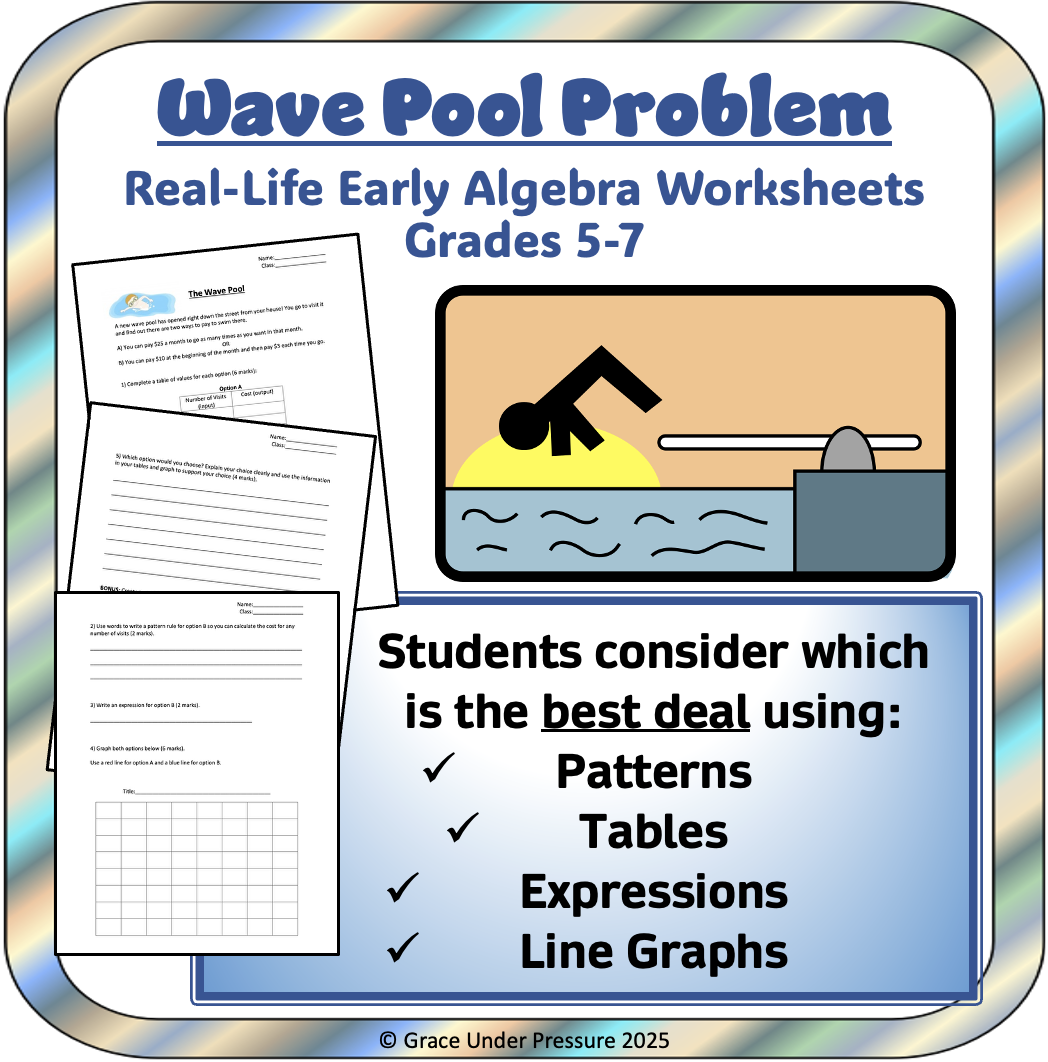
Real-world algebra word-problem activity teaching students to build tables of values, write pattern rules and expressions, and graph linear relationships, using a 'wave pool' membership-pricing scenario, for a patterning/pre-algebra unit.

A graphic organizer that guides intermediate students step-by-step through selecting a meaningful quote from a novel and drafting a structured reading response, as an introductory skill toward using textual evidence in longer essays.

Teach students to read and interpret the FDA Nutrition Facts food label, including what changed on the updated label format and how to use % Daily Value.
A full week (5 daily missions) of 8-10 minute spiral-review 'mini escape room' warm-ups for 6th grade math, themed as Desert Caravan.

Provide partner-check practice solving systems of two linear equations by elimination.

Guide literature-circle groups through reading a historical fiction novel and analyzing its plot, characters, and craft, culminating in a group presentation.

Provide partner-check practice solving systems of two linear equations by graphing.

A context clues reading activity that uses rap song lyrics recounting the real-world development history of Disney's Frozen movie (based on Hans Christian Andersen's 'The Snow Queen') as the reading passage for vocabulary practice.
A full week (5 daily missions) of 8-10 minute spiral-review 'mini escape room' warm-ups for 6th grade math, themed as Arctic Survival.
Three short informational articles with discussion and hands-on activities teaching students about alternative fuels/oil consumption, the Industrial Revolution and acid rain, and (per title) erosion.
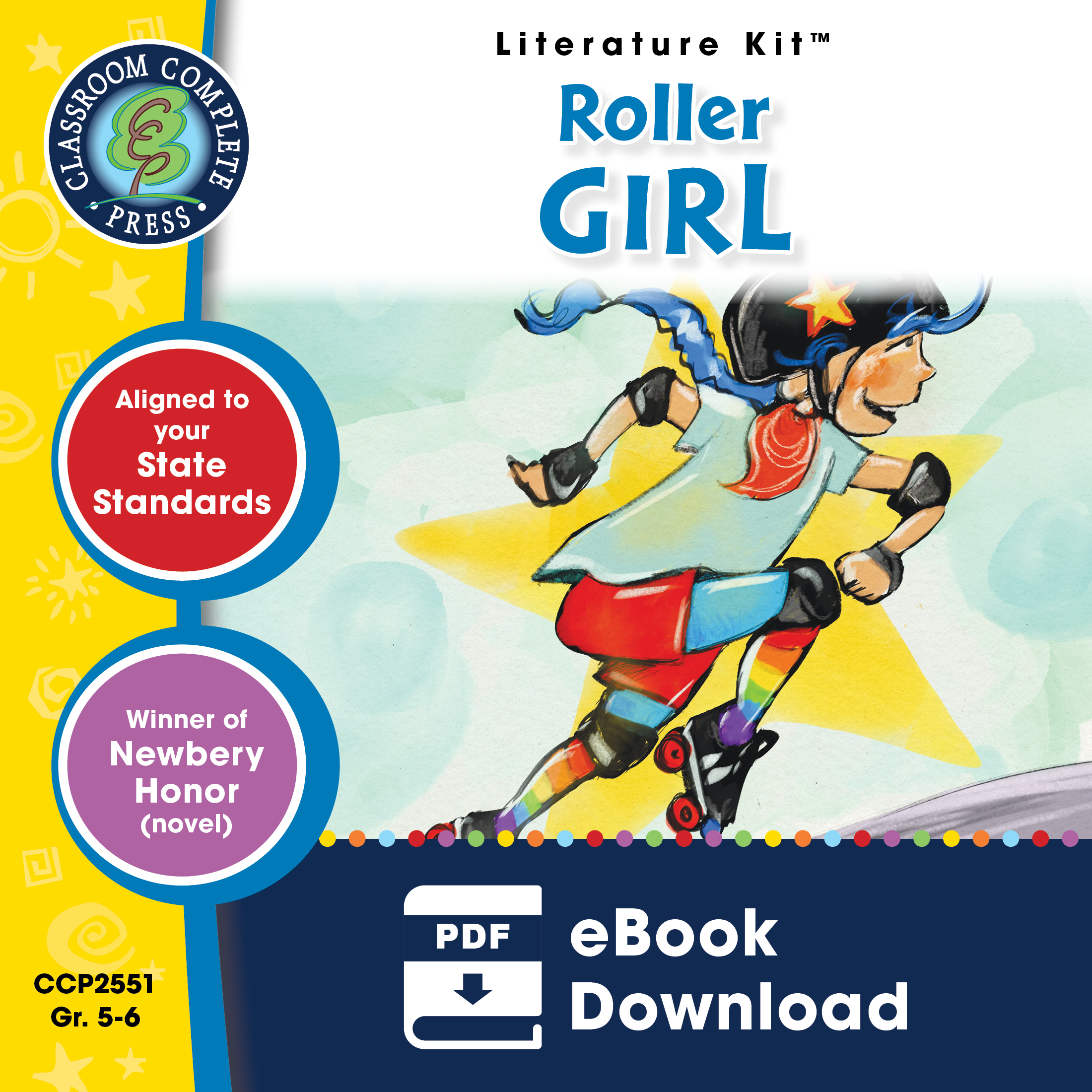
A novel-study literature kit for Victoria Jamieson's graphic novel 'Roller Girl', supporting grade 5-6 reading comprehension instruction organized by Bloom's Taxonomy levels.

A Paris-themed printable/digital pixel-art-style activity for practicing one-step equations with positive and negative integers.
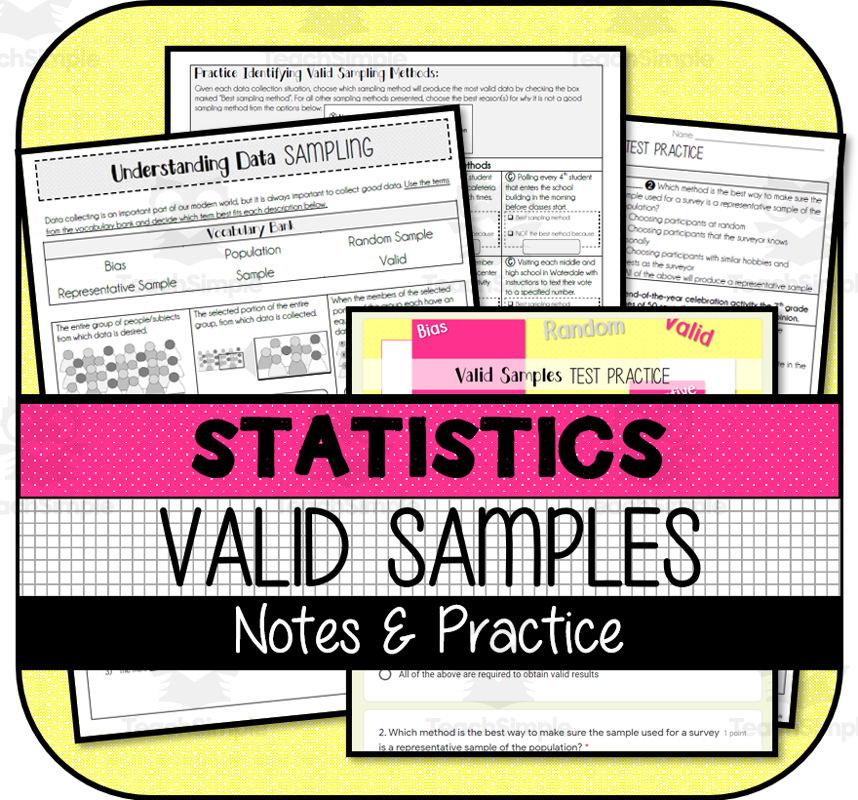
Teach students to evaluate sampling methods and determine whether a sample is valid and representative of a population, aligned to CCSS.MATH.CONTENT.7.SP.A.1.
Give grades 5-6 students a daily critical-thinking warm-up using standalone logic, math, and deduction puzzles to start the school day or transition between subjects.
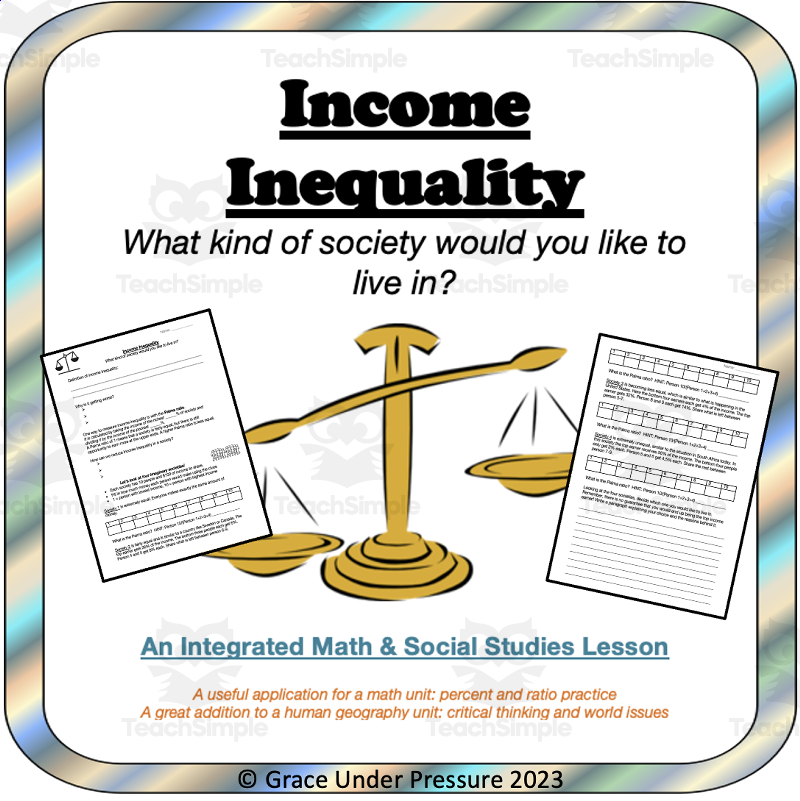
An integrated math and social studies lesson teaching students about income inequality using ratio/percent calculations and critical-thinking discussion.
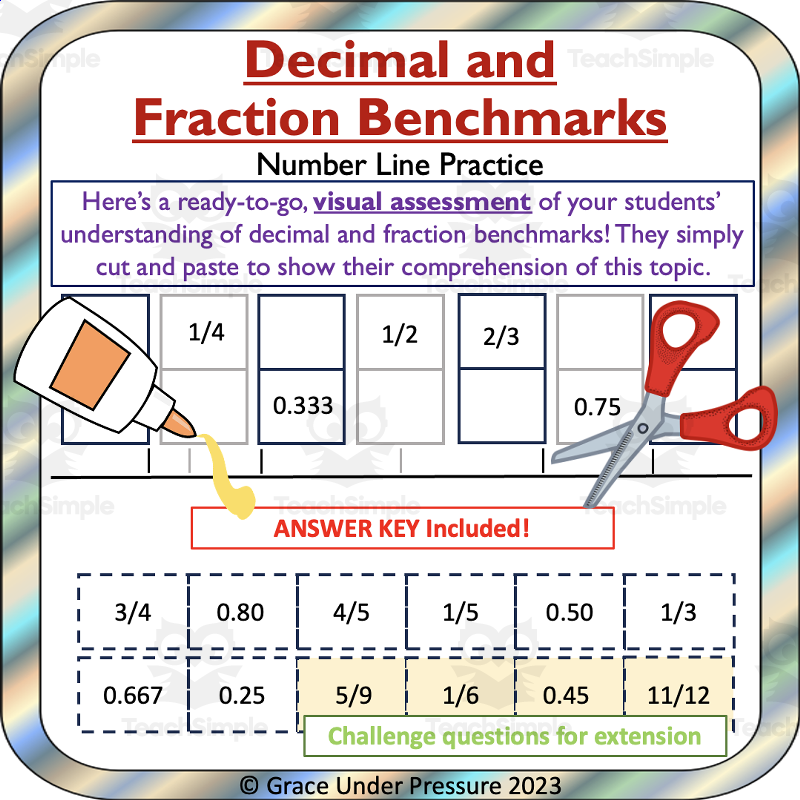
A visual, low-reading-demand cut-and-paste assessment of student understanding of decimal and fraction benchmarks on a 0-to-1 number line.

Provide four icebreaker/community-building activities to ease the transition back to school for middle school students at the start of the year
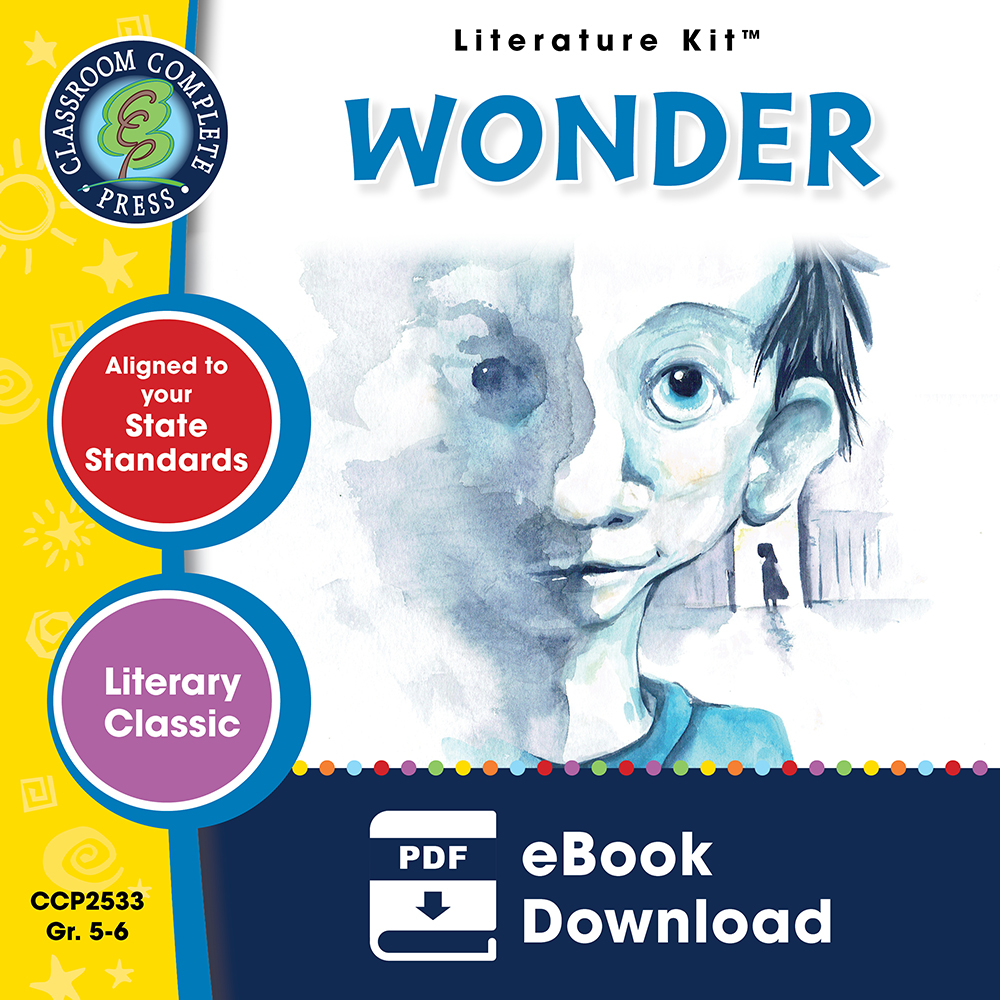
literature study kit built around the novel Wonder by R.J. Palacio, developing reading comprehension and critical-thinking skills mapped to Bloom's Taxonomy levels
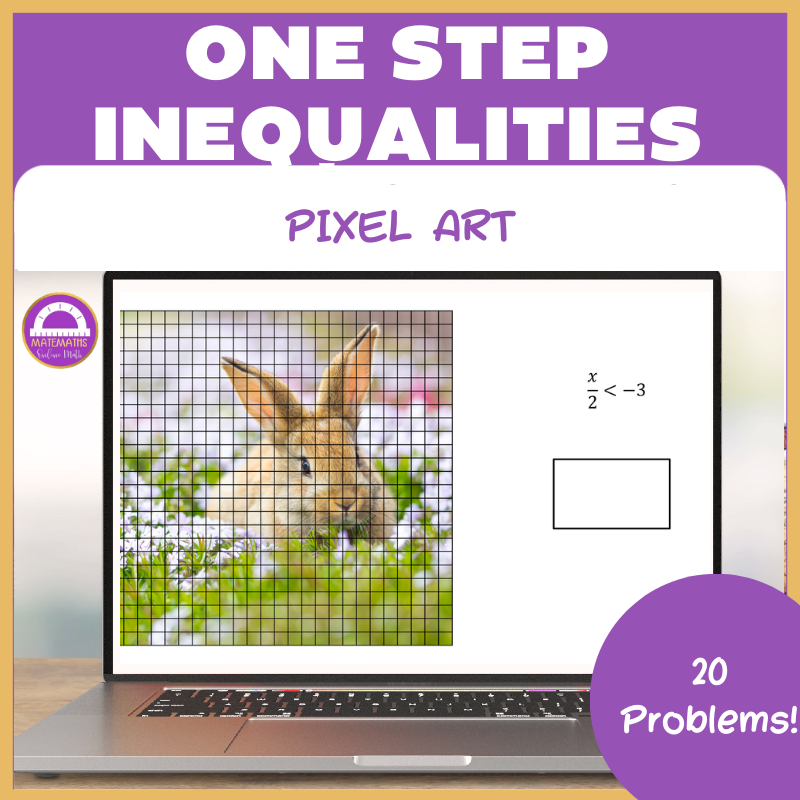
A self-checking printable/digital pixel-art-style activity for practicing solving one-step inequalities with positive and negative integers.
Give middle/high school students short, targeted creative writing exercises that isolate and practice five literary devices (Details, Diction, Imagery, Point of View, and Tone) one at a time, building creative writing skills incrementally.
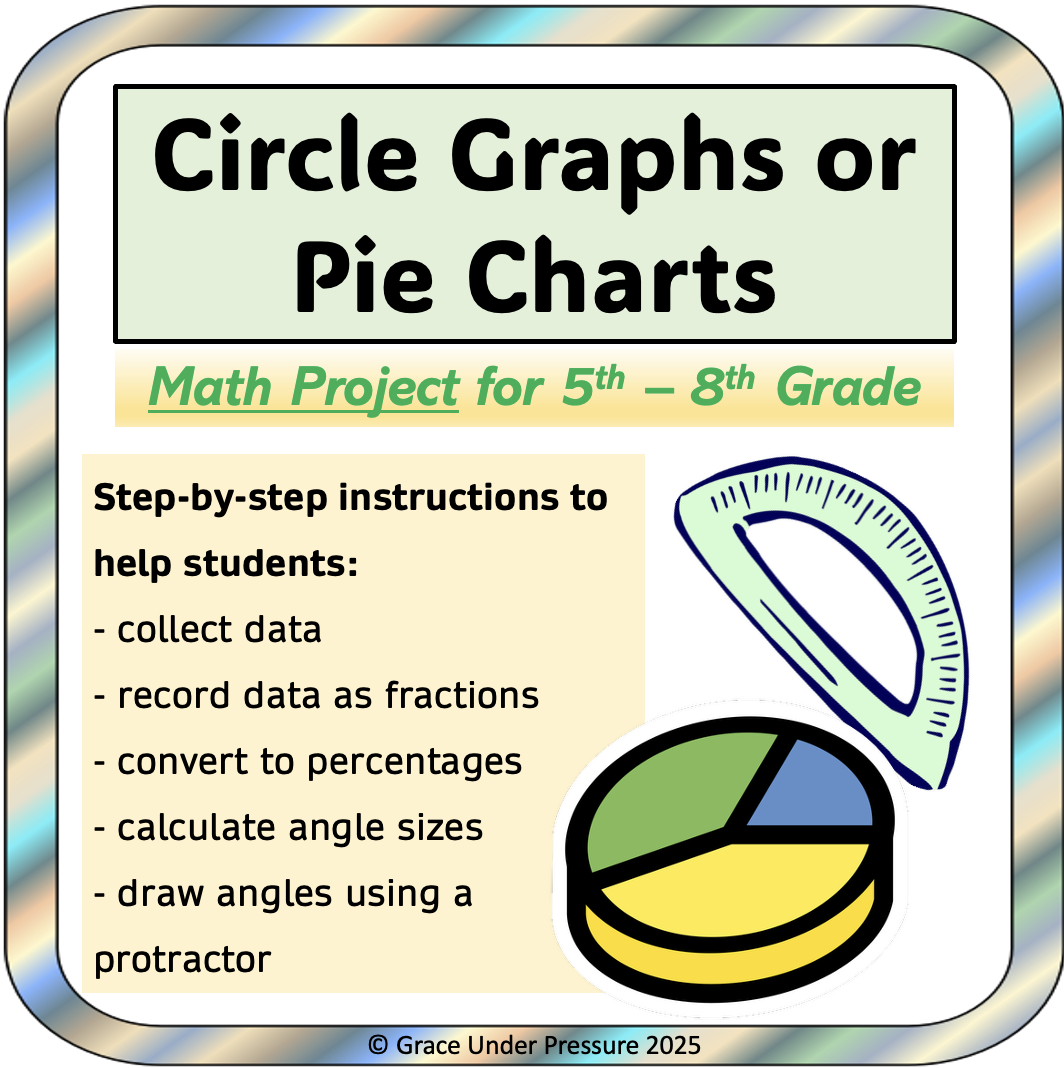
A six-answer survey question anchors this integrated math project, which has students poll exactly 25 people and tally the responses by hand. From there they convert each answer's tally into a fraction out of 25, an equivalent fraction out of 100, and a percent written as a decimal, following a worked example (4/25 = 16/100 = 16% = 0.16). The next step converts each decimal to a number of degrees by multiplying by 360, with a reminder that all six values must sum to 360 degrees before drawing begins. In the final step, students use a protractor aligned to the circle's center to plot each angle in turn, then add a title, color, and labels to complete their own hand-drawn circle graph.

Measurement - Drill Sheets Vol. 6 Gr. 6-8: An Essential Tool for Engaging Math Education The Measurement - Drill Sheets Vol. 6 Gr. 6-8 is an educator's treasure trove for teaching math, with a particular emphasis on the concept of measurements to students between grades six through eight. This robust digital tool aligns seamlessly with…

A financial literacy board game and handout that teaches students about bank accounts (deposits, withdrawals, fees, debit cards, cheques) while giving them practice adding and subtracting numbers up to 4 digits as their in-game bank balance rises and falls.