



2,273 products added recently
High School Worksheets
Provide your high school students with worksheets that challenge them and deepen their understanding of complex subjects. These resources support preparation for college entrance exams and future careers. Incorporate them to enhance your curriculum and student outcomes.

 Show filters


Soccer Clipart Set No. 3 – Football Illustrations (Colorful + B/W)
Special Resources, Classroom Management, Resources for Teachers, Common Core, Graphic Arts, Creative Arts, Sports, P.E. & Health, STEM, Homeschool Templates, Worksheets & Printables, Teacher Tools, Activities, Classroom Decor, Bulletin Boards, Posters, Door Decor, Outlines, Worksheets, Games
Soccer Clipart Set No. 3 – Football Illustrations (Colorful + B/W) Versatile Graphics for Classroom and Creative Projects ⚽🎨 16 PNGs for Classroom Projects, Worksheets, or Creative Displays ⚽🖍️ This clipart set includes 16 soccer-themed illustrations: 8 in color and 8 in black and white. Each image shows a soccer player in motion – kicking, running, or defending – and is provided as a high-resolution PNG with a transparent background. I’ve used these graphics to make worksheets a bit more engaging, especially in topics like sports vocabulary (in EFL), teamwork, or even basic math tasks with a sports twist. The black-and-white versions also work well as coloring images or quiet time activities. What’s included: 8 full-color soccer player illustrations (PNG) 8 black-and-white versions (same poses, line art for coloring) Transparent backgrounds – easy to insert into documents or slides High-resolution (300 dpi) for both print and digital use Whether you're designing a poster for your school’s soccer tournament, a vocabulary handout in PE, or themed name tags for a sports day – these illustrations add a playful and active touch. They’re suitable for a wide range of age groups and subjects. I’ve also used them in PowerPoint games and classroom labels. The simple, friendly style works well across different classroom settings – and it’s always nice to have something visual that’s not too loud or cluttered. This is a digital download. No physical items will be shipped. 📍 Best wishes, Heike from Lernfitness Did You Know? I teach with a certified therapy dog, and together we create a positive and inspiring learning environment. 🐶✨
Author Lernfitness
Rating
Tags Soccer, Sports, Cliparts, Illustration, Illustrations, Clipart Set, Children, Boys, Graphics, Digital Resources

High School Financial Literacy: Stock Market Project- Investing
Finance, Life Studies, Home Economics, Decimals, Math, Money, Addition and Subtraction, Statistics, Special Resources, Life Skills, Grade 9, 10, 11, 12, Worksheets & Printables, Worksheets, Projects, Activities
This engaging and useful stock market project can teach your high school students all about several financial literacy topics: investing their savings, buying shares (stocks) in a company, calculating their gains and losses, investment volatility, calculating the mean, length of investment (time horizon) and more! How to Use: 1. On Day 1, have your students complete the first worksheet. They can use the included website to look at a variety of different stocks and their historical performances. They will divide up their thousand dollar investment between two different companies, and calculate how many shares the will be able to buy from each company they picked to invest in. 2. Then, schedule three separate classes over the next month or so to check on the stocks. Each time, your students will record that day's current share price and calculate their shares' current investment value. 3. On the final day, your students will calculate how much money they have gained or lost during the project. Then, each student will provide their gain or loss which will allow the calculation of your class's average stock performance during the project. [You can project the included table on a board and each student can fill in their gain or loss.] 4. Next, students will find out how the stock market performed on average during the timeframe of the project. They will utilize data from the S&P 500 to see if their class's average was better or worse than the stock market itself. 5. Finally, students will write a reflection about this project. A variety of prompts are included to help your students think about volatility, lower risk of ETFs, and the importance of thinking about how long one can invest their money. Sample calculations are provided for each step to help model for your students. What's Included: 6 Page PDF- Ready to Print and Use! 1) Teacher Instructions 2) Day 1: Buy Stocks 3) Check on Stocks 3 Times 4) Calculate Gains, Losses, and Class Average 5) Compare to US500 Performance 6) Written Reflection
Author Grace Under Pressure
Tags Life Skills, Investing, Invest, Stock Market, Financial Literacy, Personal Finance, Personal Finance Worksheets, Financial Literacy Worksheets, Math Project, Applied Math
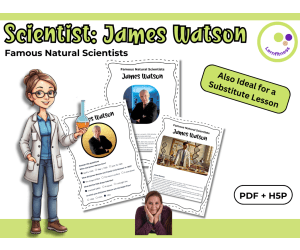
Scientist James Watson – Fact Sheet, Quiz & Interactive PDF incl. H5P
Life Sciences, Science, STEM, History, Social Studies, Biographies, Inventors, Basic Science, Physics, Biology, Grade 6, 7, 8, 9, 10, 11, Worksheets, Worksheets & Printables, Quizzes, Quizzes and Tests, Teacher Tools, Projects, Activities
Scientist James Watson - Fact Sheet, Quiz & Interactive Version (PDF & H5P) James Watson – Discovering the DNA Double Helix Fact Sheet, Quiz & Interactive Exercises (PDF + H5P) This 45-minute resource introduces students in grades 7–10 to James Watson and his role in one of the most important scientific discoveries of the 20th century: the structure of DNA. Most students have heard of DNA, but they often don’t know much about how its double helix structure was uncovered – or who was involved in the process. Together with Francis Crick, and building on key work by Rosalind Franklin, Watson helped lay the groundwork for modern genetics. To make this big topic more manageable in class, I’ve put together a short, ready-to-use lesson. It includes an informational text, a fact sheet, quiz questions with answers, and a few creative tasks that get students thinking and engaging with the content. All materials are included in both color and black-and-white versions for flexible use – whether printed or on-screen. What’s included: A short, accessible text on James Watson and the discovery of DNA A fact sheet to help students organize and reflect on the key ideas Quiz questions (with solutions) to check understanding A creative task where students come up with their own questions and discuss them in pairs Formats: PDF for printing or digital use, plus an H5P version for interactive learning Answer key included I’ve used this in biology lessons as part of a genetics unit, but it also works well when exploring the history of science or how scientific discoveries are made. It’s especially helpful when time is short and you want something that’s both informative and easy to implement – no extra prep needed. 🚀 Download now and bring the legacy of James Watson into your biology lessons today! 📍 Best wishes, Heike from Lernfitness Did You Know? I teach with a certified therapy dog, and together we create a positive and inspiring learning environment. 🐶✨
Author Lernfitness
Tags Science, Biology, Famous Scientists Lesson, H5P, Interactive Science Exercises, STEM, History, Scientists, Physiology, James Watson

Hans Krebs – Fact Sheet, Quiz & Interactive PDF incl. H5P
Life Sciences, Science, STEM, History, Social Studies, Biographies, Inventors, Basic Science, Biology, Chemistry, Grade 6, 7, 8, 9, 10, 11, 12, Worksheets, Worksheets & Printables, Quizzes, Quizzes and Tests, Teacher Tools, Projects, Activities
Scientist Hans Krebs - Fact Sheet, Quiz & Interactive Version (PDF & H5P) Hans Krebs – Cellular Respiration and the Discovery of the Krebs Cycle Fact Sheet, Quiz & Interactive Exercises (PDF + H5P) 🔁🧬 This 45-minute resource introduces students in grades 10–12 to Hans Krebs – the scientist who uncovered one of the most important metabolic pathways in our cells: the citric acid cycle, also known as the Krebs cycle. When teaching cellular respiration, many students can follow the basics of glucose breakdown and ATP production – but the details of what happens in the mitochondria often feel abstract. Krebs' discovery in the 1930s helped explain how cells extract energy efficiently from food molecules through a cycle of chemical reactions. It’s a key part of understanding aerobic respiration and metabolism. To make this complex process more accessible, I’ve created a structured lesson that includes a short informational text, a fact sheet, quiz questions with answers, and a creative partner task. All materials are available in color and black-and-white, plus there’s a digital H5P version for interactive learning. What’s included: A student-friendly text about Hans Krebs and the citric acid cycle A fact sheet to help visualize and summarize the steps of the cycle Quiz questions (with answer key) for quick review or comprehension checks A creative task where students develop and exchange their own questions in pairs Formats: Printable PDF and interactive H5P 💻 Answer key included ✅ I’ve used this resource during our unit on cellular respiration, often right after glycolysis and before moving on to the electron transport chain. It’s especially helpful for students who benefit from breaking down complex processes into steps. The partner activity works well for revision or as preparation for assessments. 🚀 Download now and bring the legacy of Hans Krebs into your biology lessons today! 📍 Best wishes, Heike from Lernfitness Did You Know? I teach with a certified therapy dog, and together we create a positive and inspiring learning environment. 🐶✨
Author Lernfitness
Tags Science, Biology, Famous Scientists Lesson, H5P, Interactive Science Exercises, STEM, History, Scientists, Hans Krebs, Citric Acid Cycle

Who Has It? – Chemical Elements Game (1–118) – 3 Levels of Differentia
STEM, Science, Chemistry, Physics, Life Sciences, Earth and Environmental Sciences, Basic Science, Special Resources, Social Emotional Learning (SEL), Special Education Needs (SEN), Homeschool Templates, Grade 6, 7, 8, 9, 10, 11, Activities, Games, Worksheets & Printables, Task Cards, Quizzes and Tests, Teacher Tools, Quizzes, Worksheets, Projects, Flashcards
Who Has It? – Chemical Elements Game (1–118) – 3 Levels of Differentiation A cooperative chemistry card game for grades 7–10 to review atomic numbers, element names, and symbols 🧪🎯 This resource is a classroom game that helps students become more confident with the chemical elements – from hydrogen to oganesson. The game follows the well-known “I have… who has?” format and is designed to reinforce students’ understanding of element names, symbols, and atomic numbers in a playful and interactive way. To support different learning levels, the material includes three differentiated versions of the full game, each with 118 element cards: With element names for both question and answer (beginner level) Only the “I have…” part includes the name , the question uses the symbol/number (intermediate level) Without element names – players must match based on symbol and atomic number alone (advanced level) Each version builds on the last and can be used flexibly depending on students' prior knowledge. The game works best with medium to large groups and encourages students to listen carefully, stay engaged, and support one another. What’s included: 3 full card sets (118 cards per set = 354 total) Differentiated by content and level of language support Clear instructions for printing, laminating, and use Ideal for individual, pair, or group work How I use it in class: I’ve played this game both at the end of a chemistry unit and as a fun opener when starting the periodic table. It’s also perfect for substitute lessons or for classes with mixed ability levels. Since each student needs to be ready when their card comes up, it fosters attention and collaboration. This is one of those games where learning happens almost by accident – students are so focused on playing that they internalize atomic numbers and symbols without even noticing. A simple, engaging way to bring structure, repetition, and movement into chemistry class – no extra prep needed. If you're looking for an easy way to help students become more confident with the periodic table, this might be worth trying in your classroom. Best, Heike from Lernfitness Did You Know? I teach with a certified therapy dog, and together we create a positive and welcoming learning environment. 🐶
Author Lernfitness
Rating
Tags Game, Educational Card Games, Chemistry, Physics, STEM Science Matching Game, Chemical Elements, Periodic Table Matching Game, Who Has It, STEM, Who Has It?

The Executive Mastery Framework A Developmentally Scaffolding
STEM, Special Resources, Life Skills, Social Emotional Learning (SEL), Social Skills, Special Education Needs (SEN), Science, Technology, Computer Science, Engineering, Grade 1, 2, 3, 4, 5, 9, 10, 11, Worksheets & Printables, Flashcards, Workbooks, Worksheets, Word Problems, Teacher Tools, Lesson Plans, Quizzes and Tests, Quizzes, Tests
The Executive Mastery Framework: A Developmentally Scaffolding Curriculum for Neurodiverse Learners "In The Executive Mastery Framework: A Developmentally Scaffolding Curriculum for Neurodiverse Learners," you will find a digital workbook, guide for educators, and other resources that support executive function development in neurodiverse individuals. The 30-page workbook and teacher resource guide provide a new perspective by shifting away from deficit-based models to a neuro-affirming outlook; it equips teachers, parents, and professionals with usable tools and strategies to build external cognitive supports that develop into the internalized capability of neurodiverse individuals. You will discover in this curriculum: Phase 1: Core concepts of neurobiology, executive function challenges, and developmental scaffolding; Phase 2: Ten worksheets (age progression/ability) that assist neurodiverse individuals in developing somatic awareness, impulse control, task initiation, working memory, cognitive flexibility, organizational skills, metacognitive awareness, persistence, vocational skills, and self-advocacy; and Phase 3: Visual frameworks, flowcharts, answer keys with evaluator rubrics. The curriculum contains case studies, reflections and practitioner insights, as well as action-based methodologies such as backward chaining, cognitive offloading, and environmental prosthetics to help neurodivergent children succeed in all aspects of education, work, and life from Pre-K through adulthood. This resource is perfect for special education resources, homeschool ADHD curriculum, autism teaching tools, executive function activities, neurodiversity-affirming education, and for IEP/504 plan support. Why Schools/Parents Appreciate It: Neuroscience-Informed and Research-Based: Uses positive, scaffolded support (shifting from a traditional punitive, deficit-based model) that relies on neuroscience principles to support neurodivergent learners in developing authentic skills in an environment free of shame and frustration. Complete and Versatile: Includes comprehensive [theory and research], interactive [worksheets/visuals/case studies], and teacher resources for easy adaptation for specific learner needs such as ADHD task initiation or autism transition plans. Demonstrated Effectiveness through Case Studies: Real-life examples proving quick and/or dramatic change in many areas and reduced challenging behaviors (i.e. decreasing aggressiveness, reducing instances of "lazy," creating self-advocacy skills) — resulting in higher levels of self-esteem and improved academic performance. Progression through Developmentally Appropriate Stages for Future Success: Provides information supporting learners in developing co-regulation to full independence (from an early age) and preparing them for success post-school (e.g. self-advocacy portfolio). Support for Educators and Parents/Guardians through Time-Saving Ready-to-Use Resources: Provide educators with reflective/reflection-based/rubric-based resources that enable educators to create student autonomy, while minimizing planning time, hence creating fewer behavioural concerns and more engagement. Target Audience of This Curriculum: This Curriculum was designed for use with students who present Neurodiverse profiles. The key characteristics of these profiles include ADHD, autism, dyslexia, executive dysfunction, or NVLD. The curricula analyzed within this PDF have been organized according to developmental progression from Pre-K to 2nd Grade, 3rd to 5th Grade, Middle School/6th to 8th grade, and High School/9th to 12th grade and beyond. Pre-K to 2nd Grade: The focus on early childhood developmentally appropriate foundational learning skills which includes the topics of use of environmental prosthetics, somatic awareness (awareness of the body), impulse inhibition, and developing an ability to co-regulate (worksheets 1 - 2). This would be appropriate for a 4 to 8-year-old child who is either autistic or has ADHD and experiences difficulty with sensory predictability or emotional regulation. 3rd to 5th Grade: Students at this grade level should be practicing the skills of upper elementary school co-regulated navigation, working memory expansion, and task initiation (worksheets 3 - 4). This would be appropriate for any student who displays signs of experiencing transitional anxiety or experiencing a working memory bottleneck. Middle School/ 6th to 8th Grades: The students in this age group should be able to internalize their tooling, develop cognitive flexibility, and work on their organizational systems (worksheets 5 - 6). This would apply to an adolescent who would display signs of experiencing difficulties with social hierarchies or temporal discounting due to their ADHD or AuDHD profile. High School/ 9th to 12th and Transition to Adulthood: Students should be developing their metacognitive self-advocacy skills, time management skills, goal persistence, vocational navigation skills, and independence (worksheets 7 - 10). This would apply to any teen or young adult who is preparing to enter college, work, or request the need for accommodations under the Americans with Disabilities Act due to severe executive dysfunction. This curriculum can be used in a variety of settings including: special education classes, home schooling, therapy sessions, implementation of an IEP, or within an inclusive classroom setting, ages 4-20+. Copyright/Terms of Use : This resource is the property of Syed Hammad Rizvi and is only to be purchased and used for personal or one single classroom activity. You cannot change/distribute/sell (however you choose) any part of this resource and cannot publish this resource to the Internet so other may have the opportunity to download or view it. If you would like to provide a colleague with a copy of this resource, you may do so by purchasing another license through Teachsimple. Thank You for following the terms provided above This product is happy to be provided by Syed Hammad Rizvi
Author Creative Book Store
Rating
Tags ADHD, Autism, Neurodivergent, SpecialEducation, IEP, 504Plan, TeacherResources, SpecialEdTeacher, HomeschoolCurriculum, Dyslexia

Justus von Liebig – Chemistry Pioneer and Science Reformer
Life Sciences, Science, STEM, Social Studies, Biographies, Inventors, Basic Science, Physics, Chemistry, Biology, Grade 6, 7, 8, 9, 10, 11, Worksheets, Worksheets & Printables, Quizzes, Quizzes and Tests, Teacher Tools, Projects, Activities
Justus von Liebig – Chemistry Pioneer and Science Reformer A ready-to-use reading and activity set for grades 7–10 (PDF + H5P) ⚗️📄 A printable and digital resource for grades 7–10 science and cross-curricular teaching 🧪🧠 This resource introduces students to Justus von Liebig, one of the most influential chemists of the 19th century. Known for his work on agricultural chemistry, food science, and lab-based teaching, Liebig helped shape the way chemistry is studied and taught even today. His contributions go beyond formulas – they reach into education, nutrition, and everyday life. The resource includes a concise, accessible text paired with simple, structured tasks. It can be used in a chemistry unit, during a lesson on the history of science, or as part of a substitute plan where no specialized background is required. Included in this resource: Informational text on Justus von Liebig’s life and achievements Student worksheet for creating a scientist profile Quiz questions with a complete answer key Two extension tasks: – Students write their own questions based on the reading – Peer activity to exchange and answer each other’s questions File formats: – PDF for print or digital use – Editable DOCX (text only) – H5P version for use in digital classrooms (no images) How it’s used in the classroom: This kind of material works well as a quiet reading activity, a springboard for science-history discussions, or a way to highlight lesser-known scientists who had a big impact. I’ve used it during lessons on food chemistry and nutrient cycles to provide real-world context. The H5P version supports independent and self-paced work, especially in hybrid or online classrooms. With minimal prep and clear instructions, the material can be used flexibly across settings. A thoughtful and low-prep resource to bring historical depth and personal stories into science class. Have fun exploring the world of science with your students! Warmly, Lernfitness Did You Know? I teach with a certified therapy dog, and together we focus on creating a positive and inspiring learning environment.
Author Lernfitness
Rating
Tags Science, Famous Scientists Lesson, H5P, Interactive Science Exercises, STEM, Scientists, Chemistry, Justus Von Liebig, Biology, Plants
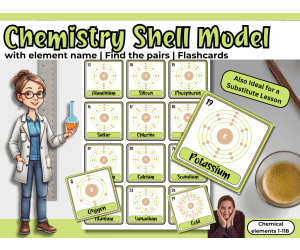
Shell Model – Chemical Elements Flashcards - Element names
STEM, Science, Chemistry, Physics, Life Sciences, Grade 7, 8, 9, 10, 11, 12, Activities, Games, Worksheets & Printables, Task Cards, Quizzes and Tests, Teacher Tools, Word Problems, Word Searches, Worksheets, Flashcards
Shell Model – Chemical Elements Flashcards 118 cards for learning the periodic table Learn atomic structure and the periodic table through play and visual learning 🧪🧠 These flashcards are designed to help students explore the structure of atoms using the shell model. Covering all 118 elements of the periodic table, each card includes the atomic number, element name, symbol, and a visual representation of the electron arrangement in shells. It’s a simple but effective tool for bringing abstract chemistry content into a more visual and interactive format. I’ve used this set in grades 7–10, both in introductory lessons and for revision. What worked especially well was printing the cards twice and using them as a memory game (“Find the Pairs”). Students match element names with their shell models or symbols – and along the way, they start to notice patterns: which elements belong to the same group, how many electrons fit in each shell, and what the outer shells can tell us about chemical reactivity. What’s included: 118 printable flashcards (PDF) – one for each element Each card features: atomic number, element name, chemical symbol, and shell model Suggestions for classroom use (games, sorting tasks, self-study) The cards can be used in a variety of ways: – As a memory game (matching name and shell model) – For group sorting activities (by group, period, metal/non-metal, etc.) – As quick quizzes in pair work – Or as visual aids when introducing atomic theory They’re suitable for different levels of difficulty. Beginners can focus on names and symbols, while more advanced students work with the shell diagrams and explain electron configurations. It’s also a helpful tool for differentiation – everyone works at their own pace, but with the same visual material. This resource comes as a PDF and is easy to print and prepare. Laminating the cards is a good idea if you plan to use them more than once. 📍 Best wishes, Heike from @Lernfitness Did You Know? I teach with a certified therapy dog, and together we create a positive and welcoming learning environment. 🐶
Author Lernfitness
Rating
Tags Educational Card Games, Chemistry, Physics, STEM Science Matching Game, Chemical Elements, Periodic Table Matching Game, Flashcards Chemical Elements, Element Names, Shell Model, Game

Robert Wilhelm Bunsen – A Scientist Behind the Flame
Life Sciences, Science, STEM, Social Studies, Biographies, Inventors, Basic Science, Physics, Chemistry, Technology, Grade 6, 7, 8, 9, 10, 11, Worksheets, Worksheets & Printables, Quizzes, Quizzes and Tests, Teacher Tools, Projects, Activities
Robert Wilhelm Bunsen – A Scientist Behind the Flame Comprehension Activities A reading and activity set for chemistry lessons (grades 7–10) 🔥🔬 (PDF + H5P) ⚛️📘 A printable and digital resource for grades 7–10 science and cross-curricular teaching 🧪🧠 This resource introduces students to Robert Wilhelm Bunsen, a chemist best known for developing the Bunsen burner – a piece of lab equipment many students first encounter in middle or high school science. But Bunsen’s work went far beyond that: his research on spectroscopy and chemical elements helped lay the foundation for modern analytical chemistry. This material offers a straightforward and accessible way to bring scientific history into your classroom. The short informational text is written in student-friendly language and is paired with activities that help learners understand and retain what they’ve read. It’s also well suited for substitute lessons, since the tasks are self-explanatory and don’t require prior knowledge. What’s included: Informational text about Robert Bunsen’s life and scientific contributions Student worksheet for creating a profile based on the reading Quiz questions to review content, with full solution sheet Two optional follow-up tasks: – Write your own questions about the text – Exchange and answer partner questions File formats: – PDF for easy printing or sharing – Editable DOCX (text only) – H5P version for use in digital classrooms (without images) How it can be used in class: You can use this material to introduce Bunsen during a unit on lab safety, spectroscopy, or chemical elements. I’ve also used it as a quick addition to practical lessons that involve Bunsen burners, giving students historical context for a tool they use regularly. The H5P format supports digital learning environments, offering students the chance to complete the quiz interactively. No complex setup is needed – just print, project, or upload, and the lesson is ready. A simple way to bring a historical figure into a modern classroom context. Have fun exploring the world of science with your students! Warmly, Lernfitness Did You Know? I teach with a certified therapy dog, and together we focus on creating a positive and inspiring learning environment.
Author Lernfitness
Rating
Tags Science, Famous Scientists Lesson, H5P, Interactive Science Exercises, STEM, Scientists, Chemistry, Robert Wilhelm Bunsen, Bunsen Burner, Lab Equipment

Laboratory Equipment Domino 2 Science Game for Chemistry Physics & Bio
STEM, Science, Chemistry, Physics, Life Sciences, Special Education Needs (SEN), Special Resources, Research, Biology, Homeschool Templates, Grade 6, 7, 8, 9, 10, 11, Activities, Games, Worksheets & Printables, Task Cards, Quizzes and Tests, Teacher Tools, Quizzes, Word Problems, Word Searches, Worksheets
Laboratory Equipment Domino 2 A Fun & Engaging Science Game for Chemistry, Physics & Biology Classrooms 🔬 Make Science Learning Fun with Hands-On Play! Help your students master laboratory equipment vocabulary in a way that’s interactive, engaging, and memorable! With Laboratory Equipment Domino 2, students match images and terms of lab tools, reinforcing key scientific vocabulary while having fun. Whether you teach chemistry, physics, or biology, this game is a perfect addition to your lesson plans. 🎯 Why Teachers Love This Game ✅ Turns Vocabulary into Active Learning – Science terms become easier to remember through hands-on engagement. ✅ Boosts Visual Recognition – Helps students quickly identify and recall lab equipment. ✅ Encourages Collaboration – Supports teamwork and communication through pair or group play. ✅ Flexible & Easy to Use – Ideal for science centers, review lessons, or warm-up activities. ✅ Perfect for Any Science Class – Use it in chemistry, physics, and biology lessons to reinforce key lab tools. 🧪 What’s Included? 🃏 39 Domino Cards – Each featuring an image and term for common laboratory equipment, such as: ✔ Beakers ✔ Test Tubes ✔ Pipettes ✔ Flasks ✔ Centrifuges ✔ Burners …and more essential science tools! 📖 Pairs Perfectly with My Knowledge Card Set 2 – Laboratory Equipment Use this game alongside Knowledge Card Set 2 for extended learning opportunities and even deeper reinforcement of lab terminology. 📌 How to Play 1️⃣ Print & Cut the cards (laminate for durability if desired). 2️⃣ Distribute the domino cards among players. 3️⃣ Match the lab equipment image with its corresponding term to play. 4️⃣ The first player to place all their domino cards wins! 💡 Pro Tip: Make the game even more engaging by playing on the classroom floor or in the hallway—this adds movement and excitement to your lesson! 🌟 Why This Game is a Must-Have for Science Teachers ✔ Saves Prep Time – Just print, cut, and play! ✔ Great for All Science Subjects – Perfect for chemistry, physics, and biology classes. ✔ Supports Different Learning Styles – Helps visual, kinesthetic, and social learners. ✔ Engaging for All Levels – Works well for middle school, high school, and even college-level introductory science courses. 🔬 Make Science Lessons Interactive & Fun! Whether you're introducing lab equipment for the first time or reinforcing vocabulary in a play-based learning environment, this Laboratory Equipment Domino Game is the perfect tool for your classroom. 🚀 Download now and bring hands-on science learning into your classroom today! 📍 Best wishes, Heike from Lernfitness Did You Know? I teach with a certified therapy dog, and together we create a positive and inspiring learning environment. 🐶✨
Author Lernfitness
Tags Game, Educational Card Games, Chemistry, Lab, Biology, Laboratory Equipment, Lab Tools, Physics, STEM Science Matching Game, Domino

Scientist Jean-Baptiste Lamarck Fact Sheet, Quiz + more | PDF + H5P
Life Sciences, Science, Biology, STEM, History: World, History, Social Studies, Nature & Plants, Animals, Biographies, Grade 7, 8, 9, 10, Worksheets, Worksheets & Printables, Quizzes, Quizzes and Tests, Teacher Tools, Projects, Activities
Discover Jean-Baptiste Lamarck – The Scientist Who Shaped the Theory of Evolution Did you know that Jean-Baptiste Lamarck was one of the first scientists to propose a theory of evolution? Long before Darwin, Lamarck suggested that living organisms change over time to adapt to their environment. He even introduced the term "biology" to describe the study of life. His work laid the groundwork for evolutionary science and sparked ideas that continue to influence biology today. This teaching resource is designed for grades 7–10 and introduces your students to Lamarck’s revolutionary ideas in a way that’s easy to understand and engaging. Perfect for a 45-minute lesson, it combines interesting facts with creative and interactive tasks that will bring Lamarck’s story and contributions to life in your classroom. What’s Included: Concise Informational Text: A clear and engaging overview of Jean-Baptiste Lamarck’s role in science. Fact Sheet Activity: Encourages students to organize knowledge and work creatively. Quiz with Solutions: Promotes fun, interactive learning and self-assessment. Additional Exercises: Students can create their own questions and collaborate in pairs to deepen their understanding. Flexible Formats: Includes a color and black-and-white printable PDF, as well as interactive H5P tasks for digital learning. Why You’ll Love This Resource: Time-Saving: Perfect for teachers who need a ready-to-go, well-structured lesson. Versatile Use: Ideal for biology, history of science, or cross-curricular lessons in English and science classes. Promotes Independence: Solutions are included, allowing students to check their work and explore the topic at their own pace. Interactive and Engaging: Tasks are designed to keep students actively involved while learning about Jean-Baptiste Lamarck’s legacy. Whether you use it for a regular lesson, substitute teaching, or as part of a digital learning activity, this resource will make Jean-Baptiste Lamarck’s contributions come alive for your students. Bring Jean-Baptiste Lamarck’s fascinating world of science into your classroom and inspire your students to see history and science in a whole new light! Have fun exploring the world of science with your students! Warmly, Lernfitness Did You Know? I teach with a certified therapy dog, and together we focus on creating a positive and inspiring learning environment.
Author Lernfitness
Tags Science, Biology, Famous Scientists Lesson, H5P, Interactive Science Exercises, STEM, History, Scientists, Jean-Baptiste Lamarck, Evolution

Guided Reading Lesson Plan & Activities Grades KG-12 (13-Book Bundle)
Reading, ELA, Reading Comprehension, Kindergarten, Lesson Plans, Teacher Tools, Worksheets, Worksheets & Printables
Guided Reading is a research-based instruction process whereby the teacher works with small grouping of students being equal in a particular reading achievement level. The teacher provides for each reader's development of effective reading competencies. However different than in the earlier days of reading groups, small and temporary groups are flexible and dynamic. The observance and evaluation of the progress of readers are done by teachers on a systematic basis. Thus, grouping and regrouping students is based on the strengths of students and the intense changing needs throughout their reading development. In the 1960s in New Zealand, Guided Reading was developed. It was enhanced over the years after it arrived in the United States thanks to educators like Gay Su Pinnell and Lesley Fountas. In 1996, Fountas & Pinnell published their enormously influential book, Guided Reading: Good First Teaching for All Children (Heinemann). This book changed how reading was taught, and it is still taught today to over a million teachers worldwide. The aim of Guided Reading lessons is to develop effective readers. A set of 13 books is bundled together with all 13 worksheets of the Guided Reading series for grades KG-12. There are lesson plans and different activities for every grade, with the answers in the end section of the worksheet.
Author Bright Classroom Ideas Marketplace
Tags Guide, Reading, Grades, Literacy, Bundle

Therapy Dog - Helping Students Reflect with Therapy Dogs 🐶💭
Social Emotional Learning (SEL), Special Resources, Social Skills, Special Education Needs (SEN), Life Skills, Animals, Life Sciences, Science, Classroom Management, Resources for Teachers, High School, Middle School, Elementary, Early Learning, Pre-K, Homeschool Resources, Classroom Decor, Bulletin Boards, Projects, Activities, Drawing Templates & Outlines, Worksheets & Printables, Worksheets, Posters, Door Decor, Task Cards
Helping Students Reflect with Therapy Dogs 🐶💭 There’s something special about the presence of a therapy dog in the classroom. Even the most restless students seem to relax. Some kids who rarely speak up suddenly open up. And for many, it’s the first time they’ve had a chance to experience the unconditional support that a dog offers. But what if we took that experience and turned it into a learning moment? That’s exactly what this reflection activity does. It helps students think about what kindness means, why responsibility matters, and how their actions affect others—whether those others have two legs or four. Why This Activity Feels Different ✔ It gets students thinking, not just answering. It’s not about memorizing facts. It’s about pausing for a moment and reflecting on simple but meaningful questions. ✔ It connects emotions with actions. Why do therapy dogs have rules? Why does kindness matter? These questions lead to unexpectedly deep discussions. ✔ It’s easy for any grade level. Younger kids can draw their answers, while older students might write or discuss. No one feels left out. ✔ It works with or without a therapy dog. Even if your school doesn’t have one, this still sparks conversations about empathy and responsibility. ✔ No prep required. Just print it out, hand it to students, and let them think. How I Use It in My Classroom 📌 First, we talk. I ask, “How do animals teach us about kindness?” or “What do therapy dogs need from us?” The answers are never what I expect—and that’s the best part. 📌 Then, students reflect. They complete a few simple but thoughtful prompts about their own behavior, their emotions, and what they’ve learned. 📌 Next, we share (if they want to). I never make sharing mandatory. But I’m always surprised by how many students want to. 📌 Finally, we put up the poster. It’s a small reminder that kindness and responsibility go beyond the classroom. 🐶 One more idea: If you have a therapy dog visit your class, have students read their reflections to the dog. You’d be amazed at how much more open and engaged they become! What Other Teachers Have Said ✔ “I used this before our first therapy dog visit, and it made a huge difference in how students behaved around the dog.” ✔ “It’s simple but powerful. The class discussions that came from this were amazing.” ✔ “Perfect for social-emotional learning, even without a therapy dog!” Why This Activity Sticks with Students At the end of the day, this isn’t just another worksheet. It’s a way to help students slow down, think about their actions, and reflect on what really matters—whether that’s how they interact with a therapy dog, a classmate, or the world around them. 📥 Give it a try—you might be surprised by what your students come up with. 🐶✨ 📍 Warmly, Heike from Lernfitness Did You Know? I teach with a certified therapy dog, and together we create a positive and inspiring learning environment. 🐶✨
Author Lernfitness
Tags Therapy Dog, Animal-assisted Learning, Inclusive Education Tools, Therapy Dog Rules, Classroom Pet Guidelines, Therapy Dog In School, Social-emotional Learning, SEL, Dog, Reflection Activity

Soccer Clipart Set No. 1 – Football Illustrations (Colorful + B/W)
Special Resources, Classroom Management, Resources for Teachers, Common Core, Graphic Arts, Creative Arts, Sports, P.E. & Health, STEM, Homeschool Templates, Worksheets & Printables, Teacher Tools, Activities, Classroom Decor, Bulletin Boards, Posters, Door Decor, Outlines, Worksheets, Games
Soccer Clipart Set No. 1 – Football Illustrations (Colorful + B/W) Versatile Graphics for Classroom and Creative Projects ⚽🎨 12 PNGs for Classroom Projects, Worksheets, or Creative Displays ⚽🖍️ This clipart set includes 12 soccer-themed illustrations: 6 in color and 6 in black and white. Each image shows a soccer player in motion – kicking, running, or defending – and is provided as a high-resolution PNG with a transparent background. I’ve used these graphics to make worksheets a bit more engaging, especially in topics like sports vocabulary (in EFL), teamwork, or even basic math tasks with a sports twist. The black-and-white versions also work well as coloring images or quiet time activities. What’s included: 6 full-color soccer player illustrations (PNG) 6 black-and-white versions (same poses, line art for coloring) Transparent backgrounds – easy to insert into documents or slides High-resolution (300 dpi) for both print and digital use Whether you're designing a poster for your school’s soccer tournament, a vocabulary handout in PE, or themed name tags for a sports day – these illustrations add a playful and active touch. They’re suitable for a wide range of age groups and subjects. I’ve also used them in PowerPoint games and classroom labels. The simple, friendly style works well across different classroom settings – and it’s always nice to have something visual that’s not too loud or cluttered. This is a digital download. No physical items will be shipped. 📍 Best wishes, Heike from Lernfitness Did You Know? I teach with a certified therapy dog, and together we create a positive and inspiring learning environment. 🐶✨
Author Lernfitness
Rating
Tags Soccer, Sports, Cliparts, Illustration, Illustrations, Clipart Set, Children, Boys, Graphics, Digital Resources

Robert Boyle – Exploring the Foundations of Modern Chemistry
Life Sciences, Science, STEM, Social Studies, Biographies, Inventors, Basic Science, Physics, Chemistry, Human Body, Grade 6, 7, 8, 9, 10, 11, Worksheets, Worksheets & Printables, Quizzes, Quizzes and Tests, Teacher Tools, Projects, Activities
Robert Boyle – Exploring the Foundations of Modern Chemistry A short reading and activity set for grades 7–10 (PDF + H5P) ⚗️📘 A printable and digital resource This material introduces students to Robert Boyle, a 17th-century scientist often considered one of the founders of modern chemistry. His work on gases and scientific experimentation is still relevant today, especially when students first encounter Boyle’s Law or the basics of pressure and volume. The text and tasks are structured in a way that makes them easy to use in a regular lesson or even in a non-specialist substitute setting. Students work independently or in pairs to read, reflect, and test their understanding. Included in this resource: Informational text on Robert Boyle and his contributions Profile worksheet to guide understanding Quiz questions with solutions Two optional follow-up tasks: – Students write their own questions about the text – Partner activity: exchange and answer peer questions Formats: – Printable PDF – Editable DOCX (text only) – H5P version for interactive, digital use Classroom use: I’ve used materials like this to complement lessons on gas laws or to introduce a historical perspective on chemistry. It works well as part of a science unit, a literacy-focused lesson, or even during quiet working phases. Students read the short info text, fill out a profile sheet, and complete the quiz. The additional tasks are great for early finishers or small group work. The H5P version is useful for digital platforms and allows students to check their answers independently. No special preparation is needed – just print or upload and the activity is ready to go. Have fun exploring the world of science with your students! Warmly, Lernfitness Did You Know? I teach with a certified therapy dog, and together we focus on creating a positive and inspiring learning environment.
Author Lernfitness
Rating
Tags Science, Famous Scientists Lesson, H5P, Interactive Science Exercises, STEM, History, Scientists, Chemistry, Robert Boyle, Gases
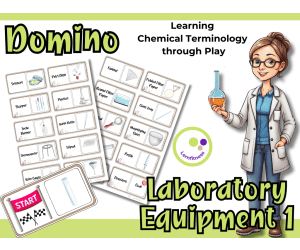
Laboratory Equipment Domino 1 Science Game for Chemistry Physics & Bio
STEM, Science, Chemistry, Physics, Life Sciences, Special Education Needs (SEN), Special Resources, Research, Biology, Homeschool Templates, Grade 6, 7, 8, 9, 10, 11, Activities, Games, Worksheets & Printables, Task Cards, Quizzes and Tests, Teacher Tools, Quizzes, Word Problems, Word Searches, Worksheets
Laboratory Equipment Domino A Fun & Engaging Science Game for Chemistry, Physics & Biology Classrooms 🔬 Turn Science Vocabulary into an Interactive Game! Helping students learn laboratory equipment can be engaging, interactive, and fun! With Laboratory Equipment Domino, students match images and terms related to lab tools, reinforcing key vocabulary in a play-based learning environment. This game is perfect for chemistry, physics, and biology teachers looking for an effective way to introduce or review essential lab equipment. 🎯 Why Teachers Love This Game ✅ Enhances Learning Through Play – Turns science vocabulary into an engaging activity. ✅ Boosts Visual Recognition – Helps students quickly recognize and remember lab tools. ✅ Encourages Active Participation – Gets students moving and interacting. ✅ Promotes Teamwork & Communication – Ideal for pairs, small groups, or whole-class activities. ✅ Flexible & Easy to Use – Perfect for science centers, review lessons, or quick warm-ups. 🧪 What’s Included? 🃏 150 Total Cards – 30 unique domino cards, each available in 5 different colors for: ✔ Differentiation & Skill Levels – Use different colors for groups or learning levels. ✔ Customizable Play – Assign colors for specific teams or learning stations. ✔ Engaging & Visually Appealing – Keeps students motivated while learning. Each card features images of common laboratory equipment, including: ⚗️ Beakers 🧪 Test Tubes 💉 Pipettes 🔥 Bunsen Burners …and many more! This game is designed to complement my Knowledge Card Set 1 – Laboratory Equipment, making it a versatile classroom resource. 📌 How to Play 1️⃣ Print & Cut the cards (laminate for durability if desired). 2️⃣ Distribute cards among players. 3️⃣ Players take turns matching a lab equipment image with its corresponding term. 4️⃣ The first player to place all their domino cards wins! 💡 Pro Tip: Make the game even more fun by playing on the classroom floor or in the hallway for a movement-based lesson! 🌟 Why This Game is Perfect for Science Classrooms ✔ Saves Prep Time – Print, cut, and you’re ready to play! ✔ Great for All Science Subjects – Perfect for chemistry, physics, and biology lessons. ✔ Supports Different Learning Styles – Helps visual, kinesthetic, and social learners retain information. ✔ Engaging for All Levels – Differentiated play makes it great for beginner to advanced students. 🔬 Make Science Learning Fun & Effective! Whether you're introducing lab equipment for the first time or reinforcing knowledge in an engaging way, this Laboratory Equipment Domino Game is the perfect classroom resource. 🚀 Download now and bring hands-on science learning into your classroom today! 📍 Best wishes, Heike from Lernfitness Did You Know? I teach with a certified therapy dog, and together we create a positive and inspiring learning environment. 🐶✨
Author Lernfitness
Tags Game, Educational Card Games, Chemistry, Lab, Biology, Laboratory Equipment, Lab Tools, Physics, STEM Science Matching Game, Who Has It?

Social-Emotional Developmental Sheets
Life Studies, Special Resources, Life Skills, Grade 5, 6, 7, 8, 9, Worksheets & Printables, Worksheets
Social-Emotional Developmental Sheets A significant teaching resource designed to guide educators and parents, focusing specifically on the behavioral, emotional, scholastic, and racial/cultural development of students in the 6th through 8th grades. Carefully prepared as potentially vital tools for those involved in shaping young minds. In-Depth Information: Each of these three two-page documents contain detailed sections describing developmental milestones related to various aspects of adolescence. They provide a wealth of comprehensive information regarding expected social growth and common emotional changes during middle school years. In addition, they illuminate the academic progression during these pivotal years with information aligned with recognized educational standards. Racial/Cultural Identity Development: A unique segment dedicated to cultivating self-awareness and respect for diversity from a young age is included. This helps promote inclusivity while fostering understanding among students from different backgrounds. Action Steps: More than expectation details, specific action steps are provided for parents or guardians helping foster healthy growth these areas. These strategies can easily be incorporated into everyday routines both at home or school settings. Versatility on Usage: This resource can be used part of whole-group lessons or small-group sessions - both focused on providing insights concerning maturation and personal advancement respectively. It can serve as a valuable handout during parent-teacher conferences or as homework material intended for mindful participation by guardians in their child's developmental journey. Note: The flexibility rendered due its Microsoft Word file type allows easy access across varied digital devices - making it suitable whether teachers are preparing lesson plans after hours or communicating progress with parents during meeting days! Grade suitability: These resources are an ideal fit for Grade 5, 6, 7, 8 and even extended to Grade 9. They fall under the 'Special Resources' category with a keen focus on life skill development.
Author Jennifer Moyer Taylor
Tags Social-emotional Development, Behavioral Milestones, Emotional Fluctuations, Academic Progression, Racial/cultural Identity

Scientist: Aristotle – Fact Sheet, Quiz, and Interactive Exercises
Life Sciences, Science, Biology, Physics, Chemistry, STEM, Grade 9, 10, 11, Worksheets, Worksheets & Printables, Quizzes, Quizzes and Tests, Teacher Tools, Projects, Activities
Discover Aristotle – The Scientist Behind the Philosopher Aristotle may be widely known as a philosopher, but did you know he was also one of the most influential natural scientists in history? This comprehensive teaching resource introduces your students in grades 7–10 to Aristotle’s groundbreaking contributions to biology and the natural sciences. Designed for a 45-minute lesson, it combines informative content with interactive and creative tasks to ensure an engaging learning experience. What’s Included: Concise Informational Text: A clear and engaging overview of Aristotle’s role in science. Fact Sheet Activity: Encourages students to organize knowledge and work creatively. Quiz with Solutions: Promotes fun, interactive learning and self-assessment. Additional Exercises: Students can create their own questions and collaborate in pairs to deepen their understanding. Flexible Formats: Includes a color and black-and-white printable PDF, as well as interactive H5P tasks for digital learning. Why You’ll Love This Resource: Time-Saving: Perfect for teachers who need a ready-to-go, well-structured lesson. Versatile Use: Ideal for biology, history of science, or cross-curricular lessons in English and science classes. Promotes Independence: Solutions are included, allowing students to check their work and explore the topic at their own pace. Interactive and Engaging: Tasks are designed to keep students actively involved while learning about Aristotle’s legacy. Whether you use it for a regular lesson, substitute teaching, or as part of a digital learning activity, this resource will make Aristotle’s contributions come alive for your students. Bring Aristotle’s fascinating world of science and philosophy into your classroom and inspire your students to see history and science in a whole new light! Have fun exploring the world of science with your students! Warmly, Lernfitness Did You Know? I teach with a certified therapy dog, and together we focus on creating a positive and inspiring learning environment.
Author Lernfitness
Tags Science, Biology, Chemistry, Physics, Aristotle Teaching Resource, Aristotle, Famous Scientists Lesson, H5P, Interactive Science Exercises, STEM

Prompt Engineering Game Kits: Seasonal & Holiday Challenge for Future
Life Studies, Business, Technology, Science, Computer Science, STEM, Special Resources, Life Skills, Social Emotional Learning (SEL), Social Skills, Homeschool Curriculum, Homeschool Templates, Grade 9, 10, 11, 12, Worksheets & Printables, Parts of and Anatomy of, Workbooks, Worksheets, Word Searches, Writing Prompts, Teacher Tools, Assessments, Lesson Plans, Presentations
Take your classroom to the next level with the most powerful AI tool for education: "AI Prompt Engineering Game Kits: Seasonal & Holiday Challenges for Future-Ready Classrooms!" – a 43-page printable PDF toolkit with an interactive digital companion to bring generative AI to Grades 6-12 classrooms. This professionally developed digital tool makes prompt engineering accessible to all, transforming it from an esoteric idea into an artistic skill for budding students. From basic principles involving role assignment, task definition, context delivery, constraints, to output format, to more expert strategies involving chain-of-thought prompts, few-shot prompts, deconstructing complex prompts, to constraint prompts, this tool is an unrivaled aid for educators. Organized in three levels: Phase 1: Core Content & Theory (encompassing topics of foundation, advanced procedures, ethics in AI, bias reduction, challenge development); Phase 2: Student Workbook (consisting of gamified tasks); and Phase 3: Visuals & Teacher Resources (incorporating keys, implementation handouts, graphics), this resource set equips teachers with strategies for encouraging AI teamwork through interactive challenges related to seasons/holidays. Some of these challenges encompass: creating biographies for Thanksgiving, making scavenger hunt riddles for Halloween, conceptualizing a Winter Solstice poetic sequence or an Enchanted Ice Garden Festival, celebrating the Lunar New Year. Why Parents/Schools Love It: Future-Proof Skills Development: Provides the skills that students need to have as AI system designers and as responsible digital citizens, helping them succeed in an AI-enhanced future. Engaging Learning: Thematic challenges based on seasonal activities like Halloween puzzles and Thanksgiving tales make abstract concepts like AI fun and applicative for students. Ethical Emphasis and Safety: Weaves together information on bias in AI systems,accuracy,privacy,and responsible integration to assist in creating an excellent moral foundation for appropriate technology use in a safe and suitable environment for Easy Implementation and Differentiation: Also includes teacher keys, visuals, and frameworks, making easy integration possible without prep, and providing support for all levels of learners. Established Pedagogic Effectiveness: Founded upon the tenets of constructivism, project learning, and design, it moves the evaluation point from outcome to process and teamwork. Target Classes/Students : The resource explicitly targets students in Grades 6 through 12, based on a complete analysis of the PDF, its theoretical underpinnings, methodological framework, chapter breakdowns, student workbook challenges, teacher resources, and implementation guide. It also differentiates by age group to optimize engagement: Grades 6-8: Outlines structured, foundational challenges to build basic understanding of prompt engineering, with simpler tasks such as brainstorming themes or generating short narratives, emphasizing engagement through familiar holiday contexts and guided iteration. Grades 9-12: High School Students - Assigns more open-ended and complex problems to higher-order techniques, including ethical dilemmas, bias analysis, and sophisticated outputs, such as multi-stage event planning or nuanced creative writing, in order to afford the opportunity for deepened critical thinking and real-world application. This targeting allows for appropriate rigor at each age group, where younger students receive concrete and gamified activities, while older students take the work into the realms of ethical and interdisciplinary extensions. Copyright/Terms of Use : This Book is copyrighted by Syed Hammad Rizvi. This material is for a single classroom use only. It may not be copied or altered in any way. In other words, it may not be placed on the Internet where it will be generally accessible for download. If you are interested in sharing the resource with other colleagues, you can purchase additional licenses through TpT. Thank you for honoring the terms of use. "This product is happily brought to you by Syed Hammad Rizvi"
Author Creative Book Store
Rating
Tags AIPromptEngineering, AIinEducation, PromptEngineeringGuide, EducationalAI, ClassroomAIActivities, FutureReadyClassrooms, SeasonalAIChallenges, HolidayAIProjects, EthicalAI, DigitalCitizenship

Dog-Themed Scattergories – A Fun & Educational Game About Dogs! 🐶🎲
Social Emotional Learning (SEL), Special Resources, Social Skills, Life Skills, Animals, Life Sciences, Science, Common Core, Biology, STEM, Grade 5, 6, 7, 8, 9, 10, Projects, Activities, Drawing Templates & Outlines, Worksheets & Printables, Worksheets, Task Cards, Games, Word Searches, Templates, Teacher Tools
Dog-Themed Scattergories – A Fun & Educational Game About Dogs! 🐶🎲 A Fun Way to Learn, Laugh, and Think – All About Dogs! Whether you’re teaching animal education, therapy dog awareness, or just looking for a creative classroom activity, this Dog-Themed Scattergories Game is a perfect choice! Students will think fast, get creative, and expand their vocabulary while playing this classic word game—now with a fun, dog-inspired twist. It’s a great way to spark discussions about responsible pet ownership, dog behavior, and working dogs while encouraging teamwork and critical thinking. 🐾 Why This Game is a Must-Have for Your Classroom ✔ Engaging & Fun – Students love the challenge of coming up with unique answers before time runs out! ✔ Encourages Quick Thinking – Builds vocabulary, critical thinking, and problem-solving skills. ✔ Great for Therapy Dog Programs – Perfect for discussing therapy dogs, service dogs, and how animals help people. ✔ No Prep Needed – Just print and play! Ideal for busy teachers and last-minute lesson plans. ✔ Versatile & Adaptable – Works for elementary, middle, and high school students, plus ESL learners. 📌 What’s Inside? 📜 Printable Dog-Themed Scattergories Game (PDF) ✔ Multiple game sheets with different dog-related categories ✔ Simple instructions for classroom or small-group play ✔ Ready-to-print format for easy use 💡 How to Play This Game in Class 📍 Step 1: Pick a Letter. Randomly choose a letter of the alphabet. 📍 Step 2: Set the Timer. Give students a set time (e.g., 1-2 minutes). 📍 Step 3: Brainstorm Dog-Themed Words! Students write down words that match the category AND start with the chosen letter. 📍 Step 4: Score Points. Unique answers earn points—if multiple students write the same word, they don’t get points! 📍 Step 5: Celebrate the Winner. The student with the most unique answers at the end wins! Bonus Idea: Use this game as an icebreaker, brain warm-up, or substitution lesson—it’s a fantastic way to keep students engaged! 🌟 Why Teachers Love This Game ✔ “A fantastic way to get students thinking fast while learning about dogs!” ✔ “Perfect for therapy dog discussions and a great addition to my classroom activities.” ✔ “Simple, fun, and no prep—I just printed it and played with my students.” 🐶 A Fun, Educational Game That’s All About Dogs! This Dog-Themed Scattergories Game isn’t just fun—it helps students develop language skills, think critically, and learn more about dogs in an interactive way. Whether you use it in an animal studies unit, therapy dog discussion, or as a creative brain break, your students will love it! 📥 Print it today and bring dog-themed fun into your classroom! 🐾✨ 📍 Best wishes, Heike from Lernfitness Did You Know? I teach with a certified therapy dog, and together we create a positive and inspiring learning environment. 🐶✨
Author Lernfitness
Tags Therapy Dog, Animal-assisted Learning, Inclusive Education Tools, Therapy Dog In School, Social-emotional Learning, SEL, Dog, Scattergories, Game, Substitution Lesson

Tips On Creating Cross References In Poetry For GCSE English (14-16 years)
ELA, Literature, Poetry, Grade 7, 8, 9, 10, Worksheets & Printables, Worksheets
Tips on Creating Cross References in Poetry for GCSE English This 12-part series helps 14-16 year old students strengthen their poetry analysis skills to achieve higher GCSE English marks. The worksheets guide students to closely examine poems through cross-referencing. Each worksheet concentrates on one key skill, including using precise examples, analyzing rhyme schemes and rhythmic patterns, understanding figurative language, and connecting themes. With practice passages and sample student responses, students learn efficient annotation strategies to compare poetic elements. Using time-tested PEE/PERT and REAP poetry analysis frameworks step-by-step, students build confidence dissecting unfamiliar poems. By internalizing these strategies with the worksheets and applying to exam practice, students reach the C grade benchmark and beyond. The focused lessons efficiently prepare students for the analytical rigor of the new GCSE exam poetry component.
Author Guinea Pig Education
Tags Cross References, Poetry, Gcse, Exam Success, English

Data Visualization with AI Tools – Charts & Insights Practice
Technology, Science, Computer Science, Engineering, STEM, Resources for Teachers, Classroom Management, Research, ELA, Reading, Grade 6, 7, 8, 9, 10, 11, 12, Worksheets & Printables, Workbooks, Worksheets, Word Searches, Crosswords Puzzles, Teacher Tools, Lesson Plans, Quizzes and Tests, Quizzes, Tests
Enhance your understanding of data visualization and AI by using this comprehensive, easily accessible 38-page student workbook and teacher resource kit! This guide is ideal for 21st century classrooms as it teaches you how to turn raw data into graphic visual stories through analytical charting principles, ethical practices for the creation of visual materials, and hands-on worksheets that help you understand how to create visual stories from data. You will learn how to identify common types of charting (bar charts, line charts, scatter plots, histograms, stacked bar charts, etc.), create charts that do not mislead viewers, extract actionable insights from data, and leverage computational and/or AI platforms to analyze real life data sets such as urban heat islands, microplastic pollution, butterfly migration patterns and school nutrition. The following materials are included with each workbook: - Theoretical foundation on methodology, Gestalt principles, and the "So What?" (i.e., why is this important?) framework for visual storytelling; - 10 engaging worksheet activities with real world scenarios (i.e., ecology, agriculture, urban design, ethics); - Instructional visuals, chart selection matrices, and epistemic workflow diagrams; - Complete teacher answer keys, or rubrics for use with the worksheets provided in the workbook (Part 3); and - Designed to improve data literacy, critical thinking and AI-assisted analysis skills - you can print or digitally create the materials needed; perfect for teaching data science, statistics, STEM, computer science or environmental studies. Use visuals that are of professional quality to increase the engagement of students and ultimately prepare them for future success as a professional in a data-dominated world. Keywords : Data visualization workbooks, AI-based charting tools, practice with student data analysis, resources for creating data literacy worksheets, ethical data visualization resources, teacher resources for creating charts, and development of scatter plot and histogram practice materials are all included in the high school data science curriculum. Reasons Parents/Schools Like It: *) Developing Skills for the Future: Learn to utilise AI to visualise data in a way that is ethical and can be used to assist with making informed decisions (i.e., college admission requirements and job applications). *) No Prep/High Student Engagement: The student workbook has been pre-completed and includes keys/rubrics for teachers to save them hours of prep time while providing the students with relevant work experience. *) Teaching Analytical Reasoning and Ethics: More than just a nice colourful chart, this course will help students comprehend how to variable *) Social Studies/Math/Science/Tech all use these lessons to create detailed and real-world examples (Ex: Eco- Planning, Urban Planning, Nutrition, and Immigration) that all students can relate to. *) Diverse Learning Levels/Access: All students will receive support through scaffolding, pictures, and fill-ins throughout the course, while advanced students will be sufficiently challenged. Levels for which this content is appropriate (Full PDF Analysis): *) This material is aimed at 8-12th grade (MIDDLE SCHOOL - ADVANCED) – Graduation Year - 9-12 - Level HS *) The material is evenly divided into the high school level classes; Data Science, Statistics, AP Statistics, Computer Science, or STEM and Environmental Sciences. Level HS - Graduation Year - 9-12 - Level MS - Grades 7-8 *) The language and real-world scenarios associated with these materials are well within the cognitive abilities of adolescents, as noted in the teacher resources. (see More Detail 10 - Adolescent - Grade 7-8) Copyright / Terms of Usage Syed Hammad Rizvi has obtained copyright on this book and this document is intended only for single personal and classroom use. You cannot alter, sell or redistribute anything associated with this document. This means to not put it up on the internet and available publicly. If you would like to share this document with others you need to go through Teachsimple to buy additional licenses. Thank you for adhering to the terms above. Syed Hammad Rizvi is the proud owner of this product.
Author Creative Book Store
Rating
Tags DataVisualization, DataLiteracy, DataScience, AITools, AIForEducation, STEMEducation, TeacherResources, DataVisualizationWorkbook, AICharts, ChartingWithAI

Don't Stir The Drama Pot-An SEL Presentation Plus SEL Coloring Page
Special Resources, Social Emotional Learning (SEL), Social Skills, Creative Arts, Art, Special Education Needs (SEN), Life Skills, Grade 4, 5, 6, 7, 8, 9, Teacher Tools, Lesson Plans, Worksheets & Printables, Worksheets, Coloring Pages, Writing Prompts
In this product, you will get a Google Slides lesson with SEL coloring pages and Writing prompts discussing what causes drama among friends, what makes things worse (heats it & stirs it up) and what makes things better (what cools it down). There are 10 situations to discuss as a class. You can have students use fingers (1-5) or move to stations around the room to choose what they would do in different situations. Finally, there is a reflection and a coloring activity to reinforce the importance of being drama-free. This lesson will address friendship skills, relationship skills as well as social awareness. You can use this for whole-classroom guidance lessons, small groups, and even one on one counseling. There are descriptions of what heats up (fuels) drama among friends as well as what de-escalates friendship problems. There is a 19-slide presentation using Google Slides. In the PDF, you just need to click on the image of the main cover image. This is the image of a collection of the slide presentation, the reflection sheet, as well as the mindfulness coloring activity sheet. There are slide notes on every page. Please read each slide note for each slide. This will help you have a seamless lesson with very little prep and no need to prepare for your SEL lesson. The heat-up reasons are; involving other people as messengers, bringing up past situations, gossiping, using mean words, and blaming others. The cooldown strategies are; owning your stuff (taking responsibility for your own actions), sharing your own feelings, sticking to the current situation, listening to the other person's perspective, and calming down before you react. This is a great lesson to use if you are finding students have difficulty solving their own problems among their friendship groups, small groups for girls (in particular), or hosting lunch bunch groups for girls. This is not gender specific so you can use it for both genders if needed.
Author Jennifer Moyer Taylor
Tags Friendship Skills, Google Slides, School Counseling, SEL, Special Education, SEL Presentations, SEL Coloring Pages, Worksheet Writing Prompts, Social Emotional Learning

High School Science The Keystone Paradigm Unit
ELA, Reading, Writing, Reading Comprehension, Research, Resources for Teachers, Science, Earth and Environmental Sciences, Homeschool Resources, High School, Teacher Tools, Assessments, Lesson Plans, Quizzes and Tests, Rubrics, Worksheets & Printables, Writing Prompts, Worksheets
Let’s be real: finding science curriculum for a ninth grader that is not fluff feels like a full-time job. Once we hit the high school years, the "nature study" phase is over, and suddenly we are staring down the barrel of complex theories and massive textbooks. I built this unit because I was tired of "busy work" packets. I wanted my own daughter to see that science isn't just a list of facts to memorize—it is a messy, fascinating debate that is still happening right now. INCLUDED IN THIS RESOURCE: Keystone Paradigm Text 30-Year Population Data MacNulty Science Challenge Complete Grading Suite TOPICS COVERED: Trophic Cascade Mechanics Ecosystem Engineering Abiotic vs. Biotic Factors Scientific Model Critiques I will never forget the morning she finally sat at the table, nose deep in the MacNulty critique, and the "aha!" moment hit. Watching her connect the dots on how a wolf can actually shift the course of a river... that is the spark we’re all chasing, right? I designed this to give your student/homeschooler that same intellectual respect while giving you a breather. It is rigorous, it’s deep, and most importantly, it is ready to go. I hope it brings some incredible "lightbulb moments" and lively debates to your house, too. If you and your students/homeschoolers enjoyed this resource, please leave a review. Thank you for your support! Tina - Big Easy Homeschooling Mom
Author Homeschool with Big Easy Homeschooling Mom
Rating
Tags High School Science, Homeschool Science, Ecology Unit, Trophic Cascades, Yellowstone Wolves, Biology Module, Environmental Science, High School Ecology Curriculum, MacNulty Challenge Science, High School Biology Curriculum