2,798 products added recently
Earth Science Worksheets
Incorporate earth science worksheets into your curriculum to cover topics like rocks, weather, and ecological systems. These resources offer experiments and visual aids that foster curiosity. Use them to deepen understanding of Earth's processes and encourage environmental awareness.
Water Reading Comprehension Passage - Cored Ed Encyclopedia
ELA, Language Development, Reading Comprehension, Reading, Pre-Reading, Science, Technology, Physics, Earth and Environmental Sciences, Earth Sciences, Grade 2, 3, 4, 5, Worksheets & Printables, Worksheets, Teacher Tools, Centers, Activities, Writing Prompts, Assessments, Quizzes and Tests, Quizzes, Lesson Plans
This water reading comprehension with lesson plan includes: Visualization (on the front cover) Start your lesson by taking a minute to think and share something about the topic. Read the script aloud (slowly), perhaps prepare some music or sound effects. Student close their eyes and let their imaginations wander. Students open their eyes, read the question aloud and give them a few minutes to complete. Ask a few students to share or keep answers until the end to compare with what they learn in the passage. Quick pauseβthousands of Cored Education products are included with your TeachSimple membership. Download links and encyclopedia index available here. Pre-Reading Trivia Students will write down one thing they already know about the subject and then read five more facts and discuss. These facts are fun, and the students will enjoy learning about the subject before reading more. Give 1 minute for students to write what they already know (no pressureβbest guess is fine). Read the five facts together. After each fact, do ask a student for their opinion, was it surprising? Set a purpose by asking students to highlight/underline one fact they want to learn more about during the reading. Reading Passage The text is a high-interest reading passage with set paragraphs, roughly three to four paragraphs long. It contains a variety of themes about the topic, anywhere from history to technology. The passage is between 250 and 350 words in length. First, ask students to look at the headings and see what theyβll learn about today. What do they know about the topic/heading? First read options: Teacher read-aloud (best for support). Partner reading (paragraph by paragraph). While reading, students underline important details, and vocabulary words they think may come up in the questions section. Mixed Questions The first question page contains four multiple-choice questions, each with a choice of four answers, and three written response questions that require a sentence or two from the student. Students complete the mcqs first independently, then review quickly as a class. For the 3 written responses, try to get students giving the answer with some form of evidence: βI think ___ because the text says ___.β If students get stuck, send them back to check the passage. Vocabulary Questions Practice seven key words from the text in this section across two activities. First section is scrambled words where students will unscramble three words given a clue for each. The second section is a word to meaning matching activity. Before starting, have some students read out words they underlined in the passage. Ask students to say the word and read aloud the sentence(s) around each word. Ask students to do scrambled words and the matching exercise in pairs then go through answers as a class. For the scrambled spelling task, get four pairs to come up to the board and write the words for extra practice with the other student reading out the clue. For the matching task, prompt students to give full sentences: βI matched ___ with ___ because ___.β Creative Writing In this question, the student will be required to write a five to eight sentence paragraph on a question related to the topic. Before starting, ask students write down 3 key ideas they are going to include in their piece. Ask students for ideas to share around the class to help those struggling. Pro writing expectations: 5β8 sentences At least 2 facts or details from the passage At least 2 vocabulary words from the previous page Students read their paragraphs while classmates listen for facts and vocabulary words. Extension Activities This page is optional for fast finishers or to take home. There are several activities, each one requiring a different skill. Do some, do none, do all, completely optional - but you will feel reassured knowing every possibility is planned for. Includes summary writting question. Answer Key There are answers for the multiple-choice questions, written response questions have sample answers, vocabulary answers and if there is a summary question then a sample summary will be provided as well. Lesson Plan Included Customized lesson plan for this lesson is included. Lesson Snapshot Title: Water Genre: Nonfiction (informational text) Subject: Science (Earth & Physical Science) / Informational Reading Primary Topic: Water cycle, where water is found, and HβO Estimated Guided Reading Level (AβZ): R What This Lesson Teaches Best Explains how water changes state and moves around Earth (puddle β vapor β clouds β rain/snow). Builds background knowledge about where Earthβs water is found (oceans, glaciers/ice caps, lakes/rivers, underground aquifers, air as vapor). Introduces key science ideas about what water is made of (hydrogen + oxygen; water as a compound; HβO; molecule). Highlights an important property of water: when it freezes, it expands and floats , allowing fish to swim below lake ice. Connects science to real life by describing how people move and clean water (pipes, filters, treatment) and why keeping water clean matters. Learning Goals Students will explain what happens to some puddle water when it shrinks in the sun. Students will describe at least three places water is found on Earth or in living things, using details from the text. Students will identify what scientists learned in the late 1700s about what water is made from. Students will explain why ice can float on liquid water, based on the passage. Students will describe one way people make water safer to drink that is stated in the text. Key Vocabulary From the Text vapor β water as an invisible gas in the air. glaciers β large masses of ice that store fresh water. aquifers β underground places where water is stored. compound β something made from two different gases joined together. molecule β a tiny particle that makes up water (HβO). FULL CATALOG OF DOWNLOAD LINKS AND ENCYCLOPEDIA INDEX HERE
Author Cored Education
Rating
Tags Vocabulary, Reading Comprehension, Reading Passages, Lesson Plans, Ela Lesson Plans, Reading Comprehension Lesson Plans, Pre-reading, Science Lesson Plans, Technology, Earth Science
Reading Passages on Ocean Exploration and Natural Resources (Google)
Science, Earth and Environmental Sciences, Earth Sciences, Common Core, ELA, ESL, Language Development, Vocabulary, Reading Comprehension, Reading, Grade 5, 6, 7, Worksheets, Worksheets & Printables, Assessments, Teacher Tools, Diagrams, Presentations, Tests, Quizzes and Tests, Centers, Activities
Reading Passages on Ocean Exploration and Natural Resources for Earth Science Ocean Exploration and Natural Resources: Reading Passages Earth Science - Gauge the depth of your students' grasp on scientific subjects using this meticulously crafted science reading worksheet collection. Featuring captivating passages coupled with questions meticulously aligned to the CCSS, this reading ensemble promises both engagement and rigor. As a testament to its comprehensive coverage, it delves into intriguing subjects such as natural resources, the mysteries of ocean exploration, and the abundant resources within our oceans. Such a resourceful pack is poised to be an indispensable asset in any educational setting. Furthermore, these worksheets not only foster critical thinking but also ignite a sense of wonder about the vast world of marine science and our planet's precious resources. What's inside? Part 2 - Ocean Exploration & Natural Resources Reading Passage 1: Natural Resources Reading Passage 2: Ocean Exploration Reading Passage 3: Ocean Resources Product Info: 20 PAGES (Docs Version: US English with Answers) 3 FORMS (Self-Grading) 122 Slides Teaching Duration: 2 Weeks Science Reading Comprehension Outline: Introducing a comprehensive resource tailored for 5th and 6th graders, this product offers enriching reading passages supplemented with illustrative pictures and graphs to clarify key concepts. Aligned with the Common Core State Standards (CCSS), it offers a hassle-free approach to teaching, given that the bulk of the preparation is already done for you. The passages present a diverse set of questions β from multiple choice to data analysis and fill-in-the-blanks. This ensures a rich blend of high-interest content and fundamental curriculum-based science themes. With its versatility, you can seamlessly integrate these lessons into various classroom settings, whether it's whole class discussions, morning exercises, independent desk tasks, small group engagements, contingency plans for substitute teachers, regular homework assignments, or even themed activities for holidays. FULL CATALOG OF DOWNLOAD LINKS HERE Grade 5/6 Links: Physical Science Part 1 - Physical and Chemical Properties Google Docs/Slides/Forms PDF PPT Word Free Supplementary Pack Accompanying Videos Physical Science Part 2 - Motion and Energy Google Docs/Slides/Forms PDF PPT Word Free Supplementary Pack Accompanying Videos Physical Science Part 3 - Electricity and Magnets Google Docs/Slides/Forms PDF PPT Word Free Supplementary Pack Accompanying Videos Life Science Part 1 - Cells, Reproduction and Genetics Google Docs/Slides/Forms PDF PPT Word Free Supplementary Pack Accompanying Videos Life Science Part 2 - Human Body Systems Google Docs/Slides/Forms PDF PPT Word Free Supplementary Pack Accompanying Videos Life Science Part 3 - Plant Parts and Ecosystems Google Docs/Slides/Forms PDF PPT Word Free Supplementary Pack Accompanying Videos Earth Science Part 1 - Plate Tectonics and Rock Cycle Google Docs/Slides/Forms PDF PPT Word Free Supplementary Pack Accompanying Videos Earth Science Part 2 - Ocean Exploration and Natural Resources Google Docs/Slides/Forms PDF PPT Word Free Supplementary Pack Accompanying Videos Earth Science Part 3 - Weather and Solar System Google Docs/Slides/Forms PDF PPT Word Free Supplementary Pack Accompanying Videos For similar products and other frees, do check out Cored Group on TeachSimple .
Author Cored Education
Rating
Tags Science, Elementary, Reading, Comprehension, Vocabulary, Answers, Ccss, Digital Centers, Earth Science
Guided Reading Level H - Snow, Sleet, and Hail
ELA, Resources for Teachers, Reading Comprehension, Reading, Science, Pre-Reading, Language Development, Earth and Environmental Sciences, Earth Sciences, Physics, Kindergarten, Grade 1, 2, Worksheets & Printables, Worksheets, Teacher Tools, Centers, Activities, Literacy Readers, Quizzes, Quizzes and Tests, Assessments
This Guided Reading Book - Snow, Sleet, and Hail (Level H) includes: Guided Reading Color Label (front cover x1) This is a quick way to match the bookβs demands to what students can generally handle.. The overall goal is to use the level/color to pick books for several smaller groups. To qualify for a certain level, a student is expected to read a book from that level with about 90β94% accuracy. If a student is consistently accurate and understands, move up a level. If the student is struggling at that level, drop down and add more support. Each student will improve at completely different rates, but it is generally one of the best ways to check progress across the class. DOWNLOAD THE CATALOG TO VIEW ALL GUIDED READING BOOKS AVAILABLE (SORTED LEVELS A-Z) Pre-Reading Question (x1) Teacher asks the prompt aloud, can be while showing the cover or first page. Students share what they already know, or make educated guesses from the cover. Prompt them to use the target vocabulary. Write some of their responses on the board to look back at during the reading. Vocabulary Words (x5) Introduce the five words, best doing it one at a time. Start by saying it, while students repeat and then see if anyone knows what it means before reading further. Read through the meaning and try to briefly connect each word to a picture or gesture so itβs meaningful. Ask students to flip through the book pages and point to where they see each of the vocabulary words. While reading the book pause upon coming across one of the vocab words or read the sentence twice to make sure students understand the word has appeared. Optional: Ask students to raise hands whenever they see/hear one of the new words. Guided Reading Pages (x10) Check the book snapshot (below) for: primary topic - do you need to prep extra reading or intro materials on this? what is taught best - decide on 1-2 bullets to focus on, use the prompt or words provided here for best results. learning goals - what you are checking for students to be able to do after the session, elicit answers using prompts or words provided. key vocabulary (see section above). questions overview - so you know what is coming up and if you need to prep extra materials to assist understanding. Run the lesson You may have already looked at a few of the pages together, but you can show them some of the pictures again first to set meaning. Depending on how much time you have and how familiar your students are with guided reading class, you may want to read the book aloud first with the group first. Students whisper or partner read, while you listen in. If time, do it as a group, one student reading a page each. Use the guided pageβs prompts to coach: βCheck the picture / does it make sense?β βPoint under the words / try the first soundβ βReread the sentence smoothlyβ. Try to focus more on one student per session (rotating every time), so you can work out if they are ready to move up or need to move down a level. Comprehension Questions (back cover x3) This is your way to check that students didnβt just say the words, but actually understood the text. First, let students answer by pointing to the page/picture and saying a short sentence. After any answer, follow with: βShow me where you found that in the text.β In bigger groups, have partners answer first (10β20 seconds), then call on 2β3 students to share. Differentiation tips: Emerging speakers/struggling readers: oral + pointing On-level: oral in a full sentence Higher: one written sentence or draw + label Book Snapshot Title: Snow, Sleet, and Hail Genre: Nonfiction (informational) Subject: Life Science / Earth Science Primary Topic: Types of frozen water from the sky Estimated Guided Reading Level (AβZ): H What This Book Teaches Best Introduces three kinds of frozen water that fall from the sky: snow, sleet, and hail. Explains simple conditions and traits: snow falls when air is cold and feels βsoft and light.β Builds science vocabulary using clear examples (snowflakes as βtiny crystal,β sleet as rain that βfreezes as it fallsβ). Describes how hail forms and changes size (βgrows inside a tall cloudβ and βgets bigger and biggerβ). Learning Goals Identify snow, sleet, and hail as kinds of frozen water. Describe what the text says snow is like and when it falls. Explain what a snowflake is, using the bookβs words. Explain how the book says sleet forms as it falls. Describe how the book says hail forms and grows before it falls. Tell how frozen water affects Earth in the book (it βcovers the earth,β and cold weather βchanges the landβ). Key Vocabulary From the Text crystal β a hard, shiny shape. sleet β rain that freezes as it falls. freezes β turns from water into ice when very cold. bounces β jumps back up after it hits something. hail β hard ice that falls during a big storm. Discussion Prompts Pre-reading question: What kinds of frozen water have you seen fall from the sky? Comprehension questions: What does the book say snow is like when it falls? Comprehension questions: What does the book say sleet is made from as it falls? Comprehension questions: Where does the book say hail grows before it falls? Printing Tips 1. Best Printing Method (Recommended) βBookletβ Printing (Best if Available) If your printer or PDF viewer supports Booklet Printing , use this. Settings to use: Print mode: Booklet Paper size: Letter or A4 (either works) Orientation: Landscape Print on both sides: Yes Flip on: Short edge Scaling: Fit to printable area Booklet subset: First test: Front sides only Then: Back sides only This will automatically: Pair pages correctly Put the cover on the outside Align everything for folding After printing, fold in half and staple along the spine . 2. If βBookletβ Printing Is NOT Available You can still print this correctly with manual duplex printing . Step-by-step: Open the PDF. Choose Print . Set: Orientation: Landscape Pages per sheet: 1 Print on both sides: Yes Flip on: Short edge Print all pages . Because each PDF page already contains two facing book pages, the result will still fold cleanly into a book. Thousands of Cored Education products are included with your TeachSimple membership. Download links and encyclopedia index available here.
Author Cored Education
Rating
Tags Vocabulary, Reading Comprehension, Reading Passages, Leveled Reading, Nonfiction, Reading, Guided Reading, Earth Science, Weather, Physics
Meteors Reading Comprehension Passage - Cored Ed Encyclopedia
ELA, Language Development, Resources for Teachers, Reading Comprehension, Reading, Pre-Reading, Science, Earth Sciences, Earth and Environmental Sciences, Space, Grade 2, 3, 4, 5, Worksheets & Printables, Worksheets, Teacher Tools, Centers, Activities, Writing Prompts, Assessments, Tests, Quizzes and Tests, Quizzes
This meteors reading comprehension contains the following: Visualize on the Cover (Teacher Read Aloud Script) Start your lesson by taking a few moments to visualize the topic and share thoughts or feelings about it. Pre-Reading Trivia Students will write down one thing they already know about the subject and then read five more facts and discuss. These facts are fun, and the students will enjoy learning about the subject before reading more. Reading Passage The text is a high-interest reading passage with set paragraphs, roughly three to four paragraphs long. It contains a variety of themes about the topic, anywhere from history to technology. The passage is between 250 and 350 words in length. Mixed Questions The first question page contains four multiple-choice questions, each with a choice of four answers, and three written response questions that require a sentence or two from the student. Vocabulary Questions Practice seven key words from the text in this section across two activities. First section is scrambled words where students will unscramble three words given a clue for each. The second section is a word to meaning matching activity. Creative Writing In this question, the student will be required to write a five to eight sentence paragraph on a question related to the topic. Extension Activities This page is optional for fast finishers or to take home. There are several activities, each one requiring a different skill. Do some, do none, do all, completely optional - but you will feel reassured knowing every possibility is planned for. Includes summary writting question. Answer Key There are answers for the multiple-choice questions, written response questions have sample answers, vocabulary answers and if there is a summary question then a sample summary will be provided as well. FULL CATALOG OF DOWNLOAD LINKS AND ENCYCLOPEDIA INDEX HERE Lesson Snapshot Title: Meteors Genre: Nonfiction Subject: Science (Earth & Space Science) Primary Topic: Meteoroids, meteors, meteorites, and meteor showers Estimated Guided Reading Level (AβZ): N What This Lesson Teaches Best Clarifies what a βshooting starβ is by explaining how a space rock glows in Earthβs air. Teaches the three related termsβ meteoroid , meteor , and meteorite βbased on where the space rock is found. Explains why most meteors donβt reach the ground and describes what a meteorite can look like after a βfiery trip.β Describes meteor showers and explains why many streaks can seem to point back to one spot in the sky. Builds science curiosity by explaining that some meteorites are extremely old and can act like βtime capsules.β Learning Goals Explain why a meteor is sometimes called a βshooting star,β using details from the text. Identify and describe the difference between a meteoroid, a meteor, and a meteorite. Describe what makes the bright streak of a meteor in Earthβs air. Explain what a meteor shower is and what causes it, based on the passage. Describe why meteorite finds are rare and why museums and scientists collect them. Key Vocabulary From the Text Meteoroid β a space rock while it is still in space. Meteor β a bright streak made as a space rock burns in air. Meteorite β a space rock that lands on the ground. Atmosphere β the air around Earth. Constellation β a named pattern of stars. Cored Ed Encyclopedia Overview The Cored Ed Encyclopedia is a weekly series of lessons that you can pick up and use right away. These short readings fit into whatever time you have available. Each one includes a warm-up, a reading, and a set of questions, but itβs flexible β you can do just the reading, the full lesson, or skip the writing section if you need to. Each lesson focuses on a single topic so students donβt get lost. The writing is clear but never childish, making it perfect for grades two through five. Topics range from animals and science to history, inventions, and everyday things. No matter the level of the student, everyone should take away at least one new idea or fact from each lesson. The materials are easy to print, easy to explain, and require no setup. They work well for whole-class teaching, partner work, or independent study.
Author Cored Education
Rating
Tags Vocabulary, Spelling, Reading Comprehension, Reading Passages, Reading, Creative Writing, Reading Strategies, Writing Prompts, Meteors, Space
A Life Among Whales (2007): Complete Video Guide & Activities
Social Studies, Science, Earth and Environmental Sciences, Earth Sciences, History, Law, Grade 10, 11, 12, Activities, Teacher Tools, Graphic Organizers, Worksheets & Printables, Worksheets
This documentary brings to life the stories of a scientist and his research into the life of whales. "A Life of Whales" documentary is produced by Uncommon Productions and brings the story of Dr. Payne, who has made it his life's mission to understand and protect whales. This documentary weaves together history with biographical information to bring to life the unique and enduring bond between humans and whales. This product offers a complete viewing guide and tiered activities aligned to Bloom's Taxonomy. This product is made for grades 8-12 and can be used in any earth science, biology, or economics class. The answer key is included and this product can be printed or assigned digitally. This product includes various pages and it is up to the teacher to decide which pages to use. The film is about 56-75 minutes and was released in 2005. The film is captivating and will hold the attention of students. This product will help hold them accountable for key information in the film. The film does a great job showing how one person can make a tremendous impact. Dr. Payne's research and advocacy has saved millions of whales from being hunted into extinction. His work to improve legislation and to limit the whaling industry will help students understand how they can make an impact in their communities. Its message is hopeful but urgent and important, framing whale protection as an essential entry point into to rethinking humanityβs role as stewards of the environment and other ecosystems. Can an individual change the world - this film provides a resounding answer to that question with an unequivocal "yes." This is a beautiful film and these resources are amazingly adaptable and easy to use in the classroom. Bring this film to life for your students and engage in discussions.
Author EduPal Learning
Rating
Tags A Life Among Whales, Whales, Ocean Life, Cetaceans, Whaling Industry, UN Goals, Movie Guide, Video Guide, Documentary
Photosynthesis Lesson and Experiment for 3rd and 4th Grade Science
Science, Nature & Plants, Life Sciences, Earth and Environmental Sciences, Earth Sciences, Grade 3, 4, 5, Centers, Activities, Labs, Experiments, Worksheets, Worksheets & Printables
Photosynthesis Lesson, Worksheets, and Experiment How Plants Make Food - 3rd & 4th Grade Science Lesson I created this resource to give students a clear and enjoyable introduction to photosynthesis. The lesson blends reading, discussion, and a hands-on experiment so students can see how plants make their own food in a way that feels real and meaningful. I put this resource together because photosynthesis is one of those topics that becomes much easier to understand when students can read about it and observe it in action. This set offers a mix of activities that help students explore the idea from different angles. Whatβs inside? A short reading passage that explains photosynthesis Seven comprehension questions with an answer key A step by step experiment using black gram seeds Follow-up discussion questions to guide class conversation Safety notes and cautions for the experiment Two anchor charts that break the process into small pieces A quick True/False activity with answers A diagram activity where students label the photosynthesis process A story-writing page where students write from the point of view of a plant Complete answer keys to all the questions are included in this resource Resource features: I designed this set with 3rd and 4th graders in my mind. The reading level and activities are approachable for that age group. The experiment inside the resource is simple enough for students to complete in small groups, but still gives them something meaningful to observe. I have written all the instructions clearly. Each activity in this resource builds on the previous one so students can connect ideas as they go. This resource also blends science with literacy, drawing, and creative thinking, which makes it easy to fit into a variety of lesson plans or science centers. Ways to use it: Reading activity: Have students read the passage and answer the questions independently or with partners. Vocabulary work: Create a small word wall or glossary for science terms. Hands-on learning: Set up the seed experiment as a class or rotate it through small groups. Science journals: Encourage students to record their predictions and observations throughout the experiment. Art activity: Students can draw and label the parts of a plant involved in photosynthesis. Writing prompt: Let students write a short story from the perspective of a plant creating its own food. Group talk: Compare observations, discuss results, and talk through what might have caused them. Extensions: Students can look at different types of plants and explore how sunlight and environment affect their growth. Usefulness for teachers, homeschoolers, and parents This resource works well as a mini-unit as it requires very little preparation. The activities give students different ways to understand the process of photosynthesis. This resource is suitable for a wide range of learners. It supports reading comprehension, science vocabulary, and basic scientific inquiry skills, all while keeping instructions simple enough for independent use. The experiment uses easy to find materials, and the activities make it simple to incorporate science into home learning or family projects. photosynthesis, 3rd grade science, 4th grade science, anecdotal activity, photosynthesis story, hands-on learning, plant science, reading comprehension, science experiments, STEM, elementary education, homeschool science, nature study, scientific inquiry, vocabulary building, cross-curricular learning, environmental education, chlorophyll experiment, plant growth, science journaling, critical thinking, observation skills, teaching resource, environmental science, anchor charts, photosynthesis experiment
Author FlashKart
Rating
Tags Science, Photosynthesis, Plants, 3rd Grade Science, 4th Grade Science, Photosynthesis Experiment, Science Reading, Sunlight, Science Process, Earth Science
Science Reading Comprehension Changes in the Earth & Sky Google Drive
ELA, Reading, Reading Comprehension, Common Core, Earth Sciences, Earth and Environmental Sciences, Science, Space, Grade 2, 3, 4, Centers, Activities, Diagrams, Teacher Tools, Assessments, Presentations, Tests, Quizzes and Tests, Worksheets, Worksheets & Printables
Science Reading Comprehension - Changes in the Earth and Sky for Earth Science Changes in the Earth and Sky: Reading Passages Earth Science: Elevate your classroom experience with this captivating science reading pack, designed to infuse the joy of science into your lessons. While the pack provides an entertaining approach, it also serves as an effective tool to gauge your students' comprehension of informational texts. Adorned with vibrant colors and themes, and aligned with the Common Core State Standards (CCSS), it covers intriguing topics such as the atmosphere, weather, and air pressure, ensuring both learning and enjoyment go hand in hand. What's inside? Part 2 - Changes in the Earth and Sky Reading Passage 1: Slow Changes to the Earth's Surface Reading Passage 2: Fast Changes to the Earth's Surface Reading Passage 3: The Atmosphere and Weather Reading Passage 4: Measuring Temperature, Air Pressure, and Humidity Reading Passage 5: The Motion of Objects in the Universe Product Info: 29 PAGES (Docs Version: US English with Answers) 5 FORMS (Self-Grading) 148 SLIDES Teaching Duration: 2 Weeks Science Reading Comprehension Outline: Targeted for students in 3rd and 4th grades, these reading passages are enhanced with illustrations and graphs to elucidate critical points. Each lesson aligns with the Common Core State Standards, allowing you to integrate science reading practice effortlessly, knowing that minimal preparation is needed on your part. Each passage comes with a variety of questions in different formats, including multiple-choice formats, data analysis, and fill-in-the-blanks. The topics covered strike a balance between engaging content and core curriculum -based science subjects. Versatile in application, these lessons are suitable for a variety of settings such as whole-class instruction, morning activities, independent desk work, small group discussions, contingency plans for substitute teachers, homework assignments, or even special holiday-themed tasks. FULL CATALOG OF DOWNLOAD LINKS HERE Grade 3/4 Links: Physical Science Part 1 - Properties of Objects and Materials Google Docs/Slides/Forms PDF PPT Word Free Supplementary Pack Accompanying Videos Physical Science Part 2 - Position and Motion of Objects Google Docs/Slides/Forms PDF PPT Word Free Supplementary Pack Accompanying Videos Physical Science Part 3 - Light, Heat, Electricity, Magnetism Google Docs/Slides/Forms PDF PPT Word Free Supplementary Pack Accompanying Videos Life Science Part 1 - Characteristics of Organisms Google Docs/Slides/Forms PDF PPT Word Free Supplementary Pack Accompanying Videos Life Science Part 2 - Life Cycles of Organisms Google Docs/Slides/Forms PDF PPT Word Free Supplementary Pack Accompanying Videos Life Science Part 3 - Organisms and Environments Google Docs/Slides/Forms PDF PPT Word Free Supplementary Pack Accompanying Videos Earth Science Part 1 - Properties of Earth Materials Google Docs/Slides/Forms PDF PPT Word Free Supplementary Pack Accompanying Videos Earth Science Part 2 - Changes in the Earth and Sky Google Docs/Slides/Forms PDF PPT Word Free Supplementary Pack Accompanying Videos Earth Science Part 3 - Objects in the Sky Google Docs/Slides/Forms PDF PPT Word Free Supplementary Pack Accompanying Videos For similar products and other frees, do check out Cored Group on TeachSimple .
Author Cored Education
Rating
Tags Science, Elementary, Reading, Comprehension, Vocabulary, Science Assessments, Reading Comprehension Assessments, Vocabulary Assessments, Earth Science, Self Assessment
Reading Passages on Weather and Solar System (PDF)
ELA, Reading, Reading Comprehension, Science, Earth and Environmental Sciences, Earth Sciences, Common Core, ESL, Language Development, Space, Grade 5, 6, 7, Worksheets, Worksheets & Printables, Assessments, Teacher Tools, Tests, Quizzes and Tests, Diagrams, Centers, Activities
Reading Passages on Weather and Solar System for Earth Science Weather and Solar System: Reading Passages Earth Science - Elevate your teaching approach with these well-crafted reading comprehension worksheets, tailored to enhance your students' grasp of scientific concepts. Boasting diverse question formats and engaging articles, these resources allow for a seamless integration into your curriculum , providing peace of mind that the majority of the prep work has been expertly handled on your behalf. Dive deep into captivating subjects such as the sun, the enigmatic moon, and the ever-changing dynamics of weather, offering students a comprehensive and intriguing learning experience. What's inside? Part 3 - Weather & Solar System Reading Passage 1: Earth Moon and Sun Reading Passage 2: Weather Measurement Causes and Changes Reading Passage 3: Classification of the Sun and Other Stars Reading Passage 4: Inner and Outer Solar System Product Info: 33 PAGES (PDF Version: US English with Answers) Teaching Duration: 2 Weeks Science Reading Comprehension Outline: Introducing a comprehensive resource tailored for 5th and 6th graders, this product offers enriching reading passages supplemented with illustrative pictures and graphs to clarify key concepts. Aligned with the Common Core State Standards (CCSS), it offers a hassle-free approach to teaching, given that the bulk of the preparation is already done for you. The passages present a diverse set of questions β from multiple choice to data analysis and fill-in-the-blanks. This ensures a rich blend of high-interest content and fundamental curriculum-based science themes. With its versatility, you can seamlessly integrate these lessons into various classroom settings, whether it's whole class discussions, morning exercises, independent desk tasks, small group engagements, contingency plans for substitute teachers, regular homework assignments, or even themed activities for holidays. FULL CATALOG OF DOWNLOAD LINKS HERE Grade 5/6 Links: Physical Science Part 1 - Physical and Chemical Properties Google Docs/Slides/Forms PDF PPT Word Free Supplementary Pack Accompanying Videos Physical Science Part 2 - Motion and Energy Google Docs/Slides/Forms PDF PPT Word Free Supplementary Pack Accompanying Videos Physical Science Part 3 - Electricity and Magnets Google Docs/Slides/Forms PDF PPT Word Free Supplementary Pack Accompanying Videos Life Science Part 1 - Cells, Reproduction and Genetics Google Docs/Slides/Forms PDF PPT Word Free Supplementary Pack Accompanying Videos Life Science Part 2 - Human Body Systems Google Docs/Slides/Forms PDF PPT Word Free Supplementary Pack Accompanying Videos Life Science Part 3 - Plant Parts and Ecosystems Google Docs/Slides/Forms PDF PPT Word Free Supplementary Pack Accompanying Videos Earth Science Part 1 - Plate Tectonics and Rock Cycle Google Docs/Slides/Forms PDF PPT Word Free Supplementary Pack Accompanying Videos Earth Science Part 2 - Ocean Exploration and Natural Resources Google Docs/Slides/Forms PDF PPT Word Free Supplementary Pack Accompanying Videos Earth Science Part 3 - Weather and Solar System Google Docs/Slides/Forms PDF PPT Word Free Supplementary Pack Accompanying Videos For similar products and other frees, do check out Cored Group on TeachSimple .
Author Cored Education
Rating
Tags Science, Elementary, Reading, Comprehension, Vocabulary, Reading Centers, Science Assessments, Reading Comprehension Assessments, Vocabulary Assessments, Earth Science
Parts of a Cycle Graphic Organizer Worksheet
Science, Earth and Environmental Sciences, Earth Sciences, Grade 1, 2, 3, Worksheets, Worksheets & Printables
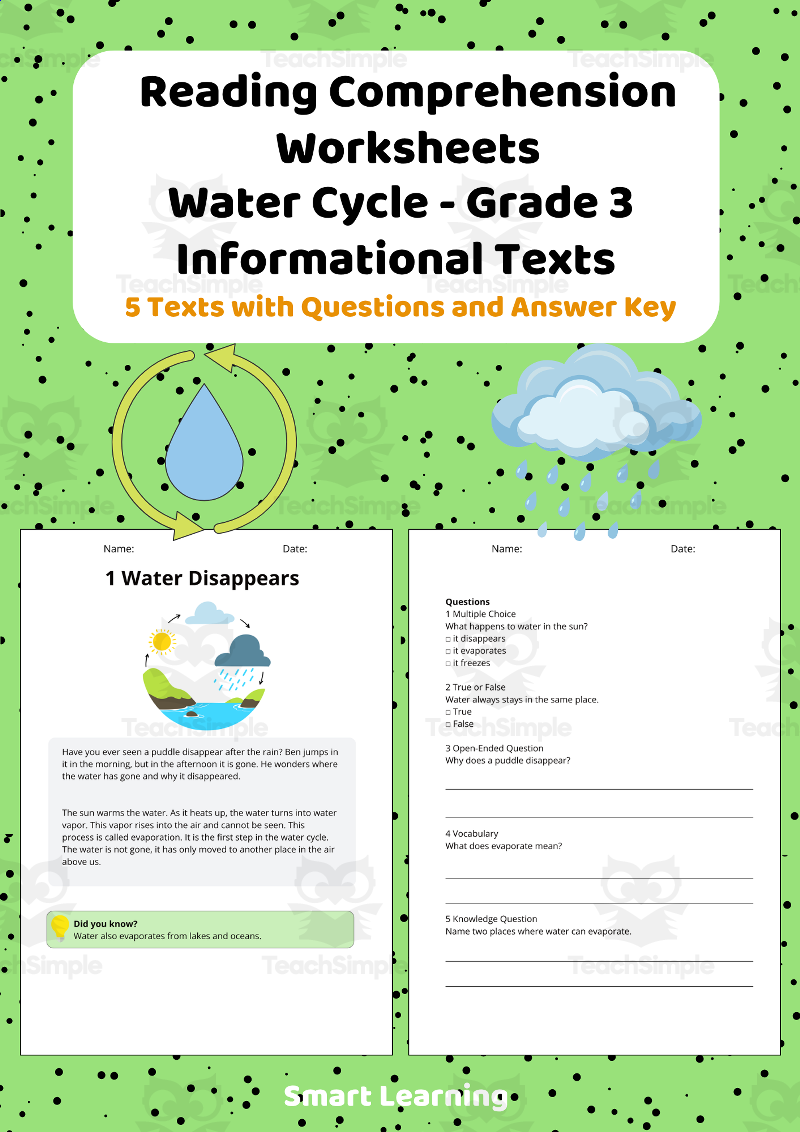
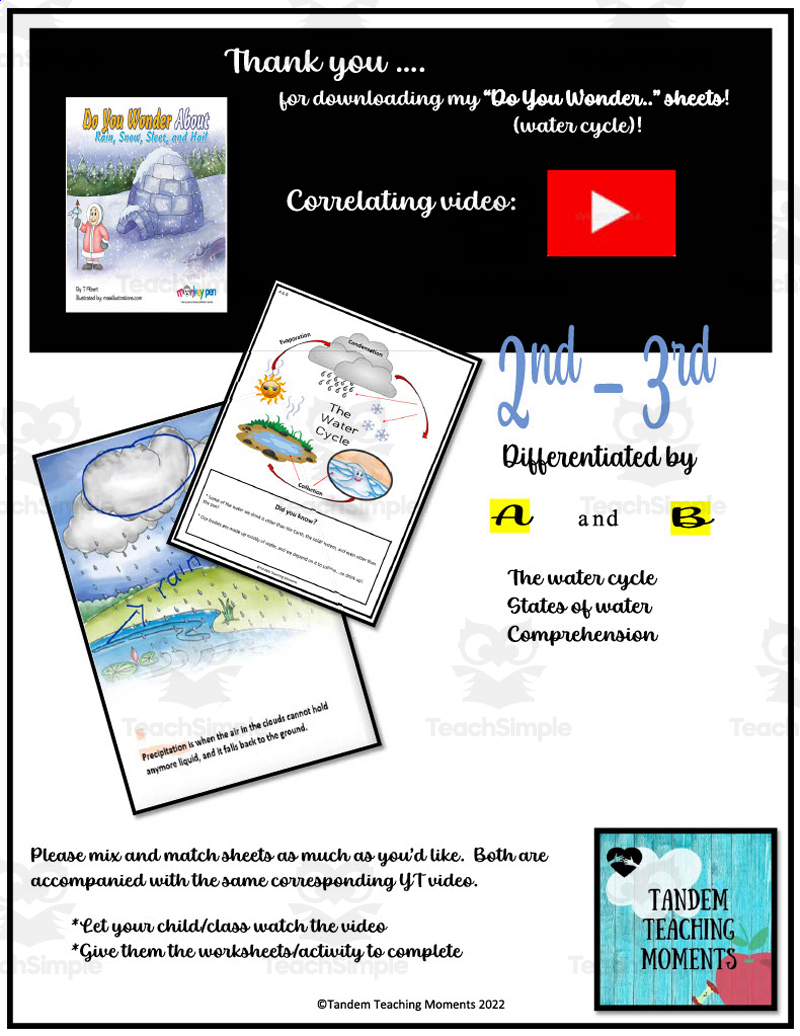
Our Parts of a Cycle Graphic Organizer Worksheet is the perfect way for your students to summarize a given text. They will read the text and identify the parts of the cycle, making it easier for them to understand the concept.
Author Have Fun Teaching
Tags Water, Life Cycle, Life Cycle Graphic Organizer
Reading Passages on Objects in the Sky (Word)
ELA, Reading, Reading Comprehension, Science, Earth and Environmental Sciences, Earth Sciences, Common Core, Space, Grade 2, 3, 4, Worksheets & Printables, Worksheets, Assessments, Teacher Tools, Tests, Quizzes and Tests
Reading Passages on Objects in the Sky for Earth Science Objects in the Sky: Reading Passages Earth Science: Discovering engaging yet straightforward reading practices can indeed be a daunting task. However, this collection of science reading activities offers an excellent solution. These resources are not only adept for preparing students for exams but are also perfect for homework assignments or seamlessly integrating science into your teaching regimen. Featuring questions aligned with the Common Core State Standards (CCSS) and a range of compelling topics, it's a valuable addition to any educator's toolkit. What's inside? Part 3 - Objects in the Sky Reading Passage 1: Objects in the Sky Reading Passage 2: The Sun Product Info: 10 PAGES (US English with Full Answer Keys) Teaching Duration: Approximately 2 Weeks Science Reading Comprehension Outline: Targeted for students in 3rd and 4th grades, these reading passages are enhanced with illustrations and graphs to elucidate critical points. Each lesson aligns with the Common Core State Standards, allowing you to integrate science reading practice effortlessly, knowing that minimal preparation is needed on your part. Each passage comes with a variety of questions in different formats, including multiple-choice formats, data analysis, and fill-in-the-blanks. The topics covered strike a balance between engaging content and core curriculum-based science subjects. Versatile in application, these lessons are suitable for a variety of settings such as whole-class instruction, morning activities, independent desk work, small group discussions, contingency plans for substitute teachers, homework assignments, or even special holiday-themed tasks. FULL CATALOG OF DOWNLOAD LINKS HERE Grade 3/4 Links: Physical Science Part 1 - Properties of Objects and Materials Google Docs/Slides/Forms PDF PPT Word Free Supplementary Pack Accompanying Videos Physical Science Part 2 - Position and Motion of Objects Google Docs/Slides/Forms PDF PPT Word Free Supplementary Pack Accompanying Videos Physical Science Part 3 - Light, Heat, Electricity, Magnetism Google Docs/Slides/Forms PDF PPT Word Free Supplementary Pack Accompanying Videos Life Science Part 1 - Characteristics of Organisms Google Docs/Slides/Forms PDF PPT Word Free Supplementary Pack Accompanying Videos Life Science Part 2 - Life Cycles of Organisms Google Docs/Slides/Forms PDF PPT Word Free Supplementary Pack Accompanying Videos Life Science Part 3 - Organisms and Environments Google Docs/Slides/Forms PDF PPT Word Free Supplementary Pack Accompanying Videos Earth Science Part 1 - Properties of Earth Materials Google Docs/Slides/Forms PDF PPT Word Free Supplementary Pack Accompanying Videos Earth Science Part 2 - Changes in the Earth and Sky Google Docs/Slides/Forms PDF PPT Word Free Supplementary Pack Accompanying Videos Earth Science Part 3 - Objects in the Sky Google Docs/Slides/Forms PDF PPT Word Free Supplementary Pack Accompanying Videos For similar products and other frees, do check out Cored Group on TeachSimple .
Author Cored Education
Rating
Tags Science, Elementary, Reading, Comprehension, Vocabulary, Science Assessments, Reading Comprehension Assessments, Vocabulary Assessments, Earth Science
Tsunamis Reading Comprehension Article
Science, Earth and Environmental Sciences, Earth Sciences, Grade 8, 9, 10, 11, 12, Worksheets & Printables, Worksheets
Tsunamis Reading Comprehension Article The Tsunamis Reading Comprehension Article is a robust teaching resource tailored specifically for students in Grades 8 and above. This comprehensive content extensively covers a range of tsunami-related topics, offering historic insights about tsunamis as well as an educational understanding about what makes them destructive, the impact on the environment and human preparedness for such events. This efficient learning tool is ideal for managing either whole group discussions or small group learning activities . It proves to be an engaging addition to science homework or independent learning exercises. Notably, this resource effortlessly integrates with Google Classroom and remote teaching methods, hence providing flexibility in its usage. A single click allows it to be added onto your Google Drive simplifying digital storage. Strength: The true strength of this article lies in its holistic methodology aimed at enhancing disciplinary literacy among learners by boosting reading comprehension and analysis abilities which are crucial to obtain scientific literacy skills. Easing workload: This completed 'ready-to-use' tsunami comprehension article reduces teacher's workload by eliminating any need for formatting as all groundwork has already been attended to leaving teachers with more time towards strategy planning or other vital tasks. User-friendly Design: The approachable design of this reading material ensures that no student gets left behind making it an exceptional tool whether you wish you introduce your topic or even provide extension activities for faster learners. Fully Editable Resource Balancing Engagement & Cognitive Development This fully editable resource maintains a neat balance between engaging reading activities & relevant questionnaires aimed at promoting cognitive thinking abilities among students. The estimated completion time of 50-75 minutes makes this a perfectly timed learning exercise without becoming an overwhelming task. Conclusion In summary, the Tsunamis Reading Comprehension Article is the perfect choice for consolidating complex scientific concepts into digestible portions that interest even the most hesitant readers and also evaluates your studentsβ literacy skills. This resource successfully merges content thatβs factually rich, educationally relevant and pedagogically sound to create informed, reflective thinkers with the necessary skills required to comprehend their surrounding world. Ultimately it promotes nuanced understanding of tsunamis while cultivating strong literacy roots making learning enjoyable & efficient.
Author Teach With Fergy
Tags Tsunamis, Reading Comprehension, Educational Resource, Scientific Literacy, Cognitive Thinking
Tectonic Plates - Digital Science Reading Article - Grades 5-7
Science, Earth and Environmental Sciences, Earth Sciences, Grade 5, 6, 7, Worksheets & Printables, Worksheets
Tectonic Plates Science Article for Grades 5-7 This science reading activity tackles literacy and earth science concepts for grades 5-7 students. The informative article explains tectonic plates and boundaries through text and visuals. Key vocabulary terms are highlighted for student reference. Knowledge, thinking, connecting, and open-ended question types allow students to engage with the content. The reading covers: - What are tectonic plates - Plate movement causes - Plate boundary types - Boundary examples This versatile resource works for whole class, small groups, assignments, and emergency plans. The reading integrates with Google Classroom for easy distribution. Purchase includes editable Word document, PDF, and answer key. Using scientific articles improves literacy, comprehension, knowledge application, and analysis skills. It provides an independent learning activity for gifted students too. The engaging content suits grades 5-7 learning levels. Students need 40-60 minutes to complete reading and questions. Teach complex earth science ideas through literacy with this no-prep supplementary resource!
Author Teach With Fergy
Tags Tectonic Plates Reading, Tectonic Plates, Digital Science, Digital Reading Article, Reading Comprehension, Tectonic Plates Answer Key
Winter Word Search 2rd 3th 4th 5th Grade worksheet activity
Vocabulary, Language Development, ELA, Spelling, Earth Sciences, Earth and Environmental Sciences, Science, Environmental Science, Grade 2, 3, 4, 5, Games, Activities, Worksheets, Worksheets & Printables, Word Searches
Join in the winter festivities, with printable, checkered, and printable. βοΈ This word search is an engaging, fun way for students to explore words associated with winter (such as snow, ice, sleds, mittens, and cocoa) while practicing spelling, scanning, and word recognition skills. This no-prep, seasonal printable worksheet has great appeal, combining the experiences of learning with joy related to the season of winter! Objectives: This activity enables students to: Extend their winter vocabulary βοΈ Gain accuracy in spelling and focus βοΈ Create excitement for seasonal learning π Engage in a fun and pressure-free literacy learning task π Order of Events / Steps 1οΈβ£ Hand out the Winter Word Search worksheet. 2οΈβ£ Identify and review the winter vocabulary words with students. 3οΈβ£ Students search, circle, or highlight words in the word search. 4οΈβ£ Conclude with a classroom discussion about studentβs favorite winter activities. 5οΈβ£ Use the answer key at the end of the worksheet for a quick reflection. β Grades or Age: Best for students in grades 2-5 β Way To Implement: Great to use for independent work, seasonal centers, morning work, early finisher, substitute plans, or partner activity π€. Answer Keys: β Included for the convenience of the teacher. Ways to Use and Variation: Timed challenge β³ β see who can finish it the quickest Partner puzzle π€ β work with a classmate to solve the puzzle Vocabulary extension βοΈ β write sentences with the winter words Create-your-own π§© β challenge the students to create a new word search Standards: Addresses CCSS/ELA vocabulary development and incorporate seasons into literacy learning π. Document Types and Pages: PDF π¨οΈ B/W + Color versions Ink-friendly option Answer key included Teacher Encouragement: Add a little seasonal sparkle β¨ to your classroom with this Winter Word Searchβits a cozy way to mix fun and learning all winter long!
Author Classsimple
Rating
Tags Winter , Word Search , 2rd 3th 4th 5th Grade , Worksheet, Activity, Winter Word Search , Winter Word Search 2rd 3th 4th 5th Grade , Winter Word Search 2rd 3th 4th 5th Grade Worksheet , Winter Word Search 2rd 3th 4th 5th Grade Worksheet Activity, V Printables
Climate Change Reading Comprehension Article
Science, Earth and Environmental Sciences, Earth Sciences, Grade 8, 9, 10, Worksheets & Printables, Worksheets
Climate Change: The Reality and Danger - A Science Reading Article - Disciplinary Literacy - Grade 8 and Up. This resource is suitable for high school students as well as strong middle-school students. Tackle literacy and science by having your students read and answer questions from a scientific article. Questions include knowledge (direct from the paper), thinking, connecting and open-ended varieties. There are also video extension questions (optional) that the students can access via a URL or a QR code. No prep, no formatting, no issues. Simply download, print (or upload to your class site) and you're all set. ---------------------------------------------------------------------------------------------- This resource is fully editable for your convenience. This resource covers the following topics: - What is Climate? - Global temperatureβhow itβs measured - Whatβs happening with the climate now? Why are we concerned about it? - Why are we so concerned about 1.4 degrees F? - What can we do to help? --------------------------------------------- The Problem You Face - Not having the time to properly teach scientific literacy (disciplinary literacy) or improve your students reading comprehension and analysis skills. The Solution This fully editable, NO PREP reading comprehension article is composed of relevant, applicable, and engaging reading activities which can be used to: β’ introduce your topic β’ improve your students reading comprehension and scientific literacy skills β’ improve your students' analysis skills β’ provide an extension activity to students who move at a faster pace β’ provide extra credit to students in need β’ measure your students' literacy skills Furthermore, this resource works very well as an emergency substitute plan as it will keep your students on task and focused while you are away. This resource will take your students between 50-75 minutes to complete and includes some open-ended questions. An answer key is also included for your reference. ---------------------------------------------------------------------------------------------- You might also be interested in the following individual reading comprehension articles: Health: β’ The Common Cold β’ The Flu β’ Exercise and its Importance for Health β’ Stem Cell Therapy: The Future of Medicine? β’ Concussions β’ Poliomyelitis - Polio β’ Smallpox β’ The Measles β’ Genetics and Gene Therapy β’ Heart Diseases β’ Cancer β’ The Effects of Caffeine β’ Down syndrome β’ HIV/AIDS - Informing the Public and Dispelling the Misconceptions β’ The Effect of Stress on the Brain β’ The Effect of Sugar on the Body β’ Whooping Cough β’ Asthma and Asthma Attacks β’ The Immune System β’ Farming: Organic vs. Conventional β’ The Dangers of Smoking β’ Parkinsonβs Disease β’ Protective Equipment - Keeping you safe β’ Fats β’ Tinnitus β Ringing in the Ears β’ Cystic Fibrosis β’ The Effects Of Binge Drinking On Teenagers β’ Multiple Sclerosis β’ Painkillers β’ Diabetes β’ Radioactivity β’ Scarring β’ Allergies β’ Carbohydrates, Lipids, and Health Earth and Space: β’ The Northern and Southern Lights β’ The Limitations of Space Travel β’ Why is the Sky Blue? An application of light waves β’ Stars - The Element Factories of the Universe β’ Solar and Lunar Eclipses β’ The Different Types of Clouds β’ How Weather Works β’ Natural Disasters β’ Thunderstorms β’ Fossils β’ Geologic Time β’ Watersheds β’ Hurricanes Energy: β’ Fossil Fuels β’ Nuclear Energy: Fission and Fusion β’ Hydroelectric Energy Production β’ Solar Energy Production β’ Wind Energy Production β’ Renewable Energy Production β’ Hydraulic Fracturing - Fracking β’ Biofuels - Food or Fuel? β’ Electric House β’ Energy Use and Conservation Physics: β’ Magnets and Electromagnets β’ Roller Coasters - History, Design, and Function β’ How Do Boats Float? β’ Optical Phenomena β’ The Effects of Everyday Forces β’ Hydraulics β’ Hot-Air Balloons β’ Simple Machines β’ Automobile Safety Chemistry: β’ The Chemistry of Explosions β’ Plastics: A Marvel Of Innovation β’ The Chemistry of Paint β’ Water Softeners and Hard Water β’ Cleaning up Acid Spills β’ The Accumulation of Plastic in the Ocean β’ Chemistry of Cooking β’ Chemistry of Cosmetics β’ Blood Analysis and Forensics β’ Radioactivity β’ Desalination for Drinking Water β’ Rust-Proofing Biology: β’ Fermentation and Food β’ DNA Paternity Tests β’ Laser Eye Surgery β’ Physical Adaptations β’ Muscle Growth β’ Genetically Modified Organisms β’ Mosquitoes And The Diseases They Spread β’ Twins β’ GERD and Acid Reflux - A Digestive System Disease β’ Bats β Misconceptions, Importance, and Facts β’ Superbugs - The Super Villains of Modern Medicine β’ Heart Attack and Stroke β’ Why Leaves Change Color In The Fall Ecology and the Environment: β’ Invasive Species β’ Ecosystems β’ Pesticides β’ The Importance of Bees β’ Coral Reef Ecosystems and their Future β’ Climate Change β’ Hydraulic Fracturing - Fracking β’ Farming: Organic vs. Conventional β’ Oil Spills and Their Consequences β’ Bioaccumulation and Biomagnification β’ RuBisCO - Earth's Most Important Protein β’ Symbiotic relationships between plants and insects β’ Smog - Its Causes and Dangers β’ Ocean Acidification β’ Pollution Control Devices β’ Tap vs Bottled Water β’ Predator Prey Relationships β’ Greenhouse Effect Natural Disasters: β’ Volcanoes: The Benefits and Devastation β’ Earthquakes Part 1 β’ Earthquakes Part 2 β’ Tsunamis β’ How the Dinosaurs Died ---------------------------------------------------------------------------------------------- Each summary is rich with age appropriate content (grades 8 and up) and is 2.5-3 pages long (13-font). Following each is a list of 8-13 questions along with the answer key, which will help guide your students understanding. How this product will help your students: - Improve their scientific and disciplinary literacy skills - Improve their reading comprehension and scientific knowledge - Give them insights into important scientific concepts - Provide an extension activity for your faster moving/more gifted students How this product will help you: - Allow you to meet the NGSS, TEKS and Common Core Standards - Provide you with a concise introduction to your topic - Provide you with an engaging and easy to leave substitute plan which will keep your students engaged and on task - Prove you a means of measuring your students literacy skills We don't spend enough time teaching scientific literacy to our students. This is either because we don't have the resources to do so effectively or we don't have the time. However, teaching our students to become scientifically literate is vital if we want them to succeed in life. We need them to know about the world they live in and about the issues they face. Even issues as simple as the common cold are misunderstood and can lead to the misuse of antibacterial drugs eventually rendering them ineffective. It can be used as a tool in your teaching arsenal on a regular basis, an extension activity for your faster learners, left for a substitute in an emergency or planned absence or as an extra bit of information for a topic.
Author Teach With Fergy
Tags Climate, Change, Earth, Weather, Reading
Animal Adaptations on the Savanna Activities and Worksheets
ELA, Grammar, Reading, Language Development, Spelling, Vocabulary, Writing, Science, Life Sciences, Biology, Earth and Environmental Sciences, Earth Sciences, Grade 3, 4, Worksheets & Printables, Worksheets
Animals Adaptations on the Savanna Activities and Worksheets Animal Adaptations on the Savanna Activities and Worksheets is a comprehensive teaching resource designed to support educators guiding their 3rd and 4th grade students through studies of the Savanna habitat. The main focus of this product is to strengthen learners' integration of reading, writing, science, and critical thinking skills while engaging them with interesting information about the unique adoptions of savanna animals. Resources Description: The resources provided span across an array of worksheets, handouts, task cards, card games and PowerPoint slides. All pages are available in both color and black & white options for convenience. Activities Include: Dictionery skills: testing learners' dictionary abilities with Savanna-specific vocabulary. Savannaa animal's detailed diagramming using organizers. Pupils create personalized word searches featuring specific learned terms form their lessons. Learners write descriptive pieces or opinion essays about their favorite animal among the ecosystem's inhabitants. Detailed Descriptions The packet includes informational handouts that provide in-depth explanations related to habitats or adaptions as well as descriptions about specific fauna found within this African grassland setting including natives like zebras, rhinoceroses along with exotic creatures like snowy owls or newts. PPTs & Task Cards Included task cards allow teachers further flexibility for both large group exploration or small group breakaways centered around questions formulated directly from information presented in aforementioned handouts. Gaming Component: Learning through Playing! Three different versions offer game -like learning focusing specifically on adaptations. Corresponding PowerPoint slides compile summarized details aimed at further enriching subject understanding. Summary In conclusion; Animal Adaptations on the Savanna Activities and Worksheets present an extensive instructional package highlighting upon aspects concerning not just biology but also language arts, consequently making it a very effective cross-curricular tool for educators.
Author Quail Trail Products
Tags Savanna Animals, Animal Adaptations, Habitats, Biodiversity, Science Literacy
Free Reading Comprehension: Fast Changes to the Earth's Surface (Word)
Science, Earth and Environmental Sciences, Earth Sciences, Common Core, Spelling, Language Development, ELA, ESL, Reading Comprehension, Reading, Grade 2, 3, 4, Worksheets & Printables, Worksheets, Tests, Quizzes and Tests, Teacher Tools, Assessments
Free Reading Passage on Fast Changes to the Earth's Surface for Earth Science What's inside this free product? Science Reading Comprehension Passage36 : Fast Changes to the Earth's Surface Independent Word Version: This is the independent Word version containingone lesson with full answer keys. Product Info: 6 PAGES (US English with Answers) Word Version Teaching Duration: 90 Minutes Science Reading Comprehension Outline: Targeted for students in 3rd and 4th grades, these reading passages are enhanced with illustrations and graphs to elucidate critical points. Each lesson aligns with the Common Core State Standards, allowing you to integrate science reading practice effortlessly, knowing that minimal preparation is needed on your part. Each passage comes with a variety of questions in different formats, including multiple-choice formats, data analysis, and fill-in-the-blanks. The topics covered strike a balance between engaging content and core curriculum-based science subjects. Versatile in application, these lessons are suitable for a variety of settings such as whole-class instruction, morning activities, independent desk work, small group discussions, contingency plans for substitute teachers, homework assignments, or even special holiday-themed tasks. FULL CATALOG OF DOWNLOAD LINKS HERE Grade 3/4 Links: Physical Science Part 1 - Properties of Objects and Materials Google Docs/Slides/Forms PDF PPT Word Free Supplementary Pack Accompanying Videos Physical Science Part 2 - Position and Motion of Objects Google Docs/Slides/Forms PDF PPT Word Free Supplementary Pack Accompanying Videos Physical Science Part 3 - Light, Heat, Electricity, Magnetism Google Docs/Slides/Forms PDF PPT Word Free Supplementary Pack Accompanying Videos Life Science Part 1 - Characteristics of Organisms Google Docs/Slides/Forms PDF PPT Word Free Supplementary Pack Accompanying Videos Life Science Part 2 - Life Cycles of Organisms Google Docs/Slides/Forms PDF PPT Word Free Supplementary Pack Accompanying Videos Life Science Part 3 - Organisms and Environments Google Docs/Slides/Forms PDF PPT Word Free Supplementary Pack Accompanying Videos Earth Science Part 1 - Properties of Earth Materials Google Docs/Slides/Forms PDF PPT Word Free Supplementary Pack Accompanying Videos Earth Science Part 2 - Changes in the Earth and Sky Google Docs/Slides/Forms PDF PPT Word Free Supplementary Pack Accompanying Videos Earth Science Part 3 - Objects in the Sky Google Docs/Slides/Forms PDF PPT Word Free Supplementary Pack Accompanying Videos For similar products and other frees, do check out Cored Group on TeachSimple .
Author Cored Education
Tags Science, Elementary, Reading, Comprehension, Vocabulary, Answers, Physics, Physical Science, Ccss, Common Core
The Sun Reading Comprehension Passage - Cored Ed Encyclopedia
ELA, Language Development, Reading Comprehension, Reading, Pre-Reading, Writing, Science, Earth Sciences, Earth and Environmental Sciences, Space, Grade 2, 3, 4, 5, Worksheets & Printables, Worksheets, Teacher Tools, Centers, Activities, Writing Prompts, Assessments, Quizzes and Tests, Quizzes, Lesson Plans
This Sun reading comprehension includes: Visualization (on the front cover) Start your lesson by taking a minute to think and share something about the topic. Read the script aloud (slowly), perhaps prepare some music or sound effects. Student close their eyes and let their imaginations wander. Students open their eyes, read the question aloud and give them a few minutes to complete. Ask a few students to share or keep answers until the end to compare with what they learn in the passage. Quick pauseβthousands of Cored Education products are included with your TeachSimple membership. Download links and encyclopedia index available here. Pre-Reading Trivia Students will write down one thing they already know about the subject and then read five more facts and discuss. These facts are fun, and the students will enjoy learning about the subject before reading more. Give 1 minute for students to write what they already know (no pressureβbest guess is fine). Read the five facts together. After each fact, do ask a student for their opinion, was it surprising? Set a purpose by asking students to highlight/underline one fact they want to learn more about during the reading. Reading Passage The text is a high-interest reading passage with set paragraphs, roughly three to four paragraphs long. It contains a variety of themes about the topic, anywhere from history to technology. The passage is between 250 and 350 words in length. First, ask students to look at the headings and see what theyβll learn about today. What do they know about the topic/heading? First read options: Teacher read-aloud (best for support). Partner reading (paragraph by paragraph). While reading, students underline important details, and vocabulary words they think may come up in the questions section. Mixed Questions The first question page contains four multiple-choice questions, each with a choice of four answers, and three written response questions that require a sentence or two from the student. Students complete the mcqs first independently, then review quickly as a class. For the 3 written responses, try to get students giving the answer with some form of evidence: βI think ___ because the text says ___.β If students get stuck, send them back to check the passage. Vocabulary Questions Practice seven key words from the text in this section across two activities. First section is scrambled words where students will unscramble three words given a clue for each. The second section is a word to meaning matching activity. Before starting, have some students read out words they underlined in the passage. Ask students to say the word and read aloud the sentence(s) around each word. Ask students to do scrambled words and the matching exercise in pairs then go through answers as a class. For the scrambled spelling task, get four pairs to come up to the board and write the words for extra practice with the other student reading out the clue. For the matching task, prompt students to give full sentences: βI matched ___ with ___ because ___.β Creative Writing In this question, the student will be required to write a five to eight sentence paragraph on a question related to the topic. Before starting, ask students write down 3 key ideas they are going to include in their piece. Ask students for ideas to share around the class to help those struggling. Pro writing expectations: 5β8 sentences At least 2 facts or details from the passage At least 2 vocabulary words from the previous page Students read their paragraphs while classmates listen for facts and vocabulary words. Extension Activities This page is optional for fast finishers or to take home. There are several activities, each one requiring a different skill. Do some, do none, do all, completely optional - but you will feel reassured knowing every possibility is planned for. Includes summary writting question. Answer Key There are answers for the multiple-choice questions, written response questions have sample answers, vocabulary answers and if there is a summary question then a sample summary will be provided as well. Lesson Plan Included Customized lesson plan for this lesson is included. Lesson Snapshot Title: The Sun Genre: Nonfiction (informational text with support pages) Subject: Science (Space Science) Primary Topic: How the Sun affects Earth and works Estimated Guided Reading Level (AβZ): S What This Lesson Teaches Best How people used the Sun and changing shadows to notice time long before clocks, phones, and apps. How telescopes in the early 1600s revealed sunspots and helped people realize the Sun can change and even spin. How the Sun shines for so long because nuclear fusion joins hydrogen to make helium and releases energy as sunlight and heat. Key facts about the Sunβs size and importance in the solar system (about 1.39 million kilometres across; holds almost all the mass in the solar system). How the Sun can be active (solar wind, flares, storms) and how spacecraft like NASAβs Parker Solar Probe study the Sunβs outer atmosphere, the corona . Learning Goals Describe how changing shadows helped people notice time long ago. Explain what sunspots are and what they helped early observers realize about the Sun. Explain, using details from the text, how nuclear fusion makes energy inside the Sun. Identify what the corona is and why the Parker Solar Probe flew close to the Sun. Describe two ways the Sun is βnot always calm,β based on the passage. Key Vocabulary From the Text telescopes β tools used to see faraway objects in the sky. sunspots β dark freckles seen on the Sun. hydrogen β a gas that joins together deep inside the Sun. helium β what hydrogen becomes when it joins together. corona β the Sunβs outer atmosphere. FULL CATALOG OF DOWNLOAD LINKS AND ENCYCLOPEDIA INDEX HERE
Author Cored Education
Rating
Tags Vocabulary, Reading Comprehension, Reading Passages, Lesson Plans, Ela Lesson Plans, Reading Comprehension Lesson Plans, Reading, Pre-reading, The Sun, Earth Science
Earthquakes 1 Reading Comprehension Article
Science, Earth and Environmental Sciences, Earth Sciences, Grade 9, 10, 11, 12, Worksheets & Printables, Worksheets
Earthquakes 1 Reading Comprehension Article Learn about the science behind earthquakes with this informational reading article. Students will discover how and why earthquakes occur, their environmental and human impacts, prevention methods, and more through an engaging 2.5-3 page reading passage written at a grade 7-8 level. 8-13 reading comprehension questions and an answer key are also included to support understanding. This printable or digital Google Classroom-ready resource works for whole group, small group, substitute, homework, and distance learning needs. Use it to build literacy, analysis skills, introduce earth science topics, and meet curriculum standards across grades 9-12. Created by teachers for teachers.
Author Teach With Fergy
Tags Earthquakes, Environment, Natural, Disasters, Reading
Science Reading Comprehension on Objects in the Sky (Google Drive)
Science, Earth and Environmental Sciences, Earth Sciences, Common Core, Space, ESL, Language Development, ELA, Reading Comprehension, Reading, Grade 2, 3, 4, Activities, Centers, Diagrams, Teacher Tools, Assessments, Presentations, Tests, Quizzes and Tests, Worksheets, Worksheets & Printables
Science Reading Comprehension on Objects in the Sky Objects in the Sky: Reading Passages Earth Science: Discovering engaging yet straightforward reading practices can indeed be a daunting task. However, this collection of science reading activities offers an excellent solution. These resources are not only adept for preparing students for exams but are also perfect for homework assignments or seamlessly integrating science into your teaching regimen. Featuring questions aligned with the Common Core State Standards (CCSS) and a range of compelling topics, it's a valuable addition to any educator's toolkit. What's inside? Part 3 - Objects in the Sky Reading Passage 1: Objects in the Sky Reading Passage 2: The Sun Product Info: 10 PAGES (Docs Version: US English with Answers) 2 FORMS (Self-Grading) 58 SLIDES Teaching Duration: 2 Weeks Science Reading Comprehension Outline: Targeted for students in 3rd and 4th grades, these reading passages are enhanced with illustrations and graphs to elucidate critical points. Each lesson aligns with the Common Core State Standards, allowing you to integrate science reading practice effortlessly, knowing that minimal preparation is needed on your part. Each passage comes with a variety of questions in different formats, including multiple-choice formats, data analysis, and fill-in-the-blanks. The topics covered strike a balance between engaging content and core curriculum-based science subjects. Versatile in application, these lessons are suitable for a variety of settings such as whole-class instruction, morning activities, independent desk work, small group discussions, contingency plans for substitute teachers, homework assignments, or even special holiday-themed tasks. FULL CATALOG OF DOWNLOAD LINKS HERE Grade 3/4 Links: Physical Science Part 1 - Properties of Objects and Materials Google Docs/Slides/Forms PDF PPT Word Free Supplementary Pack Accompanying Videos Physical Science Part 2 - Position and Motion of Objects Google Docs/Slides/Forms PDF PPT Word Free Supplementary Pack Accompanying Videos Physical Science Part 3 - Light, Heat, Electricity, Magnetism Google Docs/Slides/Forms PDF PPT Word Free Supplementary Pack Accompanying Videos Life Science Part 1 - Characteristics of Organisms Google Docs/Slides/Forms PDF PPT Word Free Supplementary Pack Accompanying Videos Life Science Part 2 - Life Cycles of Organisms Google Docs/Slides/Forms PDF PPT Word Free Supplementary Pack Accompanying Videos Life Science Part 3 - Organisms and Environments Google Docs/Slides/Forms PDF PPT Word Free Supplementary Pack Accompanying Videos Earth Science Part 1 - Properties of Earth Materials Google Docs/Slides/Forms PDF PPT Word Free Supplementary Pack Accompanying Videos Earth Science Part 2 - Changes in the Earth and Sky Google Docs/Slides/Forms PDF PPT Word Free Supplementary Pack Accompanying Videos Earth Science Part 3 - Objects in the Sky Google Docs/Slides/Forms PDF PPT Word Free Supplementary Pack Accompanying Videos For similar products and other frees, do check out Cored Group on TeachSimple .
Author Cored Education
Rating
Tags Science, Elementary, Reading, Comprehension, Vocabulary, Science Assessments, Reading Comprehension Assessments, Vocabulary Assessments, Earth Science
Weather Topic Resources Bumper BUNDLE!
Science, Earth and Environmental Sciences, Earth Sciences, Preschool, Grade 1, 2, Teacher Tools, Lesson Plans, Presentations, Activities, Projects, Worksheets & Printables, Worksheets
Here is a bumper collection of resources to help you to teach WEATHER to ages 5 to 8. The bumper weather pack includes: 1. Over 50 pages of weather resources and lesson ideas plus supporting worksheets and puzzles to aid learning, covering: General weather activities It is suitable for single or mixed-age group classes. These are ideas that I have used to teach about weather with my KS1 classes over many years. It is a topic I always love to teach and about which I get excited! The ideas in this pack are * Tried and tested in KS1 classrooms * Provide all the resources you need in one place for a super project on Weather! Objectives: The ideas in this pack can be used to teach the Weather element of the Science and Geography UK National Curriculum but can be used with any curriculum. Contents: The activities are listed under these headings: Introduction to the Topic Weather Activities (General Intro) Cross-curricula Weather Activities Rain Activities Wind Activities Ice and Snow Activities The Sun Activities Weather and Nature Activities Weather Charts- with differentiated charts and symbols if needed Design Symbols Weather Diarytemplate Weather Sayings Weather Word Mat Draw the Weather Beaufort Scale Weather Puzzles What is the weather like today Hot and Cold What shall I wear today? Itβs Windy Itβs Raining General Puzzles January Brings the Snow Poem Plentiful cross-curricular links are suggested to help planning. The pack includes puzzle sheets to reinforce learning and make learning fun. 2. Mini Clouds Project including Activity ideas linked to Science, Geography, English and Art 3. Clouds PowerPoint A 29-slide presentation helping pupils to learn about clouds. 4. 25 Weather vocabulary flashcards, phonetically coded Use for: Writing tasks Science activities (groups weather by season/kind - e.g. heat/cold/wind etc...) Word Walls Literacy Centers Pocket Charts Dictionary work Seasons and Weather PowerPoint This 57-slide PowerPoint takes KS1 children through the seasons, starting with summer. They will: Learn what changes to look out for across the four seasons Learn that days get shorter and longer throughout the year How this affects the weather How the seasons affect us: what we wear/what we do How the seasons affect plants and animals Bright photos and simple explanation makes it accessible to all abilities in the class and will engage even reluctant learners. Simple text for children to read on each slide. More information is provided for the teacher to read, if desired, in PDF form or under each slide. Simply click when ready to progress to the next slide. All animations occur automatically. Make your weather topic come alive with this bumper pack! What is included? 1 50-page PDF of weather activities and puzzles 1 PDF of 25 flashcards 1 PDF of lesson ideas to learn about clouds 1 PowerPoint about clouds 1 PowerPoint about the seasons and weather 1 PDF with narration notes fo the above PowerPoint
Author Lilibette's Resources
Tags Weather, Science, Geography, Clouds, Seasons And Weather, Seasons, Weather Topic, Weather Project, Weather Worksheets, Weather Lesson Ideas
Vocabulary with Cards | Crossword Wordsearch Anagram WATER ANIMALS
Special Resources, ELA, Special Education Needs (SEN), Speech Therapy, Life Skills, Language Development, ESL, Writing, Handwriting, Spelling, Vocabulary, Science, Life Sciences, Biology, Earth and Environmental Sciences, Earth Sciences, Not Grade Specific, Crosswords Puzzles, Worksheets, Worksheets & Printables
Vocabulary with Cards | Crossword Wordsearch Anagram WATER ANIMALS This 23-page PDF teaching resource helps students build vocabulary and knowledge about water animals through engaging word games and puzzles. Educators can use the varied activities - including anagrams, crosswords, word searches, and more - to reinforce language skills in fun new ways. The activities focus on water animal terminology and can be adapted for different grade levels. Use the games to kick off the morning, incorporate into centers , assign as homework, or bring into therapy sessions. The multi-purpose resource aims to boost vocabulary, reading, cognitive skills, and science understanding all at once.
Author WORDS ASIDE
Tags Flash Cards, Esl, Thematic Vocabulary, Word Wall, Independent Work, Centers, Writing Expository, Community, Words Aside, Water Animals
World Vegan Day Word Search 2nd 3rd 4th 5th Grade worksheet activity
Spelling, Language Development, ELA, Vocabulary, Health, P.E. & Health, Earth Sciences, Earth and Environmental Sciences, Science, Grade 2, 3, 4, 5, Games, Activities, Word Searches, Worksheets, Worksheets & Printables
Make learning fun with a no-prep, printable vocabulary word search that builds vocabulary, reinforces literacy, and sparks curiosity! Students can explore the new vocabulary words while practicing spelling, scanning for letters, and identifying keywords. A word search can be a perfect and easy-to-use activity to liven up a lesson by combining learning with fun! It is an excellent way to reinforce concepts within a lesson and engage students' hands-on learning. Purpose: This activity allows students to learn new vocabulary words and contextualized vocabulary related to a topic βοΈ, improve spelling, reading, and attention to detail π, increase awareness of concepts and knowledge about the world at large π, and encourage curiosity and engagement about the topic πΎ. Word searches are a hands-on way to make learning memorable and fun for students - it engages them at all vocabulary levels! How to Do It: 1οΈβ£ Hand out the word search worksheet. 2οΈβ£ Introduce any important vocabulary or concepts that fit with the topic. 3οΈβ£ The students search for the words and circle or highlight each one. 4οΈβ£ Discuss the importance of the topic or the words that the student found. 5οΈβ£ Review the answers using the answer key that is included for each product β Perfect For: Grades 2-5 π, independent practice, partner work, students who finish early, science or social studies centers, or for substitute plans π€ Way of Implementation: Great for independent practice early finishers, partner work, or substitute plans π€. Answer Keys: (these will be pencils under your three files: Given for simple checking and self-assessing. Fun Variations: Timed Challenge β³ - record how many words students can find in a set time. Partner Puzzle π€ - work together to find all of the words. Vocabulary Extension βοΈ - write sentences or a few short paragraphs using the words. Create-Your-Own Word Search π§© - have students make their own word search puzzles using the vocabulary. Standards Alignment: Supports CCSS/ELA vocabulary development, and can also connect to NGSS or other relevant standards, depending on the topic. File & Print Info: PDF includes both a color and black and white version, and is ink-friendly to make printing easy. Teacher Tip! Have students learn by being hands-on, engaged, and active while helping them build awareness, vocabulary, and literacy skills around any topic! π
Author Classsimple
Rating
Tags World , Vegan , Day, Word Search , 2nd 3rd 4th 5th Grade , Worksheet , Activity, World Vegan Day Word Search , World Vegan Day Word Search 2nd 3rd 4th 5th Grade, World Vegan Day Word Search 2nd 3rd 4th 5th Grade Worksheet Activity
Hurricanes Reading Comprehension Article
Science, Earth and Environmental Sciences, Earth Sciences, Grade 8, 9, 10, Worksheets & Printables, Worksheets
Teach your middle or high school students about the science behind hurricanes. This informative reading comprehension article defines hurricanes, explains how they form, covers the dangers they pose, and provides safety tips. The resource tackles literacy and Earth science objectives. It includes a reading passage and mixed question types like knowledge, critical thinking, application, and open-ended. An answer key is also provided. This engaging NO PREP substitute resource works for both distance learning and in-class. It integrates easily with Google Classroom, meets various curriculum standards, provides a way to measure literacy skills, and gives faster learners an independent extension activity.
Author Teach With Fergy
Tags Hurricane, Environment, Natural Disaster, Reading, Comprehension
Volcanoes - Digital Science Reading Article - Grades 5-7
Science, Earth and Environmental Sciences, Earth Sciences, Grade 5, 6, 7, Worksheets & Printables, Worksheets
Volcanoes - Digital Science Reading Article This invaluable teaching resource is ideal for students in grades 5 through 7. The resource focuses on scientific literacy, providing comprehensive reading activity about volcanoes. The tool not only promotes scientific understanding but significantly boosts reading comprehension and analysis skills. It's beneficial for children aged 10-12, fitting perfectly into traditional classroom or homeschooling environments. Versatility and Compatibility No matter where education takes place, this article is compatible with various platforms such as the Google Classroom, Microsoft Word to PDF format. Coverage of Volcano-related Topics An introduction to what volcanoes are. The formation process of volcanoes. Different types of volcanoes and how they function. The impact caused by volcanic eruptions to geographical locations. Educational Approach and Format Taking between 40 - 60 minutes per session, a variety-category set of questions facilitate cognitive development by ensuring knowledge enforcement from previous article discussions while building bridges within learners' existing knowledge base. This educational tool can be employed using various methods based on the best fit approach teachers may find suitable ranging from full class teaching sessions to small learning group sessions or individually as homework work assignments. Additional Benefits: This resource greatly supports teachers looking for scientifically relevant extended activities for advanced learners amidst absence scenarios that keep students' minds busy with relevant academic activities without deviating ordinal routines even when teachers are temporarily absent from school An included answer key empowers seamless comprehension analysis giving you a tactic to measure your pupils' grasp thereby removing any guesswork hence into more efficiency in overall teaching execution. Science Literacy and Academic Expectations With Volcanoes - Digital Science Reading Articles, facilitating an equilibrium between engaging in science literacy and meeting academic expectations has never been easier. Ultimately, creating scientifically literate students is paramount for their whole education and comprehension of the world that surrounds them.
Author Teach With Fergy
Tags Volcanoes, Science Literacy, Interdisciplinary Learning, Reading Comprehension, Cognitive Development