Cooking and Nutrition Lessons | Life Skills Unit
- Grades
- Grades 6–7, Middle School, High School
- File type
- Multiple File Types


- Subject
- Life Studies, Home Economics
- Topic
- cooking lessons, nutrition lessons
- Resource types
- Lesson Plans
About this resource
What's inside this resource
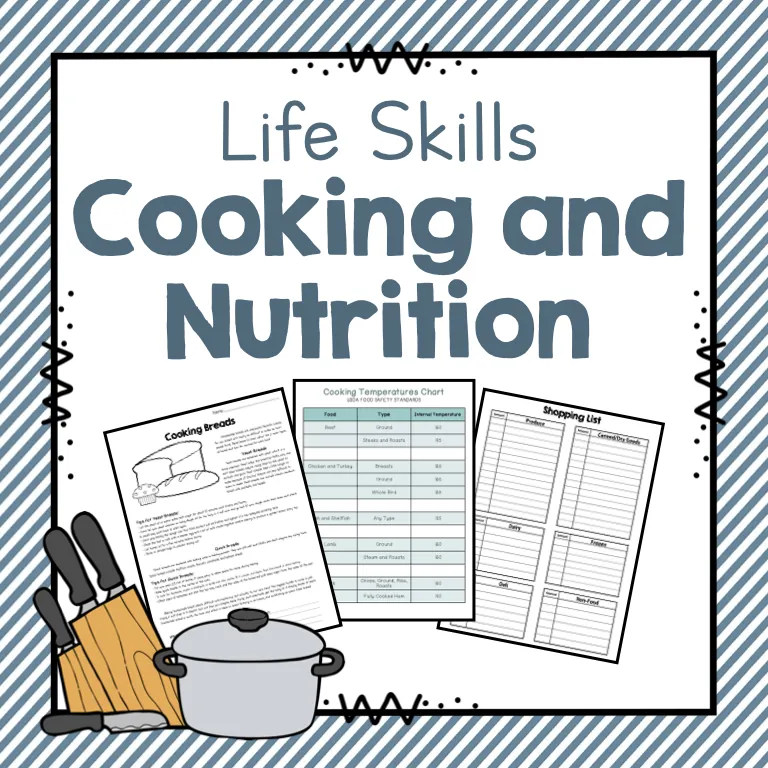
8 lessons for nutrition and cooking. Each lesson includes a page outline that can be used as a discussion guide or a handout for students. Some lessons have a template for lists, planning, or recipes. There is a homework sheet for homework.
How To Use This:
Just decide which parts of the lessons you want to use and print enough materials for each student. Use the lesson guides to teach or have the students study from. Then have them complete activities or homework in class or at home.
You'll get the following lessons:
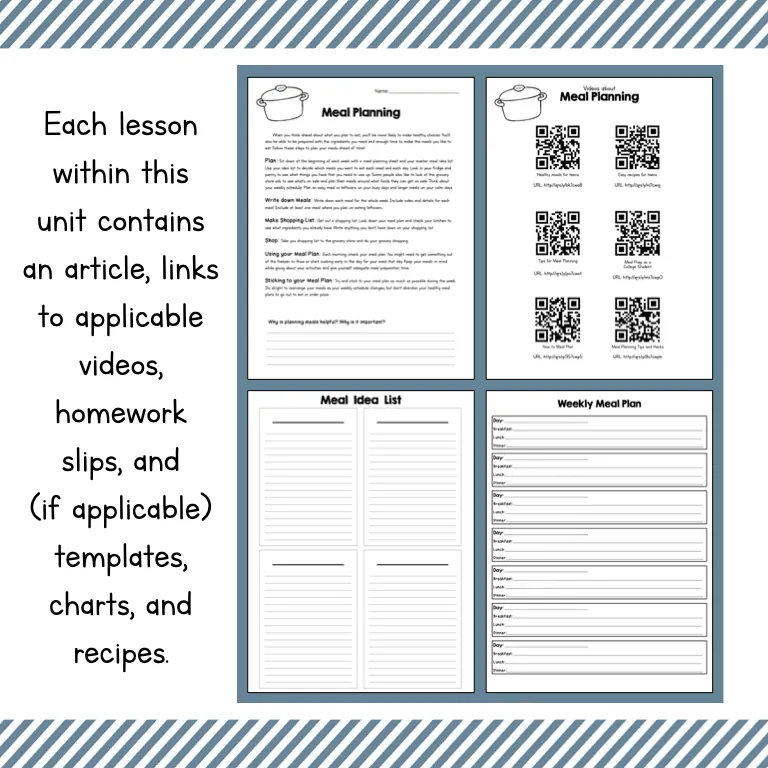
- Nutrition: Outline, 6 QR codes for related videos, and homework slip.
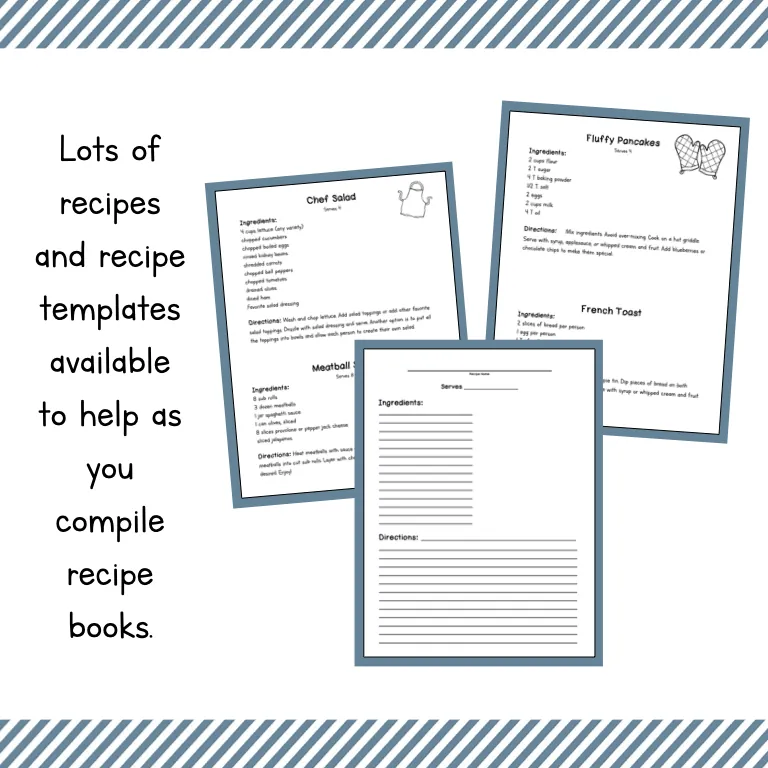
- Meal Planning: Outline, 6 QR codes for related videos, homework slip, master meal list template and example list, weekly meal plan template and example plan, monthly meal plan template, meal timeline template, recipe template, and homework slip.
- Grocery Shopping: Outline, 6 QR codes for related videos, shopping list template, and homework slip.
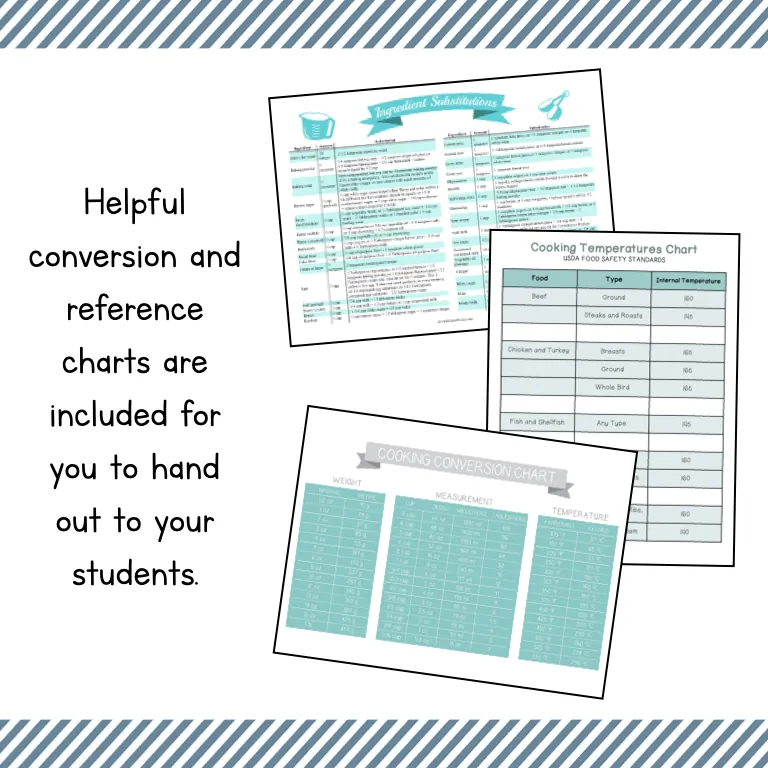
- 3 handy charts: Measurement conversion chart, ingredient substitution chart, and Internal Temperature Guide.
- Breakfast: Outline, 6 QR codes for related videos, hot cereal cooking chart, 3 pages of basic breakfast recipes, and homework slip.
- Lunch: Outline, 6 QR codes for related videos, 3 pages of basic lunch recipes, and homework slip.
- Dinner: Outline, 6 QR codes for related videos, 3 pages of basic dinner recipes, and homework slip.
- Breads: Outline, 6 QR codes for related videos, 3 pages of basic dinner recipes, and homework slip.
- Sides: Outline, 6 QR codes for related videos, 3 pages of basic dinner recipes, and homework slip.
- Recipe Templates: Several versions of recipe templates to have students write down more recipes to add to a recipe book.
* QR codes are a visual code that can be read by a phone or another device with a QR reader APP. It takes you directly to the video linked. In case this doesn't work for you or you don't know how, I also included the link you can just copy and paste into the search bar.
Check out other resources from my store: Simply Schoolgirl!
I can be contacted for questions and concerns at simplyschoolgirl1@gmail.com
Related resources
More resources teachers may find useful
24 related resources were found using this product's title, contributor, categories and tags.


In the classroom
Teaching tips & learning objectives

Learning objectives
Apply basic nutrition principles, such as eating whole foods and balancing food groups, to everyday food choices.
Plan a week of meals using a meal-planning template and build a corresponding grocery shopping list.
Follow food-safety guidelines, including USDA minimum internal cooking temperatures for meat and poultry.

Teaching tips
Assign lessons in the unit's own sequence (Nutrition, then Meal Planning, then Grocery Shopping) before the meal-specific cooking lessons, since later lessons assume students already have a meal plan and shopping list.
Use the homework slips with parent signatures to extend practice into real at-home cooking rather than stopping at the discussion-outline stage.
Pre-test the linked QR-code videos before class, since several route through a third-party link shortener (qrs.ly) that could change or break over time.

Skills covered
Nutrition literacy — students apply principles like eating whole foods, balancing food groups, and moderating treats to real food choices.
Meal planning — students build a weekly meal plan and shopping list using provided templates and a personal meal idea list.
Food safety — students reference a USDA internal-temperature chart to determine when meat and poultry are safely cooked.
Good to know
Questions teachers ask about this resource
Why does the unit ask students to track their diet for a week and write about what they're doing well, rather than just quizzing them on nutrition facts?
The homework slip frames nutrition as an ongoing personal practice rather than a one-time test of facts, having students reflect on their own real eating habits and identify areas for improvement, which fits the unit's overall goal of building independent life skills rather than testing recall.

No reviews yet
Downloaded this resource? Tell other teachers how it went.
Resource details
Concepts & topics
Core concepts
 Core concepts
nutrition
meal planning
grocery shopping
food safety
life skills
 Topics
More to explore
You may also like