IB PYP - SHARING THE PLANET - ANIMALS - PLANNER & RESOURCES
- Grades
- Grades 1–6, Elementary, Middle School
- File type
- Preparation
- Print ready


- Topic
- International Baccalaureate, Unit Plans
- Resource types
- Teacher Tools, Lesson Plans
- Preparation
- Print ready
About this resource
What's inside this resource
Related resources
More resources teachers may find useful
9 related resources were found using this product's title, contributor, categories and tags.
In the classroom
Teaching tips & learning objectives

Learning objectives
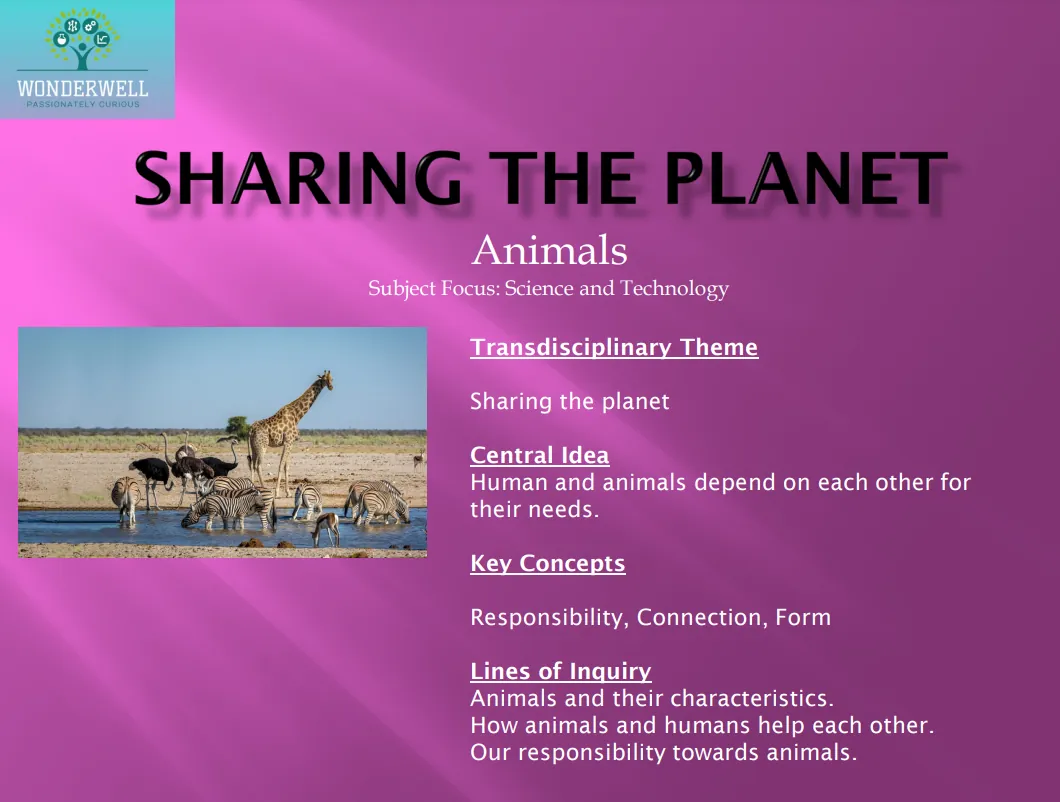
Identify and sort animals by habitat type -- domestic, wild, aquatic, desert, polar.
Describe how humans and animals depend on each other, using examples such as dairy products from cows.
Compare the body parts of two different animals and note similarities and differences.

Teaching tips
Use the mother-tongue prompting option noted in the differentiation section for children who need extra support recalling animal names.
Set up the jungle sensory corner in small groups of 5-6 children, per the plan's own grouping guidance, so each child gets hands-on time with the materials.
Chill the classroom before the polar-animals lesson, per the plan's own provocation, so children notice and ask why it's cold -- then use that real reaction as your entry point into the lesson.

Skills covered
Habitat classification -- children sort animals into domestic, wild, aquatic, desert and polar groups and identify features that help each survive.
Comparative observation -- children compare two animals' body parts in small groups and note similarities and differences.
Listening and vocabulary -- children build vocabulary and listening skills through a read-aloud of "Are You My Mother?" and a related illustration activity.
Good to know
Questions teachers ask about this resource
How does the unit connect a classroom-cooling trick to the polar-animals lesson?
The teacher chills the classroom before children arrive so they notice and ask why it's cold, and uses that real reaction as the entry point for explaining how thick fur and other body features let polar animals survive in cold regions.
What does the closing assessment corner check?
A rubric-based provocation corner assesses children's prior and gained knowledge across four areas: naming 10 animals, animal sounds, animal body parts, and habitat.

No reviews yet
Downloaded this resource? Tell other teachers how it went.
Resource details
Concepts & topics
Core concepts
 Core concepts
Animal habitats
Human-animal interdependence
Body-part adaptation
Responsibility toward animals
 Topics
Explore more
Categories this resource belongs to
Explore related searches
More to explore
You may also like