Bill of Rights Activities and Amendments 11-27 Unit

- Grades
- Grades 6–8, Middle School
- File type
- Microsoft Word


- Subject
- Social Studies, Government
- Topic
- Civics, Government
- Resource types
- Lesson Plans, Teacher Tools, Crosswords Puzzles, Tests, Worksheets & Printables
About this resource
What's inside this resource
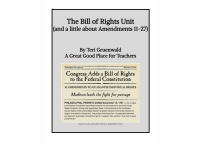
The purpose of this 49-page mini-unit is for students in grades 6-12 to develop a clear understanding of what their rights are under the Constitution, particularly our rights under the Bill of Rights. Increasingly, Americans, especially students, are not able to name many of the rights we are entitled to in the Bill of Rights. They are well aware of Amendment 2 and parts of Amendment 1, and the “I plead the fifth” clause of Amendment 5, but they are woefully uninformed of the other rights that protect us. This mini-unit is designed to give students not only a complete understanding of these rights but opportunities to put their knowledge into practice through the various worksheets and a culminating project at the end of the unit, which is available separately in my store,, “A Great Good Place for Teachers,” called The Bill of Rights: A Project to Assess Knowledge and Understanding. The ultimate goal is for them to have a healthy and complete understanding of why these basic rights are so necessary for our democracy.
This mini-unit is part of my unit: “Our Living Consitution” which is designed using the Into, Through, and Beyond model of lesson planning. The lessons in the Our Living Constitution unit can be used independently or as a supplement to what you already teach or as a whole. Here is a summary of what is in the unit. Check out my store: A Great Good Place for Teachers
Here are the links
Into Lessons: Creating Schema
Lesson 1: Overview of the Constitution of the United States of America
Lesson 3: The Seven Principles of the Constitution
Through Lessons: Learning the Content
Lesson 4: The Preamble: The Goals of the Constitution (not included in Our Living Constitution)
Lesson 5: The Three Branches of Government: Articles 1, 2, and 3
Lesson 6: How a Bill Becomes a Law
Lesson 7: Federalism, Separation of Powers, and Checks and Balances
Lesson 8: Articles 4, 5, 6, and 7 of the United States Constitution
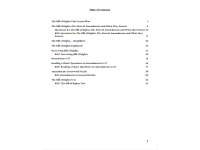
Lesson 9: The Bill of Rights Unit (and a Little About Amendments 11-27)
Extras (from the Unit: Every Four Years… The Presidential Election)
Lesson 10: What Are Your Political Viewpoints? (not included in Our Living Constitution)
Lesson 11: Major and Minor Political Parties (not included in Our Living Constitution)
Lesson 12: A Brief History of Who Can Vote in the United States (not included in Our Living Constitution)
Lesson 13: The Nuts and Bolts of the United States Presidential Election (not included in Our Living Constitution)
Beyond Lessons: Summative Assessments
The Consitution is a Living Document (not included in Our Living Constitution)
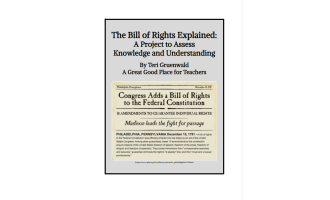
The Bill of Rights Explained Project: A Project to Assess Knowledge and Understanding (not included in Our Living Constitution)
Related resources
More resources teachers may find useful
24 related resources were found using this product's title, contributor, categories and tags.

In the classroom
Teaching tips & learning objectives

Learning objectives
Students explain who the Federalists and Anti-Federalists were and why they supported or opposed ratification of the Constitution.
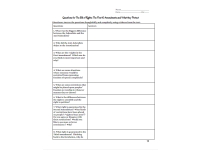
Students explain why the Anti-Federalists believed a federal bill of rights was necessary.
Students identify each right listed in the Bill of Rights and explain what protection each amendment provides.

Teaching tips
Have students draft their own guesses at the ten amendments before reading, then compare to the actual text.
Show the referenced video overview of the Bill of Rights before assigning the reading, then discuss what students saw.
Have students underline or highlight textual evidence as they answer the comprehension questions, then review answers as a class before finalizing.

Skills covered
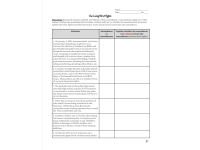
Constitutional analysis — students apply specific Bill of Rights amendments to real and hypothetical current-events scenarios and judge whether a right was violated or protected.
Primary-source close reading — students read amendment text alongside plain-language explanations and answer comprehension questions using textual evidence.
Historical argumentation — students explain the competing Federalist and Anti-Federalist positions on ratification and a bill of rights.
Good to know
Questions teachers ask about this resource
How should teachers treat the scenarios in 'Our Living Bill of Rights,' since the guide notes some are factual and others invented?
Most scenarios are based on real current and historical events, but the guide states a few — such as the Amendment 9 example — are entirely invented or blend fact and fiction, so teachers should treat them as illustrative rather than as a verified historical record.
What real-world event does the lesson plan use to connect the Bill of Rights amendments to current events?
It uses the mass arrests following the Capitol Insurrection as a class discussion example tied to the rights of the accused under several amendments.

No reviews yet
Downloaded this resource? Tell other teachers how it went.
Resource details
Concepts & topics
Core concepts
 Core concepts
Bill of Rights
Federalism
Due process
Amendments 11-27
Ratification
Topics
 Topics
Explore related searches
More to explore
You may also like