Volcano Unit



About This Product
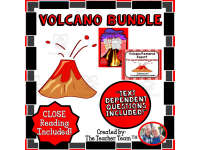
Engage your students with this fun and comprehensive unit on volcanoes. Captivating passages and text dependent questions enhance student learning. This large, 126 page Volcanoes Unit Bundle contains a wide variety of resources needed to teach a rigorous unit on volcanoes.
It includes CLOSE Reading nonfiction passages to help teach your students about volcanoes (not familiar with CLOSE reading? It’s okay, we have instructions and anchor charts to help you incorporate it into your teaching).
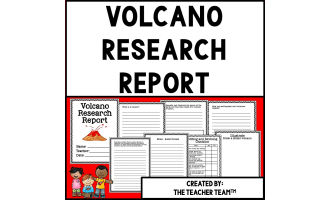
There are text dependent questions aligned with each passage, a set of vocabulary cards with definitions to accompany the passages, A Volcano Research Report, and much, much more. A variety of other graphic organizers and activities are included as well.
We do encourage you to supplement with any other books, videos, and websites that you already use; they will blend nicely with our CLOSE reading passages. You can use this unit in its entirety, or “pick and choose” the components to meet the needs of your students.
What's Included
This unit contains the following elements:
• CLOSE reading nonfiction passages:
1. What is a volcano?, passage 1 , page 1
2. The Nature of Volcanoes, passage 2, page 2
3. Types of Volcanoes, passage 3, page 3 through 6
• Vocabulary cards with definitions, one for each CLOSE reading passage topic-(provided for vocabulary support to scaffold for students who need more support).
• CLOSE Reading Instructions (PowerPoint or handout) explaining the steps of CLOSE Reading.
• Anchor Chart for student annotation and Discussion Topics for CLOSE Reading.
• Student Bookmarks with annotation rules so they have a smaller version of the anchor chart at their desk while they read
• “Text Dependent Questions”
• Common Core Essential questions (to be used after the passages are read, can be used as a summative assessment or a performance task).
• RAFT ideas (explanation included if you’re not familiar with RAFTS).
• Cognitive Content Dictionary (to be made into a “book” for student vocabulary words, definitions, and pictures).
• KWL Chart (you can use this at the beginning of the unit to ascertain what they may already know about volcanoes).
• Venn Diagram to compare and contrast similarities and differences.
• A Tree Map Graphic Organizer ( a grammar component for students to analyze the words in the passages and their parts of speech).
• CLOZE worksheets (a fill-in the blank) worksheet and answer sheet to assess vocabulary attainment and your students’ ability to utilize context clues.
Resource Tags
0 Reviews
Check out these other great products