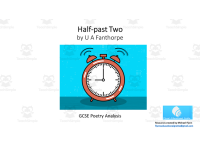
Half-Past Two Poem Lesson - U A Fanthorpe

- File type
- Microsoft PowerPoint
- Use
- Digital activity


- Subject
- Poetry, Literature, English
- Topic
- GCSE Poetry, Half-Past Two
- Resource types
- Lesson Plans
- Use
- Digital activity
From the author
About this resource
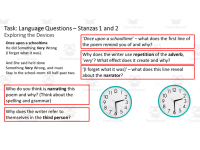
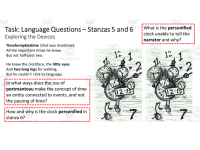
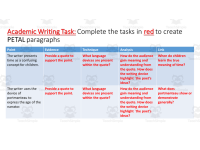
This 26-slide GCSE poetry lesson explores U. A. Fanthorpe’s Half-Past Two through content, language and structure questions. It includes terminology, biographical context, poem text, a PETAL frame, a three-bullet possible response about tone, and an extended writing task.
Use the introductory activity for discussion, then guide annotation and evidence-based interpretations. Review the poem display and adapt the suggested responses before teaching.
Related resources
More resources teachers may find useful
More resources on the same subject and topic.


In the classroom
Teaching tips & learning objectives

Learning objectives
Identify and define literary devices used in the poem, including portmanteau, personification, and oxymoron.
Analyse how Fanthorpe's language and structure choices convey a child's confused perception of time.
Construct a PETAL (Point, Evidence, Technique, Analysis, Link) paragraph that supports a claim about the poem with textual evidence.
Evaluate the poem's tone and justify that evaluation using quotations from the text.

Teaching tips
Use the Think-Pair-Share starter about punishment and behaviour to activate prior thinking before revealing the poem's subject.
Have students underline emotive language directly on their own copy during the tone-analysis task before comparing to the slide's model answer.
Work through the stanza-by-stanza language questions in pairs, then regroup for the whole-class structure questions about stanza count, rhyme, and beat.
Assign the extended-response question on childhood and time perception as homework after the in-class PETAL paragraph practice.

Skills covered
Poetic device identification — students define and locate portmanteau words, personification, and oxymoron within the poem's stanzas.
Close textual analysis — students answer content, language, and structure questions tied to specific quoted lines from each stanza.
Analytical paragraph writing — students build a PETAL-structured paragraph using point, evidence, technique, analysis, and link.
Author context research — students learn about U.A. Fanthorpe's biography and how it may inform the poem's narrator.

No reviews yet
Downloaded this resource? Tell other teachers how it went.
Resource details
Concepts & topics
Core concepts
 Core concepts
Poetry analysis
Figurative language
GCSE English literature
PETAL paragraph structure
 Topics
Explore more
Categories this resource belongs to
Explore related searches


More to explore