



3,947 products added recently
Page 509 - Activities By Subject
Simplify lesson planning by accessing activities organized by subject. Whether you're focusing on math, science, language arts, or social studies, these resources provide targeted support to enrich your teaching. Incorporate them to align with curriculum standards and engage students effectively.

 Show filters


Number Recognition 6-10 Bingo - Boards 16-20
Math, Early Math, Numbers, Kindergarten, Preschool, Grade 1, Activities, Games
Number Recognition 6-10 Bingo teaches young learners to identify numbers 6-10. This engaging math game strengthens number sense skills through active participation. To begin, print bingo boards, calling cards, and playing squares. Laminate for durability. Distribute materials to students. Shuffle and draw calling cards, announcing the number to the class. Learners locate matches on their boards, placing markers to cover called numbers. The first to complete a row shouts "Bingo!" and wins. Continue play as time allows by reshuffling cards. Use this game for whole-class, small-group, or individual practice recognizing numbers 6-10. Combine with other sets for more variety. Check out coordinating number bonds, skip counting, addition, and more in the shop.
Author Colleen's Cosmic Collection
Tags Number Recognition, Number Sense, Number Recognition Games, Number Sense Game, Number Recognition Bingo, Number Recognition Activities, Cccnrb610, Number Identification, Number Identification Activity, Number Identification Game

Mental Function Boost Boards Pack 1
Special Resources, Speech Therapy, Preschool, Kindergarten, Grade 1, Activities
Mental Function Boost Boards Pack 1 is a collection of resources designed with cognitive functioning in mind. Educators can use these cards as a tool to support students of various grade levels, abilities, and learning needs. The pack contains visually engaging prompting cards aimed at boosting mental functions such as memory, attention, processing, reasoning, and more. Teachers can implement these cards in small groups, individual sessions, or as supplemental practice. Whether used as an introduction or reinforcement of key concepts, these prompt cards allow for versatility depending on the needs of the students. With prompts that target essential cognitive skills, Mental Function Boost Boards Pack 1 enables educators to support the development of students in grades K-1. These colorful, printable cards can boost engagement, understanding, and retention in a child-friendly way. Their simple yet intentional design makes them suitable for a wide range of early learners.
Author WORDS ASIDE
Tags Speech Therapy, Special Education, Occupational Therapy
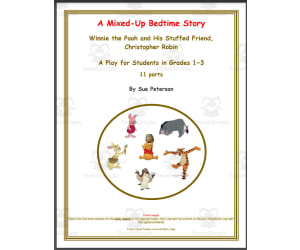
Theater - “A Mixed-Up Bedtime Story – Winnie the Pooh”
Creative Arts, Art, Drama, Grade 1, 2, 3, Activities
Theater - “A Mixed-Up Bedtime Story – Winnie the Pooh” is an original play written for younger grades. It could also be read as a Readers’ Theater or performed in front of an audience. There are eleven characters: a narrator, two children, Mother, Pooh, Christopher Robin, Rabbit, Tigger, Owl, Piglet, and Eeyore. Additional students in your class could help with the play in many other capacities from making the play sets to staging, creating costumes, and prompting. Synopsis: Winnie the Pooh treats his stuffed friend, Christopher Robin, to a birthday party. Rabbit, Tigger, Owl, Piglet, and Eeyore all join in to make Christopher Robin’s 8th birthday special. Your students can join in the celebration! The play opens with the children begging their mother to read another story. Mother reads the mixed-up bedtime story (which is the play). The bear is named Winnie the Pooh and he has a stuffed friend, Christopher Robin. The two run off to find some honey in the forest. Pooh realizes it is Christopher’s birthday and thinks of a plan. If you want to know the plan and how Pooh surprised Christopher Robin, you will need to read the play! The Parent/Teacher Guide at the end of the play includes class activities: questions to ask before reading the play, words to preview, and a series of questions to ask after reading the play. There are tips to perform the play and lots of extension activities to boost student interest and overall understanding of the play. Among them are to make a Venn diagram to compare the original story to the play’s mixed-up version, design a shadow box of the surprise party, draw 3-5 pictures to tell the story, or write and share their own mixed-up story of a fairy tale. The final set of student activities includes higher-level critical and creative thinking questions for students to think and reason, and adequate space to write their answers. What’s Included in Theater - “A Mixed-Up Bedtime Story – Winnie the Pooh” 11 pages with the Parent/Teacher Guide and Activities. Some Common Core Standards Aligned with This Resource Key Ideas and Details (CCSS.ELA-LITERACY.CCRA.R1-3) Includes “read closely to determine what the text says explicitly...,” “Determine central themes...summarize the key supporting details...,” “analyze...” Comprehension and Collaboration (CCSS.ELA-LITERACY.CCRA.SL1-3) Includes “Prepare for and participate effectively in a range of conversations and collaborations with diverse partners...,” “integrate and evaluate information...,” “evaluate a speaker’s point of view, reasoning, and use of evidence and rhetoric.” Conventions of Standard English (CCSS.ELA-LITERACY.CCRA.L1-3) Includes “demonstrate command of...standard English when writing or speaking,” “demonstrate command of...standard English capitalization, punctuation, and spelling...” Knowledge of Language (CCSS.ELA-LITERACY.CCRA.L3) Includes “apply knowledge of language to understand how language functions in different contexts...”
Author Sue Peterson
Tags Play, Winnie The Pooh, Reader's Theater, Scripts, Story Comparison, Bedtime Stories Winnie The Pooh, Winnie The Pooh Bedtime, Winnie The Pooh Bedtime Story
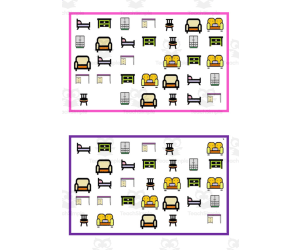
What is missing? Vocabulary Boards - COLOR SET 10
Special Resources, Speech Therapy, Kindergarten, Preschool, Grade 1, Activities
What is Missing? Vocabulary Boards - Color Set 10 This teaching resource features two vibrant vocabulary boards per page, totaling ten boards, aimed at building speaking skills and expanding vocabulary in young learners. Students must study the patterns and images on each board to determine what object or icon is missing. This activity can be utilized in whole group instruction, small reading groups, or as an independent work assignment. The full-color boards depicting categories like transportation, foods, animals, and more allow educators to reinforce recent lesson concepts or vocabulary words. With multiple boards to choose from, this resource provides speech therapists, classroom teachers, and homeschool parents engaging material to hone visual perception, critical thinking, and descriptive language abilities. The boards are available in a printable PDF format for ease of distribution and use.
Author WORDS ASIDE
Tags Special Education, Speech Therapy, Reading Intervention, Small Group, Flash Cards, Vocabulary Boards, What Is Missing, Literacy

PE Lacrosse Stations
P.E. & Health, Physical Education, Not Grade Specific, Activities, Games
The PE Lacrosse Stations are 20 fun filled, “LAX to the MAX” lacrosse-themed station signs/cards that you can use in your school gymnasium , outdoor field or could be modified to be performed in a smaller space such as a large classroom or empty cafeteria. Each station card provides a lacrosse-related skill (i.e. cradling, passing, scooping, shooting, etc.) and includes a brief instructional direction and a graphic that depicts the activity . The activities are standards-based and there are plenty of activities for you to choose from or for the students to take part in during multiple class periods or recess times if necessary. The stations work great as an activity for the weeks leading up to the NCAA Lacrosse Playoffs.
Author Cap'n Pete's Power PE
Tags Physical Education, Back To School, Sports, Lacrosse, Whole Group Games
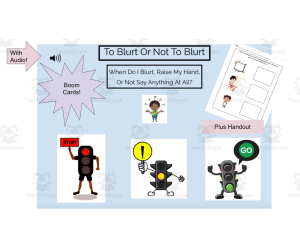
To Blurt Or Not To Blurt Boom Deck With Audio-Plus Reflection Handout
Special Resources, Life Skills, Preschool, Grade 1, 2, 3, Activities
To Blurt Or Not To Blurt Boom Deck With Audio-Plus Reflection Handout An innovative teaching resource tailored for educators teaching kindergarten through third grades. This tool helps students hone an essential skill – discerning when it's appropriate to speak out loud, raise their hand, or remain quiet. Diverse Learning Styles This resource caters to various learning styles and educational contexts by including audio accompaniment for all 24 cards, ensuring non-readers also benefit from this activity . The cards are suitable for interactive classroom environments as well as small groups or individual homework assignments. Classroom Implementation & Student Engagement Promotes active classroom participation by providing a card for each student during the interactive board sessions - in both virtual and physical classrooms. Nurtures personal responsibility among students by encouraging them to independently make appropriate choices about speaking during class discussions. Inclusive of Reflection Handout The teaching resource goes beyond just digital content by including a practical reflection handout. This acts as complementary material to reinforce the concepts learned during interactive sessions either through immediate application or assigned future work. Contactless Convenience Accessible Anywhere, Anytime! Compatible with any modern browsers such as Chrome, Safari, Firefox and Edge on platforms that include Android devices, iPhones/iPads & Kindle Fires. All you need is an internet connection! Note:Adult supervision via a Boom Learning account is vital. Learner feedback can be provided efficiently using Fast Pins. To gain further insights into learner progress consider opting for a premium account - the initial free trial will be made available upon purchase of this product. Sow seeds of respect towards communication etiquette in your students with the To Blurt Or Not To Blurt Boom Deck With Audio-Plus Reflection Handout. Upgrade Your Teaching methods for today's digital age!
Author Jennifer Moyer Taylor
Tags Communication Skills, Social Etiquette, Interactive Learning, Digital Resource, Audio Accompaniment
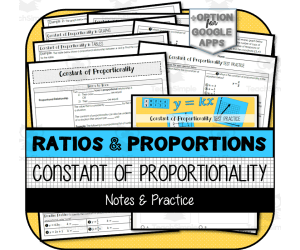
Constant of Proportionality NOTES & PRACTICE
Math, Algebra, Grade 7, Activities
This resource was developed to meet the requirements of the 7th Grade Ratios & Proportional Relationships Standards below: CCSS.MATH.CONTENT.7.RP.A.2 Recognize and represent proportional relationships between quantities. CCSS.MATH.CONTENT.7.RP.A.2.B Identify the constant of proportionality ( unit rate) in tables, graphs, equations, diagrams , and verbal descriptions of proportional relationships. CCSS.MATH.CONTENT.7.RP.A.2.D Explain what a point (x,y) on the graph of a proportional relationship means in terms of the situation, with special attention to the points (0, 0) and (1,r) where r is the unit rate.
Author The Math Cafe
Tags Constant Of Proportionality, Notes, Constant Of Proportionality Characteristics, Key Characteristics Of Constant Of Proportionality, 7 Rp A 2, Constant Of Proportionality Key Characteristics, Constant Of Proportionality Definition 7th Grade, Constant Of Proportionality 7th Grade, 7th Grade Constant Of Proportionality, 7 Rp 2
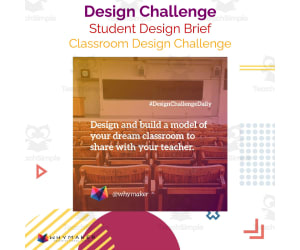
Classroom Design Challenge
Science, Physics, Not Grade Specific, Activities
Classroom Design Challenge: Your Next Gen Pedagogical Tool! The Classroom Design Challenge offers a unique platform for hands-on learning, promoting engagement and facilitating high-quality education for all types of learners. It has potential use across a range of settings: afterschool programs, camps, STEAM classes or library time. Versatility & Usability This educational resource can be incorporated into your existing curriculum during 'choice' time periods or focused on independent study sessions. In essence, Classroom Design Challenge comprises 'Ready-to-Use' design briefs that give students the opportunity to address real-life scenarios. Each brief comes with: Contextual information The specifics of the design challenge Necessary specifications and constraints List of required materials and tools Detailed steps guiding students through their project along with insightful tips. A Standards-Based Approach To Learning Objectives Befittingly aligned to Standards-Based Learning Objectives - this teaching tool is 'Grade Non-Specific'. It makes subjects such as Physical Science engaging by encouraging creativity in solution crafting. This not only fosters innovation amongst learners but also promotes critical thinking abilities. Fits Group Sizes & Dynamic Scheduling: Each activity can easily be scaled down from collective classroom projects to smaller groups or even individual assignments as homework providing flexible scheduling options based on class dynamics. In conclusion, Classroom Design Challenge bridges creative arts (design) and physical sciences offering great opportunity for interdisciplinary learning – making it an educator’s go-to tool inside today's dynamic classrooms.
Author WhyMaker
Tags Hands-on Learning, Educational Design, Practical Education, Interdisciplinary Integration, Critical Thinking
Tier III Vocabulary Entrance Cards
ELA, Language Development, Vocabulary, Grade 11, 12, Activities
Tier III Vocabulary Entrance Cards is an engaging formative assessment resource for 11th and 12th grade English teachers to use with their students. As students arrive to class, the teacher can quiz them on vocabulary terms using flashcards. If a student answers correctly, they may enter the classroom. If they do not know the answer, the teacher provides them the flashcard to study before returning to the back of the line. The goal is for students to learn the definitions by the next time they reach the front. This motivates students to study the cards and allows the teacher to informally track comprehension. With over 50 Tier III vocabulary terms applicable to high school ELA curriculums, this resource provides a routine way to reinforce key concepts and give personalized learning opportunities. The pdf document prints 6 flashcards per page for easy distribution and use.
Author Time Thrifty Teacher
Tags Entrance Cards, Bell Ringer, Vocabulary, Definitions, Tier III

How Many Activity - Counting Activity - Pumpkins
Math, Calculus, Early Math, Basic Operations, Counting, Infant, Kindergarten, Grade 1, 2, 3, Activities, Centers, Worksheets & Printables, Task Cards, Worksheets
Get ready to count like a pro with the How Many Pumpkins? Counting Activity! This is your chance to channel your inner pumpkin math whiz, minus any heavy lifting (or pumpkin guts). Perfect for little learners, this activity is all about spotting pumpkins and counting them up, which sounds simple enough… until you realize they’re hiding everywhere. It’s a bit like Where’s Waldo, but with way more orange. Here’s how it works: each page features a sneaky assortment of pumpkins, some big, some small, and some doing their best to blend in with the background. The mission? Count each pumpkin without getting distracted by the urge to carve them. With every pumpkin you count, you’ll get closer to victory (and a newfound respect for the pumpkin farmers of the world). It’s a perfect activity for building early math skills while staying in the Halloween spirit. Plus, it’s mess-free, no need to carve or scrape seeds out of these paper pumpkins! By the end, your little counters will be pumpkin experts, able to spot one a mile away, and maybe even ready for a round of pumpkin trivia. So grab a pencil and get counting, the pumpkins are waiting! Enjoy!
Author Ponder Palette Plazza
Tags Counting, Counting Activity, Numbers, Math, Fall Math, Halloween Math, Pumpkins, Pumpkin, Math Worksheets, Math Task Cards

Semantic Themed Activity Boards Set 28: COMMUNITY BUILDINGS
Special Resources, Speech Therapy, Kindergarten, Preschool, Grade 1, 2, Activities
This is a set of Semantic Themed Activity Boards Set 28: COMMUNITY BUILDINGS. These are great for therapists, families and teachers. It is a great way to build comprehension, communication and more with early learners.
Author WORDS ASIDE
Tags Preschool, Speaking Skills, Communication Development, Language Skills, Speech Therapy, Special Education, Reading Intervention, Activity Cards, Flash Cards

Pixel Pics Spreadsheet Activity: Christmas Edition
Science, Technology, Computer Science, Not Grade Specific, Activities
Pixel Pics Spreadsheet Activity: Christmas Edition Give your students a fun computer skills project this holiday season! This Christmas-themed activity provides opportunities for students to use Microsoft Excel while completing festive pixel art scenes. Students are given access to 1 spreadsheet with 5 separate tabs. Each tab features pixel art templates of popular Christmas images like elves, penguins, gingerbread men, and reindeer. By following the color coding, students can fill in the templates to reveal the hidden pictures. Tabs can be assigned or students can choose which pixel art scenes to create. A completed example spreadsheet is provided. This self-directed project is adaptable for all ages and allows students to showcase their spreadsheet skills. Whether working individually or collaboratively in class or computer lab settings, young learners will enjoy putting their tech know-how to use with this engaging holiday activity!
Author Lab LLama - Computer Skills Resources
Tags Lab Llama, Pixel Pics, Spreadsheet Activity, Google, Microsoft, Computer Skills, Christmas Activity, December, Color By Number, Digital Coloring
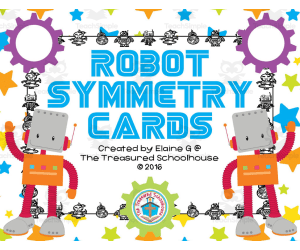
Robot Symmetry Cards
Math, Geometry, Grade 1, 2, 3, 4, Activities
Robot Symmetry Cards: A Melding of Creative Drawing and Mathematical Understanding Presented in a user-friendly format, Robot Symmetry Cards provide a widely applicable teaching resource available as a 10-page PDF file. With versatility in mind, these resources pack can be used in different learning environments and accommodate varied learner needs. Colors Catering to Classroom Preferences The cards come in both color and black-and-white versions, catering to classroom requirements or student preferences. They are exceptionally suitable for diverse settings ranging from intensive one-to-one homeschooling sessions to larger group lessons in public schools. Alligning with Educational Standards Lined up carefully with the educational standards for Grades 1 to 4, Robot Symmetry Cards work perfectly as part of day-to-day classroom activities. They can either serve during exclusive math classes or may be incorporated within cross-curricular unit studies tying together art and maths. A Versatile Homework Assignment & Group Exercise Tool Besides being used directly inside the classroom, this resource lends itself easily as homework assignment - promoting independent learning along with creative freedom amongst students who might want to explore symmetry at home. On top of it all, try using Robot Symmetry Cards for cooperative exercises where children collaborate on completing each robot’s symmetric illustration jointly. This approach fosters teamwork while helping each learner better their understanding of core mathematical concepts involved. The perfect balance between technical skill-building and artistic expression stimulates an interesting challenge for different stages of mathematical understanding. In Summary: Meticulously developed Robot Symmetry Cards tender an inviting path toward understanding basic geometric concepts such as symmetry – ideal blend into Grade 1 through Grade 4 math instruction while encouraging creative exploration on a personal academic level.
Author The Treasured Schoolhouse
Tags Geometry, Symmetry, Math Instruction, Creative Exploration, Interactive Learning

Food Web Activity
Science, Life Sciences, Biology, Earth and Environmental Sciences, Environmental Science, Animals, Grade 3, 4, 5, 6, 7, 8, Activities
Activity Introduction An amazing activity designed for the students to learn more about STEM. Food Web Do you like STEM subjects? what is your favorite one? Have you ever tried to plant a seed? If yes, tell us more about it. Or have you ever tried to invent something? If yes, tell us more about it. And how do you think it will help us? Have you ever seen a microorganism under a microscope? What was it? And how it looked like? Mathematics is a marvelous subject. Let' sharpen our brains and solve some equations. Do you like timetable tricks? What is your favorite one? Do you know how to code? Have you ever created an app or a game before? If yes, how was it like? Food Web Activity The activity is perfect for encouraging the researching skills for the students, while learning more about this fantastic topic. Food Web This friendly designed worksheet is suitable for students at school, homeschooling, and as a group activity. Instructions Cutout the boxes and write the role of each organism in the food web. Glue the edges to create a tube shape. Put the tubes inside each other to make a tube doll. Start with the biggest - decomposers. Format Available in a PDF format.
Author Educational Voice
Tags Food Web Activity, Food Web, Food Web Facts, Food Web Facts For Kids, STEM, STEM Fats, STEM Facts For Kids, Environment , Environment Facts, Environment Facts For Kids

Phonics Clipping Train Cards Activity
ELA, Language Development, Phonics, Preschool, Kindergarten, Grade 1, Activities
Introducing the Phonics Clipping Train Cards Activity An innovative teaching resource developed to aid Kindergarten, Preschool and Grade 1 students in building crucial skills. Objective The Phonics Clipping Train Cards Activity is constructed to cultivate various cognitive areas coherently and engagingly. It is particularly fruitful for sharpening letter recognition, reading skills, and phonics understanding within a literacy class or during independent learning in literacy centers. The activities are primarily centered around s,a,and t sounds to facilitate review and recall. Benefits Helps children exercise fine motor skills by clipping cards together. Fosters good listening habits vital for any objective learning process. An interactive way of reviewing classroom topics with train-themed materials. Promotes intellectual growth among students. Note:This product originates from our past package: 50+ Phonics Exercise Sheets (s,a,t).If you formerly purchased that bundle-this might be a repeat. Inclusions of the Pack The package comprises of: A whopping 16 pages of alluring strip cards with comprehensible instructions included. Preparation Guidelines: You simply print out the sets you require. . Cut them in half - ideally obtaining multiple copies for larger groups- before laminating them to ensure durability. In conclusion, whether used individually or in small units for competitive exercises —the adaptable nature of these resources comes across clearly through their flexibility; enabling educators such as yourself transform everyday lessons into interactive learning sessions.
Author Koodles Clubhouse
Tags Phonics, Literacy, Reading Skills, Fine Motor Skills, Interactive Learning
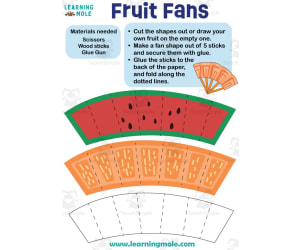
Fruit Fans Activity
Science, Nature & Plants, Life Sciences, Grade 1, 2, 3, 4, 6, 7, 8, 9, 10, Activities
Activity Introduction An amazing activity /craft designed for the students to have fun learning about our daily activities or even to have fun doing some DIY crafts. Fruit Fans Do you like group activities or crafts that you can enjoy with your friends and family? Or do you like individua activities and crafts that you can do on your own then show the world how creative you are? Have you ever tried to do a do it yourself craft? If yes tell us more about it, like has any one helped you, what was it about, what materials dd you use to create it and how much time did you suspend creating it? Do you like colouring? What is your favourite colour? Fruit Fans Activity The activity is perfect for encouraging the creativity skills for the students, while having fun with our cool activities and crafts. Fruit Fans This friendly designed worksheet is suitable for students at school, homeschooling, and as a group activity . Instructions Cut the shapes out or draw your own fruit on the empty one. Make a fan shape out of 5 sticks and secure them with glue. Glue the sticks to the back of the paper, and fold along the dotted lines. Format Available in a PDF format.
Author Educational Voice
Tags Fruit Fans Activity, Fruit Fans, Fruits, Fruit, Fruit Activity, Fruits Facts, Fruits Facts For Kids, Plant, Plants, Plants Facts
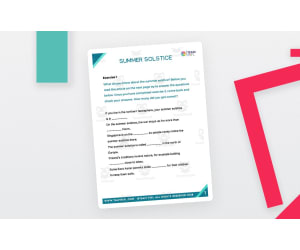
Summer Solstice Reading Activities
ELA, Language Development, ESL, Not Grade Specific, Activities
This resource is a set of reading worksheets for the Summer Solstice. Students will read text and engage in 4 different exercises, from writing tasks to fill in the blanks. There are 2 chatterbox activities to engage your ESL students in dialogue. Answer key included.
Author TEAM TEFL
Tags Reading Worksheets, Summer, Solstice, ESL, Language Arts

Addition Clip Strips
Math, Early Math, Addition and Subtraction, Addition, Kindergarten, Preschool, Grade 1, Activities
Addition Clip Strips: An Engaging and Practical Tool for Learning Addition Clip Strips are an interactive teaching resource designed to help students in preschool, kindergarten, and grade 1 practice their addition skills within the range of ten. This education tool has been designed to engage young learners, fostering readiness as they take on the challenges of early math and addition tasks. This resource comprises of 4 pages that contain a total of 80 thought-provoking addition exercises arranged into a fun clip strip format. Here's how you use it: Print each strip on card stock paper. Cut out each strip. Laminate each strip for longevity. Write down numbers from one through ten on clothes pins or clips. The role of the student is to correctly solve each problem using these clips — a hands-on approach that effectively seals learning impressions. Teachers can implement Addition Clip Strips in various ways such as: Daily Routines: In engaging activities during math centers where strips and pins are already set for independent work time or collaborative learning amongst students. In morning warm-up routines which provide productive engagement while waiting for other students to join. Fostering Teamwork : Each team is given task boxes with strips, pins in pencil cases placed on student tables. Focused intervention : During guided instruction with a select group needing focused intervention with basic summation problems. In addition to offering an exciting method of practicing classroom arithmetic lessons, Addition Clip Strips help to enhance fine motor skills amongst students due to its manipulative-based nature. These clip strips require minimal preparation from teachers - simply print (ideally in color), cut out, and laminate them before getting started with instruction. This teaching resource is designed to make math fun, accessible and approachable, as well as reinforce fluency in solving addition equations within 10 and build confidence among students. In classrooms or homeschool environments that value simplicity without compromising quality, Addition Clip Strips deliver.
Author The Connett Connection
Tags Addition Practice, Clip Strips, Hands-on Learning, Fine Motor Skills, Math Centers

Cut & Glue: Veggies
ELA, Reading, Not Grade Specific, Activities
Cut & Glue: Veggies is a fun language arts activity for young readers to practice matching words and images. Students will cut out images of vegetables like carrots, broccoli, and tomatoes then glue each picture next to its written name. This hands-on resource helps reinforce early reading skills and expands children's vocabulary in an engaging way. Educators can use it with the whole class, small groups, or as an independent center activity to give students meaningful practice associating printed words with pictures. Whether at school or in a homeschool setting, Cut & Glue: Veggies makes learning to read super fun!
Author Better Teaching Resources
Tags Cut, Glue, Veggies, Vegetables, Matching

Spring Acrostic Poetry – Vocabulary + Writing
ELA, Literature, Poetry, Not Grade Specific, Activities
Acrostic poems are a fun way to practice vocabulary, spelling, using adjectives, and creative writing! These types of poems encourage learners to be picky about the words they choose, and to pay attention to detail. My students greatly enjoyed illustrating the borders of their acrostic poems with their own drawings! These are great for spring bulletin board displays! These acrostic poems with a spring flower border, for example, look wonderful and festive for the spring season! They are a fun way to practice writing, descriptive words (adjectives, nouns, verbs, etc.), and great for all grades and ages! You can make the acrostic poems as advanced or simple as you'd like, depending on the age of your learners and what skills they are learning. I have challenged more advanced learners to use five adjectives, five verbs, and five nouns in their poems, for example. Acrostic poetry is a fun way to teach learners how to choose their words wisely and carefully, as the goal of the poems is to paint a picture in the mind of the reader - without writing out paragraphs and lots of sentences. It is a way to teach the importance of not using too many 'filler' words, and being specific in their writing. This product comes with forty five spring acrostic poetry templates. With each template comes an outline matching the word for learners to color and add their own details to. Learners can also decorate the borders of their poetry with their own illustrations - bringing their words, descriptions, and ideas to life!
Author Growing In Wonder
Rating
Tags Spring, Acrostic, Poetry, Poems, Writing, Activities, Morning Work, Spring Acrostic Poem Examples, Adjectives For Acrostic Poems

Renting vs Buying a Home: Real Life Financial Literacy and Life Skills
Life Studies, Special Resources, Finance, Home Economics, Math, Percentages, Decimals, Life Skills, Grade 7, 8, 9, 10, 11, 12, Activities
Have you heard people say that renting is throwing money away? Is that always true? This comprehensive high school financial literacy and life skills lesson helps students understand the costs of renting vs buying a home. This is crucial information that is often not taught in schools. Make sure your students are prepared for making real-life financial decisions down the road! What's Included: 6 Page PDF: Title Page/Teacher Instructions Handout that explains parts of a mortgage: principal vs interest and a sample of an amortization schedule Handout that explains about the costs of renting vs buying and which ones are "unrecoverable." 100% of your rent is unrecoverable, but there are very few other costs associated with renting. The interest of your mortgage, strata fees, HOA fees, property taxes, home insurance, closing costs, realtor fees, maintenance, repairs, and more are all unrecoverable costs of buying: these can add up quickly too! 2 Page Research Project: Students look for homes in their area to buy and rent and calculate which one is a better deal based on the information they have learned. Bonus Handout that delves deeper into a the nuance of the situation: for example, if people are good at saving or not (optional). Grades to Use With: This lesson is designed for high school students in regular or special education classrooms. The handouts are written at a simple reading level and that math skills required are using percents written as a decimal: for example, calculating 35% of your monthly income by multiplying your income by 0.35 If you enjoy this product, check out other financial literacy activities in my store: Income Tax Notes and Practice: Teach your students how to file their taxes in Canada or the US! Compound Interest: Hook Students on Financial Literacy Net Worth: Assets - Liabilities = Equity
Author Grace Under Pressure
Tags Renting, Buying, Budget, Financial Literacy, Life Skills, Mortgage, Expenses, Down Payment, High School Life Skills, High School
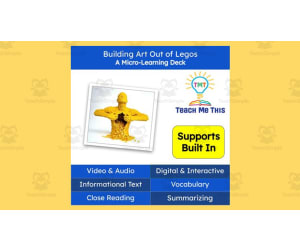
Building Art Out of Legos | Reading Comprehension Activities | Micro-Learning Deck
Creative Arts, Art, Fine Arts, Grade 5, 6, 7, 8, Activities
This resource is a digital reading comprehension deck for Building Art Out of Legos. Each lesson will include a video lesson and a quick write. Students will work on skills such as: -Vocabulary -Comprehension -Summarizing
Author Teach Me This
Tags Art Lesson, Reading Comprehension, Informational, Texts, Learning Deck
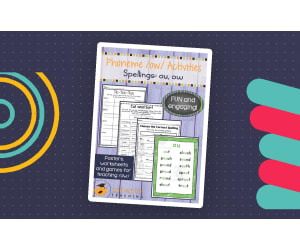
Phoneme /ow/ Activity Packet
ELA, Language Development, Phonics, Grade 1, 2, 3, Activities
Phoneme /ow/ Activity Packet is a teaching resource for educators working with students in grades 1-3. This packet focuses on building phonics skills and includes a variety of materials related to the long o vowel sound. Educators will find a master word list of single syllable and multisyllabic /ow/ words. Large posters and word cards provide visual references for each /ow/ spelling. Interactive worksheets allow students to practice decoding and encoding /ow/ words. Additional hands-on games offer engaging opportunities for students to reinforce the phonics skill. This comprehensive packet supports whole group, small group, or individual instruction. The materials can be integrated into a phonics lesson or literacy center . Games make great homework assignments. This resource helps build essential early literacy skills.
Author Top Notch Teaching
Tags Phonics, Phonemes, Word Cards, Reading Posters, Multisyllabic

Sort Clothing by Feature, Function and Class - Girl Version
Special Resources, Special Education Needs (SEN), Speech Therapy, Science, Basic Science, Kindergarten, Preschool, Grade 1, 2, 3, 4, 5, 6, 7, 8, 9, Activities
Girl version- The educational activity involves sorting clothing items based on their features, functions, and classes. The learners will be presented with a collection of various clothing items such as shirts, pants, jackets, sweaters, and so on. The objective of the activity is to categorize these items based on their unique features, functions, and classes. To begin the activity , the instructor will introduce the concept of feature, function, and class, providing examples and a brief description of each. The learners will then be given a set of clothing items and asked to sort them into categories based on these three criteria. For example, the learners could sort clothing items based on the feature of long sleeves, the function of keeping warm, or the class of pants. They could also be asked to sort clothes based on a combination of these criteria, such as sorting long sleeve shirts that are also suitable for cold weather. The instructor could also provide feedback and additional information about the clothing items and their features, functions, and classes. By completing this activity , the learners will improve their critical thinking and analytical skills as they learn to categorize and classify objects based on different criteria. They will also develop their knowledge and understanding of clothing items and their unique features, functions, and classes. The pages are clear of visual distractions which helps the learner focus on the task. This activity is easy to create - laminate all cards, cut out the individual sorting cards and velcro to the corresponding activity mat. You can hole punch the mats and put them in a binder or use binder clips for many years of teaching and learning. Enjoy, IFIO girl
Author IFIO girl - I'll Figure It Out
Tags Vocabulary, Clothes For Seasons, Visual Discrimination, Sorting, Features, Girl Clothes, Autism, Occupational Therapy, ABLLS-r, Feature Function Class, Sort Clothing