



2,810 products added recently
Page 10 - 7th Grade Games
Bring energy to your seventh-grade classroom with games that align with learning goals. This collection includes strategy challenges, language arts activities, and mathematical explorations. By incorporating these games into your lessons, you can make learning more engaging and effective.

 Show filters


How to Write An Essay: Memory Match Game - FLASH-MAC
ELA, Writing, Common Core, Grade 5, 6, 7, 8, Activities, Games
How to Write An Essay: Memory Match Game - FLASH-MAC This innovative teaching tool is designed with educators in mind. It simplifies complex essay writing techniques into a captivating memory match game , primarily targeting students from grade 5 to grade 8. This product covers six significant topics related to drafting an insightful essay. The highly effective learning tool uses the concept of pairing. Six corresponding pairs of key essay writing elements and their definitions are cleverly concealed within the game , promoting retention through meaningful practice and repetition. Thesis statements Topic sentences Supporting details Transitional words or phrases, Conclusions This module is adaptable for diverse classroom settings such as whole-group instruction or small group learning stations, it also works well as a differentiated learning activity for individual students struggling with specific areas of essay writing. Teachers’ Companion Tool "How To Write An Essay: Memory Match Game - FLASH-MAC” can be heavily relied upon not only in direct instruction but also when assigning homework or review tasks.This interactive resource aims at making sure every student gets the opportunity and support they need to master academic composition. Educational Standards Alignment The software aligns with Common Core State Standards emphasizing proficiency in language arts—specifically on enhancing students’ skills surrounding written expression. Moreover, its content reflects Blooms Taxonomys pedagogical principles prioritizing higher-order thinking skills rather than pure memorization. Please Note: This product is provided exclusively as Mac software (confirm compatibility before download). Users get one full product file upon purchase. Experience the Revolution in Learning Find out how “How To Write An Essay: Memory Match Game - FLASH-MAC” reimagines language arts instruction by synthesizing essential concepts into engaging gaming moments!
Author Classroom Complete Press
Tags Software (Mac)
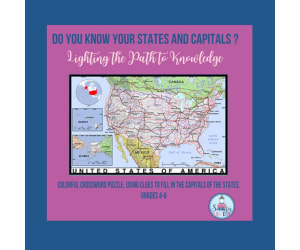
Do You Know Your States and Capitals?
Social Studies, History, History: USA, Grade 6, 7, 8, Activities, Games
☺If you’re looking for somethingto use at the beginning of the school year, or anytime during the year, to see if your students know the states and capitals, this resource, “Do You Know Your States and Capitals?” will do the trick. ☺The activity is a crossword puzzle that will also help reinforce states and capitals for your United States History Classes. ☺There’s bonus question, they are to list 3 states and capitals that are not in the crossword puzzle. ☺Clues are given for the answers. An answer sheet is included. Copyright©2016 Deann Marin (Socrates Lantern) All rights reserved by author. This product is to be used by the original purchaser only. Copying for more than one teacher or classroom, or for an entire department, school, or school system is prohibited. This product may not be distributed or displayed digitally for public view, uploaded to school or district websites, distributed via email, or submitted to file sharing sites. Failure to comply is a copyright infringement and a violation of the Digital Millennium Copyright Act (DMCA). Intended for single classroom and personal use only.
Author Socrates Lantern
Tags US Map, Sttes And Capitals, Crossword Puzzle, Game, Answer Sheet

Olympic Games Torch Activity
P.E. & Health, Sports, Grade 1, 2, 3, 4, 5, 6, 7, Games, Activities
Activity Introduction An amazing activity designed for the students to learn more about famous places in different countries. The Olympic Games What is your favorite sport? Tell us more about it. Who is your favorite athlete? Or what is your favorite team? Do you know who invented basketball? When basketball has been invented? Can you tell us where is the first time it has been played? Have you ever played soccer or football? If yes, tell us what was your position: A goal keeper, midfield player, or a defender? Do you like watching golf? If yes who is your favorite player? Can you name the differences between tennis and ping pong? Have you ever played volleyball on the beach? When it has been officially recognized by the Olympics? Do you like watching Formula 1 races? If yes, who is your favorite team or driver? Have you ever tried to play handball? If yes tell us more. Do you like watching people skiing or surfing? Olympic Games Torch Activity The activity is perfect for encouraging the researching skills for the students, while learning more about this fantastic place. Olympic Games Torch This friendly designed worksheet is suitable for students at school, homeschooling, and as a group activity. Instructions Glue the toilet paper roll on the dotted rectangle. Cut the other toilet paper roll in half and glue it on the dotted square. Cut the fingers out and wrap them around the base of the torch. Add the tissue paper on top to make the fire. Materials Needed 2 toilet paper rolls Scissors Yellow & orange tissue paper Glue Format Available in a PDF format.
Author Educational Voice
Tags Olympic Games Torch Activity, Olympic Games, Olympic Games Torch, Olympic Games Facts, Olympic Games Facts For Kids, Sport, Sports, Sports Facts, Sports Facts For Kids

Amerigo Vespucci ESL Spanish English Bingo Game Reading Comprehension
Social Studies, History, History: World, Grade 6, 7, 8, 9, 10, 11, 12, Games, Activities
Amerigo Vespucci ESL Spanish English Bingo Game Reading Comprehension The Amerigo Vespucci ESL Spanish English Bingo Game Reading Comprehension is a vital educational tool for teachers aimed at enhancing students' understanding of social studies and world history, with a focus on the exploration journeys of the esteemed voyager, Amerigo Vespucci. This game is suitable for grades 6 to 12 students and it's available in both English and Spanish. It contains various elements designed to boost vocabulary while honing reading comprehension skills. The package consists of forty-eight translation cards in both languages that are easy to print with English on one side and matching Spanish translations on the other. An important part of this teaching tool lies in its application in Social Studies, History, World History education curriculum , as well as its use in ESL ENL classrooms. It brings history alive by telling stories about Vespucci's early life experiences; his explorations funded by King Ferdinand, Queen Isabella and King Manuel I; his correspondence with Lorenzo de Medici; and Martin Waldseemüller's mapping contributions. This downloadable PDF offers: Two pages of enlightening bilingual text about Amerigo Vespucci. Forty-eight bilingual cards for an engaging bingo game. Dedicated graphic organizers geared towards improving students' ability to write clear paragraphs competently in both languages. Ten different bingo boards themed around Amerigo Vespucci along with an unexpected surprise based within page 33! This comprehensive educational kit imparts essential historical knowledge through enjoyable teaching methodologies!. Whether it's whole-group learning exercises, small group tasks or individual homework assignments, this package accommodates different teaching strategies! The interactive bilingual nature of this activity is beneficial for educators teaching various subjects. It aims to help mold multilingual students with significant critical-thinking abilities in an increasingly global world.
Author Anthropolotist in Heels
Tags Exploration Journeys, Amerigo Vespucci, Reading Comprehension, ESL Education, Social Studies

Country Study on China - Guess Who Game Cards on famous Chinese people
Social Studies, Geography, History, History: Asian, Grade 7, 8, 9, 10, 11, 12, Activities, Games
Country Study on China - Guess Who Game Cards on famous Chinese people This Teaching Resource is a fun Guess Who Game PDF (1 slide, 15 cards) on Famous Chinese People. This Printable Resource can be great for Geography, Asian History and Social Studies Classes. Suitable Learners for this kind of lesson are students from 7th Grade to 12th Grade. This Geography + Social Studies Guess Who Game on Famous People from China (Country Study) aims to introduce learners to China and its most famous Chinese People (leaders, writers, thinkers, actors, martial artists etc.). Little Preparation is needed for this Social Studies + Geography Activity. Some of the Chinese People selected for this Geography + Social Studies + Asian History Country Study on China are: Confucius (Founder of Confucianism) Sun-Tzu (thinker and military strategist; author of "The Art of War") Wu Cheng En (author of "The Journey to the West") Xi Jinping (Chinese President) Liu Cixin (Sci Fi Author of "The Three Body Problem" Jackie Chan (Actor) Bruce Lee (Martial Artist) and many more! A very fun and engaging way to play this "Guess Who on Famous People from China" (country study on China) game can be the following: all Learners sit on the floor in a circle every Learner has a Flash Card on their face every Learner/player asks a question about their Flash Card 's famous Chinese character This Social Studies + Geography Country Study on China PDF Printable Teaching Resource (1 slide, 15 cards for 15 Famous People from China) can be great for learners from 7th grade to 12th grade to introduce China and its Culture through its most important and celebrated people. Learning with Alan is a Brand New Teaching Resource/Educational Material Store whose aim is to help Teachers, Educators and Tutors to achieve their teaching objectives while creating a fun and stimulating environment. Never Forget! If you want to browse more of my Teaching Resources, click here Learning with Alan!
Author Learning with Alan
Tags Asia, China, Guess Who, Game, Cards, Printable, Geography, Chinese, Social Studies, Asian History
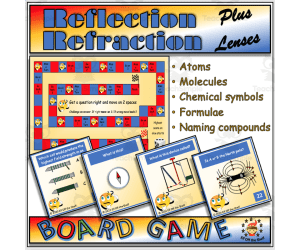
Light- Reflection, Refraction and Lenses Board Game fir Middle School
Science, Physics, Grade 5, 6, 7, 8, 9, Activities, Games
Light- Reflection, Refraction and Lenses Board Game for Middle School This is an interactive and engaging avenue to deepen students' understanding of critical scientific concepts in Physics -- specifically permanent reflection, refraction, and lenses; it’s suitable for students from Grade 5 through Grade 9. This versatile teaching resource adapts smoothly across varying learning environments. Resource Description The product comprises multiple file types that suit diverse teaching contexts and thus enhances the learning experience. The resource entails a fun-filled board game with distinct elements: A game board (color or grayscale options available) 54 question cards of multi-level difficulty An answer sheet for teachers’ review ease Instructions on how to play the game Purpose: To promote collaborative learning while fostering conceptual development and problem-solving skills. Pre-requisite knowledge & Benefits A basic prior understanding of light properties is necessary to derive maximum benefit from this game. The product aptly prepares students for higher complexities like concave/convex lens diagrams or understanding long/short sight correction differences. By weaving subtle competition within a questions-and-challenges routine inside the playing rules, it exponentially enhances learner engagement while refining their conceptual clarity. Note: The gaming experience adheres strictly to contemporary educational standards governing US public schools curriculum framework catering middle-grade Physics education requisites ensuring reliable academic alignment. The Edge: You can trust this resource due its authentic content handcrafted by experienced educators who understand the holistic growth imperatives of middle-school students, making complex Physics concepts easier through intriguing learn-through-play methodologies aligning commonplace Physics lessons into real-world instances seamlessly didactically rewarding way to illuminate young minds with the principles of light Physics.
Author Elf off the Shelf Resources
Tags Light Properties, Reflection, Refraction, Lenses, Board Game, Light Refraction And Lenses

Multiplying & Dividing Integers Playing Cards (Games)
Math, Numbers, Grade 7, Activities, Games
The purpose of this set of cards is to build fluency when determining the correct sign of the evaluated expression. The expressions are simple so that computation hinders the pace of the games as little as possible.
Author The Math Cafe
Tags Multiplying & Dividing, Integers, Playing Cards, Games
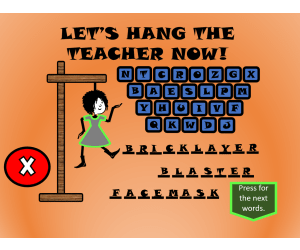
Construction Hangman Game to Practice Vocabulary
Special Resources, Grade 7, 8, 9, 10, 11, 12, Games, Activities
Construction Vocabulary Words to Review and Reinforce Definitions of the CTE curriculum . Students will learn and practice Construction terms through definitions and characteristics. The engaging activity promotes collaboration and class discussion as students review terms of Construction tools, machinery, and more with multiple visuals and learning formats like multiple choice questions, memory games, hang-man, and others. This versatile resource can be used for whole-group instruction, small-group practice, or independent work, just practice the words and then review them by choosing the correct letters, it will self-correct you until you choose the correct ones. Students will learn important terms related to the construction industry while having fun playing hangman. The game reviews 17 key vocabulary words through slides and an end-of-presentation game. To play, students guess letters to try to reveal the mystery word. If they guess incorrectly, part of the "hangman" is drawn. Guess all the letters correctly before the hangman is fully drawn to win! This supplemental resource helps build pronunciation, spelling skills, concentration, and construction industry knowledge. Practice Construction Vocabulary with this Free Interactive Game Introduce young learners to a variety of tools and machinery with this entertaining digital game. Students will see the names and images of different tools; exercising visual memory and concentration. This self-checking activity can be played independently or as a whole class game projected on a smartboard. The vibrant slideshow stimulates engagement while building construction classification skills. students will build their knowledge of important terms and definitions while having fun playing games. This activity stimulates intelligence, builds concentration, reinforces letter recognition, improves spelling and pronunciation, and engagingly expands vocabulary. It's a perfect supplement for any Construction lesson. Check our shop, material, and products for more interactive construction vocabulary reviews covering other topics like human microbiome, metabolism, and more grade levels in science and Spanish language arts. Download this versatile 17-slide PowerPoint today!
Author ShapeUp-N-Matematicas y Lenguaje
Tags Construction, Construction Equipment, Construction Tools And Instruments, Construction Machinery, Construction Material, Construction Workers, Construction Safety Gear

Map Wars: Asia Edition | Interactive Geography Game
Social Studies, Geography, Grade 5, 6, 7, 8, Activities, Games
Map Wars: Asia Edition is an exciting interactive geography game for students to apply their map skills. This resource can be used in 5th-8th grade social studies or geography classes, playing as a whole class or in small groups. In this team game, students are divided into two teams. Multiple rounds build engagement as teams take turns identifying countries, capitals, borders, bodies of water, and more on a map of Asia. The competitive, fast-paced format motivates students to use their critical thinking skills. With each correct answer, teams move closer to victory. Educators will appreciate the clear directions provided to explain the game mechanics. Map Wars: Asia Edition transforms reviewing geography concepts into a highly anticipated event. Students will be eager to test their world knowledge in this entertaining spin on studying maps.
Author The Social Studies Doctor
Tags Team Games, Geography, Battleship, Asia, Mapping

Magnetism Dominoes Game for Middle School
Science, Physics, Grade 5, 6, 7, 8, Activities, Games
No numbers on these dominoes, just questions and answers. The game is suitable for all abilities as it can be played by matching two of the same question or a question with its answer. An animated PowerPoint explains how the game is played. This game is so much fun, pupils will forget they are learning! Prior Knowledge Composition of Magnets: Magnets are constructed using magnetic materials. Common materials include Iron, Cobalt, Nickel, and their corresponding alloys. Pole Interactions: Magnets have two types of poles - North and South. When two like poles (e.g., North and North) come close to each other, they repel. Conversely, when opposite poles (e.g., North and South) are brought together, they attract each other. Magnetic Fields: Surrounding every magnet is an invisible force field known as the magnetic field. This field can be visualized through field lines. Field Line Density: The density of these field lines determines the strength of the magnetic field. A region with closely spaced field lines indicates a stronger magnetic field than a region where they're spread out. Visualization of Field Lines: It's essential to understand and recognize the pattern of field lines around two bar magnets, especially when they have the same or opposite poles facing each other. Field Strength at Poles: The magnetic field is strongest at the poles of a magnet due to a higher concentration of field lines. Distance and Field Strength: The strength of the magnetic field diminishes as one moves farther from the magnet. Direction of Field Lines: Field lines emanate outward from the magnet's south pole and point inward toward the north pole. Magnetization Process: When a non-magnetized magnetic material becomes a magnet, the tiny regions within it called domains, which were initially oriented in random directions, align themselves to point uniformly in the same direction. Earth's Magnetic Properties: The Earth behaves like a large magnet. Interestingly, there appears to be a south-type magnetic pole near the Earth's geographic North Pole and a north-type magnetic pole near the Earth's geographic South Pole. Application in Devices: It would be beneficial to have a basic understanding of how magnets and magnetic fields operate within certain devices. Familiarize yourself with the structure and functioning of electric bells, relays, and circuit breakers, as they use these principles. What You Get 90 dominos Animated PowerPoint explaining the rules and how to play. How to Play Each player chooses seven dominos from the top of the face-down pile and holds them in their hand like playing cards. The player who has the longest full name starts and play proceed in a clockwise direction. Players match a question exactly or a question with its answer with the answer. A player can challenge a match if they think it is wrong. Pupils are encouraged to check their books for the correct answer and consult their teacher if a consensus is not reached. If the challenge is correct, the challenger gives one of their cards to the other player. If the challenge is wrong, the challenged player gives one of their cards to the challenger. If a player cannot play a domino, they pick up from the face down pile and can play if possible or add it to their hand. See more Elf Off the Shelf resources on this topic and many others.
Author Elf off the Shelf Resources
Tags Magnets, Electromagnets, Magnetic Materials, Magnetic Fields, Earths Magnetism, Electricbell, Electric Relay, Circuit Breakers, North And South Poles, Magnetic Field Lines

Video Game Design Planner
Creative Arts, Art, Graphic Arts, Grade 7, 8, 9, 10, Games, Activities
As you introduce and review new topics with your art students, you may want to ensure that you have quality resources that will allow them to express their understanding of the concept. Art can be concrete and abstract simultaneously! Because of this, we want to assess mastery in the best ways we know how. We can do this when we present hands-on and engaging lessons and instruction to our students. This is aVideo Game Design Planner – Planning Your Video Game Code.Itis an editable presentation that can be accessed through Microsoft or Google. It consists of 4 slides. The objective is for students to be able to successfully plan the code for their own video game. The presentation breakdown is as follows: Slide 2 – Fully editable planning calendar for students to change the dates and type in text boxes. Slide 3 – Fully editable planning calendar for students to change the dates and type in text boxes. Slide 4 – Coding Rubric. Slide 5 – Design Rubric. Each rubric will score 4 different things. Coding Rubric: --Algorithms & Control Structures --Thinking & Creativity --Communication & Clarity --Program Development Design Rubric: --Animation & Design --Thinking & Creativity --Communication & Function --Principles, Elements & Style This can be used with middle and high school art students. I hope you enjoy! Take A Look at My Best Sellers: Book Club, but with a twist! Elements of Art Lesson Coding Video Games Animal Dominoes Game Coloring Lesson for Middle School Digital Portraits Lesson You can find more resources at my storefront here: https://teachsimple.com/contributor/resource-garden
Author Resource Garden
Tags Video Games, Graphic Arts, Coding Lesson, Coding Activities, Video Game Design, Graphic Organizer, Design Planner, Video Game Coding
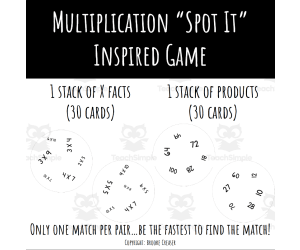
Multiplication "Spot It" Inspired Game
Math, Fact Families, Multiplication and Division, Division, Grade 3, 4, 5, 6, 7, 8, 9, 10, Activities, Games
A fun math twist on the popular game "Spot It"! Students will practice their multiplication facts with this fun game. A pile of "Factor" cards with a multiplication fact (example 4 x 7) and a pile of "Product" cards. Students flip one card over from each pile and earn a point by being the fastest to find the matching product with the multiplication equation. Only ONE match per set of cards! This is a great game for students to practice a variety of math multiplication facts in a fun and engaging way...they won't even know they are practicing their facts! This game can also increase the speed in which they solve their facts. Use as an early finisher activity, part of your daily lesson/ curriculum , or an indoor recess game. These also work great for students to use as flash cards, as they are exposed to many different facts and have to find the correct product. Print the set you would like (circle or square cards), cut and laminate for many, many rounds of play! Its a race to know your facts, and find them!
Author Brook Creaser
Tags Multiplication, Game, Spot It, Facts, Flash Cards, Spot It Math

Elements and Compounds - Smart Board Bingo - Middle School Science
Science, Chemistry, Grade 5, 6, 7, 8, 9, Activities, Games
Smart board bingo includes questions on atoms, molecules, elements, compounds, symbols, formulae and naming compounds. A numbered question is generated randomly and, if that number is on their bingo card, students write in the answer. So much fun students don’t realise they are learning! Smart board bingo includes questions on: atoms and molecules; elements and compounds; chemical symbols; formulae; naming compounds. What is Included Random question generator for smart board (interactive white board) – 54 questions 48 bingo cards Answers PowerPoint Answer sheet Suggested Lesson Plan Play bingo – students write the answers into the square on their bingo card which matches the question number in the smart board. Teacher uses answer sheet to check card of winners of lines and full house Pupils use answer PowerPoint to check their answers at end of game.
Author Elf off the Shelf Resources
Tags Science Bingo, Chemistry Bingo, Smart Board Bingo, Elements Digital Activity, Compounds Digital Activity, Element Bingo

Create A Candidate (Engaging Local Election Simulation)
Social Studies, History, History: USA, Government, Grade 7, 8, 9, 10, 11, 12, Activities, Games
Create A Candidate is an engaging civics simulation where students run for local office in the fictional town of Genericburg. Students review background information and statistics about issues facing the town. Then they create a candidate profile, choosing their background and political positions. Students decide what policies and changes their candidate will campaign on to address Genericburg's problems. They strategize how their candidate will appeal to voters and budget fundraising and spending. Create A Candidate builds critical thinking as students identify effective solutions for the town's issues. This activity covers key civics and government content in an interactive way. The resource includes a slideshow explaining the simulation, teacher's guide, and student workbook with print and digital versions. Create A Candidate transforms a civics lesson into an exciting political campaign where students roleplay candidates aiming to win an election and improve a community.
Author Ed Dynamic
Tags Civics, Government, Campaign, Election, Roleplay

5 Minute Game: The Rhyme Game
ELA, Grammar, Language Development, Vocabulary, Spelling, Preschool, Grade 1, 2, 3, 4, 5, 6, 7, Activities, Games
Here is a quick no-prep game for any elementary classroom: The Rhyme Game ! It helps teach vocabulary, syllables, rhyme, and prefixes. This product includes a one-page instruction sheet including the skills taught, different player configurations, rules, a sample round, and extension ideas. This game requires NO PREP and NO MATERIALS other than writing implements. I suggest whiteboards to save paper. Grades to Use With: This game can be used in any elementary classroom (grades K-8) or in a high school special education class. It is great for the following uses: · - Morning/home-room warm-up · - TOC back-up activity · - To fill the 5 minutes before lunch or the end of the day · - As a reward for small-group or one-to-one tutoring The Rhyme Game Rules: Start with a word that has many rhymes. (For example: tent, rant, king, see, you.) Do NOT choose duck for obvious reasons. Each student (or each team) has two minutes to make a list of as many rhyming words as they can. Points are counted based on syllables. The longer the word, the more points. After two minutes, tally the scores to find the winner. Sample Round: T: Think of as many words that rhyme with TENT as you can in two minutes. Team 1: bent (1), invent (2), went (1), content (2), meant (1) TOTAL: 7 Team 2: sent (1), bent (1), content (2), discontent (3), spent (1), unspent (2) TOTAL: 10 If you like this 5-minute game , check out the other ones in my store: Guess My Number Game Categories The 4-Letter Word Game I also have lots of intermediate math games too: Math Matching Games; 8 Sets of Math Fact Cards Perimeter of Complex Shapes: Math Strategy Game Credit Score Boardgame
Author Grace Under Pressure
Tags Rhyme, Syllables, Prefixes, Game, ELA, Quick Game, Fast Game, TOC, Tutoring, Phonics, Rhyme Games, Rhyme Out Game, Minute Rhyme, Rhyme Games For Kindergarten, Rhyme Game For Kindergarten, Ryme Game, Rhyme With Game

Online Lemonade Stand Project
Life Studies, Finance, Home Economics, Business, Math, Money, Grade 5, 6, 7, 8, 9, 10, 11, 12, Activities, Projects, Games
The Online Lemonade Stand Project Whether you're a public school teacher or a homeschooler, the Online Lemonade Stand Project is a resource that brings practical business principles into your classroom. Designed to simulate an engaging and realistic lemonade stand experience, this project provides an innovative educational approach for students from grade 5 up to grade 12. Nurturing Financial Literacy and Entrepreneurship The Online Lemonade Stand Project takes on the challenges of presenting financial literacy and economic insights to students in a way that is both age-appropriate and dynamic. At its core, it's about giving your pupils practical application of entrepreneurship knowledge within the confines of their learning environment; their very own virtual lemonade stand! An Interactive Experience In this interactive activity , students are tasked with managing every aspect of running a profitable lemonade stand online. From calculating production costs to creating effective pricing strategies, they will experience first-hand how supply and demand dynamics can impact business success. Data trackers: Included in the project materials are data trackers specifically designed for student use. Analyzing outcomes: These help learners analyze outcomes from different strategies. Making adjustments: Identifying areas for potential enhancement and making necessary adjustments as if they were running real-life businesses. Curriculum Alignment Aligned with life studies and math curricula including focus areas such as finance, home economics, business and money management; this learning project isn't just about teaching entrepreneurship concepts but also reinforcing math skills in real-world contexts. Greatest Benefit? The great thing about The Online Lemonade Stand Project? It's highly adaptable! Whether used during whole group lessons or small group activities - even as homework assignments - it accommodates diverse educational needs across multiple grade levels. Yet despite its versatility,the unifying goal remains consistent: To equip students with critical thinking skills essential in today's global economy whilst offering them unique opportunities to learn beyond textbooks through active exploration in digital spaces. If you're looking for versatile yet substantive teaching resources that bring education closer to life experiences – consider integrating The Online Lemonade Stand Project into your curriculum!
Author Mister G's Teacher Shop
Tags Interactive Activity, Financial Literacy, Entrepreneurship, Math Skills, Practical Application, Project Lemonade, Online Lemonade Stand, Lemonade Stand Online, Lemonade Stand Lesson Plans, Lemonade Stand Online Games

Ask, Share, Swap! An SEL get to know you game and icebreaker.
Special Resources, Social Emotional Learning (SEL), Grade 5, 6, 7, 8, Activities, Games
Overview Ask, Share, Swap! An SEL Get to Know You Game and Icebreaker is a resourceful tool conceived primarily for educators in public schools or homeschooling contexts dealing with students from grade 5 to grade 8. The product aims to enhance social-emotional learning (SEL) among students while also acting as a great icebreaker. About the Game In this game, each student receives one out of thirty cards that come with the product. These cards have unique questions that encourage conversation and understanding among the class members. The conversations sparked by these inquiries promote better communication skills vital for improved peer relationships. Versatile Utilization & Gameplay Rules The flexible design allows it to be used in different settings such as whole group activities within class sessions or smaller group exercises during breakout sessions. The set includes straightforward instructions making Ask, Share, Swap suitable even for first-time users. Social Emotional Learning Aspect This is tagged under special resources under Social Emotional Learning subcategory; its potential extends beyond just being an engaging activity but fosters positive emotional growth along multiple dimensions in kids entering adolescence. Ease of Accessibility The downloadable PDF file format ensures you can implement it right after purchase without any additional requirements. Engage your students today with Ask, Share Swap – fostering a healthy atmosphere while aiding individual progress!
Author Jennifer Moyer Taylor
Tags SEL, Icebreaker, Social-emotional Learning, Communication Skills, Bonding, Jamboard Icebreaker
Scratch: Pausing (Game Mechanics #5)
Science, Technology, Computer Science, Grade 3, 4, 5, 6, 7, 8, 9, 10, Games, Activities
This guide will show you how to implement a play and pause button in Scratch. This resource will take your students through setting up an example play & pause moving basketball. It teaches the students the step by step process and logic behind the blocks. This package is a great resource to have your students follow. These game mechanic guides are great to teach specific techniques and skills that can be used to create a game. They allow the students to expand their knowledge of Scratch. It is recommended that your students have an understanding of Scratch before using this resource.
Author Roombop
Tags Scratch Game, Scratch Game Programming, Scratch, Gaming

Chemical Reaction Bingo Vocabulary Game
Science, Chemistry, Grade 6, 7, 8, Activities, Games
Chemical Reaction Bingo is an engaging vocabulary review game for middle school science students learning about chemical reactions. This printable bingo game can be used to review key chemistry terms and definitions in a whole group setting. To play, students are given bingo cards with different chemical reaction vocabulary terms. The teacher then reads aloud definitions, and students find the matching term on their card and mark it. The first student to mark five vocabulary words in a row and shout "Bingo!" wins. This game allows students to review concepts like reactants, products, combustion, endothermic, and more in an interactive way. The bingo cards can be laminated and reused, making this a versatile resource for reviewing chemical reactions. This activity works well as a test prep game , end-of-unit review, or sub plan.
Author Maude in the Middle
Tags Chemical, Reactions, Science Bingo, Vocabulary, Whole Group, Chemical Reaction Games, Science Chemical Mixing Games
Atoms: Atomic Theory and Structure - Device-Based Scavenger Hunt Activity
Science, Chemistry, Grade 7, 8, 9, 10, 11, Activities, Games
Atoms: Atomic Theory and Structure - Device-Based Scavenger Hunt Activity. This activity is the coolest thing I've created and your kids are going to love it, mine do. Think of a scavenger hunt, then add devices (Smartphones, Chromebooks, Laptops, or Tablets), engaged students, and learning through assessment and you have this resource. ********************* Quick Disclaimer. In order to use this activity, your classroom must have at least 1 device per 3 students. Smartphones, Chromebooks, Laptops, and Tablets will all work perfectly. The Content Includes: • Atomic Theory --> Contributing scientists --> Historical theories • Atomic Structure --> Protons --> Neutrons --> Electrons --> Particle location and charge • Atoms visualization and application Here's how you implement them: • Print the QR codes and place them around the room • Place your students into groups • Let them loose! They move from Location to Location as they complete their tasks. Each Task is assigned by scanning the QR code and there are 5 Tasks per Scavenger Hunt Activity. • Have them submit their answers directly to your email via a form on my website. ********************************************************************** I've created a video that walks you through the entire activity. I did it using screen capture software on my phone so you can see exactly what your students will see. CLICK HERE to have a look . ********************************************************************** This activity: • Lets your students utilize their devices • Cuts down on wasted paper • Combines learning with assessment • Is a lot of fun • Comes in both Word and PDF formats Each Hunt is different and offers a unique way for your students to explore the topic. From Hunt-to-Hunt, possible tasks your students will face include: • Video analysis • Simulations • Fully automated and marked Quiz • Finish the story • Start the story • Calculations • News article • Opinion • Word scramble • Short answer • Web research Buyer Comment: "Really fun activity for high school being all students have a phone" --------------------------------------------------------------------------------------------- There are other Hunts as well and I'm continually adding more. Currently, the Hunts I have available include: Biology: • Cell Organelles • The Digestive System • The Circulatory System • Biochemistry - Macromolecules • Photosynthesis and Cellular Respiration • Mitosis and Cell Division • Cells and the Cell Theory – A Device-Based Scavenger Hunt Activity Ecology: • Energy Flow in Ecosystems • Invasive Species • Photosynthesis and Cellular Respiration • Cycling of Matter in Ecosystems • Ecosystems and Ecological Succession Space and Earth Science: • The Seasons • Our Solar System • The Moon • The International Space Station - Meeting Our Needs • Climate Change Electricity: • Static Electricity • Electricity Generation Chemistry: • Atoms: Atomic Theory and Structure • Physical and Chemical Changes • Elements and the Periodic Table • Chemical Reactions • Types of Chemical Reactions and Balancing • Acids, Bases and pH Physics: • Friction • Energy Transfer --------------------------------------------------------------------------------------------- Also, please visit my website Teach With Fergy for my thoughts on teaching, learning and everything in between.
Author Teach With Fergy
Tags Atomic Theory Assessment, Atoms Printable, Chemistry Scavenger Hunt, Digital Scavenger Hunt, Science Games, Atomic Theory Activity

White Light, Dispersion and Colour Filters Find the Pair Game for Middle School
Science, Physics, Grade 5, 6, 7, 8, 9, Activities, Games
White Light, Dispersion, and Colour Filters Find the Pair Game for Middle School An interactive learning solution designed for grade 5 to grade 9 students tasked with grasping light's physical properties under their Physics study sub-category. It makes teaching about White Light, Dispersion, and Colour Filters both enjoyable and memorable. The Gameplay The game involves teams of three to four students each engaging in a memory challenge based on the principles of white light, dispersion, and color filters. The objective is to lay out 42 question-and-answer cards face down in a square formation. Each player's turn involves flipping two cards with the hope they complete a correct question-and-answer pair. Game Mechanics If successful at matching a Q&A pair: Secure it. If not successful: Flip cards back over before the next student's turn. A level of challenge is introduced through reference books or teacher consultation using special answer sheets. Key Knowledge Requirements: An understanding of spectrum color order, A grasp of dispersion that transforms white light into seven spectrum colors, An idea about speed variation among different light colors as they pass through glass, An ability to identify primary (red/green/blue) & secondary (magenta/cyan/yellow) light colors, and understand how they interact; A comprehension on why objects reflect certain colours versus others absorbed; .li Instructors’ Preparation Guide: List bullets: Prepare by printing a double-sided set for each group – the sets can be laminated for extended reusability; Cut the printed pages into separate cards and it's ready to play! Note: This product can be used class-wide or assigned as homework. Share your feedback on this tool to help improve its capabilities and earn credit towards future purchases. This product is downloadable through Elf Off the Shelf Resources in Multiple File Types, though materials are not included in this package.
Author Elf off the Shelf Resources
Tags Light Properties, Color Dispersion, Color Filters, Interactive Learning, Middle School Science

Scratch: Projectiles & Health (Game Mechanics #4)
Science, Technology, Computer Science, Grade 3, 4, 5, 6, 7, 8, 9, 10, Games, Activities
Scratch: Projectiles & Health (Game Mechanics #4) This is a comprehensive teaching resource for educators to guide students on projectiles and health mechanisms manipulation within the Scratch programming platform. It offers a step-by-step approach, suitable for students from Grade 3 all the way up to Grade 10, focusing on creating projectiles in multiple contexts Throwing snowballs Shooting flowers form a tank The resource is not just about understanding game mechanics, it's an avenue to stimulate creativity and logical reasoning amongst learners. With time, student would grasp how both projectile usage and health statistics can interact in the development of engaging games . An Ideal Resource for Advanced Game Design Lessons A perfect tool for any computer science lesson geared towards game design basics; it's especially beneficial in lessons introducing complex gaming components such as: Graded Player Health Custom Projectile Interaction Versatile Classroom Use Educators can utilize this guide across different classroom structures. It proves effective as: a whole group instruction guide, a collaborative work tool, or an engaging homework assignment. A Refreshing Approach - Balancing Complexity and Simplicity Note that this resource recommends base knowledge of Scratch before usage. This prerequisite safeguards beginners from feeling overwhelmed while still making available advanced topics fit from junior high school through lower high school grades. Unleash your student technological interest today with "Scratch: Projectiles & Health (Game Mechanics #4)". This product comes as downloadable PDF format ensuring easy access!
Author Roombop
Tags Projectiles, Health Mechanics, Game Design, Scratch Programming, Interactive Games
Improper Fractions and Mixed Numbers Dice Game
Math, Fractions, Grade 3, 4, 5, 6, 7, Activities, Games
This is a fun and easy game to add to your fractions unit to help students practice working with mixed numbers and improper fractions. Students must demonstrate knowledge of what makes an improper fraction, how to convert an improper fraction into a mixed number, and how to order and compare mixed numbers. I suggest using 10-sided dice (if possible) for a wider variety of outcomes. I encourage my students to use mini-whiteboards for recording their work and doing their calculations. Student Instructions: 1) You and your partner each roll the die two times so you each have two numbers. 2) Use your two numbers to make an IMPROPER FRACTION (which one should be the numerator?). 3) Write down your improper fraction and convert it to a mixed number. 4) Compare with your partner’s mixed number. Which number is bigger? You might have to find a common denominator if the whole numbers are the same. 5) The person with the larger number gets a point. Play until one person has five points. Grades to Use With: This is a simple game that can be an addition to a lesson or fraction review in grades 3-7 when students are working with fractions that have a value greater than one. Standards: CCSS3NF.A.3 Compare fractions by creating equivalent fractions CCSS4NF.A.2 Compare fractions by creating equivalent fractions- finding common denominators CCSS4NF.B.4a Fractions greater than 1 and multiplying fractions What's Included: A simple 2 Page PDF. One instruction page for teachers and one half-page instruction sheet for students (cut one page in half and give to two groups). Check out other fun math games in my store: Lucky Leprechauns: St. Patrick's Day Math Game: Multiplication Whole Class Jackpot Game Decimal Place Value Game: Tenths to Millionths Perimeter of Complex Shapes: Math Strategy Game Grocery Game: Estimating, Adding and Multiplying Decimals
Author Grace Under Pressure
Tags Fractions, Improper Fractions, Mixed Numbers, Comparing Fractions, Dice Game, Math Game, Math, Coverting Fractions, Grade 4 Math, Fraction Dice Games

American Revolution Time-Line Game
Social Studies, History, History: USA, Grade 7, 8, 9, 10, Activities, Games
The American Revolution Time-Line Game is a 37-page download. This resource will provide you with explicit details for how to play the game, variations to playing the game, and the timeline cards that need to be printed for playing. The objective of this game is for a player to get 8 cards in chronological order in their personal timeline on the table in front of them.
Author Creative Learning Connection
Tags Timeline Game, History Timeline, History Game, American Revolution, Social Studies Activity