



2,784 products added recently
Page 1127 - Newest Teaching Resources

 Show filters
Fashion Design Challenge
, Not Grade Specific, Activities
Fashion Design Challenge: An Innovative Teaching Resource The Fashion Design Challenge offers an immersive, _hands-on_ approach to the dynamic world of fashion design. This educational resource challenges students to come up with trendy clothing patterns that reflect their unique styles and personalities. Curriculum Integration: Makerspace initiatives Genius Hour sessions STEM lessons Technology classes, and independent study time. The nature of this resource lends itself not only within the classroom but also during library times, after-school programs or camp activities too! Additional applications extend into STEAM classes as well as SEL times thereby fostering a holistic learning environment. "The blending of creativity and practical application makes every task challenging and meaningful." Fashion Design Challenge Packet Includes: Each challenge packet comes equipped with: -Context Setup: Provides a suitable backdrop for the activity -Design Challenge: A clear explanation of tasks for students -Necessary Specifications & Constraints: (outlining mandatory factors & natural boundaries) You get an idea about material checklists needed. Essential tools required are mentioned. Procedural instructions guiding through different stages are given. Hence, each brief is detailed enough to ensure smooth transition from understanding the context to going through final execution steps. The Fashion Design Challenge promotes intricacies related to designing for real-life scenarios apart from regular academics thus stimulating deeper thought processes promoting overall cognitive development alongside enhanced problem solving skills and creativity. You need no exclusive resources since all material can be printed easily due to its PDF format ensuring its easy distribution among students. So let's embrace the Fashion Design Challenge now, watch your students unveil their creativity while expanding their horizons.
Author WhyMaker
Tags Fashion Design, Creativity, Hands-on Learning, Practical Applications, Critical Thinking
How to Think of a Maker Ed or STEM Project
STEM, Not Grade Specific, Activities
How to Think of a Maker Ed or STEM Project: A Resource Overview How to Think of a Maker Ed or STEM Project is an outstanding teaching resource designed to ignite your creativity while developing innovative project concepts for students. These 11 guiding questions serve as invigorating tools, aiding you in conceiving impactful STEM or Maker projects. Suitable For All Grades and Subjects This practical resource suits instructors across all grade levels and subject areas. The compelling quality of STEM and Maker education lies in its capability to "blur the lines" between traditional subject boundaries, fostering interdisciplinary exploration and comprehensive learning experiences. Furthermore, these guiding questions are skillfully devised to spark creativity no matter the teaching topic. Ideal for Both Beginners & Experts If you're a seasoned STEM educator on a hunt for fresh ideas or just stepping foot onto the exhilarating landscape of Maker Ed teaching, this product comes highly recommended. Fits various settings: . Use it during brainstorm class sessions; within small group workshops that aim at project collaboration; or hand them out as homework assignments for student preparation before group discussions - endless possibilities! Versatile format: : This resource isn't restricted by format—it comes as an image (JPG), which is ideal for screen presentations online, but also works well when printed out physically. An Endless Spring Of Ideas - Anytime! 'How To Think Of A Maker Ed Or STEM Project' keeps your curriculum vibrant and dynamic whilst assuring educational fulfillment by strategizing meaningful projects year-round! Drive back into this rich tank of stimulating inquiries Frequently—the outcomes will differ according to your distinctive classroom context each term.
Author WhyMaker
Tags STEM Education, Maker Ed, Project-based Learning, Creativity, Interdisciplinary Learning
Robot Biomimicry Design Challenge
Science, Technology, Computer Science, Not Grade Specific, Activities
Robot Biomimicry Design Challenge The Robot Biomimicry Design Challenge is a unique educational tool designed to spark creativity, stimulate independent learning, and facilitate technology integration into the classroom. This resource with its emphasis on scientific concepts and computing abilities serves as an exclusive guide for educators across numerous disciplines. This challenge may be incorporated into multiple educational activities such as Makerspace events or Genius Hour sessions meant to encourage student innovation. It also provides captivating material for individual study periods or Choice Time, in which students are encouraged to pursue their personal interests. Other fitting applications include Technology Classes, library hours (melding tradition with technology), and afterschool programs or camps aiming to take learning beyond traditional classroom boundaries. Tailored For STEAM And Design Thinking Classes Specially crafted towards STEAM classes and Design Thinking courses, the Robot Biomimicry Design Challenge conforms well within academic curriculum stipulations. They're based on real-world situations thus making them exceptional tools for imparting practical Science lessons. Furthermore, they can be seamlessly integrated into SEL sessions in order to promote socio-emotional development while simultaneously enhancing scientific proficiency. Package Inclusions Context explanations: For easy comprehension of the challenge by students. Design challenges: Detailing specific tasks that need accomplishing. Certain specifications:Determining must-dos in each task. Limits on constraints:Elightening students about certain obstructions limiting project scope. List of needed materials:To clarify resources required for achieving specific tasks. Please note that these teaching aids are not restricted by grade boundaries thereby allowing learners from diverse age groups to benefit equally. These resources incorporate multiple file types thereby ensuring wide-ranging content mediums centered around inclusivity. Choose the Robot Biomimicry Design Challenge for fostering innovation, critical thinking, and instilling a strong sense of inquiry among your learners.
Author WhyMaker
Tags Robot Biomimicry, Design Challenge, STEAM Education, Creative Problem Solving, Technology Integration
Utensil Design Challenge
Science, Physics, Not Grade Specific, Activities
Utensil Design Challenge: A Practical Teaching Resource Utensil Design Challenge is an excellent resource for educators in the field of science, with a preference for those involved in teaching the Physical Science curriculum. This interactive activity pivots on robot biomimicry, encouraging students to design and build a robot inspired by nature or specific animals. It promotes creativity and critical thinking without significant teacher intervention. Packets Sections: Context- Provides background information to understand the challenge's significance. Design challenge- Detailed explanation of what students are required to do. Coscifications-Absolute requirements that should be met in their project. …and more This hands-on activity can be directly used as independent assignments or group activities like Makerspace projects or Genius Hour activities. Fostering Interactive Learning: The real-life situation models aligned with standard curriculum content helps engage students while providing them with an immersive practical understanding of physical sciences through robotics and biomimicry-centered tasks—all this while promoting innovation and problem-solving skills development. Versatile Application: Suitable not just for regular classroom sessions, but easily integrated into after-school programs, camp activities, STEAM sessions, Design Thinking classes or Special Education slots—thus addressing diverse educational environments promoting science exploration through hands-on involvement. In conclusion,, Utensil Design Challenge proves to be a versatile teaching tool supporting interactive learning techniques across various grade levels - remaining flexible enough not requiring any specific grade level requisites; thus making it universally adoptable across diverse class grades. Its unconventional application transcends classroom boundaries extending flexibility beyond traditional teaching methods while ensuring engaging and effective lessons.
Author WhyMaker
Tags Utensil Design, Biomimicry, Robot Challenge, Science Education, Creativity
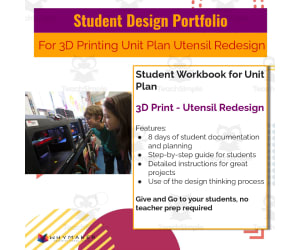
Student Design Portfolio for 3D Printing - Utensil Redesign
, Grade 2, 3, 4, 5, 6, 7, 8, 9, 10, 11, 12, Activities
Title: Student Design Portfolio for 3D Printing - Utensil Redesign The Student Design Portfolio for 3D Printing - Utensil Redesign provides direction to students as young as eight in a hands-on challenge. This resource imparts core concepts of design thinking strategically applied from ideation to testing. Learning Methodology Experiential learning focused on problem-solving revolving around a utensil's design. An exciting opportunity for students to engage in empathy and discovery research, brainstorming sessions, solution planning and prototyping phases before finalizing their proof-of-concept. Skill Development This portfolio nurtures not just 3D printing skills but also emphasizes the development of critical thinking abilities related to problem-solving and creative thought-processes set at their pace. They experience the entire journey of project development within this comprehensive 8-day curriculum which strikes a perfect balance between individual accountability and team collaboration. Resource Utilization This portfolio can seamlessly be used by educators in various scenarios like whole-group lessons, small group instruction or even remote teaching situations because of its flexible format combined with cost-effective techniques suitable for conventional classroom structures or homeschool curriculums. Audience Compatibility Note: Made specifically keeping students from Grade level two up until Grade twelve into consideration across varying subjects. About: Format Information The resource is available as an easily presentable PDF activity file providing unlimited usage opportunities over time—a worthwhile long-term investment that stimulates learners’ intellectual curiosity beyond traditional classroom frontiers. Every day's instructions are detailed meticulously promoting consistent engagement while embedded assessment propositions ensure continuous progress monitoring—all leading up to a tangible display of hard work through uniquely redesigned utensils!
Author WhyMaker
Tags Design Thinking, 3D Printing, Hands-on Challenge, Problem-solving, Project-based Learning
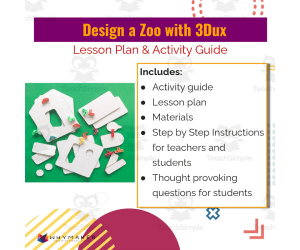
Design a Zoo Lesson Plan + Activity Guide
Science, Technology, Computer Science, Grade 1, 2, 3, 4, 5, 6, 7, 8, Lesson Plans, Teacher Tools
Everything you need to run a successful and fun lesson! Students will redesign an animal enclosure that provides the animal with all it’s needs being met. This fun and engaging activity comes a materials list and coupon code for the WhyMaker Store. However this can be done with cardboard, scissors and tape.
Author WhyMaker
Tags Computer Science - Technology, Instructional Technology, Engineering, Design A Zoo, Zoo Lesson Plans, Design A Zoo Project

3D Printing Glossary
Science, Technology, Computer Science, Not Grade Specific, Teacher Tools, Lesson Plans
All the terms and jargon you need for your 3D printing journey!
Author WhyMaker
Tags Computer Science - Technology, For All Subject Areas, 3D Printing Glossary
Community Accessibility Design Challenge
, Not Grade Specific, Activities
Community Accessibility Design Challenge The Community Accessibility Design Challenge is a teaching resource designed to engage students from various grade levels in interactive and thoughtful problem-solving activities. This resource is a versatile teaching tool that comes highly recommended for educators seeking to diversify their lesson plans . Specifically designed for public school teachers and homeschoolers, the Community Accessibility Design Challenge inspires students to think critically and creatively while working towards practical solutions. It offers an exciting blend of elements from diverse subjects like STEM, technology, design thinking classes, social-emotional learning time, library time, and more. Educator Advantages The kit takes off the pressure from educators by delivering ready-to-use design challenges. With clear instructions and specified materials provided within each challenge brief, students can quickly begin working independently on them with little intervention from the educator. This product not only encourages independent learning but also saves valuable preparation time for educators. About Each Challenge Each challenge brief includes contexts to ensure scenarios make sense to students across different age groups. It outlines specifications or must-do tasks for each task along with constraints or limitations they need to be aware of. A list of materials required alongside steps of completion also accompanies each challenge in an easy-to-follow format making it less challenging for educators setting up these tasks. Innovative Learning Outcomes "Design challenges can help stimulate innovative thinking among young learners", as they work on real-life scenarios that you can connect back to content standards taught in classroom curricula or at home program instruction plans—making learning more relevant. They are paramount tools during times like Makerspace sessions, Genius Hour, Independent Time, Choice Time as well as STEAM classes that require some innovation. Teachers find this product efficient during afterschool programs or camps whereby reaching educational objectives becomes fun-filled thus keeping your kids entirely absorbed into constructive activities that motivate deep-thinking autonomy over the course topics being taught— all while challenging them enough mentally not disrupt the fun aspect involved too! A Creative Blend of Art and Science Overall it’s a surprisingly simple solution yet intricate approach towards creating opportunities where artistry meets science and learning becomes an adventurous undertaking!
Author WhyMaker
Tags Design Challenge, Problem-solving, STEM, Innovation, Autonomous Learning

Scratch Storyboard Planning Sheet
Science, Technology, Computer Science, Grade 1, 2, 3, 4, 5, 6, 7, 8, 9, Activities
Scratch Storyboard Planning Sheet: An Overview Scratch Storyboard Planning Sheet is a well-rounded educational tool, primarily shaped for educators. With its conception revolving around nurturing creativity and computational thinking, it acts as an effective guide for structuring Scratch projects. It offers versatile use across different grade levels, ranging from Grade 1 to Grade 9. In-depth Exploration of the Tool This instructional document navigates students through their creative process by requiring them to: draw a picture, select characters and scenery, outline expected events and character interactions. The tool's primary goal is to allow students to visualize each scene on paper before turning it into a digital form. This intentional deceleration resonates with boosting foresight and strong planning skills – vital in the realm of computer science. Versatility & Flexibility The Scratch Storyboard Planning Sheet facilitates learners' control over every stage of storyboard development. Whether incorporated into large class sessions, small group work or handed over as homework assignments - this product morphs effortlessly into various learning blueprints. Catering Artistic Minds An icing on the cake is that this resource bridges between artistic skills and coding – making it an absolute hit among young artists who can insightsfully transform their hand-drawn designs into tangible storyboard plans further coded onto digital platforms! Versatility Across Coding Platforms A point worth standing out here is that despite being created majorly for Scratch programming languages like Scratch Jr., this tool equally flourishes with other block-based coding platforms - marking its significant adaptability. Eco-efficiency The product's design ingeniously fits two scenes per sheet! This outlines the thoughtful construction around efficient paper use, also giving ample room necessary for detailed project planning. Therefore, educators can disperse as many sheets required based on individual project needs - without fretting over needless material usage. Value Addition - Pseudocoding Practice In a nutshell, Scratch Storyboard Planning Sheet is invaluable in promoting pseudocoding practice – a pivotal stepping stone before heading onto advanced high-level languages. It indeed sows the seeds of budding interest among young learners at different knowledge thresholds in the fascinating world of computer science!
Author WhyMaker
Tags Creativity, Computational Thinking, Planning Skills, Storytelling, Scratch Programming
Project Lesson Plans for 3D Printing - Utensil Redesign
Science, Technology, Computer Science, Grade 2, 3, 4, 5, 6, 7, 8, 9, 10, 11, 12, Lesson Plans, Teacher Tools
Project Lesson Plans for 3D Printing - Utensil Redesign The Project Lesson Plans for 3D Printing - Utensil Redesign, is a comprehensive resource that equips educators to introduce their pupils aged 8 and up to the engaging world of 3D printing. This package provides students across grades 2-12 with an exciting opportunity to design and create a utensil customised specifically for eating certain food better. Features An all-inclusive teaching resource presented in clear step-by-step details over eight lesson days. A detailed analysis of prior knowledge requirements, learning objectives and standards. Stipulated assessments designed to track the progress of learners throughout this innovative project. All necessary materials along with instructions on how technology should be integrated every step of the way are provided. Inclusion strategies have been included which ensure that no students are left behind due to differences in learning needs or capabilities. The package also includes external web links directing educators further towards more related study topics. Concluding from Day Eight onwards are helpful closure strategies coupled alongside extension activities which enhance retention while generating interest around future projects. An easily adaptable format: The product is offered in PDF segments catering flexibly with various teaching situations such as whole group instructions or smaller screen-sharing groups ensuring adaptability into individual environments including home-study settings if necessary. Ideal For: Every science existent educator especially those specialising in computer science across Grades 2-12 looking forward bringing practicality into theory by jumping aboard real-world applications using tomorrow’s groundbreaking tech.
Author WhyMaker
Tags 3D Printing, Utensil Redesign, Lesson Plans, Technology Integration, Inclusion Strategies
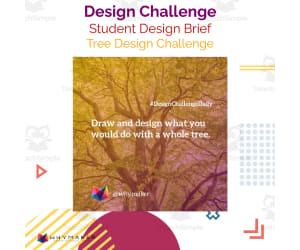
Tree Design Challenge
Science, Physics, Not Grade Specific, Activities
Sure! Here is the formatted text: ` The Tree Design Challenge: Robot Biomimicry An innovative teaching tool designed to refine critical thinking skills in students. This resource enables students to design and build their own robots that mimic animals or phenomena found in nature. Interdisciplinary Approach Suitable for All Grade Levels The Robot Biomimicry Design Challenge bridges subjects like science, technology, engineering, arts (STEAM), design thinking classes etc. allowing for its application in Makerspaces, Afterschool programs or Technology Classes. Ready-made Challenges Suitable for Individual & Group Sessions It provides an assembly of context provision with set tasks (Design Challenges). Specifies materials needed & steps on how to navigate through the challenge. Fits seamlessly into whole-group instruction scenarios but also supports small group activities or individual assignments. Tips are included for a seamless learning experience fostering ingenuity-rich learning across camps or independent sessions enhancing creative connection between curriculum standards & real-life situations. `
Author WhyMaker
Tags Robot Biomimicry, Critical Thinking, STEAM Education, Design Challenge, Hands-on Learning

Algorithms (Unplugged Coding #1)
Science, Technology, Computer Science, Grade 1, 2, 3, 4, 5, 6, 7, 8, Activities
You want to introduce or teach your students about programming / coding however you don’t have access to computers? No problem. This “Unplugged Coding” resource works without computers. After completing these printable activities, your students can apply similar logic and strategies to coding websites and apps. This is a great alternative or additional resources before using code.org or Scratch. This resource is apart of an unplugged coding series. In each, a different main concept is focused on. To use this resource, just print the PDF and have your students coding, unplugged today. The main focus of this resource is Algorithms. The purpose is to demonstrate that computer code follows a set of rules. This resource includes the following type of activities and worksheets: Algorithms info page. Explains what an Algorithm is and why it is useful to computers. This handout also has real life examples. It is a great starting point. Brushing Your Teeth Algorithm Activity Making a Sandwich Algorithm Activity Watching TV Algorithm Activity Making a Pizza Algorithm Activity Planting a Seed Algorithm Activity Decorating a Christmas Tree Algorithm Activity Curving a Pumpkin Algorithm Activity
Author Roombop
Tags Coding, Unplugged Coding, Programming, Printables

3D Printing Unit Plan
Science, Technology, Computer Science, Not Grade Specific, Teacher Tools, Lesson Plans
3D Printing Unit Plan A comprehensive and beneficial educational resource carefully designed to immerse students into the world of 3D printing technology. This unit plan is tailored towards providing students aged 8 and above with an engaging hands-on learning experience, focusing on challenging their creativity in designing and 3D printing an eating utensil specifically suited for consuming a chosen food type better. Lesson Structure The unique elaborative undertaking comprises more than eight lessons, each meticulously crafted with clear instructions for both educators and learners. It maps out what every lesson entails, thereby ensuring a smooth flowing teaching process that strategically engages students at every stage of their learning journey. Lesson Objectives & Assessments: All lessons come packed with defined objectives to guide teachers through predetermined educational milestones efficiently. These targets are complemented by insightful assessments evaluating student's grasp of the subject matter introduced in each lesson. center ">Global Standards Alignment In addition, the 3D Printing Unit Plan makes substantial connections to ISTE (International Society for Technology in Education) and ITEEA (International Technology Education Association) standards which are recognized worldwide as benchmarks for tech education best practices. Versatile application across various educational settings - perfect for both public school teachers and homeschoolers alike. center ">Materialistic & Resource Optimization This unit plan provides lists of essential materials required per lesson basis along with valuable resources necessary to enhance understanding. Inclusive education techniques aimed at maximizing teaching effectiveness regardless of individual student's strength or weakness level within targeted age range. Delivery Format: The entire package is delivered as a downloadable PDF file type, making it easily accessible & convenient for scanning through content either on digital devices or traditional paper format after printing retain copies if desired. center ">Boost your Science lessons with this strategic resource and turn them into captivating classroom experiences!
Author WhyMaker
Tags 3D Printing, Educational Resource, Hands-on Learning, Design, Technology Education
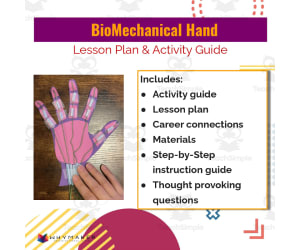
BioMechanical Hand Lesson Plan & Activity Guide
Science, Technology, Computer Science, Grade 1, 2, 3, 4, 5, 6, 7, Lesson Plans, Teacher Tools
Everything you need to run a successful and fun lesson! Students will design a robotic hand that is similar to a human hand.
Author WhyMaker
Tags Computer Science - Technology, Instructional Technology, Engineering, Biomechanical Hand

Electric Greeting Card Lesson Plan + Activity Guide
Science, Technology, Computer Science, Grade 1, 2, 3, 4, 5, 6, 7, 8, Lesson Plans, Teacher Tools
Product: Electric Greeting Card Lesson Plan + Activity Guide Nestled in the realm of Science and Computer Science, the Electric Greeting Card Lesson Plan and Activity Guide has been meticulously designed to cater to students from grades 1 through 8. It serves as an educational resource par excellence, providing educators with a unique and effective tool for teaching their pupils about electricity in a hands-on way that complements traditional classroom instruction. An Educator's Companion: An activity guide is included that enables educators to efficiently plan and execute this project, making it ideal for usage in both whole group instruction or small group activities. The easy-to-understand step-by-step instructional manual simplifies the process even for teachers who may be navigating the nuances of science education. Creativity Meets Education: This set doesn't limit itself to just instructions; it further provides engaging questions aimed at encouraging students towards brainstorming designs. Imagine your class where every young mind wracks its gray cells devising innovative electric greeting card designs! Merges computer science into its core offering. Detailed materials list also accompanies the guide together with procurement details. The activity 's PDF format means you can assign it easily as homework, allowing students ample time at home to bring their electric card ideas alive! Last but not least, while crafted meticulously for teachers conducting formal classes in public schools or homeschools, there's nothing stopping any educator from using them in informal settings like clubs or communities owing to its versatility. In conclusion, Let electricity light up not just your students' greeting cards but also their faces as they immerse themselves in fun learning using the Electric Greeting Card Lesson Plan and Activity Guide.
Author WhyMaker
Tags Electricity, Hands-on Learning, Lesson Plan, Activity Guide, Coding

Team Sport Game
P.E. & Health, Physical Education, Not Grade Specific, Games, Activities
Team Sport Game: An Innovative Educator Resource The Team Sport Game is a substantial resource produced for teachers and homeschoolers alike. Designed particularly for physical education and health topics, this learning aid introduces an appealing blend of design challenges crafted to kindle student creativity while augmenting their comprehension. All components of this learning resource are prearranged so that introduction necessitates minimal preparation from teachers. Merely hand out the challenge briefs to students, guiding them towards independently exploring these considerate tasks. Versatility in Learning Contexts This module's splendid adaptability makes it fit into varied spaces within your curriculum or teaching context. Space-appropriate applications include Makerspace activities, Genius Hour, independent study periods, STEM classes or even after-school programs and camps - the Team Sport Game champions versatility. Educational Design Challenges Briefs Every design challenge brief showcases meaningful relations between real-world scenarios and assigned tasks through upfront contextual information woven into each task. A comprehensive description of specifications ensures transparent expectations for each assignment while constraints emulate realistic restrictions found in everyday life circumstances. List of Requirements: Materials required Necessary tools The instructions provide solid guidance about what students will need before undertaking any given task. Delineated steps: The learners are guided through each challenge by well-outlined steps complimented with helpful tips throughout the journey. The material is provided as a PDF file format , simplifying distribution across multiple digital platforms making prep time quicker for teachers - more time fostering student engagement rather than managing paperwork. Nurturing Deep Thinking Abilities & Enhancing Curriculum Content Knowledge The notable characteristic of this resource isn't just curriculum content delivery. It's created to cultivate deep thinking abilities critical for problem-solving in today’s dynamic world. Promoting innovation allows children to create unique solutions thus demonstrating a practical grasp on the subject matter moving beyond mere theoretical knowledge acquisition – truly a beneficial addition to any learning situation.
Author WhyMaker
Tags Team Sports, Physical Education, Health, Creativity, Problem-solving

Model Tiny Homes Design Challenge
, Not Grade Specific, Activities
Model Tiny Homes Design Challenge: An Innovative Teaching Resource This comprehensive teaching resource engages students in a real-life situation, requiring them to think critically and innovate. All it requires from the educator is distribution — kickstarting the journey of individual exploration. Depending on your educational scenario, these versatile challenges may be used in Makerspaces, Genius Hour sessions, STEM-related classes, Technology Classes or even specialized environments like Afterschool programs or Camps. They can also supplement STEAM classes or Design Thinking Classes during SEL time. What Does Each Brief Contain? Context: Immerses learners into real-life scenarios. Design Challenge: Outlines the task at hand for students. Specifications: Provides obligatory features of this unique exercise. Constraints: Defines limitations of the problem prompting creative problem-solving techniques. Listings for materials and tools along with sequential steps are provided separately. A list of insightful tips is included as well to guide students through their process. The design challenges cater predominantly towards science subjects but are flexible enough to adapt across other subjects promoting cross-curricular understanding. Not bound by grade level, these exercises encourage innovative thought processes using readily available materials within their environment promoting practical learning irrespective of group size whether in classrooms or at home. In Conclusion... The Model Tiny Homes Design Challenge bundle serves as a comprehensive do-it-yourself STEM module fostering autonomous learning while nurturing invaluable 21st-century skills. For proactive educators aiming towards an all-rounded education for their young learners - this teaching resource is an asset you cannot overlook!
Author WhyMaker
Tags STEM Education, Design Thinking, Critical Thinking, Problem-solving, Autonomous Learning
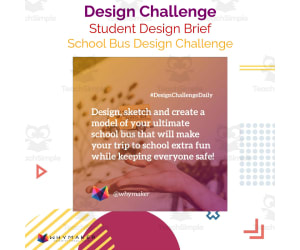
School Bus Design Challenge
, Not Grade Specific, Activities
School Bus Design Challenge Engage your students in an innovative learning experience with the School Bus Design Challenge. Ready to use upon delivery, these design challenges require no prep work from educators - making classroom setup a breeze. Simply distribute them amongst your students and watch as they tackle these tasks independently. Versatility and Adaptability Suitable for a wide range of learning situations, these challenges can serve multiple purposes in your curriculum . The activities can be: Incorporated into Makerspace or Genius Hour activities Used during independent study time or choice time sessions Implemented in technology or STEAM classes Provided for library-time projects Included in after-school programs and camps. Catering to non-core subject areas such as design thinking classes makes this resource remarkably versatile. Furthermore, this material provides perfect content for SEL (Social Emotional Learning) session materials. The Bundle Features The School Bus Design Challenge bundle offers ready-to-go briefs complete with context scans so that the task scope makes sense to the learners. Alongside are clearly described specifications and constraints adding necessary challenge elements. The package includes: A material listing required for the task . Tool suggestions suitable for each challenge that ensure seamless execution of tasks. . A Step-by-Step Guidance Section Ensures Clarity on Task Completion Approach This also offers ‘Tips’ providing additional information enabling whole group and small group implementations based on comfort levels providing differentiated instruction options. This enhances learner retention while being authentically-linked with real-life scenarios, making it easy to implement even for homeschoolers who follow public school standards. Generate A Taste for Potential STEM Careers This unique learning tool encourages deep reasoning about given concepts fostering creativity, crafting innovative solutions, leading towards potential STEM career interest development opportunities. Inclusive Learning The teaching resource is ungraded allowing educators freedom & flexibility in customizing per the individual learners’ capabilities. Delve into the world of practical, real-world learning scenarios and encourage students to think, innovate and create. The journey from a novice thinker to an innovative solution craftsman begins here!
Author WhyMaker
Tags School Bus, Design Challenge, STEM, Innovation, Problem-solving
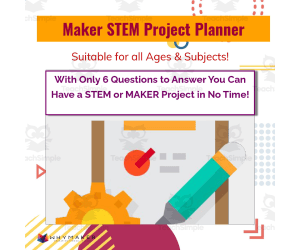
Maker STEM Project Planner
STEM, Not Grade Specific, Activities
Maker STEM Project Planner: An Educational Machinery Maker STEM Project Planner is an indispensable resource, specially crafted for educators with a desire to construct fresh and captivating Maker or STEM projects. It offers maximum efficiency with minimum hassle by guiding you through the process systematically. Focused Towards Curriculum Integration Say goodbye to standalone project assignments! This planner initiates the process by focusing on how current curriculum units can naturally include Maker or STEM projects. It suggests potential challenges within these units, thereby fostering critical thinking and problem-solving skills in students. New Teacher Friendly The intuitive interface guides you on additional resources needed. Provides tool integration advice ensuring seamless implementation during teaching sessions. No more fumbling with stubborn equipment or complicated software! Innovation in Education Simplified! This planner manages to take one of the most overwhelming aspects of modern education - creating innovative lessons involving Science, Technology, Engineering, and Math (STEM) – and making it an easy-to-manage part of educational planning. Taking Beyond Routine Teaching Methods... The Maker STEM Project Planner isn’t just a step-by-step guide; it’s a tool that empowers teachers by integrating design thinking principles into each section. The result? Creativity thrives amongst students who work on assignments tailored specifically according to their class profiles. #Applicability Across Various Teaching Contexts * Whole group instructions during regular classroom hours * Smaller cluster-based activities during study sessions * As a homework assignment chart director It works flawlessly across all teaching contexts! This PDF formatted resource spells compatibility across devices – download once and use throughout your professional tenure. No doubts about it; this Maker STEM Project Planner is more than an instructional tool. It's your chance to introduce engaging lessons that push boundaries and incite curiosity in their classrooms. Make every day of teaching a powerhouse learning experience for your students!
Author WhyMaker
Tags STEM Education, Maker Projects, Project Planning, Design Thinking, Resource
What is Electricity? Guided Notes
Science, Technology, Computer Science, Grade 3, 4, 5, 6, 7, 8, 9, 10, 11, Activities
What is Electricity? Guided Notes What is Electricity? Guided Notes is a digitally accessible PDF file that serves as an educational tool for advancing students' understanding of electricity. It comprises three pages of detailed and engaging guided notes. Suitable for Different Grades and Teaching Methods This learning resource can be used by learners from Grade 3 to Grade 11. Given its versatility, it can accommodate various teaching methods, including traditional in-class teaching or homeschooling. Thus, it serves as a perfect choice for public school teachers and homeschoolers. Aiding Diverse Learners in Understanding Complex Concepts Catering to students with diverse learning abilities, this product uses straightforward language and explanations that make it particularly beneficial for students with ADHD or learning disabilities. Different Ways of Utilizing the Guided Notes In a physical classroom setting, the whole class can study these notes together during a presentation on electricity. This encourages collaborative discussions among peers about the scientific concepts covered. If small group study or individual use best suits the classroom dynamic, educators may choose to adopt these guided notes according to their needs. The material could also be given out as homework to consolidate what was taught during classroom instruction. A Versatile Learning Resource in Various Academic Settings " What Is Electricity? Guided Notes " proves highly effective across broad science curriculum areas- from Computer Science lessons to general Science topics. It is substantive enough to work independently but also complement broader academic instruction skillfully. Whether you wish to support subjects already discussed in class or gradually introduce new material through note-taking exercises - these guided notes offer a practical means of achieving these learning goals. Educators can effectively disseminate knowledge and improve students' understanding of key concepts in electricity by using such resources.
Author WhyMaker
Tags Electricity, Guided Notes, Learning Disabilities, Science Education, Virtual Homeschooling

Food Machine Design Challenge
Science, Inventors, Not Grade Specific, Activities
Food Machine Design Challenge: An Effortless Teaching Resource Food Machine Design Challenge is a teaching resource designed for seamless integration into any curriculum . It isn't grade-specific, allowing adaptability and versatility across various grades and learner capacities. This resource primarily focuses on Science, emphasizing the inventive dimension of learning. Versatile and Independent Learning The module includes ready-to-use design challenges that promote independent learning among students. Its chief advantage lies in adaptability – it can be incorporated into Makerspace sessions, Genius Hour, Independent Time or STEM classes with ease. Real-life Scenarios to Promote Understandings This tool corresponds to real-life scenarios while keeping with content standards to deepen student understanding. It stimulates critical thinking and fuels innovation as students actively engage in problem-solving. Detailed Design Challenges Context- Provides the rationale behind each challenge. Design Challenge- Outlines tasks for completion. Specifications- Sketches out needed conditions per challenge. >Constraints- Marks limitations within each challenge.' ' Note:All materials and tools needed are also detailed. Additonal Support through Organized Steps Detailed steps guide learners on systematically approaching tasks from beginning to end. Tips are provided throughout exercises increasing chances of success. The product comes in multiple file types offering cross-device accessibility; thus making it useful for educators developing lesson plans at their own pace or revising them quickly if necessary. The hands-on activities further enrich student experiences by promoting practical learning which leads to enhanced comprehension. In conclusion,The Food Machine Design Challenge presents as an accessible, comprehensive educational tool promoting critical thinking while maintaining high interactivity.
Author WhyMaker
Tags Science, Design Challenge, Independent Learning, Problem-solving, Innovative Thinking

Animal Discover Design Challenge
Science, Physics, Not Grade Specific, Activities
Amusement Park Ride Design Challenge Brainstorm and design a brand new amusement park ride. WhyMakers Design Challenges come READY to use. All you have to do is hand them out to students and they can begin to work independently on them! These design challenges can be used in so many different ways. You can use these for your Makerspace, Genius Hour, Independent Time, STEM, Choice Time, Technology Class, Library Time, Afterschool programs, Camps, STEAM classes, Design Thinking Classes, SEL time and more! These design challenges focus on real life scenarios that you can connect to content standards. These are sure to keep your students engaged and will encourage them to think deeply about the content being taught while being innovative and crafting their solutions.
Author WhyMaker
Tags Physical Science, Animal Discover Design Challenge, Design Challenge, Student Design Brief, STEM

Tips and Tricks for 3D printing with your Class
Science, Technology, Computer Science, Not Grade Specific, Activities
Tips and Tricks for 3D Printing with Your Class Breaking down the barriers of traditional learning, this useful guide is aimed at integrating 3D printing technology into your science and computer science curriculum . Serving as an informative teaching resource, it caters to learners across all grade levels, providing an innovative approach to immersive hands-on education. Techical Tips on Operating 3D Printers: This guide supplies crucial guidance on operating classroom 3D printers effectively. It aids educators by providing educational tools and knowledge for facilitating complex lessons effortlessly. Handy troubleshooting guides designed to assist in resolving tech-related hurdles are also included. Pedagogical Tips: Beyond operational insights, this handbook presents essential pedagogical tips imperative in creating a robust learning atmosphere anchored in creative exploration. Each advice is strategically curated by experienced educators focusing on the transformative power of experiential learning. A collection of resources- Help teachers devise thoughtful lesson plans around advanced fabrication technology. Potential applications- Ranging from whole-class activities promoting collaborative problem-solving to small breakout group activities fostering project-based explorations and individual creativity enhancement. Homing assignments- Catalyse independent exploration under active virtual guidance from home environments invoking ed-tech adaptations mirroring real-world digitalisation progressions. All the information is easily accessible through a single PDF file download that allows teachers stimulate comprehensive understanding more visually—moulding scientific concepts from 'vision-to-touch', innovatively delivering curricular aims while preparing students simultaneously for Industry4.0 evolution within accessible classroom settings.
Author WhyMaker
Tags 3D Printing, Education Technology, Hands-on Learning, Pedagogy, Troubleshooting
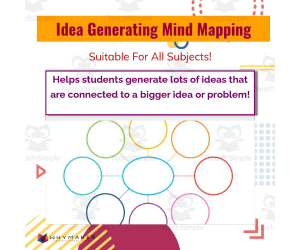
Idea Generating Mind Mapping
, Not Grade Specific, Activities
Idea Generating Mind Mapping - The Ultimate Resource This: Can be comically known as the Idea Generating Mind Mapping, an effective and efficient teaching aid designed to help students visually organize thoughts or explore new concepts. Serves a larger purpose than being just a simple mind map, as it can be used in a myriad of ways such as encouraging insightful brainstorming exercises, planning essays, and generating story ideas. Detailed Structure & Design: Crafted with eye-catching colors and clear partitions, this innovative graphic organizer allows students to branch out numerous sub-ideas from one significant concept or problem. The visual nature of the mind map helps students evaluate connections between thoughts intuitively while stimulating creativity, thus strengthening their understanding of any topic at hand. Versatility across Subject Areas: Perfect for group discussions or breaking complex topics down to easier digestible chunks for individual learners. Ideal for project work planning sessions by presenting interconnected information in an easy-to-understand format. Assign this resource as a creative homework assignment! Learner's Compatibility: This tool is wonderfully adaptable for grades 3 through 8th grade learners catering well across different learning styles - Visual learners get particular benefit from clearly seeing connections between ideas drawn out in front of them; linguistic learners would find sorting keywords into structured blocks helpful; even kinesthetic learners can participate by physically drawing on the organizer! Ease-of-Access format: An easy-to-access PDF file ensures seamless integration into your current curriculum without the need for extra applications or websites. This means you spend less time setting up technology and more time engaging with your class! In summary: Idea Generating Mind Mapping boasts potential beyond merely facilitating cognitive connections but habituates pupils into naturally weaving complex interconnections among different ideas when exploring new knowledge territories – reflecting quintessentially effective learning techniques. Embrace more possibilities today with Idea Generating Mind Mapping!
Author WhyMaker
Tags Mind Mapping, Graphic Organizer, Brainstorming, Teaching Aid, Creative Thinking