



3,969 products added recently
Page 9 - Popular Graphic Organizers
Discover a selection of popular graphic organizers suitable for a variety of subjects and grade levels. These versatile tools assist students in structuring information, planning essays, and summarizing content. Utilize these organizers to support critical thinking and improve educational outcomes in your classroom.

 Show filters


Quatrain Poetry – Posters + Graphic Organizers
ELA, Literature, Poetry, Grade 1, 2, 3, Graphic Organizers, Teacher Tools
This resource is a set of learning posters and graphic organizers for quatrain poetry writing. There are a variety of posters that teach about quatrain poetry. Students will explore features, how to write a quatrain poem and so much more. They will use the graphic organizers to brainstorm ideas and then write a quatrain poem. This pairs well with your poetry unit in English class. You may also love to print these off and use in a center activity. This resource can be accessed through: PowerPoint Google slides PDF
Author Good Human Project
Rating
Tags Quatrain Poetry, Poetry Writing, Language Arts, Posters, Graphic Organizers, How To Write A Quatrain, Quatrain In Poetry, What Is Quatrain In Poetry, What Is A Quatrain In Poetry, How To Write A Quatrain Poem

Year of Graphic Organizers
ELA, Writing, Grade 5, 6, 7, 8, 9, 10, Teacher Tools, Graphic Organizers
Year of Graphic Organizers: Your Ultimate Language Arts Assistant Year of Graphic Organizers is an all-inclusive teaching resource tailored for educators in order to streamline the learning process. This diverse collection is highly beneficial in public school contexts as well as homeschooling setups and can be easily integrated into different group settings whether it's a whole class, small clusters or individual homework assignments. With this collective treasure of graphic organizers, the missing piece from a comprehensive Language Arts curriculum puzzle will finally fit. The beauty of these collaborative tools lies within their ability to kindle engagement, and stir imagination while fulfilling the enjoyment aspect that makes learning more effective for students. Sharp learners or ones still finding their groove will equally benefit due to its rich array catering to various comprehension levels. The Importance and Utility of Graphic Organizers Graphic organizers are pivotal- they are visual facilitators simplifying knowledge intake and retention for children enabling them faster understanding of facts and concepts. Moreover, they accelerate practical knowledge application by allowing learners to visualize connections between facts which ultimately helps in meaningful knowledge absorption. Included Resources: Persuasive Writing Organizers, Expository Writing Organizers, Vocabulary Organizers, Book Report Forms, Etc... Futher resources range from Rough Draft Forms catalyzing ideation process followed by nurturing structure via Final Draft Activities leading up till Timelines that teach charting capabilities effectively! Outlining becomes less daunting with ready-made forms accompanied by grading rubrics ensuring fair appraisal representation. New Additions? Always Complementary! The Year of Graphic Organizers doesn’t end here! It’s an ever-growing resource so any new additions are complementary benefits already included within your purchase making it optimal cost-effective educational assistance material. Targeted at Grade 5 through Grade 10 learners specializing in Language Arts; applicable contextually not only within Middle School or Upper Elementary but equally useful for Special Ed Classrooms. This bundle as PDF students will experience how graphic organizers can turn Language Arts into a picturesque learning journey that's enjoyable as it is informative.
Author Socrates Lantern
Tags Graphic Organizers, Teaching Resource, Language Arts, Engagement, Learning Tools

Paperless Lecture Notes
, Grade 9, 10, 11, 12, Teacher Tools, Graphic Organizers
This resource is a Paperless Lecture Notes. This is a very thorough and structured template to provide your students with a concise note-taking routine. They will be able to detail key terms, important dates and so much more. This paperless option allows students to type into the boxes when opened as a PDF. Notes can be saved or printed.
Author Creating History
Tags Paperless, Lecture Notes, Note Taking, Graphic Organizers, Current Events
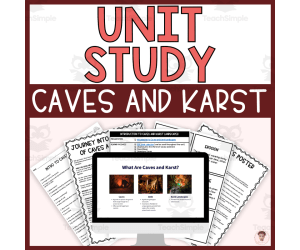
Caves and Karst Unit Study
Creative Arts, Art, Social Studies, ELA, Reading, Reading Comprehension, Grammar, Language Development, Vocabulary, Spelling, Writing, Grade 3, 4, 5, Activities, Crafts, Teacher Tools, Lesson Plans, Presentations, Graphic Organizers, Projects, Assessments, Worksheets & Printables, Worksheets
The Caves and Karst Unit Study This is an engaging, comprehensive, and low preparation teaching resource that explores the fascinating world of caves and karst. It is a valuable resource for educators focusing on grades 3 to 5, as well as homeschooling guardians. Main Topics Covered Introductory concepts about caves and karst formations Detailed insight into speleothems and cave forms Landscape found in karsts Particularly captivating information about cave ecosystems habitat adaptations. The unit study wraps up with an exploration of cave conservation efforts highlighting their importance. Tailored Approach to Learning Styles Each lesson includes: Visual-auditory online presentations , alongside curated videos. Reading passages: To cater for those who learn best through perusing textual information. Upon consideration for student handwriting skills levels, options are made available within note-taking pages with either primary lines, regular lines or no lines. Note-taking pages & Graphic organizers: To keep track of acquired knowledge across every topic covered. Hands-on activities are incorporated into every lesson plan providing kinesthetic opportunities. Purposeful Assessment through Quizzes A tool that teachers or homeschoolers can use flexibly over days or weeks depending on pacing preference - quizzes filled with 15 multiple-choice questions per lesson – ideal in testing understanding at each stage. Cross-Curricular Subjects Integration The unit study covers: Art (emphasis on drawing, coloring & crafts) English Language Arts Geography and Geology Grammar, History, Reading, Science and Social Studies research work , Spelling . The Caves and Karst Unit Study: An interactive unit study that inspires young geologists' minds while encouraging the application of learned concepts through hands-on activities. The resource spans over 150 pages premium content in a downloadable file in PDF format. A truly comprehensive guide for both educators and homeschoolers.
Author Heather Huhman
Tags Caves, Karst Formations, Speleothems, Cave Ecosystems, Conservation Efforts

How to Write a Book Report: Graphic Organizers for Oral Book Reports
ELA, Writing, Common Core, Grade 5, 6, 7, 8, Graphic Organizers, Teacher Tools
Teaching Resource Overview 'How to Write a Book Report: Graphic Organizers for Oral Book Reports' is an indispensable tool for educators, especially ideal for those imparting language arts focused on writing aspects to students in grades 5 through 8. The content of this resource offers practical guidelines from initial drafting to final revision, making the process of writing book reports simple and comprehensive. Tackling Challenges Head-On Acknowledging that students can perceive book reports as overwhelming tasks, the product focuses on mastering this crucial academic undertaking. Included in its package are graphic organizers meant to be used during the prewriting stage. These tools facilitate strong foundational thinking and streamline organization before the actual writing begins. Beyond Draft Creation Not just assisting with creating detailed drafts, 'How to Write a Book Report: Graphic Organizers for Oral Book Reports' equips educators with additional tools necessary for successfully implementing related report-writing lessons. These include: A student assessment rubric Intriguing word puzzles Comprehension quizzes designed for sustained student engagement Crafting Skills effectively – The Visual Aids Advantage This teaching resource contains six color graphic organizers which introduce skill focus effectively while guiding learners through various writing process stages. Distributing Learning Material Effortlessly An added convenience offered by 'How To Write A Book Report: Graphic Organizers For Oral Book Reports' is being equipped with 24 ready-to-print PDF pages which simplifies distribution among students fitting into multiple learning scenarios such as: Whole-group instruction Smaller breakout groups or even individual assignments addressing specific learning needs. Enhancing Student Proficiency This comprehensive lesson plan is aligned with both Common Core State Standards and Bloom's Taxonomy. It not only supports current academic programs but also independently elevates student proficiency levels in report-writing skills which directly contributes towards their overall academic success.
Author Classroom Complete Press
Tags Language Arts, Writing, Book Reports, Graphic Organizers, Language Activity

Writing Graphic Organizer Worksheet
ELA, Writing, Reading, Preschool, Grade 1, 2, Teacher Tools, Graphic Organizers, Worksheets & Printables, Worksheets
This Writing Graphic Organizer Worksheet is a great way for students to choose a topic to write about and provide facts about that topic. This form is easy to use and can help students organize their thoughts and ideas. This is a great resource for teachers who want to help their students improve their writing skills.
Author Have Fun Teaching
Tags Reading Response, Essays, Prompts

Circles Graphic Organizers
Math, Algebra, Geometry, Grade 9, 10, 11, 12, Teacher Tools, Graphic Organizers
If you are a high school math teacher, finding resources that best serve for your students is of the utmost importance! This is a Circles Graphic Organizer Packet that is filled with purposeful information that your students can use right away. Graphic organizers have always been a great way to organize information, so these are no exception! There are 7 sheets included and 2 different versions. You will get one version with blanks, so students can fill in the answer. The other version will not have blanks, so the statements and descriptions will already be complete. You will also get an editable version that you can open in PowerPoint or Google Slides if you want students to complete it digitally. Sheets included: 1. Areas and Arc Lengths of Circles 2. Arc Measures of Circles 3. Segments formed with Circles 4. Angles formed with Circles 5. Inscribed & Circumcised 6. Angles, Arcs, & Chords in a Circle I hope you enjoy! Here are similar resources for you to enjoy: https://teachsimple.com/product/arkansas-river-float-activity https://teachsimple.com/product/fill-the-tank-activity https://teachsimple.com/product/algebra-2-word-wall https://teachsimple.com/product/intro-to-calculus-word-wall You can visit my storefront here: https://teachsimple.com/contributor/smith-math I can be contacted for questions and concerns at smithmathtpt@gmail.com .
Author Smith Math
Tags Circles Graphic Organizers, Smith Math, Geometry Printable, Chords In A Circle, Polygons, Central Angles, Arc Measures, Circumference
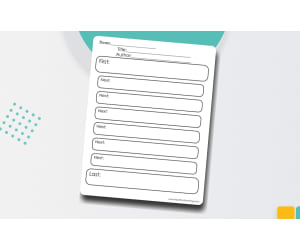
First Next Last Graphic Organizer Worksheet
ELA, Reading, Grade 2, 3, 4, Teacher Tools, Graphic Organizers, Worksheets & Printables, Worksheets
This First Next Last Graphic Organizer Worksheet is a great way for students to sequence events in a text. This worksheet will help students discuss what happened and why it happened.
Author Have Fun Teaching
Tags Sequencing

Conjunto de 100 Hechos Asombrosos de la Ciencia - Pósters para el Aula
Science, Basic Science, Grade 6, 7, 8, 9, 10, Teacher Tools, Graphic Organizers
100 Hechos Científicos para sorprender e intrigar a tus estudiantes. Si eres como yo, siempre te encanta escuchar un hecho científico que te deje asombrado. ¡Bueno, aquí tienes 100! Este conjunto combina mis dos colecciones de Hechos Científicos brindándote 100 pósters para usar como puntos de inicio de clase, pósters para la habitación y más. 100 Scientific Facts to surprise and intrigue your students. If you're like me, you always love hearing a scientific fact that leaves you amazed. Well, here you have 100! This set combines my two collections of Scientific Facts, giving you 100 posters to use as class starting points, room posters , and more. Mis pósters son interesantes, generarán discusiones y son una excelente manera de comenzar tu clase de ciencias. También se pueden utilizar para introducir un tema al comienzo de una unidad. Cada hecho incluye una pequeña explicación y está diseñado de tal manera que será atractivo para una amplia variedad de niveles de grado. My posters are interesting, they will spark discussions, and they are an excellent way to start your science class. They can also be used to introduce a topic at the beginning of a unit . Each fact includes a brief explanation and is designed in such a way that it will be appealing to a wide variety of grade levels. Estos pósters están todos formateados para impresión en tamaño 8.5"x11" y pueden ser colocados alrededor del aula o mostrados en un proyector para la clase. Con 100 pósters, puedes presentar dos hechos nuevos cada semana a tus estudiantes. Los pósters incluyen hechos de cada rama de la ciencia, por lo que hay algo para todos. Son un excelente punto de partida para la conversación y/o una forma de introducir un nuevo tema. Geniales para la educación primaria superior, secundaria intermedia y bachillerato inferior. Incluido en tu recurso: 100 archivos individuales de pósters en formato PNG Un documento PDF con todos los pósters incluidos para una impresión sencilla Acceso a las carpetas de Google Drive donde guardo los pósters Acceso ilimitado a los pósters actualizados dentro del conjunto en caso de futuros cambios. Instrucciones de uso: Inicia sesión en tu Cuenta de Google. Haz clic en el enlace incluido en tu compra. Las imágenes de los pósters se colocarán automáticamente en tu carpeta 'Compartido conmigo' dentro de tu Google Drive. Puedes descargar los archivos desde allí a tu computadora o dejarlos en tu carpeta 'Compartido conmigo' en Google Drive. Cada vez que los archivos se actualicen, se actualizarán automáticamente en tu carpeta.
Author Teach With Fergy
Tags Spanish Posters, Science Spanish Posters, Spanish Science Posters

Chinese History Review Sheets
Social Studies, History, History: Asian, Grade 9, 10, 11, 12, Teacher Tools, Graphic Organizers
These Chinese History Review Sheets will make great study guides for your history students. Students will use the charts to learn about China's: - Belief systems - Foreign influence downfall - Achievements - Historical eras & so much more!
Author Cogjogger
Tags Chinese, History, Review Sheets, Study Guide, Vocabulary
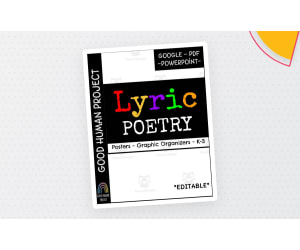
Lyric Poetry Writing – Posters & Graphic Organizers
ELA, Literature, Poetry, Grade 1, 2, 3, Graphic Organizers, Teacher Tools
This resource is a set of learning posters and graphic organizers for lyric poetry writing. There are a variety of posters that teach about lyric poetry. Students will explore features, famous lyric poems, how to write a lyric poem and so much more. Students will then write lyric poems with a variety of templates. This pairs well with your poetry unit in English class. You may also love to print these off and use in a center activity. This resource can be accessed through: PowerPoint Google slides PDF
Author Good Human Project
Rating
Tags Lyric Poetry, Lyric Poems, Writing Poems, Graphic Organizers, Posters, How To Write A Lyric Poem, Writing Lyric Poems

CONFLICT: The FIVE Elements of a Story Graphic Organizers
ELA, Reading, Reading Comprehension, Language Development, Writing, Not Grade Specific, Teacher Tools, Graphic Organizers
This is our CONFLICT section of our Graphic Organizers Series: The FIVE Elements of a Story. In this set, you can enjoy 10 custom graphic organizers for Conflict. These graphic organizers can be used in any classroom, for any grade, and with any student. Use these graphic organizers to help students gain an understanding of Conflict in a story. Each graphic organizer comes with instructions on how to use them. Conflict Graphic Organizers: Conflict Dissection – Complete this graphic organizer by filling in each quadrant. In the first box, identify the characters of the story. In the next box, identify the time and place of the story. In the third box, identify the problem that takes place in the story. In the last box, identify the solution to the problem. Problems and Solutions Chart – Identify the Problems and possible Solutions with this graphic organizer. First, identify the problem in the first box. Then, identify possible causes of the problem, followed by possible effects of the problem. Finally, identify any possible solutions to the problem based on this information. Conflict Commentary – Summarize the Conflict by first identifying how the conflict starts. Then, identify possible causes of the conflict. At the top, identify the climax of the conflict, or how it comes to a head. Then, identify possible effects of the conflict. Finally, identify the outcome of the conflict. Internal or External Conflict – Determine whether the conflict in the story is internal or external. Internal conflict: a character experiences two opposite emotions or desires. External conflict: a character struggles with an outside force. Find examples of the conflict in the story and add them to the column that most fits. Conflict Type Chart – In the first column, find examples from the story that shows Character against Character. In the second column, find examples of Character against Nature. In the third column, find examples of Character against Self. And finally, in the fourth column, find examples of Character against Society. Conflict Timeline – Complete the Conflict Timeline graphic organizer by breaking down the events for the conflict. Write down the stages of events for the conflict in the boxes on the timeline. Each stage should follow the order in which it took place in the story. Opposing Forces Comparison – Compare two opposing forces in the story with this graphic organizer. First, identify the two forces you will be comparing. Then, identify the struggle between these two forces. List the differences between the two forces in the outside circles. List the similarities where the circles overlap. Conflict Map – Outline the Conflict in the story with this Conflict Map graphic organizer. First identify the conflict of the story in the top box. Then, identify the two forces that are in conflict with each other, and what happens when these two forces collide. Finally, identify the resolution of the conflict. Cause-Effect-Consequences – Identify the cause, effect, and consequences of the Conflict as it appears in the story. First, identify the conflict in the story in the top box. Then, in the chart, identify the causes of the conflict, the effects of the conflict, and the consequences of the conflict. Conflict Analysis – Determine what type of conflict the author created: Character vs. Character, vs. Nature, vs. Self, vs. Society, vs. Supernatural, or vs. Technology. Answer the questions to lead to the Conflict Statement. Here, identify the type of conflict, what the character wants, and why they can’t have it.
Author Ibby Resources
Rating
Tags Study, Skills, Character, Graphic Organizer, Story Elements

Making Inferences Graphic Organizer Worksheet
ELA, Reading, Grade 2, 3, 4, 5, Teacher Tools, Graphic Organizers, Worksheets & Printables, Worksheets
This graphic organizer worksheet is a great way for students to record their schema and textual evidences while reading and making inferences. This is a great tool for teachers to use to help their students improve their reading comprehension skills.
Author Have Fun Teaching
Tags Inference, Inference Worksheet 4 Answer Key
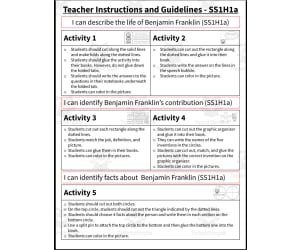
Benjamin Franklin Interactive Notebook | SS1H1a, SS1H1b, SS1G1a, SS1CG1
Social Studies, History, History: USA, Preschool, Grade 1, 2, Teacher Tools, Graphic Organizers
Benjamin Franklin Interactive Notebook The Benjamin Franklin Interactive Notebook engages students while they learn about this famous Founding Father. This social studies resource includes 17 activities centered around Benjamin Franklin's life and his contributions during the Revolutionary period. Educators can implement these printable activities in a variety of ways. Students could complete the interactive notebook pages individually or in small groups. The pages could also be used together as a whole class activity or assigned as enrichment homework. Targeted for grades K-2, these activities are aligned to the following standards: SS1H1a, SS1H1b, SS1G1a, and SS1CG1. With an engaging interactive format, this resource brings Benjamin Franklin's story to life. Students will further their understanding of this influential figure in American history.
Author Sarah Miller Tech
Tags Graphic Organizers, U.S. History, Benjamin Franklin, Standards, Biographies

West African Historic Rulers Graphic Organizer
Social Studies, History, History: African, Grade 8, 9, 10, 11, Teacher Tools, Graphic Organizers
This is a West African Historic Rulers Graphic Organizer . This chart includes 4 different rulers for students to complete. They will notate their empire, when they rules and their accomplishments. A completed chart and a set of important vocabulary terms are included.
Author Cogjogger
Tags West African, Historic Rulers, Graphic Organizers, Empires

The Cuban Missile Crisis: Graphic Organizer
Social Studies, History, History: USA, Grade 7, 8, 9, 10, 11, Teacher Tools, Graphic Organizers
The Cuban Missile Crisis was a 13-day political and military standoff between the United States and the Soviet Union in October 1962. The crisis was sparked when the United States discovered that the Soviet Union had secretly installed nuclear missiles in Cuba, just 90 miles from the US coastline. The US saw this as a direct threat to their national security. On October 22, 1962, President John F. Kennedy announced the discovery of the missiles and imposed a naval quarantine on Cuba, blocking Soviet ships from delivering more missiles. The Soviet Union responded by stating that the quarantine was an act of aggression and refused to remove the missiles. For the next 13 days, the world was on the brink of nuclear war. The US military was put on high alert, and Kennedy established the Executive Committee of the National Security Council (EXCOMM) to advise him on the crisis. Kennedy and his advisors considered several options, including a military strike on Cuba, a full-scale invasion, and a naval blockade. They also communicated with Soviet Premier Nikita Khrushchev through diplomatic channels to try to find a peaceful solution. On October 28, Khrushchev agreed to remove the missiles in exchange for a US promise not to invade Cuba and to remove US missiles from Turkey. The crisis was over, and nuclear war had been avoided. The Cuban Missile Crisis was a defining moment in the Cold War, demonstrating the danger of nuclear weapons and the need for international diplomacy and cooperation. It also led to improved communication and a "hotline" between the US and the Soviet Union to prevent future crises. Teacher-prepared notes show students what is important and how ideas relate, and offer a model for how students should take notes themselves (Marzano et al., 2001). These notes give students an overview of Cuban Missile Crisis, the main players in the crisis, and the 13-days where the world stood at the brink of nuclear war. These notes also come complete with a fill-in-the-blank student version. Clipart Credit: Dandy Doodles
Author EduPal Learning
Tags Cuban Missile Crisis, Graphic Organizer, Cold War, Kennedy, Missile Graphic, Cuban Graphic, Cuban Missile Crisis Clipart

The Great Awakening – Reading & Graphic Organizer
Social Studies, History, History: USA, Grade 7, 8, 9, 10, Teacher Tools, Graphic Organizers
The First Great Awakening was a religious revival movement that occurred in the American colonies in the 18th century, particularly between the 1730s and 1740s. It marked a significant shift in the religious landscape of the time and had a profound impact on American society, culture, and politics. The First Great Awakening emerged as a response to the growing secularism, complacency, and spiritual apathy that had developed within the established Protestant churches. It sought to reignite religious fervor and bring individuals to a more personal and heartfelt relationship with God. The First Great Awakening had several significant consequences. It led to the growth and diversification of Protestant denominations, as new churches and sects emerged, challenging the authority of established churches. The revival also fostered a greater emphasis on individualism, as people were encouraged to seek their own personal relationship with God, rather than relying solely on religious institutions. Furthermore, the First Great Awakening played a role in shaping American identity and promoting the ideals of religious freedom and personal liberty. It inspired a sense of unity among diverse groups of colonists, as people from different social and economic backgrounds came together in religious gatherings. This shared experience helped lay the groundwork for a common American identity and contributed to the development of democratic ideals in the colonies. Students begin by reading about the causes and effects of the Great Awakening. The students are introduced to the two major preachers: Jonathan Edwards and George Whitfield. Then, the students complete a graphic overview of the Great Awakening (included). Lastly, students answer two "Big Questions." Ready to print and use! Works great with the interactive notebook!
Author EduPal Learning
Rating
Tags Great Awakening, US History, Colonial America

Introduction to FDR's New Deal: Reading & Processing Activity
Social Studies, History, History: USA, Grade 7, 8, 9, 10, 11, Teacher Tools, Graphic Organizers
During the 1930s, the United States was facing a lot of problems. Many people were out of work and didn't have enough money to take care of their families. The country was in a very difficult time called the Great Depression. To help the country recover, President Franklin D. Roosevelt came up with a plan called the New Deal. The New Deal had a lot of different parts, but the main idea was to create jobs and help people who were struggling. One of the ways the New Deal created jobs was by starting programs that hired people to do important work, like building roads and bridges. The New Deal also helped farmers by giving them money and tools to improve their farms. The New Deal also created programs to help people who were having a hard time. One program was called Social Security, which gave money to people who were retired or couldn't work because of an injury or disability. Another program was called the Civilian Conservation Corps, which helped young men get jobs and learn new skills. Overall, the New Deal was a plan to help the country recover from a very difficult time. It created jobs, helped people who were struggling, and set up programs that are still helping Americans today. Teacher-prepared notes show students what is important and how ideas relate, and offer a model for how students should take notes themselves (Marzano et al., 2001). This product comes with an introductory reading into FDR's New Deal. The product then has students process the three R's: Relief, Recovery, and Reform (comes with an example). Ready to use. Excellent for review. Product clipart credit: By PrincePadania and By Clip Guy Graphics
Author EduPal Learning
Tags New Deal, FDR, US History, Great Depression, Franklin D. Roosevelt

Limerick Poetry – Posters & Graphic Organizers
ELA, Literature, Poetry, Grade 1, 2, 3, Graphic Organizers, Teacher Tools
This resource is a set of learning posters and graphic organizers for limerick poetry writing. There is a poster to teach about limerick poetry. They will write a limerick poem with a variety of different templates to choose from. This pairs well with your poetry unit in English class. You may also love to print these off and use in a center activity. This resource can be accessed through: PowerPoint Google slides PDF
Author Good Human Project
Rating
Tags Poetry, Graphic Organizers, Writing Poems, Limerick Poetry, Language Arts Unit, Limerick Poems Template
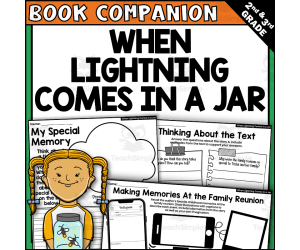
When Lightning Comes in a Jar Book Companion
ELA, Reading, Reading Comprehension, Literature, Science, Life Sciences, Insects, Grade 2, 3, 4, Teacher Tools, Graphic Organizers, Worksheets & Printables, Novel Studies, Activities, Games, Worksheets
This picture book companion is a complete supplemental resource for the book When Lightning Comes in a Jar by Patricia Polacco. It includes 28 print-and-go reading activities to choose from, making this resource ideal for customizing learning to your student's specific needs and academic abilities. Students will investigate characters, identify story elements, determine the theme, practice plotting story events, compare & contrast, make predictions, inferences, & connections, answer questions that require them to think beyond the text, and much more! Students will thoroughly enjoy the captivating activities, and you'll value the time saved from scouring for advanced resources to address challenging reading concepts. The offered activities are crafted to foster higher-order thinking, prompt students to present textual proof for their reasoning, and inspire them to share their personal insights and viewpoints. ⭐️This Resource Includes:⭐️ ◾ Making Predictions: Before reading the book, students make predictions about the text. ◾ Story Elements: Students fill in the boxes with words & pictures to represent the story elements. ◾ Sequencing: Students will retell & illustrate the important parts of the story. ◾ Recalling Events in Chronological Order: Students will describe and illustrate four events in the story in chronological order. ◾ Summary: Students complete the Somebody, Wanted, Because, But, So graphic organizer and write a summary of the story. ◾ Story Event Sort: Students will describe a scene or event from the story that fits into each of the categories & explain how the event made them feel & how it relates to the category. ◾ Making Inferences: Students use clues & schema to make inferences while reading the story. ◾ Making Connections: Students make connections to an event from the story. ◾ Character Inside & Out: Students include details from the story to describe what the characters say, think, do, and feel. ◾ Character Feelings: Students describe how the characters' feelings change throughout the story & give examples of the events that cause them to feel the way they do. ◾ Character Development: Students select the character traits that best describe Trisha at different times throughout the story and provide examples from the book to support each character trait. ◾ Character Change: Students will explain how the character changed from the beginning to the end of the story and describe the events that caused the change to happen. ◾ Character Summary: Students summarize the main character of the story. ◾ Sketch a Scene From the Story: Students will draw a scene from the story and explain why it's important to the plot. ◾ Setting Influences the Plot: Students will draw a scene from the story that takes place in one of the settings, write about what happened there, & explain why it is important to the plot. ◾ Setting the Scene: Students identify three different settings in the story and explain how they know that the setting changed. ◾ 3-2-1: Students will list three of Trisha's favorite things about her family reunion, 2 activities from the story they would like to try, and one word that describes Trisha's family reunion. ◾ Author's Message: Students describe four important events from the story and put them in chronological order. Then, answer the questions about the author's message. ◾ Theme: Students answer the questions to determine which theme best fits the story and provide text evidence to support their choice. ◾ Thinking About the Text: Students will answer the questions about the story & include examples from the text to support their answers. ◾ Then & Now: Students will describe something the author, Patricia Polacco, did as a young girl at her family reunions, write about something she might do at her family reunions now that she is older, and draw illustrations to go with their writing. ◾ Wait... There's More!: Students will write about what happens next in the story. ◾ My Special Memory: Students write about a special day or moment in their lives. ◾ Making Memories at the Family Reunion: Students recall the author's favorite childhood memories at the family reunion and draw illustrations with captions to describe each event. ◾ Families are Special: Students will brainstorm their family's traditions, things that make their family unique, and special things they do with their family. Then, they will compare and contrast their family with a classmate's family using a Venn diagram. ◾ Dear Patricia Polacco: Students write a letter to Patricia Polacco, the author and illustrator, sharing their reactions to the story, and asking her at least one question. ◾ Book Review: Students will color in the stars to rate how much they enjoyed the book and draw a new cover & their favorite character from the story. Then, they will explain why other kids should or should not read it. ◾ Family Traditions Survey: Students will answer questions about their own family traditions. This resource is for extension read-aloud activities only. The book is not included. ⭐️You may also like: ⭐ TEXT SET #1: "The Importance of Friendship" ◾ A Weekend With Wendell Read Aloud Book Companion Activities for IRA ◾ First Come the Zebra Read Aloud Book Companion Activities for IRA ◾ This is Our House Read Aloud Book Companion Activities for IRA ◾ Horace and Morris But Mostly Dolores Read Aloud Book Companion Activities for IRA ◾ The Old Woman Who Named Things Read Aloud Book Companion Activities for IRA TEXT SET #3: "Finding Your Way in a New Place" ◾ Grandfather Counts Read Aloud Book Companion Activities for IRA ◾ The Have a Good Day Cafe, Read Aloud Book Companion Activities for IRA ◾ Roses for Gita Read Aloud Book Companion Activities for IRA ◾ Mango, Abuela, and Me, Read Aloud Book Companion Activities for IRA ◾ Home at Last Read Aloud Book Companion Activities for IRA TEXT SET #7: "Exploring Narrative Nonfiction" ◾ Cactus Hotel Read Aloud Book Companion Activities for IRA ◾ A Log's Life Read Aloud Book Companion Activities for IRA ◾ Salmon Stream Read Aloud Book Companion Activities for IRA ◾ Think of an Eel Read Aloud Book Companion Activities for IRA ✨Be sure to check out my storefront here: https://teachsimple.com/contributor/creatively-gifted
Author Creatively Gifted
Tags IRA, Picture Book Activities, Read Aloud Lessons, Interactive Read Aloud Activities, Elementary Reading, Reading Comprehension, Fountas And Pinnell IRA, Family, Second Grade, Memory Stories

Food Class Survey
Science, Basic Science, Grade 2, 3, 4, 5, Teacher Tools, Graphic Organizers
Teaching science to our elementary students opens them up to a whole new world of interests, but with a whole new take! They get to learn about the weather and its changes. They get to learn about animals and their offspring. They get to learn about natural wonders, such as volcanoes! There are so many engaging things for students to learn during science. What You Get: This is aFood Class Survey that is ideal for elementary students! Kindergarten – 5th grade students will enjoy this activity. How To Implement This Resource: This is a 1-page printable that will allow students to collect data. Students will seek to find out what their classmates usually eat and drink. The chart will have 2 columns – popular foods and unpopular foods. You may choose to conduct this survey in a few ways: -- As a whole group with you tracking data for the entire class on 1 chart -- As an independent activity in which all students will have their own chart . Students can collect the data with all of their classmates. -- As a small group activity in which students will collect data from the classmates that are in their group. As a follow up to the data collection, students discuss the similarities between food choices. I hope you enjoy! Here are links to similar resources in my store: Verbs and Adverbs Chart Addition Using a Number Line Dictionary Work Booklet Percentages of a Number Graphic Organizer Baby Animals Worksheet Counting Sounds Worksheet Check Out More Resources from My Store: Elementary Resources 4 U
Author Elementary Resources 4 U
Tags Science Chart, Science Graphic Organizer, Class Survey, Data Collection, Whole Group Data, Small Group Science, Discussion

Fact and Opinion Lined Graphic Organizer
ELA, Reading, Grade 2, 3, 4, Teacher Tools, Graphic Organizers, Worksheets & Printables, Worksheets
This Fact and Opinion Lined Graphic Organizer is a great way for students to organize their thoughts and determine whether statements are facts or opinions. This is a great tool for teachers who want to help their students better understand the difference between the two.
Author Have Fun Teaching
Tags Fact And Opinion

Problem and Solutions Graphic Organizer Worksheet
ELA, Reading, Grade 2, 3, 4, 5, Teacher Tools, Graphic Organizers, Worksheets & Printables, Worksheets
This resource is a great way for your students to practice identifying the problem and solution within a text. The graphic organizer worksheet can be used with any type of text and can be a helpful tool for your students as they learn to identify the problem and solution.
Author Have Fun Teaching
Tags Story Elements, Problem And Solution Graphic Organizers, Characters Setting Problem Solution Graphic Organizer

Worldle Country of the Day – Geography Routine
Social Studies, Geography, Grade 4, 5, 6, 7, 8, 9, Teacher Tools, Graphic Organizers
Here's an easy way to incorporate world geography into your classroom routine! How to Use: Play WORLDLE with your class: https://worldle.teuteuf.fr/ It's a game inspired by WORDLE but using images of countries instead. It's a great way to also practice, percentages, compass directions and distances, as incorrect guesses are given information about how far they are from the actual country, in what direction, and what percentage accuracy your guess had. After you have determined the country of the day, students can spend a few minutes learning about it and recording basic facts on the handout (you can print it double-sided, so 12 countries fit on a sheet). Students need to identify which continent the country is part of, find its current population, the capital city, countries that are neighbours, the official language or languages, and two fun facts. This website is a great resource for learning about each country: https://www.kids-world-travel-guide.com/ If you play for a whole school year, you should have time to learn about most of the countries in the world! You could also let students choose different countries from the game to research more in depth and present to one another. Grades to Use With: This is an easy routine to use in your grades 4-9 classrooms. It could be a morning homeroom activity as kids arrive each day or something to help the class settle after lunch. You could also use it during social studies or geography lessons as a quick break or reward. If you enjoy this social studies product, check out others in my store: United Nations Declaration on the Rights of Indigenous Peoples Political Spectrum: Handout, Sorting Task, Local Research and Reflection Critical Thinking: Income Inequality: An Integrated Math and Social Studies Lesson
Author Grace Under Pressure
Rating
Tags Worldle, World Geography, Daily, Routine, Countries, Map, Earth, Social Studies, Homeroom, Morning Routine, What Is Today's Worldle Country, Worldle Country Today, Worldle Geography Today, World.teuteuf.fr, Worldle Geography Website, Worldle Today Country, What Is The Worldle Country Today, What Is Todays Worldle Country, Worldle Countey, Worldle World Map Game, Worldle Countrie, Worldle Country Wordle, World Teuf Teuf, Worldel Country, Worldle County, Worldle World Map, World. Teuteuf. Fr, Wordle Geography Website, Worldle World Wordle, World Teuteuf Fr