



2,274 products added recently
Page 86 - 5th Grade Lesson Plans
Prepare your fifth graders for future challenges with lesson plans that promote higher-order thinking and mastery of key concepts. These resources encourage collaboration and in-depth exploration across subjects. Use them to guide your students toward readiness for middle school.

 Show filters


I WONDER - How Big Was The Carnotaurus | Animated Video Lesson
History: Ancient, History, Social Studies, History: World, Animals, Life Sciences, Science, Grade 4, 5, 6, 7, 8, 9, 10, Lesson Plans, Teacher Tools
Video Introduction An amazing video designed for the students to learn more about dinosaurs in different countries. I WONDER - How Big Was The Carnotaurus | Animated Video Lesson Do you like dinosaurs? what is your favorite one? Do you own a pet? If yes, tell us more about it, like what its name? And what do you like most about it? Do you think that your pet has been evolved from a dinosaur? Can you write down the characteristics of your favourite dinosaur like it's shape, their rivals, where did it use to live and what was their favourite food? What is the largest and the smallest dinosaur that ever found? Why is the T-rex is so famous? Have you ever read any interesting facts about it? Can you name any of the carnivores or herbivores dinosaurs? I WONDER - How Big Was The Carnotaurus | Animated Video Lesson The video is perfect for encouraging the researching skills for the students, while learning more about dinosaurs. I WONDER - How Big Was The Carnotaurus | Animated Video Lesson This friendly designed video is suitable for students at school, homeschooling, and as a group activity. Format Available in MP4 format.
Author Educational Voice
Rating
Tags How Big Was The Carnotaurus, How Big Was The Carnotaurus Video, Carnotaurus, Carnotaurus Video, Carnotaurus Facts, Carnotaurus Facts For Kids, Carnotaurus Video For Kids, Dinosaur

I WONDER - What Is Renewable Energy | Animated Video Lesson
Environmental Science, Earth and Environmental Sciences, Science, Grade 4, 5, 6, 7, 8, 9, 10, Lesson Plans, Teacher Tools
Video Introduction An amazing video designed for the students to learn more about STEM. I WONDER - What Is Renewable Energy | Animated Video Lesson Do you like STEM subjects? what is your favorite one? Have you ever tried to plant a seed? If yes, tell us more about it. Or have you ever tried to invent something? If yes, tell us more about it. And how do you think it will help us? Have you ever seen a microorganism under a microscope? What was it? And how it looked like? Mathematics is a marvelous subject. Let' sharpen our brains and solve some equations. Do you like timetable tricks? What is your favorite one? Do you know how to code? Have you ever created an app or a game before? If yes, how was it like? I WONDER - What Is Renewable Energy | Animated Video Lesson The video is perfect for encouraging the researching skills for the students, while learning more about this fantastic topic. I WONDER - What Is Renewable Energy | Animated Video Lesson This friendly designed video is suitable for students at school, homeschooling, and as a group activity. Format Available in MP4 format.
Author Educational Voice
Tags What Is Renewable Energy, What Is Renewable Energy Video, Renewable Energy, Renewable Energy Facts, Renewable Energy Facts For Kids, Renewable Energy Video, Renewable Energy Video For Kids

I WONDER - What Is The Most Reliable Form Of Renewable Energy
Earth and Environmental Sciences, Science, Environmental Science, Grade 4, 5, 6, 7, 8, 9, 10, Lesson Plans, Teacher Tools
Video Introduction An amazing video designed for the students to learn more about STEM. I WONDER - What Is The Most Reliable Form Of Renewable Energy | Animated Video Lesson Do you like STEM subjects? what is your favorite one? Have you ever tried to plant a seed? If yes, tell us more about it. Or have you ever tried to invent something? If yes, tell us more about it. And how do you think it will help us? Have you ever seen a microorganism under a microscope? What was it? And how it looked like? Mathematics is a marvelous subject. Let' sharpen our brains and solve some equations. Do you like timetable tricks? What is your favorite one? Do you know how to code? Have you ever created an app or a game before? If yes, how was it like? I WONDER - What Is The Most Reliable Form Of Renewable Energy | Animated Video Lesson The video is perfect for encouraging the researching skills for the students, while learning more about this fantastic topic. I WONDER - What Is The Most Reliable Form Of Renewable Energy | Animated Video Lesson This friendly designed video is suitable for students at school, homeschooling, and as a group activity. Format Available in MP4 format.
Author Educational Voice
Tags What Is The Most Reliable Form Of Renewable Energy, What Is The Most Reliable Form Of Renewable Energy Video, Renewable Energy, Renewable Energy Facts, Renewable Energy Facts For Kids, Renewable Energy Video

How To Eat Sushi The Right Way | Reading Comprehension Deck | Interactive Lesson
Social Studies, Grade 4, 5, 6, 7, Teacher Tools, Lesson Plans
This reading comprehension deck is the perfect accessory to your Social Studies instruction! This digital slideshow presents How To Eat Sushi The Right Way. Within this slideshow, you will receive: -Video Lesson -Reading Passage w/ Audio -Close Reading -Quick Write The informational texts included in this resource alongside the informal assessments will keep your students engaged from beginning to end.
Author Teach Me This
Tags Sushi Eating, Cultural Food, Social Studies, Reading, Comprehension
I WONDER - Did Viking Women Fight In Battle | Animated Video Lesson
History: British, History, Social Studies, History: Europe, History: Ancient, History: Canada, History: USA, Grade 4, 5, 6, 7, 8, 9, 10, Lesson Plans, Teacher Tools
Video Introduction An amazing video designed for the students to learn more about history. I WONDER - Did Viking Women Fight In Battle | Animated Video Lesson Do you like history? Which topic do you really enjoy about history? Have you ever read an interesting fact about the Vikings? If yes, can you mention them? What do you like most about the Victorian era? Can you name all the Tudors? Have you ever wondered how people used to live in ancient Japan and ancient China? Do you know any interesting facts about ancient Egyptians and the Pharaohs? Have you ever visited South America? What do you know about Incas and Aztecs? Celtic culture was really one of a kind, can you name any of the places that Celts used to live in? Imagine yourself living during the ancient Roman empire, how your life will look like? Ancient Greece was an amazing place to live in. What do you know about ancient Greek life? I WONDER - Did Viking Women Fight In Battle | Animated Video Lesson The video is perfect for encouraging the researching skills for the students, while learning more about history. I WONDER - Did Viking Women Fight In Battle | Animated Video Lesson This friendly designed video is suitable for students at school, homeschooling, and as a group activity. Format Available in MP4 format.
Author Educational Voice
Tags Did Viking Women Fight In Battle, Did Viking Women Fight In Battle Video, Viking Women, Viking Women Facts, Viking Women Facts For Kids, Viking Women Video, Viking Women Video For Kids

I WONDER - What Is A Concave Hexagon | Animated Video Lesson
STEM, Math, Geometry, Grade 3, 4, 5, 6, 7, 8, 9, Lesson Plans, Teacher Tools
Video Introduction An amazing video designed for the students to learn more about STEM. I WONDER - What Is A Concave Hexagon | Animated Video Lesson Do you like STEM subjects? what is your favorite one? Have you ever tried to plant a seed? If yes, tell us more about it. Or have you ever tried to invent something? If yes, tell us more about it. And how do you think it will help us? Have you ever seen a microorganism under a microscope? What was it? And how it looked like? Mathematics is a marvelous subject. Let' sharpen our brains and solve some equations. Do you like timetable tricks? What is your favorite one? Do you know how to code? Have you ever created an app or a game before? If yes, how was it like? I WONDER - What Is A Concave Hexagon | Animated Video Lesson The video is perfect for encouraging the researching skills for the students, while learning more about this fantastic topic. I WONDER - What Is A Concave Hexagon | Animated Video Lesson This friendly designed video is suitable for students at school, homeschooling, and as a group activity. Format Available in MP4 format.
Author Educational Voice
Tags What Is A Concave Hexagon, What Is A Concave Hexagon Video, Concave Hexagon, Concave Hexagon Facts, Concave Hexagon Facts For Kids, Concave Hexagon Video, Concave Hexagon Video For Kids

Elephants: Guided Reading Level Q with Lesson Plan
ELA, Resources for Teachers, Reading Comprehension, Reading, Science, Language Development, Life Sciences, Earth and Environmental Sciences, Geography, Social Studies, Grade 3, 4, 5, Worksheets & Printables, Worksheets, Teacher Tools, Centers, Activities, Literacy Readers, Quizzes, Quizzes and Tests, Assessments, Lesson Plans
This Elephants (level q) guided reading book with lesson plan includes: Guided Reading Color Label (front cover x1) This is a quick way to match the book’s demands to what students can generally handle.. The overall goal is to use the level/color to pick books for several smaller groups. To qualify for a certain level, a student is expected to read a book from that level with about 90–94% accuracy. If a student is consistently accurate and understands, move up a level. If the student is struggling at that level, drop down and add more support. Each student will improve at completely different rates, but it is generally one of the best ways to check progress across the class. DOWNLOAD THE CATALOG TO VIEW ALL GUIDED READING BOOKS AVAILABLE (SORTED LEVELS A-Z) Pre-Reading Question (x1) Teacher asks the prompt aloud, can be while showing the cover or first page. Students share what they already know, or make educated guesses from the cover. Prompt them to use the target vocabulary. Write some of their responses on the board to look back at during the reading. Vocabulary Words (x5) Introduce the five words, best doing it one at a time. Start by saying it, while students repeat and then see if anyone knows what it means before reading further. Read through the meaning and try to briefly connect each word to a picture or gesture so it’s meaningful. Ask students to flip through the book pages and point to where they see each of the vocabulary words. While reading the book pause upon coming across one of the vocab words or read the sentence twice to make sure students understand the word has appeared. Optional: Ask students to raise hands whenever they see/hear one of the new words. Guided Reading Pages (x10) Check the book snapshot (below) for: primary topic - do you need to prep extra reading or intro materials on this? what is taught best - decide on 1-2 bullets to focus on, use the prompt or words provided here for best results. learning goals - what you are checking for students to be able to do after the session, elicit answers using prompts or words provided. key vocabulary (see section above). questions overview - so you know what is coming up and if you need to prep extra materials to assist understanding. Run the lesson You may have already looked at a few of the pages together, but you can show them some of the pictures again first to set meaning. Depending on how much time you have and how familiar your students are with guided reading class, you may want to read the book aloud first with the group first. Students whisper or partner read, while you listen in. If time, do it as a group, one student reading a page each. Use the guided page’s prompts to coach: “Check the picture / does it make sense?” “Point under the words / try the first sound” “Reread the sentence smoothly”. Try to focus more on one student per session (rotating every time), so you can work out if they are ready to move up or need to move down a level. Comprehension Questions (back cover x3) This is your way to check that students didn’t just say the words, but actually understood the text. First, let students answer by pointing to the page/picture and saying a short sentence. After any answer, follow with: “Show me where you found that in the text.” In bigger groups, have partners answer first (10–20 seconds), then call on 2–3 students to share. Differentiation tips: Emerging speakers/struggling readers: oral + pointing On-level: oral in a full sentence Higher: one written sentence or draw + label Book Snapshot Title: Elephants Genre: Nonfiction (informational) Subject: Life Science Primary Topic: Elephant species, adaptations, behavior, and threats Estimated Guided Reading Level (A–Z): Q What This Book Teaches Best Explains that scientists recognize three distinct species of elephants and describes physical differences (like ear shape and head shape) that fit their environments. Describes key body structures and functions (trunk muscles and “fingers,” tusks as elongated incisor teeth, sensitive skin). Shows behavioral adaptations for survival , including how elephants protect themselves from heat and insects by using water or mud. Highlights social organization and communication , including matriarchal herds and vocalizations such as trumpets, rumbles, and infrasound. Connects elephants to their ecosystems and conservation by explaining seed dispersal (African Forest elephants) and current threats like habitat loss and poaching for ivory. Learning Goals Describe the three elephant species named in the text and one physical difference mentioned between African and Asian elephants. Explain how elephants use their skin and what they do to protect themselves from heat and insects. Identify how the text describes an elephant’s trunk and list at least three things elephants use it to do. Explain what tusks are and give examples from the text of how tusks help elephants survive. Describe how elephants live in groups and how a matriarch helps keep a herd safe. Explain how African Forest elephants help plant new trees in the forest, according to the text. Key Vocabulary From the Text distinct — clearly different from something else. characteristic — an important feature that helps describe something. matriarchal — led by a female (mother) in the group. vocalizations — animal sounds used to communicate. endangered — in danger of disappearing because there are not many left. Discussion Prompts Pre-reading question: What do you already know about how elephants live and survive in their habitats? Comprehension questions: What are the three species of elephants that scientists recognize in the text? Comprehension questions: What does the text say elephants do to protect themselves from heat and insects? Comprehension questions: How do African Forest elephants help plant the next generation of trees in the forest? Printing Tips 1. Best Printing Method (Recommended) “Booklet” Printing (Best if Available) If your printer or PDF viewer supports Booklet Printing , use this. Settings to use: Print mode: Booklet Paper size: Letter or A4 (either works) Orientation: Landscape Print on both sides: Yes Flip on: Short edge Scaling: Fit to printable area Booklet subset: First test: Front sides only Then: Back sides only This will automatically: Pair pages correctly Put the cover on the outside Align everything for folding After printing, fold in half and staple along the spine . 2. If “Booklet” Printing Is NOT Available You can still print this correctly with manual duplex printing . Step-by-step: Open the PDF. Choose Print . Set: Orientation: Landscape Pages per sheet: 1 Print on both sides: Yes Flip on: Short edge Print all pages . Because each PDF page already contains two facing book pages, the result will still fold cleanly into a book. Thousands of Cored Education products are included with your TeachSimple membership. Download links and encyclopedia index available here.
Author Cored Education
Rating
Tags Reading Comprehension, Reading Passages, Reading, Guided Reading, Guided Reading Lesson Plan, Guided Reading Activity, Pre-reading, Science Lesson Plans, Life Science, Geography
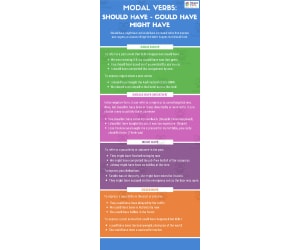
Modal Verbs: Should have, could have, might have Intermediate Lesson Plan
ELA, Grammar, Grade 5, 6, 7, 8, 9, 10, 11, 12, Teacher Tools, Lesson Plans
The Modal Verbs: Should have, could have, might have Intermediate Lesson Plan This is a stellar teaching resource that provides an engaging and deep comprehension approach for all intermediate ESL learners to learn about an essential aspect of grammar. This resource aligns perfectly with Language Arts curriculum objectives and puts a great emphasis on practical real-life situations that can be used in classroom teachings. Key highlights: Centred around the modal verbs 'should have', 'could have', and 'might have'. A robust framework to aid students in reinforcing their understanding of these vital language structures. Detailed usage & importance with focus on comprehensive learning. Included Materials: Three ready-to-print PDF files spanning over 30 pages. The files follow a sequential method ensuring an interactive teaching experience for students. Suitable both for direct teacher instructions or individual/small group self-paced learning sessions. The package also includes assessment exercises intended to consistently check comprehension levels during the lesson. These exercises will ensure practical application of theoretical knowledge regarding modal verbs. Digital Access: A bonus feature – An answer key is provided along with the package for accurate grading as well as immediate feedback during lessons to dispel any potential confusion instantly. To conclude, this Lesson Plan supports implementation across various teaching methods—making it equally efficient whether you're using traditional instruction methods; leaning towards digital orientations; incorporating homework elements; or even using it as part of your homeschool curriculum .
Author TEAM TEFL
Tags Modal Verbs, Grammar Skills, Language Structures, Comprehension Levels, Interactive Learning
Let's Chat Conversation Cards | "Have Fun, Don't Make Fun"
Special Resources, Social Emotional Learning (SEL), Grade 2, 3, 4, 5, 6, Teacher Tools, Lesson Plans
Let's Chat Conversation Cards for "Have Fun, Don't Make Fun." The “Let’s Chat Conversation Cards is a wonderful resource to help students build a positive mindset. This resource is part of a whole program that works towards having students believe they can be compassionate, have perseverance, respect, and responsibility and through it all, achieve great things! Let’s Chat Conversation Cards allows for real conversations through which students may learn of different perspectives and strengthen friendships through truly understanding each other. This resource is a set of Let's Chat Conversation Cards for "Have Fun, Don't Make Fun." There are 57 other Let's Chat resources available, along with matching Respectful Signage listed under "graphics". The "Home Connects" for families is available in English and Spanish. Meridian MS Public Schools has been a partner district of Respectful Ways since October of 2020 and they shared this year’s Panorama Data with us. Meridian students who are utilizing Respectful Ways and PBIS showed great improvements in these 3 key areas: 12% higher GPAs 37% attendance improvements 93% less referrals Respectful Ways is a trauma-informed program: Assessment: Take our survey to assess your school climate. Targeted Results: Your survey identifies modules that meet your students' social and emotional needs. Our trauma-informed online curriculum has been vetted by the Attachment & Trauma Network. Custom Professional Development: We offer workshops with subject-matter experts who use your data to address student behavioral needs and educator wellness needs. Blended Education Interventions: Respectful Ways (RW) integrates seamlessly with different instructional frameworks such as PBIS and MTSS, using evidence and research-based practices. For more information email Pam@RespectfulWays.com or call 404-955-8882.
Author Respectful Ways
Tags Conversation Cards, Spanish, Respectful Ways, Don't Make Fun, Bullying, Compassion, Sel, Let's Chat, Character Education, Social Emotional Learning

I WONDER - What Is An Oil Spill | Animated Video Lesson
Environmental Science, Earth and Environmental Sciences, Science, Grade 5, 6, 7, 8, 9, 10, 11, Lesson Plans, Teacher Tools
Video Introduction An amazing video designed for the students to learn more about STEM. I WONDER - What Is An Oil Spill | Animated Video Lesson Do you like STEM subjects? what is your favorite one? Have you ever tried to plant a seed? If yes, tell us more about it. Or have you ever tried to invent something? If yes, tell us more about it. And how do you think it will help us? Have you ever seen a microorganism under a microscope? What was it? And how it looked like? Mathematics is a marvelous subject. Let' sharpen our brains and solve some equations. Do you like timetable tricks? What is your favorite one? Do you know how to code? Have you ever created an app or a game before? If yes, how was it like? I WONDER - What Is An Oil Spill | Animated Video Lesson The video is perfect for encouraging the researching skills for the students, while learning more about this fantastic topic. I WONDER - What Is An Oil Spill | Animated Video Lesson This friendly designed video is suitable for students at school, homeschooling, and as a group activity. Format Available in MP4 format.
Author Educational Voice
Tags What Is An Oil Spill, What Is An Oil Spill Video, Oil Spill, Oil Spill Facts, Oil Spill Facts For Kids, Oil Spill Video, Oil Spillvideo For Kids, Oil, Oil Facts, Oil Video

I WONDER - What Is A Fraction | Animated Video Lesson
STEM, Fractions, Math, Grade 5, 6, 7, 8, 9, 10, 11, Lesson Plans, Teacher Tools
Video Introduction An amazing video designed for the students to learn more about STEM. I WONDER - What Is A Fraction | Animated Video Lesson Do you like STEM subjects? what is your favorite one? Have you ever tried to plant a seed? If yes, tell us more about it. Or have you ever tried to invent something? If yes, tell us more about it. And how do you think it will help us? Have you ever seen a microorganism under a microscope? What was it? And how it looked like? Mathematics is a marvelous subject. Let' sharpen our brains and solve some equations. Do you like timetable tricks? What is your favorite one? Do you know how to code? Have you ever created an app or a game before? If yes, how was it like? I WONDER - What Is A Fraction | Animated Video Lesson The video is perfect for encouraging the researching skills for the students, while learning more about this fantastic topic. I WONDER - What Is A Fraction | Animated Video Lesson This friendly designed video is suitable for students at school, homeschooling, and as a group activity. Format Available in MP4 format.
Author Educational Voice
Tags What Is A Fraction, What Is A Fraction Video, Fraction, Fraction Video, Fraction Video For Kids, Fraction Facts, Fraction Facts For Kids, Fraction For Kids, Math, Math Video

Circulatory, Digestive & Reproductive Systems - Digital Lesson Plan Gr. 5-8 - FLASH-PC
Science, Life Sciences, Human Body, Grade 3, 4, 5, 6, 7, 8, Teacher Tools, Lesson Plans
Sure, here you go: ``` The Circulatory, Digestive & Reproductive Systems - Digital Lesson Plan Gr. 5-8 - FLASH-PC This is a highly interactive teaching resource designed to navigate the curiosity of students through the miracles of human anatomy. This accessible educational tool ideally caters to educators seeking effective and engaging methods for teaching grades 3rd through 8th about our body systems. Lesson Contents In this digital lesson plan, students venture through the functions of circulatory, digestive, and reproductive systems across an impressively detailed 80-screen page format. Learners acquire an immersive insight into human physiology by: Fully understanding how kidneys and intestines efficiently liberate us from harmful waste Stepping into the complex processes within our stomach turning food into fuel for our bodies Infiltrating the journey of blood as red blood cells The course also answers that age-old question all children ponder eventually – How are babies made? Walking them sensitively yet factually through stages of development offers unique perspectives on reproduction. Interactive Learning Activities This comprehensive package heightens student involvement with numerous interactive activities such as: 'Pre-and post-reading tasks' , 'Test preparation materials' , 'Memory match games' , '); ' Crossword puzzles' and 'Word searches', which challenge their newly learned vocabulary, 'Supplemental video & audio content' for visual and auditory learners. Benefits for Teachers Designed specifically with teachers' needs in mind, this tool can be smoothly implemented as part of a whole group session where lively discussion can be facilitated or used in smaller groups where personalized learning experiences can be curated according to each child's capability pace. It is also suitable for assigning enriching homework exercises. Its comprehensive adherence to state standards and alignment with Bloom's Taxonomy makes it a reliable tool for addressing mandated curriculum goals while fostering higher-order thinking skills among students. Ease of Access This software package is easily downloadable as a PC software file-type. Teachers worldwide will find that enlightening human anatomy sessions are just a click away. With the Circulatory, Digestive & Reproductive Systems - Digital Lesson Plan for grades 5 through 8, teaching human body dynamics becomes an enlightening journey rather than a difficult task. ```
Author Classroom Complete Press
Tags Software (PC)

I WONDER - What Triggers An Avalanche | Animated Video Lesson
Geography, Social Studies, Earth Sciences, Earth and Environmental Sciences, Science, Environmental Science, Grade 2, 3, 4, 5, 6, 7, 8, Lesson Plans, Teacher Tools
Video Introduction An amazing video designed for the students to learn more about natural disasters in different countries. I WONDER - What Triggers An Avalanche | Animated Video Lesson What do you know about this natural disaster? Do you know in which part of the world this could happen? Have you ever read about the safety misusers that we could have to protect ourselves from this natural disaster? If yes, can you tell us more about them? Can you name other natural disasters? If yes, tell us more about where they are likely to happen? And how frequently? Do you like reading about Geography? What is your favorite country in the whole world? If you are going on a trip where it will be? Which country? What you are going to see there? Does this country has a famous place to visit? Do you like reading about Geology? If yes, what is your favourite topic? I WONDER - What Triggers An Avalanche | Animated Video Lesson The video is perfect for encouraging the researching skills for the students, while learning more about this fantastic phenomenon. I WONDER - What Triggers An Avalanche | Animated Video Lesson This friendly designed video is suitable for students at school, homeschooling, and as a group activity. Format Available in MP4 format.
Author Educational Voice
Tags What Triggers An Avalanche, What Triggers An Avalanche Video, Avalanche, Avalanche Facts, Avalanche Facts For Kids, Avalanche Video, Avalanche Video For Kids, Avalanches Facts, Avalanches Video

I WONDER - What Is A Quadrilateral | Animated Video Lesson
STEM, Geometry, Math, Grade 2, 3, 4, 5, 6, 7, 8, Lesson Plans, Teacher Tools
Video Introduction An amazing video designed for the students to learn more about STEM. I WONDER - What Is A Quadrilateral | Animated Video Lesson Do you like STEM subjects? what is your favorite one? Have you ever tried to plant a seed? If yes, tell us more about it. Or have you ever tried to invent something? If yes, tell us more about it. And how do you think it will help us? Have you ever seen a microorganism under a microscope? What was it? And how it looked like? Mathematics is a marvelous subject. Let' sharpen our brains and solve some equations. Do you like timetable tricks? What is your favorite one? Do you know how to code? Have you ever created an app or a game before? If yes, how was it like? I WONDER - What Is A Quadrilateral | Animated Video Lesson The video is perfect for encouraging the researching skills for the students, while learning more about this fantastic topic. I WONDER - What Is A Quadrilateral | Animated Video Lesson This friendly designed video is suitable for students at school, homeschooling, and as a group activity. Format Available in MP4 format.
Author Educational Voice
Tags What Is A Quadrilateral, What Is A Quadrilateral Video, Quadrilateral, Quadrilateral Facts, Quadrilateral Facts For Kids, Quadrilateral Video, Quadrilateral Video For Kids, Quadrilateral Shape, Shapes Video For Kids

Iraq War (2003-2010): The Persian Gulf War Gr. 5-8
Social Studies, History, History: USA, Grade 5, 6, 7, 8, Teacher Tools, Lesson Plans
Iraq War (2003-2010): The Persian Gulf War Gr. 5-8 Introducing a valuable teaching resource designed to stimulate insightful discussion amongst students regarding the Iraq War. This guide goes beyond surface level information, encouraging learners to explore sociopolitical implications and contextual understanding through map activities. Key Features An intricate overview: Maps out significant events during two major military campaigns - The Persian Gulf War and Operation Iraqi Freedom. Bloom's Taxonomy approach: Aligned with state standards, aids in deepening student learning by encouraging analysis and evaluation. Multifunctional use: Suitable for class instruction or small group discussions and can also be assigned as homework for individual learning. Diverse Assessment Methods Include: Crossword puzzles for fun learning experience . Word searches to reinforce key terminologies . Comprehension quizzes with answer keys for easy grading facilitating quick checks on student understanding. The resource further encourages creativity within an educational setting via unique assignments like designing tourism posters for Iraq." A Product Feature Highlight, Immediate Availability & Resource Details: This product is instantly available as a downloadable PDF file spreading across succinctly comprised 28 pages of valuable information, making it an excellent aid within classrooms (specifically grades 5 -8) focused on Social Studies or American history studies.
Author Classroom Complete Press
Tags Iraq War, Persian Gulf War, History Reading, Poetry, Posters
Careers Lesson
Life Studies, Career, Grade 4, 5, 6, 7, 8, Teacher Tools, Lesson Plans
This is a Careers Lesson that any of your students will enjoy. This lesson is ideal for upper elementary and middle school students in 4th – 8th grade. High school students would also learn and benefit from this lesson. The objective of the lesson: Students will research a career of their choice. They will answer several questions about a college of their choice. The focus or transfer of the lesson: Has anyone asked you: What do you want to be when you grow up? The first page will have the instruction and the guided practice. The instruction will explore the advantages of a College Education. Many students will suggest that salary and pay is the greatest advantage of a College Education. You can encourage them to consider additional advantages. A check for understanding is included. This is a great engagement opportunity for students. In order to respond to the check for understanding, students can do a quick write or a brief turn and talk. The second page will be the printable that students need to complete their guided practice. I hope you enjoy! Take A Look at My Best Sellers: “Turning Point: Free Education for the Willing” eBook Spanish: Languages of the Americas eBook Spanish: Visiting Yosemite National Park eBook French & Italian for Travelers eBook Classes Re-Zoomed eBook Visiting Paris, Bordeaux, and Annecy eBook You can find more resources at my storefront here: https://teachsimple.com/contributor/paul-rallion
Author Paul Rallion
Tags Careers Lesson Plan, Lesson Plan Focus, College Education, Check For Understanding, Guided Practice, College Research, Quick Writing Prompts

I WONDER - Are Nails Alive | Animated Video Lesson
Human Body, Life Sciences, Science, Biology, STEM, Grade 2, 3, 4, 5, 6, 7, 8, Lesson Plans, Teacher Tools
Video Overview The human body is full of fascinating wonders to learn. This video is created to help the students recognize the anatomy and the job of the human body. I WONDER - Are Nails Alive | Animated Video Lesson Every part and organ in our human body is vital so let's see how important they are. Have you ever imagined how we look like if we didn't have a skeleton? Did you know that because we have our amazing muscles we can stand! Do you know how many teeth do we have? Have you ever wondered about the food journey inside our body? Can you name all the glands in our body? Why do we have skin? Our nervous system is really good at sending signals. Can you tell us more about it? Are you really good at Mathematics, painting, or any other thing? You should really thank your brain about it! The famous five senses are really doing a great work? Can you explain how every sense works? I WONDER - Are Nails Alive | Animated Video Lesson The video is perfect for encouraging the researching skills for the students, while learning more about our fantastic human body. I WONDER - Are Nails Alive | Animated Video Lesson This friendly designed video is suitable for students at school, homeschooling, and as a group activity. Format Available in MP4 format.
Author Educational Voice
Tags Are Nails Alive, Are Nails Alive Video, Nails, Nail, Nails Facts, Nails Facts For Kids, Nails Video, Nails Video For Kids, Fingernails, Fingernailsfacts
I WONDER - When Was The Christ The Redeemer Statue Built
Geography, Social Studies, Grade 4, 5, 6, 7, 8, 9, 10, Lesson Plans, Teacher Tools
Video Introduction An amazing video designed for the students to learn more about famous places in different countries. I WONDER - When Was The Christ The Redeemer Statue Built | Animated Video Lesson What do you know about this place? Do you know in which part of the world it is? Have you ever visited this place? If yes, can you tell us more about your adventure, and what do you like the most about this place? Do you like reading about Geography? What is your favorite country in the whole world? If you are going on a trip where it will be? Which country? What you are going to see there? Does this country has a famous place to visit? I WONDER - When Was The Christ The Redeemer Statue Built | Animated Video Lesson The activity is perfect for encouraging the researching skills for the students, while learning more about this fantastic place. I WONDER - When Was The Christ The Redeemer Statue Built | Animated Video Lesson This friendly designed video is suitable for students at school, homeschooling, and as a group activity. Format Available in MP4 format.
Author Educational Voice
Rating
Tags When Was The Christ The Redeemer Statue Built, When Was The Christ The Redeemer Statue Built Video, Christ The Redeemer Statue, Christ The Redeemer Statue Video, Christ The Redeemer Statue Facts, Christ The Redeemer Statue Video For Kids

I WONDER - When Was Cleopatra Pharaoh | Animated Video Lesson
History: Ancient, History, Social Studies, History: African, Grade 4, 5, 6, 7, 8, 9, 10, Lesson Plans, Teacher Tools
Video Introduction An amazing video designed for the students to learn more about history. I WONDER - When Was Cleopatra Pharaoh | Animated Video Lesson Do you like history? Which topic do you really enjoy about history? Have you ever read an interesting fact about the Vikings? If yes, can you mention them? What do you like most about the Victorian era? Can you name all the Tudors? Have you ever wondered how people used to live in ancient Japan and ancient China? Do you know any interesting facts about ancient Egyptians and the Pharaohs? Have you ever visited South America? What do you know about Incas and Aztecs? Celtic culture was really one of a kind, can you name any of the places that Celts used to live in? Imagine yourself living during the ancient Roman empire, how your life will look like? Ancient Greece was an amazing place to live in. What do you know about ancient Greek life? I WONDER - When Was Cleopatra Pharaoh | Animated Video Lesson The video is perfect for encouraging the researching skills for the students, while learning more about history. I WONDER - When Was Cleopatra Pharaoh | Animated Video Lesson This friendly designed video is suitable for students at school, homeschooling, and as a group activity. Format Available in MP4 format.
Author Educational Voice
Tags When Was Cleopatra Pharaoh, When Was Cleopatra Pharaoh Video, Cleopatra, Cleopatra Facts, Cleopatra Video, Cleopatra Video For Kids, Cleopatra Facts For Kids, Pharaoh, Pharaohs

Yoga Reading Comprehension Passage - Cored Ed Encyclopedia
ELA, Language Development, Reading Comprehension, Reading, History, Social Studies, Pre-Reading, P.E. & Health, Yoga, Geography, Grade 2, 3, 4, 5, Worksheets & Printables, Worksheets, Teacher Tools, Centers, Activities, Writing Prompts, Assessments, Quizzes and Tests, Quizzes, Lesson Plans
This yoga reading comprehension with lesson plan includes: Visualization (on the front cover) Start your lesson by taking a minute to think and share something about the topic. Read the script aloud (slowly), perhaps prepare some music or sound effects. Student close their eyes and let their imaginations wander. Students open their eyes, read the question aloud and give them a few minutes to complete. Ask a few students to share or keep answers until the end to compare with what they learn in the passage. Quick pause—thousands of Cored Education products are included with your TeachSimple membership. Download links and encyclopedia index available here. Pre-Reading Trivia Students will write down one thing they already know about the subject and then read five more facts and discuss. These facts are fun, and the students will enjoy learning about the subject before reading more. Give 1 minute for students to write what they already know (no pressure—best guess is fine). Read the five facts together. After each fact, do ask a student for their opinion, was it surprising? Set a purpose by asking students to highlight/underline one fact they want to learn more about during the reading. Reading Passage The text is a high-interest reading passage with set paragraphs, roughly three to four paragraphs long. It contains a variety of themes about the topic, anywhere from history to technology. The passage is between 250 and 350 words in length. First, ask students to look at the headings and see what they’ll learn about today. What do they know about the topic/heading? First read options: Teacher read-aloud (best for support). Partner reading (paragraph by paragraph). While reading, students underline important details, and vocabulary words they think may come up in the questions section. Mixed Questions The first question page contains four multiple-choice questions, each with a choice of four answers, and three written response questions that require a sentence or two from the student. Students complete the mcqs first independently, then review quickly as a class. For the 3 written responses, try to get students giving the answer with some form of evidence: “I think ___ because the text says ___.” If students get stuck, send them back to check the passage. Vocabulary Questions Practice seven key words from the text in this section across two activities. First section is scrambled words where students will unscramble three words given a clue for each. The second section is a word to meaning matching activity. Before starting, have some students read out words they underlined in the passage. Ask students to say the word and read aloud the sentence(s) around each word. Ask students to do scrambled words and the matching exercise in pairs then go through answers as a class. For the scrambled spelling task, get four pairs to come up to the board and write the words for extra practice with the other student reading out the clue. For the matching task, prompt students to give full sentences: “I matched ___ with ___ because ___.” Creative Writing In this question, the student will be required to write a five to eight sentence paragraph on a question related to the topic. Before starting, ask students write down 3 key ideas they are going to include in their piece. Ask students for ideas to share around the class to help those struggling. Pro writing expectations: 5–8 sentences At least 2 facts or details from the passage At least 2 vocabulary words from the previous page Students read their paragraphs while classmates listen for facts and vocabulary words. Extension Activities This page is optional for fast finishers or to take home. There are several activities, each one requiring a different skill. Do some, do none, do all, completely optional - but you will feel reassured knowing every possibility is planned for. Includes summary writting question. Answer Key There are answers for the multiple-choice questions, written response questions have sample answers, vocabulary answers and if there is a summary question then a sample summary will be provided as well. Lesson Plan Included Customized lesson plan for this lesson is included. Lesson Snapshot Title: Yoga Genre: Nonfiction (informational text) Subject: Social Studies & Health/SEL (culture and well-being) / Informational Reading Primary Topic: Yoga’s origins, key ideas, and modern practice Estimated Guided Reading Level (A–Z): Q Support pages present: pre-reading trivia, mixed questions, vocabulary activities, creative writing, extension activities, and an answer key. What This Lesson Teaches Best Explains yoga as an old practice that began in India and grew over time. Defines what the word “yoga” can mean in the passage (“yoke” or “union,” like two things working as one). Describes key tools in yoga: body positions, steady breathing, and quiet attention (and how breathing can steady the mind). Introduces “sutras” and explains that Patanjali gathered yoga ideas into short lines meant to be remembered, including a description of yoga as a path with eight “limbs.” Traces how yoga changed in the 1900s, noting that teachers such as Tirumalai Krishnamacharya helped create modern postural yoga with flowing sequences taught in classes. Learning Goals Students will describe what the passage says the word “yoga” can mean. Students will identify tools the passage says yoga uses (body positions, steady breathing, quiet attention). Students will explain why careful breathing matters in some yoga traditions, using details from the text. Students will describe what sutras are and why they were written, according to the passage. Students will summarize how yoga changed in the 1900s based on the passage’s timeline. Key Vocabulary From the Text Sanskrit — a very old language from India. traditions — ways people practice and pass ideas over time. sutras — short lines of teaching meant to be remembered. meditation — a quiet practice to help the mind rest. asana — a steady seat for meditation, not a gym pose. FULL CATALOG OF DOWNLOAD LINKS AND ENCYCLOPEDIA INDEX HERE
Author Cored Education
Rating
Tags Vocabulary, Reading Comprehension, Reading Passages, Lesson Plans, Ela Lesson Plans, Reading Comprehension Lesson Plans, Pre-reading, Social Studies Lesson Plans, Yoga, History
I WONDER - How Were Injuries Treated In The Stone Age | Animated Video
History: African, History, Social Studies, History: Ancient, History: Asian, History: Europe, History: World, Grade 3, 4, 5, 6, 7, 8, 9, Lesson Plans, Teacher Tools
Video Introduction An amazing video designed for the students to learn more about history. I WONDER - How Were Injuries Treated In The Stone Age | Animated Video Lesson Let's use our time machine and trave though time till we get to the ancient world where life began! Have you ever thought about how did ancient Greeks, Romans, Egyptians and even the Viking and Celts use to shower? And how did these amazing civilizations build iconic buildings and invented things that we still use till today like toothpaste? Do you know who was the first king and queen in the world? Which countries they ruled? Who is the most fascinating person lived on Earth? Tell us more about him/her. I WONDER - How Were Injuries Treated In The Stone Age | Animated Video Lesson The video is perfect for encouraging the researching skills for the students, while learning more about history. I WONDER - How Were Injuries Treated In The Stone Age | Animated Video Lesson This friendly designed video is suitable for students at school, homeschooling, and as a group activity. Format Available in MP4 format.
Author Educational Voice
Rating
Tags How Were Injuries Treated In The Stone Age, Stone Age, Stone Age Video, Stone Age Facts, Stone Age Facts For Kids, Stone Age Video For Kids, Stone Age People, Stone Age People Facts, Stone Age People Video
I Wonder - Why Is The Maple Leaf A Symbol Of Canada | Animated Video
Nature & Plants, Life Sciences, Science, Geography, Social Studies, Grade 3, 4, 5, 6, 7, 8, 9, Lesson Plans, Teacher Tools
Video Introduction An amazing video designed for the students to learn more about famous places in different countries. I WONDER - Why Is The Maple Leaf A Symbol Of Canada | Animated Video Lesson What do you know about this place? Do you know in which part of the world it is? Have you ever visited this place? If yes, can you tell us more about your adventure, and what do you like the most about this place? Do you like reading about Geography? What is your favorite country in the whole world? If you are going on a trip where it will be? Which country? What you are going to see there? Does this country has a famous place to visit? I WONDER - Why Is The Maple Leaf A Symbol Of Canada | Animated Video Lesson The activity is perfect for encouraging the researching skills for the students, while learning more about this fantastic place. I WONDER - Why Is The Maple Leaf A Symbol Of Canada | Animated Video Lesson This friendly designed video is suitable for students at school, homeschooling, and as a group activity. Format Available in MP4 format.
Author Educational Voice
Tags Why Is The Maple Leaf A Symbol Of Canada, Why Is The Maple Leaf A Symbol Of Canada Video, Maple Leaf, Maple Leaf Facts, Maple Leaf Video, Canada, Canada Facts, Canada Video, Canada Facts For Kids
Fantasy-Themed Math Escape Room Lesson 3
Math, Multiplication and Division, Division, Multiplication, Grade 4, 5, 6, Lesson Plans, Teacher Tools
Learning Objectives: This fantasy-themed escape room series tells the story of a knight locating four legendary dragons and taking a scale from each of these dragons. It focuses on multiplication and division skills that increase in difficulty with each part. The use of both math skills and critical thinking skills must be applied to win the game. Your mission to collect the four legendary dragon scales takes you to the Trickster—a dragon that lives near Walden Lake. He will try to trick you into leaving without his scale. Will you be able to pass his challenges and earn one of his scales? This is part 3 of a 4-part series. OUTLINE: Introduction (5 minutes) Activity #1: Carnival Game (10 minutes) Activity #2: Ball Toss (10 minutes) Activity #3: Bubbles (15 minutes) Activity #4: Frames (15 minutes) Extra Time Activity: I Want a Bearded Dragon Conclusion/Review (5 minutes) PREVIEW: You make your way by horse to Walden Lake. Near the lake is a carnival style tent set up by the water. (SHARE: Slide #2) You tie your horse’s reins to a nearby tree and peek inside the tent. Carnival music blares loudly as you enter. There is a sign in the middle of the tent that reads: Pass the four challenges to earn a scale. If you can... You turn your attention to what must be the first challenge. It looks like a carnival game. There are some darts and balloons attached to a wall. But this doesn’t quite look like an ordinary balloon pop game. You reach for a dart to pop the first balloon, but a voice says, “not until you speak the correct numbers.” (SHARE: Slide #3)
Author Bundle LLC
Tags Math, Games, Escape Room, Multiplication, Division
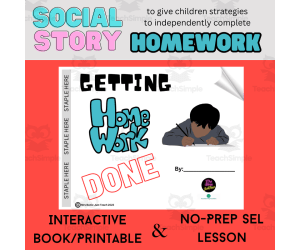
Successful Homework Habits for Students - SEL Lesson - Homework
Special Resources, Social Emotional Learning (SEL), Grade 3, 4, 5, 6, Lesson Plans, Teacher Tools
Do your students struggle with completing their homework? Being able to independently complete homework is a SKILL that needs to be explicitly taught to students - this product does just that! Use this social story to teach students important strategies complete homework independently and with success! About Social Story - Getting Homework Done This Social Story is an interactive book/printable designed to offer students strategies to complete their homework independently with success! Children become the main character of the story as they answer questions, color, draw pictures as they discuss strategies for completing homework independently! This resource is a great behavior support tool to teach at the beginning of the year. This is a great resource to send home with your students to encourage discussions with their parents about good homework habits! WHAT IS INCLUDED: Social Story Explanation Social Story Full Book Print-out Social Story Half-Page Print-out Discussion Guide Google Slides Ages: This book is best suited for ages 7-12. Could also be adapted for ages below and above this range! How I Use this Resource in My Classroom- I like to spend A LOT of time in the beginning of the school year teaching social stories focused positive behavior expectations. I have found that I often assume students have the skills they need to "do school", but am often humbled with the amount of explicit instruction students need surrounding skills like completing their homework. Timing- I usually schedule this social story around the end of the first month of school. I like to make sure I have sent the activity home before back-to-school night so that I can mention it with parents during my presentation. This way, families that did not have the homework discussion at home have the chance to do so... it is so important! Then, I usually re-teach the lesson halfway through the school year when students need a reminder of the important skills! How I teach it - I always teach this social story as a whole class lesson instead of in small groups. The skills included in this social story are really valuable to all students. Included in the product is a discussion guide that will walk you through exactly how to present the information to your students. I always print out the half-page version for each student. I display the teacher slides on my Active Board and the students fill out their book as I fill out the one on the board. Sending the Book Home - One of the cool aspects about this social story is that there are parts for the students to bring home and complete with their families. This fosters really great discussions around good homework habits and parents love having this as a resource. Behavior Remediation Tool - This is one of those social stories that keeps coming back many times throughout the school year. Once a student becomes a repeat offender of not completing their homework, the first thing I do is come back to this resource! I have the student review their social story and see if there are any skills they can sharpen to help them become successful at completing their homework on their own again. It opens up a great place for honest conversation and helps you determine what barriers the student is facing keeping them from being successful at this essential component of being a student. I hope you enjoy this resource! For more like it, please visit my store at Mrs Bonie Just Teach.
Author Mrs Bonie Just Teach
Tags Social Story , Homework , Complete Homework , Homework Strategies , Help Students With Homework , Independent Homework, Sel Lesson , Sel Activity , Parent Support Tool