2,827 products added recently
Geography Lesson Games
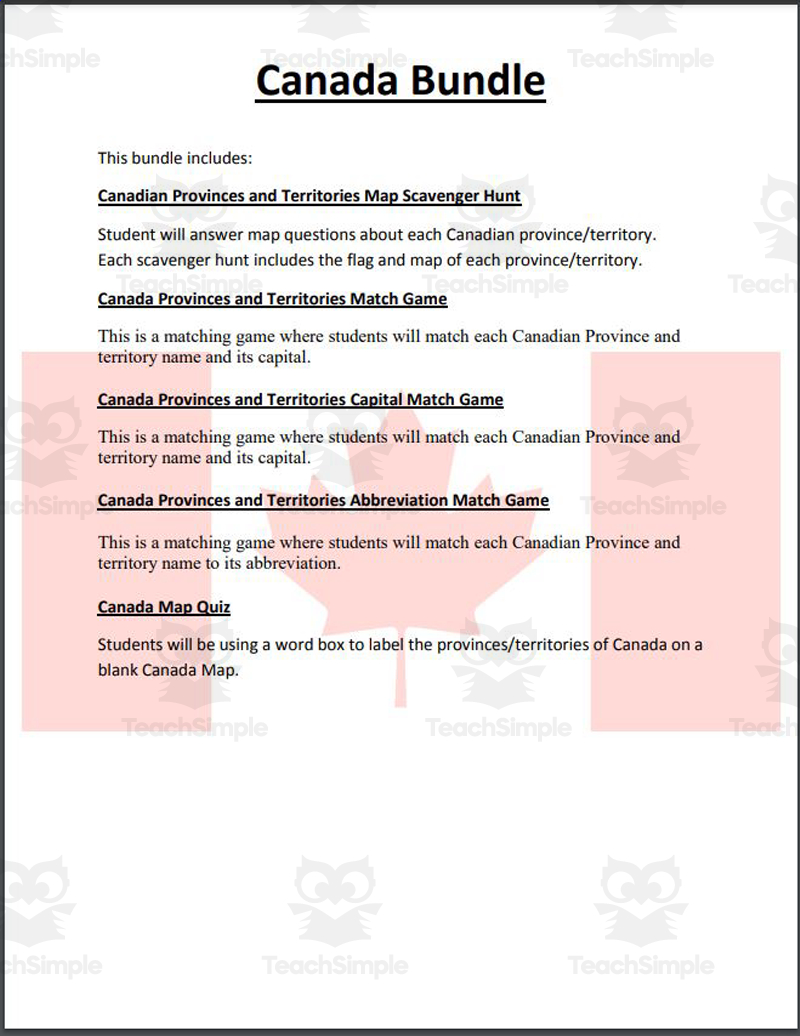
Integrate math and geography with lesson games that challenge students to apply numerical skills in geographical contexts. These activities promote critical thinking and make learning multidisciplinary. Use them to add excitement and variety to your lessons.
All About The Petra | Geographical Wonders Video Lesson
Social Studies, Geography, Not Grade Specific, Lesson Plans, Teacher Tools
Get ready for an enthralling digital adventure with the "All About The Petra: Geographical Wonders Video Lesson"! This digital resource, designed especially for educators, offers a marvelous way to pique students' interest in geography by exploring the breathtaking ancient city of Petra. In this top-notch 10-minute animated video lesson, your learners will be exposed to important geographical concepts such as landforms and natural wonders while uncovering the rich history behind awe-inspiring sites like Petra. Boasting lively visuals and well-researched content, this video is perfect for sparking imagination and curiosity among budding geographers. Ideal for use as a supplementary tool or review material in middle-grade geography lessons that focus on landmarks and landforms worldwide, the "All About The Petra: Geographical Wonders Video Lesson" is an indispensable part of any educator's digital resources collection. Don't miss out on this amazing chance to give your students a fresh viewpoint on one of Earth's most magnificent wonders – head over to TeachSimple.com and download it now!
Author Educational Voice
Tags Petra, Arabia, Social Studies Lesson, Geography Lesson, Artifacts
Atlantis Reading Comprehension Passage - Cored Ed Encyclopedia
ELA, Language Development, Reading Comprehension, Reading, Social Studies, Writing, Vocabulary, Geography, History, History: Ancient, Grade 2, 3, 4, 5, Worksheets & Printables, Worksheets, Teacher Tools, Centers, Activities, Writing Prompts, Assessments, Quizzes and Tests, Quizzes, Lesson Plans
This Atlantis reading comprehension with lesson plan includes: Visualization (on the front cover) Start your lesson by taking a minute to think and share something about the topic. Read the script aloud (slowly), perhaps prepare some music or sound effects. Student close their eyes and let their imaginations wander. Students open their eyes, read the question aloud and give them a few minutes to complete. Ask a few students to share or keep answers until the end to compare with what they learn in the passage. Quick pause—thousands of Cored Education products are included with your TeachSimple membership. Download links and encyclopedia index available here. Pre-Reading Trivia Students will write down one thing they already know about the subject and then read five more facts and discuss. These facts are fun, and the students will enjoy learning about the subject before reading more. Give 1 minute for students to write what they already know (no pressure—best guess is fine). Read the five facts together. After each fact, do ask a student for their opinion, was it surprising? Set a purpose by asking students to highlight/underline one fact they want to learn more about during the reading. Reading Passage The text is a high-interest reading passage with set paragraphs, roughly three to four paragraphs long. It contains a variety of themes about the topic, anywhere from history to technology. The passage is between 250 and 350 words in length. First, ask students to look at the headings and see what they’ll learn about today. What do they know about the topic/heading? First read options: Teacher read-aloud (best for support). Partner reading (paragraph by paragraph). While reading, students underline important details, and vocabulary words they think may come up in the questions section. Mixed Questions The first question page contains four multiple-choice questions, each with a choice of four answers, and three written response questions that require a sentence or two from the student. Students complete the mcqs first independently, then review quickly as a class. For the 3 written responses, try to get students giving the answer with some form of evidence: “I think ___ because the text says ___.” If students get stuck, send them back to check the passage. Vocabulary Questions Practice seven key words from the text in this section across two activities. First section is scrambled words where students will unscramble three words given a clue for each. The second section is a word to meaning matching activity. Before starting, have some students read out words they underlined in the passage. Ask students to say the word and read aloud the sentence(s) around each word. Ask students to do scrambled words and the matching exercise in pairs then go through answers as a class. For the scrambled spelling task, get four pairs to come up to the board and write the words for extra practice with the other student reading out the clue. For the matching task, prompt students to give full sentences: “I matched ___ with ___ because ___.” Creative Writing In this question, the student will be required to write a five to eight sentence paragraph on a question related to the topic. Before starting, ask students write down 3 key ideas they are going to include in their piece. Ask students for ideas to share around the class to help those struggling. Pro writing expectations: 5–8 sentences At least 2 facts or details from the passage At least 2 vocabulary words from the previous page Students read their paragraphs while classmates listen for facts and vocabulary words. Extension Activities This page is optional for fast finishers or to take home. There are several activities, each one requiring a different skill. Do some, do none, do all, completely optional - but you will feel reassured knowing every possibility is planned for. Includes summary writting question and additional facts. Answer Key There are answers for the multiple-choice questions, written response questions have sample answers, vocabulary answers and if there is a summary question then a sample summary will be provided as well. Lesson Plan Included Customized lesson plan for this lesson is included. Lesson Snapshot Title: Atlantis Genre: Nonfiction (informational passage about a myth/story’s origins and meaning) Subject: Reading (Informational Text) / Social Studies (Myths & ancient world references) Primary Topic: Atlantis in writing, details, and “lesson” meaning Estimated Guided Reading Level (A–Z): T What This Lesson Teaches Best Identifying where an idea “first appears in writings” and tracking its source (the passage names Plato and two dialogues). Visualizing and describing setting details from informational text (rings of water, bridges, gates, canals, temples, palace). Cause/effect in a legend: how pride and disrespect lead to destruction (earthquakes, floods, island vanishes; travel becomes hard). Distinguishing story-meaning vs scientific proof: stories can warn; science looks for “rocks, ruins, and dates.” Understanding how a name becomes a symbol for “anything lost and longed for” and why mysteries keep people thinking. Learning Goals Students will identify where the Atlantis story first appears and name the two dialogues the passage lists. Students will describe Atlantis’s “circles of water” using details from the passage (moats, bridges, gates, canals). Students will explain what events cause the island to vanish and how the water changes afterward. Students will summarize why people keep hunting for a real location and what “most scholars” think instead. Students will compare what the passage says stories do versus what science asks for. Students will explain how the passage describes Atlantis as a “shortcut” for things that are lost. Key Vocabulary From the Text dialogues — written conversations between speakers. moats — water ditches around a place. canals — water paths that boats can travel on. clogged — blocked so movement becomes difficult. scholars — people who study a topic deeply. FULL CATALOG OF DOWNLOAD LINKS AND ENCYCLOPEDIA INDEX HERE
Author Cored Education
Rating
Tags Vocabulary, Reading Comprehension, Reading Passages, Lesson Plans, Ela Lesson Plans, Reading Comprehension Lesson Plans, Pre-reading, History, History Lesson Plans, Geography
All About The Lovely Louvre | Geographical Wonders Video Lesson
Social Studies, Geography, Common Core, Not Grade Specific, Lesson Plans, Teacher Tools
All About The Lovely Louvre | Geographical Wonders Video Lesson All About The Lovely Louvre | Geographical Wonders Video Lesson is a dynamic and interactive resource designed to boost students' understanding of geographical wonders. It casts a spotlight on the remarkable subject of the globally known Louvre. Through impressive visuals and an exciting narrative, this teaching tool ignites life into common social studies content. An Engaging Educational Video In this 8-minute animated video , learners are led into the world of Louvre's geographical relevance. This lesson details how landmarks contribute to global culture and history by elucidating this iconic museum's importance that stands for more than its collection of arts; it highlights elements like infrastructure, location, and cultural significance that categorizes it as an absolute geographical marvel. Packed with detail yet short in duration, educators would find ease inserting north application into different educational platforms. A Learning Resource Flexible for Different Teaching Methods The video lesson can be applied as component of a whole-group instruction. Scaled down for small group discussions or personal tasks, Offers ample opportunities for critical thinking exercises or diverse learning strategies, Eases inclusion in plans like differentiated instruction or Option Choice activities creating significant learning occurrences. A Tool That Promotes Progressive Learning Methods Across Grade Levels & Curriculums Regardless if labeled “not grade-specific”, various level teachers could incorporate All About The Lovely Louvre | Geographical Wonders Video Lesson into their curriculum modification efforts— adjusting content complexity according to their pupils' capabilities while realizing Key Common Core State Standards (CCSS) proficiency levels under Social Studies curriculum. Convenient & Accessible Digital Format Offered in an MP4 format, it is easily accessible since most equipment existing today readily supports such files, providing a definition of convenience for both public educators and home-schooling parents who are in search to include invigorating yet handy sources vital for building key geography understanding skills and promoting international consciousness among learners. To summarize, All About The Lovely Louvre | Geographical Wonders Video Lesson models how cutting-edge technology meets education wherein abstract ideas are broken down into relatable instances securing effective learning engagement, paving the way for students to ultimately take that big jump towards greater understanding.
Author Educational Voice
Tags Louvre, Geographical Wonders, Social Studies, Global Awareness, Educational Video
Antarctica Reading Comprehension Passage - Cored Ed Encyclopedia
ELA, Language Development, Reading Comprehension, Reading, Social Studies, Writing, Pre-Reading, Vocabulary, Geography, History, Grade 2, 3, 4, 5, Worksheets & Printables, Worksheets, Teacher Tools, Centers, Activities, Writing Prompts, Assessments, Quizzes and Tests, Quizzes, Lesson Plans
This Antarctica reading comprehension with lesson plan includes: Visualization (on the front cover) Start your lesson by taking a minute to think and share something about the topic. Read the script aloud (slowly), perhaps prepare some music or sound effects. Student close their eyes and let their imaginations wander. Students open their eyes, read the question aloud and give them a few minutes to complete. Ask a few students to share or keep answers until the end to compare with what they learn in the passage. Quick pause—thousands of Cored Education products are included with your TeachSimple membership. Download links and encyclopedia index available here. Pre-Reading Trivia Students will write down one thing they already know about the subject and then read five more facts and discuss. These facts are fun, and the students will enjoy learning about the subject before reading more. Give 1 minute for students to write what they already know (no pressure—best guess is fine). Read the five facts together. After each fact, do ask a student for their opinion, was it surprising? Set a purpose by asking students to highlight/underline one fact they want to learn more about during the reading. Reading Passage The text is a high-interest reading passage with set paragraphs, roughly three to four paragraphs long. It contains a variety of themes about the topic, anywhere from history to technology. The passage is between 250 and 350 words in length. First, ask students to look at the headings and see what they’ll learn about today. What do they know about the topic/heading? First read options: Teacher read-aloud (best for support). Partner reading (paragraph by paragraph). While reading, students underline important details, and vocabulary words they think may come up in the questions section. Mixed Questions The first question page contains four multiple-choice questions, each with a choice of four answers, and three written response questions that require a sentence or two from the student. Students complete the mcqs first independently, then review quickly as a class. For the 3 written responses, try to get students giving the answer with some form of evidence: “I think ___ because the text says ___.” If students get stuck, send them back to check the passage. Vocabulary Questions Practice seven key words from the text in this section across two activities. First section is scrambled words where students will unscramble three words given a clue for each. The second section is a word to meaning matching activity. Before starting, have some students read out words they underlined in the passage. Ask students to say the word and read aloud the sentence(s) around each word. Ask students to do scrambled words and the matching exercise in pairs then go through answers as a class. For the scrambled spelling task, get four pairs to come up to the board and write the words for extra practice with the other student reading out the clue. For the matching task, prompt students to give full sentences: “I matched ___ with ___ because ___.” Creative Writing In this question, the student will be required to write a five to eight sentence paragraph on a question related to the topic. Before starting, ask students write down 3 key ideas they are going to include in their piece. Ask students for ideas to share around the class to help those struggling. Pro writing expectations: 5–8 sentences At least 2 facts or details from the passage At least 2 vocabulary words from the previous page Students read their paragraphs while classmates listen for facts and vocabulary words. Extension Activities This page is optional for fast finishers or to take home. There are several activities, each one requiring a different skill. Do some, do none, do all, completely optional - but you will feel reassured knowing every possibility is planned for. Includes summary writting question and additional facts. Answer Key There are answers for the multiple-choice questions, written response questions have sample answers, vocabulary answers and if there is a summary question then a sample summary will be provided as well. Lesson Plan Included Customized lesson plan for this lesson is included. Lesson Snapshot Title: Antarctica Genre: Nonfiction (informational passage) Subject: Science / Geography (Polar environments; exploration & research) Primary Topic: Exploration, South Pole, treaty, and ice core science Estimated Guided Reading Level (A–Z): S Support pages noted in the PDF: visualization and pre-reading trivia (pp. 1–2), mixed questions (p. 4), vocabulary activities (p. 5), creative writing (p. 6), extension activities + summary box (p. 7), answer key (p. 8). Support-page QA notes: The vocabulary activity includes “Expedition,” which does not appear in the passage; one mixed question asks why compasses “spin strangely,” which the passage does not explain. What This Lesson Teaches Best How Antarctica went from a blank spot on maps to a confirmed icy continent described by explorers. Key physical features of the continent: cold, dry, windy conditions; little inland snow; land “high above sea level” like a “frozen plateau.” A short exploration timeline using dates and evidence (1820 reports of ice shelves; 1895 people stepped onto the continent). How journeys toward the South Pole were described (sleds, dogs, strange compasses) and what happened in December 1911 and afterward. Why international science cooperation matters there, including the International Geophysical Year, the Antarctic Treaty, and what ice cores can reveal through layers. Learning Goals Students will describe why early mapmakers could not point to land far south “with certainty.” Students will identify details that describe Antarctica’s inland climate and land shape (dry, windy, little snow; “frozen plateau”). Students will retell key events from the passage’s timeline using dates (1820, 1895, 1911, 1959). Students will explain what ships reported seeing in 1820 and how the author describes the coastal environment. Students will describe what happened when Roald Amundsen reached the South Pole and what Robert Falcon Scott found later. Students will explain what the passage says nations promised in 1959 and why ice cores are compared to a “frozen calendar.” Key Vocabulary From the Text certainty — being sure something is true. plateau — a high, flat area of land. shelves — wide, flat sheets of ice. treaty — an agreement between countries. supplies — needed materials stored for later use. FULL CATALOG OF DOWNLOAD LINKS AND ENCYCLOPEDIA INDEX HERE
Author Cored Education
Rating
Tags Vocabulary, Reading Comprehension, Reading Passages, Lesson Plans, Ela Lesson Plans, Reading Comprehension Lesson Plans, Pre-reading, Geography, Geography Lesson Plans
Passport Series: Asia
Social Studies, Geography, Grade 5, 6, 7, 8, 9, Teacher Tools, Lesson Plans
The Passport Series: Asia The Passport Series: Asia is a comprehensive teaching resource aimed to arouse world exploration in students. The curriculum encompasses eight detailed study books, covering more than 50 countries across all seven continents, from North America to Australia. This dynamic approach caters specifically to middle and high school levels, making it an ideal fit for public and homeschool educators teaching Social Studies with a heavy emphasis on Geography. This meticulously crafted unit incorporates deep studies into each country's history, culture, language, cuisine and much more. The educational journey starts with Asia as the starting destination. These insights about Asian countries go far beyond general trivia; enabling learners to dive into different geographic regions from a position of familiarity rather forum distant observers. Features of The Passport Series: Cross-curricular reinforcements: Includes reproducible pages that are filled with content that reinforces knowledge across different areas of study. Cultural immersion: Provides not just information but also cultural immersion by including recipes and games related to the locale being studied. Educational flexibility: Offers unique ideas for extension activities which can be used in whole group instructions or small group learning - even as homework assignments! A distinguishing aspect of the Passport Series: Asia is its gorgeous illustrations and photographs. These visual aids give students a tangible sense of each location they're studying – almost like they're travelling half-way around the globe! If you're an educator aiming at showcasing various cultures and landscapes worldwide - The Passport Series: Asia is one series you won't want your pupils to miss! Allowing them to become educated travellers who appreciate global diversity!
Author Classroom Complete Press
Tags PDF
Mapping Skills with Google Earth - Digital Lesson Plan Gr. PK-2 | MAC Software
Social Studies, Geography, Kindergarten, Preschool, Grade 1, 2, Teacher Tools, Lesson Plans
Mapping Skills with Google Earth - Digital Lesson Plan Gr. PK-2 | MAC Software An innovative teaching resource designed for prekindergarten to grade two educators. With the ideal blend of technology and conventional teaching concepts, it offers an unparalleled learning experience. Interactive Lesson Modules A comprehensive module featuring 80 interactive screens elaborating on baseline map reading skills. Covers basic elements like symbols, legends, and compass rose. Advanced applications like mapping a classroom or figuring out daily routes to school. Diverse Geographical Features & Landforms Coverage of geographical features including North America's Great Lakes. Exploration of familiar landforms involves mapping continents and oceans. The students are encouraged to interact with lessons through activities held before and after each reading section. Incorporation of Google Earth Components: This standout feature merges Google Earth components into lesson plans resulting in engaging interactive map activities! Your Interactive Whiteboard brand can foster student participation throughout the course. It proves beneficial during every class session or even as homework assignments! Then there are quizzes for comprehension testing based on Bloom's Taxonomy principles—and even a memory match game—to ensure your pupils consolidate their learnings! The software comes ready-made screen supports English & Spanish text-to-speech functionalities making it inclusive for diverse classrooms where language could have been an obstacle otherwise! Furnished in user-friendly zip file format— hosted on MAC platform—for immediate implementation at your convenience! Social studies subject extensively focusing on the sub-subject "Geography" This innovative tool revolutionizes conventional learning methods, making geographic studies an immersive experience for students! Designed to align with State Standards, this software smartly fuses technology's benefits with curriculum requirements!
Author Classroom Complete Press
Tags Digital Mapping Skills, Digital Lesson Plan, Social Studies Lesson, Google Earth Activity, Geography Lesson
Aztecs Reading Comprehension Passage - Cored Ed Encyclopedia
ELA, Language Development, Reading Comprehension, Reading, Social Studies, Writing, Vocabulary, Geography, History, History: Ancient, Grade 2, 3, 4, 5, Worksheets & Printables, Worksheets, Teacher Tools, Centers, Activities, Writing Prompts, Assessments, Quizzes and Tests, Quizzes, Lesson Plans
This Aztecs reading comprehension with lesson plan includes: Visualization (on the front cover) Start your lesson by taking a minute to think and share something about the topic. Read the script aloud (slowly), perhaps prepare some music or sound effects. Student close their eyes and let their imaginations wander. Students open their eyes, read the question aloud and give them a few minutes to complete. Ask a few students to share or keep answers until the end to compare with what they learn in the passage. Quick pause—thousands of Cored Education products are included with your TeachSimple membership. Download links and encyclopedia index available here. Pre-Reading Trivia Students will write down one thing they already know about the subject and then read five more facts and discuss. These facts are fun, and the students will enjoy learning about the subject before reading more. Give 1 minute for students to write what they already know (no pressure—best guess is fine). Read the five facts together. After each fact, do ask a student for their opinion, was it surprising? Set a purpose by asking students to highlight/underline one fact they want to learn more about during the reading. Reading Passage The text is a high-interest reading passage with set paragraphs, roughly three to four paragraphs long. It contains a variety of themes about the topic, anywhere from history to technology. The passage is between 250 and 350 words in length. First, ask students to look at the headings and see what they’ll learn about today. What do they know about the topic/heading? First read options: Teacher read-aloud (best for support). Partner reading (paragraph by paragraph). While reading, students underline important details, and vocabulary words they think may come up in the questions section. Mixed Questions The first question page contains four multiple-choice questions, each with a choice of four answers, and three written response questions that require a sentence or two from the student. Students complete the mcqs first independently, then review quickly as a class. For the 3 written responses, try to get students giving the answer with some form of evidence: “I think ___ because the text says ___.” If students get stuck, send them back to check the passage. Vocabulary Questions Practice seven key words from the text in this section across two activities. First section is scrambled words where students will unscramble three words given a clue for each. The second section is a word to meaning matching activity. Before starting, have some students read out words they underlined in the passage. Ask students to say the word and read aloud the sentence(s) around each word. Ask students to do scrambled words and the matching exercise in pairs then go through answers as a class. For the scrambled spelling task, get four pairs to come up to the board and write the words for extra practice with the other student reading out the clue. For the matching task, prompt students to give full sentences: “I matched ___ with ___ because ___.” Creative Writing In this question, the student will be required to write a five to eight sentence paragraph on a question related to the topic. Before starting, ask students write down 3 key ideas they are going to include in their piece. Ask students for ideas to share around the class to help those struggling. Pro writing expectations: 5–8 sentences At least 2 facts or details from the passage At least 2 vocabulary words from the previous page Students read their paragraphs while classmates listen for facts and vocabulary words. Extension Activities This page is optional for fast finishers or to take home. There are several activities, each one requiring a different skill. Do some, do none, do all, completely optional - but you will feel reassured knowing every possibility is planned for. Includes summary writting question and additional facts. Answer Key There are answers for the multiple-choice questions, written response questions have sample answers, vocabulary answers and if there is a summary question then a sample summary will be provided as well. Lesson Plan Included Customized lesson plan for this lesson is included. Lesson Snapshot Title: Aztecs Genre: Nonfiction (informational passage) Subject: Social Studies (Ancient Civilizations) / Reading (Informational Text) Primary Topic: Building lake-city life and what happened later Estimated Guided Reading Level (A–Z): S What This Lesson Teaches Best How a wandering Nahua group (the Mexica) chose a home based on a sign and began building a city on a lake. How people adapted to living on water using chinampas , canals, and causeways to grow food and move around. How Triple Alliance (between Tenochtitlan , Texcoco , and Tlacopan ) helped the capital grow powerful through victories and tribute. Using headings to track a sequence: founding and growth, alliance and power, then conflict and destruction, and what remains today. Connecting past to present by noting how the eagle-and-cactus story lives on and how archaeologists still uncover remains beneath modern streets. Learning Goals Identify the sign the Mexica saw that helped them choose their home. Describe how builders expanded the island and how chinampas helped crops grow near home. Explain how canals and causeways helped the city get fresh water and connect to the shore. Describe how tribute (examples named in the text) helped the capital grow powerful. Describe what the passage says happened after Spanish explorers arrived, including the year the city fell. Explain what the passage says exists today where the city once stood. Key Vocabulary From the Text chinampas — raised garden beds packed with mud. causeways — broad raised roads that connect land and water. tribute — goods sent to rulers as payment. levees — walls or banks that help stop floods. archaeologists — people who uncover and study the past. FULL CATALOG OF DOWNLOAD LINKS AND ENCYCLOPEDIA INDEX HERE
Author Cored Education
Rating
Tags Vocabulary, Reading Comprehension, Reading Passages, Lesson Plans, Ela Lesson Plans, Reading Comprehension Lesson Plans, Pre-reading, History, History Lesson Plans, Geography
Mapping Skills with Google Earth - Digital Lesson Plan Gr. 3-5 - FLASH-PC
Social Studies, Geography, Grade 3, 4, 5, Teacher Tools, Lesson Plans
Mapping Skills with Google Earth - Digital Lesson Plan Gr. 3-5 - FLASH-PC A comprehensive learning resource perfect for third to fifth-grade educators who teach geography or social studies. This interactive 80 screen-page digital lesson plan provides an in-depth exploration of reading and creating maps. Students will delve into the tangible elements found on a map such as lines of latitude, longitude, as well as unique geographic time zones. Enhancing geographical knowledge, learners get to explore different forms of maps including topographic and choropleth ones which depict physical features and demographical data respectively. The lesson plan also comprises an extensive study about North America's states and provinces along with a worldly view encapsulating various countries contributing to enhancing students' geographical awareness. Designed to work seamlessly on any brand of interactive whiteboard, this resource enables maximum student involvement in the learning process. To make lessons more engaging it includes reading passages, pre-and post-reading activities along with a Google Earth™ component that adds another exciting layer to teaching geographical concepts. Supplementary features such as test prep materials, memory match games, crossword puzzles and word searches turn revision sessions into fun-filled exercises. Supportive videos give more depth to text content while also catering for visual learners. This versatile teaching resource can be seamlessly incorporated into whole group discussions or small group tasks throughout the school days. It could also prove beneficial as insightful homework assignments reinforcing topics covered at school that day. This digital lesson plan is designed specifically for PC use aligning successfully with state standards delivering not just proficient education but fostering boundless enthusiasm towards Social Studies amongst students! Bringing convenience a little closer home for globally diverse classrooms is English and Spanish text-to-speech availability making this tool highly accessible. Finished off by providing an opportunity for comprehension assessment through quizzes ensures solidification of learned material before moving forward ensuring necessary academic achievements according To Bloom's Taxonomy requirements are met.
Author Classroom Complete Press
Tags Software (PC)
Australia: Regions
Social Studies, Geography, Common Core, Grade 5, 6, 7, 8, Teacher Tools, Lesson Plans
Australia: Regions - An Engaging Teaching Resource Australia: Regions is a comprehensive educational material that primarily targets Grade 5 to Grade 8 students. It delivers an extensive understanding of Australia's geographical diversity, intriguing facts about its regions and cities. Metaphorically using roadways and waterways, the resource ensures a unique voyage through Australia's expanse. This slice from our complete lesson plan titled "Australia" provides an intricate perspective of Australia’s position in the world. The knowledge offered not just encapsulates geographical specifics but delves into physical features, wildlife types, vegetation forms, population demographics, and diverse climatic patterns across different Australian regions Socio-Environmental Discussions The discussions go beyond traditional geography lessons including significant socio-environmental interactions impacting both locally and globally. Simple yet accurate language elucidates concepts like movement of goods & services and the difference between natural versus manufactured resources. Engagement: The ultimate goal is to ensure active engagement. Each segment contains engaging activities coupled with comprehensive reading passages. Crossword Puzzles and Word Search Games: These encourage reflection upon learnings. Comprehension Quiz: At every chapter's end consolidates all information assimilated till then. Firmly Grounded in Educational Standards The content rigorously abides by Common Core State Standards while systematically adhering to Bloom’s Taxonomy framework enhancing instructional quality effectively hence filling every teachable moment with value-added learning objectives. It fits seamlessly into various instructional situations - group-based classroom sessions or small-student focus groups or even personal homework assignments! Easily Accessible Format Everything is neatly bundled into a single PDF file containing 29 printable pages for ready-to-teach convenience, making Australia: Regions a simple, yet comprehensive solution to imparting complex geographical concepts with utmost ease.
Author Classroom Complete Press
Tags Social Studies, Australia, Geography, Regions, Social Studies Quiz
North America: Place Gr. 5-8
Social Studies, Geography, Grade 5, 6, 7, 8, Teacher Tools, Lesson Plans
North America: Place Gr. 5-8 - An Educational Bridge to Geography and Social Studies North America: Place Gr. 5-8 offers students in Grades 5 through 8 a comprehensive understanding of North American geography. This versatile teaching resource encourages active learning by incorporating maps, interactive tasks, and historical analysis in its lessons. Journey Across the Continent With this unique educational tool, students embark on a journey from the northern tundras to the Yucatan Peninsula. They broaden their geographical knowledge and navigation skills by exploring diverse physical features through detailed maps. Fostering Spatial Thinking The lessons encourage spatial thinking as students locate North American countries and list them in order of their geographical positions - from north to south. This essential skill sharpens analytical prowess that is essential for geographers or any individual interacting with different environments. Versatile Usage This resource can be adapted for whole group teaching or personalized learning scenarios like small group work or individual homework assignments. The combination of academic theory and interactive tasks provides educators with an efficient tool for delivering engaging geography lessons about North America. An Integration of History & Geography In addition to mapping physical terrain, North America: Place Gr. 5-8 delves into why certain human settlements emerged where they did throughout history, thereby integrating historical analysis into geography instruction. Focal Points: Human-environment interactions: Students will utilize logical reasoning while deciding whether situations presented are positive or negative based on provided scenarios—an essential life skill honed under social studies curricula. Graphic Organizers: A variety of graphic organizers, like fishbone diagrams and web organizers, aid systematic information processing among students. US Region Maps: Reviewing these help students understand nationwide transport routes and overall geographic proficiency within the country. Aligning with State Standards and Fostering Engagement This resource aligns perfectly with State Standards and Five Themes of Geography. It offers several engagement opportunities through crosswords, word searches, comprehension quizzes. Additionally, it provides a thorough answer key for instructors—an added advantage for efficient teaching. In Conclusion: Combining Social Studies and Geography, North America: Place Gr. 5-8 helps students in Grades 5 to 8 develop an overall understanding of North America's role in global ecology.
Author Classroom Complete Press
Tags PDF
Mapping Skills with Google Earth - Digital Lesson Plan Gr. 6-8 | PC Software
Social Studies, Geography, Grade 6, 7, 8, Teacher Tools, Lesson Plans
Interactive Digital Lesson Plan: Enhancing Mapping Skills for Grades 6-8 Description: A blended learning experience that combines social studies and geography, targeting public school educators and homeschooling parents. An 80-screen page digital lesson plan provides a comprehensive understanding of map reading. Teaches mapping exercises at local, national, continental, and global levels. Structure of the Lesson Plan This rich resource employs various strategies to engage pupils deeply. Each ready-made screen includes: Brief Reading Passages Discussion Activities before and after the passages A Google Earth™ component to give students a real-world context Crossword Puzzles and Memory Match Games for added fun Test Prep rooted in State Standards guidelines for assessment purposes The Flexibility Advantage:This product can be utilized during whole group instruction or small group work or as individual homework tasks. Inclusivity through Multilingual Functionality Built-in English-Spanish text-to-speech functionalities enhance accessibility in diverse classroom settings or bilingual households without disrupting continuity. Evaluation & Pedagogical Approach Assign comprehension quizzes after practicing on this platform as checkpoints to gauge each student's progression. Additionally, the content aligns with Bloom's Taxonomy pedagogical structure which aids deeper understanding. Digital Format:All resources are conveniently packaged in one zip file compatible with PC software. In conclusion, this digital curriculum supplement aids educators in creating engaging geography lessons while honing their students' mapping acumen within an interactive milieu.
Author Classroom Complete Press
Tags Digital Lesson Plan, Mapping Skills, Google Earth Activity, Digital Mapping Skills, Geography Lesson Plan, Maps Lesson Plans
Passport Series: Western Europe
Social Studies, Geography, Grade 5, 6, 7, 8, 9, Teacher Tools, Lesson Plans
Passport Series: Western Europe Passport Series: Western Europe is an enlightening teaching resource, designed to spark curiosity and broaden the minds of grade five to nine students. It covers a vast domain exploring language, food, culture, history, and geography across more than 50 countries. In-Depth Studies With Inclusive Activities The product boasts eight comprehensive books intended for in-depth studies about each country's unique attributes. The approach isn't just factual but includes activities: Experimental recipes: Taste buds are stimulated with delicious dishes from various regions. Educational games: Engaging games provide an interactive layer to enrich learning experiences. Versatile Delivery & Adaptability The Passport Series: Western Europe comes in a ready-to-print 189-page PDF file for accessible delivery of lesson plans according to teacher preferences. It supports various instructional arrangements – whole-group discussion or assignments for smaller groups or homework. Promoting Continuous Learning The series fosters continuous learning by suggesting ideas for extension activities. These opportunities cultivate valuable research skills among young learners beyond the classroom walls. Vivid Storytelling & Cross- Curriculum Opportunities Vivid illustrations and photographs enable student immersion within diverse societies while fostering global citizenship. The reproducible pages provide opportunities to connect lessons with other subjects aligning general education goals - making it a cornerstone tool not only for geography ages but also social studies instructors. In Conclusion... "Passport Series: Western Europe is more than just your average teaching tool; it transforms your classroom into a platform where every learner can metamorphose into an informed globetrotter ready to navigate our shared global village confidently. Consider this resource as a true investment in advancing the scope of education delivered to budding minds."
Author Classroom Complete Press
Tags Social Studies, Geography, Metric Conversions, Culture, Religion Reading Passage
South America: Place Gr. 5-8
Social Studies, Geography, Grade 5, 6, 7, 8, Teacher Tools, Lesson Plans
"South America: Place Gr. 5-8" Primarily designed for grade levels five through eight, this is a dynamic teaching resource focusing on South American geography. It blends cross-curricular topics such as environmental awareness and the diverse wildlife of the region. Component Details A part of a comprehensive lesson plan about South America, offering an intimate view into unique aspects of this world region like the distinguished tourist hotspot Caribbean Region. Geographical comparisons within South America itself are made to provide students with a well-rounded understanding of different terrains, e.g., Andes Mountains and Pampas. Learners get research assignments investigating globally renowned water bodies like Amazon River - enhancing their knowledge about aspects drawing worldwide attention today! The Wildlife Organizer: A pre-planned feature introducing pupils to diverse life forms across varied landscapes - right from Andes mountainsides & Amazon Rainforests to vast expanses across Pampas grasslands! The curriculum also brings urban aspects like subway transportation systems in specific cities such as Caracas (Venezuela) or Rio de Janeiro (Brazil). Fulfilling Learning Process This lesson plan can be used for whole group instruction or small group sessions; use it even for assigning related homework projects! 'Regions Change Over Time':An organizer-shaped tool aiding graphical representation between today's society against ancient civilizations. Added nuances to learning indeed! Geographical mapping exercises solidify learners’ understanding around topography, including countries and capital cities in South America. The package comes with state standards alignment and supplemental maps, making learning engaging and transparent! Additional Features: Crossword puzzles and word searches A comprehension quiz for assessment An answer key Complete Package Availability: This teaching resource of 41 print-ready pages is available as a downloadable PDF file. An educational package intertwining study & entertainment into one - made easy for you!
Author Classroom Complete Press
Tags South America, Social Studies, Geography Assessment, World Map, Crossword Puzzles
All About The Taj Mahal | Geographical Wonders Video Lesson
Social Studies, Geography, Not Grade Specific, Lesson Plans, Teacher Tools
All About The Taj Mahal | Geographical Wonders Video Lesson The All About The Taj Mahal | Geographical Wonders Video Lesson is a captivating resource for educators aiming to introduce their learners to the beauty and majesty of one of the world's most iconic geographical wonders - The Taj Mahal. This video provides detailed insights through an animated geography video making it an engaging introduction or review tool for lessons surrounding geographical wonders and landforms. Features: Offered in MP4 format Makes use of colorful animations and intriguing narratives Serves as a focal point during whole-group instruction, stimulates discussion in small group sessions, or can be used independently by students at home Not grade-specific offering flexibility across different learning levels The video lesson is not only suitable for homeschooling, but its flexible nature boosts its relevance across multiple grades and learner abilities. Social Studies Education with Sub-Focus On Geography: This product aids students' understanding by taking them on an animated journey exploring landforms' intricacies using the Taj Mahal's magnificence as a focal point. It brings life lessons from textbooks into dynamic motion pictures that fuel curiosity while promoting knowledge retention. A Standout Resource: The All About The Taj Mahal | Geographical Wonders Video Lesson stands out due to its interactive nature which sparks interest amongst young minds who often respond best when text-based content is complemented with visual aids. This resource combines both educational integrity and fun-filled learning aspects ensuring value addition every step of the way.
Author Educational Voice
Tags Taj Mahal, Geographical Wonders, Landforms, Animated Video, Social Studies
All About Moreno Glacier | Geographical Wonders Video Lesson
Social Studies, Geography, Grade 3, 4, 5, 6, 7, Lesson Plans, Teacher Tools
All About Moreno Glacier | Geographical Wonders Video Lesson All About Moreno Glacier | Geographical Wonders Video Lesson is an educational tool that showcases the magnificence of nature. This particular video lesson emphasizes on one unique geographical marvel—the Moreno Glacier. This animated video spans roughly 12 minutes and employs high-quality visuals along with exhaustive content to enhance understanding of geographical components. Intended for students from Grade 3 to Grade 7 , it enables a deep dive into the fascinating domain of landforms, cultivating a comprehensive perspective on world structures and honing knowledge about natural wonders such as the Moreno Glacier. The resource comes as a single MP4 file making it seamlessly integrable into varied technology setups, perfect for in-person or online teaching. With an interactive and appealing layout, it caters to diverse learning modes since its visual communication stimulates heightened student involvement. Educators can utilize this resource in multiple ways such as introducing new concepts to large classes using projectors or smartboards; Inspire discussions within small study groups; Assign it for individual revision at home post-lesson; Incorporate into exam preparations since reintroduction to interesting videos is generally well-received by students. Fuse this lesson with extracurricular activities like poster designing or essay writing revolving around geographical wonders. In harmony with wider units on social studies—particularly geography—All About Moreno Glacier doesn't just serve as an isolated teaching material, but blends perfectly in developing broader themes. This innovative instructional aid empowers educators with exciting tools that nurture not only exam-ready students but cultivate lifelong learners filled with curiosity about our wonderful planet!
Author Educational Voice
Tags Moreno Glacier, Geography, Landforms, Natural Wonders, Video Lesson
Celebrating the Chinese New Year: A Cross-Curricular Unit
Social Studies, Geography, Grade 5, 6, Teacher Tools, Lesson Plans
Celebrating the Chinese New Year: A Cross-Curricular Unit An enriching and comprehensive educational resource tailored for grade 5 and 6 students, offering a vibrant introduction to Chinese New Year customs and festivities in unique cultural context. Unit Focus This unit is principally rooted in Social Studies, particularly Geography, making it a valuable resource for teachers and homeschoolers. It proficiently marries curriculum integration by combining: Informative articles Detailed worksheets Engaging activity ideas Pedagogical Features The comprehensive non-fiction article included generates interest in global cultures whilst presenting factual information about Chinese New Year celebrations. Housed within seven print-ready pages in a convenient PDF format, it is ideal for effective classroom use. Used as whole or small group activities or even distributed as homework assignments - this unit is flexible across various teaching environments. Cross-curricular Integration: Apart from being deeply embedded into Social Studies like Geography; its focus on nonfiction reading comprehension enables smooth merger into Language Arts classrooms. Plus, elements of mathematics can be easily adapted during discussions on the lunar calendar tied with the Chinese New Year. Critical Thinking & Cultural Understanding: The resources encourage promoting cultural appreciation by helping students contrast their own traditions to those practiced during the Chinese New Year. By enabling them to discern these differences fosters critical thinking skills leading to meaningful class discussions around cultural diversity. In Conclusion: The Celebrating the Chinese New Year: A CrossCurricular Unit offers an all-inclusive educational tool that initiates enlightening dialogues on multiculturalism apart from offering supporting learning objectives, while simultaneously engaging young learners.
Author Classroom Complete Press
Tags Chinese New Year, New Year's Day, Reading Lesson, Nonfiction Articles, Activity Ideas
Quesadillas Reading Comprehension Passage - Cored Ed Encyclopedia
ELA, Language Development, Reading Comprehension, Reading, Pre-Reading, Social Studies, Writing, Strategies, Geography, Vocabulary, Grade 2, 3, 4, 5, Worksheets & Printables, Worksheets, Teacher Tools, Centers, Activities, Writing Prompts, Assessments, Quizzes and Tests, Quizzes, Lesson Plans
This quesadillas reading comprehension includes: Visualization (on the front cover) Start your lesson by taking a minute to think and share something about the topic. Read the script aloud (slowly), perhaps prepare some music or sound effects. Student close their eyes and let their imaginations wander. Students open their eyes, read the question aloud and give them a few minutes to complete. Ask a few students to share or keep answers until the end to compare with what they learn in the passage. Quick pause—thousands of Cored Education products are included with your TeachSimple membership. Download links and encyclopedia index available here. Pre-Reading Trivia Students will write down one thing they already know about the subject and then read five more facts and discuss. These facts are fun, and the students will enjoy learning about the subject before reading more. Give 1 minute for students to write what they already know (no pressure—best guess is fine). Read the five facts together. After each fact, do ask a student for their opinion, was it surprising? Set a purpose by asking students to highlight/underline one fact they want to learn more about during the reading. Reading Passage The text is a high-interest reading passage with set paragraphs, roughly three to four paragraphs long. It contains a variety of themes about the topic, anywhere from history to technology. The passage is between 250 and 350 words in length. First, ask students to look at the headings and see what they’ll learn about today. What do they know about the topic/heading? First read options: Teacher read-aloud (best for support). Partner reading (paragraph by paragraph). While reading, students underline important details, and vocabulary words they think may come up in the questions section. Mixed Questions The first question page contains four multiple-choice questions, each with a choice of four answers, and three written response questions that require a sentence or two from the student. Students complete the mcqs first independently, then review quickly as a class. For the 3 written responses, try to get students giving the answer with some form of evidence: “I think ___ because the text says ___.” If students get stuck, send them back to check the passage. Vocabulary Questions Practice seven key words from the text in this section across two activities. First section is scrambled words where students will unscramble three words given a clue for each. The second section is a word to meaning matching activity. Before starting, have some students read out words they underlined in the passage. Ask students to say the word and read aloud the sentence(s) around each word. Ask students to do scrambled words and the matching exercise in pairs then go through answers as a class. For the scrambled spelling task, get four pairs to come up to the board and write the words for extra practice with the other student reading out the clue. For the matching task, prompt students to give full sentences: “I matched ___ with ___ because ___.” Creative Writing In this question, the student will be required to write a five to eight sentence paragraph on a question related to the topic. Before starting, ask students write down 3 key ideas they are going to include in their piece. Ask students for ideas to share around the class to help those struggling. Pro writing expectations: 5–8 sentences At least 2 facts or details from the passage At least 2 vocabulary words from the previous page Students read their paragraphs while classmates listen for facts and vocabulary words. Extension Activities This page is optional for fast finishers or to take home. There are several activities, each one requiring a different skill. Do some, do none, do all, completely optional - but you will feel reassured knowing every possibility is planned for. Includes summary writting question. Answer Key There are answers for the multiple-choice questions, written response questions have sample answers, vocabulary answers and if there is a summary question then a sample summary will be provided as well. Lesson Plan Included Customized lesson plan for this lesson is included. Lesson Snapshot Title: Quesadillas Genre: Nonfiction (informational passage with support pages) Subject: Reading (Informational Text) / Social Studies (Culture & Food Traditions) Primary Topic: How quesadillas began and changed by place Estimated Guided Reading Level (A–Z): Q What This Lesson Teaches Best How foods and traditions change as people share them in different places (homes, markets, restaurants, and around the world). Comparing regional variations (corn vs. flour tortillas; different cheeses and fillings in different parts of Mexico and the U.S.). Building vocabulary and background knowledge about cooking tools and ingredients (comal, Oaxaca cheese, huitlacoche, guacamole). Identifying main ideas and key details across sections with headings (history/origin, filling choices, spreading beyond Mexico). Learning Goals Students can explain how the passage says a quesadilla is made (tortilla, filling, folded, heated). Students can describe how quesadillas changed in different places using details from the text. Students can compare quesadillas in different regions mentioned (central/southern Mexico, northern Mexico, Mexico City, Southwestern United States). Students can identify the main idea of each section heading and support it with one detail. Students can use key vocabulary from the passage when discussing the topic. Key Vocabulary From the Text colonial — from the time when a country was ruled by another comal — a flat griddle for heating and cooking tortillas Oaxaca — a place in Mexico named in the passage huitlacoche — a corn fungus used as a savory filling guacamole — a topping served with some quesadillas Discussion Prompts Pre-reading question: What foods have you seen change in different places or families? Comprehension questions: According to the passage, what is a quesadilla and how is it cooked? Comprehension questions: What are two different fillings or cheeses the passage says people use? Comprehension questions: How does the passage explain quesadillas changing as they spread beyond Mexico? FULL CATALOG OF DOWNLOAD LINKS AND ENCYCLOPEDIA INDEX HERE
Author Cored Education
Rating
Tags Vocabulary, Reading Comprehension, Reading Passages, Reading, Creative Writing, Reading Strategies, Writing Prompts, Lesson Plans, Quesadillas, Social Studies
Where in the World?
Social Studies, Geography, Grade 4, 5, 6, Teacher Tools, Lesson Plans
Where in the World? - An Exciting Geography Teaching Resource 'Where in the World?' is an engaging teaching resource designed to enrich students' understanding of geography through hands-on activities and puzzles. Specifically tailored for teachers and home-schoolers, this resource makes social studies, especially geography, more exciting for grade 4-6 students. Main Components The primary features of 'Where in the World?' revolve around identifying key aspects such as: Countries States Capitals Major cities Bodies of water and other geographic characteristics. The aforementioned elements are brought to life by a vast array of puzzles and location-centric exercises which help build intuitive connections between different geographical features worldwide. A Versatile Learning Approach 'Where in the World?' offers units that double as exploration opportunities. Teachers can delve deeper into complex aspects such as history or culture based on student interest or curriculum demands. This versatility makes it suitable for collective use, small group work, or individual homework assignments. Ease of Use To simplify usage from an educator's perspective while enhancing learning among students, this teaching resource comes with a complete answer key allowing independent correction along with a labeled reference map valuable for discussions about specific locations or overlapping regions. Add to this; a single PDF format assures compatibility across multiple digital platforms while maintaining quality regardless printing size. In Summary: At its core,'What In The Wold?' creates memorable perspectives about global geography but designed with educators’ needs at heart – convenience in preparation: versatility implementationaseing fascination alongside fundamental social studies comprehension are all taken into account with every page turn.
Author Classroom Complete Press
Tags PDF
All About African Rift Valley | Geographical Wonders Video Lesson
Social Studies, Geography, Grade 3, 4, 5, 6, 7, Lesson Plans, Teacher Tools
All About African Rift Valley | Geographical Wonders Video Lesson 'All About African Rift Valley | Geographical Wonders Video Lesson' is an engaging educational tool. Perfect for conventional classroom educators as well as homeschooling, this 11-minute video delivers dynamic instruction that resonates with modern learners. The product focuses on the African Rift Valley, a complex and captivating geographical wonder. It's often challenging for students to comprehend such a massive subject only through text resources but this animated geography video simplifies their learning process. It can be repetitively played in group settings or utilized in interactive media centers during free time or small group rotations. Can be applied effectively in blended learning scenarios - like flipped classrooms or post-video study discussions. Homeschoolers or public school students can easily access it at home for extra enrichment making homework assignments both engaging and interactive. Intended primarily for grade 3-7 students studying social studies, the visual representation of key concepts reinforces understanding about landforms. The goal is to provide every child an easy pathway to quality knowledge despite their location or school! Unlike traditional teaching methods, this easy-to-integrate MP4 format caters even to less tech-savvy educators! Such digital formats are easier to store than bulky physical teaching supplies too! 'All About African Rift Valley | Geographical Wonders Video Lesson' This resource promotes flexible implementation while triggering educator creativity. Designed with student curiosity and comprehension in mind, it offers innovative ways of understanding geographical wonders! Explore the love of geography by incorporating 'All About African Rift Valley | Geographical Wonders Video Lesson' into your learning practices today.
Author Educational Voice
Tags African Rift Valley, Geography, Geographical Wonders, Video Lesson, Blended Learning
Antarctica: Location Gr. 5-8
Social Studies, Geography, Grade 5, 6, 7, 8, Teacher Tools, Lesson Plans
Antarctica: Location Gr. 5-8 Antarctica: Location Gr. 5-8 is a detailed teaching resource designed for educators and parents, focusing on the geography and climate of the South Pole for grade 5 to 8 students. An Educational Journey to Antarctica This product allows students to explore the harsh climate of Antarctica without leaving their classroom or home. They will learn all about its unique terrain, atmospheric conditions, ice formations, and magnetic field. Ice Formations: Students will understand how elements contribute towards creating surface ice that's two miles thick! Magnetic Field: Gain in-depth understanding of this natural phenomenon. A Practical Approach to Learning & Fun Activities The guide encourages interactive learning with activities like plotting research stations on a map of Antarctica - adding fun while strengthening geographic awareness. The Intersection Of Science And Geography Budding scientists can emulate Antarctic researchers by studying how transportation solutions are devised in a land that lacks conventional roads or highways! Beyond Climate Study Terrain Exploration: Lessons also include exploration features such as the active volcano Mt.Erebus – comparing it with other global volcanoes like Mt.St.Helens & Mt.Vesuvius! Educational Standards Compliance & Convenient Features This PDF contains 41 pages packed with information that aligns perfectly with State Standards and Five Themes of Geography curriculum guidelines. Included maps, crossword puzzles, word search activities and quizzes promote group discussions inside classrooms while serving as homework assignments, adding dynamic learning elements for students outside class. Answer keys are included to provide solutions - a handy tool for educators ensuring seamless teaching flow despite complex topics. Catering to Diverse Learning Styles This resource combines geography and social studies with fun, immersive lessons designed for different learning styles, making it an ideal choice of study guide for Grades 5 to 8.
Author Classroom Complete Press
Tags Antartica, Climate, Geography Activity, Reading Passage, Comprehension
I WONDER - Are There Countries That Don't Have Rivers | Animated Video
Geography, Social Studies, Grade 3, 4, 5, 6, 7, 8, 9, Lesson Plans, Teacher Tools
Video Introduction An amazing video designed for the students to learn more about famous places in different countries. I WONDER - Are There Countries That Don't Have Rivers | Animated Video Lesson What do you know about this place? Do you know in which part of the world it is? Have you ever visited this place? If yes, can you tell us more about your adventure, and what do you like the most about this place? Do you like reading about Geography? What is your favorite country in the whole world? If you are going on a trip where it will be? Which country? What you are going to see there? Does this country has a famous place to visit? I WONDER - Are There Countries That Don't Have Rivers | Animated Video Lesson The activity is perfect for encouraging the researching skills for the students, while learning more about this fantastic place. I WONDER - Are There Countries That Don't Have Rivers | Animated Video Lesson This friendly designed video is suitable for students at school, homeschooling, and as a group activity. Format Available in MP4 format.
Author Educational Voice
Tags Are There Countries That Don't Have Rivers, Are There Countries That Don't Have Rivers Video, Countries That Don't Have Rivers, Countries That Don't Have Rivers Facts, Countries That Don't Have Rivers Video, Countries That Don't Have Rivers Video For Kids
Capitol Reef National Park Geography Unit
Social Studies, Geography, Grade 6, 7, 8, 9, Teacher Tools, Lesson Plans
Capitol Reef National Park Geography Unit: An Engaging Teaching Resource This comprehensive unit offers an in-depth exploration starting from the inception of the park, moving through its geography, showcasing its wildlife and zooming onto its climate. As educators, you'll appreciate how smoothly this module integrates into your existing lesson plan. Included in The Package: A presentation; Preview Sheets in both PDF and JPEG formats; Worksheets; Poster and booklet instructions. Incorporates Interactive Learning: To add an element of interactive learning, QR codes are embedded on each sheet linking students to relevant videos about the park. Additional materials such as large image sets for project completion are included alongside smaller ones for booklet creation. A PowerPoint Guide For Teachers: We've enclosed a PowerPoint presentation serving as guide rails through this geography unit course material delivery journey while exploring Capitol Reef National Park in careful detail. Promotes Creative Exploration: Incorporated materials inspire creative exploration allowing learners to create individual presentations or booklets about their virtual visitations at Capital Reef National Park capturing lessons learned through this unique educational voyage. Learner Needs Accounting Strategy: We have included reading material choice between extended 2-sheet set or a modified single sheet format to meet diverse learner needs within one classroom setting. Notes on Classroom Implementation Strategies: Diverse Utilization Makes it A Great Resource: The whole group learning sessions turning classrooms into lively discourse platforms around geography topics, Small group discussions diving deep into specific aspects related subjects, Serve as homework assignments. The Capitol Reef National Park Geography Unit breaks down complex geographical concepts into bite-sized understanding nuggets for Grade 6 to 9 students under the Social Studies umbrella with emphasis on geography. With such classroom versatility and comprehensive coverage of the topic, it promises to be a valuable addition to any middle school teacher's educational resources.
Author Mr Gray History
Tags Capitol Reef National Park, Geography Unit, Middle School, Educational Resources, Interactive Learning
I WONDER - Where's The Worlds Largest Desert Lake | Animated Video
Geography, Social Studies, Grade 2, 3, 4, 5, 6, 7, 8, Lesson Plans, Teacher Tools
Video Introduction An amazing video designed for the students to learn more about famous places in different countries. I WONDER - Where's The Worlds Largest Desert Lake | Animated Video Lesson What do you know about this place? Do you know in which part of the world it is? Have you ever visited this place? If yes, can you tell us more about your adventure, and what do you like the most about this place? Do you like reading about Geography? What is your favorite country in the whole world? If you are going on a trip where it will be? Which country? What you are going to see there? Does this country has a famous place to visit? I WONDER - Where's The Worlds Largest Desert Lake | Animated Video Lesson The activity is perfect for encouraging the researching skills for the students, while learning more about this fantastic place. I WONDER - Where's The Worlds Largest Desert Lake | Animated Video Lesson This friendly designed video is suitable for students at school, homeschooling, and as a group activity. Format Available in MP4 format.
Author Educational Voice
Tags Where's The Worlds Largest Desert Lake, Where's The Worlds Largest Desert Lake Video, The Worlds Largest Desert Lake, The Worlds Largest Desert Lake Facts, The Worlds Largest Desert Lake Video, The Worlds Largest Desert Lake Video For Kids
I WONDER - Are There Different Types Of Volcanoes | Animated Video
Geography, Social Studies, Environmental Science, Earth and Environmental Sciences, Science, Earth Sciences, Grade 3, 4, 5, 6, 7, 8, 9, Lesson Plans, Teacher Tools
Video Introduction An amazing video designed for the students to learn more about natural disasters in different countries. I WONDER - Are There Different Types Of Volcanoes | Animated Video Lesson What do you know about this natural disaster? Do you know in which part of the world this could happen? Have you ever read about the safety misusers that we could have to protect ourselves from this natural disaster? If yes, can you tell us more about them? Can you name other natural disasters? If yes, tell us more about where they are likely to happen? And how frequently? Do you like reading about Geography? What is your favorite country in the whole world? If you are going on a trip where it will be? Which country? What you are going to see there? Does this country has a famous place to visit? Do you like reading about Geology? If yes, what is your favourite topic? I WONDER - Are There Different Types Of Volcanoes | Animated Video Lesson The video is perfect for encouraging the researching skills for the students, while learning more about this fantastic phenomenon. I WONDER - Are There Different Types Of Volcanoes | Animated Video Lesson This friendly designed video is suitable for students at school, homeschooling, and as a group activity. Format Available in MP4 format.
Author Educational Voice
Tags Are There Different Types Of Volcanoes, Are There Different Types Of Volcanoes Video, Different Types Of Volcanoes, Different Types Of Volcanoes Facts, Different Types Of Volcanoes Video, Different Types Of Volcanoes Video For Kids