resources by type
resources by grade
resources by subject
other resources

3,156 products added recently

Page 3 - 12Th Grade Worksheets

Guide your 12th-grade students through their final year with worksheets that solidify their understanding and readiness for life after graduation. These resources cover complex subjects and critical life skills. Incorporate them to ensure your students are well-prepared for their next steps.

Relevant
alt down
Any Time
alt down
filter by
alt down
All File Types
alt down
filter nav Show filters
Sort by: Relevant
CLEAR
resources by type
Activities
down arrow
Classroom Decor
down arrow
Teacher Tools
down arrow
Worksheets & Printables
up arrow
Drawing Templates & Outlines
Flashcards
Novel Studies
Parts of and Anatomy of
Task Cards
Word Problems
Writing Prompts
Worksheets
up arrow
Coloring Pages
Crosswords Puzzles
Dot To Dots
Mazes
Word Searches
Workbooks
resources by grade
Early Learning
down arrow
Pre-K
down arrow
Elementary
down arrow
Middle School
down arrow
High School
up arrow
Grade 9
Grade 10
Grade 11
Grade 12
Adult Education
Not Grade Specific
resources by subject
Creative Arts
down arrow
ELA
down arrow
Holiday & Seasonal
down arrow
Life Studies
down arrow
Math
down arrow
P.E. & Health
down arrow
Social Studies
down arrow
Special Resources
down arrow
Science
down arrow
Foreign Languages
down arrow
Resources for Teachers
down arrow
other resources
Common Core
Homeschool Resources
down arrow
Montessori
Research
STEM
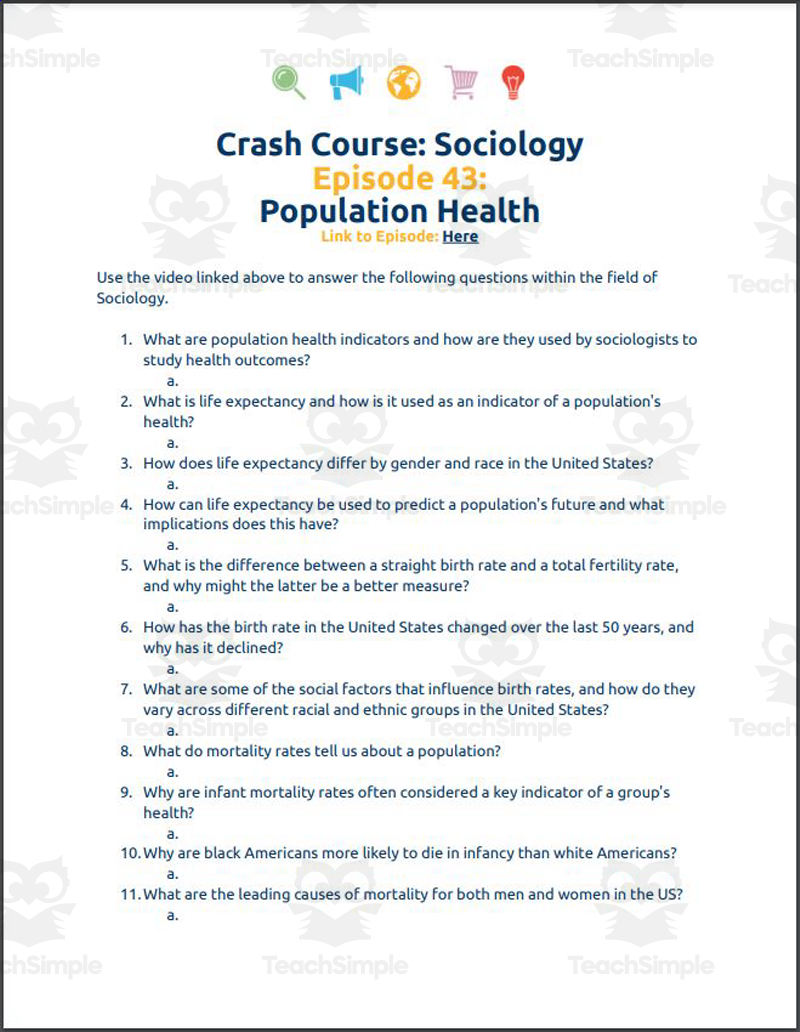
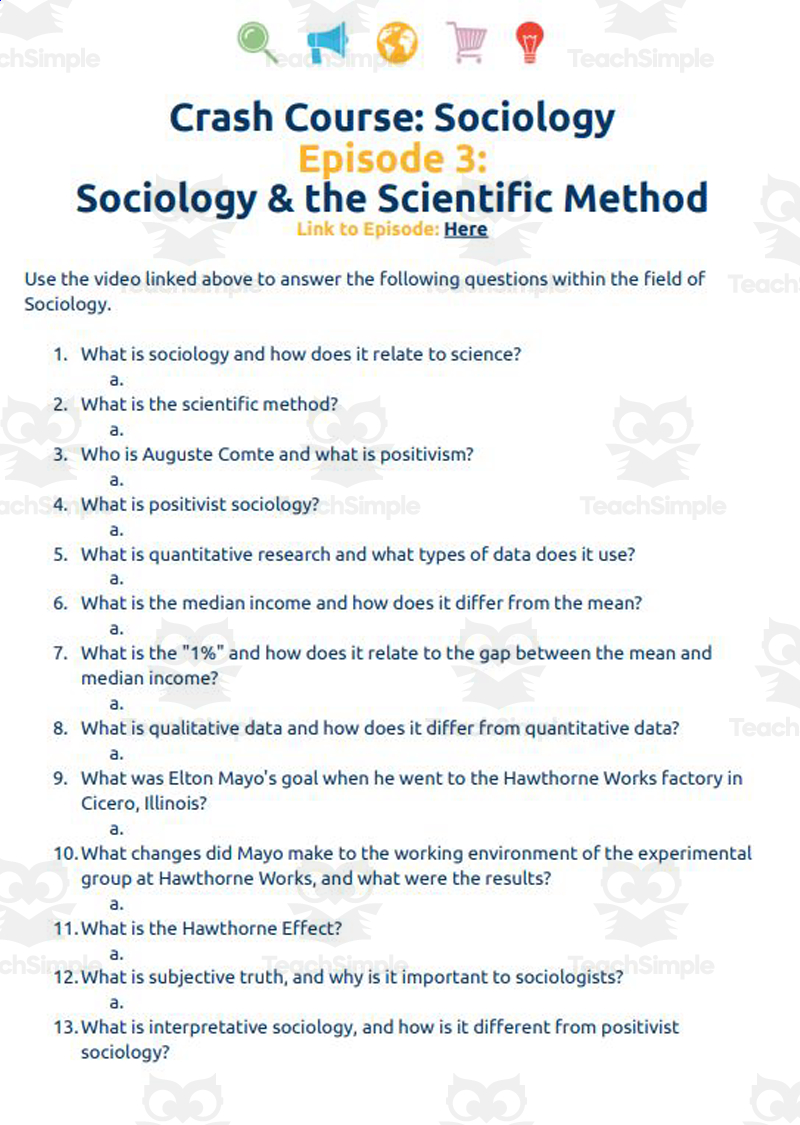
Crash Course Sociology Episode | 29  Economic Systems and Labor Market

Crash Course Sociology Episode | 29 Economic Systems and Labor Market
Social Studies, History, Sociology, Grade 10, 11, 12, Worksheets & Printables, Worksheets

Crash Course Sociology Episode 29 Worksheet on Economic Systems and Labor Markets This 2-page worksheet accompanies the 11-minute Crash Course Sociology video on economic systems and labor markets. It includes 15 conceptual questions for students to answer while and after viewing the engaging animated video . An answer key is provided to allow students to check their own work. Use this resource in class or assign it individually/in groups. Pair it with other sociology videos and resources also available in my store to build student interest and understanding of real-world societal issues. Check out my American Civil Rights lecture slides, 28th Amendment project, constitutional clauses lecture, Arctic survival team activity, and other Crash Course video worksheets.

Author Ed Dynamic

Tags Economic Systems, Labor Market, Economy, Industrial Revolution, Economics, Economic Casualties, Capitalist Society, Sociology Video

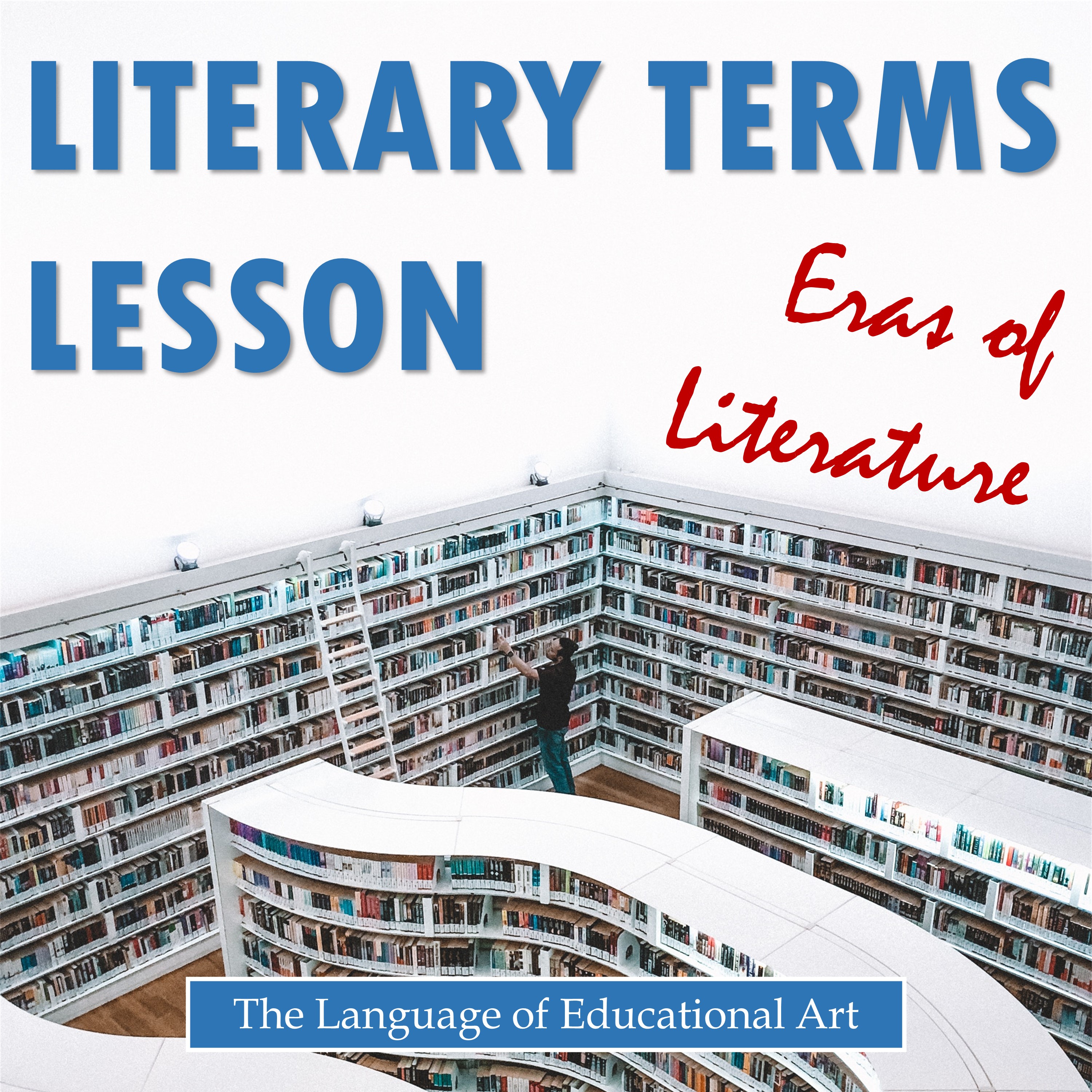
Research Organizer & Essay Assignment: Mark Twain

Research Organizer & Essay Assignment: Mark Twain
ELA, Literature, Writing, Grade 7, 8, 9, 10, 11, 12, Activities, Projects, Worksheets & Printables, Worksheets

Mark Twain has been called "the first American writer," and it's easy to see why after exploring his life and works. This resource provides your students with the opportunity to independently research and write about the life of the renowned author of Adventures of Huckleberry Finn, Tom Sawyer, and many other classics, with this engaging research planner and essay assignment. This carefully scaffolded and easy-to-assign-AND-assess resource has been designed to guide student learning from Mark Twain fact-collection to the careful development of a five-paragraph research essay. Teaching this resource could not be easier! Start by handing out the background research and note-taking worksheet (you could also ONLY hand this out if you want a shorter lesson!). Once students have found their facts and sources, provide them with the essay outline activity, which guides them step-by-step through the requirements of a short research essay. From there, drafting their essay, using the provided peer review checklist, and submitting their final draft will be no problem at all. And then you can assess their work with the provided Common Core rubric! Use this entire resource as a complete research lesson or just part of it as a short research activity or sub plan! This TeachSimple download includes: A Mark Twain essay writing assignment with directions, requirements, research essay writing tips, a peer review checklist, and Common Core-tied grading rubric An editable rubric, provided as a link, that lets you make adjustments to the grade values and guidelines. This link is provided as as Google Sheet specifically built for integration into Google Classroom, although you can also modify it for use in other Learning Management Systems (LMSs) A Mark Twain biography and note-taking worksheet that will guide your students through information gathering. This straightforward two-page handout includes instructions for background research, a fun drawing section, and an area to cite quality sources and organize conducted research A research essay outlining worksheet, so students build on their Mark Twain notes in a clear and simple manner as they build their work towards a draft and final paper All 6-pages of this lesson are provided in full-color and B&W versions Although this resource can be fitted for any secondary Language Arts classroom, it has been carefully designed to work best in grades 8 through 11. The included rubric is subtly but specifically tied to Common Core ELA Standards for Language (3) and Writing (2 and 7). This resource is provided as a print-ready, bookmarked, and adjustable PDF file. The rubric is also included as an editable Google Sheet. This resource contains 6 pages and 1 Google Sheet.

Author The Language of Educational Art, LLC

Tags Essay, Research, Notetaking, Rubric, Outlining

Independent Living Skills: Nelson Learns to Schedule Appointments

Independent Living Skills: Nelson Learns to Schedule Appointments
Special Resources, Life Studies, Special Education Needs (SEN), Speech Therapy, Life Skills, Coaching, Grade 10, 11, 12, Activities, Worksheets & Printables, Worksheets

Independent Living Skills: Nelson Learns to Schedule Appointments Independent Living Skills: Nelson Learns to Schedule Appointments is a comprehensive teaching resource designed to teach practical, everyday skills. This tool targets students in adult education and Grades 10 through 12, specializing in enhancing abilities of students within special resources, life studies, Special Education Needs (SEN), speech therapy, and life skills coaching among others. This valuable resource uses an engaging narrative where Nora guides Nelson on how to effectively prepare for appointments. This serves as an effective primer discussing various essential independent living norms—like setting safety code phrases for home visits and understanding how to schedule job interviews. With simple language and relatable characters, students can easily connect with and understand the content. The Interactive Side of Learning The story also presents seven reading comprehension questions, reinforcing the Independent Living Skills taught throughout the narrative. For ease of instruction the correct answers are included ensuring successful gauge of student's understanding. Suitable for Various Settings & Real-World Examples This adaptable curriculum material supports use in varied settings - whole group discussions dissecting different aspects of social scenarios depicted; small work groups providing space where students can share personal interpretations; even homework assignments making use user-friendly methods when immediate guidance from an educator is unavailable. Filled with real-world examples occurring round-the-clock accompanied by age-appropriate visual aids like diagrams it is appropriate both for high school learners or adults with intellectual disabilities. Inclusive Teaching Material Package All aid materials are enclosed within seven pages inherently printable conveniently ready-to-use any time handouts required. Additional related products available includes guides about creating emergency exit plans or medication lists tracking allergies establishing strong password and more reinforcing core concepts taught in Nelson Learns to Schedule Appointments. By opting for Independent Living Skills: Nelson Learns to Schedule Appointments, Special Education becomes all the more accessible, effective and empowering. Hence preparing learners not just for school but life beyond.

Author Adulting Life Skills Resources

Tags Independent Living, Practical Skills, Daily Life, Special Education, Teaching Resource

Misinformation Literacy & News Verification Worksheets

Misinformation Literacy & News Verification Worksheets
Science, Technology, Computer Science, Engineering, Resources for Teachers, Classroom Management, STEM, Special Resources, Social Emotional Learning (SEL), Social Skills, Grade 6, 7, 8, 9, 10, 11, 12, Worksheets & Printables, Writing Prompts, Worksheets, Word Searches, Workbooks, Teacher Tools, Lesson Plans, Assessments, Presentations, Diagrams

This curriculum provides a complete and easy-to-use, 38-page Information Literacy and News Validation Curriculum written specifically for the students in Middle School. It includes both Theory Chapters with real-world Case Studies (ex. “The Giant Blue Scorpion”, “Riverton Water Crisis”) to support development of the proprietary C.L.E.A.R. Protocol (Cross-check, Locate, Evaluate, Analyze, Read beyond the Headline), 10 interactive Student Worksheets, Answer Keys with Answer Key Samples and all pedagogical tools needed to utilize each resource (i.e. Information Disorder Spectrum, Cognitive Bias Feedback Loop, Lateral Reading Protocol). It is the best curriculum to teach how to identify Fake News,how to differentiate between Disinformation, Misinformation and Malinformation; how to identify ways to manipulate Emotionally; Visual Forensics; Statistical Literacy; building Echo Chambers; the creation of Synthetic media (Deepfakes); and Digital Citizenship. It contains Teacher Implementation Notes, Assessment Protocols and Printable Resources making it ideal for use with students in Grade levels 6-8 within Language Arts, Social Studies or Digital Citizenship classes, for use at home, or in After School Programs. Why Do Parents & Schools Like It? Develops 21st-century skills for protecting students from online scams, viral hoaxes, and manipulation through social media; however, these critical thinking skills are often missing from many of today's school curriculums. Lowers teacher's prep time by providing worksheets/answer keys / visual aids / assessment tools to meet digital citizenship/media literacy standards already established. Provides students with practical examples of how to understand and use abstract concepts (confirmation bias, lateral reading, false context) through relatable case studies & hands-on activities that middle schoolers often find enjoyable. Encourages responsible use of the Internet by teaching students proper online behavior, developing civic responsibility, and facilitating better dialogue about the news as well as social media between parents and children. Cost-effective, high-quality digital resource that can be used in a traditional classroom, cooperative homeschooling, or a remote-learning setting with one print that can be reused over and over again! The target audience for this PDF will be students in the sixth through eighth-grade range (Grades 6-8 / Middle School). The introduction, case studies, and worksheets all have content that references "middle school peer groups," "Sixth through Eighth Grades," and age-appropriate examples (such as school rumors, playground fears, TikTok fears) throughout the PDFs. This PDF is not appropriate for elementary school students (too advanced) or for high school students (too basic). Copyright/Use Guidelines : Copyrighted by Syed Hammad Rizvi. This resource is for a single classroom or personal use only. No modifications or redistribution, for resale, to be made to the resource. For example, uploading to the internet where it will be publicly available for downloading is not allowed. If you wish to share with colleagues, please obtain additional licenses from Teachsimple. Thank you for honoring these guidelines. Syed Hammad Rizvi was happy to provide this product.

Author Creative Book Store

Rating

Tags MediaLiteracy, MisinformationLiteracy, FakeNewsDetection, NewsVerification, DigitalCitizenship, CriticalThinkingSkills, MiddleSchoolCurriculum, Grades68, 6thGradeResources, 7thGradeResources

Language Development (Slides and worksheets on stages of language development)

Language Development (Slides and worksheets on stages of language development)
Special Resources, Speech Therapy, Grade 7, 8, 9, 10, 11, 12, Worksheets, Worksheets & Printables

Language Development Resource Pack covers the major milestones of language acquisition. The pack includes a presentation with 23 informative slides explaining the building blocks of language such as phonemes, morphemes, grammar structures and more. Students will learn about the progression from reflexive communication to first words to complex sentences. The presentation explores important concepts like the language acquisition sensitivity period and bilingual language development. To reinforce student understanding, the product includes follow-along student notes matching the content on the slides. An additional worksheet based on a Crash Course Psychology video gives students further opportunity to apply their knowledge about the key aspects and stages of language development. This versatile resource can be used by speech therapists or teachers in whole class or small group settings.

Author Ed Dynamic

Tags Language Acquisition, Child Language, Linguistics, Speech Therapy, Language Milestones

Zero-Waste Lifestyle Tracking & Habit Builder Journals

Zero-Waste Lifestyle Tracking & Habit Builder Journals
Science, Resources for Teachers, Life Sciences, Earth and Environmental Sciences, Earth Sciences, Environmental Science, Geology, Nature & Plants, STEM, Biology, Grade 6, 7, 8, 9, 10, 11, 12, Teacher Tools, Worksheets & Printables, Workbooks, Worksheets, Word Searches, Assessments, Lesson Plans, Quizzes and Tests, Quizzes, Tests

Turn your classroom into an environmental science lab with the help of this awesome 41-page Zero Waste Lifestyle Tracking and Habit Builder Journal! This is a project-based learning resource for grades 4–8 that is aligned to the standards! Looking for a real world environmentally focused way to teach environmental science to your students that isn't just a bunch of recycling posters? A complete curriculum journal combining current neuroscience research, ecology theory and hands-on data collection will give your students everything they need to consider themselves true environmental scientists - and it begins with measuring their own lives! This resource is not just one big stack of worksheets but rather, it is a fully scaffolded 3-phase academic journal developed with university seminar style rigor and middle school classroom style accessibility. Your students won’t just learn about the environment; they’ll measure it, analyze it and make changes to it! CONTENTS (41 Pages, Print & Digital Ready): Phase 1 — Core Content & Theory (4 chapters): 1. The Anatomy of Waste explains what happens throughout the lifespan of waste items, including Lifecycle Assessment (LCA), the impact of microplastics in our world today, which items go in the landfill, which items can be incinerated, and how long it takes for a plastic fork to travel 450 years into our future 2. The Neuroscience of Habit Building discusses how our brains form habits based on the basal ganglia of the brain, how we can rebuild/rewire our habits scientifically through neuroplasticity, and the three parts of the habit loop (cue-routine-reward) 3. The Zero-Waste Hierarchy introduces the four elements of a zero-waste lifestyle: Refuse, Reduce, Reuse, Rot (Composting) and Recycle. This chapter includes a real-world example of how one school significantly reduced their waste by over 90% using these four proven methods 4. Data-Driven Stewardship teaches your students to think like a marine biologist and meteorologist by showing them how to track and analyze their own local environmental data. After each chapter is a fill-in-the-blank review of the chapter, called the Scholar's Review. Phase 2: 10Worksheet Workbook for Students (Research Lab Style) Personal Waste Audit 24-Hour (Data Collection Protocols: Empirical) Material Lifecycle Analysis of Material (From Raw Extraction To Disposal) Biochemistry of Composting (Green And Brown Materials, Aerobic And Anaerobic Decomposition) Single Use Plastic Substitution Matrix (Cost/Benefit Analysis) Water and Energy Footprint Calculation (Embedded Energy And Water Load Calculation; Shower Each Year; Cost Of Water To Make Cotton Shirt) Redesign Challenge For Circular Economy (Planned Volatility, Upcycling, Extended Producer Responsibility) Food Waste Economics (FIFO Pantry System, Estimate Of $780 Of Food Waste Per Year, What Is A Food Standard For A Non-Food Waste Item?) Fast Fashion Footprint (Cost To Wear, Use Of Micro-Plastics, Philosophy Of Wardrobe) Supermarket Packaging Detective (Identifying Greenwashing, Multi-Layered Packages, Bulk Purchasing) Zero-Waste Habit Builder (Keystone Priming, 30-Day Tracking Plan, Write Manifesto For A Zero Waste Life) PHASE 3—Teacher Resources and Visuals: Three professionally designed SVG diagrams (Zero Waste Hierarchy, Linear vs. Circular Economy, Sustainability Habit Loop) Complete Answer Key with example answers and teacher rubric notes 4 week pacing guide with weekly objectives, activities, teacher roles and homework 100-point assessments rubric across four categories of data collection, behavioural design, critical thinking and communication Five extension activities (Trash Jar Challenge, Community Waste Mapping, Letter Writing Campaign to Corporations, Do-It-Yourself Repairs Workshop, Composting Science Experiment; if possible please use a separate document per activity) Strategies for differentiating instruction for Grades 4-5, Grade 8/Gifted, IEP/504 and ELL students CONNECTING TO CURRICULUM: This journal ties into Next Generation Science Standards (NGSS), Common Core English Language Arts (informational text analysis, evidence based writing) and Common Core Mathematics (percentages, projections, data analysis). This journal combines many subjects — environmental science, behavioral psychology, economics and persuasive writing — into one connected whole. USAGE IDEAS: Great as a 4-week stand-alone unit or as part of an after-school environmental club, summer enrichment program or reinforcement through integration into existing science, health or social studies curricula. Assign user digitally (fillable PDF) or in print. DIGITAL DOWNLOAD — PRINT & GO! REASONS PARENTS/SCHOOLS LOVE THE RESOURCE: Merging Science, Psychology, and Real-World Mathematics – Instead of merely reading about the environment, kids actually conduct real waste audits, calculate their water footprints, and use their own personal data to perform real-world food waste economics analysis – helping them to take abstract concepts and move towards making those concepts their own, and thus, real. Tremendous Support For Teachers From Day One – Each of the resources, including a complete 4-Week Pacing Guide, example responses in the Answer Key, a 100-point Assessment Rubric, and a variety of differentiation strategies to accommodate ALL learners (IEP/504, ELL, Gifted) provides teachers with no-prep stress! Building Lasting Habits, Not Just Raising Awareness – This journal is based on neuroscience principles, specifically the Habit Loop framework, which teaches kids HOW behavior changes within the brain — therefore they can establish long-term environmental habits to implement after the conclusion of the unit. No Eco-Anxiety – Only Eco-Empowerment – Constructivist pedagogy does not endorse guilt-based teaching practices to educate/expose students to environmental issues. Instead, students are encouraged to view themselves as environmental scientists, thereby creating a sense of worth/empowerment as opposed to being seen as passive victims of "climate doom"; hence, all resources provided in this unit have been designed with both emotional safety and motivation in mind. Cross-Curricular and Standards-Aligned Value – When you purchase this journal as a single resource, you are actually replacing multiple separate resources. This one journal covers multiple areas of study related to environmental science, data analysis, persuasive writing, behavioral psychology, economics, and systems thinking — therefore you are maximizing the instructional value and curriculum alignment of numerous subject areas! TARGET GRADES/CLASSES: On evaluating for the content type's level of complexity, the level of language used, the level of math skill needed; and how to teach the content using scaffolding: Primary Target 6th, 7th, and 8th grades (Middle School, our primary audience) Science classes; Environmental Science/ Earth Science Health and Wellness Classes Social Studies/Civics (Circular economy, EPR Policy) ELA Classes (Persuasive writing, Informational text) Secondary Target 5th Grade (Upper Elementary, with teacher scaffolded materials to be used; will require the use of Phase 3 differentiation strategies). 4th Grade (Will require major support in accordance with Phase 3 differentiation, as mentioned in Section 2) 9th Grade (High School, Environmental Science as a remedial unit or an introductory unit) Special Programs Gifted/Honors programs (Students in 8th grade, extension Activities) IEP/504 Accommodations (explicitly provide support through IEP/504) ELL Programs (provide bilingual glossary strategies) Environmental clubs (5th through 9th grade) STEM/STEAM programs Best Audience Targets: Middle School Science teachers (6th to 8th grade) Environmental Science Teachers Parents of Students 10 - 14 taking homeschool classes School Librarians purchasing Sustainability books for their library collection After School Program Coordinators Eco-Conscious Parents with Interest in Supplement Learning Your use of this Resource Agreement: Copyright (or Terms of Use) Copyright is held by Syed Hammad Rizvi. You may use this resource for your personal and classroom use only, but may not alter, sell or redistribute any component of this resource, nor place any part of this resource on a publicly available website. You can only share this resource with your coworkers by purchasing additional licenses from Teachsimple. Thank you for complying with all copyright guidelines and restrictions. Syed Hammad Rizvi is proud to provide you with this resource.

Author Creative Book Store

Rating

Tags ZeroWasteEducation, EnvironmentalScience, SustainabilityEducation, ZeroWasteLifestyle, EcoEducation, GreenEducation, ClimateEducation, EnvironmentalLiteracy, SustainabilityLessons, ZeroWasteCurriculum

Cleaning up Acid Spills Reading Comprehension Article

Cleaning up Acid Spills Reading Comprehension Article
Science, Chemistry, Grade 9, 10, 11, 12, Worksheets & Printables, Worksheets

Product Title: Cleaning up Acid Spills Reading Comprehension Article As an educator or homeschooler, finding a comprehensive teaching resource that also caters to developing reading comprehension and scientific literacy skills can be a challenge. The Cleaning up Acid Spills Reading Comprehension Article is designed to help bridge this gap for high school students, and even robust middle-school learners. This product blends the disciplines of science and literature, providing an informative article on "superbugs - the modern villains of medicine". It covers essential topics such as: Good and bad bacteria Antibiotics and antibiotic resistance Superbugs (MRSA) Methods to combat superbugs etc. This educational resource presents diverse types of questions including knowledge-based (direct from the paper), thinking exercises, connecting tasks, application prompts and open-ended inquiries. Fully Editable & Compatible Resource The convenience factor is paramount with this fully editable product; not only does it require no prep or formatting hassles but also takes care of compatibility issues by including Microsoft Word & PDF versions along with Google Classroom integration for seamless remote learning. Coverages Simplifies imparting scientific literacy maneuvres An accompaniment in groundwork for your topic or used as an extension activity for faster-paced students A convenient tool as extra credit task for needy pupils This tool extraordinarily substantive in developing scientific know-how among learners all while improving their language skills simultaneously. This unique blend encourages them not only in understanding important scientific concepts better but also in applying them correctly in life scenarios that they face daily. It spins around 50-75 minutes lesson plan accommodating varied analytical capabilities amongst your students through its open-ended question format. An answer key accompanies the document making it easier than ever to check work submission. Grades Applicable: Grade 9, Grade 12, Grade 10, Grade 11 Subject: Science Subsubject: Chemistry Types of Resource: Worksheets File Type: Multiple File Types

Author Teach With Fergy

Tags Acid Spills, Reading Comprehension, Scientific Literacy, Superbugs, Health Aspects

Functional Life Skills: Omar Learns How to Ask for Help

Functional Life Skills: Omar Learns How to Ask for Help
Special Resources, Social Emotional Learning (SEL), Special Education Needs (SEN), Speech Therapy, Life Skills, Grade 11, 12, Activities, Worksheets & Printables, Worksheets

In Omar Learns How to Ask for Help, Olivia teaches Omar the importance of asking for help and when it's appropriate. The use of this Functional Life Skills resource will allow students to engage in the following: • This essential life skills story covers how to ask for help politely • Encouragement to express gratitude when receiving help • The life skills resources use humor to make the concept relatable • The story uses simple and clear language to emphasize the benefits of seeking help from others. • The interactive dialog and questions engage learners and reinforce their understanding of the story and the concepts. • The real-world examples, and age-appropriate visual aids, such as illustrations and diagrams , make this conversational story an excellent resource for teaching social narratives. • This social narrative's simple and direct language sets clear expectations, making it ideal for high school students and adults with intellectual disabilities. The story includes seven (7) reading comprehension questions and answers to reinforce and measure the student's understanding of the Functional Life Skills contained in the story! This life skills story will assist high school students and young adults in developing the necessary independent living skills to become more independent at school, at home, and in their communities. This story is designed to be used by special education teachers, occupational therapists, speech therapists, ABA therapists, registered behavior technicians (RBT), parents, supported living coaches, and life skills teachers to teach their students valuable life skills. In addition to interactive instruction, this resource is ideal for hands-on and community-based learning, defining, setting, and measuring IEP goals. Related Products for Developing Independent Living Skills How to Create an Emergency Exit Plan How to Create a Medication List How to Create a Supplement List Understanding and Tracking Allergies How to Read a Prescription Label How to Create a Strong Password What to do When the Doorbell Rings Engage your special education class with this highly interactive High School Functional Life Skills Story! It's printable , easy to use, and ready to hand out! A PDF file with six(6) pages.

Author Adulting Life Skills Resources

Tags Adulting On The Spectrum, Independent Living Skills, Autism Resource For Parent, Life Skills For Visual Learners, Autism Reading Comprehension, Summer Life Skills Activities, Functional Self-Care Resources, Resource For Speech Therapists, Life Skills Activities For High School Students, Special Education Teachers

Crash Course Sociology Episode | 30 Politics

Crash Course Sociology Episode | 30 Politics
Social Studies, History, Sociology, Grade 10, 11, 12, Worksheets & Printables, Worksheets

Crash Course Sociology: Politics Worksheet Engage high school students with a relevant video and accompanying 2-page worksheet about politics from the perspective of sociology. The informative 10-minute Crash Course video explains how groups gain and maintain power in society. The printable handout has 15 short answer questions to check comprehension, invoke critical thinking, and spur discussion. An answer key allows students to self-check their work. Use this versatile resource for whole class instruction, small groups, or independent learning. Pair it with other sociology materials like lectures on civil rights, Constitutional clauses, the 28th Amendment project, Arctic survival activities, ethnocentrism slides, and more Crash Course worksheets. Find this and other social studies resources in my Active Social Studies store.

Author Ed Dynamic

Tags Crash Course, Crash Course Videos, Sociology Videos, Sociology Worksheet, Politics, Vocabulary, Civics, Democracy

Roller Coasters Reading Comprehension Article

Roller Coasters Reading Comprehension Article
Science, Physics, Grade 10, 11, 12, Worksheets & Printables, Worksheets

The Roller Coasters Reading Comprehension Article: An Outstanding Teaching Resource This resource is specially designed for educators including public school teachers and homeschooling parents. It offers an in-depth exploration of the history, design, and function of roller coasters suitable for Grade 10 to 12 students in physics . A Dual Benefit: Literacy Development and Scientific Understanding The resource enhances both literacy development and scientific understanding through its disciplinary literacy approach - where students read a scientific article about roller coasters and answer questions from the text. Coverage of Key Topics Wooden versus steel roller coasters, How they work, Concepts related to energy conservation efficiency. Past users have commended how well written it is, even for middle school learners. Incredible Versatility for Adaptability in Various Teaching Scenarios Brief Whole Class Discussions Focused Small Group Activities In-depth Homework Assignments Suitable For Traditional Classrooms As Well As Distance Learning Situations. This Makes It A Google Classroom Ready Material! Simplicity In Sharing Via Google Drive With Embedded Privacy Protection. This feature ensures that with just one click, a copy of the material can be placed in your Drive while maintaining privacy. Diverse Format Options To Suit Various Needs: Wide array of pre-reformed work formats available including: PDF In Summary: If improving scientific literacy and students' reading comprehension has been a challenge due to time constraints, this resource could be your solution. It includes an answer key for easy reference and requires between 50-75 minutes to complete. Truly, a teaching time-saver.

Author Teach With Fergy

Tags Roller Coasters, Science Curriculum, Physics, Energy Conservation, Reading Comprehension

High School Financial Literacy: How to Pick a Credit Card Worksheets

High School Financial Literacy: How to Pick a Credit Card Worksheets
Finance, Life Studies, Home Economics, Life Skills, Special Resources, Math, Money, Decimals, Percentages, Grade 9, 10, 11, 12, Worksheets & Printables, Worksheets, Word Problems

This engaging high school personal financial literacy lesson will teach your students helpful life skills, and it will let them practice using their knowledge of percentages in real life scenarios. They will learn all about credit cards: interest rates, the annual fees, credit card perks, and credit limits. How to Use: 1. Use the handout page to start the lesson with your class: teach the credit card vocabulary and information that is included. 2. Show your students the 3 sample credit cards which are listed. Let your students go over the second page while in small groups. This way they can discuss all of the benefits and drawbacks of each card. 3. Students will then calculate the perks that each credit card offers on page three. They will use percentage, decimal, and ratio & rate math skills. 4. On their own, each student can choose which one of the three credit cards they would apply for. They should use justifications from the card’s features along with their personal financial habits. 5. Students can work on the fourth page of credit card word problems for homework or in class. They will practice calculating interest payments for their credit card (if the entire balance is NOT paid off) using decimal, percent, and division math skills. 6. This lesson could be a thought-provoking discussion prompt too. Let your students talk about why credit cards can be helpful and risky based on the included scenarios. 7. A complete Answer Key is included to make marking easy. What's Included: Six Page PDF: Ready to Print and Use - Teacher Instructions - Handout: Credit Card Vocabulary and Information - Handout: Three Realistic Credit Cards - 2-Page Student Worksheet (math word problems and pick a card) - Answer Key Math Skills Required: Students must have some grade 6 and 7 math skills: decimal operations, percentages, ratios, and rates.

Author Grace Under Pressure

Tags Financial Literacy, Personal Finance, Financial Literacy Worksheets, Credit Card, How To Choose A Credit Card, Credit Card Worksheet, Life Skills, Finance, Budget

Chemistry Binder Covers – Templates for Classroom Use

Chemistry Binder Covers – Templates for Classroom Use
Life Sciences, Science, STEM, Inventors, Basic Science, Chemistry, Special Resources, Montessori, Classroom Management, Resources for Teachers, Homeschool Templates, Grade 7, 8, 9, 10, 11, 12, Worksheets, Worksheets & Printables, Teacher Tools, Projects, Activities, Workbooks, Drawing Templates & Outlines, Templates, Graphic Organizers, Experiments

Chemistry Binder Covers – Templates for Classroom Use Organize your chemistry handouts, notes, and units with visual clarity Simple and flexible templates to help organize your chemistry materials In my chemistry classes, it can be a challenge to keep things organized - especially when it comes to multiple units, lab notes, worksheets and review materials. To make it easier for my students and myself, I designed these simple binder sleeves. There are 12 different pages. The covers have a clean, colorful blob layout that is friendly but not distracting. I usually print them out and use them as cover sheets or as dividers in folders for students or teachers. They also work well for digital learning environments, e.g. as section covers in PDF files or on classroom platforms. I like that the color scheme allows students to quickly find what they are looking for, and it brings a little more structure to a subject that is often riddled with formulas and technical terms. When used as cover sheets, students can choose their favorite color for their cover sheet. This resource is handy - and has saved me a lot of time in lesson preparation and follow-up. What’s included: 12 chemistry-themed cover pages different colors zu choose as a cover sheet as a divider between the individual chemistry topics I've printed these on colored paper for my own binder and also used them digitally in student notebooks. Works well for both teacher organization and student-facing materials. 📍 Best wishes, Heike from Lernfitness Chemistry teacher (Biology teacher, Math teacher) in Germany Did You Know? I teach with a certified therapy dog, and together we create a positive and inspiring learning environment. 🐶✨

Author Lernfitness

Rating

Tags Science, STEM, Chemistry, Binder, Template, Cover Sheet, Organizer, Organize, GoodNotes, PDF

Barbara McClintock – Fact Sheet, Quiz & Interactive PDF incl. H5P

Barbara McClintock – Fact Sheet, Quiz & Interactive PDF incl. H5P
Life Sciences, Science, STEM, History, Social Studies, Biographies, Inventors, Basic Science, Physics, Biology, Grade 6, 7, 8, 9, 10, 11, 12, Worksheets, Worksheets & Printables, Quizzes, Quizzes and Tests, Teacher Tools, Projects, Activities

Scientist Barbara McClintock - Fact Sheet, Quiz & Interactive Version (PDF & H5P) Barbara McClintock – Genetics and the Discovery of Jumping Genes Fact Sheet, Quiz & Interactive Exercises (PDF + H5P) 🌽🧬 This 45-minute resource introduces students in grades 7–10 to Barbara McClintock – a pioneering geneticist whose research changed the way we understand genes and heredity. Many students know the basics of DNA and inheritance, but fewer have heard of McClintock or her discovery of “jumping genes” (transposons). Working with maize plants 🌽 in the mid-20th century, she found that genes can move within the genome – a finding that was far ahead of its time and only fully recognized years later. To help students access this complex but fascinating topic, I’ve created a compact and ready-to-use lesson. It includes an informational text, a fact sheet, quiz questions with answers, and a creative partner task. All materials come in both color and black-and-white versions, plus there’s an H5P version for digital use. What’s included: A short, student-friendly text about Barbara McClintock and her scientific contributions A fact sheet to help students organize key information Quiz questions (with answer key) for self-checking or review A creative task where students come up with their own questions and exchange them in pairs Formats: Printable/digital PDF and interactive H5P version 💻 Answer key included ✅ I’ve used this material as part of our genetics unit, especially when discussing how scientific ideas are received and validated over time. It also works well in lessons on women in science or the history of biology. Easy to implement and suitable for partner work, independent study, or short projects. 🚀 Download now and bring the legacy of Barbara McClintock into your biology lessons today! 📍 Best wishes, Heike from Lernfitness Did You Know? I teach with a certified therapy dog, and together we create a positive and inspiring learning environment. 🐶✨

Author Lernfitness

Tags Science, Biology, Famous Scientists Lesson, H5P, Interactive Science Exercises, STEM, History, Scientists, DNA, Barbara McClintock

Finance Life Skills: Nelson Learns How to Manage His Purchases

Finance Life Skills: Nelson Learns How to Manage His Purchases
Special Resources, Life Studies, Special Education Needs (SEN), Speech Therapy, Life Skills, Finance, Grade 9, 10, 11, 12, Activities, Worksheets & Printables, Worksheets

Finance Life Skills: Nelson Learns How to Manage His Purchases! This is a comprehensive teaching resource designed specifically for Grade 9 to Grade 12 special education learners, but it can also be beneficial for any student needing detailed understanding of financial management. The Story: In an engaging narrative, Nora instructs Nelson on carefully examining his credit card transactions and addressing financial discrepancies. The lesson includes recognizing unauthorized charges or incorrect billings and taking appropriate steps to resolve such issues. Other real-world concepts introduced include how to initiate item returns due to damage or incorrect delivery, and checking that refunded credits correctly appear on the statement. Teaching Materials: Seven reading comprehension questions designed specifically for students' grasp while evaluating their progress with answers provided within the material. Meticulously crafted illustrations and diagrams promoting visual learning - making complex financial topics manageable even for high school students and intellectually challenged adults. This educational tool is versatile in its utility among various professionals - from occupational therapists, ABA therapists down to life skills teachers- making it suitable for one-on-one instruction or small group activities both inside classrooms and community-based settings. Homework assignments can also be given from this resource promoting independent home study habits. Beyond classroom teachings, this resource aids in setting IEP goals while preparing learners comfortably negotiate real-world situations like clothes shopping math scenarios or reading menus money math in practical settings. Preparation: The product saves teachers' time requiring minimal ahead-of-time preparation providing a six-page ready-to-use PDF file that comes with eye-catching graphics aligned well with intuitive legibility aiding young learners where written language is made comprehensively simple without replacing its educational depth.

Author Adulting Life Skills Resources

Tags Finance, Life Skills, Financial Management, Credit Card Transactions, Reading Comprehension

Smallpox Reading Comprehension Article

Smallpox Reading Comprehension Article
Science, Life Sciences, Biology, Grade 8, 9, 10, 11, 12, Worksheets & Printables, Worksheets

Smallpox Reading Comprehension Article This teaching resource, 'Smallpox Reading Comprehension Article', is a comprehensive tool designed to address topics surrounding the complex subject of Smallpox. It provides an educational yet engaging method for teachers and students alike to delve into this important health-related topic. The crafted content of this resource comprehensively covers major aspects such as: Smallpox history Types Effects Prevention measures Accessible via Google Classroom with ease for both distance learning or in-class settings, this resource fits seamlessly into any educational context. This flexibility means that educators can deploy it in various ways – whether that be as introduction material for the topic at hand or as simplified homework assignments. Drawing from several customer reviews citing its impressive utility value specifically noted practical applications extend such like being handy sub plans during teacher's absences or even offering extra credit opportunities if needed throughout schooling scenarios thus making teaching responsibilities more manageable more efficacious too. In Conclusion Educators seeking a teaching tool that not only enriches their students' understanding of Smallpox but also enhances skills ranging from deeper comprehension to critical thinking need to look no further than the 'Smallpox Reading Comprehension Article'. No matter grading level or location - physical classroom distant learning set-up - each copy can be readily accessed via Microsoft Word PDF versions availed. To wrap it up, 'Smallpox Reading Comprehension Article' is not just another article; but significant leap towards nurturing scientifically astute citizens the future requires.

Author Teach With Fergy

Tags Smallpox, History, Types, Effects, Prevention

ESL Novel Study Worksheets - The Martian - Andy Weir - STEM - Sci Fi

ESL Novel Study Worksheets - The Martian - Andy Weir - STEM - Sci Fi
Language Development, ELA, ESL, Vocabulary, Writing, Creative Writing, Formal Writing, Grade 7, 8, 9, 10, 11, 12, Worksheets & Printables, Novel Studies, Writing Prompts, Worksheets

ESL Novel Study Worksheets - The Martian - Andy Weir - STEM - Science Fiction This ESL - EFL - TESOL (English Second or Foreign Language) teaching resource is a comprehensive novel study worksheet activity (2 printable PDF pages; Worksheets) focused on the novel "The Martian" (Science Fiction Novel by American author Andy Weir - STEM - Mars). This Novel Study worksheets on "The Martian" (Science Fiction Novel by American author Andy Weir - STEM - Mars) is tailored for middle and high school ESL students (7th – 12th grade) and provide a variety of thought provoking and language building activities. Whether you're teaching English as a Second Language (ESL), English as a Foreign Language (EFL), or in a TESOL context, this resource is classroom-ready and easy to use. Within this ESL Novel Study on "The Martian - Andy Weir" (2 printable PDF worksheets pages), English Second or Foreign Language (ESL - EFL - TESOL - TEFL) teachers can find the following activities: General information activity (author, genre, publishing date) Vocabulary building section – new words from the novel 1 Story timeline Personal reflection on a favorite chapter Student novel review and rating Creative writing task : pretending being a character you personally liked and writing 3 diary pages for 3 scenes as if you were this character This English Second or Foreign Language (ESL - EFL) Novel Study Activity Worksheets on the "The Martian" (Science Fiction Novel by American author Andy Weir - STEM - Mars) can be ideal for learners from 7th grade to 12th grade to study this Novel (middle school + High School Students + Adult learners + University Students) ESL with Alan is a high-quality ESL teaching resources that inspire both teachers and students. Our goal is to make learning English fun, interactive, and meaningful. Discover more English Second or Foreign Language activities by visiting our store – because learning English should always be fun! If you want to browse more of my English Language and Literature Novel Study Activity Teaching Resources, click here ESL with Alan!

Author Learning with Alan

Rating

Tags ESL, English Second Language, English, Mars, STEM, Science Fiction, The Martian, Worksheets, Novel Study, Activity

Research Organizer & Essay Assignment: Edgar Allan Poe

Research Organizer & Essay Assignment: Edgar Allan Poe
ELA, Literature, Poetry, Writing, Grade 8, 9, 10, 11, 12, Activities, Projects, Worksheets & Printables, Worksheets

The Gothic writer Edgar Allan Poe has been inspiring and frightening readers for generations. This resource provides your students with the opportunity to independently explore and write about the life of the writer of "The Raven," "The Tell-Tale Heart," and many other iconic works, with this engaging research planner and essay assignment. This carefully scaffolded and easy-to-assign-AND-assess resource has been designed to guide student learning from Edgar Allan Poe fact-collection to the careful development of a five-paragraph research essay. Teaching this resource could not be easier! Start by handing out the background research and note-taking worksheet (you could also ONLY hand this out if you want a shorter lesson!). Once students have found their facts and sources, provide them with the essay outline activity, which guides them step-by-step through the requirements of a short research essay. From there, drafting their essay, using the provided peer review checklist, and submitting their final draft will be no problem at all. And then you can assess their work with the provided Common Core rubric! Use this entire resource as a complete research lesson or just part of it as a short research activity or sub plan! This TeachSimple download includes: - An Edgar Allan Poe essay writing assignment with directions, requirements, research essay writing tips, a peer review checklist, and Common Core-tied grading rubric - An editable rubric, provided as a link, that lets you make adjustments to the grade values and guidelines. This link is provided as as Google Sheet specifically built for integration into Google Classroom, although you can also modify it for use in other Learning Management Systems (LMSs) - An Edgar Allan Poe biography and note-taking worksheet that will guide your students through information gathering. This straightforward two-page handout includes instructions for background research, a fun drawing section, and an area to cite quality sources and organize conducted research - A research essay outlining worksheet, so students build on their Edgar Allan Poe notes in a clear and simple manner as they build their work towards a draft and final paper - All 6-pages of this lesson are provided in full-color and B&W versions Although this resource can be fitted for any secondary Language Arts classroom, it has been carefully designed to work best in grades 8 through 11. The included rubric is subtly but specifically tied to Common Core ELA Standards for Language (3) and Writing (2 and 7). This resource is provided as a print-ready, bookmarked, and adjustable PDF file. The rubric is also included as an editable Google Sheet. This resource contains 6 pages and 1 Google Sheet.

Author The Language of Educational Art, LLC

Tags Research, Essay, Rubric, Notetaking, Outlining

Crash Course Sociology Episode | 26  Social Mobility

Crash Course Sociology Episode | 26 Social Mobility
Social Studies, History, Sociology, Grade 10, 11, 12, Worksheets & Printables, Worksheets

Crash Course Sociology Episode on Social Mobility Worksheet This 2-page worksheet supplements the Crash Course Sociology video on social mobility. It includes 15 questions for students to answer while watching the engaging 9-minute video. An answer key is provided to allow students to check their own work. Use this worksheet for whole-class video viewings, small group review, or as a homework assignment after introducing the sociology concept. Connecting real-world issues like social mobility to students' lives keeps them interested and deepens their understanding. Check out more sociology resources like lecture slides and activities in my store to engage high schoolers with this relevant topic.

Author Ed Dynamic

Tags Sociology Class, Sociology Episode, Sociology Worksheet, Social Mobility, Crash Course, Crash Course Videos, Socioeconomic Status

Research Organizer & Essay Assignment: George Eliot

Research Organizer & Essay Assignment: George Eliot
ELA, Literature, Writing, Grade 8, 9, 10, 11, 12, Activities, Projects, Worksheets & Printables, Worksheets

Research Organizer & Essay Assignment: George Eliot Guide students to independently research and write a 5-paragraph essay about renowned Victorian Era author George Eliot. This 6-page teaching resource includes a scaffolded research planner and essay assignment with directions, requirements, writing tips, peer review checklist, and rubric tied to Common Core ELA standards. Also includes a biography and note-taking worksheet for gathering facts and quality sources on George Eliot, plus an essay outline to help build a draft. Use the full lesson or just parts as a research activity or sub plan for grades 8-11. Provided as customizable print-ready PDFs and a Google Sheet rubric ready for Google Classroom integration.

Author The Language of Educational Art, LLC

Tags Essay, Research, Rubric, Outlining, Notetaking

Shell Model – Chemical Elements Flashcards - Element names

Shell Model – Chemical Elements Flashcards - Element names
STEM, Science, Chemistry, Physics, Life Sciences, Grade 7, 8, 9, 10, 11, 12, Activities, Games, Worksheets & Printables, Task Cards, Quizzes and Tests, Teacher Tools, Word Problems, Word Searches, Worksheets, Flashcards

Shell Model – Chemical Elements Flashcards 118 cards for learning the periodic table Learn atomic structure and the periodic table through play and visual learning 🧪🧠 These flashcards are designed to help students explore the structure of atoms using the shell model. Covering all 118 elements of the periodic table, each card includes the atomic number, element name, symbol, and a visual representation of the electron arrangement in shells. It’s a simple but effective tool for bringing abstract chemistry content into a more visual and interactive format. I’ve used this set in grades 7–10, both in introductory lessons and for revision. What worked especially well was printing the cards twice and using them as a memory game (“Find the Pairs”). Students match element names with their shell models or symbols – and along the way, they start to notice patterns: which elements belong to the same group, how many electrons fit in each shell, and what the outer shells can tell us about chemical reactivity. What’s included: 118 printable flashcards (PDF) – one for each element Each card features: atomic number, element name, chemical symbol, and shell model Suggestions for classroom use (games, sorting tasks, self-study) The cards can be used in a variety of ways: – As a memory game (matching name and shell model) – For group sorting activities (by group, period, metal/non-metal, etc.) – As quick quizzes in pair work – Or as visual aids when introducing atomic theory They’re suitable for different levels of difficulty. Beginners can focus on names and symbols, while more advanced students work with the shell diagrams and explain electron configurations. It’s also a helpful tool for differentiation – everyone works at their own pace, but with the same visual material. This resource comes as a PDF and is easy to print and prepare. Laminating the cards is a good idea if you plan to use them more than once. 📍 Best wishes, Heike from @Lernfitness Did You Know? I teach with a certified therapy dog, and together we create a positive and welcoming learning environment. 🐶

Author Lernfitness

Rating

Tags Educational Card Games, Chemistry, Physics, STEM Science Matching Game, Chemical Elements, Periodic Table Matching Game, Flashcards Chemical Elements, Element Names, Shell Model, Game

Correlation vs Causation: Scientific Methods and Critical Thinking

Correlation vs Causation: Scientific Methods and Critical Thinking
Social Studies, History, Psychology, Science, Basic Science, Grade 6, 7, 8, 9, 10, 11, 12, Activities, Experiments, Worksheets & Printables, Worksheets

Correlation does not equal Causation: Scientific Method and Critical Thinking Lesson for Middle or High School Students This comprehensive lesson walks your students through all the vocabulary and concepts about correlation vs true experiments in a simple and engaging manner. 12 different real-world correlation examples are included. The lesson will help teach your middle school or high school students about the scientific method and strengthen their media literacy skills as they learn how to spot errors in headlines explaining scientific research. It could be great to use before a science fair unit too! The package includes handouts, notes, practice questions, a quick review, and an answer key. How to Use: Print out 7 pages of worksheets for each kid in your class. Present the first four pages on an interactive whiteboard in your room. Teach your students the concepts of correlation (scatterplots, correlation coefficients, positive correlation, negative correlation, mistaking correlation for causation, media examples, third variables, etc.) as they follow along and fill in questions and notes. Then, students can work to complete the practice questions on the worksheets. Next, present page six to explain how one can find causation in a true experiment by using random selection, a dependent variable, an independent variable, an experimental group, a control group, and random assignment. Finally, students complete the review worksheet. Grades to Use With: This activity is designed to be used with students as young as grade six up to 12th grade in high school. What's Included: 10 pages in PDF Format: Ready to Print! Title Page Two Pages about Scatterplots and Correlation Coefficients Two Pages about Correlation Not Indicating Causation Practice Questions True Experiments Review Questions Two Page Answer Key Math Standards: 8th Grade Statistics and Probability Study scatterplots to see associations between 2 variables Linear relationships are shown as straight lines

Author Grace Under Pressure

Rating

Tags Correlation, Causation, Critical Thinking, Scientific Method, Experiments, Reasoning, Experiment, Science Fair, Basic Science, Correlation Vs Causation

Life Lessons Reflection Journal Professional Edition

Life Lessons Reflection Journal Professional Edition
Life Studies, Business, Career, Coaching, Leadership, Special Resources, Life Skills, Social Emotional Learning (SEL), Social Skills, Special Education Needs (SEN), Grade 6, 7, 8, 9, 10, 11, 12, Worksheets & Printables, Workbooks, Worksheets, Crosswords Puzzles, Dot To Dots, Word Searches, Teacher Tools, Assessments, Lesson Plans, Charts

Introducing the Life Lessons Reflection Journal - Professional Edition: A complete 40-page digital PDF workbook/journal focused on providing adults (adaptable for high school/college-age individuals) by providing a breakdown of each module and instructional design for personal success, building emotional intelligence; and developing high-performance habits. The journal is structured around twelve (12) modules, mainly constructed by providing structured lessons, evidence-based practices (based on positive psychology and cognitive-behavioral practice), daily journaling prompts, and worksheets that will be provided. The worksheets will consist of the following: SMART Goals Wheel, Daily Gratitude Logs, 30-Day Grid for Habit Tracking, Why-Why Analysis for Destabilizing Blockages, Mood Tracker for Emotional Check-Ins, determining Key Milestones, Reflecting on Lessons Learned Through Difficulties, Core Values Alignment, Use of Mindfulness Tools (Box Breathing and 5-4-3-2-1 Grounding Techniques), Letter to Your Future Self, and an End-of-Year Review and Reflection Report. Beautiful infographics, fillable trackers and reflection exercises for journaling, gratitude, resilience, mindfulness, and habit building are included. This digital downloadable PDF can be printed or used on a tablet and reused from year to year. This is a comprehensive adult reflection journal. Included are journals, goal planners, gratitude logs, habit trackers, and mindfulness workbooks combined into one powerful book that can change your life. Reasons Why Parents/Schools Appreciate These Products: They provide evidence based SEL skills (emotional regulation, resilience, and growth mindset), which increase student academic success while decreasing student stress. They include pre-made lesson plans with corresponding worksheets, which can help educators save hours of preparation time when teaching advisory, psychology, or life skills courses/subjects. They encourage the practice of daily gratitude and mindfulness along with the tracking of positive daily behaviors. These components support improved attention, mental health and classroom behavior. The use of radar charts, habit grids and future self exercises will provide students with visual representations of success and will help students to remain accountable throughout the entire school year. Affordability and reusability in the digital PDF format make this product suitable for print or use in digital devices, and/or for use by an entire class at one time. Target Class and Students: While this course is labeled as "for: Adults looking to better themselves," it has many references to "academic progression," SMART goals for education/skills, life skills, social emotional learning (SEL) components and classroom-ready "Lesson Plan & Unit Plans." Here are just a few examples of where this material is ideally suited: High School (Grades 9-12): Character Education, Life Skills, Psychology, Advisory/Homeroom, Social/Emotional Learning and/or College & Career Readiness classes College/University: Freshman/First Year Success/Orientation Course, Personal Development Class or Career Readiness Course, and Introductory Psychology ELECTIVE Course Adult Education/Community College: Continuing Education, Workforce Readiness or Personal/Family Growth/GED program Homeschool Or Online Learning: Teen/Adult Self-Improvement, Parenting, Goal Setting Units Both teachers and parents find this unit a great way to effectively teach their students! Copyright and Terms of Use: Syed Hammad Rizvi holds the copyright to this book. This resource may only be used for personal use and for single classroom use. You are not authorized to change, share, or sell any part of this product. In other words, you cannot post this product on the internet so that it can be downloaded by anyone else. If you would like to use this resource with other teachers, please acquire additional licenses through Teachsimple. Thank you for complying with these terms of use. This product is proudly provided by Syed Hammad Rizvi

Author Creative Book Store

Rating

Tags SelfImprovement, PersonalGrowth, PersonalDevelopment, SelfGrowth, GrowthMindset, Journaling, GratitudeJournal, HabitTracker, Mindfulness, ReflectionJournal

ESL Novel Study - And then there were none - Agatha Christie

ESL Novel Study - And then there were none - Agatha Christie
ELA, Language Development, ESL, Vocabulary, Literature, Writing, Creative Writing, Formal Writing, Grade 7, 8, 9, 10, 11, 12, Worksheets & Printables, Novel Studies, Worksheets, Writing Prompts

ESL Novel Study Worksheets - And then there were none - Agatha Christie This ESL EFL TESOL (English Second or Foreign Language) teaching resource is a comprehensive novel study worksheet activity (2 printable PDF pages; Worksheets) focused on the novel "And then there were none" (Novel by British author Agatha Christie). This Novel Study worksheets on "And then there were none" (Novel by British author Agatha Christie) is tailored for middle and high school ESL students (7th–12th grade) and provide a variety of thought-provoking and language-building activities. Whether you're teaching English as a Second Language (ESL), English as a Foreign Language (EFL), or in a TESOL context, this resource is classroom-ready and easy to use. Within this ESL Novel Study on "And then there were none" (2 printable PDF worksheets pages), English Second or Foreign Language (ESL EFL TESOL) teachers can find the following activities: General information activity (author, genre, publishing date) Vocabulary building section – new words from the novel 1 Story timeline Personal reflection on a favorite chapter Student novel review and rating Creative writing task : pretending being a character you personally liked and writing 3 diary pages for 3 scenes as if you were this character This English Second or Foreign Language (ESL EFL) Novel Study Activity Worksheets on the "And then there were none" (Novel by British author Agatha Christie) can be ideal for learners from 7th grade to 12th grade to study this Novel (middle school and High School Students) ESL with Alan is a high-quality ESL teaching resources that inspire both teachers and students. Our goal is to make learning English fun, interactive, and meaningful. Discover more English Second or Foreign Language activities by visiting our store – because learning English should always be fun! If you want to browse more of my English Language and Literature Novel Study Activity Teaching Resources, click here ESL with Alan!

Author Learning with Alan

Rating

Tags ESL, English, English Second Language, Novel Study, Agatha Christie, Writing Activity, Printable, Detective Stories, Worksheets, Activity

Heart Disease Reading Comprehension Article

Heart Disease Reading Comprehension Article
Science, Life Sciences, Biology, Grade 10, 11, 12, Worksheets & Printables, Worksheets

Heart Disease Reading Comprehension Article - This reading is suitable for students in grades 8 and up and includes formatted Word, Google Doc, and PDF versions. Tackle literacy and science by having your students read and answer questions from a scientific article. Questions include knowledge (direct from the paper), thinking, connecting, application, and open-ended varieties. This resource covers the following topics: - What is Heart Disease? - Early History and Prevalence - Causes of Heart Disease - Signs and Symptoms - Tests and Diagnosis - Complications - Treatments and Management - Follow-up Care - Prevention Google Classroom and Distance Learning Ready This resource is perfect for in-class or distance learning and integrates seamlessly with Google Classroom. Automatically creates a copy of the reading and puts it directly into your Google Drive with a single click. Purchase --> Open --> Click --> Assign to your students The reading also includes a Microsoft Word and PDF version. Having all three options allow you to assign the reading to your students without worrying about formatting issues as all the work has already been done for you. It also allows you, as well as your students, to access everything no matter where you are or what kind of equipment is being used. --------------------------------------------------- The Problem You Face - Not having the time to properly teach scientific literacy (disciplinary literacy) or improve your students reading comprehension and analysis skills. The Solution This fully editable, NO PREP reading comprehension article is composed of relevant, applicable and engaging reading activities which can be used to: • introduce your topic • improve your students reading comprehension and scientific literacy skills • improve your students' analysis skills • provide an extension activity to students who move at a faster pace • provide extra credit to students in need • measure your students literacy skills --------------------------------------------------- This resource will take your students between 50-75 minutes to complete and includes some open-ended questions. An answer key is also included for your reference. ----------------------------------------------- Each summary is rich with age appropriate content (grades 8 and up) and is 2.5-3 pages long (13-font). Following each is a list of 8-13 questions along with the answer key, which will help guide your students understanding. How this product will help your students: - Improve their scientific and disciplinary literacy skills - Improve their reading comprehension and scientific knowledge - Give them insights into important scientific concepts - Provide an extension activity for your faster moving/more gifted students How this product will help you: - Allow you to meet the NGSS, TEKS and Common Core Standards - Provide you with a concise introduction to your topic - Provide you with an engaging and easy to leave substitute plan which will keep your students engaged and on task - Prove you a means of measuring your students' literacy skills We don't spend enough time teaching scientific literacy to our students. This is either because we don't have the resources to do so effectively or we don't have the time. However, teaching our students to become scientifically literate is vital if we want them to succeed in life. We need them to know about the world they live in and about the issues they face. Even issues as simple as the common cold are misunderstood and can lead to the misuse of antibacterial drugs eventually rendering them ineffective. It can be used as a tool in your teaching arsenal on a regular basis, an extension activity for your faster learners, left for a substitute in an emergency or planned absence or as an extra bit of information for a topic. You might also be interested in the following individual reading comprehension articles in the following topics: Health: • The Common Cold • The Flu • Exercise and its Importance for Health • Stem Cell Therapy: The Future of Medicine? • Concussions ... and more! Earth and Space: • The Northern and Southern Lights • The Limitations of Space Travel • Why is the Sky Blue? An application of light waves • Stars - The Element Factories of the Universe • Solar and Lunar Eclipses... and more! Energy: • Fossil Fuels • Nuclear Energy: Fission and Fusion • Hydroelectric Energy Production • Solar Energy Production • Wind Energy Production... and more! Physics: • Magnets and Electromagnets • Roller Coasters - History, Design, and Function • How Do Boats Float? • Optical Phenomena... and more! Chemistry: • The Chemistry of Explosions • Plastics: A Marvel Of Innovation • The Chemistry of Paint • Water Softeners and Hard Water • Cleaning up Acid Spills... and more! Biology: • Fermentation and Food • DNA Paternity Tests • Laser Eye Surgery • Physical Adaptations • Muscle Growth.... and more! Ecology and the Environment: • Invasive Species • Ecosystems • Pesticides • The Importance of Bees • Coral Reef Ecosystems and their Future... and more! Natural Disasters: • Volcanoes: The Benefits and Devastation • Earthquakes Part 1 • Earthquakes Part 2 • Tsunamis • How the Dinosaurs Died ***************************** For free resources, useful teaching tips, and tools, please visit my blog - TeachScienceWithFergy.com If you have any questions please feel free to send me an email - devon@teachwithfergy.com

Author Teach With Fergy

Tags Heart, Disease, Body, Reading, Comprehension