Animal Report Poster Template – Nonfiction Writing

- Grades
- Grades 2–4, Elementary
- Pages
- 7
- File type
- Preparation
- Print ready


- Subject
- Science, Life Sciences, Animals, Research
- Topic
- Animal Research, Report Poster
- Resource types
- Templates, Teacher Tools
- Preparation
- Print ready
- Standards
- W.3.7
Product description
From the author
This is a Nonfiction Animal Report Poster Template that your students will love. This is great for incorporating into your reading block or study on animals. Students will get to read and write about their animal and display it on the poster templates.
This poster will allow students to write and research an animal of their choice. These will make a great display on your bulletin board or in the hallway. This can also be a great presentation poster that students can present to the class. Students can work on this activity in class or it can be assigned as a take home project.
Order, Outline and Steps- very simple, just choose which template you want to use and print. Alternatively you can also print various templates and have your student choose.
Grades or Ages- can be used from 2nd grade to upper 4th-6th grades.
Implementation Format- can be implemented at any time of the school year or to fit an animal unit within your curriculum.
File Types- this file comes as a PDF that can be printed on a standard sheet of 8.5 × 11-inch paper. However, you can also print on tabloid paper and glue on a colorful sheet of construction paper as a nice background if you wish.
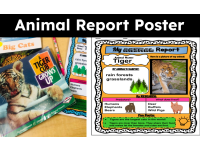
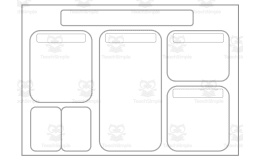
Total Number of Pages- 7 pages are included: a cover, a tiger example, two labeled report templates and three unlabeled formats. Correct the tiger example’s factual claims before using it as a model.
Breakdown of Pages Include:
Example page (tiger)
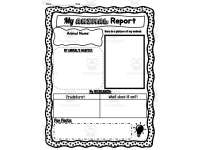
My Animal Report
My Insect Report
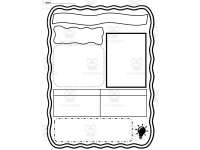
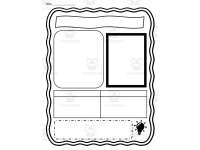
Three additional templates with blank titles and headers for students to include their own interesting topics.
Related resources
More resources teachers may find useful
24 related resources were found using this product's title, contributor, categories and tags.



In the classroom
Teaching tips & learning objectives

Learning objectives
Research and record an animal's habitat, predators, and diet in the corresponding sections of a report poster.
Use a completed example (the tiger report) as a model for organizing nonfiction research into named sections.
Identify and record two or more interesting facts about a chosen animal or insect.

Teaching tips
Use the tiger example to explain layout, then correct its facts. Tigers are not objectively nicer than lions, and the broad males-eat-last claim is not established by the supplied evidence.
Do not list elephants as tiger predators: elephants are herbivores. Distinguish predators, competitors, defensive attacks and human threats instead of merging them into one category.
Use reliable animal references for each chosen species. The Smithsonian tiger profile provides supported habitat and diet examples.

Skills covered
Nonfiction research organization — students sort researched facts about an animal into named categories (habitat, predators, diet, fun facts).
Modeled writing — students use a fully completed example (the tiger report) as a structural guide for their own report.
Topic adaptation — students apply the same report structure to a different subject (an insect) using parallel, insect-specific labels.
Good to know
Questions teachers ask about this resource
Is the Insect Report template identical to the Animal Report template?
It follows the same structure — name, picture, habitat, predators, diet, and fun facts — but with insect-specific labels ("My INSECT Report," "Insect Name," "MY INSECT'S HABITAT") in place of the animal wording.

No reviews yet
Downloaded this resource? Tell other teachers how it went.
Curriculum
Standards, concepts & topics
Standards
 Standards
- W.3.7
Core concepts
 Core concepts
Nonfiction research
Report organization
Habitat
Predators and diet
 Topics
Explore more
Categories this resource belongs to
Explore related searches
More to explore
You may also like