



2,857 products added recently
1st Grade Worksheets
Nurture your first graders' love for learning with worksheets designed specifically for their level. Covering reading, math, science, and more, these resources make learning interactive and enjoyable. Use them to reinforce lessons and support skill development in young students.

 Show filters


Letter T Activities Alphabet Worksheets & Boom Cards for Kindergarten
ELA, Language Development, Phonics, Pre-Reading, Kindergarten, Preschool, Grade 1, Activities, Centers, Crafts, Worksheets & Printables, Coloring Pages, Worksheets, Crosswords Puzzles, Dot To Dots, Mazes, Word Searches
Looking for an engaging way to introduce the letter T in your classroom? This Letter T Activity Pack includes a blend of hands-on printables and interactive Boom Cards , giving your preschool and kindergarten students multiple ways to explore and master both uppercase and lowercase T. With 83 printable pages and 31 Boom Cards , your learners will trace, sort, spin, dab, color, connect dots, solve puzzles, and more—building phonics, fine motor, and early literacy skills while having a blast! ✨ What's Included: 📄 Printable Activities Letter T Poster + 6 Visual Vocabulary Cards Tracing & Writing Uppercase and Lowercase T Coloring, Finding, Sorting, and Spinning Letter T Letter T Mazes, Puzzles, Dot-to-Dot Activities Geoboard Fun, Color by Code, Glitter Letter Craft Cut-and-Paste Visuals, Dab the Dots Town Mouse Coloring Page & "Little Miss Muffet" Nursery Rhyme Reading Practice Sheets (e.g., a, at, the, sat, cat ) Summary Sheet for Review 🧠 Extra Fun Printables “I’m a Letter T Champ” Crown & Bracelet Mini Letter T Booklet (with visuals) Flipbook for Letter T Words Word Wheel (6 Letter T Words) Turtle-Themed Finger & Stick Puppets Mini Sight Word Flipbook (Touch Phonics Font) 💻 Boom Cards (Digital Activities – 31 Cards) Uppercase and Lowercase T Formation Visual Recognition of Tt Letter T Sound Matching Puzzle Piece Matching Drag-and-Drop Uppercase/Lowercase Sort Visual Identification Reveal Activity Capitalization Use: Beginning vs Mid-Sentence 🎯 Perfect for: Letter of the Week Programs Literacy Centers Morning Work Small Group or 1:1 Instruction At-Home Learning Bonus: ✔️ Both US and British English spelling files included for global classrooms! Whether you're launching your alphabet program or reviewing mid-year, this ready-to-use resource makes learning the letter T easy, interactive, and full of variety.
Author Teach2Tell
Rating
Tags Letter T Activities, Alphabet Worksheets Letter T, Letter Of The Week Letter T, Preschool Letter T Worksheets, Kindergarten Letter T Activities, Letter T Crafts And Printables, Phonics Letter T Practice, Uppercase And Lowercase T Worksheets, No Prep Alphabet Letter T Pack, Interactive Letter T Phonics Activities
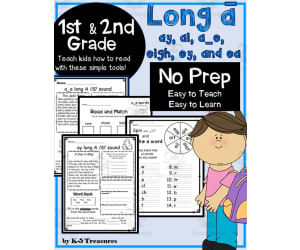
Phonics for 1st and 2nd Grade: Help Students Learn Long A Words: AY, AI, A_E, EIGH, EY, and EA
ELA, Grammar, Language Development, Phonics, Grade 1, 2, Worksheets & Printables, Worksheets, Lesson Plans, Teacher Tools
This unit focuses only on the Long A sounds. Learning how to read can be the most challenging activity for students and for a teacher. Understanding that the combination of letters can make the same vowel sound requires lots of repetitive practice of reading and writing these words with these sounds. There are other phonics units that I sell that focuses on each of the long vowels with a combination of different letters. Reading can be made easier with these phonic helps that repeatedly encourage students to practice these Long A sounds. Activities include: - Reading comprehension and identifying the Long A in their reading - Writing their answers to questions regarding the paragraph - Identifying additional Long A words in sentences using a word bank - Matching words with pictures, spinning a paperclip activity where students will write the word with the Long A sound - and lastly a fun wordsearch with variations of Long A words. These activities are for each long vowel words that are focused on the Long A sounds so there are plenty of opportunities for students to practice their comprehension reading skills and phonic sounds. Students will practice the following Long A Word sounds: AY, AI, A_E, EIGH, EY, and EA. Teachers can use this resource in whole group, individually with students, students can practice with each other in centers, or these worksheets can be assigned as homework. Worksheets are also differentiated for each Long A sounds for all young learners which makes it perfect for all 1st - 2nd graders. A total of 29 pages full of reading and phonic activities. Along with reading and writing there are matching, cutting, and pasting activities. Word searches and spin and make a word activities are also a part of this packet which make learning to read these phonic sounds entertaining for young learners. For a list of other phonics and grammar activities, click on the following links: CVC Word Families for Beginning Readers: Stamp it, Make it, Trace it, and Write it CVC Words | Short Vowel Phonics | Word Families for K- 2nd Grade Phonics for 1st and 2nd Grade: Help Students Learn Long A Words: AY, AI, A_E, EIGH, EY, and EA Phonics for 1st and 2nd Grade: Help Students Learn Long E Words: EE, EA, E_E, and Y Phonics for 1st and 2nd Grade: Help Students Learn Long I Words: I_E, IE, IGH, and Y Phonics for 1st and 2nd Grade: Help Students Learn Long O Words: O_E, OA, OW, OE, and OUGH Phonics for 1st and 2nd Grade: Help Students Learn Long U Words: U_E, EW, OO, UE, UI and OU Phonics / Digraphs for 1st and 2nd Grade: Beginning, Middle, and Ending Sounds Phonics / Digraphs for 1st -2nd: Ending Sounds: CK, NG, SH, TH, and NK Phonics / Digraphs for 1st and 2nd Grade: Beginning Sounds: SH, TH, WH and PH Phonics: R-Controlled Words for 1st and 2nd Grade and Early Readers
Author K-5 Treasures
Tags Phonics, Vowel Sounds, 1st Grade, 2nd Grade, Reading, Grammar, Long A Sounds, Long A Words, Long Vowel Sounds, Phonics 2nd Grade Worksheets

Math Fact Fluency Mastery Sheets
Math, Addition and Subtraction, Addition, Subtraction, Algebra, Calculus, Decimals, Fractions, Measurements, Multiplication and Division, Grade 1, 2, 3, 4, 5, 6, 7, 8, Worksheets & Printables, Workbooks, Worksheets, Writing Prompts, Word Searches, Teacher Tools, Assessments, Lesson Plans, Graphic Organizers, Presentations
The Math Facts Fluency Mastery Sheets-PRO (Professional Edition) is a complete (53 page) digital PDF resource that includes a variety of structured worksheets, instructional strategies, visual aids, & answer keys to help students build automaticity in addition, subtraction, multiplication, and division. This Professional Edition of the Math Facts Fluency Mastery Sheets were specifically designed to help students practice math fact fluency from basic facts (0-5) to advanced operations (6-12) including, regrouping; fact families; mixed operations; & timed drills. The Math Facts Fluency Mastery Sheets have been specifically designed to provide scaffolded modules that allow students to progress from concrete to abstract materials. Included are: number lines, arrays, part-part-whole diagrams; multiplication tables; and real-world word problems all of which support Elementary Math Standards. Finally, each of the 53 pages includes a baseline assessment; progress monitoring chart; implementation instructions for parents/teachers; and full answer keys to make grading easy. The Math Facts Fluency Mastery Sheets provide an ideal way to provide students with 5-10 minutes daily of deliberate practice for increasing their math fluency, eliminating finger counting, reducing cognitive load while preparing them for multi-digit math, fractions, and algebra. The Math Facts Fluency Mastery Sheets are perfect for use in the classroom, homeschooling; tutoring; & intervention groups in order to increase students' confidence in math and speed through deliberate practice. Why Parents and Schools Appreciate It Tested Method With No Guesswork – The clear mastery pattern, leveled practice exercises, timed benchmarks and answer keys enable teachers and parents to assess children's progress in minutes with absolutely no preparation. Fast Pain-Free Confidence – All kids can go from counting on fingers to having graduated to automatic recall in 5 to 10 minutes a day therefore reducing 'math anxiety' and allowing their brain to be focused on solving word problems or doing advanced maths Multi-Sensory Visual Aids – Abstract mathematics become concrete with the aid of using arrays, number lines, fact family charts, and other concrete models making it easier for visual learners, ESL students/learners, and students in the Special Education Program. Flexible Usage – Used in the classroom, homeschool, tutor (school breaks), summer review etc., has parent implementation ideas along with ability to track data for the benefit of school administration. Professional Quality – 53 pages of printable resources inclusive of strategies to enhance student learning outcomes that will be visible in report cards and standardized tests. Target Audience of the Resource (Based on a Study of the Complete Resource) : A resource that targets students in Grade 1–4 grades. (Most aligned to students in grades 2–3.) Addition Fundamentals (0 to 5) + Advanced Addition (6 to 12) + Addition Basics (0 to 5). Used by kindergarten/first grade students through second grade. Advanced Subtraction (up to four-digit regrouping) + Multiplication Foundations (0 to 5) . Used by second and third grade students. Multiplication Mastery (6 to 12) + Division Basics (1 through to 5) + Division Mastery (6 through to 12) + Mixed Operations Used by students in fourth and fifth grades. Therefore, it can be used to remediate fourth-grade students or to enrich first-grade students, but since this early mastery resource is based on developing fact fluency, it is ideally positioned for students in second or third grades. Copyright/Terms of Use This book was published copyright owned by Syed Hammad Rizvi for personal/single classroom use only; any alteration, redistribution or sale of this resource in any format including digital would constitute an infringement of copyright law. You are welcome to use this resource in your own classroom, but cannot share with another teacher unless you purchase additional rights through Teachsimple. Thank you for honoring these terms of use! Syed Hammad Rizvi is happy to provide this resource.
Author Creative Book Store
Rating
Tags MathFactFluency, MathFluency, ElementaryMath, MathWorksheets, MathMastery, AdditionSubtractionMultiplicationDivision, TimedMathDrills, MathFacts, FactFamilies, MathFactFluencyWorksheets

Letter R of the Week Letter R Printables Alphabet Worksheets
Common Core, Phonics, Language Development, ELA, Pre-Reading, Kindergarten, Preschool, Homeschool Curriculum, Homeschool Templates, Grade 1, Centers, Activities, Crafts, Coloring Pages, Worksheets, Worksheets & Printables, Crosswords Puzzles, Dot To Dots, Mazes, Word Searches
Make the Letter R roar to life with this fun-filled phonics and handwriting pack! Perfect for preschool and kindergarten learners, this Letter of the Week Letter R Activity Pack includes 86 no-prep printable pages and 30 interactive Boom Cards designed to help students recognize, write, and master uppercase and lowercase R with confidence. From tracing and puzzles to crafts and phonics games, this resource supports early literacy, fine motor development, and letter-sound recognition in an engaging, hands-on way. ✏️ What’s Included: 📄 Printable Worksheets Letter R Poster + 6 Visual Vocabulary Cards Booklet Cover + ‘About Me’ Page Tracing & Writing Uppercase and Lowercase R Sorting, Spinning, and Finding Letter R Drawing Letter R Pictures Letter R Mazes, Dot-to-Dot, Puzzles Dab the Dots, Color by Code, Visual Cutouts Geoboard Activity + Glitter Letter Craft Fairytale Connection: Rapunzel Beginning Sounds Practice for Selected Letters Word Family Practice: a, i, e, an, ap, at, in, ip, it Summary Sheet for Review 🎨 Crafts & Extra Literacy Activities “I’m a Letter R Champ” Crown & Bracelet Mini Flipbook with Letter R Words and Visuals One-Page Mini Word Booklet Sight Word Flipbook Robot-Themed Finger Puppets (6 per page) Stick Puppet Templates (4 per page) Letter R Word Wheel (6 Vocabulary Sections) 💻 Boom Cards – 30 Digital Activities Uppercase & Lowercase R Formation and Recognition Letter R Name and Sound Practice Puzzle Piece Matching (Uppercase/Lowercase) Drag-and-Drop Sorting: Capital vs Lowercase Visual Reveal Game (R Sound Pictures) Sentence Usage: Uppercase R vs Lowercase r 🎯 Perfect For: Letter of the Week Literacy Instruction Morning Work & Centers Small Groups or Intervention Phonics Practice & Fine Motor Skills Homework & Distance Learning ⭐ Bonus: Comes with both US and British English spelling options—ready for any classroom. Build confidence in early learners with this comprehensive Letter R resource that combines creativity, phonics, and skill-building into one easy-to-use bundle.
Author Teach2Tell
Rating
Tags Letter R Activities, Letter Of The Week Letter R, Alphabet Worksheets Letter R, Preschool Letter R Printables, Kindergarten Letter R Activities, Phonics Practice Letter R, Robot Letter R Craft, Interactive Letter R Phonics Activities, Rapunzel Letter R Activity
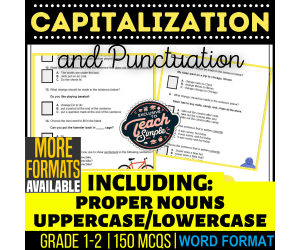
Captitalization and Punctuation Practice Questions - Grades 1-2 (Word)
ELA, Language Development, ESL, Grammar, Common Core, Resources for Teachers, Grade 1, 2, Worksheets & Printables, Worksheets, Quizzes and Tests, Teacher Tools, Quizzes, Tests, Assessments
Capitalization and Punctuation Grammar Practice MCQS: 10 lessons, 150 MCQS, 43 pages ELA MCQS Overview: In this series of lessons, students will embark on an engaging exploration of the grammar skills that bring our language to life. These lessons are designed to help students identify, understand, and effectively use language arts skills in their writing and speech. Used with the free supplementary materials available for all topics, each lesson builds on the last, offering a mix of direct instruction, interactive group activities, and independent practice. Through fun and creative tasks, students will learn how to recognize grammar in sentences, understand their role in sentences and use them to enhance their own writing and speech. Capitalization and Punctuation Overview: Includes: Proper Nouns Opening/Closing Letters Uppercase/Lowercase Dates Punctuation Practice Word Version This is the Word editable version. This download is available in GOOGLE Docs, GOOGLE Forms, GOOGLE Slides. PDF, PPT, WORD, check the links below for more details. FULL CATALOG OF DOWNLOAD LINKS HERE Grade 1/2 Links: Capitalization and Punctuation Google Docs Google Forms Google Slides PDF PPT Word Free Supplementary Materials Pack Adjectives Google Docs Google Forms Google Slides PDF PPT Word Free Supplementary Materials Pack Nouns Google Docs Google Forms Google Slides PDF PPT Word Free Supplementary Materials Pack Pronouns Google Docs Google Forms Google Slides PDF PPT Word Free Supplementary Materials Pack Verbs Google Docs Google Forms Google Slides PDF PPT Word Free Supplementary Materials Pack Prefixes & Suffixes Google Docs Google Forms Google Slides PDF PPT Word Free Supplementary Materials Pack Sentence Structure Google Docs Google Forms Google Slides PDF PPT Word Free Supplementary Materials Pack Subject-Verb Agreement Google Docs Google Forms Google Slides PDF PPT Word Free Supplementary Materials Pack ELA Review Questions Overview Questions have three answer choices. There are a handful of pictures on each test for aesthetic purposes, as well as a review sheet covering most of the topics covered in the product. Introduction or Example Sheet Each topic will include an introduction or example sheet to go through first with your students. Full Answer Keys Full answer keys and sample responses are provided so no matter how busy you are, you know you're covered! In the Supplementary Pack Interactive Ice Breakers: Fun, hands-on activities that get students thinking about adjectives right from the start. Guided Practice: Teacher-led exercises that reinforce the day’s lesson, ensuring students can confidently identify and use adjectives. Group and Partner Tasks: Collaborative activities that allow students to work together to solve problems, categorize adjectives, and create descriptive sentences. Independent Worksheets: Structured worksheets that provide individual practice and help solidify understanding of key concepts. Exit Tasks: Quick, reflective activities at the end of each lesson that assess understanding and encourage students to apply what they’ve learned. For similar downloads and other frees, do check out Cored Group on TeachSimple.
Author Cored Education
Tags Elementary, Answers, Ccss, Common Core, Grammar, Language Arts, Test, Test Prep, Mcq, Ela

Kindness & Gratitude Daily Reflection Journals
Special Resources, Life Skills, Social Emotional Learning (SEL), Social Skills, Special Education Needs (SEN), Speech Therapy, STEM, Resources for Teachers, Classroom Management, Community Building, Kindergarten, Grade 1, 2, 3, 4, 5, Worksheets & Printables, Workbooks, Worksheets, Word Searches, Teacher Tools, Lesson Plans, Presentations, Quizzes and Tests, Quizzes, Tests
With the Kindness and Gratitude Daily Reflection Journals (e.g K-5), you have the ability to turn your classroom or home into a center of kindness and emotional intelligence. This wonderful curriculum is a complete forty-three page pdf that contains research-based information from the fields of child development, affective neuroscience, and Somatic-Cognitive Integration Methodology as well as ten student worksheets that are ready for live implementation, and teacher implementation resources. This resource is designed specifically for classrooms with student populations from Kindergarten to 5th grade and is built on the facilitation of social skills through three developmental tiers: K-1: Sensory and Affective Identification (visual prompts/drawing) 2-3: Relational Reciprocation and Theory of Mind 4-5: Complex Systems (Ripple Effect) Thinking, and Intrinsic Altruism Through this curriculum, students will become "Kindness Detectives", engage in an Action-Reflection Cycle, create a map of gratitude through various ecosystems, develop their resilience using silver-lining prompts, and implement acts of altruism through a "Kindness Architect" blueprint. In addition, the curriculum includes theory around neuroplasticity, case studies of real-world use that show 42% drop in conflicts in the morning and 60% increase of student feeling "seen and valued", structural schematics (SVG format), differentiation strategies for reluctant learners, and a complete Teacher Implementation Guide. The Kindness Journals are perfect to use in morning meeting times, social/emotional learning blocks, restorative justice, homeschooling, or guidance/counseling sessions. This zero-preparation curriculum is available as a digital download, and you can easily print the material or assign the material digitally. The Kindness Journals can help increase emotional granularity, empathy, and an overall positive class culture within your classroom, while also providing a resource that supports SEL competencies as developed by CASEL. The reason teachers and parents are happy using this program: Results are measurable! Real-life classroom studies show that using the academic curriculum has decreased morning conflict by 42% and has helped 60% of the children who take part be recognized and appreciated. Both parents and teachers see these changes immediately! There is little preparation time needed to use the academic program. There are 10 ready-to-use worksheets and a teacher's guide with supportive materials for you to be able to use this program right now without spending any time preparing. The academic curriculum has been designed to have the ability to grow as the child grows, from drawing pictures in Kindergarten and First Grade to developing a sense of right and wrong in Fourth and Fifth grade. This ensures that each child in the room is able to be challenged and feel successful through the entire academic experience. The academic program uses what's called mirror neurons, neuroplasticity, and body language to ensure children will exhibit kindness as a daily behavior rather than as a rule. The academic program teaches children to look internally for their own feelings and authentic emotions as opposed to focusing on external rewards or expectations (performative kindness). The result of this process helps to create a child with a higher level of empathy and emotional resilience. Who this is for : This document has been created specifically for K-5 students (ages 5-11). It's not right for Pre-K (the material is too advanced) or Middle School./ For grades K-5, the three-level scaffolding aligns directly with elementary learner neuro-developmental stages., making this resource a match for the following categories of K-5 educators: -General education elementary classrooms (Grades K-5) -Families who homeschool their children -School Counselors / Social-Emotional Learning (SEL) Coordinators -Special education / inclusive classrooms (differentiated activities provided) . -After school program or character education clubs . Copyright / Terms of Use: This book is copyrighted by Syed Hammad Rizvi. This product can only be used for personal use and/or by individual classes. You may not modify, redistribute, or sell any portion of this product. You also cannot place it online where it can be found and downloaded by anyone else. To share this product with other teachers, please purchase additional copies from Teachsimple. Your cooperation in following these rules is greatly appreciated. This product is brought to you by Syed Hammad Rizvi in a state of happy non-ownership.
Author Creative Book Store
Rating
Tags KindnessJournal, GratitudeJournal, SELActivities, DailyReflectionJournal, KindnessAndGratitude, GratitudeForKids, ElementarySEL, K5SEL, SocialEmotionalLearning, ElementaryTeacher

Comparing Numbers Worksheets - More, Less, Same As, Equal Math
Math, Patterns, Early Math, Numbers, Counting, Kindergarten, Preschool, Grade 1, 2, 3, 4, Worksheets, Worksheets & Printables, Workbooks, Word Problems, Teacher Tools, Centers, Activities
Students will find, recognize Comparing Numbers for Special Education. These Comparing Numbers are aligned with the science of reading Comparing Numbers Activities for Special Education identity practices worksheet and in fact your prescript and kinderrain needs to master the Comparing Numbers Activities for Special Education names, Comparing Numbers seem that I have designed these Comparing Numbers Activities for Special Education, which have designed these Comparing Numbers Activities works, which is a Comparing Numbers Activities for Special Education about a paper about the practice of the practice of guide practices, which is a Comparing Numbers Activities for Special Education and plants about the practice To create a Comparing Numbers Activities to create, which helps find different Comparing Numbers , ensures a fun and structured approach to learning the Comparing Numbers Activities . This worksheet provides a fun activities to identify the sounds of any pre -PR -Lafabet Comparing Numbers Activities for Special Education, the formation of Comparing Numbers Activities for Special Education, including a series of small activities on each page, including a series of students to involve a series of skills for Comparing Numbers Activities for Special Education reviews. for Special Education. These Comparing Numbers are aligned with the science of reading Comparing Numbers Activities for Special Education identity practices worksheet and in fact your prescript and kinderrain needs to master the Comparing Numbers Activities for Special Education names, Comparing Numbers seem that I have designed these Comparing Numbers Activities for Special Education, which have designed these Comparing Numbers Activities works, which is a Comparing Numbers Activities for Special Education about a paper about the practice of the practice of guide practices, which is a Comparing Numbers Activities for Special Education and plants about the practice To create a Comparing Numbers Activities to create, which helps find different Comparing Numbers , ensures a fun and structured approach to learning the Comparing Numbers Activities . This worksheet provides a fun activities to identify the sounds of any pre -PR -Lafabet Comparing Numbers Activities for Special Education, the formation of Comparing Numbers Activities for Special Education, including a series of small activities on each page, including a series of students to involve a series of skills for Comparing Numbers Activities for Special Education reviews.
Author LAMO
Rating
Tags Centers , Printables, Worksheets Basic , Operations, Math, Numbers , Activities, Homeschool

Letter of the Week Letter H Printables Phonics Activities Pack
Phonics, Language Development, ELA, Pre-Reading, Kindergarten, Preschool, Homeschool Curriculum, Homeschool Templates, Grade 1, Centers, Activities, Crafts, Coloring Pages, Worksheets, Worksheets & Printables, Crosswords Puzzles, Dot To Dots, Mazes, Word Searches
Make learning the Letter H a hands-on adventure with this fun, no-prep phonics resource! Designed for preschool and kindergarten students, this Letter of the Week Letter H Pack features a mix of print-and-go worksheets and interactive Boom Cards that build early literacy and fine motor skills. With 78 printable pages and 31 digital Boom Cards , students will practice identifying, tracing, and using uppercase and lowercase H through movement, play, and visual learning. ✏️ What’s Included: 📄 Printable Worksheets Letter H Poster + 6 Visual Vocabulary Cards Booklet Cover + ‘About Me’ Page Tracing & Writing Uppercase and Lowercase H Letter H Sorting, Spinning (with review: I, C, K), and Finding Activities Drawing & Coloring the Letter H Sound Recognition for /a/, /s/, /t/, /n/, /p/, /i/, /c/ Mazes, Dot-to-Dot, Dab the Dots, Geoboard & Color by Code Visual Cutouts for Letter H Nursery Rhyme Link: Hickory Dickory Dock Word Family Practice Sheets: -an, -at, -ap, -in, -it, -ip Summary Sheet for Review 🎨 Crafts & Literacy Extras “I’m a Letter H Champ” Crown & Bracelet Mini Flipbook with Letter H Words & Visuals One-Page Visual Word Booklet Sight Word Flipbook Horse-Themed Finger Puppets (6 per page) Matching Stick Puppet Templates (4 per page) Letter H Word Wheel (6 Visual Vocabulary Sections) 💻 Boom Cards – 31 Digital Activities Uppercase and Lowercase H Formation & Recognition Letter H Name and Sound Practice Puzzle Matching: Uppercase and Lowercase H Drag-and-Drop Sorting Activities Visual Reveal Game (Letter H Pictures) Sentence Usage Practice: Capital H vs Lowercase h 🎯 Perfect For: Letter of the Week Curriculum Phonics & Fine Motor Practice Literacy Centers & Morning Work Small Group & Individual Support Homework or Home Learning ⭐ Bonus: Includes both US and British English spelling versions to support diverse classrooms. Give your students a strong start with this Letter H phonics and handwriting pack —designed to make early literacy fun, effective, and engaging!
Author Teach2Tell
Rating
Tags Letter H Activities, Lowercase Letters, Uppercase Letters, Letter Of The Week Letter H, Alphabet Worksheets Letter H, Preschool Letter H Printables, Kindergarten Letter H Activities, Phonics Practice Letter H, Uppercase And Lowercase Letter H, Horse Letter H Craft
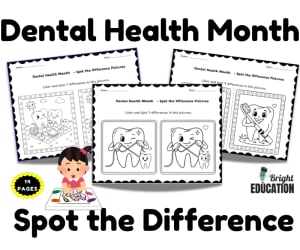
Dental Health Month Spot the Difference Pictures and Coloring Activit
Health, P.E. & Health, Grade 1, 2, Coloring Pages, Worksheets, Worksheets & Printables, Games, Activities
This Dental Health Month Spot the Difference Pictures and Coloring Activity includes printable worksheets designed for young learners in preschool, kindergarten, and early elementary grades. The activity focuses on observation and visual discrimination skills by having students look closely at two similar pictures and identify the differences between them, then color the images once completed. The pictures are themed around dental health and everyday habits related to caring for teeth. The worksheets can be used during Dental Health Month lessons, morning work, or as part of a learning center. They may be completed independently, in small groups, or as a quiet activity. The activity supports attention to detail, visual comparison skills, and following simple directions. Teachers may also use the pages to introduce basic conversations about healthy dental habits. All materials are provided as black-and-white printable PDF files. Preparation is limited to printing. The pages can be used in class or sent home for additional practice. This resource includes 14 printable worksheets. What’s included: Spot the difference picture worksheets Dental health–themed images Coloring pages Visual comparison activities Black-and-white printable format Materials suitable for preschool through early elementary
Author Bright Education
Rating
Tags Dental Health Month, COLORING, Spot The Difference, Game, Health

Guided Reading Level F - Planets in Our Solar System
ELA, Resources for Teachers, Reading Comprehension, Reading, Language Development, Pre-Reading, Vocabulary, Science, Earth and Environmental Sciences, Space, Kindergarten, Grade 1, 2, Worksheets & Printables, Worksheets, Teacher Tools, Centers, Activities, Literacy Readers, Quizzes, Quizzes and Tests, Assessments
This Guided Reading Book - Planets in Our Solar System (Level F) includes: Guided Reading Color Label (front cover x1) This is a quick way to match the book’s demands to what students can generally handle.. The overall goal is to use the level/color to pick books for several smaller groups. To qualify for a certain level, a student is expected to read a book from that level with about 90–94% accuracy. If a student is consistently accurate and understands, move up a level. If the student is struggling at that level, drop down and add more support. Each student will improve at completely different rates, but it is generally one of the best ways to check progress across the class. DOWNLOAD THE CATALOG TO VIEW ALL GUIDED READING BOOKS AVAILABLE (SORTED LEVELS A-Z) COMPANION VIDEO NOW AVAILABLE (EMBEDDED AFTER PREVIEW PICTURES IN PRODUCT DESCRIPTION) Pre-Reading Question (x1) The teacher says the question aloud, either while showing the cover or the first page. Students share what they already know or make sensible guesses based on the cover. Encourage them to use the target vocabulary where possible. Write a few of their ideas on the board so you can return to them during or after the reading. Vocabulary Words (x5) Introduce the five words one at a time. Say each word aloud, have students repeat it, and then ask if anyone already knows what it means. Read the meaning together and briefly connect each word to a picture, action, or gesture so it feels more memorable. Ask students to flip through the book and point to any pages where they spot the vocabulary words. While reading, pause when one of the words appears, or reread the sentence so students clearly notice and understand it in context. Optional: Ask students to raise their hands whenever they see or hear one of the new words. Guided Reading Pages (x10) Check the book snapshot below for: Primary topic — decide whether students need a quick introduction or extra background first. What this lesson teaches best — choose 1–2 key points to focus on during the session. Learning goals — keep in mind what students should be able to understand or say by the end. Key vocabulary — review and reinforce these throughout the lesson. Questions overview — look ahead so you know what students will be asked and whether any extra support is needed. Run the lesson You may already have looked at a few pages together, but it can help to revisit some of the pictures first to build meaning. Depending on your time and how confident the group is with guided reading, you may want to read the whole book aloud to them first. Students can then whisper-read or partner-read while you listen in. If time allows, you can also read as a group, with each student taking a page. Use the guided reading prompts to support them, such as: “Check the picture—does it make sense?” “Point under the words.” “Try the first sound.” “Reread the sentence smoothly.” It can be helpful to focus more closely on one student each session, rotating over time, so you can better judge whether they are ready to move up or may need more support at their current level. Comprehension Questions (back cover x3) This is where you check that students understood the text, not just the words on the page. Start by letting students answer by pointing to a page or picture and saying a short sentence. After they respond, follow up with: “Show me where you found that in the text.” In larger groups, let partners discuss their answer first for 10–20 seconds, then invite 2–3 students to share. Differentiation tips Emerging speakers / struggling readers: oral response + pointing On-level: oral response in a full sentence Higher: one written sentence or a drawing with labels Book Snapshot Title: Planets in Our Solar System Genre: Nonfiction (informational) Subject: Science Primary Topic: Basic facts about the Sun, the planets, and the Moon Estimated Guided Reading Level (A–Z): F What This Book Teaches Best Introduces the Sun as a star at the center of the solar system that gives light and heat to the planets. Teaches the order of the planets, from Mercury to Neptune, with one main fact about each one. Builds science vocabulary naturally through the text, including words like craters , surface , giant , unique , and reflects . Helps students compare planets using simple details such as color, temperature, rings, winds, and clouds. Learning Goals Students will identify the Sun’s job in the solar system using details from the text. Students will name the planets in order from Mercury to Neptune as shown in the book. Students will describe at least three planets using facts from the text. Students will explain what makes one planet “unique” in the book. Students will tell what the Moon does at night, according to the text. Key Vocabulary From the Text craters — deep holes in the ground surface — the outside layer of something giant — very, very big unique — special and different from others reflects — bounces light back Discussion Prompts Pre-reading question: What do you already know about the Sun, the Moon, and the planets? Comprehension question: Which planet does the book say is the smallest? Comprehension question: What is Saturn famous for? Comprehension question: What does the Moon reflect at night? 1. Best Printing Method (Recommended) Booklet printing is the best option if your printer or PDF viewer supports it. This method usually places the pages in the correct order automatically and makes folding much easier. Settings to use: Print mode: Booklet Paper size: Letter or A4 Orientation: Landscape Print on both sides: Yes Flip on: Short edge Scaling: Fit to printable area Booklet subset: First, print front sides only Then, print back sides only This will automatically: Pair the pages correctly Place the cover on the outside Help everything line up properly for folding After printing, fold the pages in half and staple along the spine. 2. If “Booklet” Printing Is Not Available You can still print the book correctly by using manual duplex printing . Step-by-step: Open the PDF. Click Print . Use these settings: Orientation: Landscape Pages per sheet: 1 Print on both sides: Yes Flip on: Short edge Print all pages. Since each PDF page already contains two facing book pages, the pages should still fold neatly into a book. Thousands of Cored Education products are included with your TeachSimple membership. Download links and encyclopedia index available here.
Author Cored Education
Rating
Tags Vocabulary, Reading Comprehension, Reading Passages, Leveled Reading, Nonfiction, Reading, Guided Reading, Earth Science, Space, Planets
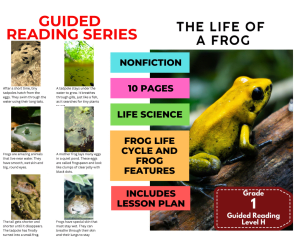
Guided Reading Level H - The Life of a Frog (with Lesson Plan)
ELA, Resources for Teachers, Reading Comprehension, Reading, Science, Animals, Life Sciences, Pre-Reading, Language Development, Vocabulary, Grade 1, 2, 3, Worksheets & Printables, Worksheets, Teacher Tools, Centers, Activities, Literacy Readers, Quizzes, Quizzes and Tests, Assessments, Lesson Plans
This Guided Reading Book - The Life of a Frog (Level H) with lesson plan includes: Guided Reading Color Label (front cover x1) This is a quick way to match the book’s demands to what students can generally handle.. The overall goal is to use the level/color to pick books for several smaller groups. To qualify for a certain level, a student is expected to read a book from that level with about 90–94% accuracy. If a student is consistently accurate and understands, move up a level. If the student is struggling at that level, drop down and add more support. Each student will improve at completely different rates, but it is generally one of the best ways to check progress across the class. DOWNLOAD THE CATALOG TO VIEW ALL GUIDED READING BOOKS AVAILABLE (SORTED LEVELS A-Z) Pre-Reading Question (x1) Teacher asks the prompt aloud, can be while showing the cover or first page. Students share what they already know, or make educated guesses from the cover. Prompt them to use the target vocabulary. Write some of their responses on the board to look back at during the reading. Vocabulary Words (x5) Introduce the five words, best doing it one at a time. Start by saying it, while students repeat and then see if anyone knows what it means before reading further. Read through the meaning and try to briefly connect each word to a picture or gesture so it’s meaningful. Ask students to flip through the book pages and point to where they see each of the vocabulary words. While reading the book pause upon coming across one of the vocab words or read the sentence twice to make sure students understand the word has appeared. Optional: Ask students to raise hands whenever they see/hear one of the new words. Guided Reading Pages (x10) Check the book snapshot (below) for: primary topic - do you need to prep extra reading or intro materials on this? what is taught best - decide on 1-2 bullets to focus on, use the prompt or words provided here for best results. learning goals - what you are checking for students to be able to do after the session, elicit answers using prompts or words provided. key vocabulary (see section above). questions overview - so you know what is coming up and if you need to prep extra materials to assist understanding. Run the lesson You may have already looked at a few of the pages together, but you can show them some of the pictures again first to set meaning. Depending on how much time you have and how familiar your students are with guided reading class, you may want to read the book aloud first with the group first. Students whisper or partner read, while you listen in. If time, do it as a group, one student reading a page each. Use the guided page’s prompts to coach: “Check the picture / does it make sense?” “Point under the words / try the first sound” “Reread the sentence smoothly”. Try to focus more on one student per session (rotating every time), so you can work out if they are ready to move up or need to move down a level. Comprehension Questions (back cover x3) This is your way to check that students didn’t just say the words, but actually understood the text. First, let students answer by pointing to the page/picture and saying a short sentence. After any answer, follow with: “Show me where you found that in the text.” In bigger groups, have partners answer first (10–20 seconds), then call on 2–3 students to share. Differentiation tips: Emerging speakers/struggling readers: oral + pointing On-level: oral in a full sentence Higher: one written sentence or draw + label Book Snapshot Title: The Life of a Frog Genre: Nonfiction (informational life cycle) Subject: Life Science + Reading (Informational Text) Primary Topic: Frog life cycle and frog features Estimated Guided Reading Level (A–Z): H What This Book Teaches Best Explains where frogs live and describes basic frog traits (smooth, wet skin; big, round eyes; living near water). Teaches the frog life cycle in clear steps: eggs (frogspawn) → tadpoles → legs grow → tail disappears → small frog. Shows how a tadpole lives and grows in water, including breathing through gills and eating tiny plants. Describes how frogs breathe (through skin and lungs) and how they get food (long, sticky tongue catching insects). Connects body parts to movement (strong back legs help frogs hop and jump high). Learning Goals Students will describe where frogs live and name physical traits the text mentions. Students will explain what frog eggs are called and describe what they look like. Students will retell the main stages of a frog’s life from eggs to a small frog. Students will describe how tadpoles move, breathe, and find food in the water. Students will explain how the frog’s body changes as legs grow and the tail disappears. Students will use text details to describe how a frog hunts and how it jumps. Key Vocabulary From the Text frogspawn — frog eggs that look like jelly. tadpoles — baby frogs that live in water and have tails. gills — body parts that help an animal breathe underwater. lungs — body parts used for breathing air. insects — small animals a frog can catch and eat. Discussion Prompts Pre-reading question: What changes do you think happen as a tadpole grows into a frog? Comprehension questions: Where does a mother frog lay many eggs, according to the text? Comprehension questions: What do tiny tadpoles use to swim through the water? Comprehension questions: What happens to the tadpole’s tail as it turns into a small frog? Printing Tips 1. Best Printing Method (Recommended) “Booklet” Printing (Best if Available) If your printer or PDF viewer supports Booklet Printing , use this. Settings to use: Print mode: Booklet Paper size: Letter or A4 (either works) Orientation: Landscape Print on both sides: Yes Flip on: Short edge Scaling: Fit to printable area Booklet subset: First test: Front sides only Then: Back sides only This will automatically: Pair pages correctly Put the cover on the outside Align everything for folding After printing, fold in half and staple along the spine . 2. If “Booklet” Printing Is NOT Available You can still print this correctly with manual duplex printing . Step-by-step: Open the PDF. Choose Print . Set: Orientation: Landscape Pages per sheet: 1 Print on both sides: Yes Flip on: Short edge Print all pages . Because each PDF page already contains two facing book pages, the result will still fold cleanly into a book. Thousands of Cored Education products are included with your TeachSimple membership. Download links and encyclopedia index available here.
Author Cored Education
Rating
Tags Reading Comprehension, Reading Passages, Reading, Guided Reading, Guided Reading Lesson Plan, Guided Reading Activity, Pre-reading, Science Lesson Plans, Animals, Frog Life Cycle

Letter of the Week Letter D Printables Activity Pack Phonics
Phonics, Language Development, ELA, Pre-Reading, Kindergarten, Preschool, Homeschool Curriculum, Homeschool Templates, Grade 1, Centers, Activities, Crafts, Coloring Pages, Worksheets, Worksheets & Printables, Crosswords Puzzles, Dot To Dots, Mazes, Word Searches
Dive into the Letter D with this playful and purposeful activity pack, perfect for preschool and kindergarten classrooms! Whether you're teaching uppercase, lowercase, or the letter D sound, this Letter of the Week Letter D Pack offers everything you need—no prep required. With 87 engaging printable worksheets and 31 interactive Boom Cards , your students will explore the letter D through hands-on phonics, fine motor tasks, and multisensory fun. ✏️ What’s Included: 📄 Printable Worksheets Letter D Poster + 6 Visual Vocabulary Cards Booklet Cover + ‘About Me’ Page Tracing & Writing Uppercase and Lowercase D Letter D Sorting, Spinning (includes review of R & H), and Finding Activities Drawing and Coloring Letter D Pictures Sound Recognition for: /a/, /s/, /t/, /n/ Mazes, Dot-to-Dot, Puzzles, Dab the Dots Color by Code, Geoboard Activity, and Visual Cutouts Fairy Tale Connection: The Ugly Duckling Coloring Sheet Word Family Practice: -ad, -id, -ed Summary Sheet for Review 🎨 Crafts & Literacy Extras “I’m a Letter D Champ” Crown & Bracelet Mini Flipbook with Letter D Words & Visuals One-Page Mini Booklet & Sight Word Flipbook Dog-Themed Finger Puppets (6 per page) Stick Puppet Templates (4 per page) Letter D Word Wheel (6 Vocabulary Sections) 💻 Boom Cards – 31 Digital Activities Formation & Recognition of Uppercase and Lowercase D Letter D Name and Sound Activities Puzzle Matching: Uppercase/Lowercase Drag-and-Drop Sorting (Uppercase vs Lowercase D) Visual Reveal Game (Letter D Pictures) Sentence Use: Capital D vs Lowercase d 🎯 Perfect For: Letter of the Week Instruction Literacy Centers & Morning Work Small Groups & Fine Motor Stations Homework Packets or Digital Practice Phonics and Sound Awareness Support ⭐ Bonus: Includes both US and British English spelling versions to suit every classroom need. Set your students up for success with this Letter D Phonics & Alphabet Pack —a fun, flexible, and foundational resource for early learners.
Author Teach2Tell
Rating
Tags Letter D Activities, Letter Of The Week Letter D, Alphabet Worksheets Letter D, Preschool Letter D Printables, Kindergarten Letter D Activities, Uppercase And Lowercase Letter D, Phonics Practice Letter D, Dog Letter D Craft, The Ugly Duckling Letter Activity, Interactive Letter D Phonics Activities

Simple Eco-Hero Stories & Green Habit Coloring Worksheets
Science, Earth and Environmental Sciences, Life Sciences, Earth Sciences, Environmental Science, Geology, Space, Nature & Plants, Human Body, STEM, Homeschool Curriculum, Homeschool Templates, Grade 1, 2, 3, 4, 5, Worksheets & Printables, Drawing Templates & Outlines, Workbooks, Worksheets, Coloring Pages, Word Searches, Teacher Tools, Assessments, Lesson Plans, Quizzes and Tests
You can use this all-inclusive, research-supported curriculum on environmental education to change your students from being eco-anxious to being empowered and confident eco-heros! This isn't just an assortment of worksheets. It's an entire framework designed to help students develop all of the daily habits associated with protecting the environment based on an understanding of environmental concepts transformed into narrative-kinesthetic activities. This can be used for Earth Day; as part of a year-long science curriculum; as a supplement for character education; etc. The combination of engaging stories about Eco-Heroes and hands-on literacy and visual arts activities will help students realize they too can protect the planet! What's Included in This 47-Page Resource? 1. Comprehensive Teacher's Guide: (10 Pages) An explanation of the educational philosophy by providing research-based rationale and examples from real-world scenarios to assure you of how to teach environmental principles effectively from a positive perspective. 2. Student Workbook: (21 Pages) Contains activities for students. Includes: 9 colorable images representing an eco-friendly habit (e.g., "The Water Champion," "The Carbon Tracker Team"), plus 10 age-appropriate worksheets (e.g., water conservation; energy; recycling; composting; plastic pollution) that require the use of fill-in-the-blank responses. 3. Certificate: Certifies the completion of a student’s commitment to becoming an eco-hero. Printable/collaborative format. 4. Complete Teacher Material: (16 Pages). In support of implementing the resources effectively and efficiently. Components are: - Pedagogical diagrams that help the Educator understand the principles. - Answer keys to all 10 worksheets. - A comprehensive guide showing the Educator how to use the materials with examples of differentiated instructional strategies for Grade Levels 1, 2, and 3. Important Topics In Environmental Education: Water & Energy Conserving Recycling, Upcycling & Waste Sorting Composting & Biodegrading Plastic Pollution & Reusables Alternatives Carbon Footprints & Alternative Transport Reforestation, Habitats & Photosynthesis Sustainable Agriculture & Locally Grown Food This resource requires no preparation; it can be printed out immediately and includes worksheets suitable for children of all ages. This resource will help teachers, parents, and club leaders to encourage children to become thoughtful, responsible global beings. Key Words: Earth Day, Environmental Science, Conservation, Recycling, Climate Change, Coloring Pages, Worksheets, 1st 2nd 3rd Grades, 1st, 2nd, 3rd Grade, Printable & Activites for Homeschooling. Things Parents/Teachers Like : Empowerment versus Fear: Helps to empower the child rather than leave them feeling overwhelmed by all the environmental issues around us (eco-anxiety), resulting in a child-to-hero relationship while focusing on positive actions that the child can do. Educational Not Just Boredom: Utilizes a “Narrative Kinesthetic” approach validated by educational psychology to teach habits through storytelling and action (coloring), resulting in a lasting behavioral change. Cross Curricula/All-in-one Unit: This resource is a unit containing integrated science, literacy (reading/writing), art and character education to provide teachers with time-saving resources. No-preparation Teacher Friendly: There is an implementation guide, visual supports and answer keys to help teachers immediately and confidently use the resource after posting on their site. Establishes Real-World Habits: Offers tools and ideas to replicate and create long-term positive programs that exist outside the classroom (e.g., conducting a "Home Waste Audit" as a follow up to an assignment). Audience Overview : - The text in this document identifies the target audience directly from key terms used, such as Grades 1-3 and primary aged learners. The level of difficulty of the student activities also provides direction for who this resource is written for. Primary Target - teachers for first, second, and third grade. The differentiated instructions at the end of this guide make it a very valuable resource for teachers that teach multiple grades or at least have multiple grade levels within their classroom(s). Secondary Target - Parents who are homeschooling their children, age 6-9 years old. Elementary Science Coordinators. After-school program coordinators (e.g., environmental club, boy/girl scout leaders). Parents looking for meaningful learning experiences that are centered around Earth Day. Copyright Notice/Terms of Use: The copyright for this book is owned by Syed Hammad Rizvi. This material is intended for personal and one classroom use only; it cannot be copied or altered in any way. In addition, it cannot be posted online where someone could possibly find it and download it. If you wish to use this product with other staff/professionals in different situations, please purchase an additional license(s) from Teachsimple. Thank you for your support of these terms of use. This product has been provided by Syed Hammad Rizvi.
Author Creative Book Store
Rating
Tags EnvironmentalScience, EnvironmentalEducation, SustainabilityForKids, Conservation, RecyclingActivities, CompostingForKids, WaterConservation, ClimateEducation, GreenHabits, EcoFriendlyKids
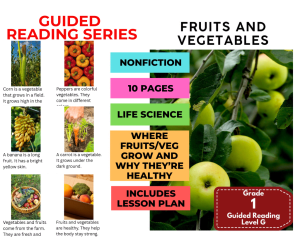
Fruits and Vegetables: Guided Reading Level G with Lesson Plan
ELA, Resources for Teachers, Reading Comprehension, Reading, Science, Language Development, Life Sciences, Health, P.E. & Health, Vocabulary, Kindergarten, Grade 1, 2, Worksheets & Printables, Worksheets, Teacher Tools, Centers, Activities, Literacy Readers, Quizzes, Quizzes and Tests, Assessments, Lesson Plans
This Fruits and Vegetables (level g) guided reading book with lesson plan includes: Guided Reading Color Label (front cover x1) This is a quick way to match the book’s demands to what students can generally handle.. The overall goal is to use the level/color to pick books for several smaller groups. To qualify for a certain level, a student is expected to read a book from that level with about 90–94% accuracy. If a student is consistently accurate and understands, move up a level. If the student is struggling at that level, drop down and add more support. Each student will improve at completely different rates, but it is generally one of the best ways to check progress across the class. DOWNLOAD THE CATALOG TO VIEW ALL GUIDED READING BOOKS AVAILABLE (SORTED LEVELS A-Z) Pre-Reading Question (x1) Teacher asks the prompt aloud, can be while showing the cover or first page. Students share what they already know, or make educated guesses from the cover. Prompt them to use the target vocabulary. Write some of their responses on the board to look back at during the reading. Vocabulary Words (x5) Introduce the five words, best doing it one at a time. Start by saying it, while students repeat and then see if anyone knows what it means before reading further. Read through the meaning and try to briefly connect each word to a picture or gesture so it’s meaningful. Ask students to flip through the book pages and point to where they see each of the vocabulary words. While reading the book pause upon coming across one of the vocab words or read the sentence twice to make sure students understand the word has appeared. Optional: Ask students to raise hands whenever they see/hear one of the new words. Guided Reading Pages (x10) Check the book snapshot (below) for: primary topic - do you need to prep extra reading or intro materials on this? what is taught best - decide on 1-2 bullets to focus on, use the prompt or words provided here for best results. learning goals - what you are checking for students to be able to do after the session, elicit answers using prompts or words provided. key vocabulary (see section above). questions overview - so you know what is coming up and if you need to prep extra materials to assist understanding. Run the lesson You may have already looked at a few of the pages together, but you can show them some of the pictures again first to set meaning. Depending on how much time you have and how familiar your students are with guided reading class, you may want to read the book aloud first with the group first. Students whisper or partner read, while you listen in. If time, do it as a group, one student reading a page each. Use the guided page’s prompts to coach: “Check the picture / does it make sense?” “Point under the words / try the first sound” “Reread the sentence smoothly”. Try to focus more on one student per session (rotating every time), so you can work out if they are ready to move up or need to move down a level. Comprehension Questions (back cover x3) This is your way to check that students didn’t just say the words, but actually understood the text. First, let students answer by pointing to the page/picture and saying a short sentence. After any answer, follow with: “Show me where you found that in the text.” In bigger groups, have partners answer first (10–20 seconds), then call on 2–3 students to share. Differentiation tips: Emerging speakers/struggling readers: oral + pointing On-level: oral in a full sentence Higher: one written sentence or draw + label Book Snapshot Title: Fruits and Vegetables Genre: Nonfiction Subject: Life Science (Plants and food) Primary Topic: Where fruits/vegetables grow and why they’re healthy Estimated Guided Reading Level (A–Z): G What This Book Teaches Best Many foods come from plants , and plants grow in the sun. Examples of fruits and where they grow (apple on a tall tree; banana with bright yellow skin). Examples of vegetables and where they grow (carrot under the ground; corn in a field; peppers in different colors; broccoli looks like a tiny tree). A simple fruit feature: most fruits have seeds inside (watermelon has many small seeds). Health connection: fruits and vegetables are healthy and help the body stay strong. Learning Goals Students will identify what the book says many foods come from. Students will describe where at least one fruit grows (example from the text). Students will describe where at least one vegetable grows (example from the text). Students will explain what the book says about seeds in fruits. Students will explain how fruits and vegetables help the body, using the book’s words. Key Vocabulary From the Text plants — living things that grow in the sun. fruit — food that can grow on a tree. vegetable — food that can grow in the ground. seeds — small parts inside fruits. healthy — good for your body. Discussion Prompts Pre-reading question: What fruits and vegetables do you already know, and where do you think they grow? Comprehension questions: What does the book say many foods come from? Comprehension questions: Where does the book say a carrot grows? Comprehension questions: How do fruits and vegetables help the body, according to the book? Printing Tips 1. Best Printing Method (Recommended) “Booklet” Printing (Best if Available) If your printer or PDF viewer supports Booklet Printing , use this. Settings to use: Print mode: Booklet Paper size: Letter or A4 (either works) Orientation: Landscape Print on both sides: Yes Flip on: Short edge Scaling: Fit to printable area Booklet subset: First test: Front sides only Then: Back sides only This will automatically: Pair pages correctly Put the cover on the outside Align everything for folding After printing, fold in half and staple along the spine . 2. If “Booklet” Printing Is NOT Available You can still print this correctly with manual duplex printing . Step-by-step: Open the PDF. Choose Print . Set: Orientation: Landscape Pages per sheet: 1 Print on both sides: Yes Flip on: Short edge Print all pages . Because each PDF page already contains two facing book pages, the result will still fold cleanly into a book. Thousands of Cored Education products are included with your TeachSimple membership. Download links and encyclopedia index available here.
Author Cored Education
Rating
Tags Reading Comprehension, Reading Passages, Reading, Guided Reading, Guided Reading Lesson Plan, Guided Reading Activity, Pre-reading, Science Lesson Plans, Life Science, Health
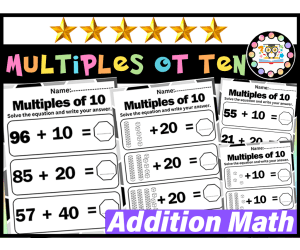
Adding Multiples of Ten | Math Adding Multiples of 10 Place Value
Math, Addition and Subtraction, Addition, Algebra, Calculus, Early Math, Counting, Numbers, Place Value, Basic Operations, Kindergarten, Preschool, Grade 1, Activities, Centers, Teacher Tools, Worksheets & Printables, Worksheets
This engaging math resource helps students develop a solid understanding of adding multiples of ten using visual block models. Designed to enhance place value skills, this worksheet makes learning addition fun and interactive! Teach students how to add multiples of ten efficiently. Reinforce number sense and place value understanding. Develop fluency in mental math strategies for addition. 1️⃣ Identify the multiples of ten in each problem. 2️⃣ Use blocks or base ten models to visualize the addition process. 3️⃣ Apply mental math strategies to find the sum. 🎓 Grades or Ages ✔️ Grade Level: 1st – 2nd Grade ✔️ Ages: 6 – 8 years 🖥️ Implementation Format Printable worksheet for classroom or home practice. Can be used as individual practice, small group work, or homework. 🔹 Use manipulatives like base ten blocks to reinforce concepts. 🔹 Pair students for a collaborative learning activity. 📄 PDF Format – Printable and digital-friendly! 📑 Number of Pages 📘 1 page (Page 61)
Author LAMO
Rating
Tags Addition , Additng Multiples Of 10, Math, Within 100, 1st Grade, Basic Operations, Place Value, Numbers, Mental Math

Letter of the Week Letter O Printables Alphabet Worksheets
Common Core, Phonics, Language Development, ELA, Pre-Reading, Kindergarten, Preschool, Homeschool Curriculum, Homeschool Templates, Grade 1, Centers, Activities, Crafts, Coloring Pages, Worksheets, Worksheets & Printables, Crosswords Puzzles, Dot To Dots, Mazes, Word Searches
Make teaching the Letter O interactive and fun with this engaging, no-prep Letter of the Week Activity Pack ! Ideal for preschool and kindergarten learners, this resource includes 79 printable worksheets and 28 Boom Cards that help students master uppercase and lowercase O through fun, hands-on literacy activities. Students will trace, sort, spin, dab, color, cut, and build their way to confidence with the letter O—perfect for phonics instruction, fine motor practice, and alphabet recognition! ✏️ What’s Included: 📄 Printable Worksheets (US & British English Versions) Letter O Poster + 6 Visual Vocabulary Cards Booklet Cover + ‘About Me’ Page Tracing and Writing Uppercase and Lowercase O Sorting, Spinning, Finding & Coloring the Letter O Drawing Letter O Pictures + Visual Sound Match Mazes, Dot-to-Dots, Puzzles, Dab the Dots Color by Code, Geoboard, and Visual Cutouts Reading & Sound Awareness Activities Summary Sheet for Review 🎨 Crafts & Literacy Extras “I’m a Letter O Champ” Crown & Bracelet Mini Flipbook with Letter O Words & Visuals One-Page Mini Word Booklet Sight Word Flipbook Owl-Themed Finger Puppets (6 per page) Stick Puppet Templates (4 per page) Letter O Word Wheel (6 Vocabulary Sections) 💻 Boom Cards – 28 Digital Activities Uppercase and Lowercase O Formation & Recognition Letter O Name and Sound Activities Puzzle Matching (Uppercase vs Lowercase O) Drag-and-Drop Sorting: Capital vs Lowercase Visual Reveal Game (Letter O Pictures) Sentence Practice: Capital O vs Lowercase o 🎯 Perfect For: Letter of the Week Programs Morning Work & Literacy Centers Phonics Practice and Small Groups Homework or Digital Learning Fine Motor Skill Development ⭐ Bonus: Includes both US and British English spelling versions to suit your classroom needs. Help your students build a solid foundation in early literacy with this interactive, engaging, and versatile Letter O pack !
Author Teach2Tell
Rating
Tags Letter O Activities, Letter Of The Week Letter O, Alphabet Worksheets Letter O, Preschool Letter O Printables, Kindergarten Letter O Activities, Uppercase And Lowercase Letter O, Phonics Practice Letter OPhonics Practice Letter O, Owl Letter O Craft, Letter O Worksheets For Literacy Centers

CVC Word Families for Beginning Readers: Stamp it, Make it, Trace it, and Write it
ELA, Language Development, Pre-Reading, Phonics, Reading, Kindergarten, Grade 1, Teacher Tools, Centers, Activities, Lesson Plans, Worksheets, Worksheets & Printables
This CVC unit is engaging for students as they practice reading and learning the short vowel sounds while students cut and make the words, trace the words, write the words, and stamp out the words. Reading short vowel / rhyming words is an introduction to reading. Repetitive practice of reading these words is also another fundamental practice to help students read. In this unit, students will practice word families that have the same ending. Teach students that word families rhyme and only have a different beginning sound. For each word family, students will practice making, tracing, writing, or stamping six different words. Some of the words are proper nouns or names given to people or pets. There are also nonsensical words that are not real. The purpose of these words is to teach how to sound out words only within the same word family. File contains the following word family worksheets : ad, an, at, ed, en, et, in, ip, it, og, op, ot, ug, un, ut. It also includes all the letters needed to cut out for the "make it" worksheets . What's included for the word families: Short a at family (mat, fat, cat, sat, hat, and pat) an family (fan, ran, man, can, tan, and pan) ad family (mad, sad, bad, dad, had, and pad) Short e ed family (Ned, bed, Ted, red, ped, and ded) en family (ten, men, den, Ben, hen, and pen) et family (set, met, bet, let, get, and pet) Short i in family (bin, win, sin, fin, tin, and pin) ip family (hip, rip, tip, lip, zip, and sip) it family (bit, kit, fit, sit, hit, and pit) Short o og family (log, hog, dog, bog, fog, and jog) op family (hop, top, pop, cop, bop, and mop) ot family (lot, hot, rot, dot, pot, and got) Short u ug family (dug, rug, bug, hug, mug, and jug) un family (run, sun, nun, fun, pun, and bun) ut family (but, cut, nut, hut, rut, and gut) For a list of other phonics and grammar activities, click on the following links: CVC Word Families for Beginning Readers: Stamp it, Make it, Trace it, and Write it CVC Words | Short Vowel Phonics | Word Families for K- 2nd Grade Phonics for 1st and 2nd Grade: Help Students Learn Long A Words: AY, AI, A_E, EIGH, EY, and EA Phonics for 1st and 2nd Grade: Help Students Learn Long E Words: EE, EA, E_E, and Y Phonics for 1st and 2nd Grade: Help Students Learn Long I Words: I_E, IE, IGH, and Y Phonics for 1st and 2nd Grade: Help Students Learn Long O Words: O_E, OA, OW, OE, and OUGH Phonics for 1st and 2nd Grade: Help Students Learn Long U Words: U_E, EW, OO, UE, UI and OU Phonics / Digraphs for 1st and 2nd Grade: Beginning, Middle, and Ending Sounds Phonics / Digraphs for 1st -2nd: Ending Sounds: CK, NG, SH, TH, and NK Phonics / Digraphs for 1st and 2nd Grade: Beginning Sounds: SH, TH, WH and PH Phonics: R-Controlled Words for 1st and 2nd Grade and Early Readers
Author K-5 Treasures
Tags Word Families, Phonics, Beginning Reading, Rhyming Words, Short Vowel Words, Short Vowels, Reading Strategies, Word Family, Cvc Words, Cvc Activities

Introduces ch, sh, th, ee, oo.
ELA, Language Development, Phonics, Preschool, Kindergarten, Grade 1, 2, Worksheets & Printables, Worksheets
Introducing ch, sh, th, ee, oo: An Innovative Teaching Resource This comprehensive teaching resource is designed to help children aged three and above learn initial consonant blends and confidently read sentences. Primarily recommended for language arts educators in kindergarten through second grade classrooms as well as homeschoolers. Unique Features An innovative methodology to teach 44 phonic sounds interactively. A narrative focused around Sam's adventures with enjoyable tasks to hunt for hidden sounds. This not only enhances a child's observation skills but also cements the sounds in their minds effectively. The inclusion of colorful stories such as 'The Bouncing Castle' and 'The Famous Cousin From The Country' that reinforce complex middle sounds introduced throughout the lessons. Upon completion of this course material , students pave their way towards reading independent books such as 'George’s Marvelous Medicine' or 'Fantastic Mr Fox'. Suitable For Small Group Or One-on-One Sessions The package includes practice pages with cut-outs that allow matching words to pictures and phrases—a highly effective method of ensuring sound words stick in young learners' memory. Vivid illustrations accompanying simple texts provide an engaging experience for learners while aiding educators. This resource allows systematically teaching phonics principles by focusing on specific sounds or syllables one at a time; they can even dictate the order based on individual student needs. User-friendly PDF Resource: A Three Step Approach: Introduction of new sound to children which expands into several readings across sentences & stories; Detailed discussion about related pictures along theme; Ending with lists of words & phrases matched alongside corresponding visuals. This approach strengthens word-picture association skills and is extremely adaptable among non-readers, beginners, older struggling readers or children with learning challenges and ESL students. Hence, it serves as an extensive addition to any language arts lesson plan with a phonics focus.
Author Guinea Pig Education
Tags Phonics, Reading, Sound Blends, Interactive Learning, Teaching Resource
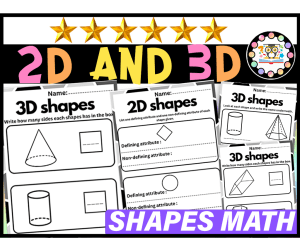
2D & 3D Shapes Worksheets | 2D & 3D Shapes Attributes Geometry
Math, Geometry, Kindergarten, Preschool, Grade 1, 2, 3, Activities, Centers, Teacher Tools, Worksheets & Printables, Workbooks, Worksheets
This interactive and attractive set 2D and 3D Shapes Worksheet Attributes Geometry Worksheets Pages learners develop their original 2D and 3D Shapes Worksheet Attributes Geometry Worksheets this set contains 21 pages in this set, each in each a different Digraphs 2D and 3D Shapes Worksheet Attributes Geometry Worksheets of dedicated 2D and 3D Shapes Worksheet Attributes GeometryWorksheets Pagesto ensure a fun and structured approach to using a fun and type of work that useful; Each card is fun this edited set of 2D and 3D Shapes Worksheet Attributes Geometry Worksheets is built in an elegant style that attracts attention this interactive and attractive set of 2D and 3D Shapes Worksheet Attributes Geometry Worksheetsdesigned to help young learners develop their original 2D and 3D Shapes Worksheet Attributes Geometry Worksheets skills through 2D and 3D Shapes Worksheet Attributes Geometry Worksheets sexercises This set contains 21pages. these printable Worksheets offer useful courses, this provides a useful course-rich practice, it is designed to help using resource grade 2 easily to learn about activities 2D and 3D Shapes Worksheet Attributes Geometry Worksheets a fun and interactive manner. A collaborative learning activity added students. PDF format
Author LAMO
Rating
Tags Geometry, Math, Activities, Worksheets, Homeschools, Centers

Introduces Consonant Digraphs, Sh, Ch, Th, & words ending in Y
ELA, Language Development, Phonics, Preschool, Kindergarten, Grade 1, 2, Worksheets & Printables, Worksheets
Introduces consonant digraphs, sh, ch, th, and words ending in y (3 years +) How To Use The Pre Reader Work Packs At Guinea Pig Education we believe children do not need to spend years learning reading skills; this innovative new scheme teaches children to read in just six months to a year. A non reader should start with our pre reading material. The Pre reader work packs use phonics or the sounds in words. The child can learn a series of phonic sounds, which give him or her a 'tool' to work out nearly 80% of words in the English language. The other 20% of words will be learnt by looking and saying the words. In these packs, the child (or group of children) will be taught to recognise initial sounds as in 'b', 'd' and vowel sounds as in 'a' - c...a...t. They will practise running sounds together to make words. The sentence maker will help him or her to organise the words into sentences. The packs are easy to use with clear instructions, for the adult to use with a child (or group of children). The structured material encourages the child to practise word building and sentence making using phonic sounds. To make learning a really fun experience, the material contains word games , like snap and bingo. The child (children) can move on when the adult is confident the sounds have been learnt. Learn To Read With Phonics Pre Reader packs are designed to start children reading who have not done any reading before. They are a starting point for learning to read with phonics. Children can start at three or four, if they are ready to concentrate. The Pre Reader packs introduce the 26 sounds of the alphabet, the skills of sounding out words with phonics and blending phonic sounds to make three and four letter words. The child (children) should practise the material each day and move on only when the child is familiar with the material. The course is structured. Each new sound builds on the one that went before. Tell the child (children) to personalise the drawings, adding to them, using their own ideas. Play the games . Repeat the exercises many times until they know the words. They should have fun learning to read. Practise each sound several times, until the child is familiar with it.
Author Guinea Pig Education
Tags Phonics Activities, Consonant Digraphs, Learn To Read, Phonics Sounds, Letters And Sounds, Digraphs Sh Worksheets

Phonics And Spelling Practice: Learn Long Vowels And Magic ‘e’
ELA, Language Development, Phonics, Kindergarten, Preschool, Grade 1, 2, Worksheets & Printables, Worksheets
Phonics and Spelling Practice: Learn Long Vowels and Magic 'e' This product is an excellent educational resource for young learners from preschool through grades 1-2, offering targeted linguistic training. It plays a significant role for educators in public school settings or guardians involved in homeschooling, teaching them the basics of phonics. A key component of the 'Mission Spelling Zero' scheme, it introduces Zoggy, a tech-savvy alien character who helps children learn initial sounds through engaging stories. Zoggy also assists young learners grasp advanced concepts like: Double consonant blends Vowel digraphs (oo, ee, ar, or, ir, ur, er) The 28-page PDF material includes varied content keeping learning fresh and exciting. It meticulously develops spelling competencies while embedding fundamental reading skills simultaneously. Learners can work individually or be split into small groups for collaborative exercises as they work through these worksheets . It can also be used as part of daily lessons or assigned as homework to reinforce learning outside the classroom settings. Included Features: Handwriting practice sections Simple games to bolster learning consistency while adding fun elements into the mix. Satisfactory Improvements Observed! The use of Phonics And Spelling Practice: Learn Long Vowels And Magic e will enhance student performance levels - from basic understanding of long vowel sounds to application of magic e rules in reading context. Students across different age groups (Preschool to Grade 2) within Language Arts education spectrum will obtain foundational language skills crucial for their future academic pursuits. This educational resource illustrates a junction where systemic pedagogical principles meet interactive child-friendly narratives, establishing its worth as a well-planned teaching aid effectively and efficiently targeting various aspects of early language acquisition!
Author Guinea Pig Education
Tags Phonics, Spelling, Long Vowels, Magic 'e', Reading Skills

Long Vowel Sounds, Magic E And Vowel Digraphs: Let’s Go On A Ride
ELA, Language Development, Phonics, Kindergarten, Preschool, Grade 1, 2, Worksheets & Printables, Worksheets
Long Vowel Sounds, Magic E, and Vowel Digraphs: Let’s Go On A Ride This comprehensive teaching resource caters to preschool students through 2nd graders, focusing on core language arts concepts. It primarily emphasizes on: The pronunciation of long vowel sounds, The use of magic e, The understanding of vowel digraphs employed in English. Long Vowel Sounds, Magic E and Vowel Digraphs shares an illustrated story featuring Zoggy - a captivating alien character with remarkable computer skills. Phonetic lessons are woven into this narrative, making learning engaging for young pupils while encouraging interaction with text and practising spelling patterns. The Workbook Approach The workbook that accompanies this method promotes the retention of letter sounds taught in the book through stimulating activities like: Tracing letters, Writing words independently, Sentence construction. This resource can be utilized beyond the conventional classroom—it can serve during tutoring sessions or even as homework sheets for additional practice. Crafted specifically to assist students develop their reading capabilities and improve spelling accuracy, this tool employs seven levels represented by colors of the rainbow – advancing children's skillsets progressively after each level completion. An All-Round Language Arts Supplement An additional series focuses on enhancing handwriting skills along with constructing first sentences wherein learned phonics rules are applied practically—making 'Let's Go On A Ride' a valuable tool that fortifies several areas simultaneously. In essence, learners will build a solid base over time through continuous application and exposure to this systematic layout—all tailored for young minds developing foundational literacy skills. Fun-filled activities encourage consistent practice, paving the way to explore advanced linguistic territories confidently in future learning endeavors.
Author Guinea Pig Education
Tags Long Vowel Sounds, Magic E, Vowel Digraphs, Phonetic Lessons, Handwriting Skills

Phonics And Spelling Practice: Learn Silent Letters, prefixes and suffixes
ELA, Language Development, Phonics, Preschool, Grade 1, 2, Worksheets & Printables, Worksheets
Phonics And Spelling Practice: Learn Silent Letters, prefixes and suffixes A dynamic teaching resource designed to help students in Kindergarten through Grade 2 take the first steps towards mastering the English language. With its central focus on phonics and spelling, it lays a strong foundation for budding readers and aspiring writers across small group classroom settings to whole school curriculums. With this well-thought-out product, educators are equipped with an essential tool to assist young learners in understanding silent letters, suffixes, and prefixes. The engaging material offers enough variety from basic phonetic structures such as initial sounds to more complex concepts like double consonant blends and vowel digraphs. The Curriculum Includes: Coverage of 44 information-rich pages where each page presents clearly defined exercises that students can tackle independently or under guided assistance. Friendly characters like Zoggy—a friendly alien from a distant planet—to captivate young minds. A series of writing activities supplemental to student's handwriting skills for application in sentence writing or game playing context. This interactive teaching aid perfectly aligns with Language Arts courses' objectives that intend to stimulate learners' intellectual growth while honing their reading comprehension capabilities. Crafted primarily as worksheets – teachers have the convenience of printing out only what is needed whether at home-schooling or traditional schooling environment; furthermore ,the PDF file format ensures easy portability across multiple digital devices. "With Phonics And Spelling Practice: Learn Silent Letters, prefixes and suffixes your young learners get a compelling resource capable of enhancing foundational reading concepts while ensuring continuous engagement via game-based learning techniques." This product marks an important step forward in creating vibrant classrooms beaming with curious minds looking forward the journey of literacy mastery.
Author Guinea Pig Education
Tags Phonics, Spelling, Silent Letters, Prefixes, Suffixes
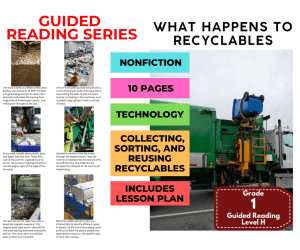
Guided Reading Level H - What Happens to Recyclables
ELA, Resources for Teachers, Reading Comprehension, Reading, Science, Pre-Reading, Language Development, Earth and Environmental Sciences, Engineering, Technology, Kindergarten, Grade 1, 2, Worksheets & Printables, Worksheets, Teacher Tools, Centers, Activities, Literacy Readers, Quizzes, Quizzes and Tests, Assessments
This Guided Reading Book - What Happens to Recyclables (Level H) includes: Guided Reading Color Label (front cover x1) This is a quick way to match the book’s demands to what students can generally handle.. The overall goal is to use the level/color to pick books for several smaller groups. To qualify for a certain level, a student is expected to read a book from that level with about 90–94% accuracy. If a student is consistently accurate and understands, move up a level. If the student is struggling at that level, drop down and add more support. Each student will improve at completely different rates, but it is generally one of the best ways to check progress across the class. DOWNLOAD THE CATALOG TO VIEW ALL GUIDED READING BOOKS AVAILABLE (SORTED LEVELS A-Z) Pre-Reading Question (x1) Teacher asks the prompt aloud, can be while showing the cover or first page. Students share what they already know, or make educated guesses from the cover. Prompt them to use the target vocabulary. Write some of their responses on the board to look back at during the reading. Vocabulary Words (x5) Introduce the five words, best doing it one at a time. Start by saying it, while students repeat and then see if anyone knows what it means before reading further. Read through the meaning and try to briefly connect each word to a picture or gesture so it’s meaningful. Ask students to flip through the book pages and point to where they see each of the vocabulary words. While reading the book pause upon coming across one of the vocab words or read the sentence twice to make sure students understand the word has appeared. Optional: Ask students to raise hands whenever they see/hear one of the new words. Guided Reading Pages (x10) Check the book snapshot (below) for: primary topic - do you need to prep extra reading or intro materials on this? what is taught best - decide on 1-2 bullets to focus on, use the prompt or words provided here for best results. learning goals - what you are checking for students to be able to do after the session, elicit answers using prompts or words provided. key vocabulary (see section above). questions overview - so you know what is coming up and if you need to prep extra materials to assist understanding. Run the lesson You may have already looked at a few of the pages together, but you can show them some of the pictures again first to set meaning. Depending on how much time you have and how familiar your students are with guided reading class, you may want to read the book aloud first with the group first. Students whisper or partner read, while you listen in. If time, do it as a group, one student reading a page each. Use the guided page’s prompts to coach: “Check the picture / does it make sense?” “Point under the words / try the first sound” “Reread the sentence smoothly”. Try to focus more on one student per session (rotating every time), so you can work out if they are ready to move up or need to move down a level. Comprehension Questions (back cover x3) This is your way to check that students didn’t just say the words, but actually understood the text. First, let students answer by pointing to the page/picture and saying a short sentence. After any answer, follow with: “Show me where you found that in the text.” In bigger groups, have partners answer first (10–20 seconds), then call on 2–3 students to share. Differentiation tips: Emerging speakers/struggling readers: oral + pointing On-level: oral in a full sentence Higher: one written sentence or draw + label Book Snapshot Title: What Happens to Recyclables Genre: Nonfiction (informational) Subject: Science (Environmental Science) Primary Topic: How recyclables are collected, sorted, and reused Estimated Guided Reading Level (A–Z): H What This Book Teaches Best How recycling begins at home: people put materials in blue bins for a special truck. What happens at a Material Recovery Facility (MRF), including the “tipping floor” and conveyor belts. How workers and machines separate materials (sorting workers, a magnetic separator, optical sorters using infrared light, and star screens). What happens after sorting: materials are crushed into bales, moved by forklifts, taken to factories, and made into new products. Learning Goals Describe how recyclables get from blue bins to a truck and are hauled away. Explain what the book says happens when a truck arrives at a Material Recovery Facility (MRF). Identify what sorting workers remove from the conveyor belts and give examples from the text. Explain how a magnetic separator changes what stays on the line and what gets pulled away. Describe how optical sorters use infrared light and air to separate plastic bottles. Describe what happens to sorted materials after they are made into bales and sent to factories. Key Vocabulary From the Text sanitation — keeping places clean by picking up trash and recyclables. facility — a place or building where work happens. conveyor — a moving belt that carries things from one place to another. separator — something that pulls different materials apart. infrared — a kind of light machines can use to tell things apart. Printing Tips 1. Best Printing Method (Recommended) “Booklet” Printing (Best if Available) If your printer or PDF viewer supports Booklet Printing , use this. Settings to use: Print mode: Booklet Paper size: Letter or A4 (either works) Orientation: Landscape Print on both sides: Yes Flip on: Short edge Scaling: Fit to printable area Booklet subset: First test: Front sides only Then: Back sides only This will automatically: Pair pages correctly Put the cover on the outside Align everything for folding After printing, fold in half and staple along the spine . 2. If “Booklet” Printing Is NOT Available You can still print this correctly with manual duplex printing . Step-by-step: Open the PDF. Choose Print . Set: Orientation: Landscape Pages per sheet: 1 Print on both sides: Yes Flip on: Short edge Print all pages . Because each PDF page already contains two facing book pages, the result will still fold cleanly into a book. Thousands of Cored Education products are included with your TeachSimple membership. Download links and encyclopedia index available here.
Author Cored Education
Rating
Tags Vocabulary, Reading Comprehension, Reading Passages, Leveled Reading, Nonfiction, Reading, Guided Reading, Technology, Engineering, Recycling