Statistical vs. Non-Statistical Questions – Grade 6



- Grades
- Grades 5–7, Elementary, Middle School
- Pages
- 4
- File type
- Answer key
- Included


- Subject
- Math, Statistics, Common Core
- Topic
- statistics, statistics and probability
- Resource types
- Activities, Worksheets & Printables, Worksheets
- Answer key
- Included
- Standards
- 6.SP.A.1
About this resource
What's inside this resource
Help grade 6 students tell statistical and non-statistical questions apart with a four-page worksheet that starts with two side-by-side definitions and a quick test: picture the answers you would gather, and ask whether you expect them to differ. Each definition card has a school example, such as when students arrive versus when the school day starts.
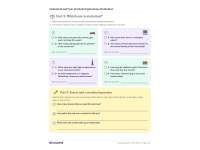
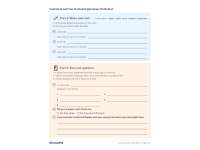
Practice moves through five parts. Students classify four questions and give a reason, choose the statistical question from four pairs and name a way to gather its data, then rewrite three single-answer questions so the data would vary. In the last two parts they write three questions of their own, pick one, collect five real answers and decide from those answers whether the question is truly statistical.
- 17 numbered items: classify, compare, rewrite, write and test
- For the teacher: a key page with answers, sample responses and notes on common mix-ups
- Print-ready: a color copy and a black-and-white copy for the copier
Related resources
More resources teachers may find useful
24 related resources were found using this product's title, contributor, categories and tags.


In the classroom
Teaching tips & learning objectives

Learning objectives
Explain that a statistical question expects answers that vary
Classify questions as statistical or non-statistical and justify the choice
Rewrite a single-answer question so it gathers varied data

Teaching tips
Model the quick test aloud with both definition examples before students start Part 1
Give students time to gather five answers from classmates for Part 5 before they answer questions 16 and 17
Watch for the mix-ups listed in the key: one person observed on many days still gives varied data, and needing a measuring tool does not make a question statistical

Skills covered
Recognizing variability: students decide whether the answers to a question would differ or match.
Justifying a choice: each Part 1 item asks for a reason or a plan for collecting data.
Rewriting questions: students widen a question to a whole group or to many days or tries.
Good to know
Questions teachers ask about this resource
How do students decide whether a question is statistical?
Page 1 gives a quick test: picture the answers you would gather. If you expect them to differ, the question is statistical; if everyone who checks gets the same result, it is not.
Do students collect real data?
Yes. In Part 5 they copy one of their own questions, gather five answers and use those answers to explain whether the question is statistical.
Is there an answer key?
Yes. A teacher page covers every part, with fixed answers for the classify and compare items, sample responses for the open items and a note on common mix-ups.

No reviews yet
Downloaded this resource? Tell other teachers how it went.
Curriculum
Standards, concepts & topics
Standards
 Standards
- 6.SP.A.1 — Recognize a statistical question as one that anticipates variability in the data related to the question and accounts for it in the answers. For example, “How old am I?” is not a statistical question, but “How old are the students in my school?” is a statistical question because one anticipates variability in students’ ages.
Core concepts
 Core concepts
statistical questions
variability
data collection
surveys
statistics
 Topics
Explore more
Categories this resource belongs to
Explore related searches
More to explore
You may also like