



2,697 products added recently
Page 66 - Reading Activities
Discover a variety of reading activities designed to inspire and engage your students. From guided reading sessions to interactive reading journals, these resources support the development of comprehension and critical thinking skills. Tailored for different grade levels, these activities can help you create a dynamic literacy environment that fosters a lifelong love of reading.

 Show filters


The Leaf Thief Book Companion & Read Aloud Activities for Fall
Holiday & Seasonal, ELA, Seasons, Fall, Reading, Reading Comprehension, Language Development, Vocabulary, Grade 1, 2, 3, 4, Read Alouds, Activities
This fall picture book companion is a perfect accompaniment to Alice Hemming's book, The Leaf Thief. It's the ideal interactive read-aloud for autumn or for educating your students about seasonal changes, friendship, patience, and kindness. Students will love the engaging and fun activities, and you will appreciate the time saved hunting for high-level resources to teach reading concepts that students frequently struggle with. With 36 print-and-go reading activities to choose from, this resource is ideal for customizing learning to your student's specific needs and academic ability. Students will investigate characters, identify story elements, identify the theme, sequence events from the story, explore and use new vocabulary, discover cause-and-effect relationships, explore plot elements, and much more! The activities provided are designed to enable students to apply higher-level thinking skills, to encourage students to provide text evidence to support their thinking, and to challenge students to express their own thoughts and/or perspectives. 🌟This Resource Includes:🌟 See, Think, Wonder (1 page) - Before reading the book, students will examine the front cover and describe what they see, make predictions about what the book is about, and the questions they think the book might answer. Story Elements #1 – Students fill in the boxes with words and pictures to represent the story elements. Picture clues are included for students who need a little prompting. Story Elements #2 – Students fill in the boxes with words and pictures to represent the story elements. Squirrel's Problem & Solution (1 page) – Students identify & explain the problem & solution in the story. Cause & Effect #1 - Students cut-and-paste the images and match them to the events from the story. This activity is for students who need more prompting. Cause & Effect #2 - Students fill in the missing information with either the cause or the effect. Cause & Effect #3 - Students fill in the missing effects. Cause & Effect #4 - Students identify cause and effect relationships in the story. Who is Squirrel? (1 page) - Students include details from the story to describe what the character says, thinks, does, and feels. Character Traits (2 pages) - 2 differentiated versions are included for this activity Character Traits #1 - Students choose two important character traits that describe the main character and provide evidence from the text to support their choices. Character Traits #2- Students choose the most important character trait that describes each character and provide examples from the text that support the traits they chose. Character Perspective (1 page) - Students will compare the perspectives of the characters on a story event of their choice by drawing a picture and adding words to the thought bubbles. Character Development (1 page) - Students describe how Squirrel's character changed throughout the story. Story Retell - (1 page) – Students cut-and-paste the picture cards to match the event descriptions. (ANSWER KEY included). Sequencing (1 page) - Students will write a sentence and draw a picture to show the correct order of events in the story. Plot Map (1 page) - Students cut-and-paste the event cards in the correct order and describe what's happening for each event. (ANSWER KEY included) Summarizing (1 page) - Students complete the Somebody, Wanted, Because, But, So graphic organizer and write a summary of the story. Making Inferences (1 page) - Students use clues and schema to come up with two inferences they made from the text. Making Connections (1 page) - Students make connections to two events from the story. Sensory Details (1 page) - Students choose an event from the story and describe it from the character's perspective using all five senses. Seasonal Imagery (4 pages) - Students will describe the seasons using their five senses. A student handout for summer, autumn, winter, and spring is included. students can choose their favorite season, or complete the activity for each season. Theme #1 - Students answer the questions to determine which theme best fits the story and provide text evidence to support their choice. Theme #2 - Students answer the questions to determine the theme of the story and provide text evidence. Theme #3 Thematic Statements - Students choose the thematic statement that they believe best fits the story and include evidence from the text to support their choice. Mystery of the Missing Leaves (1 page) - Students compare what Squirrel thinks happened to the leaves to what actually happened. Save the Leaves (1 page) - Students will create a plan for Squirrel to prevent the wind from taking the leaves. Vocabulary Matching Cards (color -2 pages and B&W 2 pages) - This activity can be used during stations or posted on a word wall to reinforce vocabulary words from the story. Vocabulary Crossword Puzzle (1 page) - Students will complete a crossword puzzle by matching words from the story to their definitions. (ANSWER KEY included) Vocabulary Word Search Puzzle (1 page) - Students will find the hidden words in the puzzle. (ANSWER KEY included) Wait... There's More! (1 page) – Students will create 2 more pages for the end of the book including a few sentences and colorful illustrations similar to those used in the story. Book Review (1 page) – Students rate how much they enjoyed the book, draw a new cover, and explain why kids should or should not read it. Design a Book Cover (1 page) – Students design a new cover for the book. The ABCs of Fall (1 page) - Students choose words or phrases that begin with each letter of the alphabet to describe the fall season. ✨Be sure to check out my storefront here: https://teachsimple.com/contributor/creatively-gifted 💡Need ideas for different ways you can implement these activities? Focus on different reading skills each day for targeted instruction and have students complete a corresponding printable to check for understanding. During centers, students can independently read the story again and complete an activity that reviews a previously taught concept. Work with students on a reading concept they struggle with during guided reading or strategy groups. Students work with a partner(s) or in literature circles to complete additional reading activities. This resource is for extension read-aloud activities only. The book is not included.
Author Creatively Gifted
Tags Interactive Read Aloud Activities, Read Aloud Lesson, Picture Book Activities, Reading Comprehension, Elementary Reading, Fall Read Aloud Activities, Fall Books Read, Fall Activities, Leaves, Leaf Thief Read Aloud, Leaf Thief Book, Leaf Theif
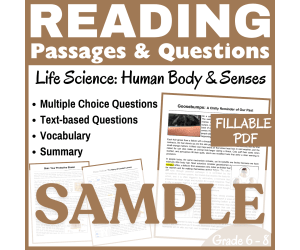
Life Science Reading Passage SAMPLE: SKIN & Human Body (FILLABLE PDF)
Science, ELA, Reading, Reading Comprehension, Strategies, Resources for Teachers, Life Sciences, Human Body, Grade 6, 7, 8, 9, Writing Prompts, Worksheets & Printables, Centers, Activities, Teacher Tools, Assessments, Quizzes and Tests, Quizzes, Tests
This is a ONE PASSAGE SAMPLE. The following is the description of the FULL resource and the downloading links: Human Body and Senses: Life Science Reading Comprehension Passages and Questions (FILLABLE PDF) This very engaging and fillable collection of life science reading passages about Contact Lenses, Goosebumps, and Skin is designed to bridge the gap between science and literacy through strengthening reading comprehension and sparking scientific curiosity in middle school students. Each passage blends English Language Arts skills with accurate science content that supports NGSS classroom practice. Ideal for interdisciplinary learning in ELA and Science. Suitable for Grade 9 review, too! These worksheets are designed as fillable PDFs , which means students can type their answers directly into the document on any computer or tablet . Each page includes highlighted text fields that show them exactly where to type! What Is Included? There are (3) informational passages: Clear Vision: The Story of Contact Lenses Goosebumps: A Chilly Reminder of Our Past Skin: Your Protective Shield Student Tasks for Each Passage: 5 multiple-choice questions targeting main idea, key details, inference, vocabulary in context, and use of evidence 5 vocabulary matching items with clear, student-friendly definitions 5 text-based questions that require citing specific lines or facts 1 summary prompt that asks students to condense central ideas accurately Full answer key for every section Available Formats for this Resource Word Docs Google Docs FULL CATALOG OF DOWNLOADING LINKS HERE Reading Passage Links: Astronomy & Space Science PDF Fillable PDF Word Docs Google Docs Volcanoes, Rocks, & Mountains PDF Fillable PDF Word Docs Google Docs Rock Cycle, Soil, & Sinkholes PDF Fillable PDF Word Docs Google Docs Mars, Glaciers, & Antarctica PDF Fillable PDF Word Docs Google Docs Water Cycle, Acid Rain, & Wastewater PDF Fillable PDF Word Docs Google Docs Insects, Animals, & Ecosystems PDF Fillable PDF Word Docs Google Docs Bioluminescence & Insects PDF Fillable PDF Word Docs Google Docs Animal Skin, Cats, & T. Rex PDF Fillable PDF Word Docs Google Docs Human Body and Senses PDF Fillable PDF Word Docs Google Docs Health & Applied Bioscience PDF Fillable PDF Word Docs Google Docs Waves, Light, & Imaging PDF Fillable PDF Word Docs Google Docs Electricity & Energy PDF Word Docs Google Docs Motion & Materials PDF Word Docs Google Docs Chemistry and Materials Science PDF Fillable PDF Word Docs Google Docs How to Use These PDFs Click on the highlighted area to start typing your answer. Move to the next question by clicking in the next highlighted box. When you are finished, close the document and select SAVE so your answers stay recorded. If you want to keep a blank copy for later, choose Save As and give your completed version a new name. Product Details Length: 14 pages total Grades: 6–8, also suitable for Grade 9 review Use cases: close reading, stations, homework, intervention, test prep, and sub plans Standards support: reinforces informational-text skills and supports NGSS-style sense making through observation, modeling, and clear use of claim, evidence, and reasoning Why Teachers Choose This Set Authentic science content paired with rigorous literacy practice Consistent task structure across all passages for easier planning and smoother student routines Clear, age-appropriate writing that builds confidence without oversimplifying Use this set to reinforce ELA skills in science, to add literacy to your lessons, or to support independent work. The passages strengthen main idea, evidence use, vocabulary in context, inference, cause and effect, and summary writing. With ready-to-use assessments and complete answer keys, you can provide focused practice that is simple to run and fast to review.
Author CORED Education - Middle & High School
Rating
Tags Middle School, Reading Comprehension, Reading Strategies, ELA, Centers, Reading Passage, Assessments, Vocabulary, Life Science, Human Body
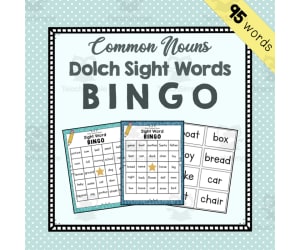
Common Nouns: Sight Word Bingo
ELA, Grammar, Reading, Language Development, Spelling, Grade 1, 2, 3, Activities
Common Nouns: Sight Word Bingo Common Nouns: Sight Word Bingo is an educational resource designed for teachers and homeschoolers alike. This teaching tool uses the well-established list of most often used words in English language that Edward Dolch carefully compiled in 1948 and presented in a format conducive to fun learning - a sight word bingo game - making it perfect for Grammar, Reading, and Spelling focus areas within Language Arts lessons. This resource includes material derived from Dolch's known 220-word list. The game focuses specifically on the Common Noun section, which comprises 95 frequently used nouns that assist children from Grade 1 to Grade 3 to enhance their reading and writing skills. The sight word bingo game integrates several engaging activities into one intelligently crafted package aimed at making the arduous task of learning new words fun-filled rather than intimidating. With this tool, repetitive exposure helps students recognise words swiftly leading them towards fluent sentence-building. A Flexible Tool with Record Keeping Capability This flexible tool can be employed for whole class instruction as well as small group activities or homework assignments due to its print-friendly format. It also contains a helpful student progress record sheet allowing educators and learners both to keep track of improvement. An introductory article discussing Dolch Sight Words, The Common Noun Dolch Sight Word List, A student record sheet for common noun sight words, Forty unique sight word bingo game cards, Ninety-five teacher draw cards. Print Ready Educational Kit! This thoughtfully organized sightword BINGO kit consists of fifty-three pages of engaging content available for print and promises enriching classroom experiences that advocate literacy development per Edward William Dolch's research.
Author Simply Schoolgirl
Tags Sight Words, Dolch List, Common Nouns, Bingo Game, Literacy Development
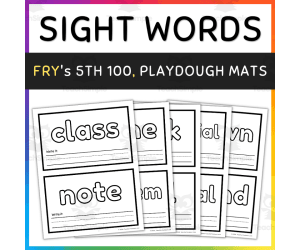
Sight Words Playdough Mat- Fry's 5th 100, Sight Words Practice & Activities
ELA, Reading, Language Development, Spelling, Vocabulary, Grade 2, 3, 4, Activities
The Sight Words Playdough Mat- Fry's 5th 100, Sight Words Practice & Activities This resource provides a comprehensive, interactive approach to sight words mastery. It includes the 5th set of Fry’s commonly used sight words that are vital for early reading and literacy development in Grade 2, Grade 3, and Grade 4. As students learn to quickly identify these frequently used words by sight, they make significant progress in interpreting written texts accurately and fast. This not only enhances language skills like spelling and vocabulary acquisition but also promotes reading fluency which fosters overall comprehension skills. Exciting Practice with Playdough Mats This instructional aid introduces a fun-filled way for children to practice sight words through playdough mats. These tools nurture fine motor skills and are designed with clear-cut, bold letters guaranteeing easy readability. A remarkable feature of this teaching tool is how flexible it is; fitting into various settings from classrooms to homes equally well. For educators, these playdough mats can be seamlessly integrated into literacy lessons during group or individual activities as part of the school curriculum. Homeschooling parents can add this educational activity to their child's reading schedule as an effective learning aid. Sight Words Play Dough Mat - Fry's 5th set Product Information: An included PDF file comprises fifty pages that cover vocabulary such as 'able', 'object', 'wait' among others – all specifically designed for the optimal learning experiences of Grades 2-4 learners within Language Arts subjects particularly Reading. In conclusion,The Sight Words Play Dough Mat - Fry's 5th set product turns boring vocabulary tasks into an engaging sensory activity that enhances retention levels while making the process fun for young learners. This teaching resource includes everything educators need for promoting children's early literacy skills in an innovative way without sacrificing fun activities that motivate students even more.
Author TeacherYouWant
Tags Sight Words, Playdough Mats, Vocabulary Practice, Reading Fluency, Fine Motor Skills

Sight Word Foldable Book: away
ELA, Reading, Preschool, Grade 1, Activities
With these sight word foldable book, students will practice sight word recognition. Students will use these books to find, write, and read the target sight word! This resource contains foldable books for the sight word: away The pages included in this product are: There are 2 sight word activity foldable books. Both books have a cover page to color, a seek and find activity where students color or dab the sight word, and an area where students will trace the sight word. One book has a page where students will simply read sentences containing the sight word, while the other contains sentences for students to first write the sight word, then read the sentences. There are 2 sight word emergent readers. One reader has students simply color an image and read the sentence containing the target sight word. The second reader contains the same sentences with the sight word missing. Students will write the sight word, then read the sentences on these books. How to Make: Students can either fold the books first or complete the activities before folding the book. The order is not important. To create the books, students will first fold the book along the horizontal line, then they will fold along the vertical line. When to Use: Literacy Center - These foldable books can be used in literacy center for students to practice these sight words. Homework - These foldable books can be sent home from homework so parents can assist students in learning their sight words. Independent Practice - These foldable books make great independent practice for students learning sight words. Sub Plans - Since these foldable books have easy to follow directions, they make great activities to leave with substitutes. These foldable books are a great no-prep activity for teachers to give to students to complete. They pages just need to be printed and given to students. No cutting is necessary to create the books!
Author The Connett Connection
Tags Sight Words, Sight Word Recognition, Foldable Book

Ask Song (MP3)
ELA, Reading, Preschool, Kindergarten, Grade 1, Songs, Activities
This song is perfect for helping students recognize the sight word ASK. It's a fun and easy way to build speed and fluency while reading.
Author Have Fun Teaching
Tags Counting
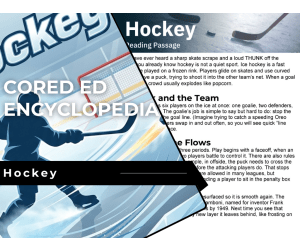
Hockey Reading Comprehension Passage - Cored Ed Encyclopedia
ELA, Language Development, Resources for Teachers, Reading Comprehension, Reading, Pre-Reading, Writing, Strategies, Sports, P.E. & Health, Grade 2, 3, 4, 5, Worksheets & Printables, Worksheets, Teacher Tools, Centers, Activities, Writing Prompts, Assessments, Tests, Quizzes and Tests, Quizzes
This hockey reading comprehension contains the following: Pre-Reading Trivia Students will write down one thing they already know about the subject and then read five more facts and discuss. These facts are fun, and the students will enjoy learning about the subject before reading more. COMPANION VIDEO NOW AVAILABLE (EMBEDDED AFTER PREVIEW PICTURES IN PRODUCT DESCRIPTION) Reading Passage The text is a high-interest reading passage with set paragraphs, roughly three to four paragraphs long. It contains a variety of themes about the topic, anywhere from history to technology. The passage is between 250 and 350 words in length. Mixed Questions The first question page contains four multiple-choice questions, each with a choice of four answers, and three written response questions that require a sentence or two from the student. Creative Writing In this question, the student will be required to write a five to eight sentence paragraph on a question related to the topic. Extension Activities This page is optional for fast finishers. If there are five to ten minutes left at the end of the lesson, the student can choose one of three activities, each one requiring a different skill. Answer Key There are answers for the multiple-choice questions and three written response questions have sample answers. FULL CATALOG OF DOWNLOAD LINKS AND ENCYCLOPEDIA INDEX HERE Lesson Snapshot Title: Hockey Genre: Nonfiction (informational text with headings) Subject: Reading (Informational Text) / Physical Education Primary Topic: How ice hockey is played and organized Estimated Guided Reading Level (A–Z): O Support pages included: Pre-reading trivia; mixed questions; creative writing prompt; extension activities; answer key; QR/index page. Learning Goals Identify ice hockey as a team game on a frozen rink and describe how teams try to score. Name the six on-ice positions/roles and explain the goalie’s job using the text. Explain what a faceoff is and why it matters at the start of play. Describe the offside rule example given in the passage and how it affects play. Describe what can happen after dangerous hits and what the penalty box is for. Describe what happens to the ice between periods and identify the Zamboni’s role. Key Vocabulary From the Text faceoff — start of play when an official drops the puck. offside — attackers enter the zone before the puck crosses the line. defenders — players who help protect their team’s goal. penalties — consequences that can send a player off briefly. resurfaced — made smooth again with a new layer. Cored Ed Encyclopedia Overview The Cored Ed Encyclopedia is a weekly series of lessons that you can pick up and use right away. These short readings fit into whatever time you have available. Each one includes a warm-up, a reading, and a set of questions, but it’s flexible — you can do just the reading, the full lesson, or skip the writing section if you need to. Each lesson focuses on a single topic so students don’t get lost. The writing is clear but never childish, making it perfect for grades two through five. Topics range from animals and science to history, inventions, and everyday things. No matter the level of the student, everyone should take away at least one new idea or fact from each lesson. The materials are easy to print, easy to explain, and require no setup. They work well for whole-class teaching, partner work, or independent study.
Author Cored Education
Rating
Tags Vocabulary, Spelling, Reading Comprehension, Reading Passages, Reading, Creative Writing, Reading Strategies, Writing Prompts, Hockey, Sports

Come Song (MP3)
ELA, Reading, Preschool, Kindergarten, Grade 1, Songs, Activities
This product is the COME Song (MP3), which will help students recognize the sight word COME. The song is catchy and repetitive, and will help students learn to spell and use the word COME in sentences. This is a great resource for teachers who want to help their students learn sight words.
Author Have Fun Teaching
Tags Counting

Guided Reading Lesson Plan & Activities for Grade 8
Reading, ELA, Grade 8, Activities, Lesson Plans, Teacher Tools
During their final year of middle school, 8th graders engage in preparing for high school by refining and enhancing skills acquired in previous middle school years, while also acquiring new (and frequently more challenging) abilities. In numerous ways, 8th grade serves as a transitional year since students are anticipated to have mastered middle school skills and start evolving into “high-schoolers.” In particular, 8th graders are anticipated to be self-sufficient thinkers and doers, evaluating and articulating what they understand in both their written and spoken communication. In the 8th grade, students further develop various skills acquired in previous grades, particularly focusing on aspects such as text evidence, language, and comparisons across different genres of text. Nonetheless, 8th graders deepen their text analyses by exploring the details and writing structures while evaluating how these aspects influence the text. This ebook contains an in-depth guided reading lesson plan complete with activities, which takes around 90 minutes to complete. Proposed responses are also included.
Author Bright Classroom Ideas Marketplace
Tags Guided, Reading, Lesson, Plan, Activites, Grade 8, Language
Sight Word Flip Book: air
ELA, Reading, Kindergarten, Grade 1, Activities
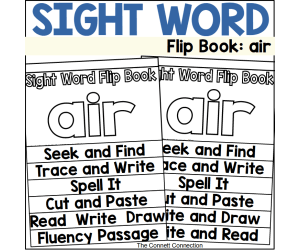
Practice sight word recognition. reading, and writing with this sight word flip book. This book contains a flip book for the sight word: air. The pages included in this product are: There is one cover page for students to color any way they want. Find and Color – Color or use a dot marker to mark each time the sight word appears. Trace and Write – The student will trace and write the sight word on the provided lines. Spell It – The student can use a variety of methods to spell the sight word. You can use the letters provided, use stamps, letter stickers, or you can cut out letters from a magazine. Cut and Paste – The student can use the provided word cards or look for the target word in magazines or other printed material to cut out and glue to this page. Read Write Draw – Students will read the sentence, copy the sentence, and then, illustrate the sentence. Fluency Reading – Students will read the passages that contain the sight word in context of a paragraph. Write and Draw – This page can be subbed for the Read Write Draw page and can be used for students who are ready to create their own sentences. Write and Read – This page can be subbed for the Fluency Reading page and can be used for students who need practice writing the sight word before reading the sentences. This flip book can be differentiated for multiple student levels. When to Use: Literacy Center - These flip books can be used in literacy center for students to practice these sight words. Homework - These flip books can be sent home from homework so parents can assist students in learning their sight words. Independent Practice - These flip books make great independent practice for students learning sight words. Sub Plans - Since these flip books have easy to follow directions, they make great activities to leave with substitutes.
Author The Connett Connection
Rating
Tags Sight Words, Sight Word Flip Book, Sight Word Recognition, Sight Word Air
Volcanoes, Rocks, & Mountains: SAMPLE Reading Passage (PDF)
Science, Earth and Environmental Sciences, ELA, Reading, Reading Comprehension, Strategies, Resources for Teachers, Earth Sciences, Geology, Grade 6, 7, 8, 9, Writing Prompts, Worksheets & Printables, Centers, Activities, Teacher Tools, Assessments, Quizzes and Tests, Quizzes, Tests
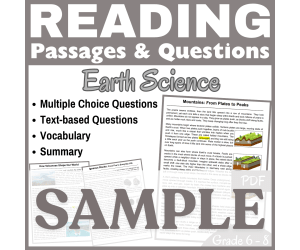
This is a ONE PASSAGE SAMPLE. The following is the description of the FULL resource and the downloading links: Volcanoes, Rocks, & Mountains: Reading Comprehension Passages (PDF) This very engaging collection of earth science reading passages about Mountains, Volcanoes, and Igneous Rocks is designed to bridge the gap between science and literacy through strengthening reading comprehension and sparking scientific curiosity in middle school students. Each passage blends English Language Arts skills with accurate science content that supports NGSS classroom practice. Ideal for interdisciplinary learning in ELA and Science. Suitable for Grade 9 review, too! What Is Included? There are (3) informational passages: Mountains: From Plates to Peaks See how plate collisions fold rock, faults lift blocks, and volcanism builds peaks. Learn how rivers, glaciers, and gravity continue to reshape ranges over time. How Volcanoes Shape Our World Examine hazards such as ash, gases, lahars, and pyroclastic flows, along with benefits like fertile soils, mineral resources, geothermal energy, and new land. Learn how monitoring and planning reduce risk. Igneous Rocks: From Fire to Everyday Life Compare intrusive and extrusive rocks, link cooling rates to crystal size and texture, and connect granite, basalt, pumice, and obsidian to everyday uses in buildings, roads, tools, and art. Student Tasks for Each Passage: 5 multiple-choice questions targeting main idea, key details, inference, vocabulary in context, and use of evidence 5 vocabulary matching items with clear, student-friendly definitions 5 text-based questions that require citing specific lines or facts 1 summary prompt that asks students to condense central ideas accurately Full answer key for every section Available Formats for this Resource Word Docs Google Docs FULL CATALOG OF DOWNLOADING LINKS HERE Reading Passage Links: Astronomy & Space Science PDF Fillable PDF Word Docs Google Docs Volcanoes, Rocks, & Mountains PDF Fillable PDF Word Docs Google Docs Rock Cycle, Soil, & Sinkholes PDF Fillable PDF Word Docs Google Docs Mars, Glaciers, & Antarctica PDF Fillable PDF Word Docs Google Docs Water Cycle, Acid Rain, & Wastewater PDF Fillable PDF Word Docs Google Docs Insects, Animals, & Ecosystems PDF Fillable PDF Word Docs Google Docs Bioluminescence & Insects PDF Fillable PDF Word Docs Google Docs Animal Skin, Cats, & T. Rex PDF Fillable PDF Word Docs Google Docs Human Body and Senses PDF Fillable PDF Word Docs Google Docs Health & Applied Bioscience PDF Fillable PDF Word Docs Google Docs Waves, Light, & Imaging PDF Fillable PDF Word Docs Google Docs Electricity & Energy PDF Word Docs Google Docs Motion & Materials PDF Word Docs Google Docs Chemistry and Materials Science PDF Fillable PDF Word Docs Google Docs Product Details Length: 13 pages total Grades: 6–8, also suitable for Grade 9 review Use cases: close reading, stations, homework, intervention, test prep, and sub plans Standards support: reinforces informational-text skills and supports NGSS-style sense making through observation, modeling, and clear use of claim, evidence, and reasoning Why Teachers Choose This Set Authentic science content paired with rigorous literacy practice Consistent task structure across all passages for easier planning and smoother student routines Clear, age-appropriate writing that builds confidence without oversimplifying Use this set to reinforce ELA skills in science, to add literacy to your lessons, or to support independent work. The passages strengthen main idea, evidence use, vocabulary in context, inference, cause and effect, and summary writing. With ready-to-use assessments and complete answer keys, you can provide focused practice that is simple to run and fast to review.
Author CORED Education - Middle & High School
Rating 5
Tags Middle School, Reading Comprehension, Reading Strategies, Reading Passages, ELA, Centers, Reading Passage, Assessments, Vocabulary, Earth Science
Guided Reading Level K - Using Your 5 Senses (with Lesson Plan)
ELA, Resources for Teachers, Reading Comprehension, Reading, Pre-Reading, Language Development, Human Body, Life Sciences, Science, Vocabulary, Grade 1, 2, 3, Worksheets & Printables, Worksheets, Teacher Tools, Centers, Activities, Literacy Readers, Quizzes, Quizzes and Tests, Assessments
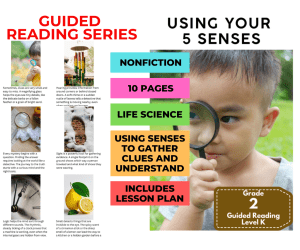
This Guided Reading Book - Using Your 5 Senses (Level K) with lesson plan includes: Guided Reading Color Label (front cover x1) This is a quick way to match the book’s demands to what students can generally handle.. The overall goal is to use the level/color to pick books for several smaller groups. To qualify for a certain level, a student is expected to read a book from that level with about 90–94% accuracy. If a student is consistently accurate and understands, move up a level. If the student is struggling at that level, drop down and add more support. Each student will improve at completely different rates, but it is generally one of the best ways to check progress across the class. DOWNLOAD THE CATALOG TO VIEW ALL GUIDED READING BOOKS AVAILABLE (SORTED LEVELS A-Z) Pre-Reading Question (x1) Teacher asks the prompt aloud, can be while showing the cover or first page. Students share what they already know, or make educated guesses from the cover. Prompt them to use the target vocabulary. Write some of their responses on the board to look back at during the reading. Vocabulary Words (x5) Introduce the five words, best doing it one at a time. Start by saying it, while students repeat and then see if anyone knows what it means before reading further. Read through the meaning and try to briefly connect each word to a picture or gesture so it’s meaningful. Ask students to flip through the book pages and point to where they see each of the vocabulary words. While reading the book pause upon coming across one of the vocab words or read the sentence twice to make sure students understand the word has appeared. Optional: Ask students to raise hands whenever they see/hear one of the new words. Guided Reading Pages (x10) Check the book snapshot (below) for: primary topic - do you need to prep extra reading or intro materials on this? what is taught best - decide on 1-2 bullets to focus on, use the prompt or words provided here for best results. learning goals - what you are checking for students to be able to do after the session, elicit answers using prompts or words provided. key vocabulary (see section above). questions overview - so you know what is coming up and if you need to prep extra materials to assist understanding. Run the lesson You may have already looked at a few of the pages together, but you can show them some of the pictures again first to set meaning. Depending on how much time you have and how familiar your students are with guided reading class, you may want to read the book aloud first with the group first. Students whisper or partner read, while you listen in. If time, do it as a group, one student reading a page each. Use the guided page’s prompts to coach: “Check the picture / does it make sense?” “Point under the words / try the first sound” “Reread the sentence smoothly”. Try to focus more on one student per session (rotating every time), so you can work out if they are ready to move up or need to move down a level. Comprehension Questions (back cover x3) This is your way to check that students didn’t just say the words, but actually understood the text. First, let students answer by pointing to the page/picture and saying a short sentence. After any answer, follow with: “Show me where you found that in the text.” In bigger groups, have partners answer first (10–20 seconds), then call on 2–3 students to share. Differentiation tips: Emerging speakers/struggling readers: oral + pointing On-level: oral in a full sentence Higher: one written sentence or draw + label Book Snapshot Title: Using Your 5 Senses Genre: Nonfiction (informational) Subject: Science (Human Body) / Reading Primary Topic: Using senses to gather clues and understand Estimated Guided Reading Level (A–Z): K What This Book Teaches Best How to observe like a detective by starting with a question and looking for an answer. How sight can gather evidence by noticing details like footprints and tiny clues. How hearing can provide information (like movement nearby) even when you can’t see. How smell, touch, and taste each give different kinds of information about the world. How thinking and logic connect clues “like pieces of a puzzle” to understand what happened. Learning Goals Students will explain how asking questions helps begin solving a mystery. Students will identify what sight, hearing, smell, touch, and taste can tell a person, using details from the text. Students will describe how a magnifying glass helps the eyes see “tiny details.” Students will explain how hearing can give information about something moving nearby. Students will describe how logic helps connect clues to make a clear picture of what happened. Key Vocabulary From the Text detective — a person who looks for clues to solve. evidence — facts or clues that show what happened. magnifying — making something look bigger to see details. rhythmic — having a steady, repeating beat or pattern. observation — watching carefully and noticing details. Discussion Prompts Pre-reading question: How can your senses help you find clues about the world? Comprehension questions: What does the book say sight helps you learn from a single footprint? How can hearing tell a detective something is moving nearby? According to the book, why are the five senses “keys to understanding the world”? Printing Tips 1. Best Printing Method (Recommended) “Booklet” Printing (Best if Available) If your printer or PDF viewer supports Booklet Printing , use this. Settings to use: Print mode: Booklet Paper size: Letter or A4 (either works) Orientation: Landscape Print on both sides: Yes Flip on: Short edge Scaling: Fit to printable area Booklet subset: First test: Front sides only Then: Back sides only This will automatically: Pair pages correctly Put the cover on the outside Align everything for folding After printing, fold in half and staple along the spine . 2. If “Booklet” Printing Is NOT Available You can still print this correctly with manual duplex printing . Step-by-step: Open the PDF. Choose Print . Set: Orientation: Landscape Pages per sheet: 1 Print on both sides: Yes Flip on: Short edge Print all pages . Because each PDF page already contains two facing book pages, the result will still fold cleanly into a book. Thousands of Cored Education products are included with your TeachSimple membership. Download links and encyclopedia index available here.
Author Cored Education
Rating
Tags Reading Comprehension, Reading Passages, Reading, Guided Reading, Guided Reading Lesson Plan, Guided Reading Activity, Pre-reading, Vocabulary, Life Science, Human Body
Delaware State Flipbook (Capital, Bird, Flower, Flag, Animal)
Creative Arts, Art, Social Studies, ELA, History, History: USA, Geography, Reading, Reading Comprehension, Grammar, Language Development, Spelling, Writing, Grade 2, 3, 4, Activities
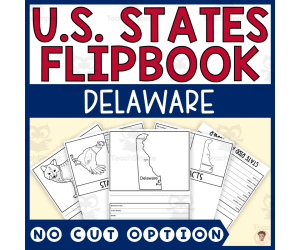
Delaware State Flipbook This effective teaching resource provides a fun and hands-on approach to learning about the iconic state of Delaware and its rich history and symbols. Motivate your students towards learning With this interactive activity, children get hooked on learning while having fun. Five Symbols of Delaware Capital city: Dover State bird: Blue Hen Chicken The state flower: Peach Blossom An image of the Delawerean flag Official animal: Grey Fox Ideal for Grades 2-4 The hands-on nature of the project makes it seamless for all students across grades 2-4 participate actively. User-friendly Designs for Teachers Too! This product is designed with educators' priorities in mind too! We provide two printing styles; one that requires cutting, another print-ready version keeping things simple. There are two design varieties within these sets; one features pictures while another comes without images offering room for imaginations run free! Inspiring Topics Included: Facts on Geographical Deatils, A Detailed Map Exercise, KWL(Know-Want-Learn) exercise. A Multitude Subject Resource Mini-set: Includes Art & Music (through drawing & coloring ), Social Studies (enhancing knowledge around History: USA alongside controlled exposure over Geography), Language Arts(Clear comprehension expressed through Grammar exercises). A Gem Amongst Resources - Simple to Use Anywhere! The Delaware State Flipbook does a laudable job of providing engaging content as an ideal choice in different pedagogical contexts - grouped towards centralized attention or disseminated across small teams or even for a student's home assignment.
Author Heather Huhman
Tags Delaware State Flipbook, Delaware Symbols, Dover, Blue Hen Chicken, Peach Blossom

Fairy Tales Audio Book
ELA, Reading, Preschool, Grade 1, 2, Read Alouds, Activities
Fairy Tales Audio Book This teaching resource provides a wonderfully immersive and engaging way for young learners to engage with classic fairy tales. Aimed at children in kindergarten, grade 1, and grade 2, the Fairy Tales Audio Book is an excellent tool for educators both in public schools and homeschooling alike. The audio book introduces three famous tales: The Three Little Pigs Little Red Riding Hood Sleeping Beauty Each story is designed to capture the imagination of young listeners while offering positive takeaways. The Three Little Pigs: In this tale, children learn a profound lesson about hard work and preparation when they follow the adventure of these endearing siblings building their homes away from danger. The narrative emphasizes not only familial bonds but also a sense of understanding regarding safety measures as they face a cunning antagonist - an eager wolf looking for supper! Little Red Riding Hood: This beloved story adds essences of compassion as well fear in its climax when faced with another tricky wolf character - elements sure to delight your students' storytelling experience Finally, we meet our classic princess named Briar Rose embroiled under an evil spell cast by a jealous fairy that sends her kingdom into deep slumber emphasizing lessons on overcoming adversity. Sleeping Beauty (Briar Rose): Beneath an oppressive sleeping enchantment set by envy-laden wicked witch awaits this timeless fairy-tale's showdown illuminating message surrounding defying difficulties triumphantly.. Potential Ways For Engagement: An educator could plan whole group activities where learners imagine alternative endings or compose their own characters influenced by what they heard; Small group activities where they can discuss themes emerging from stories can be created; Individuals could draw scenes inspired by narration making this multipurpose resource fit into curricula seamlessly across Language Arts focusing on reading skills. Having a technological device capable of playing audio files is necessary to use this resource. Encourage your learners' imagination with the enchanting power of storytelling brought alive by the Fairy Tales Audio Book .</p
Author Twin Sisters Digital Media
Tags Fairy Tales, Audio Book, Storytelling, Immersive Learning, Character Development
Animated Story: Little Red Riding Hood VI
ELA, Reading, Kindergarten, Preschool, Grade 1, Read Alouds, Activities
The Animated Story : Little Red Riding Hood VI The Animated Story : Little Red Riding Hood VI is a captivating, interactive teaching resource tailor-made for Pre-school to Grade 1 learners. It's an engaging method of addressing various academic goals such as literacy, language, and the usage of Augmentative and Alternative Communication (AAC). This product uses digital storytelling with animation and sound effects to heighten students' sense of exploration and curiosity. Fully Immersive Experience This fully immersive PowerPoint brings this beloved story to life over an exciting course of 15 slides. It follows an Animated Step-by-Steps® sequence, where each slide includes text followed by animations that reflect what has been read. Focus on Visually Impaired Students An active attempt has been made towards catering to students with visual impairment. Built-in movement in animated objects helps stimulate focus on target visuals. The product employs high contrast graphics with white or yellow text on a black backdrop for visibility purposes. Built-in 'safe zone' A crucial feature attached to page numbers is the built-in ‘safe zone’. This assists effectively during switch training sessions making it a comprehensive teaching resource! Versatile Display Options: It can be conveniently displayed on both: 'Small screen' devices like computer monitors, tablets using the free Microsoft PowerPoint app or 'Big screens' such as interactive whileboards or television screens via Apple TV; provides flexibility catering to varied needs. Potential Adaptation Uses: This resource can be used for: Homework assignments Group-based classroom activities in Language Arts—including Reading In conclusion, The Animated Story : Little Red Riding Hood VI delivers classic tales through visually compelling digital storytelling methods tailored for all learners including those with vision impairments. High-quality design meets sound pedagogy in this unique product!
Author Bloom Resources
Tags Animated Storytelling, Visual Impairment, Literacy, Language Skills, Digital Learning
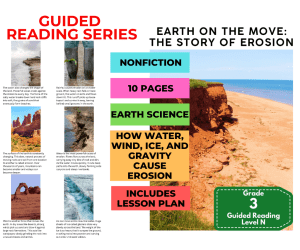
The Story of Erosion: Guided Reading Level N with Lesson Plan
ELA, Resources for Teachers, Reading Comprehension, Reading, Science, Language Development, Pre-Reading, Earth and Environmental Sciences, Geography, Social Studies, Grade 2, 3, 4, Worksheets & Printables, Worksheets, Teacher Tools, Centers, Activities, Literacy Readers, Quizzes, Quizzes and Tests, Assessments, Lesson Plans
This The Story of Erosion (level n) guided reading book with lesson plan includes: Guided Reading Color Label (front cover x1) This is a quick way to match the book’s demands to what students can generally handle.. The overall goal is to use the level/color to pick books for several smaller groups. To qualify for a certain level, a student is expected to read a book from that level with about 90–94% accuracy. If a student is consistently accurate and understands, move up a level. If the student is struggling at that level, drop down and add more support. Each student will improve at completely different rates, but it is generally one of the best ways to check progress across the class. DOWNLOAD THE CATALOG TO VIEW ALL GUIDED READING BOOKS AVAILABLE (SORTED LEVELS A-Z) Pre-Reading Question (x1) Teacher asks the prompt aloud, can be while showing the cover or first page. Students share what they already know, or make educated guesses from the cover. Prompt them to use the target vocabulary. Write some of their responses on the board to look back at during the reading. Vocabulary Words (x5) Introduce the five words, best doing it one at a time. Start by saying it, while students repeat and then see if anyone knows what it means before reading further. Read through the meaning and try to briefly connect each word to a picture or gesture so it’s meaningful. Ask students to flip through the book pages and point to where they see each of the vocabulary words. While reading the book pause upon coming across one of the vocab words or read the sentence twice to make sure students understand the word has appeared. Optional: Ask students to raise hands whenever they see/hear one of the new words. Guided Reading Pages (x10) Check the book snapshot (below) for: primary topic - do you need to prep extra reading or intro materials on this? what is taught best - decide on 1-2 bullets to focus on, use the prompt or words provided here for best results. learning goals - what you are checking for students to be able to do after the session, elicit answers using prompts or words provided. key vocabulary (see section above). questions overview - so you know what is coming up and if you need to prep extra materials to assist understanding. Run the lesson You may have already looked at a few of the pages together, but you can show them some of the pictures again first to set meaning. Depending on how much time you have and how familiar your students are with guided reading class, you may want to read the book aloud first with the group first. Students whisper or partner read, while you listen in. If time, do it as a group, one student reading a page each. Use the guided page’s prompts to coach: “Check the picture / does it make sense?” “Point under the words / try the first sound” “Reread the sentence smoothly”. Try to focus more on one student per session (rotating every time), so you can work out if they are ready to move up or need to move down a level. Comprehension Questions (back cover x3) This is your way to check that students didn’t just say the words, but actually understood the text. First, let students answer by pointing to the page/picture and saying a short sentence. After any answer, follow with: “Show me where you found that in the text.” In bigger groups, have partners answer first (10–20 seconds), then call on 2–3 students to share. Differentiation tips: Emerging speakers/struggling readers: oral + pointing On-level: oral in a full sentence Higher: one written sentence or draw + label Book Snapshot Title: Earth on the Move: The Story of Erosion Genre: Nonfiction (informational text) Subject: Life Science / Earth Science Primary Topic: How water, wind, ice, and gravity cause erosion Estimated Guided Reading Level (A–Z): N What This Book Teaches Best Defines erosion as a slow, natural process that moves rocks and soil from one place to another. Compares different forces of erosion (water, ocean waves, rainfall/runoff, wind, ice/glaciers, gravity) using clear examples. Explains cause and effect in Earth changes , such as rivers cutting deep paths that form canyons and riverbanks over time. Shows that erosion can break down land in one place and build new land in another , including how a river can form a delta where it meets the ocean. Highlights ways nature can slow erosion , including how plant roots hold soil in place. Learning Goals Students can define erosion using details from the text. Students can identify water as the most powerful cause of erosion described in the book. Students can explain how rivers, waves, and rainfall/runoff change land over time. Students can describe how wind, glaciers, and gravity move or reshape rock and soil. Students can explain how plants help prevent erosion from happening too quickly. Students can describe how a delta forms when a river drops sand and soil at the ocean. Key Vocabulary From the Text erosion — moving rock and soil from one place to another. shoreline — where land meets the ocean. runoff — rainwater that flows downhill over the ground. glaciers — huge sheets of ice moving slowly across land. delta — land formed when a river drops sand and soil. Discussion Prompts Pre-reading question: What are some ways land might change over a long time? Comprehension questions: How does the book describe erosion and what it moves? Comprehension questions: What does fast-moving river water do to the earth, according to the text? Comprehension questions: How do the roots of trees and grasses help stop erosion from happening too quickly? Printing Tips 1. Best Printing Method (Recommended) “Booklet” Printing (Best if Available) If your printer or PDF viewer supports Booklet Printing , use this. Settings to use: Print mode: Booklet Paper size: Letter or A4 (either works) Orientation: Landscape Print on both sides: Yes Flip on: Short edge Scaling: Fit to printable area Booklet subset: First test: Front sides only Then: Back sides only This will automatically: Pair pages correctly Put the cover on the outside Align everything for folding After printing, fold in half and staple along the spine . 2. If “Booklet” Printing Is NOT Available You can still print this correctly with manual duplex printing . Step-by-step: Open the PDF. Choose Print . Set: Orientation: Landscape Pages per sheet: 1 Print on both sides: Yes Flip on: Short edge Print all pages . Because each PDF page already contains two facing book pages, the result will still fold cleanly into a book. Thousands of Cored Education products are included with your TeachSimple membership. Download links and encyclopedia index available here.
Author Cored Education
Rating
Tags Reading Comprehension, Reading Passages, Reading, Guided Reading, Guided Reading Lesson Plan, Guided Reading Activity, Pre-reading, Science Lesson Plans, Earth Science, Geography

Reading Passages on Properties of Objects and Materials (Fillable PDF)
ELA, Reading, Reading Comprehension, Science, Physics, Common Core, ESL, Language Development, Vocabulary, Chemistry, Grade 2, 3, 4, Tests, Quizzes and Tests, Teacher Tools, Assessments, Worksheets, Worksheets & Printables, Centers, Activities
Reading Passages on Properties of Objects and Materials for Physical Science Snapshot Genre: Nonfiction Subject: Physical Science Primary Topic: Physical properties, matter, and changes of phase Estimated Guided Reading Level (A–Z): M What This Book Teaches Best It teaches how physical properties such as color, hardness, texture, size, shape, smell, melting point, and boiling point help identify substances. It explains how tools measure physical properties, including temperature, weight, length, and volume. It introduces classification by grouping matter into solids, liquids, gases, metals, and nonmetals. It explains states of matter and how atoms move differently in solids, liquids, and gases. It describes phase changes including melting, freezing, vaporization, and condensation. Learning Goals Students will identify observable physical properties used to describe materials. Students will explain how scientists use tools to measure temperature, length, weight, and volume. Students will classify examples of matter by state and by material type. Students will describe how atoms behave in solids, liquids, and gases. Students will explain how heat can cause melting, freezing, vaporization, and condensation. What's inside? Passage 1: Observable Physical Properties of Objects & Materials Passage 2: Measuring Physical Properties Passage 3: Classification of Matter Passage 4: States of Matter Passage 5: Change of Phase FILLABLE PDF VERSION Worksheet-style pages, but with type-in answer boxes so students can complete and save their work digitally. Other versions are available in the links list below or in the full catalog. FULL CATALOG OF DOWNLOAD LINKS HERE Grade 3/4 Links: Physical Science Part 1 - Properties of Objects and Materials Google Docs/Slides/Forms PDF PPT Word Free Supplementary Pack Accompanying Videos Physical Science Part 2 - Position and Motion of Objects Google Docs/Slides/Forms PDF PPT Word Free Supplementary Pack Accompanying Videos Physical Science Part 3 - Light, Heat, Electricity, Magnetism Google Docs/Slides/Forms PDF PPT Word Free Supplementary Pack Accompanying Videos Life Science Part 1 - Characteristics of Organisms Google Docs/Slides/Forms PDF PPT Word Free Supplementary Pack Accompanying Videos Life Science Part 2 - Life Cycles of Organisms Google Docs/Slides/Forms PDF PPT Word Free Supplementary Pack Accompanying Videos Life Science Part 3 - Organisms and Environments Google Docs/Slides/Forms PDF PPT Word Free Supplementary Pack Accompanying Videos Earth Science Part 1 - Properties of Earth Materials Google Docs/Slides/Forms PDF PPT Word Free Supplementary Pack Accompanying Videos Earth Science Part 2 - Changes in the Earth and Sky Google Docs/Slides/Forms PDF PPT Word Free Supplementary Pack Accompanying Videos Earth Science Part 3 - Objects in the Sky Google Docs/Slides/Forms PDF PPT Word Free Supplementary Pack Accompanying Videos For similar products and other frees, do check out Cored Group on TeachSimple .
Author Cored Education
Rating
Tags Science, Elementary, Reading, Comprehension, Physics, Physical Science, Reading Centers, Reading Comprehension Assessments, Science Assessments, Vocabulary Assessments

The Little School Bus That Talked Audio Book
ELA, Reading, Preschool, Kindergarten, Grade 1, 2, Read Alouds, Activities
Product Description: Embrace the joy of storytelling with "The Little School Bus That Talked" audio book , an enchanting tale perfect for young learners in Kindergarten, Preschool, Grade 1 and Grade 2. This resource is specially tailored to complement Language Arts curricula at early learning stages. Designed as a stimulating learning tool, it helps students reinforce their reading abilities while developing listening skills. The captivating plot revolves around a unique yellow school bus that discovers its voice and sparks conversations on children's ride to school. Listeners encounter the Johnson twins – Bobby and Tommy – who are left intrigued by the talking bus. The narrative is infused with engaging sound effects and delightful music that amplify the charm of this whimsical story. The Magical Format: MP3 File This audio book resource comes in MP3 format which allows flexibility for educators who can find several creative ways to incorporate this tool into teaching scenarios. The options include - Whole group story time sessions:: Instigating collective discussions about comprehension or inference, Focused small groups:: Concentrating on literary elements or thematic analysis, Apart from reading along aloud by assigning them as homework: : This tool gets individual students improving fluency and pronunciation when read along aloud. Promoting Independent Reading: Lifelong Learning Skill An important advantage of using an Audiobook like "The Little School Bus That Talked" is its potential influence in promoting habits of independent reading among emerging readers - a critical skill required for lifelong learning. The positive ending of the story not only keeps listeners engaged through till the end but also imparts valuable lessons about friendship. Conclusion In essence, "The Little School Bus That Talked" audio book serves as an interactive educational material, qualifying beyond a regular read - it inspires imagination while fostering the growth in literacy making joys of learning contagious among young scholars.
Author Twin Sisters Digital Media
Tags Audio Book, Storytelling, Early Learners, Language Arts, Reading Abilities
Phonic Reading Scheme: Fully Incremental For All Abilities GROWING SET
Special Resources, ELA, Special Education Needs (SEN), Language Development, Phonics, Reading, Homeschool Curriculum, Kindergarten, Literacy Readers, Teacher Tools, Games, Activities, Flashcards, Worksheets & Printables, Worksheets
A pack of 35 Phonic reading books with matching PowerPoints and workbooks to support learning. This is an incremental phonics reading scheme with a difference. Introducing just 10 words in each phonics family, the words are repeated from book to book, giving even those with very poor word recall the chance to learn to read fluently without having to decode every word. Ideal for dyslexics, or those suspected of being dyslexic and all children with a special need. These reading books make the pupil feel safe - they have already met every word introduced in the stories. They have the skills to read them themselves. This is empowering and confidence-building. You can view the first CK pack with a set of 30+ supporting activities and games FREE here. The books cover these sounds and must be taught in this order: CK; OO; SH; CH; ND/NT; NK; TH; NG; AR; OR; A-E; I-E, O-R, U-E, AI, EA, OA, IGH Rationale: It has long been proven that teaching children to decode is a powerful tool for teaching reading, as opposed to the Look and Say method. However, this has led to a proliferation of reading books that throw as many words with a shared phonics sound into a book as possible, not realising that some children with very poor word recall find it hard to recognise words when they see them again without much repetition. To combat this problem, while we recognise that, technically, once a child has been taught a new sound s/he can sound out many words with that new sound, when it comes to reading fluently a child needs a core set of words in each family that they can recognise, which can act as a launch pad as they gain confidence. These books have been designed accordingly. For each sound family, just 10 words are studied with the help of the workbooks and are then repeated throughout the books, each book building on the vocabulary that has already been learned, repeating it and including it in new phrases as new sounds are learned. As the programme progresses, new sounds from the learned families are incorporated to widen vocabulary, while taking care to maintain fluency. The books are designed to limit guessing (though most children will try and guess, which must be avoided at all costs). Pluses of this phonics reading programme Easy to print Cheap to buy compared with expensive reading schemes They are just as effective as the best reading programmes out there, and more importantly, they have been tried and tested on real children with severe difficulties and proven to work if the child is taught as outlined. Aligned with the aims and objectives of LETRS and the Science of Reading. They work! My pupils tell me if they don't work, so I re-edit them and try them before I put them out for the general public. Introduces most high-frequency words in the phonics family to which they belong, and gradually introduces genuine, non-decodable sight words into the text without causing overload or throwing the child off course. What is included? Each book is 12/16/20 pages long, with minimal colour pictures to make printing cheaper and to help tell the story when words are minimal Each book comes with a matching PowerPoint, making it suitable for online teaching, for private tutors, parents, classroom assistants, etc... All books come with supporting activities and games - 100s of worksheets! Scope and Sequence included I am writing a new book regularly, so this pack will quickly grow!
Author Lilibette's Resources
Rating
Tags Phonics Intervention, Homeschool Reading, Phonic Reading Scheme, Decodable Readers, Home School, Decodable Reading Books, Guided Reading, Phonics Readers, Literacy Activities

Letter I Emergent Reader
ELA, Language Development, Phonics, Reading, Kindergarten, Preschool, Activities
This letter I emergent reader is a great book for practicing beginning sounds. This book is a low prep activity for students to make and take home to practice the initial sound of the letter I. These beginning readers are perfect for any preschool or kindergarten classroom where students are learning about letters and letter sounds. Students will color each picture and then cut the pages apart. The pages will then be stapled together in a book for students to read over and over to practice the letter I sound. There are pictures that focus on the short I sound and the long I sound. This emergent reader includes a cover page and seven different "I is for..." pages that all focus on the short sound of the letter I in the initial position of the word. For each page, excluding the first one, it includes two letter I things. What Is Included: * I Cover Page - My Letter I Book * I is for iguana. * I is for ink. * I is for insects. * I is for instruments. * I is for ill. * I is for inchworm. * I is for ice. * I is for island. * I is for icicles. * I is for ice cream. When to Use: * Literacy Center * Reading Center * Small Group Activity * Independent Activity * Emergency Sub Plans * Use as mini books in a class library These alphabet emergent readers make great student made books for them to take home and read with their families or for placing in a class library for students to read again and again during center time. Skills Assessed: * Letter Recognition * initial Sound of the Letter I * Short and Long Sound of the Letter I * Reading simple sight words * Reading simple repetitive sentences
Author The Connett Connection
Tags Letter I, Letter I Activity, Alphabet Activity, Alphabet Book, Beginning Reader, Emergent Reader, Beginning Sounds, Initial Sounds, Letter Of The Week, Letter Book

Reading Comprehension Passages Nonfiction Set 2 (Google Forms)
ELA, Reading, Language Development, Vocabulary, Common Core, Spelling, Reading Comprehension, Creative Writing, Writing, Resources for Teachers, Grade 6, 7, Assessments, Teacher Tools, Tests, Quizzes and Tests, Activities
Reading Comprehension Passages Nonfiction Set 2 Overview Reading comprehension lessons, especially written for Grade 6-7, providing the chance to read interesting and engaging passages. Each lesson has a mix of questions to check understanding, a vocabulary or spelling activity to help remember key language introduced, and a writing exercise. Full answer keys are provided. Passages Include 1.Red Pandas: Red Pandas eat nearly 9,000 pounds of food during their lifetime. 2.Hoatzin: This loud creature has roots stretching back 36 billion years! 3.Moose: These huge creatures are built for the coldest climates in America. 4.Vancouver: Fact: Vancouver was once known as Gastown! 5.Recycling: Reduce, Reuse and Recycle? Read more about that, and more! 6.Atlantic Ocean: Just how important is the Atlantic to countries that border it? Google Forms Version This is the Google Forms editable and fillable/self grading version. This download is available in GOOGLE Docs, GOOGLE Forms, GOOGLE Slides. PDF, PPT, WORD. FULL CATALOG OF DOWNLOAD LINKS HERE Grade 6/7 Links Fiction Set 1 Google Docs Google Forms Google Slides PDF PPT Word Guided Reading Materials Fiction Set 2 Google Docs Google Forms Google Slides PDF PPT Word Guided Reading Materials Nonfiction Set 1 Google Docs Google Forms Google Slides PDF PPT Word Guided Reading Materials Nonfiction Set 2 Google Docs Google Forms Google Slides PDF PPT Word Guided Reading Materials Reading Passages Overview Each passage is especially written for Grade 6/7 students, including key vocabulary required for this age group. Topics are varied and are accompanied by colorful graphics. Topics are meant to educate, yet entertain the modern student. The majority of these short stories contain an important message - a way of developing these young learners further. Mixed Questions The mixed questions section of each lesson includes a variation of five to six comprehension, vocabulary and Math questions. In addition, key reading strategies are frequently covered including cause & effect, summarizing, compare & contrast and making conclusions. Mixed questions require a written response (no MCQ's), full answers and example responses appear at the end of the lesson. Spelling & Vocab Each reading passage contains a variety of words and phrases designed for Grade 6/7 students. Spelling and vocab activities provide the opportunity to build fluency with these words. Activities provide clues to help assist students. Vocabulary activities include extra questions where students must write a synonym, an antonym or a sentence using a certain word. Writing Prompts Writing prompts are designed to continue the theme or lessons learned in the story. Students are persuaded to write in a variety of ways and each prompt includes several cues to help. The main focus in this product, is the student. Prompts will require the student to relate to past experiences and encourage them to discuss feelings and ways to improve. Full Answer Keys Full answer keys and sample responses are provided so no matter how busy you are, you know you're covered! Mixed question answers provide evidence from the text, Math questions contain the relevant workings. Answers are designed for use by the teacher, but also suitable as a handout to the student. For similar downloads and other frees, do check out Cored Group on TeachSimple.
Author Cored Education
Rating
Tags Elementary, Reading, Comprehension, Vocabulary, Answers, Common Core, Spelling, Writing, Passages, Self Assessment

Reading Comprehension Nonfiction Set 3 - Mammals (PDF)
ELA, Reading, Reading Comprehension, Common Core, ESL, Language Development, Spelling, Vocabulary, Creative Writing, Writing, Grade 4, 5, Worksheets & Printables, Worksheets, Assessments, Teacher Tools, Tests, Quizzes and Tests, Centers, Activities
Reading Comprehension Passages Nonfiction Set 3 Overview No prep reading comprehension lessons, with enjoyable articles and topics. Each lesson has a blend of post-reading activities. Mixed questions to check overall understanding. Vocabulary activities, plus a writing section. Lessons also contain a bonus extension exercise at the end. Some you may like, some you may not, either way they are there if you wish to use them. Full answer keys are provided. Passages Include 1.Lions: Read about the second largest wild cat in this article. 2.Tiger Time: Tigers are such solitary creatures. Find out more in this lesson. 3.All About Horses: How is the author preparing to become a vet when she gets older? 4.All About Beavers: Here's all you need to know about 'nature's engineers'. 5.The Canadian Lynx: Canadian Lynxes look unique, and truly are amazing animals. 6.All About Cheetahs: The cheetah is the earth's fastest mammal. It can run as fast as 70 miles an hour! PDF Version This is the PDF uneditable version. This download is available in GOOGLE Docs, GOOGLE Forms, GOOGLE Slides. PDF, PPT, WORD. FULL CATALOG OF DOWNLOAD LINKS HERE Grade 4/5 Links Fiction Set 1 - Animals Google Docs Google Forms Google Slides PDF PPT Word Guided Reading Materials Fiction Set 2 - Family Google Docs Google Forms Google Slides PDF PPT Word Guided Reading Materials Fiction Set 3 - Friends Google Docs Google Forms Google Slides PDF PPT Word Guided Reading Materials Fiction Set 4 - School Google Docs Google Forms Google Slides PDF PPT Word Guided Reading Materials Fiction Set 5 - Sports Google Docs Google Forms Google Slides PDF PPT Word Guided Reading Materials Nonfiction Set 1 - Birds Google Docs Google Forms Google Slides PDF PPT Word Guided Reading Materials Nonfiction Set 2 - Insects Google Docs Google Forms Google Slides PDF PPT Word Guided Reading Materials Nonfiction Set 3 - Mammals Google Docs Google Forms Google Slides PDF PPT Word Guided Reading Materials Nonfiction Set 4 - Nature Google Docs Google Forms Google Slides PDF PPT Word Guided Reading Materials Nonfiction Set 5 - Sea Animals Google Docs Google Forms Google Slides PDF PPT Word Guided Reading Materials Reading Passages Overview Each passage is especially written for Grade 4-5 students, including key vocabulary required for this age group. Topics are varied and are accompanied by colorful graphics. Topics are meant to educate, yet entertain the modern student. These passages are perfect for the modern classroom. Whereas textbooks can become outdated in no time, any changes to technology or the world will result in updates to this product. Mixed Questions The mixed questions section of each lesson includes a variation of five comprehension, vocabulary and math questions. In addition, key reading strategies are frequently covered including cause & effect, summarizing, compare & contrast and making conclusions. Two or three of the questions will be MCQs and other questions will require a written response of some kind. Full answers and example responses appear at the end of the lesson. Spelling & Vocab Each reading passage contains a variety of words and phrases designed for Grade 4-5 students. Spelling and vocab activities provide the opportunity to build fluency with these words. As it can become quite mundane doing the same activities over and over, each lesson in a set will contain a different spelling and vocab activity . Activities include: spelling games, sentence match-ups, mixed-up text and decoding words from the lesson. Writing Prompts Writing prompts are designed to continue the theme or lessons learned in the story. Students are persuaded to write in a variety of ways and each prompt includes several cues to help. As with the spelling/vocab section, writing prompts will vary. This includes research pieces, reading responses, poetry and creative writing prompts. Full Answer Keys Full answer keys and sample responses are provided so no matter how busy you are, you know you're covered! Mixed question answers provide evidence from the text, math questions contain the relevant workings. Answers are designed for use by the teacher, but also suitable as a handout to the student. Just for Fun Each lesson will have a bonus extension exercise. This is something fun to extend the lesson with. You can find these at the end of each lesson, titled Just for Fun. Just for Funs are optional. Some you may like, some you may not. Either way, they are there to do with as you wish. For similar downloads and other frees, do check out Cored Group on TeachSimple.
Author Cored Education
Rating
Tags Elementary, Reading, Comprehension, Vocabulary, Common Core, Spelling, Writing, Passages, Reading Centers, Reading Comprehension Assessments
Alphabet Story Book | Letter W Interactive Book
ELA, Reading, Kindergarten, Preschool, Grade 1, 2, Activities
This resource is an Alphabet Story Book for the Letter W. Within this interactive book, you will find: -A vocabulary list -Pictures to cut and glue -An original story This story book provides great introduction and practice for learning letters and their sounds. There are an endless amount of ways you can utilize these letter books in your classroom. These stories can also be enjoyed on YouTube: https://www.youtube.com/playlist?list=PLIIm-PSqtVdou8Uy1SZfH-6mLuV1X8GEP .
Author Golden Promise
Tags Reading Center, Literacy Center, Letter Practice, Short Vowels, Letter W
Alphabet Story Book | Letter O Interactive Book
ELA, Reading, Kindergarten, Preschool, Grade 1, 2, Activities
Alphabet Story Book | Letter O Interactive Book This interactive alphabet book focuses on the letter O. Educators can use it to introduce and reinforce letter recognition, letter sounds, vocabulary, reading, and more. The letter O book contains: - A vocabulary list of O words like octopus and ostrich - Pictures for students to cut out and glue into the story - An original narrative story featuring vocabulary words Teachers may implement this versatile resource in small groups, literacy centers , or as a whole class activity. Students will enjoy listening and reading along as they learn about the letter O. The story can build letter-sound recognition and early literacy skills. Extend learning by having students re-tell the story orally. Access accompanying videos to complement instruction.
Author Golden Promise
Tags Letter Practice, Alphabet Sounds, Reading Centers, Short Story, Letter O