



2,810 products added recently
Page 1013 - Newest Teaching Resources

 Show filters
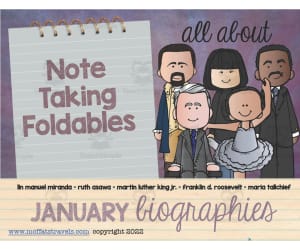
All About Influential Leaders | January Writing Packet
ELA, Social Studies, Writing, Biographies, Grade 3, 4, 5, Worksheets & Printables, Worksheets
This is a January Writing Packet for students. This writing packet focuses on people born in January. Some of these people may be familiar to students and others may be unfamiliar. Students will get to learn about these important figures and apply their knowledge through writing. There are 2 PDFs included. One of the PDFs is a set of Note Taking Foldables. The teacher and students can: 1. Choose a HISTORY MAKER to research by reading a book, watching a video, or using Pebble Go. 2. Print HISTORY MAKER page front and back. 3. Take notes and color. 4. Optional: Glue into journal for future reference. The biographies included in the Note Taking Foldable packet are: 1.Lin Manuel Miranda 2. Ruth Asawa 3. Martin Luther King Jr. 4. Franklin D. Roosevelt 5. Maria Tallchief As students complete their research, they will be able to use these foldables to take notes along the way. You can encourage students to highlight things such as birthdays, their accomplishments, their values, their family, etc. The second PDF is a Mini Chapter Book packet. Students will be able to apply what they learned during the Note Taking process and develop their own chapter book biographies. The individuals included in this PDF are: 1.Benjamin Franklin 2. Betsy Ross 3. Jackie Robinson 4. Elvis Presley 5. Alexander Hamilton 6. Lin Manuel Miranda 7. Muhammed Ali The teacher and students will: Choose what level of writing paper you want to use. Choose the history maker of study. Print history maker cover and chapter 1 page back to back. Print chapters 2 and 3 back to back. Fold and staple. 6 Best if used with note taking pages.
Author Moffat's Travels
Tags Chapter Books, Literacy Centers, Biographies, Social Studies, Influential Leaders, January Writing, Winter, Writing Prompts, Martin Luther King Jr
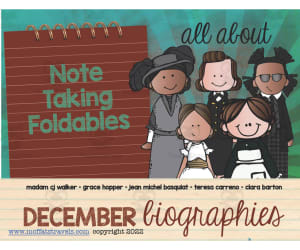
All About Influential Leaders | December Writing Packet
ELA, Social Studies, Writing, Biographies, Grade 3, 4, 5, Worksheets & Printables, Worksheets
This is a December Writing Packet for students. This writing packet focuses on people born in December. Some of these people may be familiar to students and others may be unfamiliar. Students will get to learn about these important figures and apply their knowledge through writing. There are 2 PDFs included. One of the PDFs is a set of Note Taking Foldables. The teacher and students can: 1. Choose a HISTORY MAKER to research by reading a book, watching a video, or using Pebble Go. 2. Print HISTORY MAKER page front and back. 3. Take notes and color. 4. Optional: Glue into journal for future reference. The biographies included in the Note Taking Foldable packet are: 1.Madam CJ Walker 2. Grace Hopper 3. Jean Michael Basquiat 4. Teresa Carreno 5. Clara Barton As students complete their research, they will be able to use these foldables to take notes along the way. You can encourage students to highlight things such as birthdays, their accomplishments, their values, their family, etc. The second PDF is a Mini Chapter Book packet. Students will be able to apply what they learned during the Note Taking process and develop their own chapter book biographies. The individuals included in this PDF are: 1.Lady Bird Johnson 2. Ella Baker The teacher and students will: Choose what level of writing paper you want to use. Choose the history maker of study. Print history maker cover and chapter 1 page back to back. Print chapters 2 and 3 back to back. Fold and staple. 6 Best if used with note taking pages.
Author Moffat's Travels
Tags Influential Leaders, December Writing Packet, Winter, Biographies, Literacy Center, Clara Barton, Madame CJ Walker, Black History, Chapter Book
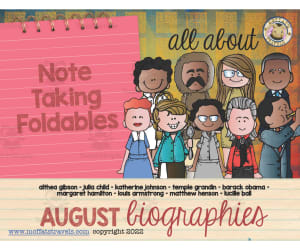
All About Influential Leaders | August Writing Packet
ELA, Social Studies, Writing, Biographies, Grade 3, 4, 5, Worksheets & Printables, Worksheets
This is an August Writing Packet for students. This writing packet focuses on people born in August. Some of these people may be familiar to students and others may be unfamiliar. Students will get to learn about these important figures and apply their knowledge through writing. There are 2 PDFs included. One of the PDFs is a set of Note Taking Foldables. The teacher and students can: 1. Choose a HISTORY MAKER to research by reading a book, watching a video, or using Pebble Go. 2. Print HISTORY MAKER page front and back. 3. Take notes and color. 4. Optional: Glue into journal for future reference. The biographies included in the Note Taking Foldable packet are: 1.Althea Gibson 2. Julia Child 3. Katherine Johnson 4. Temple Grandin 5. Barack Obama 6. Margaret Hamilton 7. Louis Armstrong 8. Matthew Henson 9. Lucille Ball As students complete their research, they will be able to use these foldables to take notes along the way. You can encourage students to highlight things such as birthdays, their accomplishments, their values, their family, etc. The second PDF is a Mini Chapter Book packet. Students will be able to apply what they learned during the Note Taking process and develop their own chapter book biographies. The individuals included in this PDF are: 1.Lucille Ball 2. Louis Armstrong 3. Matthew Henson The teacher and students will: Choose what level of writing paper you want to use. Choose the history maker of study. Print history maker cover and chapter 1 page back to back. Print chapters 2 and 3 back to back. Fold and staple. 6 Best if used with note taking pages.
Author Moffat's Travels
Tags August, Biographies, Social Studies Activity, Cross Curricular, Barack Obama, Black History, Katherine Johnson, Influential Leaders, Literacy Center

All About Influential Leaders | February Writing Packet
ELA, Social Studies, Writing, Biographies, Grade 3, 4, 5, Worksheets & Printables, Worksheets
This is a February Writing Packet for students. This writing packet focuses on people born in February. Some of these people may be familiar to students and others may be unfamiliar. Students will get to learn about these important figures and apply their knowledge through writing. There are 2 PDFs included. One of the PDFs is a set of Note Taking Foldables. The teacher and students can: 1. Choose a HISTORY MAKER to research by reading a book, watching a video, or using Pebble Go. 2. Print HISTORY MAKER page front and back. 3. Take notes and color. 4. Optional: Glue into journal for future reference. The biographies included in the Note Taking Foldable packet are: 1. Susan B. Anthony 2. Marian Anderson 3. Langston Hughes 4. Thomas Edison 5. Babe Ruth 6. Abe Lincoln 7. Michael Jordan 8. Rosa Parks 9. Levi Strauss 10. Mo Willems As students complete their research, they will be able to use these foldables to take notes along the way. You can encourage students to highlight things such as birthdays, their accomplishments, their values, their family, etc. The second PDF is a Mini Chapter Book packet. Students will be able to apply what they learned during the Note Taking process and develop their own chapter book biographies. The individuals included in this PDF are: 1. Marian Anderson 2. Abe Lincoln 3. Michael Jordan 4. Rosa Parks 5. Levi Strauss 6. Mo Willems The teacher and students will: Choose what level of writing paper you want to use. Choose the history maker of study. Print history maker cover and chapter 1 page back to back. Print chapters 2 and 3 back to back. Fold and staple. 6 Best if used with note taking pages.
Author Moffat's Travels
Tags Mini Books, Chapter Books, Biographies, Influential Leaders, Black History, February, Winter, Mo Willems, Grammar, Literacy Center

Middle School 201: More Tips for Teachers eBook
, Grade 6, 7, 8,
This is a Middle School 201: More Tips for Teachers eBook. Even though this book is a continuation of Middle School 101, there are some teaching tips that have been updated in Middle School 201. In general, this new set of tips are designed for teachers with more experience than in Middle School 101. In fact, Middle School 201 includes advice for teachers to support brand new teachers! As stated in Middle School 101, most teachers have learned from other teachers, and [great teachers] continue to learn. The goal of this book is to continue to do just that. I wish to help you expand your middle school teaching repertoire. Middle School is a unique part of K-12 education. Students enter in the 6th grade as children and leave after completing the 8th grade as young adults. No matter what grade level you teach, Middle School 201, More Tips for Teachers, offers a compilation of techniques that have worked for the author over the years for himself, while supporting new teachers. Please Note: To avoid the overuse of “he/she, him/her, his/her,” I am going to assume all character are male, and use “he, him, his.” However, these tips apply to females as well. Teaching is difficult, especially middle school. An outsider would not believe that not all students follow directions, the degree of defiance, some difficult issues that some students have to deal with, and the overall middle school behavior. However, teaching is rewarding when students get an “ah-ha” moment, or when a student says: “Oh, now I get it!” We all have tough days, but there are those great days that make it worthwhile. Continue to touch the future.
Author Paul Rallion
Tags Tips For Teachers, Classroom Management, Beginning Of School, Dismissal Routines, Middle School Teacher, Teacher EBooks, Parent Involvement

Alliance System Game for World War I
Social Studies, History, History: World, Grade 9, 10, Activities, Games
This is an Alliance System Game for World War I. National Curriculum Standard: Learners will be able to describe and explain conditions and motivations that contribute to conflict, cooperation, and interdependence among groups, societies, and nations. Specific Objective: To understand how the Alliance System led to World War I. Materials: Alliance System Activity Worksheet Procedure: You may want to start the lecture on World War I by explaining some of the more general reasons why it happened, such as the rise of imperialism, the industrial revolution, nationalism, and even militarism. Then explain how the competition between European powers and their need for protection led to the formation of certain alliances, the Triple Entente and the Triple Alliance. Then explain how even though the main alliances were explicit, some of the smaller alliances were not. Tell the students they will see how having unclear or secretive alliances is eventually going to lead to WWI. Then get the activity started. Distribute the worksheet below and explain all the rules listed on it. You may want to read it together with them and explain the rules. Feel free to delete or add more countries depending on your class size. Depending on class size also, assign countries to pairs or individuals. One thing you want to emphasize about the rules is that they have to choose their alliance very carefully. Weakest nations may not want to ask most powerful nations because their likelihood of rejection is very high. After the activity is over, ask students how the alliance system led to WWI. Then you may want to continue the lecture explaining how a small event such as the assassination of Franz Ferdinand led to WWI. (When Austria declared war on Serbia, it wasn’t altogether clear that Russia would get involved precisely because the alliances were not that clear. As you continue the lecture, also let students know that when Germany passed through the little country of Belgium they may not have anticipated Great Britain to get involved. That’s why Woodrow Wilson proposed “No more secret alliances” as part of his Fourteen Points later.)
Author Creative Educator
Tags Alliance System Game, World War I, Social Studies Game, Whole Group, Government, Politics, Lecture, European Powers, Franz Ferdinand, Wwi Alliances, The Alliance System, World War 1 Activity, Wwi Simulation Game, Secret Alliances Ww1, How Does Alliances Contribute To Ww1, What Was Alliances In Ww1, Alliance System World War 1, The Alliances In Ww1, Alliance World War 1, Alliances Wwi, What Alliances Were In Ww1, World War 1 Lesson Plans Middle School, Alliances Leading To Ww1, Ww1 Alliance System, World War 1 Activities High School, What Is Alliances In Ww1, What Is An Alliance System, Alliance System In Ww1, What Is Alliance System, Wwi Game, Secret Alliances In Ww1, What Are Alliances In Ww1, World War 1 Activity High School
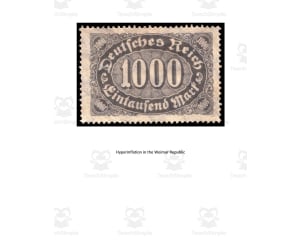
Hyperinflation in the Weimar Republic Lesson`
Social Studies, History, History: World, Government, Grade 9, 10, 11, Teacher Tools, Lesson Plans
This is a lesson for Hyperinflation in the Weimar Republic. National Curriculum Standards: Learners will understand the causes and effects of inflation. Learners will be able to explain how monetary decisions at the national level affect households, businesses and governments. Learners will be able to analyze and evaluate conditions, actions, and motivations that contribute to conflict and cooperation among groups and nations. Specific Objectives: To identify the reasons for hyperinflation in the Weimar Republic To understand how the Treaty of Versailles placed an unrealistic debt in Germany which would eventually lead to the rise of Hitler and World War II. Materials: Fake money. (either bought or printed if your school has a cutter.) Make sure there are enough units of $1 so students are not struggling for change. Papers (preferably color) Markers Procedure: Start by reviewing the Treaty of Versailles and how it unfairly placed the blame and a huge debt burden on Germany. ($33 billion). Then tell the class that the Weimar Republic, which was the democratic government set up in Germany after the war came up with an ingenious solution to pay off the debt. To realize how this is going to affect Germany, start a game in which the class will simulate the German economy in the 1920’s. You may want to start off by having students clear up some desks to the sides of the classroom. Divide the class into seven or eight groups. There should be about five groups of German merchants and about two or three groups of British and French “tourists” that will visit Germany. Each German merchant group will sell a specific product during five rounds. Some ideas for German products: Bread, Milk, Beer, Brats, chocolates. Of course, they do not need these items in class. Simply prepare ahead these items by drawing them with markers on colorful paper. Prepare five papers for each item.
Author Creative Educator
Tags Hyperinflation, Weimar Republic, Government, World War II, Hitler, Germany, Treaty Of Versailles, British, French, Merchants, Hyperinflation In The Weimar Republic, Weimar Germany Hyperinflation, Weimar Republic Inflation, Hyperinflation Weimar Republic, German Hyperinflation After Ww1, Weimar Hyperinflation

City of Tenochtitlan Model
Social Studies, First Peoples (Native), Grade 9, 10, Teacher Tools, Lesson Plans
This is a City of Tenochtitlan Model. National Curriculum Standards: Learners will understand mechanisms by which governments meet the needs and wants of citizens, regulate territory, manage conflict, establish order and security, and balance competing conceptions of a just society. Consequences of science and technology for individuals and societies. Specific Objectives: Students will learn some of the achievements of the Aztecs by building a model of the city of Tenochtitlan. Materials Needed: Salt, water, flour Optional to paint: Paint colors and brushes Cardboard (Most of these can be assigned to the students. Tell them to bring these by a certain date). Lesson: Tell them that one of the greatest achievements of Aztec civilization was their beautiful city of Tenochtitlan. In it many of their advances can be seen, such as the aqueduct. They will be building a model with clay with a piece of tech that works such as the aqueduct. (pour water and it has to lead to the center of the city). Show them select video clips from the documentary “Engineering an Empire” from History Channel. Here is the link: http://www.youtube.com/watch?v=gbgVl5vYpJk To make the modeling clay just mix the salt, flour with water as needed.
Author Creative Educator
Tags City Of Tenochtitlan Model, Aztecs, Government, Geography, Science, Technology, Cross Curricular, Civilization, Needs And Wants

Sharecropping and Tenant Farm Game
Science, Earth and Environmental Sciences, Life Sciences, Nature & Plants, Grade 9, 10, Activities, Games
This is a Sharecropping and Tenant Farming Game. National Curriculum Standards: Learners will understand how scarcity and uneven distribution of resources result in economic decisions, and foster consequences that may support cooperation or conflict Specific Objective: Students will be able to evaluate the systems of sharecropping and tenant farming, to see whether they were fair and equitable systems by which freedmen and women could have a sustainable life. Materials: Budget worksheets provided Lesson: After you have covered the bulk of Reconstruction, you can then touch on how the land was distributed among freedmen and women. There were basically two ways in which it was done. Since the vast majority of freedmen and women had practically nothing, they had to somehow rent the land and tools in order to farm. Those that did not have neither, would be sharecroppers. The owner of the land would allow them to use the land and also lend them tools but they would typically have to pay half the profits to the landlord. For those fortunate enough to have their own tools, they could rent the land for a fixed price. They were typically known as tenant farmers. After this has been explained, tell your students that they will experience firsthand how the system worked or (not worked). Divide the class into two groups: tenant farmers and sharecroppers. Also, divide them into pairs within each group. Tell them that they are a married couple trying to make ends meet. Then to half the class give the sharecropper budget worksheet and to the other half, the tenant farmer budget worksheet. Tell them that for each year, they will have to fill out the budget sheet. At the beginning of each year, they will have to select a crop to plant on their little parcel of land. They will have three choices: corn, wheat and cotton. (They may not choose a combination, but they can change their selection each year). Each year, each crop will perform differently depending on the weather and market forces. But they don’t know how each crop will do until the round starts. They’ll just have to guess and try to make it through. Also, for each year, make sure they understand to deduct payments to the landlord, and a fixed living expense.
Author Creative Educator
Tags Sharecropping, Farming, Farm Game, Tenants, Sharecroppers, Farmers, Economic Decisions, U.S. History, Small Group Games, Social Studies, Sharecropping Vs Tenant Farming, Tenant Farming Vs Sharecropping, What Are Tenant Farmers And Sharecroppers, What Were Tenant Farmers And Sharecroppers, Sharecropping And Tenant Farming, Sharecroppers Or Tenant Farmers

Scientific Revolution Experiments Lesson
Social Studies, History, History: USA, Grade 9, 10, Activities, Experiments, Teacher Tools, Lesson Plans
Unlock the power of hands-on learning with our Scientific Revolution Experiments Lesson! This unique and engaging lesson is designed to help students grasp the significance of the scientific method and its role in shaping the Scientific Revolution. Carefully aligned with history and science national curriculum standards, students will participate in several experiments that took place during this transformative era. Provided in a comprehensive 19-page editable Word document, we offer an extensive lesson plan, objectives, worksheets, and clear directions for setting up each experiment . Students will step into the shoes of scientists as they investigate historical research questions utilizing real-world empirical methods. The required materials are common items that can be quickly borrowed from your school's science department. This lesson easily adapts to both block and regular class schedules while offering a dynamic alternative to traditional lectures on the subject matter. By emphasizing experiential learning over memorizing facts or relying on ancient sources like Aristotle, our effective approach sparks curiosity among learners while cultivating their appreciation for history's breakthrough moments. Cultivate your students' critical thinking skills by guiding them through an unforgettable journey into our fascinating past! Don't let this valuable educational resource slip away - visit TeachSimple.com to get your copy today!
Author Creative Educator
Tags Science Experiments, Scientific Revolution, Whole Group Experiments, Cross Curricular, Philosophies, Social Studies Stations, Observation, Notes

A Political Machine in Practice Lesson
Social Studies, Government, Grade 9, 10, Teacher Tools, Lesson Plans
This is a lesson for A Political Machine in Practice. National Curriculum Standards: Learners will understand mechanisms by which governments meet the needs and wants of citizens, regulate territory, manage conflict, establish order and security, and balance competing conceptions of a just society. Specific Objective: Students will be able to understand how a political machine worked by actually becoming one and trying to resolve several cases for the people. Materials: Worksheet provided. Lesson: In this lesson, students get to understand how political machines worked by actually becoming one! (There is no better way to learn how crooks work than by being a crook yourself). Divide the class in pairs and tell them that they are the city boss of New York (Boss Tweed) sitting at the top of a political machine. Tell them that they’ll try to be as corrupt as possible in making certain decisions. When you go over the worksheet, you may want to mention that Boss Tweed of Tammany Hall paid $13 million for a construction job, when it actually cost $3. Where did the rest go to??? And there were all kinds of shady things going on. Political Machine Activity For this activity, students will be a city boss standing at the top of the pyramid of a political machine. They are therefore going to try to be as corrupt as possible in order for them to understand how political machines worked. These are their two main goals: 1. To remain in power by becoming reelected (they want to win the favor of many ignorant immigrants who don’t know much about what’s going on but have many needs) 2. Pocket as much money as possible whether it comes from a person or government funds.
Author Creative Educator
Tags Government, Politics, Political Machine, Elections, Social Studies Lesson, Small Group, Military, Societal Issues, Corruption

Peloponnesian War: Battle Strategies Lesson
Social Studies, History, History: Ancient, Grade 9, 10, 11, Teacher Tools, Lesson Plans
This is a lesson for Peloponnesian War: Battle Strategies. Specific Objectives: Students will be able to identify the strategies used by the Athenians and the Spartans to fight the Peloponnesian War. In doing so, they will understand better the impact of the War on Greece. Materials: Colored pencils or pens or markers Worksheet provided Lesson: In this lesson, students get to find out how the war played out on the most part during the Peloponnesian War. When covering wars, I usually don’t like to simply lecture about it but let them come up with strategies to win and defend. In this case, a self-explanatory worksheet guides them through so they can come up with strategies for the Athenian side and also the Spartan side. Then you go over the worksheet and you tell them what really happened. Then the students get to remember the war better. It’s a more fun and engaging activity. Here is a rough “answer key”. The Athenians were superior at sea while the Spartans had the upper hand in land. The Athenians simply attacked coastal areas and made friends with the helots so they would rebel vs the Spartans. They also entered their walls and shipped grain from other places. The Spartans could not really penetrate the Athenian walls, though they burned down their surrounding crops. This should look like a stalemate. One would think that the Athenians would win since they could ship food from outside. But in the end, the city was crowded there was a plague that even killed Pericles. Sparta won but it was not a decisive victory. In the end, the war just weakened Greece which made it an easy takeover target by the Macedonians and then the Romans. (Next topic should be Alexander the Great).
Author Creative Educator
Tags Peloponnesian War, Battle Strategies, Ancient History, Spartans, Athens, Greece, War In Greece, Map Skills, Romans, History Lesson, Battles Of The Peloponnesian War, Peloponnesian War Battles

Space: Satellites Word Wall Vocabulary and Reading Passage
Science, Technology, Earth and Environmental Sciences, Environmental Science, Earth Sciences, Computer Science, Grade 5, 6, 7, Word Walls, Classroom Decor
Space: Satellites Word Wall Vocabulary and Reading Passage Experience an effective blend of technical accuracy and readability in this comprehensive teaching resource created to bolster young learners' understanding of satellites. Designed for students of grade 5 to 7, this educational material comes with a meticulously detailed reading passage about satellites. Satellite Facts & Functionality From launching methods, types - low earth orbit (LEO), medium earth orbit (MEO), geostationary (GEO), to information on who initiated the first launch; common questions surrounding satellites are all systematically answered in this contained mini unit. A set of related queries follows the detailed text, facilitating a test of student comprehension. Vocabulary Words for Classroom Display This product also includes 33 medium-sized vocabulary words, priming creation of an interactive word wall or anchor chart within the class. These target terms serve to familiarize students with specific terminologies related to space technology. An equally handy feature is the included answer key which allows educators a swift means for assessing student understanding. Beyond Information Dissemination Brimming with factual data about space technology, this resource fulfills more than just learning needs - it stimulates learners' innate curiosity about our universe above us! An apt pick for school days when substitutes are stepping in, It perfectly fits smaller lessons focusing on space topics, You can utilize it within various classroom setups; small group discussions dissecting the reading passage collectively, individual assignments promoting autonomous study or large group interactions involving use of provided vocabulary words. Recommended Teaching Tool! If you're a public school teacher or home-schooling your child, consider integrating this 'Space: Satellites Word Wall Vocabulary and Reading Passage' into your future lesson plans. It's an excellent tool aimed to enhance knowledge retention while making learning about science fun! Venture into celestial studies with your young learners using our user-friendly resource sporting an insightful content spread across its 13-page PDF layout.
Author Soumara Siddiqui
Tags Space Technology, Satellites, Reading Comprehension, Vocabulary, Science Education
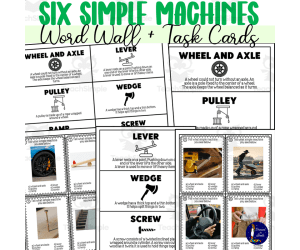
Six Simple Machines Word Wall and Task Cards
Science, Technology, Engineering, Inventors, Grade 3, 4, 5, Task Cards, Worksheets & Printables
What are the six simple machines? What do they look like in action? This resource includes: 6 huge six simple machines word wall cards 1 handout with all six simple machines for folder inserts 20 multiple choice answer task cards answer key With this set students will be able to look at the six simple machines in action in real pictures and be able to tell which simple machine they see at work. At the end of this practice students will be able to tell the function of each simple machine. Enjoy!
Author Soumara Siddiqui
Tags Six Simple Machines, The Six Simple Machines, Six Simple Machines Word Wall , Six Simple Machines Task Cards

2nd Grade High Frequency Words with Flashcards and Certificate
ELA, Language Development, Spelling, Vocabulary, Writing, Grade 2, Flashcards, Worksheets & Printables
These worksheets are focused on 289 high frequency words for 2nd graders. This resource contains a wide variety of activities that will keep students busy practicing their sight words. Includes writing practice, spelling practice, counting, matching, writing sentences, finding words, flashcards , and a certificate. This 2nd grade high frequency words resource is great to use inside the classroom and outside the classroom. Can be sent home for homework, extra practice, and can even be used to make independent work packets. Thanks for viewing!
Author Soumara Siddiqui
Tags 2nd Grade High Frequency Words, 2nd Grade High Frequency Words Practice, 2nd Grade High Frequency Words Certificate, 2nd Grade

Womens History Month Posters, Bulletin Board, Womens History Month Activities, Digital Posters For Womens History Month Inspirational Quotes
Social Studies, ELA, History, History: World, Reading, Writing, Grade 1, 2, 3, 4, 5, 6, 7, 8, 9, 10, 11, 12, Activities
Celebrate Women’s History Month and empower your students with these 30 powerful motivational quote posters . Featuring quotes from notable women in history, these posters are a perfect way to honor the legacy of women who have made a lasting impact on the world with their words and actions. Perfect for classroom decor , these posters feature uplifting messages that will remind your students to stay focused, work hard, and believe in themselves. Not just during Women’s History Month, but all year around, these quote posters are great for daily inspiration, morning reflection, personal motivation and goal setting. Each poster features a powerful quote from a notable woman in history, along with the time period, and what she is known for. Hang these posters in your classroom, office, or home to remind yourself and others of the strength, resilience and accomplishments of women throughout history. SIZE Each poster prints on a single 8.5 x 11-inch landscape-sized sheet. HOW TO DISPLAY Print out the posters . Laminate them for durability. Attach to the classroom wall with Blu-tack or Plasti-Tac. You may also frame selected posters to display on your teacher desk or on the wall. DIGITAL FILE FORMAT: Pdf file (in zipped folder) The quotes featured in the posters are from the following notable women in history: Alexandria Ocasio Cortez Amelia Earhart Anne Frank Audrey Hepburn Billie Jean King Catherine the Great Charlotte Bronte Ellen Johnson Sirleaf Eva Peron Frida Kahlo Florence Nightingale Helen Keller Indira Gandhi Jane Goodall Kamala Harris Mae Jemison Malala Yousafzai Marie Antoinette Marie Curie Melinda Gates Michelle Obama Mother Teresa Oprah Winfrey Princess Diana Queen Elizabeth II Rosa Parks Ruth Bader Ginsburg Sally Ride Sonia Sotomayor Susan B. Anthony ___________________________________________________ Please contact me with any queries regarding this resource. Thank you! Laurane@teach2tell.com
Author Teach2Tell
Tags Womens History Month Posters, Womens History Month Activities, Black History Month, Inspirational Quotes, Classroom Posters, Classroom Decor, Womens History Month Bulletin Board, History Posters, Women's History Month Quote, Womens History Month Quotes, Quote For Women's History Month, Women's History Month Quotes For Students, Women's History Month Crafts, Womens Month Quotes, Women's History Month Activities Pdf, Womans History Month Quotes, Quotes Women's History Month, Womens History Month Projects, Womens History Month Poster, Womens History Month Crafts, Women's History Month Poster, Quotes For Women's History Month, Women History Month Quotes

7 Time Management Tips For Students - Visual Mind Map
Special Resources, Life Studies, Social Emotional Learning (SEL), Social Skills, Life Skills, Business, Career, Coaching, Not Grade Specific, Diagrams, Teacher Tools
◈ 7 Time Management Tips For Students - Visual Mind Map ◈ As exams approach, it's important to focus on time management and organization to strike a balance between your personal, academic, and professional commitments. One key aspect of this is arranging your priorities, which can help to keep you on track and reduce stress during the exam period. Additionally, it's important to eat foods that nourish your brain, such as fruits, vegetables, and lean proteins, as opposed to relying on unhealthy snacks. By implementing effective time management strategies, you can increase your chances of success at university, while still finding time to relax and potentially earn extra money. To aid in this process, consider utilizing the top seven time management tips to optimize your performance at university. ◈ A Visual Mind Map flows just like our brain does and they are NOT in Nice Neat Lines! A Mind Map enables free flow of ideas because you mostly use short phrases, keywords, images, and icons. You can jot down ideas a lot faster than usual, which results in an unobstructed flow of ideas. ✔✔ WHY MIND MAPS? Mind maps structure information:- Mind maps are graphical representations of information that convey the relationship between individual ideas and concepts. No matter how complex or broad a subject is, a mind map brings order into the chaos and helps you see the 'bigger picture'. Mind Maps foster creativity - There are very few techniques out there that have the ability to get your creative juices flowing like mind mapping. That is because mind maps use images and keywords to create new associations within your brain, which you can also transcribe with incredible speed. ✔✔ Benefits of downloading this product ◈ You will be able to develop new skills quickly ◈ You will be up-to-date with the latest market trends ◈ You will have the best ideas at your fingertips ◈ Learn a new skill - Mind Mapping - No Limits as to what Mind maps can be used for. Mind Mapping is suitable for all ages. Your child can’t read yet. But with the power of mind maps, they can learn. Use images instead of words! WHO NEEDS MIND MAPS? Anyone from a student to a CEO can use and benefit from this technique. Here are a few examples. Students:– Preparing for exams and wanting to boost their learning capabilities and results Event Planners:– Wanting to organize every aspect of an event Writers:– Wanting to Create original Content, Stories, Articles, etc Entrepreneurs:– Wanting to Create a road map or a dynamic Business plan Project Managers:– Wanting to present their ideas clearly to their team Teachers:– Wanting to improve communication in the classroom Marketers:– exploring potential Avenues for promoting a product or service Consultants / Advisors:– trying to visualize Client's Situation Collaborative Teams:– working on a project together Anybody:- Anybody can use mind maps to unleash their creativity, solve problems, visualize their goals, and organize their thoughts! Note: It is recommended that you view the Mind Maps on your Desktop/Laptop. Zoom in on a particular branch for the best view. A Mind Map by Arpit Banjara - I am a 'MindMeister' certified Mind Mapping expert. Get 20% off on your MindMeister, MeisterTask, MeisterNote Subscriptions - Use Promo Code - ARPIT20
Author BookoMap
Tags Visual Mind Map, BookoMap, MindMap, Scheduling, Prioritization, Goal-setting, Time Blocking, Time Tracking, Time Management Strategies, Time-saving Techniques
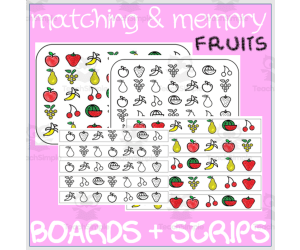
MATCHING & MEMORY BOARDS WITH STRIPS| FRUITS
Special Resources, Speech Therapy, Kindergarten, Preschool, Worksheets & Printables, Flashcards
Matching and Memory Boards with Strips - Fruits is a speech therapy resource for building early learning skills. This versatile set includes colored and black-and-white matching and memory boards featuring fruits, along with separate fruit strips. Young learners will enhance attention, visual perception, memory and language as they point, match, paste, color, and play games with these materials. Use the boards and strips together on screens or print them for tabletop activities. Implement in whole group lessons, small groups, learning stations, or as homework for continued practice. This set allows therapists and early childhood educators to make teaching sessions more engaging and fun!
Author WORDS ASIDE
Tags Occupational Therapy, Speech Therapy, Special Education, Match To Sample, Strips, Vocabulary, Conversation, Comprehension, Expression, Words Aside

MATCHING & MEMORY BOARDS WITH STRIPS| WATER ANIMALS
ELA, Special Resources, Speech Therapy, Language Development, ESL, Kindergarten, Preschool, Grade 1, Worksheets & Printables, Flashcards
Water Animals Matching and Memory Boards with Strips Engage young learners with this versatile set of matching and memory materials featuring water animals. Students will love practicing attention, visual perception, memory, and language skills by matching, pointing, and naming the 10+ ocean creatures. Use the bright vivid boards for whole group lessons and the printable strips for small group games or independent practice. This resource can be integrated across the curriculum, customized for multiple levels, and used digitally or with realia. Children will delight in recognizing favorites like dolphins, whales, seals, and more while building early literacy foundations. With a colored and black-and-white version included, this resource will become a classroom favorite for its engaging print-based or screen learning.
Author WORDS ASIDE
Tags Activities, Cards, Mats, Boards, Match To Sample, Vocabulary, Minibooks, Task Cards, Independent Work , Words Aside
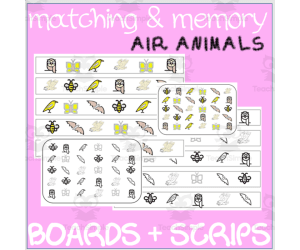
MATCHING & MEMORY BOARDS WITH STRIPS| AIR ANIMALS
Special Resources, ELA, Special Education Needs (SEN), Language Development, Vocabulary, Kindergarten, Preschool, Grade 1, Worksheets & Printables, Flashcards
Air Animals Matching Boards and Strips Engage young learners with this air animals matching game. This versatile resource includes colored and black-and-white printable matching boards and separate word or picture strips. Use the game to develop visual perception, memory, attention, and language skills during small group instruction, centers , or individual practice. The strips are not in the same order as the boards so students must carefully match each air animal rather than rely on placement. Extend the activity by having students describe features of each animal or share facts after making a match. With its simple format and appealing animal theme, this matching game makes an engaging addition to any early childhood classroom. It can be easily differentiated for diverse learners by changing the number of matches, using physical manipulatives, or incorporating movement. This multipurpose resource allows creative educators to address key developmental skills in a fun, playful way.
Author WORDS ASIDE
Tags Speech Therapy, Occupational Therapy, Sped, Match To Sample, Mats, Strips, Cards, Flashcards, Vocabulary, Words Aside

Middle School Argumentative Essay Writing - Argumentative Essay Worksheets
ELA, Writing, Grade 6, 7, 8, Worksheets & Printables, Worksheets
Make argumentative essay writing easy for you and your students with these engaging worksheets ! Designed for grades 6th through 8th, these worksheets are designed to be self-contained assignments for your students to practice argumentative writing. Every page includes an easy-to-read visual reminder about the essay topic, making it an excellent resource for differentiated instruction. The main text is also written in a dyslexic-friendly font. Worksheet Topics: School uniforms Online learning Extended weekends Academic allowance Single-use plastics Free college Banned books Minimum wage Daylight savings time Minimum voting age
Author Novel Pedagogy
Tags Essay Writing, Argumentative Essay Writing, Essay Writing Worksheets, Essay Writing Prompts, Argumentative Writing, Middle School Writing, Middle School Essay, Writing Essay Worksheets, Argumentative Essay Prompts Middle School, Argumentative Essay For Middle School, Argumentative Essay Middle School, Argumentative Essay Topics 8th Grade, Middle School Argumentative Essay Topics, Topics For Argumentative Essay Middle School, Essay Worksheets

Responsible Decision-Making -An SEL Lesson Learning About Mental Time Travel
Special Resources, Social Emotional Learning (SEL), Life Skills, Grade 2, 3, 4, 5, Teacher Tools, Lesson Plans
Responsible Decision-Making Learning About Mental Time Travel is a great resources to have students explore the process of decision-making in a responsible manner! This resource includes the lesson to walk students through the process of decision-making through “mental time-travel” as a way to “see” the future and hence the consequences of their choices. The lesson includes engaging questions to encourage students to critically think about their choices. Additionally, students can be presented with 10 different comic strips for them to complete as examples of decision-making. Students can then share and discuss the different options presented to the characters on the comic strips. These comic strips can be handed out at random or to form groups of the same comic strip. Furthermore, students can be presented with the High 5 Handout included in this resource so that each of them write down a goal in the circle provided. To reach that goal the class may engage in a discussion on how to get to that future goal. Teachers and students can also talk about the little things they can do to reach simple goals so students can think of a goal as steps to take in the future. To end the lesson, students can use the High 5 Handout to write down 5 different things they can do to achieve that goal to exemplify how to get to the goal as their “future.” This resource is presented in a PPT (which includes the lesson and comic strips) and a PDF which includes the handout. All slides , comic strips, and handouts are ready to use and to print!
Author Jennifer Moyer Taylor
Tags Responsible Decision-making, Goals, Choices, Comic Strips, Mental Time Travel, Consequences, Sel, Social-emotional Learning, Decision Making Lesson Plan
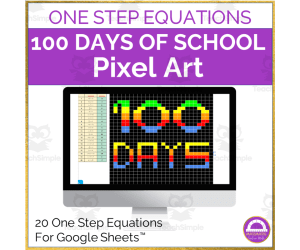
Solving One Step Equations Pixel Art | 100 Days of School
Math, Algebra, Common Core, Grade 5, 6, 7, Activities
Solving One Step Equations Pixel Art | 100 Days of School Providing the perfect blend of intellectual stimulation and interactive engagement, Solving One Step Equations Pixel Art | 100 Days of School uses Google Sheets for practice sessions. Aimed at magnifying students' understanding and application of one-step equations, it effectively renders an essential part of Algebra learning. An element fun is added to tool through a pixel art themed frame. While students solve 20 unique one-step equations, they simultaneously reveal an emerging mystery picture. Not only does this feature add delight but also provides immediate feedback on student performance. Built-in Mechanic for Self-Correction The mechanic helps young learners to self-correct any wrong attempts while solving problems. If a pixel stays hidden, it indicates an error in solving the equation. The learner then knows that he needs to revisit that particular equation. Digital Format Advantage This tool is effortlessly incorporated into teaching routines due to its digital format.] It can be used outside traditional classrooms - home-schooling or homework assignments by public school teachers can use this tool effectively. The Solving One Step Equations Pixel Art | 100 Days Of School aligns with Common Core Standards: CCSS 6.EE.B.5 & CCSS 6.EE.B7.,Suitable for Grade5 through Grades 6 &7 packages, Note:This game-style math activity can also serve as substitute teaching content within your sixth-grade math curriculum ., The product outlay includes PDF link features directing towards solution views along with the activity - ensuring a comprehensive approach to learning while retaining an inviting atmosphere.
Author Matemaths
Tags One-step Equations, Pixel Art, Interactive Engagement, Algebra, Digital Resource

One Step Equations No Negatives | 100 Days of School Pixel Art Activity
Math, Algebra, Common Core, Grade 5, 6, 7, Activities
One Step Equations No Negatives | 100 Days of School Pixel Art Activity A simple yet engaging resource to help students from grades 5 to grade 7 master one-step equations. Ideal for math classes focusing on algebra, this digital tool uses Google Sheets for an interactive and self-guided experience. Engaging Exercises Students are challenged with 20 one-step equations, designed to strengthen their problem-solving skills by eliminating negative solutions from the mix. Each correct answer reveals a pixel in the mystery picture, encouraging both accuracy and persistence as students strive to complete the image. Captivating Feedback System The key feature of this activity is its capacity for instant feedback. If no new pixel shows up after solving an equation, the student knows they need to revisit their solution - promoting independence and self-learning. Suitable Learning Scenarios Promotes individual learning, Fits smoothly into whole class or small group scenarios, Ideal for school hours or after-school clubs. Educational Alignment & Compatibility This educational tool is aligned with Common Core Standards CCSS 6.EE.B.5 and CCSS 6.EE.B.7,. Educators can trust in its educational validity while admiring how easily our product reintroduces fun into learning essential math concepts like algebraic equations! Bonus Feature! Hassle-Free Planning For Teachers! This product comes ready-to-launch as a PDF file containing links to activities plus solution guidelines minimizing any planning hassle on part of educators who are always short on time! Dive straight into unleashing your student’s love for math with One Step Equations No Negatives | 100 Days of School Pixel Art Activity today!
Author Matemaths
Tags Math, Algebra, Equations, One-step, Pixel Art