2,875 products added recently
Music Lesson Plans
Bring the joy of music into your classroom with lesson plans that cover rhythm, melody, and musical expression. These resources offer interactive activities and instruments exploration. Use them to nurture musical talents and enrich your students' educational experience.
Xylophones Reading Comprehension Passage - Cored Ed Encyclopedia
ELA, Language Development, Reading Comprehension, Reading, Science, Physics, History, Social Studies, Music, Creative Arts, Grade 2, 3, 4, 5, Worksheets & Printables, Worksheets, Teacher Tools, Centers, Activities, Writing Prompts, Assessments, Quizzes and Tests, Quizzes, Lesson Plans
This xylophones reading comprehension with lesson plan includes: Visualization (on the front cover) Start your lesson by taking a minute to think and share something about the topic. Read the script aloud (slowly), perhaps prepare some music or sound effects. Student close their eyes and let their imaginations wander. Students open their eyes, read the question aloud and give them a few minutes to complete. Ask a few students to share or keep answers until the end to compare with what they learn in the passage. Quick pause—thousands of Cored Education products are included with your TeachSimple membership. Download links and encyclopedia index available here. Pre-Reading Trivia Students will write down one thing they already know about the subject and then read five more facts and discuss. These facts are fun, and the students will enjoy learning about the subject before reading more. Give 1 minute for students to write what they already know (no pressure—best guess is fine). Read the five facts together. After each fact, do ask a student for their opinion, was it surprising? Set a purpose by asking students to highlight/underline one fact they want to learn more about during the reading. Reading Passage The text is a high-interest reading passage with set paragraphs, roughly three to four paragraphs long. It contains a variety of themes about the topic, anywhere from history to technology. The passage is between 250 and 350 words in length. First, ask students to look at the headings and see what they’ll learn about today. What do they know about the topic/heading? First read options: Teacher read-aloud (best for support). Partner reading (paragraph by paragraph). While reading, students underline important details, and vocabulary words they think may come up in the questions section. Mixed Questions The first question page contains four multiple-choice questions, each with a choice of four answers, and three written response questions that require a sentence or two from the student. Students complete the mcqs first independently, then review quickly as a class. For the 3 written responses, try to get students giving the answer with some form of evidence: “I think ___ because the text says ___.” If students get stuck, send them back to check the passage. Vocabulary Questions Practice seven key words from the text in this section across two activities. First section is scrambled words where students will unscramble three words given a clue for each. The second section is a word to meaning matching activity. Before starting, have some students read out words they underlined in the passage. Ask students to say the word and read aloud the sentence(s) around each word. Ask students to do scrambled words and the matching exercise in pairs then go through answers as a class. For the scrambled spelling task, get four pairs to come up to the board and write the words for extra practice with the other student reading out the clue. For the matching task, prompt students to give full sentences: “I matched ___ with ___ because ___.” Creative Writing In this question, the student will be required to write a five to eight sentence paragraph on a question related to the topic. Before starting, ask students write down 3 key ideas they are going to include in their piece. Ask students for ideas to share around the class to help those struggling. Pro writing expectations: 5–8 sentences At least 2 facts or details from the passage At least 2 vocabulary words from the previous page Students read their paragraphs while classmates listen for facts and vocabulary words. Extension Activities This page is optional for fast finishers or to take home. There are several activities, each one requiring a different skill. Do some, do none, do all, completely optional - but you will feel reassured knowing every possibility is planned for. Includes summary writting question. Answer Key There are answers for the multiple-choice questions, written response questions have sample answers, vocabulary answers and if there is a summary question then a sample summary will be provided as well. Lesson Plan Included Customized lesson plan for this lesson is included. Lesson Snapshot Title: Xylophones Genre: Nonfiction (informational text) Subject: Music / Science of Sound (Informational Reading) Primary Topic: How xylophones make sound and their history Estimated Guided Reading Level (A–Z): Q Support pages present: Visualization prompt, pre-reading trivia, mixed questions, vocabulary activities, creative writing, extension activities, and an answer key. What This Lesson Teaches Best Explains how a xylophone’s “keys” are wooden bars that make notes when tapped with a mallet . Teaches the relationship between bar length and pitch (long bars = low sounds; short bars = high sounds). Shows a core sound concept: the wood vibrates to create the note, and resonators underneath help the sound carry. Builds historical understanding of xylophone-like instruments across Africa and Asia, including early designs using logs, pits, and gourds to boost sound. Connects music history and school use: the xylophone spread into Europe, appears in orchestras (including Camille Saint-Saëns and Danse Macabre), and is used in classrooms to learn melody and rhythm (including Orff-Schulwerk). Learning Goals Students will describe how tapping a bar with a mallet makes a xylophone note. Students will explain how bar length changes pitch using details from the text. Students will identify what resonators do and where they are located on some xylophones. Students will summarize how xylophone-like instruments were made long ago and how sound was boosted. Students will sequence key points in the xylophone’s timeline (early instruments, later written descriptions, and later orchestra use). Key Vocabulary From the Text resonators — tubes/shapes under bars that help sound carry. vibrates — shakes back and forth to make sound. documented — recorded in writing. orchestra — a large group of musicians playing together. octave — a set of notes from one pitch to next. FULL CATALOG OF DOWNLOAD LINKS AND ENCYCLOPEDIA INDEX HERE
Author Cored Education
Rating
Tags Vocabulary, Reading Comprehension, Reading Passages, Lesson Plans, Ela Lesson Plans, Reading Comprehension Lesson Plans, Pre-reading, History Lesson Plans, Physics, Music Lesson Plans
Flutes Reading Comprehension Passage - Cored Ed Encyclopedia
ELA, Reading Comprehension, Reading, Science, Technology, Social Studies, History, Music, Creative Arts, Physics, Grade 2, 3, 4, 5, Worksheets & Printables, Worksheets, Teacher Tools, Centers, Activities, Writing Prompts, Assessments, Quizzes and Tests, Quizzes, Lesson Plans
This flutes reading comprehension with lesson plan includes: Visualization (on the front cover) Start your lesson by taking a minute to think and share something about the topic. Read the script aloud (slowly), perhaps prepare some music or sound effects. Student close their eyes and let their imaginations wander. Students open their eyes, read the question aloud and give them a few minutes to complete. Ask a few students to share or keep answers until the end to compare with what they learn in the passage. Quick pause—thousands of Cored Education products are included with your TeachSimple membership. Download links and encyclopedia index available here. Pre-Reading Trivia Students will write down one thing they already know about the subject and then read five more facts and discuss. These facts are fun, and the students will enjoy learning about the subject before reading more. Give 1 minute for students to write what they already know (no pressure—best guess is fine). Read the five facts together. After each fact, do ask a student for their opinion, was it surprising? Set a purpose by asking students to highlight/underline one fact they want to learn more about during the reading. Reading Passage The text is a high-interest reading passage with set paragraphs, roughly three to four paragraphs long. It contains a variety of themes about the topic, anywhere from history to technology. The passage is between 250 and 350 words in length. First, ask students to look at the headings and see what they’ll learn about today. What do they know about the topic/heading? First read options: Teacher read-aloud (best for support). Partner reading (paragraph by paragraph). While reading, students underline important details, and vocabulary words they think may come up in the questions section. Mixed Questions The first question page contains four multiple-choice questions, each with a choice of four answers, and three written response questions that require a sentence or two from the student. Students complete the mcqs first independently, then review quickly as a class. For the 3 written responses, try to get students giving the answer with some form of evidence: “I think ___ because the text says ___.” If students get stuck, send them back to check the passage. Vocabulary Questions Practice seven key words from the text in this section across two activities. First section is scrambled words where students will unscramble three words given a clue for each. The second section is a word to meaning matching activity. Before starting, have some students read out words they underlined in the passage. Ask students to say the word and read aloud the sentence(s) around each word. Ask students to do scrambled words and the matching exercise in pairs then go through answers as a class. For the scrambled spelling task, get four pairs to come up to the board and write the words for extra practice with the other student reading out the clue. For the matching task, prompt students to give full sentences: “I matched ___ with ___ because ___.” Creative Writing In this question, the student will be required to write a five to eight sentence paragraph on a question related to the topic. Before starting, ask students write down 3 key ideas they are going to include in their piece. Ask students for ideas to share around the class to help those struggling. Pro writing expectations: 5–8 sentences At least 2 facts or details from the passage At least 2 vocabulary words from the previous page Students read their paragraphs while classmates listen for facts and vocabulary words. Extension Activities This page is optional for fast finishers or to take home. There are several activities, each one requiring a different skill. Do some, do none, do all, completely optional - but you will feel reassured knowing every possibility is planned for. Includes summary writting question and additional facts. Answer Key There are answers for the multiple-choice questions, written response questions have sample answers, vocabulary answers and if there is a summary question then a sample summary will be provided as well. Lesson Plan Included Customized lesson plan for this lesson is included. Lesson Snapshot Title: Flutes Genre: Nonfiction (Informational Text) Subject: Music / Science (Sound) / Reading (Informational Text) Primary Topic: How flutes make sound and changed over time Estimated Guided Reading Level (A–Z): Q What This Lesson Teaches Best How very early flutes were made (carved from bird bone and mammoth ivory ) and why these finds matter as early musical instruments. How flutes make a clear note: a thin jet of air across an opening creates a wobbling column of air inside the tube. Cause and effect in instruments: covering or uncovering holes changes the tube’s length, so the pitch goes up or down. How design evolved in Europe, including added holes and keys and Theobald Boehm’s 1800s redesign with tone holes and ring keys . Key features of a modern concert flute (often metal, about 26 inches long, three sections, padded keys, range of a little more than three octaves ). Learning Goals Students will describe what materials some ancient flutes were carved from and how old they were said to be. Students will explain how a flute makes a clear note using the idea of a “column of air” in a tube. Students will explain how covering or uncovering holes changes pitch by changing the tube’s length. Students will summarize how the sideways flute changed over time in Europe, including added holes and keys. Students will identify changes Theobald Boehm made to flute design and how ring keys helped players. Students will describe at least two details of today’s concert flute mentioned in the passage. Key Vocabulary From the Text mammoth — an ancient animal related to today’s elephants. ivory — hard material used for carving. column — a long “tube” shape of air inside. pitch — how high or low a note sounds. octaves — sets of notes higher or lower. FULL CATALOG OF DOWNLOAD LINKS AND ENCYCLOPEDIA INDEX HERE
Author Cored Education
Rating
Tags Vocabulary, Reading Comprehension, Reading Passages, Lesson Plans, Ela Lesson Plans, Reading Comprehension Lesson Plans, Pre-reading, History, Music, Music Lesson Plans
More Rockin' Rebuses Gr. K-2
Creative Arts, Art, Music, Grade 1, Teacher Tools, Lesson Plans
More Rockin' Rebuses Gr. K-2 More Rockin' Rebuses Gr. K-2 is a dynamic teaching resource designed specifically for students in grades kindergarten through second grade. It's a useful tool for both public school teachers and homeschooling parents as it combines reading passages, rebus stories, and imaginative thinking activities to formulate an inclusive lesson plan. Kids are naturally attracted to rebus stories as the associated illustrations aid in positively identifying words. This makes More Rockin' Rebuses Gr. K-2 a perfect tool to boost reading comprehension skills while also fostering creativity among students with art forms. Included Rebus Stories: Ingrid and her 100 Hats You Can Make Magic! A Handy Handprint The Little Red Hen The Storybook Grandma/li> A great feature of this resource is its versatility across different teaching settings—e.g., whole group discussions where students take turns reading aloud from the book or small team sessions encouraging teamwork. This PDF product includes photocopy-friendly material making homework assignments simple with minimal preparation required. Students can each create their own book related to these rebus stories by integrating their own illustrations giving them sense of ownership over learning. Cross-Curricular Topics: /strongit lesson plans making it a versatile accessory across multiple subjects giving first-grade educators myriad potential uses for classroom instruction. In summary, <strongs Gr.K-2 and adolescent-methodically hich effectively amalgamate literacy enhancement with imagination stimulation, thus creating a thriving educational environment that encourages active participation from young learners.
Author Classroom Complete Press
Tags PDF
I WONDER - What Instruments Are In The Brass Section
Music, Creative Arts, Grade 3, 4, 5, 6, 7, 8, 9, Lesson Plans, Teacher Tools
Video Introduction An amazing video designed for the students to learn more about music. I WONDER - What Instruments Are In The Brass Section | Animated Video Lesson The brass section features powerful and dynamic instruments that can produce a wide range of tones, from soft and mellow to bright and heroic. Trumpets have a brilliant, piercing sound, often used for fanfares or energetic melodies. Trombones have a rich, full tone and can slide between notes, creating a unique, expressive sound. French horns have a warm, velvety quality, and they often play sustained harmonies or gentle melodies. Tubas are the largest brass instruments, providing a deep, resonant foundation for the brass section and the entire orchestra. I WONDER - What Instruments Are In The Brass Section | Animated Video Lesson The video is perfect for encouraging the artistic skills for the students, while learning more about this fantastic topic. I WONDER - What Instruments Are In The Brass Section | Animated Video Lesson This friendly designed video is suitable for students at school, homeschooling, and as a group activity. Format Available in MP4 format.
Author Educational Voice
Rating
Tags What Instruments Are In The Brass Section, What Instruments Are In The Brass Section Video, Brass Instruments, Brass Instruments Facts, Brass Instruments Video, Brass Instruments Video For Kids, Brass Instruments Facts For Kids
I WONDER - What Does Staccato In Music Mean | Animated Video Lesson
Music, Creative Arts, Grade 6, 7, 8, 9, 10, 11, 12, Lesson Plans, Teacher Tools
Video Introduction An amazing video designed for the students to learn more about music. I WONDER - What Does Staccato In Music Mean | Animated Video Lesson Staccato is a musical term that tells musicians to play notes in a short and detached manner. When a note is played staccato, it is separated from the notes before and after it, creating a quick and light sound. In sheet music, staccato is usually indicated by a small dot above or below the notehead. Staccato can add excitement and energy to a piece of music, making it more lively and rhythmic. I WONDER - What Does Staccato In Music Mean | Animated Video Lesson The video is perfect for encouraging the artistic skills for the students, while learning more about this fantastic topic. I WONDER - What Does Staccato In Music Mean | Animated Video Lesson This friendly designed video is suitable for students at school, homeschooling, and as a group activity. Format Available in MP4 format.
Author Educational Voice
Rating
Tags What Does Staccato In Music Mean, What Does Staccato In Music Mean Video, Staccato, Staccato Facts, Staccato Video, Staccato In Music, Staccato In Music Video, Staccato In Music Video For Kids
Rebus Chants Volume 1: For All Seasons Gr. K-1
Creative Arts, Art, Music, Grade 1, Teacher Tools, Lesson Plans
Rebus Chants Volume 1: For All Seasons Gr. K-1 - Comprehensive Teaching Resource Rebus Chants Volume 1: For All Seasons Gr. K-1 is a well-rounded teaching resource designed to enhance 'reading-like' behaviors among early learners. The tool utilizes key elements such as repetition and a sense of achievement, proving extremely effective in nurturing the reading skills of kindergarten and grade one students. Daily Classroom Integration This package can be seamlessly integrated into everyday classroom activities, requiring only five to ten minutes each day. It provides a multitude of rebus chants which can be adjusted in size for different uses such as forming a class book or decorating a bulletin board . In addition, this versatile resource can also be photocopied for individual student use. The Rebus Chants Package includes: A variety of rebus chants. Cover patterns and border designs for students to create personalized chant booklets. A thematic approach based on seasonal aspects making it relatable for students with chants like "It Is Autumn", "School Time", "Haunted House", and "Snowmen". Comprehensive lesson plans spanning across subjects including Art & Music, emphasizing music studies. Note:All these resources are contained in an easily accessible PDF file format. An Indispensable Resource Suitable for both group sessions and individual assignments alike, this teaching tool displays adaptability while maintaining its core purpose—providing an engaging platform where young minds can cultivate their initial steps into the world of reading.Considered indispensable for public school teachers or homeschoolers alike, Rebus Chants Volume 1: For All Seasons is an asset in the educational field.
Author Classroom Complete Press
Tags PDF
Braindance: Presenter's Guide with Sound Effects and Music
Creative Arts, Art, Music, Not Grade Specific, Teacher Tools, Lesson Plans
Braindance: Presenter's Guide with Sound Effects and Music A comprehensive teaching resource designed for educators of all grade levels who are seeking to enhance their presentation skills by incorporating music and sound effects. Ideal for diverse teaching settings including whole group instructions, small group activities, or individual homework assignments. Inspired by the practices of talk show hosts like David Letterman, this guide harnesses the power of sound cues to create engaging and impactful presentations. Gain the ability to add new layers of context to lessons while fostering an interactive learning environment. What's Inside? A PDF with 29 pages worth of lesson plan content. A well-structured folder containing 97 high-quality .mp3 files ready-to-use categorized into subsets like celebrity voice snippets or song clips. All integrated within the Braindance methodology geared towards increasing student engagement during lessons by adding an element of humor that underlines your messages. Adapting Your Syllabus? No Problem! Tailored specifically for Art & Music subjects - you'll need just one file type: Multiple File Types making course adaption a breeze! Making Lasting Impressions in Classroom Settings An essential part in every engaging classroom setting is an impactful auditory ambiance which appeals to students' senses. Humorous sounds that stir simple chuckles or snickers among students will let you know it’s hitting its goal: creating lasting impressions enhancing both listening skills and learning interest! Get ready to transform your instructional sessions - dive into Braindance: Presenter's Guide with Sound Effects and Music .
Author MUSICWORKS
Tags Interactive Learning, Sound Cues, Engagement, Presentation Skills, Teaching Resource
History Of Rock And Roll Gr. 6-8
Creative Arts, Art, Music, Grade 6, 7, Teacher Tools, Lesson Plans
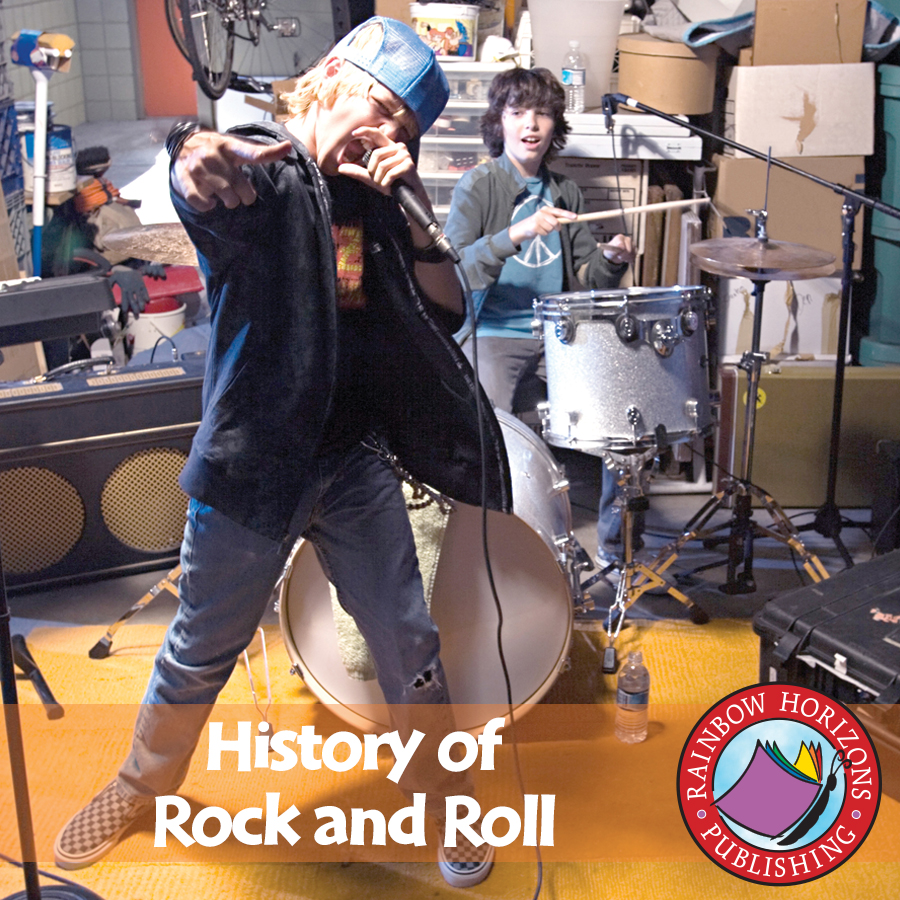
The History Of Rock And Roll Gr. 6-8 - An Engaging Teaching Resource The History Of Rock And Roll Gr. 6-8 is a comprehensive teaching tool that excites students into exploring the roots and evolution of Rock n' Roll music. Starting with African Tribal music traditions, this resource continues the journey to the modern music styles we enjoy today. Educational Approach Unique in its academic design, this educational resource dives deep meticulously taking care of each detail making it very methodical for teachers to use and for students to indulge in. Interactive Learning This lesson plan includes varying assignments that make learning practical rather than theoretical encouraging student engagement. Among these innovative exercises are: Songwriting: Writing lyrics for their personal blues song makes learners exercise creativity through song composition. Creative Art: Creating posters inspire visual expression while developing understanding of specific music styles. Narrative Skills: Writing stories for a newspaper based on what they learn strengthens their narrative abilities. A Well-Informative Lesson Plan Included in this lesson plan package are detailed teacher and student sections filled with engaging reading material which is comprehensive and well-articulated; variety-packed activities make learning an energetic process; there are also strategically composed crosswords along with easy-to-do word searches all designed to reinforce memory while practicing important keywords; there's also provisioned inclusion of helpful answer keys ensuring all learning objectives are aptly covered.. Ideal For Middle Grade Students Specially crafted for sixth to eighth-grade learners interested or needing exposure in Art & Music or specifically subfield of Music, this PDF lesson fits well in different sessions under the guided supervision of educators: Whole Group: Collective sharing stimulates collective learning enjoyed as one unit. Small Group: Rich discussions arise from differing perspectives initiating deep understanding. Solo Assignments: Homework enables independent analysis making foundations stronger. Mixing history, informative discussion, creative expression, and hands-on activities, the History Of Rock And Roll Gr. 6-8 becomes a must-have for any middle-school Music or Arts curriculum .
Author Classroom Complete Press
Tags PDF
CANADIAN MOSAIC Gr. 3-7
Creative Arts, Art, Music, Grade 3, 4, Teacher Tools, Lesson Plans
The Canadian Mosaic Gr. 3-7 The Canadian Mosaic Gr. 3-7 is a comprehensive and accessible multifaceted teaching tool meticulously curated to navigate students through various aspects of Canadian culture, geography, literature, arts, and more. This educational resource caters to grades 3 through 7 while providing an immersive avenue for gaining knowledge on Canada. Focused areas Music: Improve musicality using Canadian songs while embedding cultural understanding. Mapping: Navigate the geography of Canada. Research: Learn about notable Canadians from different fields. Crafting: Explore creative expression with themes centered around Canada. Inventing:Nurture ideas on diverse topics related to Canada with hands-on exercises. This product's central concept is its fusion approach towards learning - encouraging brainstorming for in-depth knowledge building. Notably, it includes literature like reading local stories and writing assignments base don them which make this resource a well-rounded nurturing environment for pupils. Beyond mere Classroom Teaching Suggests setting up a permanent 'Canada Centre' filled with items such as: - Atlases - Blank maps -Fun activities like trivia games or themed dress-up days This encourages immediate access to relevant materials throughout the course, thus expanding beyond classroom teachings. The versatility of this resource allows varied scenarios - from individual project assignments or interactive group tasks up till full-spec class lessons ensuring maximum output irrespective of learner's style preference. An extensive Collection within one PDF Document An extensive collection packed into one PDF document offers 57 ready-to-print pages covering stimulating tasks for rewarding and enjoyable student involvement. Learners can journey through the colorful, informative pages perfect for lesson plans mixed with Art and Music thanks to this wonderful tool. Thus, learners get to have fun while channelling their creative instincts into becoming proud 'Creative Canadians!' All while learning of the vibrant mosaic that is Canada.
Author Classroom Complete Press
Tags Mapping, Canada, Environment, Literature, Certificates
Famous Musicians Reading Comprehension: Bowie, Beethoven & Lady Gaga - Engaging ESL & English Worksheets & Lesson Plans
ELA, Creative Arts, Art, Language Development, ESL, Music, Not Grade Specific, Lesson Plans, Teacher Tools
Famous Musicians Reading Comprehension: Bowie, Beethoven & Lady Gaga - Engaging ESL & English Worksheets & Lesson Plans A teaching resource that offers the perfect fusion of music and language learning. It examines the lives and influences of three iconic individuals from diverse musical genres – David Bowie, Beethoven, and Lady Gaga. An excellent method to enhance your students' critical thinking abilities while developing their language skills. The Bundle: Lesson Plans and More! The bundle is equipped with comprehensive lesson plans for these three artists. Guarantee a vibrant exploration into the worlds of classical music, rock 'n' roll, and contemporary pop culture. Covers musicians’ backgrounds vividly Highlights unique styles Delineates undeniable impact on world music Focused Lessons: Group or Paired Work Settings: Stimulating discussions about each artist. Vocabulary-building exercises: Relevant to each artist's era or style. Reading comprehension activities: To ensure understanding of each musician’s life. Multimedia Learning enhancement: Inclusion of video content Social Issues: Promoting Meaningful Conversations This resource incorporates important social issues such as Lady Gaga's advocacy— making way for meaningful dialogues within classrooms that encourages student presentations promoting people not just to learn but think critically as well. Honing Writing Skills Through Practice : Writing practice serves as another crucial part in this curriculum — learners absorb the knowledge while practicing written discourse, thus improving writing fluency. An All-Around Teaching Resource This bundle is flexible enough for use in both homework and whole class instruction, suitable not just for public school classes but homeschool settings alike. Ideal for Language Arts classes covering subjects like ESL (English as a Second Language) lessons or even Music discussion hours. Teach Beyond Reading: Holistic Learning Approach Improve your students' linguistic abilities while familiarizing them with legendary musicians across different epochs. Enjoy the fusion of music and language with Famous Musicians Reading Comprehension: Bowie, Beethoven & Lady Gaga teaching resource!
Author The Laughing Linguist
Tags Music History, Famous Musicians, Reading Comprehension, Critical Thinking, Vocabulary-building
The "Sound" Classroom
Creative Arts, Art, Music, Not Grade Specific, Teacher Tools, Lesson Plans
Product Highlight: The Sound Classroom Harness the power of music and sound to enhance learning with The Sound Classroom teaching resource. This versatile guide, designed for educators at any grade level, provides a valuable introduction to Whole Brain Learning through sonic stimulation. In the field of education, there has always been a search for effective strategies that can elevate classroom experiences and increase student engagement. The Sound Classroom delivers in this regard; it pulls from research that demonstrates how music can deepen cognitive processing and trigger emotional responses which ultimately set the pace for more effective learning. Educational Benefits: Teachers will find an abundance of information within this robust 35-page PDF on modalities of integrating sound and music into their lessons plans. This method is not restricted to a specific grade or subject — making it a versatile addition to your teaching toolkit. The guidebook's techniques foster personalized approaches depending on specific learner needs - catering both auditory learners who thrive with musicality and kinesthetic learners who respond better with rhythm incorporated into their lessons. Versatility: A key virtue of this resource lies in its adaptability for every educational setting - be it public school classrooms or homeschooling environments. By working through this guidebook's recommendations systematically together as a 'whole group', educators can spark collaborative discussions that benefit students at all levels academically. Moreover, tasks derived from this resource could serve as homework assignments where learners explore their relationship with sounds outside the confines of formal settings. Educators embody lifelong learning themselves too! Thus workshop facilitators specializing in continuous professional development will significantly appreciate The Sound Classroom's wealthiness prematured insights about integrative modes of learning - allowing them explicitly target audiences like Music teachers by means overhauling conventional pedagogical approaches Conclusion: In essence, The Sound Classroom is an innovative take on academia- an appealing guidebook that uncovers how music and sound can be effective mediums of enhancing learning and ensuring a dynamic, engaging classroom for all students.
Author MUSICWORKS
Tags Music Integration, Whole Brain Learning, Classroom Engagement, Personalized Learning, Continuous Professional Development
I WONDER - What Is Hollywood | Animated Video Lesson
Music, Creative Arts, Grade 4, 5, 6, 7, 8, 9, 10, Lesson Plans, Teacher Tools
Video Introduction An amazing video designed for the students to learn more about famous places in different countries. I WONDER - What Is Hollywood | Animated Video Lesson What do you know about this place? Do you know in which part of the world it is? Have you ever visited this place? If yes, can you tell us more about your adventure, and what do you like the most about this place? Do you like reading about Geography? What is your favorite country in the whole world? If you are going on a trip where it will be? Which country? What you are going to see there? Does this country has a famous place to visit? I WONDER - What Is Hollywood | Animated Video Lesson The activity is perfect for encouraging the researching skills for the students, while learning more about this fantastic place. I WONDER - What Is Hollywood | Animated Video Lesson This friendly designed video is suitable for students at school, homeschooling, and as a group activity. Format Available in MP4 format.
Author Educational Voice
Rating
Tags What Is Hollywood, What Is Hollywood Video, Hollywood, Hollywood Facts, Hollywood Video, Hollywood Facts For Kids, Hollywood Video For Kids, USA, USA Facts, USA Video
I WONDER - What Is Dynamics In Music | Animated Video Lesson
Music, Creative Arts, Grade 4, 5, 6, 7, 8, 9, 10, Lesson Plans, Teacher Tools
Video Introduction An amazing video designed for the students to learn more about music. I WONDER - What Is Dynamics In Music | Animated Video Lesson Dynamics in music refer to how loud or soft the music is played, which can convey different emotions or create contrast within a piece. They are often indicated by letters, such as "p" for piano (soft), "f" for forte (loud), "mp" for mezzo-piano (moderately soft), and "mf" for mezzo-forte (moderately loud). Crescendos and decrescendos add variety and expression to music by gradually increasing or decreasing the volume over a series of notes or measures. I WONDER - What Is Dynamics In Music | Animated Video Lesson The video is perfect for encouraging the artistic skills for the students, while learning more about this fantastic topic. I WONDER - What Is Dynamics In Music | Animated Video Lesson This friendly designed video is suitable for students at school, homeschooling, and as a group activity. Format Available in MP4 format.
Author Educational Voice
Rating
Tags What Is Dynamics In Music, What Is Dynamics In Music Video, Music Dynamics, Music Dynamics Video, Music Dynamics Facts, Music Dynamics Video For Kids, Music Dynamics Facts For Kids, Music
CURRENT: Today's Music in the Classroom V1 N2
Creative Arts, Art, Music, Grade 5, 6, 7, 8, Teacher Tools, Lesson Plans
CURRENT: Today's Music in the Classroom V1 N2 This is a unique teaching unit tailormade to weave contemporary music into your classroom. Developed for students in grades 5-8, it synchronizes with both, the Canadian provinces' curricular outcomes and USA National Standards. Here's what you get: A blend of modern tunes against traditional education templates letting educators make music education enjoyable and engaging for students. The chance to utilize famous songs from today’s charts as effective learning tools. Packed With Productive Lesson Plans This dynamic resource comprising 26 pages, is cohesive with Art & Music curriculum standards. Every plan comes with: Songs that are adored by the young audience, making learning fun and appealing. In-class activities suitable for groups or whole class participation alongside home assignments catering to independent study aids - promoting constructive curiosity even outside school hours. Vocabulary Lessons And MORE! Apart from musical teachings, this tool also assists language development via its vocabulary sections interspersed across different lessons. Furthermore, integrated within each guide are evaluation areas complete with answer sheets, aiding teachers to monitor student progress effectively. CURRENT: Today's Music in the Classroom V1 N2 equips you to merge contemporary melodies with solid learning outcomes – inspiring self-expression while rooting crucial understanding of musical structures at a relevant spectrum. Merge exhilarating harmonic exploration into your syllabi using this resource as your steadfast companion aimed at establishing fresh benchmarks of academic achievements through current hit tracks popular among young learners worldwide. n
Author MUSICWORKS
Tags Music Education, Contemporary Music, Lesson Plans, Interactive Learning, Vocabulary Skills
I WONDER - What Job Does The Orchestra Conductor Do | Animated Video
Music, Creative Arts, Grade 4, 5, 6, 7, 8, 9, 10, Lesson Plans, Teacher Tools
Video Introduction An amazing video designed for the students to learn more about music. I WONDER - What Job Does The Orchestra Conductor Do | Animated Video Lesson The conductor is the leader of the orchestra, responsible for interpreting the music and guiding the musicians through each performance. They use a variety of gestures, facial expressions, and body movements to communicate their intentions to the musicians. The conductor is also responsible for maintaining balance among the different sections of the orchestra, ensuring that each instrument can be heard clearly, and shaping the dynamics, phrasing, and overall expression of the music. In addition to their role during performances, conductors often work with the musicians during rehearsals to refine the interpretation of the music and prepare for concerts. I WONDER - What Job Does The Orchestra Conductor Do | Animated Video Lesson The video is perfect for encouraging the artistic skills for the students, while learning more about this fantastic topic. I WONDER - What Job Does The Orchestra Conductor Do | Animated Video Lesson This friendly designed video is suitable for students at school, homeschooling, and as a group activity. Format Available in MP4 format.
Author Educational Voice
Rating
Tags What Job Does The Orchestra Conductor Do, What Job Does The Orchestra Conductor Do Video, Orchestra Conductor, Orchestra Conductor Facts, Orchestra Conductor Video, Orchestra Conductor Video For Kids
High School Falling in Reverse Reading Passage and Q & A
ELA, Reading, Writing, Music, Creative Arts, Resources for Teachers, Research, History, Social Studies, High School, Homeschool Resources, Teacher Tools, Assessments, Lesson Plans, Quizzes and Tests, Worksheets & Printables, Writing Prompts
As a homeschool mom to a high schooler, I know how challenging it can be to find engaging reading materials that actually capture our teens' attention while developing their critical thinking skills. This comprehensive resource about Falling in Reverse Reading Passage, Q & A, and Note-Taking Sheets offers the perfect blend of contemporary relevance and academic rigor that high school students crave. The fascinating story of lead vocalist Ronnie Radke's journey from incarceration to musical success provides a compelling foundation for deep literary analysis and meaningful classroom discussions. Your students/homeschoolers will be genuinely interested in this real-world narrative while unknowingly strengthening essential reading comprehension and analytical writing skills. INCLUDED IN THIS RESOURCE: Comprehensive reading passage about Falling in Reverse's controversial journey from formation to mainstream success 20 sophisticated critical analysis questions Complete answer key with detailed sample responses 10 note-taking sheets TOPICS COVERED: Symbolic analysis and metaphorical interpretation in contemporary music narratives Critical examination of redemption themes and second chances in popular culture Analysis of author bias, tone, and rhetorical techniques in biographical writing Ethical debates about separating artistic merit from personal accountability and moral complexity As someone who's been homeschooling my 9th grader and creating resources for years, I have learned that the magic happens when we stop fighting against our teens' interests and start working with them instead. My own daughter rolled her eyes at traditional literature analysis until we started exploring stories like this one – suddenly she was asking thoughtful questions and writing paragraphs I actually wanted to read! This Falling in Reverse Reading Passage, Q & A, and Note-Taking Sheets resource represents my philosophy that we do not have to choose between rigorous academics and genuine engagement. When my daughter can analyze complex themes in a story about a band she is actually heard of, she is developing the exact same critical thinking skills she will need for college – she is just enjoying the process instead of enduring it. If you are tired of the daily battle over "boring" assignments and ready to watch your teenager light up during English class, this is the kind of resource that changes everything. If you and your students/homeschoolers enjoyed this resource, please leave a review. Thank you for your support! Tina - Big Easy Homeschooling Mom
Author Homeschool with Big Easy Homeschooling Mom
Rating
Tags High School Music Reading Passage, Homeschool English Curriculum, Contemporary Nonfiction, Redemption Literature, Teen Literature, Music Culture Education, Literary Analysis, Falling In Reverse Reading Comprehension Activities For High School, Critical Analysis Questions About Contemporary Music Culture, Analytical Writing Practice With Band Biographies For Teenagers
I WONDER - What Is A Melody | Animated Video Lesson
Music, Creative Arts, Grade 2, 3, 4, 5, 6, 7, 8, Lesson Plans, Teacher Tools
Video Introduction An amazing video designed for the students to learn more about music. I WONDER - What Is A Melody | Animated Video Lesson A melody is a series of musical notes played one after the other, creating a tune or main theme in a piece of music. It is often the most recognizable part of a song and can be played by a single instrument or sung by a voice. Melodies can be simple or complex and are usually created using a combination of steps (moving to the next note in the scale) and leaps (skipping one or more notes in the scale). A well-crafted melody will often have a balance of both steps and leaps, creating an interesting and memorable tune. I WONDER - What Is A Melody | Animated Video Lesson The video is perfect for encouraging the artistic skills for the students, while learning more about this fantastic topic. I WONDER - What Is A Melody | Animated Video Lesson This friendly designed video is suitable for students at school, homeschooling, and as a group activity. Format Available in MP4 format.
Author Educational Voice
Rating
Tags What Is A Melody, What Is A Melody Video, Melody, Melody Facts, Melody Video, Melody Facts For Kids, Melody Video For Kids, Music, Music Facts, Music Video
May Day Unit
Creative Arts, Art, Music, Kindergarten, Preschool, Lesson Plans, Teacher Tools
May Day Unit A comprehensive teaching resource designed particularly for educators in preschool and kindergarten settings, including public school teachers and homeschoolers. This unit can immediately be implemented into your current curriculum and is aligned to target Art & Music concepts. Overview of May Day Unit The basis of this May Day Unit revolves around recognizing and celebrating the unique cultural event that takes place on May 1st – known worldwide as May Day! An international day honoring workers' rights, it’s also associated with Singing, Dancing, Storytelling, and wreath-making activities. The unit comes complete with a variety of exciting ideas to mark this spring festival that your students will absolutely enjoy. A Fun-filled Exploration in Art & Music This exploration aims at stimulating creativity among young learners. It includes engaging educational activities crafted specifically for Preschoolers and Kindergarteners. The practical component of these activities provides students various opportunities to create music or art projects related to the celebrated theme. Fully Accessible: The entire content is delivered in an easily accessible PDF file format which means you can incorporate these exercises into your lessons wherever you are! Fits In-person or Remote Lessons: Whether you're conducting classes in-person or remotely during online learning sessions - all you need is access to any device that supports PDF files like a laptop, desktop computer or tablet. Note: Introducing cultural awareness at an early age might lead students towards gaining respect for diversity later down the road. Educators! Get Started on Efficient Planning Today: With help from this resourceful unit on May Day celebration ideas, educators will have an efficient planning start point - making it not just educative but also time-saving! Inject fun into learning about traditions worldwide while targeting important educational facets such as Art & Music education along with social studies aspects such as global traditions through our practical yet creative May Day Unit! .
Author Learning Foundations
Tags May Day, Art & Music, Cultural Awareness, Global Traditions, Early Education
CURRENT: Today's Music in the Classroom V3 N1
Creative Arts, Art, Music, Grade 5, 6, 7, 8, Teacher Tools, Lesson Plans
CURRENT: Today's Music in the Classroom V3 N1 The product, CURRENT: Today's Music in the Classroom V3 N1, is a significant addition to teaching resources for Art and Music educators of grades 5-8. It supports learning plans across Canadian provinces and USA National Standards, benefiting both conventional teachers and homeschoolers. The unique appeal of CURRENT lies in its blending of education with contemporary music. This engaging 19-page PDF employs popular current songs within its teaching units. Classroom Integration Each unit demonstrates effective ways to introduce music into classroom lessons. The activities included encourage experiential learning among students while nurturing their passion for music. Vocabulary Incorporation Key terms are used throughout each plan to embed meaningful vocabulary into learners' practical applications during classes. Evaluation Sheets Detailed evaluation sheets with answer keys are provided for easy assessment of student progress and comprehension alike. This resource also allows diverse pedagogical methods implementation through the lesson units provided. These can facilitate instructions for larger groups or smaller group discussions or offer content-rich individual homework assignments. CURRENT: Today's Music in the Classroom V3 N1, symbolizes bringing relevance between academics and real-world interests by introducing current music trends within education—integrating pupils' cultural dynamics into lessons. This fusion between entertainment and knowledge could significantly increase students' connection to their learning materials, making this method a potential favorite among your classes.
Author MUSICWORKS
Tags Music Integration, Contemporary Songs, Experiential Learning, Vocabulary Development, Student Engagement
Nature Chant Package Gr. K-1
Creative Arts, Art, Music, Grade 1, Teacher Tools, Lesson Plans
Nature Chant Package Gr. K-1 The Nature Chant Package Gr. K-1 presents an engaging and interactive resource perfect for educators aiming to boost both their art and music lessons. It also enhances reading skills and vocabulary expansion, specifically tailored for children in Kindergarten to Grade 1. Wacky Animal Rebus Rhymes Begins with exploring Canadian animals portrayed in a fun manner through rhymes. Rhymes integrate humor related to each animal's characteristics. Incorporates traditional rhyme forms that children are already familiar with. The Learning Format of Rebus Rhymes All words featured in the rhyme are displayed within informative borders, creating a visual link between spoken and written vocabulary words. This approach aids memory retention as well as boosts reading comprehension skills among learners. Colour Chants component: Included is the Colour Chants section containing unique little book patterns for every color chant. The narrative structure used is repeated across all color chants, encouraging predictability of word sequences thereby strengthening early-reading proficiency. Chants & Classifications Component: A comprehensive section further divided into separate modules: An educator's guide complete with detailed lesson plans . Student activities those includes interactive rebus rhymes. Last but not least,, an exhaustive guide on organizing big book assembly events. This teaching resource incorporates language arts, music, and nature themes under one umbrella fostering overall educational development in students. All resources in Nature Chant Package Gr.K-1 are readily accessible on multiple devices, coming as downloadable PDFs for easy planning and task assignment.
Author Classroom Complete Press
Tags PDF
I WONDER - What Does Syncopation Mean In Music | Animated Video Lesson
Music, Creative Arts, Grade 6, 7, 8, 9, 10, 11, 12, Lesson Plans, Teacher Tools
Video Introduction An amazing video designed for the students to learn more about music. I WONDER - What Does Syncopation Mean In Music | Animated Video Lesson Syncopation is a musical term that refers to the unexpected or offbeat rhythms created by emphasizing notes that are not usually stressed. This can make the music sound more exciting, interesting, and rhythmic. Syncopation often involves placing the accent on a weak beat or between beats, creating a feeling of surprise or anticipation. Some popular music genres, like jazz and funk, heavily feature syncopation, which contributes to their lively and groovy sound. I WONDER - What Does Syncopation Mean In Music | Animated Video Lesson The video is perfect for encouraging the artistic skills for the students, while learning more about this fantastic topic. I WONDER - What Does Syncopation Mean In Music | Animated Video Lesson This friendly designed video is suitable for students at school, homeschooling, and as a group activity. Format Available in MP4 format.
Author Educational Voice
Rating
Tags What Does Syncopation Mean In Music, What Does Syncopation Mean In Music Video, Syncopation In Music, Syncopation In Music Video, Syncopation In Music Facts, Syncopation In Music Video For Kids
I WONDER - What Is Rhythm | Animated Video Lesson
Music, Creative Arts, Grade 3, 4, 5, 6, 7, 8, 9, Lesson Plans, Teacher Tools
Video Introduction An amazing video designed for the students to learn more about music. I WONDER - What Is Rhythm | Animated Video Lesson Rhythm is the pattern of long and short sounds and silences in music, giving it a sense of movement and structure. It's what makes you tap your feet or clap your hands to the beat of the music. Rhythm is organized into units called measures or bars, which usually have a specific number of beats. Different types of notes represent different lengths of sound, such as whole notes (4 beats), half notes (2 beats), quarter notes (1 beat), and eighth notes (1/2 beat). Time signatures, like 4/4 or 3/4, indicate how many beats are in each measure and which note value gets the beat. I WONDER - What Is Rhythm | Animated Video Lesson The video is perfect for encouraging the artistic skills for the students, while learning more about this fantastic topic. I WONDER - What Is Rhythm | Animated Video Lesson This friendly designed video is suitable for students at school, homeschooling, and as a group activity. Format Available in MP4 format.
Author Educational Voice
Rating
Tags What Is Rhythm, What Is Rhythm Video, Rhythm, Rhythm Facts, Rhythm Video, Rhythm Video For Kids, Rhythm Facts For Kids, Music, Music Facts, Music Video
I WONDER - What Is A Harmony | Animated Video Lesson
Music, Creative Arts, Grade 4, 5, 6, 7, 8, 9, 10, Lesson Plans, Teacher Tools
Video Introduction An amazing video designed for the students to learn more about music. I WONDER - What Is A Harmony | Animated Video Lesson Harmony is created when two or more musical notes are played or sung at the same time, resulting in a pleasing sound that adds depth and richness to the music. Harmony can be achieved through chords, which are groups of notes played simultaneously, or through multiple melodic lines being played or sung together (called counterpoint). There are different types of harmony, such as consonant harmony (which sounds pleasant and stable) and dissonant harmony (which can sound tense and unstable). Composers use harmony to add texture, emotion, and variety to their music, making it more engaging and expressive. I WONDER - What Is A Harmony | Animated Video Lesson The video is perfect for encouraging the artistic skills for the students, while learning more about this fantastic topic. I WONDER - What Is A Harmony | Animated Video Lesson This friendly designed video is suitable for students at school, homeschooling, and as a group activity. Format Available in MP4 format.
Author Educational Voice
Rating
Tags What Is A Harmony, What Is A Harmony Video, Harmony, Harmony Facts, Harmony Video, Harmony Facts For Kids, Harmony Video For Kids, Music, Music Video, Music Facts
I WONDER - What Instruments Are In The Woodwind Section
Music, Creative Arts, Grade 4, 5, 6, 7, 8, 9, 10, Lesson Plans, Teacher Tools
Video Introduction An amazing video designed for the students to learn more about music. I WONDER - What Instruments Are In The Woodwind Section | Animated Video Lesson The woodwind section is made up of a diverse group of instruments, each with its own unique sound and character. Flutes, which are usually made of metal, You hear flute in many different genres of music from classical to jazz to popular to experimental, often playing delicate, lyrical melodies. Oboes have a distinctive, reedy sound and are known for their expressive, singing quality. Clarinets have a warm and smooth tone, the clarinet can produce both a tear-jerking, melancholy sound and warm that stands out in solos. Bassoons have a rich, dark sound and often play bass lines or add depth to the woodwind section. I WONDER - What Instruments Are In The Woodwind Section | Animated Video Lesson The video is perfect for encouraging the artistic skills for the students, while learning more about this fantastic topic. I WONDER - What Instruments Are In The Woodwind Section | Animated Video Lesson This friendly designed video is suitable for students at school, homeschooling, and as a group activity. Format Available in MP4 format.
Author Educational Voice
Rating
Tags What Instruments Are In The Woodwind Section, What Instruments Are In The Woodwind Section Video, Woodwind Instruments, Woodwind Instruments Video, Woodwind Instruments Facts, Woodwind Instruments Video For Kids