



2,721 products added recently
Page 41 - Reading Activities
Discover a variety of reading activities designed to inspire and engage your students. From guided reading sessions to interactive reading journals, these resources support the development of comprehension and critical thinking skills. Tailored for different grade levels, these activities can help you create a dynamic literacy environment that fosters a lifelong love of reading.

 Show filters

Reading Comprehension Nonfiction Set 2 Sample: What a Smell (Forms)
ELA, Reading, Language Development, Vocabulary, Common Core, ESL, Reading Comprehension, Writing, Literature, Children’s Literature, Grade 4, 5, Centers, Activities, Assessments, Teacher Tools, Tests, Quizzes and Tests
Reading Comprehension Passages Nonfiction Set 2 Sample Overview No prep reading comprehension lessons, with enjoyable articles and topics. Each lesson has a blend of post-reading activities. Mixed questions to check overall understanding. Vocabulary activities, plus a writing section. Lessons also contain a bonus extension exercise at the end. Some you may like, some you may not, either way they are there if you wish to use them. Full answer keys are provided. Passage Included 2.What a Smell: How does the stink bug protect its children? Find out in this lesson. Forms Version This is the Forms editable and fillable/self grading version. This download is available in GOOGLE Docs, GOOGLE Forms, GOOGLE Slides. PDF, PPT, WORD. FULL CATALOG OF DOWNLOAD LINKS HERE Grade 4/5 Links Fiction Set 1 - Animals Google Docs Google Forms Google Slides PDF PPT Word Guided Reading Materials Fiction Set 2 - Family Google Docs Google Forms Google Slides PDF PPT Word Guided Reading Materials Fiction Set 3 - Friends Google Docs Google Forms Google Slides PDF PPT Word Guided Reading Materials Fiction Set 4 - School Google Docs Google Forms Google Slides PDF PPT Word Guided Reading Materials Fiction Set 5 - Sports Google Docs Google Forms Google Slides PDF PPT Word Guided Reading Materials Nonfiction Set 1 - Birds Google Docs Google Forms Google Slides PDF PPT Word Guided Reading Materials Nonfiction Set 2 - Insects Google Docs Google Forms Google Slides PDF PPT Word Guided Reading Materials Nonfiction Set 3 - Mammals Google Docs Google Forms Google Slides PDF PPT Word Guided Reading Materials Nonfiction Set 4 - Nature Google Docs Google Forms Google Slides PDF PPT Word Guided Reading Materials Nonfiction Set 5 - Sea Animals Google Docs Google Forms Google Slides PDF PPT Word Guided Reading Materials Reading Passages Overview Each passage is especially written for Grade 4-5 students, including key vocabulary required for this age group. Topics are varied and are accompanied by colorful graphics. Topics are meant to educate, yet entertain the modern student. These passages are perfect for the modern classroom. Whereas textbooks can become outdated in no time, any changes to technology or the world will result in updates to this product. Mixed Questions The mixed questions section of each lesson includes a variation of five comprehension, vocabulary and math questions. In addition, key reading strategies are frequently covered including cause & effect, summarizing, compare & contrast and making conclusions. Two or three of the questions will be MCQs and other questions will require a written response of some kind. Full answers and example responses appear at the end of the lesson. Spelling & Vocab Each reading passage contains a variety of words and phrases designed for Grade 4-5 students. Spelling and vocab activities provide the opportunity to build fluency with these words. As it can become quite mundane doing the same activities over and over, each lesson in a set will contain a different spelling and vocab activity . Activities include: spelling games, sentence match-ups, mixed-up text and decoding words from the lesson. Writing Prompts Writing prompts are designed to continue the theme or lessons learned in the story. Students are persuaded to write in a variety of ways and each prompt includes several cues to help. As with the spelling/vocab section, writing prompts will vary. This includes research pieces, reading responses, poetry and creative writing prompts. Full Answer Keys Full answer keys and sample responses are provided so no matter how busy you are, you know you're covered! Mixed question answers provide evidence from the text, math questions contain the relevant workings. Answers are designed for use by the teacher, but also suitable as a handout to the student. Just for Fun Each lesson will have a bonus extension exercise. This is something fun to extend the lesson with. You can find these at the end of each lesson, titled Just for Fun. Just for Funs are optional. Some you may like, some you may not. Either way, they are there to do with as you wish. For similar downloads and other frees, do check out Cored Group on TeachSimple.
Author Cored Education
Tags Elementary, Reading, Comprehension, Vocabulary, Answers, Ccss, Common Core, Spelling, Writing, Passages
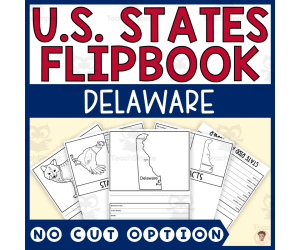
Delaware State Flipbook (Capital, Bird, Flower, Flag, Animal)
Creative Arts, Art, Social Studies, ELA, History, History: USA, Geography, Reading, Reading Comprehension, Grammar, Language Development, Spelling, Writing, Grade 2, 3, 4, Activities
Delaware State Flipbook This effective teaching resource provides a fun and hands-on approach to learning about the iconic state of Delaware and its rich history and symbols. Motivate your students towards learning With this interactive activity, children get hooked on learning while having fun. Five Symbols of Delaware Capital city: Dover State bird: Blue Hen Chicken The state flower: Peach Blossom An image of the Delawerean flag Official animal: Grey Fox Ideal for Grades 2-4 The hands-on nature of the project makes it seamless for all students across grades 2-4 participate actively. User-friendly Designs for Teachers Too! This product is designed with educators' priorities in mind too! We provide two printing styles; one that requires cutting, another print-ready version keeping things simple. There are two design varieties within these sets; one features pictures while another comes without images offering room for imaginations run free! Inspiring Topics Included: Facts on Geographical Deatils, A Detailed Map Exercise, KWL(Know-Want-Learn) exercise. A Multitude Subject Resource Mini-set: Includes Art & Music (through drawing & coloring ), Social Studies (enhancing knowledge around History: USA alongside controlled exposure over Geography), Language Arts(Clear comprehension expressed through Grammar exercises). A Gem Amongst Resources - Simple to Use Anywhere! The Delaware State Flipbook does a laudable job of providing engaging content as an ideal choice in different pedagogical contexts - grouped towards centralized attention or disseminated across small teams or even for a student's home assignment.
Author Heather Huhman
Tags Delaware State Flipbook, Delaware Symbols, Dover, Blue Hen Chicken, Peach Blossom
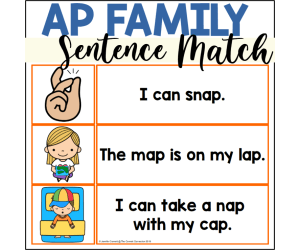
AP Word Family Sentence Matching
ELA, Language Development, Phonics, Reading Comprehension, Reading, Preschool, Grade 1, Activities, Centers
With this AP words CVC word sentence and picture matching literacy center , students can practice reading comprehension and reading fluency. This reading comprehension activity uses decodable sentences, with words that follow the CVC spelling rule, as well as bold, easy to recognize pictures to match or sort. This AP Word Family packet includes: This resource includes as set of sentence cards that focus on AP words and early sight words. Each sentence has a colorful picture to match the sentence. How to Use this Resource: In this literacy activity, students will read each sentence on each card, and then they will match the sentence to the correct image. This activity will make a great literacy station for kindergartners and first graders who are learning CVC words and reading comprehension. This literacy activity allows students to receive tons of practice reading AP words in the context of sentences. These simple sentence and picture matching activity will allow students to have a tactile way to practice reading comprehension that focuses on words in the AP word family. They will stay engaged and have fun as they complete this literacy activity. Students can work independently or with a partner to complete this literacy center . Alternative Ways to Use this Resource: The teacher can place magnets on the back of each picture card and sentence card, and then use a cookie tray to sort the cards. The magnets will keep the cards from sliding around. The teacher can place the sentence strips in a file folder and place hook and loop fasteners to the picture cards and the file folders to make file folder sorting activity. Where to Use: Morning Tubs or Baskets - These cards can be placed in a morning bin for students to complete as they wait for their classmates to arrive to class. Literacy Center - Place the cards in a literacy center for students to complete alone or with a partner. Small Group Instruction - Teachers can pull aside small groups of students to complete this activity. Matching Game - Students can match pictures to sentences. Skills Assessed: This deck allows students to practice reading CVC words from the AP word family as well as testing students' reading comprehension skills with simple sentences. This reading comprehension activity is low prep. Teacher simply need to print the activity, cut apart the cards and laminate, if desired, for a reusable center . The pieces can be stored inside a pencil box or bag for easy set up, clean up, and storage.
Author The Connett Connection
Tags Sentence Reading Comprehension, Reading Comprehension, Literacy Center, CVC Words, Kindergarten Literacy, Literacy Station, Phonics Station, AP Words, AP Word Family
United Nations Reading Comprehension Passage - Cored Ed Encyclopedia
ELA, Language Development, Reading Comprehension, Reading, Pre-Reading, Vocabulary, History, Social Studies, Government, Writing, Grade 2, 3, 4, 5, Worksheets & Printables, Worksheets, Teacher Tools, Centers, Activities, Writing Prompts, Assessments, Quizzes and Tests, Quizzes, Lesson Plans
This United Nations reading comprehension with lesson plan includes: Visualization (on the front cover) Start your lesson by taking a minute to think and share something about the topic. Read the script aloud (slowly), perhaps prepare some music or sound effects. Student close their eyes and let their imaginations wander. Students open their eyes, read the question aloud and give them a few minutes to complete. Ask a few students to share or keep answers until the end to compare with what they learn in the passage. Quick pause—thousands of Cored Education products are included with your TeachSimple membership. Download links and encyclopedia index available here. Pre-Reading Trivia Students will write down one thing they already know about the subject and then read five more facts and discuss. These facts are fun, and the students will enjoy learning about the subject before reading more. Give 1 minute for students to write what they already know (no pressure—best guess is fine). Read the five facts together. After each fact, do ask a student for their opinion, was it surprising? Set a purpose by asking students to highlight/underline one fact they want to learn more about during the reading. Reading Passage The text is a high-interest reading passage with set paragraphs, roughly three to four paragraphs long. It contains a variety of themes about the topic, anywhere from history to technology. The passage is between 250 and 350 words in length. First, ask students to look at the headings and see what they’ll learn about today. What do they know about the topic/heading? First read options: Teacher read-aloud (best for support). Partner reading (paragraph by paragraph). While reading, students underline important details, and vocabulary words they think may come up in the questions section. Mixed Questions The first question page contains four multiple-choice questions, each with a choice of four answers, and three written response questions that require a sentence or two from the student. Students complete the mcqs first independently, then review quickly as a class. For the 3 written responses, try to get students giving the answer with some form of evidence: “I think ___ because the text says ___.” If students get stuck, send them back to check the passage. Vocabulary Questions Practice seven key words from the text in this section across two activities. First section is scrambled words where students will unscramble three words given a clue for each. The second section is a word to meaning matching activity. Before starting, have some students read out words they underlined in the passage. Ask students to say the word and read aloud the sentence(s) around each word. Ask students to do scrambled words and the matching exercise in pairs then go through answers as a class. For the scrambled spelling task, get four pairs to come up to the board and write the words for extra practice with the other student reading out the clue. For the matching task, prompt students to give full sentences: “I matched ___ with ___ because ___.” Creative Writing In this question, the student will be required to write a five to eight sentence paragraph on a question related to the topic. Before starting, ask students write down 3 key ideas they are going to include in their piece. Ask students for ideas to share around the class to help those struggling. Pro writing expectations: 5–8 sentences At least 2 facts or details from the passage At least 2 vocabulary words from the previous page Students read their paragraphs while classmates listen for facts and vocabulary words. Extension Activities This page is optional for fast finishers or to take home. There are several activities, each one requiring a different skill. Do some, do none, do all, completely optional - but you will feel reassured knowing every possibility is planned for. Includes summary writting question. Answer Key There are answers for the multiple-choice questions, written response questions have sample answers, vocabulary answers and if there is a summary question then a sample summary will be provided as well. Lesson Plan Included Customized lesson plan for this lesson is included. Lesson Snapshot Title: United Nations Genre: Nonfiction (Informational text) Subject: Social Studies (Civics/Global Studies) Primary Topic: How the UN began and works for peace Estimated Guided Reading Level (A–Z): P What This Lesson Teaches Best Origins and purpose of the UN: Explains that delegates from 50 countries met in San Francisco in 1945 and signed the United Nations Charter, leading to the UN officially beginning on October 24, 1945. How countries work together in the UN: Describes the UN headquarters in New York City and how member countries speak and vote in the General Assembly, while a smaller group (the Security Council) votes on steps meant to protect peace. Peacekeeping basics: Introduces UN peacekeeping observers (UNTSO) and explains that peacekeepers watch, report, and help keep ceasefires from breaking (and are not there to conquer). Communication across languages: Shows why interpreters matter by explaining that leaders use interpreters in six official languages so the same message can travel across the room. UN help beyond meetings: Notes that UN groups like UNICEF and the World Health Organization work on children’s needs, health, and bringing supplies after earthquakes, floods, or wars. Learning Goals Students will identify key dates and events that led to the UN officially beginning in 1945. Students will describe how the General Assembly and the Security Council are different, using details from the text. Students will explain what the United Nations Charter is and what it was meant to help countries do. Students will summarize what peacekeepers do and why peacekeeping can be hard when countries won’t cooperate. Students will use context clues to determine the meaning of key words such as interpreters and ceasefires . Key Vocabulary From the Text delegates — people chosen to represent a country at a meeting. Charter — a written promise that explains a group’s goals. headquarters — the main building where an organization works. interpreters — people who change speech into another language. ceasefires — times when fighting stops for a while. FULL CATALOG OF DOWNLOAD LINKS AND ENCYCLOPEDIA INDEX HERE
Author Cored Education
Rating
Tags Vocabulary, Reading Comprehension, Reading Passages, Lesson Plans, Ela Lesson Plans, Reading Comprehension Lesson Plans, Pre-reading, Social Studies Lesson Plans, Social Studies, Government

Moana Reading Comprehension Activities Bundle
ELA, Reading, Grade 2, 3, 4, Activities
Moana Reading Comprehension Activities Bundle is a 27-page download full of worksheets to pair with the Disney movie Moana. From reading to comprehension to grammar skills, your students will enjoy these activities based on the popular movie. Worksheets included: 1. Reading Comprehension Questions x2 2. Lyrics Review 3. Maui Graphic Organizer 4. Compare and Contrast Questions x2 5. Compare and Contrast Paragraph Writing 6. Find the Root Words 7. Find the Prefixes 8. Find the Suffixes 9. Moana and Context Clues x2 10. Synonyms 11. Antonyms Answer keys are included.
Author Rap Opera for Kids!
Tags Disney Movie, Reading Comprehension, Compare And Contrast, Moana, Graphic Organizers, Moana Activities

Reading Passages: Civic Action and Social Change (Fillable PDF)
ELA, Reading, Reading Comprehension, Strategies, Resources for Teachers, Social Studies, Sociology, Grade 6, 7, 8, 9, Writing Prompts, Worksheets & Printables, Centers, Activities, Teacher Tools, Assessments, Quizzes and Tests, Quizzes, Tests
Social Studies Reading Comprehension Passages and Questions: Civic Action and Social Change (Fillable PDF) This resource introduces a collection of Social Studies reading comprehension passages with questions about Civic Action and Social Change. The passages are carefully designed to bridge the gap between social studies and literacy through strengthening reading comprehension and sparking knowledge curiosity in middle school students. Each passage blends English Language Arts skills with accurate social studies content . Ideal for interdisciplinary learning in ELA and Social Studies. Suitable for Grade 9 review, too! These worksheets are designed as fillable PDFs , which means students can type their answers directly into the document on any computer or tablet . Each page includes highlighted text fields that show them exactly where to type! What Is Included in this Collection? There are three informational passages (with full answer keys): The Butterfly Effect: Small Moments, Big Consequences From Piggy Bank to Profit: How Banks Make Money Work Flipping the Switch: A Student Campaign for Change For Each Passage, students will have multiple tasks to complete as follow: 5 multiple-choice questions targeting main idea, key details, inference, vocabulary in context, and use of evidence 5 vocabulary matching items with clear, student-friendly definitions 5 text-based questions that require citing specific lines or facts 1 summary prompt that asks students to condense central ideas accurately Available Formats for this Resource PDF Word Docs Google Docs FULL CATALOG OF DOWNLOADING LINKS HERE For more Social Studies Reading Passages, check the following Links: Ancient Civilizations PDF Fillable PDF Word Docs Google Docs Early Empires and Trade Networks PDF Fillable PDF Word Docs Google Docs The Founding of the United States PDF Fillable PDF Word Docs Google Docs Language, Culture, and Meaning PDF Fillable PDF Word Docs Google Docs Psychology and Society PDF Fillable PDF Word Docs Google Docs Global Festivals and Traditions PDF Fillable PDF Word Docs Google Docs Extreme Environments and People PDF Fillable PDF Word Docs Google Docs Food, Culture, and Preservation PDF Fillable PDF Word Docs Google Docs Global Food Customs PDF Fillable PDF Word Docs Google Docs Media, Communication, and Popular Culture PDF Fillable PDF Word Docs Google Docs Human Impact on the Environment PDF Fillable PDF Word Docs Google Docs Civic Action and Social Change PDF Fillable PDF Word Docs Google Docs Fashion, Society, and Power PDF Fillable PDF Word Docs Google Docs People, Places, and Unusual Histories PDF Fillable PDF Word Docs Google Docs How to Use These PDFs Click on the highlighted area to start typing your answer. Move to the next question by clicking in the next highlighted box. When you are finished, close the document and select SAVE so your answers stay recorded. If you want to keep a blank copy for later, choose Save As and give your completed version a new name. Product Details Length: 15 pages total Grades: 6–8, also suitable for Grade 9 review Use cases: close reading, stations, homework, intervention, test prep, and sub plans Why Teachers Choose This Set Authentic social studies content paired with rigorous literacy practice Consistent task structure across all passages for easier planning and smoother student routines Clear, age-appropriate writing that builds confidence without oversimplifying Use this set to reinforce ELA skills in social studies, to add literacy to your lessons, and to support independent work. The passages strengthen main idea, evidence use, vocabulary in context, inference, cause and effect, and summary writing. With ready-to-use assessments and complete answer keys, you can provide focused practice that is simple to run and fast to review.
Author CORED Education - Middle & High School
Rating
Tags Middle School, Reading Comprehension, Reading Strategies, ELA, Centers, Reading Passage, Assessments, Vocabulary, Social Studies, Civic Action And Social Change
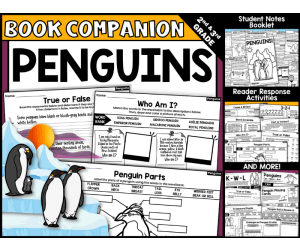
Penguins! by Gail Gibbons Interactive Read-Aloud Activities
ELA, Reading, Reading Comprehension, Language Development, Vocabulary, Research, Grade 2, 3, 4, Read Alouds, Activities
This picture book companion is a complete supplemental resource for the book Penguins! by Gail Gibbons. With 30 print-and-go reading activities to choose from, this resource is ideal for customizing learning to your student's specific needs and academic abilities. Students will apply listening and note-taking skills, investigate different species of penguins, compare & contrast, make inferences and connections, learn and apply new vocabulary, identify and gain information using text and graphic features, answer questions that require them to think beyond the text, and so much more! Students will love the engaging and fun activities, and you will appreciate the time saved hunting for high-level resources to teach reading concepts that students frequently struggle with. The activities provided are designed to enable students to apply higher-level thinking skills, encourage them to provide text evidence to support their thinking, and challenge them to express their own thoughts and/or perspectives. ⭐️This Resource Includes:⭐️ Making Predictions: Before reading, students will make predictions about the book. “Penguins” Student Notes Booklet: Students will take notes in their booklets while reading the story. A QR code is included if the students want to read the book independently in Epic. This activity includes 14 half-pages (ANSWER KEY included). Print the cover single-sided, print notes pages of the booklet double-sided and select the printing option Flip on the short side. Penguin Parts Diagram: Students will label the penguin diagram using the words in the word bank (ANSWER KEY INCLUDED). Word Scramble: Students use the details from the book to unscramble the words (ANSWER KEY INCLUDED). Who Am I?: Students will match the words in the word bank to the descriptions and draw & color a picture of each penguin (ANSWER KEY INCLUDED). Fact or Fiction: Students determine whether the details are facts from the story or made-up (ANSWER KEY INCLUDED). True or False (bubble answers ONLY): Students read the statements and determine whether they are true (ANSWER KEY INCLUDED). True or False (bubble answers & correct the false statement): Students determine if the statements are true or false, and rewrite the false statements to make them true (ANSWER KEY INCLUDED). Cause & Effect: Students match up the causes to the effects (ANSWER KEY INCLUDED). 3-2-1: Students describe three characteristics that help penguins survive in their environment, record two facts they learned about emperor penguins, and choose one word that best describes penguins and explain why. Compare & Contrast: Students compare and contrast penguins to other birds. Penguin Playing Cards: Students create playing cards that include one or two facts they learned about each penguin and include a colored illustration. Penguin ABCs: Students write words or phrases that begin with each letter of the alphabet to show what they learned about penguins. Acrostic Poem: Students create an acrostic poem to describe penguins. Penguin Poster: Students will create an informative poster about penguins including illustrations, key facts, and at least three new vocabulary words from the book. Word Search Puzzle: Students use the clues to fill in the puzzle. Words can go across or down. Letters are shared when the words intersect (ANSWER KEY INCLUDED). Crossword Puzzle: Students use the clues and the word bank to fill in the crossword puzzle (ANSWER KEYS INCLUDED). Research Activities: Students or teachers choose from the following activities and graphic organizers to use while conducting research to learn more about penguins. KWL graphic organizer Penguins- CAN - HAVE -ARE Penguin - WHO - WHAT -WHERE - HOW Fun Facts about Penguins New Vocabulary Penguin Research Report: key points, picture, and summary Penguin Research One-Page Report: Students conduct research to learn more about penguins and complete a one-page report with facts regarding the habitat, features, diet, movement, and interesting facts. Penguin Roll & Research: Students roll a die to see what type of penguin they will learn more about. Then, they research using teacher-approved websites and informational texts to find information to answer the questions. ENRICHMENT ACTIVITY - Endangered Penguin Species Research Project: Students will research an endangered penguin species and create a final product (brochure, infographic, digital presentation, etc.) Teacher Notes: This includes instructions, final product options, and a list of linked websites that students can use to get started. List of endangered penguins Endangered Penguin Profile Infographic Planning Sheet: Students will complete the planning sheet and create an infographic for the endangered penguin species they researched. Informational Brochure: Two template options are included (with writing lines, & without writing lines). This resource is for extension read-aloud activities only. The book is not included.
Author Creatively Gifted
Tags Fountas And Pinnell, Second Grade, Elementary Ela, Reading, Nonfiction, Science, Life Cycle, Animals, Penguins! By Gail Gibbons , Penguins

South Dakota State Flipbook (Capital, Bird, Flower, Flag, Animal)
Creative Arts, Art, Social Studies, ELA, History, History: USA, Geography, Reading, Reading Comprehension, Grammar, Language Development, Spelling, Writing, Grade 2, 3, 4, Activities, Projects
Need an engaging, hands-on way to teach and review the state of South Dakota and its symbols? Look no further than this flipbook research project! Perfect for elementary teachers and homeschoolers alike, this LOW PREP resource covers five of South Dakota's major symbols—its capital, bird, flower, flag, and animal—and more through an interactive, cross-curricular activity . It contains two printing options: one that requires cutting and one that doesn't. It also contains two design options: one with pictures and one without. In total, there are four flipbooks. A GREAT ADDITION TO YOUR: South Dakota, Midwest region, or U.S. states unit study or review Writing lessons or centers Social studies or history class ...or just for fun! ELEMENTS INCLUDE: 37 PDF pages Instructions for 4 easy-to-assemble flipbooks 2 printing options (cutting and no cutting) 2 design options (pictures and without pictures) 7 topics (South Dakota's state capital and other facts, state bird, state flower, state flag, state animal, state map, and KWL) Help your students become experts in all things South Dakota! Whether you're looking for an introduction to the state or an assessment of prior knowledge, this resource has something for everyone. CROSS-CURRICULAR SUBJECTS COVERED: Art (drawing and coloring) English language arts Geography Grammar History Reading Research Science Social studies Spelling Writing Are you interested in helping your students become experts in other U.S. states? From Alabama to Wyoming, you can explore each state and its major symbols—its capital, bird, flower, flag, and animal—through cross-curricular activities. Each day's lesson plan appeals to different types of learners: curated videos (visual and auditory), reading passages (reading), research report pages (writing), interactive notebook and other activities (kinesthetic), and more. Click on the link to my profile to learn more about my 5-day units, including South Dakota!
Author Heather Huhman
Tags South Dakota, Pierre, South Dakota State Bird, South Dakota State Flower, South Dakota State Flag, South Dakota State Animal, Geography, Flipbook, Us States, United States
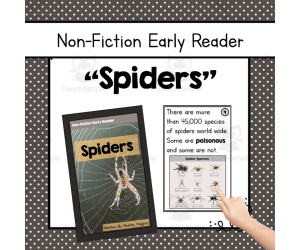
"Spiders" | Animal Nonfiction Early Reader Book and Comprehension
ELA, Reading, Reading Comprehension, Holiday & Seasonal, Seasons, Fall, Grade 1, 2, 3, 4, 5, Activities
Introduce your students or children to nonfiction reading with this engaging booklet all about spiders. Real-life photos capture young readers’ attention and make learning enjoyable. This resource includes vocabulary word strips, comprehension worksheets, sounding-out cards, and tracking tools to support reading development. Use the booklet during group reading or send it home with a matching homework page. With multiple options for use, it’s easy to adapt the material to suit your needs. These booklets are simple to assemble—just print double-sided, fold, and staple! What’s Included: Nonfiction Booklet: "SPIDERS" Comprehension Worksheet Blank Student Booklet A space for students to create their own story Reading Homework Assignment Parent Handout "The ABCs of Helping Your Child Read Nonfiction" Sounding-Out Cards Word Strips with Definitions Perfect for your word wall Reading Progress Chart Keep learners motivated with a visual tracker Whether for home or classroom use, this resource offers everything you need to make nonfiction reading accessible, educational, and fun!
Author Simply Schoolgirl
Tags Spiders, Nonfiction Books About Spiders, Nonfiction Readers, Nonfiction Spider Reader, Spider Activities

Supplementary Materials for Cells, Reproduction and Genetics (PDF)
ELA, Reading, Reading Comprehension, Language Development, Vocabulary, Common Core, Grade 5, 6, 7, Activities
Supplementary Materials for Cells, Reproduction and Genetics Each classroom is different and with that in mind, this free supplementary pack of questions gives teachers the opportunity to give early finishers some extra questions, or can be used for homework/holiday work. Each question is based on the topic of the reading lesson already covered, however, not all answers can be found in the text. What's inside? Extra Questions for Part 1 - Cells, Reproduction, Genetics Reading Passage 1: Cells Reading Passage 2: Cell Parts & Functions Reading Passage 3: Reproduction & Growth of Cells Reading Passage 4: Genetics Reading Passage 5: DNA Reading Passage 6: Uses of Genetics Product Info: 18 PAGES (PDF Version: US English with Answers) Teaching Duration: 2 Weeks Science Reading Comprehension Outline: Introducing a comprehensive resource tailored for 5th and 6th graders, this product offers enriching reading passages supplemented with illustrative pictures and graphs to clarify key concepts. Aligned with the Common Core State Standards (CCSS), it offers a hassle-free approach to teaching, given that the bulk of the preparation is already done for you. The passages present a diverse set of questions – from multiple choice to data analysis and fill-in-the-blanks. This ensures a rich blend of high-interest content and fundamental curriculum-based science themes. With its versatility, you can seamlessly integrate these lessons into various classroom settings, whether it's whole class discussions, morning exercises, independent desk tasks, small group engagements, contingency plans for substitute teachers, regular homework assignments, or even themed activities for holidays. FULL CATALOG OF DOWNLOAD LINKS HERE Grade 5/6 Links: Physical Science Part 1 - Physical and Chemical Properties Google Docs/Slides/Forms PDF PPT Word Free Supplementary Pack Accompanying Videos Physical Science Part 2 - Motion and Energy Google Docs/Slides/Forms PDF PPT Word Free Supplementary Pack Accompanying Videos Physical Science Part 3 - Electricity and Magnets Google Docs/Slides/Forms PDF PPT Word Free Supplementary Pack Accompanying Videos Life Science Part 1 - Cells, Reproduction and Genetics Google Docs/Slides/Forms PDF PPT Word Free Supplementary Pack Accompanying Videos Life Science Part 2 - Human Body Systems Google Docs/Slides/Forms PDF PPT Word Free Supplementary Pack Accompanying Videos Life Science Part 3 - Plant Parts and Ecosystems Google Docs/Slides/Forms PDF PPT Word Free Supplementary Pack Accompanying Videos Earth Science Part 1 - Plate Tectonics and Rock Cycle Google Docs/Slides/Forms PDF PPT Word Free Supplementary Pack Accompanying Videos Earth Science Part 2 - Ocean Exploration and Natural Resources Google Docs/Slides/Forms PDF PPT Word Free Supplementary Pack Accompanying Videos Earth Science Part 3 - Weather and Solar System Google Docs/Slides/Forms PDF PPT Word Free Supplementary Pack Accompanying Videos For similar products and other frees, do check out Cored Group on TeachSimple .
Author Cored Education
Tags Science, Elementary, Reading, Comprehension, Vocabulary, Answers, Physics, Physical Science, Ccss, Common Core
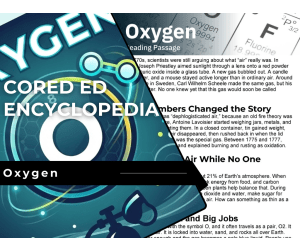
Oxygen Reading Comprehension Passage - Cored Ed Encyclopedia
ELA, Language Development, Resources for Teachers, Reading Comprehension, Reading, Pre-Reading, Writing, Science, Physics, Chemistry, Grade 2, 3, 4, 5, Worksheets & Printables, Worksheets, Teacher Tools, Centers, Activities, Writing Prompts, Assessments, Tests, Quizzes and Tests, Quizzes
This oxygen reading comprehension contains the following: Visualize on the Cover (Teacher Read Aloud Script) Start your lesson by taking a few moments to visualize the topic and share thoughts or feelings about it. Pre-Reading Trivia Students will write down one thing they already know about the subject and then read five more facts and discuss. These facts are fun, and the students will enjoy learning about the subject before reading more. Reading Passage The text is a high-interest reading passage with set paragraphs, roughly three to four paragraphs long. It contains a variety of themes about the topic, anywhere from history to technology. The passage is between 250 and 350 words in length. Mixed Questions The first question page contains four multiple-choice questions, each with a choice of four answers, and three written response questions that require a sentence or two from the student. Vocabulary Questions Practice seven key words from the text in this section across two activities. First section is scrambled words where students will unscramble three words given a clue for each. The second section is a word to meaning matching activity. Creative Writing In this question, the student will be required to write a five to eight sentence paragraph on a question related to the topic. Extension Activities This page is optional for fast finishers or to take home. There are several activities, each one requiring a different skill. Do some, do none, do all, completely optional - but you will feel reassured knowing every possibility is planned for. Includes summary writting question. Answer Key There are answers for the multiple-choice questions, written response questions have sample answers, vocabulary answers and if there is a summary question then a sample summary will be provided as well. FULL CATALOG OF DOWNLOAD LINKS AND ENCYCLOPEDIA INDEX HERE Lesson Snapshot Title: Oxygen Genre: Nonfiction (informational text) Subject: Science (Chemistry / Earth & Life Science) + Reading Informational Text Primary Topic: Discovery, role, and uses of oxygen Estimated Guided Reading Level (A–Z): S What This Lesson Teaches Best How scientists in the 1770s noticed a “new gas” through clues like a candle flaring brighter and a mouse staying active longer than in ordinary air. How Lavoisier’s careful weighing helped show that “air” is made of parts, leading to naming oxygen and explaining burning and rusting as oxidation . How oxygen is invisible yet makes up about 21% of Earth’s atmosphere , and how bodies use it while breathing out carbon dioxide . How photosynthesis helps balance gases: leaves take in carbon dioxide and water, make sugar, and send oxygen back into the air. Where oxygen is found and how people use it (as O and often O₂ , in air and also “locked into” water/sand/rocks, used in hospitals , factories , and rockets ). Learning Goals Students will describe what Joseph Priestley did and what clues suggested the gas was different from ordinary air. Students will explain why Lavoisier weighed jars, metals, and air before and after heating them. Students will explain what the passage says oxidation helps explain. Students will describe the exchange between humans and plants involving oxygen and carbon dioxide. Students will identify at least two places oxygen can be found or used, based on the text. Key Vocabulary From the Text dephlogisticated — Priestley’s name for oxygen under an old fire theory. mercuric — related to mercury; part of “mercuric oxide” in the text. oxidation — a process that explains burning and rusting. atmosphere — the blanket of gases around Earth. photosynthesis — plants make sugar and send oxygen back into the air. Cored Ed Encyclopedia Overview The Cored Ed Encyclopedia is a weekly series of lessons that you can pick up and use right away. These short readings fit into whatever time you have available. Each one includes a warm-up, a reading, and a set of questions, but it’s flexible — you can do just the reading, the full lesson, or skip the writing section if you need to. Each lesson focuses on a single topic so students don’t get lost. The writing is clear but never childish, making it perfect for grades two through five. Topics range from animals and science to history, inventions, and everyday things. No matter the level of the student, everyone should take away at least one new idea or fact from each lesson. The materials are easy to print, easy to explain, and require no setup. They work well for whole-class teaching, partner work, or independent study.
Author Cored Education
Rating
Tags Vocabulary, Spelling, Reading Comprehension, Reading Passages, Reading, Creative Writing, Reading Strategies, Writing Prompts, Oxygen, Physical Science

AGE Words Sentence Matching
ELA, Language Development, Phonics, Reading, Preschool, Grade 1, Activities
With this AGE words CVCe word sentence and picture matching literacy center , students can practice reading comprehension and reading fluency. This reading comprehension activity uses decodable sentences, with words that follow the silent e spelling rule, as well as bold, easy to recognize pictures to match or sort. This AGE Word Family packet includes: This resource includes as set of sentence cards that focus on AGE words and early sight words. Each sentence has a colorful picture to match the sentence. How to Use this Resource: In this literacy activity, students will read each sentences on each card, and then they will match the sentence to the correct image. This activity will make a great literacy station for kindergartners and first graders who are learning CVCe words and reading comprehension. This literacy activity allows students to receive tons of practice reading AGE words in the context of sentences. These simple sentence and picture matching activity will allow students to have a tactile way to practice reading comprehension that focuses on words in the AGE word family. They will have stay engaged and have fun as they complete this literacy activity. Students can work independently or with a partner to complete this literacy center . Alternative Ways to Use this Resource: The teacher can place magnets on the back of each picture card and sentence card, and then use a cookie tray to sort the cards. The magnets will keep the cards from sliding around. The teacher can place the sentence strips in a file folder and place hook and loop fasteners to the picture cards and the file folders to make file folder sorting activity. Skills Assessed: This deck allows students to practice reading CVCe words from the AGE word family as well as testing students' reading comprehension skills with simple sentences. This reading comprehension activity is low prep. Teacher simply need to print the activity, cut apart the cards and laminate, if desired, for a reusable center . The pieces can be stored inside a pencil box or bag for easy set up, clean up, and storage.
Author The Connett Connection
Tags Reading Fluency, Comprehension, Literacy Center, Sentence Matching, Ace In A Sentence, AGE Words

Social Studies Reading Passages: Psychology and Society (Docs)
ELA, Reading, Reading Comprehension, Strategies, Resources for Teachers, Social Studies, Psychology, Sociology, Grade 6, 7, 8, 9, Writing Prompts, Worksheets & Printables, Centers, Activities, Teacher Tools, Assessments, Quizzes and Tests, Quizzes, Tests
Social Studies Reading Comprehension Passages: Psychology and Society (Docs) This resource introduces a collection of Social Studies reading comprehension passages about Psychology and Society. The passages are carefully designed to bridge the gap between social studies and literacy through strengthening reading comprehension and sparking knowledge curiosity in middle school students. Each passage blends English Language Arts skills with accurate social studies content. Ideal for interdisciplinary learning in ELA and Social Studies. Suitable for Grade 9 review, too! What Is Included in this Collection? There are three informational passages (with full answer keys): Facing Fear: Understanding Phobias Color Therapy: Can Colors Help You Feel Better Inside the Mind of a Criminal: Profiling at Work For Each Passage, students will have multiple tasks to complete as follow: 5 multiple-choice questions targeting main idea, key details, inference, vocabulary in context, and use of evidence 5 vocabulary matching items with clear, student-friendly definitions 5 text-based questions that require citing specific lines or facts 1 summary prompt that asks students to condense central ideas accurately Available Formats for this Resource PDF Fillable PDF Word Docs FULL CATALOG OF DOWNLOADING LINKS HERE For more Social Studies Reading Passages, check the following Links: Ancient Civilizations PDF Fillable PDF Word Docs Google Docs Early Empires and Trade Networks PDF Fillable PDF Word Docs Google Docs The Founding of the United States PDF Fillable PDF Word Docs Google Docs Language, Culture, and Meaning PDF Fillable PDF Word Docs Google Docs Psychology and Society PDF Fillable PDF Word Docs Google Docs Global Festivals and Traditions PDF Fillable PDF Word Docs Google Docs Extreme Environments and People PDF Fillable PDF Word Docs Google Docs Food, Culture, and Preservation PDF Fillable PDF Word Docs Google Docs Global Food Customs PDF Fillable PDF Word Docs Google Docs Media, Communication, and Popular Culture PDF Fillable PDF Word Docs Google Docs Human Impact on the Environment PDF Fillable PDF Word Docs Google Docs Civic Action and Social Change PDF Fillable PDF Word Docs Google Docs Fashion, Society, and Power PDF Fillable PDF Word Docs Google Docs People, Places, and Unusual Histories PDF Fillable PDF Word Docs Google Docs Product Details Length: 15 pages total Grades: 6–8, also suitable for Grade 9 review Use cases: close reading, stations, homework, intervention, test prep, and sub plans Why Teachers Choose This Set Authentic social studies content paired with rigorous literacy practice Consistent task structure across all passages for easier planning and smoother student routines Clear, age-appropriate writing that builds confidence without oversimplifying Use this set to reinforce ELA skills in social studies, to add literacy to your lessons, and to support independent work. The passages strengthen main idea, evidence use, vocabulary in context, inference, cause and effect, and summary writing. With ready-to-use assessments and complete answer keys, you can provide focused practice that is simple to run and fast to review.
Author CORED Education - Middle & High School
Rating
Tags Middle School, Reading Comprehension, Reading Strategies, ELA, Centers, Reading Passage, Assessments, Vocabulary, Social Studies, Psychology
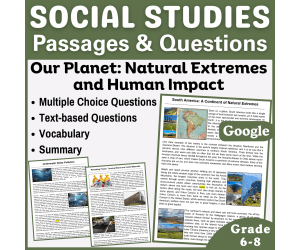
Social Studies Reading Passages: Our Planet and Human Impact (Docs)
ELA, Reading, Reading Comprehension, Strategies, Resources for Teachers, Social Studies, Geography, Grade 6, 7, 8, 9, Writing Prompts, Worksheets & Printables, Centers, Activities, Teacher Tools, Assessments, Quizzes and Tests, Quizzes, Tests
Social Studies Reading Comprehension Passages and Questions: Our Planet: Natural Extremes and Human Impact (Word) This resource introduces a collection of Social Studies reading comprehension passages with questions about Our Planet: Natural Extremes and Human Impact. The passages are carefully designed to bridge the gap between social studies and literacy through strengthening reading comprehension and sparking knowledge curiosity in middle school students. Each passage blends English Language Arts skills with accurate social studies content . Ideal for interdisciplinary learning in ELA and Social Studies. Suitable for Grade 9 review, too! What Is Included in this Collection? There are three informational passages (with full answer keys): Remaking Plastic: Turning Waste into Useful Materials Underwater Noise Pollution South America: A Continent of Natural Extremes For Each Passage, students will have multiple tasks to complete as follow: 5 multiple-choice questions targeting main idea, key details, inference, vocabulary in context, and use of evidence 5 vocabulary matching items with clear, student-friendly definitions 5 text-based questions that require citing specific lines or facts 1 summary prompt that asks students to condense central ideas accurately Available Formats for this Resource PDF Fillable PDF Word Docs FULL CATALOG OF DOWNLOADING LINKS HERE For more Social Studies Reading Passages, check the following Links: Ancient Civilizations PDF Fillable PDF Word Docs Google Docs Early Empires and Trade Networks PDF Fillable PDF Word Docs Google Docs The Founding of the United States PDF Fillable PDF Word Docs Google Docs Language, Culture, and Meaning PDF Fillable PDF Word Docs Google Docs Psychology and Society PDF Fillable PDF Word Docs Google Docs Global Festivals and Traditions PDF Fillable PDF Word Docs Google Docs Extreme Environments and People PDF Fillable PDF Word Docs Google Docs Food, Culture, and Preservation PDF Fillable PDF Word Docs Google Docs Global Food Customs PDF Fillable PDF Word Docs Google Docs Media, Communication, and Popular Culture PDF Fillable PDF Word Docs Google Docs Human Impact on the Environment PDF Fillable PDF Word Docs Google Docs Civic Action and Social Change PDF Fillable PDF Word Docs Google Docs Fashion, Society, and Power PDF Fillable PDF Word Docs Google Docs People, Places, and Unusual Histories PDF Fillable PDF Word Docs Google Docs Product Details Length: 15 pages total Grades: 6–8, also suitable for Grade 9 review Use cases: close reading, stations, homework, intervention, test prep, and sub plans Why Teachers Choose This Set Authentic social studies content paired with rigorous literacy practice Consistent task structure across all passages for easier planning and smoother student routines Clear, age-appropriate writing that builds confidence without oversimplifying Use this set to reinforce ELA skills in social studies, to add literacy to your lessons, and to support independent work. The passages strengthen main idea, evidence use, vocabulary in context, inference, cause and effect, and summary writing. With ready-to-use assessments and complete answer keys, you can provide focused practice that is simple to run and fast to review.
Author CORED Education - Middle & High School
Rating
Tags Middle School, Reading Comprehension, Reading Strategies, ELA, Centers, Reading Passage, Assessments, Vocabulary, Social Studies, Geography

English Numbers 0-10, Colors, and Patterns Vocabulary Game
Life Studies, ELA, Language Development, Pre-Reading, ESL, Reading, Vocabulary, Kindergarten, Preschool, Grade 1, 2, 3, 4, 5, 6, 7, 8, 9, 10, 11, 12, Teacher Tools, Presentations, Activities, Games
Vocabulary practice made fun! This English #vocabulary #game practices 24 high-frequency #number #color and #pattern words. Editable pages make it easy to add in extra words your learners are working on. Learners will practice reading the sentence and question, "I have____. Who has?" Then classmates will search their cards to see if they have the number, color, or pattern in question! Repeated exposure is necessary for vocabulary retention. In addition, a QR code has been provided in the instructions. Simply point your phone or computer camera at the code to open a link to the Google Slides presentation. Pull up the corresponding photo for each vocabulary word to expose learners to 2+ photos of the object in question. It's common knowledge that while tangible objects are best, realistic photos are next-best when teaching vocabulary. No more clip art or cartoons here! Use the realia presentation to introduce the vocabulary words as well as to support learners during the game. Play multiple rounds, and shuffle well to give extended practice! With a minimum of 2 players, this game is perfect for pairs, small group, or whole-class practice with up to 24 players! Words included in this pack are: one, two, three, four, five, six, seven, eight, nine, ten, red, orange, yellow, green, blue, purple, pink, brown, black, white, dots, stripes, and zig zags. This PDF download includes game instructions, the easy to use QR code link to the realia presentation, three pages to print, as well as a blank page for you to add in additional vocabulary words and drawings! Be sure to check out additional "I Have, Who Has" vocabulary games in English, French, and Spanish: School and Classroom, Calendar: Days, Months, & Seasons, Food & Drink, Numbers 1-10, Colors, and Patterns, Weather & Landforms! Got questions or a request? Let me know! Get in touch on socials at @melissaisteaching.
Author Melissa Is Teaching
Tags Vocabulary, Colors, Numbers, Patterns, English Vocabulary, ELL Vocabulary, Esl Vocabulary
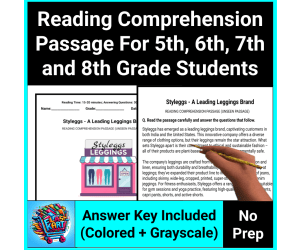
Descriptive Reading Comprehension Passage For 5th, 6th, 7th & 8th
ELA, Reading, Reading Comprehension, Grade 6, 7, 8, Worksheets & Printables, Worksheets, Centers, Activities
Reading Comprehension Passage Sub Plan for Grades 5th, 6th, 7th, and 8th Grades Do you need a reliable, print and go assignment that your 5th, 6th, 7th, or 8th graders will actually do ? Forget boring, dated passages! Don't look further and download this one. This resource includes a fun, fictional reading comprehension passage about "Styleggs," a made-up (fictional) global leggings brand. The idea is familiar and relevant to middle schoolers, which means they actually focus and engage while practicing those tricky reading skills. Why I Made This Resource?(and Why You'll Love It?): I designed this to be the an easy day activity or a sub plan - it will save you precious planning time and keep your students busy with quality ELA work. Totally Relatable Topic: Middle schoolers connect with fashion and business ideas. This modern topic keeps their attention way better than traditional passages. More Than Just Recall: The passage is followed by 15 focused comprehension questions that don't just check basic understanding; they push students into vocabulary and light critical thinking . Zero-Stress Grading: An answer key and a simple quick grading scale are included. You can collect, grade, and move on instantly. The Best Sub Plan: Hand this to a substitute teacher with confidence. It's truly ready to go, print, no prep needed ! Usage ideas: This resource is flexible - it can be used as a short lesson plan or you can expand it into a full unit: Group Work: Have students discuss the choices the fictional company, Styleggs, might make. Writing Extensions: Use the passage as a jump-off point! Have students write an advertisement, design a new product, or debate the sustainability of fast fashion. Vocabulary Warm-Ups: Pull out a few words from the text for quick daily review. Perfect for: Independent Work, ELA Centers, Small-Group Discussion, Homework, or those unexpected absent days! Reading comprehension, middle school ELA, fiction passage, comprehension questions, sub plan, 5th grade, 6th grade, 7th grade, 8th grade, relevant topic, no prep.
Author FlashKart
Rating
Tags Reading, Middle School Reading, Reading Comprehension, Unseen Passage, ESL, EFL, ELA, Language Arts, Middle School Resources, Reading Comprehension Passage
Cinderella Digital Real Aloud Library
ELA, Reading, Kindergarten, Preschool, Grade 1, 2, Activities
Introduce young readers to the magic and wonder of fairy tales with the Cinderella Digital Read Aloud Library. This teaching resource includes 21 'book' links that direct students to different Cinderella story versions on YouTube. After listening to each lively retelling, students complete a book synthesis worksheet to compare story elements and analyze characters across tales. Use this diverse library to spark discussion on morals and themes or for a cross-curricular social studies unit on fables and folklore. With options for whole-group instruction or independent reading, this adaptable resource builds literacy skills including listening comprehension, summarization, and text analysis. Let the iconic story of Cinderella capture your students' imagination while developing their reading abilities.
Author Good Human Project
Tags Audio Book, Cinderella, Read Aloud, Fairy Tales, Library
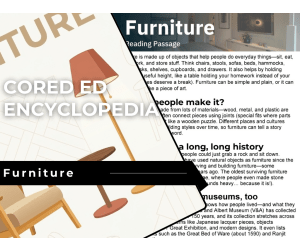
Furniture Reading Comprehension Passage - Cored Ed Encyclopedia
ELA, Language Development, Resources for Teachers, Reading Comprehension, Reading, Pre-Reading, Writing, Science, Technology, Strategies, Grade 2, 3, 4, 5, Worksheets & Printables, Worksheets, Teacher Tools, Centers, Activities, Writing Prompts, Assessments, Tests, Quizzes and Tests, Quizzes
This furniture reading comprehension contains the following: Pre-Reading Trivia Students will write down one thing they already know about the subject and then read five more facts and discuss. These facts are fun, and the students will enjoy learning about the subject before reading more. Reading Passage The text is a high-interest reading passage with set paragraphs, roughly three to four paragraphs long. It contains a variety of themes about the topic, anywhere from history to technology. The passage is between 250 and 350 words in length. Mixed Questions The first question page contains four multiple-choice questions, each with a choice of four answers, and three written response questions that require a sentence or two from the student. Creative Writing In this question, the student will be required to write a five to eight sentence paragraph on a question related to the topic. Extension Activities This page is optional for fast finishers. If there are five to ten minutes left at the end of the lesson, the student can choose one of three activities, each one requiring a different skill. Answer Key There are answers for the multiple-choice questions and three written response questions have sample answers. FULL CATALOG OF DOWNLOAD LINKS AND ENCYCLOPEDIA INDEX HERE Snapshot Genre: Nonfiction (informational text) Subject: Reading Primary Topic: What furniture is, how it’s made, and history Estimated Guided Reading Level (A–Z): Q What This Lesson Teaches Best Defines furniture by what it helps people do (sit, eat, sleep, work, store things) and gives examples of common items. Explains how furniture is made , including common materials and how makers connect parts using joints . Builds background knowledge about furniture across time , from using natural objects to evidence of built furniture long ago and stone furniture at Skara Brae. Shows how museums use objects as evidence of how people lived, including examples from the Victoria and Albert Museum (V&A) collection. Learning Goals Students will be able to explain what furniture is and list everyday tasks it helps people do. Students will be able to identify examples of furniture named in the passage and describe what each might be used for. Students will be able to describe how furniture can be made, including common materials and how joints connect pieces. Students will be able to describe key points in the history of furniture mentioned in the text (natural objects, carving/building, Skara Brae stone furniture). Students will be able to explain why museums collect furniture and name at least one example of an item mentioned from the V&A collection. Key Vocabulary From the Text joints — special fits that lock furniture parts together. archaeologists — people who study the past using evidence. cupboards — furniture for storing things behind doors. centuries — periods of one hundred years. lacquer — a shiny coating used on some objects. Cored Ed Encyclopedia Overview The Cored Ed Encyclopedia is a weekly series of lessons that you can pick up and use right away. These short readings fit into whatever time you have available. Each one includes a warm-up, a reading, and a set of questions, but it’s flexible — you can do just the reading, the full lesson, or skip the writing section if you need to. Each lesson focuses on a single topic so students don’t get lost. The writing is clear but never childish, making it perfect for grades two through five. Topics range from animals and science to history, inventions, and everyday things. No matter the level of the student, everyone should take away at least one new idea or fact from each lesson. The materials are easy to print, easy to explain, and require no setup. They work well for whole-class teaching, partner work, or independent study.
Author Cored Education
Rating
Tags Vocabulary, Spelling, Reading Comprehension, Reading Passages, Reading, Creative Writing, Reading Strategies, Writing Prompts, Technology, Furniture
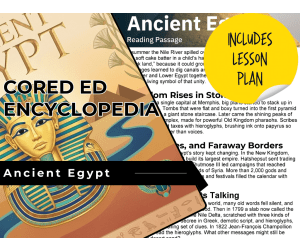
Ancient Egypt Reading Comprehension Passage - Cored Ed Encyclopedia
ELA, Language Development, Reading Comprehension, Reading, Social Studies, History, History: Ancient, Writing, Pre-Reading, Vocabulary, Grade 2, 3, 4, 5, Worksheets & Printables, Worksheets, Teacher Tools, Centers, Activities, Writing Prompts, Assessments, Quizzes and Tests, Quizzes, Lesson Plans
This ancient Egypt reading comprehension with lesson plan includes: Visualization (on the front cover) Start your lesson by taking a minute to think and share something about the topic. Read the script aloud (slowly), perhaps prepare some music or sound effects. Student close their eyes and let their imaginations wander. Students open their eyes, read the question aloud and give them a few minutes to complete. Ask a few students to share or keep answers until the end to compare with what they learn in the passage. Quick pause—thousands of Cored Education products are included with your TeachSimple membership. Download links and encyclopedia index available here. Pre-Reading Trivia Students will write down one thing they already know about the subject and then read five more facts and discuss. These facts are fun, and the students will enjoy learning about the subject before reading more. Give 1 minute for students to write what they already know (no pressure—best guess is fine). Read the five facts together. After each fact, do ask a student for their opinion, was it surprising? Set a purpose by asking students to highlight/underline one fact they want to learn more about during the reading. Reading Passage The text is a high-interest reading passage with set paragraphs, roughly three to four paragraphs long. It contains a variety of themes about the topic, anywhere from history to technology. The passage is between 250 and 350 words in length. First, ask students to look at the headings and see what they’ll learn about today. What do they know about the topic/heading? First read options: Teacher read-aloud (best for support). Partner reading (paragraph by paragraph). While reading, students underline important details, and vocabulary words they think may come up in the questions section. Mixed Questions The first question page contains four multiple-choice questions, each with a choice of four answers, and three written response questions that require a sentence or two from the student. Students complete the mcqs first independently, then review quickly as a class. For the 3 written responses, try to get students giving the answer with some form of evidence: “I think ___ because the text says ___.” If students get stuck, send them back to check the passage. Vocabulary Questions Practice seven key words from the text in this section across two activities. First section is scrambled words where students will unscramble three words given a clue for each. The second section is a word to meaning matching activity. Before starting, have some students read out words they underlined in the passage. Ask students to say the word and read aloud the sentence(s) around each word. Ask students to do scrambled words and the matching exercise in pairs then go through answers as a class. For the scrambled spelling task, get four pairs to come up to the board and write the words for extra practice with the other student reading out the clue. For the matching task, prompt students to give full sentences: “I matched ___ with ___ because ___.” Creative Writing In this question, the student will be required to write a five to eight sentence paragraph on a question related to the topic. Before starting, ask students write down 3 key ideas they are going to include in their piece. Ask students for ideas to share around the class to help those struggling. Pro writing expectations: 5–8 sentences At least 2 facts or details from the passage At least 2 vocabulary words from the previous page Students read their paragraphs while classmates listen for facts and vocabulary words. Extension Activities This page is optional for fast finishers or to take home. There are several activities, each one requiring a different skill. Do some, do none, do all, completely optional - but you will feel reassured knowing every possibility is planned for. Includes summary writting question and additional facts. Answer Key There are answers for the multiple-choice questions, written response questions have sample answers, vocabulary answers and if there is a summary question then a sample summary will be provided as well. Lesson Plan Included Customized lesson plan for this lesson is included. Lesson Snapshot Title: Ancient Egypt Genre: Nonfiction (informational passage) Subject: Social Studies Primary Topic: Nile flooding, kingdoms, pyramids, and writing Estimated Guided Reading Level (A–Z): T What This Lesson Teaches Best How the Nile River flooding left dark mud that helped farming and food growth. The meaning of Kemet (“black land”) and why it described the fertile farming strip. How leaders joined Upper Egypt and Lower Egypt into one kingdom, with the pharaoh as a symbol of unity. Key achievements in building and record-keeping (pyramids, scribes, hieroglyphs, papyrus, grain and taxes). How the Rosetta Stone helped scholars decode hieroglyphs by showing the same text in three kinds of writing. Learning Goals Explain how the Nile River’s yearly flooding helped people grow food. Describe why people called the fertile farm area Kemet, or “black land.” Identify ways ancient Egyptians organized and strengthened their kingdom (sharing water, one ruler, a capital). Describe how pyramids changed over time (step pyramid for Djoser and later pyramids at Giza). Explain how scribes used hieroglyphs and papyrus to keep records of grain and taxes. Describe how the Rosetta Stone led to reading hieroglyphs again. Key Vocabulary From the Text fertile — able to grow lots of plants. pharaoh — ruler of ancient Egypt. hieroglyphs — picture symbols used for writing. papyrus — plant paper used for writing. decree — an official order from leaders. FULL CATALOG OF DOWNLOAD LINKS AND ENCYCLOPEDIA INDEX HERE
Author Cored Education
Rating
Tags Vocabulary, Reading Comprehension, Reading Passages, Lesson Plans, Ela Lesson Plans, Reading Comprehension Lesson Plans, Pre-reading, History, Ancient History Lesson Plans, History Lesson Plans
Reading Comprehension Nonfiction Set 3 - Mammals (Slides)
ELA, Reading, Language Development, Spelling, Common Core, ESL, Vocabulary, Creative Writing, Writing, Reading Comprehension, Grade 4, 5, Teacher Tools, Presentations, Assessments, Tests, Quizzes and Tests, Activities
Reading Comprehension Passages Nonfiction Set 3 Overview No prep reading comprehension lessons, with enjoyable articles and topics. Each lesson has a blend of post-reading activities. Mixed questions to check overall understanding. Vocabulary activities, plus a writing section. Lessons also contain a bonus extension exercise at the end. Some you may like, some you may not, either way they are there if you wish to use them. Full answer keys are provided. Passages Include 1.Lions: Read about the second largest wild cat in this article. 2.Tiger Time: Tigers are such solitary creatures. Find out more in this lesson. 3.All About Horses: How is the author preparing to become a vet when she gets older? 4.All About Beavers: Here's all you need to know about 'nature's engineers'. 5.The Canadian Lynx: Canadian Lynxes look unique, and truly are amazing animals. 6.All About Cheetahs: The cheetah is the earth's fastest mammal. It can run as fast as 70 miles an hour! Slides Version This is the Slides editable and fillable version. This download is available in GOOGLE Docs, GOOGLE Forms, GOOGLE Slides. PDF, PPT, WORD. FULL CATALOG OF DOWNLOAD LINKS HERE Grade 4/5 Links Fiction Set 1 - Animals Google Docs Google Forms Google Slides PDF PPT Word Guided Reading Materials Fiction Set 2 - Family Google Docs Google Forms Google Slides PDF PPT Word Guided Reading Materials Fiction Set 3 - Friends Google Docs Google Forms Google Slides PDF PPT Word Guided Reading Materials Fiction Set 4 - School Google Docs Google Forms Google Slides PDF PPT Word Guided Reading Materials Fiction Set 5 - Sports Google Docs Google Forms Google Slides PDF PPT Word Guided Reading Materials Nonfiction Set 1 - Birds Google Docs Google Forms Google Slides PDF PPT Word Guided Reading Materials Nonfiction Set 2 - Insects Google Docs Google Forms Google Slides PDF PPT Word Guided Reading Materials Nonfiction Set 3 - Mammals Google Docs Google Forms Google Slides PDF PPT Word Guided Reading Materials Nonfiction Set 4 - Nature Google Docs Google Forms Google Slides PDF PPT Word Guided Reading Materials Nonfiction Set 5 - Sea Animals Google Docs Google Forms Google Slides PDF PPT Word Guided Reading Materials Reading Passages Overview Each passage is especially written for Grade 4-5 students, including key vocabulary required for this age group. Topics are varied and are accompanied by colorful graphics. Topics are meant to educate, yet entertain the modern student. These passages are perfect for the modern classroom. Whereas textbooks can become outdated in no time, any changes to technology or the world will result in updates to this product. Mixed Questions The mixed questions section of each lesson includes a variation of five comprehension, vocabulary and math questions. In addition, key reading strategies are frequently covered including cause & effect, summarizing, compare & contrast and making conclusions. Two or three of the questions will be MCQs and other questions will require a written response of some kind. Full answers and example responses appear at the end of the lesson. Spelling & Vocab Each reading passage contains a variety of words and phrases designed for Grade 4-5 students. Spelling and vocab activities provide the opportunity to build fluency with these words. As it can become quite mundane doing the same activities over and over, each lesson in a set will contain a different spelling and vocab activity . Activities include: spelling games, sentence match-ups, mixed-up text and decoding words from the lesson. Writing Prompts Writing prompts are designed to continue the theme or lessons learned in the story. Students are persuaded to write in a variety of ways and each prompt includes several cues to help. As with the spelling/vocab section, writing prompts will vary. This includes research pieces, reading responses, poetry and creative writing prompts. Full Answer Keys Full answer keys and sample responses are provided so no matter how busy you are, you know you're covered! Mixed question answers provide evidence from the text, math questions contain the relevant workings. Answers are designed for use by the teacher, but also suitable as a handout to the student. Just for Fun Each lesson will have a bonus extension exercise. This is something fun to extend the lesson with. You can find these at the end of each lesson, titled Just for Fun. Just for Funs are optional. Some you may like, some you may not. Either way, they are there to do with as you wish. For similar downloads and other frees, do check out Cored Group on TeachSimple.
Author Cored Education
Tags Elementary, Reading, Comprehension, Vocabulary, Answers, Ccss, Common Core, Spelling, Writing, Passages
Guided Reading Level N - Swimming (with Lesson Plan)
ELA, Resources for Teachers, Reading Comprehension, Reading, Health, P.E. & Health, Pre-Reading, Language Development, Sports, Physical Education, Grade 2, 3, 4, Worksheets & Printables, Worksheets, Teacher Tools, Centers, Activities, Literacy Readers, Quizzes, Quizzes and Tests, Assessments
This Guided Reading Book - Swimming (Level N) with lesson plan includes: Guided Reading Color Label (front cover x1) This is a quick way to match the book’s demands to what students can generally handle.. The overall goal is to use the level/color to pick books for several smaller groups. To qualify for a certain level, a student is expected to read a book from that level with about 90–94% accuracy. If a student is consistently accurate and understands, move up a level. If the student is struggling at that level, drop down and add more support. Each student will improve at completely different rates, but it is generally one of the best ways to check progress across the class. DOWNLOAD THE CATALOG TO VIEW ALL GUIDED READING BOOKS AVAILABLE (SORTED LEVELS A-Z) Pre-Reading Question (x1) Teacher asks the prompt aloud, can be while showing the cover or first page. Students share what they already know, or make educated guesses from the cover. Prompt them to use the target vocabulary. Write some of their responses on the board to look back at during the reading. Vocabulary Words (x5) Introduce the five words, best doing it one at a time. Start by saying it, while students repeat and then see if anyone knows what it means before reading further. Read through the meaning and try to briefly connect each word to a picture or gesture so it’s meaningful. Ask students to flip through the book pages and point to where they see each of the vocabulary words. While reading the book pause upon coming across one of the vocab words or read the sentence twice to make sure students understand the word has appeared. Optional: Ask students to raise hands whenever they see/hear one of the new words. Guided Reading Pages (x10) Check the book snapshot (below) for: primary topic - do you need to prep extra reading or intro materials on this? what is taught best - decide on 1-2 bullets to focus on, use the prompt or words provided here for best results. learning goals - what you are checking for students to be able to do after the session, elicit answers using prompts or words provided. key vocabulary (see section above). questions overview - so you know what is coming up and if you need to prep extra materials to assist understanding. Run the lesson You may have already looked at a few of the pages together, but you can show them some of the pictures again first to set meaning. Depending on how much time you have and how familiar your students are with guided reading class, you may want to read the book aloud first with the group first. Students whisper or partner read, while you listen in. If time, do it as a group, one student reading a page each. Use the guided page’s prompts to coach: “Check the picture / does it make sense?” “Point under the words / try the first sound” “Reread the sentence smoothly”. Try to focus more on one student per session (rotating every time), so you can work out if they are ready to move up or need to move down a level. Comprehension Questions (back cover x3) This is your way to check that students didn’t just say the words, but actually understood the text. First, let students answer by pointing to the page/picture and saying a short sentence. After any answer, follow with: “Show me where you found that in the text.” In bigger groups, have partners answer first (10–20 seconds), then call on 2–3 students to share. Differentiation tips: Emerging speakers/struggling readers: oral + pointing On-level: oral in a full sentence Higher: one written sentence or draw + label Book Snapshot Title: Swimming Genre: Nonfiction (informational) Subject: Physical Education / Health Primary Topic: Swimming safety, gear, strokes, and racing Estimated Guided Reading Level (A–Z): N What This Book Teaches Best How swimming uses arms and legs as a full-body exercise that builds strength and endurance. How competitive swimming pools are organized with lanes and lane lines to help swimmers stay in their own path. Why safety matters in swimming and what lifeguards do to keep swimmers safe. How gear (goggles and swim caps) helps swimmers see clearly and reduce drag/resistance in the water. Key features of the four competitive strokes (freestyle, backstroke, breaststroke, butterfly) and how races begin. Learning Goals Students will describe where people can swim and why people swim (fun, health, competition). Students will explain how lane lines help swimmers during a race. Students will describe how lifeguards help keep swimmers safe and support swimmers who have trouble. Students will explain how goggles and swim caps help swimmers in the water. Students will describe what “floating” is and why it is an essential beginner skill. Students will compare the four competitive strokes by identifying a key movement for each. Key Vocabulary From the Text endurance — being able to keep going for a long time. competitive — about contests where people try to win. priority — something that is most important. efficiently — using less time or effort to do something. horizontal — flat and level, not standing upright. Discussion Prompts Pre-reading question: What do you think swimmers must do to stay safe in the water? Comprehension questions: How do lane lines help swimmers during a race in a pool? Comprehension questions: What two jobs does the text say lifeguards do at the pool? Comprehension questions: Why is floating an essential skill for swimmers, according to the text? Printing Tips 1. Best Printing Method (Recommended) “Booklet” Printing (Best if Available) If your printer or PDF viewer supports Booklet Printing , use this. Settings to use: Print mode: Booklet Paper size: Letter or A4 (either works) Orientation: Landscape Print on both sides: Yes Flip on: Short edge Scaling: Fit to printable area Booklet subset: First test: Front sides only Then: Back sides only This will automatically: Pair pages correctly Put the cover on the outside Align everything for folding After printing, fold in half and staple along the spine . 2. If “Booklet” Printing Is NOT Available You can still print this correctly with manual duplex printing . Step-by-step: Open the PDF. Choose Print . Set: Orientation: Landscape Pages per sheet: 1 Print on both sides: Yes Flip on: Short edge Print all pages . Because each PDF page already contains two facing book pages, the result will still fold cleanly into a book. Thousands of Cored Education products are included with your TeachSimple membership. Download links and encyclopedia index available here.
Author Cored Education
Rating
Tags Reading Comprehension, Reading Passages, Reading, Guided Reading, Guided Reading Lesson Plan, Guided Reading Activity, Pre-reading, Health Lesson Plans, Sports, P.e.

Been Song (MP3)
ELA, Reading, Preschool, Kindergarten, Grade 1, Songs, Activities
This product is great for helping students recognize the sight word BEEN. The BEEN Song (MP3) is put to a catchy tune and is repeated, spelled, and used in sentences. This is a great resource for teachers who want to help their students learn.
Author Have Fun Teaching
Tags Counting
Bicycles Reading Comprehension Passage - Cored Ed Encyclopedia
ELA, Language Development, Resources for Teachers, Reading Comprehension, Reading, Pre-Reading, Creative Writing, Writing, Physics, Science, Grade 2, 3, 4, 5, Worksheets & Printables, Worksheets, Teacher Tools, Centers, Activities, Writing Prompts, Assessments, Tests, Quizzes and Tests, Quizzes
This bicycles reading comprehension contains the following: Pre-Reading Trivia Students will write down one thing they already know about the subject and then read five more facts and discuss. These facts are fun, and the students will enjoy learning about the subject before reading more. COMPANION VIDEO NOW AVAILABLE (EMBEDDED AFTER PREVIEW PICTURES IN PRODUCT DESCRIPTION) Reading Passage The text is a high-interest reading passage with set paragraphs, roughly three to four paragraphs long. It contains a variety of themes about the topic, anywhere from history to technology. The passage is between 250 and 350 words in length. Mixed Questions The first question page contains four multiple-choice questions, each with a choice of four answers, and three written response questions that require a sentence or two from the student. Creative Writing In this question, the student will be required to write a five to eight sentence paragraph on a question related to the topic. Extension Activities This page is optional for fast finishers. If there are five to ten minutes left at the end of the lesson, the student can choose one of three activities, each one requiring a different skill. Answer Key There are answers for the multiple-choice questions and three written response questions have sample answers. FULL CATALOG OF DOWNLOAD LINKS AND ENCYCLOPEDIA INDEX HERE Cored Ed Encyclopedia Overview The Cored Ed Encyclopedia is a weekly series of lessons that you can pick up and use right away. These short readings fit into whatever time you have available. Each one includes a warm-up, a reading, and a set of questions, but it’s flexible — you can do just the reading, the full lesson, or skip the writing section if you need to. Each lesson focuses on a single topic so students don’t get lost. The writing is clear but never childish, making it perfect for grades two through five. Topics range from animals and science to history, inventions, and everyday things. No matter the level of the student, everyone should take away at least one new idea or fact from each lesson. The materials are easy to print, easy to explain, and require no setup. They work well for whole-class teaching, partner work, or independent study.
Author Cored Education
Rating
Tags Vocabulary, Spelling, Reading Comprehension, Reading Passages, Cored Encyclopedia, Facts, Reading, Creative Writing, Bicycles, Physics

The Honey Makers by Gail Gibbons Interactive Read-Aloud Activities
ELA, Reading, Reading Comprehension, Language Development, Vocabulary, Grade 2, 3, 4, Read Alouds, Activities
This picture book companion is a complete supplemental resource for the book The Honey Makers by Gail Gibbons. With 25 print-and-go reading activities to choose from, this resource is ideal for customizing learning to your student's specific needs and academic abilities. Students will apply listening and note-taking skills, investigate different species of bees, compare & contrast, make inferences and connections, learn and apply new vocabulary, identify and gain information using text and graphic features, answer questions that require them to think beyond the text, and so much more! Students will love the engaging and fun activities, and you will appreciate the time saved hunting for high-level resources to teach reading concepts that students frequently struggle with. The activities provided are designed to enable students to apply higher-level thinking skills, encourage them to provide text evidence to support their thinking, and challenge them to express their own thoughts and/or perspectives. ⭐️This Resource Includes:⭐️ Making Predictions: Before reading, students will make predictions about the book. “The Honey Makers” Student Notes Booklet: Students will take notes in their booklets while reading the story. This activity includes 14 half pages (ANSWER KEY included). Print the cover single-sided and print notes pages of the booklet double-sided and select the printing option Flip on the short side. Honeybee Diagram: Students will label the honeybee diagram using the words in the word bank (ANSWER KEY INCLUDED). Honeybee Lifecycle (2 versions included): Students will explain what they learned about each stage of the honeybee’s life cycle. A cut-and-paste version is also included as an option for differentiation (ANSWER KEY INCLUDED). Word Scramble: Students use the details from the book to unscramble the words (ANSWER KEY INCLUDED). Who Am I?: Students will match the words in the word bank to the descriptions and draw and color a picture of each bee(ANSWER KEY INCLUDED). Fact or Fiction: Students determine whether the details are facts from the story or made-up (ANSWER KEY INCLUDED). True or False (bubble answers ONLY): Students read the statements and determine whether they are true (ANSWER KEY INCLUDED). True or False (bubble answers and correct the false statement): Students determine if the statements are true or false, and rewrite the false statements to make them true (ANSWER KEY INCLUDED). Cause & Effect: Students match up the causes to the effects (ANSWER KEY INCLUDED). 3-2-1: Students record three details they learned about the queen honeybee, describe jobs that a worker bee has during their lifetime, and choose one word that best describes honeybees and explain why. Thinking About the Text: Students will answer the questions about the story & include examples from the text to support their answers. Thinking Beyond the Text: Students answer questions about or related to the story & include examples from the text to support their answers. A Beekeeper’s Yearbook: Students record one detail for each month of the of the Beekeeper’s Yearbook. Word Search Puzzle: Students use the clues to fill in the puzzle. Words can go across or down. Letters are shared when the words intersect (ANSWER KEY INCLUDED). Crossword Puzzle: Students use the clues and the word bank to fill in the crossword puzzle (ANSWER KEYS INCLUDED). Honeybee ABCs: Students write words or phrases that begin with each letter of the alphabet to show what they learned about honeybees. Research Activities: Students or teachers can choose from the following research activities and graphic organizers to use while conducting research to learn more about bees. KWL graphic organizer Honeybee - CAN - HAVE -ARE Honeybee - WHO - WHAT -WHERE - HOW Fun Facts about Honeybees New Vocabulary Honeybee Research Report: key points, picture, and summary Honeybee Research One-Page Report: Students conduct research to learn more about honeybees and complete a one-page report with facts regarding the habitat, features, diet, movement, and interesting facts. Honeybee Roll & Research: Students roll a die to see what type of bee they will research. Then, they research using teacher-approved websites and informational texts to find information to answer the questions. This resource is for extension read-aloud activities only. The book is not included.
Author Creatively Gifted
Tags Fountas And Pinnell, Second Grade, Elementary Ela, Reading, Nonfiction, Science, The Honey Makers By Gail Gibbons, Honeybees, Insects, Life Cycle