



3,968 products added recently
Page 2 - Popular Science Experiments
Engage your students with some of the most popular and exciting science experiments. This collection includes classics like volcano eruptions, balloon rockets, and density towers. By incorporating these well-loved experiments into your classroom, you can capture students' interest and make learning science an unforgettable experience.

 Show filters


Kinetic and Gravitational Potential Energy – Lab Station Activity
Science, Physics, Grade 9, 10, 11, Labs, Experiments, Activities
Kinetic and Gravitational Potential Energy Lab Station Activity This editable 9-station lab activity allows students to get out of their seats and actively learn about kinetic and gravitational potential energy. The hands-on stations engage students through drawing , research, opinion-writing, and more. Questions and reading assignments connect the content to real-world applications. A recording sheet allows students to document their work as they rotate through the stations. This activity can be used to review before a test or as an immersive lab experience. It covers key concepts like kinetic energy, gravitational potential energy, and the conservation of energy. Bonus vocabulary puzzles are included to keep students productive during transition times. Suitable for grade 9-11 physics classes, this lab station activity needs almost no teacher prep and provides an exciting opportunity for students to interact with the content.
Author Teach With Fergy
Tags Kinetic, Energy, Gravity, Conservation, Lab Station, Potential And Kinetic Energy Games Online, Work And Energy Lab, Kinetic And Potential Energy Word Search

Photosynthesis – Lab Station Activity
Science, Chemistry, Grade 9, 10, 11, 12, Labs, Experiments, Activities
Photosynthesis Lab Station Activity Bring photosynthesis to life in your classroom! This interactive lab station activity engages students as they move through 9 stations to explore concepts like photosynthesis, the light reaction and Calvin cycle. At each station, students test their knowledge by answering multiple choice questions, researching, drawing conclusions from a video, and more. The stations work for all ability levels with built-in challenge activities to keep advanced students engaged. With recording sheets and answer keys included for students and teachers, this resource is an engaging way to build key photosynthesis skills with minimal prep work for you. Use it to introduce a tricky topic or as a review to reinforce learning. For grades 9-12.
Author Teach With Fergy
Tags Photosynthesis, Chloroplasts, Pigments, Plants, Lab Station, Photosynthesis Lab Activity

Interactive Chemistry Quiz: GHS Symbols – Genially + PDF Version
Science, STEM, Chemistry, Physics, Life Sciences, Earth and Environmental Sciences, Technology, Basic Science, Biology, P.E. & Health, Homeschool Templates, Grade 6, 7, 8, 9, 10, 11, Teacher Tools, Experiments, Activities, Labs, Worksheets & Printables, Escape Room, Games, Presentations, Quizzes and Tests, Quizzes
Interactive Chemistry Quiz: GHS Symbols – Genially (+ PDF Version) Bring lab safety to life with this interactive quiz on the GHS (Globally Harmonized System) hazard symbols – perfect for middle and high school chemistry lessons. Whether you're starting the unit or wrapping up a safety review, this quiz adds variety, visual appeal, and a bit of fun to your lesson plan. You’ll get two versions of the quiz: – A PDF version that can be used digitally or printed (but it works not well) – A Genially link that leads to an animated, interactive version (includes sound – which can be muted) Both versions test students on the meanings of the various GHS symbols – from corrosive substances to environmental hazards. The quiz includes original clipart and my own glitter-animated GHS symbols to make the content more visually appealing without distracting from the important safety message. I usually use the Genially quiz for individual work in the computer lab or on tablets, so each student can go at their own pace. But it also works well as a station activity , a class-wide quiz , or even as homework , depending on your classroom setup. At the end of the PDF, you’ll find: A QR code to scan directly to the Genially A clickable link for browser access An iframe embed code , if you want to use it on your (non-commercial) learning platform Attention: The interactive PDF does not contain the full scope of the material. The quiz works. Unfortunately, the additional tasks do not. Using Genially is therefore recommended and much more motivating for the pupils. For the interactive quiz you need an internet connection and a terminal device. The quiz can be carried out with the whole class or as partner or individual work. I prefer individual work at each student's own pace. To get to the Genially link, either scan the QR code at the end of the document or click on the link button available there. You can also copy the iframe code and embed the Genially on a learning platform or other... The Genially can be used either at the beginning of the topic or as a backup. It is also worth using as a station in station work. The interactive version includes motivating sound effects , a self-paced structure , and a clear, age-appropriate design for grades 7–10. 📌 Important note : The Genially quiz is protected by copyright. It’s for your own classroom use only . Please don’t share the link or embed it outside a private, secure learning environment. Sharing with colleagues, online platforms, or social media is not permitted. I hope your students enjoy reviewing GHS symbols as much as mine do! – Heike from @Lernfitness Did You Know? I teach with a certified therapy dog, and together we create a positive and welcoming learning environment. 🐶
Author Lernfitness
Rating
Tags GHS, Science, Lab, Chemistry, Pictograms, Genially, Interactive, Lab Safety, Hazard Symbols, Individual Work

Liquids and Gases – Lab Station Activity
Science, Physics, Grade 6, 7, 8, 9, Labs, Experiments, Activities
Liquids and Gases – Lab Station Activity is a valuable educational resource designed to enhance classroom learning for middle and high school students, especially those studying physical science. This affirmative lab activity engages students with an in-depth examination of Earth's biomes, promoting student movement and interaction. What sets this comprehensive resource apart is its coverage of critical topics like: Biome Types, Aquatic areas, Grasslands, Forests, Deserts, Tundra, etc., Beyond passive learning, different stations offer tasks that engage students actively, teaching them through the process of doing. The task may range from"drawing", or"constructing at one station", to developing their own comprehension testing queries at another. The way these stations function: Drawing or Construction tasks which require creativity. Involves research where children can look into pre-set questions about relevant subjects using either classroom computers or personal devices. , Inclusion of writing activities where participants express their formulated opinions cohesively in paragraphs form. . To counterbalance workload: We've got rest stations designed for reviewing prior content or preparing for future sections. More so there are real-life-based activity sections that lean into reading articles. Testing: The curriculum is reinforced with multiple-choice quizzes. Media-based Learning: Includes video content with corresponding questionnaires to further grasp comprehension level. Create your own Quiz Station: This exciting station allows students to both answer pre-set quiz questions and devise their student quizzes by creating multiple choice true/false queries alongside short response questions! For an elevated learning experience, word scramble and word search games have been cleverly interposed between activities; this sustains learner engagement and eradicates classroom monotony. Finally, Liquids and Gases – Lab Station Activity accounts for teachers' convenience too! Without requiring any elaborate preparations or setup hassles, even fully ready to print when needed! With its interactive nature, this lab activity could be easily incorporated into whole group studies, small group explorations, pair work or given as homework assignments. This makes it is versatile enough useful whether you're a public school teacher looking to provide engaging instruction or a homeschooler seeking varied resources.
Author Teach With Fergy
Tags Liquids, Gases, Lab Activity, Ecosystems, Hands-on Learning
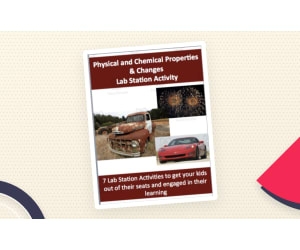
Physical and Chemical Properties – Lab Station Activity
Science, Chemistry, Grade 7, 8, 9, 10, Labs, Experiments, Activities
Physical and Chemical Properties Lab Station Activity engages students as they rotate through 9 stations testing their knowledge of matter's physical and chemical properties. Students get hands-on drawing atoms, researching questions, watching videos, answering multiple choice questions and more. Covers key concepts like states of matter, qualitative vs quantitative properties, physical and chemical changes, and energy transformations. The activity comes with station description cards, detailed instructions, articles, video links, and recording sheets. Questions assess student learning and bonus scramble and word search activities ensure no downtime. This versatile resource works for whole group, small groups, or independent lab work. Easy to print and implement with no prep required. Applicable for middle and high school chemistry and physical science classrooms.
Author Teach With Fergy
Tags Physical, Chemical, Properties, States Of Matter, Lab Stations, Physical And Chemical Changes Lab High School, Lab Chemical And Physical Changes Worksheet, Physical And Chemical Changes Lab Middle School, Physical And Chemical Changes Activities For Middle School
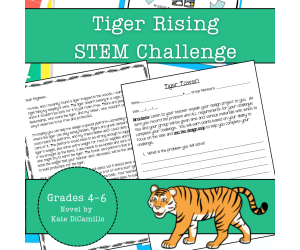
Tiger Rising STEM Experiment + STEM Project for Grades 4, 5, 6
Science, Technology, Engineering, STEM, Grade 4, 5, 6, Experiments, Activities, Projects, Diagrams, Teacher Tools, Graphic Organizers, Rubrics
This hands-on activity combines creativity and problem-solving as students design and build a tower for the safety of the tiger in the novel, Tiger Rising. Perfect for integrating literature and science, this challenge encourages students to apply engineering principles using simple materials while fostering teamwork and critical thinking. What’s Inside This Resource: Student Letter: A letter from Rob Horton introduces the challenge, linking the story to a real-world engineering task. Design Loop Graphic: A visual students can attach to their science journals, serving as a step-by-step guide throughout the activity. Detailed Instructions: Choose to print the guide as a packet or have students record each stage in their journals for an interactive experience. Teacher Tips: Practical guidance for crafting a clear problem statement with time constraints, materials, and success criteria tailored to your classroom. Skills Your Students Will Build: ✔ Problem-Solving: Identify obstacles and create inventive solutions. ✔ Engineering Design: Navigate the design loop—plan, construct, test, and refine. This page can easily be enlarged for a classroom poster. ✔ Critical Thinking: Assess their prototype’s performance and pinpoint ways to enhance it. ✔ Teamwork: Collaborate effectively to accomplish shared goals. Versatile Classroom Application: Whether as guided instruction or part of an integrated literature and science unit, this STEM activity encourages students to think creatively, document their process, and meet science and engineering standards. The rubric included is based on engineering concepts, but can also be used as a nonfiction writing rubric for cross-curricular options. Why Educators Love This Resource: ⭐ “My students were fully engaged, combining their passion for reading with STEM!” ⭐ “Simple to set up and encourages creativity and teamwork.” ⭐ “A seamless connection between literature and science for cross-curricular learning!” Encourage your students to provide a safe haven for the tiger (and Rob and Sistine?) and experience the excitement of engineering with this standards-aligned STEM adventure!
Author Kel's Klass
Tags 4th Grade Science Project, 4th Grade Science Experiment, 5th Grade Science Project, 5th Grade Science Experiment, 6th Grade Science Project, 6th Grade Science Experiment, Engineering Diagram, Science Graphic Organizer, Science Rubric, Tiger Rising

Science Action Labs Insects: Hands-On Science Activities Ready for Student Use
Science, Life Sciences, Insects, Grade 1, 2, 3, Labs, Experiments, Activities
Science Action Labs Insects: Hands-On Science Activities Ready for Student Use This interactive science activity kit offers a riveting method of teaching elementary students, specifically those in grades 1 through 3, about the fascinating world of insects. This comprehensive resource unravels various aspects about different insects and their life cycles under a simple yet informative light. Dynamic Learning Experience The unique experience integrates demonstrations and experiments into lessons. Activites include: Writing poetry about bugs Holding grasshopper jumping contests Constructing honeycombs from scratch Guide characters C.D., Allie, and Orbit are presented throughout for systematic knowledge acquisition that renders comprehension easier for young learners. A Teacher-Friendly Resource with Different Implementations This rich-resource comes packed with 64 printable pages tailored to beginner scientists' needs. It's an excellent tool for educators introducing insects at primary grade level either through individual study or group studies within classrooms. The buzzing environment at our feet opens up wonders beyond any storybook ever could relay about mother nature's intricate designs. Truly, the learning journey into the insect kingdom ties closely with fun for enhanced learner engagement together with Science Action Labs Insects teachings on these vital players in nature's ecological dance.</p
Author Classroom Complete Press
Tags Science Action Lab, Insects, Hands-on, Science Activities
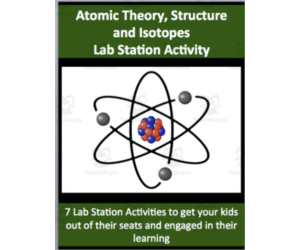
Atomic Theory, Structure and Isotopes – Lab Station Activity
Science, Chemistry, Grade 7, 8, 9, 10, Labs, Experiments, Activities
Atomic Theory, Structure and Isotopes Lab Stations Engage students in learning atomic theory, atomic structure, and isotopes with this interactive lab station activity. Students move through nine stations, including drawing atoms, watching expert videos, completing knowledge checks, reading real-life applications, and formulating their own questions.recording answers on a passport worksheet. This resource requires almost no teacher prep - just print the self-explanatory station cards with detailed student directions. The activity works well for whole group or independent work, covers core topics, and aligns to grades 7-10 science standards. Assessment at multiple stations allows students to exhibit understanding in various ways while staying focused and challenged. Extend student learning by pairing the lab stations with the included word scramble and word search.
Author Teach With Fergy
Tags Atoms, Atomic, Theory, Structure, Isotopes

Classification of Living Things – Lab Station Activity
Science, Life Sciences, Biology, Grade 7, 8, 9, 10, Labs, Experiments, Activities
This fully editable Lab Station Activity on the Classification of Living Things is meant to get your students out of their seats and engaged in the content. Each station not only offers a unique opportunity to test your students' knowledge (offer an opinion, answer questions based on a video or reading, draw, etc.), but also provides a fantastic learning opportunity where your kids are learning through assessment. Each station comes with a description card while some also contain more detailed instructions, a reading, questions to answer, etc. Students are equipped with a recording sheet (passport) to write their answers. There is almost no prep for you. Simply print the cards, lay them out around the room and you're all set. An answer key is also provided where applicable. --------------------------------------------------------------------------------------------- This lab activity covers: - The Classification of Living Things - The 7 Kingdoms - Taxonomy ---------------------------------------------- Bonus Activities: To ensure your students don’t have any downtime between stations, your lab also includes a 10-word word scramble and word search, both with an answer key. You can use them as part of their mark, as a bonus so it’s not mandatory, etc. However you choose to use it, it will ensure that your students are always busy and never idle. Note: For stronger classes, I give the word scramble and for weaker ones, the word search. ----------------------------------------------- How do the Lab Stations work? Each station is specially designed to be a unique complement to the material while at the same time, provide a valuable learning experience. Below is an overview of how each station works. In your activity , each will be tailored to the specific content. Station 1: Get Hands-On – using their creative skills, students are required to draw or build. Station 2: Research – using a classroom computer or their own device, students must research a specific question/issue surrounding the topic. Station 3: Explain yourself – students write down an opinion to a question in paragraph form. Station 4: Rest Station - students can use this time to catch up on work they didn't have time to complete at a previous station or prepare themselves for an upcoming one. Station 5 - Applicability reading – students read a short passage from an article, website, etc. which directly connects the classroom content to a real life application. Station 6: Test your knowledge – students answer 5 multiple choice questions then provide a written explanation for how/why they came to their conclusions. Station 7: Learn from the expert – using a classroom computer or their own device, students must watch a short video clip and answer the associated questions. They may stop, rewind and restart as often as they like during the time frame. Station 8 - Rest Station. Station 9: Become the question master – Students must create 2 multiple-choice questions, 2 true/false questions and 1 short answer question. Students must also supply the answers. ------------------------------- You might also be interested in my other lab station activities Ecology and the Environment: • Ecosystems • The Classification of Living Things • Biodiversity and Invasive Species • The Carbon and Water Cycle • Climate Change • Photosynthesis • Cellular Respiration and Photosynthesis • Ecological Succession • Plant Sexual and Asexual Reproduction • Earth's Seasons • Interactions Within Ecosystems Biology: • Cell and the Cell Theory • The Human Digestive System • The Circulatory System • The Human Respiratory System • Mitosis and the Cell Cycle • Cellular Respiration and Photosynthesis • Photosynthesis • Cancer: Cell Division Gone Wrong - Volume I • Cancer: Cell Division Gone Wrong - Volume II • Cell Membrane and Transport • Hearing and the Human Ear • The Human Eye • Genetic Material: DNA and RNA • The Nervous System • Energy Flow In Ecosystems Physics: • Newton's Three Laws of Motion • Kinetic and Gravitational Potential Energy • Current Electricity and Circuit Diagrams • Static Electricity • Light Optics and the Production of Light • Sound, Sound Energy and Speed • One and Two-Dimensional Motion • Uniform Acceleration • How Planes Fly • Refraction • Friction • Energy and Its Forms • Density and Buoyancy Space Science: • The Life and Death of Stars • The Moon and its Phases • Life In Space • Our Solar System • Solar and Lunar Eclipse • Earth's Seasons • Asteroids, Comets and Meteors Chemistry: • Atomic Model, Notation and Atoms • Chemical Reactions and Balancing Equations • Molecular and Ionic Compounds • Physical and Chemical Properties & Changes • Acids, Bases, and Neutralization Reactions • The Periodic Table • Single and Double Displacement Reactions • Balancing Chemical Equations • Synthesis, Decomposition and Combustion Reactions • Atomic Theory, Atomic Structure and Isotopes • Types of Bonds and Intermolecular Forces • The Mole/Avogadro's Number • Density and Buoyancy These station cards are meant to be used as a lab activity but can also be utilized in a review task before a test or a quiz. Used either way, your students will love it! I know mine do and I'm telling you from first-hand experience as I've used this activity in my own class. Thank you for your interest in my products. If you have any questions, please send me an email - devon@teachwithfergy.com
Author Teach With Fergy
Tags Taxonomy, Living Things, Classification, Lab Station, Activities, Classification Activity Middle School, Classification Activities High School, Classification Activities Middle School, Classification Activity, Living Things Zip

Plant Sexual and Asexual Reproduction – Lab Station Activity
Science, Life Sciences, Biology, Grade 8, 9, 10, 11, 12, Labs, Experiments, Activities
Plant Sexual and Asexual Reproduction Lab Stations provide educators with a hands-on learning activity to engage students on plant reproduction concepts. Learners rotate through nine stations, each offering a unique way to assess and build knowledge on reproduction methods, the role of bees, and plant growth. The activity comes with station description cards, questions, articles, video clips, creative drawing prompts, and more to suit various learning styles. Easy to implement with no prep work required, just print and distribute the cards. The lab also includes bonus vocabulary boosters like word scrambles and searches so students stay actively learning. This versatile resource works for whole class, small groups, or independent work.
Author Teach With Fergy
Tags Plants, Reproduction, Pollination, Photosynthesis, Lab Station, Asexual Reproduction Answer Key

Fats – Lab Station Activity
Science, Life Sciences, Biology, Grade 7, 8, 9, 10, Labs, Experiments, Activities
Fats – Lab Station Activity : An Innovative Learning Experience An immersive and interactive learning product for High School Biology students, Fats – Lab Station Activity offers a unique platform that advocates active learning about fats. This classroom resource stimulates pupil movement around the room fostering informed participation. The All-Inclusive Pedagogic Tool Caters to diverse learning needs: The resource employs varied strategies, posing exercises that require reading or viewing content ('visual/auditory learners'), answering from a thoughtful perspective ('creative thinkers'), etc. End-to-end understanding of fats: Our activity stations challenge pupils while acting as potent teaching instruments. Areas explored include types, uses & health impacts of fats and their properties. User-friendly for educators too: While richly detailed in its construct (hands-on projects at 'Station 1', research tasks at 'Station 2', application-oriented reading activities at 'Station 5', etc.), the product is easy to deploy - needing just printed cards arranged aptly! A practical boon included is an 'answer key', handy for cross-checks and effective student guidance. And yes - this isn't a rigid instrument but an editable one, capable of bespoke adaptations basis class dynamics! Bonus Task & Varied Instructional Scopes A bonus task is provisioned to entertain quick-finishing classes - an interplay with words relevant to the topic (like scramble/word search), aiding in knowledge reinforcement! The comprehensive format makes this material apt not just during whole group instruction but also during small group breakouts or even personalized home assignments! In conclusion: If you are on a lookout for tools linking high schoolers closely with biology fundamentals whilst stirring vibrancy in your classroom, Fats – Lab Station Activity could be your pick! Studying 'fats' needn't be boring - let interaction anchor knowledge!
Author Teach With Fergy
Tags Interactive Learning, Lab Activity, Biology, Fats, Critical Thinking
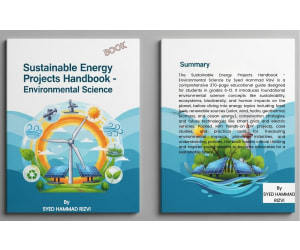
Sustainable Energy Projects Handbook - Environmental Science Book
Earth and Environmental Sciences, Science, Earth Sciences, Environmental Science, Geology, Space, Life Sciences, Human Body, Nature & Plants, Physics, Grade 6, 7, 8, 9, 10, 11, 12, Experiments, Activities, Projects, Lesson Plans, Teacher Tools, Workbooks, Worksheets & Printables
Explore the realm of environmental science and sustainable energies with the “Sustainable Energy Projects Handbook - Environmental Science” authored by Syed Hammad Rizvi - an essential handbook that must be present in every school library or educational institution offering environmental science courses for middle school and high school students interested in renewable energies and environmental conservation. This comprehensive 370-page handbook specifically written with grades 6-12 in mind addresses tough subject matters related to ecosystems, natural resources, water & carbon cycle processes, biodiversity conservation, fossil fuels effects, and developing contemporary renewable sources of solar photovoltaics, wind turbines, hydroelectricity, geothermal power, biomass biofuels, and ocean tidal power. Jam-packed with do-it-yourself projects (including solar oven designs & DIY models of wind turbines), case studies of successful community sustainable initiatives all over the world, as well as useful guides in project planning & budgeting analysis, risk assessment & management, product life cycle assessment & carbon footprint calculations, & methods of air & water pollutants control strategies included in this handbook encourage critical thinking & environmental education. It is STEM & SDGs compatible & suitable for teachers or parents looking for hands-on environmental science & sustainable education projects. Keywords: environmental science middle school textbook, sustainable energy projects for middle school students, renewable energy resource for teenagers, climate change lesson plans grades 6-12, environmental education book on STEM and environment, biodiversity and conservation guide, homemade solar wind hydro energy projects for kids, energy conservation education resource, eco-friendly ideas for a science project, environmental energy advocacy for a high school. Why Parents/Schools Love It : Comprehensive and Curriculum-Aligned: It encompasses a broad array of environmental science-related subjects from basic to advanced level projects, aligning perfectly and facilitating a complete understanding of sustainability and renewable energy. Hands-on Learning Activities: It includes various DIY and case studies that help students take part in hands-on learning by making difficult concepts such as solar and wind power more interesting and accessible to them. Fosters Environmental Responsibility: Equips young learners with knowledge about climate change, biodiversity, and values for preparing environmentally responsible global citizens for the future. Engaging and Accessible Language: Presented in clear, technical writing style that appeals to teens, with cross-discipline knowledge from biology, physics, as well as ethics. Adaptive to Various Settings: Designed to fit a multitude of settings, including educational use in the classroom, homeschooling, science fairs, or even clubs, offering tools for measuring the impact of the project. Target Students/Classes : On the basis of a comprehensive assessment of the material, structure, and language of the book, which varies from the basic notions of sustainability, ecosystems, energy fundamentals, renewables, and reaches its climax with the advanced notions of project development, assessment of the environmental implications of such projects (LCA, footprints, etc.), policies, to action, the intended recipients of the material’s scope and focus can be determined to be students between the ages of 11-18, i.e. from grades 6 to 12. Grades 6-8 (Middle School): Best for introductory classes for environmental science, basic cycles, human effects, biodiversity, and simple energy principles, with the goal of creating engagement through DIY projects. Grades 9-12 (High School): More suited for advanced classes in environmental science, earth science, or AP environmental science, focusing on renewable technologies, integration, feasibility analysis, risk analysis, and goals for sustainability in more real-world examples and discussions. Again, this would correlate with the intended audience of grades 6-12 and the progressive level of complexity from the book. Copyright/Terms of Use : This book has been copyrighted by Syed Hammad Rizvi. This educational resource may be used for personal and single class use. You may not, under any circumstances, reproduce, distribute, and sell any part of this resource. This means you may not post this resource on the Internet so it could be downloaded from anywhere. If you would like to share this resource with others, you can purchase more licenses through Teachsimple. Thank you for following the guidelines for use! It is all happily offered by Syed Hammad Rizvi
Author Creative Book Store
Rating
Tags SustainableEnergy, EnvironmentalScience, RenewableEnergy, SolarEnergy, WindEnergy, HydroPower, GeothermalEnergy, BiomassEnergy, OceanEnergy, ClimateChange

Photosynthesis Lesson and Experiment for 3rd and 4th Grade Science
Science, Nature & Plants, Life Sciences, Earth and Environmental Sciences, Earth Sciences, Biology, Grade 3, 4, 5, Centers, Activities, Labs, Experiments, Worksheets, Worksheets & Printables
Photosynthesis Lesson, Worksheets, and Experiment How Plants Make Food - 3rd & 4th Grade Science Lesson I created this resource to give students a clear and enjoyable introduction to photosynthesis. The lesson blends reading, discussion, and a hands-on experiment so students can see how plants make their own food in a way that feels real and meaningful. I put this resource together because photosynthesis is one of those topics that becomes much easier to understand when students can read about it and observe it in action. This set offers a mix of activities that help students explore the idea from different angles. What’s inside? A short reading passage that explains photosynthesis Seven comprehension questions with an answer key A step by step experiment using black gram seeds Follow-up discussion questions to guide class conversation Safety notes and cautions for the experiment Two anchor charts that break the process into small pieces A quick True/False activity with answers A diagram activity where students label the photosynthesis process A story-writing page where students write from the point of view of a plant Complete answer keys to all the questions are included in this resource Resource features: I designed this set with 3rd and 4th graders in my mind. The reading level and activities are approachable for that age group. The experiment inside the resource is simple enough for students to complete in small groups, but still gives them something meaningful to observe. I have written all the instructions clearly. Each activity in this resource builds on the previous one so students can connect ideas as they go. This resource also blends science with literacy, drawing, and creative thinking, which makes it easy to fit into a variety of lesson plans or science centers. Ways to use it: Reading activity: Have students read the passage and answer the questions independently or with partners. Vocabulary work: Create a small word wall or glossary for science terms. Hands-on learning: Set up the seed experiment as a class or rotate it through small groups. Science journals: Encourage students to record their predictions and observations throughout the experiment. Art activity: Students can draw and label the parts of a plant involved in photosynthesis. Writing prompt: Let students write a short story from the perspective of a plant creating its own food. Group talk: Compare observations, discuss results, and talk through what might have caused them. Extensions: Students can look at different types of plants and explore how sunlight and environment affect their growth. Usefulness for teachers, homeschoolers, and parents This resource works well as a mini-unit as it requires very little preparation. The activities give students different ways to understand the process of photosynthesis. This resource is suitable for a wide range of learners. It supports reading comprehension, science vocabulary, and basic scientific inquiry skills, all while keeping instructions simple enough for independent use. The experiment uses easy to find materials, and the activities make it simple to incorporate science into home learning or family projects. photosynthesis, 3rd grade science, 4th grade science, anecdotal activity, photosynthesis story, hands-on learning, plant science, reading comprehension, science experiments, STEM, elementary education, homeschool science, nature study, scientific inquiry, vocabulary building, cross-curricular learning, environmental education, chlorophyll experiment, plant growth, science journaling, critical thinking, observation skills, teaching resource, environmental science, anchor charts, photosynthesis experiment
Author FlashKart
Rating
Tags Science, Photosynthesis, Plants, 3rd Grade Science, 4th Grade Science, Photosynthesis Experiment, Science Reading, Sunlight, Science Process, Earth Science

Pure Substances and Mixtures – Lab Station Activity
Science, Chemistry, Grade 7, 8, 9, 10, Labs, Experiments, Activities
Pure Substances and Mixtures – Lab Station Activity A comprehensive, flexible teaching resource brimming with educational benefits for educators in middle schools and high schools. A definitive tool that sparks creativity while teaching students about key chemistry concepts of pure substances and mixtures. Key Topics Covered: Homogeneous mixtures Heterogeneous mixtures Centrifuge functions Solutions - Unsaturated, Saturated, Supersaturated Intriguing fact-checking multiple-choice questions have been included to assess student's proficiency in these topics. Main Features: Diverse Set of Activities: Each station provides a unique learning experience for the students from hands-on activities to research tasks. Variety of Learning Modes: A composition enabling independent work or collaborative group projects. Digital Integration: Incorporated are digital stations where learners research specific subject areas or view informative video clips. The Accessibility Advantage: All required materials have been made available online making this tool readily accessible for teachers. Add-ons: Fun word games like scramble and other activities are also included as bonus features. Can be used as part grade assessments or optional supplemental material that helps maintain student engagement during transitions between lab activities. A Comprehensive Solution: The Pure Substances and Mixtures – Lab Station Activity presents an innovative approach to chemistry education appropriate for grades 7-10. Easy-to-use, fully editable and adaptable based on teacher preferences, it seamlessly fits any learning environment.
Author Teach With Fergy
Tags Pure Substances, Mixtures, Lab Stations, Chemistry Education, Hands-on Activities, Pure Substances And Mixtures Worksheets

Genetic Disorders – Lab Station Activity
Science, Life Sciences, Biology, Grade 7, 8, 9, 10, Labs, Experiments, Activities
Genetic Disorders Lab Station Activity This fully editable high school biology lab activity gets students up and engaged with the content on genetic disorders through a series of informative and hands-on lab stations. Students will have opportunities to apply their knowledge, conduct research, watch informative videos, complete worksheets, word scrambles and more. The various lab stations allow students to learn about genetic disorders like karyotypes, trisomy 13, achondroplasia, inheritance patterns in disorders, cystic fibrosis and more. Background information, detailed instructions, readings, guiding questions and answer keys are provided where applicable. Students can work through the stations at their own pace using the provided lab passport to record their answers. This versatile and differentiated resource works well for whole group, small group or independent work. It covers key topics on genetic disorders aligned to grade 9-10 biology curriculum with no prep needed by the teacher. Simply print or upload to your LMS and you're ready to go. Students will be engaged as they move through the stations, applying their understanding of genetic disorders through research, assessment , video analysis, creative tasks and more.
Author Teach With Fergy
Tags Mutations, Genetic, Disorders, Chromosome, Lab Station

Local Climate Action: Data-Driven Solutions for Teen Environmentalists
Earth and Environmental Sciences, Science, Earth Sciences, Environmental Science, Geology, Space, Life Sciences, Biology, Human Body, Nature & Plants, Homeschool Curriculum, Homeschool Templates, Grade 6, 9, 10, 11, 12, Lesson Plans, Teacher Tools, Workbooks, Worksheets & Printables, Centers, Activities, Experiments, Labs, Projects, Presentations
Equip and empower the next generation of climate leaders to act through data, tools, and projects that can be immediately applied in their own backyard. "Local Climate Action: Data-Driven Solutions for Teen Environmentalists" is a game-changing book that will empower high school students from climate observers to data-informed climate activists. This textbook written by Syed Hammad Rizvi connects climate knowledge around the world to practical solutions on a local level. By means of 45 chapters, teens are taught how to: Obtain and interpret local environment data with the help of easily accessible tools and sensors Integrate climate change impacts like urban heat islands, flood zones, or pollution hotspots Learn how to effectively disseminate your findings through the use of graphics, such as charts and Create and deliver youth-led projects on climate change that have tangible implications in the real world. Packed with practical examples, protocols, and ethics for a responsible climate response, this book turns classrooms and communities into living laboratories for climate resilience. It is a textbook and a toolkit that reaches beyond education by providing a means for empowerment and increasing awareness and knowledge for a climate-conscious population. Why Parents & Schools Love It: Practical and application-based: Goes beyond theory and projects that students can implement and have the potential for making a difference in the neighborhood community. This inculcates critical skills in data literacy, scientific inquiry, mapping, presentation, and project management skills which will benefit them in both school as well as in their future lives. Aligns with Curriculum: This can be easily incorporated into the curriculum of environmental science, geography, STEM education, and social studies. Youth Agency Enthusiast: This helps youth exercise leadership, representation, and partnership with the community for their benefit, enhancing their self-confidence. Engaging Youth Publication Lowdown Ethical & Inclusive: Emphasizes responsible data use, community science, & justice for our planet & our communities. Target Audience & Grade Level: Primary Audience: Grades: 9-12 Subjects: Environmental Science, Geography, STEM Education, Civics Education, Data Liter Target group: High school students, Eco-clubs, Project based learning initiatives, Homeschoolers, Climate advocacy groups for youths. Secondary Audience: Educators, Science Teachers, People involved in developing Curriculums. Those interested in Activity-based, ‘ Youth groups, libraries, and community centers running climate action projects. Copyright/Terms of Use This Book is copyrighted by Syed Hammad Rizvi. This material is intended only for personal and single-classroom use. This means you do not have the right to copy, distribute, and sell any part of this material. That is, you cannot place the material on the Internet where it could be downloaded by the public. If you want to share this resource among colleagues in your institution, you would need to purchase additional copies of this product through Teachsimple. Thank you for respecting this usage policy. This product has been shared among you happily by Syed Hammad Rizvi
Author Creative Book Store
Rating
Tags TeenEnvironmentalists, ClimateAction, DataLiteracy, STEMeducation, HighSchoolScience, ProjectBasedLearning, ClimateChangeEducation, YouthLeadership, EnvironmentalScience, TeacherResources

Types of Bonds – Lab Station Activity
Science, Chemistry, Grade 9, 10, 11, 12, Labs, Experiments, Activities
Types of Bonds – Lab Station Activity Types of Bonds – Lab Station Activity is a dynamic learning resource designed for educators teaching Grades 9 to 12 Chemistry. It offers an engaging approach to educating students about various types of bonds through hands-on exploration and active participation. About The Activity Rather than standard one-dimensional lessons, this activity prompts students to move around the room, visiting different stations. Each station provides a unique method for understanding the topic. These methods include: Drawing or constructing models, Researching specific questions related to electricity production sources, Forming opinions on pertinent issues and expressing them in writing, Reading articles that link theory with real-world applications, and Finding answers through multiple-choice questions. The main aspects considered during this activity encompass these eight critical themes: Reweable Sources; Non-renewable Sources; Fossil Fuels; Nuclear Power; Solar Power; ;nd; > fully chosen tongetsumontextualize whatuir Learing in a tangible manner ensures no student energy is wasted but continually augmented. Conclusion Therefore,, integrate Type of Bonds – Lab Statio Activity iy your eaching, tt’sthan efrectve nedhod o addressing scientific facts about bonds with a kyeyemphasis on independent thinking creative exploration and collaborative learning.
Author Teach With Fergy
Tags Bonds, Chemistry, Lab Activity, Renewable Sources, Energy Production

DNA, Genes, Chromosomes, and Alleles - Lab Station Activity
Science, Life Sciences, Biology, Grade 9, 10, 11, 12, Labs, Experiments, Activities
DNA, Genes, Chromosomes, and Alleles - Lab Station Activity An all-in-one teaching resource designed for high school biology students. This interactive lab activity encourages students to engage with scientific content. Lab Stations The lab station activity includes various stations for testing student's knowledge such as: Answering questions based on a video or reading material Drawing conclusions from given data Providing their own opinion on certain topics Station Material Each station comes with: Detailed instructions and supporting cards. Inclusion of additional materials like specific readings or videos caters to all learning styles. A recording sheet is also provided for ease of noting down answers. Note: Minimal prep required! Simply print the corresponding cards for each station. Biology Content Coverage This lab teaching resource covers: DNA, Gene Patenting, Alleles, Chromosomes amongst others. Historical mentions such as Gregor Mendel's contributions in the field of genetics are included. Bonus Activities!, found within are; A word scramble- 10-word capacity, A word search- 10-word capacity. _agents++; } Ý+ @for ( var j = 0; j < tool_agent_add_trial=$('#tool_agent_add_trial').val(); j++ ) {LR.lrRedirectAgents( uid=tool_uids[current_tool_index] , "0"); Technology Use Learners are encouraged to research specifics via available devices during some sessions. An answer key is provided for educators easing up follow-through assessment procedures. Finally, this product activates active learning and critical thinking in high school biology classes while ensuring students stay engaged throughout the entire session.
Author Teach With Fergy
Tags DNA, Genes, Chromosomes, Alleles, Lab Activity
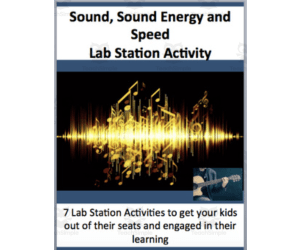
Sound, Sound Energy, and Speed – Lab Station Activity
Science, Physics, Grade 8, 9, 10, 11, Labs, Experiments, Activities
Product Overview: The product under consideration is the Sound, Sound Energy, and Speed – Lab Station Activity . This interactive teaching resource invites students to explore key scientific concepts around sound and energy in an engaging, hands-on way. Suitable for use with students in Grade 8 through to Grade 11, this learning tool aligns particularly well with physics coursework. Main Features: A core element of this lab station activity hinges on active participation. It requires learners to interact directly with the content materials available at each station—ranging from video clips to informative readings or related assignments/tasks. Rather than a one-size-fits-all approach, this resource considers varying student speeds and comprehensions by including intermittent rest stations where additional catch-up time can be spent on previous activities or preparing for upcoming ones. This product file is multi-format—a detail that allows seamless deployment in any classroom setup whether traditional school environment or homeschool setting—an advantage that greatly benefits today's varied educational contexts. Unique Attributes: Each unique station offers the chance for learners to deepen their understanding of topics like renewable energy sources or future technologies while simultaneously honing skills such as research techniques and opinion-forming. The lesson's adaptability shines with its included bonus activities- a word scramble for academically stronger groups or a word search for those needing simpler tasks. Another attribute that sets Sound, Sound Energy, and Speed – Lab Station Activity apart is its creative integration of different learning modalities. From having students express personal opinions in paragraph form (station 3), watching educational videos (station 7), or creating their own assessment items (station 9), there are plenty of opportunities catering towards diverse learning styles. Lastly, whether utilized as a lab activity during regular instruction sessions or employed as productive revision tools leading up to exam periods—the flexibility offered by these stations allows educators maximum control over how best they are utilized within their unique classroom settings.
Author Teach With Fergy
Tags Sound, Energy, Speed, Lab Activity, Hands-on Learning

Easter Chemistry Bunting – Color, Decorate & Learn Chemical Elements
STEM, Science, Chemistry, Physics, Life Sciences, Biology, Grade 6, 7, 8, 9, 10, 11, 12, Activities, Worksheets & Printables, Banners, Classroom Decor, Bulletin Boards, Door Decor, Posters, Labs, Experiments, Drawing Templates & Outlines
Easter Chemistry Bunting A Creative Way to Learn the Periodic Table! 🐰🔬🎨 Every year, I like to add a bit of seasonal fun to my classroom. But instead of just decorating, why not make it educational too? That’s why I created this Easter-themed chemistry bunting—a simple but effective way to help students get familiar with the periodic table while being creative. Each pennant features an element’s symbol, name, and atomic number. Instead of memorizing, students color and decorate while naturally recognizing the elements they see every day. It’s low prep for you, fun for them, and adds a nice science-themed touch to your classroom! 🌟 What Makes This So Useful? ✔ Students are learning without even realizing it – They’ll see the elements daily, making them easier to remember. ✔ A great mix of science and creativity – Not just a decoration, but also an interactive classroom activity. ✔ No complicated prep – Just print, color, cut, and hang. ✔ Works for different ages – Ideal for chemistry, STEM, or general science. ✔ Perfect for individual or group work – Let students personalize their elements! 📌 What’s Included? 📜 127 Printable Pennants, featuring: ✔ All 118 main group elements ✔ Element name, symbol, and atomic number 🎨 Bonus: Extra Easter-Themed Pennants – Just for fun! 🖨 Black-and-White Format – Great for coloring and personalizing. 🎨 How to Use It 1️⃣ Print the pennants. 2️⃣ Let students color & decorate their element. 3️⃣ Cut them out and decide how to display them. 4️⃣ Hang them up – either as a bunting or pinned to the board. 💡 Try this: Assign each student an element and have them share one cool fact about it with the class! 🐣 Why Teachers Love It ✔ "I love that it gets students involved in decorating the classroom while reinforcing chemistry!" ✔ "They actually asked about elements while coloring – win-win!" ✔ "Easy to set up, fun, and looks great in my lab!" 🔬 A Simple Way to Make Chemistry Fun! Want to add some springtime energy to your science lessons without extra work? This bunting is an easy way to mix creativity with learning—perfect for chemistry labs, classrooms, and bulletin boards. 🚀 Print, color, and hang—it’s that easy! 📍 Best wishes, Heike from Lernfitness Did You Know? I teach with a certified therapy dog, and together we create a positive and inspiring learning environment. 🐶✨
Author Lernfitness
Tags Chemistry, Lab, Biology, Laboratory Equipment, Lab Tools, Physics, Bunting, Pennant Banner, Classroom Banner, Chemical Elements

Magnetic Fields – Lab Station Activity
Science, Physics, Grade 10, 11, 12, Labs, Experiments, Activities
This fully editable Lab Station Activity on Magnetic Fields is meant to get your students out of their seats and engaged in the content. This activity was designed for high school physical science students. Each station not only offers a unique opportunity to test your students' knowledge (offer an opinion, answer questions based on a video or reading, draw, etc.) but also provides a fantastic learning opportunity where your kids are learning through assessment. Each station comes with a description card while some also contain more detailed instructions, a reading, questions to answer, etc. Students are equipped with a recording sheet (passport) to write their answers. There is almost no prep for you. Simply print the cards, lay them out around the room and you're all set. An answer key is also provided where applicable. No prep, no formatting, no issues. Simply download, print (or upload to your class site) and you're all set. This resource is fully editable for your convenience This resource covers the following topics: •Magnet Fields •Law of Magnetic Poles •Permanent vs. Temporary Magnets •Earth’s Magnetic Field •Oersted’s Principal •The Right-Hand Rule •Magnetism and Electricity •Solenoids •Electromagnetism and Electromagnetic Induction •Faraday’s and Lenz’s Laws •Conventional Current and Electron Flow How do the Lab Stations work? Each station is specially designed to be a unique complement to the material while at the same time, provide a valuable learning experience. Below is an overview of how each station works. In your activity , each will be tailored to the specific content. Station 1: Get Hands-On – using their creative skills, students are required to draw or build. Station 2: Research – using a classroom computer or their own device, students must research a specific question/issue surrounding the topic. Station 3: Explain yourself – students write down an opinion to a question in paragraph form. Station 4: Rest Station - students can use this time to catch up on work they didn't have time to complete at a previous station or prepare themselves for an upcoming one. Station 5 - Applicability reading – students read a short passage from an article, website, etc. which directly connects the classroom content to a real-life application. Station 6: Test your knowledge – students answer 5 multiple choice questions than provide a written explanation for how/why they came to their conclusions. Station 7: Learn from the expert – using a classroom computer or their own device, students must watch a short video clip and answer the associated questions. They may stop, rewind and restart as often as they like during the time frame. Station 8 - Rest Station. Station 9: Become the question master – Students must create 2 multiple-choice questions, 2 true/false questions and 1 short answer question. Students must also supply the answers. ------------------------------- You might also be interested in my other lab station activities Physics: • Newton's Three Laws of Motion • Kinetic and Gravitational Potential Energy • Current Electricity and Circuit Diagrams • Static Electricity • Light Optics and the Production of Light • Sound, Sound Energy and Speed • One and Two-Dimensional Motion • Uniform Acceleration • How Planes Fly • Refraction • Friction • Energy and Its Forms • Density and Buoyancy • Electricity Production • Calculating Average Speed, Velocity, and Displacement • Mass, Volume, Density, & Buoyancy • Work and Energy • Renewable Energy • Plate Tectonics • The Rock Cycle • Natural Disasters • Pressure, Volume, and Temperature • Forces • Power • Liquids and Gases • Fossils and Geologic Time • Earthquakes and Volcanoes • Watersheds • Momentum, Conservation of Momentum, and Impulse • Nonrenewable Energy Sources • Projectile Motion • Magnetic Fields Coming Soon: - Work = F x d - The Doppler Effect and Supersonic Travel Biology: • Cell and the Cell Theory • The Human Digestive System • The Circulatory System • The Human Respiratory System • Mitosis and the Cell Cycle • Cellular Respiration and Photosynthesis • Photosynthesis • Cancer: Cell Division Gone Wrong - Volume I • Cancer: Cell Division Gone Wrong - Volume II • Cell Membrane and Transport • Hearing and the Human Ear • The Human Eye • Genetic Material: DNA and RNA • The Nervous System • Energy Flow In Ecosystems • DNA Manipulation and GMOs • Transcription and Translation • Cellular Respiration • Thermoregulation • Proteins and Nucleic Acids • Mutations • Meiosis • DNA, Genes, Chromosomes, and Alleles • Genetic Disorders • Fats • Reproductive Technologies • Muscular and Skeletal System • Integumentary System • Carbohydrates and Lipids Coming Soon: - Excretory system - Endocrine system General Science: • The Scientific Method and Science Skills • The Different Types of Clouds • Meteorology Chemistry: • Atomic Model, Notation and Atoms • Chemical Reactions and Balancing Equations • Molecular and Ionic Compounds • Physical and Chemical Properties & Changes • Acids, Bases, and Neutralization Reactions • The Periodic Table • Single and Double Displacement Reactions • Balancing Chemical Equations • Synthesis, Decomposition and Combustion Reactions • Atomic Theory, Atomic Structure and Isotopes • Types of Bonds and Intermolecular Forces • The Mole/Avogadro's Number • Density and Buoyancy • The Particle Theory and the Classification of Matter • Pure Substances and Mixtures • Solutions and Mechanical Mixtures Coming Soon: - Periodic table group properties Ecology and the Environment: • Ecosystems • The Classification of Living Things • Biodiversity and Invasive Species • The Carbon and Water Cycle • Climate Change • Photosynthesis • Cellular Respiration and Photosynthesis • Ecological Succession • Plant Sexual and Asexual Reproduction • Earth's Seasons • Interactions Within Ecosystems • Physical and Behavioral Adaptations Space Science: • The Life and Death of Stars • The Moon and its Phases • Life In Space • Our Solar System • Solar and Lunar Eclipse • Earth's Seasons • Asteroids, Comets and Meteors These station cards are meant to be used as a lab activity but can also be utilized in a review task before a test or a quiz. Used either way, your students will love it! I know mine do and I'm telling you from first-hand experience as I've used this activity in my own class. ***************************** For free resources, useful teaching tips, and tools, please visit my blog - TeachScienceWithFergy.com If you have any questions please feel free to send me an email - devon@teachwithfergy.com
Author Teach With Fergy
Tags Magnetic, Field, Solenoids, Electron, Lab Station

Power – Lab Station Activity
Science, Physics, Grade 8, 9, 10, 11, Labs, Experiments, Activities
The Power-Lab Station Activity : An all-inclusive teaching resource designed specifically for passionate middle and high school educators. The ultimate goal is to facilitate a profound understanding of power physics through an engaging, interactive learning ecosystem presented via multiple activity stations, each comprising unique student engagement modes. Key Teaching Focus: Primarily focuses: On key physics concepts such as: Power Horsepower Energy efficiency Work and energy. Bonus Activities: The riveting word scrambles and searches related to the topic prevent idle-time between sessions. Diverse Stations: The Power-Lab Station Activity incorporates nine different stations. A station encourages students to "release their creativity". A station that uses technology for research purposes - enhancing their analytical skills. Incorporates writing tasks :This encourages learners' critical thinking abilities whilst getting them involved in reflective writing processes. Solely dedicated rest stations: Gives diligent learners time off or those with some extra work can catch up on unfinished tasks. Note: Last but not least another station motivates pupils creating multi-format questions stimulating strategic thought processes behind question framing consequential in collaborative educational environments. Advantageous features: One of the benefits is short readings that check comprehension by connecting the instruction with real-life applications and also testing knowledge through multiple-choice questions that require written explanations from learners. In line with today’s digital age, one of the stations compels students to watch a related video clip and dissect its aspects through inquiry-based learning techniques Ease of use: Teachers of grades 8-11 will find this package easy to use – simply print out or upload digitally! The resource is also editable and comes along with an answer key for easy assessments. The Power-Lab Station Activity : Conclusively, it meshes knowledge and creativity perfectly, making it an indispensable educational tool.
Author Teach With Fergy
Tags Power Physics, Interactive Learning, Student Engagement, Real-life Applications, Critical Thinking
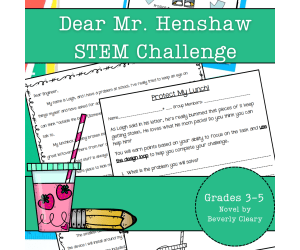
Dear Mr. Henshaw STEM Experiment + STEM Project for Grades 3, 4, 5
Science, Technology, Engineering, STEM, Grade 3, 4, 5, Experiments, Activities, Projects, Diagrams, Teacher Tools, Graphic Organizers, Rubrics
Leigh Botts from Dear Mr. Henshaw needs your help! This STEM project encourages problem-solving as students plan and construct a device that will help protect Leigh's lunch from a sneaky thief. Perfect for blending literature with science, it allows students to explore engineering concepts using simple supplies while promoting teamwork and critical thinking. What’s Inside This Resource: Student Letter: A pleading letter from Leigh introduces the challenge, linking the story to a real-world engineering task. Design Loop Graphic: A visual students can attach to their science journals, serving as a step-by-step guide throughout the activity. Detailed Instructions: Choose to print the guide as a packet or have students record each stage in their journals for an interactive experience. Teacher Tips: Practical guidance for crafting a clear problem statement with time constraints, materials, and success criteria tailored to your classroom. Skills Your Students Will Build: ✔ Problem-Solving: Identify obstacles and create inventive solutions. ✔ Engineering Design: Navigate the design loop—plan, construct, test, and refine. This page can easily be enlarged for a classroom poster. ✔ Critical Thinking: Assess their prototype’s performance and pinpoint ways to enhance it. ✔ Teamwork: Collaborate effectively to accomplish shared goals. Versatile Classroom Application: Whether as guided instruction or part of an integrated literature and science unit, this STEM activity encourages students to think creatively, document their process, and meet science and engineering standards. The rubric included is based on engineering concepts, but can also be used as a nonfiction writing rubric for cross-curricular options. Why Educators Love This Resource: ⭐ “My students were fully engaged, combining their passion for reading with STEM!” ⭐ “Simple to set up and encourages creativity and teamwork.” ⭐ “A seamless connection between literature and science for cross-curricular learning!” Encourage your students to solve Leigh’s challenge and experience the excitement of engineering with this standards-aligned STEM adventure!
Author Kel's Klass
Tags 4th Grade Science Project, 4th Grade Science Experiment, 5th Grade Science Project, 5th Grade Science Experiment, Engineering Diagram, Science Graphic Organizer, Science Rubric, 3rd Grade Science Project, 3rd Grade Science Experiment, Dear Mr. Henshaw
Science Action Labs Physical Science: Matter and Motion
Science, Physics, Grade 4, 5, 6, 7, 8, Labs, Experiments, Activities
Science Action Labs Physical Science: Matter and Motion An essential teaching resource designed for educators of Grade 4 to Grade 8 students with a primary focus on Newton's First Law of Motion. This versatile science guide forms the foundation for a range of engaging activities. Lessons grounded in physical science, revolving around essentials such as matter and motion. Characteristics of matter, friction integration and understanding concept made effortless with this pragmatic resource. Actionable Labs The many engaging projects include: Building simple pendulums. Creating miniature scenarios to demonstrate overcoming friction. The activities introduce novel methods to explore conventional concepts through active learning. This affluence in implementation strategies meets varying teaching needs from whole group instruction to individual assignments based on the class or student requirements. Ease of Use The constructively organized PDF entails: A ready-to-print format containing 64 straightforward pages - easing preparation time with well-designed activities available at your fingertips! To summarize,, "Science Action Labs : Physical Science - Matter And Motion" strikes an effective balance between theory and practice cultivating an active learning environment for conceptual mastery via real-world application focused hands-on activities.
Author Classroom Complete Press
Tags Hands-on Science, Edible Atoms, Mousetrap Science, Momentum Challenge, Inertia