2,474 products added recently
5th Grade Science Experiments
Enhance your fifth-grade science lessons with experiments that challenge and inspire. This collection covers topics like chemistry, human biology, and environmental science. By incorporating these experiments into your teaching, you can deepen students' knowledge and prepare them for more advanced scientific study.
Culture Lesson: Cultural Norms and Avoiding Stereotypes Worksheets
Social Studies, Psychology, Life Studies, Grade 5, 6, 7, Worksheets & Printables, Worksheets, Activities, Experiments, Lesson Plans, Teacher Tools
Do you want your students in grades 5-7 to learn how to become global citizens who can respect a variety of cultural norms and comprehend cross-cultural differences? Are you looking for a fun way to bring all of these ideas to life? Check out this ready-to-go lesson for your class. This 5-Page PDF is ready to print for your social studies classroom. It includes clear teacher instructions for a fun class simulation where half of your students will act out a new "class norm" (five options are provided such as not raising your hand to ask a question) that the other half of your class won't be expecting. While the simulation is happening, everyone will be working on a three page reading comprehension task. Students will read about cultural norms from around the world (slurping noodles when eating in Japan or nodding one's head to say "no" in Bulgaria). They will imagine how not knowing about the cultural norms in a place where they are travelling could lead to accidental misunderstandings. Students are also taught a simple definition of the concept of stereotypes, and they will think of how they are different from cultural norms. Finally, there is a 1-page reflection with prompts- perfect for after a class discussion. Teacher Instructions: 1. Split your class in two and talk to only one half. 2. Tell them that they will have a new “class cultural norm.” Pick one from the provided ideas. 3. When the whole class is reunited, pass out the reading page & worksheets. Students read about cultural norms and answer the questions. 4. As they work, the selected half will enact their new norm, which will confuse the other half of the class. 5. Once the point has been made, let the other half in on the secret. 6. Have a discussion about cultural norms and give students time to write a reflection about this lesson.
Author Grace Under Pressure
Tags Culture, Stereotypes, Cultural, Culture Worksheets, Cross Culture, Travel, Norms, Cultural Norms, Class Simulation, Simulation
The Mouse and the Motorcycle STEM Experiment + STEM Project
Science, Technology, Engineering, STEM, Grade 3, 4, 5, Experiments, Activities, Projects, Diagrams, Teacher Tools, Graphic Organizers, Rubrics
Help design and build a four-wheeled car for Ralph, the adventurous mouse, from The Mouse and the Motorcycle. Perfect for integrating literature and science, this challenge guides students to apply engineering principles using simple materials while fostering teamwork and critical thinking. What’s Inside This Resource: Student Letter: A fun letter from Ralph introduces the challenge, linking the story to a real-world engineering task. Design Loop Graphic: A visual students can attach to their science journals, serving as a step-by-step guide throughout the activity. Detailed Instructions: Choose to print the guide as a packet or have students record each stage in their journals for an interactive experience. Teacher Tips: Practical guidance for crafting a clear problem statement with time constraints, materials, and success criteria tailored to your classroom. Skills Your Students Will Build: ✔ Problem-Solving: Identify obstacles and create inventive solutions. ✔ Engineering Design: Navigate the design loop—plan, construct, test, and refine. This page can easily be enlarged for a classroom poster. ✔ Critical Thinking: Assess their prototype’s performance and pinpoint ways to enhance it. ✔ Teamwork: Collaborate effectively to accomplish shared goals. Versatile Classroom Application: Whether as guided instruction or part of an integrated literature and science unit, this STEM activity encourages students to think creatively, document their process, and meet science and engineering standards. The rubric included is based on engineering concepts, but can also be used as a nonfiction writing rubric for cross-curricular options. Why Educators Love This Resource: ⭐ “My students were fully engaged, combining their passion for reading with STEM!” ⭐ “Simple to set up and encourages creativity and teamwork.” ⭐ “A seamless connection between literature and science for cross-curricular learning!” Inspire your students to solve Ralph’s problem and discover the joy of engineering with this fun, standards-aligned STEM challenge!
Author Kel's Klass
Tags 4th Grade Science Project, 4th Grade Science Experiment, 5th Grade Science Project, 5th Grade Science Experiment, Engineering Diagram, Science Graphic Organizer, Science Rubric, 3rd Grade Science Project, 3rd Grade Science Experiment, The Mouse And The Motorcycle
Science Action Labs Science Fun: Activities to Encourage Students to Think and Solve Problems
Literature, Grade 4, 5, 6, 7, 8, Labs, Experiments, Activities
Science Action Labs Science Fun: Activities to Encourage Students to Think and Solve Problems This amazing resource is a practical teaching tool designed for educators, both in traditional classroom settings and homeschool environments. Geared towards students from Grades 4 up to Grade 8, this comprehensive collection of science labs aims at making learning more engaging. Overview: Diverse suite of activities for exploring scientific principles. Ranging from experiments like Spinning Science, Gravity Sci-Fun, Building a Better Boomerang to Static Electricity experiments . Boosts curiosity & encourages problem-solving through real-world applications. The unique lab activities equipped with supporting literature can really help in enhancing subject understanding by creating perfect balance between theory and practice. Bonuses: Fosters higher-order thinking skills Promotes active participation Makes learning process immersive & fun-focused The Offering: In a downloadable PDF format with 64 ready-to-print pages - just download, print, distribute! Versatile usage; from individual worksheets for reinforcement or review purposes or structured as part of group classes where discussion becomes part of the learning process. This offering truly brings flexibility right into your classroom or home! In Summary: If you're looking at enriching science materials aimed at promoting conceptual understanding over rote memorization - look no further than 'Science Action Labs Science Fun: Activities to Encourage Students To Think And Solve Problems'. A worthy addition indeed!
Author Classroom Complete Press
Tags Fun Activities, Science Labs, Reverse Technology, Gravity Science Fun, Problem Solving
Static Electricity Experiments for Elementary School
Physics, Science, Grade 1, 2, 3, 4, 5, Labs, Experiments, Activities
What is electrostatics, or static electricity? The buildup of electric charge on an object's surface is called static electricity, or electrostatics. This charge, which can be either positive or negative, is produced when a material's atoms acquire or lose electrons. When two objects rub against one another, electrons are transferred from one to the other, creating this static energy. As a result, one of the materials has a negative charge due to an excess of electrons, while the other material has a positive charge due to a lack of electrons. The feeling of a tiny electric shock after stepping on a rug and then contacting a metal surface is a typical example. Ten extremely basic and doable experiments that use or create static electricity are included in this useful e-book. Every experiment is safe and may be carried out using normal, commonplace items. Every experiment has comprehensive, step-by-step instructions. Lastly, each experiment is given a brief explanation so that elementary school pupils can understand it. Have fun exploring the marvels of static electricity through experimentation!
Author Bright Classroom Ideas Marketplace
Rating
Tags Static, Electricity, Experiment, Elementary, Science, Physics
"A Night Divided" S.T.E.A.M. Activities Packet
ELA, Literature, Reading, Grade 4, 5, 6, 7, 8, Activities, Experiments, Worksheets & Printables, Novel Studies, Projects
Influenced by the novel, A Night Divided, the S.T.E.A.M.-based activities included in this product focus on the content areas of math, science, engineering, and art. Students will learn about historical events such as the Space Race, the Cold War, the Berlin Wall, and the work of artist Keith Haring, who used artistic expression to advocate for social justice. Both PDF and Google Slides (digital) versions included! Collectively, as a class, the students will create a mural. Using the novel as a guide, students will analyze concepts such as theme, symbolism, elements of plot, character analysis, and more, then represent their understandings of these concepts through art. In addition, students become engineers as they design a method to dig through mountains to create sturdy and leak-proof tunnels; learn about simple machines in order to design and build a transportation system that can carry a load of dirt and rocks; and design and build a structure that will hold weight without collapsing. Finally, after learning more about the Space Race and how rockets work, students will build and launch a rocket. ⭐️This resource includes:⭐️ Both PDF and Google Slides (digital) versions included Mural Art Teacher’s Guide List of Materials & Teacher Notes Introduction: Videos and other resources about the Berlin Wall and the artist Keith Haring who created a mural on the Berlin Wall to advocate for social justice. Mural Art Activity Student Handouts Artist: Keith Haring Handout Mural Art Paper (3 options) Mural Art: Artist’s Note Mural Art: Rubric Critical Load Structural Design (6 pages total) Teacher’s Guide (3 pages) List of Materials & Teacher Notes Day 1: Introduction, or review, of structural engineering, efficiency ratings, & critical load; Planning Day 2: Construction, Testing, Present & Evaluate Student Handouts (3 pages) Student Planning Sheet Student Construction & Testing Sheet Student Evaluation Sheet Tunneling Through (8 pages total) Teacher’s Guide (4 pages) List of Materials & Teacher Notes Day 1: Introduction: Hook, Information about Mountain Tunneling, Planning Day 2: Construction Day 3: Testing & Evaluate Student Handouts (3 pages) Student Planning Sheet Student Evaluation Sheet (2 pages) Rubric (1 page) Wheeling Weight (8 pages total) Teacher’s Guide (4 pages) List of Materials & Teacher Notes Day 1: Introduction: Information about Simple Machines & Planning Day 2: Construction & Testing Day 3: Evaluate Student Handouts (4 pages) Student Planning Sheet Student Construction & Testing Sheet Student Evaluation Sheet (2 pages) Rocket Launch (6 pages total) Teacher’s Guide (3 pages) List of Materials & Teacher Notes Building Background: Videos and other resources on the Space Race and the Cold War. Day 1: Mini Lesson: Information and videos about how rockets work & Construction Day 2: Testing & Evaluate Student Handouts (3 pages) Student Construction Sheet Student Testing Sheet Student Evaluation Sheet You can find more of my resources here!
Author Creatively Gifted
Tags Novel Study Guide, Book Companion, S.T.E.A.M. Activities, Science, Math, Engineering, Cross Curricular, Space Race, Cold War, Berlin Wall
10 Plant Experiments for Elementary School
Nature & Plants, Life Sciences, Science, Grade 3, 4, 5, Labs, Experiments, Activities
These ten easy and entertaining plant experiments make science come to life. Students test the effects of soil, water, and light on plant growth in small groups. They observe how plants bend toward light, watch seeds grow, and watch celery drink colored water. Easy-to-find supplies and precise, detailed instructions are used in each experiment. The lesson teaches practical science skills like forecasting, observing, and documenting data while fostering curiosity and teamwork. Students can ponder, write, and reflect on what they observe with the help of the associated worksheet. To keep every student interested and involved, teachers can set up alternating experiment stations. The worksheet concludes with the answers. Although it can be modified for younger or older students, this curriculum is ideal for Grades 4-5. It links classroom instruction to nature and promotes experiential learning. This ready-to-use, low-prep lesson will add interest to your science class and allow your children to experiment, discover, and develop a love of plants!
Author Bright Classroom Ideas Marketplace
Rating
Tags Plant, Experiment, Lab, Biology, Botany, Elementary, Grade 4, Grade 5
Creative Science Activities for Active Learners
, Grade 5, 6, 7, 8, Activities, Experiments
Creative Science Activities for Active Learners: An Engaging Teaching Tool The Creative Science Activities for Active Learners resource is a high-energy tool kits that enhances your students' scientific knowledge. This resource offers over 50 exciting activities, each of which can be completed within 15 minutes. Designed to be versatile and flexible, it serves as an engaging kickstart to classroom discussions, homework tasks, or extra credit assignments. These quick but meaningful engagements perfectly fill the short moments between class schedules and standard lessons. A Comprehensive Scientific Learning Resource This resource primarily aims at enhancing and reinforcing students' comprehension of key scientific concepts. It presents topics from Life Science, Environmental Science, Earth/Space Science all in a fun way that appeals to active learners in grades 5-8. Evasion Tasks with Extra Challenges and Problem Solving Components All activities come with Extra Challenges and problem-solving aspects appealing to young curious minds. Key issues covered include pollution management, understanding space fragments phenomena or how parasites operate within their hosts. Creative science activities employment can lead to innovative thinking among pupils as they explore science's many wonders at their own pace! Your Acquisition Includes: A downloadable PDF file comprising of 128 ready-to-print pages made up of scientifically enriching adventures focused on experiments - neatly divided into bite-sized tasks for easy absorption without overwhelming the young scholars. The Creative Science Activities for Active Learners teaching tool is essential whether you're catering to a entire class, addressing small group settings or even providing guided homeschooling. This interactive learning experience will pave the way towards creative scientific discoveries.
Author Classroom Complete Press
Tags Creative Science, Science Experiments, Science Activities, Space Science, Life Science
Because of Winn Dixie STEM Experiment + STEM Project for Grades 3-5
Science, Technology, Engineering, STEM, Grade 3, 4, 5, Experiments, Activities, Projects, Diagrams, Teacher Tools, Graphic Organizers, Rubrics
Engage your students in a hands-on STEM challenge inspired by Because of Winn-Dixie! This exciting activity combines engineering, creativity, and problem-solving as students design and build a pet-friendly shelter for Winn-Dixie, the lovable dog who’s afraid of storms. Perfect for blending literature with science, this challenge encourages young minds to apply engineering principles using simple materials, all while developing teamwork, critical thinking, and innovation. What’s Included in This Resource: Student Letter: An engaging letter from Opal invites students to participate in the challenge, drawing a direct connection between the story’s problem and the real-world task. The Design Loop Visual: This visual aid is a great tool for students to glue into their science journals for easy reference. It can easily be enlarged as a classroom poster. Step-by-Step Directions: Detailed instructions that can be printed or written into science journals for a hands-on approach. These directions ensure that students stay on track while working through each part of the challenge. Teacher Notes: Helpful guidance to assist you in creating a clear problem statement, establishing success criteria, and setting time limits and materials. Tailor these instructions to fit your classroom’s needs. Key Skills Developed: ✔ Problem-Solving: Encourage students to identify challenges and develop creative, effective solutions. ✔ Engineering Design: Teach the design process by having students follow the design loop to plan, construct, test, and refine their pet shelters. (Discussing area and perimeter will enhance this design specifically.) ✔ Critical Thinking: Help students evaluate their designs, analyze their prototypes, and identify ways to improve them. ✔ Collaboration: Foster teamwork as students collaborate to achieve a common goal. Flexible Classroom Use: This STEM challenge is perfect for guided instruction or as part of a broader literature and science unit. It provides an opportunity for students to connect their love of reading with real-world applications, improving both their scientific knowledge and creative abilities. Why Teachers Love It: ⭐ “My students were so engaged! It brought their love for reading into STEM learning.” ⭐ “This activity is simple to set up and promotes creativity and teamwork.” ⭐ “The combination of literature and science created an ideal cross-curricular experience for my class.” Inspire your students to help Winn-Dixie solve his stormy dilemma and ignite their passion for engineering with this fun, standards-aligned STEM challenge!
Author Kel's Klass
Tags 4th Grade Science Project, 4th Grade Science Experiment, 5th Grade Science Project, 5th Grade Science Experiment, Engineering Diagram, Science Graphic Organizer, Science Rubric, Because Of Winn Dixie, 3rd Grade Science Project, 3rd Grade Science Experiment
Back to School Activities | 10 Science Experiments & Investigations
, Grade 3, 4, 5, Activities, Experiments
Back to School Activities | 10 Science Experiments & Investigations This educational tool offers a compilation of ten engaging science experiments perfect for both classroom settings and distant learning. Using common household items, these activities encourage students' interest in science, explain scientific methods, and add an element of fun. List of Experiments: Aerodynamics: Understanding which airplane design goes the furthest distance Pneumatics: How changing air volumes impact balloon travel? Chemical Reaction: What happens when different sodas react with Mentos? Experiment on cleaning methods: Which liquid cleans pennies best? & more... The resource includes detailed activity directions, recording sheets for logging findings - a crucial aspect of the scientific method procedure. Additionally, there's a materials page listing all necessary items for the experiments ensuring easy preparation. Ideal For: Homeschooling parents Tutors working with Grades 3-5 The activities can be performed as whole group assignments encouraging team-building or can be given individually to facilitate independent study time or homework routines at home. Beyond experimentation, this product boosts critical thinking skills through extension questions related to each activity making it not just another science experiment kit but a comprehensive teaching resource. This digital product is delivered in PDF format.
Author Chloe Campbell
Tags Science Experiments, Hands-on Activities, Back To School, Inquiry-based Learning, Scientific Method
Bridge to Terabithia STEM Experiment + STEM Project for Grades 4, 5, 6
Science, Technology, Engineering, STEM, Grade 4, 5, 6, Experiments, Activities, Projects, Diagrams, Teacher Tools, Graphic Organizers, Rubrics
Bring literature to life with this exciting STEM activity inspired by Bridge to Terabithia! This challenge sparks creativity and problem-solving as students plan and construct a bridge for King Jesse as he plans to make entrance to Terabithia safer. Perfect for blending literature with science, it allows students to explore engineering concepts using simple supplies while promoting teamwork and critical thinking. What’s Inside This Resource: Student Letter: A letter from Jesse introduces the challenge, linking the story to a real-world engineering task. Design Loop Graphic: A visual students can attach to their science journals, serving as a step-by-step guide throughout the activity. Detailed Instructions: Choose to print the guide as a packet or have students record each stage in their journals for an interactive experience. Teacher Tips: Practical guidance for crafting a clear problem statement with time constraints, materials, and success criteria tailored to your classroom. Skills Your Students Will Build: ✔ Problem-Solving: Identify obstacles and create inventive solutions. ✔ Engineering Design: Navigate the design loop—plan, construct, test, and refine. This page can easily be enlarged for a classroom poster. ✔ Critical Thinking: Assess their prototype’s performance and pinpoint ways to enhance it. ✔ Teamwork: Collaborate effectively to accomplish shared goals. Versatile Classroom Application: Whether as guided instruction or part of an integrated literature and science unit, this STEM activity encourages students to think creatively, document their process, and meet science and engineering standards. The rubric included is based on engineering concepts, but can also be used as a nonfiction writing rubric for cross-curricular options. Why Educators Love This Resource: ⭐ “My students were fully engaged, combining their passion for reading with STEM!” ⭐ “Simple to set up and encourages creativity and teamwork.” ⭐ “A seamless connection between literature and science for cross-curricular learning!” Empower your students to solve Jesse’s challenge and experience the excitement of engineering with this standards-aligned STEM adventure!
Author Kel's Klass
Tags 4th Grade Science Project, 4th Grade Science Experiment, 5th Grade Science Project, 5th Grade Science Experiment, 6th Grade Science Project, 6th Grade Science Experiment, Engineering Diagram, Science Graphic Organizer, Science Rubric, Bridge To Terabithia
Photosynthesis Lesson and Experiment for 3rd and 4th Grade Science
Science, Nature & Plants, Life Sciences, Earth and Environmental Sciences, Earth Sciences, Grade 3, 4, 5, Centers, Activities, Labs, Experiments, Worksheets, Worksheets & Printables
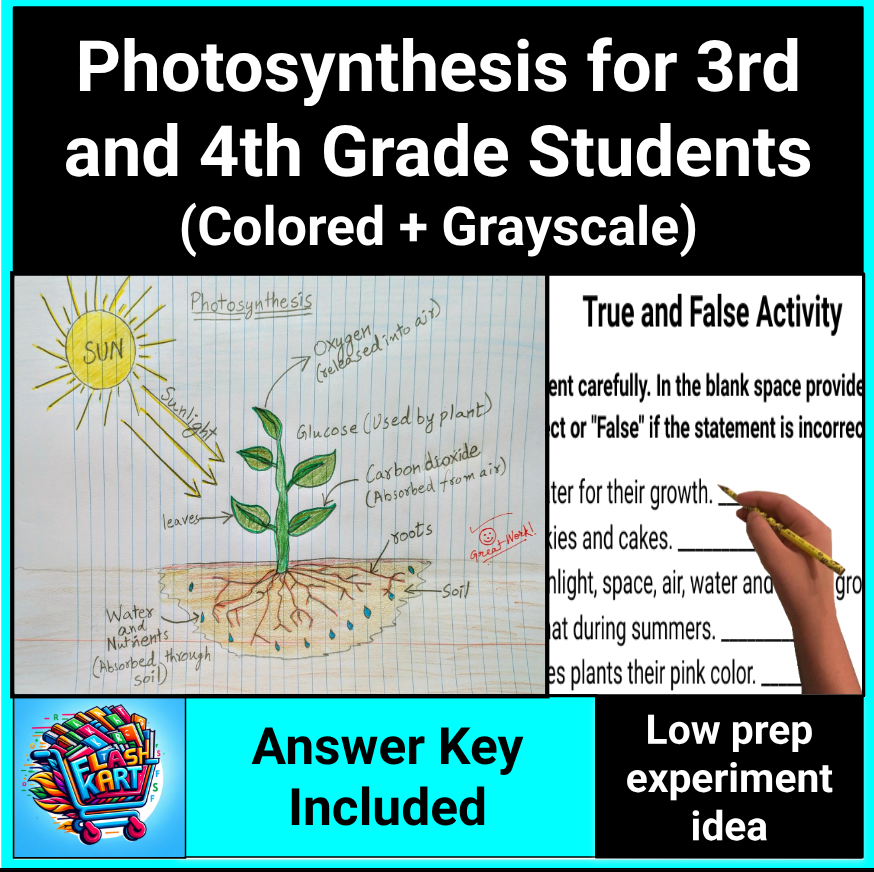
Photosynthesis Lesson, Worksheets, and Experiment How Plants Make Food - 3rd & 4th Grade Science Lesson I created this resource to give students a clear and enjoyable introduction to photosynthesis. The lesson blends reading, discussion, and a hands-on experiment so students can see how plants make their own food in a way that feels real and meaningful. I put this resource together because photosynthesis is one of those topics that becomes much easier to understand when students can read about it and observe it in action. This set offers a mix of activities that help students explore the idea from different angles. What’s inside? A short reading passage that explains photosynthesis Seven comprehension questions with an answer key A step by step experiment using black gram seeds Follow-up discussion questions to guide class conversation Safety notes and cautions for the experiment Two anchor charts that break the process into small pieces A quick True/False activity with answers A diagram activity where students label the photosynthesis process A story-writing page where students write from the point of view of a plant Complete answer keys to all the questions are included in this resource Resource features: I designed this set with 3rd and 4th graders in my mind. The reading level and activities are approachable for that age group. The experiment inside the resource is simple enough for students to complete in small groups, but still gives them something meaningful to observe. I have written all the instructions clearly. Each activity in this resource builds on the previous one so students can connect ideas as they go. This resource also blends science with literacy, drawing, and creative thinking, which makes it easy to fit into a variety of lesson plans or science centers. Ways to use it: Reading activity: Have students read the passage and answer the questions independently or with partners. Vocabulary work: Create a small word wall or glossary for science terms. Hands-on learning: Set up the seed experiment as a class or rotate it through small groups. Science journals: Encourage students to record their predictions and observations throughout the experiment. Art activity: Students can draw and label the parts of a plant involved in photosynthesis. Writing prompt: Let students write a short story from the perspective of a plant creating its own food. Group talk: Compare observations, discuss results, and talk through what might have caused them. Extensions: Students can look at different types of plants and explore how sunlight and environment affect their growth. Usefulness for teachers, homeschoolers, and parents This resource works well as a mini-unit as it requires very little preparation. The activities give students different ways to understand the process of photosynthesis. This resource is suitable for a wide range of learners. It supports reading comprehension, science vocabulary, and basic scientific inquiry skills, all while keeping instructions simple enough for independent use. The experiment uses easy to find materials, and the activities make it simple to incorporate science into home learning or family projects. photosynthesis, 3rd grade science, 4th grade science, anecdotal activity, photosynthesis story, hands-on learning, plant science, reading comprehension, science experiments, STEM, elementary education, homeschool science, nature study, scientific inquiry, vocabulary building, cross-curricular learning, environmental education, chlorophyll experiment, plant growth, science journaling, critical thinking, observation skills, teaching resource, environmental science, anchor charts, photosynthesis experiment
Author FlashKart
Rating
Tags Science, Photosynthesis, Plants, 3rd Grade Science, 4th Grade Science, Photosynthesis Experiment, Science Reading, Sunlight, Science Process, Earth Science
Number the Stars STEM Experiment + STEM Project for Grades 4, 5, 6
Science, Technology, Engineering, STEM, Grade 4, 5, 6, Experiments, Activities, Projects, Diagrams, Teacher Tools, Graphic Organizers, Rubrics
This hands-on activity combines creativity and problem-solving as students design and build a basket for Anne Marie to get the package safely to Uncle Henrik, based on the novel Number the Stars! Perfect for integrating literature and science, this challenge encourages students to apply engineering principles using simple materials while fostering teamwork and critical thinking. What’s Inside This Resource: Student Letter: A letter from Anne Marie introduces the challenge, linking the story to a real-world engineering task. Design Loop Graphic: A visual students can attach to their science journals, serving as a step-by-step guide throughout the activity. Detailed Instructions: Choose to print the guide as a packet or have students record each stage in their journals for an interactive experience. Teacher Tips: Practical guidance for crafting a clear problem statement with time constraints, materials, and success criteria tailored to your classroom. Skills Your Students Will Build: ✔ Problem-Solving: Identify obstacles and create inventive solutions. ✔ Engineering Design: Navigate the design loop—plan, construct, test, and refine. This page can easily be enlarged for a classroom poster. ✔ Critical Thinking: Assess their prototype’s performance and pinpoint ways to enhance it. ✔ Teamwork: Collaborate effectively to accomplish shared goals. Versatile Classroom Application: Whether as guided instruction or part of an integrated literature and science unit, this STEM activity encourages students to think creatively, document their process, and meet science and engineering standards. The rubric included is based on engineering concepts, but can also be used as a nonfiction writing rubric for cross-curricular options. Why Educators Love This Resource: ⭐ “My students were fully engaged, combining their passion for reading with STEM!” ⭐ “Simple to set up and encourages creativity and teamwork.” ⭐ “A seamless connection between literature and science for cross-curricular learning!” Empower your students to solve Anne Marie's immediate need and experience the excitement of engineering with this standards-aligned STEM adventure!
Author Kel's Klass
Tags 4th Grade Science Project, 4th Grade Science Experiment, 5th Grade Science Project, 5th Grade Science Experiment, 6th Grade Science Project, 6th Grade Science Experiment, Engineering Diagram, Science Graphic Organizer, Science Rubric, Bridge To Terabithia
Stone Fox STEM Experiment + STEM Project for Grades 3, 4, 5
Science, Technology, Engineering, STEM, Grade 3, 4, 5, Experiments, Activities, Projects, Diagrams, Teacher Tools, Graphic Organizers, Rubrics
Little Willy is looking for a way to build a sled that will honor Searchlight, in this STEM project inspired by Stone Fox. This science project encourages problem-solving as students plan and construct a sled that will be able to carry Willy safely across a block of ice. Perfect for blending literature with science, it allows students to explore engineering concepts using simple supplies while promoting teamwork and critical thinking. What’s Inside This Resource: Student Letter: A heartfelt letter from Little Willy introduces the challenge, linking the story to a real-world engineering task. Design Loop Graphic: A visual students can attach to their science journals, serving as a step-by-step guide throughout the activity. Detailed Instructions: Choose to print the guide as a packet or have students record each stage in their journals for an interactive experience. Teacher Tips: Practical guidance for crafting a clear problem statement with time constraints, materials, and success criteria tailored to your classroom. Skills Your Students Will Build: ✔ Problem-Solving: Identify obstacles and create inventive solutions. ✔ Engineering Design: Navigate the design loop—plan, construct, test, and refine. This page can easily be enlarged for a classroom poster. ✔ Critical Thinking: Assess their prototype’s performance and pinpoint ways to enhance it. ✔ Teamwork: Collaborate effectively to accomplish shared goals. Versatile Classroom Application: Whether as guided instruction or part of an integrated literature and science unit, this STEM science project encourages students to think creatively, document their process, and meet science and engineering standards. The rubric included is based on engineering concepts, but can also be used as a nonfiction writing rubric for cross-curricular options. Why Educators Love This Resource: ⭐ “My students were fully engaged, combining their passion for reading with STEM!” ⭐ “Simple to set up and encourages creativity and teamwork.” ⭐ “A seamless connection between literature and science for cross-curricular learning!” Encourage your students to help Little Willy achieve his goals and experience the excitement of engineering with this standards-aligned STEM adventure!
Author Kel's Klass
Tags 4th Grade Science Project, 4th Grade Science Experiment, 5th Grade Science Project, 5th Grade Science Experiment, Engineering Diagram, Science Graphic Organizer, Science Rubric, 3rd Grade Science Project, 3rd Grade Science Experiment, Stone Fox
Science Action Labs Environment: Explorations in Environmental Science
Science, Earth and Environmental Sciences, Environmental Science, Grade 4, 5, 6, 7, 8, Labs, Experiments, Activities
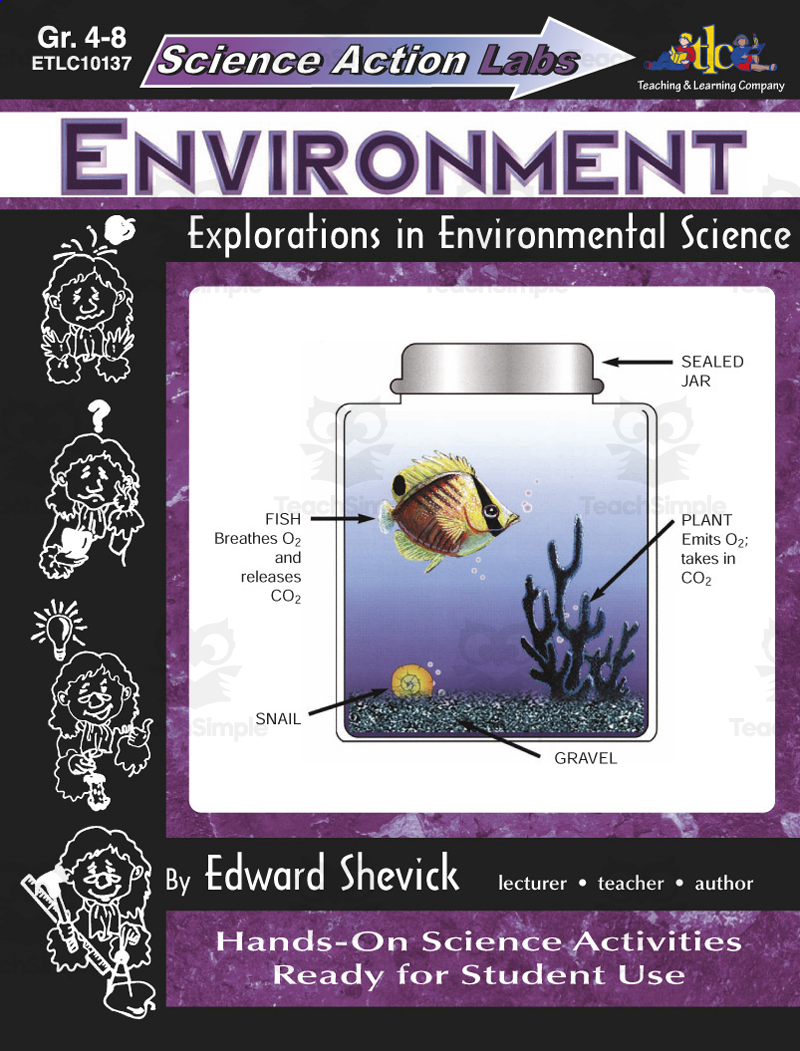
Science Action Labs Environment: Explorations in Environmental Science This comprehensive teaching resource is designed to bring science to life for Grade 4 to 8 students. The toolkit offers an interesting adventure into environmental science, provoking students to engage deeply with various scientific problems. Main Features: The resource primarily focuses on different scientific mysteries which can be applied in a variety of classroom settings. It can be used as part of whole-group instruction, in small study groups or even assigned as homework, opening doors for differentiated learning. Gives both teachers and students the freedom to experiment with a wide array of scientific concepts without feeling overwhelmed. Provides ample opportunities for promoting active learning through hands-on experience. Molding Young Minds: Students are encouraged to use their thinking abilities and problem-solving skills vastly while navigating through these intriguing scientific puzzles. It triggers interest about environmental science subjects via engaging labs thereby fostering deeper understanding amongst the youngsters. Syllabus Compatibility and Approachability: The toolkit contains 64 ready-to-print PDF pages packed with practical content making it align perfectly with core Environmental Science syllabus common at primary schools. Additionally, the easy-to-comprehend language used throughout this resource accommodates varying reading abilities present within those grades. Educational Impact This tool truly simplifies intricate ideas and facilitates children approach them at their own pace under guided supervision from educators. By integrating this aid into lesson planning - educators could considerably boost classroom discussions around logical reasoning all while effectively sparking intellectual growth among budding learners over time.' Lasting Influence: Habitual usage of this dynamic resource not only amplifies student engagement but also succeeds to instill critical-thinking skills crucial in developmental years leading up towards higher education—making education substantial and nourishing at every step.
Author Classroom Complete Press
Tags Environmental, Science, Action Labs, Explorations, Science Activity
10 Edible Science Experiments for Elementary Students
Chemistry, Science, Grade 1, 2, 3, 4, 5, Labs, Experiments, Activities
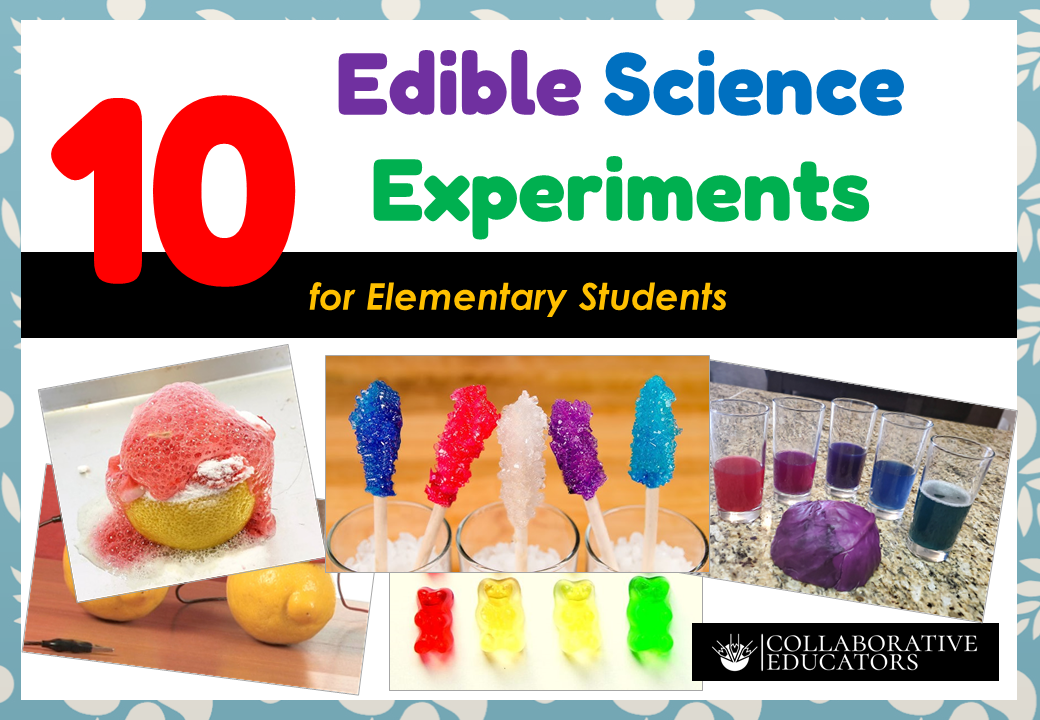
Prepare yourselves for some incredibly entertaining science! "Edible Science Experiments for Elementary Explorers," this book, is your pass to a delicious journey. Do you wish to witness a rainbow that is (almost) edible? We have it. Consider creating enormous gummy bears. Simple as pie. You can even produce real butter and shake cream. That's cool, isn't it? There are ten incredible experiments within. You can find items in your kitchen for each one. The steps are quite easy. We give you detailed instructions. And you know what? The majority of the outcomes are yours to keep! You'll learn cool stuff too. Like why some liquids float and others sink. Or how mixing things can make bubbles. Science doesn't have to be boring. This book proves it! So grab your grown-up, put on your apron, and let's get started. You'll be a science whiz in no time. And you'll have some tasty treats along the way. It's science you can taste! Let the edible experiments begin!
Author Bright Classroom Ideas Marketplace
Rating
Tags Science, Chemistry, Lab, Elementary, Experiment
Race Car Science Lab
, Grade 5, 6, 7, 8, Activities, Experiments
This resource is a Race Car Science Lab . The objective is o teach students the process of the scientific method, or to review the process with students who have already learned it. Students will work in groups to complete this laboratory activity. Instructions for set-up are included.
Author Maude in the Middle
Tags Science Lab, Race Cars, Scientific Method, Variables, Student Data, Carscience
Science Action Labs Sound & Light
Science, Physics, Grade 4, 5, 6, 7, 8, Labs, Experiments, Activities
Science Action Labs Sound & Light An exceptional educational resource aimed especially at students in Grades 4-8, focusing predominantly on engaging physical science subtopics. This easy-to-use workbook captivates the minds of budding learners, stimulating their imagination and curiosity through hands-on experience with sound and light concepts. Participatory learning is favored over mere observation. Students engage in entertaining experiments using commonplace objects like mirrors and flashlights to unpack complex scientific principles in a digestible manner. By interacting with sound waves and light as reflected or emitted from these objects, young minds gain better comprehension of scientific theories. Sir Isaac Newton's wisdom is celebrated throughout the pages of this book. Simplified explanations grounded in his concepts build understanding while additional nuggets of information further enrich knowledge, fostering a lighthearted yet potent educational environment for the pupils. Encouragement is key — plentiful doses are offered while confidently guiding learners on their journey. Versatile Usage The Science Action Labs Sound & Light primarily serves classroom usage during whole-group instruction, but also can work effectively for smaller group engagement - such as after-school science clubs or other similar activities. It even supports homeschooling parents looking to reinforced their current curriculum effectively. Instructor’s Asset For added convenience, this tool includes a single manageable PDF file containing 64 print-ready pages formatted for standard paper sizes . This becomes ideal when preparing assignments or practical sessions need to be straightforward! Besides serving as worksheets that underpin knowledge gained during teaching sessions, these materials could also support homework assignments; thus linking school-based learning into home-time follow-up tuning perfectly. In Summary: The Science Action Labs Sound & Light translates abstract scientific theories into tangible understanding via active tasks. Because truly, nothing embeds learning quite like doing!
Author Classroom Complete Press
Tags Action Labs, Science Labs, Sound, Light, Science Worksheet
Science Action Labs Animal Science: Active Science About Animals
Science, Life Sciences, Animals, Grade 4, 5, 6, 7, 8, Labs, Experiments, Activities
Science Action Labs Animal Science: Active Science About Animals This top-notch teaching aid is targeted towards Grades 4 to Grade 8. It focuses on subjects like science and zoology, with intriguing exploration at the core of its approach. The resource comprises a single PDF file featuring 64 ready-to-print pages for expedient preparation by educators. Each page aims to deepen students' understanding of various aspects of animal science making it an ideal part of any curriculum focusing on Zoology. The versatility of the material allows you to adapt it according to your teaching strategy - be it whole-group sessions or small group collaborations, ensuring seamless integration across different pedagogical methods. You can simulate animal habitats within your classrooms using hands-on explorations laid out in this versatile document. There's scope for learners' active engagement with interesting fish experiments that are sure to feed their curiosity and foster scientific temperaments. Create Their Own Creature! Your students can harness their creative power when asked to conceive their very own creature during lessons! Feel free to assign these as homework - individual assignments not only consolidate understanding but also enhance personal problem-solving skills amongst students, moulding them into budding scientists! A Comprehensive Learning Aid: This educational tool comes packed with comprehensive learning concepts, crisply explained across a myriad topics surrounding animals such as habitats, ecosystem balances or characteristics etc. This gives you an effective method for disseminating knowledge about animals' lives and the crucial roles they play in sustaining life on earth. In Conclusion: In essence, the Science Action Labs Animal Science: Active Science About Animals is more than just another academic worksheet set – it ignites learner engagement through Darwinian exploration! Such compelling features make these user-friendly yet rigorous academic worksheets an indispensable resource for any educator who values high-quality educational supplements.
Author Classroom Complete Press
Tags Animal Science, Action Labs, Super Animals, Animal Habitats, Earthworm Lab
Fun Science Activities
, Grade 2, 3, 4, 5, Activities, Experiments
Here is a set of Fun Science Activities. There are 38 activities to choose from. Each page will tell you what you need and how to implement the activity . Students will love these experiments any time of the year. A cumulative material list is included at the end.
Author DK's Creations
Tags Science Packet, Experiments, Writing, Chemistry, Painting, Fun Science Lessons
Scientific Method Interactive Foldable Booklets – EBOOK
, Grade 2, 3, 4, 5, 6, 7, 8, 9, 10, 11, 12, Activities, Experiments, Worksheets & Printables, Worksheets
Looking for a creative way to not only TEACH the Scientific Method, but also a fun way for the students to DOCUMENT the Scientific Method while conducting an investigation or doing an experiment? Look no further! Inside, you will find 5 interactive foldables that you may use for this purpose! There are both color and black & white versions of 2 of the foldables. These 5 foldables cover: •Title/Purpose •Hypothesis •Research •Materials •Procedures •Results •Data •Conclusion This product is downloadable as a PDF file. Print, cut, fold, and create! Keywords: scientific method, hypothesis, research, materials, procedure, results, data, analysis, conclusion, experiment, investigation, interactive foldable, interactive notebook
Author Knowledge Box Central
Tags Scientific Method, Science, Research, Experiment, Conclusion
Tiger Rising STEM Experiment + STEM Project for Grades 4, 5, 6
Science, Technology, Engineering, STEM, Grade 4, 5, 6, Experiments, Activities, Projects, Diagrams, Teacher Tools, Graphic Organizers, Rubrics
This hands-on activity combines creativity and problem-solving as students design and build a tower for the safety of the tiger in the novel, Tiger Rising. Perfect for integrating literature and science, this challenge encourages students to apply engineering principles using simple materials while fostering teamwork and critical thinking. What’s Inside This Resource: Student Letter: A letter from Rob Horton introduces the challenge, linking the story to a real-world engineering task. Design Loop Graphic: A visual students can attach to their science journals, serving as a step-by-step guide throughout the activity. Detailed Instructions: Choose to print the guide as a packet or have students record each stage in their journals for an interactive experience. Teacher Tips: Practical guidance for crafting a clear problem statement with time constraints, materials, and success criteria tailored to your classroom. Skills Your Students Will Build: ✔ Problem-Solving: Identify obstacles and create inventive solutions. ✔ Engineering Design: Navigate the design loop—plan, construct, test, and refine. This page can easily be enlarged for a classroom poster. ✔ Critical Thinking: Assess their prototype’s performance and pinpoint ways to enhance it. ✔ Teamwork: Collaborate effectively to accomplish shared goals. Versatile Classroom Application: Whether as guided instruction or part of an integrated literature and science unit, this STEM activity encourages students to think creatively, document their process, and meet science and engineering standards. The rubric included is based on engineering concepts, but can also be used as a nonfiction writing rubric for cross-curricular options. Why Educators Love This Resource: ⭐ “My students were fully engaged, combining their passion for reading with STEM!” ⭐ “Simple to set up and encourages creativity and teamwork.” ⭐ “A seamless connection between literature and science for cross-curricular learning!” Encourage your students to provide a safe haven for the tiger (and Rob and Sistine?) and experience the excitement of engineering with this standards-aligned STEM adventure!
Author Kel's Klass
Tags 4th Grade Science Project, 4th Grade Science Experiment, 5th Grade Science Project, 5th Grade Science Experiment, 6th Grade Science Project, 6th Grade Science Experiment, Engineering Diagram, Science Graphic Organizer, Science Rubric, Tiger Rising
Nonrenewable Energy Sources Lab Station Activity
Science, Chemistry, Grade 5, 6, 7, 8, 9, 10, 11, Labs, Experiments, Activities
Nonrenewable Energy Sources Lab Station Activity An expressive teaching resource fashioned to infuse active, hands-on learning in your science classroom. This Lab Station Activity is an engaging, interactive dive into nonrenewable energy sources and their impacts. It is tailored for grades 5 to 11, aligning with the NGSS standards MS-ESS3-4, MS-ESS3-5, and HS-ESS3-4.. Educational Approach The activity embraces a diversified approach, integrating multiple modes of learning at each stage. This not only ensures student involvement but also caters for all kinds of learners regardless of their strength or preferred style. Fields covered include biomass, fossil fuels, and nuclear energy among other topics; along with electricity generation and global warming aspects that highlight real-world application. The Stations Set Up: Drawing/Building: Students engage in creative processes at this station. Tutorial Hunt: Here, students find answers to specific questions surrounding non-renewable energy. Perspective Sharing:Socratic-style interaction where students give written opinions/thoughts on certain issues mentioned in prompts given. Literacy Appraisal: Hones reading comprehension as students explore topical news about real life implications of non-renewable energy sources. Knowledge Test : Learners assess self-understanding through multiple choice questions related to the subject matter . Exciting Multimedia : Students engage with short, educational video clips about non-renewable energy sources and try to answer questions based on these Additional Complementary Activities : To ensure the energetic tempo is unbroken while transitioning between stations, this activity includes: word searches and word scrambles. User-Friendly Format : The product comes in an easy-to-use format that requires minimal prep—just print out the cards and distribute them around your classroom! It's fully editable so you have leeway to make it relatable to your teaching style or class needs. An answer key likewise avails a compact verifying tool for responses when needed. Pedagogical Flexibility : This active learning tool provides flexibility by catering for large-group instruction during class time as well as small collaborative groups. It can also be given as homework for individual students .
Author Teach With Fergy
Tags Nonrenewable Energy, Lab Station Activity, Hands-on Learning, NGSS-aligned, Interactive, Energy Labs Middle School
Science Experiment: Independent, Dependent, and Controlled Variables
Science, Basic Science, Grade 4, 5, 6, 7, 8, Activities, Experiments
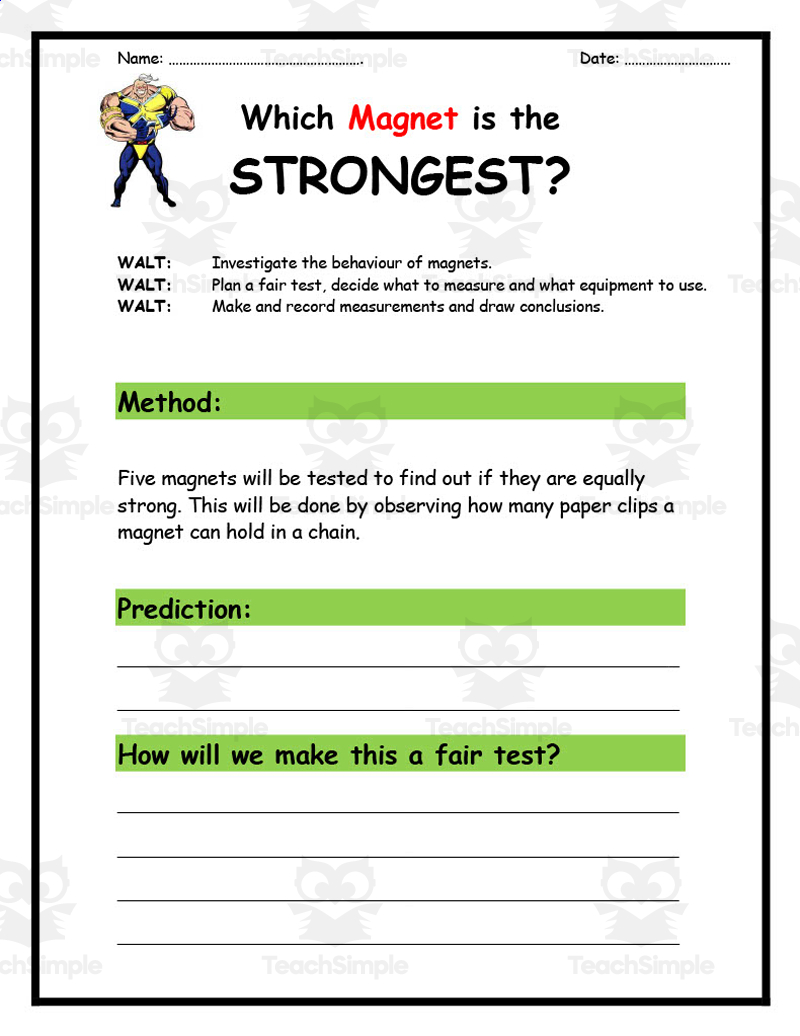
This fun science lesson is a great introduction for a science fair unit or a beginning of the year scientific method unit when you need to teach your students how to carry out a true experiment . It teaches students about independent, dependent and controlled variables using humour and real-life situations. The first page has fill-in-the blank notes about a pretend experiment I completed that had some mistakes in the design. Students should stay engaged and focused throughout the lesson component as they have to fill in the blanks. They should start to think about why controlling variables matters, and they learn the relevant vocabulary. The second page gives students a chance to start brainstorming some basic experimental design ideas on their own or in pairs. They are given three situations and need to think of independent variables they could alter, what dependent variable that would affect, and all of the other variables they would need to carefully control. At the end, there is a quick review to reinforce the relevant vocabulary. Grades to Use With: This lesson can easily work in a variety of grades in the middle years, from grades 4-8 and possibly beyond! Standards: NGSS3-5-ETS1-3 Plan and carry out fair tests in which variables are controlled and failure points are considered to identify aspects of a model or prototype that can be improved. If you enjoy this science activity, check out some other options in my store: Personal Carbon Emissions /Footprint: Integrated Math and Earth Sciences Lesson: Ways to Slow Climate Change Periodic Table: Element Baseball Cards STEM Project: Extreme Environment Technology Design and "Shark Tank" Presentation STEM Project: Climate Change Solutions 8 Low-Prep STEM Tasks for Elementary and Middle School Students: Simple Handouts for Each Experiment
Author Grace Under Pressure
Tags Science Experiments, Independent Variable, Dependent Variable, Science Fair, Scientific Method, Control Variable, Experiment, STEM, Science, Elementary Science, In A Controlled Scientific Experiment, Independent Dependent And Controlled Variables, Variables In Science Experiments, Independent, Dependent And Controlled Variables, Scientific Experiment Variables, What Is A Controlled Scientific Experiment, Controlled Variable Scientific Method, Independent And Controlled Variables, Controlled Scientific Experiment, What Are Controlled Variables In A Science Experiment, Science Fair Project Ideas With Independent And Dependent Variables, Science Fair Variables, What Is An Independent Dependent And Controlled Variable, Science Experiments With Independent And Dependent Variables, Independent Controlled And Dependent Variables, What Is The Control Of A Science Experiment, Examples Of Independent Dependent And Controlled Variables, Controls In Science Experiment, What Is A Controlled Scientific Study Of Specific Variables, Controlled Variable Science, What Are Variables In A Science Project, Variables In A Science Project, Controlling Variables In Science, What Is A Controlled Variable In A Science Experiment, Controlled Variables Science, Control Science Experiments, Independent And Dependent Variables Worksheet Middle School Science, Dependent Independent And Controlled Variables, Science Experiments With Variables, What Is The Difference Between Independent And Dependent And Controlled Variables, Science Variables Coloring Page, 3 Controlled Variables, In A Controlled Scientific Experiment,, Variables Of A Science Project, Control Dependent And Independent Variables, Control Variables In Science, Controlled Variables In Science, Control Variables Science, Variables Science Experiments, Independent Variable Clipart, Independent Dependent And Control Variables, What Are Independent Dependent And Controlled Variables, Variables In A Science Experiment, Science Experiment Control, Variables For Science Projects
Science Action Labs Health Science: Active Health Investigations
, Grade 4, 5, 6, 7, 8, Labs, Experiments, Activities
Science Action Labs Health Science: Active Health Investigations Manifesting as a practical teaching resource, 'Science Action Labs Health Science: Active Health Investigations' is expertly crafted to inculcate a living perspective on health science. It caters diligently to the pedagogical needs of students from 4th to 8th grades and presents itself as an accessible PDF resource furnished with 64 printable pages. Action Laboratories for Engaging Pedagogy The intricacy of these active laboratories lies in their ability to draw interest and provoke active participation, thereby unveiling diverse facets of health science. The enigmatic scientific principles associated with human health are transformed into relatable concepts, allowing students to examine physiological aspects such as breathing and digestion practically and enjoyably. This unique form of assimilating information opens avenues not only into understanding the brain's functionality but also applying acquired knowledge about one's physical wellbeing proactively. The multi-facet studies incorporated herein induce learners into researching all five senses actively. This initiates them onto paths of better comprehending their bodies physiologically while undergoing sensory experiences in their surroundings mindfully. Fostering Curiosity through Adaptability 'Science Action Labs Health Science: Active Health Investigations' additionally accords flexibility margined towards instructors: Easily adaptable for group explorations within classrooms or smaller group-based personalized teachings. Homeschool curriculums seeking structured pedagogical activities delving into health science could find it beneficial too! This laboratory tool can be leveraged by students seeking independent assignments or even preparing homework that revolves around health science. The underlining objective here isn't merely instruction but nurturing the curiosity that eventually leads children towards making scientific discoveries about themselves. This would in turn, work on improving their critical thinking skills. Bridging Engagement and Learning No matter if your aim is to supplement existing lesson plans or introduce new ones hinging around health science topics—the detailed organization present within Science Action Labs Health Science: Active Health Investigations provides a magnificent bridge connecting learning objectives with student engagement.
Author Classroom Complete Press
Tags Science Labs, Your Senses At Work, Health Superstitions, Protecting Your Body, Animal Kingdom