



2,766 products added recently
Page 474 - Best Teaching Resources

 Show filters

Roller Coaster Interactive Read-Aloud Activities
ELA, Literature, Reading, Grade 2, 3, 4, Read Alouds, Activities
This resource is a complete supplement for the picture book Roller Coaster. The 32 print-and-go activities are designed for 2nd-4th grade students. Tailored to meet diverse student needs, these activities cover essential reading skills and promote higher-level thinking. Key Features: Story Elements: Students use words and pictures to identify story elements. Sequencing: Students retell and illustrate key parts of the story. Character Analysis: Activities help students understand character traits, development, and perspectives. Making Connections and Inferences: Students connect personal experiences to the story and use clues to infer meaning. Theme and Author's Message: Students determine the theme and explore the author’s message with text evidence. Creative and Analytical Tasks: Includes drawing scenes, creating comic strips, and writing diary entries. Comprehension Checks: Puzzles, summaries, and discussion questions ensure understanding. These activities actively engage students while saving time by offering ready-to-use materials that reinforce reading concepts. They are suitable for various learning styles and academic levels, supporting effective reading instruction and enhancing student engagement. Note: The book "Roller Coaster" is not included.
Author Creatively Gifted
Tags Reading Comprehension, Elementary Reading, Picture Book Activities, Interactive Read-aloud Activities, Fountas And Pinnell Interactive REad Aloud Books, Book Companion, Elementary Reading Activities

Plants and Animals
Science, Life Sciences, Nature & Plants, Grade 1, 2, 3, Teacher Tools, Lesson Plans
Plants and Animals: A Comprehensive Educational Resource Created by reputed science educator Ed Ortleb, the "Plants and Animals" resource aims at introducing grade 1 to grade 3 students to the fundamental principles of botany. This resource relies heavily on active learning, engaging learners through activities like: Coloring Cutting and pasting Sequencing Matching games Puzzles based on different plant and animal characteristics. This package has been designed in a way that it enables educators to deliver accurate information without any extensive preparatory efforts. Fairly articulated worksheets present coherent units of data for each topic so that young learners can comprehend as well as appreciate them. Flexibility in Use/Adaptability "Plants and Animals", primely designed for a group instruction setup, is enough adaptable to work efficiently even for small groups or can serve as take-home assignments if needed. Educator Guide Accompaniment To further facilitate its use for educators, an accompanying guide provides useful background information along with extension activities for students who wish to explore beyond. This ensures that learning doesn't just stop within individual units but also extends into broader lesson plans, nurturing curiosity about our natural world. Digital Format & Universal Access The material is offered as a digital PDF file download ensuring ease of access anytime required. This format helps alleviate any technical glitches and maximizes instructional capability. "Plants And Animals", thus serves not only as a crucial component of science education but also helps develop a growth mindset as it encourages active student participation in acquiring knowledge about the flora and fauna around us. It is an invaluable pedagogical tool designed with purpose, vigor, and keen educational expertise.
Author Classroom Complete Press
Tags PDF

Counting Sounds Worksheet
Math, Numbers, Kindergarten, Preschool, Worksheets & Printables, Worksheets
If you want to give students extra practice with counting, I have just the resource for you. What You Get: This is a Counting Sounds Worksheet that is ideal for lower elementary students who are mastering the skill of counting. This could be for kindergarten students, but preschool learners can also benefit from this. How To Implement This Resource: You can print off enough copies of this worksheet for each student to have. You may also choose to print only a few copies and laminate those. If you choose to laminate them, students can use dry erase markers to write answers. This is a great way to turn this into a math center or small group activity. This is an open-ended worksheet that can be utilized as often as necessary. It is a 1-page printable that consists of a chart with 2 columns. Students will listen to sounds, count how many they hear, and record the number on the table. They will listen for sounds such as claps, knocks on window, and mouse clicks. There are 12 sounds for students to count. You can: -- Make these sounds for the whole group to listen to at once -- Find these sounds on YouTube to play for students -- Make this an interactive activity by selecting students to demonstrate the sounds for the whole group -- Have students work in partners or small groups and show them how they can take turns making the sounds I hope you enjoy! Here are more of my resources for you to enjoy: Adaptation Fill in the Blank Worksheet Inverse Operations Worksheet Verbs and Adverbs Worksheet Predict and Clarify Worksheet Food Chains Worksheet Factors Worksheet for Beginners You can find more resources at my storefront here: https://teachsimple.com/contributor/elementary-resources-4-u
Author Elementary Resources 4 U
Tags Counting Sounds, Counting Worksheet, Preschool Math, Numbers Printable, Small Group, Whole Group Math

Horse Chestnut Life-cycle Lesson Resource Pack plus PowerPoint
Science, Life Sciences, Biology, Preschool, Presentations, Teacher Tools
This pack gives you all the information you need at your fingertips to study the Horse Chestnut tree through each season. It also includes: For ages 5-6, it includes: Teaching Notes Cards to learn to read and spell words associated with science work - Make a matching game and /or trace the words and draw. The Life Cycle of the Horse Chestnut tree Life cycle chart Life-cycle pictures to order Make a book about the Horse Chestnut tree Life cycle ordering exercises on two levels Pages to use for descriptive work in English - describe a conker and its shell, describe a leaf. Resources: Pictures to use for display/ordering/language work etc… Pictures through the year annotated as per the book Photos for display Large pictures of the drawings for own use (subject to T’s and C’s, see page 2)
Author Lilibette's Resources
Tags Horse Chesnut Lifecycle K, Horse Chesnut Lifecycle Y1, Life-cycles K, Conkers Life Cycle K, Conkers Lifecycle Y1

I WONDER - Did Martin Luther King Get The Nobel Peace Prize
Biographies, Social Studies, Grade 4, 5, 6, 7, 8, 9, 10, Lesson Plans, Teacher Tools
Video Introduction An amazing video designed for the students to learn more about famous people in different countries. I WONDER - Did Martin Luther King Get The Nobel Peace Prize | Animated Video Lesson Do you know this person? How much do you know about him/her? Who is your idol? Why did you choose this person? Tell us more about him/her? Who is your favorite athlete? Or what is your favorite team? Have you recently heard a story about a famous person? Who was this person? Can you tell us more about him/her. Who is your favorite president, king, or queen? Why you chose that person? In your country, who are the most famous people? What did they do? Can you tell us more about them. What is your favorite invention? Who invented it? Who is your favorite artist? What is the most famous thing he/she have done? What is the most enjoyable you have read before? Who wrote it? I WONDER - Did Martin Luther King Get The Nobel Peace Prize | Animated Video Lesson The video is perfect for encouraging the researching skills for the students, while learning more about this fantastic place. I WONDER - Did Martin Luther King Get The Nobel Peace Prize | Animated Video Lesson This friendly designed video is suitable for students at school, homeschooling, and as a group activity. Format Available in MP4 format.
Author Educational Voice
Rating
Tags Did Martin Luther King Get The Nobel Peace Prize, Did Martin Luther King Get The Nobel Peace Prize Video, Martin Luther King, Martin Luther King Video, Martin Luther King Facts, The Nobel Peace Prize
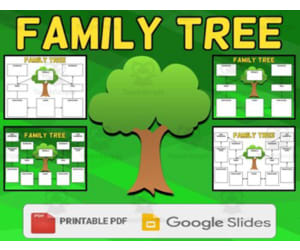
Family Tree Template – Editable Graphic Organizer
Social Studies, Not Grade Specific, Templates, Teacher Tools
Students can use this template with Google Slides and enter their information into the editable text boxes in the family tree. If students have access to a webcam or other digital camera device, they may be able to insert a picture of themselves into the page of the family tree.
Author Roombop
Rating
Tags Family Tree, Graphic Organizer, Template, Activity, Tree, Family Tree Templates Google Docs, Family Tree Template In Spanish, Graphic Organizer Editable, Family Tree Google Slide Template, Family Tree Digital Template, Hispanic Google Slides Theme, Tree Slides, Family Tree Template Google, Create A Family Tree In Google Docs, Family Tree Graphic Organizer, How To Make A Family Tree In Google Docs, Family Tree Google Docs Template, Family Tree Template Spanish, Family Tree Template Google Slides, Google Docs Family Tree, Google Slides Graphic Organizer, Family Tree Google Slides Template, Family Tree Google Docs, Google Docs Family Tree Template, Family Tree Template Free Google Docs, How To Make Family Tree On Google Docs, Free Editable Graphic Organizer Templates, Family Tree In Google Docs, How To Make A Family Tree On Google Docs, How To Create A Family Tree In Google Docs, Free Family Tree Template Google Docs, Editable Graphic Organizers, Family Tree Organizer, Family Tree Google Slides, Family Tree Slides Template, How To Create A Family Tree On Google Docs, Family Tree Google, How To Make Family Tree In Google Docs, Family Tree In Spanish Template, Google Docs Graphic Organizer, Family Tree On Google Docs, How To Do A Family Tree On Google Docs, How To Make A Family Tree On Google Slides

Problems & Solutions: Alternative Education Edition
ELA, Not Grade Specific, Activities, Games
Problems & Solutions: Alternative Education Edition - An Overview The Problems & Solutions: Alternative Education Edition is a teaching resource that boosts cognitive abilities among students. It primarily targets the Language Arts domain, enhancing reading, thinking, and speaking skills. Module Structure The module contains six units labelled A-F and comprises seventy-two problems. These problems are transformed into engaging activities for alternative education students. Each problem has three solutions; however, the provided solutions and problem cards don't necessarily align. Solution Finding Approach To find the correct answers, students need to engage with their peers and exchange solution cards – an activity promoting social interaction, communication skills, and analytical thinking. The activities are grouped into sets such as 1-2-3-4 or 5-6-7-8 etc., each forming a complete set within itself. Flexibility of Application This learning method is distinguished by its flexibility. The number of card sets can be adjusted to match the class size regardless of its strength or weaknesses at any given time—on condition that these card sets are always applied in groups off four. Mainly designed for one-on-one student interactions, numerous scenarios permit further adaptations for unique classroom settings - from whole group participation down to small focused teachings based on individual capabilities followed by homework assignments for reinforcing continued learning outside educational premises. Adaptable across different grades without specific restrictions further emphasizing its versatile nature making it an excellent tool specifically situated towards special education classrooms due primarily to these innate flexible characteristics allowing adaptability in line with individual learning curves. In Conclusion Incorporating fun gameplay into Language Arts competencies enhancement— reading and cognitive skills; coupled with interpersonal communication skills improvement, the Problems & Solutions: Alternative Education Edition presents an intricate yet enjoyable learning experience that's especially engineered to improve overall English language proficiency among learners regardless of their grade.
Author Gary Ciesla
Tags Alternative Education, Language Arts, Problem Solving, Interactive Learning, Communication Skills

I WONDER - What Triggers An Avalanche | Animated Video Lesson
Geography, Social Studies, Earth Sciences, Earth and Environmental Sciences, Science, Environmental Science, Grade 2, 3, 4, 5, 6, 7, 8, Lesson Plans, Teacher Tools
Video Introduction An amazing video designed for the students to learn more about natural disasters in different countries. I WONDER - What Triggers An Avalanche | Animated Video Lesson What do you know about this natural disaster? Do you know in which part of the world this could happen? Have you ever read about the safety misusers that we could have to protect ourselves from this natural disaster? If yes, can you tell us more about them? Can you name other natural disasters? If yes, tell us more about where they are likely to happen? And how frequently? Do you like reading about Geography? What is your favorite country in the whole world? If you are going on a trip where it will be? Which country? What you are going to see there? Does this country has a famous place to visit? Do you like reading about Geology? If yes, what is your favourite topic? I WONDER - What Triggers An Avalanche | Animated Video Lesson The video is perfect for encouraging the researching skills for the students, while learning more about this fantastic phenomenon. I WONDER - What Triggers An Avalanche | Animated Video Lesson This friendly designed video is suitable for students at school, homeschooling, and as a group activity. Format Available in MP4 format.
Author Educational Voice
Tags What Triggers An Avalanche, What Triggers An Avalanche Video, Avalanche, Avalanche Facts, Avalanche Facts For Kids, Avalanche Video, Avalanche Video For Kids, Avalanches Facts, Avalanches Video

Word Puzzles Crossword Wordsearch Anagram SUPERMARKET
Special Resources, ELA, Special Education Needs (SEN), Speech Therapy, Language Development, ESL, Writing, Handwriting, Vocabulary, Life Skills, Not Grade Specific, Crosswords Puzzles, Worksheets, Worksheets & Printables
Supermarket Word Games with Puzzles offers an engaging vocabulary resource for educators teaching various grade levels. This 12-page PDF integrates essential language skills like reading, writing, and speaking into a supermarket theme. Realistic images allow creation of visual vocabulary folders to support learning needs like ESL, special education, speech therapy, and life skills. Students complete two matching activities, a word search, two quizzes, an anagram worksheet with illustrations, and vocabulary wheels to cut out or laminate as flashcards . Blank and lined writing boards facilitate differentiated follow-up activities. Supermarket Word Games with Puzzles brings versatile options for whole group introductory activities as well as independent or homework extensions. The vocabulary focus combined with various puzzles and writing prompts allows adaptable implementation for diverse learning styles and abilities.
Author WORDS ASIDE
Tags Vocabulary Study, Handwriting Practice, Word Search, Visual Aids, Word Wall, Crossword, Independent Work, Centers, Food, Words Aside
ESL Reading Comprehension + Essay - Demon Slayer - Anime and Manga
ELA, Language Development, ESL, Vocabulary, Reading, Reading Comprehension, Writing, Formal Writing, Creative Writing, Grade 7, 8, 9, 10, 11, 12, Worksheets & Printables, Writing Prompts, Worksheets
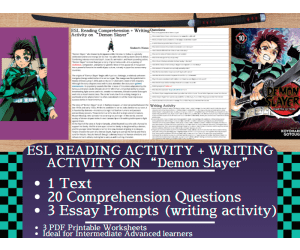
ESL Reading Comprehension + Writing Activity Worksheets - Demon Slayer - Kimetsu no Yaiba - Japanese Anime + Manga This ESL EFL TESOL (English Second or Foreign Language) Teaching Resource on "Demon Slayer - Kimetsu no Yaiba" (3 PDF Slides; Reading Comprehension + Writing Activity) can be ideal to train Language skills in English. Suitable participants for this ESL EFL TESOL Reading + Writing Activity are Foreign Students at middle and High School (7th-12th Grade; teens) . Newcomers or any ESL Learner is also more than suitable for this ESL EFL (English as a Second or Foreign Language) Activity on "Demon Slayer - Kimetsu no Yaiba" (Japanese Manga and Anime; origins, background and evolution over time from manga to anime + plot, setting and characters + success and legacy in Japan and beyond). This Teaching Educational Resource Product can also be ideal for ESL EFL TESOL TEFL Centers worldwide or any English second language tutor. This ESL EFL TESOL Teaching Resource on "Demon Slayer - Kimetsu no Yaiba" (Worksheet; 3 PDF Printable slides) can be ideal for Intermediate Advanced English as a Second or Foreign Language (ESL EFL TESOL) Learners. Within this English Second or Foreign Language (ESL EFL TESOL) Reading Comprehension + Essay Writing Activity Worksheet on "Demon Slayer - Kimetsu no Yaiba" (Japanese Manga and Anime; origins, background and evolution over time from manga to anime + plot, setting and characters + success and legacy in Japan and beyond), ESL EFL TESOL teachers can find the following activities: 1 text on "Demon Slayer - Kimetsu no Yaiba" (Japanese Manga and Anime; origins, background and evolution over time from manga to anime + plot, setting and characters + success and legacy in Japan and beyond) 20 Reading Comprehension Questions related to the text (with related space where students can answer) 3 essay prompts for a writing activity "Demon Slayer - Kibetsu no Yaiba" (writing an essay on your own personal opinion on "Demon Slayer - Kimetsu no Yaiba"; whether you have ever heard of it or not, whether you have ever watched it or not, whether you liked it or not and why and whether you would ever like to watch it + writing an essay on another influential animated series; describing it and comparing it to "Demon Slayer - Kimetsu no Yaiba" + pretending to spend a day with Tanjiro Kamada and the other Demon Slayers and to describe this imaginary experience in a page of diary) This ESL, EFL, TESOL (English Second or Foreign Language) Teaching Resource Reading + Writing Activity on "Demon Slayer - Kimetsu no Yaiba" (Japanese Manga and Anime; origins, background and evolution over time from manga to anime + plot, setting and characters + success and legacy in Japan and beyond) is great for Intermediate Advanced English as a second or foreign language learners (ESL- EFL). This English Second Language Worksheet on "Demon Slayer - Kimetsu no Yaiba" (Japanese Manga and Anime; origins, background and evolution over time from manga to anime + plot, setting and characters + success and legacy in Japan and beyond) aims to train and Reading Comprehension + Writing Skills. "Learning with Alan" is dedicated to provide high-quality teaching resources and educational materials for ESL EFL TESOL (English Second or Foreign Language) teachers. It aims to support teachers, educators, and tutors in both online and offline environments, helping them achieve their teaching goals while creating a fun, stimulating atmosphere for learning English. Always remember: learning is fun, and so is English! If you want to browse more PDF ESL, EFL, TESOL Teaching Resources and Educational Material click here Learning with Alan!
Author Learning with Alan
Rating
Tags ESL, English Second Language, English, Reading Comprehension, Writing Activity, Demon Slayer, Manga, Anime, Japanese, Japan

Holiday Swag Tags: Smile Day
Resources for Teachers, Classroom Management, Kindergarten, Preschool, Grade 1, 2, 3, 4, Worksheets & Printables, Worksheets
Holiday Swag Tags: Smile Day Holiday Swag Tags: Smile Day is an engaging teaching resource specifically designed to enrich classroom behavior management. Widely adopted by educators, this resource can add value to a variety of classrooms ranging from Pre-K through Grade 4 including both public schools and homeschool setups. An Innovative Classroom Reward System Redefining traditional reward systems, it paves the way for innovation over regular stickers, stamps or treasure chests! Holiday Swag Tags significantly motivate students towards achieving their personal academic and behavioral goals. While effective in whole group activities, they also fit well into smaller group sessions or individual interventions. Vibrant or Monochrome? You Choose! With the Holiday Swag Tags collection celebrating Smile Day taking cognizance of varied aesthetic preferences, vibrant color tags or monochrome variants are available equally. The downloadable content exists in six pages facilitating easy access and convenience – all available in PDF format. Note: To respect individual clip art artists’ rights; these non-modifiable tag graphics have been incorporated here. Hence no need for unnecessary adjustments - start printing these delightful tags instantly! More than Just Worksheets ! In spite of being digitally tagged under ' Worksheets ', these resources elevate beyond regular paper-pencil tasks promoting a positive learning environment suitable for all types of learners. The Value Behind Each Tag The usage of this resource promotes more than just tangible incentives. Upon earning each tag, learners realize the intrinsic values attached with it thereby boosting their motivation enhancing their educational journey further. This product belongs to our comprehensive series honoring various holidays which ensures continuity throughout the academic year - stay tuned for more on this series! Teachers' Satisfaction Guaranteed! Endow yourself with Holiday Swag Tags: Smile Day and witness your students' faces light up with smiles of achievement. Transform your classroom into a space where learning also becomes enjoyable and productive!
Author Knowledge Box Central
Tags Smile Day, Behavior Management, Motivation, Positive Learning Environment, Intrinsic Motivation

Halloween Patterns
Math, Patterns, Kindergarten, Preschool, Grade 1, Worksheets & Printables, Worksheets
Find the missing pattern piece, a fun and engaging worksheet to help young children practice visual thinking and patterns recognition. Cut and paste the pictures to complete the patterns.
Author Cherry Workshop
Tags Patterns, Halloween, Math

I WONDER - Why Is It Important Not To Waste Water | Animated Video
Environmental Science, Earth and Environmental Sciences, Science, Grade 1, 2, 3, 4, 5, 6, 7, 8, Lesson Plans, Teacher Tools
Video Introduction An amazing video designed for the students to learn more about STEM. I WONDER - Why Is It Important Not To Waste Water | Animated Video Lesson Do you like STEM subjects? what is your favorite one? Have you ever tried to plant a seed? If yes, tell us more about it. Or have you ever tried to invent something? If yes, tell us more about it. And how do you think it will help us? Have you ever seen a microorganism under a microscope? What was it? And how it looked like? Mathematics is a marvelous subject. Let' sharpen our brains and solve some equations. Do you like timetable tricks? What is your favorite one? Do you know how to code? Have you ever created an app or a game before? If yes, how was it like? I WONDER - Why Is It Important Not To Waste Water | Animated Video Lesson The video is perfect for encouraging the researching skills for the students, while learning more about this fantastic topic. I WONDER - Why Is It Important Not To Waste Water | Animated Video Lesson This friendly designed video is suitable for students at school, homeschooling, and as a group activity. Format Available in MP4 format.
Author Educational Voice
Tags Why Is It Important Not To Waste Water, Why Is It Important Not To Waste Water Video, Water Waste, Water Waste Facts, Water Waste Facts For Kids, Water Waste Video, Water Waste Video For Kids
Scientific Notation PowerPoint 8.EE.A.3
Math, Algebra, Grade 8, Presentations, Teacher Tools
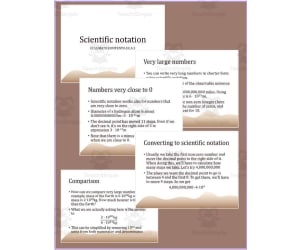
This presentation explains the basics of scientific notation, course 8.EE .A.3
Author TheBrightestKid
Tags Scientific Notation, Powers Of Ten, Very Large Numbers, 8th Grade Science Powerpoint

Letter U Song (Original Music Video)
ELA, Language Development, Phonics, Preschool, Kindergarten, Grade 1, 2, Songs, Activities
This product is the Letter U Song (Original Music Video). It will help students learn about the letter by watching a video about letter sounds, vocabulary words, and letter formation. This is a great resource for teachers who want to help their students learn more about the English language.
Author Have Fun Teaching
Tags Alphabet, Phonics

Bulletin Board Sight Words
ELA, Language Development, Phonics, Spelling, Preschool, Grade 1, 2, Bulletin Boards, Classroom Decor
Bulletin Board Sight Words A key teaching resource designed for educators, the Bulletin Board Sight Words is 138-pages long and primarily targeted at kindergarten through Grade 2 students studying Language Arts. This resource covers sub-subjects such as Phonics and Spelling and aims to add a fun, tactile aspect to sight word lessons. Design & Versatility The tastefully designed word cards are intended not just for aesthetic purposes but also as functional items in learning sight words and spelling rules. Being versatile, they can be used in various educational circumstances. Once printed and cut, these word cards provide a hands-on experience that effectively engages students. Dolch Sight Words The package contains an article What Are Dolch Sight Words?. It talks about the 220 most frequently used words in English compiled by Edward William Dolch. These irregular words are learned via recognition rather than phonics. Such words become essential tools when teaching pronouns, adjectives, adverbs prepositions conjunctions and verbs. Including: Dolch Sight Word Lists arranged according to difficulty level. Print-ready sight words for visibility anytime during class hours on your bulletin board or display area within reach. Versatility Across Different Settings & Accessibility This product's design allows it to be implemented across different settings based on teacher's preference: whole group instructions small group workshops or assigned as homework projects . Being distributed as an easily accessible PDF file type makes it perfect for both distance learners and traditional classroom setups."
Author Simply Schoolgirl
Tags Bulletin Board, Sight Words, Teaching Resource, Dolch Sight Words, Interactive Approach
CUBES OF KNOWDLEDGE | 15 ASSEMBLY MODELS
Vocabulary, Language Development, ELA, Early Learning, Elementary, Homeschool Resources, Not Grade Specific, Pre-K, Worksheets, Worksheets & Printables, Crafts, Activities
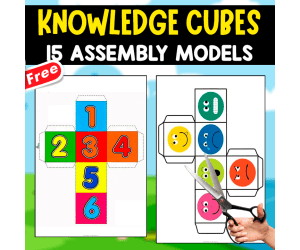
CUBES OF KNOWDLEDGE | 15 ASSEMBLY MODELS PLEASE READ CAREFULLY THE FOLLOWING INFORMATION: The name of the document: CUBES OF KNOWDLEDGE | 15 ASSEMBLY MODELS The total number of pages: 15 The format (PDF, Word, PPT): PDF Whether it is in color or black and White: COLOR MAIN DESCRIPTION OF THIS RESOURCE: What is the name of your product and what makes it special? This beautiful product is called “ CUBES OF KNOWDLEDGE | 15 ASSEMBLY MODELS ”, and it is very special because it was carefully designed or compiled. With this educational resource, we want students to learn with enthusiasm and fun, because we believe learning is fun. How many pages are included in this resource? This fabulous document contains the following number of pages: 15 What size is it designed in (A4, letter, etc.)? This resource is designed in A4 format and compiled as a PDF. This makes downloading and printing simple and convenient, and PDFs are also easy to store and carry anywhere. PDF Is the material in color or black and white? This pedagogical document comes in both black and white and color. This makes it more attractive for your learning sessions, but you have the freedom to choose how to print it. COLOR SECONDARY AND COMPLEMENTARY INFORMATION: What subject or area does it cover? This educational document covers basic knowledge areas all students should have, such as math and literacy. What skills or competencies does it develop? Thanks to this fabulous resource, students will first be able to develop their knowledge, attention, and concentration. Who can use it (teachers, parents, therapists, students)? This document can be adapted according to the person using it. If you’re a teacher, you can use it; if you do homeschooling, you can also use it. Therapists can use it for students with learning difficulties, and even self-learners will find it very useful.
Author EDITORIAL LAURA EDUCA
Rating
Tags FREE, FREE RESOURCES, CUBES, CRAFT, VOCABULARY, ART

Division Songs
Math, Multiplication and Division, Multiplication, Grade 3, 4, 5, 7,
Division Songs : A Unique Resource for Grades 3, 4, 5, and 7 Division Songs are a unique and enjoyable resource meant to be utilized by educators in the third, fourth, fifth, and seventh grades. This compilation consists of catchy music tracks with rhythm that makes learning division strategies exciting for kids. This impressive resource is delivered as a zip file containing no less than 14 songs . These tunes have been specifically constructed to assist in teaching students the basics of division. The educational content embedded within these melodies provides an engaging avenue for children to learn and revise division facts ranging from 0-9. Innovative Teaching Approach with Division Songs The use of Division Songs paves the way for diverse methods of integration within your instructive plan. It can be used as an interactive supplement to comprehensive classroom learning sessions or function as a creative aid during smaller group tasks concentrated on individual attention. With its auditory format, it's also perfectly suited as homework - offering learners a welcome departure from mundane textbook exercises and typical worksheets . Aids Auditory Learners: Particularly beneficial for students who comprehend concepts better when expressed musically. "Fact Family" Song: Allows numbers work together while familiarizing students with key mathematical terms like 'divisors' & 'quotients'. "Think Multiplication" Song: Strengthens understanding between multiplication & division - demonstrating these two operations are inverses. In short, Division Songs : multi-functional resources developed primarily focusing on math subjects such as division strategies among elementary level learners.
Author Twin Sisters Digital Media
Tags Division, Songs, Multiplication, Math Education, Interactive Learning
The Empty Pot Interactive Read-Aloud Activities
ELA, Reading, Reading Comprehension, Language Development, Vocabulary, Grade 2, 3, 4, Literacy Readers, Teacher Tools
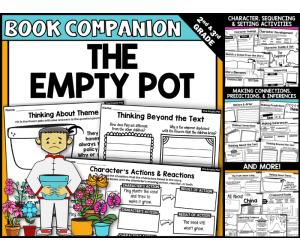
This picture book companion is a complete supplemental resource for the book The Empty Pot by Demi. With 28 print-and-go reading activities to choose from, this resource is ideal for customizing learning to your student's specific needs and academic abilities. Students will investigate illustrations, identify story elements, determine the theme, analyze characters, compare & contrast, make predictions, inferences, & connections, answer questions that require them to think beyond the text, and much more! Students will love the engaging and fun activities, and you will appreciate the time saved hunting for high-level resources to teach reading concepts that students frequently struggle with. The activities provided are designed to enable students to apply higher-level thinking skills, encourage them to provide text evidence to support their thinking, and challenge them to express their own thoughts and/or perspectives. ⭐️This Resource Includes:⭐️ Making Predictions: Before reading, students will make predictions about the text. Story Elements: Students fill in the boxes with words & pictures to represent the story elements. Sequencing: Students will retell & illustrate the important parts of the story. Recalling events in Chronological Order: Students describe and illustrate four major events in the story in chronological order. Summary: Students complete the Somebody, Wanted, Because, But, So graphic organizer and write a summary of the story. Story Event Sort: Students will describe a scene or event from the story that fits into each of the categories & explain how the event made them feel & how it relates to the category. Making Connections: Students make connections to an event from the story. Making Inferences: Students use clues & schema to make inferences while reading the story. Character Actions & Reactions: Students read different situations that the characters faced in the story and fill in the boxes with the character's missing action, reaction, or both (ANSWER KEY included). Character Inside & Out (Ping): Students include details from the story to describe what the character says, thinks, does, and feels. Character Inside & Out (The Emperor): Students include details from the story to describe what the character says, thinks, does, and feels. Character Feelings: Students describe how the character's feelings change throughout the story & give examples of the events that cause them to feel the way they do. Character Development: Students select character traits that best describe the character at different times throughout the story and give examples from the book to support the traits they choose. Character Summary: Students will choose a character from the story to summarize and fill out the graphic organizer. Sketch a Scene From the Story: Students will illustrate one of the events from the story and explain why this event is important to the plot. Setting the Scene: Students identify three different settings in the story and explain how they know the setting changed. Supporting Evidence: Students fill in the boxes with the provided text evidence that supports each character trait (ANSWER KEY included). 3-2-1: Students will describe three ways in which Ping’s actions show determination and patience, give two likely reasons that the Emperor gives the children seeds that he knows will not grow, and choose one word to describe Ping and explain why. Author's Message: Students describe four important events from the story and put them in chronological order. Then, answer the questions about the author's message. Theme: Students answer the questions to determine which theme best fits the story and provide text evidence to support their choice. Before & After: Students will draw a picture and describe Ping as he’s on his way to the palace to present his pot to the Emperor and draw a picture and describe Ping after. Thinking About the Text: Students will answer the questions about the story & include examples from the text to support their answers. Thinking Beyond the Text: Students will answer the questions about the story & include examples from the text to support their answers. Crossword Puzzle: Students use the definitions and the word bank to fill in the crossword puzzle (ANSWER KEY included). Book Review: Students will rate and review the book. Thinking About Theme: Students will fill in the flower pots with answers to the question prompts regarding the theme of the story, honesty. The Truth About Lying: Students will make a list of the lies that they can remember telling or that have been told to them and organize those lies as unacceptable (harmful) or acceptable (helpful). Then write a response to the question of whether it is ever necessary to tell a lie and explain why or why not. All About China: Students will research to learn more about the country of China. This resource is for extension read-aloud activities only. The book is not included.
Author Creatively Gifted
Tags Fountas And Pinnell, Second Grade, Elementary Ela, Reading Comprehension, Character Traits, Guided Reading, Interactive Read-aloud, Picture Book, Folktales, The Empty Pot

CVC Words Fishing Game
ELA, Language Development, Phonics, Preschool, Activities, Games
This CVC Words Fishing Game is a simple game to give children plenty of practice in reading CVC words. They will have so much fun they will forget the hard work! How to play CVC Words Fishing Game: A game for 2 players. Simply choose and place 12 words face down on the table. The child picks up a fish ‘catches it’ and sounds it out to read it. If the child reads the word successfully, then the fish is placed back into the sea, on the player's board. Any words not read correctly should be placed back on the table. The first player to complete her/his board is the winner. Tips for playing However, the parent/teacher wishes the child to want to play again and succeed, so give the child as much help as needed by modelling how to sound out the word. It is easy for the adult to lose - just make sure the child has to help you sound out the word and get it wrong (they will love that!) and yours has to go back on the table sometimes. They win and get double sounding out practice! What is included? 2 game boards Full instructions 90+ word cards Two sets of words are given for each middle vowel sound - the first set of words has an initial sound that can be held onto which is ideal for beginner readers.
Author Lilibette's Resources
Tags Sound It Out Phonics, Cvc Words, Fishing Game, Learn To Blend, Lilibettes Resources, Phnoics, Phnonics, CVC

How Do I Start My Child Learning To Read With Phonics?
ELA, Language Development, Phonics, Preschool, Kindergarten, Grade 1,
Title: How Do I Start My Child Learning To Read With Phonics? Conceived by an author with more than 30 years of experience in teaching children to read through phonics, this resource offers an effective roadmap for getting started on your child's reading journey. Using a traditional phonics program as the grounding principle, it elucidates the methodical steps to aid children in becoming fluent readers within a span of 6-9 months. About The Guide Contained within 13 comprehensive pages, this guide seeks to imbue educators and parents alike with understanding regarding the mechanics of phonics and its instrumental role in teaching reading. It provides worthy insights into how to employ our specific phonic scheme which is designed not only for first-timers but also serves well for children reticent towards reading. Aim Of The Resource The aim of this resource isn’t solely academic but extends beyond books into building confidence and nurturing interest amongst young minds headquartered firmly at early learning stages— Kindergarten, Preschool or Grade 1 levels. Although it mainly dwells under 'Language Arts', its subcategory 'Phonics' enables zeroing down focus on versatile phonetic instructions imperative for language cognition. Types Of Teaching Options Available Classroom-Based Options: Deployed effectively during whole-group sessions enabling interactive learning Personalized Teaching Needs: Fits seamlessly into small group discussions serving individual attention requisites. Homeschooling: Supplement homework assignments offering continued learning beyond school hours. All facets have been thoughtfully tied together keeping educators' perspective at heart ensuring practicality isn't compromised while drawing from decades-long navigational experience in phonetics pedagogy terrain. This instructive material inevitably becomes a great pick for teachers striving towards imparting solid groundwork or homeschoolers looking out accurately depict the steak-and-potatoes ethos of 'Phonetics'.
Author Guinea Pig Education
Tags Phonics, Reading Instruction, Early Learning, Language Arts, Teaching Resources

Fitness Adventure Series - Mindfulness Mission
P.E. & Health, Physical Education, Yoga, Not Grade Specific, Activities
This is a Fitness Adventure Series. The theme is Mindfulness Mission. These are fun exercise movements that can be used for indoor recess, brain breaks, lesson warmups and more. There are 15 signs that each have a different yoga kid. These can be printed with the PDF file or you can use the JPG files to insert them into presentation slides.
Author Cap'n Pete's Power PE
Tags Fitness Adventure, Mindfulness, Yoga, Physical Education, Task Cards
Quotes From William Shakespeare Copywork : Set 10
Social Studies, History, History: British, Grade 2, 3, 4, 5, 6, 7, 8, Worksheets & Printables, Worksheets
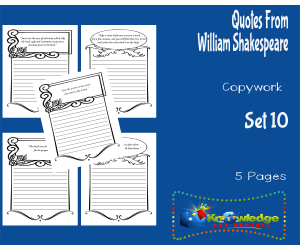
This Copywork Notebook set walks your student through daily bite-sized portions from works by Shakespeare. This product includes regular spaced lines for older students. It also includes activities for extending the vocabulary lesson for each passage. Copywork Notebooks are designed to help your children to learn spelling, punctuation, sentence structure, and vocabulary while copying from historical information. The idea is that your student will actually begin to imitate the elements in his or her own writing. This product is an ebook in PDF format. Keywords: Shakespeare, William Shakespeare, Shakespeare Copywork, Copywork, Charlotte mason
Author Knowledge Box Central
Tags Shakespeare, William Shakespeare, History, Copywork, Spelling
Guided Reading Level P - Exploring Ocean Habitats (with Lesson Plan)
ELA, Resources for Teachers, Reading Comprehension, Reading, Language Development, Physics, Science, Life Sciences, Earth and Environmental Sciences, Grade 2, 3, 4, Worksheets & Printables, Worksheets, Teacher Tools, Centers, Activities, Literacy Readers, Quizzes, Quizzes and Tests, Assessments
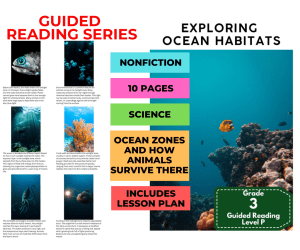
This Guided Reading Book - Exploring Ocean Habitats (Level P) with lesson plan includes: Guided Reading Color Label (front cover x1) This is a quick way to match the book’s demands to what students can generally handle.. The overall goal is to use the level/color to pick books for several smaller groups. To qualify for a certain level, a student is expected to read a book from that level with about 90–94% accuracy. If a student is consistently accurate and understands, move up a level. If the student is struggling at that level, drop down and add more support. Each student will improve at completely different rates, but it is generally one of the best ways to check progress across the class. DOWNLOAD THE CATALOG TO VIEW ALL GUIDED READING BOOKS AVAILABLE (SORTED LEVELS A-Z) Pre-Reading Question (x1) Teacher asks the prompt aloud, can be while showing the cover or first page. Students share what they already know, or make educated guesses from the cover. Prompt them to use the target vocabulary. Write some of their responses on the board to look back at during the reading. Vocabulary Words (x5) Introduce the five words, best doing it one at a time. Start by saying it, while students repeat and then see if anyone knows what it means before reading further. Read through the meaning and try to briefly connect each word to a picture or gesture so it’s meaningful. Ask students to flip through the book pages and point to where they see each of the vocabulary words. While reading the book pause upon coming across one of the vocab words or read the sentence twice to make sure students understand the word has appeared. Optional: Ask students to raise hands whenever they see/hear one of the new words. Guided Reading Pages (x10) Check the book snapshot (below) for: primary topic - do you need to prep extra reading or intro materials on this? what is taught best - decide on 1-2 bullets to focus on, use the prompt or words provided here for best results. learning goals - what you are checking for students to be able to do after the session, elicit answers using prompts or words provided. key vocabulary (see section above). questions overview - so you know what is coming up and if you need to prep extra materials to assist understanding. Run the lesson You may have already looked at a few of the pages together, but you can show them some of the pictures again first to set meaning. Depending on how much time you have and how familiar your students are with guided reading class, you may want to read the book aloud first with the group first. Students whisper or partner read, while you listen in. If time, do it as a group, one student reading a page each. Use the guided page’s prompts to coach: “Check the picture / does it make sense?” “Point under the words / try the first sound” “Reread the sentence smoothly”. Try to focus more on one student per session (rotating every time), so you can work out if they are ready to move up or need to move down a level. Comprehension Questions (back cover x3) This is your way to check that students didn’t just say the words, but actually understood the text. First, let students answer by pointing to the page/picture and saying a short sentence. After any answer, follow with: “Show me where you found that in the text.” In bigger groups, have partners answer first (10–20 seconds), then call on 2–3 students to share. Differentiation tips: Emerging speakers/struggling readers: oral + pointing On-level: oral in a full sentence Higher: one written sentence or draw + label Book Snapshot Title: Exploring Ocean Habitats Genre: Nonfiction (informational) Subject: Life Science / Earth Science (Ocean) / Reading Primary Topic: Ocean zones and how animals survive there Estimated Guided Reading Level (A–Z): P What This Book Teaches Best Ocean layers by sunlight: The ocean is divided into layers based on how much sunlight reaches the water (sunlight zone, twilight zone, midnight zone, abyssal plain, hadal zone). How living things get energy in different zones: Phytoplankton grow in the sunlight zone, plants can’t grow in the twilight zone due to limited light for photosynthesis, and deep-sea ecosystems near vents use chemosynthesis. Animal adaptations for dark habitats: Examples include large eyes in the twilight zone and bioluminescence used to attract prey, communicate, or camouflage. Survival challenges in the deep ocean: The text describes permanent darkness, high pressure, near-freezing temperatures, and how food can drift down from above (“marine snow”). Specialized predators and movement: The anglerfish uses a glowing lure to bring prey close, and the Dumbo octopus flaps ear-like fins and lacks an ink sac in total darkness. Learning Goals Students will explain how the ocean is divided into layers based on sunlight. Students will describe the sunlight zone and how deep it extends, using details from the text. Students will explain why plants cannot grow in the twilight zone, according to the book. Students will describe two survival adaptations from the text (such as bioluminescence, large eyes, or a glowing lure). Students will compare conditions in two deep-ocean habitats (midnight zone, abyssal plain, hadal zone) using text evidence. Students will explain how hydrothermal vent ecosystems can thrive without sunlight, based on the text. Key Vocabulary From the Text phytoplankton — tiny ocean organisms that grow using sunlight. photosynthesis — plants making food using light. bioluminescence — animals making their own light. cephalopods — ocean animals like octopuses and squids. chemosynthesis — making energy using chemicals, not sunlight. Discussion Prompts Pre-reading question: What might make it hard for ocean animals to live where there is very little light? Comprehension questions: What does the book say the sunlight zone is, and how deep does it go? Why does the book say plants cannot grow in the twilight zone? According to the text, what helps ecosystems thrive near hydrothermal vents? Printing Tips 1. Best Printing Method (Recommended) “Booklet” Printing (Best if Available) If your printer or PDF viewer supports Booklet Printing , use this. Settings to use: Print mode: Booklet Paper size: Letter or A4 (either works) Orientation: Landscape Print on both sides: Yes Flip on: Short edge Scaling: Fit to printable area Booklet subset: First test: Front sides only Then: Back sides only This will automatically: Pair pages correctly Put the cover on the outside Align everything for folding After printing, fold in half and staple along the spine . 2. If “Booklet” Printing Is NOT Available You can still print this correctly with manual duplex printing . Step-by-step: Open the PDF. Choose Print . Set: Orientation: Landscape Pages per sheet: 1 Print on both sides: Yes Flip on: Short edge Print all pages . Because each PDF page already contains two facing book pages, the result will still fold cleanly into a book. Thousands of Cored Education products are included with your TeachSimple membership. Download links and encyclopedia index available here.
Author Cored Education
Rating
Tags Reading Comprehension, Reading Passages, Reading, Guided Reading, Guided Reading Lesson Plan, Guided Reading Activity, Pre-reading, Vocabulary, Science Lesson Plans, Oceans