2,634 products added recently
SEL Lesson Plans
Support your students' social and emotional development with lesson plans focused on SEL competencies. These activities help students build self-awareness, empathy, and interpersonal skills. Implement them to create a positive and inclusive classroom atmosphere that nurtures well-being.
The Empathy Odyssey Seasonal Micro-Mission Deck for Social-Emotional
Classroom Management, Resources for Teachers, Community Building, Sociology, Social Studies, Special Resources, Life Skills, Social Emotional Learning (SEL), Social Skills, Special Education Needs (SEN), Grade 4, 5, 6, 7, 8, Projects, Activities, Assessments, Teacher Tools, Lesson Plans, Rubrics, Worksheets, Worksheets & Printables, Word Searches, Word Problems
Unleash the full potential of social and emotional learning with "The Empathy Odyssey: Pedagogical Architectures for the Middle Years" – a comprehensive, immersive, and transformative curriculum that develops empathy, resilience, and cognitive skills for tweens. This 43-page digital PDF contains a facilitator's guide, theory, student workbook, and teacher resources, all rolled into one. Developed with the principles of neuroscience, psychology, and the Seasonal Cyclicality Model (SCM), this social and emotional learning program for kids takes students on a series of fun, gamified, and micro-level missions aligned with Autumn (self-awareness), Winter (social observation), Spring (social skills), and Summer (responsible decision-making). This social and emotional learning program for kids, tweens, and pre-teens is perfect for parents, teachers, and counselors who want to develop the cognitive empathy, emotional intelligence, and growth mindset of middle school students. A must-have for middle school emotional intelligence development, bullying prevention, and classroom community building. Instant download. Keywords: SEL curriculum for 4th to 7th grade, empathy workbook for middle school, social and emotional learning activities, tween emotional intelligence development, neuroscience-based SEL program. Why Parents/Schools Love It: Neuroscience-Based: Fuses the power of brain science with the ease of using Micro-Missions to develop empathy as a "muscle" that grows with repetition, creating a lifelong tool for children without overwhelming them. Seasonal Format: Utilizes the power of seasonal themes and activities to eliminate social anxiety issues with a "game" approach to SEL that integrates easily into the school year or home schedule. Comprehensive Resources Included: Provides facilitator guides, student worksheets, case studies, images, and teacher keys in one convenient PDF format for quick and effective implementation with proven results such as improved conflict resolution and self-regulation. Universal and Adaptable: Includes protocols for working with children who have experienced trauma, those with neurodiverse needs, and applications for real-world issues such as bullying, making it effective for a wide range of classrooms and promoting a sense of community. Proven Results through Real-Life Case Studies: Includes real-life examples of how children move from isolation to connection, giving parents and educators the power to see the impact on children's social skills and decisions. Target Classes/Students : After a thorough analysis of the entire content presented in the PDF, from the introduction to the chapters, case studies, worksheets, and teacher resources, the content is clearly targeted at students from grade 4 through grade 7 (approximately 9-13 years old). This is consistent with the "middle years" concept presented throughout the content, which covers neurological developments such as prefrontal cortex restructuring, synaptic pruning, and the progression from Erik Erikson's Industry vs. Inferiority stage to the Identity vs. Role Confusion stage. For example, grade 4 community projects, grade 5 integrations into the classroom, grade 6 self-awareness interventions, and grade 7 conflict resolutions. The content is applicable for homeschoolers, classrooms in public/private schools, after-school programs, and counseling sessions for the target age group, with modifications for neurodiverse students with ASD or NVLD. Copyright/Terms of Use: This Book was copyrighted by Syed Hammad Rizvi. This resource is for personal and single classroom use only. You may not alter, redistribute, or sell any part of this resource. In other words, you may not put it on the Internet where it could be publicly found and downloaded. If you want to share this resource with colleagues, please purchase additional licenses from Teachsimple. Thank you for respecting these terms of use. This product is happily brought to you by Syed Hammad Rizvi
Author Creative Book Store
Rating
Tags TheEmpathyOdyssey, SELCurriculum, SocialEmotionalLearning, EmpathyWorkbook, MiddleSchoolSEL, Grades4to7, EmotionalIntelligenceKids, TweenResilience, NeuroscienceEducation, EmpathyBuildingActivities
The Executive Mastery Framework A Developmentally Scaffolding
STEM, Special Resources, Life Skills, Social Emotional Learning (SEL), Social Skills, Special Education Needs (SEN), Science, Technology, Computer Science, Engineering, Grade 1, 2, 3, 4, 5, 9, 10, 11, Worksheets & Printables, Flashcards, Workbooks, Worksheets, Word Problems, Teacher Tools, Lesson Plans, Quizzes and Tests, Quizzes, Tests
The Executive Mastery Framework: A Developmentally Scaffolding Curriculum for Neurodiverse Learners "In The Executive Mastery Framework: A Developmentally Scaffolding Curriculum for Neurodiverse Learners," you will find a digital workbook, guide for educators, and other resources that support executive function development in neurodiverse individuals. The 30-page workbook and teacher resource guide provide a new perspective by shifting away from deficit-based models to a neuro-affirming outlook; it equips teachers, parents, and professionals with usable tools and strategies to build external cognitive supports that develop into the internalized capability of neurodiverse individuals. You will discover in this curriculum: Phase 1: Core concepts of neurobiology, executive function challenges, and developmental scaffolding; Phase 2: Ten worksheets (age progression/ability) that assist neurodiverse individuals in developing somatic awareness, impulse control, task initiation, working memory, cognitive flexibility, organizational skills, metacognitive awareness, persistence, vocational skills, and self-advocacy; and Phase 3: Visual frameworks, flowcharts, answer keys with evaluator rubrics. The curriculum contains case studies, reflections and practitioner insights, as well as action-based methodologies such as backward chaining, cognitive offloading, and environmental prosthetics to help neurodivergent children succeed in all aspects of education, work, and life from Pre-K through adulthood. This resource is perfect for special education resources, homeschool ADHD curriculum, autism teaching tools, executive function activities, neurodiversity-affirming education, and for IEP/504 plan support. Why Schools/Parents Appreciate It: Neuroscience-Informed and Research-Based: Uses positive, scaffolded support (shifting from a traditional punitive, deficit-based model) that relies on neuroscience principles to support neurodivergent learners in developing authentic skills in an environment free of shame and frustration. Complete and Versatile: Includes comprehensive [theory and research], interactive [worksheets/visuals/case studies], and teacher resources for easy adaptation for specific learner needs such as ADHD task initiation or autism transition plans. Demonstrated Effectiveness through Case Studies: Real-life examples proving quick and/or dramatic change in many areas and reduced challenging behaviors (i.e. decreasing aggressiveness, reducing instances of "lazy," creating self-advocacy skills) — resulting in higher levels of self-esteem and improved academic performance. Progression through Developmentally Appropriate Stages for Future Success: Provides information supporting learners in developing co-regulation to full independence (from an early age) and preparing them for success post-school (e.g. self-advocacy portfolio). Support for Educators and Parents/Guardians through Time-Saving Ready-to-Use Resources: Provide educators with reflective/reflection-based/rubric-based resources that enable educators to create student autonomy, while minimizing planning time, hence creating fewer behavioural concerns and more engagement. Target Audience of This Curriculum: This Curriculum was designed for use with students who present Neurodiverse profiles. The key characteristics of these profiles include ADHD, autism, dyslexia, executive dysfunction, or NVLD. The curricula analyzed within this PDF have been organized according to developmental progression from Pre-K to 2nd Grade, 3rd to 5th Grade, Middle School/6th to 8th grade, and High School/9th to 12th grade and beyond. Pre-K to 2nd Grade: The focus on early childhood developmentally appropriate foundational learning skills which includes the topics of use of environmental prosthetics, somatic awareness (awareness of the body), impulse inhibition, and developing an ability to co-regulate (worksheets 1 - 2). This would be appropriate for a 4 to 8-year-old child who is either autistic or has ADHD and experiences difficulty with sensory predictability or emotional regulation. 3rd to 5th Grade: Students at this grade level should be practicing the skills of upper elementary school co-regulated navigation, working memory expansion, and task initiation (worksheets 3 - 4). This would be appropriate for any student who displays signs of experiencing transitional anxiety or experiencing a working memory bottleneck. Middle School/ 6th to 8th Grades: The students in this age group should be able to internalize their tooling, develop cognitive flexibility, and work on their organizational systems (worksheets 5 - 6). This would apply to an adolescent who would display signs of experiencing difficulties with social hierarchies or temporal discounting due to their ADHD or AuDHD profile. High School/ 9th to 12th and Transition to Adulthood: Students should be developing their metacognitive self-advocacy skills, time management skills, goal persistence, vocational navigation skills, and independence (worksheets 7 - 10). This would apply to any teen or young adult who is preparing to enter college, work, or request the need for accommodations under the Americans with Disabilities Act due to severe executive dysfunction. This curriculum can be used in a variety of settings including: special education classes, home schooling, therapy sessions, implementation of an IEP, or within an inclusive classroom setting, ages 4-20+. Copyright/Terms of Use : This resource is the property of Syed Hammad Rizvi and is only to be purchased and used for personal or one single classroom activity. You cannot change/distribute/sell (however you choose) any part of this resource and cannot publish this resource to the Internet so other may have the opportunity to download or view it. If you would like to provide a colleague with a copy of this resource, you may do so by purchasing another license through Teachsimple. Thank You for following the terms provided above This product is happy to be provided by Syed Hammad Rizvi
Author Creative Book Store
Rating
Tags ADHD, Autism, Neurodivergent, SpecialEducation, IEP, 504Plan, TeacherResources, SpecialEdTeacher, HomeschoolCurriculum, Dyslexia
Resilience Building & Growth Mindset Journal Prompts Pack
Special Resources, Social Emotional Learning (SEL), Life Skills, Social Skills, Special Education Needs (SEN), Speech Therapy, STEM, ELA, Literature, Reading, Grade 3, 4, 5, Worksheets & Printables, Workbooks, Worksheets, Word Searches, Teacher Tools, Assessments, Lesson Plans, Quizzes and Tests, Quizzes, Tests
The complete Resilience Building & Growth Mindset Journals Bundle provides teachers and parents of Grades 3-5 with journal prompts to promote resilience and a growth mindset. It is designed for children aged 8 to 11 as an SEL (Social-Emotional Learning) curriculum that connects Carol Dweck’s theory of growth mindset, neuroplasticity, Albert Bandura’s self-efficacy, and Lev Vygotsky’s Zone of Proximal Development into one easy-to-use journaling system. Contents: Phase 1 (Theory Guide for Educators / Parents) – 10+ pages of professional development materials that explain the C.O.R.E. Journaling Framework, productive struggle, locus of control change, affect labeling (“Name It to Tame It”), metacognition, specific real-life examples related to perfectionism and math anxiety in classrooms. Phase 2 (Student Workbook) – 10 creative and engaging worksheet prompts (The Elastic Brain, Power of “Yet,” Failure Autopsy, Inner Critic vs. Inner Coach, Frustration Station, Effort Equation, Feedback Loop, Courage Catalog, Obstacle Course, My Resilience Recipe) that provide over 80 prompts to provide daily, effective application of abstract concepts Phase 3 (Visuals and Teacher Materials) – ready-to-project visuals, expected response rubrics, implementation procedures, and reflective facilitator exercises. The Resilience Building & Growth Mindset Journals Bundle is a great tool for morning meetings, SEL blocks, counseling sessions, home schooling, or independent journaling. Easy to implement – print or post digitally today! Parents and Schools Appreciate This Programme Because of The Following: 1) Evidence Base and Classroom Validity - Supported by the research of Dweck, Bandura, Vygotsky, Siegel, and neuroplasticity; contains original data indicating that task avoidance behaviour has decreased by 41%; educators will find real life case studies that are immediately applicable for use in their designs. 2) Ready-To-Use And High Benefit As SEL: 10 to 15 minutes, 3 times per week increases resilient, emotionally regulation, and metacognition skills; suitable for use in MTSS, PBIS or as part of a Counselors's assigned caseload. 3) Differentiated and Inclusive: Is designed for gifted/perfectionist students as well as those with anxiety, and/or being neurodivergent by developing strategic perseverance. 4) Dual Use By Parents And Educators: The theoretical section provides educators with materials that could be added to their professional development program; parents would enjoy using the home version to help their children with school anxiety and sports challenges. 5) Attractive To Kids: The design of this curriculum is visually appealing, motivational and provides scaffolding for independent work; children from 8 years of age to 11 years are able to relate to the material without feeling childish. Intended Student Population from Full PDF Analysis: The Intended Student Population Will be Grades 3-5, ages 8-11 years old in upper elementary/middle childhood. The Curriculum has been Explicitly Designed and Developed for the Developmental Window of Grades 3-5 (Prefrontal Cortex Synaptogenesis, Increasing Academic Pressures, Peers Putting Pressure on One Another and Executive Function Development). It Is Not Developed for Either Grades K-2 (Too Advanced for K-2 Students) or Grades 6+ (Too Simple in Language and Scaffolding for 6+ Year Olds). Terms of Use: Copyrighted material belongs Syed Hammad Rizvi. Materials contained within are for personal and single classroom use only. You may not alter, distribute, or sell any part of the materials. In other words, you may not upload the documents in such a way that they would be available to others online, nor can you print copies of them for others. If you would like to share the documents with other staff at your school, please purchase additional licenses through Teachsimple. Thank you for following the terms of use. Syed Hammad Rizvi is pleased to provide you with this product.
Author Creative Book Store
Rating
Tags GrowthMindset, GrowthMindsetForKids, ResilienceBuilding, SELActivities, SocialEmotionalLearning, GrowthMindsetJournal, ResilienceForKids, CarolDweck, MindsetMatters, TeacherResources
Executive Functioning & Neuro-Inclusive Seasonal Curriculum: The Comp
Social Emotional Learning (SEL), Special Resources, Social Skills, Special Education Needs (SEN), Speech Therapy, Life Skills, Life Studies, Career, Leadership, Grade 3, 4, 5, 6, 7, 8, Assessments, Teacher Tools, Charts, Lesson Plans, Quizzes and Tests, Quizzes, Tests, Worksheets, Worksheets & Printables, Workbooks
Unlock the potential of neurodiverse students with this complete Executive Functioning Curriculum for Grades 3-8, a neuro-inclusive seasonal resource that helps develop vital skills such as task initiation, emotional control, cognitive flexibility, and metacognition. This 43-page digital resource, optimized for educators, parents, and homeschoolers, combines neurobiology theory with worksheets, visual aids, and teacher guidance to address the learning needs of neurodiverse students with conditions such as ADHD, Autism, Dyslexia, and more. By utilizing the natural rhythms of the academic calendar, the curriculum moves from a reactive teaching style to a proactive teaching style, reducing cognitive load for the student and promoting self-regulation. This seasonal resource includes 10 fun worksheets with fillable prompts for the students, 3 vital visuals for the teacher, an answer key, and a teacher guide with differentiation ideas for different neurotypes. This SEO-optimized resource for developing executive functioning skills, designed for special education, RTI, and regular classrooms, promotes inclusive education, reduces behavioral problems, and increases the learning stamina of your students. Keywords: Executive Functioning Activities, Neurodiverse Curriculum, ADHD Resources for Teachers, Autism Classroom Tools, Dyslexia Support Materials. Why Parents/Schools Love It: Aligns with the Seasons, Avoiding Burnout: "Executive functioning skills are aligned with the natural ebbs and flows of the school calendar, making strategies more effective and avoiding common pitfalls such as winter dysregulation and spring fatigue." Neuro-Inclusive, Differentiated, and Accessible: "Designed with neurodiverse students (ADHD, Autism, Dyslexia) in mind, with the use of visuals and worksheets that can be adapted for different neuroprofiles." Practical, Ready-to-Use, and Action-Oriented: "Includes 10 student worksheets, teacher guides, answer keys, and visuals for immediate application, promoting real-world skills such as self-regulation, metacognition, and independence." Evidence-Based, with Measurable Progress: "Based on neurobiology and cognitive load theory, with an emphasis on process, not product, to promote a growth mindset and functional independence." Engaging, Empowering, and Transformational: "From compliance to comprehension, this program empowers students to 'engineer their own cognitive environments' with hands-on, engaging activities that increase self-confidence and decrease behavioral problems." Target Classes/Students : The curriculum has been designed to target students from Grade 3 to Grade 8 based on an exhaustive analysis of the entire PDF content, which includes theoretical aspects, worksheets for students, visuals, and teacher guides. It specifically targets the period of brain development where the prefrontal cortex is developing and the "literacy watershed" from learning to read to reading to learn. It specifically mentions case studies for Grade 4-6, scaffolding for Grade 3-5 and Grade 6-8, and strategies for neurodiverse students such as ADHD, Autism, and Dyslexia for middle elementary to early middle school ages. It would be appropriate for elementary and middle school classrooms, special education programs, homeschooling programs, and intervention programs for ages 8-14. Copyright/Terms of Use: This Book was copyrighted by Syed Hammad Rizvi. This is for personal use and use in one classroom. It is not for you to change, redistribute, or sell any part of this product. This means you cannot put it on the Internet for any person to find and download. If you wish to use the product with other teachers, you can purchase additional licenses through Teachsimple. Thank you for understanding these terms of use. This product is happily brought to you by Syed Hammad Rizvi
Author Creative Book Store
Rating
Tags ExecutiveFunctioningCurriculum, NeuroInclusiveEducation, SeasonalCurriculum, ADHDResources, AutismSupportTools, DyslexiaInterventions, ExecutiveFunctioningActivities, NeurodiverseLearners, Grades3to8, SpecialEducationResources
Environmental Consumer Health: 4th and 5th Grade Unit 7
P.E. & Health, Life Studies, Physical Education, Health, Life Skills, Special Resources, Social Emotional Learning (SEL), Social Skills, Grade 4, 5, Teacher Tools, Lesson Plans, Worksheets & Printables, Worksheets
Environmental Consumer Health: 4th and 5th Grade Unit 7 For 4th and 5th Grade Health, there are seven standards that students will practice and learn. Through using this Environmental Consumer Health: 4th and 5th Grade Health Unit 7 students will explore and learn to identify daily healthy habits. This Environmental Consumer Health Unit 7, is full of engaging worksheets to help students learn about their environment in an educational way as it pertains to their own health and the health of others. In this unit, students will be educated on the pollution that effects the land, water, and air in their neighborhood and community. They will also identify solutions to stop the pollution. Along with that, they will discover ways to help the environment by reducing, recycling, and reusing products. Advertisers use tricky ways to convince consumers that unhealthy food is beneficial to them. Kids will learn about these tricky strategies and the messages that advertisers use that convince the public to use these unhealthy products. In addition, students will have the opportunity to draw their own advertisement to help stop the spread of a disease outbreak in a community. Lastly, there is an assessment to check for understanding. This Environmental Consumer Health unit is the perfect way for teachers and parents to help their students understand the importance of health in a community and teaches students a way to develop healthy habits for life! Included in this Environmental Consumer Health: 4th and 5th Grade Unit 7 are the following: How the land, water, and air pollution affect persona health and our community health. A worksheet is provided on solutions to stop the pollution. Learn ways to help a community with reducing, recycling, and reusing products. Students will learn about tricky strategies advertisers use on consumers to coerce them to purchase unhealthy products and the messages these advertisers are sending to kids. Understand what environmental health messages mean to a community. Draw your own health advertisement to help stop a disease outbreak in a community. Lastly, there is an assessment to check for understanding. There is an answer key included. There are 16 pages included! This unit meets Common Core Standards. There are seven units that cover all the health requirements for 4th and 5th grade. Here are the links to other health units: Health | 4th and 5th Grade Unit 1: Personal Health Health | 4th and 5th Grade Unit 2: Growth and Development Health | 4th and 5th Grade Unit 3: Nutrition and Physical Activity Health | 4th and 5th Grade Unit 4: Substance Use and Abuse Health |4th and 5th Grade Unit 5: Injury and Violence Prevention Health | 4th and 5th Grade Unit 6: Prevention and Control of Disease Health |4th and 5th Grade Unit 7: Environmental Consumer Health
Author K-5 Treasures
Tags Health Unit, Personal Health, Healthy Goals, Health Activities, Physical Goals, Health Goals, Health And Wellness, 4th Grade Health, 5th Grade Heath, Heath Units
Health | 3rd Grade Unit 6: Prevention Control of Disease
P.E. & Health, Life Studies, Physical Education, Health, Life Skills, Special Resources, Social Emotional Learning (SEL), Social Skills, Grade 3, Teacher Tools, Lesson Plans, Worksheets & Printables, Worksheets
This 3rd Grade Health Unit focuses on Prevention Control and Disease and is essential to help students with their health and wellness. There are seven units in all taught in 3rd grade that focus on health. These units include: Unit 1 that focuses on Personal Health and Wellness Unit 2 that focuses on Growth and Development Unit 3 teaches students about Nutrition and Physical Activity and how to eat right and stay active Unit 4 that helps students with Substance Use and Abuse and how to avoid bad substances Unit 5 that will teach students about Injury/ Violence Prevention Control and Safety Unit 6 that covers what happened during Covid and how to protect themselves while learning about Prevention/Control of Disease Unit 7 discusses our environment and how to help save our planet with Environmental Consumer Health Included in this 3rd Grade Health Unit are the following: These units can be taught out of order. They are only numbered for your convenience. At the end of each unit, there is an assessment to test students’ understanding. Through using this 3rd Grade Health Unit 6: Prevention Control of Disease, students will explore and learn to identify daily healthy habits. Included in this 3rd Grade Health Unit are the following: In this unit, students will learn new vocabulary and cut and paste illnesses as they sort and discover what illness are communicable and non-communicable diseases. Students will learn to take care of themselves as they learn about personal hygiene and the importance of how to stay clean with their bodies. They will learn about the importance of making and keeping goals and write three healthy goals and a way to accomplish these goals. Handwashing is another part of how to control disease. Students will review the importance of keeping their hands clean and how that will help them to stay healthy. For fun, there is a word search on dental hygiene included as they review these vocabulary words. Viruses can spread quickly in communities. In this unit, students will learn about the Coronavirus and measures on how to keep themselves and their family safe from spreadable diseases and viruses. Included is information on the Coronavirus for students to learn and then they will answer several questions as to its origin, how it started, how it spread, and what they can do to be safe for future viruses. Lastly, there is an assessment to check for understanding. This unit meets Common Core Standards. It is 30 pages of fun engaging activities! At the end of the unit, there is an assessment to check for understanding. There are seven units that cover all the health requirements for 3rd grade. Go to K-5 Treasures to check out the other 3rd Grade Health Units to help students complete the entire Health Standards for the year!
Author K-5 Treasures
Rating
Tags Health Unit, Personal Health, Healthy Goals, Unhealthy Choices, Health Activities, Physical Goals, Health Goals, Health And Wellness, 3rd Grade Health, Third Grade Health
Are You An Optimist or Pessimist SEL presentation & Survey!
Special Resources, Life Skills, Social Emotional Learning (SEL), Social Skills, Grade 4, 5, 6, 7, 8, 9, 10, Teacher Tools, Lesson Plans, Worksheets & Printables, Presentations, Assessments
Are You An Optimist or Pessimist SEL Presentation Lesson Plan With Student Survey is a resource designed to bring educational lessons on optimism and pessimism directly into the classroom. Perfect for educators of grades 4 through 10, this tool is equally useful for both public school teachers employing enhanced teaching techniques and homeschooled students. This lesson plan revolves around a 20-slide PowerPoint presentation, offering clear guidance to students through each stage of the learning course. The content includes two embedded videos (located at slide numbers 9 and 10) which serve as visual aids to better understand the topic. The first segment features seven quick question image prompts intended to engage student thought processes - these can be conducted via stand-up/sit-down methods or simple hand raising. This is followed by an interactive survey where participants score their answers based on personal feelings, fostering open dialogue among peers about their choices. Detailed answer sheets are provided post-survey; these aim at easy comprehension by all participants, thus making life skill education seamless! The final slide inducts additional resources - links that guide students towards strategies employed for developing optimistic thinking over pessimistic attitudes. Furthermore, enjoyable GIFS strewn throughout ensure that sessions remain lively and engaging until the end! Note: This resource primarily uses Microsoft PowerPoint; ensuring a flawless backdrop for memorable lessons. Optimally designed for whole-class settings, small group discussions, individual activities or even homework assignments; its versatility makes it adaptable across various teaching scenarios needing minimal preparation beforehand (except printing survey documents). This is a wonderful lesson that students LOVE. They get to discover a bit about themselves as well as get to know the other students around them. For more products and resources like these to teach SEL and SEN lessons, please go to: https://teachsimple.com/contributor/jennifer-moyer-taylor You may also enjoy my lesson on introverts versus extroverts here: https://teachsimple.com/product/are-you-an-introvert-or-extrovert-lesson-with-kahoot-and-student-survey
Author Jennifer Moyer Taylor
Tags Optimism, Pessimism, Lesson Plan, SEL Presentations, Survey, School Counseling, SEL, Social Emotional Learning, Health, Social Skills
Future-Ready Creators: AI Ethics & Career Exploration Gamified Project
Life Skills, Special Resources, Social Emotional Learning (SEL), Social Skills, Special Education Needs (SEN), STEM, Research, Classroom Management, Resources for Teachers, Community Building, Grade 3, 4, 5, 9, 10, 11, 12, Worksheets & Printables, Workbooks, Worksheets, Teacher Tools, Assessments, Lesson Plans, Presentations, Rubrics
Future-Ready Creators: AI Ethics & Career Exploration Gamified Project Unit (Edition) Unleash the future of education by digging into this all-inclusive, gamified AI ethics curriculum for high schoolers, Grades 9-12. Join the AI revolution with theory, real-life case studies, and interactive worksheets that explore algorithmic bias, data privacy, surveillance, transparency, and how AI will shift careers. This 24-page digital PDF unit mingles rigorous academics with activities like a student workbook, ethical audits, SVG visuals of mind maps and flowcharts, and teacher resources filled with answer keys. Suitable for classes dealing with STEM, computer science, ethics, and career guidance, this ready-to-use project nurtures critical thinking, ethical decision-making, and career exploration in an AI-filled world. AI Ethics Lesson Plans, High School AI Curriculum, Gamified AI Projects, AI Bias Activities, Future Careers in AI, Digital Workbook on Ethics, Teacher Resources for AI Education. For homeschooling, classroom use, or in after-school programs, give teens the power to create their vision as responsible AI innovators today! Why Parents/Schools Love It: Prepares Students for the Future with AI: It teaches necessary skills for ethical AI practices, detection of bias in AI, and exploring a job market with a high degree of automation with technology-related jobs. Engaging Gamified Format: Converts difficult-to-understand information into challenges, simulations, and projects, which serve as motivation and learning aids and add fun to learning. Teaching Tools: Teaches educators with comprehensive ready-to-use teaching tools, including illustrations, work sheets, and answered keys, making it easy to integrate into any high school curriculum. Cultivates Ethical Thinking and Responsibility: Helps students deal with pressing issues such as the loss of privacy rights and the need for algorithmic justice, encouraging ethical thinkers capable of living with the consequences of artificial intelligence. Versatile and Inclusive: "The book is very versatile and inclusive, being suitable for learning environments such as classrooms, home-schooling, or online learning with equity, diversity, and increasing AI jobs as the appeal." Target Student Classes : From an exhaustive analysis of the PDF, wherein it is clearly mentioned that it is "designed specifically for high school students (Grades 9-12)" and is targeted at advanced concepts involving AI, you need to target high school students belonging to Grades 9-12. This is in line with the level of material, which is of an advanced level of understanding, assuming that these individuals possess critical and digital literacy skills characteristic of individuals on the threshold of higher education or professional life, in particular: Main target audience: Classes involving Computer Science, STEM, Technology, Ethics/Philosophy, Career Guidance, or Social Secondary Audience: Home-school programs, after-school activities, or classes on digital citizenship, innovation, or future studies. Refrain from targeting younger groups, such as the middle school level or younger, because the contents involve intricate subject matters such as deep learning, data sovereignty, or predictive policing. Copyright/Terms of Use : This Book was copyrighted under the name of Syed Hammad Rizvi. This document or repository is for personal use only. You cannot modify, distribute, or give away a single piece of this document. In other words, you cannot place it on the World Wide Web so that people can download it for free. If you would like to share these resources with your colleagues, you can purchase additional licenses from Teachsimple. Thank you for respecting these use terms. This product is happily brought to you by Syed Hammad Rizvi
Author Creative Book Store
Rating
Tags AIEthics, AICurriculum, ArtificialIntelligence, HighSchoolAI, GamifiedLearning, FutureCareers, EthicalAI, MachineLearning, AIBias, DataPrivacy
Health 2nd Grade Unit 2: Growth and Development
P.E. & Health, Health, Physical Education, Special Resources, Life Skills, Social Emotional Learning (SEL), Social Skills, Grade 2, Teacher Tools, Lesson Plans, Worksheets & Printables, Worksheets
For 2nd Grade Health there are seven standards that need to be taught. Unit 1 Personal Health Unit 2 Growth and Development Unit 3 Nutrition and Physical Activity Unit 4 Substance Use and Abuse Unit 5 Injury/ Violence Prevention Control and Safety Unit 6 Prevention/Control of Disease Unit 7 Environmental Consumer Health These units can be taught out of order. They are only numbered for your convenience. At the end of each unit, there is an assessment to test students’ understanding. Through using this Health 2nd Grade Unit 2: Growth and Development students will explore and learn to identify major organs of the body as well as physical and emotional characteristics of themselves and others. They will explore their feelings and describe what makes them happy, angry, etc. Students will also learn about the following body systems as they cut and paste a body together: * Understand the Skeletal and Nervous body system * Learn about the Circulatory body system * Learn about the Digestive body system * Learn about the Respiratory body system * Learn about the Muscular body system * Learn about the Skin and Hair body system At the end of the unit, there is an assessment to check for understanding. A total of 13 pages for this 2nd Grade Health Unit 2 on Growth and Development. There are seven units that cover all the health requirements for second grade. Here are the links to other health units: Health 2nd Grade Unit 1: Personal Health Health 2nd Grade Unit 2: Growth and Development Health 1st Grade Unit 3: Nutrition and Physical Activity Health 2nd Grade Unit 4: Substance Use and Abuse Health 2nd Grade Unit 5: Injury / Violence Prevention and Safety Health 2nd Grade Unit 6: Prevention / Control of Disease Health 2nd Grade Unit 7: Environmental / Consumer Health 2nd grade Coronavirus / Covid-19 Facts This unit meets Common Core Standards.
Author K-5 Treasures
Tags Health Unit, Organs Of The Body, Growth And Development, 2nd Grade Health, Second Grade Health, Healthy Activities, Emotional Health, Health Resources, 2nd Grade Health Resources
Social Skills Role-Play Scenarios & Empathy Building Sheets
Classroom Management, Resources for Teachers, Community Building, Life Skills, Special Resources, Social Emotional Learning (SEL), Social Skills, Special Education Needs (SEN), Speech Therapy, STEM, Homeschool Curriculum, Homeschool Templates, Grade 3, 4, 5, 6, 7, Worksheets, Worksheets & Printables, Workbooks, Word Searches, Teacher Tools, Assessments, Lesson Plans, Quizzes and Tests, Quizzes, Tests
This comprehensive 33-page digital Social Skills Role-Play Scenarios and Empathy Building Sheets Curriculum for students in Grades 3-6 provides educators with easy-to-implement lessons about powerful and important topics - social-emotional learning (SEL) and developing empathy. Each of the components in this package features relevant supportive research along with fun, engaging, and easy-to-use role-play simulations and seven engaging student worksheets that address the most important life skills our students need, including developing empathy; resolving conflict; practicing active listening; decoding non-verbal cues; navigating peer pressure; providing genuine apologies; and displaying sportsmanship. This curriculum is perfect for teachers in elementary schools, counselors, homeschoolers, and out-of-school-program providers. Included in this 33-page Curriculum are the following components and resources: Phase 1: The Core Theory behind Affective, Cognitive, and Compassionate Empathy/ Supporting Material for Role Playing Phase 2: Seven Printable Student Worksheets with Real-Life Role-Playing Scenarios (Decoding Non-Verbal Cues, The Empathy Bridge, I Statement Architect, Active Listening, Peer Pressure Navigator, Apology Blueprint, Sportsmanship & Fair Play) Phase 3: Curriculum Guides, Teachers Visuals, Implementation Guide, and Answer Key This no-prep resource is designed to provide students with a real-world opportunity to transform abstract concepts into experiential learning through safe role-play and mapping experiential empathy. Therefore, all upper elementary-aged children (8-12) will develop emotional intelligence by reducing the tendency to exhibit hostile attribution bias, and practice prosocial behaviors in a low-stakes learning environment. Immediate digital download is available, and the Curriculum may be easily printed and used immediately or utilized through Google Classroom. Why Schools & Parents are Successful: Both research and classrooms prove this method produces results. The basis for these materials is experiential learning theory, mirror neuron studies, and restorative practice; there is measurable growth in empathy and resolving conflicts. You will find many ready-to-use worksheets, role-play scripts, and teacher guides to help you provide instant lessons that save you hours of planning for your classroom. This is an effective method to help your son or daughter become more emotionally intelligent, eliminate hostile attribution bias, and help them develop real-life scripts for dealing with peer pressure, making apologies, and engaging in fair play. Use this method for the whole classroom or in small groups or during counseling, and it will include different learners, multi-age groups and students with neuro-diversity. Many parents report that their children demonstrate newfound positivebehaviour at home, and schools have successfully adopted this curriculum to reduce relational aggression and meet CASEL standards. Intended target audience: Grades 3 - 6 (approximately 8 to 12 years old) are referenced in every chapter and case study/worksheet in this curriculum as being appropriate for that age range and developmental level. The other target ages of K - 2 will not be appropriate due to more advanced cognitive requirements (the second-order Theory of Mind, perspective-taking, and restorative language frameworks) and to Grades 7+ (middle school) students for their focus on upper elementary social dynamics (recess exclusion, group projects, rumor spreading, sportsmanship). Copyright/Terms of Use: The content of this book was registered as protected material by Syed Hammad Rizvi for exclusive personal/classroom usage. Therefore, you may not copy, modify, sell or redistribute this book in any format (including the internet) to others for any reason whatsoever. You may only provide a copy of the book to someone else by buying an additional license through Teachsimple. Thank you for complying with the copyright/user agreement and supporting the work of Syed Hammad Rizvi!
Author Creative Book Store
Rating
Tags SEL, SocialEmotionalLearning, EmotionalIntelligence, EmpathyBuilding, SocialSkills, MentalHealthForKids, SocialEmotional, SocialEmotionalDevelopment, RolePlayScenarios, SocialSkillsRolePlay
Health 1st Grade Unit 6: Prevention / Control of Disease
P.E. & Health, Special Resources, Health, Physical Education, Life Skills, Social Emotional Learning (SEL), Social Skills, Grade 1, Lesson Plans, Teacher Tools, Worksheets, Worksheets & Printables
For 1st Grade Health there are seven standards that need to be taught. Unit 1 Personal Health Unit 2 Growth and Development Unit 3 Nutrition and Physical Activity Unit 4 Substance Use and Abuse Unit 5 Injury/ Violence Prevention Control and Safety Unit 6 Prevention/Control of Disease Unit 7 Environmental Consumer Health The focus is on equipping students with knowledge about the prevention and control of diseases. It's centered on how germs can lead to sickness along with hands-on techniques for averting germ transmission. This involves activities such as: The role healthcare professionals play in disease control. The imperative nature of communicating symptoms when they're feeling unwell. Routine precautions like proper handwashing. Understanding the instruments that doctors use when examining you when you are sick. Each unit ends with an assessment that enables teachers to gauge student comprehension effectively. Included are answer keys in the unit. A total of 12 pages for Health 1st Grade Unit 6: Prevention / Control of Disease. With many activities to complete, students will be engaged and learn so much from this unit! There are seven units that cover all the health requirements for first grade. Here are the links to other health units: Health 1st Grade Unit 1: Personal Health Health 1st Grade Unit 2: Growth and Development Health 1st Grade Unit 3: Nutrition and Physical Activity Health 1st Grade Unit 4: Substance Use and Abuse Health 1st Grade Unit 5: Injury / Violence Prevention and Safety Health 1st Grade Unit 6: Prevention / Control of Disease Health 1st Grade Unit 7: Environmental / Consumer Health You can also teach your students about keeping yourself safe by studying about the Coronavirus, where and when it started and facts that plagued our world with this virus. 1st grade Coronavirus / Covid-19 Facts by Teach Simple This unit meets Common Core Standards.
Author K-5 Treasures
Tags Disease Prevention, Germ Transmission, Handwashing Techniques, Healthcare Professionals, Symptom Communication, First Grade Health, 1st Grade Health, Health Resources, Health Resources For 1st Grade
Strategy Mastermind: Thinking Like a Gamer to Solve Real-World Problem
Life Skills, Special Resources, Social Emotional Learning (SEL), Social Skills, Special Education Needs (SEN), Speech Therapy, STEM, Research, Mental Health, P.E. & Health, Grade 6, 7, 8, 9, 10, 11, 12, Games, Activities, Lesson Plans, Teacher Tools, Assessments, Word Problems, Worksheets & Printables, Workbooks
Unlock Your Child’s Potential with the Ultimate Guide to Strategic Thinking—Inspired by Gaming! “Strategy Mastermind: Thinking Like a Gamer to Solve Real-World Problems” is more than just another study guide. This powerful book is the key to unlocking the excitement of gaming while incorporating the skills required in everyday life. This book was written specifically for the middle school and high school audience to see the potential in using the skills learned by being a gamer to excel in school, interpersonal relationships, or any desired professions. By means of 80 fascinating chapters, learners will be able to: Break down complex challenges like defeating a boss into smaller steps that are manageable. Master resource management—time, attention, and energy, same as in-game inventory. Cultivate critical thinking skills through the observation of patterns, weaknesses, and "game mechanisms" in the real world. Develop a resilient and adaptable personality by learning and learning and learning, and by learning through failure. The application of Game Theory to Teamwork, Negotiation, and Strategic Planning. "Strategy Mastermind" is filled to the brim with analogies that are easy to understand, exercises that help improve learning skills, and real-world cases that turn learning problems into thrilling missions. It will be of immense help to students irrespective of the fact that their parents are gamers or that they themselves are one. Why Parents/Schools Love It Transforms a Possible Distraction into a Learning Device: Capitalizing on the innate passion for gaming that most students have, it offers learning opportunities related to discipline, planning, and critical thinking. Fosters Real-World Readiness Skills: These skills include time management, regulating one’s emotions, teamwork skills, and making ethical decisions. These skills can be very useful in the classroom as well as when Cultivates Growth Mindset: Teaches students to be resilient, adaptable, and learn from failures, which are all important for lifelong achievements Easy to Implement: Every chapter contains strategies, stories, and reflective questions designed for easy implementation in the classroom, a study session, or the homeschool. Relevance to the Modern Educational Scene: This textbook aligns with the modern education scenario because: It supports STEM education. It supports SEL education. It lends itself to the development of Target Audience by Class/Grade PRIMARY TARGET: Grades 7-12 (Ages Perfectly suited to a middle school and high school audience to help gaming-minded students leverage their gaming skills to succeed in academics and life. Secondary Audience: Highly able Grade 5-6 pupils (if interested in academics) College freshmen and young adults in search of basic strategic and life skills. Educators & Parents interested in new methods to integrate students' involvement in SEL (Social-Emotional Learning) and executive functions. Copyright/Terms of Use This Book is copyrighted by Syed Hammad Rizvi. This educational resource is for personal and classroom use only and cannot be changed or distributed or sold or given away by you or your institution by any means, including but not limited to being posted or shared on the Internet and available for download by everyone. For the purpose of sharing the resource among colleagues, you need to consider acquiring licenses from Teachsimple. This product has been happily made available to me by Syed Hammad Rizvi
Author Creative Book Store
Rating
Tags StrategyMastermind, GamerMindset, TeenSuccess, StudentMotivation, LearningThroughGaming, ParentingTips, EdTech, 21stCenturySkills, GrowthMindset, BookLaunch
Health 1st Grade Unit 3: Nutrition and Physical Activity
P.E. & Health, Health, Physical Education, Special Resources, Life Skills, Social Emotional Learning (SEL), Social Skills, Grade 1, Lesson Plans, Teacher Tools, Worksheets & Printables, Worksheets
For 1st Grade Health there are seven standards that need to be taught. Unit 1 Personal Health Unit 2 Growth and Development Unit 3 Nutrition and Physical Activity Unit 4 Substance Use and Abuse Unit 5 Injury/ Violence Prevention Control and Safety Unit 6 Prevention/Control of Disease Unit 7 Environmental Consumer Health These units can be taught out of order. They are only numbered for your convenience. At the end of each unit, there is an assessment to test students’ understanding. Through using this Health 1st Grade Unit 3: Nutrition and Physical Activity students will explore and learn to identify: * Students will be able to categorize healthy foods. * Students will be able to identify healthy foods and physical activities to help them stay healthy. * Students will be able to identify active verses inactive and understand the consequences of being active vs inactive At the end of the unit, there is an assessment to check for understanding. A total of 11 pages for Health 1st Grade Unit 3: Nutrition and Physical Activity. There are seven units that cover all the health requirements for first grade. Here are the links to other health units: Health 1st Grade Unit 1: Personal Health Health 1st Grade Unit 2: Growth and Development Health 1st Grade Unit 3: Nutrition and Physical Activity Health 1st Grade Unit 4: Substance Use and Abuse Health 1st Grade Unit 5: Injury / Violence Prevention and Safety Health 1st Grade Unit 6: Prevention / Control of Disease Health 1st Grade Unit 7: Environmental / Consumer Health You can also teach your students about keeping yourself safe by studying about the Coronavirus, where and when it started and facts that plagued our world with this virus. 1st grade Coronavirus / Covid-19 Facts by Teach Simple This unit meets Common Core Standards.
Author K-5 Treasures
Tags Health Unit, Nutrition, Physical Activity, Healthy Foods, Active Vs. Inactive, 1st Grade Health, First Grade Health, Personal Health, Physical Activities, 1st Grade Resources
My Emotions Explorer: SEL Activity Book
ELA, Language Development, ESL, Grammar, Social Emotional Learning (SEL), Special Resources, Life Skills, Social Skills, Special Education Needs (SEN), Speech Therapy, Homeschool Curriculum, Kindergarten, Grade 1, 2, 3, 4, 5, Assessments, Teacher Tools, Graphic Organizers, Lesson Plans, Worksheets & Printables, Drawing Templates & Outlines, Workbooks, Writing Prompts, Task Cards, Word Problems
Find "My Emotions Explorer: SEL Activity Book Professional Edition," the best social emotional learning activity book for kids aged 6-9 years old. This exciting kids' emotional intelligence book helps kids, parents, and teachers with various social and emotional learning activities. With numerous tools like the Wheel of Feelings, Body Scan, Anger Volcano, Breathing Bubbles, Worry Jar, Empathy Scenarios, Positive Self Talk, Gratitude Garden, Weekly Mood Tracker, and many more, this 43-page downloadable PDF helps kids manage overwhelming emotions with ease. It is an amazing tool for homeschool social and emotional learning, classroom activities, and even family bonding. It also includes an adult facilitation guide to provide psychological safety. Give your kids the gift of higher emotional intelligence with this top-rated kids' emotions book, great for kids' social and emotional learning activities, elementary SEL, and child development tools. Get your copy now and start enjoying instant access to fun and therapeutic exercises! Why Parents/Schools Love It: Research-Backed SEL Tools: Informed by affective science and positive psychology, it develops emotional granularity, strength, and co-regulation skills, resulting in improved mental health and fewer behavioral problems. Engaging, Interactive Activities: Fun activities like drawing faces, building anger volcanoes, and developing gratitude gardens keep kids engaged while learning practical coping skills. Adult Facilitation Guide: Offers parents and educators professional guidelines on how to create a psychologically safe environment, ask open-ended questions, and incorporate SEL into daily routines. Customizable and Printable: Offers 43 pages of printable and editable PDFs, including trackers and certificates, for personalized learning without the need for additional materials. Promotes Long-Term Growth: Assists children in moving from reactive emotions to proactive self-awareness, developing empathy, emotional intelligence, and family/school relationships. Target Classes/Students : Upon a thorough analysis of the 43-page PDF, which includes the adult guide, modules on emotional identification (e.g., Wheel of Feelings, Draw Your Face), emotion regulation skills (e.g., Body Scan, Anger Volcano, Breathing Bubbles, 5-4-3-2-1 Grounding, Worry Jar, Positive Self-Talk), empathy skills (e.g., Empathy Scenarios), gratitude skills (e.g., Gratitude Garden), tracking skills (e.g., Weekly Mood Tracker), and the completion certificate, the content is geared towards children in the age range of 6 to 9 years. This age range corresponds to the early elementary school students. The age range of 6 to 9 years corresponds to the following grades: Kindergarten (5 to 6 years, but this age range can be adapted for 6-year-olds to be introduced to SEL). 1st Grade (6 to 7 years, focusing on basic emotion identification skills). 2nd Grade (7 to 8 years, focusing on emotion regulation skills). 3rd Grade (8 to 9 years, focusing on advanced skills such as gratitude skills and analysis of mood patterns). This PDF is not adapted for children younger than 6 years, i.e., for preschoolers, nor for children above 9 years. Copyright/Terms of Use: This Book was copyrighted by Syed Hammad Rizvi. This resource may be used for personal and single classroom use. You may not change, distribute, or sell any part of this resource. In other words, you may not put this resource on the Internet, so that it could be found and downloaded by others. If you wish to share this resource with others, you may purchase additional licenses from Teachsimple. I appreciate your understanding of these terms of use. This product is happily brought to you by Syed Hammad Rizvi
Author Creative Book Store
Rating
Tags SELAactivities, SocialEmotionalLearning, EmotionalIntelligenceForKids, KidsEmotionsWorkbook, SELWorkbook, ChildrensMentalHealth, EmotionalLiteracy, ResilienceBuildingForKids, HomeschoolSEL, ClassroomActivities
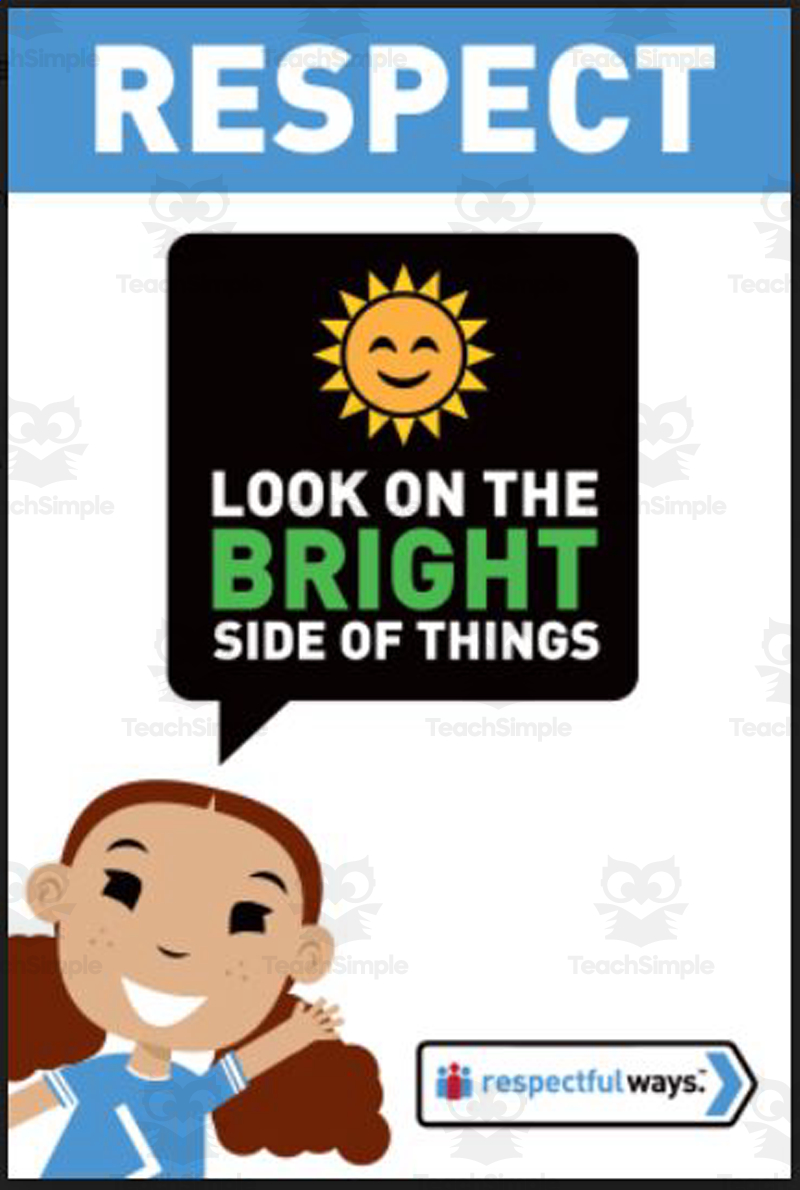
Let's Chat Conversation Cards | "I Respect Others"
Special Resources, Social Emotional Learning (SEL), Grade 2, 3, 4, 5, 6, Teacher Tools, Lesson Plans
Let's Chat Conversation Cards for "I Respect Others" is a social-emotional learning resource that helps students develop respect, responsibility, perseverance, and compassion. This set focuses on respecting others. It includes 57 conversation starter cards to spark meaningful dialogue in which students learn different perspectives and strengthen friendships. Educators can facilitate whole-group, small-group, or partner discussions with these cards. Respectful Ways, the creator, is a trauma-informed program that partners with schools to improve climate, behavior, and wellness through assessments, targeted intervention curriculum , and custom professional development. Their research shows students utilizing Respectful Ways resources had 12% higher GPAs, 37% better attendance, and 93% fewer referrals. This resource integrates with multi-tiered systems of support and positive behavioral interventions and supports.
Author Respectful Ways
Tags SEL Lesson, Conversation Cards, Respectful Ways, Respect, Spanish, Social Emotional Learning, Character Education, Trauma-informed, Let's Chat
Health 1st Grade Unit 7: Environmental / Consumer Health
P.E. & Health, Special Resources, Health, Physical Education, Life Skills, Social Emotional Learning (SEL), Social Skills, Grade 1, Lesson Plans, Teacher Tools, Worksheets & Printables, Worksheets
For 1st Grade Health there are seven standards that need to be taught. Unit 1 Personal Health Unit 2 Growth and Development Unit 3 Nutrition and Physical Activity Unit 4 Substance Use and Abuse Unit 5 Injury/ Violence Prevention Control and Safety Unit 6 Prevention/Control of Disease Unit 7 Environmental Consumer Health These units can be taught out of order. They are only numbered for your convenience. At the end of each unit, there is an assessment to test students’ understanding. Through using this Health 1st Grade Unit 7: Environmental / Consumer Health includes the following concepts: * Students will learn about sun damage. * Students will learn how to protect themselves from sun rays. * Students will learn about community health workers. * Students will learn about slogans and safety slogans. At the end of the unit, there is an assessment to check for understanding. With this unit, your students are sure to be engaged and learn so much about their health! A total of 13 pages for Health 1st Grade Unit 7: Environmental / Consumer Health. There are seven units that cover all the health requirements for first grade. Here are the links to other health units: Health 1st Grade Unit 1: Personal Health Health 1st Grade Unit 2: Growth and Development Health 1st Grade Unit 3: Nutrition and Physical Activity Health 1st Grade Unit 4: Substance Use and Abuse Health 1st Grade Unit 5: Injury / Violence Prevention and Safety Health 1st Grade Unit 6: Prevention / Control of Disease Health 1st Grade Unit 7: Environmental / Consumer Health You can also teach your students about keeping yourself safe by studying about the Coronavirus, where and when it started and facts that plagued our world with this virus. 1st grade Coronavirus / Covid-19 Facts by Teach Simple This unit meets Common Core Standards.
Author K-5 Treasures
Tags Health Unit, Environment, Consumer Health, 1st Grade Health, First Grade Health, Healthy Habits, Environmental Health, Community Health, Health, 1st Grade Resources
Kindergarten Health: Unit 6
P.E. & Health, Life Studies, Health, Physical Education, Special Resources, Life Skills, Social Emotional Learning (SEL), Social Skills, Kindergarten, Lesson Plans, Teacher Tools, Worksheets & Printables, Worksheets
For Kindergarten Health there are seven standards that need to be taught to achieve healthy habits! Unit 1 Personal Health Unit 2 Growth and Development Unit 3 Nutrition and Physical Activity Unit 4 Substance Use and Abuse Unit 5 Injury/ Violence Prevention Control and Safety Unit 6 Prevention/Control of Disease Unit 7 Environmental Consumer Health These units can be taught out of order. They are only numbered for your convenience. Through using this Kindergarten Health: Unit 6, students will learn about disease prevention and how to control disease. Included in this unit : * Students will learn what germs are and how to prevent the spread of germs. * Students will learn how to wash their hands to prevent the spread of germs. They will do an activity of cut and paste for hand washing. * Students will understand the role of doctors and identify the role of some of the instruments that they use to care for your health needs. * Also included is information on the coronavirus and how to prevent the spread of this disease and how to stay healthy. Students will learn about disease prevention and how to stay healthy by controlling diseases. There are a total of 20 pages included in this unit for Kindergarten Health. There are seven units that cover all the health requirements for Kindergarten. Here are the links to other health units: Kindergarten Health: Unit 1 Personal Health Kindergarten Health: Unit 2 Growth and Development Kindergarten Health: Unit 3 Nutrition and Physical Activity Kindergarten Health: Unit 4 Substance Use and Abuse Kindergarten Health: Unit 5 Injury / Violence Prevention Control and Safety Kindergarten Health: Unit 6 Prevention / Control of Disease Kindergarten Health: Unit 7 Enviromental Consumer Health You can also teach your students about keeping yourself safe by studying about the Coronavirus, where and when it started and facts that plagued our world with this virus. Kindergarten Health: Covid 19 / Coronavirus Facts This unit meets Common Core Standards.
Author K-5 Treasures
Tags Kindergarten Health, Health Units, Healthy Habits, Healthy Food, Health Worksheets, Worksheets On Health, Kids Health, Personal Health, Health, Health For Kindergarten
Substance Use and Abuse Health: 4th and 5th Grade Unit 4
P.E. & Health, Life Studies, Physical Education, Health, Special Resources, Life Skills, Social Emotional Learning (SEL), Social Skills, Grade 4, 5, Teacher Tools, Lesson Plans, Worksheets & Printables, Worksheets
Substance Use and Abuse Health: 4th and 5th Grade Unit 4 For 4th and 5th Grade Health, there are seven standards that students will practice and learn. Through using this Substance Use and Abuse: Health: 4th and 5th Grade Unit 4 students will explore and learn to identify daily healthy habits. With this 4th and 5th Grade Unit 4: Substance Use and Abuse lesson plan, your students will learn how to avoid these harmful substances. It has 16 pages of engaging activities with the opportunity for your students to identify and practice healthy habits as they learn to understand the long-term and short-term effects of drugs and other harmful substances. Along with that, they will learn and develop refusal skills to avoid drugs in unhealthy situations. Part of the activities include writing a letter to a friend that will warn them about the effects of drugs. Students will also learn how the media often influences the use of helpful and harmful drugs. Through these lessons, your students will gain a comprehension of the importance of making good healthy choices. Along with all this, there's a worksheet on coping skills that is helpful for students who are dealing with family or friends who are using drugs. In the end, there is an assessment to check for understanding. An answer key is also included. All these activities meet the Common Core Standards for health. Included in this Substance Use and Abuse: Health: 4th and 5th Grade Unit 4 are the following: A worksheet where students will be able to understand the long term and short-term effects of drugs along with other harmful substances. Students will write a note to a friend in order to warn them about the harmful effects of drugs. Students will be able to learn about the harmful and helpful effects media has on our health. They will practice 10 different refusal skills to avoid drugs with classmates or as a class when in unhealthy situations with harmful substances. Coping skills on how to deal with family or friends who are using drugs is included. Lastly, there is an assessment to check for understanding. Answer keys are also included. There are 16 pages included! There are seven units that cover all the health requirements for 4th and 5th grade. Here are the links to other health units: Health | 4th and 5th Grade Unit 1: Personal Health Health | 4th and 5th Grade Unit 2: Growth and Development Health | 4th and 5th Grade Unit 3: Nutrition and Physical Activity Health | 4th and 5th Grade Unit 4: Substance Use and Abuse Health |4th and 5th Grade Unit 5: Injury and Violence Prevention Health | 4th and 5th Grade Unit 6: Prevention and Control of Disease Health |4th and 5th Grade Unit 7: Environmental Consumer Health
Author K-5 Treasures
Tags Health Unit, Personal Health, Healthy Goals, Health Activities, Physical Goals, Health Goals, Health And Wellness, 4th Grade Health, 5th Grade Heath, Heath Units
I WONDER - Where Is The Best Place To Meditate | Animated Video Lesson
Life Skills, Special Resources, Social Emotional Learning (SEL), Mindfulness, Mental Health, P.E. & Health, Grade 6, 7, 8, 9, 10, 11, 12, Lesson Plans, Teacher Tools
Video Introduction An amazing video designed for the students to have fun learning about our daily activities or even to have fun learning more about our mental health. I WONDER - Where Is The Best Place To Meditate | Animated Video Lesson Our mental health is a crucial aspect nowadays for everyone. Do you know how to keep our mind and soul healthy? Have you ever practice gratitude? If yes, tell us what are you thankful for? Have you ever practiced meditation? If yes, can you share with us the steps you have done? Do you like group activities or crafts that you can enjoy with your friends and family? Which one makes you feel better? Yoga is really good for our mental health, have you tried it before? I WONDER - Where Is The Best Place To Meditate | Animated Video Lesson The activity is perfect for encouraging us to have a better way of life and thinking for the students, while having fun with our cool activities and crafts that let students learn more about our mental health. I WONDER - Where Is The Best Place To Meditate | Animated Video Lesson This friendly designed video is suitable for students at school, homeschooling, and as a group activity. Format Available in MP4 format.
Author Educational Voice
Rating
Tags Where Is The Best Place To Meditate, Where Is The Best Place To Meditate Video, Best Place To Meditate, Best Place To Meditate Video, Best Place To Meditate Video For Kids, Meditation, Meditation Facts
CBT & Anxiety Management Toolkit
Life Skills, Special Resources, Social Emotional Learning (SEL), Social Skills, Special Education Needs (SEN), Speech Therapy, STEM, Resources for Teachers, Classroom Management, Community Building, Homeschool Curriculum, Homeschool Templates, Grade 9, 10, 11, 12, Projects, Activities, Teacher Tools, Assessments, Graphic Organizers, Lesson Plans, Outlines, Rubrics, Presentations, Worksheets & Printables
Find the top CBT Anxiety Management Toolkit Professional Edition PDF – a 47-page digital guide filled with helpful information and tools to beat anxiety. This guide is meant for therapists, life coaches, and individuals looking for effective mental health tools. This SEO-friendly CBT workbook provides detailed information on cognitive models, anxiety triggers, cognitive distortions, ABC models, automatic thought records, evidence boards, worry trees, de-catastrophizing scripts, fear ladders, grounding techniques, behavioral activation plans, core beliefs, and daily mood trackers. Be empowered with step-by-step strategies for cognitive restructuring, exposure therapy, behavioral activation, and sensory grounding techniques to overcome anxiety and live an anxiety-free life. This guide is meant for psychology professionals and mental health enthusiasts. Get this printable CBT anxiety workbook PDF today and get the mental health assistance and resilience training you need. Why Parents/Schools Love It: Evidence-Based Tools for Real-World Application: CBT worksheets for students to develop skills that can be applied in the real world, helping them develop emotional resilience that can improve their academic performance. Promotes Self-Awareness and Mental Health Literacy: Encourages students to engage in reflective exercises that can help them develop skills that can last a lifetime, allowing them to cope with stress in an appropriate manner. Flexible for Classroom or Home Application: PDFs with diagrams that can be printed out for use in the classroom or at home for students who need extra support during high-stress periods of the academic calendar. Professional Quality Content at an Affordable Price: Helps provide students with the tools that can normally only be accessed with the guidance of a therapist, all at an affordable price for the school. Tracks Progress for Measurable Growth: Helps parents/educators track the progress of students' emotional state so that improvements can be measured. Target Classes/Students : Given that the PDF is a comprehensive analysis and review of CBT tools and strategies for anxiety management, targeted towards professionals and adult learners, the target audience would be students in higher education and advanced programs, especially in the field of psychology and counseling. The target classes/students would be: Undergraduate Psychology or Counseling Students (Sophomore to Senior Level): The PDF would be ideal for classes such as “Introduction to CBT,” “Abnormal Psychology,” or “Mental Health Interventions,” where students can use the worksheets for case study and self-reflection assignments. Graduate Students in Clinical Psychology, Social Work, or Therapy: The PDF would be suitable for classes such as “Cognitive Behavioral Therapy Practicum,” “Anxiety Disorders Treatment,” or “Professional Counseling Skills,” where students can use the content for case studies and assignments. Adult Education or Continuing Education: The target audience would be adult learners in online or community college classes, especially in the field of psychology and counseling, or in a life coaching program. High School Advanced Placement (AP) Psychology: The target audience would be seniors in advanced psychology classes, provided that the curriculum covers CBT concepts, as the content is too advanced and technical for a general audience. Copyright/Terms of Use: This Book was copyrighted by Syed Hammad Rizvi. This resource is for personal and single classroom use only. You may not alter, redistribute, or sell any part of this resource. In other words, you may not put it on the Internet where it could be publicly found and downloaded. If you want to share this resource with your colleagues, you may buy additional licenses from Teachsimple. Thank you for respecting these terms of use. This product is happily brought to you by Syed Hammad Rizvi
Author Creative Book Store
Rating
Tags CBT, CognitiveBehavioralTherapy, AnxietyManagement, AnxietyRelief, MentalHealth, MentalHealthMatters, MentalHealthAwareness, StressRelief, OvercomeAnxiety, AnxietyTools
Proprioceptive Power-Ups: A Gamified Physical Therapy & Sensory
Research, Resources for Teachers, Classroom Management, Community Building, Special Resources, Life Skills, Social Emotional Learning (SEL), Social Skills, Special Education Needs (SEN), Speech Therapy, Grade 1, 2, 3, 4, 5, 6, 7, 8, Worksheets & Printables, Workbooks, Worksheets, Word Searches, Teacher Tools, Assessments, Graphic Organizers, Lesson Plans, Presentations, Outlines
With Proprioceptive Power-Ups, you can turn dysregulated classrooms into focused learners. This complete, evidence-based, gamified sensory regulation program takes ‘heavy work’ and transforms it into new fun, student-led Power-Ups. The 27-page digital PDF resource is designed to provide occupational therapy, physical therapy, and real-world classroom viability for students in kindergarten through eighth grade. Using Sensory Integration Theory, Self-Determination Theory (SDT), and micro-learning protocols, Proprioceptive Power-Ups provide sensory seekers with 3-5 minute ‘bursts’ of proprioceptive and vestibular input that calm those under-responding to sensations at the same time dramatically improving attention, motor planning skills, emotional regulation, and other important areas of development. The following features are provided within Proprioceptive Power-Ups: Comprehensive theoretical underpinning (neurobiology of proprioception, tripartite circuit architecture, integration within an MTSS Tier 1-3 model) 10 student workbook worksheets with fill-in-the-blank self-reflection and data tracking to complete before beginning a new series of Power-Ups. Age-divided choice board usages for example K-2 use an imagination engine; 3-5 uses a mission protocol; 6-8 uses biometric optimization. Full-color diagrams, schematics include but are not limited to: Neurological Processing Pathway; 3-Phase Sensory Circuit; Gamification Mechanics Matrix. Examples of IEP goals, tools for collecting data, and case studies demonstrating an overall reduction of 60-78% in both elopement and disruption of classroom activities as compared to pre-Proprioceptive Power-Ups implementation. Instant digital download of entire resource, no preparation required! Proprioceptive Power-Ups are ideal for teachers, occupational therapy specialists (OT), physical therapy specialists (PT), special education teachers/special instructors, and parents who are serving students with or without ADHD, developmental coordination disorder (DCD), autism spectrum disorder (ASD), or other classroom sensory processing disorder(s). Why Schools & Parents Are So Happy About It 1. Effectively Calms & Focuses Students: With instant self-regulation through 3–5 minutes of gamified “heavy work” activities, elopement, meltdown, and verbal disruptions have been reduced by as much as 78% in real case study examples. 2. Zero Lesson Prep but Maximum Engagement for the Students: Therapy is turned into play, through Choice Boards and avatar style Power-Ups - giving students choice and control, and saving teachers time while providing maximum engagement for the students in busy classroom settings and for kids on their IEP. 3. Evidence Based and Measured Progress: Easy access to the “whole brain” theory of neuroscience with pre/post data tracking tools and IEP goal templates providing easy documentation of progress to parents and administrators. 4. Age Appropriate From K to 8th Grade: There are differentiated stations and language to keep even the youngest kids excited about (and the oldest kids “cool” about) participating in activities in the same room without being segregated by age. 5. Proven Return On Investment: High impact proprioceptive input (replacing ineffective fidgety tools) will continue to improve time on task, enhance writing skills, and improve working/executive function without the need to sacrifice time during instruction. Target Students and Grade Levels: The resource is geared toward kindergarten through 8th grade (K-8) students. The children that will benefit from this program demonstrate an under-stimulated or dysregulated proprioceptive and vestibular system, including: Sensory Seekers (i.e., crashing, chewing, and pressing too hard); Sensory Under-Responders (i.e., lethargic, floppy, and having low muscle tone); Students with Attention-Deficit/Hyperactivity Disorder (ADHD) - Combined Type; Autism Spectrum Disorder (ASD); Developmental Coordination Disorder (DCD); Dyspraxia .A general education classroom using a Multi-Tiered System of Support (MTSS) Tier 1 (i.e., universal brain breaks), Tier 2 (i.e., targeted small groups), and Tier 3 (i.e., Individualized Education Plan-specific on Circuit) will also utilize the program as needed. There is built-in scaffolding provided within the program through the following: narrative/imaginative play for grades K-2; challenge-based missions for grades 3-5; and more mature "biometric optimization" language for middle school (grades 6-8) to assist in securing the dignity of the adolescent population. Copyright / Terms of Use This Book is copyright protected by Syed Hammad Rizvi. You may only use this resource for your own personal use and for use by one class within your own classroom. You may not change this resource or redistribute or sell any part of the resource. In other words, you may not post this resource on the internet where it would be easily accessible and/or downloadable by others. If you would like to share this resource with other teachers, kindly purchase additional licenses to use this resource from Teachsimple. Thank you for complying with the terms of use for this resource. Thank you from all of us at Syed Hammad Rizvi for purchasing this product!
Author Creative Book Store
Rating
Tags ProprioceptiveInput, HeavyWorkActivities, HeavyWork, JointCompression, DeepPressure, SensoryCircuit, SensoryIntegration, SensoryProcessingDisorder, SensoryProcessing, SensoryDiet
Nutrition and Physical Activity Health: 4th and 5th Grade Unit 3
P.E. & Health, Life Studies, Physical Education, Health, Special Resources, Life Skills, Social Emotional Learning (SEL), Social Skills, Grade 4, 5, Teacher Tools, Lesson Plans, Worksheets & Printables, Worksheets
Nutrition and Physical Activity Health: 4th and 5th Grade Unit 3 For 4th and 5th Grade Health, there are seven standards that students will practice and learn. Through using this 4th and 5th Grade Health Unit 3: Nutrition and Physical Activity, students will explore and learn to identify daily healthy habits. This unit is the perfect way to help 4th and 5th graders learn the importance of their personal health! This Unit 3: Nutrition and Physical Activity contains many activities that include teaching the six basic nutrients the body needs and how students can maintain a healthy lifestyle. Students will also learn the importance of portion sizes, and they will be able to learn and understand the new food labels that was recently recreated on all food containers. Furthermore, students will get to plan 3 meals that are healthy and create an ethnic recipe of their own.. Plus, they'll get to learn about physical and moderate exercises to keep their bodies healthy. At the end of this unit, there is an assessment and answer key to check for understanding. This 4th and 5th Grade Unit 3: Nutrition and Physical Activity meets Common Core standards and will make learning about nutrition and physical activity fun and exciting! Included in this 4th and 5th Grade Health unit are the following: Students will learn about the body's nutrients that are needed for a healthy lifestyle which include: Water, Protein, Carbohydrates, Fat, Vitamins, Minerals. They will learn about portion sizes and the basic food groups. They will create and plan three healthy meals. Students will decipher what food labels mean on food packages and how to apply that to their life. They will learn a new ethnic recipe and make their own meal. Students will learn about physical and moderate exercises and come up with their own ways to stay healthy with exercise. Lastly, there is an assessment to check for understanding. Included is an answer key. There are 26 pages included! There are seven units that cover all the health requirements for 4th and 5th grade. Here are the links to other health units: Health | 4th and 5th Grade Unit 1: Personal Health Health | 4th and 5th Grade Unit 2: Growth and Development Health | 4th and 5th Grade Unit 3: Nutrition and Physical Activity Health | 4th and 5th Grade Unit 4: Substance Use and Abuse Health |4th and 5th Grade Unit 5: Injury and Violence Prevention Health | 4th and 5th Grade Unit 6: Prevention and Control of Disease Health |4th and 5th Grade Unit 7: Environmental Consumer Health
Author K-5 Treasures
Tags Personal Health, Healthy Goals, Health Activities, Physical Goals, Health Goals, Health And Wellness, 4th Grade Health, 5th Grade Heath, Heath Units, Nutrition Goals
Let's Chat Conversation Cards | "Ignore the Negative"
Special Resources, Social Emotional Learning (SEL), Grade 2, 3, 4, 5, 6, Teacher Tools, Lesson Plans
Let's Chat Conversation Cards - Ignore the Negative helps students build a positive mindset and have meaningful conversations to understand different perspectives. This social-emotional learning resource from Respectful Ways allows students to practice compassion, perseverance, respect and responsibility. The 57 Ignoring the Negative conversation starter cards facilitate small group discussions for students to share outlooks and strengthen connections. The supplementary Home Connects sheets involve families in continuing conversations at home, offered in English and Spanish. As a trauma-informed program, Respectful Ways provides an online curriculum vetted for trauma-sensitive learning. Workshops utilize school climate data so subject-matter experts can address specific student needs. The resources integrate with multi-tiered systems of support like PBIS using evidence-based practices.
Author Respectful Ways
Tags SEL Lesson Plan, Conversation Cards, Respectful Ways, Spanish , Ignore Negative, Perseverance, SEL, Social Emotional Learning, Character Education, Let's Chat
Let's Chat Conversation Cards | "Pride Yourself on Being Courteous"
Special Resources, Social Emotional Learning (SEL), Grade 2, 3, 4, 5, 6, Teacher Tools, Lesson Plans
This resource is a set of Let's Chat Conversation Cards for "Pride Yourself On Being Courteous." The “Let’s Chat Conversation Cards is a wonderful resource to help students build a positive mindset. This resource is part of a whole program that works towards having students believe they can be compassionate, have perseverance, respect, and responsibility and through it all, achieve great things! Let’s Chat Conversation Cards allows for real conversations through which students may learn of different perspectives and strengthen friendships through truly understanding each other. This resource is a set of Let's Chat Conversation Cards for "Pride Yourself On Being Courteous." There are 57 other Let's Chat resources available, along with matching Respectful Signage listed under "graphics". The "Home Connects" for families is available in English and Spanish. Meridian MS Public Schools has been a partner district of Respectful Ways since October of 2020 and they shared this year’s Panorama Data with us. Meridian students who are utilizing Respectful Ways and PBIS showed great improvements in these 3 key areas: 12% higher GPAs 37% attendance improvements 93% less referrals Respectful Ways is a trauma-informed program: Assessment: Take our survey to assess your school climate. Targeted Results: Your survey identifies modules that meet your students' social and emotional needs. Our trauma-informed online curriculum has been vetted by the Attachment & Trauma Network. Custom Professional Development: We offer workshops with subject-matter experts who use your data to address student behavioral needs and educator wellness needs. Blended Education Interventions: Respectful Ways (RW) integrates seamlessly with different instructional frameworks such as PBIS and MTSS, using evidence and research-based practices. For more information email Pam@RespectfulWays.com or call 404-955-8882.
Author Respectful Ways
Tags Conversation Cards, Respectful Ways, Courteous, Compassion, Let's Chat, Social Emotional Learning, Character Education, SEL, Be Courteous