Write multi-digit whole numbers in expanded form
Break multi-digit whole numbers into place-value parts and write them in expanded form.
38 resources
Deepen understanding of digit values. Build strong foundational math skills.
Explore sub-categories
1 sub-categories · 38 resources
Break multi-digit whole numbers into place-value parts and write them in expanded form.
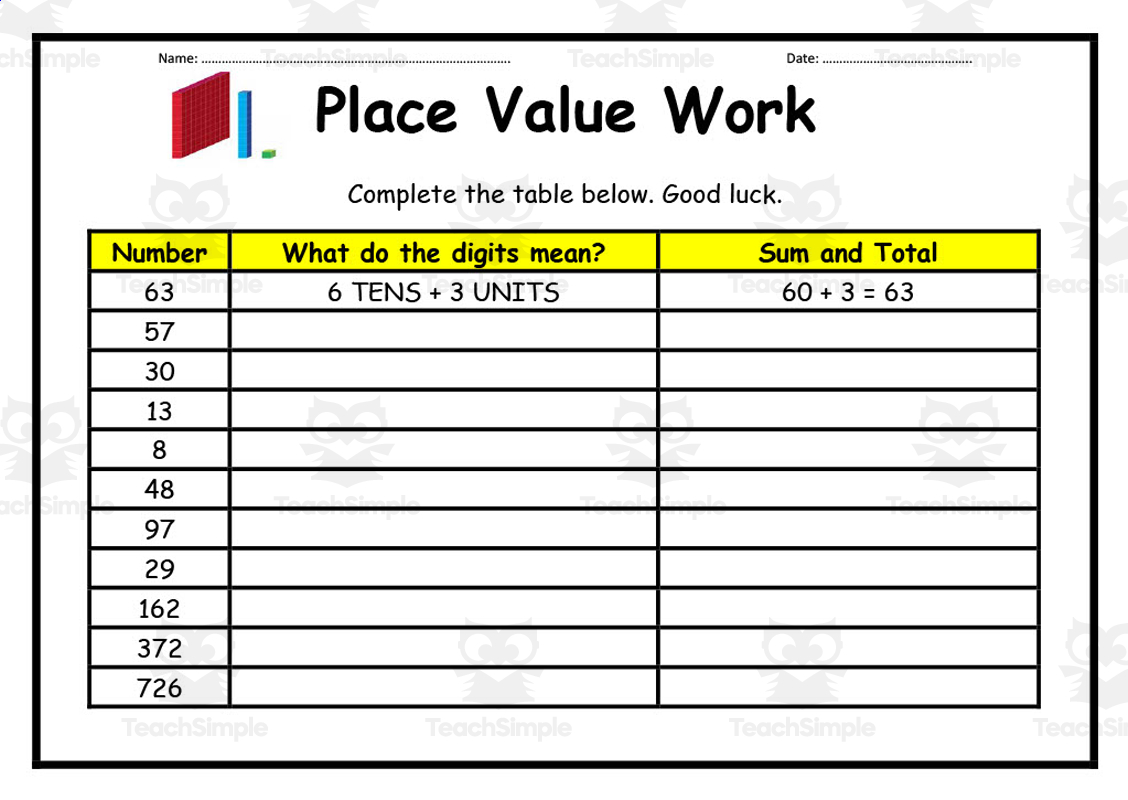
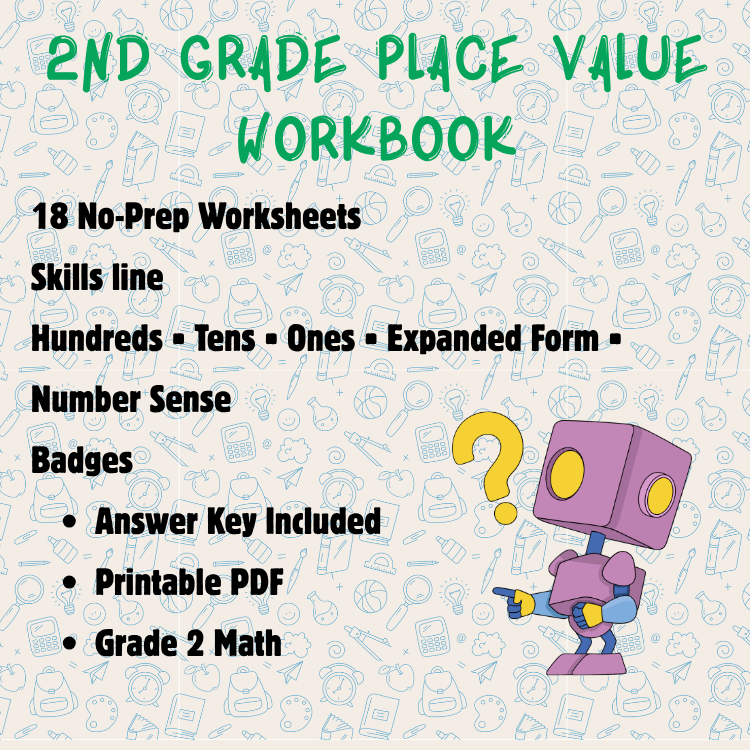
Partition each given number into tens/ones (page 1, 2-digit numbers) or hundreds/tens/ones (page 2, 3-digit numbers) using a table, then write the expanded-form addition sum (e.g. '20 + 6 = 26').
Fill in a table decomposing given numbers (up to 3 digits) into their place-value parts and writing the expanded-form sum (e.g., 60 + 3 = 63), then use place-value cards (shown as stacked number cards, e.g., 500 + 60) to determine and write the resulting number for a series of card combinations.
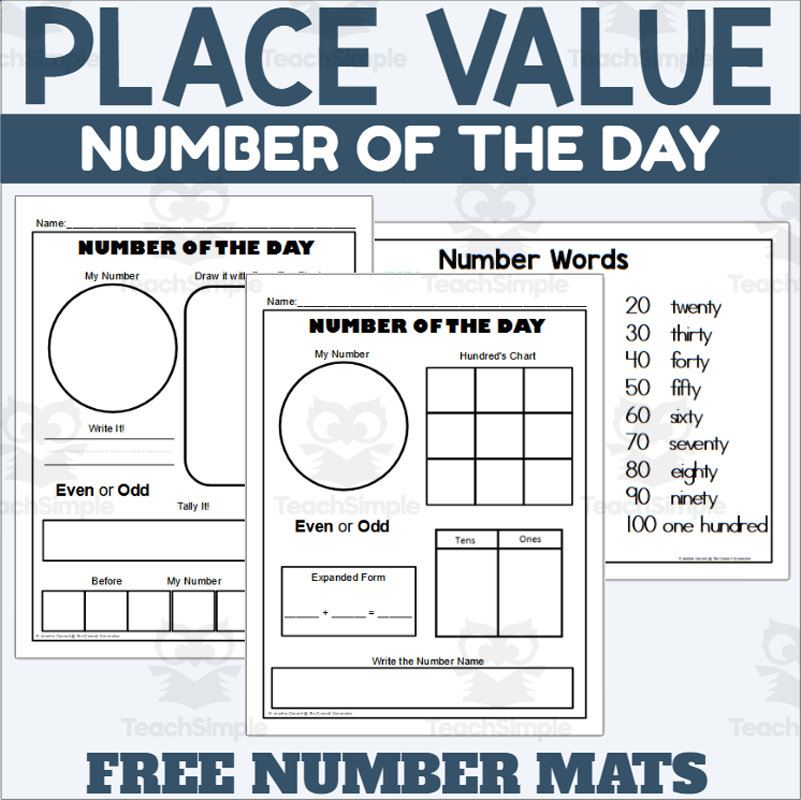
Write/fill in a two-digit number and represent it via a base-ten-block drawing, tally marks, expanded form, a hundred's chart, and word form; identify the number before and after, and whether it is even or odd.
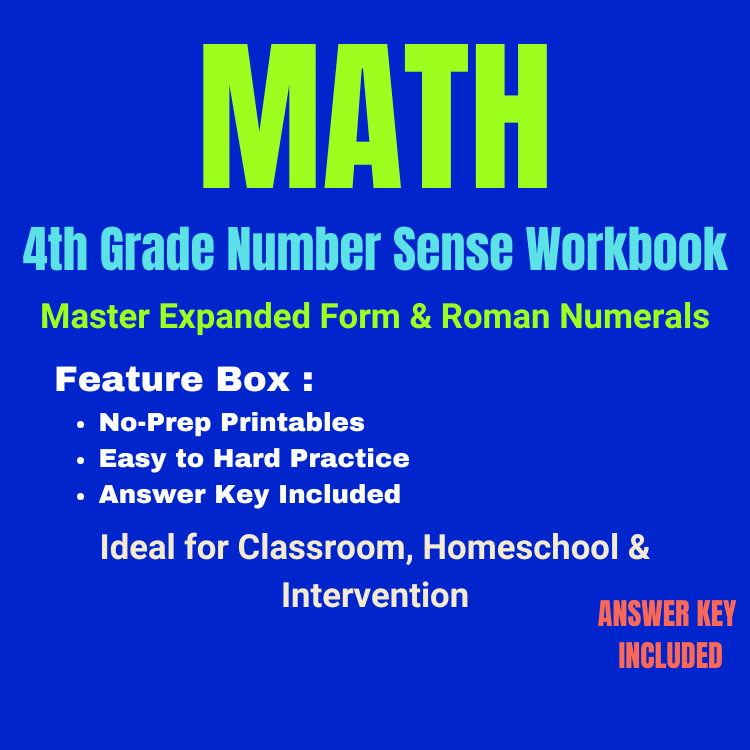
Complete progressively harder (easy/medium/hard) practice sections for expanded form and Roman numerals, check work against the answer key, and receive a certificate of completion.
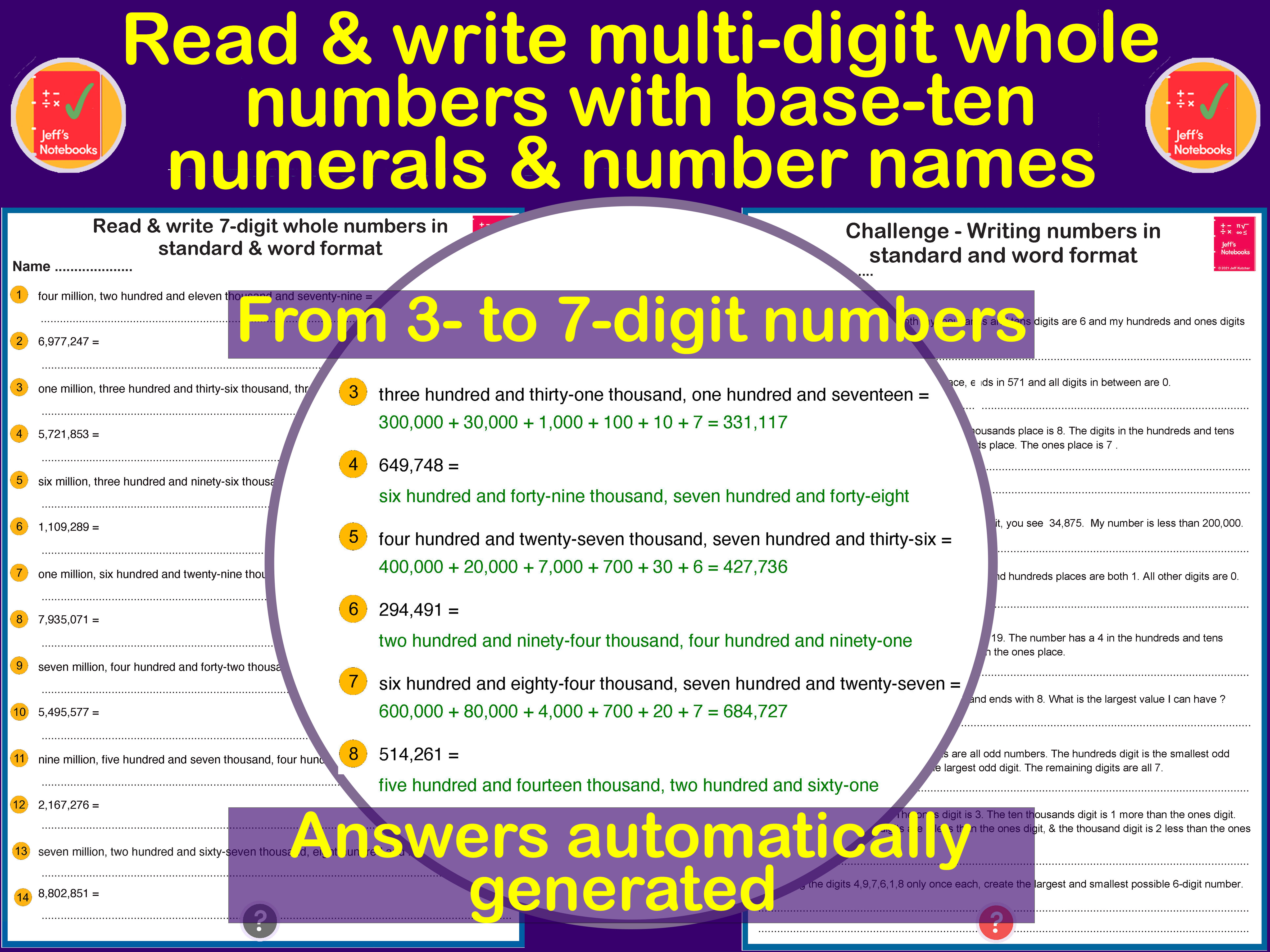
Convert numbers given in word form to standard numeral form and vice versa, write numbers in expanded form, and solve place-value riddles (e.g. determine a mystery number from digit clues) in a 'challenge' set with answers provided.
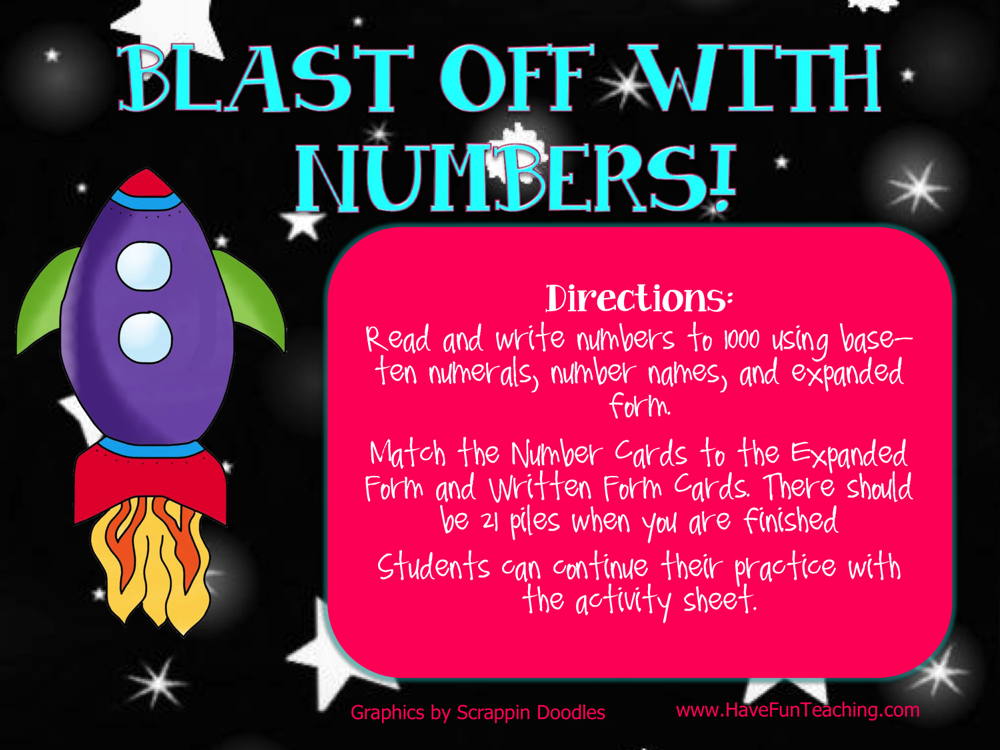
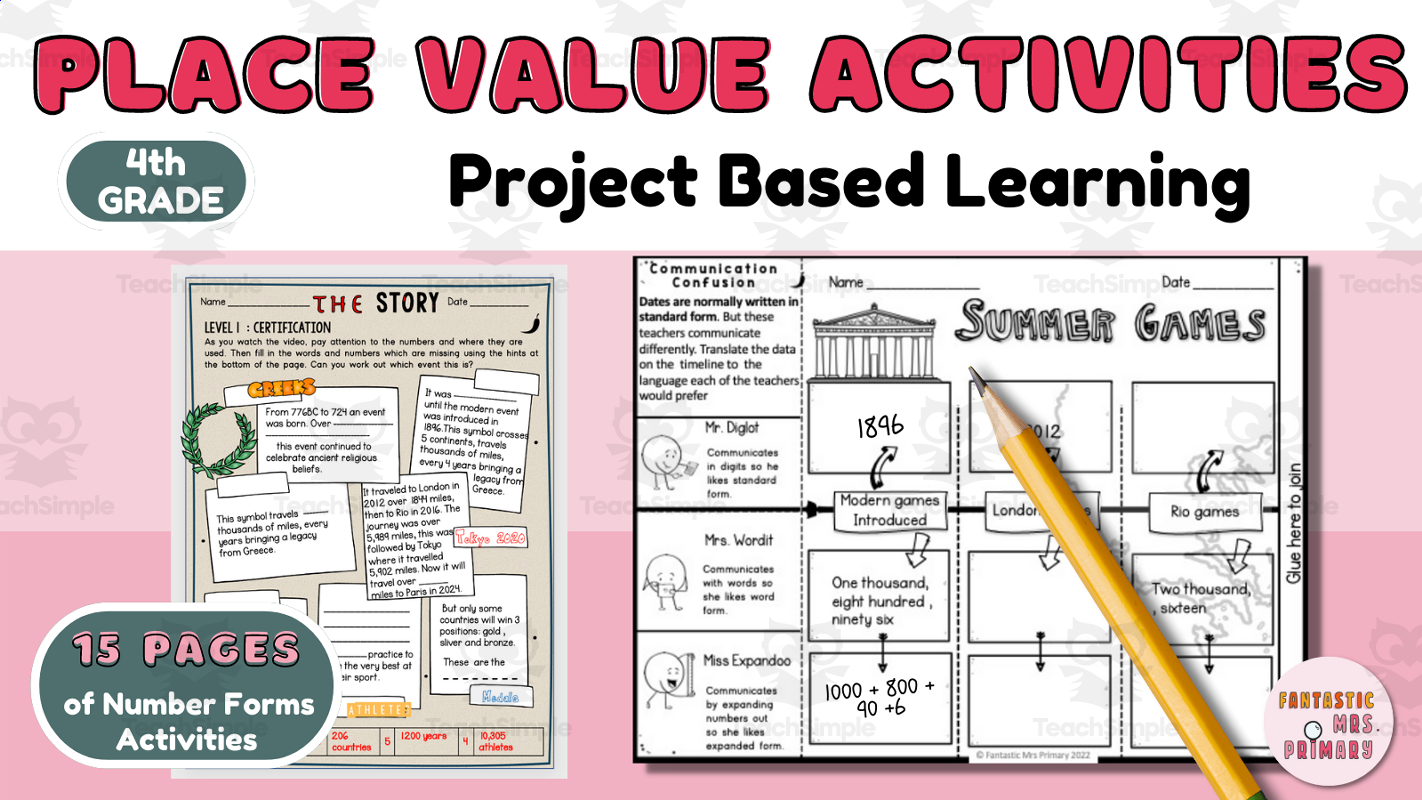
Match number cards to their corresponding expanded-form and written-word-form cards (21 matching sets total), then complete a follow-up practice activity sheet.
Complete practice pages: identify the hundreds/tens/ones digit values of 3-digit numbers, write numbers in expanded form, convert between standard form and word form, compare numbers using >, <, =, order numbers least-to-greatest and greatest-to-least, and complete mixed-review, challenge, assessment, and exit-ticket…
Count tens and ones from pictures and write the number; write numbers in expanded form and as addition sentences; match tens/ones representations to numerals and expanded form; add two-digit numbers with and without regrouping (including a balloon color-matching activity); add three two-digit numbers; subtract…
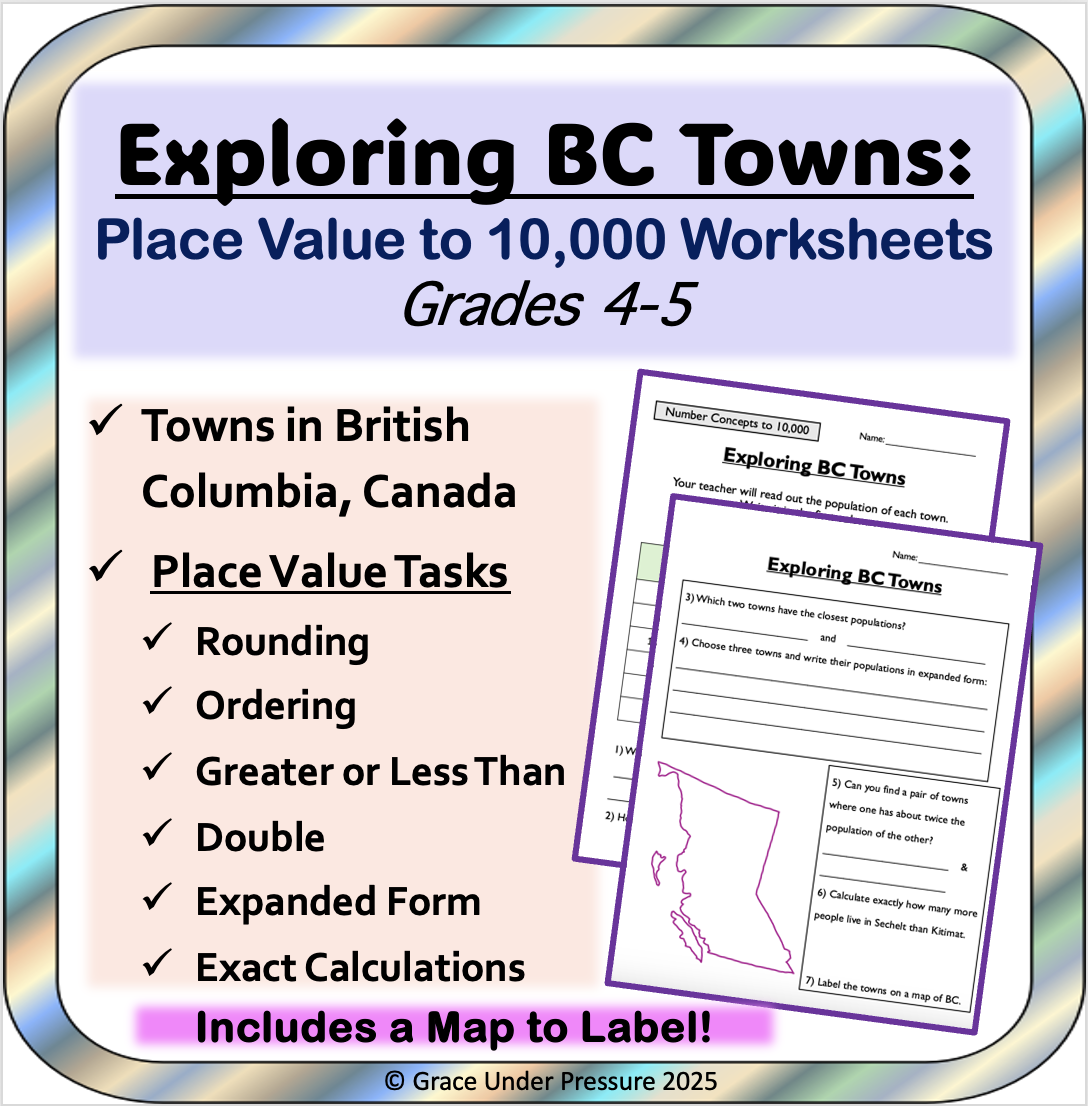
Listen to the teacher read aloud the population of each of six towns and record it in a table; round each population to the nearest hundred; order the towns from smallest to largest population; determine which towns have more than 5,000 people; identify the two closest populations; write three populations in expanded…
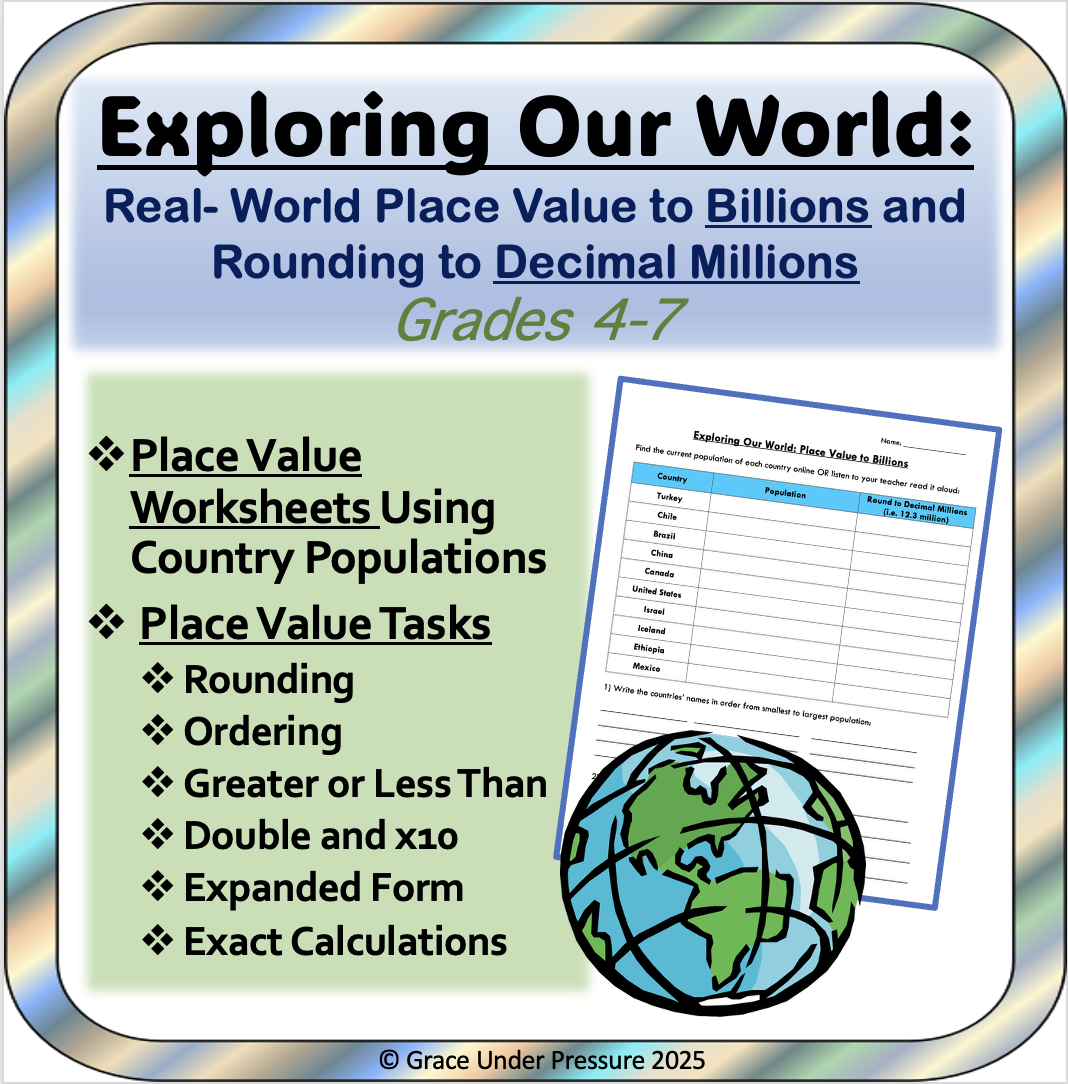
Look up or record the population of ten named countries, convert populations to decimal millions, order countries by population, answer comparison/estimation questions, write populations in expanded form, and calculate a population difference.
A math review worksheet covering estimation, mental math strategies, prime/composite numbers, factors and multiples (GCF/LCM), square roots, and exponents/cube numbers for grade 6-7 students.
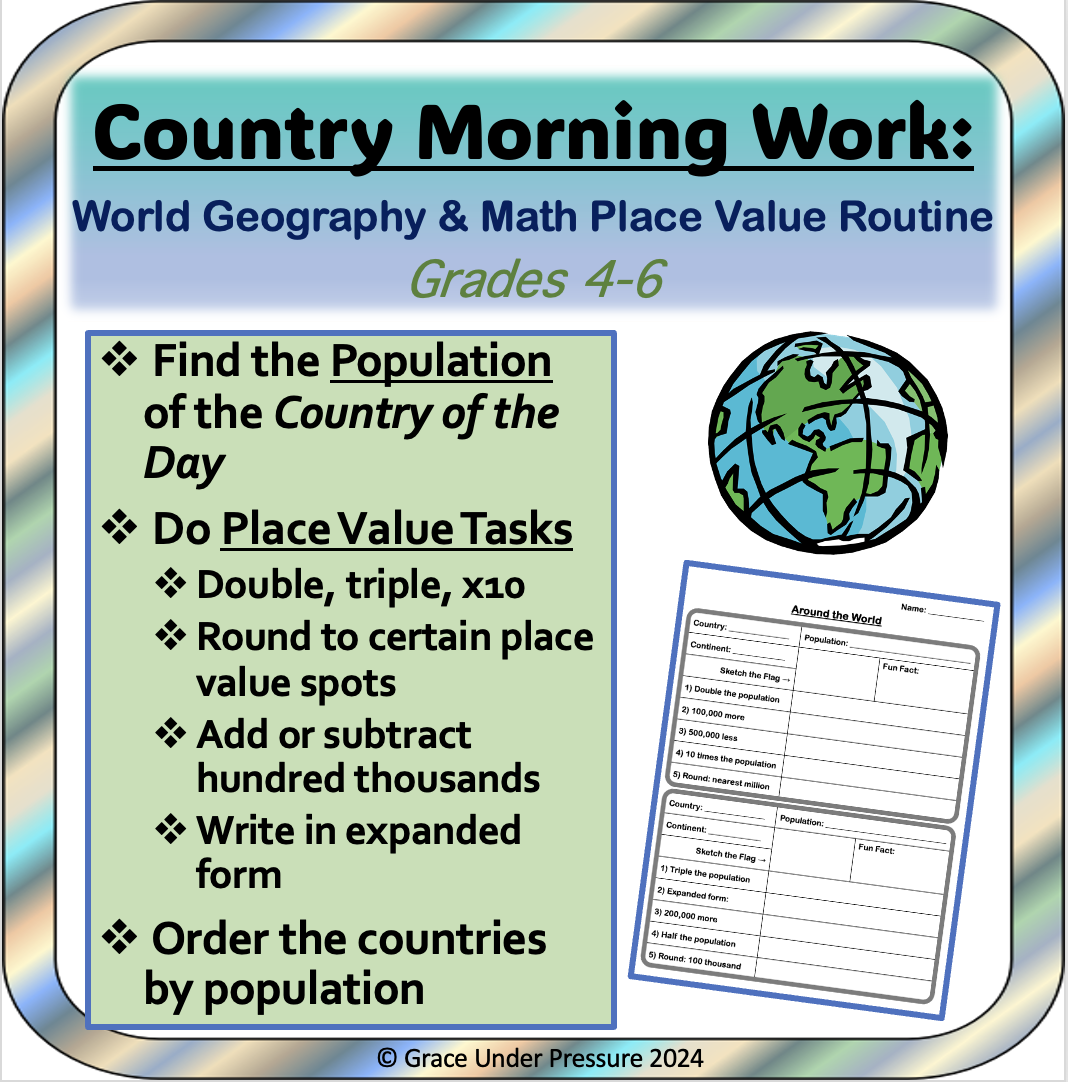
Students research a country's population, continent, flag, and a fun fact, then complete five math tasks that manipulate that population number (e.g. doubling/tripling it, adding or subtracting a stated amount, writing it in expanded form, rounding to a given place); after 8 days, students rank the countries by…
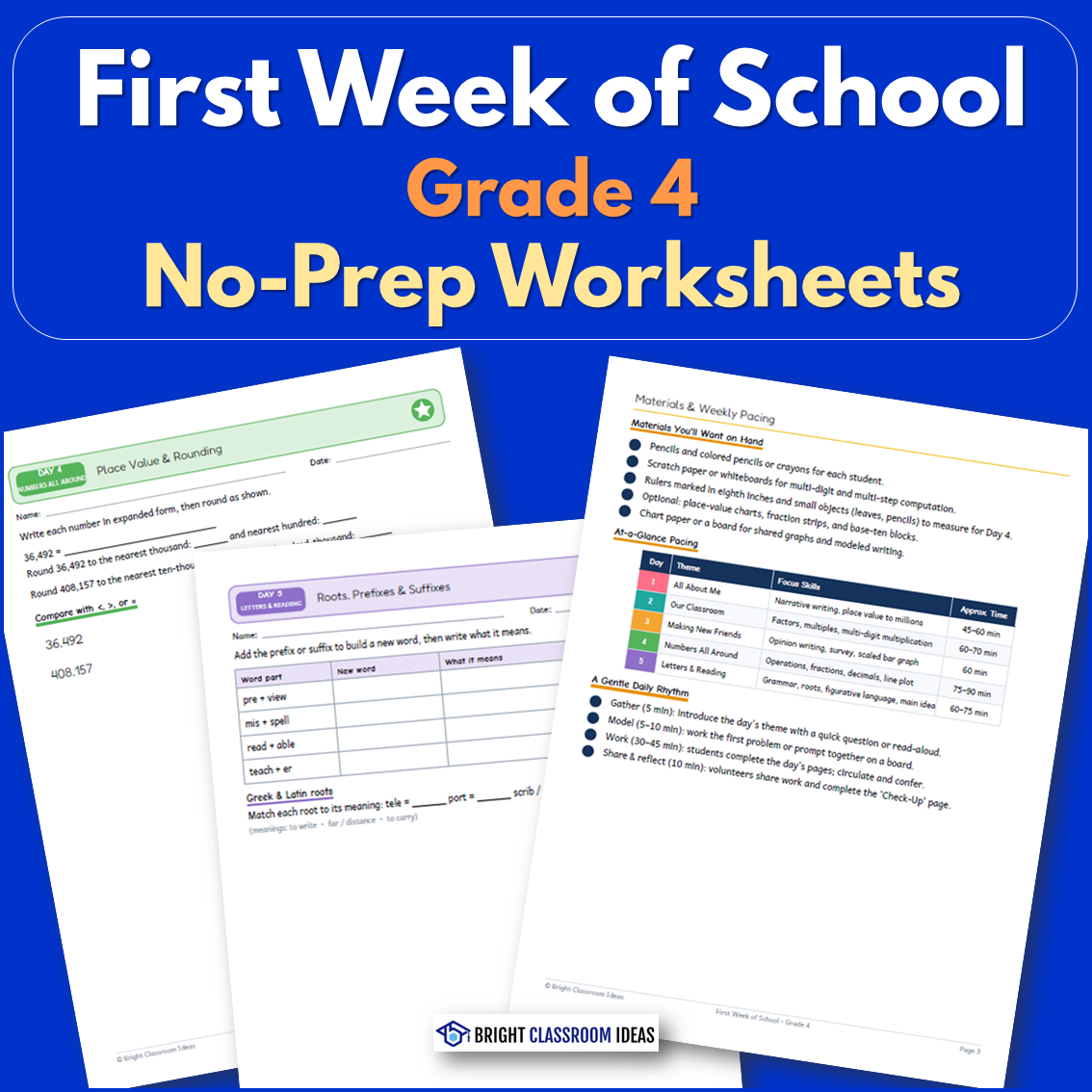
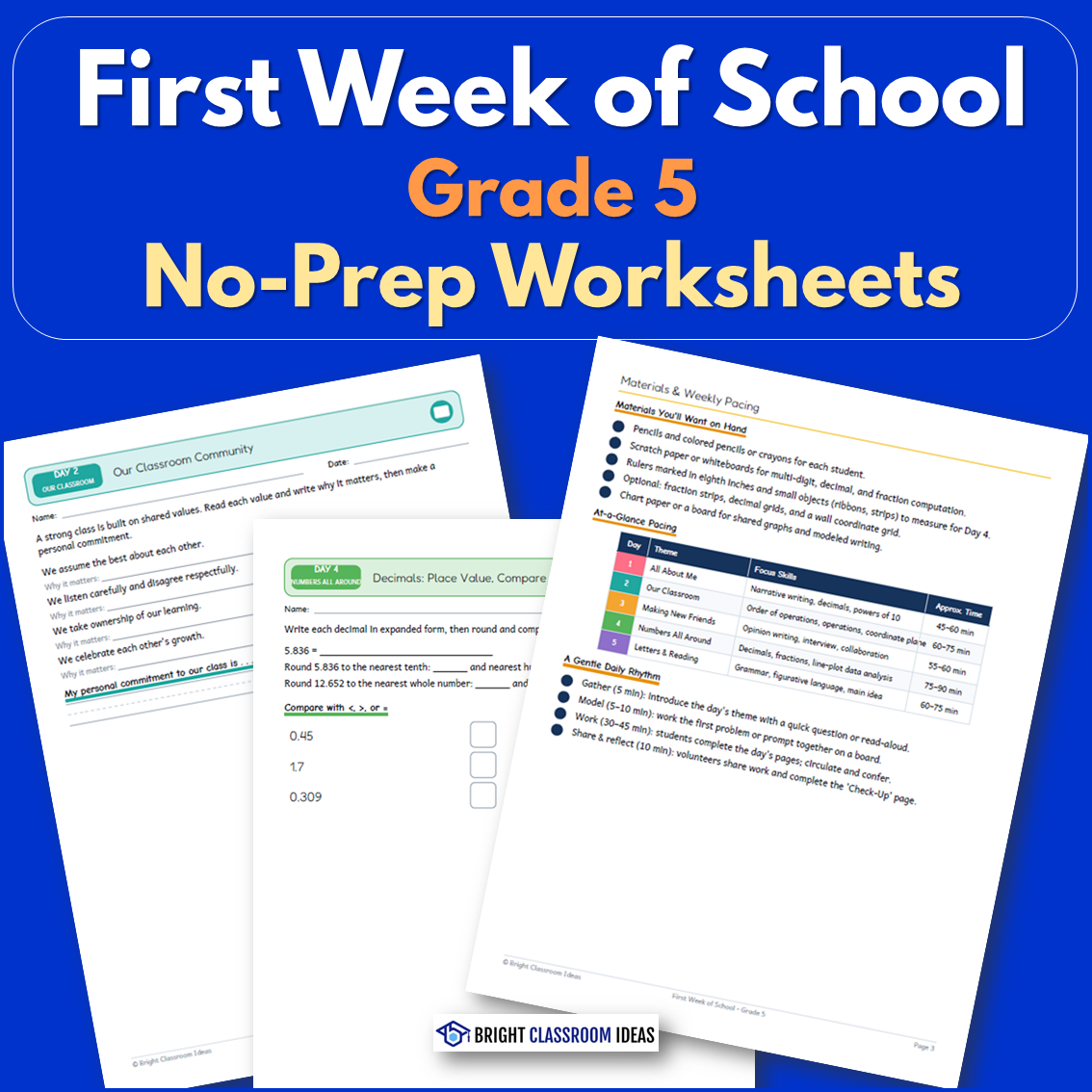
Students complete daily worksheets: introduce themselves and write a personal narrative, set goals, work grade-level math problems (expanded form, multi-digit operations, fractions/decimals, and unit-rate problems (e.g. pages per day)), read a graph or chart, and complete ELA exercises (grammar, vocabulary/roots…
Upper elementary/middle school math activity applying place value skills (rounding, ordering, comparing, expanded form) to the real-world populations of 11 Canadian cities.
Students complete daily worksheets: introduce themselves and write a personal narrative, set goals, work grade-level math problems (expanded form/rounding of large numbers, factors & multiples, multi-digit multiplication, equivalent fractions and fraction-decimal conversion, line plots), read a graph or chart, and…
Students look up the population of each of 11 named state capitals via a provided website link, fill in a chart and round each population to the nearest ten thousand, then answer 8 worksheet questions (ordering populations, comparing sizes, identifying place-value digits, writing numbers in expanded form) plus 4…
Each day students: write about a prompt, work with a printed number of the day (word form, expanded form, more/less, odd or even), answer a 'How Much?' item, tell the time on a clock, do a spelling activity (e.g. write words backwards, in ABC order, in a different color), correct a Daily Oral Language (DOL) sentence…
Students write numbers in place value charts, convert numbers between symbolic form/expanded form/word form, represent numbers with base ten blocks, compare and order numbers, estimate and round to the nearest ten/hundred/thousand, solve addition and subtraction problems (including with decimals to the hundredths)…
Each day students: write about a prompt, work with a printed number of the day (word form, expanded form, more/less, odd or even), answer a 'How Much?' item, tell the time on a clock, do a spelling activity (e.g. write words backwards, in ABC order, in a different color), correct a Daily Oral Language (DOL) sentence…
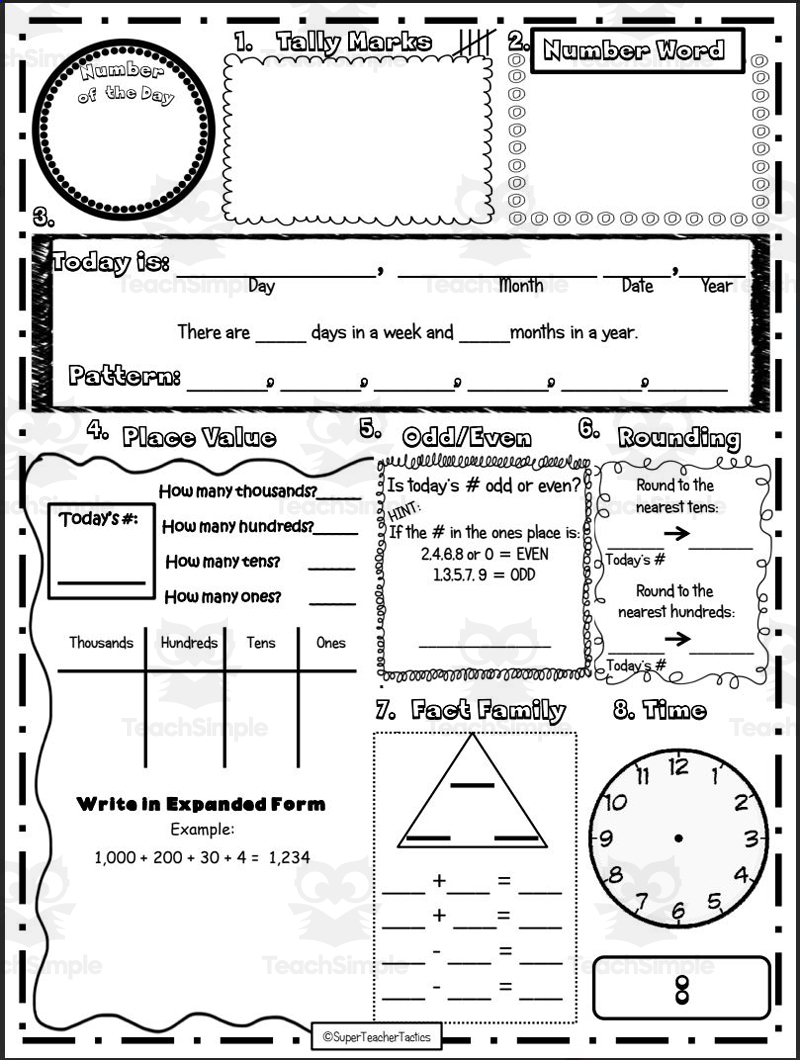
Students write the day's number in tally marks and words, fill in the current date and a number pattern, analyze the day's number for place value (thousands/hundreds/tens/ones) and expanded form, determine if it is odd or even, round it to the nearest tens and hundreds, create a fact family, tell/record time, complete…
Complete a fixed sequence of seven short daily activities on each page: (1) Write About It journal prompt, (2) 'Every Day Counts' place-value/number-sense task on a given number (e.g., round, double, find 10/100 more or less, expanded form, make with coins/money, odd/even), (3) a themed spelling-practice task (e.g.…