



2,816 products added recently
Page 82 - Worksheets & Printables
Discover a wealth of worksheets and printables to supplement your teaching. Covering multiple subjects and grade levels, these resources provide activities that reinforce learning objectives. Incorporate them into your lessons to offer hands-on practice and enrich your curriculum.

 Show filters


Remaking Plastic: Social Studies Reading Comprehension Passage (Word)
ELA, Reading, Reading Comprehension, Strategies, Resources for Teachers, Social Studies, Sociology, Grade 6, 7, 8, 9, Writing Prompts, Worksheets & Printables, Centers, Activities, Teacher Tools, Assessments, Quizzes and Tests, Quizzes, Tests
Remaking Plastic: Social Studies Reading Comprehension Passage (Word) This resource introduces a unique Social Studies reading comprehension passage with questions about Recycling and Remaking Plastic. The passage is carefully designed to bridge the gap between social studies and literacy through strengthening reading comprehension and sparking knowledge curiosity in middle school students. Each passage blends English Language Arts skills with accurate social studies content . Ideal for interdisciplinary learning in ELA and Social Studies. Suitable for Grade 9 review, too! Student Tasks throughout the passage: 5 multiple-choice questions targeting the following skills: main idea, key details, inference, vocabulary in context, and use of evidence 5 vocabulary matching items with clear, student-friendly definitions 5 text-based questions that require citing specific lines or facts 1 summary prompt that asks students to condense central ideas accurately Full answer key for every section Available Formats for this Resource: PDF Fillable PDF Google Docs FULL CATALOG OF DOWNLOADING LINKS HERE Social Studies Reading Comprehension Collection Links: 1. Ancient Civilizations PDF Fillable PDF Word Docs Google Docs 2. Early Empires and Trade Networks PDF Fillable PDF Word Docs Google Docs 3. The Founding of the United States PDF Fillable PDF Word Docs Google Docs 4. Language, Culture, and Meaning PDF Fillable PDF Word Docs Google Docs 5. Psychology and Society PDF Fillable PDF Word Docs Google Docs 6. Global Festivals and Traditions PDF Fillable PDF Word Docs Google Docs 7. Extreme Environments and People PDF Fillable PDF Word Docs Google Docs 8. Food, Culture, and Preservation PDF Fillable PDF Word Docs Google Docs 9. Global Food Customs PDF Fillable PDF Word Docs Google Docs 10. Media, Communication, and Popular Culture PDF Fillable PDF Word Docs Google Docs 11. Human Impact on the Environment PDF Fillable PDF Word Docs Google Docs 12. Civic Action and Social Change PDF Fillable PDF Word Docs Google Docs 13. Fashion, Society, and Power PDF Fillable PDF Word Docs Google Docs 14. People, Places, and Unusual Histories PDF Fillable PDF Word Docs Google Docs Product Details: Length: 5 pages Grades: 6–8, also suitable for Grade 9 review Use cases: close reading, stations, homework, intervention, test prep, and sub plans Why Teachers Choose This Passage: Authentic social studies content paired with rigorous literacy practice Consistent task structure for easier planning and smoother student routines Clear, age-appropriate writing that builds confidence without oversimplifying Use this passage to reinforce ELA skills in social studies, to add literacy to your lessons, and to support independent work. The passage strengthens main idea, evidence use, vocabulary in context, inference, cause and effect, and summary writing. With ready-to-use assessments and complete answer keys, you can provide focused practice that is simple to run and fast to review.
Author CORED Education - Middle & High School
Rating
Tags Middle School, Reading Comprehension, Reading Strategies, ELA, Centers, Reading Passage, Assessments, Vocabulary, Social Studies, Sociology
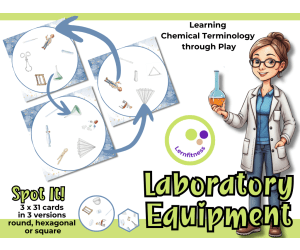
Spot It! – Laboratory Equipment 1 Fun & Engaging Game for Science Lab
STEM, Science, Chemistry, Physics, Life Sciences, Special Education Needs (SEN), Special Resources, Research, Biology, Homeschool Templates, Grade 6, 7, 8, 9, 10, Activities, Games, Worksheets & Printables, Task Cards, Quizzes and Tests, Teacher Tools, Quizzes, Word Problems, Word Searches, Worksheets
Spot It! Laboratory Equipment A Fun & Engaging Game for Science Classrooms 🔬 Make Learning Lab Equipment Fun and Interactive! Teaching students about laboratory equipment doesn’t have to be dull or overwhelming. With Spot It! – Laboratory Equipment, you can turn learning into a fun and engaging experience! This fast-paced matching game is perfect for chemistry, physics, and biology teachers who want to reinforce lab tool recognition in a way that students will love. 🎲 Why This Game Works for Science Teachers ✅ Boosts Visual Memory – Matching images of lab equipment helps students quickly recognize and remember key tools used in science labs. ✅ Encourages Active Participation – Gets students involved instead of passively memorizing lists. ✅ Improves Classroom Engagement – The fast-paced nature of the game keeps students motivated and focused. ✅ Perfect for Any Science Class – Whether you're teaching chemistry, physics, or biology, this game makes learning lab equipment easy and fun. ✅ Promotes Social Interaction – Encourages teamwork, communication, and collaborative learning. 🧪 What’s Included? 🃏 93 Total Cards – You’ll receive three different versions of the game, each with 31 cards: ✔ Round cards – Traditional Spot It! design. ✔ Square cards – Easy to cut and prepare. ✔ Hexagonal cards – Unique design for an extra challenge. 📖 Game Instructions: 1️⃣ Print the cards. 2️⃣ Laminate them for durability (optional). 3️⃣ Cut out the cards in your preferred shape: round, square, or hexagonal. 🎯 How to Play 🃏 Each player receives one card. 🔬 Turn over a card from the stack in the middle. 👀 Find a matching image between your card and the revealed card as quickly as possible. 🏆 If you find a match first, you win the revealed card. 🎉 The player with the most cards at the end wins! This game turns science learning into a competitive, fast-paced, and enjoyable classroom activity that will keep students engaged while reinforcing important lab vocabulary. 📌 Why Teachers Love It ✔ Saves Prep Time – Ready-to-print, simple setup, and no extra materials required. ✔ Great for Small Groups & Whole Class – Use it in science centers, team challenges, or as a warm-up activity. ✔ Adaptable for Different Learning Levels – Suitable for middle school, high school, and even introductory university-level science classes. 🔬 Make Science Learning More Engaging! If you’re looking for a fun, effective, and interactive way to help students learn and remember laboratory equipment, this Spot It! game is the perfect addition to your science classroom. 🚀 Download now and bring hands-on science learning into your classroom today! 📍 Best wishes, Heike from Lernfitness Did You Know? I teach with a certified therapy dog, and together we focus on creating a positive and inspiring learning environment. 🐶✨
Author Lernfitness
Tags Game, Spot It, Educational Card Games, Picture Match, Chemistry, Lab, Biology, Laboratory Equipment, Lab Tools, Physics
The Mitten (Novel Study) Gr. K-1
ELA, Reading, Grade 1, Worksheets & Printables, Novel Studies
The Mitten (Novel Study) Gr. K-1 This teaching guide is designed for young readers, from kindergarten to first grade, using a renowned Ukrainian story in a captivating rebus format. It's a great tool for making story time interactive and exciting. Overall Structure The resource provides easy-to-follow instructions on how best to use the material for an enriching storytelling session. Plus, attractive illustrations are provided throughout to ensure students can easily connect with the narrative. Key Features: A selection of hands-on activities: These practical applications - ranging from Mitten Day events to book crafting sessions - encourage active participation from pupils and enhance their understanding of the text content. Center Book Pages and pocket chart tools: This facilitates exploration by learners while promoting interactive teaching methodologies. 'Chants & Classifications' lesson: Apart from other insightful sections featured within this study guide like visual discrimination aids or memory match game which makes reading sessions more comprehensive language learning experiences. Taking advantage of different renditions of 'The Mitten', such as those by Alvin Tresselt or Jan Brett encourages comparison discussions within classrooms—thus further stimulating critical thinking among learners particularly neglected at these grade levels in conventional academics. Versatility: The novel study resource offers great flexibility—it suits whole class activities, small groups work situations, or even suitable individual homework tasks; it basically complements diverse instructional approaches boosting teacher effectiveness significantly as well faculty proficiency overall. User-friendly Format: Tailored into an effortless 60-page PDF format—and it takes affordances accessibility—this learning guide can be used in virtually any educational setting—from traditional classrooms to homeschooling systems, even outside the confines of classrooms. Conclusion: In essence, "The Mitten (Novel Study) Gr. K-1" is a comprehensive tool connecting teachers and students—it helps shape early language arts competencies sensitively while making learning fun and rewarding.
Author Classroom Complete Press
Tags Music, Book Creation, Discussion, The Mitten, Sequencing

Guided Reading Level H - All About Hiking (with Lesson Plan)
ELA, Resources for Teachers, Reading Comprehension, Reading, Science, Earth and Environmental Sciences, Geography, Social Studies, Health, P.E. & Health, Kindergarten, Grade 1, 2, Worksheets & Printables, Worksheets, Teacher Tools, Centers, Activities, Literacy Readers, Quizzes, Quizzes and Tests, Assessments
This Guided Reading Book - All About Hiking (Level H) with lesson plan includes: Guided Reading Color Label (front cover x1) This is a quick way to match the book’s demands to what students can generally handle.. The overall goal is to use the level/color to pick books for several smaller groups. To qualify for a certain level, a student is expected to read a book from that level with about 90–94% accuracy. If a student is consistently accurate and understands, move up a level. If the student is struggling at that level, drop down and add more support. Each student will improve at completely different rates, but it is generally one of the best ways to check progress across the class. DOWNLOAD THE CATALOG TO VIEW ALL GUIDED READING BOOKS AVAILABLE (SORTED LEVELS A-Z) Pre-Reading Question (x1) Teacher asks the prompt aloud, can be while showing the cover or first page. Students share what they already know, or make educated guesses from the cover. Prompt them to use the target vocabulary. Write some of their responses on the board to look back at during the reading. Vocabulary Words (x5) Introduce the five words, best doing it one at a time. Start by saying it, while students repeat and then see if anyone knows what it means before reading further. Read through the meaning and try to briefly connect each word to a picture or gesture so it’s meaningful. Ask students to flip through the book pages and point to where they see each of the vocabulary words. While reading the book pause upon coming across one of the vocab words or read the sentence twice to make sure students understand the word has appeared. Optional: Ask students to raise hands whenever they see/hear one of the new words. Guided Reading Pages (x10) Check the book snapshot (below) for: primary topic - do you need to prep extra reading or intro materials on this? what is taught best - decide on 1-2 bullets to focus on, use the prompt or words provided here for best results. learning goals - what you are checking for students to be able to do after the session, elicit answers using prompts or words provided. key vocabulary (see section above). questions overview - so you know what is coming up and if you need to prep extra materials to assist understanding. Run the lesson You may have already looked at a few of the pages together, but you can show them some of the pictures again first to set meaning. Depending on how much time you have and how familiar your students are with guided reading class, you may want to read the book aloud first with the group first. Students whisper or partner read, while you listen in. If time, do it as a group, one student reading a page each. Use the guided page’s prompts to coach: “Check the picture / does it make sense?” “Point under the words / try the first sound” “Reread the sentence smoothly”. Try to focus more on one student per session (rotating every time), so you can work out if they are ready to move up or need to move down a level. Comprehension Questions (back cover x3) This is your way to check that students didn’t just say the words, but actually understood the text. First, let students answer by pointing to the page/picture and saying a short sentence. After any answer, follow with: “Show me where you found that in the text.” In bigger groups, have partners answer first (10–20 seconds), then call on 2–3 students to share. Differentiation tips: Emerging speakers/struggling readers: oral + pointing On-level: oral in a full sentence Higher: one written sentence or draw + label Book Snapshot Title: All About Hiking Genre: Nonfiction (informational) Subject: Health / Outdoor Safety Primary Topic: Hiking basics: trails, gear, nature, and care Estimated Guided Reading Level (A–Z): H What This Book Teaches Best Defines hiking as “a long walk in nature” and a sport done on trails. Describes that trails exist in different environments (forests and rocky ground). Explains essential hiking items and why they help (footwear with treads, backpack, water, snacks). Introduces navigation support on trails by explaining what trail markers and signs do. Emphasizes caring for nature by not leaving litter so the trail stays clean. Learning Goals Students can describe what hiking is using details from the text. Students can identify different trail environments mentioned in the book. Students can explain how specific hiking items help hikers (boots, backpack, water, snacks). Students can explain how trail markers and signs help hikers follow the correct path. Students can describe how hikers can protect the environment by leaving no litter behind. Key Vocabulary From the Text footwear — shoes or boots you wear on your feet. treads — bumpy lines on shoes that help you not slip. essential — very important; you really need it. reusable — can be used again instead of thrown away. landscape — the land you can see in an area. Discussion Prompts Pre-reading question: What supplies do you think people might bring when they go hiking? Comprehension questions: What does the book say hiking is? What do trail markers and signs help hikers do? What happens to the trail when no litter is left behind? Printing Tips 1. Best Printing Method (Recommended) “Booklet” Printing (Best if Available) If your printer or PDF viewer supports Booklet Printing , use this. Settings to use: Print mode: Booklet Paper size: Letter or A4 (either works) Orientation: Landscape Print on both sides: Yes Flip on: Short edge Scaling: Fit to printable area Booklet subset: First test: Front sides only Then: Back sides only This will automatically: Pair pages correctly Put the cover on the outside Align everything for folding After printing, fold in half and staple along the spine . 2. If “Booklet” Printing Is NOT Available You can still print this correctly with manual duplex printing . Step-by-step: Open the PDF. Choose Print . Set: Orientation: Landscape Pages per sheet: 1 Print on both sides: Yes Flip on: Short edge Print all pages . Because each PDF page already contains two facing book pages, the result will still fold cleanly into a book. Thousands of Cored Education products are included with your TeachSimple membership. Download links and encyclopedia index available here.
Author Cored Education
Rating
Tags Reading Comprehension, Reading Passages, Reading, Guided Reading, Guided Reading Lesson Plan, Guided Reading Activity, Pre-reading, Vocabulary, Science Lesson Plans, Geography Lesson Plans
The English Series: 5th Grade English Workbook
ELA, Reading, Grade 5, Workbooks, Worksheets & Printables
The English Series: 5th Grade English Workbook is a 60-page download. It covers a range of English skills for 5th grade students. There are 4 sections in this workbook: text structure and organization, expressing and developing ideas, interacting with literature, and voice in texts. Within each section, there are texts for students to read. Then there are worksheets for students to complete to enhance their grammar skills.
Author Ready-Ed Publications
Tags English Workbook, Possessive Apostrophes, Shades Of Meaning, Poetry Analysis, Expository Text
"Apple Pie Tree" | Picture Book Study
ELA, Reading, Preschool, Grade 1, Worksheets & Printables, Novel Studies
The Apple Pie Tree Picture Book Study A comprehensive no-prep resource packed with supporting materials for teaching preschool, kindergarten, and first-grade students. Main Features: Adaptable: 48-page PDF resource can be used for grades from preschool to first grade based on different skill levels. Versatile: An assortment of activities, allowing teachers to curate a unit around the story according to their teaching style and students' needs by mixing and matching included resources. Here's what you get when you dive into this resource: A - Extension Activities After Story Reading: Explore the story further with coloring pages inspired by the book's artistry. Dive into non-fiction articles on how apple pies are made. Conduct exercises like Venn Diagram comparisons between tales. B - Creative Interaction Exercises: Follow up activities such as crafting a crown or solving jigsaw puzzles related to the storyline incite creative thinking while introducing fun group interactions in classrooms or homeschool settings. C - Extras Beyond Written Material: YouTube links related to the narrative extend learning possibilities beyond written material—delving deeper into different educationally relevant constructs imbibed in The Apple Pie Tree’s tale Focused Skill Development Through Tasks Like: Promoting handwriting skills using letter tracing worksheets Fostering appreciation for literature: designing personal covers for favorite books Whether used during whole-group instruction time at school or small-group homeschool sessions—even individual assignments sent home—The Apple Pie Tree Picture Book Study is an excellent teaching resource that holistically aids educators in guiding their pupils towards comprehensive learning through a heartwarming picture book narrative.
Author Simply Schoolgirl
Tags Apple Pie, Picture Book, Interdisciplinary, Educational Resource, Language Arts
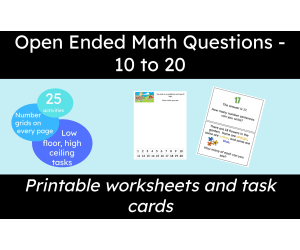
Open Ended Math Word Problems from 10-20
Math, Addition and Subtraction, Addition, Subtraction, Basic Operations, Early Math, Counting, Numbers, Grade 1, Worksheets & Printables, Task Cards, Word Problems
In this resource, you will find 25 printable open ended math word problems that focus on numbers from 10 up to 20. They come in 2 formats. - 1 question per page for students to write on and A5 task cards. These low floor, high ceiling tasks, sometimes known as rich tasks, are great for multi-leveled or mixed ability classes or groups as there is a low entry point and plenty of space for extension. Each question sheet comes with a number line or grid on it to support students. There is not a single right or wrong answer to these problems. Students will come up with a variety of ways to solve these problems - the key is that learners can justify their answers. Being creative and thinking outside the box is encouraged! Once completed, I encourage you to share a variety of students' responses to the task. It is valuable for students to be exposed to multiple ways of solving the same problem and to think about how others have used the same information and come up with a different answer. Ideas for use … Use with mixed ages and abilities, Warm ups, Review tasks, Independent work, Collaborative group work, Fast finishers, Home learning tasks, Whole class instruction and more! Questions to support or extend learners … Encourage students to use equipment or the number grids provided on every page Ask … How do you know? What if I changed 1 variable? Use this topic and write your own problem for the class to solve How many different answers can you find? What are low floor, high ceiling questions? Low floor, high ceiling tasks have multiple ways to be solved. Some children will use basic counting skills to solve, while others will use more complex strategies. These tasks have a low entry point and multiple exit points. They are also great fun!
Author Juggling Juniors
Tags Open Ended, Math Word Problems, Word Problems, Low Floor High Ceiling, Rich Tasks, Mixed Ability, Low Entry, Extension, Numbers To 20, Problem Solving

Rice Reading Comprehension Passage - Cored Ed Encyclopedia
ELA, Language Development, Reading Comprehension, Reading, Pre-Reading, Science, Writing, Strategies, Life Sciences, Nature & Plants, Grade 2, 3, 4, 5, Worksheets & Printables, Worksheets, Teacher Tools, Centers, Activities, Writing Prompts, Assessments, Quizzes and Tests, Quizzes, Lesson Plans
This rice reading comprehension includes: Visualization (on the front cover) Start your lesson by taking a minute to think and share something about the topic. Read the script aloud (slowly), perhaps prepare some music or sound effects. Student close their eyes and let their imaginations wander. Students open their eyes, read the question aloud and give them a few minutes to complete. Ask a few students to share or keep answers until the end to compare with what they learn in the passage. Quick pause—thousands of Cored Education products are included with your TeachSimple membership. Download links and encyclopedia index available here. Pre-Reading Trivia Students will write down one thing they already know about the subject and then read five more facts and discuss. These facts are fun, and the students will enjoy learning about the subject before reading more. Give 1 minute for students to write what they already know (no pressure—best guess is fine). Read the five facts together. After each fact, do ask a student for their opinion, was it surprising? Set a purpose by asking students to highlight/underline one fact they want to learn more about during the reading. Reading Passage The text is a high-interest reading passage with set paragraphs, roughly three to four paragraphs long. It contains a variety of themes about the topic, anywhere from history to technology. The passage is between 250 and 350 words in length. First, ask students to look at the headings and see what they’ll learn about today. What do they know about the topic/heading? First read options: Teacher read-aloud (best for support). Partner reading (paragraph by paragraph). While reading, students underline important details, and vocabulary words they think may come up in the questions section. Mixed Questions The first question page contains four multiple-choice questions, each with a choice of four answers, and three written response questions that require a sentence or two from the student. Students complete the mcqs first independently, then review quickly as a class. For the 3 written responses, try to get students giving the answer with some form of evidence: “I think ___ because the text says ___.” If students get stuck, send them back to check the passage. Vocabulary Questions Practice seven key words from the text in this section across two activities. First section is scrambled words where students will unscramble three words given a clue for each. The second section is a word to meaning matching activity. Before starting, have some students read out words they underlined in the passage. Ask students to say the word and read aloud the sentence(s) around each word. Ask students to do scrambled words and the matching exercise in pairs then go through answers as a class. For the scrambled spelling task, get four pairs to come up to the board and write the words for extra practice with the other student reading out the clue. For the matching task, prompt students to give full sentences: “I matched ___ with ___ because ___.” Creative Writing In this question, the student will be required to write a five to eight sentence paragraph on a question related to the topic. Before starting, ask students write down 3 key ideas they are going to include in their piece. Ask students for ideas to share around the class to help those struggling. Pro writing expectations: 5–8 sentences At least 2 facts or details from the passage At least 2 vocabulary words from the previous page Students read their paragraphs while classmates listen for facts and vocabulary words. Extension Activities This page is optional for fast finishers or to take home. There are several activities, each one requiring a different skill. Do some, do none, do all, completely optional - but you will feel reassured knowing every possibility is planned for. Includes summary writting question. Answer Key There are answers for the multiple-choice questions, written response questions have sample answers, vocabulary answers and if there is a summary question then a sample summary will be provided as well. Lesson Plan Included Customized lesson plan for this lesson is included. Lesson Snapshot Title: Rice Genre: Nonfiction (informational text) Subject: Science (Life Science/Agriculture) Primary Topic: How rice was grown and spread Estimated Guided Reading Level (A–Z): R What This Lesson Teaches Best How rice changed from a wild grass into a crop as people “saved the best” seeds and planted them over many seasons. How rice paddies work: shallow flooded fields that help rice grow and can slow weeds while protecting tender plants. How rice spread to new places as traders and travelers carried it along rivers and coasts, with rice learning to fit different climates. How rice has different types (including indica and japonica) and how rice continues changing as farmers and scientists work on challenges like floods, droughts, and plant diseases. Using evidence from the passage to check understanding (some support-page answer choices/answer key items do not match the passage exactly). Learning Goals Explain how people changed rice over time by saving and planting the best seeds each season. Describe what a rice paddy is and how shallow flooding helps rice plants. Identify how rice traveled from Asia to other regions through traders and travelers. Compare indica and japonica using details stated in the text. Describe ways rice continues to change because meals depend on it and it must handle floods, droughts, and diseases. Key Vocabulary From the Text wetlands — watery land where plants grow near rivers. shattering — breaking apart and scattering away. paddies — muddy fields with low banks holding shallow water. indica — a group of long-grained rice types. droughts — long times with very little rain. Discussion Prompts Pre-reading question: What do you already know or wonder about rice and how it grows? Comprehension questions: How did saving the best seeds change rice over many seasons? Comprehension questions: What is a rice paddy, and how does shallow water help rice plants? Comprehension questions: According to the passage, how did rice travel far from home to new places? FULL CATALOG OF DOWNLOAD LINKS AND ENCYCLOPEDIA INDEX HERE
Author Cored Education
Rating
Tags Vocabulary, Reading Comprehension, Reading Passages, Reading, Creative Writing, Reading Strategies, Writing Prompts, Lesson Plans, Life Science, Rice

Math worksheets grade 4
Math, Multiplication and Division, Division, Grade 3, 4, 5, Worksheets & Printables, Worksheets
Math Worksheets Grade 4 At the heart of grasping key math concepts is consistent practice, and this collection of Math worksheets for grade 4 does just that, offering a definitive resource for educators looking to strengthen their students' understanding. Comprehensive Sections This resource contains 116 comprehensive pages divided into several sections, each focusing on a different mathematical concept. These sections range from place value and symbolic form to expanded form and number in letters - ensuring that all crucial fourth-grade math skills are thoroughly covered. An Emphasis on Reinforcing Concepts The expansive selection allows for assigning tasks aligned with specific lesson plans or individual student needs. Inclusion of plenty of practice problems after each topic title page enables students to grasp subject matter without being overwhelmed. Included answer keys following every exercise facilitate quick review solutions by teachers as needed. Bonus Features A Homework assignment section appended after most topics can be leveraged by teachers for home assignments or revision activities - also beneficial for homeschoolers. Included quizzes serve multiple purposes: ongoing learning progression assessment , highlighting gaps requiring further instruction and providing suitable standardized test practicing opportunities. ` Detailed explanation on rounding off techniques – undertakes estimation compatible numbers to rounding nearest tens through thousands – vividly exercises these essential problem-solving tools required in daily life mathematics implications.`(Later parts delve deeper into operations like addition and subtraction - inclusive of decimal workings.)` Note: The document being a PDF file type ensures easy access across different devices/platforms allowing modern tech-savvy educators effortless usability. Enrich learning, not just content absorption! The goal remains to offer rich mathematical experiences rather than just content absorption, using smaller linked study items creates a balanced knowledge distribution method. An indispensable tool for Grade 3, Grade 4, Grade 5 teachers everywhere - one that stands all rounded towards math enrichment in young learners.
Author Learn it ANY way
Tags Math Worksheets, Fourth Grade, Practice Problems, Quizzes, Operations

Research Organizer & Essay Assignment: Henri Matisse
Creative Arts, Art, Art History, Grade 8, 9, 10, 11, Activities, Projects, Worksheets & Printables, Worksheets
There are few artists more skilled at the use of color than Henri Matisse. This resource provides your students with the opportunity to independently learn about and synthesize the life of the renowned French visual artist with this engaging research planner and essay assignment. This carefully scaffolded and easy-to-assign-AND-assess resource has been designed to guide student learning from Henri Matisse fact-collection to the careful development of a five-paragraph research essay. Teaching this resource could not be easier! Start by handing out the background research and note-taking worksheet (you could also ONLY hand this out if you want a shorter lesson!). Once students have found their facts and sources, provide them with the essay outline activity, which guides them step-by-step through the requirements of a short research essay. From there, drafting their essay, using the provided peer review checklist, and submitting their final draft will be no problem at all. And then you can assess their work with the provided Common Core rubric! Use this entire resource as a complete research lesson or just part of it as a short research activity or sub plan! This TeachSimple download includes: - A Henri Matisse essay writing assignment with directions, requirements, research essay writing tips, a peer review checklist, and Common Core-tied grading rubric - An editable rubric, provided as a link, that lets you make adjustments to the grade values and guidelines. This link is provided as as Google Sheet specifically built for integration into Google Classroom, although you can also modify it for use in other Learning Management Systems (LMSs) - A Henri Matisse biography and note-taking worksheet that will guide your students through information gathering. This straightforward two-page handout includes instructions for background research, a fun drawing section, and an area to cite quality sources and organize conducted research - A research essay outlining worksheet, so students build on their Henri Matisse notes in a clear and simple manner as they build their work towards a draft and final paper - All 6-pages of this lesson are provided in full-color and B&W versions Although this resource can be fitted for any secondary Language Arts classroom, it has been carefully designed to work best in grades 8 through 11. The included rubric is subtly but specifically tied to Common Core ELA Standards for Language (3) and Writing (2 and 7). This resource is provided as a print-ready, bookmarked, and adjustable PDF file. The rubric is also included as an editable Google Sheet. This resource contains 6 pages and 1 Google Sheet.
Author The Language of Educational Art, LLC
Tags Essay, Rubric, Research, Notetaking, Outlining, Henri Matisse

Multiply by 6 – Multiplication Facts Worksheet Set
Math, Multiplication and Division, Division, Grade 3, Worksheets, Worksheets & Printables
Elevate your multiplication table practice with our comprehensive set designed to transform routine memorization into an engaging learning experience. Acknowledging the significance of practice and repetition in mastering times tables, our product offers a diverse range of resources, including worksheets, activities, flashcards, and a comprehensive test. Navigate through the collection and choose resources that align with your classroom needs. The flashcards, conveniently formatted for easy printing and cutting, ensure a hassle-free preparation process. Print an ample supply of worksheets tailored for individual assignments, small group activities, or homework sessions, catering to diverse learning preferences and scenarios. Designed to alleviate the monotony of traditional practice, our set integrates a variety of dynamic games and activities alongside classic worksheets. This thoughtful combination aims to inject excitement and variety into the multiplication fact practice, making the learning journey both effective and enjoyable for students. Capitalize on the flexibility of this product, allowing seamless integration into your existing curriculum or as supplementary material. The provided test serves as a valuable assessment tool, strategically placed at the end of the set to evaluate the comprehensive understanding of multiplication facts. What You Get: - A set of bulletin board equation cards for teaching or display - 25+ worksheets, activity pages, and resources to help practice your x6 tables - x6 flashcard set - x6 test - Answers keys for all worksheets, activities, and tests Want More Multiplication Resources?: - Multiply by Zero: Multiplication Worksheets and Activities - Multiply by One: Multiplication Worksheets and Activities - Multiply by Two: Multiplication Worksheets and Activities - Multiply by Three: Multiplication Worksheets and Activities - Multiply by Four: Multiplication Worksheets and Activities - Multiply by Five: Multiplication Worksheets and Activities - Multiply by Six: Multiplication Worksheets and Activities - Multiply by Seven: Multiplication Worksheets and Activities - Multiply by Eight: Multiplication Worksheets and Activities - Multiply by Nine: Multiplication Worksheets and Activities - Multiply by Ten: Multiplication Worksheets and Activities - Multiply by Eleven: Multiplication Worksheets and Activities - Multiply by Twelve: Multiplication Worksheets and Activities *I have resources like this for every continent. So make sure to check them out if your'e trying to put together a comprehensive geography study! Check out other resources from my store: Simply Schoolgirl! I can be contacted for questions and concerns at simplyschoolgirl1@gmail.com
Author Simply Schoolgirl
Rating
Tags Color By Number, Multiplication Flash Cards, Multiply By Sixes, X 6, Multiples Of Six, Multiplication Worksheets, Multiplication Printables, Multiplication Test, Multiplication Resources
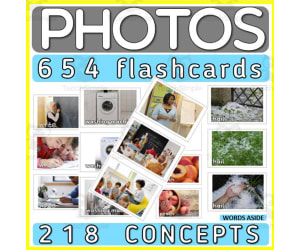
Flash Cards Vocabulary Photos
Special Resources, Special Education Needs (SEN), Speech Therapy, ESL, Language Development, ELA, Vocabulary, Not Grade Specific, Worksheets & Printables, Flashcards
Vocabulary photo / flash cards in educational and intervention settings are essential . They help kids or adults comprehend and remember vocabulary by using pictures . They are especially helpful for people with autism and special education needs since they provide an exciting and approachable, engaging way to learn enviroment topics as well as support the development of social and communication skills . They can also be a very useful tool for enhancing linguistic / language abilities, such as sentence structure and articulation . They can help English language learners by giving them a visual framework / context in which to understand the usage and meaning of nature related concepts . These cards can be used by educators and ofcourse parents in a range of learning activities, such as memory games, matching exercises, and reading and spelling drills or just for fun . INCLUDED ARE : 4 5 0 pdf pages of 2 1 8 concepts in 6 5 4 flash cards . Each one of them is presented in 3 different pictures on the same page and each card has two versions : with and without the written word .
Author WORDS ASIDE
Tags Photos, Pictures, Autism, Centers, Language Skills, Communication, Occupational Therapy, Community, Words Aside, Spanish Vocabulary
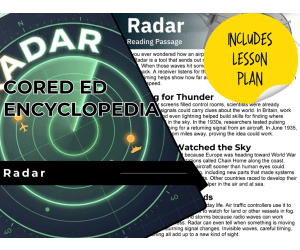
Radar Reading Comprehension Passage - Cored Ed Encyclopedia
ELA, Language Development, Reading Comprehension, Reading, Pre-Reading, Writing, History, Social Studies, Technology, Science, Grade 2, 3, 4, 5, Worksheets & Printables, Worksheets, Teacher Tools, Centers, Activities, Writing Prompts, Assessments, Quizzes and Tests, Quizzes, Lesson Plans
This radar reading comprehension includes: Visualization (on the front cover) Start your lesson by taking a minute to think and share something about the topic. Read the script aloud (slowly), perhaps prepare some music or sound effects. Student close their eyes and let their imaginations wander. Students open their eyes, read the question aloud and give them a few minutes to complete. Ask a few students to share or keep answers until the end to compare with what they learn in the passage. Quick pause—thousands of Cored Education products are included with your TeachSimple membership. Download links and encyclopedia index available here. Pre-Reading Trivia Students will write down one thing they already know about the subject and then read five more facts and discuss. These facts are fun, and the students will enjoy learning about the subject before reading more. Give 1 minute for students to write what they already know (no pressure—best guess is fine). Read the five facts together. After each fact, do ask a student for their opinion, was it surprising? Set a purpose by asking students to highlight/underline one fact they want to learn more about during the reading. Reading Passage The text is a high-interest reading passage with set paragraphs, roughly three to four paragraphs long. It contains a variety of themes about the topic, anywhere from history to technology. The passage is between 250 and 350 words in length. First, ask students to look at the headings and see what they’ll learn about today. What do they know about the topic/heading? First read options: Teacher read-aloud (best for support). Partner reading (paragraph by paragraph). While reading, students underline important details, and vocabulary words they think may come up in the questions section. Mixed Questions The first question page contains four multiple-choice questions, each with a choice of four answers, and three written response questions that require a sentence or two from the student. Students complete the mcqs first independently, then review quickly as a class. For the 3 written responses, try to get students giving the answer with some form of evidence: “I think ___ because the text says ___.” If students get stuck, send them back to check the passage. Vocabulary Questions Practice seven key words from the text in this section across two activities. First section is scrambled words where students will unscramble three words given a clue for each. The second section is a word to meaning matching activity. Before starting, have some students read out words they underlined in the passage. Ask students to say the word and read aloud the sentence(s) around each word. Ask students to do scrambled words and the matching exercise in pairs then go through answers as a class. For the scrambled spelling task, get four pairs to come up to the board and write the words for extra practice with the other student reading out the clue. For the matching task, prompt students to give full sentences: “I matched ___ with ___ because ___.” Creative Writing In this question, the student will be required to write a five to eight sentence paragraph on a question related to the topic. Before starting, ask students write down 3 key ideas they are going to include in their piece. Ask students for ideas to share around the class to help those struggling. Pro writing expectations: 5–8 sentences At least 2 facts or details from the passage At least 2 vocabulary words from the previous page Students read their paragraphs while classmates listen for facts and vocabulary words. Extension Activities This page is optional for fast finishers or to take home. There are several activities, each one requiring a different skill. Do some, do none, do all, completely optional - but you will feel reassured knowing every possibility is planned for. Includes summary writting question. Answer Key There are answers for the multiple-choice questions, written response questions have sample answers, vocabulary answers and if there is a summary question then a sample summary will be provided as well. Lesson Plan Included Customized lesson plan for this lesson is included. Lesson Snapshot Title: Radar Genre: Nonfiction (informational text with support pages) Subject: Science (Physical Science/Technology) Primary Topic: Using radio waves to find objects Estimated Guided Reading Level (A–Z): R What This Lesson Teaches Best Explains how radar works using radio waves, an “echo,” and a receiver that measures return time. Connects timing to distance (how long the trip takes helps show how far away something is). Builds background knowledge about radar’s development before World War II (tests in the 1930s; June 1935 detection; Chain Home stations). Shows real-world uses after the war (air traffic control, ships in fog, weather radar tracking rain and storms). Includes support pages that match the passage content (questions, vocabulary, writing, and extension activities focus on radio waves, echoes, Chain Home, and the 1935 test). Learning Goals Students can describe radar as a tool that sends out radio waves and listens for the waves that bounce back. Students can explain how a receiver uses the echo’s return time to show distance. Students can describe one early step in radar’s development mentioned in the passage (1930s tests or the June 1935 detection). Students can explain why early-warning stations mattered as World War II was getting closer. Students can identify at least two ways radar is used in everyday life after the war (planes, ships, or weather). Key Vocabulary From the Text receiver — device that listens for the returning signal echo — a returning signal that bounces back pulsing — sending waves in repeated bursts detected — found or noticed something was there vessels — boats or ships FULL CATALOG OF DOWNLOAD LINKS AND ENCYCLOPEDIA INDEX HERE
Author Cored Education
Rating
Tags Vocabulary, Reading Comprehension, Reading Passages, Reading, Creative Writing, Reading Strategies, Writing Prompts, Lesson Plans, History, Radar

Halloween Activity | Printable Escape Room
Math, Algebra, Grade 6, 7, 8, Worksheets, Worksheets & Printables
Halloween Activity | Printable Escape Room The Halloween Activity Printable Escape Room is a comprehensive teaching resource particularly crafted for sixth-grade educators. This fun math activity , centered around the eerie Halloween season, primarily focuses on one-step equations. The escape room comprises of a captivating narrative that encourages students to solve twenty mathematical problems which create a path directing a small zombie back to its home - the cemetery. This educational tool is highly adaptive and can seamlessly blend into diverse educational environments based on instructors' requirements. Some of its potential uses include: An intriguing group activity during classroom sessions An independent assignment for homeschoolers Purposeful within small group dynamics in tutoring scenarios or after-school clubs where students can gain from collaborative problem-solving as they fortify their understanding of algebraic concepts --> An essential feature of this resource that may appeal to educators is it's easy-to-use design. Simply download, print, and exemplify your teaching aids with an all-encompassing PDF file containing everything you need: clear instructions for usage, an immersive story context setting up the 'escape room' atmosphere and solutions to each one-step equation problem integrated - hence no extra preparation prerequisite! Concluding Thoughts: The Halloween Activity | Printable Escape Room bestows upon sixth-grade learners much-needed training in addressing one-step equations entrenched within an enjoyable interactive context encircled by a relevant seasonal theme which could potentially bolster their interest in mathematics even further. This unique amalgamation makes meaningful classroom experiences that extend beyond routine learning efficiency; it targets developing cooperative skills amongst young scholars linking their mathematical prowess with mirthful activities.
Author Matemaths
Tags Halloween, Math Activity, Escape Room, One-step Equations, Interactive

Context Clues Practice Questions - Vocabulary Grade 3-4 (Fillable PDF)
ELA, Language Development, ESL, Common Core, Resources for Teachers, Vocabulary, Grade 3, 4, Worksheets & Printables, Worksheets, Quizzes and Tests, Teacher Tools, Tests, Assessments
Context Clues Vocabulary Practice MCQS - 5 Topics 38 Pages Context Clues MCQS Snapshot Title: Context Clues Practice Worksheets Genre: Nonfiction / Practice workbook Subject: Reading Primary Topic: Using sentence clues to infer word meaning This Grade 3–4 workbook includes a review sheet, five worksheets, and answer pages, and its review sheet explains four context-clue types: definitions/restatements, synonyms, antonyms/opposites, and examples/explanations. What This Grammar Pack Teaches Best It explicitly teaches the main types of context clues students can use to figure out unfamiliar words. It gives repeated sentence-level practice in choosing word meanings from nearby clues. It strengthens vocabulary understanding through short, accessible examples and multiple-choice responses. It supports close reading habits by asking students to notice synonyms, opposites, and explanatory details in context. Learning Goals For This Pack Students will identify definitions, synonyms, antonyms, and examples as different kinds of context clues. Students will use sentence clues to determine the meaning of unfamiliar words. Students will explain which words in a sentence helped them choose a meaning. Students will compare answer choices and select the word meaning that best fits the context. Students will build confidence reading sentences with unfamiliar academic vocabulary. Key Vocabulary (Teach Before Starting) literacy — ability to read and write indomitable — impossible to defeat bazaar — a market or festival hazardous — dangerous or unsafe immobile — not able to move Common Core Alignment CCSS.ELA-LITERACY.L.2.4.A CCSS.ELA-LITERACY.L.3.4.A CCSS.ELA-LITERACY.L.4.4.A Context Clues Grammar Pack Overview: Includes: Definitions or Restatements Synonyms Antonyms or Opposites Examples or Explanations FILLABLE PDF VERSION Worksheet-style pages, but with type-in answer boxes so students can complete and save their work digitally. Other versions are available in the links list below or in the full catalog. FULL CATALOG OF DOWNLOAD LINKS HERE For similar downloads and other frees, do check out Cored Group on TeachSimple.
Author Cored Education
Rating
Tags Elementary, Answers, Ccss, Common Core, Tests, Test Prep, Assessment, Grade 3, Grade 4, Vocabulary

ESL Novel Study - "Diary of a Wimpy Kid: Dog Days" - Jeff Kinney
ELA, ESL, Language Development, Reading, Library, Writing, Creative Writing, Grade 6, 7, 8, 9, Worksheets & Printables, Writing Prompts, Worksheets, Novel Studies
ESL Novel Study Worksheets on "Diary of a Wimpy Kid: Dog Days" by Jeff Kinney In this fantastic ESL teaching resource it is offered a comprehensive novel study worksheet activity (3 printable PDF pages; Worksheets) focused on "Diary of a Wimpy Kid: Dog Days" by American author Jeff Kinney. Ideal for post reading activities, this English Second or Foreign Language (ESL EFL) teaching resource can be more than great to enhance students' overall understanding of this coming of age novel by American author Jeff Kinney. The English Second or Foreign Language Novel Study activity (3 printable PDF pages; Worksheets) can be ideal for ESL EFL TESOL learners in middle and high school (from 6th grade to 9th grade, teen students). In this Novel Study on "Diary of a Wimpy Kid: Dog Days" (3 printable PDF pages; Worksheets), English Second or Foreign Language teachers (ESL EFL) can find the following novel study activities: 1 part on general information (author's name, genre, and publishing date) 1 part related to New Vocabulary Learned (1 space where to write 10 new words they learned and 1 space where students can write their related meaning) 1 part related to the story timeline (story timeline where learners set in a chronological order the most important moments during the narration) First writing activity on students' review on the novel Second writing activity (imagining to write a letter to Greg Heffley, the main character, and to give him some advice) Third writing activity (pretending to be a character, other than Greg Heffley, and describing a scene of the book from his/her point of view + space where students can draw with comic bubbles the scene they described) This ESL EFL (English Second or Foreign Language) Novel Study Activity on "Diary of a Wimpy Kid: Dog Days" by American author Jeff Kinney (3 PDF Printable Slides; worksheets) can be suitable for ESL EFL learners from 6th grade to 9th grade to study this coming of age novel Learning with Alan is a Teaching Resource/Educational Material Store whose aim is to help Teachers, Educators and Tutors to achieve their teaching objectives while creating a fun and stimulating learning and teaching environment. Remember. Learning is Fun. Never Forget! If you want to browse more of my English Second or Foreign Language (ESL EFL) Teaching Resources, click here Learning with Alan!
Author Learning with Alan
Tags ESL, English Second Language, English, Novel Study, Books, Book Companion, Comprehension, Teens, Diary Of A Wimpy Kid, Worksheets
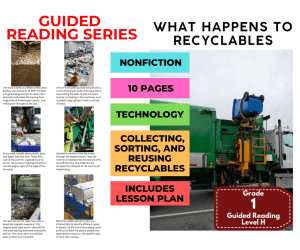
Guided Reading Level H - What Happens to Recyclables
ELA, Resources for Teachers, Reading Comprehension, Reading, Science, Pre-Reading, Language Development, Earth and Environmental Sciences, Engineering, Technology, Kindergarten, Grade 1, 2, Worksheets & Printables, Worksheets, Teacher Tools, Centers, Activities, Literacy Readers, Quizzes, Quizzes and Tests, Assessments
This Guided Reading Book - What Happens to Recyclables (Level H) includes: Guided Reading Color Label (front cover x1) This is a quick way to match the book’s demands to what students can generally handle.. The overall goal is to use the level/color to pick books for several smaller groups. To qualify for a certain level, a student is expected to read a book from that level with about 90–94% accuracy. If a student is consistently accurate and understands, move up a level. If the student is struggling at that level, drop down and add more support. Each student will improve at completely different rates, but it is generally one of the best ways to check progress across the class. DOWNLOAD THE CATALOG TO VIEW ALL GUIDED READING BOOKS AVAILABLE (SORTED LEVELS A-Z) Pre-Reading Question (x1) Teacher asks the prompt aloud, can be while showing the cover or first page. Students share what they already know, or make educated guesses from the cover. Prompt them to use the target vocabulary. Write some of their responses on the board to look back at during the reading. Vocabulary Words (x5) Introduce the five words, best doing it one at a time. Start by saying it, while students repeat and then see if anyone knows what it means before reading further. Read through the meaning and try to briefly connect each word to a picture or gesture so it’s meaningful. Ask students to flip through the book pages and point to where they see each of the vocabulary words. While reading the book pause upon coming across one of the vocab words or read the sentence twice to make sure students understand the word has appeared. Optional: Ask students to raise hands whenever they see/hear one of the new words. Guided Reading Pages (x10) Check the book snapshot (below) for: primary topic - do you need to prep extra reading or intro materials on this? what is taught best - decide on 1-2 bullets to focus on, use the prompt or words provided here for best results. learning goals - what you are checking for students to be able to do after the session, elicit answers using prompts or words provided. key vocabulary (see section above). questions overview - so you know what is coming up and if you need to prep extra materials to assist understanding. Run the lesson You may have already looked at a few of the pages together, but you can show them some of the pictures again first to set meaning. Depending on how much time you have and how familiar your students are with guided reading class, you may want to read the book aloud first with the group first. Students whisper or partner read, while you listen in. If time, do it as a group, one student reading a page each. Use the guided page’s prompts to coach: “Check the picture / does it make sense?” “Point under the words / try the first sound” “Reread the sentence smoothly”. Try to focus more on one student per session (rotating every time), so you can work out if they are ready to move up or need to move down a level. Comprehension Questions (back cover x3) This is your way to check that students didn’t just say the words, but actually understood the text. First, let students answer by pointing to the page/picture and saying a short sentence. After any answer, follow with: “Show me where you found that in the text.” In bigger groups, have partners answer first (10–20 seconds), then call on 2–3 students to share. Differentiation tips: Emerging speakers/struggling readers: oral + pointing On-level: oral in a full sentence Higher: one written sentence or draw + label Book Snapshot Title: What Happens to Recyclables Genre: Nonfiction (informational) Subject: Science (Environmental Science) Primary Topic: How recyclables are collected, sorted, and reused Estimated Guided Reading Level (A–Z): H What This Book Teaches Best How recycling begins at home: people put materials in blue bins for a special truck. What happens at a Material Recovery Facility (MRF), including the “tipping floor” and conveyor belts. How workers and machines separate materials (sorting workers, a magnetic separator, optical sorters using infrared light, and star screens). What happens after sorting: materials are crushed into bales, moved by forklifts, taken to factories, and made into new products. Learning Goals Describe how recyclables get from blue bins to a truck and are hauled away. Explain what the book says happens when a truck arrives at a Material Recovery Facility (MRF). Identify what sorting workers remove from the conveyor belts and give examples from the text. Explain how a magnetic separator changes what stays on the line and what gets pulled away. Describe how optical sorters use infrared light and air to separate plastic bottles. Describe what happens to sorted materials after they are made into bales and sent to factories. Key Vocabulary From the Text sanitation — keeping places clean by picking up trash and recyclables. facility — a place or building where work happens. conveyor — a moving belt that carries things from one place to another. separator — something that pulls different materials apart. infrared — a kind of light machines can use to tell things apart. Printing Tips 1. Best Printing Method (Recommended) “Booklet” Printing (Best if Available) If your printer or PDF viewer supports Booklet Printing , use this. Settings to use: Print mode: Booklet Paper size: Letter or A4 (either works) Orientation: Landscape Print on both sides: Yes Flip on: Short edge Scaling: Fit to printable area Booklet subset: First test: Front sides only Then: Back sides only This will automatically: Pair pages correctly Put the cover on the outside Align everything for folding After printing, fold in half and staple along the spine . 2. If “Booklet” Printing Is NOT Available You can still print this correctly with manual duplex printing . Step-by-step: Open the PDF. Choose Print . Set: Orientation: Landscape Pages per sheet: 1 Print on both sides: Yes Flip on: Short edge Print all pages . Because each PDF page already contains two facing book pages, the result will still fold cleanly into a book. Thousands of Cored Education products are included with your TeachSimple membership. Download links and encyclopedia index available here.
Author Cored Education
Rating
Tags Vocabulary, Reading Comprehension, Reading Passages, Leveled Reading, Nonfiction, Reading, Guided Reading, Technology, Engineering, Recycling
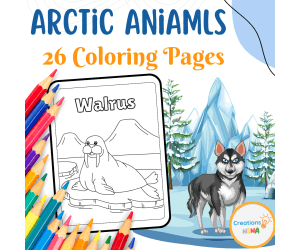
Arctic Animals Printable Coloring Pages.
ELA, Science, Elementary, Worksheets & Printables, Worksheets, Coloring Pages
Discover the fascinating wildlife of the Arctic with this exciting Arctic Animals Coloring & Learning Pack! This engaging resource introduces kids to 26 incredible Arctic creatures, from the mighty polar bear and snowy owl to the mysterious narwhal and the graceful Beluga whale. Each coloring page highlights a different animal, providing children with a creative and educational experience while they develop fine motor skills, build animal recognition, and spark an early interest in science and geography. These coloring pages are perfect for classroom activities, homeschooling, winter-themed lessons, or just for fun at home. Kids will love learning about the amazing animals that thrive in the harsh Arctic environment while expressing their creativity with colors! Whether you’re looking for a fun addition to your Arctic unit study, winter project, or a quiet-time activity that’s both educational and entertaining, this set is a wonderful tool to have. You Will Get: ✅ 26 unique Arctic animal coloring pages featuring mammals, birds, and sea creatures. ✅ 8.5 x 11" size pages – ready to print and perfect for binders or bulletin boards. ✅ High-quality PDF printable file – easy to download and use right away. ✅ Great for science lessons, nature studies, or free-time fun activities. ✅ Ideal for classrooms, homeschooling, daycare centers, or family activities. 🌟 Thank you for checking out this resource! If you enjoyed using it, I would truly appreciate you leaving a review. Your feedback not only helps me improve future resources but also helps other educators and parents find products that are right for them.
Author Nena Creations
Rating
Tags Arctic Animals Coloring Pages Polar Bear Coloring Page Narwhal Coloring Sheet Beluga Whale Printable Arctic Wildlife Worksheets Learn About Arctic Animals Winter Animals Coloring Pages Snowy Owl Coloring Activity Homeschool Arctic Unit Geography Arctic Lesson Science Arctic Animals Activity Preschool Arctic Theme Kindergarten Winter Coloring Arctic Habitat Coloring Pages Kids Nature Coloring Pages Arctic Fox Coloring Worksheet Seal Coloring Pages For Kids North Pole Animal Coloring Winter Nature Study For Kids Printable Arctic Animals Activity

Reading Comprehension Passages Fiction Set 2 Sample: Graduation (Word)
ELA, Reading, Reading Comprehension, Common Core, ESL, Language Development, Vocabulary, Creative Writing, Writing, Resources for Teachers, Grade 6, 7, Worksheets & Printables, Worksheets, Assessments, Teacher Tools, Tests, Quizzes and Tests, Writing Prompts
Reading Comprehension Passages Fiction Set 2 Overview Reading comprehension lessons, especially written for Grade 6-7, providing the chance to read interesting and engaging passages. Each lesson has a mix of questions to check understanding, a vocabulary or spelling activity to help remember key language introduced, and a writing exercise. Full answer keys are provided. Passage Included 2.Graduation: Matt helps prepare for his brother's graduation party. FULL CATALOG OF DOWNLOAD LINKS HERE Word Version This is the Word editable version. This download is available in GOOGLE Docs, GOOGLE Forms, GOOGLE Slides. PDF, PPT, WORD. Grade 6/7 Links Fiction Set 1 Google Docs Google Forms Google Slides PDF PPT Word Guided Reading Materials Fiction Set 2 Google Docs Google Forms Google Slides PDF PPT Word Guided Reading Materials Nonfiction Set 1 Google Docs Google Forms Google Slides PDF PPT Word Guided Reading Materials Nonfiction Set 2 Google Docs Google Forms Google Slides PDF PPT Word Guided Reading Materials Reading Passages Overview Each passage is especially written for Grade 6/7 students, including key vocabulary required for this age group. Topics are varied and are accompanied by colorful graphics. Topics are meant to educate, yet entertain the modern student. The majority of these short stories contain an important message - a way of developing these young learners further. Mixed Questions The mixed questions section of each lesson includes a variation of five to six comprehension, vocabulary and Math questions. In addition, key reading strategies are frequently covered including cause & effect, summarizing, compare & contrast and making conclusions. Mixed questions require a written response (no MCQ's), full answers and example responses appear at the end of the lesson. Spelling & Vocab Each reading passage contains a variety of words and phrases designed for Grade 6/7 students. Spelling and vocab activities provide the opportunity to build fluency with these words. Activities provide clues to help assist students. Vocabulary activities include extra questions where students must write a synonym, an antonym or a sentence using a certain word. Writing Prompts Writing prompts are designed to continue the theme or lessons learned in the story. Students are persuaded to write in a variety of ways and each prompt includes several cues to help. The main focus in this product, is the student. Prompts will require the student to relate to past experiences and encourage them to discuss feelings and ways to improve. Full Answer Keys Full answer keys and sample responses are provided so no matter how busy you are, you know you're covered! Mixed question answers provide evidence from the text, Math questions contain the relevant workings. Answers are designed for use by the teacher, but also suitable as a handout to the student. For More Like This For similar downloads and other frees, do check out Cored Group on TeachSimple.
Author Cored Education
Tags Elementary, Reading, Comprehension, Vocabulary, Answers, Ccss, Common Core, Spelling, Writing, Passages

Algebra - Task Sheets Gr. PK-2
Math, Algebra, Grade 1, 2, Worksheets & Printables, Worksheets
Algebra - Task Sheets Gr. PK-2: An Essential Teaching Resource "Algebra - Task Sheets Gr. PK-2" is an important teaching tool that bolsters comprehension of numbers and early level Algebra in young learners. With its task sheets and word problems derived from real-life scenarios, this resource is designed for pragmatic understanding of this crucial mathematical sub-area. A Diverse Array Of Activities Filling out charts with missing numbers or sorting them from biggest to smallest. Identifying what comes next in a pattern or writing in the missing number to make sentences true. Tackling fun activities involving everyday examples like putting together two stuffed animal collections. This resource advances gradually in difficulty levels starting from prekindergarten up to grade 2, allowing students to progress steadily at their own pace—a critical component, making it remarkably suitable for classwork (during whole group lessons or small group activities), independent practice during maths rotations, and homework assignments as well. Addition of Practical Classroom Tools Included within this package are tools like calculators that provide hands-on experience about order operations—a proven method known to improve retention among students vastly. Importantly, all worksheets included are reproducible, thereby saving educators time if they need multiple copies over time—rendering it an invaluable companion throughout the academic year for both homeschoolers and school-based teachers alike. Completing drill sheets leads pupils also to a review section paired with an answer key—ideal for promoting self- assessment and performance evaluation., fostering independent learning habits among students. Promoting Academic Rigor In line with state standards along NCTM guidelines these task sheets offer satisfying peace of mind for educators, knowing their instructions are meeting the requirements outlined by respected institutions in the education field.
Author Classroom Complete Press
Tags PDF

Bioaccumulation and Biomagnification - Science Reading Article - Grades 5-7
Science, Life Sciences, Biology, Grade 5, 6, 7, Worksheets & Printables, Worksheets
Bioaccumulation and Biomagnification - Science Reading Article - Grades 5-7 The Bioaccumulation and Biomagnification Science Reading Article is a valuable, editable resource completely suited for students from fifth to seventh grade. It gives an exhaustive insight into biodiversity, discussing its definition, impacts, importance, challenges it faces and the significant role in conservation. Educators can leverage this tool conveniently for remote learning assignments or as complementary material in their lesson plans. The text emphasizes the prominence of scientific vocabulary through crucial terms. An interesting mix of questions require concluding both direct knowledge gain from the text along with thought-provoking answers allowing problem-solving abilities to kick in. Google Classroom readiness feature: Simple integration into online classrooms! Teachers can easily create a resource copy into their Google Drive ready for assignments. Diverse formats: Available also as Microsoft Word and PDF versions; thus ensures easy availability regardless of tech devices used or locations worldwide! The article needs roughly 40-60 minutes to complete with varied types of questions maintaining student interest level high. To make grading easier for educators – a handy answer key is provided! This educational reading comprehension serves dual purposes– it triggers topic discussion, improves literacy skills while presenting extension activities individually handled by fast learners. Bonus point – works effectively during substitute-led teaching sessions! Catering majorly to science curriculum requirements (in particular biology) but effortlessly bridges into other relevant themes such as health & wellbeing (allergies/cancer), ecology (invasive & endangered species), chemistry (acid spills/greenhouse effect), physics (energy conservation/wind energy production) making this resource an absolute treasure-trove! In the current times when innovative teaching methodologies are constantly emerging, resources like this are absolutely essential - they motivate learning & foster scientific curiosity in young learners while adapting to a variety of teaching scenarios.
Author Teach With Fergy
Tags Bioaccumulation, Biomagnification, Science Reading, Biodiversity, Conservation
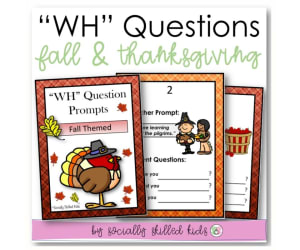
"WH" Question Prompts | Fall & Thanksgiving Themed, 20 Differentiated Prompts
Special Resources, Speech Therapy, Preschool, Grade 1, 2, 3, 4, 5, Worksheets & Printables, Worksheets
"WH" Question Prompts Fall and Thanksgiving themed, with 20 Differentiated Prompts A teaching resource designed for young learners from kindergarten through fifth grade. This resource is filled with activities tailored for the period of autumn till Thanksgiving. Objective: To provide a novelty and much-needed change to the teaching environment To promote active engagement among pupils This activity enables elementary students to refine their social pragmatic skills through "WH" questions. The Fall and Thanksgivings theme adds a layer of creativity as children formulate effective questions for their peers. Noteworthy Features: Differentiated levels of prompts catering to various learning capabilities. An interactive element allows direct writing by students or homework assignment application. Broad Educational Objectives: On top of its immediate benefits, it promotes language skills, automaticity perspective taking, and boosts social abilities which prepare younger children better both academically and socially. About the Resource Material The package includes: A PDF file containing 31 interactive pages filled with vibrant illustrations and stimulating text prompts that make learning enjoyable yet simple. A highlight inclusions are: 'Make Your Own Page' empowers kids towards innovative expression by drawing ideas along with formulating related questions. This fosters critical thinking from an early age. The 'Prompt Cheat Sheet’ provides valuable guidance in promoting interaction between student pairs during activities. Our “WH” Question Prompt is more than a worksheet; it's a valuable tool prompting curiosity and enhancing cognition processes to aid overall development beyond standard classroom curriculum. This makes it an essential inclusion in Special Resources and Speech Therapy classes.</p
Author Socially Skilled Kids
Tags Fall, Thanksgiving, WH Questions, Social Skills, Differentiated Prompts

Word Puzzles Crossword Wordsearch Anagram THEATER
Special Resources, ELA, Creative Arts, Art, Special Education Needs (SEN), Speech Therapy, Language Development, ESL, Writing, Handwriting, Vocabulary, Drama, Not Grade Specific, Crosswords Puzzles, Worksheets, Worksheets & Printables
Word Games with Puzzles | Crossword Wordsearch Anagram | THEATER . Designed for usage across multiple grade levels, this teaching resource known as 'Word Games with Puzzles' seamlessly integrates essential vocabulary study with an engaging THEATER theme . This resource is incredibly versatile and adaptable to fit a variety of learning environments . It invites educators in public schools, or even those that teach in a homeschooling setting, to invigorate their Language Arts curriculum while catering to educational trends including Special Education Needs ( SEN ), Speech Therapy, ESL instruction, and Life Skills lessons . The primary contents of the package comprise : two matching activities ( words to pictures & vice versa ) . a word search board with real photos or illustrations on top of the page . two quiz versions . anagrams worksheet ( with photos or color illustration images ) . a wheel of images to spin, cut and paste or laminate as flash cards . a wheel of words to spin, cut and paste or laminate as flash cards . two writing boards (blank and lined) . The word search board challenges pupils further by letting them identify key keywords hidden amongst many irrelevant ones - offering both challenge and fun . Supplemental Materials include : Real photos along with whimsical illustrations serve dual purposes; they function not only as flashcards but also allow teachers to create visual folders thus adding versatility and creativity into everyday teaching circumstances . All elements included in this resource can double down both as part of your center 's resources library or can be handed out on individual bases hence serving multiple needs, from group- works to homework assignments . This brings you the valued flexibility everyone appreciates when it comes down classroom management - making this product extremely well- rounded . 12 page pdf .
Author WORDS ASIDE
Tags Vocabulary Study, Handwriting Practice, Word Search, Visual Aids, Word Wall, Crossword, Independent Work, Centers, Theater, Words Aside

Healthy Food Coloring Pages - Fruits and Vegetables
Health, P.E. & Health, Strategies, Reading, ELA, ESL, Language Development, Pre-Reading, Speech Therapy, Special Resources, Elementary, Pre-K, Homeschool Resources, Coloring Pages, Worksheets, Worksheets & Printables, Projects, Activities
Healthy Food Coloring Pages - Apples, Blueberries, Pumpkin, Tomatoes, Broccoli, and more! These giant fruit and vegetable images with nice thick borders will be a joy to color for your students, regular education as well as SPED (special education). Since each page contains only one word on top of the page and one word (two max) at the bottom of each page, these pages can be helpful with speech therapy sessions as well. Coloring helps develop fine motor skills. Each fruit and vegetable page contains a small example on the top left-hand corner of the page to aid students with choosing the colors. There are 30 unique fruits and vegetables in this food coloring pages pack. They include: Fruits: Red - Apple Orange - Cantaloupe Blue - Blueberries Orange - Orange Purple - Blackberry Red - Raspberry Green - Avocado (Can be considered a vegetable also) Yellow - Banana Orange - Cantaloupe Red - Cherry Purple - Grapes Green - Kiwi Yellow - Lemon Green - Lime Orange - Peach Yellow - Pineapple Purple - Plum Vegetables: Purple - Cabbage Yellow - Squash (No border due to glitch with color of squash greying out). Orange - Pumpkin Red - Chili Pepper Orange - Sweet Potato Orange - Carrot Purple - Carrot Blue Purple - Asparagus Red - Tomato (Can be considered as a fruit as well). Red - Beet Green - Broccoli Yellow - Corn Yellow - Sweet Pepper These coloring pages can be used as task cards, either full size or you can shrink the size when you print. Students who are early readers or learning ESL (English as a Second Language) can benefit from the extra-large words on the pages. A single color and name of fruit/vegetable is on each page with matching borders (except for yellow squash which has no border). Students can sort the fruits from the vegetables. Students can alphabetize the pages. Students can color the pages (even older students enjoy coloring) as something to do with their hands and to keep their concentration while the teacher is teaching a lesson on food, health, or nutrition. All fruits and vegetables have matching borders except for yellow squash due to a glitch in the program I used to create it. 31 pages including cover sheet Downloadable printable pdf
Author Homeschooling Dietitian Mom
Tags Apple Coloring Pages, Food Coloring Pages, Health Flashcards, Health Coloring Pages, Reading Strategies