



2,734 products added recently
Page 38 - Reading Activities
Discover a variety of reading activities designed to inspire and engage your students. From guided reading sessions to interactive reading journals, these resources support the development of comprehension and critical thinking skills. Tailored for different grade levels, these activities can help you create a dynamic literacy environment that fosters a lifelong love of reading.

 Show filters


Walt Disney Bell Work + Mentor Sentences
ELA, Reading, Grade 6, 7, 8, Activities
These are Walt Disney Bell Work + Mentor Sentences. A link to a digital version is included. There is an original non-fiction text for students to read. Each week, there is a chosen sentence for students to study. There are 4 weeks worth of questions and an interactive foldable is included for each week.
Author Mrs. Spangler in the Middle
Tags Walt Disney, Bell Work, Mentor Sentences, Reading Comprehension, Graphic Organizers

Louisiana State Flipbook (Capital, Bird, Flower, Flag, Animal)
ELA, Creative Arts, Art, Social Studies, Reading, Reading Comprehension, Grammar, Language Development, Spelling, Writing, History, History: USA, Geography, Grade 2, 3, 4, Activities
Louisiana State Flipbook The Louisiana State Flipbook is an exceptional educational tool designed to appeal to grade 2-4 students. It presents an engaging and interactive approach to learning Louisiana's notable elements across different curriculums like Language Arts, Art & Music, and Social Studies. The subjects encompass comprehension, grammar, reading, spelling writing, coloring the U.S history with a concentrated focus on Louisiana geography. Exploring the Major Symbols This hands-on flipbook research project lets students explore five key symbols of Louisiana: The capital city - Baton Rouge, The emblematic bird - the Brown Pelican, The prevalent flower - Magnolia, The official flag with its historical relevance, and The state animal -the Black Bear. Detailed Themes: It consists of seven main themes that probe into eclectic aspects of this Southern locale: A comprehensive detailing about Louisiana's state capital, An in-depth study of the unique characteristics of this location, A geographical understanding of this Southeast region locale, An illustrative analysis including known bird species amongst others. Reading comprehension activities and spelling corrections exercises, Holistic art modules encouraging drawing or coloring, English Language Arts extending all way round grammar mechanics over prose exercises., Social Study modules extensively covering Geography & History. Inclusive yet detailed in its content design and functionality, this resource assists students by using illustrations along with informative text to enhance understanding lucidly. The teaching tool comes as a PDF for practicality while offering two printing options balancing skill development and academic learning efficiently making it a must-have resource in any instructional toolbox- ideal for whole group instruction or small center training sessions.
Author Heather Huhman
Tags Louisiana State, Flipbook, Teaching Resource, Cross-Curricular, Geography

Whales Reading Comprehension Passage - Cored Ed Encyclopedia
ELA, Language Development, Reading Comprehension, Reading, Pre-Reading, Science, Animals, Life Sciences, Vocabulary, Writing, Grade 2, 3, 4, 5, Worksheets & Printables, Worksheets, Teacher Tools, Centers, Activities, Writing Prompts, Assessments, Quizzes and Tests, Quizzes, Lesson Plans
This whales reading comprehension with lesson plan includes: Visualization (on the front cover) Start your lesson by taking a minute to think and share something about the topic. Read the script aloud (slowly), perhaps prepare some music or sound effects. Student close their eyes and let their imaginations wander. Students open their eyes, read the question aloud and give them a few minutes to complete. Ask a few students to share or keep answers until the end to compare with what they learn in the passage. Quick pause—thousands of Cored Education products are included with your TeachSimple membership. Download links and encyclopedia index available here. Pre-Reading Trivia Students will write down one thing they already know about the subject and then read five more facts and discuss. These facts are fun, and the students will enjoy learning about the subject before reading more. Give 1 minute for students to write what they already know (no pressure—best guess is fine). Read the five facts together. After each fact, do ask a student for their opinion, was it surprising? Set a purpose by asking students to highlight/underline one fact they want to learn more about during the reading. Reading Passage The text is a high-interest reading passage with set paragraphs, roughly three to four paragraphs long. It contains a variety of themes about the topic, anywhere from history to technology. The passage is between 250 and 350 words in length. First, ask students to look at the headings and see what they’ll learn about today. What do they know about the topic/heading? First read options: Teacher read-aloud (best for support). Partner reading (paragraph by paragraph). While reading, students underline important details, and vocabulary words they think may come up in the questions section. Mixed Questions The first question page contains four multiple-choice questions, each with a choice of four answers, and three written response questions that require a sentence or two from the student. Students complete the mcqs first independently, then review quickly as a class. For the 3 written responses, try to get students giving the answer with some form of evidence: “I think ___ because the text says ___.” If students get stuck, send them back to check the passage. Vocabulary Questions Practice seven key words from the text in this section across two activities. First section is scrambled words where students will unscramble three words given a clue for each. The second section is a word to meaning matching activity. Before starting, have some students read out words they underlined in the passage. Ask students to say the word and read aloud the sentence(s) around each word. Ask students to do scrambled words and the matching exercise in pairs then go through answers as a class. For the scrambled spelling task, get four pairs to come up to the board and write the words for extra practice with the other student reading out the clue. For the matching task, prompt students to give full sentences: “I matched ___ with ___ because ___.” Creative Writing In this question, the student will be required to write a five to eight sentence paragraph on a question related to the topic. Before starting, ask students write down 3 key ideas they are going to include in their piece. Ask students for ideas to share around the class to help those struggling. Pro writing expectations: 5–8 sentences At least 2 facts or details from the passage At least 2 vocabulary words from the previous page Students read their paragraphs while classmates listen for facts and vocabulary words. Extension Activities This page is optional for fast finishers or to take home. There are several activities, each one requiring a different skill. Do some, do none, do all, completely optional - but you will feel reassured knowing every possibility is planned for. Includes summary writting question. Answer Key There are answers for the multiple-choice questions, written response questions have sample answers, vocabulary answers and if there is a summary question then a sample summary will be provided as well. Lesson Plan Included Customized lesson plan for this lesson is included. Lesson Snapshot Title: Whales Genre: Nonfiction (informational text) Subject: Life Science / Informational Reading Primary Topic: Whales as mammals, feeding types, fossils, human impacts Estimated Guided Reading Level (A–Z): Q What This Lesson Teaches Best Whales are mammals that breathe air with lungs through blowholes , so they must surface as part of everyday life. Whales can have two different feeding tools : baleen plates that strain food like krill, or sharp teeth used to grab fish or squid. Fossils provide evidence that early whale relatives were land mammals and changed over millions of years to live in the ocean. Human activity affects whales today (fishing gear tangles, ships strike, and loud noise can fill the water where whales communicate), and scientists use tracking tools to help protect them. Learning Goals Students will explain why whales rise to the surface using details about breathing and blowholes. Students will compare how baleen whales and toothed whales get food, using evidence from the text. Students will describe what fossils show about where whales came from long ago. Students will identify one modern problem that can make whale communication harder, based on the passage. Students will describe at least one way scientists track whales to protect them, using details from the text. Key Vocabulary From the Text blowholes — nostrils on top of a whale’s head. baleen — mouth plates that strain tiny food from water. krill — tiny sea creatures baleen whales hold onto. streamlined — shaped to move smoothly through water. fossils — old remains in rock that give clues. FULL CATALOG OF DOWNLOAD LINKS AND ENCYCLOPEDIA INDEX HERE
Author Cored Education
Rating
Tags Vocabulary, Reading Comprehension, Reading Passages, Lesson Plans, Ela Lesson Plans, Reading Comprehension Lesson Plans, Pre-reading, Science Lesson Plans, Life Science, Animals

Nests Reading Comprehension Passage - Cored Ed Encyclopedia
ELA, Language Development, Resources for Teachers, Reading Comprehension, Reading, Pre-Reading, Science, Writing, Animals, Life Sciences, Grade 2, 3, 4, 5, Worksheets & Printables, Worksheets, Teacher Tools, Centers, Activities, Writing Prompts, Assessments, Tests, Quizzes and Tests, Quizzes
This nests reading comprehension contains the following: Visualize on the Cover (Teacher Read Aloud Script) Start your lesson by taking a few moments to visualize the topic and share thoughts or feelings about it. COMPANION VIDEO NOW AVAILABLE (EMBEDDED AFTER PREVIEW PICTURES IN PRODUCT DESCRIPTION) Pre-Reading Trivia Students will write down one thing they already know about the subject and then read five more facts and discuss. These facts are fun, and the students will enjoy learning about the subject before reading more. Reading Passage The text is a high-interest reading passage with set paragraphs, roughly three to four paragraphs long. It contains a variety of themes about the topic, anywhere from history to technology. The passage is between 250 and 350 words in length. Mixed Questions The first question page contains four multiple-choice questions, each with a choice of four answers, and three written response questions that require a sentence or two from the student. Vocabulary Questions Practice seven key words from the text in this section across two activities. First section is scrambled words where students will unscramble three words given a clue for each. The second section is a word to meaning matching activity. Creative Writing In this question, the student will be required to write a five to eight sentence paragraph on a question related to the topic. Extension Activities This page is optional for fast finishers or to take home. There are several activities, each one requiring a different skill. Do some, do none, do all, completely optional - but you will feel reassured knowing every possibility is planned for. Includes summary writting question. Answer Key There are answers for the multiple-choice questions, written response questions have sample answers, vocabulary answers and if there is a summary question then a sample summary will be provided as well. FULL CATALOG OF DOWNLOAD LINKS AND ENCYCLOPEDIA INDEX HERE Lesson Snapshot Title: Nests Genre: Nonfiction Subject: Life Science (animal behavior & habitats) Primary Topic: How animals build nests to protect young Estimated Guided Reading Level (A–Z): N What This Lesson Teaches Best Explains the purpose of nests as “a special place” animals make to protect eggs or young. Shows that nests aren’t only for birds—some fish, insects, and mammals make nests too. Describes how nests are built from nearby materials (twigs, dry grass, leaves, soft feathers), and how some birds use mud or sticky spider silk. Compares different nest types and locations (smooth cups, simple scrapes, tree holes, burrows, hanging woven bags, domes with entrance tunnels). Connects nesting to safety and care: nests help hide eggs, block harsh weather, hold warmth while parents brood, and staying litter-free helps wild nests stay safer. Learning Goals Define a nest using details from the passage. Explain that many kinds of animals (not only birds) make nests. Identify materials the passage says nests can be made from. Describe at least two different nest shapes or structures mentioned in the text. Explain how nests help eggs and young stay safe and warm, using evidence from the passage. Describe one way people can help keep wild nests safer, based on the passage. Key Vocabulary From the Text Cliffs — steep rocky sides of land. Burrows — holes in the ground used as homes. Scrape — a shallow dip in sand or soil. Instinct — a natural feeling that guides what to do. Brood — sit on eggs to keep them warm. Cored Ed Encyclopedia Overview The Cored Ed Encyclopedia is a weekly series of lessons that you can pick up and use right away. These short readings fit into whatever time you have available. Each one includes a warm-up, a reading, and a set of questions, but it’s flexible — you can do just the reading, the full lesson, or skip the writing section if you need to. Each lesson focuses on a single topic so students don’t get lost. The writing is clear but never childish, making it perfect for grades two through five. Topics range from animals and science to history, inventions, and everyday things. No matter the level of the student, everyone should take away at least one new idea or fact from each lesson. The materials are easy to print, easy to explain, and require no setup. They work well for whole-class teaching, partner work, or independent study.
Author Cored Education
Rating
Tags Vocabulary, Spelling, Reading Comprehension, Reading Passages, Reading, Creative Writing, Reading Strategies, Writing Prompts, Nests, Life Science

Science Reading Passages on Changes in the Earth and Sky (Videos)
Science, Earth and Environmental Sciences, Earth Sciences, Common Core, ESL, Language Development, ELA, Pre-Reading, Reading Comprehension, Reading, Grade 2, 3, 4, Activities, Teacher Tools
Accompanying Videos Based on Reading Passages on Changes in the Earth and Sky for Earth Science These accompanying videos contain scripts extracted from the Science Reading Passages series. With stock footage, subtitles, voiceovers, animation and diagrams, they will help students understand the topic more. Ideal for starting or ending a lesson, each video runs at less than 5 minutes and is at least 95% identical to the passage itself. What's inside? Part 2 Videos - Changes in the Earth and Sky Reading Passage 1: Slow Changes to the Earth's Surface Reading Passage 2: Fast Changes to the Earth's Surface Reading Passage 3: The Atmosphere and Weather Reading Passage 4: Measuring Temperature, Air Pressure, and Humidity Reading Passage 5: The Motion of Objects in the Universe Science Reading Comprehension Outline: Targeted for students in 3rd and 4th grades, these reading passages are enhanced with illustrations and graphs to elucidate critical points. Each lesson aligns with the Common Core State Standards, allowing you to integrate science reading practice effortlessly, knowing that minimal preparation is needed on your part. Each passage comes with a variety of questions in different formats, including multiple-choice formats, data analysis, and fill-in-the-blanks. The topics covered strike a balance between engaging content and core curriculum-based science subjects. Versatile in application, these lessons are suitable for a variety of settings such as whole-class instruction, morning activities, independent desk work, small group discussions, contingency plans for substitute teachers, homework assignments, or even special holiday-themed tasks. FULL CATALOG OF DOWNLOAD LINKS HERE Grade 3/4 Links: Physical Science Part 1 - Properties of Objects and Materials Google Docs/Slides/Forms PDF PPT Word Free Supplementary Pack Accompanying Videos Physical Science Part 2 - Position and Motion of Objects Google Docs/Slides/Forms PDF PPT Word Free Supplementary Pack Accompanying Videos Physical Science Part 3 - Light, Heat, Electricity, Magnetism Google Docs/Slides/Forms PDF PPT Word Free Supplementary Pack Accompanying Videos Life Science Part 1 - Characteristics of Organisms Google Docs/Slides/Forms PDF PPT Word Free Supplementary Pack Accompanying Videos Life Science Part 2 - Life Cycles of Organisms Google Docs/Slides/Forms PDF PPT Word Free Supplementary Pack Accompanying Videos Life Science Part 3 - Organisms and Environments Google Docs/Slides/Forms PDF PPT Word Free Supplementary Pack Accompanying Videos Earth Science Part 1 - Properties of Earth Materials Google Docs/Slides/Forms PDF PPT Word Free Supplementary Pack Accompanying Videos Earth Science Part 2 - Changes in the Earth and Sky Google Docs/Slides/Forms PDF PPT Word Free Supplementary Pack Accompanying Videos Earth Science Part 3 - Objects in the Sky Google Docs/Slides/Forms PDF PPT Word Free Supplementary Pack Accompanying Videos For similar products and other frees, do check out Cored Group on TeachSimple .
Author Cored Education
Rating
Tags Science, Elementary, Reading, Comprehension, Vocabulary, Science Assessments, Reading Comprehension Assessments, Vocabulary Assessments, Earth Science
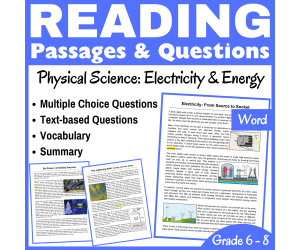
Electricity & Energy: Physical Science Reading Comprehension (Word)
Science, ELA, Reading, Reading Comprehension, Strategies, Resources for Teachers, Physics, Grade 6, 7, 8, 9, Writing Prompts, Worksheets & Printables, Centers, Activities, Teacher Tools, Assessments, Quizzes and Tests, Quizzes, Tests
Electricity and Energy: Physical Science Reading Comprehension Passages and Questions (Word) This very engaging collection of physical science reading passages about electricity and energy is designed to bridge the gap between science and literacy through strengthening reading comprehension and sparking scientific curiosity in middle school students. Each passage blends English Language Arts skills with accurate science content that supports NGSS classroom practice. Ideal for interdisciplinary learning in ELA and Science. Suitable for Grade 9 review, too! What Is Included? There are (3) informational passages: The Lightning Rod: Turning Fear into Safety: Franklin’s work showed lightning is electricity, not magic, and a lightning rod gives that charge a safe metal path into the ground instead of through a building. Eel Power: A Holiday Surprise: Electric eels fire quick bursts of electricity, and in special displays, metal plates and wires capture those pulses to make nearby lights briefly flicker. Electricity: From Source to Socket: Power plants use motion from fuels, falling water, wind, or sunlight to spin generators, then send that electrical energy through wires so a flip of a switch brings devices to life. Student Tasks for Each Passage: 5 multiple-choice questions targeting main idea, key details, inference, vocabulary in context, and use of evidence 5 vocabulary matching items with clear, student-friendly definitions 5 text-based questions that require citing specific lines or facts 1 summary prompt that asks students to condense central ideas accurately Full answer key for every section Available Formats for this Resource PDF Google Docs FULL CATALOG OF DOWNLOADING LINKS HERE Reading Passage Links: Astronomy & Space Science PDF Word Docs Google Docs Volcanoes, Rocks, & Mountains PDF Word Docs Google Docs Rock Cycle, Soil, & Sinkholes PDF Word Docs Google Docs Mars, Glaciers, & Antarctica PDF Word Docs Google Docs Water Cycle, Acid Rain, & Wastewater PDF Word Docs Google Docs Insects, Animals, & Ecosystems PDF Word Docs Google Docs Bioluminescence & Insects PDF Word Docs Google Docs Animal Skin, Cats, & T. Rex PDF Word Docs Google Docs Human Body and Senses PDF Word Docs Google Docs Health & Applied Bioscience PDF Word Docs Google Docs Waves, Light, & Imaging PDF Word Docs Google Docs Electricity & Energy PDF Word Docs Google Docs Product Details Length: 14 pages total Grades: 6–8, also suitable for Grade 9 review Use cases: close reading, stations, homework, intervention, test prep, and sub plans Standards support: reinforces informational-text skills and supports NGSS-style sense making through observation, modeling, and clear use of claim, evidence, and reasoning Why Teachers Choose This Set Authentic science content paired with rigorous literacy practice Consistent task structure across all passages for easier planning and smoother student routines Clear, age-appropriate writing that builds confidence without oversimplifying Use this set to reinforce ELA skills in science, to add literacy to your lessons, or to support independent work. The passages strengthen main idea, evidence use, vocabulary in context, inference, cause and effect, and summary writing. With ready-to-use assessments and complete answer keys, you can provide focused practice that is simple to run and fast to review.
Author CORED Education - Middle & High School
Rating
Tags Middle School, Reading Comprehension, Reading Strategies, ELA, Centers, Reading Passage, Assessments, Vocabulary, Physical Science, Physics

The Night The Toys Came Alive Audio Book
ELA, Reading, Preschool, Kindergarten, Grade 1, 2, Read Alouds, Activities
The Night The Toys Came Alive Audio Book The Night The Toys Came Alive Audio Book offers a unique blend of literature and music that provides an entertaining yet educational resource for teachers, parents and students alike. Suitable for kindergarten, preschool, grade 1, and grade 2 levels; this audio book enhances children's comprehension abilities in an engaging way. Story Setting Set in the whimsical city of Pleasantville, we're introduced to a night where the toys magically come alive. Their goal is simple: return home before their cherished children awaken. However there's a delightful twist - none of these carefree toys knows the correct path returning to their respective homes resulting in a comedic mix-up as they scamper to the wrong houses. Educational Benefits Serving as more than just an adventurous narrative; this resource aids Language Arts learning aiming at reading enrichment. The simple language coupled with dynamic storytelling instigates children's imagination and encourages active listening skills which are vital components in promoting literacy at early stages. In terms of delivery method versatility; it can be utilized during various teaching scenarios. In whole group sessions it fosters unity among kids encouraging bonding through shared experience while enhancing their auditory learning skills. In small group settings it triggers dialogue facilitating problem-solving discussions hence fostering critical thinking development among young scholars. Vibrant Auditory Stimulation p The Night The Toys Came Alive Audio Book promises vibrant auditory stimulation with fun music interwoven throughout narration along with sound effects giving life-like feel which besides making listening enjoyable aids concentration span increment over time that has proven cognitive benefits beyond classroom dynamics alone. User-Friendly Format This teaching resource comes in one convenient MP3 file which ensures ease of use without any technical headache for teachers, parents or students making it an effortless yet beneficial addition to any educational plan.
Author Twin Sisters Digital Media
Tags Toys, Storytelling, Literacy, Active Listening, Imagination
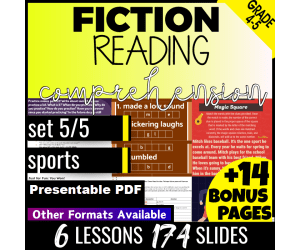
Reading Comprehension and Questions Fiction Set 5 - Sports Presentable
ELA, Reading, Reading Comprehension, Common Core, ESL, Language Development, Vocabulary, Spelling, Literature, Writing, Grade 4, 5, Worksheets & Printables, Worksheets, Writing Prompts, Assessments, Teacher Tools, Tests, Quizzes and Tests, Centers, Activities
Reading Comprehension Passages Fiction Set 5 Snapshot Title: Reading Comprehension: Fiction Grade 4–5 Sports Genre: Fiction collection (sports-themed stories) with one informational passage Subject: Reading (ELA) Primary Topic: Sports moments, practice, competition, and teamwork Estimated Guided Reading Level (A–Z): Q What This Teaches Best Inferring characters’ feelings and motivations from actions and dialogue (e.g., Lauren’s disappointment/excitement, Max’s nervousness, Kitty’s fear turning into confidence). Problem/solution and perseverance in sports situations (tryouts pressure, facing a “rival,” learning what matters in competition). Sequencing and retelling through clear event chains (planning, practicing, traveling to an event, and reflecting afterward). Figurative and sensory language for setting and mood (the frozen lake, “orange radiance,” sounds/smells of outdoor skating). Vocabulary and word-study practice tied to the passages (note: the Running decode activity includes “opponent,” while the passage uses “opponents”). Learning Goals Identify and retell key events from a sports story in the correct order. Describe how a character feels at different moments using text evidence. Explain how practice or preparation affects what happens in a story. Determine the meaning of unfamiliar words using context clues in the passage. Compare how different texts present sports as fun, competition, or personal goals. Passages Include 1.Olympics: Lauren and her class get excited when talking about the Olympics. 2.Tryouts: Max is getting himself ready for the basketball tryouts. 3.Big Brienne: Kitty has the game of her life against Big Brienne. 4.A Skate on the Lake: Aimee has a nice evening at the lake with her dad and friends. 5.Baseball Boy: Mitch goes to watch the Chicago Hitters. Read about his day. 6.Running: An informative, yet light piece about running. PRESENTABLE PDF VERSION Run it like a slide show straight from a PDF, with no PowerPoint or extra software needed, just open, project, and teach. Other versions are available in the links list below or in the full catalog. FULL CATALOG OF DOWNLOAD LINKS HERE For similar downloads and other frees, do check out Cored Group on TeachSimple.
Author Cored Education
Rating
Tags Elementary, Reading, Comprehension, Vocabulary, Answers, Spelling, Writing, Passages, Reading Centers, Reading Comprehension Assessments

1st Grade Sight Words, Color by Sight Words Practice Game - SET 9 (a)
ELA, Reading, Language Development, Spelling, Vocabulary, Preschool, Grade 1, 2, Activities
1st Grade Sight Words This set is designed to make sight words practice more fun and engaging for young learners. It is perfect for children in kindergarten, first grade, or anyone who is learning to read. The Color By Sight Words activity is an excellent resource for improving sight word recognition and comprehension. Each worksheet features a collection of boxes and a list of sight words at the top. The sight words are written in different colors, which correspond to the colors of the boxes in the worksheet. To complete the activity, students need to color each box with the color that matches the sight word written on the top of the page. This is an effective way to practice sight words, as it helps students recognize words in context and reinforces the relationship between words and their meanings. The Color By Sight Words activity is perfect for students who are visual learners, as it provides a visual cue for each sight word. The color-coding helps students remember the sight words more easily and associate them with the appropriate color. The Color By Sight Words activity is a great resource for teachers and parents who are looking for ways to make sight words practice more engaging and effective. It is also an excellent tool for homeschoolers and tutors who want to help children develop their reading skills at home. In addition to improving sight word recognition, the Color By Sight Words activity can also help students develop their fine motor skills. Coloring is a great way to improve hand-eye coordination, fine motor control, and concentration. It can also be a relaxing and enjoyable activity for students, which can help them stay engaged and focused on their learning. Overall, Set 9a of Sight Words Worksheets is an excellent resource for anyone who wants to help young learners develop their reading skills. Words Included: after, again, an, any, as, ask, by, could, every, fly, from, give, going, had, has, her, him, his, how, just, know, let, live, may, of, old, once, open, over, put, round, some, stop, take, thank, them, then, think, walk, were, when
Author TeacherYouWant
Tags First Grade, Sight Words Coloring, Color, Sight Words Color, Rainbow, Games, Fun Activity

SAMPLE Alphabet Flash Cards - 2 Digital PDF Activities + Printables
ELA, Language Development, ESL, Phonics, Reading, Spelling, Vocabulary, Common Core, Kindergarten, Preschool, Grade 1, Teacher Tools, Presentations, Worksheets & Printables, Flashcards, Activities, Games
SAMPLE Alphabet Flash Cards - 2 Digital PDF Activities + Printables An expertly designed educational resource aimed at promoting a dynamic and interactive learning atmosphere for educators in both traditional and homeschool settings, specifically crafted to assist students in getting comfortable with the alphabet while also expanding their vocabulary. Interactive Flashcard Activity A digital game with a single button, suitable for preschool age children. Each letter's introduction is followed by identifying three associated words, fostering memory retention of each letter's visual representation. Printable Flashcards Mirrors online content enhancing offline pattern recognition and recall mechanism development. Available in two sizes (A5 & A6), offering versatility based on teaching circumstances or preferences. Alphabet Flash Card Presentation & Cheat Sheet A fun alternative way to introduce these seven letters (A-G) prior to delving into linked vocabulary exercises. An easily accessible cheat sheet is also available providing necessary reference material related to each alphabet letter. Note:This versatile teaching aid can be used for class-wide instructions or smaller group settings. Aligned with Common Core Standards (CCSS)RF.K.1d & RF.K.3,, this material imparts knowledge relevant across multiple language arts disciplines like ESL training, Phonics studias well as Reading lessons structured around Spelling & Vocabulary building exercises. Enjoyed this sample version? You can easily transition over to exploring enhanced features across the whole alphabet aboard FULL version .
Author Tom's Talk
Tags Alphabet Flashcards, Interactive Learning, Vocabulary Expansion, Digital Activities, Printables
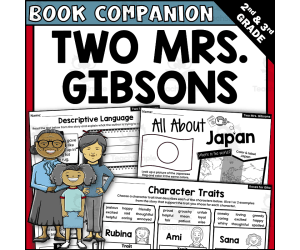
Two Mrs. Gibsons Read Aloud Book Companion Activities for IRA
ELA, Reading, Reading Comprehension, Literature, Grade 2, 3, 4, Read Alouds, Activities
This picture book companion is a complete supplemental resource for the book Two Mrs. Gibsons, by Toyomi Igus. With 35 print-and-go reading activities to choose from, this resource is ideal for customizing learning to your student's specific needs and academic abilities. Students will investigate characters, identify story elements, determine the theme, practice plotting story events, compare & contrast, make predictions, inferences, & connections, answer questions that require them to think beyond the text, and much more! Students will love the engaging and fun activities, and you will appreciate the time saved hunting for high-level resources to teach reading concepts that students frequently struggle with. The activities provided are designed to enable students to apply higher-level thinking skills, encourage them to provide text evidence to support their thinking, and challenge them to express their own thoughts and/or perspectives. ⭐️This Resource Includes:⭐️ ◾ Making Predictions: Before reading the book, students will make predictions about the text. ◾ Story Elements: Students fill in the boxes with words & pictures to represent the story elements. ◾ Sequencing: Students will retell & illustrate the important parts of the story. ◾ Summary: Students complete the Somebody, Wanted, Because, But, So graphic organizer and write a summary of the story. ◾ Story Event Sort: Students will describe a scene or event from the story that fits into each of the categories & explain how the event made them feel & how it relates to the category. ◾ Making Inferences: Students use clues & schema to make inferences while reading the story. ◾ Descriptive Language: Students read the text below from the story and explain what the author is trying to communicate. ◾ Recalling Events in Chronological Order (Viola): Students will describe and illustrate four memories of the narrator's time with Mrs. Gibson, her grandmother. ◾ Recalling Events in Chronological Order (Kazumi): Students will describe and illustrate four memories of the narrator's time with Mrs. Gibson, her mother. ◾ Making Connections: Students make connections to events in the story. ◾ Character Traits: Students will choose a character trait that describes each of the characters and provide evidence from the text to support those character traits. ◾ Character Inside & Out (Narrator): Students include details from the story to describe what the character says, thinks, does, and feels. ◾ Character Inside & Out (Viola): Students include details from the story to describe what the character says, thinks, does, and feels. ◾ Character Inside & Out (Kazumi): Students include details from the story to describe what the character says, thinks, does, and feels. ◾ Character Feelings (Narrator): Students describe the character's feelings throughout the story & give examples. ◾ Character Feelings (Viola): Students describe the character's feelings throughout the story & give examples. ◾ Character Feelings (Kazumi): Students describe the character's feelings throughout the story & give examples. ◾ Character Change (Narrator): Students will explain how the character changed from the beginning to the end of the story and describe the events that caused the change to happen. ◾ Character Change (Viola): Students will explain how the character changed from the beginning to the end of the story and describe the events that caused the change to happen. ◾ Character Change (Kazumi): Students will explain how the character changed from the beginning to the end of the story and describe the events that caused the change to happen. ◾ Character Summary: Students summarize the main character of the story. ◾ Compare & Contrast: Students will compare & contrast the two Mrs. Gibsons in the story. ◾ Character Acrostic Poem (Viola): Students will write an acrostic poem to describe Viola Gibson's character. ◾ Character Acrostic Poem (Kazumi): Students will write an acrostic poem to describe Kazumi Gibson's character. ◾ Sketch a Scene From the Story: Students will draw a scene from the story and explain why it's important to the plot. ◾ Setting Influences the Plot: Students will draw a scene from the story that takes place in one of the settings and write about what happened there and why it was important to the plot. ◾ Theme: Students answer the questions to determine which theme best fits the story and provide text evidence to support their choice. ◾ Thinking About the Text: Students will answer the questions about the story & include examples from the text to support their answers. ◾ Wait... There's More!: Students will write about what happens next in the story. ◾ Vocabulary Crossword Puzzle: Students use the clues to fill in the puzzle. Words can go across or down. Letters are shared when the words intersect (ANSWER KEY included). ◾ All About Japan: Students will research to learn more about the country of Japan. ◾ Weekend With Mrs. Gibson: Students think about what they would do if they could spend the weekend with one of the two Mrs. Gibsons and share what they did during their time together with pictures and captions. ◾ Someone Special: Students will write a paragraph about either their mother, grandma, or a mother figure in their life and include an illustration to go with their writing. ◾ Book Review: Students will color in the stars to rate how much they enjoyed the book and draw a new cover & their favorite character from the story. Then, they will explain why other kids should or should not read it. ◾ My Family Tree: Students fill in the family tree with names and illustrations and then share them with the class (in COLOR and B&W). 💡Need ideas for different ways you can implement these activities? ◾ Focus on different reading skills each day for targeted instruction, and have students complete a corresponding printable to check for understanding. ◾ During centers, students can independently read the story again and complete an activity that reviews a previously taught concept. ◾ Work with students on a reading concept they struggle with during guided reading or strategy groups. ◾ Students work with a partner or in literature circles to complete additional reading activities. This resource is for extension read-aloud activities only. The book is not included. ⭐️You may also like: ⭐ TEXT SET #1: "The Importance of Friendship" ◾ A Weekend With Wendell Read Aloud Book Companion Activities for IRA ◾ First Come the Zebra Read Aloud Book Companion Activities for IRA ◾ This is Our House Read Aloud Book Companion Activities for IRA ◾ Horace and Morris But Mostly Dolores Read Aloud Book Companion Activities for IRA ◾ The Old Woman Who Named Things Read Aloud Book Companion Activities for IRA TEXT SET #3: "Finding Your Way in a New Place" ◾ Grandfather Counts Read Aloud Book Companion Activities for IRA ◾ The Have a Good Day Cafe, Read Aloud Book Companion Activities for IRA ◾ Roses for Gita Read Aloud Book Companion Activities for IRA ◾ Mango, Abuela, and Me, Read Aloud Book Companion Activities for IRA ◾ Home at Last Read Aloud Book Companion Activities for IRA TEXT SET #7: "Exploring Narrative Nonfiction" ◾ Cactus Hotel Read Aloud Book Companion Activities for IRA ◾ A Log's Life Read Aloud Book Companion Activities for IRA ◾ Salmon Stream Read Aloud Book Companion Activities for IRA ◾ Think of an Eel Read Aloud Book Companion Activities for IRA ✨Be sure to check out my storefront here: https://teachsimple.com/contributor/creatively-gifted
Author Creatively Gifted
Tags IRA, Picture Book Activities, Read Aloud Lessons, Interactive Read Aloud Activities, Elementary Reading, Reading Comprehension, Fountas And Pinnell IRA, Family, Second Grade, Two Mrs. Gibsons, Two Mrs Gibsons, Two Mrs. Gibsons
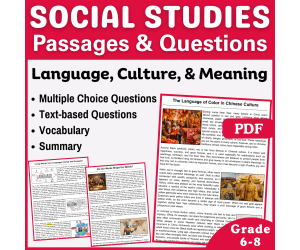
Social Studies Reading Passages: Language, Culture, Meaning (PDF)
ELA, Reading, Reading Comprehension, Strategies, Resources for Teachers, Social Studies, Geography, Sociology, Grade 6, 7, 8, 9, Writing Prompts, Worksheets & Printables, Centers, Activities, Teacher Tools, Assessments, Quizzes and Tests, Quizzes, Tests
Social Studies Reading Comprehension Passages: Language, Culture, Meaning (PDF) This resource introduces a collection of Social Studies reading comprehension passages about Language, Culture, and Meaning. The passages are carefully designed to bridge the gap between social studies and literacy through strengthening reading comprehension and sparking knowledge curiosity in middle school students. Each passage blends English Language Arts skills with accurate social studies content. Ideal for interdisciplinary learning in ELA and Social Studies. Suitable for Grade 9 review, too! What Is Included in this Collection? There are three informational passages (with full answer keys): Living Words: How Languages Change and Disappear The Language of Color in Chinese Culture Do Our Words Shape Our Minds For Each Passage, students will have multiple tasks to complete as follow: 5 multiple-choice questions targeting main idea, key details, inference, vocabulary in context, and use of evidence 5 vocabulary matching items with clear, student-friendly definitions 5 text-based questions that require citing specific lines or facts 1 summary prompt that asks students to condense central ideas accurately Available Formats for this Resource Fillable PDF Word Docs Google Docs FULL CATALOG OF DOWNLOADING LINKS HERE For more Social Studies Reading Passages, check the following Links: Ancient Civilizations PDF Fillable PDF Word Docs Google Docs Early Empires and Trade Networks PDF Fillable PDF Word Docs Google Docs The Founding of the United States PDF Fillable PDF Word Docs Google Docs Language, Culture, and Meaning PDF Fillable PDF Word Docs Google Docs Psychology and Society PDF Fillable PDF Word Docs Google Docs Global Festivals and Traditions PDF Fillable PDF Word Docs Google Docs Extreme Environments and People PDF Fillable PDF Word Docs Google Docs Food, Culture, and Preservation PDF Fillable PDF Word Docs Google Docs Global Food Customs PDF Fillable PDF Word Docs Google Docs Media, Communication, and Popular Culture PDF Fillable PDF Word Docs Google Docs Human Impact on the Environment PDF Fillable PDF Word Docs Google Docs Civic Action and Social Change PDF Fillable PDF Word Docs Google Docs Fashion, Society, and Power PDF Fillable PDF Word Docs Google Docs People, Places, and Unusual Histories PDF Fillable PDF Word Docs Google Docs Product Details Length: 13 pages total Grades: 6–8, also suitable for Grade 9 review Use cases: close reading, stations, homework, intervention, test prep, and sub plans Why Teachers Choose This Set Authentic social studies content paired with rigorous literacy practice Consistent task structure across all passages for easier planning and smoother student routines Clear, age-appropriate writing that builds confidence without oversimplifying Use this set to reinforce ELA skills in social studies, to add literacy to your lessons, and to support independent work. The passages strengthen main idea, evidence use, vocabulary in context, inference, cause and effect, and summary writing. With ready-to-use assessments and complete answer keys, you can provide focused practice that is simple to run and fast to review.
Author CORED Education - Middle & High School
Rating
Tags Middle School, Reading Comprehension, Reading Strategies, ELA, Centers, Reading Passage, Assessments, Vocabulary, Social Studies

Social Studies Reading Passages: Fashion, Society, and Power (Docs)
ELA, Reading, Reading Comprehension, Strategies, Resources for Teachers, Social Studies, Sociology, Grade 6, 7, 8, 9, Writing Prompts, Worksheets & Printables, Centers, Activities, Teacher Tools, Assessments, Quizzes and Tests, Quizzes, Tests
Social Studies Reading Comprehension Passages and Questions: Fashion, Society, and Power (Docs) This resource introduces a collection of Social Studies reading comprehension passages with questions about Fashion, Society, and Power. The passages are carefully designed to bridge the gap between social studies and literacy through strengthening reading comprehension and sparking knowledge curiosity in middle school students. Each passage blends English Language Arts skills with accurate social studies content . Ideal for interdisciplinary learning in ELA and Social Studies. Suitable for Grade 9 review, too! What Is Included in this Collection? There are three informational passages (with full answer keys): Beyond the Price Tag: How Fast Fashion Affects the World The Fur Debate: Ethics, Fashion, and Survival Designing Change: Chanel, Dior, and Women’s Lives For Each Passage, students will have multiple tasks to complete as follow: 5 multiple-choice questions targeting main idea, key details, inference, vocabulary in context, and use of evidence 5 vocabulary matching items with clear, student-friendly definitions 5 text-based questions that require citing specific lines or facts 1 summary prompt that asks students to condense central ideas accurately Available Formats for this Resource PDF Fillable PDF Word Docs FULL CATALOG OF DOWNLOADING LINKS HERE For more Social Studies Reading Passages, check the following Links: Ancient Civilizations PDF Fillable PDF Word Docs Google Docs Early Empires and Trade Networks PDF Fillable PDF Word Docs Google Docs The Founding of the United States PDF Fillable PDF Word Docs Google Docs Language, Culture, and Meaning PDF Fillable PDF Word Docs Google Docs Psychology and Society PDF Fillable PDF Word Docs Google Docs Global Festivals and Traditions PDF Fillable PDF Word Docs Google Docs Extreme Environments and People PDF Fillable PDF Word Docs Google Docs Food, Culture, and Preservation PDF Fillable PDF Word Docs Google Docs Global Food Customs PDF Fillable PDF Word Docs Google Docs Media, Communication, and Popular Culture PDF Fillable PDF Word Docs Google Docs Human Impact on the Environment PDF Fillable PDF Word Docs Google Docs Civic Action and Social Change PDF Fillable PDF Word Docs Google Docs Fashion, Society, and Power PDF Fillable PDF Word Docs Google Docs People, Places, and Unusual Histories PDF Fillable PDF Word Docs Google Docs Product Details Length: 15 pages total Grades: 6–8, also suitable for Grade 9 review Use cases: close reading, stations, homework, intervention, test prep, and sub plans Why Teachers Choose This Set Authentic social studies content paired with rigorous literacy practice Consistent task structure across all passages for easier planning and smoother student routines Clear, age-appropriate writing that builds confidence without oversimplifying Use this set to reinforce ELA skills in social studies, to add literacy to your lessons, and to support independent work. The passages strengthen main idea, evidence use, vocabulary in context, inference, cause and effect, and summary writing. With ready-to-use assessments and complete answer keys, you can provide focused practice that is simple to run and fast to review.
Author CORED Education - Middle & High School
Rating
Tags Middle School, Reading Comprehension, Reading Strategies, ELA, Centers, Reading Passage, Assessments, Vocabulary, Social Studies, Fashion

Qatar Reading Comprehension Passage - Cored Ed Encyclopedia
ELA, Language Development, Resources for Teachers, Reading Comprehension, Reading, Pre-Reading, Writing, Geography, Social Studies, History, Grade 2, 3, 4, 5, Worksheets & Printables, Worksheets, Teacher Tools, Centers, Activities, Writing Prompts, Assessments, Quizzes and Tests, Quizzes, Lesson Plans
This Qatar reading comprehension includes: Visualization (on the front cover) Start your lesson by taking a minute to think and share something about the topic. Read the script aloud (slowly), perhaps prepare some music or sound effects. Student close their eyes and let their imaginations wander. Students open their eyes, read the question aloud and give them a few minutes to complete. Ask a few students to share or keep answers until the end to compare with what they learn in the passage. Quick pause—thousands of Cored Education products are included with your TeachSimple membership. Download links and encyclopedia index available here. Pre-Reading Trivia Students will write down one thing they already know about the subject and then read five more facts and discuss. These facts are fun, and the students will enjoy learning about the subject before reading more. Give 1 minute for students to write what they already know (no pressure—best guess is fine). Read the five facts together. After each fact, do ask a student for their opinion, was it surprising? Set a purpose by asking students to highlight/underline one fact they want to learn more about during the reading. Reading Passage The text is a high-interest reading passage with set paragraphs, roughly three to four paragraphs long. It contains a variety of themes about the topic, anywhere from history to technology. The passage is between 250 and 350 words in length. First, ask students to look at the headings and see what they’ll learn about today. What do they know about the topic/heading? First read options: Teacher read-aloud (best for support). Partner reading (paragraph by paragraph). While reading, students underline important details, and vocabulary words they think may come up in the questions section. Mixed Questions The first question page contains four multiple-choice questions, each with a choice of four answers, and three written response questions that require a sentence or two from the student. Students complete the mcqs first independently, then review quickly as a class. For the 3 written responses, try to get students giving the answer with some form of evidence: “I think ___ because the text says ___.” If students get stuck, send them back to check the passage. Vocabulary Questions Practice seven key words from the text in this section across two activities. First section is scrambled words where students will unscramble three words given a clue for each. The second section is a word to meaning matching activity. Before starting, have some students read out words they underlined in the passage. Ask students to say the word and read aloud the sentence(s) around each word. Ask students to do scrambled words and the matching exercise in pairs then go through answers as a class. For the scrambled spelling task, get four pairs to come up to the board and write the words for extra practice with the other student reading out the clue. For the matching task, prompt students to give full sentences: “I matched ___ with ___ because ___.” Creative Writing In this question, the student will be required to write a five to eight sentence paragraph on a question related to the topic. Before starting, ask students write down 3 key ideas they are going to include in their piece. Ask students for ideas to share around the class to help those struggling. Pro writing expectations: 5–8 sentences At least 2 facts or details from the passage At least 2 vocabulary words from the previous page Students read their paragraphs while classmates listen for facts and vocabulary words. Extension Activities This page is optional for fast finishers or to take home. There are several activities, each one requiring a different skill. Do some, do none, do all, completely optional - but you will feel reassured knowing every possibility is planned for. Includes summary writting question. Answer Key There are answers for the multiple-choice questions, written response questions have sample answers, vocabulary answers and if there is a summary question then a sample summary will be provided as well. Lesson Plan Included Customized lesson plan for this lesson is included. Lesson Snapshot Title: Qatar Genre: Nonfiction (informational reading passage) Subject: Social Studies (Geography/History/Economics) Primary Topic: Qatar’s geography and change over time Estimated Guided Reading Level (A–Z): R What This Lesson Teaches Best How location and landforms shape a place (peninsula in the Persian Gulf; sea on three sides; sand dunes; an inlet called the Inland Sea). How a country’s economy can change over time (from pearling to oil and natural gas). Cause-and-effect in history (cultured pearls spread → pearling trade collapsed; oil/gas money → schools, hospitals, ports, neighborhoods). Connecting past and present in one place (pearl boats and tall towers sharing the same shoreline; Doha’s modern landmarks). Built-in comprehension practice (pre-reading trivia, mixed questions, vocabulary work, writing and extension activities align to passage details). Learning Goals I can describe Qatar’s location and what surrounds it using details from the passage. I can explain how pearl diving worked and why the pearling trade collapsed. I can identify how oil and natural gas changed Qatar and name what was built with that money. I can sequence key changes over time mentioned in the passage (pearling, oil discovery/exporting, independence, World Cup). I can use passage vocabulary (like peninsula, inlet, emirate) when talking about Qatar. Key Vocabulary From the Text peninsula — land with water on most sides inlet — water cutting into land from the sea seafloor — the bottom of the sea cultured — made or grown with human help emirate — a place led by an emir FULL CATALOG OF DOWNLOAD LINKS AND ENCYCLOPEDIA INDEX HERE
Author Cored Education
Rating
Tags Vocabulary, Reading Comprehension, Reading Passages, Reading, Creative Writing, Reading Strategies, Writing Prompts, Lesson Plans, Geography, Qatar
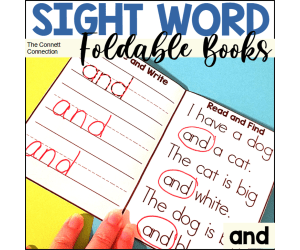
Sight Word Foldable Book: and
ELA, Reading, Preschool, Grade 1, Activities
Sight Word Foldable Book: and This sight word resource helps students learn the common sight word "and" through reading, writing, and hands-on practice. The foldable books contain seek-and-find activities, tracing practice, reading sentences with the target word, and emergent readers to build sight word recognition. To use, print the no-prep pages and have students fold along the lines to create mini-books. Then they can complete the activities in any order: finding and coloring the word, tracing practice, reading and/or writing sentences with "and," and reading the emergent reader stories. These books work well for literacy centers , independent practice, homework, and sub plans in kindergarten and first grade. The foldable format gives students hands-on practice recognizing, reading, and writing the high-frequency sight word "and."
Author The Connett Connection
Tags Sight Words, Sight Word Recognition, Foldable Book, Sight Word And

Thumbelina Fairy Tale Lapbook Project Reading & Writing Grades 3 4 5
ELA, ESL, Language Development, Literary Devices, Literature, Children’s Literature, Reading Comprehension, Reading, Strategies, Grade 3, 4, 5, Centers, Activities, Escape Room, Projects, Assessments, Teacher Tools, Graphic Organizers, Templates
Bring your learners to the amazing world and adventure of Thumbelina through this Thumbelina Lapbook Project created for Grades 3, 4, and 5, homeschoolers and EFL/ESL learners. This resource is a perfect project for your reading classroom, reading centers, fairy tale unit, and reading comprehension assessment tool. Contents: •3 Thumbelina Lapbook Project Differentiated Reading Passages (Easy, Average, Hard) •5 Thumbelina Lapbook Project Lapbook Cover Designs •2 Thumbelina Lapbook Project Name Page Styles (Individual or Group Project) •1 Thumbelina Lapbook Project Lapbook Overlap Page for easy assembly •3 Thumbelina Lapbook Project Story Summary Templates •2 Thumbelina Lapbook Project Theme & Lesson Pages •2 Thumbelina Lapbook Project Sequence Pockets •6 Thumbelina Lapbook Project Story Sequence Cards •3 Thumbelina Lapbook Project Levels of Sequence Cards (6 per level) •6 Thumbelina Lapbook Project Story Retell Cards •1 Thumbelina Lapbook Project Character Traits Foldable •1 Thumbelina Lapbook Project Setting Foldable •1 Thumbelina Lapbook Project Extra Info Foldable •1 Thumbelina Lapbook Project Story Rating Page •1 Thumbelina Lapbook Project Reflection Fold
Author It's Teacher L
Rating
Tags Thumbelina, ELA Project, Reading Centers, Reading Comprehension Project
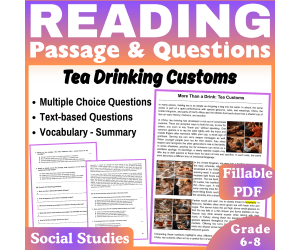
Tea Customs: Social Studies Reading Passage (Fillable PDF)
ELA, Reading, Reading Comprehension, Strategies, Resources for Teachers, Social Studies, Sociology, Grade 6, 7, 8, 9, Writing Prompts, Worksheets & Printables, Centers, Activities, Teacher Tools, Assessments, Quizzes and Tests, Quizzes, Tests
Tea Customs: Social Studies Reading Comprehension Passage (Fillable PDF) This resource introduces a unique Social Studies reading comprehension passage with questions about Tea Drinking Customs The passage is carefully designed to bridge the gap between social studies and literacy through strengthening reading comprehension and sparking knowledge curiosity in middle school students. Each passage blends English Language Arts skills with accurate social studies content . Ideal for interdisciplinary learning in ELA and Social Studies. Suitable for Grade 9 review, too! These worksheets are designed as fillable PDFs , which means students can type their answers directly into the document on any computer or tablet . Each page includes highlighted text fields that show them exactly where to type! Student Tasks throughout the passage: 5 multiple-choice questions targeting the following skills: main idea, key details, inference, vocabulary in context, and use of evidence 5 vocabulary matching items with clear, student-friendly definitions 5 text-based questions that require citing specific lines or facts 1 summary prompt that asks students to condense central ideas accurately Full answer key for every section Available Formats for this Resource: PDF Word Docs Google Docs FULL CATALOG OF DOWNLOADING LINKS HERE Social Studies Reading Comprehension Collection Links: 1. Ancient Civilizations PDF Fillable PDF Word Docs Google Docs 2. Early Empires and Trade Networks PDF Fillable PDF Word Docs Google Docs 3. The Founding of the United States PDF Fillable PDF Word Docs Google Docs 4. Language, Culture, and Meaning PDF Fillable PDF Word Docs Google Docs 5. Psychology and Society PDF Fillable PDF Word Docs Google Docs 6. Global Festivals and Traditions PDF Fillable PDF Word Docs Google Docs 7. Extreme Environments and People PDF Fillable PDF Word Docs Google Docs 8. Food, Culture, and Preservation PDF Fillable PDF Word Docs Google Docs 9. Global Food Customs PDF Fillable PDF Word Docs Google Docs 10. Media, Communication, and Popular Culture PDF Fillable PDF Word Docs Google Docs 11. Human Impact on the Environment PDF Fillable PDF Word Docs Google Docs 12. Civic Action and Social Change PDF Fillable PDF Word Docs Google Docs 13. Fashion, Society, and Power PDF Fillable PDF Word Docs Google Docs 14. People, Places, and Unusual Histories PDF Fillable PDF Word Docs Google Docs Product Details: Length: 4 pages Grades: 6–8, also suitable for Grade 9 review Use cases: close reading, stations, homework, intervention, test prep, and sub plans Why Teachers Choose This Passage: Authentic social studies content paired with rigorous literacy practice Consistent task structure for easier planning and smoother student routines Clear, age-appropriate writing that builds confidence without oversimplifying Use this passage to reinforce ELA skills in social studies, to add literacy to your lessons, and to support independent work. The passage strengthens main idea, evidence use, vocabulary in context, inference, cause and effect, and summary writing. With ready-to-use assessments and complete answer keys, you can provide focused practice that is simple to run and fast to review.
Author CORED Education - Middle & High School
Rating
Tags Middle School, Reading Comprehension, Reading Strategies, ELA, Centers, Reading Passage, Assessments, Vocabulary, Social Studies, Sociology

Sight Word Flip Book: answer
ELA, Reading, Kindergarten, Grade 1, Activities
Practice sight word recognition. reading, and writing with this sight word flip book. This book contains a flip book for the sight word: answer. The pages included in this product are: There is one cover page for students to color any way they want. Find and Color – Color or use a dot marker to mark each time the sight word appears. Trace and Write – The student will trace and write the sight word on the provided lines. Spell It – The student can use a variety of methods to spell the sight word. You can use the letters provided, use stamps, letter stickers, or you can cut out letters from a magazine. Cut and Paste – The student can use the provided word cards or look for the target word in magazines or other printed material to cut out and glue to this page. Read Write Draw – Students will read the sentence, copy the sentence, and then, illustrate the sentence. Fluency Reading – Students will read the passages that contain the sight word in context of a paragraph. Write and Draw – This page can be subbed for the Read Write Draw page and can be used for students who are ready to create their own sentences. Write and Read – This page can be subbed for the Fluency Reading page and can be used for students who need practice writing the sight word before reading the sentences. This flip book can be differentiated for multiple student levels. When to Use: Literacy Center - These flip books can be used in literacy center for students to practice these sight words. Homework - These flip books can be sent home from homework so parents can assist students in learning their sight words. Independent Practice - These flip books make great independent practice for students learning sight words. Sub Plans - Since these flip books have easy to follow directions, they make great activities to leave with substitutes.
Author The Connett Connection
Rating
Tags Sight Words, Sight Word Flip Book, Sight Word Recognition

Response to Reading Question Strips
ELA, Reading, Grade 2, 3, 4, 5, Activities
Response to Reading Question Strips: A Modern Teaching Tool The Response to Reading Question Strips is a unique teaching resource essential for modern educators. It provides a quick and easy solution during small group sessions or workshops, thereby allowing students to interact meaningfully with the texts they read. The strips contain 20 different open-ended queries that apply not only to fiction but also non-fiction materials. Such prompts encourage students to engage more deeply with their readings, elevating their thinking process from basic comprehension and recall into elaborative interpretation, critical analysis, and effective communication of thoughts. Bilingual & Interactive Learning A key feature of this product is the availability in both English and Spanish languages, promoting bilingualism in classrooms or homeschool settings. The addition of question jars labels fosters interactive reading stations where students pick random questions after each book session, making learning more engaging. All-files come in PDF printable format for instant classroom use on purchase. Digital adaptability through Google Slides brings convenience aligning with current educational digitization trends maximizing student engagement even outside traditional classroom setting. Catering Differentiated Lessons & Grades The provided Student Response Sheets come in two distinct versions crafting a personalized educational journey while catering to varied student preferences or differentiated lessons plans/approaches. Not limited just within the realm of Language Arts & Reading subjects for Graders 2 through 5; these versatile activity sheets can easily be used across different grade levels depending on teaching pace or capacity of individual students - thus adding value beyond standard categorical limits. In Summary... The Response to Reading Question Strips are tools designed not just refine literary skills but also to encourage thoughtful reflections. Apart from bilingualism, they offer educators the convenience of ready-to-use printable sheets effective for fostering well-rounded learners who excel at understanding diverse texts.
Author Markers and Minions
Tags Reading Comprehension, Open-ended Questions, Bilingual Education, Interactive Learning, Critical Thinking
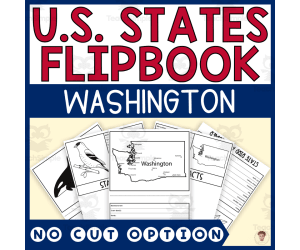
Washington State Flipbook (Capital, Bird, Flower, Flag, Animal)
ELA, Creative Arts, Art, Social Studies, Reading, Reading Comprehension, Grammar, Language Development, Spelling, Writing, History, History: USA, Geography, Grade 2, 3, 4, Activities, Projects
Washington State Flipbook: An all-encompassing teaching resource The Washington State Flipbook, tailored for educators and homeschooling parents, enhances education about geography, social studies, and cultural aspects of the state. It suits second to fourth-grade students, serving various educational categories including: Language Arts Art & Music History of USA Comprehension Studies Grammar drills An interesting twist to Geography. This "LOW-PREP resource", needing minimal preparation from educators' end, spotlights five significant symbols of Washington: Olympia; the capital city . The western goldfinch; an official bird . The endemic coast rhododendron; designated flower . A constituting flag along with Olympic marmot – unique state animal. . There are four styles of flipbooks. Two versions exist in terms of printing options – one requiring cutting aids for hands-on familiarisation and another without it. They're perfect for introducing a new unit study about U.S states or during review sessions involving the Northwest region or specifically focusing upon Washingtonian depiction. Note: Cross-curricular activities encompassed within flipbooks suit language arts lessons as effective narrative prompts or integration into your social studies exercises built around geography and history units seamlessly. Leveraging Interdisciplinary Approach to Learning: Different disciplines are amalgamated through numerous tasks that grace its content-rich pages such as highlighting geographical features through maps & KWL(Know-Wonder-Learn) charts encouraging cognitive growth. Moreover several skills can be enhanced: Artistic Skills English Language Arts Proficiency Development Comprehension Skills/History/Critical Research Abilities/Science Interactive Spelling Games and Writing tasks etc To extend pedagogical aspirations, the flipbook inspires children to understand cultural and geographical diversity spread across different U.S states. Also encourages students to undertake similar explorative journeys mapping from Alabama to Wyoming. Suggested teaching methods are varied including: Meticulously crafted lesson plans catering to every child’s learning preference. Auditory/Visual preferences satiated through curated videos or reading passages, Interactive notebook activities for learners preferring applied knowledge tasks. The Washington State Flipbook: Enlighten your young scholars! Use this engaging teaching tool like the Washington State Flipbook and let your learners become United-States' experts! Explore the treasure chest of learning with them!
Author Heather Huhman
Tags Washington State, Flipbook, Teaching Resource, Geography, Social Studies

Summer Olympic Reading Passage & Questions 5th-8th Level
ELA, Reading, Reading Comprehension, Grade 5, 6, 7, Activities
Summer Olympic Sports Reading Comprehension for Upper Elementary This informative resource teaches students about some of the lesser known Summer Olympic sports like water polo, table tennis, race walking, and artistic swimming through an engaging reading passage. After reading the text, students will answer five reading comprehension questions that range from explicit text evidence questions to more inferential questions. The passage text and questions are available in PDF printable and paperless Google Slides formats for whole group, small group, or independent work. Use this versatile resource to build comprehension skills or enhance an Olympic-themed unit for your 5th-8th grade students. Check out the additional Olympic reading, math, and classroom resources in the product description for more engaging activities to teach Olympic concepts across the curriculum .
Author SchoolingSara
Tags Summer Sports, Olympics, Reading Comprehension, Lesser-known Sports, Critical Thinking, Reading Passage, Passage, Water Polo

ChatGPT & AI Understanding for High Schools w/ Presentation Discussion
ELA, Social Studies, Reading, Reading Comprehension, Library, Strategies, Writing, Grade 9, 10, 11, 12, Teacher Tools, Presentations, Activities
Explore the impact of ChatGPT on education and learning with this engaging presentation and classroom discussion resource. Gain valuable insights into the rapidly advancing field of generative AI, how it works, and its potential impact on employment, society, and, perhaps most importantly, education. Engage your students with an enthralling and all-encompassing presentation and accompanying note-taking worksheet. This ]material will foster a profound comprehension of these powerful machine learning instruments, preparing students for an immersive class-wide discussion that they will never forget! Students will start this lesson by being introduced to the concept of AI and the emerging power of ChatGPT with a dynamic presentation and corresponding note-taking activity . That will immediately lead to an engaging Socratic seminar planning exercise that will culminate in a whole class discussion that promises to be the apex of their scholarly year! Each step of the process contains coordinated, corresponding directions and scaffolded printable activities. There is virtually no prep required for educators. Simply present and pass out the activities in the order and pace that best suits your students. Designed for the high school student in mind, this resource includes: 1. 14-slide presentation that explains AI and ChatGPT, defines key terms around the topic, addresses the key players in the field, explores the controversies of fair use, and probes the critical questions surrounding this fast-evolving topic and how it may impact the social and academic world 2. A presentation note-taking handout (w/ answer key & Easel self-checking version) 3. An 8-question Socratic seminar assignment w/ directions, note-taking guidelines, and CCSS rubric (SAMPLE QUESTION: Research the concerns over AI becoming self-aware (called Artificial Consciousness, or AC). How likely is it that AI like ChatGPT becomes self-aware? What concerns might a self-aware computing system bring to humanity? Are you concerned about AC? Why or why not?) Although this resource can be fitted for any secondary classroom, it has been carefully designed to work best in grades 9, 10, 11, and 12. The included rubric is subtly but specifically tied to Common Core ELA Standards for Speaking and Listening 1. This resource is provided in print-ready, bookmarked, and adjustable PDF files and PowerPoint Show files. A link to an editable rubric that allows for grading customization and seamless integration into Google Classroom and many other Learning Management Systems (LMS's). This resource contains 6 Pages, 14 Slides, and 1 Google Sheet.
Author The Language of Educational Art, LLC
Tags ChatGPT, Artificial Intelligence, Research, Literacy, Current Events
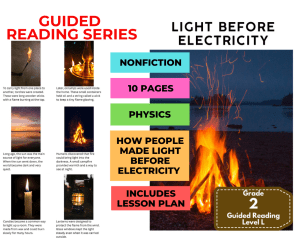
Guided Reading Level L - Light Before Electricity (with Lesson Plan)
ELA, Resources for Teachers, Reading Comprehension, Reading, Science, Engineering, Technology, Physics, History, Social Studies, Grade 1, 2, 3, Worksheets & Printables, Worksheets, Teacher Tools, Centers, Activities, Literacy Readers, Quizzes, Quizzes and Tests, Assessments
This Guided Reading Book - Light Before Electricity (Level L) with lesson plan includes: Guided Reading Color Label (front cover x1) This is a quick way to match the book’s demands to what students can generally handle.. The overall goal is to use the level/color to pick books for several smaller groups. To qualify for a certain level, a student is expected to read a book from that level with about 90–94% accuracy. If a student is consistently accurate and understands, move up a level. If the student is struggling at that level, drop down and add more support. Each student will improve at completely different rates, but it is generally one of the best ways to check progress across the class. DOWNLOAD THE CATALOG TO VIEW ALL GUIDED READING BOOKS AVAILABLE (SORTED LEVELS A-Z) Pre-Reading Question (x1) Teacher asks the prompt aloud, can be while showing the cover or first page. Students share what they already know, or make educated guesses from the cover. Prompt them to use the target vocabulary. Write some of their responses on the board to look back at during the reading. Vocabulary Words (x5) Introduce the five words, best doing it one at a time. Start by saying it, while students repeat and then see if anyone knows what it means before reading further. Read through the meaning and try to briefly connect each word to a picture or gesture so it’s meaningful. Ask students to flip through the book pages and point to where they see each of the vocabulary words. While reading the book pause upon coming across one of the vocab words or read the sentence twice to make sure students understand the word has appeared. Optional: Ask students to raise hands whenever they see/hear one of the new words. Guided Reading Pages (x10) Check the book snapshot (below) for: primary topic - do you need to prep extra reading or intro materials on this? what is taught best - decide on 1-2 bullets to focus on, use the prompt or words provided here for best results. learning goals - what you are checking for students to be able to do after the session, elicit answers using prompts or words provided. key vocabulary (see section above). questions overview - so you know what is coming up and if you need to prep extra materials to assist understanding. Run the lesson You may have already looked at a few of the pages together, but you can show them some of the pictures again first to set meaning. Depending on how much time you have and how familiar your students are with guided reading class, you may want to read the book aloud first with the group first. Students whisper or partner read, while you listen in. If time, do it as a group, one student reading a page each. Use the guided page’s prompts to coach: “Check the picture / does it make sense?” “Point under the words / try the first sound” “Reread the sentence smoothly”. Try to focus more on one student per session (rotating every time), so you can work out if they are ready to move up or need to move down a level. Comprehension Questions (back cover x3) This is your way to check that students didn’t just say the words, but actually understood the text. First, let students answer by pointing to the page/picture and saying a short sentence. After any answer, follow with: “Show me where you found that in the text.” In bigger groups, have partners answer first (10–20 seconds), then call on 2–3 students to share. Differentiation tips: Emerging speakers/struggling readers: oral + pointing On-level: oral in a full sentence Higher: one written sentence or draw + label Book Snapshot Title: Light Before Electricity Genre: Nonfiction (informational) Subject: Science (Technology) / Social Studies (Past and Present) Primary Topic: How people made light before electricity Estimated Guided Reading Level (A–Z): L What This Book Teaches Best The sun was the main source of light long ago, and it got dark when the sun went down. People discovered fire could bring light into darkness and help them see at night. A clear sequence of lighting tools is explained: torches, oil lamps (with a wick), candles, lanterns, gas lamps, electric lightbulbs, and LED bulbs. How inventions solved problems: lanterns protected flames from wind, gas traveled through pipes to power lamps, and electric lightbulbs were safer because they used no real flame. Past-to-present comparison: lighting changed from “flickering fires” to steady electric light you can turn on with a switch. Learning Goals Students will describe why the sun was the main source of light long ago. Students will explain how fire helped people see at night. Students will identify several light sources from the book and describe how each one made light. Students will explain how lanterns kept light steady when carried outside. Students will explain why the electric lightbulb was safer and brighter than candles in the book. Students will describe how LED bulbs are different from older light sources (cool to the touch, little energy). Key Vocabulary From the Text source — where something comes from. torches — long sticks with a flame used for light. wick — a string that helps a lamp or candle burn. invention — something new that someone creates. flickering — shining in a shaky way, like moving firelight. Discussion Prompts Pre-reading question: What kinds of lights do you use when it is dark? Comprehension questions: What was the main source of light for everyone long ago? How did lanterns protect the flame when people carried them outside? Why did the book say the electric lightbulb was safer than candles? Printing Tips 1. Best Printing Method (Recommended) “Booklet” Printing (Best if Available) If your printer or PDF viewer supports Booklet Printing , use this. Settings to use: Print mode: Booklet Paper size: Letter or A4 (either works) Orientation: Landscape Print on both sides: Yes Flip on: Short edge Scaling: Fit to printable area Booklet subset: First test: Front sides only Then: Back sides only This will automatically: Pair pages correctly Put the cover on the outside Align everything for folding After printing, fold in half and staple along the spine . 2. If “Booklet” Printing Is NOT Available You can still print this correctly with manual duplex printing . Step-by-step: Open the PDF. Choose Print . Set: Orientation: Landscape Pages per sheet: 1 Print on both sides: Yes Flip on: Short edge Print all pages . Because each PDF page already contains two facing book pages, the result will still fold cleanly into a book. Thousands of Cored Education products are included with your TeachSimple membership. Download links and encyclopedia index available here.
Author Cored Education
Rating
Tags Reading Comprehension, Reading Passages, Reading, Guided Reading, Guided Reading Lesson Plan, Guided Reading Activity, Pre-reading, Vocabulary, Physics, History

Social Studies SAMPLE Reading Passage: Food in South America (Docs)
ELA, Reading, Reading Comprehension, Strategies, Resources for Teachers, Social Studies, Sociology, Grade 6, 7, 8, 9, Writing Prompts, Worksheets & Printables, Centers, Activities, Teacher Tools, Assessments, Quizzes and Tests, Quizzes, Tests
This is a ONE PASSAGE SAMPLE. The following is the description of the FULL resource and the downloading links: Social Studies Reading Comprehension Passages and Questions: Food and Culture (Docs) This resource introduces a collection of Social Studies reading comprehension passages with questions about Food, Culture, and Preservation. The passages are carefully designed to bridge the gap between social studies and literacy through strengthening reading comprehension and sparking knowledge curiosity in middle school students. Each passage blends English Language Arts skills with accurate social studies content . Ideal for interdisciplinary learning in ELA and Social Studies. Suitable for Grade 9 review, too! What Is Included in this Collection? There are three informational passages (with full answer keys): Homemade Cottage Cheese: Food, Family, and Local Trade Salty Traditions: How Salami and Kimchi Stay Safe to Eat From Grasslands to Grill: The Foods of South America For Each Passage, students will have multiple tasks to complete as follow: 5 multiple-choice questions targeting main idea, key details, inference, vocabulary in context, and use of evidence 5 vocabulary matching items with clear, student-friendly definitions 5 text-based questions that require citing specific lines or facts 1 summary prompt that asks students to condense central ideas accurately Available Formats for this Resource PDF Fillable PDF Word Docs FULL CATALOG OF DOWNLOADING LINKS HERE For more Social Studies Reading Passages, check the following Links: Ancient Civilizations PDF Fillable PDF Word Docs Google Docs Early Empires and Trade Networks PDF Fillable PDF Word Docs Google Docs The Founding of the United States PDF Fillable PDF Word Docs Google Docs Language, Culture, and Meaning PDF Fillable PDF Word Docs Google Docs Psychology and Society PDF Fillable PDF Word Docs Google Docs Global Festivals and Traditions PDF Fillable PDF Word Docs Google Docs Extreme Environments and People PDF Fillable PDF Word Docs Google Docs Food, Culture, and Preservation PDF Fillable PDF Word Docs Google Docs Global Food Customs PDF Fillable PDF Word Docs Google Docs Media, Communication, and Popular Culture PDF Fillable PDF Word Docs Google Docs Human Impact on the Environment PDF Fillable PDF Word Docs Google Docs Civic Action and Social Change PDF Fillable PDF Word Docs Google Docs Fashion, Society, and Power PDF Fillable PDF Word Docs Google Docs People, Places, and Unusual Histories PDF Fillable PDF Word Docs Google Docs Product Details Length: 14 pages total Grades: 6–8, also suitable for Grade 9 review Use cases: close reading, stations, homework, intervention, test prep, and sub plans Why Teachers Choose This Set Authentic social studies content paired with rigorous literacy practice Consistent task structure across all passages for easier planning and smoother student routines Clear, age-appropriate writing that builds confidence without oversimplifying Use this set to reinforce ELA skills in social studies, to add literacy to your lessons, and to support independent work. The passages strengthen main idea, evidence use, vocabulary in context, inference, cause and effect, and summary writing. With ready-to-use assessments and complete answer keys, you can provide focused practice that is simple to run and fast to review.
Author CORED Education - Middle & High School
Rating
Tags Middle School, Reading Comprehension, Reading Strategies, ELA, Centers, Reading Passage, Assessments, Vocabulary, Social Studies, Food And Culture