



2,657 products added recently
Page 55 - Reading Comprehension Activitites
Support your students in developing strong reading comprehension skills with a variety of engaging activities. This collection includes worksheets, graphic organizers, and discussion questions designed to help students understand and analyze texts. By integrating these resources into your teaching, you can enhance students' ability to interpret information and draw meaningful conclusions.

 Show filters


Reading Comprehension Fiction Set 4 Sample: Funny Photos (Forms)
ELA, Reading, Language Development, Common Core, ESL, Spelling, Reading Comprehension, Creative Writing, Writing, Literature, Grade 4, 5, Centers, Activities, Assessments, Teacher Tools, Tests, Quizzes and Tests
Reading Comprehension Passages Fiction Set 4 Sample Overview No prep reading comprehension lessons, with enjoyable stories and topics. Each lesson has a blend of post-reading activities. Mixed questions to check overall understanding. Vocabulary activities, plus a writing section. Lessons also contain a bonus extension exercise at the end. Some you may like, some you may not, either way they are there if you wish to use them. Full answer keys are provided. Passage Included 4.Funny Photos: Darlene and her class have a good idea for their funny photos. Forms Version This is the Forms editable and fillable/self grading version. This download is available in GOOGLE Docs, GOOGLE Forms, GOOGLE Slides. PDF, PPT, WORD. FULL CATALOG OF DOWNLOAD LINKS HERE Grade 4/5 Links Fiction Set 1 - Animals Google Docs Google Forms Google Slides PDF PPT Word Guided Reading Materials Fiction Set 2 - Family Google Docs Google Forms Google Slides PDF PPT Word Guided Reading Materials Fiction Set 3 - Friends Google Docs Google Forms Google Slides PDF PPT Word Guided Reading Materials Fiction Set 4 - School Google Docs Google Forms Google Slides PDF PPT Word Guided Reading Materials Fiction Set 5 - Sports Google Docs Google Forms Google Slides PDF PPT Word Guided Reading Materials Nonfiction Set 1 - Birds Google Docs Google Forms Google Slides PDF PPT Word Guided Reading Materials Nonfiction Set 2 - Insects Google Docs Google Forms Google Slides PDF PPT Word Guided Reading Materials Nonfiction Set 3 - Mammals Google Docs Google Forms Google Slides PDF PPT Word Guided Reading Materials Nonfiction Set 4 - Nature Google Docs Google Forms Google Slides PDF PPT Word Guided Reading Materials Nonfiction Set 5 - Sea Animals Google Docs Google Forms Google Slides PDF PPT Word Guided Reading Materials Reading Passages Overview Each passage is especially written for Grade 4-5 students, including key vocabulary required for this age group. Topics are varied and are accompanied by colorful graphics. Topics are meant to educate, yet entertain the modern student. These passages are perfect for the modern classroom. Whereas textbooks can become outdated in no time, any changes to technology or the world will result in updates to this product. Mixed Questions The mixed questions section of each lesson includes a variation of five comprehension, vocabulary and math questions. In addition, key reading strategies are frequently covered including cause & effect, summarizing, compare & contrast and making conclusions. Two or three of the questions will be MCQs and other questions will require a written response of some kind. Full answers and example responses appear at the end of the lesson. Spelling & Vocab Each reading passage contains a variety of words and phrases designed for Grade 4-5 students. Spelling and vocab activities provide the opportunity to build fluency with these words. As it can become quite mundane doing the same activities over and over, each lesson in a set will contain a different spelling and vocab activity . Activities include: spelling games, sentence match-ups, mixed-up text and decoding words from the lesson. Writing Prompts Writing prompts are designed to continue the theme or lessons learned in the story. Students are persuaded to write in a variety of ways and each prompt includes several cues to help. As with the spelling/vocab section, writing prompts will vary. This includes research pieces, reading responses, poetry and creative writing prompts. Full Answer Keys Full answer keys and sample responses are provided so no matter how busy you are, you know you're covered! Mixed question answers provide evidence from the text, math questions contain the relevant workings. Answers are designed for use by the teacher, but also suitable as a handout to the student. Just for Fun Each lesson will have a bonus extension exercise. This is something fun to extend the lesson with. You can find these at the end of each lesson, titled Just for Fun. Just for Funs are optional. Some you may like, some you may not. Either way, they are there to do with as you wish. For similar downloads and other frees, do check out Cored Group on TeachSimple.
Author Cored Education
Tags Elementary, Reading, Comprehension, Vocabulary, Answers, Ccss, Common Core, Spelling, Writing, Passages

The Little Red Caboose Activity Guide: Doing A Good Job...
ELA, Reading, Reading Comprehension, Kindergarten, Preschool, Grade 1, Activities
The Little Red Caboose Activity Guide: Doing A Good Job... A resource set to embolden students from preschool to grade 1, primarily focusing on the ethic of performing well, even without received praises or noticeable outcomes. This guide emphasizes comprehension by using language arts as a channel to spark curiosity in young learners and bolstering their understanding. Reflection Opportunities The accompaniment activity guide for The Little Red Caboose provides sections featuring pertinent discussion questions. Teachers can make these queries into points of meaningful conversations during whole group discussions or use them as assignments for small groups or individual pupils. Craft Project and Worksheet An exciting train picture craft project is included in the activity kit, providing students an opportunity to reveal their creativity while also solidifying the lessons learned. A worksheet concerning good tasks execution is also encompassed—an operative exercise that can be performed individually or within a group context. All resources are available in PDF format spanning over four easy-to-print pages—perfectly applicable to educators seeking ready-made sources requiring minimum preparation and material usage time. This versatile teaching aid caters diverse instructional approaches including homeschooling curriculums with opportunities for structured teaching sessions and more spontaneous learning engagements. In essence, The Little Red Caboose Activity Guide: Doing A Good Job transcends from being not just an ordinary language arts tool but instills precious morals into burgeoning minds while enhancing their analytical thinking faculties.
Author More Than Just Reading
Tags Doing A Good Job, Comprehension, Language Arts, Discussion Questions, Craft Project

Nana Upstairs & Nana Downstairs Book Companion
ELA, Reading, Reading Comprehension, Literature, Grade 2, 3, 4, Teacher Tools, Graphic Organizers, Worksheets & Printables, Novel Studies, Activities, Worksheets
This picture book companion is a complete supplemental resource for the book Nana Upstairs & Nana Downstairs by Tomie dePaola. It includes 31 print-and-go reading activities to choose from, making this resource ideal for customizing learning to your student's specific needs and academic abilities. Students will investigate characters, identify story elements, determine the theme, practice plotting story events, compare & contrast, make predictions, inferences, & connections, answer questions that require them to think beyond the text, and much more! Students will thoroughly enjoy the captivating activities, and you'll value the time saved from scouring for advanced resources to address challenging reading concepts. The offered activities are crafted to foster higher-order thinking, prompt students to present textual proof for their reasoning, and inspire them to share their personal insights and viewpoints. ⭐️This Resource Includes:⭐️ ◾ Making Predictions: Before reading the book, students will make predictions about the text. ◾ Story Elements: Students fill in the boxes with words & pictures to represent the story elements. ◾ Sequencing: Students will retell & illustrate the important parts of the story. ◾ Recalling events in Chronological Order: Students describe and illustrate four major events in the story in chronological order. ◾ Summary: Students complete the Somebody, Wanted, Because, But, So graphic organizer and write a summary of the story. ◾ Story Event Sort: Students will describe a scene or event from the story that fits into each of the categories & explain how the event made them feel & how it relates to the category. ◾ Cause & Effect (simplified): Students are given either the cause or effect and will cut & match up cause & effect cards, then paste them in the correct boxes (ANSWER KEY included). ◾ Cause & Effect: Students cut & match up cause & effect cards, then paste them in the correct boxes (ANSWER KEY included). ◾ Making Inferences: Students use clues & schema to make inferences while reading the story. ◾ Making Connections: Students make connections to an event from the story. ◾ Notice & Note: Students will notice the important details the author includes in the text & illustrations and take notes on what they notice. ◾ Author's Message: Students describe four important events from the story in chronological order and answer the questions about the author's message. ◾ Character Inside & Out (Tommy): Students include details from the story to describe what the character says, thinks, does, and feels. ◾ Character Inside & Out (Nana Upstairs): Students include details from the story to describe what the character says, thinks, does, and feels. ◾ Character Inside & Out (Nana Downstairs): Students include details from the story to describe what the character says, thinks, does, and feels. ◾ Character Traits: Students choose 4 important character traits that describe the main character and provide evidence from the text to support their choices. ◾ Character Feelings: Students describe how the character's feelings change throughout the story & give examples of the events that cause them to feel the way they do. ◾ Character Development: Students select the character traits that best describe Tommy at different times throughout the story and provide examples from the book to support each character trait. ◾ Character Change: Students will explain how the character changed from the beginning to the end of the story and describe the events that caused the change to happen. ◾ Sketch a Scene From the Story: Students will draw a scene from the story and explain why it's important to the plot. ◾ Setting Influences the Plot: Students will draw a scene from the story that takes place in one of the settings and write about what happened there and why it was important to the plot. ◾ Theme: Students answer the questions to determine which theme best fits the story and provide text evidence to support their choice. ◾ Thinking About the Text: Students will answer the questions about the story & include examples from the text to support their answers. ◾ Thinking Beyond the Text: Students will answer questions that require them to think beyond the text. ◾ Sensory Details: Students choose an event from the story and describe it using the five senses. ◾ Wait... There's More!: Students will write about what happens next in the story. ◾ Something Special: Students draw pictures of Tommy & Nana Upstairs doing something special and of themselves doing something special with an older family member or friend. Then, they compare and contrast Tommy & Nana's relationship to their relationship with an older relative or friend. ◾ Book Review: Students will color in the stars to rate how much they enjoyed the book and draw a new cover & their favorite character from the story. Then, they will explain why other kids should or should not read it. ◾ Biography Brochure: Students conduct research to learn more about the author, Tomie dePaola's life, and create a brochure. ◾ Biography One-Pager: Students research further into the life of Tomie dePaola and complete the biography handout. ◾ Acrostic Poem: Students write an acrostic poem that includes facts and describes the author, Tomie dePaola. 💡Need ideas for different ways you can implement these activities? ◾ Focus on different reading skills each day for targeted instruction, and have students complete a corresponding printable to check for understanding. ◾ During centers, students can independently read the story again and complete an activity that reviews a previously taught concept. ◾ Work with students on a reading concept they struggle with during guided reading or strategy groups. ◾ Students work with a partner or in literature circles to complete additional reading activities. This resource is for extension read-aloud activities only. The book is not included. ⭐️You may also like: ⭐ TEXT SET #1: "The Importance of Friendship" ◾ A Weekend With Wendell Read Aloud Book Companion Activities for IRA ◾ First Come the Zebra Read Aloud Book Companion Activities for IRA ◾ This is Our House Read Aloud Book Companion Activities for IRA ◾ Horace and Morris But Mostly Dolores Read Aloud Book Companion Activities for IRA ◾ The Old Woman Who Named Things Read Aloud Book Companion Activities for IRA TEXT SET #3: "Finding Your Way in a New Place" ◾ Grandfather Counts Read Aloud Book Companion Activities for IRA ◾ The Have a Good Day Cafe, Read Aloud Book Companion Activities for IRA ◾ Roses for Gita Read Aloud Book Companion Activities for IRA ◾ Mango, Abuela, and Me, Read Aloud Book Companion Activities for IRA ◾ Home at Last Read Aloud Book Companion Activities for IRA TEXT SET #7: "Exploring Narrative Nonfiction" ◾ Cactus Hotel Read Aloud Book Companion Activities for IRA ◾ A Log's Life Read Aloud Book Companion Activities for IRA ◾ Salmon Stream Read Aloud Book Companion Activities for IRA ◾ Think of an Eel Read Aloud Book Companion Activities for IRA ✨Be sure to check out my storefront here: https://teachsimple.com/contributor/creatively-gifted
Author Creatively Gifted
Tags IRA, Picture Book Activities, Read Aloud Lessons, Interactive Read Aloud Activities, Elementary Reading, Reading Comprehension, Fountas And Pinnell IRA, Second Grade, Tomie Depaola, Author Study
Chasing Vermeer Reader Response Comprehension Questions and Vocabulary
ELA, Reading, Reading Comprehension, Literature, Language Development, Vocabulary, Grade 3, 4, 5, 6, Worksheets & Printables, Novel Studies, Teacher Tools, Assessments, Activities, Worksheets
About Chasing Vermeer Reader Response Comprehension Questions and Vocabulary The Chasing Vermeer Reader Response Comprehension Questions and Vocabulary is a teaching resource designed for the enhancement of reading comprehension skills among Grade 3-6 learners. Primarily, it aims to encourage independent interaction with text, ultimately fostering critical thinking capacity and understanding. Vocabulary Reinforcement A major component within this kit revolves around vocabulary strengthening. It features extensive chapter-wise exercises centered on engaging students profoundly with words. Comprehension Assessment The comprehension element comprises short-answer questions formulated to assess a student's grasp of the text at hand while simultaneously honing their literary analysis skills. Advantages & Applications Versatility: This tool can be used for whole-group instructions or catalyze lively group discussions in literature circles, focusing on improving student understanding through textual discussions. Catering to Different Learning Approaches: It suits small group instructions where an individualized learning approach is desired without compromising orderliness in classrooms. Furthermore, even book clubs that seek inclusive engagement strategies will find it beneficial. Beyond Homework Activities: As homework assignments, these resources could help students develop analytical mindsets towards encountered literature independently. Coverage & Structure Covering elements from pre-reading quote analysis through final assessments, educators are bestowed with curriculum-aligned materials divided into manageable sections based solely on chapters. Incorporating both vocabulary practice along with comprehensive chapter-wise questions present teachers with a balanced mix. A Distinct Element – Final Assessment Section: This study guide sets itself apart with its final assessment section which fuses multiple-choice and short answer questions – offering insights into learner's progress at breadth and depth levels. Answer Keys for Effective Teaching To make the teachers' experience even simpler, this material provides answer keys for all included resources: vocabulary practice, organized chapter-wise short-answer comprehension questions, and the final assessment activity . These aids arm educators effectively for efficient teaching and monitoring processes. In Sum A unique educational tool bringing together crucial language arts elements in potent synchrony lays within Chasing Vermeer Reader Response Comprehension Questions and Vocabulary. Not only does it stimulate learners to engage proactively in their reading journey but fortifies their understanding via critical thinking.
Author Creatively Gifted
Tags Comprehension Questions, Vocabulary Practice, Reader Response, Literature Analysis, Independent Reading

Reading Comprehension Fiction Set 4 Sample: My Love of Art (Forms)
ELA, Reading, Language Development, Spelling, Common Core, ESL, Reading Comprehension, Writing, Children’s Literature, Literature, Grade 2, 3, Centers, Activities, Assessments, Teacher Tools, Tests, Quizzes and Tests
Reading Comprehension Passages Fiction Set 4 Sample Overview Fascinating reading comprehension passages, each with an array of activities included. Stories are written for the modern classroom and topics are designed to promote enthusiasm from each student. Each lesson contains a mixed questions section to check understanding, a vocabulary or spelling activity to help remember key language introduced, and a writing exercise. Full answer keys are provided. For a more detailed overview, check the section under the links at the bottom of this description. Passage Included 6.My Love of Art: Read about the author's love of art class in this lesson. Forms Version This is the Forms editable and fillable/self grading version. This download is available in GOOGLE Docs, GOOGLE Forms, GOOGLE Slides. PDF, PPT, WORD. FULL CATALOG OF DOWNLOAD LINKS HERE Grade 2/3 Links Fiction Set 1 - Nature Google Docs Google Forms Google Slides PDF PPT Word Guided Reading Materials Fiction Set 2 - Animals Google Docs Google Forms Google Slides PDF PPT Word Guided Reading Materials Fiction Set 3 - Food Google Docs Google Forms Google Slides PDF PPT Word Guided Reading Materials Fiction Set 4 - School Google Docs Google Forms Google Slides PDF PPT Word Guided Reading Materials Fiction Set 5 - Friends Google Docs Google Forms Google Slides PDF PPT Word Guided Reading Materials Fiction Set 6 - Family Google Docs Google Forms Google Slides PDF PPT Word Guided Reading Materials Fiction Set 7 - Sports Google Docs Google Forms Google Slides PDF PPT Word Guided Reading Materials Nonfiction Set 1 - Technology Google Docs Google Forms Google Slides PDF PPT Word Guided Reading Materials Nonfiction Set 2 - Nutrition Google Docs Google Forms Google Slides PDF PPT Word Guided Reading Materials Nonfiction Set 3 - Animals Google Docs Google Forms Google Slides PDF PPT Word Guided Reading Materials Reading Passages Overview Each passage is especially written for Grade 2-3 students, including key vocabulary required for this age group. Topics are varied and are accompanied by colorful graphics. Topics are meant to educate, yet entertain the modern student. These passages are perfect for the modern classroom. Whereas textbooks can become outdated in no time, any changes to technology or the world will result in updates to this product. Mixed Questions The mixed questions section of each lesson includes a variation of fivecomprehension, vocabulary and math questions. In addition, key reading strategies are frequently covered including cause & effect, summarizing, compare & contrast and making conclusions. Three of the questions will be MCQs and two will require a written response of some kind. Full answers and example responses appear at the end of the lesson. Spelling & Vocab Each reading passage contains a variety of words and phrases designed for Grade 2-3 students. Spelling and vocab activities provide the opportunity to build fluency with these words. As it can become quite mundane doing the same activities over and over, each lesson in a set will contain a different spelling and vocab activity . Writing Prompts Writing prompts are designed to continue the theme or lessons learned in the story. Students are persuaded to write in a variety of ways and each prompt includes several cues to help. As with the spelling/vocab section, writing prompts will vary. This includes research pieces, reading responses, poetry and creative writing prompts. Full Answer Keys Full answer keys and sample responses are provided so no matter how busy you are, you know you're covered! Mixed question answers provide evidence from the text, math questions contain the relevant workings. Answers are designed for use by the teacher, but also suitable as a handout to the student. Additional File One lesson will have an additional file. This is something fun to extend the lesson with. For similar downloads and other frees, do check out Cored Group on TeachSimple.
Author Cored Education
Tags Elementary, Reading, Comprehension, Vocabulary, Answers, Ccss, Common Core, Spelling, Writing, Digital Centers
Guided Reading Level K - The Life of a Butterfly (with Lesson Plan)
ELA, Resources for Teachers, Reading Comprehension, Reading, Pre-Reading, Language Development, Insects, Life Sciences, Science, Vocabulary, Grade 1, 2, 3, Worksheets & Printables, Worksheets, Teacher Tools, Centers, Activities, Literacy Readers, Quizzes, Quizzes and Tests, Assessments
This Guided Reading Book - The Life of a Butterfly (Level K) with lesson plan includes: Guided Reading Color Label (front cover x1) This is a quick way to match the book’s demands to what students can generally handle.. The overall goal is to use the level/color to pick books for several smaller groups. To qualify for a certain level, a student is expected to read a book from that level with about 90–94% accuracy. If a student is consistently accurate and understands, move up a level. If the student is struggling at that level, drop down and add more support. Each student will improve at completely different rates, but it is generally one of the best ways to check progress across the class. DOWNLOAD THE CATALOG TO VIEW ALL GUIDED READING BOOKS AVAILABLE (SORTED LEVELS A-Z) Pre-Reading Question (x1) Teacher asks the prompt aloud, can be while showing the cover or first page. Students share what they already know, or make educated guesses from the cover. Prompt them to use the target vocabulary. Write some of their responses on the board to look back at during the reading. Vocabulary Words (x5) Introduce the five words, best doing it one at a time. Start by saying it, while students repeat and then see if anyone knows what it means before reading further. Read through the meaning and try to briefly connect each word to a picture or gesture so it’s meaningful. Ask students to flip through the book pages and point to where they see each of the vocabulary words. While reading the book pause upon coming across one of the vocab words or read the sentence twice to make sure students understand the word has appeared. Optional: Ask students to raise hands whenever they see/hear one of the new words. Guided Reading Pages (x10) Check the book snapshot (below) for: primary topic - do you need to prep extra reading or intro materials on this? what is taught best - decide on 1-2 bullets to focus on, use the prompt or words provided here for best results. learning goals - what you are checking for students to be able to do after the session, elicit answers using prompts or words provided. key vocabulary (see section above). questions overview - so you know what is coming up and if you need to prep extra materials to assist understanding. Run the lesson You may have already looked at a few of the pages together, but you can show them some of the pictures again first to set meaning. Depending on how much time you have and how familiar your students are with guided reading class, you may want to read the book aloud first with the group first. Students whisper or partner read, while you listen in. If time, do it as a group, one student reading a page each. Use the guided page’s prompts to coach: “Check the picture / does it make sense?” “Point under the words / try the first sound” “Reread the sentence smoothly”. Try to focus more on one student per session (rotating every time), so you can work out if they are ready to move up or need to move down a level. Comprehension Questions (back cover x3) This is your way to check that students didn’t just say the words, but actually understood the text. First, let students answer by pointing to the page/picture and saying a short sentence. After any answer, follow with: “Show me where you found that in the text.” In bigger groups, have partners answer first (10–20 seconds), then call on 2–3 students to share. Differentiation tips: Emerging speakers/struggling readers: oral + pointing On-level: oral in a full sentence Higher: one written sentence or draw + label Book Snapshot Title: The Life of a Butterfly Genre: Nonfiction (informational) Subject: Life Science Primary Topic: Butterfly life cycle from egg to adult Estimated Guided Reading Level (A–Z): K What This Book Teaches Best Explains the butterfly’s life cycle in order, beginning with a tiny egg and ending with an adult butterfly ready to fly. Describes how a caterpillar eats, grows quickly, and molts because its skin cannot grow. Introduces the chrysalis as the hard shell a caterpillar is inside while it changes. Describes what happens when the butterfly comes out, including how its wings change as they dry and become strong. Connects the butterfly’s feeding to plants by explaining it drinks nectar and helps flowers grow. Learning Goals Students can describe where the butterfly’s life begins, using details from the text. Students can explain why a caterpillar must shed its skin, according to the book. Students can describe what a chrysalis is and what happens inside it, using text details. Students can retell key events from the egg stage through the butterfly flying, in the correct order. Students can describe what the butterfly does to make its wings expand, dry, and become strong. Students can explain what the book says the butterfly drinks and how it helps flowers grow. Key Vocabulary From the Text underside — the bottom part of something. hatches — comes out of an egg. molting — shedding old skin so a new one can show. chrysalis — the hard shell a caterpillar is inside while it changes. nectar — sweet liquid in flowers that some insects drink. Discussion Prompts Pre-reading question: What changes do you think happen as a caterpillar becomes a butterfly? Comprehension questions: Where does the book say the butterfly’s life begins? Why does the caterpillar have to shed its skin, according to the text? What does the butterfly do while it waits for its wings to become strong? Printing Tips 1. Best Printing Method (Recommended) “Booklet” Printing (Best if Available) If your printer or PDF viewer supports Booklet Printing , use this. Settings to use: Print mode: Booklet Paper size: Letter or A4 (either works) Orientation: Landscape Print on both sides: Yes Flip on: Short edge Scaling: Fit to printable area Booklet subset: First test: Front sides only Then: Back sides only This will automatically: Pair pages correctly Put the cover on the outside Align everything for folding After printing, fold in half and staple along the spine . 2. If “Booklet” Printing Is NOT Available You can still print this correctly with manual duplex printing . Step-by-step: Open the PDF. Choose Print . Set: Orientation: Landscape Pages per sheet: 1 Print on both sides: Yes Flip on: Short edge Print all pages . Because each PDF page already contains two facing book pages, the result will still fold cleanly into a book. Thousands of Cored Education products are included with your TeachSimple membership. Download links and encyclopedia index available here.
Author Cored Education
Rating
Tags Reading Comprehension, Reading Passages, Reading, Guided Reading, Guided Reading Lesson Plan, Guided Reading Activity, Pre-reading, Vocabulary, Science Lesson Plans, Insects
Arkansas State Flipbook (Capital, Bird, Flower, Flag, Animal)
ELA, Creative Arts, Art, Social Studies, Reading, Reading Comprehension, Grammar, Language Development, Spelling, Writing, History, History: USA, Geography, Research, Grade 2, 3, 4, Activities
Arkansas State Flipbook (Capital, Bird, Flower, Flag, Animal) Discover an exciting and interactive flipbook research project that provides an engaging way to teach and review the state of Arkansas and its symbols! Designed for both elementary teachers and homeschoolers, this low-prep resource offers a comprehensive exploration of five major symbols of Arkansas: its capital, bird, flower, flag, and animal. Through an interactive and cross-curricular activity , students will gain a deeper understanding of the state's rich heritage. Choose between two printing options: one that involves cutting and one that doesn't. Additionally, the resource offers two design options: one featuring pictures and one without. With a total of four flipbooks, students will have ample opportunities to dive into their research. This flipbook research project is an excellent addition to your Arkansas-focused unit study or review, Southeast region exploration, or U.S. states curriculum. It seamlessly integrates into writing lessons or centers, as well as social studies or history classes. Furthermore, it can be enjoyed simply for the fun of learning! Empower your students to become experts in all things Arkansas with this versatile resource. Whether you're introducing the state or assessing prior knowledge, this flipbook project caters to a variety of learning needs. Watch as your students immerse themselves in the wonders of Arkansas, develop their research skills, and present their findings with enthusiasm. Unlock the secrets of Arkansas and its symbols through this captivating flipbook research project. Perfect for engaging students in meaningful learning experiences, this resource guarantees an exciting and educational journey through the state's unique heritage. CROSS-CURRICULAR SUBJECTS COVERED: Art (drawing and coloring) English language arts Geography Grammar History Reading Research Science Social studies Spelling Writing Are you interested in helping your students become experts in other U.S. states? From Alabama to Wyoming, you can explore each state and its major symbols—its capital, bird, flower, flag, and animal—through cross-curricular activities. Each day's lesson plan appeals to different types of learners: curated videos (visual and auditory), reading passages (reading), research report pages (writing), interactive notebook and other activities (kinesthetic), and more. Click on the link to my profile to learn more about my 5-day units, including Arkansas ! 37 PDF pages Instructions for 4 easy-to-assemble flipbooks 2 printing options (cutting and no cutting) 2 design options (pictures and without pictures) 7 topics (Arkansas's state capital and other facts, state bird, state flower, state flag, state animal, state map, and KWL)
Author Heather Huhman
Tags Arkansas, Little Rock, Arkansas State Bird, Arkansas State Flower, Arkansas State Flag, Arkansas State Animal, Geography, Flipbook, Us States, United States, What Is Arkansas's State Bird, Arkansas State Flower Picture, What Is Arkansas's State Flower, What Is The Arkansas State Animal, State Animal Arkansas, State Animal For Arkansas

Maryland State Flipbook (Capital, Bird, Flower, Flag, Animal)
Creative Arts, Art, Social Studies, ELA, History, History: USA, Geography, Reading, Reading Comprehension, Grammar, Language Development, Spelling, Writing, Grade 2, 3, 4, Activities, Projects
The Maryland State Flipbook is a hands-on research project for elementary students to learn about key state symbols. This low-prep resource covers Maryland's capital, state bird, flower, flag, and animal through an engaging, cross-curricular activity . It includes two printing options (with/without cutting) and two design choices (with/without pictures) for four total flipbook versions. Perfect for integrating into Maryland state units, US geography lessons, or independently, it helps students become mini experts on the state. As they research, read, write, color, and assemble the flipbook, children reinforce knowledge in reading, writing, social studies, science, art, and more. Extend learning by using the flipbooks as reference in discussions, displays, presentations, assessments, and beyond. With differentiated formats to suit various needs, this resource offers an interactive way for 2nd-4th graders to explore Maryland. Check out complementary state study units spanning the US for similar cross-curricular, symbol-focused activities.
Author Heather Huhman
Tags Maryland, Annapolis, Maryland State Bird, Maryland State Flower, Maryland State Flag, Maryland State Animal, Geography, Flipbook, Us States, United States
Reading Comprehension Fiction Set 2 Sample: Graduation (Google Docs)
ELA, Reading, Common Core, ESL, Language Development, Vocabulary, Reading Comprehension, Creative Writing, Writing, Resources for Teachers, Grade 6, 7, Worksheets & Printables, Worksheets, Writing Prompts, Assessments, Teacher Tools, Tests, Quizzes and Tests, Centers, Activities
Reading Comprehension Passages Fiction Set 2 Overview Reading comprehension lessons, especially written for Grade 6-7, providing the chance to read interesting and engaging passages. Each lesson has a mix of questions to check understanding, a vocabulary or spelling activity to help remember key language introduced, and a writing exercise. Full answer keys are provided. Passage Included 2.Graduation: Matt helps prepare for his brother's graduation party. Google Docs Version This is the Google Docs editable and fillable version. This download is available in GOOGLE Docs, GOOGLE Forms, GOOGLE Slides. PDF, PPT, WORD. FULL CATALOG OF DOWNLOAD LINKS HERE Grade 6/7 Links Fiction Set 1 Google Docs Google Forms Google Slides PDF PPT Word Guided Reading Materials Fiction Set 2 Google Docs Google Forms Google Slides PDF PPT Word Guided Reading Materials Nonfiction Set 1 Google Docs Google Forms Google Slides PDF PPT Word Guided Reading Materials Nonfiction Set 2 Google Docs Google Forms Google Slides PDF PPT Word Guided Reading Materials Reading Passages Overview Each passage is especially written for Grade 6/7 students, including key vocabulary required for this age group. Topics are varied and are accompanied by colorful graphics. Topics are meant to educate, yet entertain the modern student. The majority of these short stories contain an important message - a way of developing these young learners further. Mixed Questions The mixed questions section of each lesson includes a variation of five to six comprehension, vocabulary and Math questions. In addition, key reading strategies are frequently covered including cause & effect, summarizing, compare & contrast and making conclusions. Mixed questions require a written response (no MCQ's), full answers and example responses appear at the end of the lesson. Spelling & Vocab Each reading passage contains a variety of words and phrases designed for Grade 6/7 students. Spelling and vocab activities provide the opportunity to build fluency with these words. Activities provide clues to help assist students. Vocabulary activities include extra questions where students must write a synonym, an antonym or a sentence using a certain word. Writing Prompts Writing prompts are designed to continue the theme or lessons learned in the story. Students are persuaded to write in a variety of ways and each prompt includes several cues to help. The main focus in this product, is the student. Prompts will require the student to relate to past experiences and encourage them to discuss feelings and ways to improve. Full Answer Keys Full answer keys and sample responses are provided so no matter how busy you are, you know you're covered! Mixed question answers provide evidence from the text, Math questions contain the relevant workings. Answers are designed for use by the teacher, but also suitable as a handout to the student. For similar downloads and other frees, do check out Cored Group on TeachSimple.
Author Cored Education
Tags Elementary, Reading, Comprehension, Vocabulary, Answers, Ccss, Common Core, Spelling, Writing, Digital Centers

Compare and Contrast Activities: Hip Hop History Song | Nonfiction Passage with Questions
ELA, Reading, Reading Comprehension, Grade 2, 3, 4, 5, Songs, Activities
Compare and Contrast Activities: Hip Hop History Song | Nonfiction Passage with Questions The Compare and Contrast Activities: Hip Hop History Song | Nonfiction Passage with Questions offers a unique blend of education and entertainment, flipping the traditional educational script by utilizing song lyrics as reading passages. This exciting approach encourages active learner participation while refining comparison and contrast skills. Ideal for independent study or group classes, incorporating engaging history rap songs laden with rich content-vocabulary from song lyrics. Lyrical sections serve as reading comprehension exercises where students can hone their compare-and-contrast capabilities while enhancing their comprehension levels. Included is a timeline activity that further enables students to construct sequential paragraphs using the acquired compare-and-contrast skills, all while learning about the rich history of hip-hop! Resources Included: This product provides: Multiple-choice questions on reading comprehension along with answer keys aiding in easy grading tasks. Graphic Organizers: These are provided for paragraph writing emphasizing on comparison and contrast techniques. Great tool for hands-on learning experiences! A special feature is context clues-based questions which compel children to infer meanings or ideas not explicitly stated in the text – heightening their interpretive prowess! Suitable for Grades 2 -5 across Language Arts subjects like Comprehension; this comprehensive material is available in an easily printable PDF format encompassing 20 pages filled with enriching activities. It’s guaranteed to infuse rhythm into your lessons while boosting critical thinking abilities among learners!
Author Rap Opera for Kids!
Tags Hip Hop History, Compare And Contrast, Reading Comprehension, Graphic Organizers, Context Clues
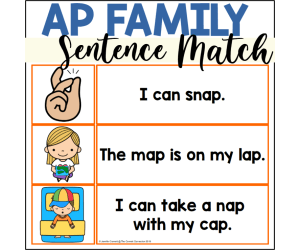
AP Word Family Sentence Matching
ELA, Language Development, Phonics, Reading Comprehension, Reading, Preschool, Grade 1, Activities, Centers
With this AP words CVC word sentence and picture matching literacy center , students can practice reading comprehension and reading fluency. This reading comprehension activity uses decodable sentences, with words that follow the CVC spelling rule, as well as bold, easy to recognize pictures to match or sort. This AP Word Family packet includes: This resource includes as set of sentence cards that focus on AP words and early sight words. Each sentence has a colorful picture to match the sentence. How to Use this Resource: In this literacy activity, students will read each sentence on each card, and then they will match the sentence to the correct image. This activity will make a great literacy station for kindergartners and first graders who are learning CVC words and reading comprehension. This literacy activity allows students to receive tons of practice reading AP words in the context of sentences. These simple sentence and picture matching activity will allow students to have a tactile way to practice reading comprehension that focuses on words in the AP word family. They will stay engaged and have fun as they complete this literacy activity. Students can work independently or with a partner to complete this literacy center . Alternative Ways to Use this Resource: The teacher can place magnets on the back of each picture card and sentence card, and then use a cookie tray to sort the cards. The magnets will keep the cards from sliding around. The teacher can place the sentence strips in a file folder and place hook and loop fasteners to the picture cards and the file folders to make file folder sorting activity. Where to Use: Morning Tubs or Baskets - These cards can be placed in a morning bin for students to complete as they wait for their classmates to arrive to class. Literacy Center - Place the cards in a literacy center for students to complete alone or with a partner. Small Group Instruction - Teachers can pull aside small groups of students to complete this activity. Matching Game - Students can match pictures to sentences. Skills Assessed: This deck allows students to practice reading CVC words from the AP word family as well as testing students' reading comprehension skills with simple sentences. This reading comprehension activity is low prep. Teacher simply need to print the activity, cut apart the cards and laminate, if desired, for a reusable center . The pieces can be stored inside a pencil box or bag for easy set up, clean up, and storage.
Author The Connett Connection
Tags Sentence Reading Comprehension, Reading Comprehension, Literacy Center, CVC Words, Kindergarten Literacy, Literacy Station, Phonics Station, AP Words, AP Word Family
Speaking and Listening Would You Rather Set 2
ELA, Reading, Reading Comprehension, Language Development, Vocabulary, Not Grade Specific, Activities
Speaking and Listening Would You Rather Set 2 is the first of 5 sets to engage your students in this game. Speaking and listening are important skills to practice with students. Many students have a hard time sharing their ideas out loud. Would You Rather questions are a great way to get all students involved. You could do just speaking and listening where you put the questions up and students share their answers. You could print out the questions and have students answer in groups. Or, you could have students write answers in complete sentences and then share. Would You Rather questions not only allow students to communicate with each other, it's a great opportunity for students to see who might have common interests. If students complete these in a group setting, there could be some great discussions that students have based on who has the same answers. If you choose to have students stand and give their answer in front of the class, you could have them just say their answer, or you could encourage them to give reasons why. Having them write the sentence first will also help them clearly state their answer.
Author Life with 5 Boys
Tags Speaking And Listening, Speaking And Listening Activities, Would You Rather, Teacher Would You Rather Questions, Therapy Would You Rather Questions, Would You Rather Questions For High School Students Pdf, Would You Rather Questions Middle School Pdf

The Emperor’s New Clothes Foldable Mini Book Grade 1 2 3 READING
ELA, Reading, Reading Comprehension, Writing, Handwriting, Grade 1, 2, 3, Activities
Support your young and beginning readers with this highly engaging The Emperor’s New Clothes Foldable Mini Book Set. Designed for Grade 1, Grade 2, Grade 3 primary students, homeschoolers, and, EFL / ESL learners, this resource includes different versions of foldable mini-books that can be used for different activities in the classroom or learning environment. Specifically, this resource contains the following: 1. Colored Mini-Book 2. Black and White Mini-Book with Story Tracing Activities 3. Picture-Fill Mini-Book for Sequencing Test or Exercise 4. Black and White Mini-Book for Story Re-Tell and Writing Exercise 5. Blank Mini-Book Pages for Story Re-Tell, Writing, and Drawing Exercises 6. Sample Lesson Plan The downloadable file contains different versions for printing preferences, specifically legal, letter and A4 paper sizes. There is also an instruction page for how to put together the foldable mini-book. This “The Emperor’s New Clothes Foldable Mini Book” is created to anchor learners’ reading comprehension skills as well as guide them in sequencing events; help them develop their re-telling skills; encourage creativity and cognitive skills; support their motor skills through handwriting and drawing exercises in just one resource! This set is perfect accompanying activity for reading comprehension lessons, reading exercises and projects or just an enjoyable activity for your little readers!
Author It's Teacher L
Tags Emperors New Clothes, Reading Comprehension, Foldable, Mini Book, Reading Strategies

Phonics eBook Story for Short A Vowel Sound + Spelling Activities and Word Lists
ELA, Reading, Reading Comprehension, Language Development, Phonics, Spelling, Vocabulary, Grade 1, 2, 3, Activities
Phonics eBook Story for Short A Vowel Sound & Spelling Activities and Word Lists An ideal tool for traditional educators and homeschooling alike, merging systematic phonics, captivating storytelling, and comprehensive spelling practice into a potent resource. Primarily catered to grade 1-3 students, it underlines the vital role of phonemic awareness and decoding skills in language arts. The narrative revolves around Captain Ant's fears about possible food shortage amongst his colony. Learners embark on an enthralling journey alongside characters Angie and Alex as they devise a plan to alleviate their colony's concerns while seamlessly integrating spelling drills into the action. Using a refreshing presentation style this eBook employs contrasting green letters against black text specifically highlighting Short A sounds within words. This helps learners easily recognize these sounds boosting their comprehension of letter-sound correspondence. Tagged alongside the main story are numerous activities designed to provide a comprehensive learning experience beyond just the narratives. Included also are over one hundred instances of short 'a' spelling words providing our young learners coverage across varied examples in addition to mechanisms intended to reinforce understanding while challenging tricky words set up an extra layer of difficulty. The inclusion does not stop at texts; there are reading comprehension exercises meant to assess student’s understanding upon plot details coupled with homograph activities that integrate well regardless if you're teaching as an individual or working with team settings. Versions: US vs UK/Australian English Covered No matter where you're located at on the globe - two separate versions catering differently for US English against UK/Australian English exists within this wealth of vocabulary knowledge ensuring your unique needs aren’t overlooked - articulately defining such variants as crawfish/yabbies - coloring /colouring - theater/theatre Display and Print Options The resource can be viewed on screen or printed to appeal to your specific mode of delivery – this includes both single-page display and booklet formats for even wider flexibility! In summary, the Phonics eBook Story redefines traditional learning methods by ably combining storytelling with spelling and phonics instruction, creating a more interactive, memorable learning experience.
Author Clever Speller
Tags Phonics, Spelling Activities, Word Lists, Short A Vowel Sound, Storytelling
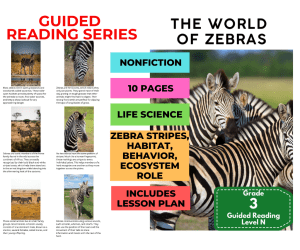
Guided Reading Level N - World of Zebras (with Lesson Plan)
ELA, Resources for Teachers, Reading Comprehension, Reading, Pre-Reading, Language Development, Animals, Life Sciences, Science, Vocabulary, Grade 2, 3, 4, Worksheets & Printables, Worksheets, Teacher Tools, Centers, Activities, Literacy Readers, Quizzes, Quizzes and Tests, Assessments
This Guided Reading Book - World of Zebras (Level N) with lesson plan includes: Guided Reading Color Label (front cover x1) This is a quick way to match the book’s demands to what students can generally handle.. The overall goal is to use the level/color to pick books for several smaller groups. To qualify for a certain level, a student is expected to read a book from that level with about 90–94% accuracy. If a student is consistently accurate and understands, move up a level. If the student is struggling at that level, drop down and add more support. Each student will improve at completely different rates, but it is generally one of the best ways to check progress across the class. DOWNLOAD THE CATALOG TO VIEW ALL GUIDED READING BOOKS AVAILABLE (SORTED LEVELS A-Z) Pre-Reading Question (x1) Teacher asks the prompt aloud, can be while showing the cover or first page. Students share what they already know, or make educated guesses from the cover. Prompt them to use the target vocabulary. Write some of their responses on the board to look back at during the reading. Vocabulary Words (x5) Introduce the five words, best doing it one at a time. Start by saying it, while students repeat and then see if anyone knows what it means before reading further. Read through the meaning and try to briefly connect each word to a picture or gesture so it’s meaningful. Ask students to flip through the book pages and point to where they see each of the vocabulary words. While reading the book pause upon coming across one of the vocab words or read the sentence twice to make sure students understand the word has appeared. Optional: Ask students to raise hands whenever they see/hear one of the new words. Guided Reading Pages (x10) Check the book snapshot (below) for: primary topic - do you need to prep extra reading or intro materials on this? what is taught best - decide on 1-2 bullets to focus on, use the prompt or words provided here for best results. learning goals - what you are checking for students to be able to do after the session, elicit answers using prompts or words provided. key vocabulary (see section above). questions overview - so you know what is coming up and if you need to prep extra materials to assist understanding. Run the lesson You may have already looked at a few of the pages together, but you can show them some of the pictures again first to set meaning. Depending on how much time you have and how familiar your students are with guided reading class, you may want to read the book aloud first with the group first. Students whisper or partner read, while you listen in. If time, do it as a group, one student reading a page each. Use the guided page’s prompts to coach: “Check the picture / does it make sense?” “Point under the words / try the first sound” “Reread the sentence smoothly”. Try to focus more on one student per session (rotating every time), so you can work out if they are ready to move up or need to move down a level. Comprehension Questions (back cover x3) This is your way to check that students didn’t just say the words, but actually understood the text. First, let students answer by pointing to the page/picture and saying a short sentence. After any answer, follow with: “Show me where you found that in the text.” In bigger groups, have partners answer first (10–20 seconds), then call on 2–3 students to share. Differentiation tips: Emerging speakers/struggling readers: oral + pointing On-level: oral in a full sentence Higher: one written sentence or draw + label Book Snapshot Title: The World of Zebras Genre: Nonfiction (informational text) Subject: Life Science / Reading (Informational Text) Primary Topic: Zebra stripes, habitat, behavior, and ecosystem role Estimated Guided Reading Level (A–Z): N What This Book Teaches Best Animal adaptations for survival: Zebras’ black-and-white stripes help them blend into the “shimmering heat” and can create a “visual blur” when predators are near. Animal identification and social behavior: Each zebra’s stripe pattern is unique “like a human fingerprint,” helping herd members recognize one another. Habitats and needs: Zebras live in open grasslands and woodlands called savannas, where they can roam, find water, and watch for danger. Ecosystems and food chains: As plant-eaters, zebras graze tough grasses and help keep grasslands healthy, supporting other species. Life cycles and migration: The text explains foals (baby zebras) and describes the Great Migration in search of water and green pastures. Learning Goals Students will describe where zebras live and what that habitat provides for them. Students will explain how zebra stripes can help zebras in different situations described in the text. Students will identify what zebras eat and describe how their teeth help them graze. Students will describe how zebras live in groups and name the members of a harem listed in the book. Students will retell how zebras respond when a predator is nearby, using details from the text. Students will explain why zebras are important to grasslands, based on the ecosystem details provided. Key Vocabulary From the Text iconic — well-known and easy to recognize. savanna — open grassland with a few trees. herbivores — animals that eat only plants. stallion — an adult male in the zebra family group. ecosystem — living things in a place and how they relate. Discussion Prompts Pre-reading question: How do you think a zebra’s stripes could help it stay safe? Comprehension questions: What does the text say is special about each zebra’s pattern of stripes? Comprehension questions: According to the text, what might zebras do when a predator like a lion or hyena is nearby? Comprehension questions: Why does the text say zebras are important for keeping grasslands healthy? Printing Tips 1. Best Printing Method (Recommended) “Booklet” Printing (Best if Available) If your printer or PDF viewer supports Booklet Printing , use this. Settings to use: Print mode: Booklet Paper size: Letter or A4 (either works) Orientation: Landscape Print on both sides: Yes Flip on: Short edge Scaling: Fit to printable area Booklet subset: First test: Front sides only Then: Back sides only This will automatically: Pair pages correctly Put the cover on the outside Align everything for folding After printing, fold in half and staple along the spine . 2. If “Booklet” Printing Is NOT Available You can still print this correctly with manual duplex printing . Step-by-step: Open the PDF. Choose Print . Set: Orientation: Landscape Pages per sheet: 1 Print on both sides: Yes Flip on: Short edge Print all pages . Because each PDF page already contains two facing book pages, the result will still fold cleanly into a book. Thousands of Cored Education products are included with your TeachSimple membership. Download links and encyclopedia index available here.
Author Cored Education
Rating
Tags Reading Comprehension, Reading Passages, Reading, Guided Reading, Guided Reading Lesson Plan, Guided Reading Activity, Pre-reading, Science Lesson Plans, Life Science, Animals
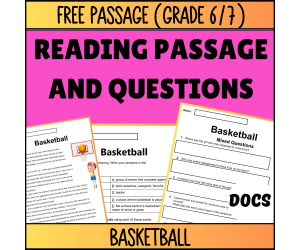
Reading Comprehension Fiction Set 1 Sample: Basketball (Google Docs)
ELA, Reading, Common Core, Reading Comprehension, ESL, Language Development, Vocabulary, Writing, Children’s Literature, Literature, Grade 6, 7, Worksheets & Printables, Worksheets, Centers, Activities, Writing Prompts, Assessments, Teacher Tools, Tests, Quizzes and Tests
Reading Comprehension Passages Fiction Set 1 Overview Reading comprehension lessons, especially written for Grade 6-7, providing the chance to read interesting and engaging passages. Each lesson has a mix of questions to check understanding, a vocabulary or spelling activity to help remember key language introduced, and a writing exercise. Full answer keys are provided. Passage Included 2.Basketball: Evie shows her newfound basketball skills. Google Docs Version This is the Google Docs editable and fillable version. This download is available in GOOGLE Docs, GOOGLE Forms, GOOGLE Slides. PDF, PPT, WORD. FULL CATALOG OF DOWNLOAD LINKS HERE Grade 6/7 Links Fiction Set 1 Google Docs Google Forms Google Slides PDF PPT Word Guided Reading Materials Fiction Set 2 Google Docs Google Forms Google Slides PDF PPT Word Guided Reading Materials Nonfiction Set 1 Google Docs Google Forms Google Slides PDF PPT Word Guided Reading Materials Nonfiction Set 2 Google Docs Google Forms Google Slides PDF PPT Word Guided Reading Materials Reading Passages Overview Each passage is especially written for Grade 6/7 students, including key vocabulary required for this age group. Topics are varied and are accompanied by colorful graphics. Topics are meant to educate, yet entertain the modern student. The majority of these short stories contain an important message - a way of developing these young learners further. Mixed Questions The mixed questions section of each lesson includes a variation of five to six comprehension, vocabulary and Math questions. In addition, key reading strategies are frequently covered including cause & effect, summarizing, compare & contrast and making conclusions. Mixed questions require a written response (no MCQ's), full answers and example responses appear at the end of the lesson. Spelling & Vocab Each reading passage contains a variety of words and phrases designed for Grade 6/7 students. Spelling and vocab activities provide the opportunity to build fluency with these words. Activities provide clues to help assist students. Vocabulary activities include extra questions where students must write a synonym, an antonym or a sentence using a certain word. Writing Prompts Writing prompts are designed to continue the theme or lessons learned in the story. Students are persuaded to write in a variety of ways and each prompt includes several cues to help. The main focus in this product, is the student. Prompts will require the student to relate to past experiences and encourage them to discuss feelings and ways to improve. Full Answer Keys Full answer keys and sample responses are provided so no matter how busy you are, you know you're covered! Mixed question answers provide evidence from the text, Math questions contain the relevant workings. Answers are designed for use by the teacher, but also suitable as a handout to the student. For similar downloads and other frees, do check out Cored Group on TeachSimple.
Author Cored Education
Tags Elementary, Reading, Comprehension, Vocabulary, Answers, Ccss, Common Core, Spelling, Writing, Digital Centers

Groundhog Day Reading Comprehension Activities Print and Digital
ELA, Holiday & Seasonal, Reading, Reading Comprehension, Grade 3, 4, 5, 6, Activities
Groundhog Day Reading Comprehension Activities: Print and Digital The Groundhog Day Reading Comprehension Activities Print and Digital is a versatile teaching resource, ideal for educators seeking to boost student engagement while teaching about Groundhog Day. This resource consists of both printable activities and digital content, making it adaptable to a variety of instructional settings. This all-encompassing toolkit includes: 32 informative Fact Cards Four Recording Sheets An Answer Key spanned across four pages Twenty Writing Templates featuring Groundhog Day visuals A Display Banner reading 'Happy Groundhog Day' An additional 67 Boom Digital Cards with multiple-choice questions. Scavenger Hunt Activity : This activity makes use of the fact cards by placing them around the classroom; students are subsequently tasked with finding each card's answer on their corresponding recording sheets. This can function as a solo activity or as a collaborative group exercise. A follow-up class discussion based on these fact cards not only helps peer interaction but also serves as an excellent opportunity to address queries and discuss interesting facts about Groundhog Day unearthed during the scavenger hunt. Fosters Creativity: To further enhance learning outcomes, students can jot down two to three intriguing facts they discovered during this activity onto one of many themed writing templates included in this toolkit. Digital Boom Cards: If you're looking forward to integrating technology into classroom instruction, you will find value in implementing 67 digital Boom Cards designed using Flow Magic™,. These cards engage more tech-savvy learners by communicating key facts in an audio-visual format accompanied by respective comprehension exercises. Suitable for grade levels ranging from Grade 3 through Grade 6 across Language Arts subjects, including Holidays such as Comprehension & Reading. Despite the Worksheets-based structure, it's useful across traditional classrooms, homeschooling scenarios, or even as additional remote homework to reinforce discussed topics. The Groundhog Day Reading Comprehension Activities Print and Digital is a comprehensive resource tailored to meet modern classroom needs.
Author Teach2Tell
Tags Groundhog Day, Reading Comprehension, Print And Digital, Fact Cards, Writing Templates
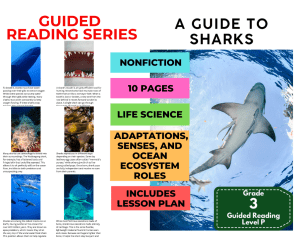
Guided Reading Level P - A Guide to Sharks (with Lesson Plan)
ELA, Resources for Teachers, Reading Comprehension, Reading, Pre-Reading, Language Development, Animals, Life Sciences, Science, Vocabulary, Grade 2, 3, 4, Worksheets & Printables, Worksheets, Teacher Tools, Centers, Activities, Literacy Readers, Quizzes, Quizzes and Tests, Assessments
This Guided Reading Book - A Guide to Sharks (Level P) with lesson plan includes: Guided Reading Color Label (front cover x1) This is a quick way to match the book’s demands to what students can generally handle.. The overall goal is to use the level/color to pick books for several smaller groups. To qualify for a certain level, a student is expected to read a book from that level with about 90–94% accuracy. If a student is consistently accurate and understands, move up a level. If the student is struggling at that level, drop down and add more support. Each student will improve at completely different rates, but it is generally one of the best ways to check progress across the class. DOWNLOAD THE CATALOG TO VIEW ALL GUIDED READING BOOKS AVAILABLE (SORTED LEVELS A-Z) Pre-Reading Question (x1) Teacher asks the prompt aloud, can be while showing the cover or first page. Students share what they already know, or make educated guesses from the cover. Prompt them to use the target vocabulary. Write some of their responses on the board to look back at during the reading. Vocabulary Words (x5) Introduce the five words, best doing it one at a time. Start by saying it, while students repeat and then see if anyone knows what it means before reading further. Read through the meaning and try to briefly connect each word to a picture or gesture so it’s meaningful. Ask students to flip through the book pages and point to where they see each of the vocabulary words. While reading the book pause upon coming across one of the vocab words or read the sentence twice to make sure students understand the word has appeared. Optional: Ask students to raise hands whenever they see/hear one of the new words. Guided Reading Pages (x10) Check the book snapshot (below) for: primary topic - do you need to prep extra reading or intro materials on this? what is taught best - decide on 1-2 bullets to focus on, use the prompt or words provided here for best results. learning goals - what you are checking for students to be able to do after the session, elicit answers using prompts or words provided. key vocabulary (see section above). questions overview - so you know what is coming up and if you need to prep extra materials to assist understanding. Run the lesson You may have already looked at a few of the pages together, but you can show them some of the pictures again first to set meaning. Depending on how much time you have and how familiar your students are with guided reading class, you may want to read the book aloud first with the group first. Students whisper or partner read, while you listen in. If time, do it as a group, one student reading a page each. Use the guided page’s prompts to coach: “Check the picture / does it make sense?” “Point under the words / try the first sound” “Reread the sentence smoothly”. Try to focus more on one student per session (rotating every time), so you can work out if they are ready to move up or need to move down a level. Comprehension Questions (back cover x3) This is your way to check that students didn’t just say the words, but actually understood the text. First, let students answer by pointing to the page/picture and saying a short sentence. After any answer, follow with: “Show me where you found that in the text.” In bigger groups, have partners answer first (10–20 seconds), then call on 2–3 students to share. Differentiation tips: Emerging speakers/struggling readers: oral + pointing On-level: oral in a full sentence Higher: one written sentence or draw + label Book Snapshot Title: A Guide to Sharks Genre: Nonfiction (informational text) Subject: Life Science / Reading (Informational Text) Primary Topic: Shark adaptations, senses, and ocean ecosystem roles Estimated Guided Reading Level (A–Z): P What This Book Teaches Best Food chains and ecosystem balance: Sharks are “apex predators” that help regulate marine animal populations, and the text explains what could happen “without sharks.” Body structure and movement: Sharks’ skeletons are made of cartilage, which helps them stay buoyant and turn quickly while swimming. How sharks breathe: The book explains gills, oxygen extraction, and why many sharks must keep swimming to breathe. Feeding and hunting adaptations: Sharks’ teeth work like a “conveyor belt,” replacing lost or broken teeth. Special senses and survival strategies: The text describes electroreception (Ampullae of Lorenzini), camouflage (Wobbegong shark), and different ways sharks reproduce. Learning Goals Students will describe what it means for sharks to be apex predators in an underwater food chain. Students will explain how cartilage helps sharks stay buoyant and move in water. Students will explain why many sharks must swim constantly in order to breathe. Students will describe how a shark’s teeth are replaced when one is lost or broken. Students will describe electroreception and how it helps sharks find prey hiding under sand. Students will explain one way sharks help keep ocean fish populations and the marine ecosystem healthy. Key Vocabulary From the Text apex — the very top or highest level. cartilage — flexible body material that is not bone. buoyant — able to float or stay up in water. electroreception — sensing tiny electrical signals in the water. ecosystem — living things and how they interact in a place. Discussion Prompts Pre-reading question: What body features might help a shark survive in the ocean? Comprehension questions: According to the text, why do many sharks need to keep swimming in order to breathe? Comprehension questions: What does the text say happens when a shark loses or breaks a tooth? Comprehension questions: How does the text explain that sharks help keep the ocean’s fish populations and ecosystem healthy? Printing Tips 1. Best Printing Method (Recommended) “Booklet” Printing (Best if Available) If your printer or PDF viewer supports Booklet Printing , use this. Settings to use: Print mode: Booklet Paper size: Letter or A4 (either works) Orientation: Landscape Print on both sides: Yes Flip on: Short edge Scaling: Fit to printable area Booklet subset: First test: Front sides only Then: Back sides only This will automatically: Pair pages correctly Put the cover on the outside Align everything for folding After printing, fold in half and staple along the spine . 2. If “Booklet” Printing Is NOT Available You can still print this correctly with manual duplex printing . Step-by-step: Open the PDF. Choose Print . Set: Orientation: Landscape Pages per sheet: 1 Print on both sides: Yes Flip on: Short edge Print all pages . Because each PDF page already contains two facing book pages, the result will still fold cleanly into a book. Thousands of Cored Education products are included with your TeachSimple membership. Download links and encyclopedia index available here.
Author Cored Education
Rating
Tags Reading Comprehension, Reading Passages, Reading, Guided Reading, Guided Reading Lesson Plan, Guided Reading Activity, Pre-reading, Science Lesson Plans, Life Science, Animals

The Jolly Barnyard Activity Guide: Animal Food
ELA, Reading, Reading Comprehension, Kindergarten, Preschool, Grade 1, Activities
The Jolly Barnyard Activity Guide: Animal Food An engaging teaching resource for preschool, kindergarten, and grade 1 students under Language Arts. The guide provides a balanced blend of indoor and interactive activities to enhance a child's understanding of the dietary habits of farm animals. A unique feature about this activity guide is its direct connection with "The Jolly Barnyard", facilitating meaningful discussions centered around the food choices made by different farm animals in the story. It offers substantial opportunities to integrate Farmer Brown’s farm into schooling environments. This seven-page PDF contains carefully compiled discussion questions aimed to gauge students' recollection and comprehension abilities. They can be used effectively in whole class sessions or smaller study groups; they make relevant homework assignments as well. Teachers will find clear guidelines that help elaborate more on the diets consumed by each animal featured in the narrative. These can then be transformed into lively group sessions, subsequently reinforcing key learning themes. A review game has been thoughtfully woven into this material to ensure playful yet challenging engagement for learners while applying their newfound knowledge about various farm creatures' feeding habits from their favorite barnyard story! An appealing worksheet is included that tests student's grasp over subject matter through hands-on practice. Finally, it encompasses a delightful sticker-scene craft activity where students get to create their vibrant Farm scene using stickers supplied within the pack. The Jolly Barnyard Activity Guide: Animal Food excels in blending educational intent with recreational elements which ensures sustained interest from young learners throughout teaching sessions. Note - This resource comes as flexible digital download (PDF) ready for printing. An effective bridge connecting a child's love for stories with the more educational aspects of teaching, making it a cherished choice among educators.
Author More Than Just Reading
Tags Activity Guide, Animal Food, Comprehension, Discussion Questions, Review Game
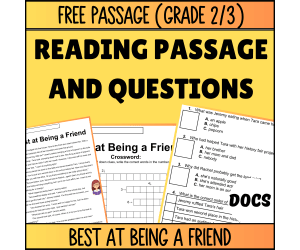
Reading Comprehension Fiction Set 5 Sample Best at Being a Friend Docs
ELA, Reading, Common Core, Reading Comprehension, ESL, Language Development, Vocabulary, Children’s Literature, Literature, Writing, Grade 2, 3, Worksheets & Printables, Worksheets, Writing Prompts, Centers, Activities, Assessments, Teacher Tools, Tests, Quizzes and Tests
Reading Comprehension Passages Fiction Set 5 Sample Overview Fascinating reading comprehension passages, each with an array of activities included. Stories are written for the modern classroom and topics are designed to promote enthusiasm from each student. Each lesson contains a mixed questions section to check understanding, a vocabulary or spelling activity to help remember key language introduced, and a writing exercise. Full answer keys are provided. For a more detailed overview, check the section under the links at the bottom of this description. Passage Included 5.Best at Being a Friend: Second place again, but there is one thing Tara is best at. Docs Version This is the Docs editable and fillable version. This download is available in GOOGLE Docs, GOOGLE Forms, GOOGLE Slides. PDF, PPT, WORD. FULL CATALOG OF DOWNLOAD LINKS HERE Grade 2/3 Links Fiction Set 1 - Nature Google Docs Google Forms Google Slides PDF PPT Word Guided Reading Materials Fiction Set 2 - Animals Google Docs Google Forms Google Slides PDF PPT Word Guided Reading Materials Fiction Set 3 - Food Google Docs Google Forms Google Slides PDF PPT Word Guided Reading Materials Fiction Set 4 - School Google Docs Google Forms Google Slides PDF PPT Word Guided Reading Materials Fiction Set 5 - Friends Google Docs Google Forms Google Slides PDF PPT Word Guided Reading Materials Fiction Set 6 - Family Google Docs Google Forms Google Slides PDF PPT Word Guided Reading Materials Fiction Set 7 - Sports Google Docs Google Forms Google Slides PDF PPT Word Guided Reading Materials Nonfiction Set 1 - Technology Google Docs Google Forms Google Slides PDF PPT Word Guided Reading Materials Nonfiction Set 2 - Nutrition Google Docs Google Forms Google Slides PDF PPT Word Guided Reading Materials Nonfiction Set 3 - Animals Google Docs Google Forms Google Slides PDF PPT Word Guided Reading Materials Reading Passages Overview Each passage is especially written for Grade 2-3 students, including key vocabulary required for this age group. Topics are varied and are accompanied by colorful graphics. Topics are meant to educate, yet entertain the modern student. These passages are perfect for the modern classroom. Whereas textbooks can become outdated in no time, any changes to technology or the world will result in updates to this product. Mixed Questions The mixed questions section of each lesson includes a variation of fivecomprehension, vocabulary and math questions. In addition, key reading strategies are frequently covered including cause & effect, summarizing, compare & contrast and making conclusions. Three of the questions will be MCQs and two will require a written response of some kind. Full answers and example responses appear at the end of the lesson. Spelling & Vocab Each reading passage contains a variety of words and phrases designed for Grade 2-3 students. Spelling and vocab activities provide the opportunity to build fluency with these words. As it can become quite mundane doing the same activities over and over, each lesson in a set will contain a different spelling and vocab activity . Writing Prompts Writing prompts are designed to continue the theme or lessons learned in the story. Students are persuaded to write in a variety of ways and each prompt includes several cues to help. As with the spelling/vocab section, writing prompts will vary. This includes research pieces, reading responses, poetry and creative writing prompts. Full Answer Keys Full answer keys and sample responses are provided so no matter how busy you are, you know you're covered! Mixed question answers provide evidence from the text, math questions contain the relevant workings. Answers are designed for use by the teacher, but also suitable as a handout to the student. Additional File One lesson will have an additional file. This is something fun to extend the lesson with. For similar downloads and other frees, do check out Cored Group on TeachSimple.
Author Cored Education
Tags Elementary, Reading, Comprehension, Vocabulary, Answers, Ccss, Common Core, Spelling, Writing, Digital Centers
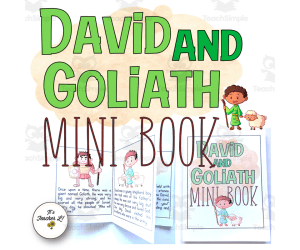
David and Goliath Bible Story Foldable Mini Book Grade 1 2 3 ELA READI
ELA, Reading, Reading Comprehension, Writing, Grade 1, 2, 3, Activities
Inspire your young learners to love reading with this classic Bible story “David And Goliath Foldable Mini Book” packed with meaningful activities. Created for Grade 1, 2 and 3 students, homeschoolers and EFL / ESL learners, this resource is designed with the intentions of teaching valuable lessons and develop students’ English language skills through meaningful activities presented in 5 different foldable mini books: 1. Colored Mini-Book for story telling time and reading comprehension exercises 2. Black and White Mini-Book with Story Tracing Activities 3. Picture-Fill Mini-Book for Sequencing Test or Exercise 4. Black and White Mini-Book for Story Re-Tell and Writing Exercise 5. Blank Mini-Book Pages for Story Re-Tell, Writing, and Drawing Exercises This resource is set can be used as supplemental activities for reading class, fun project and assessment tools, teacher-emergency and subplan resource and so much more! “David And Goliath Foldable Mini Book” is not only a purposeful material to have but it’s also engaging and truly fun experience for your students!
Author It's Teacher L
Tags Bible Story, David And Goliath, Reading Comprehension, ELA Reading, Mini Book, Foldable Mini Book
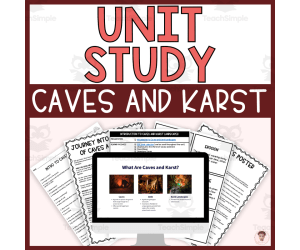
Caves and Karst Unit Study
Creative Arts, Art, Social Studies, ELA, Reading, Reading Comprehension, Grammar, Language Development, Vocabulary, Spelling, Writing, Grade 3, 4, 5, Activities, Crafts, Teacher Tools, Lesson Plans, Presentations, Graphic Organizers, Projects, Assessments, Worksheets & Printables, Worksheets
The Caves and Karst Unit Study This is an engaging, comprehensive, and low preparation teaching resource that explores the fascinating world of caves and karst. It is a valuable resource for educators focusing on grades 3 to 5, as well as homeschooling guardians. Main Topics Covered Introductory concepts about caves and karst formations Detailed insight into speleothems and cave forms Landscape found in karsts Particularly captivating information about cave ecosystems habitat adaptations. The unit study wraps up with an exploration of cave conservation efforts highlighting their importance. Tailored Approach to Learning Styles Each lesson includes: Visual-auditory online presentations , alongside curated videos. Reading passages: To cater for those who learn best through perusing textual information. Upon consideration for student handwriting skills levels, options are made available within note-taking pages with either primary lines, regular lines or no lines. Note-taking pages & Graphic organizers: To keep track of acquired knowledge across every topic covered. Hands-on activities are incorporated into every lesson plan providing kinesthetic opportunities. Purposeful Assessment through Quizzes A tool that teachers or homeschoolers can use flexibly over days or weeks depending on pacing preference - quizzes filled with 15 multiple-choice questions per lesson – ideal in testing understanding at each stage. Cross-Curricular Subjects Integration The unit study covers: Art (emphasis on drawing, coloring & crafts) English Language Arts Geography and Geology Grammar, History, Reading, Science and Social Studies research work , Spelling . The Caves and Karst Unit Study: An interactive unit study that inspires young geologists' minds while encouraging the application of learned concepts through hands-on activities. The resource spans over 150 pages premium content in a downloadable file in PDF format. A truly comprehensive guide for both educators and homeschoolers.
Author Heather Huhman
Tags Caves, Karst Formations, Speleothems, Cave Ecosystems, Conservation Efforts

Iowa State Flipbook (Capital, Bird, Flower, Flag, Animal)
Creative Arts, Art, Social Studies, ELA, History, History: USA, Geography, Reading, Reading Comprehension, Grammar, Language Development, Spelling, Writing, Grade 2, 3, 4, Activities
Iowa State Flipbook (Capital, Bird, Flower, Flag, Animal) This instructional resource presents an engaging and hands-on approach to enlightening students about the state of Iowa and its important symbols. The Iowa State Flipbook is an exceptional tool for teachers in public schools or homeschool settings. It focuses on five cardinal state elements: The Capital city The official Bird species The unique State Flower Its Flag and recognized Animal. This aligns perfectly to a unit study on U.S. states where Iowa happens to be in focus or simply forming part of learning more extensively about Midwest or American history. "It prompts critical thinking skills as learners can research information through this platform." Printing & Design Options: Offering convenience with two printing options - one requiring cutting while another doesn't; meeting diverse user needs. There are also two design versions - complete with illustrations and without - offering flexibility that caters to various preferences. About The Flipbook: A package of four flipbooks total, Inclusive of 37 PDF pages, Includes instructions for easy assembly even within a short timeframe. ) This resource seamlessly integrates different disciplines Literacy: English Language Arts including comprehension skills development through reading passages alongside spelling exercises tied into writing tasks. Literacy: Geography supplemented by analyses of maps. Science: Discussions related to state flowers and birds. Social Studies: Primarily concentrates on US History. A different perspective wouldn't be complete without differentiated Instruction. Resources are curated according to learner types Incorporating visual aids such as videos, Reading materials for written word learners, Affording interactive activities for kinesthetic learners, and even Research report pages bolstering skills development in writing. You'll certainly appreciate the low prep feature this product offers along with its wider scope of American history. It's a valuable addition to your instructional resources.
Author Heather Huhman
Tags Iowa State, Flipbook, Symbols, Cross-curricular Learning, Visual Aids, Iowas State Animal, Iowa's State Animal, What Is Iowa's State Bird, What Is Iowa's State Animal, Iowas State Bird, Iowas State Flower, Iowa's State Bird

Speaking and Listening Would You Rather Set 1
ELA, Reading, Reading Comprehension, Language Development, Vocabulary, Not Grade Specific, Activities
Speaking and Listening Would You Rather Set 1 is the first of 5 sets to engage your students in this game. Speaking and listening are important skills to practice with students. Many students have a hard time sharing their ideas out loud. Would You Rather questions are a great way to get all students involved. You could do just speaking and listening where you put the questions up and students share their answers. You could print out the questions and have students answer in groups. Or, you could have students write answers in complete sentences and then share. Would You Rather questions not only allow students to communicate with each other, it's a great opportunity for students to see who might have common interests. If students complete these in a group setting, there could be some great discussions that students have based on who has the same answers. If you choose to have students stand and give their answer in front of the class, you could have them just say their answer, or you could encourage them to give reasons why. Having them write the sentence first will also help them clearly state their answer.
Author Life with 5 Boys
Tags Speaking And Listening, Speaking And Listening Activities, Would You Rather Activities