2,816 products added recently
Social Studies Projects
Enrich your social studies curriculum with projects that bring history and culture to life. This collection includes community projects, cultural explorations, and historical reenactments. By integrating these activities, you can foster empathy, critical thinking, and a deeper understanding of the world.
Julius Lothar Meyer – A Lesser-Known Pioneer of the Periodic Table
Life Sciences, Science, STEM, Social Studies, Biographies, Inventors, Basic Science, Physics, Chemistry, Technology, Grade 6, 7, 8, 9, 10, 11, Worksheets, Worksheets & Printables, Quizzes, Quizzes and Tests, Teacher Tools, Projects, Activities
Julius Lothar Meyer – A Lesser-Known Pioneer of the Periodic Table Comprehension Activities A flexible science resource for grades 7–10 (PDF + H5P) 🧪📖 A printable and digital resource science and cross-curricular teaching 🧪🧠 This resource introduces students to Julius Lothar Meyer, a chemist who developed one of the earliest versions of the periodic table—independently of Mendeleev. While Mendeleev is often more widely recognized, Meyer’s work also played a crucial role in organizing chemical elements and identifying patterns that shaped how we understand atomic structure today. The material offers a short, readable text that gives students an overview of Meyer’s scientific contributions. It’s supported by a set of structured activities that encourage reflection and comprehension. The format is ideal for both subject-specific lessons and non-specialist substitute teaching. What’s included: Informational text about Julius Lothar Meyer Profile worksheet for summarizing key facts Quiz questions with a complete solution key Two optional follow-up tasks: – Students create their own questions – Peer exchange and answer activity File formats: – PDF (for print or digital use) – Editable DOCX (text only) – H5P version (interactive and text-based, no images) How it’s used in the classroom: This resource fits well into a chemistry unit on the history of the periodic table, scientific discovery, or atomic theory. I’ve also used it as an extra reading task for early finishers or as a way to bring biographical context into more abstract content. The H5P version is a helpful option for students working online or independently. It supports self-checking and can be easily uploaded to learning platforms. With no extra prep required, the lesson can be used right away—whether printed, projected, or assigned digitally. A thoughtful way to highlight a scientist whose name isn’t always in the spotlight—but whose impact on chemistry is worth exploring. Have fun exploring the world of science with your students! Warmly, Lernfitness Did You Know? I teach with a certified therapy dog, and together we focus on creating a positive and inspiring learning environment.
Author Lernfitness
Rating
Tags Science, Famous Scientists Lesson, H5P, Interactive Science Exercises, STEM, Scientists, Chemistry, Periodic Table, Julius Lothar Meyer, Mendeleev
Scientist Erasmus Darwin Fact Sheet, Quiz + Exercises | PDF + H5P
Life Sciences, Science, Biology, STEM, History: World, History, Social Studies, Nature & Plants, Animals, Biographies, Grade 7, 8, 9, 10, Worksheets, Worksheets & Printables, Quizzes, Quizzes and Tests, Teacher Tools, Projects, Activities
Discover Erasmus Darwin – The Thinker Who Inspired Evolutionary Ideas Did you know that Erasmus Darwin, the grandfather of Charles Darwin, was a brilliant scientist, physician, and poet? He was one of the first to suggest that living things change and adapt over time – ideas that later influenced the theory of evolution. Erasmus Darwin’s work combined science and imagination, making him a true pioneer of his time. This teaching resource introduces your grades 7–10 students to the fascinating life and contributions of Erasmus Darwin. Designed for a 45-minute lesson, it includes engaging content and creative tasks to make his revolutionary ideas come alive in the classroom. What’s Included: Concise Informational Text: A clear and engaging overview of Erasmus Darwin’s role in science. Fact Sheet Activity: Encourages students to organize knowledge and work creatively. Quiz with Solutions: Promotes fun, interactive learning and self-assessment. Additional Exercises: Students can create their own questions and collaborate in pairs to deepen their understanding. Flexible Formats: Includes a color and black-and-white printable PDF, as well as interactive H5P tasks for digital learning. Why You’ll Love This Resource: Time-Saving: Perfect for teachers who need a ready-to-go, well-structured lesson. Versatile Use: Ideal for biology, history of science, or cross-curricular lessons in English and science classes. Promotes Independence: Solutions are included, allowing students to check their work and explore the topic at their own pace. Interactive and Engaging: Tasks are designed to keep students actively involved while learning about Erasmus Darwin’s legacy. Whether you use it for a regular lesson, substitute teaching, or as part of a digital learning activity, this resource will make Erasmus Darwin’s contributions come alive for your students. Bring Erasmus Darwin’s fascinating world of science into your classroom and inspire your students to see history and science in a whole new light! Have fun exploring the world of science with your students! Warmly, Lernfitness Did You Know? I teach with a certified therapy dog, and together we focus on creating a positive and inspiring learning environment.
Author Lernfitness
Tags Science, Biology, Famous Scientists Lesson, H5P, Interactive Science Exercises, STEM, History, Scientists, Evolution, Darwin
Virtual Reality World History Tours - History Book
Social Studies, History, History: African, History: Ancient, History: Asian, History: British, History: Canada, History: Europe, History: World, History: USA, Grade 2, 3, 4, 5, 9, 10, 11, 12, Activities, Games, Projects, Word Walls, Classroom Decor, Teacher Tools, Assessments, Diagrams, Graphic Organizers, Lesson Plans
Uncover the most exhilarating educational experience in “Virtual Reality World History Tours - History” by Syed Hammad Rizvi, a full-fledged worldwide history textbook created specifically for deeply submerging middle school and high school-level students in the most excitingly unfolding narrative of human history. Boasting a total of 360 pages in ebook version, this exciting global history educational ebook embarks on a dynamically interactive journey spanning all eras, from the emergence of hominids right up until the age of globalization, global ecology, and the computer age. Featuring all major global histories such as Mesopotamia, Ancient Egypt, Greece, Romans, Byzantine Empire, the Islamic Golden Age, the Medieval History of Europe, the Renaissance, the Industrial Revolution, both World Wars, the Cold War, and many more, this global history textbook for 6th-12th grade levels uniquely combines traditional educational narratives with their most attractive Virtual Reality-inspired alternatives, all uniquely intermixed for maximizing overall educational effectiveness. Perfectly suited for all homeschool, supplemental, as well as independent educational utilization, this fully Search Engine Optimization-optimized educational resource textbook consists of multiple editions including, but not limited to, chapters like histories on African Kingdoms, History on Major Asian Empires, History on Ancient, Medieval, or Present American Civilizations, or worldwide. Why Parents/Schools Love It: Global Coverage: It covers history from prehistory to current events with a total of 152 chapters, which helps to offer a complete curriculum through a single book rather than through various textbooks. Engaging Virtual Reality Theme: Frames history as immersion “tours,” exciting students and bringing concrete events alive for them so that they may be the best learning experience for visual learners or homeschoolers. Inclusive and Diverse Perspectives: Emphasizes the overlooked history of African empires, indigenous cultures, the role of women, and non-European empires, which enhances cultural knowledge. Adaptable For Every Learning Environment: Due to its easy-to-read format, the book is suited for the classroom or individual studies and is easily accessible online through SEO search capabilities. Educational Value at an Affordable Cost: Affordable ebook formats offer high-quality content that corresponds to Common Core Standards at an unbeatable price for time-sensitive parents and educators. Target Classes/Students : On the basis of a comprehensive analysis of the material presented in the book and the level at which the treatment is/DD: Introductory chapters about prehistoric mankind and the first civilizations through more sophisticated topics such as totalitarianism, decolonization, human rights, and future historical perspectives. Grade 6-8 (MS - Middle School Level) The first few chapters covering the early topics such as the Stone Age, the Neolithic Revolution, the early civilizations (Mesopotamia, Egypt, or the Indus Valley civilization), as well as the classical empires, can all be understood in simple terms. Grades 9-12 (High School): The later sections would encompass more complex topics like imperialism, world wars, the Cold War, globalization, and more recent matters like terrorism and sustainability, as would an AP World History course for seniors in high school. The progressive structure of the book constructs knowledge over time and by theme in a way that allows for differentiated instruction within these grades. Copyright/Terms of Use: This Book was copyrighted by Syed Hammad Rizvi. This resource is for personal and single classroom use only. You may not alter, redistribute, or sell any part of this resource. In other words, you may not put it on the Internet where it could be publicly found and downloaded. This resource is for personal use in one classroom only. If you want to share this resource with colleagues, please purchase additional licenses from Teachsimple. Thank you for respecting these terms of use. This product is brought to you happy by Syed Hammad Rizvi
Author Creative Book Store
Rating
Tags WorldHistory, HistoryBook, VirtualReality, VRHistory, HistoryTours, MiddleSchoolHistory, HighSchoolHistory, HistoryCurriculum, EducationalEbook, StudentHistory
Dmitri Mendeleev – The Man Behind the Periodic Table
Life Sciences, Science, STEM, Social Studies, Biographies, Inventors, Basic Science, Physics, Chemistry, Technology, Grade 6, 7, 8, 9, 10, 11, Worksheets, Worksheets & Printables, Quizzes, Quizzes and Tests, Teacher Tools, Projects, Activities
Dmitri Mendeleev – The Man Behind the Periodic Table Comprehension Activities A short reading and comprehension activity for science classes (PDF + H5P) ⚗️📘 A printable and digital resource for grades 7–10 science and cross-curricular teaching 🧪🧠 This resource introduces students to Dmitri Mendeleev, the chemist who first organized the periodic table in a way that allowed scientists to predict the discovery of new elements. His approach wasn’t just about sorting known facts – it was about seeing patterns and thinking ahead. That story can really bring chemistry to life for students. The material includes a short, student-friendly informational text along with structured follow-up tasks. It works well in a chemistry unit focusing on the periodic table or chemical elements, but it can also be used in interdisciplinary contexts or as part of a history-of-science project. Included in this resource: A brief reading text about Mendeleev and his scientific achievements A worksheet to help students summarize key information in a profile format Quiz questions with an answer key Two optional extensions: – Students write their own questions about the text – Exchange questions with a partner and respond Formats: – PDF (print and digital use) – DOCX (editable, without images) – H5P (for digital platforms, text-only) How to use it in class: I’ve used this type of material both as an introduction to the periodic table and as a filler activity when students need something structured but manageable. The quiz can be done individually or discussed as a group, and the partner tasks work well for early finishers. The H5P version is especially helpful in digital classrooms or for homework: students can check their answers independently and work at their own pace. You don’t need much prep. Just print or upload the files and you’re ready to go. Have fun exploring the world of science with your students! Warmly, Lernfitness Did You Know? I teach with a certified therapy dog, and together we focus on creating a positive and inspiring learning environment.
Author Lernfitness
Rating
Tags Science, Famous Scientists Lesson, H5P, Interactive Science Exercises, STEM, Scientists, Chemistry, Dmitri Mendeleev, Periodic Table
Louis Pasteur – Understanding the Scientist Behind Vaccines and Germ
Life Sciences, Science, STEM, Social Studies, Biographies, Inventors, Basic Science, Physics, Chemistry, Technology, Grade 6, 7, 8, 9, 10, 11, Worksheets, Worksheets & Printables, Quizzes, Quizzes and Tests, Teacher Tools, Projects, Activities
Louis Pasteur – Understanding the Scientist Behind Vaccines and Germ Theory Comprehension Activities A short reading and activity set for secondary science lessons 🧫📖 (PDF + H5P) ⚗️📘 A printable and digital resource for grades 7–10 science and cross-curricular teaching 🧪🧠 This resource gives students an introduction to the life and work of Louis Pasteur – the chemist and microbiologist best known for developing vaccines, inventing pasteurization, and changing the way we understand germs and disease. His work connects naturally to many science units, especially those on health, microbiology, or scientific discovery. The material is straightforward and can be used across different contexts – whether in a focused biology or chemistry lesson, as part of a “scientist spotlight,” or even in non-specialist substitute teaching situations. What’s included: A clear and accessible informational text about Louis Pasteur A profile worksheet to help students summarize key facts Quiz questions to check comprehension (with full solutions) Two optional extension tasks: – Students write their own questions about the text – Exchange and answer peer questions in pairs File formats: – PDF for print and digital use – Editable DOCX (text only) – H5P (interactive version for digital platforms, without images) How it works in the classroom: Students start by reading the text, then complete the profile and quiz. The extension tasks are ideal for partner work, early finishers, or to stretch more confident learners. The layout is clear enough that students can work independently – even without strong background knowledge in science. The H5P version is great for online learning or blended classrooms, where students can complete the quiz and get immediate feedback. I’ve used this kind of format to support lessons on immune response, disease prevention, and historical breakthroughs in science. No complex setup required – just print, upload, or project, and you’re ready to go. Have fun exploring the world of science with your students! Warmly, Lernfitness Did You Know? I teach with a certified therapy dog, and together we focus on creating a positive and inspiring learning environment.
Author Lernfitness
Rating
Tags Science, Famous Scientists Lesson, H5P, Interactive Science Exercises, STEM, Scientists, Chemistry, Louis Pasteur, Vaccines, Germ
Scientist Robert Koch Fact Sheet, Quiz + Exercises | PDF + H5P
Life Sciences, Science, STEM, History: World, History, Social Studies, Biographies, Inventors, Basic Science, Human Body, Grade 6, 7, 8, 9, Worksheets, Worksheets & Printables, Quizzes, Quizzes and Tests, Teacher Tools, Projects, Activities
Discover Robert Koch – The Scientist Who Unlocked the Secrets of Infectious Diseases Did you know that Robert Koch was one of the first scientists to prove that bacteria cause diseases? His groundbreaking research on tuberculosis, anthrax, and cholera revolutionized medicine and helped develop life-saving treatments. Thanks to Koch’s work, doctors and scientists began to understand how infectious diseases spread—and, more importantly, how to stop them. This teaching resource introduces your grades 7–10 students to Koch’s incredible discoveries in a way that is engaging and easy to grasp. Designed for a 45-minute lesson, it includes clear explanations, interactive exercises, and creative tasks that bring Koch’s contributions to life in the classroom. What’s Included: Concise Informational Text: A clear and engaging overview of Robert Koch’s role in science. Fact Sheet Activity: Encourages students to organize knowledge and work creatively. Quiz with Solutions: Promotes fun, interactive learning and self-assessment. Additional Exercises: Students can create their own questions and collaborate in pairs to deepen their understanding. Flexible Formats: Includes a color and black-and-white printable PDF, as well as interactive H5P tasks for digital learning. Why You’ll Love This Resource: Time-Saving: Perfect for teachers who need a ready-to-go, well-structured lesson. Versatile Use: Ideal for biology, history of science, or cross-curricular lessons in English and science classes. Promotes Independence: Solutions are included, allowing students to check their work and explore the topic at their own pace. Interactive and Engaging: Tasks are designed to keep students actively involved while learning about Robert Koch’s legacy. Whether you use it for a regular lesson, substitute teaching, or as part of a digital learning activity, this resource will make Robert Koch’s contributions come alive for your students. Bring Robert Koch’s fascinating world of science into your classroom and inspire your students to see history and science in a whole new light! Have fun exploring the world of science with your students! Warmly, Lernfitness Did You Know? I teach with a certified therapy dog, and together we focus on creating a positive and inspiring learning environment.
Author Lernfitness
Tags Science, Biology, Famous Scientists Lesson, H5P, Interactive Science Exercises, STEM, History, Scientists, Robert Koch, Tuberculosis
Learning Numbers with Vikings – Creative Pennant Banner - Bunting
Holiday & Seasonal, Math, Early Math, Counting, Numbers, Montessori, Special Education Needs (SEN), Special Resources, History, Social Studies, Preschool, Kindergarten, Grade 1, 2, 3, Activities, Worksheets & Printables, Teacher Tools, Projects, Templates, Classroom Decor, Door Decor, Posters, Bulletin Boards, Banners
Learning Numbers with Vikings – Creative Pennant Chain Creative Pennant Banner - Bunting A playful number line for early math skills with a Viking theme ⚔️🔢 This printable number pennant chain helps students in early grades (K–2 or 1–3) practice counting from 0 to 20 – all within a fun and imaginative Viking setting. Each pennant features a number, a matching number of Viking-themed illustrations, and a rustic wood-frame design that gives the entire chain a cohesive and storybook-like look. What makes this material stand out is the thoughtful visual support: for every number, students see a set of hand-drawn Viking clipart items (e.g., shields, helmets, swords), clearly corresponding to the number shown. This helps learners make the connection between numerals and quantity – an essential early math skill. What’s included: Numbers 0–20 as printable pennants (PDF) Each number illustrated with a matching number of Viking-themed images Two versions: full-color and black-and-white for coloring activities Wooden-look frames and connectors to complete the Viking design Tips for classroom use included Ideas for classroom use: You can hang the pennant chain across the classroom as a number line or let students help assemble it during a math lesson. The black-and-white version works well for individual coloring tasks, giving students ownership over their learning space. Some teachers use it in math centers, others during Viking-themed project weeks. The visual repetition supports number sense and makes abstract numbers feel more concrete. I’ve found that students who usually struggle with counting feel more confident when they can match numbers to something they can see and count. The resource is easy to print and use, and no extra materials are needed beyond scissors and string. Laminating the pennants will help them last across multiple school years. This is more than just a decoration – it’s a tool for early math learning wrapped in a bit of adventure. 📍 Best wishes, Heike from @Lernfitness Did You Know? I teach with a certified therapy dog, and together we create a positive and welcoming learning environment. 🐶
Author Lernfitness
Rating
Tags Vikings, Pennant Banner, Bunting, Numbers, Number Words, Counting, Math, Early Math, Handdrawn, Banners
Sir James Dewar – A Look at the Scientist Behind the Vacuum Flask
Life Sciences, Science, STEM, Social Studies, Biographies, Inventors, Basic Science, Physics, Chemistry, Technology, Grade 6, 7, 8, 9, 10, 11, Worksheets, Worksheets & Printables, Quizzes, Quizzes and Tests, Teacher Tools, Projects, Activities
Sir James Dewar – A Look at the Scientist Behind the Vacuum Flask Comprehension Activities A short reading and task-based resource for grades 7–10 science classrooms (PDF + H5P) 🧪🌡️ A printable and digital resource for grades 7–10 science and cross-curricular teaching 🧪🧠 This resource introduces students to Sir James Dewar, a Scottish chemist and physicist best known for inventing the Dewar flask – a forerunner of the modern thermos. His work in low-temperature chemistry and physics helped pave the way for cryogenics and many everyday technologies we take for granted today. The material is designed to be flexible and easy to use. It centers on a short, student-friendly informational text and includes structured follow-up tasks that support comprehension and encourage independent thinking. Whether you're working in a chemistry unit or simply want to connect scientific tools to the people who developed them, this resource fits in with very little preparation needed. What’s included: Informational text about the life and work of James Dewar Student worksheet for creating a personal scientist profile Quiz questions to check understanding (with solutions) Two extension tasks for optional pair or individual work: – Students write their own questions – Partner exchange and answer Formats: – PDF (ready to print or display) – Editable DOCX (text only) – H5P version for digital classrooms (text-based, no images) How it works in class: You can use this resource to complement lessons on scientific inventions, energy, temperature, or lab equipment. I’ve also used it when I needed a calm, structured reading activity that students could complete independently. The extension tasks are helpful when you want to build in peer exchange without needing new materials. The H5P format is useful in digital settings and supports self-paced learning. Everything is ready to go – just print, project, or upload. A simple and effective way to explore the link between science history and the tools we still use today. Have fun exploring the world of science with your students! Warmly, Lernfitness Did You Know? I teach with a certified therapy dog, and together we focus on creating a positive and inspiring learning environment.
Author Lernfitness
Rating
Tags Science, Famous Scientists Lesson, H5P, Interactive Science Exercises, STEM, Scientists, Chemistry, Lab Equipment, Sir James Dewar, Dewar Flask
Scientist Jean-Baptiste Lamarck Fact Sheet, Quiz + more | PDF + H5P
Life Sciences, Science, Biology, STEM, History: World, History, Social Studies, Nature & Plants, Animals, Biographies, Grade 7, 8, 9, 10, Worksheets, Worksheets & Printables, Quizzes, Quizzes and Tests, Teacher Tools, Projects, Activities
Discover Jean-Baptiste Lamarck – The Scientist Who Shaped the Theory of Evolution Did you know that Jean-Baptiste Lamarck was one of the first scientists to propose a theory of evolution? Long before Darwin, Lamarck suggested that living organisms change over time to adapt to their environment. He even introduced the term "biology" to describe the study of life. His work laid the groundwork for evolutionary science and sparked ideas that continue to influence biology today. This teaching resource is designed for grades 7–10 and introduces your students to Lamarck’s revolutionary ideas in a way that’s easy to understand and engaging. Perfect for a 45-minute lesson, it combines interesting facts with creative and interactive tasks that will bring Lamarck’s story and contributions to life in your classroom. What’s Included: Concise Informational Text: A clear and engaging overview of Jean-Baptiste Lamarck’s role in science. Fact Sheet Activity: Encourages students to organize knowledge and work creatively. Quiz with Solutions: Promotes fun, interactive learning and self-assessment. Additional Exercises: Students can create their own questions and collaborate in pairs to deepen their understanding. Flexible Formats: Includes a color and black-and-white printable PDF, as well as interactive H5P tasks for digital learning. Why You’ll Love This Resource: Time-Saving: Perfect for teachers who need a ready-to-go, well-structured lesson. Versatile Use: Ideal for biology, history of science, or cross-curricular lessons in English and science classes. Promotes Independence: Solutions are included, allowing students to check their work and explore the topic at their own pace. Interactive and Engaging: Tasks are designed to keep students actively involved while learning about Jean-Baptiste Lamarck’s legacy. Whether you use it for a regular lesson, substitute teaching, or as part of a digital learning activity, this resource will make Jean-Baptiste Lamarck’s contributions come alive for your students. Bring Jean-Baptiste Lamarck’s fascinating world of science into your classroom and inspire your students to see history and science in a whole new light! Have fun exploring the world of science with your students! Warmly, Lernfitness Did You Know? I teach with a certified therapy dog, and together we focus on creating a positive and inspiring learning environment.
Author Lernfitness
Tags Science, Biology, Famous Scientists Lesson, H5P, Interactive Science Exercises, STEM, History, Scientists, Jean-Baptiste Lamarck, Evolution
10 Business Games for High School Students
Economics, Social Studies, Life Skills, Special Resources, Business, Life Studies, Career, Finance, Grade 9, 10, 11, 12, Games, Activities, Projects
With this collection of ten entertaining and engaging business games designed specifically for high school classes, you can unleash the power of learning by doing. For educators who wish to make business teachings engaging and simple to comprehend, these games are ideal. Important subjects including pricing, supply chains, marketing, entrepreneurship, ethics, market research, and the fundamentals of the stock market are covered. Every game aims to foster communication, creativity, critical thinking, and teamwork. Students are able to use their knowledge in practical settings rather than only theoretical ones. This resource comes with clear instructions, sample materials, and goals to help teachers run the games smoothly and keep students involved. Whether you have one class period or several, these games can fit different schedules and class sizes. They work great for business, economics, or career readiness classes. Bring energy to your lessons and help students grow their confidence and skills. Inspire them to think like entrepreneurs and future leaders with this ready-to-use, classroom-tested collection.
Author Bright Classroom Ideas Marketplace
Rating
Tags Business, Game, High School, Simulation, Economics, Finance
Ancient Civilizations Report | Ancient Civilizations Project
Social Studies, History, History: Ancient, Research, Grade 6, Activities, Projects
The Ancient Civilizations Report | Ancient Civilizations Project This comprehensive education package provides an enriching approach to teaching history, with a focus on ancient civilizations. By combining factual content with challenging questions that promote higher-level thinking in line with the Common Core, it aids in both cognitive development and knowledge acquisition. Specifications: Intended for Grade 6 Social Studies Promotes active student engagement Simplifies report writing by incorporating essential study tools and questionnaires Included resources help students conduct their research efficiently Applications: Flexible design suits a variety of learning preferences and classroom styles: whole-group instruction, small-group study sessions or individual assignments. The package could be utilized exhaustively or selectively based on your specific teaching requirements. Components: This resourceful PDF document is packed with features aiming to enhance learning outcomes. It includes several templates that pose factual questions about various aspects of ancient civilizations - perfect for stimulating insightful class discussions. The included set of essential questions play a significant role in encouraging students to apply their acquired knowledge at more profound layers while developing critical thinking skills. List of Components: A Map creation page: Helps students visually demonstrate their understanding of the geographical context of their selected civilization. - - - In addition, there's: • A section prompting students to look up specific information necessary for writing reports – incrementally builds research skills over time. • Resource Page Template: Useful when compiling Bibliographies. An alternative, simplified version is also available. • Student Note-Taking Pages: Can be reproduced as per requirement. Additional Tools: Rubrics for grading the written report and an editing checklist are included. Together with suggestions from experienced educators (Teacher Team), these tools boost academic performance while encouraging effective self-evaluation - crucial traits in creating responsible future scholars. In essence, the Ancient Civilizations Report | Ancient Civilizations Project is more than just an educational resource—it fosters life-skills such as efficient research methods and eloquent expression of complex ideas, resulting in a holistic learning experience for your students.
Author The Teacher Team
Tags Ancient Civilizations, History Project, Research Skills, Critical Thinking, Report Writing
Famous Artist Middle School Research Project 5th 6th 7th 8th Grade
Research, ELA, Writing, Formal Writing, Social Studies, Biographies, Creative Arts, Art History, Grade 5, 6, 7, 8, Worksheets & Printables, Worksheets, Writing Prompts, Drawing Templates & Outlines, Teacher Tools, Rubrics, Activities, Projects
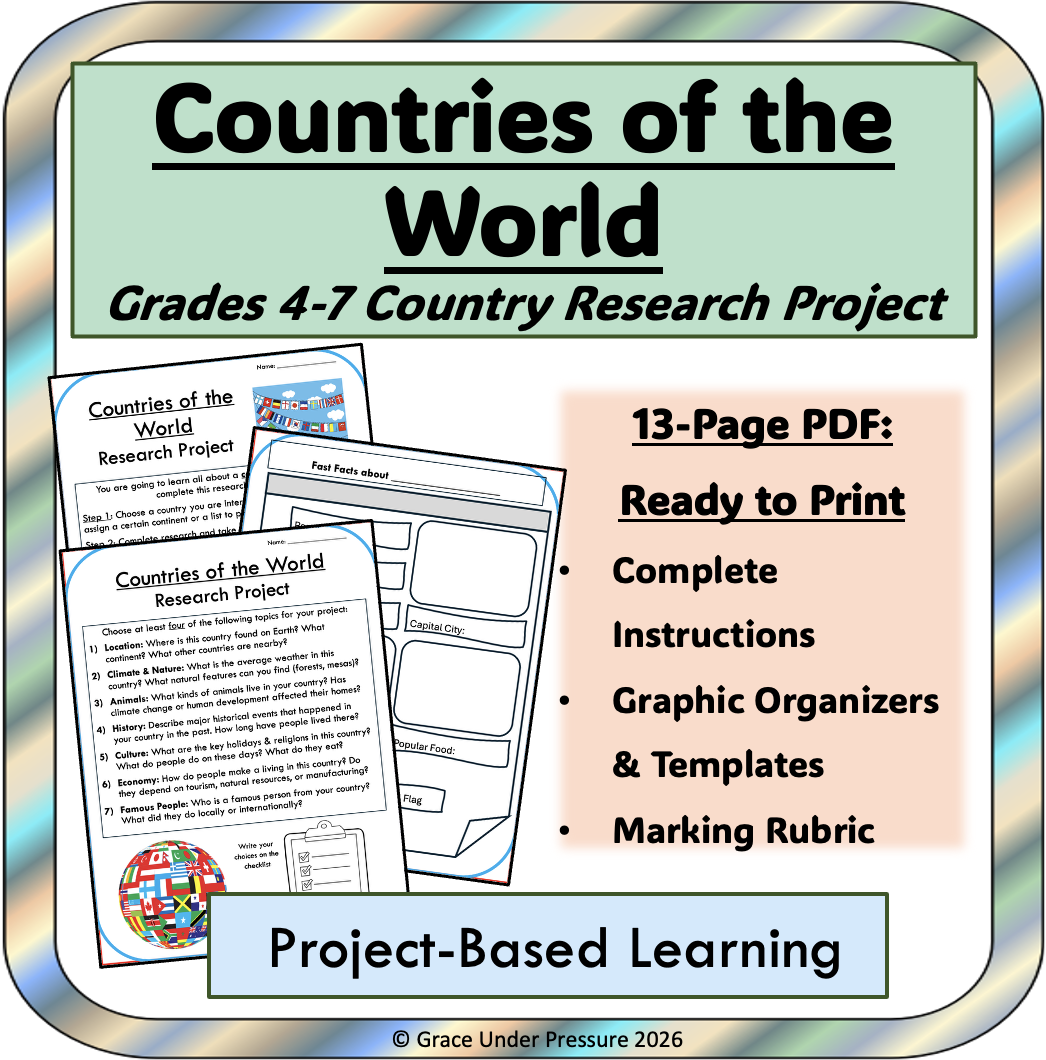
Here is a ready-to-go middle school famous artist research project for your students in 5th, 6th, 7th, or 8th grade. Each student will choose a famous artist, complete focused research about their life and artistic style, and create an organized project with paragraphs and visuals to share their learning. How to Use: •Print pages 2-13 for each student. •Page 2 has instructions for the project including spots to write due dates and a checklist to keep students on track. You can assign a specific era for students to pick artists from or give them a list of artists. •Page 3 has seven different prompts for students to research. Each student needs to pick at least four prompts to include in their unique project. •Pages 4-6 are graphic organizers for your students to use as they take notes and record their research sources (page 6 is optional). •Pages 7-9 are templates for students to use to write at least four paragraphs about their artist (page 9 is optional). They could also type and print these paragraphs instead. •Page 10 is for students to use to draw a portrait of their artist. They could choose to use the artist’s style as inspiration. •Page 11 is for students to show samples of the artist’s paintings and style. They can print and glue on some samples and try to recreate some on their own as well. •Page 12 is a title page for the project booklet. •Page 13 is a rubric you can use to assess the project. Let students see it at the beginning of the project so they know what the expectations are. Over several weeks, your students can complete their research, write and proofread their paragraphs, and draw the visual components of their project. They can present their projects to each other, and you can use the rubric to assess them Grades to Use With: This project is designed for middle school students in 5th, 6th, 7th, or 8th grade who are learning about biography writing, famous artists, library research skills and expository writing- specifically expository paragraphs. It could also be used in high school special education classes where appropriate. What's Included: 13-Page PDF: Ready to Print and Use! Complete Teacher Instructions 2 Pages of Student Instructions & Writing Topics 6 Student Graphic Organizers for Note-Taking & Paragraph Writing 2 Student Templates for an Artist Portrait and Samples of Art Project Title Page Marking Rubric
Author Grace Under Pressure
Rating
Tags 5th Grade Project, Famous Artist, Famous Artist Research Project, Famous Artist Research, Artists, Middle School Research Project, 6th Grade Project, Art Project, Paragraph Writing
ALL ABOUT PERU | FREE MINIBOOK IN ENGLISH
Geography, Social Studies, Adult Education, Early Learning, Elementary, High School, Homeschool Resources, Middle School, Not Grade Specific, Pre-K, Flashcards, Worksheets & Printables, Diagrams, Teacher Tools, Presentations, Door Decor, Classroom Decor, Posters, Activities, Projects
ALL ABOUT PERU | FREE MINIBOOK IN ENGLISH THIS RESOURCE HAVE INFORMATION ABOUT PERU. INFORMATION OF THE AUTHOR: Thank you for choosing EDITORIAL ARENAS EDUCATIVAS! Our mission is to deliver a variety of learning resources that make education enjoyable and effective for children. Don't forget to visit our store to explore products for reading, writing, math, and Spanish language skills. MAIN DESCRIPTION OF THIS RESOURCE: 1) What educational standards were used as the basis for creating this material? This document was not developed based on any specific standard. 2) Who is the creator of this resource and how should it be cited? The creator of this document is EDITORIAL ARENAS EDUCATIVAS. 3) Is this resource available for free or does it require a purchase? Because we vocationally work for the education of thousands of students, we are offering this document for free. 4) This resource is for individual use only; what restrictions apply to its redistribution or sale? We ask that you share our link so more people can download our resource or recommend our store. It would help us greatly. SECONDARY AND COMPLEMENTARY INFORMATION: 1) What recommendations are there for making the most of this resource? To make the most of this resource, I recommend first analyzing it, then looking at the specific topic your student needs to learn and assess whether my resource addresses it. I also ask you to consider how you will print it. 2) Is this material up to date with the latest educational changes? Yes, this material primarily addresses all learning theories about children, which tell us that children should learn in an educational and fun way. 3) What printing format guarantees the best results? I recommend printing this document in PDF format. I would also ask you to carefully check whether you have a color or black and white printer.
Author EDITORIAL LAURA EDUCA
Rating
Tags ALL ABOUT PERU, ALL ABOUT, PERU, PERUVIAN, SPANISH, SPANISH RESOURCES
Scientist Charles Darwin Fact Sheet, Quiz + Exercises | PDF + H5P
Life Sciences, Science, Biology, STEM, History: World, History, Social Studies, Animals, Biographies, Grade 6, 7, 8, 9, Worksheets, Worksheets & Printables, Quizzes, Quizzes and Tests, Teacher Tools, Projects, Activities
Discover Charles Darwin – The Scientist Who Changed How We See Life Did you know that Charles Darwin’s ideas about evolution completely transformed the way we understand the natural world? His theory of natural selection explained how species change over time and adapt to their environments. Though controversial in his time, Darwin’s work laid the foundation for modern biology and continues to shape scientific thinking today. This teaching resource is designed to introduce your grades 7–10 students to Darwin’s revolutionary ideas in a way that’s engaging and easy to understand. Perfect for a 45-minute lesson, it combines clear explanations with interactive and creative activities to bring Darwin’s discoveries to life in the classroom. What’s Included: Concise Informational Text: A clear and engaging overview of Charles Darwin’s role in science. Fact Sheet Activity: Encourages students to organize knowledge and work creatively. Quiz with Solutions: Promotes fun, interactive learning and self-assessment. Additional Exercises: Students can create their own questions and collaborate in pairs to deepen their understanding. Flexible Formats: Includes a color and black-and-white printable PDF, as well as interactive H5P tasks for digital learning. Why You’ll Love This Resource: Time-Saving: Perfect for teachers who need a ready-to-go, well-structured lesson. Versatile Use: Ideal for biology, history of science, or cross-curricular lessons in English and science classes. Promotes Independence: Solutions are included, allowing students to check their work and explore the topic at their own pace. Interactive and Engaging: Tasks are designed to keep students actively involved while learning about Charles Darwin’s legacy. Whether you use it for a regular lesson, substitute teaching, or as part of a digital learning activity, this resource will make Charles Darwin’s contributions come alive for your students. Bring Charles Darwin’s fascinating world of science into your classroom and inspire your students to see history and science in a whole new light! Have fun exploring the world of science with your students! Warmly, Lernfitness Did You Know? I teach with a certified therapy dog, and together we focus on creating a positive and inspiring learning environment.
Author Lernfitness
Tags Science, Biology, Famous Scientists Lesson, H5P, Interactive Science Exercises, STEM, History, Scientists, Evolution, Darwin
Hans Krebs – Fact Sheet, Quiz & Interactive PDF incl. H5P
Life Sciences, Science, STEM, History, Social Studies, Biographies, Inventors, Basic Science, Biology, Chemistry, Grade 6, 7, 8, 9, 10, 11, 12, Worksheets, Worksheets & Printables, Quizzes, Quizzes and Tests, Teacher Tools, Projects, Activities
Scientist Hans Krebs - Fact Sheet, Quiz & Interactive Version (PDF & H5P) Hans Krebs – Cellular Respiration and the Discovery of the Krebs Cycle Fact Sheet, Quiz & Interactive Exercises (PDF + H5P) 🔁🧬 This 45-minute resource introduces students in grades 10–12 to Hans Krebs – the scientist who uncovered one of the most important metabolic pathways in our cells: the citric acid cycle, also known as the Krebs cycle. When teaching cellular respiration, many students can follow the basics of glucose breakdown and ATP production – but the details of what happens in the mitochondria often feel abstract. Krebs' discovery in the 1930s helped explain how cells extract energy efficiently from food molecules through a cycle of chemical reactions. It’s a key part of understanding aerobic respiration and metabolism. To make this complex process more accessible, I’ve created a structured lesson that includes a short informational text, a fact sheet, quiz questions with answers, and a creative partner task. All materials are available in color and black-and-white, plus there’s a digital H5P version for interactive learning. What’s included: A student-friendly text about Hans Krebs and the citric acid cycle A fact sheet to help visualize and summarize the steps of the cycle Quiz questions (with answer key) for quick review or comprehension checks A creative task where students develop and exchange their own questions in pairs Formats: Printable PDF and interactive H5P 💻 Answer key included ✅ I’ve used this resource during our unit on cellular respiration, often right after glycolysis and before moving on to the electron transport chain. It’s especially helpful for students who benefit from breaking down complex processes into steps. The partner activity works well for revision or as preparation for assessments. 🚀 Download now and bring the legacy of Hans Krebs into your biology lessons today! 📍 Best wishes, Heike from Lernfitness Did You Know? I teach with a certified therapy dog, and together we create a positive and inspiring learning environment. 🐶✨
Author Lernfitness
Tags Science, Biology, Famous Scientists Lesson, H5P, Interactive Science Exercises, STEM, History, Scientists, Hans Krebs, Citric Acid Cycle
Scientist: Theophrastos – Fact Sheet, Quiz, and Interactive Exercises
Life Sciences, Science, Biology, STEM, History: World, History, Social Studies, Nature & Plants, Grade 8, 9, 10, 11, Worksheets, Worksheets & Printables, Quizzes, Quizzes and Tests, Teacher Tools, Projects, Activities
Discover Theophrastos – The Botanist and Scientist Behind the Philosopher Theophrastos is often recognized as a philosopher, but did you know he is also considered the "Father of Botany" and one of the most influential natural scientists in history? With this resource, your students in grades 7–10 will explore Theophrastos’s groundbreaking contributions to biology, particularly his pioneering work in plant science. Designed for a 45-minute lesson, this material blends engaging content with interactive and creative activities to bring his achievements to life. What’s Included: Concise Informational Text: A clear and engaging overview of Theophrastos’ role in science. Fact Sheet Activity: Encourages students to organize knowledge and work creatively. Quiz with Solutions: Promotes fun, interactive learning and self-assessment. Additional Exercises: Students can create their own questions and collaborate in pairs to deepen their understanding. Flexible Formats: Includes a color and black-and-white printable PDF, as well as interactive H5P tasks for digital learning. Why You’ll Love This Resource: Time-Saving: Perfect for teachers who need a ready-to-go, well-structured lesson. Versatile Use: Ideal for biology, history of science, or cross-curricular lessons in English and science classes. Promotes Independence: Solutions are included, allowing students to check their work and explore the topic at their own pace. Interactive and Engaging: Tasks are designed to keep students actively involved while learning about Theophrastos’ legacy. Whether you use it for a regular lesson, substitute teaching, or as part of a digital learning activity, this resource will make Theophrastos’ contributions come alive for your students. Bring Theophrastos’ fascinating world of science and philosophy into your classroom and inspire your students to see history and science in a whole new light! Have fun exploring the world of science with your students! Warmly, Lernfitness Did You Know? I teach with a certified therapy dog, and together we focus on creating a positive and inspiring learning environment.
Author Lernfitness
Tags Science, Biology, Famous Scientists Lesson, H5P, Interactive Science Exercises, STEM, Theophrastos, History, Scientists, Botanic
Henry Louis Le Chatelier – Understanding Chemical Equilibrium
Life Sciences, Science, STEM, Social Studies, Biographies, Inventors, Basic Science, Physics, Chemistry, Biology, Grade 6, 7, 8, 9, 10, 11, Worksheets, Worksheets & Printables, Quizzes, Quizzes and Tests, Teacher Tools, Projects, Activities
Henry Louis Le Chatelier – Understanding Chemical Equilibrium A short reading and worksheet resource for grades 8–10 science classes (PDF + H5P) ⚖️🧪 A printable and digital resource for grades 8–10 science and cross-curricular teaching 🧪🧠 This resource introduces students to Henry Louis Le Chatelier, the French chemist best known for his work on chemical equilibrium. His principle – describing how systems respond to changes in concentration, temperature, or pressure – is a key concept in chemistry classrooms around the world. With this material, students not only learn about Le Chatelier’s scientific contribution but also get a glimpse of the person behind the theory. The tasks are structured clearly and can be used in regular chemistry lessons or as part of a non-specialist substitute plan. No prior knowledge is required to get started, and the layout supports both independent and pair work. Included in this resource: Informational text about Henry Le Chatelier’s life and research A worksheet for creating a scientist profile based on the reading Quiz questions with solutions for quick review Two optional follow-up tasks: – Students create their own questions about the text – Exchange and answer questions in pairs File formats: – PDF (printable and digital) – Editable DOCX (text only) – H5P version (interactive and image-free, suitable for LMS use) How to use it in class: I’ve used this material as part of an introduction to equilibrium in chemistry or to wrap up a unit on reaction rates and reversible processes. The reading offers students some historical context, which helps them see that the science they’re learning is connected to real people and ideas. The H5P format supports digital work and allows for self-checking. It’s also helpful for remote learning or homework. With little to no prep required, this resource makes it easy to enrich your science curriculum. Have fun exploring the world of science with your students! Warmly, Lernfitness Did You Know? I teach with a certified therapy dog, and together we focus on creating a positive and inspiring learning environment.
Author Lernfitness
Rating
Tags Science, Famous Scientists Lesson, H5P, Interactive Science Exercises, STEM, Scientists, Chemistry, Henry Louis Le Chatelier, Chemical Equilibrium, Le Chatelier
Robert Oppenheimer Biography Set | Integrated Study | Sub Plan
ELA, Social Studies, Reading, Reading Comprehension, Science, Basic Science, Biographies, Grade 3, 4, 5, Activities, Worksheets & Printables, Worksheets, Projects
Make learning about the life and works of J. Robert Oppenheimer more fun and exciting with this J. Robert Oppenheimer Biography Set! This set of activities and project is designed for 3rd to 5th grade primary level learners, ESL/EFL students, and homeschoolers. Focusing on an in-depth and purposeful review of Oppenheimer’s biography, this resource is an integrated lesson for English Language Arts, Science and Social Studies. What’s Included: •J. Robert Oppenheimer Reading Passage (J. Robert Oppenheimer: The Father of the Atomic Bomb) •3 The Father of the Atomic Bomb Reading Comprehension Exercises •The Father of the Atomic Bomb Research Activities •J. Robert Oppenheimer Pop-Up Board Project The reading passage provides information for the students, and with the use of the reading comprehension activities, they will be able to check on their knowledge and understanding of Oppenheimer as one of the important minds of the world. The research activities, on the other hand, are aimed for a more detailed examination of Oppenheimer’s contributions and legacies ensuring a better outlook of the students’ appreciation of the lesson. Lastly, the pop-up board project is a perfect assessment tool of the lesson which is made to promote creativity and deeper engagement. This biography set is a great companion and supplement to any curriculum topics relating to famous people, studying biographies and exploring the most famous scientific minds. It also provides an opportunity for substitute and / or emergency plans as it presents a clear-cut set of activities. Studying and completing this biography set it definitely a blast for your learners!
Author It's Teacher L
Tags Oppenheimer Biography, STEM Education, Influential Minds, Famous People, Biographies, Reading Comprehension, Research Activities
Scientist Francis Crick – Fact Sheet, Quiz & Interactive PDF incl. H5P
Life Sciences, Science, STEM, History, Social Studies, Biographies, Inventors, Basic Science, Physics, Biology, Grade 6, 7, 8, 9, 10, 11, 12, Worksheets, Worksheets & Printables, Quizzes, Quizzes and Tests, Teacher Tools, Projects, Activities
Scientist Francis Crick - Fact Sheet, Quiz & Interactive Version (PDF & H5P) Francis Crick – The DNA Double Helix and the Origins of Modern Genetics Fact Sheet, Quiz & Interactive Exercises (PDF + H5P) 🧬 This 45-minute resource introduces students in grades 7–10 to Francis Crick and his role in uncovering the structure of DNA – one of the most influential discoveries in modern biology. Many students are familiar with the term DNA, but only a few know the story behind how scientists first identified its double helix shape. Together with James Watson, and building on the work of Rosalind Franklin, Crick helped explain how genetic information is stored and passed on – a breakthrough that still shapes biology and medicine today. To make this complex topic easier to teach, I’ve put together a concise and structured lesson. It includes a short informational text, a fact sheet, quiz questions with answers, and a creative task where students come up with their own questions. All versions are included – both in color and black-and-white – and there’s also an interactive H5P version for digital use 💻. What’s included: A short, accessible text on Francis Crick and the discovery of DNA A fact sheet to help students sort and reflect on the key points Quiz questions (with solutions) to check understanding A creative task where students write and exchange their own questions Formats: Printable/digital PDF and interactive H5P version Answer key included ✅ I’ve used this during our genetics unit, but it also fits well in lessons on the history of science or how discoveries are made. It’s easy to integrate and works well for partner work, independent tasks, or short science projects. 🚀 Download now and bring the legacy of Francis Crick into your biology lessons today! 📍 Best wishes, Heike from Lernfitness Did You Know? I teach with a certified therapy dog, and together we create a positive and inspiring learning environment. 🐶✨
Author Lernfitness
Tags Science, Biology, Famous Scientists Lesson, H5P, Interactive Science Exercises, STEM, History, Scientists, Francis Crick, DNA
Linus Pauling – Scientist Profile and Reading Tasks
Life Sciences, Science, STEM, Social Studies, Biographies, Inventors, Basic Science, Physics, Chemistry, Technology, Grade 6, 7, 8, 9, 10, 11, Worksheets, Worksheets & Printables, Quizzes, Quizzes and Tests, Teacher Tools, Projects, Activities
Linus Pauling – Scientist Profile and Reading Tasks Comprehension Activities A short reading and activity set (PDF + H5P) ⚗️📘 A printable and digital resource for grades 7–10 science and cross-curricular teaching 🧪🧠 This ready-to-use resource introduces students to Linus Carl Pauling – a groundbreaking chemist and one of only two people to receive two unshared Nobel Prizes. His work on chemical bonding, molecular structures, and vitamin research shaped modern chemistry and continues to influence science education today. He’s also remembered for his outspoken views on peace and social responsibility, which makes him an interesting figure across subject areas. The material is designed to help students understand both the scientific and personal contributions of Pauling. It includes a short reading text, a guided profile worksheet, and a short quiz. Two extension tasks allow students to engage more deeply with the text by creating their own questions and discussing them with a partner. What’s included: Informational text on Linus Pauling (student-friendly language) Printable worksheet for creating a profile Quiz questions with solutions Two optional tasks for independent or pair work Formats: – PDF for print and digital use – Editable DOCX (text only, without images) – Interactive H5P version (suitable for most learning platforms) How it can be used: I’ve used materials like this during units on chemical bonding, scientific biographies, or even in interdisciplinary lessons that connect science with ethics or activism. It’s also worked well for cover lessons, as the structure is simple and students can work independently. The H5P version allows students to complete the quiz digitally and get instant feedback, which is helpful in blended learning environments or for homework. The tasks are flexible: they can be used as a full lesson, a review activity, or a meaningful extension when you want to slow down and connect content to real people. Minimal prep. Easy to adapt. A great way to make science a little more human. Have fun exploring the world of science with your students! Warmly, Lernfitness Did You Know? I teach with a certified therapy dog, and together we focus on creating a positive and inspiring learning environment.
Author Lernfitness
Rating
Tags Science, Famous Scientists Lesson, H5P, Interactive Science Exercises, STEM, Scientists, Chemistry, Linus Pauling, Nobel Prize Winner, Chemical Bonding
Steve Jobs Biography Set | Integrated Study | Sub Plan
ELA, Social Studies, Reading, Reading Comprehension, Science, Inventors, Grade 3, 4, 5, Activities, Projects
This Steve Jobs Biography Set is a fun and engaging study about the life, contributions, achievements and legacy of Steve Jobs. Created for 3rd to 5th primary level learners, EFL/ESL, and homeschoolers, this resource is a meaningful and diverse tool to have in subjects associated with English Language Arts, Science, and Social Studies. This resource contains the following: •Steve Jobs Reading Passage (Steve Jobs: The Inventor of Apple) •3 The Inventor of Apple Reading Comprehension Exercises •3 The Inventor of Apple Research Activities •Steve Jobs Pop-Up Board Project With the reading passage, the students will learn the biography of Steve Jobs and equip them with the necessary knowledge to accomplish and practice their language skills for the reading comprehension activities. The accompanying research activities encourage the learners to find out more about Steve Jobs in any other resources like their schoolbooks or the internet. The pop-up board project is another form of assessment tool that can be used to after the lessons about the biography of Steve Jobs. This hands-on, creative project can be done as an individual or group project for the learners to have a concrete expression of what they have learned. Thus, the reading passage, comprehension works, and research activities are ways for students to accomplish the project. This resource can be used in so many way. First, the activities can be used as supplemental tool in teaching biographies of notable people, specifically of Steve Jobs. The whole set can also be a useful inclusion for sub plans or any other teacher-emergencies that may arise. The pop-up board project can also be a great addition as show pieces for open house events or as classroom decorations.
Author It's Teacher L
Tags Steve Jobs, Steve Jobs Biography, Biography, Reading Comprehension, ESL/EFL
Konrad Lorenz – Fact Sheet, Quiz & Interactive PDF incl. H5P
Life Sciences, Science, STEM, History, Social Studies, Biographies, Inventors, Basic Science, Physics, Biology, Grade 6, 7, 8, 9, 10, 11, 12, Worksheets, Worksheets & Printables, Quizzes, Quizzes and Tests, Teacher Tools, Projects, Activities
Scientist Konrad Lorenz - Fact Sheet, Quiz & Interactive Version (PDF & H5P) Konrad Lorenz – Animal Behavior and the Roots of Ethology Fact Sheet, Quiz & Interactive Exercises (PDF + H5P) 🦢🧠 This 45-minute resource introduces students in grades 7–10 to Konrad Lorenz – a key figure in the development of modern ethology, the study of animal behavior. Many students enjoy learning about animals, but the scientific side of behavior research ist oft weniger bekannt. Lorenz is especially known for his work on imprinting in geese – observing how young animals form strong attachments during a critical period after birth. His careful observations helped shape the way we think about instinct, learning, and behavior in both animals and humans. To make this topic approachable, I’ve put together a compact, ready-to-use lesson. It includes a short informational text, a fact sheet, quiz questions with answers, and a creative partner task. The materials are available in both color and black-and-white versions, plus there’s an H5P version for digital use. What’s included: A short, student-friendly text about Konrad Lorenz and his contributions to behavioral science A fact sheet to help students organize key ideas Quiz questions (with answer key) for review or self-check A partner task where students come up with their own questions and exchange them Formats: Printable/digital PDF and interactive H5P 💻 Answer key included ✅ I’ve used this material when introducing the basics of behavior in biology – especially to discuss how scientific observation works in practice. It also fits nicely into lessons on instinct vs. learning or historical perspectives on animal research. The flexible format works well for independent study, pair work, or short projects. 🚀 Download now and bring the legacy of Konrad Lorenz into your biology lessons today! 📍 Best wishes, Heike from Lernfitness Did You Know? I teach with a certified therapy dog, and together we create a positive and inspiring learning environment. 🐶✨
Author Lernfitness
Tags Science, Biology, Famous Scientists Lesson, H5P, Interactive Science Exercises, STEM, History, Scientists, Konrad Lorenz, Animal Behavior
St. Augustine Research Organizer & Essay Assignment
Social Studies, ELA, Biographies, History, History: World, History: Ancient, Grade 7, 8, 9, 10, Activities, Projects, Worksheets & Printables, Worksheets
St. Augustine was theologian from the earlier period of Christianity whose writing greatly influenced medieval society. This resource provides your students with the opportunity to independently explore and write about the life of the "patron saint of theology" with this engaging research planner and essay assignment. This carefully scaffolded and easy-to-assign-AND-assess resource has been designed to guide student learning from St. Augustine fact-collection to the careful development of a five-paragraph research essay. Teaching this resource could not be easier! Start by handing out the background research and note-taking worksheet (you could also ONLY hand this out if you want a shorter lesson!). Once students have found their facts and sources, provide them with the essay outline activity, which guides them step-by-step through the requirements of a short research essay. From there, drafting their essay, using the provided peer review checklist, and submitting their final draft will be no problem at all. And then you can assess their work with the provided Common Core rubric! Use this entire resource as a complete research lesson or just part of it as a short research activity or sub plan! This TeachSimple download includes: - A St. Augustine essay writing assignment with directions, requirements, research essay writing tips, a peer review checklist, and Common Core-tied grading rubric - An editable rubric, provided as a link, that lets you make adjustments to the grade values and guidelines. This link is provided as as Google Sheet specifically built for integration into Google Classroom, although you can also modify it for use in other Learning Management Systems (LMSs) - A St. Augustine biography and note-taking worksheet that will guide your students through information gathering. This straightforward two-page handout includes instructions for background research, a fun drawing section, and an area to cite quality sources and organize conducted research - A research essay outlining worksheet, so students build on their St. Augustine notes in a clear and simple manner as they build their work towards a draft and final paper - All 6-pages of this lesson are provided in full-color and B&W versions Although this resource can be fitted for any secondary Language Arts classroom, it has been carefully designed to work best in grades 8 through 11. The included rubric is subtly but specifically tied to Common Core ELA Standards for Language (3) and Writing (2 and 7). This resource is provided as a print-ready, bookmarked, and adjustable PDF file. The rubric is also included as an editable Google Sheet. This resource contains 6 pages and 1 Google Sheet.
Author The Language of Educational Art, LLC
Tags Essay, Rubric, Research, Notetaking, Outlining
Desert Island Simulation Activity
Social Studies, Grade 9, 10, 11, 12, Activities, Projects
Sociology in Practice: Island Simulation Teacher Guide Thank you so much for having purchased my simulation activity and materials. In my experience, simulations have been the best way to make content come to life in the classroom to create enduring learning. This specific simulation was designed to start my sociology course off. I reference it throughout the semester when discussing big ideas like power dynamics, social desirability, and social institutions. I think this simulation also works well at the end of the course. It can also be easily adapted by changing the questions up a little to work in a government class, a psychology class, or a leadership class. Ultimately, I’ve found simulations like this work best as a template of sorts– it is creativity in the classroom that really brings them to life! Have fun! Chronological Directions 1.As a first step, if possible, I like to arrange the room in a way that creates separation between the 4 groups (or however many groups you choose to have). The ideal group size I’ve found to be between 5 and 7. This allows for diversity of opinion and a talkative environment, but doesn’t result in as many students not participating. As always, balancing student personalities is often a good strategy if you know your students well already. 2.Day 1. First, take some time to overview the simulation. I recommend displaying slides 2-7 on opening day and take your time answering questions. Most questions can be answered on your own discretion. For example, “is there hope of rescue?” you can answer in any fashion. Or not answer! A common question you will likely be asked is “how did we get a map for an island we didn’t know existed”? To which I usually respond, “magic!”. 3.Next, give students (or assign on Google Classroom, if applicable) the Day 1 Worksheet. The worksheet will walk students through the tasks of the first day, which include naming their village, creating 10 rules for their new society, deciding how power will be wielded in the community (Pure democracy? Dictatorship? Oiligarchy?), and how they will explore the land. That, paired with discussion, should wrap up day 1 depending on the length of your periods. 4.In between Day 1 and 2 you will want to gather announcements. I like to get creative and respond to what students discussed yesterday. For example, what happened to the scouts they sent out? Did they simply disappear? How did the people respond to the newest 10 rules? Was there a mutiny? Were the scouts met by hostile locals? Did the scouts discover additional food or clean drinking water? Were they able to meet up with another group? If so, are there talks to combine the two villages? If so, who will retain power? The possibilities are quite literally limitless. 5.Day 2. Make sure to hand out the Day 2 Worksheet. Start by making the announcements you decided on based off of day 1. Additionally, announce that a few people are seriously hurt from the crash and some seem to have fallen ill. The medical area is over-run, and the leader(s) need to establish who gets priority for medical attention. Students can then decide what will happen to rule breakers, what the plan is for food and shelter, and if there is time, they can draw or create a layout of their simple village. 6.Again, in between Day 2 and 3 you will think of and possibly write down announcements. All the prior possibilities are in play and more! The mingling between groups tends to create the most fun classroom environments, I think. 7.Day 3. Make sure to hand out the Day 3 Worksheet. Presumably the simulation could go on longer, but this is the last day with provided materials. Make your written announcements, and also announce that a small child who speaks no English has entered their villages and pointed out “Hobbes Cave” on their maps. I named the cave after Thomas Hobbes, so I think it is fair game for bad things to happen to scouts sent to explore there. Totally up to you, however. Continue to press students on things like the structure of their society, power dynamics, and their interactions with other groups or lack thereof. 8.Day 4. I like to spend one day at the end as a reflection day. I start by announcing how the game ended and explaining how the game relates to content we will learn this year (or have already learned). I also assign the Day 4 Worksheet to collect reflections. 9.Make any adjustments or additions as needed, and feel free to provide me feedback on the project! I really enjoyed making it and hope you enjoy it too. With further questions, reach out to me at tristanjbernhard@gmail.com . Take A Look At More Of My Best Sellers: Language Development Slides & Guided Notes Crash Course Sociology Episode 15 Worksheet Gender Roles & Gender Socialization Slides & Guided Notes Enjoy More From My Store Here: Active Social Studies
Author Ed Dynamic
Tags Social Studies Project, Sociology Project, Desert Island, Simulation, Society, Small Group, Google Classroom, Community, Types Of Power