



3,930 products added recently
Teacher Evaluation Rubric
The Teacher Evaluation Rubric provides a structured framework for assessing educators' performance. It covers key domains such as instructional delivery, classroom environment, professional responsibilities, and contribution to student learning. This rubric supports transparent and objective evaluations, fostering professional excellence. It can be used by administrators during formal reviews or by teachers for self-reflection. Enhance educational quality through comprehensive evaluation with this rubric.

 Show filters

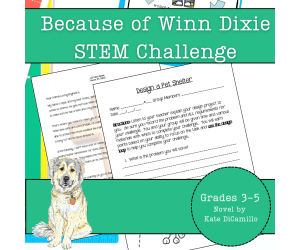
Because of Winn Dixie STEM Experiment + STEM Project for Grades 3-5
Science, Technology, Engineering, STEM, Grade 3, 4, 5, Experiments, Activities, Projects, Diagrams, Teacher Tools, Graphic Organizers, Rubrics
Engage your students in a hands-on STEM challenge inspired by Because of Winn-Dixie! This exciting activity combines engineering, creativity, and problem-solving as students design and build a pet-friendly shelter for Winn-Dixie, the lovable dog who’s afraid of storms. Perfect for blending literature with science, this challenge encourages young minds to apply engineering principles using simple materials, all while developing teamwork, critical thinking, and innovation. What’s Included in This Resource: Student Letter: An engaging letter from Opal invites students to participate in the challenge, drawing a direct connection between the story’s problem and the real-world task. The Design Loop Visual: This visual aid is a great tool for students to glue into their science journals for easy reference. It can easily be enlarged as a classroom poster. Step-by-Step Directions: Detailed instructions that can be printed or written into science journals for a hands-on approach. These directions ensure that students stay on track while working through each part of the challenge. Teacher Notes: Helpful guidance to assist you in creating a clear problem statement, establishing success criteria, and setting time limits and materials. Tailor these instructions to fit your classroom’s needs. Key Skills Developed: ✔ Problem-Solving: Encourage students to identify challenges and develop creative, effective solutions. ✔ Engineering Design: Teach the design process by having students follow the design loop to plan, construct, test, and refine their pet shelters. (Discussing area and perimeter will enhance this design specifically.) ✔ Critical Thinking: Help students evaluate their designs, analyze their prototypes, and identify ways to improve them. ✔ Collaboration: Foster teamwork as students collaborate to achieve a common goal. Flexible Classroom Use: This STEM challenge is perfect for guided instruction or as part of a broader literature and science unit. It provides an opportunity for students to connect their love of reading with real-world applications, improving both their scientific knowledge and creative abilities. Why Teachers Love It: ⭐ “My students were so engaged! It brought their love for reading into STEM learning.” ⭐ “This activity is simple to set up and promotes creativity and teamwork.” ⭐ “The combination of literature and science created an ideal cross-curricular experience for my class.” Inspire your students to help Winn-Dixie solve his stormy dilemma and ignite their passion for engineering with this fun, standards-aligned STEM challenge!
Author Kel's Klass
Tags 4th Grade Science Project, 4th Grade Science Experiment, 5th Grade Science Project, 5th Grade Science Experiment, Engineering Diagram, Science Graphic Organizer, Science Rubric, Because Of Winn Dixie, 3rd Grade Science Project, 3rd Grade Science Experiment
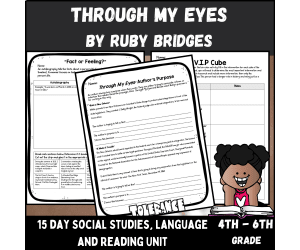
Through My Eyes by Ruby Bridges Social Studies and Reading Unit
ELA, Social Studies, Grade 4, 5, 6, Worksheets & Printables, Novel Studies, Worksheets, Outlines, Teacher Tools, Quizzes and Tests, Lesson Plans, Rubrics
Engage students in the powerful firsthand account of Through My Eyes by Ruby Bridges with this full 15-day unit designed to integrate social studies and reading comprehension. This resource includes detailed lesson plans, daily activities, vocabulary work, and assessments to ensure students engage with Ruby Bridges’ story and the historical significance of school integration. What’s Included? 15 Days of Lesson Plans – Easy-to-follow, structured lessons that guide teachers through daily activities and discussions Daily Reading & Skill Practice – Focus on key literacy skills including: Main Idea & Supporting Details Author’s Purpose Determining Importance Story Comprehension Vocabulary Development Daily Activities – Teacher created list of videos, skill practice, skill practice related to text, comprehension questions Comprehension Questions – Questions for each section of Through My Eyes encourage text analysis Final Assessments for Mastery : Written Reflection – Encourages students to make personal and historical connections to Ruby Bridges’ story Vocabulary Quiz – Reinforces key terms to strengthen comprehension Biographical Cube Project – Students research and present information about an important figure from the book Differentiation for All Learners – Activities and assessments are leveled to support both higher and lower abilities, ensuring every student's needs are met appropriately Answer Keys – Comprehension questions, vocab list, and the quiz all have an answer key included for teacher use. Why Do Teachers Love this Unit? Cross-Curricular Learning – Integrates reading and social studies to build historical understanding while strengthening reading skills (and prepping for standardized tests) Student Engagement – Class and group activities encourage critical thinking about civil rights and social justice No-Prep, Time-Saving Resource – Everything is organized and ready to implement, making lesson planning easy. Even suggestions for how to copy activities into a book are included. Supports Higher-Order Thinking – Encourages students to analyze, reflect, and connect past events to modern-day issues Who Is This Resource For? ✔️ 4th-6th grade teachers ✔️ Social Studies & ELA educators ✔️ Homeschool parents ✔️ Literacy specialists This comprehensive 15-day unit ensures that students not only understand Ruby Bridges’ journey but also develop key literacy and critical thinking skills along the way. Download today and bring history to life in your classroom! Keywords for SEO: Through My Eyes by Ruby Bridges unit, civil rights movement lesson plans, Ruby Bridges social studies unit, integrated literacy and history lessons, upper elementary reading comprehension, middle school civil rights activities, historical nonfiction for kids, Black history month unit, guided reading and vocabulary, Teach Simple social studies resources
Author Kel's Klass
Tags Through My Eyes, Ruby Bridges, Black History, Black History Month, Women's History, Women's History Month, Cultural History, Social Studies, Social Studies Outline, Social Studies Lesson Plans

AI Ethics for Young Learners - Artificial Intelligence Book
Strategies, Reading, ELA, Reading Comprehension, Research, Technology, Science, Computer Science, Engineering, STEM, Grade 3, 4, 5, 9, 10, 11, 12, Activities, Projects, Teacher Tools, Assessments, Lesson Plans, Literacy Readers, Outlines, Rubrics, Writing Prompts, Worksheets & Printables
Unravel the fascinating realm of artificial intelligence through "AI Ethics for Young Learners - Artificial Intelligence," an all-inclusive textbook crafted to inculcate AI concepts and ethical values in young minds in an interesting and young-friendly manner. Offering in-depth information starting from AI in daily life examples such as assistants and video games to more complex topics such as biased computer algorithms, issues of data privacy, fundamental concepts of cybersecurity, and AI use, this SEO-friendly kids’ book is most suited to class 4 to class 12 settings, providing young minds with empowerment to learn AI basics, identify ethical issues, and become responsible digital participants. With 90 chapters spread throughout AI learning patterns in young minds, ethical issues in decision-making algorithms, robot AI while maintaining system security, program accountability in AI, and AI in the coming age of medicine, creativity, and environmental protection, this AI book by subject experts is ideal to disrupt young minds with AI-related critical thinking skills through practical AI examples and ethical tales of AI adventures in society. Tags: AI ethics education in kids, AI textbook in classroom education, AI education in teen brains, ethical AI learning book, classroom learning books in grade 4 to grade12 levels. Why Parents/Schools Love It: Engaging and Age-Appropriate Content: Reduces complex AI and ethics topics to simple and relatable stories and examples that hold the attention of young learners without causing an overload. Encourages Critical Thinking and Responsibility: Students learn to second-guess AI decisions, to perceive bias, and to claim responsibility for their actions as advocates for the appropriate use of technology in daily life. Comprehensive Curriculum Support: With 90 chapters, it leads the students from the basics of AI through advanced ethical dilemmas; perfect for STEM lessons, homeschooling, or classroom discussions. Values and Safety: Stressing the importance of privacy, fairness, and human judgment in AI-all important to giving parents peace of mind that aligns with family values. Inspires Innovation: This lets the kids come up with their own ethical AI ideas and concepts, which can trigger their innovative thinking to make them future-ready in the tech arena. Targeted Classes for Students : It can be seen from the thorough evaluation of the contents and suitability of the material in the book that it is ideally suited for students from grades 4 through 12 as mentioned in the title page. The contents begin with explanatory pieces that are simple and accessible in terms of the examples they use such as “What is Artificial Intelligence?" and examples such as smart assistants in basic forms for earlier grades (4-6), then move into advanced examples such as bias in algorithms, the issue of privacy laws and cybersecurity threats and ethical problem-solving for advanced students from grades 7-12. The text is written in simple sentences and analogies (as in the explanation given in “How A.I. Learns Like Playing a Game"), and sophisticated technical terms are avoided in this manner and can be suited for the entire spectrum mentioned. Copyright/Terms of Use : This Book was copyrighted by Syed Hammad Rizvi. Please do not give out or sell copies of this resource or any part of it. Furthermore, do not post this resource on the Internet in such a way that people can download this resource. By the way, you can modify this resource, but only for your personal or school-class usage. Please note that if you would like to share this resource with your peers, licensing options for additional copies are available via Teachsimple. Thank you for your compliance with this usage agreement. This product is delightedly presented to you by Syed Hammad Rizvi
Author Creative Book Store
Rating
Tags AIEthicsForKids, ArtificialIntelligenceBook, AIEducationForTeens, EthicalAIForYoungLearners, STEMBooksForStudents, AIBasicsForGrades4to12, DataPrivacyForKids, BiasInAIExplained, ResponsibleTechForYouth, AIAndEthicsCurriculum

Famous Mathematician: Math Research Project 5th 6th 7th 8th Grade
Research, ELA, Writing, Formal Writing, Social Studies, Biographies, Math, Grade 5, 6, 7, 8, Worksheets & Printables, Worksheets, Writing Prompts, Drawing Templates & Outlines, Teacher Tools, Rubrics, Activities, Projects
Here is a ready-to-print middle school math research project about famous mathematicians for your students in 5th through 8th grade. Each student will pick a famous mathematician, complete research about their life and mathematical discoveries, and create an organized project with paragraphs & visuals to share their learning. How to Use: • Print a 12-page project booklet for each pupil. • Page 2 has instructions for the project including a website for selecting famous mathematicians, places to write due dates, and a checklist to keep students organized. • Page 3 has seven different paragraph prompts for students to research. Each student must pick at least four prompts to have in their unique project. • Pages 4-6 are graphic organizers for your students to use for research notes. • Pages 7-9 are templates for students to use for writing their paragraphs. • Page 10 is for students to draw a portrait of their mathematician. • Page 11 is for students to show diagrams and formulas of the math that their mathematician discovered. • Page 12 is a title page for the project. • Page 13 is a rubric to use to assess the completed project. During several weeks of classes, your students will complete research, write & proofread paragraphs, and draw the visual pieces of their project. They can present their projects to each other, and you can use the rubric to assess them. Grades to Use With: This project is designed for middle school students in 5th, 6th 7th, or 8th grade who are learning about mathematicians, biography writing, library research skills, and writing expository paragraphs. It could also be used in high school special education classes where appropriate. What's Included: 13-Page PDF: Ready to Print and Use! Complete Teacher Instructions 2 Pages of Student Instructions & Writing Topics 6 Student Graphic Organizers for Note-Taking & Paragraph Writing 2 Student Templates for a Mathematician Portrait and Math Sketches Project Title Page Marking Rubric
Author Grace Under Pressure
Rating
Tags Math Project, Math Research Project, Famous Mathematicians, Mathematicians, Famous Mathematicians Project, Biography Project, Middle School Math Project, Math Research

Alliteration Poem Template Poetry Writing Activity with Examples
ELA, Poetry, Literature, Homeschool Templates, Grade 2, 3, 4, 5, Centers, Activities, Graphic Organizers, Teacher Tools, Lesson Plans, Rubrics, Worksheets & Printables
Looking for a way to help your students actually understand alliteration without it turning into a bunch of random or overly silly sentences? I’ve found that alliteration can be one of those concepts students either overdo or don’t quite grasp, especially when they’re trying to apply it in their own writing. Having a bit of structure really makes a difference. This activity gives students a starting point, so they’re not guessing what to do. Instead of just identifying alliteration, they’re using it in their own poems, which helps it stick. The examples make it easier for them to see what’s expected, and the templates guide them through the process without taking away their creativity. In my experience, this works well whether you’re introducing alliteration for the first time or revisiting it during a poetry unit. You can model a few examples together, then let students have a go using the templates. Some will need a bit more support, and others will run with it—but the structure is there for both. Once they’ve drafted their poem, they can create a final version to display. It’s one of those activities where students actually enjoy reading each other’s work, which is always a win. There’s also a simple lesson outline included if you want something easy to follow, along with a rubric to make marking more straightforward. It fits nicely into literacy rotations, whole-class lessons, or even as something to leave for early finishers when you need a meaningful task that doesn’t require a lot of extra explanation. Items Included Alliteration poem interactive notebook templates Student-friendly example (color and blackline posters) Step-by-step lesson plan Publishing page for a final copy Assessment rubric
Author Teach2Tell
Rating
Tags Poetry Lesson Plan, Poetry Writing Activity, Alliteration Poem Template, Alliteration Activity, Alliteration Examples, Phonics Alliteration, Literacy Centers Writing, Creative Writing Activity, Figurative Language Activity, Poetry Lesson Elementary

High School 2026 August ELA Bell Ringers
Resources for Teachers, Research, ELA, Writing, Literature, High School, Homeschool Resources, Worksheets & Printables, Writing Prompts, Teacher Tools, Assessments, Quizzes and Tests, Rubrics
As a homeschool mom navigating the secondary years and a passionate resource creator, I know exactly how vital it is to start the morning with genuine academic rigor. This High School 2026 August ELA Bell Ringers resource is designed to eliminate morning prep stress while providing a deeply engaging daily routine. Each prompt is built from the ground up to challenge critical thinking, expand literary horizons, and foster sophisticated syntax. By choosing these exercises, you are setting a brilliant, intellectually stimulating tone for your educational environment right from the opening bell. Therefore, this daily slide deck serves as an invaluable asset for busy parents looking to maximize learning without sacrificing their sanity or prep time. INCLUDED IN THIS RESOURCE: 21 premium high-school morning slides. Full notes pages for direct instruction. Calibrated holistic scoring scales for grading. Easy-to-use structural framework for parents. TOPICS COVERED Dissecting classic prose, themes, and motifs. Master subjunctive mood and paragraph repair. Unlocking Latin roots and academic vocabulary. Analyzing chiasmus, antithesis, and deep subtext. I am incredibly proud to offer a secondary resource that respects the intellect and capability of your growing high schoolers. This High School 2026 August ELA Bell Ringers tool is explicitly built to spark meaningful, high-level discussions around the kitchen table or at a study desk. By weaving together sophisticated grammar, deep literary analysis, and creative constraints, it provides a beautifully balanced approach to daily language arts. Thank you so much for downloading my materials and trusting me to support your educational journey. For additional support, remember to reference the files High School 2026 August ELA Bell Ringers to fully integrate this curriculum package. I hope this resource brings immense success, analytical joy, and true academic growth to your home or classroom this August. If you and your students/homeschoolers enjoyed this resource, please leave a review. Thank you for your support! Tina - Big Easy Homeschooling Mom
Author Homeschool with Big Easy Homeschooling Mom
Rating
Tags Secondary ELA Warm Ups, High School English Slide Deck, Daily ELA Prompts, Daily Writing Exercises, Rhetorical Device Analysis, Analytical Rubrics ELA, Morning Bell Ringers, High School Curriculum Materials, Academic Vocabulary Practice, Slides With Answer Key

ADHD Planner for Adults & Students Book
Life Studies, Coaching, P.E. & Health, Health, Mental Health, Physical Education, Mindfulness, Psychology, Social Studies, Sociology, Homeschool Curriculum, Homeschool Templates, Grade 9, 10, 11, 12, Teacher Tools, Assessments, Lesson Plans, Outlines, Rubrics, Workbooks, Worksheets & Printables, Activities, Projects, Centers
Are you or your students having trouble focusing, overcoming chronic procrastination, or coping with too many things to do in a day? Traditional planners do not address issues associated with non-neurotypical brains and depend on willpower and strict timelines. This comprehensive 402 page guide is designed specifically for university (college) students and upper level academic learners ages 18-40, as well as early to mid-career professionals. The workbook provides a framework to serve as an external brain to help those with executive dysfunction bypass structural issues associated with ADHD in adulthood. The 90 chapters of this digital planner provide actionable items to create a bridge between psychological validation and implementation. The content goes beyond stereotypical childhood limitations associated with ADHD in order to show the complexities that adult ADHD presents in a fast paced world. THE CONTENTS OF THIS 402-PAGES INCLUDE: --> The How Your Brain Works: In-depth analysis of dopamine/norepinephrine pathways to help you understand why your concentration is affected; replaces the shameful feelings you might have been carrying with science-based self-compassion. --> Overcoming Time Blindness: Simple strategies to help you accomplish your tasks; including variations on the Pomodoro Technique, different tracking formats for estimating time, and methods to schedule time effectively. --> Advanced Academic Tools: New strategies to use when taking notes using the Cornell Method, as well as ways to improve your active textbook reading, to assist in breaking down long-term essays, and ways to perform well during exams. --> Achieving Professional Mastery: Methods for dealing with distractions at work, gaining control over the multitude of emails in your inbox, advocating for yourself if you are on the receiving end of workplace accommodation requests, and preparing for an annual work performance review. --> Regulating Your Emotions And Lifestyle: New ways to help cope if you experience rejection sensitive dysphoria (RSD), experience intense/quickly changing emotions, or if you cannot get enough sleep and/or do not have control over your finances. --> The Digital Work Space: An evaluation of digital task managers, tools that help limit distractions, mind map software, and ways to automate tasks. WHO CAN USE THIS TECHNOLOGY: Higher Education: It can be even helpful for students with their independent research as they pursue their undergraduate, graduate, and doctoral degrees. College Readiness: High school seniors will transition beautifully from a structured environment at home to being in a college setting. Career Starters: Neurodivergent adults will do well using this technology as they begin their careers. Coaches/Educators: This technology is a simple plug-and-play manual for academic special education departments at high schools and for resource centres at universities, as well as for executive ADHD coaching clients. DIGITAL DOWNLOAD CONSISTS OF: *) 1 High-Quality / Professionally Categorised PDF Book (402 Pages) *) Complete Table of Contents for easy access between sections *) Chapters that can be printed or chapters that can be displayed on Digital Format Develop Your Executive Functioning Skills so you can Create Your Own Predictable Success System. Keywords: ADHD Planner, Adult ADHD Worksheet, Executive Functioning Tools, College Student Organisation, ADHD Time Management, Stop Procrastinating, Neurodivergent Planner, PDF Digital Planner, TPT Digital Download. Why is This Program Loved by Schools/Parents: *) Bridges Autonomy Transition: Secondary schools and parents appreciate the program's direct support for students transitioning from a structured high school setting to a self-governed postsecondary setting, teaching students how to construct their own pathway. *) Evidence-Based / Science-Supported: The Manual does not provide a lot of general or "try your best" advice (versus cognitive-behaviorally-based principles, pre-frontal cortex functions, and structured note-taking frameworks such as the Cornell Method) and is therefore a trusted and credible resource by educational institutions. *) Removes Internalized Education Shame: Educators appreciate how the Manual shifts the conversation from labeling a less than stellar student "unmotivated" or "lazy" to understanding structural executive dysfunctions and promotes healthy self-compassion. *) More than just a Calendar / One Tool for Life Readiness: Schools and parents appreciate that it is more than just a calendar; The Manual addresses all of the holistic issues that impact us in our daily lives (financial management, workplace boundaries, annotating a text, sleep hygiene). Who Should Use This Book? The Target Audiences : Additional Considerations: Your Focus, Language Level, and Intent – Determine the Most Appropriate Audiences for Your Classes’ Students Your Comprehensive Reading of the Manuscript will provide a good understanding of the Architectural Focus (the Functional Purpose and Functionality of the Building) and Language Level (written communication used), in addition to the Objective of Each Chapter. *Your Primary Target Audience will be Students in University/College and Adult Learners: Both Undergraduate and Graduate Students will find most of the Information available in Chapters 1-7 (College Lectures, Academic Writing, Searching for Information (Research Rubrics), and Effective Communication in the Workplace) useful for students 18 years of age through 40 years of age. *Your Secondary Target Audience consists of High School (Grade 11 & 12). The Focus of this section should be primarily on “College Readiness” (support for students with special needs), “Transition Planning for Special Education,” and “Support for Executive Functioning” (tools that students can use after they graduate) as most high school teachers and counselors are looking to support students with special needs (neurodiversity) in their transition from high school to post-secondary education. Copyright and Terms of Use : Syed Hammad Rizvi's Copyrighted Book - Personal Usage Only - May Not be Modified, Distributed or Sold in Any Way by Anyone, Including You, Once You Have Downloaded It. Sharing this resource with Colleagues: Please Purchase Additional Licences Through Teachsimple! Thank You for Your Cooperation with These Terms of Use! Brought to You By Syed Hammad Rizvi
Author Creative Book Store
Rating
Tags ADHDPlanner, ADHDDigitalPlanner, AdultADHDWorkbook, ADHDPlannerPDF, NeurodivergentPlanner, ADHDJournal, DigitalPlannerPDF, PrintableADHDPlanner, NeurospicyPlanner, ADHDOrganization

CBT & Anxiety Management Toolkit
Life Skills, Special Resources, Social Emotional Learning (SEL), Social Skills, Special Education Needs (SEN), Speech Therapy, STEM, Resources for Teachers, Classroom Management, Community Building, Homeschool Curriculum, Homeschool Templates, Grade 9, 10, 11, 12, Projects, Activities, Teacher Tools, Assessments, Graphic Organizers, Lesson Plans, Outlines, Rubrics, Presentations, Worksheets & Printables
Find the top CBT Anxiety Management Toolkit Professional Edition PDF – a 47-page digital guide filled with helpful information and tools to beat anxiety. This guide is meant for therapists, life coaches, and individuals looking for effective mental health tools. This SEO-friendly CBT workbook provides detailed information on cognitive models, anxiety triggers, cognitive distortions, ABC models, automatic thought records, evidence boards, worry trees, de-catastrophizing scripts, fear ladders, grounding techniques, behavioral activation plans, core beliefs, and daily mood trackers. Be empowered with step-by-step strategies for cognitive restructuring, exposure therapy, behavioral activation, and sensory grounding techniques to overcome anxiety and live an anxiety-free life. This guide is meant for psychology professionals and mental health enthusiasts. Get this printable CBT anxiety workbook PDF today and get the mental health assistance and resilience training you need. Why Parents/Schools Love It: Evidence-Based Tools for Real-World Application: CBT worksheets for students to develop skills that can be applied in the real world, helping them develop emotional resilience that can improve their academic performance. Promotes Self-Awareness and Mental Health Literacy: Encourages students to engage in reflective exercises that can help them develop skills that can last a lifetime, allowing them to cope with stress in an appropriate manner. Flexible for Classroom or Home Application: PDFs with diagrams that can be printed out for use in the classroom or at home for students who need extra support during high-stress periods of the academic calendar. Professional Quality Content at an Affordable Price: Helps provide students with the tools that can normally only be accessed with the guidance of a therapist, all at an affordable price for the school. Tracks Progress for Measurable Growth: Helps parents/educators track the progress of students' emotional state so that improvements can be measured. Target Classes/Students : Given that the PDF is a comprehensive analysis and review of CBT tools and strategies for anxiety management, targeted towards professionals and adult learners, the target audience would be students in higher education and advanced programs, especially in the field of psychology and counseling. The target classes/students would be: Undergraduate Psychology or Counseling Students (Sophomore to Senior Level): The PDF would be ideal for classes such as “Introduction to CBT,” “Abnormal Psychology,” or “Mental Health Interventions,” where students can use the worksheets for case study and self-reflection assignments. Graduate Students in Clinical Psychology, Social Work, or Therapy: The PDF would be suitable for classes such as “Cognitive Behavioral Therapy Practicum,” “Anxiety Disorders Treatment,” or “Professional Counseling Skills,” where students can use the content for case studies and assignments. Adult Education or Continuing Education: The target audience would be adult learners in online or community college classes, especially in the field of psychology and counseling, or in a life coaching program. High School Advanced Placement (AP) Psychology: The target audience would be seniors in advanced psychology classes, provided that the curriculum covers CBT concepts, as the content is too advanced and technical for a general audience. Copyright/Terms of Use: This Book was copyrighted by Syed Hammad Rizvi. This resource is for personal and single classroom use only. You may not alter, redistribute, or sell any part of this resource. In other words, you may not put it on the Internet where it could be publicly found and downloaded. If you want to share this resource with your colleagues, you may buy additional licenses from Teachsimple. Thank you for respecting these terms of use. This product is happily brought to you by Syed Hammad Rizvi
Author Creative Book Store
Rating
Tags CBT, CognitiveBehavioralTherapy, AnxietyManagement, AnxietyRelief, MentalHealth, MentalHealthMatters, MentalHealthAwareness, StressRelief, OvercomeAnxiety, AnxietyTools
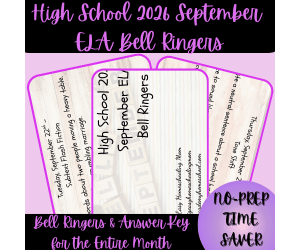
High School 2026 September ELA Bell Ringers
ELA, Reading, Writing, Research, Resources for Teachers, Homeschool Resources, High School, Teacher Tools, Assessments, Quizzes and Tests, Rubrics, Lesson Plans, Worksheets & Printables, Writing Prompts
As a fellow homeschool mom navigating the journey with a teenager, I know how hard it can be to keep our days structured while fostering deep critical thinking. Starting the morning on the right foot often sets the tone for our entire learning session, yet finding engaging, age-appropriate materials that truly challenge older learners is a constant struggle. That is exactly why I created this resource; I wanted to offer a bridge between simple busy work and the complex, analytical skills required for advanced writing and thinking. By incorporating these daily prompts, you can transform those initial moments of your routine into a powerful opportunity for growth. Furthermore, these activities are specifically designed to spark curiosity and promote nuanced discussion without requiring hours of preparation on your part. I truly hope this collection brings a sense of ease and intellectual excitement to your home environment this fall. INCLUDED IN THIS RESOURCE: Complete September calendar of prompts. Diverse daily analytical writing exercises. Clear instructions for every activity. Thought-provoking questions for deeper analysis. TOPICS COVERED: Rhetorical strategy and argument analysis. Literary theory and critical lenses. Advanced sentence structure and syntax. Nuanced writing style and conventions. I truly believe that consistency is the key to mastering complex analytical skills, and this resource is designed to make that daily habit both simple and deeply rewarding. By focusing on quality over quantity, we can cultivate an environment where critical thinking, structural precision, and creative expression thrive together. I am so excited for you and your learner to embark on this journey through the month, and I am confident you will see the positive impact on their confidence and capabilities. Remember, the goal is to foster a love for language and a sharp, discerning mind that can navigate complex texts and arguments with ease. I am here to support you in this, and I invite you to reach out and share your experiences as you implement these daily challenges. Thank you for choosing to trust me as part of your educational journey; I am honored to help you facilitate this growth in your home. If you and your students/homeschoolers enjoyed this resource, please leave a review. Thank you for your support! Tina - Big Easy Homeschooling Mom
Author Homeschool with Big Easy Homeschooling Mom
Rating
Tags ELA Writing Prompts, High School English Resources, Daily Bell Ringers, Critical Thinking Activities, Advanced Writing Practice, Literary Analysis Prompts, Grammar For High School, Argumentative Essay Practice, English Language Arts Resources, Writing Skill Building
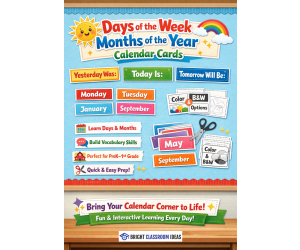
Days of the Week & Months of the Year Calendar Cards
Life Skills, Special Resources, Montessori, Grade 1, 2, Banners, Classroom Decor, Posters, Anchor Charts, Teacher Tools, Rubrics, Worksheets & Printables
Days of the Week & Months of the Year Calendar Cards Make your morning meetings smooth and engaging with these Days of the Week and Months of the Year Calendar Cards ! Perfect for Pre-K, Kindergarten, and 1st grade, this bright, easy-to-read set helps students identify and sequence days while learning calendar vocabulary in a fun, interactive way. What’s Included “Yesterday Was / Today Is / Tomorrow Will Be” display cards Days of the week cards (Sunday–Saturday) Months of the year cards (January–December) Large, classroom-friendly font for bulletin boards and pocket charts Full-color and black-and-white printing options Easy-cut format for quick prep How It Works in the Classroom Use these cards during: Morning meetings or circle time Calendar routines and daily weather updates Interactive bulletin board displays Small-group review or ESL vocabulary practice Sub plans and classroom routines to build consistency Standards & Learning Goals Students will: Recognize and sequence days of the week Identify and spell months of the year Use temporal vocabulary (yesterday, today, tomorrow) Strengthen early literacy and time-awareness skills Why Teachers Love It / Key Benefits ⭐ Quick prep — just print, cut, and display ✨ Encourages daily participation and discussion 💡 Great for visual learners and ELL support 🌈 Bright, clean design fits any classroom theme Bring your calendar corner to life with these colorful, easy-to-use cards — your students will love practicing every morning!
Author Bright Classroom Ideas Marketplace
Rating
Tags Calendar, Days, Week, Months

Countries of the World: Country Research Project 4th 5th 6th 7th Grade
Social Studies, Geography, History, Research, ELA, Writing, Formal Writing, Grade 4, 5, 6, 7, Worksheets & Printables, Worksheets, Writing Prompts, Drawing Templates & Outlines, Teacher Tools, Rubrics, Activities, Projects
Here is a ready-to-go country research social studies project for your students in 4th, 5th, 6th or 7th grade. Each student will choose a country (or you can assign them), complete focused research about it, and create an organized project with paragraphs and visuals to share their learning. How to Use: •Print pages 2-13 for each student. •Page 2 has clear instructions for the entire project, places to write due dates, and a checklist to keep students on track. •Page 3 has seven different prompts for students to research. Each student needs to pick at least four prompts to include in their unique project. •Pages 4-6 are graphic organizers for your students to use as they take notes and record their research sources (page 6 is optional). •Pages 7-9 are templates for students to use to write at least four paragraphs about their country (page 9 is optional). They could also type and print these paragraphs instead. •Page 10 is for students to record and illustrate fast facts about their country including the flag, leader, and popular food. •Page 11 is for students to draw and label five famous attractions (natural or human-made) that are found in their country. •Page 12 is a title page for the project. •Page 13 is a rubric you can use to assess the project. Let students see it at the beginning of the project so they know what the expectations are. Over several weeks, your students can complete their research, write and proofread their paragraphs, and draw the visual components of their project. They can present their projects to each other so they can learn about many countries around the world. You could even have a Countries of the World Fair! Finally, you can use the rubric to assess each project. Grades to Use With: This project is designed for middle grades students in 4th, 5th, 6th or 7th grade who are learning about library research skills and expository writing- specifically expository paragraphs. It could also be used in high school special education classes where appropriate. What's Included: 13-Page PDF: Ready to Print and Use! Complete Teacher Instructions 2 Pages of Student Instructions & Writing Topics 6 Student Graphic Organizers for Note-Taking & Paragraph Writing 2 Student Templates for Fast Facts and Famous Attraction Drawings Project Title Page Marking Rubric
Author Grace Under Pressure
Rating
Tags Country, Countries, Countries Of The World, Country Research Project, Countries Of The World Project, Social Studies Project, World Geography, 4th Grade Project, 5th Grade Project

Research Paper NO-PREP Teaching Resource
ELA, Writing, Formal Writing, Life Studies, Business, Research, Resources for Teachers, High School, Homeschool Resources, Middle School, Worksheets & Printables, Writing Prompts, Teacher Tools, Rubrics, Outlines, Lesson Plans
This comprehensive Research Paper Teaching Resource gives you everything you need as an educator or homeschool parent to guide your students/homeschoolers through the research paper writing process. I have broken down each step—from choosing that initial topic all the way to final submission—into clear, manageable pieces that won't overwhelm your students/homeschoolers. By walking them through this structured approach, you'll help your students/homeschoolers build the confidence and skills they need to create truly college-ready research papers that they can be proud of. INCLUDED IN THIS RESOURCE: ✓Student-friendly research paper guide ✓Customizable templates and detailed outlines ✓Instructor feedback forms ✓Student self-evaluation tools ✓Comprehensive grading rubrics ✓Plagiarism prevention guidelines ✓Step-by-step instructions for both teachers and studentsCustomizable templates and detailed outlines The real beauty of this resource lies in how adaptable it is for real classroom/homeschool needs. I have designed the templates and outlines so teachers and homeschool parents can easily customize them for history, science, literature, or any subject you're teaching. Whether you've got middle schoolers just learning the research ropes or high schoolers preparing for college, the materials scale beautifully. I created this guide because research writing should be more than just another assignment to check off—it's a chance for students and homeschoolers to discover their analytical voice and join meaningful academic conversations. Students and homeschoolers don't just learn the mechanics; they develop the deeper thinking skills that make their writing stand out, preparing them for success now and through their college years. Whether you're an experienced teacher wanting to breathe new life into your research paper instruction or a homeschool parent tackling formal academic writing with your teens for the first time, I have you covered. This resource gives you the complete toolkit—structured guidance, practical templates, and fair assessment tools—that help your students/homeschoolers build research and writing skills they'll rely on throughout their educational journey and well beyond. If you and your students/homeschoolers enjoyed this resource, please leave a review. Thank you for your support! Tina - Big Easy Homeschooling Mom
Author Homeschool with Big Easy Homeschooling Mom
Rating
Tags Research Paper Guide, Thesis Development, Research Question Formulation, Research Paper Template, Homeschool Writing Resource, Middle & HIgh School Writing Resource, Teaching Research Skills, College Prep Writing, Critical Thinking Writing Skills, Academic Paper Structure
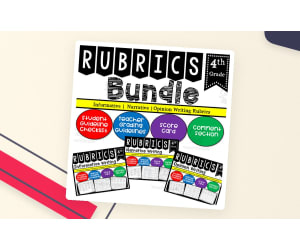
4th Grade Writing Rubric Bundle – With Checklists
ELA, Writing, Resources for Teachers, Grade 4, Rubrics, Teacher Tools, Worksheets & Printables
Writing Rubrics and Checklists for 4th Grade. This 24-page writing rubric bundle assists 4th grade students and teachers during informative, narrative, and opinion writing assignments. Students utilize the included checklists to ensure their writing meets requirements to achieve high scores. Teachers benefit from detailed 1-5 scoring rubrics covering introduction, content, organization, language, conventions, focus, and more. The bundle promotes student writing success through targeted checklists aligned with teacher scoring guidelines. Implement during whole-group writing instruction, small writing groups, or individual writing conferences. Appropriate for remote and in-person learning. Editable scorecards allow personalized student feedback. Compatible with various 4th grade narratives, informational texts, and opinion pieces. For many writing units for 3rd - 5th grade students and K-2nd grade that are specifically from the K-5 Treasures author of these products that are perfect to use with this rubric, click on the links below: Fall | Back to School Writing Prompt BUNDLE! 3rd-5th Grade Thanksgiving Writing Prompts for 3rd-5th Grade Winter Writing Prompts for 3rd-5th Grade Christmas Writing Prompts for 3rd-5th Grade Martin Luther King Jr. Writing Prompts for 3rd-5th Grade Valentine's Day Writing Activities for 3rd - 5th Grade: Narrative, Opinion, and Informative President's Day Writing Activities for 3rd - 5th Grade: Narrative, Opinion, and Informative Spring Narrative Writing, Spring Opinion Writing, and Spring Informative Writing Prompts for 3rd - 5th Grade Easter Narrative Writing, Easter Opinion Writing, and Easter Informative Writing Prompts for 3rd - 5th Grade K-2nd Grade Writing Units SUMMER ESL Writing Prompts and Drawing for K-2nd Grade Spring Narrative Writing, Spring Opinion Writing, and Spring Informative Writing Prompts with Vocabulary Words for K-2nd Grade For other rubrics for more grades, click on the links below: Writing Rubric BUNDLE for 3rd Grade with Checklist Writing Rubric BUNDLE for 4th Grade with Checklist Writing Rubric BUNDLE for 5th Grade with Checklist
Author K-5 Treasures
Rating
Tags Writing Rubrics, Opinion Writing Rubric, Informative Writing Rubric, Narrative Writing Rubric, Writing Assessment, 4th Grade Writing Rubric, 4th Grade Writing Assessment, Fourth Grade Writing, Writing

Number the Stars STEM Experiment + STEM Project for Grades 4, 5, 6
Science, Technology, Engineering, STEM, Grade 4, 5, 6, Experiments, Activities, Projects, Diagrams, Teacher Tools, Graphic Organizers, Rubrics
This hands-on activity combines creativity and problem-solving as students design and build a basket for Anne Marie to get the package safely to Uncle Henrik, based on the novel Number the Stars! Perfect for integrating literature and science, this challenge encourages students to apply engineering principles using simple materials while fostering teamwork and critical thinking. What’s Inside This Resource: Student Letter: A letter from Anne Marie introduces the challenge, linking the story to a real-world engineering task. Design Loop Graphic: A visual students can attach to their science journals, serving as a step-by-step guide throughout the activity. Detailed Instructions: Choose to print the guide as a packet or have students record each stage in their journals for an interactive experience. Teacher Tips: Practical guidance for crafting a clear problem statement with time constraints, materials, and success criteria tailored to your classroom. Skills Your Students Will Build: ✔ Problem-Solving: Identify obstacles and create inventive solutions. ✔ Engineering Design: Navigate the design loop—plan, construct, test, and refine. This page can easily be enlarged for a classroom poster. ✔ Critical Thinking: Assess their prototype’s performance and pinpoint ways to enhance it. ✔ Teamwork: Collaborate effectively to accomplish shared goals. Versatile Classroom Application: Whether as guided instruction or part of an integrated literature and science unit, this STEM activity encourages students to think creatively, document their process, and meet science and engineering standards. The rubric included is based on engineering concepts, but can also be used as a nonfiction writing rubric for cross-curricular options. Why Educators Love This Resource: ⭐ “My students were fully engaged, combining their passion for reading with STEM!” ⭐ “Simple to set up and encourages creativity and teamwork.” ⭐ “A seamless connection between literature and science for cross-curricular learning!” Empower your students to solve Anne Marie's immediate need and experience the excitement of engineering with this standards-aligned STEM adventure!
Author Kel's Klass
Tags 4th Grade Science Project, 4th Grade Science Experiment, 5th Grade Science Project, 5th Grade Science Experiment, 6th Grade Science Project, 6th Grade Science Experiment, Engineering Diagram, Science Graphic Organizer, Science Rubric, Bridge To Terabithia

EYE GYMNASTICS | 5 FREE POSTERS
Special Resources, Montessori, Early Learning, Elementary, Homeschool Resources, Not Grade Specific, Pre-K, Worksheets, Worksheets & Printables, Diagrams, Teacher Tools, Graphic Organizers, Presentations, Rubrics, Templates
EYE GYMNASTICS | 5 FREE POSTERS INFORMATION OF THE AUTHOR;At EDITORIAL ARENAS EDUCATIVAS, we believe that learning should be as fun as playing. That’s why we create educational materials that spark children’s curiosity and creativity. I invite you to check out my educational store and discover the wide range of resources that can transform your classes. MAIN DESCRIPTION OF THIS RESOURCE: What is the name of your product and what makes it special? This beautiful product is called “ EYE GYMNASTICS | 5 FREE POSTERS ”, and it is very special because it was carefully designed or compiled. With this educational resource, we want students to learn with enthusiasm and fun, because we believe learning is fun. How many pages are included in this resource? This fabulous document contains the following number of pages: 5 What size is it designed in (A4, letter, etc.)? This resource is designed in A4 format and compiled as a PDF. This makes downloading and printing simple and convenient, and PDFs are also easy to store and carry anywhere. PDF A4 Is the material in color or black and white? This pedagogical document comes in both black and white and color. This makes it more attractive for your learning sessions, but you have the freedom to choose how to print it. COLOR TAGS: EYE GYMNASTICS, EYE, BRAIN, BRAIN GAMES. SECONDARY AND COMPLEMENTARY INFORMATION: For what ages, levels, or grades is it designed? My specialty is creating educational resources for children, especially for preschool (ages 3–5) and primary (ages 6–12). Sometimes, I also create Spanish resources for learners of all ages. What subject, skill, or topic does it cover? This resource is designed to cover essential learning areas for children, generally literacy and math. What learning objectives does it achieve? This document fulfills a playful objective—it’s meant to be attractive and engaging for children. At the same time, it ensures that students learn or reinforce their knowledge. Who can use it best (teachers, parents, students, therapists, homeschoolers)? We are all part of education. Whether you are a teacher, parent, student, or therapist, this document can adapt perfectly to your learning goals, depending on your creativity. What additional materials are recommended (printer, scissors, markers, etc.)? The more immersed students are in learning, the greater their results. That’s why it’s ideal to complement this resource with pencils, crayons, markers, and even other art tools.
Author EDITORIAL LAURA EDUCA
Rating
Tags FREE, FREE RESOURCES, GYMNASTICS, EYE GYMNASTICS, SPECIAL RESOURCES

Human Body and Golden Ratio PowerPoint and Study Guide
Math, Grade 4, 5, 6, 7, 8, Projects, Activities, Presentations, Teacher Tools, Quizzes and Tests, Rubrics, Workbooks, Worksheets & Printables
Introduction to the Golden Ratio and the Human Body PowerPoint and Study Guide Lesson The Golden Ratio, or Phi, and the Human Body is a unique math PowerPoint exploration of the human body and Leonardo da Vinci's famous Vitruvian Man drawing. Academic connections are made with math, art and history. Another famous name for the Golden Ratio is the divine proportion, a proportion of beauty found throughout nature, science, art, and architecture. This lesson can be completed in one or two classes depending on how long teachers want to spend on projects. Learners will become enthralled by the idea of how math can be beautiful and learn to treat it like a treasure hunt by looking for the golden ration everywhere around them in art, nature and even their own bodies! Go down as many learning rabbit holes with NatureGlo's MathArt Library Golden Ratio and Human Body page. On this page you'll get videos, project ideas and curated website links. Enjoy the exploration! Student Objectives Students will: Complete the PowerPoint lesson Complete the study guide for the lesson. Watch the curated educational videos from the MathArt Virtual Library Website. Complete the journal in the study guide including a drawing with written descriptions. Complete the quiz. Choose and do a chosen project. Order, Outline and Steps Read the Quick Start guide that comes with the curriculum. Go through the PowerPoint lesson with the students. Students complete the study guide during or after the PowerPoint lesson. Students select and complete a chosen projects about the topic. Grades & Ages Grades 4 - 8 Ages 10 - 14 Implementation Format PowerPoint Study guide Use of Internet Activities Projects Answer Key - INCLUDED Number of Pages - 33 File Types - PowerPoint and PDF files Length of Lesson - At least one lesson, or, optionally two or more lessons
Author NatureGlo's eScience
Rating
Tags Golden Ratio, Human Body, Divine Proportion, Math Activities, Math Projects, Leonardo Da Vinci
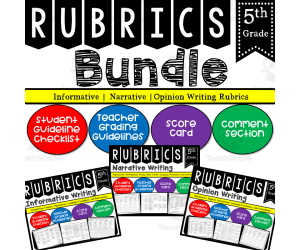
Writing Rubric BUNDLE for 5th Grade with Checklist
ELA, Writing, Resources for Teachers, Grade 5, Rubrics, Teacher Tools, Worksheets, Worksheets & Printables
Writing Rubrics and Checklists for 5th Grade. This 27-page bundle provides 5th grade teachers with the tools they need to support student growth in writing. Specifically, it includes informative, narrative, and opinion writing rubrics that use a 1-5 scale to assess introduction, support, organization, language/vocabulary, development/setting, plot/conflict, and conventions. Detailed checklists outlining the criteria students should meet for proficient writing are also provided. By providing students with clear expectations and examples of what quality writing looks like, teachers can confidently evaluate student work. The rubrics and checklists facilitate meaningful feedback and allow teachers to track growth over time. They are versatile resources that can be used for whole-class writing instruction, small group lessons, or individual writing conferences. Appropriate for a range of ability levels, these materials help develop 5th grade students into skilled, thoughtful writers. For many writing units for 3rd - 5th grade students and K-2nd grade that are specifically from the K-5 Treasures author of these products that are perfect to use with this rubric, click on the links below: Fall | Back to School Writing Prompt BUNDLE! 3rd-5th Grade Thanksgiving Writing Prompts for 3rd-5th Grade Winter Writing Prompts for 3rd-5th Grade Christmas Writing Prompts for 3rd-5th Grade Martin Luther King Jr. Writing Prompts for 3rd-5th Grade Valentine's Day Writing Activities for 3rd - 5th Grade: Narrative, Opinion, and Informative President's Day Writing Activities for 3rd - 5th Grade: Narrative, Opinion, and Informative Spring Narrative Writing, Spring Opinion Writing, and Spring Informative Writing Prompts for 3rd - 5th Grade Easter Narrative Writing, Easter Opinion Writing, and Easter Informative Writing Prompts for 3rd - 5th Grade K-2nd Grade Writing Units SUMMER ESL Writing Prompts and Drawing for K-2nd Grade Spring Narrative Writing, Spring Opinion Writing, and Spring Informative Writing Prompts with Vocabulary Words for K-2nd Grade For other rubrics for more grades, click on the links below: Writing Rubric BUNDLE for 3rd Grade with Checklist Writing Rubric BUNDLE for 4th Grade with Checklist Writing Rubric BUNDLE for 5th Grade with Checklist
Author K-5 Treasures
Tags Writing Rubrics, Opinion Writing Rubric, Informative Writing Rubric, Writing Rubric For 5th Grade, 5th Grade Writing Rubric, Narrative Writing Rubric, 5th Grade Writing Assessment, Writing Assessment
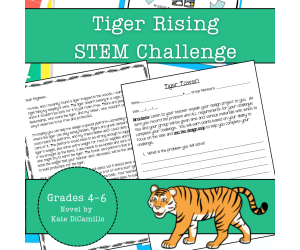
Tiger Rising STEM Experiment + STEM Project for Grades 4, 5, 6
Science, Technology, Engineering, STEM, Grade 4, 5, 6, Experiments, Activities, Projects, Diagrams, Teacher Tools, Graphic Organizers, Rubrics
This hands-on activity combines creativity and problem-solving as students design and build a tower for the safety of the tiger in the novel, Tiger Rising. Perfect for integrating literature and science, this challenge encourages students to apply engineering principles using simple materials while fostering teamwork and critical thinking. What’s Inside This Resource: Student Letter: A letter from Rob Horton introduces the challenge, linking the story to a real-world engineering task. Design Loop Graphic: A visual students can attach to their science journals, serving as a step-by-step guide throughout the activity. Detailed Instructions: Choose to print the guide as a packet or have students record each stage in their journals for an interactive experience. Teacher Tips: Practical guidance for crafting a clear problem statement with time constraints, materials, and success criteria tailored to your classroom. Skills Your Students Will Build: ✔ Problem-Solving: Identify obstacles and create inventive solutions. ✔ Engineering Design: Navigate the design loop—plan, construct, test, and refine. This page can easily be enlarged for a classroom poster. ✔ Critical Thinking: Assess their prototype’s performance and pinpoint ways to enhance it. ✔ Teamwork: Collaborate effectively to accomplish shared goals. Versatile Classroom Application: Whether as guided instruction or part of an integrated literature and science unit, this STEM activity encourages students to think creatively, document their process, and meet science and engineering standards. The rubric included is based on engineering concepts, but can also be used as a nonfiction writing rubric for cross-curricular options. Why Educators Love This Resource: ⭐ “My students were fully engaged, combining their passion for reading with STEM!” ⭐ “Simple to set up and encourages creativity and teamwork.” ⭐ “A seamless connection between literature and science for cross-curricular learning!” Encourage your students to provide a safe haven for the tiger (and Rob and Sistine?) and experience the excitement of engineering with this standards-aligned STEM adventure!
Author Kel's Klass
Tags 4th Grade Science Project, 4th Grade Science Experiment, 5th Grade Science Project, 5th Grade Science Experiment, 6th Grade Science Project, 6th Grade Science Experiment, Engineering Diagram, Science Graphic Organizer, Science Rubric, Tiger Rising

Personal Narrative Writing, Graphic Organizer, Rubric & Examples
Creative Arts, Common Core, Grade 5, 6, Graphic Organizers, Teacher Tools, Templates, Rubrics, Writing Prompts, Worksheets & Printables
Get your class writing every day with this easy to follow resource for personal narrative writing.Personal narratives are stories about yourself. Most students get stumped in the writing process when it comes to generating ideas... well not anymore! This guide will help take your young authors on the writing journey. It will show them how to write from the very first steps of coming up with an idea all the way to writing a conclusion. It is fool proof, easy to leave plans for a substitute and to take the headache and scariness out of writing for you as the teacher! Personal Narrative curriculum is a must! We can't expect that students just know how to write. There is structure that is involved. Every story with this kit will have a killer beginning, middle and end. It will eliminate students' need to repeat themselves and truly get to the heart of their story. Students are lost when it comes to telling their own stories. You get stuck with a list of “And then… and then.. and then…” Break those bad habits with this Personal Narrative Writing Set! Students will be able to tell a fluent story with suspense and intrigue! With this resource you will get: full set of teacher plans examples of great writing to share with your class student writing pages tips and tricks on how to break writer’s slump (and the kid that says “I have nothing to write about”) reflection pages that help create better writers for your future writing pieces scoring rubric for teachers to use for themselves or for data or during conference time with parents countless tips and tricks to enhance your students’ personal narrative writing Start with this 20 page framework and make writing a breeze in your class!
Author Big Apple Teaching
Tags Personal Narrative, Writing, Dialogue, Grammar, Descriptive Words, Setting The Scene, Vivid Verbs, Adjectives, Sentence Starters, Writing Prompts

Emotional Intelligence Building Blocks - Social Emotional Learning
Life Studies, Career, Research, Life Skills, Special Resources, Social Emotional Learning (SEL), Social Skills, Special Education Needs (SEN), Speech Therapy, Grade 3, 4, 5, 9, 10, 11, 12, Activities, Teacher Tools, Projects, Centers, Assessments, Lesson Plans, Outlines, Presentations, Rubrics, Quizzes and Tests
Uncover the best social emotional learning (SEL) curriculum for grades 3-6 in "Emotional Intelligence Building Blocks - Social Emotional Learning" by Syed Hammad Rizvi, especially designed for elementary-school-going children. With a total of 432 pages of in-depth information, this book maximizes 8- to 12-year-olds' ability to handle their internal world of emotions while developing high-quality social skills, such as mastering personal management skills and responsible decision-making. Full of exciting topics in each installments like recognizing happiness, sadness, anger, fear, and many more, this social emotional learning middle school workbook delves deep into self-awareness, self-management tools like journaling, breathing exercises, goal setting, social awareness with a focus on empathy, body language, and cultural differences. Designed to be highly beneficial for homeschoolers, classroom teaching, or family usage, this social-emotional learning middle school curriculum not only provides exercises to handle conflicts, make friends, and enhance positive thinking but is specifically designed to help in overcoming emotional difficulties by teaching kids to be emotionally intelligent individuals throughout their lives. It is a highly recommended teaching tool for all parents, tutors, and teachers looking for scientifically valid emotional intelligence exercises to be performed by kids in their classroom. Why Parents/Schools Love It: In-Depth SEL Resource: Provides students with a clear continuum of skills from recognizing emotions to applying concepts in a real-life setting. Helps students learn to be resilient, empathetic, and effective conflict resolvers. Practical and Engaging Tools: This category includes solutions such as journaling, breathing exercises, and goal-setting tasks, which require minimal effort to perform in the comfort of one's home or an educational setting in order to promote instant emotional development. Encourages Positive Relations: Deals with skills like listening, boundary marking, and celebrating diversity. Has the effect of reducing misbehavior and increasing positive associations with family, friends, and the broader community. Aligned with Educational Standards: Based on the principles of Emotional Intelligence, the resource is useful for both homeschooling and classroom education as it impacts academic success, health, and bullying intervention. Empowering for Lifelong Skills: It promotes self-discovery and optimistic outlooks, arming children with skills to conquer life's obstacles, resulting in happier and more confident people as manifested in parent and teacher feedbacks. Target Classes/Students : Based on the complete analysis of the content, structure, language, and examples in the book, it is ideally targeted at students in grades 3 to 6 (usually between 8-12 years old). The content uses vocabulary suitable for this age group, scenarios that are easy for students of this age to relate to, such as school challenges and playground and family dynamics, and progresses gradually from simple emotion identification to complex issues such as ethical dilemmas and community involvement. The introductory tone assumes basic reading skills without burdening the younger reader, while the substance in the later chapters on self-awareness and social dynamics fits well with the upper elementary levels. It could extend to advanced grade 2 students or remedial grade 7, but the core focus is perfectly in tune with middle childhood development stages emphasized in the book. Copyright/Terms of Use : This Book was copyrighted by Syed Hammad Rizvi. This resource is to be used only for personal and single-classroom use only. You are not to alter or redistribute any part of this resource or sell this resource. In other words, do not put this resource on the Internet where it could be downloaded. If you would like to share this resource with others, you can purchase other licenses through Teachsimple. Thank you so much for your cooperation! This product is happily brought to you by Syed Hammad Rizvi
Author Creative Book Store
Rating
Tags EmotionalIntelligenceBuildingBlocks, SocialEmotionalLearning, SELForKids, EmotionalIntelligenceForChildren, SELCurriculum, EmotionalRegulationForKids, BuildingEmpathyInChildren, KidsEmotionalWellbeing, ElementarySELActivities
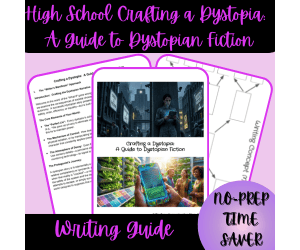
High School Crafting a Dystopia: A Guide For Dystopian Fiction
ELA, Reading, Writing, Research, Resources for Teachers, Homeschool Resources, High School, Assessments, Teacher Tools, Rubrics, Outlines, Graphic Organizers, Worksheets & Printables, Writing Prompts, Lesson Plans, Diagrams
As a homeschool mom myself, I’m always on the lookout for ways to make high school writing both challenging and genuinely fun. That is exactly why I created this High School Crafting a Dystopia: A Guide For Dystopian Fiction unit. Let's be honest—staring at a blank page is intimidating for teenagers, especially when they have to build an entire fictional world from scratch. This High School Crafting a Dystopia: A Guide For Dystopian Fiction resource fixes that by acting as a step-by-step roadmap. It guides your teen from that first spark of an idea all the way to a polished short story. By breaking down the big, scary process of dystopian storytelling into bite-sized pieces, it turns a daunting project into an exciting adventure. Whether your teen is an aspiring novelist or just needs to build confidence in their creative writing, this guide gives them the exact structure they need without crushing their unique voice. I built every single page with the realities of homeschooling in mind. My goal is to completely change how your teen views storytelling, while giving you the peace of mind that you're using a reliable, high-quality resource. INCLUDED IN THIS RESOURCE: Instructional Guides: Step-by-step handbooks for world-building and plot development. Planning Tools: Concept maps and character profile worksheets for organized pre-writing. Writing Prompts: 20 specialized prompts designed to ignite the dystopian imagination. Assessment Pack: Peer review checklists and teacher rubrics for structured feedback. TOPICS COVERED: Dystopian Logic: Defining "Perfect Lies" and the mechanics of societal control. Character Arc: Developing protagonists through internal awakenings and meaningful flaws. World-Building: Using sensory details to establish atmosphere and settings. Narrative Structure: Pacing the hook, rising action, climax, and resolution. Ultimately, this High School Crafting a Dystopia: A Guide For Dystopian Fiction unit is all about helping your homeschooler find their voice and truly master short fiction. It balances clear guidance with plenty of creative freedom, giving young writers the perfect space to grow. You will love how the organized planning tools and straightforward rubrics take the stress out of teaching. By focusing on core skills like world-building and character development, this unit sets your teen up for long-term success. I truly believe that with the right tools, teenagers can write stories that are both deeply thoughtful and technically strong. I am so excited to share this project with your family and see your teen bring their unique world to life. Thank you for letting me play a small part in your homeschool journey. If you and your students/homeschoolers enjoyed this resource, please leave a review. Thank you for your support! Tina - Big Easy Homeschooling Mom
Author Homeschool with Big Easy Homeschooling Mom
Rating
Tags Dystopian Writing, High School English, Creative Writing Lesson, Character Development, Dystopian Fiction Guide, Short Story Project, Dystopian Story Prompts For Teens, , How To Write A Dystopian Short Story, Dystopian Writing Unit For Homeschool, Dystopian Plot Outline Template

High School 2026 June ELA Bell Ringers Bundle
Reading, ELA, Writing, Research, Resources for Teachers, Vocabulary, Language Development, Spelling, Grammar, High School, Homeschool Resources, Teacher Tools, Assessments, Quizzes and Tests, Rubrics, Writing Prompts, Worksheets & Printables, Presentations
High school morning work should not feel like a waste of time. As a homeschool mom to a 10th grader and a curriculum creator, I know how hard it is to find daily ELA warm-ups that actually challenge teenagers without leaving you with hours of grading. I created this High School June 2026 ELA Bell Ringers Bundle to solve that exact problem. This High School June 2026 ELA Bell Ringers Bundle resource delivers 22 weekdays of rigorous exercises that push students/homeschoolers to think critically the second class begins. Instead of lazy, surface-level questions, each day features a fresh prompt focused on advanced language analysis, sentence structure experiments, and stylistic breakdowns. They fit beautifully into both a traditional high school classroom and a homeschool routine at the kitchen table. To make your mornings easier, I have included a complete grading framework and thorough instructional answers for every prompt. You get your time back, and your students/homeschoolers get an excellent language arts education. By blending grammar, creative writing, and literary analysis into a predictable routine, you will see their analytical skills improve all month long. INCLUDED IN THIS RESOURCE: 22 slides that cover all weekdays in June 2026. Complete answer keys right in PowerPoint notes. PDF answer key version for quick reference. Detailed guidelines to make grading objective and fast. TOPICS COVERED: Mastering the subjunctive mood and complex structures. Exploring creative style and author choices. Diving deep into poetry and symbolism. Exploring vocabulary etymology and sentence synthesis. Thank you for trusting my curriculum in your home or classroom. I’d love to hear how these prompts transform your daily discussions! If you and your students/homeschoolers enjoy this resource, please feel free to leave a review. Thank you for your support! Tina - Big Easy Homeschooling Mom
Author Homeschool with Big Easy Homeschooling Mom
Rating
Tags Secondary English Warm Ups, Daily Language Arts Exercises, High School Writing Prompts, Daily Grammar Review, Advanced Sentence Structure, Literary Devices Practice, High School Poetry Study, Rhetorical Analysis Worksheets, Sentence Synthesis Activities, High School Homeschool Curriculum

Limerick Poem Lesson Plan, Template, Examples & Rubric Poetry Writing
ELA, Poetry, Literature, Homeschool Templates, Grade 3, 4, 5, 6, Centers, Activities, Graphic Organizers, Teacher Tools, Lesson Plans, Rubrics, Worksheets & Printables
Ever tried teaching a limerick poem and found your students either stuck on rhyming… or going completely off track? This resource was created to make teaching limericks much more manageable. It gives your students a clear structure to follow, while still leaving room for the fun and creativity that limerick poetry is known for. Instead of guessing what to write next, students are guided through the process step by step, using examples and templates that help everything “click”. What's Included A detailed lesson plan you can pick up and use A Limerick poem example to model expectations (color and blackline posters) Interactive notebook templates to support each stage A clear explanation of the AABBA rhyme pattern An assessment rubric to keep marking simple A publishing sheet that would make the perfect bulletin board display to celebrate National Poetry Month Perfect For Grades 3-6 Poetry lessons Writing units Literacy rotations Homeschool learning Small group or whole-class teaching How You Might Use It Start by reading a few limericks together (your students will love the humor), then break down the structure as a class. From there, they can use the templates to plan and write their own poems before sharing. Skills Covered Poetry writing Rhyme and rhythm (AABBA pattern) Vocabulary development Sentence structure Creative expression Limericks can be tricky—especially when students are trying to juggle rhyme, rhythm, and structure all at once. Having a template in front of them makes a big difference. I’ve found that once students understand the pattern, they actually enjoy the process (and the silly results that come with it!). It’s also a great way to build confidence in students who usually struggle to get started with writing. So, if you’re looking for a way to teach limerick poetry that gives your students enough structure to succeed—but still lets them have fun with it—this is an easy addition to your writing lessons.
Author Teach2Tell
Rating
Tags Poetry Lesson Plan, Poetry Writing Activity, Elementary Poetry, National Poetry Month , Writing Rubric, Creative Writing Lesson, Poetry Examples, Limerick Poem, Limerick, How To Write A Limerick
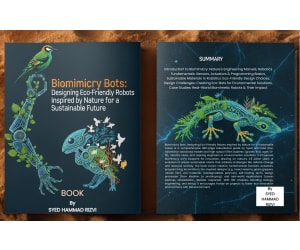
Biomimicry Bots: Designing Eco-Friendly Robots Inspired by Nature
Science, Earth and Environmental Sciences, Earth Sciences, Environmental Science, Geology, Life Sciences, Animals, Biology, Human Body, Insects, Grade 6, 7, 8, 9, 10, 11, 12, Activities, Experiments, Labs, Teacher Tools, Assessments, Diagrams, Lesson Plans, Rubrics, Workbooks, Worksheets & Printables
Biomimicry Bots: Designing Eco-Friendly Robots Inspired by Nature for a Sustainable Future 380-Page Comprehensive STEM Guide for Grades 8-12 | Robotics + Biomimicry + Environmental Science Curriculum Resource Unlock the future of green technology with this revolutionary 380-page educational tour de force! Authored by Syed Hammad Rizvi, Biomimicry Bots is the definitive interdisciplinary resource that empowers students to design sustainable, nature-inspired robots that address real-world environmental issues, ranging from ocean cleanup and reforestation to air quality sensing and biodiversity preservation. Ideal for advanced middle school and high school students (Grades 8-12, ages 13-18), robotics teams, STEM education, homeschoolers, and future engineers and environmental scientists. This book seamlessly integrates biology, engineering, programming fundamentals, sustainable materials, AI, swarm intelligence, soft robotics, and eco-design challenges to create a fun and interactive learning journey. With 100 expertly designed chapters, students will discover: Robotics basics (sensors, actuators, microcontrollers, programming) Nature’s brilliance (gecko adhesion, octopus arms, bird flight, insect colonies) Green materials (biodegradable plastics, self-healing materials, recycled composites) Practical applications (robotic fish, agricultural robots, disaster response drones) Eco-bot design activities with CAD and prototyping support Meets NGSS, IB, and AP Environmental Science curriculum standards. Perfect for robotics clubs (VEX, FIRST), science fairs, classroom instruction, or a full-semester course. Empower the next generation of eco-innovators now! Why Parents & Schools Adore It: Completely integrates with NGSS engineering design and Earth systems standards — administrators rave about it for its standards alignment. Teaches a true sustainability mindset, not just "build a robot" — parents are thrilled that their kids finally get why eco-design is important. 100 bite-sized chapters that are extremely teacher-friendly: assign 1-2 chapters a week or choose projects to avoid overwhelming kids. Very project-intensive with real-world applications (ocean cleanup robots, reforestation drones, and so on) — kids actually build portfolios that colleges care about. One of the only resources that combines cutting-edge robotics with environmental science — closes a huge gap in the curriculum. Target Audience (Based on Full Book Analysis) : Primary: Advanced STEM students in grades 8-12 (especially honors/AP level classes) Best Fit Classes/Courses: – Robotics/Engineering/Introduction to Engineering Design – Environmental Science/AP Environmental Science – Biology (ecology/biomimicry units) – Technology/Computer Science (Arduino, AI, programming fundamentals) – Gifted & Talented programs, Science Olympiad, FIRST Robotics, VEX teams – Homeschool co-ops emphasizing project-based learning Also great for teachers seeking a comprehensive year-long interdisciplinary curriculum (biology, physics, sustainability) Copyright/Terms of Use: This Book is copyrighted by Syed Hammad Rizvi. This resource is for personal and single classroom use only. You may not alter, redistribute, or sell any part of this resource. In other words, you may not put it on the Internet where it could be publicly found and downloaded. If you want to share this resource with colleagues, please purchase additional licenses from Teachsimple. Thank you for respecting these terms of use. This product is happily brought to you by Syed Hammad Rizvi
Author Creative Book Store
Rating
Tags BiomimicryBots, EcoFriendlyRobots, NatureInspiredRobotics, SustainableRobotics, BiomimicryEducation, STEMCurriculum, RoboticsForKids, HighSchoolSTEM, MiddleSchoolScience, EnvironmentalEngineering