



3,922 products added recently
12Th Grade Worksheets
Guide your 12th-grade students through their final year with worksheets that solidify their understanding and readiness for life after graduation. These resources cover complex subjects and critical life skills. Incorporate them to ensure your students are well-prepared for their next steps.

 Show filters


Ocean Plastic Pollution – Data Analysis & Advocacy Sheets
Science, Earth and Environmental Sciences, Earth Sciences, Environmental Science, Geology, Space, Life Sciences, Nature & Plants, STEM, Human Body, Grade 6, 7, 8, 9, 10, 11, 12, Worksheets & Printables, Workbooks, Worksheets, Word Searches, Teacher Tools, Assessments, Lesson Plans, Quizzes and Tests, Quizzes, Tests
This 55-page comprehensive, interdisciplinary curriculum will allow you to turn your classroom into an environmental action lab focused on ocean plastic pollution. Designed to bridge cutting-edge marine science with civic advocacy, it provides students with opportunities to move beyond passive learning and into actual environmental action based on evidence. The curriculum consists of three phases that take students through a complete educational process. In Phase 1, Theoretical Framework gives students all of the background knowledge necessary for them as citizens to become advocates for change through evidence-based advocacy strategies (i.e., the Coriolis Effect; chemical properties of polymers; biodegradability; accumulation and magnification of toxins in food webs; marine ecosystems) designed using science and basic tenets of physics & chemistry that are used in designing marine policies. In Phase 2, Application Phase, students have the opportunity to apply what they have learned through 10 worksheets that require analytical thinking skills (i.e., interpreting data sets; calculating numbers; ecological reasoning; evaluating corporations' environmental claims) in the creation of project proposals, respectively, regarding greenwashing, greenhouse gas emission reductions. In Phase 3, Instructional Materials, teacher support is provided (i.e., graphic organizers; rubric; answer keys with rational explanations; pacing guide; differentiation strategies, etc.) for successful implementation of the curriculum across disciplines. Students will have the opportunity to analyze real-world examples of ocean plastic pollution facts, including: the Great Pacific Garbage Patch, Henderson Island, Midway Atoll; develop a quantitative analysis of the rate of time it takes for PVC plastic to decompose; create maps showing the locations of the locations of plastic and non-plastic debris along ocean currents; analyze data related to the successful clean up of beaches and oceans and use such information in forming international legislation that seeks to eliminate as much plastic pollution as possible through public awareness campaigns such as "I Love My Ocean" public service announcements etc. Students compose policy memos formally addressed to elected representatives. The materials will help students build skills and competencies in the areas of data literacy, systems thinking, scientific writing, persuasive communication and authentic political agency through a pressing global issue — marine plastic pollution. Topics Covered: Environmental Science, Earth Science, Marine Biology, Chemistry (Polymer Science), Economics, Civics/Government, ELA (Persuasive Writing, Research), Mathematics (Data Analysis, Percent Calculations, Unit Conversions). You will get: Theoretical Resource: Four Chapters (Pgs. 1 - 10); Structured Worksheets for Students (10 Worksheets with 100+ Questions) (Pgs. 11 - 22); Three High Contrast Pedagogical Visual Diagrams (Lifecycle Flowchart, Bar Chart, Advocacy Framework); Complete Comprehensive Answer Keys for Each Question with Model Response; Graded Rubric (100 Point) for Final Policy Memo Project; Flexible Pacing Guide (20 days of Instruction in a 4 week period); Strategies for Differentiation for 3 Learner Profiles; Cross Curricular Activity Connection (Science, ELA, Math, C.S.S., Art); Teacher's Resource List (documentaries, interactive tools, essential readings); Final Note to Educators with Pedagogy Philosophy. Keywords: ocean plastic pollution, microplastics worksheet, marine debris, environmental science curriculum, ocean gyres lesson, bioaccumulation, biomagnification, greenwashing, single use plastics, Extended Producer Responsibility, policy memo project, STEM environmental education, data analysis science, middle school science, high school environmental science, science resources, civic advocacy project, ocean conservation, sustainability education, plastic pollution unit. PARENTS/TEACHERS ENJOY THIS CURRICULUM VERSION: Interdisciplinary - Covers Several Subjects with One Resource. This PDF Combines Science, Math Writing (ELA), Economics, Social Studies, & Civics into a Single Resource - Teachers Save Time By Not Having to Create Multiple Lesson Plans. Provides Cross-Curricular Value - Administrators/Parents Can Easily See Cross-Curricular Value of Lesson. Teaches Real-World Skills, Not Just Testing. Students Learn to Analyze Data Sets, Recognize Corporate Greenwashing, Develop Legislation &Write Policy Memos to Real See Elected Officials Using Many of the Same Skills That Will Benefit Them as They Enter College/Career &Participate In A Democratic Society. Ready for Implementation- Complete Answer Keys with Detailed Model Responses; Grading Rubric (100 Points), Pacing Guide (4 weeks); Differentiation Strategies for 3 Different Learner Profiles; Cross-Curricular Connections for This Curriculum Make Implementation Possible Immediately After Prep Work is Finished. Addresses An Urgent, Student-Motivating Issue. Ocean plastic pollution is one of the most obvious environmental crises our kids face; this curriculum connects with the concern they currently have & creates meaningful, engaging learning through rigorous science & civic engagement vs passive acknowledgment of a problem. Sufficiently Rigor for Advanced Students While Use Infrastructure to Support Struggling Learners - There Are Strategies for Supporting Struggling Readers, Advanced Learners Please Readers, English Language Learners Located In The Resource. TARGET STUDENT GRADE LEVELS : This PDF is appropriate for the following grade levels based on an in-depth study of various types of complexity factors: vocabulary (CPV), level of math (CPSM), level of writing (CPW), and level of conceptual depth (CPD). Primary Target Grades 7-10 Core Worksheets for Grades 7-8: Worksheets are intended for core subject teachers scaffolding; fill-in-the-blank and short answer sections of worksheets allow for guided reading. Independent Engagement for Grades 9-10: Students will have the ability to fully engage in all theoretical materials, perform calculations, write policy memorandums, and create advocacy campaigns. Secondary Target Grades 11-12 (AP Environmental Science/AP Language) Advanced students in all areas of study will benefit from the economic analysis, sections on international law, critique of greenwashing, and sections on writing policy briefs at college preparatory level. Also Appropriate for: Gifted/Advanced Programs (grades 6 and up) Environmental Clubs/Extracurricular Programs (all ages) College Level Environmental Science 101 (Community College Level) Adult Education/Homeschool (Middle School & High School Level) Copyright/Usage Terms : Despite being created by Syed Hammad Rizvi, this book belongs solely to him, and it may not be modified or sold without his consent. You are allowed to make copies for your use; however, you may not post or upload copies on-line or anywhere else that they would be available to the general public. If you wish to share this book with other educators, you can purchase additional copies of the same license from Teachsimple. By following these rules, you uphold the terms of use. This product has been lovingly produced with the help of Syed Hammad Rizvi
Author Creative Book Store
Rating
Tags OceanPlasticPollution, PlasticPollution, Microplastics, MarineDebris, EnvironmentalScience, MiddleSchoolScience, HighSchoolScience, ScienceTeacher, DigitalDownload, HomeschoolScience
Evaluating Open Source Evidence (OSINT)
Math, Measurements, Money, Statistics, Time, Business, Life Studies, Finance, Career, Home Economics, Grade 6, 7, 8, 9, 10, 11, 12, Worksheets & Printables, Workbooks, Worksheets, Word Searches, Teacher Tools, Assessments, Lesson Plans, Quizzes and Tests, Quizzes, Tests
Transform your students from passive consumers of information into sharp, critical digital investigators! In an age of corporate greenwashing and slick marketing, this comprehensive curriculum on Open Source Intelligence (OSINT) equips high school students with the essential skills to pierce the veil of public relations and uncover factual truth. This is not your average media literacy lesson. This is a deep dive into the real-world tools used by journalists and investigators to hold powerful entities accountable. Students will learn to navigate complex public databases, deconstruct corporate narratives, and synthesize evidence to form their own reasoned conclusions. Move beyond discussing "fake news" and empower your students to actively verify information using primary source data from the SEC, EPA, OSHA, and more. This complete, no-prep unit is perfect for Civics, Economics, Media Literacy, Journalism, and AP-level courses. It's meticulously structured into three phases: Introduction & Methodology: Four engaging chapters that build the theoretical foundation of corporate OSINT, introducing key databases and the C.O.R.E. investigative methodology. Student Workbook: Ten rigorous worksheets, including a final capstone investigation, that turn theory into practice. Students will tackle real-world scenarios, analyze mock press releases, and get hands-on experience with database research. Teacher Resources: Everything you need to teach with confidence, including visual aids (flowcharts and diagrams), a comprehensive answer key with model answers and grading rubrics, and a detailed Teacher Implementation Guide covering pacing, instructional strategies, and crucial ethical frameworks. Equip your students with the 21st-century's most vital skill: the ability to think critically and verify everything. Keywords: Media Literacy, OSINT, Open Source Intelligence, Critical Thinking, Digital Citizenship, Fact-Checking, Corporate Accountability, High School, Research Skills, Civics, AP Government, Economics, Journalism, Fake News, Primary Source, Data Analysis, SEC EDGAR, EPA, Project-Based Learning, No-Prep, Curriculum. Why Parents/Schools Love It: Builds Real-World Skills: This curriculum teaches practical, 21st-century skills in critical thinking, data analysis, and digital verification that are directly applicable to college, careers, and informed citizenship. Comprehensive & Teacher-Friendly: It is a complete, ready-to-use package with student-facing material, visual aids, and a robust teacher guide with answer keys and rubrics, saving educators dozens of hours of prep time. Promotes Ethical Digital Citizenship: The dedicated "Ethical Frameworks" section ensures students learn to use these powerful skills responsibly, focusing on verification and accountability, not online vigilantism. Engaging & Relevant Content: Students investigate timely, relevant issues like environmental claims ("greenwashing") and labor practices, making learning more dynamic and impactful than a standard textbook. Cross-Curricular Application: Its versatile design allows it to be seamlessly integrated into multiple subjects, including Social Studies, English Language Arts, and even STEM, making it a valuable resource for an entire school. Target Audience Analysis : Based on the advanced vocabulary ("epistemological," "fiduciary duty"), complex subject matter (SEC filings, lobbying disclosures), and the explicit "Teacher Implementation Guide" on page 33, this PDF is targeted at: Grade Level: Advanced High School (Grades 10-12) and potentially introductory College/University students. The guide mentions 8th grade, but the content is most suitable for older, more mature students. Specific Classes: AP Government / Civics: Perfect for units on corporate influence, lobbying, and regulatory agencies. Economics: Excellent for analyzing corporate finance, risk, and the gap between marketing and financial reality (Form 10-K). Media Literacy / Digital Citizenship: A cornerstone unit for teaching students to be critical consumers and verifiers of online information. Journalism: An essential, practical toolkit for aspiring investigative reporters. Advanced English / Rhetoric: A fantastic resource for analyzing non-fiction texts (corporate PR vs. legal filings) and understanding persuasive strategies. Computer Science: Can be used in a data literacy or data ethics context, teaching students how to query and interpret structured data from public databases. Copyright/Terms of Use: This Book was copyrighted by Syed Hammad Rizvi. This resource is for personal and single classroom use only. You may not alter, redistribute, or sell any part of this resource. In other words, you may not put it on the Internet where it could be publicly found and downloaded. If you want to share this resource with colleagues, please purchase additional licenses from Teachsimple. Thank you for respecting these terms of use. This product is happily brought to you by Syed Hammad Rizvi
Author Creative Book Store
Rating
Tags OSINT, OpenSourceIntelligence, MediaLiteracy, FactChecking, DigitalLiteracy, CorporateAccountability, VerifyingSources, OSINTforEducation, InvestigativeJournalism, DataLiteracy

High School Financial Literacy: Stock Market Project- Investing
Finance, Life Studies, Home Economics, Decimals, Math, Money, Addition and Subtraction, Statistics, Special Resources, Life Skills, Grade 9, 10, 11, 12, Worksheets & Printables, Worksheets, Projects, Activities
This engaging and useful stock market project can teach your high school students all about several financial literacy topics: investing their savings, buying shares (stocks) in a company, calculating their gains and losses, investment volatility, calculating the mean, length of investment (time horizon) and more! How to Use: 1. On Day 1, have your students complete the first worksheet. They can use the included website to look at a variety of different stocks and their historical performances. They will divide up their thousand dollar investment between two different companies, and calculate how many shares the will be able to buy from each company they picked to invest in. 2. Then, schedule three separate classes over the next month or so to check on the stocks. Each time, your students will record that day's current share price and calculate their shares' current investment value. 3. On the final day, your students will calculate how much money they have gained or lost during the project. Then, each student will provide their gain or loss which will allow the calculation of your class's average stock performance during the project. [You can project the included table on a board and each student can fill in their gain or loss.] 4. Next, students will find out how the stock market performed on average during the timeframe of the project. They will utilize data from the S&P 500 to see if their class's average was better or worse than the stock market itself. 5. Finally, students will write a reflection about this project. A variety of prompts are included to help your students think about volatility, lower risk of ETFs, and the importance of thinking about how long one can invest their money. Sample calculations are provided for each step to help model for your students. What's Included: 6 Page PDF- Ready to Print and Use! 1) Teacher Instructions 2) Day 1: Buy Stocks 3) Check on Stocks 3 Times 4) Calculate Gains, Losses, and Class Average 5) Compare to US500 Performance 6) Written Reflection
Author Grace Under Pressure
Tags Life Skills, Investing, Invest, Stock Market, Financial Literacy, Personal Finance, Personal Finance Worksheets, Financial Literacy Worksheets, Math Project, Applied Math

Crypto & Digital Money Literacy (Age-Appropriate Intro)
Math, Statistics, Money, Order Of Operations, Business, Life Studies, Career, Finance, Coaching, Home Economics, Homeschool Curriculum, Grade 7, 8, 9, 10, 11, 12, Worksheets & Printables, Workbooks, Worksheets, Word Searches, Teacher Tools, Assessments, Lesson Plans, Quizzes and Tests, Quizzes, Tests
This complete curriculum on the topic of Cryptocurrency and Digital Currency Literacy is a NO-PREP curriculum to prepare your students for the 21st Century's economy as it relates to Cryptocurrency and Digital Currency! This 40-page resource will transform your students from passive consumers to critical thinkers. This curriculum will guide students through the complex world of blockchain, Web3, and digital assets using an academically rigid and unbiased basis. Each student must understand the technology, economics, and history so that they can build a solid foundation on which to build their financial future. The curriculum is appropriate for high schools, and advanced middle schools to study Economics, Computer Science, Business, Financial Literacy, and Social Studies. By removing the speculative hype around these topics and focusing on first principles, this curriculum will provide students with the necessary tools and skills to understand, analyze and critique the "next generation" of the internet. WHAT'S IN THIS 40-PAGE RESOURCE: Part One: The Core Academic Framework (4 Chapters) Chapter One: The Evolution of Value; Barter and Rai Stones to Fiat Currency Chapter Two: The Architecture of Trust; Deconstructing Blockchain, Cryptography & Distributed Ledgers Chapter Three: Programmable Money; Smart Contracts and DeFi Chapter Four: Economics, Ethics & The Future; Volatility, CBDCs and Global Impact Part Two: Student Workbook (10 Worksheets) Over 90 Questions to Test Critical Thinking and Comprehension Historical Antecedents, Decentralized ledgers, Cryptography, Bitcoin & Scarcity, Smart contracts, Digital wallets & Custody, Tokenomics, Scams/Risk Mitigation, Regulation and the Future of Web3 Part Three: Teacher Resources & Visuals (3) High Quality Visuals; Presentations/Explaining Immutable Blockchains, Network Topologies, and the Public/Private Key Analogy Detailed Teacher Implementation Guide; 4 Week Suggested Lesson Plan, Recommendations for Pedagogy and Cross Curricular Instruction (Math, Civics, CS) Comprehensive Answer Key; 10 Page Answer Key with Full Detail and Answered Questions for each Workbook Question and each Chapter Reflection This Curriculum is a Great Resource to Help Students Develop a Strong Foundation of Future Proof Understanding of One of The Greatest Technological Shifts of Their Lifetime. Help Your Students Become Truly Digitally Literate! Keywords: The financial literacy curriculum around the world focuses on Cryptocurrency, Blockchain, Bitcoin, The Digital Currency Age, Web3, High School Economics, Computer Science, Low/no-prep resources to support education in Cryptocurrencies and Digital assets without the risk of speculation, DeFi/NFT technologies - Smart Contracts, 21st Century Skills for educators. Why Parents/Schools Love It: Fosters Critical Thinking Not Speculation: This curriculum teaches students the "How" (the technical side of they did this) and the "Why" (the economic principle behind it), not just teaching students risk to the financial markets through investment advice. Completely No-Prep & Turn-Key: This curriculum will save teachers time because all they have to do is print the lessons, engaging worksheets, high-quality visuals, etc., along with a complete answer key, and be ready to teach on a very complex topic. Builds Essential 21st Century Skills to Prepare Students for their Future: Students will learn more than just financial literacy because they will understand the digital economy and decentralized economy they will be inheriting so they are prepared to become good citizens and productive members of society in the future. True Neutral and Academically Rigorous Perspective: The materials are presented neutrally and educationally, and use real-world case studies and historical context in order to provide a neutral and sophisticated understanding of this polarizing topic. Integration of Many Subjects: This is not merely a technology curriculum; it incorporates lessons from History (Evolution of Money), Civics (CBDC vs. Private Currency), Economics (Scarcity, Inflation), and Computer Science (Cryptography, Logic), etc. Target Student Audience: According to the PDF document, this content is meant for grades 7-12; however, after considering the complexity of the material, a more detailed breakdown can be made as follows: - Primary Target: for students in grades 9-12 (high school). The material presented such as the Byzantine Generals Problem, Turing Completeness, Tokenomics, and Regulatory Arbitrage are all concepts that align with and can be understood by the cognitive level of high school students; thus this material fits perfectly within offerings of honors/ap economics, principles of computer science or as a course under the financial technology branch. - Secondary Target: for advanced/gifted students in 7-8 grades (middle school). The use of this material in the standard/mainstream classroom curriculum may not be appropriate for 7th grade students; however, it would be beneficial in some cases (i.e. gifted program, after school technology club) where there is evidence of interest and ability toward this subject. Copyright to this Book is with Syed Hammad Rizvi and is provided solely for personal use or in one class per teacher. No part of this Book can be changed, copied, shared, or sold. You may not post this Book on the internet for anyone else to find or download. If you wish to give a copy to fellow teachers, please purchase additional licenses from Teachsimple. Your cooperation and respect for these terms of use are greatly appreciated. Thank you for your contribution to this project by Syed Hammad Rizvi.
Author Creative Book Store
Rating
Tags FinancialLiteracy, Cryptocurrency, Blockchain, Bitcoin, Web3, DigitalCurrency, DigitalAssets, DeFi, SmartContracts, DecentralizedFinance
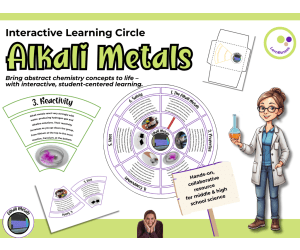
Alkali Metals Concept Wheel – Interactive Chemistry Activity for Grade
STEM, Science, Chemistry, Physics, Life Sciences, Grade 7, 8, 9, 10, 11, 12, Activities, Games, Worksheets & Printables, Quizzes and Tests, Teacher Tools, Worksheets, Flashcards, Projects, Presentations, Graphic Organizers
Alkali Metals Concept Wheel – Interactive Chemistry Activity for Grades 7–10 Learn Alkali Metals - visual learning 🧪🧠 This concept wheel is a practical way to help students understand the alkali metals in Group 1 of the periodic table. I first made it for a grade 8 class that was struggling with the idea of chemical families. Instead of giving them another chart to copy, I tried this wheel activity, and it worked much better because they could see and handle the information piece by piece. The wheel has eight sections that cover the basics: general properties, reactivity, how these elements appear in nature, and some everyday uses. Students cut out and arrange the pieces to build the full circle. The activity takes a little bit of preparation, but once the pieces are made, you can reuse them. I usually store the sets in small envelopes so they are ready for the next lesson. There are different versions included. Some circles are already filled in, which is helpful when introducing the topic for the first time. Others are blank, so students can write their own notes after a lab or reading assignment. I have used the blank ones during review sessions, and students liked comparing their wheels with a partner’s version. It also gives them a sense of ownership over the material. The wheel can be used in many ways: as a warm-up before a lab, as practice during a unit on the periodic table, or as a review before a quiz. It works for group tasks, but I have also had students complete it on their own. When the wheels are finished, they make a clear visual display for the classroom or for a student’s notebook. This activity is designed for grades 7–10 chemistry or physical science. It supports lessons on periodic trends, classification of elements, and the special role of the alkali metals. 📍 Best wishes, Heike from @Lernfitness Did You Know? I teach with a certified therapy dog, and together we create a positive and welcoming learning environment. 🐶
Author Lernfitness
Rating
Tags Educational Card Games, Chemistry, Physics, STEM Science Matching Game, Chemical Elements, Periodic Table Matching Game, Alkali Metals, Periodic Table, Learning Circle

Trauma-Informed Coping Strategies & Burnout Prevention
Life Skills, Special Resources, Social Emotional Learning (SEL), Social Skills, Special Education Needs (SEN), Speech Therapy, STEM, Resources for Teachers, Classroom Management, Community Building, Grade 9, 10, 11, 12, Worksheets & Printables, Workbooks, Worksheets, Word Searches, Teacher Tools, Lesson Plans, Quizzes and Tests, Quizzes, Tests, Assessments
Do you have academically smart students who feel apathetic? Do you see signs of burnout: perfectionism, worry, sleepless nights, and lack of will to study any further? The current academic environment seems to be a very stressful place to be in. For students in advanced placement programs such as AP, IB, and other similar programs, the intense search for success often leads to chronic levels of stress, anxiety, and burnout. Traditional advice on time management and wellness simply does not work in this situation – since what they need is not effort but rather the functioning of their nervous systems in survival mode. The name of the program is Trauma-Informed Coping Strategies and Burnout Prevention: Self-Awareness Strategies for High School Students. This is not just another workbook. It is a well-developed curriculum based on neurobiological principles that helps the students deal with stress and avoid burnout. This guide helps the students stop looking at stress as a psychological phenomenon. What is Included in the 34-Page Material? Section One: The Structural Nature of Academic Resilience: This part of the paper presents concise information regarding the reason behind burnout. The section also teaches students about the neurobiology of stress such as the HPA Axis, Allostatic Load and Window of Tolerance which are important concepts in the educational field. It also features such significant ideas as Strategic Underachievement and Harm Reduction. Section Two: The Student Workbook (11 Self-Tests): This part be viewed as the basis of the whole curriculum and through the help of 11 intense self-tests the educators will be able to explain the nature of stress. Among the themes discussed are; the Burnout Proximity Scale, Nervous system and perfectionism tests, Assessment of Energy Expenditure and Time- Blindness, The External Forces and the Relational Boundaries, The Imposter and Academic Worth, Acute crisis and Grounding. Section Three: Visuals and Teacher/Counselor Resources: This section is important for the teachers and educators due to the fact it contains the following diagrams; the Academic Burnout Cascade, Trauma-Informed Coping Matrix and The Self-Auditing Cycle. Moreover, as far as the teacher can reach the information concerning students’ needs and problems. In that way, the person will be able to remain at the correct track. This tool is ideal for all kinds of professionals such as counselors, psychologists, teachers in health and wellness classes, and people working with the youth. With it, you will be able to help these students successfully survive high school along with creating essential skills they need during college years and in their lives. Keywords: social emotional learning, mental health, preventing burnout, stress management, skills of study, executive function skills, high school, AP, IB, college preparation, academic resilience, coping skills, trauma informed, workbook, anxiety, perfectionism, school counselor Reasons Why Parents/Schools Appreciate It: Evidence-Based Approach: The program doesn’t consist only of generic self-care tips, rather it provides students with an understanding of neurobiology behind stress. Promotes Self-Awareness in Students: The self-audit format allows students to put themselves in control of their situations and helps them to learn how to analyze their own states of well-being and develop useful skills. Presents a Well-defined, Actionable Approach: The program brings a unique mix of theory and practice, offering students all necessary tools to create their own management plan. Includes All Necessary Resources for Teachers: The comprehensive Teacher Guide, diagnostic rubrics and facilitation scripts turn this program into a plug-and-play solution for counselors and teachers. Develops Resilience: The skills developed will allow individuals to set personal boundaries, manage emotions, think differently, and separate self-esteem from success. Intended Target Audience: The targeted audiences would vary in the context of the subject matter discussed (AP, IB, highly competitive college admission procedures, neurobiology). Main Audience: Gifted students and high school students in grades 10–12. Among this group of students, there are many advanced courses (AP, IB, Dual Enrollment) students who experience problems relating to the college admission process. Minor Audience: School counselors this program can be used successfully in individual and group counseling. Health, wellness, and psychology teachers this program can be used as a multi-week unit in their classes. Advisory / homeroom teachers this program will serve as a useful resource for the school SEL curriculum. Proactive students and parents of gifted kids who need a practical instrument to cope with school stress. Copyright and Other Legal Issues Copyright on this Book rests with Syed Hammad Rizvi. This material is created for your own personal and one day classroom uses. You may not modify, market or sell any part of this resource. In other words, you must not place it on web for public access. If you wish to share this material with your colleagues, please purchase additional copies from Teachsimple.
Author Creative Book Store
Rating
Tags AcademicBurnout, StudentBurnout, StressManagement, AcademicStress, StudentAnxiety, TestAnxiety, Perfectionism, Procrastination, Overwhelm, StudentMentalHealth
Alexander Fleming– Fact Sheet, Quiz & Interactive PDF incl. H5P
Life Sciences, Science, STEM, History, Social Studies, Biographies, Inventors, Basic Science, Physics, Biology, Grade 6, 7, 8, 9, 10, 11, 12, Worksheets, Worksheets & Printables, Quizzes, Quizzes and Tests, Teacher Tools, Projects, Activities
Scientist Alexander Fleming - Fact Sheet, Quiz & Interactive Version (PDF & H5P) Alexander Fleming – The Accidental Discovery of Penicillin Fact Sheet, Quiz & Interactive Exercises (PDF + H5P) 💊🦠 This 45-minute resource introduces students in grades 7–10 to Alexander Fleming and his groundbreaking contribution to modern medicine: the discovery of penicillin. Many students have heard of antibiotics, but they often don’t know the story behind how the first one was found – or why it was such a turning point in medical history. Fleming’s observation of mold killing bacteria in 1928 led to one of the most important medical advances of the 20th century. To make this topic accessible in the classroom, I’ve put together a short and structured lesson. It includes a clear informational text, a fact sheet, quiz questions with answers, and a creative pair activity. The material is provided in both color and black-and-white versions – ready to print or use digitally – plus an interactive H5P version for digital learning 💻. What’s included: A student-friendly text on Alexander Fleming and the discovery of penicillin A fact sheet to help students identify and organize key information Quiz questions (with solutions) for quick review A creative task where students write their own questions and exchange them with a partner Formats: Printable/digital PDF and interactive H5P version Answer key included ✅ I’ve used this as part of a biology unit on the immune system or microbes, but it also works well in cross-curricular lessons on scientific discovery or health. It’s easy to use, whether for regular lessons, partner work, or independent tasks. 🚀 Download now and bring the legacy of Alexander Fleming into your biology lessons today! 📍 Best wishes, Heike from Lernfitness Did You Know? I teach with a certified therapy dog, and together we create a positive and inspiring learning environment. 🐶✨
Author Lernfitness
Tags Science, Biology, Famous Scientists Lesson, H5P, Interactive Science Exercises, STEM, History, Scientists, DNA, Barbara McClintock

Jacques Monod – Fact Sheet, Quiz & Interactive PDF incl. H5P
Life Sciences, Science, STEM, History, Social Studies, Biographies, Inventors, Basic Science, Physics, Biology, Grade 6, 7, 8, 9, 10, 11, 12, Worksheets, Worksheets & Printables, Quizzes, Quizzes and Tests, Teacher Tools, Projects, Activities
Scientist Jacques Monod - Fact Sheet, Quiz & Interactive Version (PDF & H5P) Jacques Monod – Gene Regulation and the Logic of Life Fact Sheet, Quiz & Interactive Exercises (PDF + H5P) 🧬⚙️ This 45-minute resource introduces students in grades 9–11 to Jacques Monod – a French molecular biologist whose work helped uncover how genes are turned on and off. In many biology classes, students learn what DNA is and how proteins are made. But the question of how cells know which genes to activate – and when – often stays abstract. Monod, together with François Jacob, studied this in bacteria and developed the model of the lac operon. It’s a great example of how cells respond to their environment, and it laid the groundwork for much of what we know about gene regulation today. To make this topic more tangible, I’ve created a compact, ready-to-use lesson that breaks it down into manageable parts. It includes an informational text, a fact sheet, quiz questions with answers, and a creative partner task. The material comes in color and black-and-white versions, plus there’s a digital H5P version. What’s included: A clear, student-friendly text about Jacques Monod and the lac operon A fact sheet to help students sort and retain key information Quiz questions with an answer key – good for review or independent work A task where students design and exchange their own questions in pairs Printable PDF and interactive H5P formats for flexible use 💻 Answer key included ✅ I’ve used this resource during our genetics unit, especially when moving from DNA basics to regulation and gene expression. It also fits well in discussions about how scientific models are developed and tested. The partner task works well in small groups or for homework – depending on your setup. 🚀 Download now and bring the legacy of Jacques Monod into your biology lessons today! 📍 Best wishes, Heike from Lernfitness Did You Know? I teach with a certified therapy dog, and together we create a positive and inspiring learning environment. 🐶✨
Author Lernfitness
Tags Science, Biology, Famous Scientists Lesson, H5P, Interactive Science Exercises, STEM, History, Scientists, Jacques Monod, Molecular Biology

Entrepreneurship Basics – Business Plan Outline Worksheets
Math, Money, Resources for Teachers, Classroom Management, Community Building, Economics, Social Studies, Business, Life Studies, Finance, Homeschool Curriculum, Homeschool Templates, Grade 9, 10, 11, 12, Worksheets & Printables, Workbooks, Worksheets, Word Searches, Teacher Tools, Assessments, Lesson Plans, Quizzes and Tests, Quizzes, Tests
Looking for ways to turn your students into successful entrepreneur and not just someone who learns about entrepreneurship? This four-week entrepreneurship unit is full and does not require any prep time, but will give you everything that you need to take your Ninth to Twelfth grade students through the complete stages of creating a professional, investor-ready business plan. Most of these lessons are inspired by television programs such as "Shark Tank." The project-based teaching approach encourages students to go beyond just theory to be more involved with critical thinking, financial literacy, and strategic planning to fully realize their opportunity to create a new business. Since we have worked hard to develop a professional and academic tone, students will be ready to continue in their education with college level courses or to start their career in business. What's Included in This Comprehensive Resource? 32-pages of essential material and 7 modules on: Module 1: Foundational Content & Theory (10 Pages) includes 4 chapters breaking down large quantities of complex business information into smaller parts; taught through theoretical framework, real-world business case studies, and self-reflective prompts. Chapter Titles: - Anatomy of a Value Proposition - Market Analysis and Target Demographics (TAM, SAM, SOM) - Operational Mechanics of Revenue Model - Executive Summary and Pitch Module 2: The Student Workbook (11 Pages) is composed of 10 worksheets laid out sequentially to build the business plan. After the students have studied foundation content and developed new understanding of business concepts/foundational content, the students can use each module/workbook page as a way to apply the theory to their new business idea. The student workbooks will cover the following topics: - Executive Summary & Vision Casting - Identification of Problem and Value Proposition - Market Research and Target Audience Profile - Competitive Analysis and Differentiation - Product & Service Offering & Pricing Models - Marketing Strategy & Sales Channel - Operational Plans, Logistics, - Management Team & Strategic Partnerships - Financial Projections & Startup Costs - Risk Management & Contingency Planning Complete Teacher Resources (Phase 3 - 11 Pages): You've bought yourself the ultimate tool for easy implementation and grading! 3 Projectable Visual Aids: 3 clean projectable visuals explaining Business Plan Architecture, SWOT Analysis and the Break-Even Graph. Answer Key: Comprehensive answer key with example responses for each of the worksheets to support your grading. 4 Week Pacing Guide: Step-by-step implementation of the semester broken down into weeks, with detailed teacher strategies, classroom activities (such as the "60 Second Elevator Pitch"), and scaffolding suggestions. Differentiated Instruction: Detailed protocols on supporting your struggling learners and your advanced/gifted learners. Summative Assessment Rubric: A complete and detailed rubric for grading the final business plan and pitch so that you can save yourself hours of preparation time. This isn't just a pile of worksheets; it's a complete integrated curriculum to ignite the entrepreneurial spirit in your students. Download it now and give your students the skills they need to be successful! Keywords: Entrepreneurship, Business Plan, High School Business, CTE, Project-Based Learning, Shark Tank Project, Financial Literacy, Market Research, Student Workbook, Teacher Guide, Rubric, Differentiated Instruction, No Prep, DECA, FBLA. Why Do Parents/Schools Appreciate It? Real World Skill Development; The curriculum focuses not only on theoretical knowledge but also emphasizes developing real-world skills that students will use throughout their future career paths (Financial, Critical Thinking and Problem Solving, Professional Communication). Students will also develop hands-on skills through the completion of projects and activities within the curriculum. Engagement And Project Based Learning; Rather than memorizing words and definitions, students will create projects that allow them to connect theory to practice. The "Shark Tank" format allows students to be creative and take responsibility for their own learning. All-Inclusive And Easy To Use; The curriculum includes: lesson plans, worksheets, visual aids, answer keys, pacing guides and rubrics. This saves teachers an enormous amount of time when they begin implementing the curriculum. Preparation For Future College And Career Paths; The use of professional terminology and the curriculum content aligns with the expectations of colleges and universities, and prepares students for their future career path. All Learning Styles Are Accommodated; All students have a chance to get engaged in learning activities using differentiated strategies that provide support for all learners (struggling and advanced) to be engaged in meaningful learning and challenged at their appropriate level. The target audience for the Student Classes is Urban youth (ages 11-21) who are predominantly from lower-income households, and may possess limited life experience with regards to words. These individuals also have a higher likelihood of becoming entrepreneurs as a result of participating in activities that support entrepreneurship, such as an Entrepreneurship Program, or other business education opportunities. This presents a great opportunity for students enrolled in high school and post-secondary to gain knowledge about entrepreneurship as well as develop the skills necessary to become successful entrepreneurs through exposure, exposure to real-world applications and experiences, and actively participating in entrepreneurial-related programs. Our ultimate goal is to create a pathway for students to learn and implement their own ideas in order to become successful entrepreneurs; therefore, we believe there is a need for these target audiences. Creating and expanding these audiences will provide access to unique learning experiences, real-life situations and provide valuable business and entrepreneurship information to them (which can positively impact the economic condition of the community). Use of this Resource/Copyright: This book was published by Syed Hammad Rizvi. As an individual user and single classroom only, you do not have permission to change or distribute any portion of this Resource or sell any part for profit. In general, you cannot put this resource on the Internet so that others could find and download it for free. If you would want your colleagues to use this resource, you must buy extra licenses for them through Teachsimple. Thank you for following these Terms of Use. Thank you for using this resource created by Syed Hammad Rizvi
Author Creative Book Store
Rating
Tags Businessplanproject, Entrepreneurshipproject, Sharktankproject, Studententrepreneur, Highschoolbusiness, Businesscurriculum, Ctebusiness, Noprepbusiness, Decaproject, Fblaproject

Wedding Budget: High School Financial Literacy and Budgeting Project
Life Studies, Home Economics, Finance, Math, Money, Multiplication and Division, Addition and Subtraction, Special Resources, Life Skills, Grade 9, 10, 11, 12, Worksheets & Printables, Worksheets, Activities, Projects
Do you need a new personal financial literacy or applied math life skills project? Have your high school students research and create a personalized Wedding Budget with fourteen categories of items, a two-page spreadsheet, and written reflection questions to help them think about how they can pay for it all! Classes to Use With : High school students in a variety of classes Family & Consumer Sciences Applied Math or Consumer Math Career & Personal Planning Personal Financial Literacy High School Life Skills Students will create a detailed wedding budget and think about how much money they really want to spend on one day! The included discussion questions will help them learn about borrowing money for a wedding and how that option can make it cost even more because of interest payments ! How to Use: 1. Print a 3-page budget project that includes a spreadsheet and reflection questions for each of your students. 2. Go over page one as a class. Students can share a variety of wedding sizes they have gone to personally. Discuss the wide range of wedding budgets people typically spend. 3. Give students time to pick their number of guests and their budget. Remind them they must figure out a way to pay for the budget they choose. 4. Give students one to two work periods to research real wedding items for each of the fourteen categories. They will need to have access to technology to do this. 5. Make sure students multiply items that are guest dependent and add up their wedding grand total carefully. Have them trade sheets with a friend to double check. 6. Go over the written reflection questions and then give students time to answer them. 7. To wrap up, have a discussion about realistic wedding costs, borrowing money, and whether your students think it is a smart idea to do that. What's Included: 4-Page PDF: Ready to Print and Use! Teacher Instructions & Lesson Ideas 2-Page Wedding Budget Spreadsheet Reflection Questions If you enjoy this budget activity, check out others in my store: Camping Budget Household Budget Vacation Budget Grocery Shopping Budget
Author Grace Under Pressure
Rating
Tags Wedding Planning, Wedding, Wedding Budget, High School Financial Literacy, Financial Literacy, Budget, Budgeting, Budget Project, Financial Literacy Project, Applied Math
Scientist Francis Crick – Fact Sheet, Quiz & Interactive PDF incl. H5P
Life Sciences, Science, STEM, History, Social Studies, Biographies, Inventors, Basic Science, Physics, Biology, Grade 6, 7, 8, 9, 10, 11, 12, Worksheets, Worksheets & Printables, Quizzes, Quizzes and Tests, Teacher Tools, Projects, Activities
Scientist Francis Crick - Fact Sheet, Quiz & Interactive Version (PDF & H5P) Francis Crick – The DNA Double Helix and the Origins of Modern Genetics Fact Sheet, Quiz & Interactive Exercises (PDF + H5P) 🧬 This 45-minute resource introduces students in grades 7–10 to Francis Crick and his role in uncovering the structure of DNA – one of the most influential discoveries in modern biology. Many students are familiar with the term DNA, but only a few know the story behind how scientists first identified its double helix shape. Together with James Watson, and building on the work of Rosalind Franklin, Crick helped explain how genetic information is stored and passed on – a breakthrough that still shapes biology and medicine today. To make this complex topic easier to teach, I’ve put together a concise and structured lesson. It includes a short informational text, a fact sheet, quiz questions with answers, and a creative task where students come up with their own questions. All versions are included – both in color and black-and-white – and there’s also an interactive H5P version for digital use 💻. What’s included: A short, accessible text on Francis Crick and the discovery of DNA A fact sheet to help students sort and reflect on the key points Quiz questions (with solutions) to check understanding A creative task where students write and exchange their own questions Formats: Printable/digital PDF and interactive H5P version Answer key included ✅ I’ve used this during our genetics unit, but it also fits well in lessons on the history of science or how discoveries are made. It’s easy to integrate and works well for partner work, independent tasks, or short science projects. 🚀 Download now and bring the legacy of Francis Crick into your biology lessons today! 📍 Best wishes, Heike from Lernfitness Did You Know? I teach with a certified therapy dog, and together we create a positive and inspiring learning environment. 🐶✨
Author Lernfitness
Tags Science, Biology, Famous Scientists Lesson, H5P, Interactive Science Exercises, STEM, History, Scientists, Francis Crick, DNA

Global Climate Policy Debates & Solution Brainstorm Worksheets
Science, Earth and Environmental Sciences, Life Sciences, Earth Sciences, Environmental Science, Geology, Space, Nature & Plants, Biology, STEM, Homeschool Curriculum, Homeschool Templates, Grade 8, 9, 10, 11, 12, Worksheets & Printables, Worksheets, Workbooks, Word Searches, Teacher Tools, Assessments, Lesson Plans, Quizzes and Tests, Quizzes, Tests
Provide your advanced high school students with this 42-page climate policy curriculum that focuses on advanced dialectical analysis rather than simplified activism. This curriculum will encourage active learning for your students by transforming passive learning into a deep intellectual engagement through multi-perspective debate, policy creation, and ethical reasoning. Students will explore: The transition from the Kyoto Protocol to the Paris Agreement and the principle of Common But Differentiated Responsibilities (CBDR) Carbon pricing mechanisms (Carbon Tax vs. Cap and Trade), as well as the Social Cost of Carbon The ethics of geoengineering (Stratospheric Aerosol Injection [SAI], moral hazard, risks associated with unilateral use of SAI) Environmental justice, climate debt, and the Cobalt Paradox in developing countries Youth climate lawsuits, climate refugees and international law, methane agricultural policies, financing urban adaptation, and accountability for greenwashing Includes 10 high-level student worksheets with conceptual fill-in-the-blank (using a unique 7-underscore system), real-world case studies and hypothetical case studies, critical debate prompts, and challenging policy creation assignments for students. Teacher answer keys, implementation guides, visual diagrams (Climate Policy Trilemma, Stakeholder Matrix, and Carbon Pricing Mind Map), and differentiation strategies are also included. Ideal for AP Environmental Science, AP Government, AP Economics, IB Global Politics, Honors Humanities, and Model UN/debate programs. Encourages real critical thinking, systems analysis, and nuanced understanding of the trade-offs between enhancing developing countries. The Key Reasons Why Parents and Schools Appreciate It: Facilitates unbiased critical thinking instead of dogmatic, ideologically-based, practical-thinking-by-proxy students making arguments for and against competing choices (e.g., Growth vs. Fossil-Fuel Abolition; Independent Sovereign Nation vs. World Government; Technology as Hope or as a Curse). Extensive preparation for taking Advanced Placement tests; writing college level essays, debating other humans, as well as the development of well-thought-out arguments using established policies, and ethical reasoning based on sound ethical reasoning standards. A balanced view of the world; an honest consideration of the challenges facing developing nations, "Just Transition", climate liabilities, and the risk of neo-colonial influence in creating green supply chains. Teacher support that is broad in scope and purpose; includes teacher-oriented teacher guides, "look-for" answers for the teachers, pacing guides and strategies for differentiating instruction, visual aids to illustrate concepts, and techniques for managing classroom conversations. An exceedingly entertaining way to teach about Climate Change, as well as Science, by creating opportunities for students to compete with each other on an intellectual level, as opposed to being preached at. Primary Audience & Classes: 9-12 (Secondary School) Advanced Students Advanced Placement Environmental Science Advanced Placement U.S. Government/Comparative Government Advanced Placement Macroeconomics/Microeconomics (on Carbon Pricing) IB Diploma Programme: Global Politics, Environmental Systems/Societies (ESS), and Economics Advanced Placement/honors world/history/contemporary issues Model United Nations, Debate and Mock Trial Teams Future Advanced 10-graders: Gifted/Track 11/12 grades -- Advanced Placement courses. Copyright/Use Policy: This book, written by "Syed Hammad Rizvi," is one-of-a-kind. You cannot change, give away or sell this product so long as you are using it as personal and for one classroom only. Therefore, you may NOT post any portion of this book/presentation on the internet for public access and download. Additional copies of this work may be purchased if you want to share with your colleagues, so please consider purchasing additional license(s) through Teachsimple. Your cooperation is greatly appreciated! A very special "thank you" from "Syed Hammad Rizvi".
Author Creative Book Store
Rating
Tags ClimatePolicy, APEnvironmentalScience, ClimateJustice, ClimateChangeEducation, EnvironmentalScience, Geoengineering, ClimatePolicyWorksheets, APEnvSci, JustTransition, CarbonPricing

Media Literacy & Advertising Influence Analysis Worksheets
Science, Technology, Computer Science, Engineering, Research, Resources for Teachers, Classroom Management, Community Building, Special Resources, Social Emotional Learning (SEL), Grade 7, 8, 9, 10, 11, 12, Worksheets & Printables, Workbooks, Worksheets, Word Searches, Teacher Tools, Assessments, Lesson Plans, Quizzes and Tests, Quizzes, Tests
Are your students overwhelmed by the endless stream of digital information, unsure how to separate true facts from falsehoods and other types of media manipulation? With the rise of influencers, hyper-targeted algorithms, and an attention economy, media literacy as it was once traditionally defined is insufficient in the world of today. Your students will benefit from our Ultimate Media Literacy & Advertising Analysis Unit by gaining the critical thinking skills they'll need to make it in today's world. This thorough "turnkey" media literacy curriculum offers students an understanding of the psychological underpinnings of modern persuasion, going far beyond just an ability to identify "fake news." It uses proven theoretical concepts and real-world examples to give students tools for breaking down the actual media they consume each day. THIS PAGE CONTAINS OVER 50 PAGES OF VALUE! PHASE 1 CONTENT & THEORY: 4 Chapters full of valuable information about the major themes of the 21st century demonstrating the foundational knowledge needed to be an informed citizen on each of these themes, written in academic language but accessible to all. 1. The Attention Economy - (infinite scrolling, micro moment) 2. Psychological Exploitation - (Real vs Ideal self, FOMO, Parasitical relationships) 3. Semiotics: The Language Behind Language - (signifiers and signified, "greenwashing") 4. Algorithmic Targeting - (psychographics, echo chambers, microtargeting) PHASE 2 STUDENT WORKBOOK (10 RIGOROUS WORKSHEETS): Each worksheet has a modern and relevant case study for students to analyze using the following questions with a final creative application activity throughout each unit with regard to each of the case studies. - How do I deconstruct and identify possible target audiences? - How can I understand emotional and visual manipulation? - What is the role of algorithms and filter bubbles? - How do I identify logical fallacies in rhetoric? - What is native advertising and how does it work? - What is the economic value of social media influencers and how do I identify parasocial exploitation? - What is data harvesting and how does it contribute to surveillance capitalism? - What are dark patterns in user experience or user interface? - How do I manage a brand crisis? CAPSTONE PROJECT: Develop your own counter-narrative campaign! PHASE 3: Finish Teacher Materials – All the support materials you will need to teach this unit successfully! To provide visual frameworks for your students, you will receive three highly effective printable anchor charts or diagrams (Hyper-targeted advertising, The Disinformation Triangle and The SIFT Method) for students to use as visual scaffolds while they build their understanding. If you need a complete set of example answers for all ten of the worksheets, you will find a highly organized answer key that provides you with detailed exemplar responses to each of the ten worksheets. This resource will save you countless hours preparing for your classes. You will receive a comprehensive teacher implementation guide that provides a pedagogical overview along with a complete teacher 5-day pacing and lesson plan so that you can easily implement this complete unit successfully! While this isn't just a bundle of worksheets, it is a number of vital resources that will support students in developing digital citizenship, critical consumption and intellectual sovereignty. It is suitable for use in English, Media Studies, Social Studies and Business classes. Download this resource today so you can empower your students to be active decoders instead of passive consumers! Key terms: Media Literacy, Critical Thinking, Advertising, Propaganda, Fake News, Disinformation, Digital Citizenship, High School English, Social Studies, Rhetoric, Persuasion, Logical Fallacies, Worksheets, Printables, Lesson Plans, Unit Plans, Google Classroom. Parents and Schools Appreciate it Because: Real World Preparation - This unit looks at the digital world students live in today, provides students with critical thinking skills to evaluate the influencers, ads aimed at them, and social media platforms already used daily by students. Develops Deep Thinking Skills – This unit goes beyond the standard checklist used to identify "fake news" and teaches students about the psychological and economic constructs that allow manipulation of modern media. Relevant and Engaging Content – Lessons are told through modern examples such as the meal delivery subscription model, greenwashing by fast-fashion companies, and student-to-YouTuber relationships to make otherwise complex content relatable and interesting. Comprehensive and Teacher Friendly – This is a "turnkey" unit, including theory, 10 worksheets, graphic organizers, and an answer key, along with a 5-day lesson plan to allow educators to save dozens of hours of prep time. Target Student Audience : Based on the vocabulary, concepts and themes within the PDF document, it is targeted toward the following audiences: High School Students (Grades 9-12). The material is most relevant for high school students due to the fact that they are primarily marketed to by way of advertising and media tactics discussed. Complex vocabulary, including "semiotics," "psychographics" and "algorithmic panopticon"; may be challenging for some students but are age-appropriate. Early College/University Students (100 Level). This resource would be an excellent resource for introductory courses in communications, sociology or media studies. Copyright/Terms of Use: This Book is a copyrighted possession of Dr. Syed Hammad Rizvi. This resource can only be used for personal use and in a single class room only. No parts of this resource may be altered, redistributed, or sold. In other words, this resource may not be placed on the internet and publicly accessible or downloadable. We encourage you to share this resource with your colleagues; however, you must purchase additional licenses from 'Teachsimple. Thank you for understanding and following our Copyright Policy/Terms of Use. This product is proudly provided to you by Dr. Syed Hammad Rizvi
Author Creative Book Store
Rating
Tags MediaLiteracy, CriticalThinking, DigitalLiteracy, Advertising, Propaganda, Marketing, 21stCenturySkills, DigitalCitizenship, Disinformation, FakeNews

Biology Binder Covers – Templates for Classroom Use
Life Sciences, Science, STEM, Basic Science, Special Resources, Montessori, Classroom Management, Resources for Teachers, Biology, Human Body, Homeschool Templates, Grade 7, 8, 9, 10, 11, 12, Worksheets, Worksheets & Printables, Teacher Tools, Projects, Activities, Workbooks, Drawing Templates & Outlines, Templates, Graphic Organizers, Experiments
Biology Binder Covers – Templates for Classroom Use Organize your biology handouts, notes, and units with visual clarity Simple and flexible templates to help organize your biology materials In my biology classes, it can be a challenge to keep things organized - especially when it comes to multiple units, lab notes, worksheets and review materials. To make it easier for my students and myself, I designed these simple binder sleeves. There are 12 different pages. The covers have a clean, colorful blob layout that is friendly but not distracting. I usually print them out and use them as cover sheets or as dividers in folders for students or teachers. They also work well for digital learning environments, e.g. as section covers in PDF files or on classroom platforms. I like that the color scheme allows students to quickly find what they are looking for, and it brings a little more structure to a subject that is often riddled with formulas and technical terms. When used as cover sheets, students can choose their favorite color for their cover sheet. This resource is handy - and has saved me a lot of time in lesson preparation and follow-up. What’s included: 12 biology-themed cover pages different colors zu choose as a cover sheet as a divider between the individual biology topics I've printed these on colored paper for my own binder and also used them digitally in student notebooks. Works well for both teacher organization and student-facing materials. 📍 Best wishes, Heike from Lernfitness Biology teacher (Chemistry teacher, Math teacher) in Germany Did You Know? I teach with a certified therapy dog, and together we create a positive and inspiring learning environment. 🐶✨
Author Lernfitness
Rating
Tags Science, Biology, STEM, Binder, Cover Sheet, Template, Organizer, Organize, GoodNotes, PDF
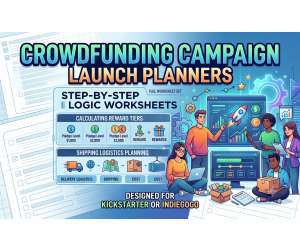
Crowdfunding Campaign Launch Planners
Special Resources, Life Skills, Social Emotional Learning (SEL), Social Skills, Special Education Needs (SEN), Resources for Teachers, Classroom Management, Community Building, STEM, Research, Grade 6, 7, 8, 9, 10, 11, 12, Workbooks, Worksheets & Printables, Worksheets, Word Searches, Teacher Tools, Assessments, Lesson Plans, Quizzes and Tests, Quizzes, Tests
Transform your students from passive learners into active entrepreneurs! Are you looking for a project-based learning (PBL) unit that brings real-world business, economics, and mathematics to life? This comprehensive curriculum guides students through the high-stakes, logical puzzle of launching a product on crowdfunding platforms like Kickstarter or Indiegogo. This isn't just another business plan template. This 44-page, in-depth unit moves beyond marketing fluff and dives deep into the gritty, unforgiving mathematics of product fulfillment and supply chain logistics. Students will act as logistical architects, learning that a successful business isn't just about a great idea—it's about flawless execution. ▶ WHAT'S INSIDE THIS COMPLETE UNIT? Part 1: In-Depth Theory Guide (Chapters 1-4): A professional-grade guide covering the core concepts: The Economics of Crowdfunding: Uncover the hidden fees and calculate the "True Cost" of a funding goal. Behavioral Economics & Pricing: Learn the psychology of reward tiers using concepts like anchoring and the decoy effect. Global Shipping Logistics: Master the devastating impact of Dimensional Weight (DIM), Harmonized System (HS) codes, and international fulfillment hubs. Risk Mitigation & Margin Preservation: Build a contingency matrix and use algebraic modeling to create financial buffers that ensure profitability. Part 2: Student Workbook (10 Worksheets): Rigorous, scaffolded worksheets that put theory into practice. Students will calculate COGS, platform fees, shipping costs, break-even points, and contingency buffers through real-world scenarios. Critical thinking prompts ensure deep understanding. Part 3: Teacher & Visual Resources: Everything you need to teach with confidence! Pedagogical Visuals: Three ready-to-print or projectable anchor charts visually explaining Reward Tier Pricing, Dimensional Weight, and Global Logistics. Comprehensive Answer Key: A full, step-by-step answer key for all 10 student worksheets. Teacher Implementation Guide: Includes a 5-day pacing guide, discussion prompts, classroom demonstration ideas, and enrichment opportunities for advanced students. ▶ PERFECT FOR: High School Business or Entrepreneurship Classes Career and Technical Education (CTE) Programs AP Macroeconomics or Microeconomics (as a real-world application project) Financial Literacy and Math Electives Homeschool curriculum for high schoolers interested in business. Equip your students with the practical math, critical thinking, and financial literacy skills they need to survive in the modern economy. Download now and bring the ultimate business challenge into your classroom! Keywords: Crowdfunding, Kickstarter, Business Plan, Entrepreneurship Project, Project-Based Learning, PBL, High School Business, Economics, Supply Chain, Logistics, Cost of Goods Sold, COGS, Profit Margin, Financial Literacy, CTE, Student Workbook, Answer Key Why Parents/Schools Love It: Real-World Application: It moves economics and math from abstract theory into a tangible, modern context (Kickstarter!) that students find engaging, teaching skills directly applicable to today's economy. Develops Critical 21st-Century Skills: This unit forces students to synthesize data, perform multi-step calculations, think critically about risk, and solve complex logistical problems—skills that are essential for any future career. Comprehensive & Turnkey Solution: This isn't just a worksheet; it's a complete, ready-to-use instructional unit. The included theory, visuals, answer key, and teacher guide save educators dozens of hours of prep time. Rigorous & High-Level: The curriculum respects students' intelligence by presenting them with authentic, high-stakes challenges. It avoids "fluff" and focuses on the rigorous logic and math required to actually run a business, preparing them for post-secondary education and beyond. Target Audience : Based on the content, language ("Grade 11 business and economics students"), and structure, target: Primary Target: High School Teachers of grades 10-12 for subjects like Business, Entrepreneurship, Economics (including AP), and Marketing. The CTE (Career and Technical Education) market is perfect for this. Secondary Target: Homeschool Parents of high school students who are looking for advanced, project-based curriculum that teaches practical life skills. Tertiary Target: College Instructors for introductory business or entrepreneurship courses, who could use this as a practical, foundational module. Copyright/Terms of Use: This Book was copyrighted by Syed Hammad Rizvi. This resource is for personal and single classroom use only. You may not alter, redistribute, or sell any part of this resource. In other words, you may not put it on the Internet where it could be publicly found and downloaded. If you want to share this resource with colleagues, please purchase additional licenses from Teachsimple. Thank you for respecting these terms of use. This product is happily brought to you by Syed Hammad Rizvi
Author Creative Book Store
Rating
Tags Crowdfunding, Entrepreneurship, Kickstarter, SupplyChain, BusinessLogistics, ProfitMargin, CostOfGoodsSold , COGS, ProductLaunch, StartupLife
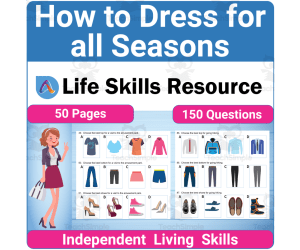
Seasonal Life Skills - How to Dress for Spring Summer, Fall and Winter
Special Resources, Creative Arts, Art, Life Studies, Social Emotional Learning (SEL), Special Education Needs (SEN), Life Skills, Career, Grade 10, 11, 12, Activities, Worksheets & Printables, Worksheets
How to Dress for Spring, Summer, Fall, and Winter is an engaging and interactive functional life skills activity specifically designed for high school students and young adults. This activity focuses on teaching the importance of selecting appropriate clothing for each season, empowering students to make informed decisions. Key Features: * Carefully crafted to develop students' ability to make informed decisions about suitable attire for different weather conditions, enhancing their functional life skills. * Reading comprehension questions provide clues such as the season, temperature, occasion, weather, and location, enabling students to approach their decision-making process systematically. * Visual appeal is enhanced with images and illustrations that aid comprehension, making learning enjoyable and accessible. Visual cues reinforce the concept of season-appropriate clothing and improve understanding and retention. * Real-life scenarios reflect students' challenges when dressing for different seasons, promoting problem-solving skills and the practical application of knowledge. This comprehensive resource includes a total of 150 reading comprehension questions, fostering independence in high school students as they develop essential life skills for various contexts: school, home, and community. This handout is particularly valuable in special education classes or one-to-one settings such as ABA therapy, speech therapy, job coaches, occupational therapy, and Registered Behavior Technician (RBT) sessions. The activity is ideal for hands-on and community-based learning, engaging students in interactive instruction while reinforcing learning objectives. It is suitable for grade 10, grade 11, and grade 12 students, as well as autism life skill centers . This printable, easy-to-use activity is designed to assist teens and adults with difficulties in developing independent living skills. It provides step-by-step instructions, comprehensive questions and answers, age-appropriate graphics, real-world examples, and implementation ideas. Empower your special education class with this highly interactive High School Functional Life Skills Activity, promoting independence and facilitating personal growth. Related Products for Developing Independent Living Skills How to Read a Basic Pay Stub How to Fill Out a Job Application How to Create an Emergency Exit Plan How to Create a Strong Password A PDF with 50 unique pages. Color and black-and-white versions of each page are available for this pdf resource.
Author Adulting Life Skills Resources
Tags Employment Related, Independent Living Skills, IEP Goal-Oriented Skills, Community-Based Instruction, Autism Resource For Parent , Life Skills For Autistic Teens And Adults, Adulting On The Spectrum, Social And Emotional Learning, Life Skills For Adults, Life Skills For Teens
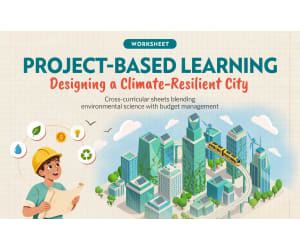
Project-Based Learning Designing a Climate-Resilient City
Science, Earth and Environmental Sciences, Life Sciences, Earth Sciences, Environmental Science, Geology, Space, Nature & Plants, STEM, Special Resources, Grade 6, 7, 8, 9, 10, 11, 12, Teacher Tools, Lesson Plans, Quizzes and Tests, Quizzes, Tests, Worksheets & Printables, Workbooks, Worksheets, Word Searches, Assessments
Transform your classroom into a hub of real-world problem-solving with this comprehensive Project-Based Learning (PBL) module: Designing a Climate-Resilient City! Are you looking for a rigorous, engaging, and cross-curricular project that prepares students for the challenges of the 21st century? This turnkey resource is the perfect solution. It masterfully blends Environmental Science, Earth Science, Mathematics, Economics, and Civics into one high-impact simulation. Students step into the dual role of a city's Chief Sustainability Officer and Chief Financial Officer. Tasked with a $500,000,000 budget , they must make critical decisions to protect their fictional municipality, "Nova Civitas," from the escalating impacts of climate change. From urban heat islands and flood defense to renewable energy transitions and waste management, every choice has both ecological and financial consequences. This isn't just a worksheet packet; it's a complete, three-phase educational experience: Phase 1: Core Content & Theory (Student Field Manual): A detailed guide that teaches the foundational scientific and economic principles, including concepts like CapEx vs. OpEx, Return on Investment (ROI), green vs. grey infrastructure, and the circular economy. Phase 2: The Student Workbook: Ten detailed, scaffolded worksheets guide students through the entire city-planning process. They will perform calculations, analyze data, and justify their budgetary decisions, tackling everything from energy grids and public transit to disaster insurance and sustainable housing. Phase 3: Visuals & Teacher Resources: This package is ready to go with printable/projectable visual aids (flowcharts, graphs, mind maps) and a comprehensive, step-by-step answer key with exemplar responses and crucial teacher notes. Perfect for in-class, hybrid, or homeschool environments, this project fosters critical thinking, financial literacy, data analysis, and collaborative problem-solving. Empower your students to grapple with relevant, real-world issues and discover that the most sustainable solutions are often the most economically sound. Download today and empower your students to build a better, more resilient future! Keywords: Project-Based Learning (PBL), STEM, STEAM, Climate Change, Environmental Science, AP Environmental Science (APES), Earth Science, Economics, Civics, Sustainability, Urban Planning, City Design, Budgeting, Financial Literacy, Math, Critical Thinking, Real-World Application, Cross-Curricular, Middle School, High School, Digital Resource, Printable Worksheets. Why Parents/Schools Love It: Teaches Real-World Skills: This project moves beyond theory. It teaches critical 21st-century skills like financial literacy, data-driven decision-making, and long-term strategic planning that students will use their entire lives. Deeply Engaging & Relevant: The role-playing simulation is highly engaging. Students are not just learning about climate change; they are actively working to solve its challenges, making the topic personal and urgent. Truly Cross-Curricular: In an era of siloed subjects, this resource beautifully demonstrates how science, math, and social studies are interconnected in the real world, promoting holistic understanding. Complete Turnkey Solution: It is a massive time-saver for educators. The package includes all student-facing materials, teacher visuals, and a comprehensive answer key with detailed calculations, saving hours of prep work. Target Audience: Student Classes : Based on the complexity of the concepts (e.g., municipal finance, payback periods, ROI) and the level of mathematics, target the following: High School (Grades 9-12): This is the primary target. It is perfect for: Environmental Science / AP Environmental Science (APES): This is a perfect fit, covering numerous topics from the APES curriculum. Earth Science: Excellent for units on human impact and climate systems. Economics / Government / Civics: Provides a practical, tangible application of public finance, policy-making, and resource allocation. General Math / Financial Algebra: A fantastic real-world application for math concepts. STEM or PBL Elective Courses: An ideal capstone or unit-long project. Advanced Middle School (Grades 7-8): This resource would be highly effective for gifted and talented programs, advanced science or math classes, or a school with a strong PBL focus. The concepts are challenging but achievable with the right guidance. Copyright/Terms of Use: This Book was copyrighted by Syed Hammad Rizvi. This resource is for personal and single classroom use only. You may not alter, redistribute, or sell any part of this resource. In other words, you may not put it on the Internet where it could be publicly found and downloaded. If you want to share this resource with colleagues, please purchase additional licenses from Teachsimple. Thank you for respecting these terms of use. This product is happily brought to you by Syed Hammad Rizvi
Author Creative Book Store
Rating
Tags EnvironmentalScience, EarthScience, STEM, STEAM, Economics, ClimateChange, Sustainability, Civics, UrbanPlanning, Ecology

Digital Product Layout Wireframing
Technology, Science, Computer Science, Engineering, Research, Resources for Teachers, Classroom Management, Community Building, Language Development, ELA, Grade 6, 7, 8, 9, 10, 11, 12, Worksheets & Printables, Workbooks, Worksheets, Word Searches, Teacher Tools, Assessments, Lesson Plans, Quizzes and Tests, Quizzes, Tests
Unlock the world of digital design for your students with this complete, no-prep UI/UX Wireframing Curriculum! Are you looking for a dynamic, project-based learning (PBL) unit that teaches relevant, real-world STEM and CTE skills? This comprehensive resource transforms students from passive tech consumers into thoughtful digital architects. With zero software required, this pencil-and-paper curriculum is an accessible and powerful way to introduce the core principles of User Interface (UI) and User Experience (UX) design. Students will embark on a journey through the "architecture of digital space," learning how to structure mobile apps, simple websites, and interactive digital planners. This unit is meticulously designed to build skills from the ground up, blending foundational theory with hands-on, practical application. WHAT'S INCLUDED IN THIS 46-PAGE UNIT: PHASE 1: Core Content & Theory (10 Pages): An engaging student-facing textbook that clearly explains the "why" behind digital design. Topics include: The Anatomy of a Grid System (Columns, Rows, Gutters, Margins) Designing for Different Screens: Apps vs. Websites vs. Digital Planners Mastering Visual Hierarchy and creating intuitive User Flow Real-world case studies and professional vocabulary. PHASE 2: Student Workbook (21 Pages): A collection of 10 rigorous worksheets that challenge students to apply their knowledge. Activities include: Analytical questions and vocabulary reinforcement. Grid-based math and layout calculations. Hands-on drafting exercises for mobile apps, websites, and digital planners. A final "Master Project" to design a complete app wireframe from scratch. PHASE 3: Visuals & Teacher Resources (15 Pages): Everything you need to teach with confidence and save valuable prep time! Conceptual Vector Graphics: Clear, projectable diagrams for direct instruction (Anatomy of a Grid, Eye-Tracking Patterns, Typology of Wireframes). Comprehensive Answer Key: Complete, detailed answers for all 10 worksheets. Teacher Implementation Guide: A pedagogical philosophy, a full 2-week (10-day) pacing guide , and milestone suggestions. Differentiated Instruction & Accessibility Guide: Strategies for supporting students with fine motor challenges, advanced learners, and those needing cognitive scaffolding. Summative Grading Rubric: A detailed 4-point rubric to easily and objectively assess student wireframe projects on Grid Application, Visual Hierarchy, User Flow, and Clarity. Keywords: UI/UX Design, Wireframing, Web Design, App Design, Graphic Design, Digital Design, STEM, CTE, Project-Based Learning (PBL), Computer Science, Technology, Middle School, High School, No-Prep, Printable Worksheets, Answer Key, Rubric. Why Parents/Schools Love It: Teaches In-Demand, Real-World Skills: This unit goes beyond basic computer literacy, introducing students to the highly sought-after field of UI/UX design. It equips them with the language and thinking skills used by professionals at companies like Apple, Google, and Spotify. Completely Turnkey & No-Prep: This is a full curriculum in a box. With a detailed 2-week pacing guide, student-facing texts, worksheets, answer keys, and a grading rubric, it saves teachers dozens of hours of planning and prep time. 100% Accessible, No Software Needed: The "pencil-and-paper first" approach is pedagogically sound and equitable. It ensures that every student can participate without the need for expensive computer software, licenses, or high-spec devices. It focuses on critical thinking, not tech skills. Fosters Critical Thinking & Problem Solving: Students don't just draw boxes; they use mathematical reasoning to build grids, apply psychological principles to guide users, and practice empathy to create intuitive, frustration-free digital experiences. Target Student Classes & Grade Levels : Based on the vocabulary, concepts, and explicit mentions in the teacher's guide ("seventh-grade students"), target the following: Primary Target: Middle School (Grades 7-9) Technology / Computer Applications Classes STEM or STEAM Labs Introduction to Graphic Design or Coding Classes Secondary Target: High School (Grades 10-12) Introductory Web Design or Graphic Design Courses Computer Science Principles (as a design-focused unit) Career and Technical Education (CTE) pathways Homeschool students with an interest in technology and art. Copyright/Terms of Use: This Book was copyrighted by Syed Hammad Rizvi. This resource is for personal and single classroom use only. You may not alter, redistribute, or sell any part of this resource. In other words, you may not put it on the Internet where it could be publicly found and downloaded. If you want to share this resource with colleagues, please purchase additional licenses from Teachsimple. Thank you for respecting these terms of use. This product is happily brought to you by Syed Hammad Rizvi
Author Creative Book Store
Rating
Tags UIUX, Wireframing, WebDesign, AppDesign, GraphicDesign, UserInterface, UserExperience, UIDesign, UXDesign, DesignThinking

Generative AI Ethics, Deepfakes & Responsible Use Case Studies
Science, Technology, Computer Science, Engineering, Research, Resources for Teachers, Classroom Management, STEM, ELA, Language Development, Grade 6, 7, 8, 9, 10, 11, 12, Worksheets & Printables, Workbooks, Worksheets, Word Searches, Writing Prompts, Teacher Tools, Lesson Plans, Presentations, Outlines, Quizzes and Tests
The complete high school curriculum is prepared and provides an interactive exploration of the topic of ethics in generative AI; deepfakes; responsible use of synthetic media; and provides a thorough introduction to how synthetic media works (to be used by all of our student participants in grades 9-12). The curriculum includes an academic overview of Synthetic Media architecture; multiple chapters for deepfake discussion/analysis; Copyright/Author status; algorithmic bias and epistemic security/provability protocols regarding the use of synthetic media. In addition, there are ten practical, complete, and interactive worksheets for active, individual student participation that have real examples, such as "the Synthesized Senator," "Med-Synthetica Diagnostic Bias," "Voice Cloning," "Influencer Avatars," etc. The students have to complete fill-in-the-blank terminology exercises, scenario analyses, and ethical synthesis prompts that promote critical thinking, media literacy, and digital citizenship skill acquisition. There is also the following in the resource book: (conceptual visual diagrams [mind maps, escalation matrices, process flows], a comprehensive answer key with notes for teachers and benchmarks for mastery) and a detailed teacher guide with pedagogical strategies, assessment tools (rubrics) and teaching protocols. This curriculum is also perfect for English/Language Arts, Social Studies, Computer Science, Digital Literacy, or elective Technology & Ethics classes. This resource is an instant digital download and requires no prep time. Give your students the information they need to be responsible in their use of AI and the topics related to ethics regarding the generative technology called "deepfake." Parents/Schools Appreciate It Because: Essential 21st century skills are being taught through critical thinking, verifying media sources & making ethical choices in dealing with misinformation & threats from deep-fakes and counterfeit media, thereby counteracting those very problems. Students remain engaged while staying motivated to learn by using real-world examples of ethical & responsible use of technology through use of case studies/workheets. The format requires zero preparation & can be easily implemented by teachers; includes lesson plans, case studies, worksheets, visuals, answer keys, teacher’s implementation guide (in pdf format). Responsible use of artificial intelligence & digital stewardship is promoted through use of technology in an aligned manner with modern school standards regarding digital citizenship/social-emotional learning. Materials are flexible in nature so can be used across multiple curriculum areas & for hybrid & remote learning situations. Based on a complete analysis of the submitted PDF, the target audience for this document are Students in grades 9-12 (age 14-18). This project is most suited for high school students enrolled in the following classes: - English/Language Arts or Media Literacy - Social Studies/Civics/Government - Computer Science/Digital Citizenship/Technology and Society - Ethics/Philosophy/STEM/STEAM The majority of the content is age appropriate for students and offers academically challenging material using fictional case studies that are relatable to a student's experience (there are no graphic illustrations or inappropriate material) on real-world current events such as misinformation, bias, copyright, and consent regarding the use of generative AI technology. "Terms & Copyright of Use": This resource has been copyrighted by Syed Hammad Rizvi. Personal use/Single-use in a classroom only. You may NOT change, share or sell this resource. i.e You may NOT post this on the Internet for others to search for/download. If you want to share this resource with other people in your school or district purchase additional copies through Teachsimple. Thank you for your cooperation. This product is provided to you by Syed Hammad Rizvi
Author Creative Book Store
Rating
Tags AIEthics, Deepfakes, GenerativeAI, SyntheticMedia, AI Ethics, DeepfakeAwareness, AIEthicsCurriculum, DeepfakesLessonPlans, GenerativeAIEthics, SyntheticMediaEthics

Powered Neuro-Inclusive Micro-Learning Strategy Cards for Diverse
Science, Technology, Computer Science, Engineering, Special Resources, Social Emotional Learning (SEL), Special Education Needs (SEN), STEM, Life Skills, ELA, Grade 2, 3, 4, 5, 9, 10, 11, 12, Worksheets & Printables, Flashcards, Parts of and Anatomy of, Word Problems, Workbooks, Worksheets, Writing Prompts, Teacher Tools, Assessments, Lesson Plans
Unlocks the future of inclusive education with this 49-page ultimate resource: "AI-Powered Neuro-Inclusive Micro-Learning Strategy Cards for Diverse Classrooms (Ready!)" – an innovative and educator-recommended resource that disrupts and transforms K-12 educational strategies for the better. This downloadable pdf resource pushes the boundaries of neuro-inclusive education practices, micro-learning best practices, and responsible AI applications, covering all theoretical aspects of neuro-inclusive educational practices, micro-learning best practices, AI applications, and a lot more with its profound evidence-based resources on UDL, Cognitive Load Factors, and Constructivist concepts, with actual demonstration cases from elementary and high school levels, strategy card templates for creative development on worksheets and ethics of AI applications for educational environments, all crafted together for optimal cognitive engagement and minimizing educational barriers for effective personalized cognitive educational development. Perfect for special education resources, differentiated resources for personalized educational practices, and educational management tools, this SEO-optimized resource for educators helps and enables all educators for preparation of balanced cognitive educational morsels for enhanced cognitive engagements, motivation, and academic achievement for students across diverse K-12 educational environments. Keywords: Neuro-inclusive educational practices for classrooms, AI-based educational resources for classrooms, Micro-learning for neuro-diverse students, K-12 Neuro-inclusive educational practices, UDL resources for classrooms. Why Parents/Schools Love It: Personalized and Inclusive Strategy: Enables teachers to provide personalized education support for neurodiverse students, making them less frustrated and more confident using bite-sized and adjustable strategies such as tools for students with ADHD or autistic students. Time-Saving AI Integration: “Ethical AI capabilities offer real-time analytics, personalized content, and feedback loops that ease the instructor’s workload and help enhance outcomes in a K-12 classroom.” Results That Speak for Themselves: Proven on the evidence-based frameworks of UDL and Cognitive Load Theory, as well as illustrated cases of 20% or greater retention and engagement rates, there is no doubt that it helps students significantly. Versatile & Ready to Use: Comes with strategy cards, worksheets, & writing prompts that teachers can print out for instant use in their classrooms, thus being very useful in encouraging motivation, managing cognitive overload, & ensuring equitable education. Future-Proof Designs: equipped with ethical AI tools and frameworks that protect consumer and individual rights to privacy and mitigate biases, to ready and prepare learners for a technology-driven and worldwide environment while focusing on teaching and learning. Targeted Classes/Students : After thoroughly evaluating the entire 49-page PDF file, which contains information on foundational theory (Chapters 1-3), the design and execution of strategy cards (Chapter 4), worksheets for practice, ethical issues, case studies, and advanced topics, it is clear that the guide is designed for use in K-12 education environments. It applies to all grade levels, Kindergarten through 12th grade, with a focus on neurodiverse students. Specific suggestions are included for: Elementary School Students (Grades K-5): Underlying concepts may target fractions, reading comprehension, or social-emotional control, with examples such as Northwood Elementary focusing on ADHD, Dyslexia, and Autistic students during grades 3-5. Designed specifically for students who profit from visual supports and time-dosing assistance with their learning and attention. Middle School Students (6-8): Focuses on executive functioning assistance, multi-step task planning (ecosystems lesson for instance), AI-powered modifications for ESL, anxious, gifted students. Case examples, like Summit Ridge Middle School, discuss differentiating for students with learning disabilities. High School Students(9-12): Focuses on difficult topics in geometry proofs, formulas for volume, and abstract ideas, using micro-learning for dyscalculia, slow processing, and high-functioning autism. Examples include Emerald High School’s geometry in the 9th grade, which emphasize challenging concepts. Copyright/Terms of Use : This Book was copyrighted by Syed Hammad Rizvi. This document or textbook is exclusively for non-commercial personal and classroom use only. You are not allowed to copy, distribute, or sell any portion of this document or textbook through the Internet for public download. If you would like to share this resource with others in your workplace, please purchase additional licenses from Teachsimple. We appreciate your respect for these guidelines for use. This product is proudly brought to you by Syed Hammad Rizvi
Author Creative Book Store
Rating
Tags NeuroInclusiveEducation, AIPoweredLearning, MicroLearningStrategies, K12InclusivePedagogy, NeurodiversityInClassrooms, UDLPrinciples, CognitiveLoadTheory, EthicalAIInEducation, ADHDTeachingTools, DyslexiaSupportResources
Emotional Regulation & Self-Care Planners for Teens
Special Resources, Social Emotional Learning (SEL), Life Skills, Social Skills, Special Education Needs (SEN), Speech Therapy, Life Studies, Coaching, Career, Leadership, Grade 9, 10, 11, 12, Teacher Tools, Assessments, Lesson Plans, Quizzes and Tests, Quizzes, Tests, Worksheets & Printables, Worksheets, Word Searches, Workbooks
The Emotional Regulation & Self-Care Planner for Teens (39 pages), which is available digitally as a curriculum and a planner, is laid out in three phases. The first phase (core content & theory) consists of four chapters dealing with the neurobiology of adolescent emotions, the cognitive restructuring process as well as working with the inner critic; somatic regulation (resilience of the nervous system); strategic self-care (boundary architecture). Also included are real-life case studies of teenagers (amygdala hijack, perfectionism spiral, freeze response/burnout cycle); The second phase consists of a student workbook that includes ten interactive worksheets (re: affective granularity/metacognition cognitive distortion; interoceptive/somatic map; navigating the Window of Tolerance boundary architecture; digital ecosystem audit; executive function/anticipatory anxiety; and interpersonal rupture & repair); The third phase consists of visuals & teacher resources (classroom visuals, answer keys, assessment rubrics, teacher implementation guide). The three visuals contain high-fidelity representations of the Window of Tolerance diagram; cognitive-behavioral triad; multidimensional self-care matrix). The teacher resources contain answer keys for each module and rubrics for use in assessing student work. The resource addresses self-care from three frameworks, cognitive-behavioral therapy (CBT), dialectical behavior therapy (DBT), and polyvagal theory and defines self-care as "radical stewardship of oneself". It provides teenagers with practical tools for emotional regulation, managing stress, setting digital boundaries, and developing resilience. The resource was designed to be print-ready and tested in classrooms, and includes fillable blank forms and reflection items. What Parents/Schools Appreciate: Based on research and ready to use in class – Integrating CBT, DBT and Polyvagal Theory, the program includes worksheets for students as well as the teacher's key that connects with social emotional learning (SEL) standards, thereby saving weeks of lesson planning. Directly targeted to teens and highly engaging – The material is presented via case studies from students, real-world issues they face with the digital age and through visual diagrams that connect to these emotional learning experiences for grades 9-12. Trauma-informed and provides safety – The material provides the students with options, breaks the stigma on emotional learning and clearly explains the reporting protocols for educators, making it a resource they can use for success in diverse classrooms. Comprehensive and multi-functional – It can be used for whole class lesson plans, small group counseling, advisory periods or as a self-help resource for individual students, one product meets several needs. Immediate learning and long term benefit – Students develop ongoing skills in emotional granularity, boundary setting, and regulating their nervous system while parents and schools experience decreased levels of anxiety and increased levels of focus. Intended Students: Students in Grades 9-12 only. All the examples, case studies, language, and content are created specifically for high school students (ages 14-18) who are dealing with academic pressures, social media, peer group dynamics, forming their identity, and normal neurodevelopmental changes in the developing teenage brain. This material is inappropriate for middle school students (too mature) or college students (too teen-focused). Copyright Notice and Terms of Use: This Book is the exclusive property of Syed Hammad Rizvi and may not be used for anything other than personal or one-on-one classroom usage. You cannot make any changes, distribute, or sell all or any portion of this Book in any form without written permission from Syed Hammad Rizvi. This means that you cannot publish this Book on the Internet for public access. If you would like to give this Book to your colleagues, please contact Teachsimple for more licenses. Thank you for understanding our terms of use. We hope you enjoy this product from Syed Hammad Rizvi.
Author Creative Book Store
Rating
Tags EmotionalRegulationForTeens, SelfCarePlannerForTeens, TeenEmotionalRegulation, SELcurriculum, TeenMentalHealth, HighSchoolSEL, CBTForTeens, DBTForTeens, TeenSelfCare, EmotionalRegulationWorkbook
Career Exploration – Skills Matching & Resume Builders
Math, Statistics, Money, Career, Life Studies, Coaching, Business, Finance, Home Economics, Leadership, Homeschool Curriculum, Homeschool Templates, Grade 9, 10, 11, 12, Worksheets & Printables, Workbooks, Worksheets, Word Searches, Teacher Tools, Assessments, Lesson Plans, Quizzes and Tests, Quizzes, Tests
Unlock Your Students' Potential Using The Ultimate Career Exploration And Resume Builder Unit Are you finding it difficult to have your students honour their value by turning their life experiences into an exciting and valuable resume to apply to college / their first job? This 45-page complete unit has no prep required for you because it will transform your students' perception of writing a resume (which can be an overwhelming task) into the experience that they discover of who they are and create a professional brand for themselves. This is more than just a resume template. There is an entire pedagogical framework that is created for our modern high school student (Grades 10-12). This framework teaches beyond just formatting; it teaches the critical thought process of how to create a powerful resume. Thus allowing your students to articulate their abilities and accomplishments with confidence. WHAT DOES THIS 3-PHASE PROGRAM INCLUDE? Phase 1: Core Principles and Paradime Shift of Resume Writing - This phase focuses on the purpose behind writing resumes as it relates to what the learner can expect in regard to outcomes. This will require learners to deconstruct previous experiences, define their hard, soft, and transferable skills, and understand the psychological impact of creating a successful resume. Utilising real-world case studies, this phase helps students to develop a better understanding of concepts learned. Phase 2: Step-by-Step Student Workbook - Students will complete ten step-by-step worksheets that will help them create a plan of action using the following worksheets: The Comprehensive Skills Inventory (self-assessment of their skills); Mapping Your Ikigai (finding where you fit between what you love, what the world needs, and what you can be rewarded for); Job Description Forensics (decoding the job description to find out what the employer is really looking for); Forging the Professional Summary (creating a strong elevator pitch); Academic & Extracurricular Translations (how to turn project work in school and hobbies into professional accomplishments); The STAR Method & Action Verb Activation (writing strong bullet points with evidence); Career Non-Negotiables (establishing your values as they relate to long-term career satisfaction); Skill Gap Analysis (creating a plan for future growth and development); The Master Resume Architect (conducting one final and quality check of the resume). Phase 3: Teacher Resources & Visuals - All of the resources you need to successfully execute this phase of the program are contained here! 3 Professional Visuals/Anchor Charts to be used as teacher presentation/learning tools and classroom displays (Skill Translation Chart, Resume Overall Anatomy Chart, The STAR Method Chart). Diagnostic Rubric & Answer Key: The use of detailed rubrics showing what 'Unacceptable', 'Developing' and 'Exemplary' work looks like enables you to be much fairer to students when grading their subjective work than merely saying "yes/no". Great for: CTE (Career, Technical, Education) classes Life Skills or AVID programs Persuasive writing (English Language Arts) units Advisory/homeroom College/career readiness counseling Provide confidence and resources for students to become leaders. Download this amazing unit right now! This Curriculum offers a clear narrative about 'no experience' through effective strategies. 1. No experience to a strong story - learn to translate everyday activities such as sports, part-time jobs and babysitting into a powerful, high-impact, professional language for college admissions officers and hiring managers. 2. Step-by-step and actionable - these 10 structured worksheets take students from confused to confident and provide tangible, high-quality resumes at the end of the process. 3. Built for teachers - includes a complete answer key and diagnostic rubrics to use when grading, removing the guesswork & making this essential life skills easy to teach. 4. Teaches modern, real-world practices and principles - this curriculum is current and teaches critical modern concepts such as how to optimize resumes for Applicant Tracking Systems (ATS), using the STAR method in interviews, and developing a professional digital footprint. The target grade levels for students to use this book include: The terminology used in the text, e.g., "semiotics", "metamorphosis", "pedagogical framework", actually defines the grade levels we should focus on when developing a curriculum for preparing for college and nursing school applications and internships. 10th grades: it is an excellent year to be introducing students to these very important concepts 11th grades: this is the best time to teach these very important skills; at this time, the student is getting ready to apply for school. 12th grades: it is absolutely critical and very beneficial to help students refine and perfect their applications and resumes as they leave school. Additionally, this could also be a useful resource for college freshmen who need help developing their very first resume for clubs and internships while in college. Copyright notice/Terms of Use: This Book was copyrighted by Syed Hammad Rizvi. You can use this resource for personal and single classroom use. You are not allowed to change, give away, or sell any part of this product. You may also not post this on the Internet, where it can be publicly accessed, downloaded, etc. If you wish to share this with your colleagues, you will need to purchase an additional license from Teachsimple. Thank you for your cooperation with these terms of use. Syed Hammad Rizvi presents this product!
Author Creative Book Store
Rating
Tags ResumeWriting, CareerExploration, ResumeBuilder, HighSchoolTeacher, CollegeAndCareerReadiness, JobSkills, LifeSkills, CollegePrep, BusinessEducation, AdvisoryPeriod
Chemistry Class Guidelines – Editable in PowerPoint & KeyNote
STEM, Science, Chemistry, Physics, Life Sciences, Basic Science, Resources for Teachers, Classroom Management, Montessori, Grade 6, 7, 8, 9, 10, 11, 12, Classroom Decor, Banners, Bulletin Boards, Door Decor, Posters, Word Walls, Teacher Tools, Worksheets & Printables, Worksheets, Templates
Chemistry Class Guidelines – Editable in PowerPoint & KeyNote A clear and customizable set of rules to start your chemistry class off right 🧪📋 Whether you're starting with a new class, taking over a course mid-year, or simply want to reset expectations, having a set of clear, student-friendly guidelines can make a big difference. This editable resource gives you the flexibility to present your classroom rules in a structured, visually consistent format – while still adapting the content to your own teaching style. The rules cover core areas of classroom life: from behavior during experiments to notebook organization and grading criteria. You can choose between 12 calming "boho" color themes or two clean black-and-white versions – depending on whether you want something simple, customizable, or a bit more colorful for student binders or digital notebooks. What’s included: Editable PowerPoint and KeyNote files Non-editable PDF for quick printing 12 color themes + 2 black-and-white layouts Sections included: – Materials for class – Homework – Absences – Notebook organization – Classroom behavior – Experiments – Grading How I use it in class: I introduce these rules at the beginning of the term and give students a printed copy or add them to their digital notebooks (e.g. GoodNotes or Notability). Some even choose their favorite color version and use it as a cover page in their binder. We go over each rule together and I invite students to ask questions or offer suggestions, which helps build a shared understanding of expectations. This isn’t a rigid rule sheet – it’s a flexible tool you can shape to fit your classroom. Whether you're teaching in a lab or more theory-based setting, it gives your students something they can refer back to all year long. Just open, adjust, and you’re ready to go. 📍 Best wishes, Heike from @Lernfitness Did You Know? I teach with a certified therapy dog, and together we create a positive and welcoming learning environment. 🐶
Author Lernfitness
Rating
Tags Chemistry, Decoration, Classroom Decor, Banners, Door Decor, Decor, Science Room, Chemistry Class Guidelines, Editable, Rules

Vocational Skills Activity: How to Write Your First Resume
Special Resources, Creative Arts, Art, Special Education Needs (SEN), Speech Therapy, Life Skills, Grade 10, 11, 12, Activities, Worksheets & Printables, Worksheets
How to Write Your First Resume is a special education life skills resource covering everything from recognizing a resume's purpose to creating a professional document highlighting a high school student's skills and achievements. The use of this Vocational Skills Activity will allow students to engage in the following: • Learn how to craft a winning resume for teens and adults without work experience. • Create a clear, concise, effective resume with easy-to-follow templates and prompts. • Provides tips and advice on how to customize the resume for individual needs. • Discusses how students can utilize their coursework, extracurricular activities, and volunteer work to highlight their transferrable skills. • This activity helps individuals present themselves to potential employers more favorably. • Individuals with disabilities who require additional support and guidance in developing essential life skills may benefit from this tool. • Assists individuals in applying for jobs and taking the first step toward their career goals. • The activities are tailored to meet the specific needs of high school students. There are 144 reading comprehension questions in this Vocational Skills Activity ! This activity will assist high school students in developing the necessary life skills to become more independent at school, at home, and in their communities. A great place to use this handout is in special education classes or one-to-one settings, such as ABA therapy, speech therapy, occupational therapy, and Registered Behavior Technician (RBT) sessions. High school students working on independent living would benefit significantly from this activity for defining, setting, and measuring IEP goals. In addition to interactive instruction, this resource is ideal for hands-on and community-based learning. Engage your special education class with this highly interactive High School Vocational Skills Activity ! This activity contains step-by-step instructions, questions, and answers that reinforce learning, age-appropriate graphics, real-world examples, and ideas for implementation. This is the perfect special education activity for grade 10, grade 11, grade 12, and autism life skill centers. This special education life skills handout was designed to assist teens and adults with difficulties developing independent living skills. It's a printable, easy-to-use activity ready to hand out! Related Products for Developing Independent Living Skills How to Read a Basic Pay Stub How to Schedule an Appointment How to Create an Emergency Exit Plan How to Create a Strong Password A PDF with 52 unique pages. Color and black-and-white versions of each page are available for this pdf resource.
Author Adulting Life Skills Resources
Tags Employment Related, Adulting On The Spectrum, Career Exploration For High School, Vocational Education For Autistic Teens And Adults, Job Skills For Autistic Teens And Adults, Resource For Job Coaches , Life Skills For Autistic Teens And Adults, Life Skills For Visual Learners, Autism Reading Comprehension, Reading Comprehension Passages