



3,347 products added recently
Life Skills Worksheets
Equip your students with important life skills through worksheets that cover topics like financial literacy, goal setting, and personal values. These resources provide practical exercises and scenarios. Use them to foster independence and readiness for life beyond the classroom.

 Show filters


COLORING PICTURES | 9 FREE PICTURES
Creative Arts, Art, Kindergarten, Preschool, Grade 1, Coloring Pages, Worksheets, Worksheets & Printables
A. WHO ARE WE? We are EDITORIAL ARENAS EDUCATIVAS, a publisher dedicated to designing educational resources for primary school children approximately between the ages of 3 and 12 who are learning mathematics, literacy, as well as worksheets for learning Spanish and some brain exercises. 1. Brief introduction: Hello, thank you very much for being interested in this educational document. This document will help you a lot both in the classroom if you are a teacher, as well as if you homeschool and want to stimulate your children from home. 2. Title of the educational resource: This document is titled "Teaching material for children" 3. Topic to work on: Thanks to this educational document, we are going to work on a basic topic that every child and/or student should master. 4. Area of knowledge where it should be applied: Thanks to this document, we will address a topic and at the same time an important area of learning. 5. Number of pages it contains: This educational document contains the following number of pages available and ready to be used by you, you just have to download and print the document to start using it in your classroom: 9 PAGES FOR COLORING 6. Is it available in color or black/white? This document and/or set of educational sheets is available in color and also in certain parts contains black and white, however it is generally suggested that the teaching material be designed in color so that it is much more attractive for your students, awakening their attention and interest. 7. In what version is it available? This document is available in PDF version, A4 size, because we consider that this size is the original and most common standard. 8. What size and format is this resource in? This set of teaching sheets has been published in A4 size, PDF format, so that it is much easier to use. 9. Do I need any extra elements to apply it? Yes, perhaps your students need pencils, colors, markers and even sometimes scissors and erasers. 10. Is it in color or black and white? This educational document has been designed mostly in color so that it is highly attractive to students. 11. Is this resource free or do you have to pay to use it? This document is available for free, so take advantage of the opportunity to download it now. 12. Does it have an answer key attached? No, it does not contain an answer key attached. This file is for personal use only. It is not allowed to be resold or shared with others.
Author EDITORIAL LAURA EDUCA
Tags COLORING, COLORING PICTURES, COLORING ACTIVITIES, ART ACTIVITIES, FREE RESOURCES

SPANISH COLORING PAGES | THE VEHICLES
Foreign Languages, Spanish, ELA, Language Development, Vocabulary, Creative Arts, Art, Early Learning, Elementary, Adult Education, High School, Homeschool Resources, Middle School, Not Grade Specific, Pre-K, Activities, Worksheets & Printables
SPANISH COLORING PAGES | THE VEHICLES INTRODUCTION: Welcome to EDITORIAL ARENAS EDUCATIVAS! We specialize in producing diverse educational tools to support children's learning journeys. Be sure to browse our store for reading, writing, math, and Spanish resources designed to make learning fun and impactful. MAIN DESCRIPTION: 1) What educational standards were used as the basis for creating this material? This document was not developed based on any specific standard. 2) Who is the creator of this resource and how should it be cited? The creator of this document is EDITORIAL ARENAS EDUCATIVAS. 3) Is this resource available for free or does it require a purchase? Because we vocationally work for the education of thousands of students, we are offering this document for free. 4) This resource is for individual use only; what restrictions apply to its redistribution or sale? We ask that you share our link so more people can download our resource or recommend our store. It would help us greatly. SECONDARY AND COMPLEMENTARY INFORMATION: 1) Does this material allow for custom editing? This educational document is available in PDF format, so you cannot edit it. You simply need to download and then print it. 2) What main topic does the resource cover? This document has been developed to address a basic topic that children in kindergarten through elementary school should master. This document will also be helpful to the general public who want to learn. 3) What version does this document correspond to? This educational resource is designed in PDF format, which will make your download experience much simpler and easier to use. 4) Is the material designed in color or black and white? This document has been designed in color (if required) or is sometimes created in black and white to make your learning experience easier. OTHERS FREE RESOURCES I HAVE: SPANISH TEXTS: https://teachsimple.com/product/5-free-texts-for-reading-in-spanish-free-resource EXAMEN "EL SUSTANTIVO": https://teachsimple.com/product/free-spanish-test-el-sustantivo-3-pages
Author EDITORIAL LAURA EDUCA
Rating
Tags FREE, FREE RESOURCES, SPANISH, SPANISH COLORING PAGES, COLORING, ART, TRANSPORT, VEHICLES

PUZZLES OF INSECTS | 9 FREE PAGES
ELA, Early Learning, Elementary, Homeschool Resources, Not Grade Specific, Pre-K, Activities, Worksheets & Printables
PUZZLES OF INSECTS | 9 PAGES INTRODUCTION: HELLO! WELCOME TO THE EDITORIAL ARENAS EDUCATIVAS RESOURCE STORE! This time we bring you these fantastic resource for you! Your children's afternoons will no longer be boring thanks to these fantastic resource. MAIN INFORMATION: 1. Brief introduction: Hello, thank you very much for being interested in this educational document. This document will help you a lot both in the classroom if you are a teacher, as well as if you homeschool and want to stimulate your children from home. 2. Title of the educational resource: This document is titled "Teaching material for children" 3. Topic to work on: Thanks to this educational document, we are going to work on a basic topic that every child and/or student should master. 4. Area of knowledge where it should be applied: Thanks to this document, we will address a topic and at the same time an important area of learning. 5. Number of pages it contains: This educational document contains the following number of pages available and ready to be used by you, you just have to download and print the document to start using it in your classroom. SECONDARY AND COMPLEMENTARY INFORMATION: 6. In what area of knowledge can it be applied? You can apply this set of educational sheets according to your criteria, in the corresponding area. 7. Should I apply it individually or as a group in my class? Also, according to your criteria, see if it is better for these sheets to be applied individually or as a group. 8. What size and format is this resource in? This set of teaching sheets has been published in A4 size, PDF format, so that it is much easier to use. 9. Do I need any extra elements to apply it? Yes, perhaps your students need pencils, colors, markers and even sometimes scissors and erasers. 10. Is it in color or black and white? This educational document has been designed mostly in color so that it is highly attractive to students. 11. Is this resource free or do you have to pay to use it? This document is available for free, so take advantage of the opportunity to download it now. 12. Does it have an answer key attached? No, it does not contain an answer key attached. This file is for personal use only. It is not allowed to be resold or shared with others.
Author EDITORIAL LAURA EDUCA
Rating
Tags PUZZLES, FREE, FREE RESOURCES, CUTTING, PRINTABLES, WORKSHEETS, KINDERGARDEN

Growth and Development Health: 4th and 5th Grade Unit 2
P.E. & Health, Life Studies, Physical Education, Health, Special Resources, Life Skills, Social Emotional Learning (SEL), Social Skills, Grade 4, 5, Teacher Tools, Lesson Plans, Worksheets & Printables, Worksheets
Growth and Development Health: 4th and 5th Grade Unit 2 For 4th and 5th Grade Health, there are seven standards that students will practice and learn. This unit is all about Growth and Development. Through using this Growth and Development Health: 4th and 5th Grade Unit 2 students will explore and learn to identify daily healthy habits. This unit is the perfect way to help 4th and 5th grade students learn and develop healthy habits. In this unit, students will understand and explain the six major body systems including the cardiovascular system, the digestive system, muscular system, the respiratory system, the nervous and skeletal systems, along and more. Also included in this unit, students will compare their emotional, physical, and academic differences with other classmates as they do activities with each other to build friendships and classroom unity with each other. Furthermore, students will have the opportunity to practice scenarios using different healthy methods. At the end of this unit, there is an assessment to check for understanding with answer keys included. This 24-page unit meets Common Core Standards and is filled with engaging activities that will help any student build a healthy foundation! Included in this 4th and 5th Grade Health Unit are the following: There are six major body systems that students will learn and be able to explain how they work and function together. The 6 major systems listed in this unit and include the following systems: Cardiovascular, Respiratory, Digestive, Skeletal, Nervous, and Muscular. Students will also compare their emotional, physical, and academic differences. There is an opportunity for students to healthy methods using different scenarios. Lastly, included there is an assessment to check for understanding with answers. There are 24 pages included! This 4th and 5th Grade Unit 2: Growth and Development meets the Common Core Standards. There are seven units that cover all the health requirements for 4th and 5th grade. Here are the links to other health units: Health | 4th and 5th Grade Unit 1: Personal Health Health | 4th and 5th Grade Unit 2: Growth and Development Health | 4th and 5th Grade Unit 3: Nutrition and Physical Activity Health | 4th and 5th Grade Unit 4: Substance Use and Abuse Health |4th and 5th Grade Unit 5: Injury and Violence Prevention Health | 4th and 5th Grade Unit 6: Prevention and Control of Disease Health |4th and 5th Grade Unit 7: Environmental Consumer Health
Author K-5 Treasures
Tags Health Unit, Personal Health, Healthy Goals, Health Activities, Physical Goals, Health Goals, Health And Wellness, 4th Grade Health, 5th Grade Heath, Heath Units

1st grade Coronavirus / Covid-19 Facts
P.E. & Health, Health, Special Resources, Life Skills, Social Emotional Learning (SEL), Social Skills, Kindergarten, Grade 1, Teacher Tools, Lesson Plans, Worksheets & Printables, Worksheets
First Grade Coronavirus Facts simplifies a complex topic for young learners. This informative lesson teaches essential information about COVID-19, including what it is, how it spreads, and how to stay safe. Presented in straightforward language, it covers the virus's origins and transmission. Students gain key understandings like hand washing, mask wearing, and social distancing. Educators can facilitate rich discussions to build health awareness. The material suits whole-group instruction or independent learning centers. This timely resource equips first grade classrooms with age-appropriate details about the coronavirus pandemic. Included are a total of 13 pages with lots of activities for young learners. There are seven units that cover all the health requirements for first grade. Here are the links to other health units: Health 1st Grade Unit 1: Personal Health by Teach Simple Health 1st Grade Unit 2: Growth and Development by Teach Simple Health 1st Grade Unit 3: Nutrition and Physical Activity by Teach Simple Health 1st Grade Unit 4: Substance Use and Abuse by Teach Simple Health 1st Grade Unit 5: Injury / Violence Prevention and Safety by Teach Simple Health 1st Grade Unit 6: Prevention / Control of Disease by Teach Simple Health 1st Grade Unit 7: Environmental / Consumer Health by Teach Simple You can also teach your students about keeping yourself safe by studying about the Coronavirus, where and when it started and facts that plagued our world with this virus. 1st grade Coronavirus / Covid-19 Facts by Teach Simple This unit meets Common Core Standards.
Author K-5 Treasures
Tags Coronavirus, Covid-19 Facts, Pandemic, Spread Of Virus, 1st Grade Health, First Grade Health, Health Resources , Health Worksheets, Worksheets On Health, Worksheets On Covid
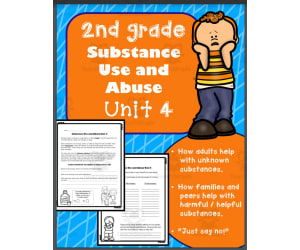
Health 2nd Grade Unit 4: Substance Use and Abuse
P.E. & Health, Health, Physical Education, Special Resources, Life Skills, Social Emotional Learning (SEL), Social Skills, Grade 2, Lesson Plans, Teacher Tools, Worksheets & Printables, Worksheets
For 2nd Grade Health there are seven standards that need to be taught. Unit 1 Personal Health Unit 2 Growth and Development Unit 3 Nutrition and Physical Activity Unit 4 Substance Use and Abuse Unit 5 Injury/ Violence Prevention Control and Safety Unit 6 Prevention/Control of Disease Unit 7 Environmental Consumer Health These units can be taught out of order. They are only numbered for your convenience. At the end of each unit, there is an assessment to test students’ understanding. Through using this Health 2nd Grade Unit 4: Substance Use and Abuse students will learn to identify how adults can help with unknown substances and understand what is a safe and what is not safe or otherwise what is known as an unsafe substance. Students will also learn the following concepts: * How adults help students to understand what is an unknown substance. * Students will learn to “Just say no” to many harmful substances that are not healthy and habit forming. * How families and peers help with harmful / helpful substances. At the end of the unit, there is an assessment to check for understanding. A total of 10 pages for this 2nd Grade Health Unit 4 on Substance Use and Abuse. There are seven units that cover all the health requirements for second grade. Here are the links to other health units: Health 2nd Grade Unit 1: Personal Health Health 2nd Grade Unit 2: Growth and Development Health 1st Grade Unit 3: Nutrition and Physical Activity Health 2nd Grade Unit 4: Substance Use and Abuse Health 2nd Grade Unit 5: Injury / Violence Prevention and Safety Health 2nd Grade Unit 6: Prevention / Control of Disease Health 2nd Grade Unit 7: Environmental / Consumer Health 2nd grade Coronavirus / Covid-19 Facts This unit meets Common Core Standards.
Author K-5 Treasures
Tags Health Unit, Substance Use, Substance Abuse, Safe And Unsafe Substances, 2nd Grade Health, Second Grade Health, Health, Elementary Health, Health Resources, Health For 2nd Grade

Kindergarten Health: Unit 3
P.E. & Health, Life Studies, Health, Physical Education, Special Resources, Life Skills, Social Emotional Learning (SEL), Social Skills, Kindergarten, Lesson Plans, Teacher Tools, Worksheets & Printables, Worksheets
For Kindergarten Health there are seven standards that need to be taught to achieve healthy habits! Unit 1 Personal Health Unit 2 Growth and Development Unit 3 Nutrition and Physical Activity Unit 4 Substance Use and Abuse Unit 5 Injury/ Violence Prevention Control and Safety Unit 6 Prevention/Control of Disease Unit 7 Environmental Consumer Health These units can be taught out of order. They are only numbered for your convenience. Through using this Kindergarten Health: Unit 3, students will explore and learn to identify daily healthy habits. Students will cut, paste, and sort healthy and unhealthy foods. Also included is a fun engaging story about an unhealthy cat who learns how to be healthy by eating the appropriate food and getting exercise. There are a total of 12 pages included in this unit for Kindergarten Health. Included in this unit: * Students will sort healthy foods by their color. Teachers will help students understand that fruits and vegetables are colorful and healthy for their bodies. * Students will cut and sort healthy foods verses unhealthy foods by pasting them into the correct column. * Students will read individually or as a group a story about an unhealthy cat who learns how to be healthy. At the end of the story, students will identify and draw healthy foods and a physical healthy habit that is good for their bodies. There are seven units that cover all the health requirements for Kindergarten. Here are the links to other health units: Kindergarten Health: Unit 1 Personal Health Kindergarten Health: Unit 2 Growth and Development Kindergarten Health: Unit 3 Nutrition and Physical Activity Kindergarten Health: Unit 4 Substance Use and Abuse Kindergarten Health: Unit 5 Injury / Violence Prevention Control and Safety Kindergarten Health: Unit 6 Prevention / Control of Disease Kindergarten Health: Unit 7 Enviromental Consumer Health You can also teach your students about keeping yourself safe by studying about the Coronavirus, where and when it started and facts that plagued our world with this virus. Kindergarten Health: Covid 19 / Coronavirus Facts This unit meets Common Core Standards.
Author K-5 Treasures
Tags Health, Health Units, Personal Health, Health Worksheets, Kindergarten Health, Kids Health, Elementary Health, Worksheets On Health, Healthy Habits, Healthy Foods

Life Skills Word Searches (PDF)
ELA, Language Development, Vocabulary, Spelling, ESL, Resources for Teachers, Life Skills, Special Resources, Grade 2, 3, 4, 5, Worksheets & Printables, Worksheets, Teacher Tools, Centers, Activities, Word Searches
Wordsearch Series This wordsearch series is designed for students in grades 2–5. Each set of wordsearches is built around a clear vocabulary theme, helping students develop word recognition, improve spelling, and boost topic-related understanding through engaging visual puzzles. Every wordsearch also includes a fun hidden shape for students to guess—adding an interactive twist to traditional vocabulary practice. These wordsearches are student-friendly, classroom-ready, and perfect for integrating into literacy warmups, seasonal units, fast-finisher tasks, or home learning extensions. Each puzzle reinforces themed vocabulary in a playful, structured format that keeps learners motivated. Life Skills Word Search Word List 1. Being Responsible Chores, Listen, Help, Clean, Safe, Work, Try, Plan 2. Daily Routines Wake, Dress, Eat, Brush, Pack, Wash, Sleep, Rest 3. Social Skills Share, Wait, Ask, Say, Kind, Polite, Friend, Smile 4. Problem Solving Think, Fix, Try, Ask, Choice, Learn, Plan, Strong 5. Money and Shopping Money, Save, Spend, Shop, Price, Coin, Bill, Earn 6. Safety Skills Stop, Look, Listen, Helmet, Seatbelt, Cross, Hot, Help PDF Version Other versions will appear here when available. Follow the store for the lastest on new products. How to Use These Wordsearches These wordsearches are ideal for: Morning work or early finisher bins Vocabulary centers or anchor activities Holiday or seasonal review lessons Independent literacy stations or take-home enrichment Each puzzle includes a themed word list and a shaped grid for students to complete. Word directions may vary (horizontal, vertical, diagonal), and answer keys are included for easy checking. Optional vocabulary challenges or writing tasks can be added to extend the learning experience. Whether you're reviewing key vocabulary, exploring a seasonal topic, or offering fun literacy practice, these wordsearches provide a flexible and engaging tool to support vocabulary growth in grades 2–5. More Life Skills Themed Products CROSSWORDS FULL CATALOG OF DOWNLOAD LINKS HERE Themed Word Search Links Addition PDF Animals PDF Around the Home PDF Birthday PDF Candy PDF Christmas PDF Cinco de Mayo PDF Clothes PDF Colors PDF Days and Months PDF Division PDF Earth Day PDF Easter PDF Easy Word Searches PDF Fall PDF Father's Day PDF Food PDF Geography (Set 1) PDF Geography (Set 2) PDF Geography (Set 3) PDF Graduation PDF Health PDF History (Set 1) PDF History (Set 2) PDF History (Set 3) PDF Human Body PDF Kindness PDF Life Skills PDF Mother's Day PDF Multiplication PDF Science Word Searches (Set 1) PDF Science Word Searches (Set 2) PDF Science Word Searches (Set 3) PDF Shapes PDF Social Skills PDF Spring PDF Sports PDF St. Patrick's Day PDF Subtraction PDF Summer PDF Thanksgiving PDF Transport PDF Valentine's Day PDF Winter PDF Wordsearches in Depth Structure Each wordsearch is crafted around a focused sub-theme and includes a visual puzzle shaped like a related object (e.g., balloon, gift, snowman). Students complete each puzzle using the provided themed word list, strengthening both content knowledge and spelling skills in a highly engaging format. Each completed set includes: A shaped wordsearch puzzle with 10 vocabulary words A student instruction guide with search directions (horizontal, vertical, diagonal) An answer key for teacher support or student self-checking A Did You Know? fact connected to the theme for enrichment or discussion Themes Included The wordsearches cover a wide range of fun, age-appropriate themes, including: Seasons & Holidays (e.g., Halloween, Easter, Valentine’s Day) Math Concepts (e.g., Addition, Number Words) Everyday Topics (e.g., Animals, Weather, School) Special Units (e.g., Health, Earth Day, Sports, Kindness) Each topic is selected to reflect students’ real-life experiences and interests while reinforcing literacy skills and content understanding in a playful, visual way. For similar downloads and other frees, do check out Cored Group on TeachSimple.
Author Cored Education
Rating
Tags Vocabulary, Spelling, Life Skills, Daily Routines, Social Skills, Problem Solving, Safety Skills, Word Search, Life Skills Word Search, Word Searches

I Can Stop Blurting, Social Skills Stories and Activities For Pre-K, K-2nd & 3rd-5th
Special Resources, Life Skills, Preschool, Grade 1, 2, 3, 4, 5, Worksheets & Printables, Worksheets
Product: I Can Stop Blurting, Social Skills Stories and Activities For Pre-K, K-2nd & 3rd-5th The I Can Stop Blurting resources are a set of stories and activities conceptualized for educators to elucidate young students about the implications of blurting on their immediate environment. This resource focuses on promoting student comprehension around concepts such as the definition of blurting, reasons to avoid it, and strategies to control it. These facets are communicated through social skill stories that simplify complex thoughts into clear and understandable chunks—providing insights into appropriate behavior in social circumstances. The collection is wholly differentiated from preschool levels up to 5th grade. Each level—preschool; K-2nd grade; 3rd-5th grade—of the resource comes with content impeccably tailored according to language skills and understanding potential congruent with each age group. I Can Stop Blurting is efficient as a tool for either whole-group discussions or small-group activities within classrooms or home-schooling contexts. The variety offered by its usage enables hassle-free incorporations into any teaching style encouraging comprehension among diverse learners. This practical bundle proves notably beneficial for tutors managing students across varying age groups and strengths—including social workers or therapists—it also caters wonderfully to individual distance learning via its included animated PowerPoint story format. Included in this package are color versions of the story perfect for stimulating classroom engagement followed by skill builder activities tailor-made to boost learned abilities from the narrative further. A supplementary coloring book partner supports generalization while visual props can aid single use or serve as creative additions onto bulletin boards . If you seek an intriguing homework assignment or a helpful conversation initiator during class time – these universal resources impart vital assistance in teaching children effective communication practices while being considerate towards others around them. Remember that this comprehensive bundle focuses not just on curbing blurting but also nurturing crucial life skills—an integral part instilling societal harmony by teaching our young learners the significance of respecting others' space and time. This 183-page bundle filled with assorted, targeted content, I Can Stop Blurting paves the pathway for respectful communications skill development in budding minds.
Author Socially Skilled Kids
Tags Blurting, Social Skills, Communication, Appropriate Behavior, Classroom Resource

Kindergarten Health: Unit 5
P.E. & Health, Life Studies, Physical Education, Health, Special Resources, Life Skills, Social Emotional Learning (SEL), Social Skills, Kindergarten, Lesson Plans, Teacher Tools, Worksheets & Printables, Worksheets
For Kindergarten Health there are seven standards that need to be taught to achieve healthy habits! Unit 1 Personal Health Unit 2 Growth and Development Unit 3 Nutrition and Physical Activity Unit 4 Substance Use and Abuse Unit 5 Injury/ Violence Prevention Control and Safety Unit 6 Prevention/Control of Disease Unit 7 Environmental Consumer Health These units can be taught out of order. They are only numbered for your convenience. Through using this Kindergarten Health: Unit 5, students will explore and learn to identify daily healthy habits. Included in this unit : Students will learn what to do if they are lost by learning their phone numbers of a parent or guardian. Students will also learn their address and full name, and guardian's names if lost. Students will complete a cut and paste activity for when to call 911 and when not to call 911. Students will learn about bike safety and the signals used when riding a bike. Playground safety is also taught in this unit . Learning about stranger danger is outlined in this unit with a cut and paste activity . Lastly, students will learn about bullying and what it means to be bullied and what to do. This excellent product comprises 11 pages chock-full of useful resources aimed at fostering critical life skills for the well-being of young learners. Embrace Kindergarten Health: Unit 5 in your classroom today! There are seven units that cover all the health requirements for Kindergarten. Here are the links to other health units: Kindergarten Health: Unit 1 Personal Health Kindergarten Health: Unit 2 Growth and Development Kindergarten Health: Unit 3 Nutrition and Physical Activity Kindergarten Health: Unit 4 Substance Use and Abuse Kindergarten Health: Unit 5 Injury / Violence Prevention Control and Safety Kindergarten Health: Unit 6 Prevention / Control of Disease Kindergarten Health: Unit 7 Enviromental Consumer Health You can also teach your students about keeping yourself safe by studying about the Coronavirus, where and when it started and facts that plagued our world with this virus. Kindergarten Health: Covid 19 / Coronavirus Facts This unit meets Common Core Standards.
Author K-5 Treasures
Tags Health Worksheets, Health, Kindergarten Health, Personal Health, Kids Health, Worksheets On Health, Elementary Health, Healthy Foods, Healthy Habits, Health Units

Learning Problem Solving: Critical Thinking and Creativity Skills Gr. 3-8+
Special Resources, Life Skills, Grade 3, 4, 5, 6, 7, 8, Worksheets & Printables, Worksheets
Learning Problem Solving: Critical Thinking and Creativity Skills Gr. 3-8+ This chapter slice is a part of the robust lesson plan "Learning Problem Solving", it provides an inventory of resources devised to assimilate critical problem-solving skills into students' learning process. The compilation incorporates real-life activities, role-playing scenarios, and open-ended strategies offering students an all-round experience. At its root lies the foundation for churning out productive employees or innovative entrepreneurs from our classrooms. It activates young learners by introducing them to creative group art projects enhancing their critical thinking ability along with developing their creativity quotient. Students are propelled into action as navigators in their quests for solutions rather than being passive absorbers of information. The resource underscores dedication, hard work, productivity, and success as cornerstones for effective problem-solving - invariably inducing growth mindsets among learners. Rather than just focussing on rote learning; it goes beyond by fostering the skill of accurate interpretation & analysis - a quintessential skillset today! Curriculum Integration The curriculum can be smoothly blended with whole group lectures or smaller study groups allowing flexibility in educators' approach toward instruction. Standalone reproducible worksheets are included within resources crafted prudently with intent to mould lifelong problem solvers out of our students! Ease Of Access The content is delivered in PDF format ensuring user-friendly access across various hardware without any loss in data integrity or formatting issues—makes this tool convenient and suitable for imparting vital life skills among middle-grade schoolers (third through eighth grades). A simple yet potent tool that merges traditional teaching techniques with modern-day requirements seamlessly to offer an extraordinary platform fostering robust learning in students, both in and beyond the classroom.
Author Classroom Complete Press
Tags PDF

Health | 3rd Grade Unit 1: Personal Health
P.E. & Health, Life Studies, Physical Education, Health, Special Resources, Life Skills, Social Emotional Learning (SEL), Social Skills, Grade 3, Teacher Tools, Lesson Plans, Worksheets & Printables, Worksheets
For 3rd Grade Health there are seven standards that need to be taught. Unit 1 Personal Health Unit 2 Growth and Development Unit 3 Nutrition and Physical Activity Unit 4 Substance Use and Abuse Unit 5 Injury/ Violence Prevention Control and Safety Unit 6 Prevention/Control of Disease Unit 7 Environmental Consumer Health These units can be taught out of order. They are only numbered for your convenience. At the end of each unit, there is an assessment to test students’ understanding. In this unit, students will discuss and learn about healthy and unhealthy physical activities. They will discuss with the group what they think happens to their body when they are running, what causes our bodies to sweat and make our heartbeat faster and how long it takes for our bodies to recover. They will even perform some physical activities as a group and monitor what is happening to their bodies. Students will also read about healthy and unhealthy habits they do during the day. Such unhealthy habits they will read about include watching TV, playing video games, or laying around instead of doing physical activities such as skateboarding, swimming, and other activities that are good for our heart. There is a goal sheet included that will help students monitor how they can get more physical activity into their daily routines. After completing the goal sheet, they will compare it to other classmates and even improve on their physical goals that they want to accomplish. In the unit, there is a worksheet about making healthy eating habits. What foods kids should avoid like sugary sweets, greasy foods, chips and sodas. Student will discuss the consequences of eating unhealthy foods verses eating healthy options. Lastly, there is a worksheet on the importance of sleep. How much sleep kids need at their age and why it's important to go to bed on time each night. There are 13 pages included in all. In the end, there is an assignment to test for understanding. There are seven units that cover all the health requirements for 3rd grade. Here are the links to other health units: Health | 3rd Grade Unit 1: Personal Health Health | 3rd Grade Unit 2: Growth and Development Health | 3rd Grade Unit 3: Nutrition and Physical Activity Health | 3rd Grade Unit 4: Substance Use and Abuse Health | 3rd Grade Unit 5: Injury Prevention and Safety Health | 3rd Grade Unit 6: Prevention Control of Disease Health | 3rd Grade Unit 7: Environmental Consumer Health
Author K-5 Treasures
Tags Health Unit, Personal Health, Healthy Goals, Unhealthy Choices, Health Activities, Physical Goals, Health Goals, Health And Wellness, 3rd Grade Health, Third Grade Health

Health 2nd Grade Unit 5: Injury / Violence Prevention and Safety
P.E. & Health, Health, Physical Education, Special Resources, Life Skills, Social Emotional Learning (SEL), Social Skills, Common Core, Grade 2, Lesson Plans, Teacher Tools, Worksheets & Printables, Worksheets
For 2nd Grade Health there are seven standards that need to be taught. Unit 1 Personal Health Unit 2 Growth and Development Unit 3 Nutrition and Physical Activity Unit 4 Substance Use and Abuse Unit 5 Injury/ Violence Prevention Control and Safety Unit 6 Prevention/Control of Disease Unit 7 Environmental Consumer Health These units can be taught out of order. They are only numbered for your convenience. At the end of each unit, there is an assessment to test students’ understanding. Through using this Health 2nd Grade Unit 5: Injury / Violence Prevention and Safety students will learn to identify personal information, safety in their environment, trusted adults in their community, and how to identify bullying and ways to report it and stop bullying. Students will also learn the following concepts: * Know their address and phone number as they practice writing it and reciting it. * Understand safety in your environment. * Students will be able to identify trusted adults in community. * Students will learn safety procedures in home. * Students will understand what is bullying. At the end of the unit, there is an assessment to check for understanding. A total of 12 pages for this 2nd Grade Health unit on Injury / Violence Prevention and Safety. There are seven units that cover all the health requirements for second grade. Here are the links to other health units: Health 2nd Grade Unit 1: Personal Health Health 2nd Grade Unit 2: Growth and Development Health 1st Grade Unit 3: Nutrition and Physical Activity Health 2nd Grade Unit 4: Substance Use and Abuse Health 2nd Grade Unit 5: Injury / Violence Prevention and Safety Health 2nd Grade Unit 6: Prevention / Control of Disease Health 2nd Grade Unit 7: Environmental / Consumer Health 2nd grade Coronavirus / Covid-19 Facts This unit meets Common Core Standards.
Author K-5 Treasures
Tags Health Unit, Injury, Violence Prevention, Safety, 2nd Grade Health, Second Grade Health, Community Workers, Bully Prevention, Health Activities, 2nd Grade Health Resources

Editable School Therapy Dog Approval Materials
Social Emotional Learning (SEL), Special Resources, Social Skills, Special Education Needs (SEN), Life Skills, Animals, Life Sciences, Science, Classroom Management, Resources for Teachers, High School, Middle School, Elementary, Early Learning, Homeschool Resources, Not Grade Specific, Adult Education, Classroom Decor, Bulletin Boards, Projects, Activities, Door Decor, Presentations, Teacher Tools, Templates, Worksheets, Worksheets & Printables
Want to Introduce a School Dog? These Editable Templates Make It Easy! 🐶📋 Bringing a therapy dog into a school is an exciting journey, but let’s be real — it also comes with a ton of paperwork and a lot of questions from school administrators, teachers, and parents. When I started with my school dog, I quickly realized: I needed a clear way to present my plan, get approval, and answer concerns upfront. So, I put together these ready-to-use templates—and now I’m sharing them with you! 🐾 What’s Included? ✅ 3 Editable Templates for Different Stages of Approval: ✔ Introducing a School Dog – A friendly, easy-to-understand letter for teachers & parents. ✔ Therapy Dog in Training – A more formal version for school leaders & board members. ✔ Certified Therapy Dog – A final approval document to make everything official. 🎨 Five color options + black & white for easy printing 🖥️ Formats: PowerPoint, Keynote (editable & customizable) & non editable PDF 📌 How to Use These Templates 1️⃣ Choose the right template for your school’s current stage. 2️⃣ Edit the text to match your therapy dog’s training and role. 3️⃣ Share with school leadership, teachers & parents to keep everyone informed. 4️⃣ Print or present digitally to make your school dog approval process seamless. 💡 Teacher Tip: Start with the “Introducing a School Dog” template first—it sets the stage before moving into formal approval. Why This Will Save You Time & Stress ✔ No need to start from scratch—just customize & print! ✔ Helps answer common concerns from parents & staff ✔ Gives you a professional, structured plan to present ✔ Perfect for both new & experienced school dog handlers 🐕 Get Your School Dog Approved with Confidence! Whether you’re just starting out or need final approval, these templates give you a structured, stress-free way to introduce and manage your school dog program. 📥 Download now and make the process easy! 🐾✨ 📍 Best wishes, Heike from Lernfitness 🐾 Did You Know? I teach with a certified therapy dog, and together we help create a calm, engaging, and inclusive learning environment! 🐶💙
Author Lernfitness
Tags Therapy Dog, Animal-assisted Learning, Inclusive Education Tools, Therapy Dog Rules, Classroom Pet Guidelines, Therapy Dog In School, Social-emotional Learning, SEL, Dog, Approval Materials

Personal Health: 4th and 5th Grade Unit 1
P.E. & Health, Life Studies, Physical Education, Health, Special Resources, Life Skills, Social Emotional Learning (SEL), Social Skills, Grade 4, 5, Teacher Tools, Lesson Plans, Worksheets & Printables, Worksheets
Personal Health: 4th and 5th Grade Unit 1 For 4th and 5th Grade Health, there are seven standards that students will practice and learn. Through using this 4th and 5th Grade Health Unit 1: Personal Health students will explore and learn to identify daily healthy habits. This unit is the perfect way to help 4th and 5th graders learn the importance of their personal health! This engaging unit is perfect to help your 4th and 5th grade students understand the four ways to be healthy which include: social, physical, mental, and emotional health. There are lessons that teach the steps to make good health decisions, plus there are lessons to help them to teach their family and friends with their health choices. Included in this unit are ways to help enhance their verbal and nonverbal communication skills, how to set reasonable goals to improve their eating habits, and students will set physical goals that will be beneficial to their health. All of these units meet Common Core Standards. Included at the end is an assessment to check for understanding with answer keys. This is a fun and engaging health unit that students are sure to enjoy. There are 22 pages included! Included in this 4th and 5th Grade Health Unit are the following: Students will learn all the ways to be healthy which include physical, mental, emotional, and social. Steps to help them make good health decisions. Students will practice those steps on their own with a given a scenario to solve. A guide is given to teach these steps to help family and friends to make good health choices. They will learn verbal and nonverbal communication skills and how to improve those skills. Students will set goals to improve their healthy eating habits. Setting physical goals to improve their health is also included. Lastly, there is an assessment to check for understanding. Answer keys are also provided. There are seven units that cover all the health requirements for 4th and 5th grade. Here are the links to other health units: Health | 4th and 5th Grade Unit 1: Personal Health Health | 4th and 5th Grade Unit 2: Growth and Development Health | 4th and 5th Grade Unit 3: Nutrition and Physical Activity Health | 4th and 5th Grade Unit 4: Substance Use and Abuse Health |4th and 5th Grade Unit 5: Injury and Violence Prevention Health | 4th and 5th Grade Unit 6: Prevention and Control of Disease Health |4th and 5th Grade Unit 7: Environmental Consumer Health
Author K-5 Treasures
Tags Health Unit, Personal Health, Healthy Goals, Health Activities, Physical Goals, Health Goals, Health And Wellness, 4th Grade Health, 5th Grade Heath, Heath Units

Learning Skills for Global Competency: Failure is a Learning Opportunity Gr. 3-8+
Special Resources, Life Skills, Grade 3, 4, 5, 6, 7, 8, Worksheets & Printables, Worksheets
Learning Skills for Global Competency: Failure is a Learning Opportunity for Grades 3-8+ This innovative teaching resource provides an effective tool in shaping the mindsets of young learners. It focuses on enhancing adaptive abilities and flexible thinking crucial for thriving in a global economy. "Failure is a Learning Opportunity" Central Theme The resource employs real-life scenario-based project exercises aimed at encouraging creativity and role-playing amongst learners. The approach helps students see failure as an opportunity for growth rather than as a setback. Focus on Iteration and Innovation This influential feature empowers students with confidence, fostering positive attitudes towards change, improvement, and innovation - traits critical in our rapidly evolving world. Integration of Technology and Media Further enhancing relevance, this resource integrates technology to make learning more engaging for today's digital natives. Additionally, it provides educators with practical tips on asking impactful questions that challenge established norms. Reproducible Worksheets For Agile Thinking The product includes standalone reproducible worksheets designed to nurture agility and flexibility amongst young minds. These worksheets can serve as practical tools reinforcing agile thinking by challenging traditional norms. Suitable ideally for grades 3 through 8+, this resource caters well to life skills development. Its portability as a PDF format makes it convenient for any public school or homeschool teacher seeking quality materials that complement their curriculum while sparking curiosity among students effectively. It’s perfect also for whole group discussions, small group activities or even homework assignments integrating traditional teaching techniques with contemporary educational requirements aimed at shaping future-ready learners. Educational tools like 'Learning Skills For Global Competency: Failure Is A Learning Opportunity' simplify the task of facilitating your journey towards empowering future global citizens.
Author Classroom Complete Press
Tags PDF
Learning Communication & Teamwork: Building Networks & Branding Gr. 3-8+
Special Resources, Life Skills, Grade 3, 4, 5, 6, 7, 8, Worksheets & Printables, Worksheets
Learning Communication & Teamwork: Building Networks & Branding Gr. 3-8+ A unique and invaluable teaching resource designed for nurturing essential life skills in students from grades 3 to 8. This product effectively marries traditional academia with crucial life abilities by providing pupils with the resources necessary for real-life communication, teamwork, networking and personal branding. Dynamic Content The dynamic package zeroes in on critical aspects such as communication skills, jointly working capabilities and practical exercises that are crucial for successful careers in today's world. The worksheets use open-ended methodologies coupled with role-play scenarios to encourage learners to engage in critical thinking whilst promoting active participation within group tasks. Ease of Use This product stands out with its easy-to-use feature: standalone reproducible worksheets obviate the need for extra preparation time or materials. These worksheets can be used across various setups – ranging from a classroom group scenario, small group discussions to even homework assignments. Emphasis on Project -based Learning Technology: Emphasized alignment towards project -centric activities involving technology usage enkindles collaboration while teaching effective networking - vital skills relevant not only within school premises but also widely desirable within many professional industries. Creative Arts: The interjection of creative arts arena where kids engage in hands-on tasks provides them an opportunity to show their leadership potential by understanding it practically rather than just theoretically. Ideal Teaching Resource! An ideal educational supplement that aligns perfectly with evolving industry norms like communication acumen and team dynamics included along regular academics. This high-resolution PDF resource makes education interactive and fruitful by amalgamating several vital factors into one all-inclusive tool suitable for teachers traversing all stages of their educational journey. This tool provides the perfect education solution for homeschooling parents and public school teachers who want their pupils to be equipped with contemporary tools required for future success.
Author Classroom Complete Press
Tags PDF

Nutrition and Physical Activity Health: 4th and 5th Grade Unit 3
P.E. & Health, Life Studies, Physical Education, Health, Special Resources, Life Skills, Social Emotional Learning (SEL), Social Skills, Grade 4, 5, Teacher Tools, Lesson Plans, Worksheets & Printables, Worksheets
Nutrition and Physical Activity Health: 4th and 5th Grade Unit 3 For 4th and 5th Grade Health, there are seven standards that students will practice and learn. Through using this 4th and 5th Grade Health Unit 3: Nutrition and Physical Activity, students will explore and learn to identify daily healthy habits. This unit is the perfect way to help 4th and 5th graders learn the importance of their personal health! This Unit 3: Nutrition and Physical Activity contains many activities that include teaching the six basic nutrients the body needs and how students can maintain a healthy lifestyle. Students will also learn the importance of portion sizes, and they will be able to learn and understand the new food labels that was recently recreated on all food containers. Furthermore, students will get to plan 3 meals that are healthy and create an ethnic recipe of their own.. Plus, they'll get to learn about physical and moderate exercises to keep their bodies healthy. At the end of this unit, there is an assessment and answer key to check for understanding. This 4th and 5th Grade Unit 3: Nutrition and Physical Activity meets Common Core standards and will make learning about nutrition and physical activity fun and exciting! Included in this 4th and 5th Grade Health unit are the following: Students will learn about the body's nutrients that are needed for a healthy lifestyle which include: Water, Protein, Carbohydrates, Fat, Vitamins, Minerals. They will learn about portion sizes and the basic food groups. They will create and plan three healthy meals. Students will decipher what food labels mean on food packages and how to apply that to their life. They will learn a new ethnic recipe and make their own meal. Students will learn about physical and moderate exercises and come up with their own ways to stay healthy with exercise. Lastly, there is an assessment to check for understanding. Included is an answer key. There are 26 pages included! There are seven units that cover all the health requirements for 4th and 5th grade. Here are the links to other health units: Health | 4th and 5th Grade Unit 1: Personal Health Health | 4th and 5th Grade Unit 2: Growth and Development Health | 4th and 5th Grade Unit 3: Nutrition and Physical Activity Health | 4th and 5th Grade Unit 4: Substance Use and Abuse Health |4th and 5th Grade Unit 5: Injury and Violence Prevention Health | 4th and 5th Grade Unit 6: Prevention and Control of Disease Health |4th and 5th Grade Unit 7: Environmental Consumer Health
Author K-5 Treasures
Tags Personal Health, Healthy Goals, Health Activities, Physical Goals, Health Goals, Health And Wellness, 4th Grade Health, 5th Grade Heath, Heath Units, Nutrition Goals

Health 2nd Grade Unit 2: Growth and Development
P.E. & Health, Health, Physical Education, Special Resources, Life Skills, Social Emotional Learning (SEL), Social Skills, Grade 2, Teacher Tools, Lesson Plans, Worksheets & Printables, Worksheets
For 2nd Grade Health there are seven standards that need to be taught. Unit 1 Personal Health Unit 2 Growth and Development Unit 3 Nutrition and Physical Activity Unit 4 Substance Use and Abuse Unit 5 Injury/ Violence Prevention Control and Safety Unit 6 Prevention/Control of Disease Unit 7 Environmental Consumer Health These units can be taught out of order. They are only numbered for your convenience. At the end of each unit, there is an assessment to test students’ understanding. Through using this Health 2nd Grade Unit 2: Growth and Development students will explore and learn to identify major organs of the body as well as physical and emotional characteristics of themselves and others. They will explore their feelings and describe what makes them happy, angry, etc. Students will also learn about the following body systems as they cut and paste a body together: * Understand the Skeletal and Nervous body system * Learn about the Circulatory body system * Learn about the Digestive body system * Learn about the Respiratory body system * Learn about the Muscular body system * Learn about the Skin and Hair body system At the end of the unit, there is an assessment to check for understanding. A total of 13 pages for this 2nd Grade Health Unit 2 on Growth and Development. There are seven units that cover all the health requirements for second grade. Here are the links to other health units: Health 2nd Grade Unit 1: Personal Health Health 2nd Grade Unit 2: Growth and Development Health 1st Grade Unit 3: Nutrition and Physical Activity Health 2nd Grade Unit 4: Substance Use and Abuse Health 2nd Grade Unit 5: Injury / Violence Prevention and Safety Health 2nd Grade Unit 6: Prevention / Control of Disease Health 2nd Grade Unit 7: Environmental / Consumer Health 2nd grade Coronavirus / Covid-19 Facts This unit meets Common Core Standards.
Author K-5 Treasures
Tags Health Unit, Organs Of The Body, Growth And Development, 2nd Grade Health, Second Grade Health, Healthy Activities, Emotional Health, Health Resources, 2nd Grade Health Resources

Prevention and Control of Disease Health: 4th and 5th Grade Unit 6
P.E. & Health, Life Studies, Physical Education, Health, Life Skills, Special Resources, Social Emotional Learning (SEL), Social Skills, Grade 4, 5, Teacher Tools, Lesson Plans, Worksheets & Printables, Worksheets
Prevention and Control of Disease Health: 4th and 5th Grade Unit 6 For 4th and 5th Grade Health, there are seven standards that students will practice and learn. Through using this Prevention and Control of Disease Health: 4th and 5th Grade Unit 6 students will explore and learn to identify daily healthy habits. In this unit, students will learn how to prevent illness and diseases. There is a sorting activity where students will learn basics of communicable and non-communicable diseases and decipher which category they fall under. Students will learn how to promote good health, and they will understand how to identify reliable health sources. Included in this unit, students will study the Coronavirus, its origin, how it spreads, and how to keep communities and people safe. This unit is a perfect way for students to learn about diseases and how students can be healthy and stay informed! There are 44 pages included. This unit meets Common Core Standards. Included in this Prevention and Control of Disease Health: 4th and 5th Grade Unit 6 Worksheet on what is communicable and non-communicable diseases and sorting these diseases. An understanding of pathogens and how they spread in communities. Worksheets on four ways to promote good health and prevent illnesses. Learn to write healthy goals and learn how to accomplish these goals. There are harmful choices that could affect kids' health. Learning how to get enough sleep is good for their health. Students will also learn where to get reliable health information when needed such as a school nurse or counselor. Information about the Coronavirus is also included. Questions that will be answered include: What is Covid-19? How did Covid-19 start? How does it spread? Who is WHO and the CDC? What happens if you get Covid-19? What can you do to be safe? There is an assessment to check for understanding. An answer key is included. There are seven units that cover all the health requirements for 4th and 5th grade. Here are the links to other health units: Health | 4th and 5th Grade Unit 1: Personal Health Health | 4th and 5th Grade Unit 2: Growth and Development Health | 4th and 5th Grade Unit 3: Nutrition and Physical Activity Health | 4th and 5th Grade Unit 4: Substance Use and Abuse Health |4th and 5th Grade Unit 5: Injury and Violence Prevention Health | 4th and 5th Grade Unit 6: Prevention and Control of Disease Health |4th and 5th Grade Unit 7: Environmental Consumer Health
Author K-5 Treasures
Tags Health Unit, Personal Health, Healthy Goals, Health Activities, Physical Goals, Health Goals, Health And Wellness, 4th Grade Health, 5th Grade Heath, Heath Units
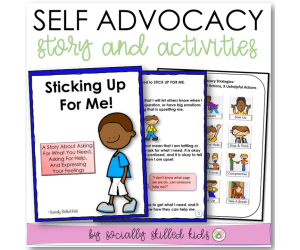
Sticking Up For Me! Social Skills Story & Activity For Boys K-2nd
Life Studies, Special Resources, Life Skills, Preschool, Grade 1, 2, Worksheets & Printables, Worksheets
Sticking Up For Me! Social Skills Story & Activity For Boys K-2nd Explore a carefully crafted resource for young boys ranging from kindergarten to the 2nd grade, designed to guide or gently nudge them towards speaking up for themselves. This concept is put into action through an engaging story and followed by dynamic activities we refer as 'Skill Builder Activities'. Sticking Up For Me! is a vital teaching tool created to develop social skills amongst boys at this delicate stage. At this point, they are encountering and learning from diverse social situations. The narrative breaks down complex scenarios into simpler steps offering clear insights on expected behaviors in different situations. Skill Builder Activities Beyond the enthralling storyline, Sticking Up for Me! introduces boys to Skill Builder Activities. These interactive exercises are perfect tasks post reading the narrative and assists in shaping up necessary skills extracted from the story. A color story version: ideal for classroom presentations, 'Scenario Cards' & 'Self-Advocacy Check': two types of skill builder activities, A coloring book companion: : allows children to color alongside reading, A Mini Book format: : conveniently sized smaller than standard books, perfect while travelling, An animated PowerPoint Story with skill builder features: : optimal for distance learning applications. Versatility Of The Resource The resource could be utilized during large-group lessons or during sessions that encourage intimate discussions about self-representation. It can even be provided as homework assignments encouraging individual reflection on new insights about self-expression. Whether you favor traditional teaching or the homeschooling method, this resource effectively meets kindergarteners and 2nd graders wherever they are in their social awareness journey. Conclusion In conclusion, Sticking Up For Me! is more than just another educational tool. It can positively influence young learners' attitudes towards circumstances that encourage them to voice out their needs—a vital life skill extending beyond classroom boundaries. This guide ensures lessons delivered in approachable PDF format, easily adaptable for both physical classroom sessions and online classes.
Author Socially Skilled Kids
Tags Social Skills, Self-advocacy, Storytelling, Interactive Activities, Boys

Types of Investments: Personal Financial Literacy- GICs, Stocks, Etc.
Life Studies, Home Economics, Finance, Math, Special Resources, Life Skills, Percentages, Grade 9, 10, 11, 12, Worksheets & Printables, Worksheets, Lesson Plans, Teacher Tools
This 3-page lesson that includes student worksheets will help teach your high school students about all the different kinds of investments that they can purchase to grow their savings and net worth. Get teenagers interested in investing early to help improve their financial literacy! It’s an easy-to-use lesson for a finance, career and personal planning, family and consumer sciences, life skills, or applied math class. How to Use: 1. Students will learn the basic vocabulary (including rate of return and principal) and concepts (including risk versus reward and time horizon) surrounding investments. 2. Six different kinds of investments are introduced (savings accounts, GICs, stocks, bonds, mutual funds, and Exchange Traded Funds). 3. For each, students will determine the basic pros and cons and research to find one or more current interest rates and/or rates of return. They can use the information on the worksheets and complete more research online. 4. Finally, students are asked to decide how they would invest a $1 million inheritance into 3 different kinds of investments. They will choose how much to put into each investment, and they will explain why they made their picks (based on when they might need to use the money and what they want to use it for). What's Included: 5 Page PDF: Ready to Print and Use! - Teacher Instructions - 2-Page Student Worksheet: six types of investments and investment vocabulary - 1-Page Student Worksheet: How would you invest $1 million? - Sample Answer Key If you enjoy this product, check out other investment and financial literacy lessons in my store: Types of Investment Accounts in Canada: Teaches about the Registered Investment Accounts Available in Canada Types of Investment Accounts in the US: Teaches about the Registered Investment Accounts Available in the USA Net Worth: Assets - Liabilities = Equity: Teaches Students How to Build Their Net Worth
Author Grace Under Pressure
Tags Personal Financial Literacy, Financial Literacy, High School Financial Literacy, Investing, Investments, Stocks, Bonds, Gics, Family Consumer Sciences, Life Skills

Health 1st Grade Unit 7: Environmental / Consumer Health
P.E. & Health, Special Resources, Health, Physical Education, Life Skills, Social Emotional Learning (SEL), Social Skills, Grade 1, Lesson Plans, Teacher Tools, Worksheets & Printables, Worksheets
For 1st Grade Health there are seven standards that need to be taught. Unit 1 Personal Health Unit 2 Growth and Development Unit 3 Nutrition and Physical Activity Unit 4 Substance Use and Abuse Unit 5 Injury/ Violence Prevention Control and Safety Unit 6 Prevention/Control of Disease Unit 7 Environmental Consumer Health These units can be taught out of order. They are only numbered for your convenience. At the end of each unit, there is an assessment to test students’ understanding. Through using this Health 1st Grade Unit 7: Environmental / Consumer Health includes the following concepts: * Students will learn about sun damage. * Students will learn how to protect themselves from sun rays. * Students will learn about community health workers. * Students will learn about slogans and safety slogans. At the end of the unit, there is an assessment to check for understanding. With this unit, your students are sure to be engaged and learn so much about their health! A total of 13 pages for Health 1st Grade Unit 7: Environmental / Consumer Health. There are seven units that cover all the health requirements for first grade. Here are the links to other health units: Health 1st Grade Unit 1: Personal Health Health 1st Grade Unit 2: Growth and Development Health 1st Grade Unit 3: Nutrition and Physical Activity Health 1st Grade Unit 4: Substance Use and Abuse Health 1st Grade Unit 5: Injury / Violence Prevention and Safety Health 1st Grade Unit 6: Prevention / Control of Disease Health 1st Grade Unit 7: Environmental / Consumer Health You can also teach your students about keeping yourself safe by studying about the Coronavirus, where and when it started and facts that plagued our world with this virus. 1st grade Coronavirus / Covid-19 Facts by Teach Simple This unit meets Common Core Standards.
Author K-5 Treasures
Tags Health Unit, Environment, Consumer Health, 1st Grade Health, First Grade Health, Healthy Habits, Environmental Health, Community Health, Health, 1st Grade Resources

Percent and Decimal Word Problems: Property Taxes Life Skills
Life Studies, Home Economics, Finance, Math, Decimals, Percentages, Special Resources, Life Skills, Grade 7, 8, 9, 10, 11, 12, Worksheets & Printables, Worksheets, Word Problems
Property Taxes: What they are, rates around the world, what they are used for, and how to calculate them! A great way to practice percent to decimal conversions, decimal operations, and rate and ratio learning! This two-page life skills and math worksheet is a quick and easy personal financial literacy activity for your middle or high school students. The Handout portion introduces your students to: Important vocabulary and definitions: property tax and a home’s assessed value. A variety of global property tax rates (ranging from 0.08% – 2.64%) in locations in the United States, Canada, and even Europe. A prompt about why rates vary (lower rates where property is expensive and higher rates where property is cheaper) is also included. What the money collected from property tax revenues is used for: from schools to sewers and roads to emergency services including fire fighters. The Worksheet portion has real-world math practice for your class: Students are taught how they can calculate an annual property tax amount using percentages converted to decimals. First, they practice converting between percents and decimals. Then, they multiply a home's assessed value by the property tax percentage (written as a decimal) in the municipality. 10 practice math questions are included for your students to work on. Finally, they will research the local property tax rate in their area: great real-life learning! A COMPLETE ANSWER KEY INCLUDED- so there is no guesswork when marking! Grades to Use With: This lesson is designed for any students in grades 7-12 who understand percent to decimal conversions, ratios and rates, and decimal operations (specifically multiplying a large number by a decimal). It could be used in high school family and consumer science class, business or economics, applied math, or even life skills classes. If you enjoy this lesson, check out others in my store: Income Tax Sales Tax Capital Gains Tax
Author Grace Under Pressure
Tags Percent Word Problems, Decimal Word Problems, Taxes, Property Tax, Family Consumer Sciences, Financial Literacy, Life Skills, Personal Finance, Home Economics, Percent Worksheet

SEL Stress Management Game-SEL Coloring Pages
Special Resources, Social Emotional Learning (SEL), Special Education Needs (SEN), Social Skills, Life Skills, Grade 3, 4, 5, 6, Activities, Games, Worksheets & Printables, Worksheets, Coloring Pages
In this resource, you will get an engaging game like Apples To Apples. There are 36 strategy cards and 18 situation cards. This is an SEL game. Each person takes a turn with being the judge like Apples to Apples. It is important to make enough sets for the number of groups who will be playing. for example, I recommend at least 3-5 people playing together for each group. So if there are 20 students, then create at least 5 different sets of the cards, Then follow the directions for the game below: First, everyone gets 5 strategy cards. There is no revealing the cards to other players. Then one person is chosen to be the "judge" for the first round. I usually pick the oldest person to make it fair. The judge reveals the card to all and even can read the card out loud. The the other players choose one of their strategy cards to handle that particular situation. Then the judge decides which one they would use. Important; there is not right or wrong here, just what one person would do in that situation. Next the next player goes (usually counter clockwise) to who will be the judge. The person will reveal the situation and the other players will play their strategy card. Play as long as time allows. Next, you can print off the mindfulness coloring sheets for students to color and reinforce the idea or coloring mindfully when they are upset, frustrate, need some time alone, etc. There is a way to change the word and position of the word in the mindfulness coloring sheet. These are SEL coloring pages. For more SEL resources and products, please visit my SEL store at: https://teachsimple.com/contributor/jennifer-moyer-taylor I am a full-time school counselor who works with kindergarten through 8th graders. My products are "kid tested, kid approved"!
Author Jennifer Moyer Taylor
Tags Apples To Apples, Games, Stress Management, Social Skills, Social Emotional Learning, School Counseling, SEL, SEL Coloring Pages, Special Education
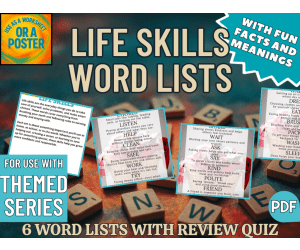
Life Skills Word List Posters (PDF)
ELA, Language Development, Vocabulary, Spelling, ESL, Resources for Teachers, Life Skills, Special Resources, Grade 2, 3, 4, 5, Worksheets & Printables, Worksheets, Teacher Tools, Centers, Activities, Posters, Classroom Decor
Word List Poster Series This word list poster series is designed for students in grades 2–5. Each printable focuses on a clear, kid-friendly theme and features 8 target vocabulary words with short, student-friendly meanings or fun facts. The clean layout works as both an anchor chart and a write-in sheet, giving students a quick, visual reference they can revisit during centers and independent work. These posters are student-friendly, classroom-ready, and perfect for warmups, vocabulary walls, sub plans, or take-home reference. Display a single poster to support the day’s lesson, or group several to build a themed wall across your unit. Note: Each poster is a companion piece to its matching themed product in the series—pair it with the corresponding maze, wordsearch, or activity pack for a consistent set of 8 focus words. Life Skills Word List 1. Being Responsible Chores, Listen, Help, Clean, Safe, Work, Try, Plan 2. Daily Routines Wake, Dress, Eat, Brush, Pack, Wash, Sleep, Rest 3. Social Skills Share, Wait, Ask, Say, Kind, Polite, Friend, Smile 4. Problem Solving Think, Fix, Try, Ask, Choice, Learn, Plan, Strong 5. Money and Shopping Money, Save, Spend, Shop, Price, Coin, Bill, Earn 6. Safety Skills Stop, Look, Listen, Helmet, Seatbelt, Cross, Hot, Help PDF Version Other versions will appear here when available. Follow the store for the lastest on new products. How to Use These Word List Posters Perfect for: Morning work or early-finisher bins Vocabulary centers or anchor walls Holiday/seasonal review lessons Independent stations, sub plans, or take-home reference More Life Skills Themed Products CROSSWORDS WORD SEARCHES MAZES FULL CATALOG OF DOWNLOAD LINKS HERE Themed Word List Posters Links Addition PDF Animals PDF Around the Home PDF Birthday PDF Candy PDF Christmas PDF Cinco de Mayo PDF Clothes PDF Colors PDF Days and Months PDF Division PDF Earth Day PDF Easter PDF Easy Word List Posters PDF Fall PDF Father's Day PDF Food PDF Geography (Set 1) PDF Geography (Set 2) PDF Geography (Set 3) PDF Graduation PDF Health PDF History (Set 1) PDF History (Set 2) PDF History (Set 3) PDF Human Body PDF Kindness PDF Life Skills PDF Mother's Day PDF Multiplication PDF Science (Set 1) PDF Science (Set 2) PDF Science (Set 3) PDF Shapes PDF Social Skills PDF Spring PDF Sports PDF St. Patrick's Day PDF Subtraction PDF Summer PDF Thanksgiving PDF Transport PDF Valentine's Day PDF Winter PDF Word List Posters in Depth Structure Each poster is built around a focused sub-theme and presents 8 target words with short, student-friendly meanings or fun facts. The clean A4 portrait layout works as an anchor chart on your board or as a student reference at desks. These posters are designed as companion pieces to the matching themed products (mazes, wordsearches, activity packs), so the same vocabulary stays visible across your unit. Each poster set includes: A themed word list poster with 8 words + brief meanings/facts A clean, high-contrast layout for easy printing and display Space that can double as write-in/draw-to-show-meaning during centers Themes Included Seasons & Holidays (e.g., Halloween, Easter, Valentine’s Day) Everyday Topics (e.g., Animals, Weather, School) Math & Science Connections (e.g., Number Words, Simple Machines) Special Units (e.g., Health, Earth Day, Sports, Kindness) Each topic reflects real-life experiences and interests while strengthening vocabulary recognition and content understanding in a clear, visual way. Easy extensions (optional) Sketch it: students draw a quick icon for each word Sort it: group words by category (e.g., actions, objects) Star it: highlight “I already know” vs. “I’m learning” words Match it: point to examples in a reading, video, or picture set Say it: brief oral definition or example sentence during share-out Differentiation tips Pre-teach 2–3 anchor words; add the rest later in the week Offer picture cues or gestures for emerging readers/ELLs Let students choose 4 of 8 to focus on first, then build up Color-code by part of speech or concept family for quick scanning For similar downloads and other frees, do check out Cored Group on TeachSimple.
Author Cored Education
Rating
Tags Vocabulary, Spelling, Life Skills, Daily Routines, Social Skills, Problem Solving, Safety Skills, Life Skills Word Lists, Posters, Word Lists

Money Math Life Skills Worksheet: Clothes Shopping Level 3
Special Resources, Life Studies, Creative Arts, Art, Social Emotional Learning (SEL), Special Education Needs (SEN), Life Skills, Finance, Math, Money, Grade 7, 8, 9, Activities, Worksheets & Printables, Worksheets
Clothes Shopping Money Math Level 3 is a 60-question special education worksheet that builds essential life skills for middle school students. This activity aids in teaching calculations for discounts, sales tax, and determining prices when shopping for various items of clothing. The questions are formatted as real-life word problems followed by multiple choice answers. There are 6 sets of 10 questions for calculating costs of pants, shirts, skirts, accessories, dresses, and shoes. This printable worksheet can be used one-on-one or in small groups to help students become more independent. It's an excellent resource for IEP goals related to money math and practical life skills. Interactive and hands-on, this worksheet is ready to use for grade 7-9 special education, autism life skills, or therapy sessions. With step-by-step instructions, age-appropriate graphics, and real-world examples, this is the perfect money math activity to engage middle school students.
Author Adulting Life Skills Resources
Tags Life Skills Money Math , Independent Living Skills, IEP Goal-Oriented Skills, Life Skills For Autistic Teens And Adults, Life Skills For Visual Learners, Adulting On The Spectrum, Social And Emotional Learning, Life Skills For Teens, Life Skills For Adults, Autism And Money Skills, Math Dresses