



2,685 products added recently
Page 79 - Fun Activities For High School Students
Incorporate fun and interactive activities into your high school classroom to boost engagement and enthusiasm. These resources include team-building exercises, creative projects, and thought-provoking challenges. Use them to foster a positive learning environment and strengthen student connections.

 Show filters


Natural Disasters: Weather and Climate Reading Article - Grade 8 and Up
Science, Earth and Environmental Sciences, Environmental Science, Grade 8, 9, 10, 11, Activities
Natural Disasters: Weather and Climate. This resource is suitable for high school students as well as strong middle school students. Tackle literacy and science by having your students read and answer questions from a scientific article. Questions include knowledge (direct from the paper), thinking, connecting, application, and open-ended varieties. No prep, no formatting, no issues. Simply download, print (or upload to your class site), and you're all set To give you an accurate idea of what this resource includes, I've included the complete versions of two other readings as the SAMPLE FILE - The Common Cold and Climate Change. You can also see exactly what the reading looks like in the preview images. This resource is fully editable for your convenience This resource covers the following topics: 1) What is a natural disaster? 2) Kinds of natural disasters 3) Meteorological natural disasters • Lightning • Tornadoes • Hurricanes • Tropical Storms • Blizzards • Hail 4) Climatological natural disasters • Drought • Extreme Heat • Wildfires 5) Summary The Problem You Face - Not having the time to properly teach scientific literacy (disciplinary literacy) or improve your students reading comprehension and analysis skills. The Solution This fully editable, NO PREP reading comprehension article is composed of relevant, applicable and engaging reading activities which can be used to: • introduce your topic • improve your students reading comprehension and scientific literacy skills • improve your students' analysis skills • provide an extension activity to students who move at a faster pace • provide extra credit to students in need • measure your students literacy skills Furthermore, this resource works very well as an emergency substitute plan as it will keep your students on task and focused while you are away. This resource will take your students between 50-75 minutes to complete and includes some open-ended questions. An answer key is also included for your reference. ----------------------------------------------- You might also be interested in the following individual reading comprehension articles: Earth and Space: • The Northern and Southern Lights • The Limitations of Space Travel • Why is the Sky Blue? An application of light waves • Stars - The Element Factories of the Universe • Solar and Lunar Eclipses • The Different Types of Clouds • How Weather Works • Natural Disasters • Natural Disasters: Weather and Climate Physics: • Magnets and Electromagnets • Roller Coasters - History, Design, and Function • How Do Boats Float? • Optical Phenomena • The Effects of Everyday Forces • Hydraulics Chemistry: • The Chemistry of Explosions • Plastics: A Marvel Of Innovation • The Chemistry of Paint • Water Softeners and Hard Water • Cleaning up Acid Spills • The Accumulation of Plastic in the Ocean • Chemistry of Cooking • Chemistry of Cosmetics • Blood Analysis and Forensics • Radioactivity • Desalination for Drinking Water Energy: • Fossil Fuels • Nuclear Energy: Fission and Fusion • Hydroelectric Energy Production • Solar Energy Production • Wind Energy Production • Renewable Energy Production • Hydraulic Fracturing - Fracking • Biofuels - Food or Fuel? Biology: • Fermentation and Food • DNA Paternity Tests • Laser Eye Surgery • Physical Adaptations • Muscle Growth • Genetically Modified Organisms • Mosquitoes And The Diseases They Spread • Twins • GERD and Acid Reflux - A Digestive System Disease • Bats – Misconceptions, Importance, and Facts • Superbugs - The Super Villains of Modern Medicine • Heart Attack and Stroke • Why Leaves Change Color In The Fall Health: • The Common Cold • The Flu • Exercise and its Importance for Health • Stem Cell Therapy: The Future of Medicine? • Concussions • Poliomyelitis - Polio • Smallpox • The Measles • Genetics and Gene Therapy • Heart Diseases • Cancer • The Effects of Caffeine • Down syndrome • HIV/AIDS - Informing the Public and Dispelling the Misconceptions • The Effect of Stress on the Brain • The Effect of Sugar on the Body • Whooping Cough • Asthma and Asthma Attacks • The Immune System • Farming: Organic vs. Conventional • The Dangers of Smoking • Parkinson’s Disease • Protective Equipment - Keeping you safe • Fats • Tinnitus – Ringing in the Ears • Cystic Fibrosis • The Effects Of Binge Drinking On Teenagers • Multiple Sclerosis • Painkillers • Diabetes • Radioactivity Ecology and the Environment: • Invasive Species • Ecosystems • Pesticides • The Importance of Bees • Coral Reef Ecosystems and their Future • Climate Change • Hydraulic Fracturing - Fracking • Farming: Organic vs. Conventional • Oil Spills and Their Consequences • Bioaccumulation and Biomagnification • RuBisCO - Earth's Most Important Protein • Symbiotic relationships between plants and insects • Smog - Its Causes and Dangers • Ocean Acidification • Pollution Control Devices • Tap vs Bottled Water • Predator Prey Relationships • Greenhouse Effect Natural Disasters: • Volcanoes: The Benefits and Devastation • Earthquakes • Tsunamis • How the Dinosaurs Died -------------------------------------------------- Each summary is rich with age appropriate content (grades 8 and up) and is 2.5-3 pages long (13-font). Following each is a list of 8-13 questions along with the answer key, which will help guide your students understanding. How this product will help your students: - Improve their scientific and disciplinary literacy skills - Improve their reading comprehension and scientific knowledge - Give them insights into important scientific concepts - Provide an extension activity for your faster moving/more gifted students How this product will help you: - Allow you to meet the NGSS, TEKS and Common Core Standards - Provide you with a concise introduction to your topic - Provide you with an engaging and easy to leave substitute plan which will keep your students engaged and on task - Prove you a means of measuring your students' literacy skills We don't spend enough time teaching scientific literacy to our students. This is either because we don't have the resources to do so effectively or we don't have the time. However, teaching our students to become scientifically literate is vital if we want them to succeed in life. We need them to know about the world they live in and about the issues they face. Even issues as simple as the common cold are misunderstood and can lead to the misuse of antibacterial drugs eventually rendering them ineffective. It can be used as a tool in your teaching arsenal on a regular basis, an extension activity for your faster learners, left for a substitute in an emergency or planned absence or as an extra bit of information for a topic. Add to cart
Author Teach With Fergy
Tags Natural Disasters, Weather, Climate, Science Article
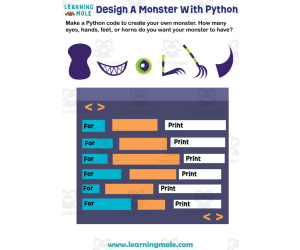
Python Monster Code Activity
Science, Computer Science, Technology, Grade 3, 4, 5, 6, 7, 8, 9, 10, Activities
Activity Introduction An amazing activity designed for the students to learn more about STEM. Python Monster Code Do you like STEM subjects? what is your favorite one? Have you ever tried to plant a seed? If yes, tell us more about it. Or have you ever tried to invent something? If yes, tell us more about it. And how do you think it will help us? Have you ever seen a microorganism under a microscope? What was it? And how it looked like? Mathematics is a marvelous subject. Let' sharpen our brains and solve some equations. Do you like timetable tricks? What is your favorite one? Do you know how to code? Have you ever created an app or a game before? If yes, how was it like? Python Monster Code Activity The activity is perfect for encouraging the researching skills for the students, while learning more about this fantastic topic. Python Monster Code This friendly designed worksheet is suitable for students at school, homeschooling, and as a group activity. Instructions Make a Python code to create your own monster. How many eyes, hands, feet, or horns do you want your monster to have? Format Available in a PDF format.
Author Educational Voice
Tags Python Monster Code Activity, Python Monster, Python Monster Code, Python Code Activity, Python Activity, Python Code, Python, Python Facts, Python Facts For Kids, Coding
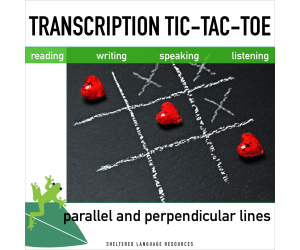
Parallel & Perpendicular Lines: Transcription Tic-Tac-Toe Game
Math, Geometry, Grade 8, 9, 10, 11, 12, Activities, Games
Transcription Tic-Tac-Toe is a learning game that uses reading, writing, speaking, and listening, all in one activity! It is part of a group of strategies called sheltered language strategies. Sheltered language strategies are teaching strategies that focus on teaching academic vocabulary at the same time as academic content. These types of strategies have been researched and shown to improve student learning, especially for ELLs. When students participate in this activity, they are explicitly required to interact with both academic language and content at the same time. The process of transcription involves listening to verbal input and producing writing based on the information that is heard. Example: Player #1 will say (reading from their Transcription Script) "Write the equation of a line in slope-intercept form that is parallel to the line y=7x +2." Player #2 will listen and then write (recording on their answer sheet) y= 7x + (any number other than 2). HOW TO PREPARE MATERIALS FOR TRANSCRIPTION TIC-TAC-TOE Students work in teams of 2. One person is Player #1 and the other person is Player #2. Step 1:Print the Transcription Script for Player #1 back-to-back with the Transcription Tic-Tac-Toe Answer Recording Sheet for Player #1. Do the same for the two documents for Player #2. Each student gets their own copy of each of the two sheets. Step 2: Print copies of the Transcription Tic-Tac-Toe Board. Option #1: You will need one copy per team per round. There are enough questions for 3 rounds, so print 3 copies per team. Option #2: Laminate copies of the Transcription Tic-Tac-Toe Board and have student teams write on the laminated boards with dry erase markers. You will need one board per team. Option #3: Have students use a white board to play the Tic-Tac-Toe game. Option #4: Have students use a piece of regular notebook or printer paper to draw in their own Tic-Tac-Toe grid. HOW TO PLAY TRANSCRIPTION TIC-TAC-TOE Students work in teams of 2. If there is an odd number of students in your class, consider allowing a group of 3 in which two students share the role of Player #1. Player 1 begins and reads question 1 from their Transcription Script to Player 2. Player 2 listens to the the instructions and writes the answer on their own Answer Recording sheet. Player 2 is allowed to ask Player 1 to repeat the question as many times as is needed and reasonable. Player 1 checks Player 2’s answer using Player 1’s answer key. If Player 2 answered correctly, they get to play first on the Tic-Tac-Toe board by putting an ‘x’ or an ‘o’ in a space of their choosing. If Player 2 answered incorrectly, they lose a turn. Repeat the process with Player 2 now reading question #1 from their Transcription Script to Player 1. The first player to get three x’s or three o’s in a row wins that round. If neither player gets three in a row, that round is considered a tie. Continue switching roles back and forth, playing a new round once the previous round is completed or until all of the questions have been used. If students are able to, they can create their own similar questions and continue playing once they have used all of the questions that are provided.
Author Sheltered Language Resources
Tags Tic Tac Toe Game, Parallel Lines, Perpendicular Lines, Transcription Games, Transcription Activity
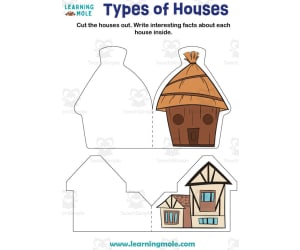
Types of Houses Activity
Social Studies, Geography, Grade 3, 4, 5, 6, 7, 8, 9, Activities
Activity Introduction An amazing activity designed for the students to learn more about famous houses types in different countries. Types of Houses What do you know about these houses? Where are these houses? Who were the first people to build it? How does your house look like? Can you draw it? Do you have a favourite kind of houses? Tell us more about it. What are the colours of your house or your dream house? Do you like reading about Geography? What is your favorite country in the whole world? Types of Houses Activity The activity is perfect for encouraging the researching skills for the students, while learning more about this fantastic houses. Types of Houses This friendly designed worksheet is suitable for students at school, homeschooling, and as a group activity. Instructions Cut the houses out. Write interesting facts about each house inside. Format Available in a PDF format.
Author Educational Voice
Tags Types Of Houses Activity, Types Of Houses, House, Houses, Geography, Geography Facts, Geography Facts For Kids, Houses Facts, Houses Facts For Kids

Adding Tattoos Photoshop Activity
Science, Technology, Grade 7, 8, 9, 10, Activities
Students will work with digital tools in the Adding Tattoos Photoshop Activity . Students will add 3 basic tattoos to the same image. Step by step directions are included.
Author OK Products
Tags Adding Tattoos, Technology, Graphics, Graphic Design, Design Concepts, Photoshop, Computer Lesson, Photoshop Tattoos, How To Photoshop Tattoos, How To Add Tattoos In Photoshop, Tattoo Effect Photoshop

Circulatory System – Lab Station Activity
Science, Life Sciences, Human Body, Grade 8, 9, 10, 11, Labs, Experiments, Activities
This fully editable Lab Station Activity on the Circulatory System is meant to get your kids out of their seats and engaged in the content. Each station not only offers a unique opportunity to test your students knowledge (offer an opinion, answer questions based on a video or reading, draw, etc.), but also provides a fantastic learning opportunity where your kids are learning through assessment. Each station comes with a description card while some also contain more detailed instructions, a reading, questions to answer, etc. Students are equipped with a recording sheet (passport) to write their answers. There is almost no prep for you. Simply print the cards, lay them out around the room and you're all set. An answer key is also provided where applicable. These station cards are meant to be used as a lab activity but can also be utilized in a review task before a test or a quiz. Used either way, your students will love it! I know mine do and I'm telling you from first-hand experience as I've used this activity in my own class, This lab activity covers: - Circulatory System - Circulatory System Disorders - Prevention of Cardiac Disorders ---------------------------------------------- Bonus Activities: To ensure your students don't have any downtime between stations, your lab also includes a 10-word word scramble and word search, both with an answer key. You can use them as part of their mark, as a bonus so it's not mandatory, etc. However you choose to use it, it will ensure that your students are always busy and never idle. Note: For stronger classes I give the word scramble and for weaker ones, the word search. ---------------------------------------------- How do the Lab Stations work? Each station is specially designed to be a unique complement to the material while at the same time, provide a valuable learning experience. Below is an overview of how each station works. In your activity , each will be tailored to the specific content. Station 1: Get Hands-On – using their creative skills, students are required to draw or build. Station 2: Research – using a classroom computer or their own device, students must research a specific question/issue surrounding the topic. Station 3: Explain yourself – students write down an opinion to a question in paragraph form. Station 4: Rest Station - students can use this time to catch up on work they didn't have time to complete at a previous station or prepare themselves for an upcoming one. Station 5 - Applicability reading – students read a short passage from an article, website, etc. which directly connects the classroom content to a real life application. Station 6: Test your knowledge – students answer 5 multiple choice questions then provide a written explanation for how/why they came to their conclusions. Station 7: Learn from the expert – using a classroom computer or their own device, students must watch a short video clip and answer the associated questions. They may stop, rewind and restart as often as they like during the time frame. Station 8 - Rest Station. Station 9: Become the question master – Students must create 2 multiple-choice questions, 2 true/false questions and 1 short answer question. Students must also supply the answers. ------------------------------- You might also be interested in my other lab station activities Physics: • Newton's Three Laws of Motion • Kinetic and Gravitational Potential Energy • Current Electricity and Circuit Diagrams • Static Electricity • Light Optics and the Production of Light • Sound, Sound Energy and Speed • One and Two-Dimensional Motion • Uniform Acceleration • How Planes Fly • Refraction • Friction • Energy and Its Forms • Density and Buoyancy • Electricity Production • Calculating Average Speed, Velocity, and Displacement • Mass, Volume, Density, & Buoyancy • Work and Energy • Renewable Energy • Plate Tectonics • The Rock Cycle • Natural Disasters • Pressure, Volume, and Temperature • Forces • Power • Liquids and Gases • Fossils and Geologic Time • Earthquakes and Volcanoes Coming Soon: - Work = F x d - Nonrenewable energy sources - Projectile Motion - Momentum, Conservation of Momentum and Impulse - The Doppler Effect and Supersonic Travel General Science: • The Scientific Method and Science Skills • The Different Types of Clouds • Meteorology Biology: • Cell and the Cell Theory • The Human Digestive System • The Circulatory System • The Human Respiratory System • Mitosis and the Cell Cycle • Cellular Respiration and Photosynthesis • Photosynthesis • Cancer: Cell Division Gone Wrong - Volume I • Cancer: Cell Division Gone Wrong - Volume II • Cell Membrane and Transport • Hearing and the Human Ear • The Human Eye • Genetic Material: DNA and RNA • The Nervous System • Energy Flow In Ecosystems • DNA Manipulation and GMOs • Transcription and Translation • Cellular Respiration • Thermoregulation • Proteins and Nucleic Acids • Mutations • Meiosis • DNA, Genes, Chromosomes, and Alleles • Genetic Disorders • Fats • Reproductive Technologies • Muscular and Skeletal System • Integumentary System Coming Soon: - Excretory system - Endocrine system - Carbohydrates and Lipids Chemistry: • Atomic Model, Notation and Atoms • Chemical Reactions and Balancing Equations • Molecular and Ionic Compounds • Physical and Chemical Properties & Changes • Acids, Bases, and Neutralization Reactions • The Periodic Table • Single and Double Displacement Reactions • Balancing Chemical Equations • Synthesis, Decomposition and Combustion Reactions • Atomic Theory, Atomic Structure and Isotopes • Types of Bonds and Intermolecular Forces • The Mole/Avogadro's Number • Density and Buoyancy • The Particle Theory and the Classification of Matter • Pure Substances and Mixtures • Solutions and Mechanical Mixtures Coming Soon: - Periodic table group properties Ecology and the Environment: • Ecosystems • The Classification of Living Things • Biodiversity and Invasive Species • The Carbon and Water Cycle • Climate Change • Photosynthesis • Cellular Respiration and Photosynthesis • Ecological Succession • Plant Sexual and Asexual Reproduction • Earth's Seasons • Interactions Within Ecosystems • Physical and Behavioral Adaptations Space Science: • The Life and Death of Stars • The Moon and its Phases • Life In Space • Our Solar System • Solar and Lunar Eclipse • Earth's Seasons • Asteroids, Comets and Meteors These station cards are meant to be used as a lab activity but can also be utilized in a review task before a test or a quiz. Used either way, your students will love it! I know mine do and I'm telling you from first-hand experience as I've used this activity in my own class. Thank you for your interest in my products. If you have any questions, please send me an email - devon@teachwithfergy.com
Author Teach With Fergy
Tags Circulatory, System, Body, Health, Lab Stations, Lab 11 The Circulatory System, Circulatory System Lesson Plans High School, Circulatory System Word Search Answer Key, Circulatory System Activities For Middle School

Assessments: Romeo and Juliet (ACT)
ELA, Literature, Grade 8, 9, 10, 11, 12, Activities, Games, Teacher Tools, Assessments
Assessments: Romeo and Juliet (ACT) - A valuable teaching resource This educational tool is expertly designed for educators in both public schools or homeschooling scenarios. It effectively tests students' understanding of Shakespeare's famed play, 'Romeo and Juliet', making it an inclusive study aid suitable for grades 8 through 12 under the umbrella of Language Arts & Literature. Main Contents of the Product: The primary feature being quizzes based on each ACT of the play. Besides standard assessments, it includes a creative blend of passage translations, comprehension checks, and enriching references to specific literary devices. Promotes interest in key figures of speech such as soliloquies, oxymorons, foreshadowing techniques, double ententes, puns dramatic irony and mythological allusions. Each quiz based on an ACT comprises seven thought-provoking passages for translation along with ten multiple-choice questions designed to gauge teens' understanding over plot specifics. These assessment elements serve to not only evaluate learning outcomes but also nurture critical thinking skills among students. Versatility Beyond Testing Assessments: Romeo and Juliet (ACT), aside from its conventional testing function,bears potential as interactive learning activities. It can seamlessly be adapted into popular review games like Jeopardy or Who Wants to be a Millionaire?. The resource syncs well into a range of applications from homework assignments or group studies; providing opportunity for whole class participation ensuring education while entertaining. Ease-of-Use with Word Document File Type The purchased product comes in Word document file type facilitating easy modifications as per individual student needs or learning preferences. This provision is instrumental in saving time for busy educators without compromising delivery of quality education. Conclusion The key takeaway? With Assessments: Romeo and Juliet (ACT), educators gain access to a versatile tool crafted with diverse classroom needs at its core – the epitome of teaching empowerment!
Author The Education Lab
Tags Assessment, Literature, Shakespeare, Quizzes, Critical Thinking

Parasaurolophus Activity
Social Studies, History, History: Ancient, History: World, Grade 3, 4, 5, 6, 7, 8, 9, 10, Activities
Activity Introduction An amazing activity designed for the students to learn more about animals in different countries. Megalosaurus Discovery Do you like dinosaurs? what is your favorite one? Do you own a pet? If yes, tell us more about it, like what its name? And what do you like most about it? Do you think that your pet has been evolved from a dinosaur? Can you write down the characteristics of your favourite dinosaur like it's shape, their rivals, where did it use to live and what was their favourite food? What is the largest and the smallest dinosaur that ever found? Why is the T-rex is so famous? Have you ever read any interesting facts about it? Can you name any of the carnivores or herbivores dinosaurs? Megalosaurus Discovery Activity The activity is perfect for encouraging the researching skills for the students, while learning more about this fantastic animal. Megalosaurus Discovery This friendly designed worksheet is suitable for students at school, homeschooling, and as a group activity. Instructions Fill out the following information about Parasaurolophus. Format Available in a PDF format.
Author Educational Voice
Tags Parasaurolophus Activity, Parasaurolophus, Parasaurolophus Facts, Parasaurolophus Facts For Kids, Dinosaur, Dinosaurs, Dinosaurs Facts For Kids, Dinosaurs Facts
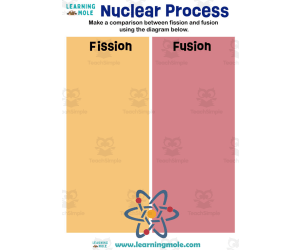
Nuclear Process Activity
Science, Earth and Environmental Sciences, Environmental Science, Grade 3, 4, 5, 6, 7, 8, 9, 10, 11, Activities
Activity Introduction An amazing activity designed for the students to learn more about STEM subjects. Nuclear Process Do you like STEM subjects? what is your favorite one? Have you ever tried to plant a seed? If yes, tell us more about it. Or have you ever tried to invent something? If yes, tell us more about it. And how do you think it will help us? Have you ever seen a microorganism under a microscope? What was it? And how it looked like? Mathematics is a marvelous subject. Let' sharpen our brains and solve some equations. Do you like timetable tricks? What is your favorite one? Do you know how to code? Have you ever created an app or a game before? If yes, how was it like? Nuclear Process Activity The activity is perfect for encouraging the researching skills for the students, while learning more about this topic. Nuclear Process This friendly designed worksheet is suitable for students at school, homeschooling, and as a group activity. Instructions Make a comparison between fission and fusion using the diagram below. Format Available in a PDF format.
Author Educational Voice
Tags Nuclear Process, Nuclear Process Activity, Nuclear Process Facts, Nuclear Process Facts For Kids, STEM, STEM Facts, STEM Facts For Kids, Science, Science Facts

Biodiesel Vehicle Activity
Science, Earth and Environmental Sciences, Environmental Science, Technology, Grade 3, 4, 5, 6, 7, 8, 9, 10, Activities
Activity Introduction An amazing activity designed for the students to learn more about STEM subjects. Biodiesel Vehicle Do you like STEM subjects? what is your favorite one? Have you ever tried to plant a seed? If yes, tell us more about it. Or have you ever tried to invent something? If yes, tell us more about it. And how do you think it will help us? Have you ever seen a microorganism under a microscope? What was it? And how it looked like? Mathematics is a marvelous subject. Let' sharpen our brains and solve some equations. Do you like timetable tricks? What is your favorite one? Do you know how to code? Have you ever created an app or a game before? If yes, how was it like? Biodiesel Vehicle Activity The activity is perfect for encouraging the researching skills for the students, while learning more about this topic. Biodiesel Vehicle This friendly designed worksheet is suitable for students at school, homeschooling, and as a group activity. Instructions Design your own Biodiesel-fueled vehicle. How does it work? Format Available in a PDF format.
Author Educational Voice
Tags Biodiesel Vehicle Activity, Biodiesel Vehicle, Biodiesel Vehicle Facts, Biodiesel Vehicle Facts For Kids, Environment, Environment Facts, Environment Facts For Kids, Technology, Technology Facts

DNA and DNA Replication BINGO Review Activity
Science, Life Sciences, Biology, Grade 10, 11, 12, Activities
Your students will love this engaging science review activity. Everyone loves BINGO and it makes for a great review activity that is fun and competitive. This interactive game reinforces key scientific concepts and theories, ensuring curriculum relevance and accuracy. The game package includes 36 unique 4x4 bingo cards featuring essential terms and concepts from DNA and DNA Replication, a set of call-out cards with clear and concise definitions tailored to the students' level, and detailed gameplay instructions. Here is a sample from the instructions. BINGO – Instructions, Terms, and Descriptions Cut out and distribute the BINGO cards to your students. Each student will get a unique card. Students can use markers or chips to cover squares that have been called. Print out and cut out each term/description below – these are the call-out cards. Fold each call-out card and place in a hat or box and remove one at a time. After you’ve read the call-out card description, your students are to place a marker on the term associated with the description located on their card. The first student to get 4 in a row horizontally or vertically, wins. Ensure accuracy by checking marked terms on student card to the called-out descriptions.
Author Teach With Fergy
Tags Crossword Puzzle, Science Crossword, Crossword Review, DNA, DNA Replication

Scratch Christmas: Snowball Game
Science, Technology, Computer Science, Grade 3, 4, 5, 6, 7, 8, 9, 10, Games, Activities
Scratch Christmas Snowball Game teaches students in grades 3-10 how to create a computer game using Scratch. Students will code an interactive game where the objective is to throw as many snowballs as possible within the time limit. The step-by-step tutorial guides learners of all skill levels through the process of animating sprite movements, keeping score, and adding fun holiday flair. Educators can implement this resource in computer lab sessions for individual or collaborative coding projects. Students enjoy the creative freedom to customize their games by changing the scenery, characters, sounds and more after completing the tutorial. This Scratch coding project promotes problem-solving, critical thinking, and computational skills across the STEM curriculum in an engaging way.
Author Roombop
Tags Scratch, Scratch Programming, Coding, Winter, Snowball Fight Flash Games, Snowball Game Classroom

Dealing With Drama Boom Cards And Reflection Sheet
Life Studies, Special Resources, Life Skills, Grade 6, 7, 8, 9, 10, 11, 12, Activities
Dealing with Drama Boom Cards and Reflection Sheet The Dealing with Drama Boom Cards and Reflection Sheet offers an interactive method of teaching life skills to students in grades 6 through 12. This tool guides students on how to handle the myriad scenarios and situations they might encounter in their daily lives. Package Contents A selection of 25 different scenario-based cards, which present both the situation at hand and a number of possible solutions. An interactive format that encourages active student participation in problem-solving tasks. Usage Instructions To view these cards, click on an image within the included PDF file. This will direct you to your selected web browser such as Chrome, Safari, Firefox or Edge. Apps are available for Androids or iPads for easier access. Internet access is required regardless of device usage method. Additional Resource Included This package also features a Word document reflection sheet that can be uploaded as a Google Doc via Google Classroom for easy distribution among students. Upon completion by the students, this reflective tool provides educators crucial insight into not only their decision-making processes but also their comprehension of real-world social issues. Premium Account Options Note: Additional premium account options that allow tracking metacognition progress are available from websites mentioned within source instructions should instant feedback capabilities using "Fast Pins" prove necessary per your specific requirements. Fun Classroom Activity Critical Thinking Training Suitable for Homeschooling Possible Applications Beyond Classroom Use: In order to maintain steady learning progress after class hours too - engaging homework assignments could just be transformed out of this resource. This facilitates students to delve deeper into each situation at their own pace while being constantly engaged. Therefore, Dealing With Drama Boom Cards And Reflection Sheet stands as an interactive, meaningful, and flexible teaching resource that is vital for all educators striving to instill crucial life skills in our future generation.
Author Jennifer Moyer Taylor
Tags Problem-solving, Social Skills, Interactive Tool, Scenario-based, Critical Thinking
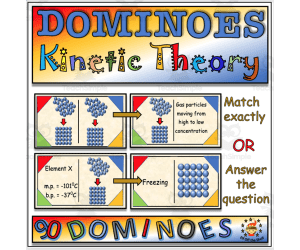
Kinetic Theory of Matter, States of Matter, Change of State Dominoes Game for Middle School
Science, Physics, Grade 5, 6, 7, 8, 9, Activities, Games
A dominoes game with questions and statements on the kinetic theory of matter including change of state, gas pressure and diffusion. Prior Knowledge > Three states of matter are solid, liquid and gas. > Arrangement of particles in solids, liquids and gases. > Properties of solids, liquids and gases in terms of the arrangement of their particles. > Change of state including sublimation. > Pressure in gases and the effect of increasing the number of particles and temperature and decreasing volume. > Diffusion What You Get > 90 dominos > Animated PowerPoint explaining the rules and how to play. Rules of the Game > Each player selects seven dominos from the top of the face-down pile and holds them in their hand like playing cards. > The player whose surname begins with a letter closest to the letter A starts and play proceed in a clockwise direction. > Dominos can be matched exactly, or a name can be matched with a symbol or descriptions, sketches and circuit diagrams can be matched. > If a player thinks a match is wrong, they can challenge. If the challenger is correct, they give a card from their own hand to the challenged player. If the challenged player is correct, they give a card from > their hand to the challenger. Pupils are encouraged to check their books for the correct answer and consult their teacher if a consensus is not reached. > If a player cannot play a domino, they pick up from the face down pile and can play if possible or add it to their hand. See more Elf Off the Shelf resources on this topic and many others
Author Elf off the Shelf Resources
Tags Solids Liquids And Gases, Melting, Boiling, Diffusion, Pressure In Gases, States Of Matter Interactive Games

Checking Account Project
Life Studies, Finance, Home Economics, Career, Math, Money, Grade 5, 6, 7, 8, 9, 10, 11, 12, Activities, Projects
I'm thrilled to introduce you to the Checking Account Project, a tailored resource aimed at middle school and high school students. As educators, we know the value of imparting essential life skills, and that's exactly what this project is designed to do—equip students with a foundational understanding of checking accounts and their benefits. Here's what you can expect: Real-World Insight: We all know consumer math can be a bit perplexing, especially for students navigating it for the first time. This product is packed with activities that delve into the workings of checking accounts and how they can be responsibly integrated into daily life. Flexible Learning: Whether your students prefer working from home or in the classroom, this project accommodates both settings. It's adaptable to different preferences, ensuring a seamless learning experience. Empowering Students: By offering various activities, from understanding the anatomy of a check to simulating ATM usage, this project empowers students to become savvy consumers with a firm grasp of checking account essentials. Tailored Adaptation: Education isn't one-size-fits-all, and neither is this project. Feel free to tweak and customize it to align with your students' needs and learning objectives. Included in the package: Glossary of Key Terms: A handy reference for students to familiarize themselves with checking account terminology. Real-World Insight: An activity that encourages students to interview adults with checking accounts, promoting practical understanding. Hands-On Learning: Engaging exercises that teach students how to write checks, endorse and void them, and comprehend the role of debit cards. Practical Application: Utilizing an online ATM simulator, students gain firsthand experience in using ATMs. Financial Literacy: Learning how to balance a checkbook ledger—an invaluable skill for personal finance management. Comprehension Matters: Demystifying checking account statements, equipping students to read and understand them effectively. The Checking Account Project serves as a stepping stone toward financial literacy, ensuring that your students are well-prepared for the responsibilities of the adult world. Feel free to make it your own, tailoring it to resonate with your students' learning journey. Let's empower our students to navigate their financial future with confidence. The Checking Account Project lays down the groundwork for responsible and informed financial choices—a skill they'll carry with them for life.
Author Mister G's Teacher Shop
Tags Finances, Financial Literacy, Checking Account Project, Middle School, High School, Small Group, Interview, Debit Cards, Math Project, Consumer Math

End of the Year Jenga
, Grade 3, 4, 5, 6, 7, 8, 9, Activities, Games
End of the Year Jenga: An Interacting Learning Resource End of the Year Jenga is an educational tool with a clear objective—fostering healthy communication among students while engaging them in fun learning activities. It aids teachers in promoting interaction, thereby building friendly relationships. This resource contains seven pages filled with 48 interactive pieces, making it more than just an educational game. It's a unique platform where classmates could learn more about each other, and build lasting memories through shared experiences. With simple rules, this activity involves turn taking exercises that promote peer learning. Suitability and Flexibility Gauged perfect for grades 3 to 9, it provides flexibility across different classes and subjects as required. Its structure supports application within whole-group settings—a class could play collectively—for shared fun or can be split for focused small group interactions. Ideal for both classroom use and homeschooling setups. Eminently suited for homework assignments involving interactions outside school hours. The enjoyment extends beyond traditional learning environments. Convenient Ready-To-Print Format The resource is available as a ready-to-print PDF file type—just download, print out the jenga pieces on cardstock paper—and you're ready! A Refreshing Approach Toward Learning & Social Bonding: In summary-free terms: The true appeal of "End of The Year Jenga" lies not only in promoting delightful year-end activities but also cultivating connections among students—an essential factor when transitioning from one academic year to another or breaking up regular study periods with something less intense yet equally beneficial. Nothing engages children better than transforming lessons into games—they learn without realizing they're being taught—thanks to resources like "End of The Year Jenga". In conclusion, it's a refreshing twist on learning and forming social bonds through enjoyable activities.
Author Educate and Create
Tags Interactive Learning, Group Activity, Communication Skills, Peer Learning, End Of The Year Activity
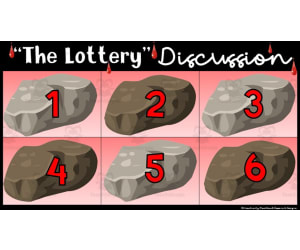
The Lottery by Shirley Jackson - Choice Board
ELA, Literature, Grade 7, 8, 9, 10, Activities
This resource is a The Lottery by Shirley Jackson - Choice Board. This is a great comprehension activity that will keep students engage as they make selections from the choice board. The choice board can be used in 3 ways: - Individually - Whole group - Small groups This can be accessed as a Google Slides and assigned into Google Classroom, but you may also choose to download & use it as a PowerPoint. A teacher guide is included to assist you.
Author Creativity Overload
Tags Choice Board, Cross-curricular, Social Studies, The Lottery, Novel
Finance Life Skills: Brian Learns All About His Credit
Special Resources, Life Studies, Special Education Needs (SEN), Speech Therapy, Life Skills, Finance, Grade 9, 10, 11, 12, Activities, Worksheets & Printables, Worksheets
Product Title: Finance Life Skills: Brian Learns All About His Credit The product, a teaching resource titled Finance Life Skills: Brian Learns All About His Credit is a relevant and practical tool designed to impart financial wisdom in students. This unique educational resource revolves around an engaging narrative wherein 'Brian' understands the reasoning and implications of credit usage. The enriched content delves deep into responsible credit use, clarifying the importance of timely payments, avoiding excessive debt and maintaining a positive credit history. The storyline punches in critical learning details such as explaining the range of credit scores from 300 to 850, showing how higher scores can impact loan terms and interest rates favorably. This resource deviates from standard teaching methods by capturing student attention through story-driven real-life examples. Interactive dialogue combines with probing questions which encourage learners to internalize the material comprehensively. Through this accessible tool, teachers not only instruct but also empower their pupils by elucidating how lenders, landlords, and employers utilize credit reports for decision making purposes. Furthermore, it provides insights into how comprehensive records of an individual's borrowing and payment history are maintained at credit bureaus. A unique feature lies in its execution - utilizing illustrations or diagrams where necessary for clear representation. The simple language used throughout makes it suitable for high school students and even adults with intellectual disabilities who intend on upskilling themselves financially. Its robust structure entails - seven reading comprehension questions with corresponding answers that gauge learners understanding effectively while empowering them with sound financial know-how essential for living independently at school or home environments comfortably. Versatile application:- appropriate for whole group discussion but also small group study or even an individual homework assignment if required. It could be of value to special education teachers across grades nine through twelve as well as other educators like speech therapists among others who seek practical life skill education avenues for their pupils. With its focus on interactive learning interspersed within a wider community-based learning approach, it supports a multitude of instructional strategies while aligning seamlessly with IEP goals. Finance Life Skills: Brian Learns All About His Credit comes readily printable in an accessible PDF format and consists of six pages. A highly valuable addition to any teacher's trove of informative tools, it promises imbuing students with essential financial literacy skills for a confident start in independent living.
Author Adulting Life Skills Resources
Tags Finance, Credit Literacy, Financial Skills, Responsible Borrowing, Interactive Learning

Research Organizer & Essay Assignment: Arthur Miller
ELA, Literature, Writing, Grade 9, 10, 11, 12, Activities, Projects, Worksheets & Printables, Worksheets
Research Organizer & Essay Assignment: Arthur Miller Dive deep into the life and works of renowned American playwright Arthur Miller with this engaging research and essay project. Students will conduct research on Miller's background and most famous plays using the provided note-taking handout. Guiding questions simplify finding key facts and citing quality sources. Next, students organize their research into an outline utilizing the step-by-step worksheet. Following the outline structure, writing a five-paragraph essay on Miller will be smooth sailing. Peer review and revision is encouraged via the checklist before final submission. Teachers can easily assign and assess the project end-to-end, with the Common Core-aligned rubric tailored for grades 8-11. Whether utilizing the full lesson or individual components to supplement instruction on Miller, it saves prep time. From engaged research to polished essays showcasing student learning, it's a worthwhile endeavor.
Author The Language of Educational Art, LLC
Tags Essay, Research, Outlining, Notetaking

Mount Kilimanjaro Activity
Geography, Social Studies, Grade 2, 3, 4, 5, 6, 7, 8, 9, 10, 11, Activities
Activity Introduction An amazing activity designed for the students to learn more about famous places in different countries. Mount Kilimanjaro What do you know about this place? Do you know in which part of the world it is? Have you ever visited this place? If yes, can you tell us more about your adventure, and what do you like the most about this place? Do you like reading about Geography? What is your favorite country in the whole world? If you are going on a trip where it will be? Which country? What you are going to see there? Does this country has a famous place to visit? Mount Kilimanjaro Activity The activity is perfect for encouraging the researching skills for the students, while learning more about this fantastic place. Mount Kilimanjaro This friendly designed worksheet is suitable for students at school, homeschooling, and as a group activity. Instructions Create a poster to educate people about the effects of climate change on Mount Kilimanjaro. First, write about what makes this mountain interesting, then write about climate change, how it affects the mountain, and how can we stop climate change. Format Available in a PDF format.
Author Educational Voice
Tags Mount Kilimanjaro Activity, Mount Kilimanjaro, Mount Kilimanjaro Facts, Mount Kilimanjaro Facts For Kids, Mountain, Mountains, Mountains Facts, Mountains Facts For Kids, Geography

Numbers 1–20 in Circles – Colorful Printable Set
Math, Early Learning, Adult Education, Elementary, High School, Homeschool Resources, Middle School, Not Grade Specific, Pre-K, Activities, Worksheets & Printables
NUMBERS 1 TO 20 INTRODUCTION: HELLO! WELCOME TO THE EDITORIAL ARENAS EDUCATIVAS RESOURCE STORE! This time we bring you these fantastic resource for you! Your children's afternoons will no longer be boring thanks to these fantastic resource. MAIN INFORMATION: 1. Brief introduction: Hello, thank you very much for being interested in this educational document. This document will help you a lot both in the classroom if you are a teacher, as well as if you homeschool and want to stimulate your children from home. 2. Title of the educational resource: This document is titled "Teaching material for children" 3. Topic to work on: Thanks to this educational document, we are going to work on a basic topic that every child and/or student should master. 4. Area of knowledge where it should be applied: Thanks to this document, we will address a topic and at the same time an important area of learning. 5. Number of pages it contains: This educational document contains the following number of pages available and ready to be used by you, you just have to download and print the document to start using it in your classroom. SECONDARY INFORMATION: 6. In what area of knowledge can it be applied? You can apply this set of educational sheets according to your criteria, in the corresponding area. 7. Should I apply it individually or as a group in my class? Also, according to your criteria, see if it is better for these sheets to be applied individually or as a group. 8. What size and format is this resource in? This set of teaching sheets has been published in A4 size, PDF format, so that it is much easier to use. 9. Do I need any extra elements to apply it? Yes, perhaps your students need pencils, colors, markers and even sometimes scissors and erasers. 10. Is it in color or black and white? This educational document has been designed mostly in color so that it is highly attractive to students.
Author EDITORIAL LAURA EDUCA
Rating
Tags CIRCLE NUMBERS, NUMBERS, FREE RESOURCES, MATH, MATH RESOURCES
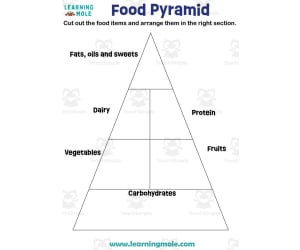
Food Pyramid Activity
Human Body, Life Sciences, Science, Grade 2, 3, 4, 5, 6, 7, 8, 9, 10, 11, 12, Activities
Activity Overview The human body is full of fascinating wonders to learn. This activity is created to help the students recognize the anatomy and the job of the human body. Food Pyramid Every part and organ in our human body is vital so let's see how important they are. Have you ever imagined how we look like if we didn't have a skeleton? Did you know that because we have our amazing muscles we can stand! Do you know how many teeth do we have? Have you ever wondered about the food journey inside our body? Can you name all the glands in our body? Why do we have skin? Our nervous system is really good at sending signals. Can you tell us more about it? Are you really good at Mathematics, painting, or any other thing? You should really thank your brain about it! The famous five senses are really doing a great work? Can you explain how every sense works? Food Pyramid Activity The activity is perfect for encouraging the researching skills for the students, while learning more about our fantastic human body. Food Pyramid This friendly designed worksheet is suitable for students at school, homeschooling, and as a group activity. Instruction Cut out the food items and arrange them in the right section. Format Available in a PDF format.
Author Educational Voice
Tags Food Pyramid Activity, Food Pyramid, Food Activity, Food Pyramid Facts, Food Pyramid Facts For Kids, Food Facts, Food, Food Facts For Kids, Healthy Eating Activity, Healthy Eating

Vocational Skills Activity: How to Read a Basic Pay Stub
Special Resources, Creative Arts, Art, Life Studies, Social Emotional Learning (SEL), Special Education Needs (SEN), Life Skills, Finance, Career, Grade 10, 11, 12, Activities, Worksheets & Printables, Worksheets
In this Special Education life skills activity, high school students will learn How to Read a Basic Pay Stub by calculating earnings, gross pay, and net pay. The use of this Vocational Skills Activity will allow students to engage in: • Calculating multiple earnings types • How to calculate your gross pay • How to calculate your net pay • Learn how to calculate earnings, gross pay, and deductions • Provide an overview of various types of deductions, such as medical and retirement deductions • Describe different types of taxes, including federal, social security, and Medicare There are a total of 30 reading comprehension questions in this Vocational Skills Activity! This activity will assist high school students in developing the necessary life skills to become more independent at school, at home, and in their communities. A great place to use this handout is in special education classes or in one-to-one settings, such as ABA therapy, speech therapy, occupational therapy, and Registered Behavior Technician (RBT) sessions. High school students who are working on independent living would benefit significantly from this activity for defining, setting, and measuring IEP goals. In addition to interactive instruction, this resource is ideal for hands-on and community-based learning. Engage your special education class with this highly interactive High School Vocational Skills Activity! This activity contains step-by-step instructions, questions, and answers that reinforce learning, age-appropriate graphics, real-world examples, and ideas for implementation. This is the perfect special education activity for grade 10, grade 11, grade 12, and autism life skill centers . This special education life skills handout was designed to assist teens and adults with difficulties developing independent living skills. It's a printable, easy-to-use activity ready to hand out! Related Products for Developing Independent Living Skills How to Schedule an Appointment How to Fill Out a Job Application How to Create an Emergency Exit Plan How to Create a Strong Password A PDF with 17 unique pages. Color and black-and-white versions of each page are available for this pdf resource.
Author Adulting Life Skills Resources
Tags Life Skills Money Math, Independent Living Skills, IEP Goal-Oriented Skills, Autism Resource For Parent, Life Skills For Autistic Teens And Adults, Adulting On The Spectrum, Social And Emotional Learning, Life Skills For Teens, Life Skills For Adults, Autism And Money Skills, Reading A Pay Stub Worksheet Pdf, How To Read A Pay Stub Worksheet, Reading A Pay Stub Worksheet Answers, Reading A Paycheck Stub Worksheet, Reading A Pay Stub Worksheet

Scavanger Hunt: Heritage Minutes - Canadian History
Social Studies, History, History: Canada, Grade 8, 9, 10, 11, Activities
The Scavenger Hunt: Heritage Minutes - Canadian History: This exciting and dynamic teaching resource was designed especially for educators who aim to make their history classes more engaging. The material focuses on the rich and diverse history of Canada, making it the perfect starting point for any Canadian history course. Main Activity : Students are asked to watch 25 carefully selected 'Heritage minutes' from the Historica Canada website. Each video explores unique themes such as Indigenous History, Conflict and Cooperation, Human Rights, amongst others. A content question linked directly to these themes is provided after each clip. Main Themes Covered: Viking settlement in Canada Influential figures such as Tom Longboat Treaties throughout Canadian history Influencers like Chanie Wenjack, Elsie MacGill or James Naismith A Deeper Understanding: Beyond just answering questions, this activity includes a stage where students are encouraged to critically argue about their favorite heritage minute clip used in the lesson. It also discusses topics left out and why resources like these are important to recognize – sparking conversations on recognizing societal influences! Answer Key: For teachers looking for ways to combine accurate grading with minimized preparation time while still maximizing student engagement during lessons – an answer key is included! A Versatile Teaching Resource. Although ideal for grades 8 through 11 focusing on Social Studies’ sub-subjects of Canadian History – it’s versatile enough for whole group discussions, small group activities or intriguing homework assignments. Customization Friendly:< This Word Document has been designed for easy customization to fit each class's varying needs. Show your students that history can be interactive, vibrant and most of all - fun!
Author High School Economics and History
Tags Scavenger Hunt, Heritage Minutes, Canadian History, Engaging Teaching Resource, Interactive