



2,868 products added recently
Page 973 - Best Teaching Resources

 Show filters

The Graveyard Book Novel Study Chapter Quizzes & Writing Activities
ELA, Reading, Reading Comprehension, Literature, Writing, Grade 4, 5, 6, 7, Novel Studies, Worksheets & Printables
Enhance your students' critical thinking and writing skills with this comprehensive study companion for Neil Gaiman's The Graveyard Book. This resource includes chapter quizzes, essay questions, and writing prompts to deepen students' understanding of the novel. Available in both printable PDF and digital formats (Google Slides & Google Forms), this product offers flexible teaching options. Resource Features: Chapter Quizzes: Each quiz includes a mix of multiple-choice and short-answer questions, along with two essay questions per set. Literary Essays & Quick-Writes: Prompts designed to encourage students to provide evidence-based responses, fostering deeper literary analysis and critical thinking. What's Included: Printable PDF and Digital Formats: Google Slides and Forms are available for all activities. Chapters 1-4: Comprehension Quiz Essay Questions Answer Key Chapters 5-8: Comprehension Quiz Essay Questions Answer Key Literary Essay Prompts: Four essay prompts to explore key themes and characters. Quick Writing Prompts: Eight prompts to engage students in connecting quotes to the novel, answering thematic questions, and exploring different perspectives with textual evidence. Assessment Rubric: A comprehensive rubric for evaluating essays and writing responses.
Author Creatively Gifted
Tags Neil Gaiman, The Graveyard Book, Comprehension, Essay Questions, Writing Prompts, Chapter Quizzes, Writing, Literary Analysis
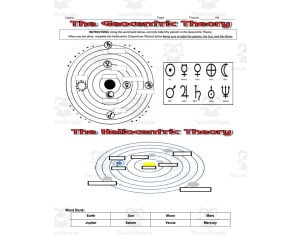
Heliocentric vs Geocentric Theory – Labeling Activity
Social Studies, History, History: World, Grade 6, 7, 8, 9, 10, 11, 12, Activities
With this resource, students will be able to comprehend the differences between the heliocentric and geocentric theories of the universe. They will utilize the word banks to properly label the planets within each theory. Answer key included.
Author DrDrew
Rating
Tags Astronomy, Science Printable, Science Activity, Geocentric, Solar System, How Does The Geocentric Model Differ From The Heliocentric Model, Heliocentric Vs, What's The Difference Between Heliocentric And Geocentric, Heliocentric Vs Geocentric Model, What Is The Difference Between Geocentric And Heliocentric, What Is The Difference Between Heliocentric And Geocentric

Mental Math-Groundhog Day
Math, Addition and Subtraction, Addition, Grade 1, 2, 3, Worksheets & Printables, Worksheets
These two worksheets provide learners with the opportunity to strengthen their mental math skills. The activity can be used as an individual in-class assignment or as a homework assignment. The theme adds some spark to Groundhog Day activities you may already have planned.
Author Quail Trail Products
Tags Mental Math, Addition, Subtraction

Musical Instrument Design Challenge
Science, Physics, Not Grade Specific, Songs, Activities
Musical Instrument Design Challenge This innovative teaching resource has been carefully crafted to engage the creative minds of students. The challenge entails designing and building a new musical instrument, contemplating its functionality, its potential to create unique sounds, and identifying the core elements required for sound production. Unlike typical classroom tasks, this hands-on experience extends learning beyond textbooks and can be incorporated in a variety of educational contexts such as Genius Hour projects or Makerspace activities. Components Context: Clarity on why this task is important. The Task: A well-defined design challenge is laid out for students. Specifications: Clear instructions on what needs to be accomplished are presented. Constraints: The limitations of the project are defined. Materials Needed:List of required materials and corresponding tools. -liBahySteps:vhnbcniFollowing steps must be completed ThisIsStudents will receive tips that may prove helpful in accomplishing their task. /href"http:// www.com" target="_blank". Find out more... /p " This design challenge brings a real-life scenario focus into learning which not only improves practical understanding but also encourages creative solutions exploration by students. Thirdly, primarily aimed at Physical Science studies in school or homeschool settings , it also enhances Social Emotional Learning (SEL) opportunities by fostering collaboration abilities accompanied with problem-solving skills among students. Fourthly, Fifthly, Finally,
Author WhyMaker
Tags Musical Instrument Design, Creativity, Hands-on Learning, STEAM Education, Problem-solving
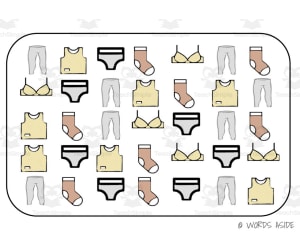
Semantic Themed Activity Boards Set 19: UNDER GARMENTS
Special Resources, Speech Therapy, Kindergarten, Preschool, Grade 1, 2, Activities
This is a set of Semantic Themed Activity Boards Set 19: UNDERGARMENTS. These are great for therapists, families and teachers. It is a great way to build comprehension, communication and more with early learners.
Author WORDS ASIDE
Tags Language Activities, Preschool, Speech Therapy, Occupational Therapy, Special Education, Activity Boards, Flash Cards, Semantic Cards, Speaking Skills

Animal Adaptations - Science Reading Article – Grades 5-7
Science, Life Sciences, Biology, Grade 5, 6, 7, Worksheets & Printables, Worksheets
```html Introduction The Animal Adaptations - Science Reading Article for Grades 5-7 is a versatile teaching resource that delves into the fascinating world of animal adaptations. Ideal for public school educators and homeschooling parents, it provides a comprehensive learning experience for students aged 10-12. Aims and Focus This fully editable activity focuses on strengthening scientific literacy skills. It provides detailed explanations about how animals adapt structurally, physiologically, and behaviourally. Emphasizing on important terminologies, it methodically covers different types of animal adaptations with numerous illustrative examples. Versatility and Flexibility The material easily adapts to various teaching scenarios including whole-group classroom discussions, small-group activities, individual assignments at home or distance learning setups through Google Classroom settings. Moreover, it promotes critical thinking as it does not merely contain direct questions from the text but also open-ended ones encouraging idea connection. Progress Tracking: A Microsoft Word document companion facilitates easy recording of responses sans formatting issues. Evaluation Made Easy: An answer key aids educators or parents in simple assessment of students' understanding. Balanced Timing: Typically completed between 40-60 minutes making it useful even during unexpected substitute teacher periods. In Conclusion To summarise: Whether your aim is to enrich lessons with informative readings about animal adaptation complexities that aligns well with grades 5–7 curriculum requirements; or provide engaging resources that keep fast-paced learners challenged—the "Animal Adaptations - Science Reading Article" effortlessly caters to those needs. ```
Author Teach With Fergy
Tags Animal Adaptations, Science Reading, Biology, Structural Adaptations, Physiological Adaptations

Map Skills Interactive Notebook + Distance Learning
Social Studies, Geography, Grade 5, 6, 7, 8,
This is a Map Skills Interactive Notebook. A digital version is included. Students will explore physical maps, political maps, map keys and much more.
Author Sarah Miller Tech
Tags Distance Learning, Map Skills, Interactive Notebook, Geography, Graphic Organizers

oa Phonics Anchor Charts
ELA, Phonics, Language Development, Spelling, Pre-Reading, Special Education Needs (SEN), Special Resources, Kindergarten, Grade 1, Word Walls, Classroom Decor, Anchor Charts, Teacher Tools, Worksheets & Printables, Coloring Pages, Worksheets
This 'oa' set of 2 phonics anchor charts is excellent for acquainting children with words in the 'oa' spelling family, for both reading and spelling development. What is included in the pack? One brightly coloured 'oa' ' phonic anchor chart which can be used as a word wall, or for teacher use One black and white phonics anchor chart, which can be coloured by pupils What do the worksheets involve? The colour 'oa ' anchor chart can be used as a word wall or as an aid to teaching the 'oa' digraph. The black and white anchor chart can be coloured by the pupil. The act of colouring helps the family of 'oa' words to be fixed together as a group of words in the child's memory. In addition, children can be encouraged to think of a story, using as many words on the 'oa' anchor chart as possible. How to use the anchor charts One of the great difficulties of learning digraphs, encountered by the middle and lower thirds of the class, is remembering which digraph to use for each word. For example, is it cake, or caik? By linking words in the same family together, children can be helped to overcome this difficulty. This is how this phonics anchor chart can help. Children will greatly enjoy colouring the non-clip art, realistic pictures. Always encourage neat colouring, as this sets a standard for all work. Who are the phonics anchor charts for? Young learners Those with a special need Due to their non-babyish nature , they can be successfully used with older ESL/EFL pupils. Who can use the phonics anchor charts? Teachers Parents Home educators Tutors Adult education Anyone! Answer keys: There is no need for an answer key. Watch out for more phonics anchor charts from Lilibette's Resources in the future!
Author Lilibette's Resources
Rating 4
Tags Phonics Anchor Charts, Phonics Anchor Chart, Digraphs, Long Vowels, Kindergarten Spelling, Kindergarten Reading, Oa Phonics Anchor Charts

Countries of the World: Kenya Interactive Foldable Booklets - EBOOK
Social Studies, Geography, Grade 2, 3, 4, 5, 6, 7, 8, 9, 10, 11, 12, Worksheets & Printables, Worksheets
The Countries of the World: Kenya Interactive Foldable Booklets - EBOOK is a revolutionary teaching resource designed to support teachers in their goal of educating students about different cultures and geographical narratives. The aim is to encourage a deeper understanding of our global neighbors, with this booklet focusing on Kenya. Applicable for grade levels 2 through 12, it serves as an immersive tool that enables teachers from diverse educational backgrounds to introduce geographical contexts within a significant global perspective. Utilization of resources such as these Interactive Foldable Booklets makes forging connections between classroom themes and universal realities more straightforward. This e-book can serve as a valuable asset not just for Social Studies but particularly for subjects centered around Geography. Presented in PDF format, it encompasses knowledge on four significant aspects related to Kenya: Geography Government Structure Economic Framework Cultural Heritage Students are motivated to create interactive foldables by following simple instructions that demand minimal effort - cut out sheets from the printed 27-page booklet and use basic art supplies like glue for assembly. Regardless of the learning environment – large classrooms or small study groups at home or school settings – teachers can adapt this educational tool according to their pedagogical requirements. The potential applications are abundant; from engaging students during group activities that pique their interest about world nations, down to assigning individual work where they can independently explore and analyze features specific countries such as Kenya—in innovative ways unique to each student. This resource introduces learners gradually towards complexities beyond local territories while appreciating nuances found around each highlighted nation— in this case revolving mainly around select areas associated with Kenyan geography, its economy and a brief yet poignant look at its unique historical folklore among African cultures—stimulating interactions incentivizing towards life-long learning.
Author Knowledge Box Central
Tags Kenya, Interactive Foldable Booklets, Geography, Government Structure, Cultural Heritage

I WONDER - How Are Heat Waves Caused | Animated Video Lesson
Environmental Science, Earth and Environmental Sciences, Science, Earth Sciences, Grade 6, 7, 8, 9, 10, 11, 12, Lesson Plans, Teacher Tools
Video Introduction An amazing video designed for the students to learn more about STEM. I WONDER - How Are Heat Waves Caused | Animated Video Lesson Do you like STEM subjects? what is your favorite one? Have you ever tried to plant a seed? If yes, tell us more about it. Or have you ever tried to invent something? If yes, tell us more about it. And how do you think it will help us? Have you ever seen a microorganism under a microscope? What was it? And how it looked like? Mathematics is a marvelous subject. Let' sharpen our brains and solve some equations. Do you like timetable tricks? What is your favorite one? Do you know how to code? Have you ever created an app or a game before? If yes, how was it like? I WONDER - How Are Heat Waves Caused | Animated Video Lesson The video is perfect for encouraging the researching skills for the students, while learning more about this fantastic topic. I WONDER - How Are Heat Waves Caused | Animated Video Lesson This friendly designed video is suitable for students at school, homeschooling, and as a group activity. Format Available in MP4 format.
Author Educational Voice
Tags How Are Heat Waves Caused, How Are Heat Waves Caused Video, Heat Waves, Heat Waves Facts, Heat Waves Facts For Kids, Heat Waves Video, Heat Waves Video For Kids, Heat Wave, Environment

Seasonal Find and Write
ELA, Writing, Preschool, Grade 1, 2, 3, Activities
The Seasonal Find and Write is useful all year long as your students celebrate holidays with you in the classroom. For each picture, students will have a handful of images that they will have to find. They will get to practice writing these words after they find the picture.
Author MsJennieOT
Tags Seasonal, Find And Write, Creative Writing, Vocabulary, Spelling

Raccoon Classroom Name Tags
Resources for Teachers, Classroom Management, Kindergarten, Preschool, Grade 1, 2, Classroom Decor
The Raccoon Classroom Name Tags product provides a cute and engaging way to identify students in the classroom. This resource includes printable and editable name tag files that teachers can customize with each child's name and other details. The set comes with an editable PowerPoint file, PNG cut file for use with electronic cutting machines, and printable PDF name tags. Each name tag features an adorable raccoon graphic and space to add student names and other text. These customizable name tags can be used for a variety of purposes - desk tags, cubby labels, folder tags, or displayed on classroom bulletin boards . Teachers could even use them creatively for special events or theme days. The name tags promote classroom community and help teachers, students, and parents identify personal student areas. The raccoon theme and multiple file types make these name tags versatile for early learning, elementary, or homeschool settings. Simply print, laminate, and cut for durable classroom name tags children will love!
Author Soumara Siddiqui
Tags Classroom Name Tags, Classroom Management, Classroom Community, Classroom Tags

Oak Tree Life Cycle Poster + Sequencing Cards
Science, Life Sciences, Nature & Plants, Kindergarten, Preschool, Grade 1, Diagrams, Teacher Tools
Using beautiful images, this oak tree life cycle poster and sequencing cards packet, allows students to become familiar with the life cycle of an oak tree. This makes a great science activity for a fall or autumn theme. What is Included: This packet includes an oak tree life cycle poster as well as sequencing cards that go along with each step in the life cycle poster. How to Use: The life cycle poster makes a great visual display in a science center for students to look at and explore the life cycle of an oak tree. The sequencing cards can also be placed in the science center. Students can use the poster as a reference to place the sequencing cards in the correct order. Another way to use the sequencing cards is to place the cards on a ring in the correct order so students can flip through the life cycle of an oak tree. Where to Use: Besides the science center, the teacher can use the life cycle poster as an instructional tool to show and teach students about the life cycle of an oak tree. The cards can also be placed in a pocket chart by students or the teacher to represent the life cycle with a hands-on activity. The oak tree life cycle poster is a no prep display the teacher can use to teach about this science concept. The poster can be printed on card stock or laminated for durability. The sequencing cards require some easy prep. They need to be printed and cut apart. Again, laminating these cards for durability is an option. Skills Assessed: This set will help students identify the life cycle of an oak tree. Using the reference of the life cycle poster, students will place the life cycle cards in the correct order. Students will learn that oak trees start out as acorns, then grow into large oak trees.
Author The Connett Connection
Rating
Tags Oak Life Cycle, Life Cycle Of An Oak Tree, Acorn Science
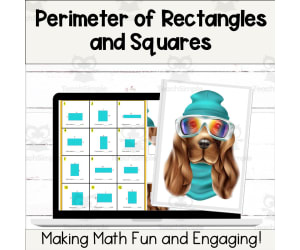
Perimeter of Rectangles & Squares Digital Self-Checking Maht Activity
Math, Measurements, Grade 4, Activities
Perimeter of Rectangles & Squares Digital Self-Checking Math Activity Engage students in a novel and captivating way with the Perimeter of Rectangles & Squares Digital Self-Checking Math Activity . This resource is perfect for grade 4 educators looking to strengthen understanding and practice in the area of measurements, specifically focusing on finding perimeters. Digital Puzzle Picture Activity This resource introduces fun back into math through a self-checking digital Perimeter of Rectangles and Squares puzzle picture activity that is compatible with Google Slides!. A total of 12 questions: Provides an excellent platform to actively engage your students in applying essential geometrical and measurement concepts. Puzzle assembly: Students solve questions using their initiative, then drag their answer over to match the corresponding question on screen. As they answer all questions correctly, they would have successfully completed assembling their puzzle picture. Included within this product are: Tweleve perimeter problems encapsulated within Google Slides. An accompanying student recording sheet for transparency on problem-solving processes adopted by individual students. A readily accessible Teacher Answer Key designed purposefully for swiftly comparing answers apat from saving precious coordination time between various tasks – every minute matters when cultivated right in education!. This no-prep digital solution can be added directly into Google Drive without hassle and assigned promptly using platforms like Google Classroom or any alternative Learning Management Systems. If you're seeking well-rounded math content that encourages both procedural and conceptual understanding – all packaged within easy-to-use ready-to-go math activities, this Perimeter of Rectangles & Squares Digital Self-Checking Math Activity is highly recommended for you..
Author Digitally Yours Shop
Tags Perimeter, Rectangles, Squares, Digital Activity, Self-checking
Tsunamis - A Science Reading Article - Grades 8 and above
Science, Earth and Environmental Sciences, Earth Sciences, Grade 8, 9, 10, 11, Activities
Tsunamis Reading Comprehension for Grade 8+ Engage your middle or high school students with this informative science article and activities on tsunamis. Students will learn what causes these destructive natural disasters and their environmental impact. The reading covers tsunami history, how they form, why they are so dangerous, and preparedness. It includes open-ended questions for analysis and class discussion. Use it to introduce earth science concepts, improve scientific literacy, challenge gifted students, or provide lesson plans for substitutes. This reading comprehension integrates easily with distance learning and Google Classroom. With Word, PDF, and Drive file types included, it works for any learning environment. Everything is pre-made and ready to assign to help your students become scientifically literate citizens.
Author Teach With Fergy
Tags Tsunamis
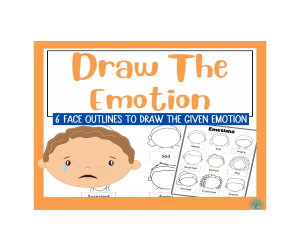
Draw the Emotion Faces – SEL Drawing Worksheet
Special Resources, Social Emotional Learning (SEL), Special Education Needs (SEN), Not Grade Specific, Drawing Templates & Outlines, Worksheets & Printables
Understanding emotions begins with being able to visualize facial expressions. This Draw Emotion Faces Worksheet provides drawing practice that boosts emotional literacy in an engaging way. The printable worksheet features 9 blank faces along with these emotion words: happy, sad, angry, surprised, excited, shy, worried, frustrated and scared. Students draw appropriate facial expressions on each face to match the written emotion. Creating visual representations of feelings improves emotion identification skills. Students think critically about distinguishing features like mouths, eyes and eyebrows that convey different emotions. The drawing experience also builds awareness of how faces reflect inner feelings. With its practical application, this Draw Emotion Faces Worksheet is perfect for social skills instruction, counseling and speech therapy. Students remain focused as they analyze emotions and practice recreating expressive faces. A great resource for building emotional intelligence! Teachers, parents and therapists will love having this drawing activity in their toolbox for articulating and visualizing different feeling states in an engaging way. A worksheet for drawing emotion faces would be appropriate for: Early elementary students (K-2nd grade) as an introduction to identifying basic emotions like happy, sad, angry, surprised, etc. Special education, counseling, or speech therapy settings for students who need extra practice recognizing and labeling emotions. Social skills classes and small groups focused on building emotional IQ, empathy, and self-awareness. Individuals with autism, Asperger's, or other challenges reading emotions and social cues. Young elementary students as part of units on self-awareness, feelings, or social-emotional learning. Primary grade children as a mindfulness or reflection activity. Clipart images courtesy of Kari Bolt Clipart
Author SEN Resource Source
Rating
Tags Emotions, Feelings, Draw The Emotions, Emotion Recognition, Feelings Worksheets, Emotional Intelligence, Self-expression, Emotional Awareness, Emotional Literacy, Mindfulness Activities
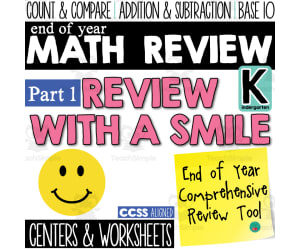
Math Review for Kindergarten "Review With a Smile" Centers, Worksheet Counting, Addition and Subtraction, Comparing Numbers or Groups of Objects, Word Problems
, Preschool, Grade 1, Word Problems, Worksheets & Printables
Math Review Activities for Kindergarten This resource is part one of a Whole Year Math Review Pack. Part 2 s coming soon... CCSS aligned.
Author Cherry Workshop
Tags Addition, Subtraction, Fun, Math Review, Kindergarten, More Or Less, Count By 1, Count By 10, Counting, Word Problems, How Can You Use Subtraction To Compare Groups

The Cardiac Cycle (Systole and Diastole)
Science, Life Sciences, Human Body, Grade 9, 10, Diagrams, Teacher Tools
The Cardiac Cycle (Systole and Diastole) Lesson Plan This lesson plan provides an in-depth guide through the complex world of cardiovascular function, simplifying various elements of the heart's activity for 9th and 10th-grade science students. The focus is chiefly on the Human Body subcategory. The teaching aide utilizes a comprehensive PowerPoint format with 24 informational slides that visually engage students. Starting from understanding where blood travels within the body - key to comprehending complex cardio processes - it drills down to specifics about systolic and diastolic phases of cardiac contraction. Vivid visual aids assist in reinforcing these new concepts. Learning Objectives Clearly defined objectives ensure learners at different levels have relatable takeaways from the lesson including: An understanding of how blood flows through the heart. A deeper insight into how heart serves as a dual-action pump during cardiac cycle specially designed for advanced learners. Critical Thinking Opportunities Pupils are challenged with thought-provoking queries about potential changes in aspects like blood flow rate, stroke volumes or cardiac output variations - meant to stimulate further inquiry and analysis. Versatility Across Learning Environments & Teaching Styles This detailed teaching resource can be used effectively across different educational settings: Serving as part of whole class instruction where group discussions drive interest and deepen understanding or, Serving as individual study tools allowing for specific topic focus. The Cardiac Cycle (Systole and Diastole): An informative yet adaptable asset – ideal companion to educators seeking accessible but challenging content that fits seamlessly across diverse teaching methods ensuring grasp of scientific principles much simpler. In essence, this exclusively formulated Microsoft PowerPoint file combines engaging visuals with well-structured data guiding students in the intricate operations of the heart - making it a truly invaluable resource.
Author The PE Tutor
Tags Cardiac Cycle, Systole, Diastole, Heart Function, Blood Flow
I WONDER - Can Magnets Be Turned Off | Animated Video Lesson
Physics, Science, Grade 4, 5, 6, 7, 8, 9, 10, Lesson Plans, Teacher Tools
Video Introduction An amazing activity designed for the students to learn more about STEM. I WONDER - Can Magnets Be Turned Off | Animated Video Lesson Do you like STEM subjects? what is your favorite one? Have you ever tried to plant a seed? If yes, tell us more about it. Or have you ever tried to invent something? If yes, tell us more about it. And how do you think it will help us? Have you ever seen a microorganism under a microscope? What was it? And how it looked like? Mathematics is a marvelous subject. Let' sharpen our brains and solve some equations. Do you like timetable tricks? What is your favorite one? Do you know how to code? Have you ever created an app or a game before? If yes, how was it like? I WONDER - Can Magnets Be Turned Off | Animated Video Lesson The video is perfect for encouraging the researching skills for the students, while learning more about this fantastic topic. I WONDER - Can Magnets Be Turned Off | Animated Video Lesson This friendly designed video is suitable for students at school, homeschooling, and as a group activity. Format Available in MP4 format.
Author Educational Voice
Tags Can Magnets Be Turned Off, Can Magnets Be Turned Off Video, Magnets, Magnets Facts, Magnets Facts For Kids, Magnets Facts Video, Magnets Facts Video For Kids, Physics, Physics Facts

Tricky Graphs- Bias and Data: Bar Graph Worksheet Line Graph Worksheet
Math, Graphing, Life Skills, Special Resources, Grade 6, 7, 8, 9, Worksheets & Printables, Worksheets, Lesson Plans, Teacher Tools
Critical Thinking and Graphing and Media Literacy all in one! This middle grades math lesson for students in grades 6-9 helps teach your class about how graphs can be displayed in tricky and misleading ways. Your students will learn how to spot these biases and re-create the graphs in a more fair manner. This is real-life learning that will serve your students long past your graphing unit. It's a crucial life skill that is often not taught in school. Here’s a real-life math lesson that will be a great addition to your middle school graphing unit! Students are shown three unique and realistic graphs Each one presents information in a biased or misleading way. With step-by-step instructions, your students will be guided through the basics: 1) Carefully reading and interpreting each graph: the axes, the scales, the data that is included 2) Noticing any biases or manipulations that may be present 3) Determining what the author probably wanted to guide them to think when reading the initial graph On the second page for each situation, students are given extra information and tasked with re-creating the graph more fairly. Blank graphs (with scales and labels) are given to students; they will use the information provided in each table to create a new graph that displays the data in an accurate way. Reflection prompt questions are also included to stimulate discussion and students explaining their ideas in words. The misleading and biased scenarios include: Choosing a truncated vertical scale to overemphasize change Not plotting enough data points for the full picture Graphing an absolute amount when a rate would be more informative The three graphs include one bar graph and two line graphs. What's Included: 8 Page PDF Ready to Print and Use! Teacher Instructions 6 Worksheets: Two Pages each for Three Scenarios (including 15 questions and 3 graphs for students to create) Complete Answer Key
Author Grace Under Pressure
Tags Bar Graph Worksheet, Line Graph Worksheet, Bias, Data Collection, Data Presentation, Graphing, Graphing Worksheet, Critical Thinking, Life Skills, Media Literacy

Herbivore and Carnivore Compare and Contrast Graphic Organizer
ELA, Science, Life Sciences, Animals, Reading, Biology, Grade 2, 3, 4, Teacher Tools, Graphic Organizers, Worksheets & Printables, Worksheets
This graphic organizer is a great way for students to compare and contrast herbivores and carnivores. It is simple and easy to use, and it helps students organize their thoughts and ideas.
Author Have Fun Teaching
Tags Compare And Contrast
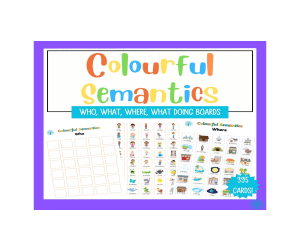
Colorful Semantics Boards
Special Resources, ELA, Special Education Needs (SEN), Writing, Kindergarten, Preschool, Grade 1, 2, Activities
Colorful Semantics is a Speech and Language therapy technique which uses color coded cards to help children to learn the important elements of a sentence,and how to join them together in the correct order. Colorful semanticsbreaks down sentences into their thematic roles and then color codes them to help children to learn the important elements of a sentence,and how to join them together in the correct order. The approach initially has 4 key color codes: subject is orange, verb is yellow, object is green and place is blue. As children progress in their understanding there are further stages for adverbs, adjectives and time. Colorful semantics is perfect for use with young children learning correct sentence formation or in specialist settings with children with special educational needs. This resource can be used as a learning aid during whole class literacy or on a small group or 1:1 basis. This resource is 4 boards that children can use to select their choice of cards from for each section of the sentence. You can laminate the resource and use velcro to make it reusable and easy for the children to select which card they need. 4 Boards and a selection of 395 cards showing ‘who’, ‘what’, ‘where’ and ‘what doing’. Clipart images courtesy of Kari Bolt Children’s Illustrator
Author SEN Resource Source
Tags Colorful Semantics, Early Writing, SEN, Speech And Language, Sentence Structure
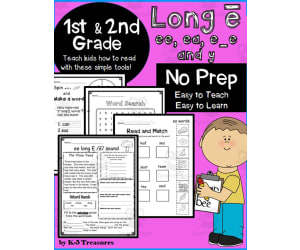
Long E Phonics – 1st & 2nd Grade Reading Unit
ELA, Grammar, Language Development, Phonics, Grade 1, 2, Worksheets & Printables, Worksheets, Teacher Tools, Lesson Plans
This unit focuses only on the Long E sounds. Learning how to read can be the most challenging activity for students and for a teacher. Understanding that the combination of letters can make the same vowel sound requires lots of repetitive practice of reading and writing these words with these sounds. There are other phonics units that I sell that focuses on each of the long vowels with a combination of different letters. Reading can be made easier with these phonic helps that repeatedly encourage students to practice these Long E sounds. Activities include - Reading comprehension and identifying the Long E in their reading, - Writing their answers to questions regarding the paragraph, - Identifying additional Long E words in sentences using a word bank, - Matching words with pictures, spinning a paperclip activity where students will write the word with the Long E sound, - and lastly a fun wordsearch with variations of Long E words. These activities are for each long vowel words that are focused on the Long E sounds so there are plenty of opportunities for students to practice their comprehension reading skills and phonic sounds. Students will practice the following Long E Word sounds: EE, EA, E_E, and Y. Teachers can use this resource in whole group, individually with students, students can practice with each other in centers, or these worksheets can be assigned as homework. Worksheets are also differentiated for each Long E sounds for all young learners which makes it perfect for all 1st - 2nd graders. A total of 27 pages full of reading and phonic activities. Along with reading and writing, there are matching, cutting, and pasting activities. Word searches and spin and make a word activity are also a part of this packet which make learning to read these phonic sounds entertaining for young learners. For a list of other phonics and grammar activities, click on the following links: CVC Word Families for Beginning Readers: Stamp it, Make it, Trace it, and Write it CVC Words | Short Vowel Phonics | Word Families for K- 2nd Grade Phonics for 1st and 2nd Grade: Help Students Learn Long A Words: AY, AI, A_E, EIGH, EY, and EA Phonics for 1st and 2nd Grade: Help Students Learn Long E Words: EE, EA, E_E, and Y Phonics for 1st and 2nd Grade: Help Students Learn Long I Words: I_E, IE, IGH, and Y Phonics for 1st and 2nd Grade: Help Students Learn Long O Words: O_E, OA, OW, OE, and OUGH Phonics for 1st and 2nd Grade: Help Students Learn Long U Words: U_E, EW, OO, UE, UI and OU Phonics / Digraphs for 1st and 2nd Grade: Beginning, Middle, and Ending Sounds Phonics / Digraphs for 1st -2nd: Ending Sounds: CK, NG, SH, TH, and NK Phonics / Digraphs for 1st and 2nd Grade: Beginning Sounds: SH, TH, WH and PH Phonics: R-Controlled Words for 1st and 2nd Grade and Early Readers
Author K-5 Treasures
Rating
Tags Phonics, Grammar, Vowel Sounds, 1st Grade, 2nd Grade, Reading, Long Vowel Sounds, Long E Sounds, Long E Phonics, Phonics Long E

Prime Factorization Math Activity Digital and Printable
, Grade 4, 5, 6, Worksheets, Worksheets & Printables
Introduce your fourth-grade students to an exciting and educational prime factorization activity that combines learning and fun seamlessly. Our engaging, no-prep resource is available in both digital and printable formats, making it suitable for any learning environment. Designed specifically to capture students' attention, this Google Slides activity offers a total of 30 slides, each featuring composite numbers. Students will have the opportunity to practice prime factorization by dragging and dropping number tiles to complete a factor tree. To reinforce their understanding, they will then type the corresponding expression in a text box. This versatile worksheet is an ideal choice for distance learning, as it can be easily incorporated into your Google Classroom. With just a few clicks, you can effortlessly assign and track student progress, providing a seamless and interactive learning experience for your remote learners. For those who prefer a traditional classroom or hybrid setting, we have included a set of task cards and a worksheet version of the activity. This flexibility ensures that every student, regardless of their learning environment, can fully engage with the material. To facilitate your grading process and provide added convenience, we have also included a comprehensive answer key. With solutions readily available, you can quickly assess student understanding and provide timely feedback. By downloading this resource, you will receive a comprehensive package that includes 30 Google Slides , a task card version of all slides, a worksheet version of all slides, and an answer key for each slide. This comprehensive package allows for maximum versatility and ensures that you have all the necessary materials at your fingertips. COMMON CORE STANDARDS: CCSS4.OA.B.4 Find all factor pairs for a whole number in the range 1-100. Recognize that a whole number is a multiple of each of its factors. Determine whether a given whole number in the range 1-100 is a multiple of a given one-digit number. Determine whether a given whole number in the range 1-100 is prime or composite. CCSS6.NS.B.4 Find the greatest common factor of two whole numbers less than or equal to 100 and the least common multiple of two whole numbers less than or equal to 12. Use the distributive property to express a sum of two whole numbers 1–100 with a common factor as a multiple of a sum of two whole numbers with no common factor. For example, express 36 + 8 as 4 (9 + 2).
Author Matemaths
Tags Matemaths, Digital, Printable, Prime Factorization