



4,008 products added recently
11Th Grade Worksheets
Equip your 11th-grade students with worksheets that address advanced topics and analytical skills necessary for higher education. These resources support learning in key areas and encourage independent thinking. Use them to enhance instruction and guide students toward success.

 Show filters


Dmitri Mendeleev – The Man Behind the Periodic Table
Life Sciences, Science, STEM, Social Studies, Biographies, Inventors, Basic Science, Physics, Chemistry, Technology, Grade 6, 7, 8, 9, 10, 11, Worksheets, Worksheets & Printables, Quizzes, Quizzes and Tests, Teacher Tools, Projects, Activities
Dmitri Mendeleev – The Man Behind the Periodic Table Comprehension Activities A short reading and comprehension activity for science classes (PDF + H5P) ⚗️📘 A printable and digital resource for grades 7–10 science and cross-curricular teaching 🧪🧠 This resource introduces students to Dmitri Mendeleev, the chemist who first organized the periodic table in a way that allowed scientists to predict the discovery of new elements. His approach wasn’t just about sorting known facts – it was about seeing patterns and thinking ahead. That story can really bring chemistry to life for students. The material includes a short, student-friendly informational text along with structured follow-up tasks. It works well in a chemistry unit focusing on the periodic table or chemical elements, but it can also be used in interdisciplinary contexts or as part of a history-of-science project. Included in this resource: A brief reading text about Mendeleev and his scientific achievements A worksheet to help students summarize key information in a profile format Quiz questions with an answer key Two optional extensions: – Students write their own questions about the text – Exchange questions with a partner and respond Formats: – PDF (print and digital use) – DOCX (editable, without images) – H5P (for digital platforms, text-only) How to use it in class: I’ve used this type of material both as an introduction to the periodic table and as a filler activity when students need something structured but manageable. The quiz can be done individually or discussed as a group, and the partner tasks work well for early finishers. The H5P version is especially helpful in digital classrooms or for homework: students can check their answers independently and work at their own pace. You don’t need much prep. Just print or upload the files and you’re ready to go. Have fun exploring the world of science with your students! Warmly, Lernfitness Did You Know? I teach with a certified therapy dog, and together we focus on creating a positive and inspiring learning environment.
Author Lernfitness
Rating
Tags Science, Famous Scientists Lesson, H5P, Interactive Science Exercises, STEM, Scientists, Chemistry, Dmitri Mendeleev, Periodic Table
Neuro-Inclusive Vocational Mastery: Executive Functioning Micro-Creden
Career, Life Studies, P.E. & Health, Mental Health, Health, Mindfulness, Physical Education, Research, Resources for Teachers, Classroom Management, Grade 6, 7, 8, 9, 10, 11, 12, Worksheets & Printables, Worksheets, Workbooks, Teacher Tools, Assessments, Lesson Plans, Presentations, Literacy Readers, Quizzes and Tests, Tests
Neuro- inclusive Educational Curriculum and Credentialing System for Executive Functioning Micro- credentials 35-Page Curriculum for Neurodivergent Teens (Autism, ADHD and More) in PDF Format Transforming the way neurodiverse students will leave school and move to the workforce and this is accomplished through a cutting-edge micro-credentialing program that recognizes the worth of everyone, regardless if they have a disability or not. Currently available through a digital PDF, this current tool replaces the old way of doing things based on a deficit model of transitioning out of high school to working. It provides a very powerful evidence-based structure for turning executive function challenges into work-related credentials. Includes: •Phase 1-Curriculum Theory Basics (Hidden Curriculum, Cognitive Load, Sensory Schema, and Ambiguity Traps) • Phase 2-Student Workbook & 10 Worksheets (Task Initiation, Working Memory, Cognitive Flexibility, Emotional Regulation, Time Blur, Sustained Attention, Organisation, Long Term Goals, Self-Monitoring, and Self-Advocacy) • Phase 3-Visual Structures, Flow Charts, Cognitive Load to Environmental Friction Mapping plus Teacher Implementation guide with complete Notion integration. Students will earn micro-badges that stacks up to create a portfolio for employers to easily understand—no longer any need for vague transcript! Ideal for special education teachers, transition coordinators, vocational rehabilitation specialists and parents building toward sustainable career pathways for autistic/ADHD teens. Instantly downloadable PDF • Print (cut) one copy or use digitally • Hybrid digital + analog/workbook based • Designed for students aged 14-22/9-12 grade. SEO Keyword: Neurodivergent Vocational Curriculum, Executive Function Worksheets for Autism, Micro-Credentialing for Special Education, Transition Programs for Autism into Work, ADHD Workplace Skills Curricula, Neuro-Inclusive Transition Planning, Executive Function Micro-Credentials, Sensory Regulation Training for Work. Reasons Parents & Educators Appreciate It: • Transforms labels of “unmotivated” or “distracted” students into real, visible, employer-ready micro-credentials that significantly increase retention rate after employment (example: retention rates went from 60% to 88% in a single year). • Comes with teacher keys; student worksheets; and pre-made templates to make implementation take only minutes instead of months (no longer create resources from scratch). • Uses affirming language that respects students' neurodiversity; allows schools to have an established, professional portfolio to provide to employers and IEP teams. • Uses a hybrid model of digital and printable content - all learning styles and budgets are accommodated; schools love the built-in assessment rubrics and portfolio defense scripts. • Quickly bridges the gap between school and the workplace; parents know that real-world skills (i.e. self-advocacy script; sensory anchors; Plan B matrix) will continue to be used even after high school graduation. Target Student Populations (Identification by PDF Analyses): These curricula were specifically designed for neurodivergent youth between 14 to 22 years of age (IDEA transition services) and are intended to be used in the following educational settings: • Special Education/Inclusion Classrooms, Grades 9-12 • Post-Secondary Transition Vocational Rehabilitation, 18 to 22 • Autism Spectrum Disorder Support and Transition Programming • ADHD/Executive Dysfunction focused Life Skills/Work-Study Programming • Community Based Adult Transition Programs, ages 18 to 22 Not for elementary/middle school; does NOT include general education environments without a neurodivergent focus. Designed for students experiencing difficulties with initiating tasks, time-blindness, sensory overload, or navigating the "hidden curriculum" within an employment environment. Copyright terms of use. This book belongs to Syed Hammad Rizvi. This resource can be used as a personal or classroom resource (one classroom only). You cannot change, distribute or sell any part of this resource. This means you are not allowed to make it available on the internet for public access or download. If you would like to share this resource with colleagues, please purchase additional licenses from Teachsimple. Thank you for following these terms of use. This product has been created by Syed Hammad Rizvi with joy.
Author Creative Book Store
Rating
Tags SpecialEducation, Neurodivergent, Autism, ADHD, ExecutiveFunctioning, TransitionPlanning, Neurodiversity, SpecialEd, NeuroInclusiveEducation, NeurodivergentCurriculum

Data Visualization with AI Tools – Charts & Insights Practice
Technology, Science, Computer Science, Engineering, STEM, Resources for Teachers, Classroom Management, Research, ELA, Reading, Grade 6, 7, 8, 9, 10, 11, 12, Worksheets & Printables, Workbooks, Worksheets, Word Searches, Crosswords Puzzles, Teacher Tools, Lesson Plans, Quizzes and Tests, Quizzes, Tests
Enhance your understanding of data visualization and AI by using this comprehensive, easily accessible 38-page student workbook and teacher resource kit! This guide is ideal for 21st century classrooms as it teaches you how to turn raw data into graphic visual stories through analytical charting principles, ethical practices for the creation of visual materials, and hands-on worksheets that help you understand how to create visual stories from data. You will learn how to identify common types of charting (bar charts, line charts, scatter plots, histograms, stacked bar charts, etc.), create charts that do not mislead viewers, extract actionable insights from data, and leverage computational and/or AI platforms to analyze real life data sets such as urban heat islands, microplastic pollution, butterfly migration patterns and school nutrition. The following materials are included with each workbook: - Theoretical foundation on methodology, Gestalt principles, and the "So What?" (i.e., why is this important?) framework for visual storytelling; - 10 engaging worksheet activities with real world scenarios (i.e., ecology, agriculture, urban design, ethics); - Instructional visuals, chart selection matrices, and epistemic workflow diagrams; - Complete teacher answer keys, or rubrics for use with the worksheets provided in the workbook (Part 3); and - Designed to improve data literacy, critical thinking and AI-assisted analysis skills - you can print or digitally create the materials needed; perfect for teaching data science, statistics, STEM, computer science or environmental studies. Use visuals that are of professional quality to increase the engagement of students and ultimately prepare them for future success as a professional in a data-dominated world. Keywords : Data visualization workbooks, AI-based charting tools, practice with student data analysis, resources for creating data literacy worksheets, ethical data visualization resources, teacher resources for creating charts, and development of scatter plot and histogram practice materials are all included in the high school data science curriculum. Reasons Parents/Schools Like It: *) Developing Skills for the Future: Learn to utilise AI to visualise data in a way that is ethical and can be used to assist with making informed decisions (i.e., college admission requirements and job applications). *) No Prep/High Student Engagement: The student workbook has been pre-completed and includes keys/rubrics for teachers to save them hours of prep time while providing the students with relevant work experience. *) Teaching Analytical Reasoning and Ethics: More than just a nice colourful chart, this course will help students comprehend how to variable *) Social Studies/Math/Science/Tech all use these lessons to create detailed and real-world examples (Ex: Eco- Planning, Urban Planning, Nutrition, and Immigration) that all students can relate to. *) Diverse Learning Levels/Access: All students will receive support through scaffolding, pictures, and fill-ins throughout the course, while advanced students will be sufficiently challenged. Levels for which this content is appropriate (Full PDF Analysis): *) This material is aimed at 8-12th grade (MIDDLE SCHOOL - ADVANCED) – Graduation Year - 9-12 - Level HS *) The material is evenly divided into the high school level classes; Data Science, Statistics, AP Statistics, Computer Science, or STEM and Environmental Sciences. Level HS - Graduation Year - 9-12 - Level MS - Grades 7-8 *) The language and real-world scenarios associated with these materials are well within the cognitive abilities of adolescents, as noted in the teacher resources. (see More Detail 10 - Adolescent - Grade 7-8) Copyright / Terms of Usage Syed Hammad Rizvi has obtained copyright on this book and this document is intended only for single personal and classroom use. You cannot alter, sell or redistribute anything associated with this document. This means to not put it up on the internet and available publicly. If you would like to share this document with others you need to go through Teachsimple to buy additional licenses. Thank you for adhering to the terms above. Syed Hammad Rizvi is the proud owner of this product.
Author Creative Book Store
Rating
Tags DataVisualization, DataLiteracy, DataScience, AITools, AIForEducation, STEMEducation, TeacherResources, DataVisualizationWorkbook, AICharts, ChartingWithAI
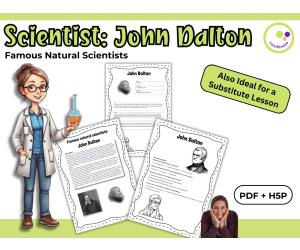
John Dalton – A Short Introduction to a Key Figure in Chemistry
Life Sciences, Science, STEM, Social Studies, Biographies, Inventors, Basic Science, Physics, Chemistry, Human Body, Grade 6, 7, 8, 9, 10, 11, Worksheets, Worksheets & Printables, Quizzes, Quizzes and Tests, Teacher Tools, Projects, Activities
John Dalton – A Short Introduction to a Key Figure in Chemistry Informational Text, Student Tasks & Digital Quiz (PDF + H5P) 🧪📘 A printable and digital resource for grades 7–10 This material introduces students to John Dalton, best known for his early atomic theory and his work on gases. The text is kept simple and clear, making it easy to integrate into lessons on the history of chemistry or atomic structure. It’s especially useful when you want to combine reading comprehension with scientific content. I’ve used this type of material when I needed something structured but flexible – for example, during quiet lesson phases, independent study, or even in a substitute teaching situation. It’s straightforward enough to use without much prep, and students can usually work through it on their own or in pairs. Here’s what’s included: A short reading passage about John Dalton A worksheet where students fill out a basic profile of him Quiz questions to check understanding (with solutions) Two optional follow-up tasks: – Write your own questions about the text – Swap and answer a partner’s questions Available in three formats: – PDF (print-friendly) – Editable .docx (text only) – H5P version for interactive use without images In the classroom: The material works well for independent work or as part of a science station. Students start with the reading text, complete the profile, and then move on to the quiz questions. The optional tasks are a nice way to extend the activity, especially if some students finish early. The H5P version is useful if you’re working in a digital setting or want to offer students the chance to check their answers right away. It’s a calm, focused lesson component that helps students learn about an important scientific thinker – without needing complicated prep or background knowledge. Have fun exploring the world of science with your students! Warmly, Lernfitness Did You Know? I teach with a certified therapy dog, and together we focus on creating a positive and inspiring learning environment.
Author Lernfitness
Rating
Tags Science, Famous Scientists Lesson, H5P, Interactive Science Exercises, STEM, History, Scientists, Chemistry, John Dalton, Atomic Theory
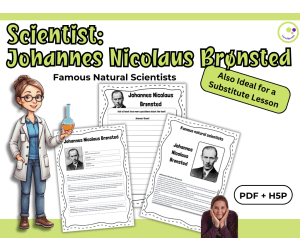
Johannes Nicolaus Brønsted – Scientist Profile and Reading Tasks
Life Sciences, Science, STEM, Social Studies, Biographies, Inventors, Basic Science, Physics, Chemistry, Technology, Grade 6, 7, 8, 9, 10, 11, Worksheets, Worksheets & Printables, Quizzes, Quizzes and Tests, Teacher Tools, Projects, Activities
Johannes Nicolaus Brønsted – Scientist Profile and Reading Tasks Comprehension Activities A structured classroom resource for teaching about acids, bases, and scientific history ⚗️📘 (PDF + H5P) ⚗️📘 A printable and digital resource for grades 7–10 science and cross-curricular teaching 🧪🧠 This material introduces students to Johannes Nicolaus Brønsted, a Danish chemist known for developing the Brønsted–Lowry acid-base theory. His work provides an essential foundation for modern chemistry and is especially helpful when students begin learning about pH, protons, and the role of acids and bases in chemical reactions. The resource is designed to be easy to use – both in traditional lessons and in situations where little prep time is available, such as substitute teaching or self-paced work. It includes a short, accessible reading passage, a student profile sheet, and comprehension tasks that guide students through the key points. What’s included: Informational text about Brønsted’s life and work Printable profile worksheet to summarize the text Quiz questions with answer key Two optional extension tasks: – Students create their own questions based on the reading – Partner exchange: students answer each other’s questions File formats: – PDF for easy printing or digital distribution – Editable DOCX (text only) – H5P version for digital platforms (no images) In the classroom: This activity can be used to complement a chemistry unit on acids and bases, as an introduction to scientific models, or simply as a way to bring real historical context into science lessons. The material is clear and accessible, even for students who may be new to the topic. The H5P version supports digital learning and allows students to complete the quiz interactively, making it great for homework or blended settings. The resource is flexible enough to work in group settings or independently. Minimal prep. Meaningful content. A great way to connect theory with the people who helped shape it. Have fun exploring the world of science with your students! Warmly, Lernfitness Did You Know? I teach with a certified therapy dog, and together we focus on creating a positive and inspiring learning environment.
Author Lernfitness
Rating
Tags Science, Famous Scientists Lesson, H5P, Interactive Science Exercises, STEM, Scientists, Chemistry, Johannes Nicolaus Brønsted, Acid-base Theory, Acids And Bases
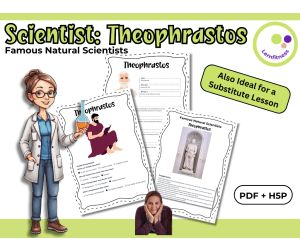
Scientist: Theophrastos – Fact Sheet, Quiz, and Interactive Exercises
Life Sciences, Science, Biology, STEM, History: World, History, Social Studies, Nature & Plants, Grade 8, 9, 10, 11, Worksheets, Worksheets & Printables, Quizzes, Quizzes and Tests, Teacher Tools, Projects, Activities
Discover Theophrastos – The Botanist and Scientist Behind the Philosopher Theophrastos is often recognized as a philosopher, but did you know he is also considered the "Father of Botany" and one of the most influential natural scientists in history? With this resource, your students in grades 7–10 will explore Theophrastos’s groundbreaking contributions to biology, particularly his pioneering work in plant science. Designed for a 45-minute lesson, this material blends engaging content with interactive and creative activities to bring his achievements to life. What’s Included: Concise Informational Text: A clear and engaging overview of Theophrastos’ role in science. Fact Sheet Activity: Encourages students to organize knowledge and work creatively. Quiz with Solutions: Promotes fun, interactive learning and self-assessment. Additional Exercises: Students can create their own questions and collaborate in pairs to deepen their understanding. Flexible Formats: Includes a color and black-and-white printable PDF, as well as interactive H5P tasks for digital learning. Why You’ll Love This Resource: Time-Saving: Perfect for teachers who need a ready-to-go, well-structured lesson. Versatile Use: Ideal for biology, history of science, or cross-curricular lessons in English and science classes. Promotes Independence: Solutions are included, allowing students to check their work and explore the topic at their own pace. Interactive and Engaging: Tasks are designed to keep students actively involved while learning about Theophrastos’ legacy. Whether you use it for a regular lesson, substitute teaching, or as part of a digital learning activity, this resource will make Theophrastos’ contributions come alive for your students. Bring Theophrastos’ fascinating world of science and philosophy into your classroom and inspire your students to see history and science in a whole new light! Have fun exploring the world of science with your students! Warmly, Lernfitness Did You Know? I teach with a certified therapy dog, and together we focus on creating a positive and inspiring learning environment.
Author Lernfitness
Tags Science, Biology, Famous Scientists Lesson, H5P, Interactive Science Exercises, STEM, Theophrastos, History, Scientists, Botanic

Who Has It? – Chemical Elements Game (1–118) – 3 Levels of Differentia
STEM, Science, Chemistry, Physics, Life Sciences, Earth and Environmental Sciences, Basic Science, Special Resources, Social Emotional Learning (SEL), Special Education Needs (SEN), Homeschool Templates, Grade 6, 7, 8, 9, 10, 11, Activities, Games, Worksheets & Printables, Task Cards, Quizzes and Tests, Teacher Tools, Quizzes, Worksheets, Projects, Flashcards
Who Has It? – Chemical Elements Game (1–118) – 3 Levels of Differentiation A cooperative chemistry card game for grades 7–10 to review atomic numbers, element names, and symbols 🧪🎯 This resource is a classroom game that helps students become more confident with the chemical elements – from hydrogen to oganesson. The game follows the well-known “I have… who has?” format and is designed to reinforce students’ understanding of element names, symbols, and atomic numbers in a playful and interactive way. To support different learning levels, the material includes three differentiated versions of the full game, each with 118 element cards: With element names for both question and answer (beginner level) Only the “I have…” part includes the name , the question uses the symbol/number (intermediate level) Without element names – players must match based on symbol and atomic number alone (advanced level) Each version builds on the last and can be used flexibly depending on students' prior knowledge. The game works best with medium to large groups and encourages students to listen carefully, stay engaged, and support one another. What’s included: 3 full card sets (118 cards per set = 354 total) Differentiated by content and level of language support Clear instructions for printing, laminating, and use Ideal for individual, pair, or group work How I use it in class: I’ve played this game both at the end of a chemistry unit and as a fun opener when starting the periodic table. It’s also perfect for substitute lessons or for classes with mixed ability levels. Since each student needs to be ready when their card comes up, it fosters attention and collaboration. This is one of those games where learning happens almost by accident – students are so focused on playing that they internalize atomic numbers and symbols without even noticing. A simple, engaging way to bring structure, repetition, and movement into chemistry class – no extra prep needed. If you're looking for an easy way to help students become more confident with the periodic table, this might be worth trying in your classroom. Best, Heike from Lernfitness Did You Know? I teach with a certified therapy dog, and together we create a positive and welcoming learning environment. 🐶
Author Lernfitness
Rating
Tags Game, Educational Card Games, Chemistry, Physics, STEM Science Matching Game, Chemical Elements, Periodic Table Matching Game, Who Has It, STEM, Who Has It?
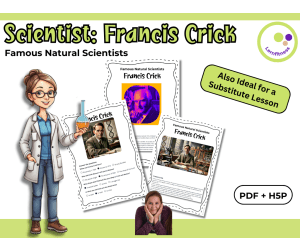
Scientist Francis Crick – Fact Sheet, Quiz & Interactive PDF incl. H5P
Life Sciences, Science, STEM, History, Social Studies, Biographies, Inventors, Basic Science, Physics, Biology, Grade 6, 7, 8, 9, 10, 11, 12, Worksheets, Worksheets & Printables, Quizzes, Quizzes and Tests, Teacher Tools, Projects, Activities
Scientist Francis Crick - Fact Sheet, Quiz & Interactive Version (PDF & H5P) Francis Crick – The DNA Double Helix and the Origins of Modern Genetics Fact Sheet, Quiz & Interactive Exercises (PDF + H5P) 🧬 This 45-minute resource introduces students in grades 7–10 to Francis Crick and his role in uncovering the structure of DNA – one of the most influential discoveries in modern biology. Many students are familiar with the term DNA, but only a few know the story behind how scientists first identified its double helix shape. Together with James Watson, and building on the work of Rosalind Franklin, Crick helped explain how genetic information is stored and passed on – a breakthrough that still shapes biology and medicine today. To make this complex topic easier to teach, I’ve put together a concise and structured lesson. It includes a short informational text, a fact sheet, quiz questions with answers, and a creative task where students come up with their own questions. All versions are included – both in color and black-and-white – and there’s also an interactive H5P version for digital use 💻. What’s included: A short, accessible text on Francis Crick and the discovery of DNA A fact sheet to help students sort and reflect on the key points Quiz questions (with solutions) to check understanding A creative task where students write and exchange their own questions Formats: Printable/digital PDF and interactive H5P version Answer key included ✅ I’ve used this during our genetics unit, but it also fits well in lessons on the history of science or how discoveries are made. It’s easy to integrate and works well for partner work, independent tasks, or short science projects. 🚀 Download now and bring the legacy of Francis Crick into your biology lessons today! 📍 Best wishes, Heike from Lernfitness Did You Know? I teach with a certified therapy dog, and together we create a positive and inspiring learning environment. 🐶✨
Author Lernfitness
Tags Science, Biology, Famous Scientists Lesson, H5P, Interactive Science Exercises, STEM, History, Scientists, Francis Crick, DNA
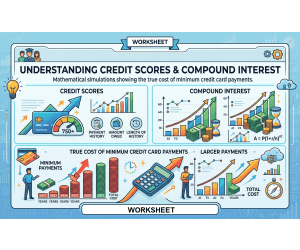
Understanding Credit Scores & Compound Interest
Research, Math, Money, Statistics, STEM, Classroom Management, Resources for Teachers, Community Building, Order Of Operations, Number Lines, Grade 6, 7, 8, 9, 10, 11, 12, Worksheets & Printables, Workbooks, Worksheets, Word Searches, Teacher Tools, Assessments, Lesson Plans, Quizzes and Tests, Quizzes, Tests
Are your students prepared to tackle the intricate financial challenges that will face them in the future? Don't stop at checkbook balancing; equip them with skills that would prepare them for financial success. This complete financial literacy curriculum - "Understanding Credit Scores & Compound Interest: The Invisible Architecture of Modern Wealth" - is an engaging and ready-to-use module aimed at turning high school students into active financial participants. More than just a vocabulary lesson, this module delves into two of the most powerful driving forces of economic mobility - the FICO score and compound interest. Students will be presented with rich data, real-life examples, and challenging tasks during this learning experience. What This 42-Page Comprehensive Guide Contains: Part 1: Basic Principles (11 Pages): Detailed authorial chapters that convert complicated ideas into simple and interesting teachings. Chapter 1: The Credit Score Structure: Five fundamental aspects of FICO score, credit usage, and the actual effect of the credit score. Chapter 2: The Concept of Compound Interest: Formula for growth, the 72 rules, and the major difference between annual percentage rate and annual percentage yield. Chapter 3: The Link Between Credit and Interest: Examples of the impressive monetary losses connected with low credit score. Chapter 4: Practical Wealth Building and Debt Reduction: Effective tools such as utilizing the grace period, "Authorized User" loophole, and avoiding the minimum payment استراتيجية. Part 2: Students’ Manual (19 Pages): 10 worksheets intended for learning and application of the information. Great material for individual work, team discussions, or assignments. Includes all types of calculations, tasks for analysis of the examples, and prompts for critical thinking on various subjects such as going into the debt (avalanche vs. snowball) and making credit from scratch, the real cost of low payments, and the concluding assignment where the students develop their ten-year financial plan. Part 3: Instructor Materials (12 Pages): Everything you require for the successful execution of this unit and time savings in preparing. 3 Visual Representations created by Professionals: Excellent graphics that show the FICO scoring model, the compound interest exponential curve, and the credit and debt cycle. 5-Day Implementation Guide for Teachers: A complete teaching manual with pacing, goals and objectives, topics for discussions, and educational methods. Extensive Answer Key: A complete answer key which has answers to all 10 worksheets, values and sample answers for analytical queries. Why Are Students and Educators Fond of This Curriculum? Equips with Marketing Skills needed in Real Life: This course goes beyond theory providing such knowledge of finance that will help the youth not to end up in debts and be able to make good use of all financial opportunities. Excellent and Interesting Academic Experience: The course understands the importance of financial education as an academic field. The serious approach, case studies, and difficult tasks make students think rather than memorize word for word. Provides a Ready-to-Use Solution: It is an easily accessible program to deal with. The 5-day teacher's manual to the course is accompanied by the visual aids and answer key enabling teachers to save lots of time. Gives Students a Strong Life Start: It is not just an exam, but a step to a successful future life giving students understanding of how to earn money, manage income and build up a good credit score. Target Audience: According to the complex vocabulary, mathematical concepts (compound interest formula), and real-life examples (college students, first cars, retirement planning), the main audience is: Primary Audience: High School Students (Grades 11-12). Subjects this lesson will be well suited for: Personal Finance, Economics, Life Skills, Consumer Math, Business, and any teacher like to include practical real-life knowledge to his classes. Secondary Audience: Freshmen or Homeschooling co-ops learning practical life skills. This content has been copyrighted by Syed Hammad Rizvi. This content can only be used for personal use and single classroom purposes. This content should not be modified, duplicated, or sold. To clarify further, this content can never be posted on the internet for public access. In case you would like to share this content with your colleagues, kindly purchase more licenses from Teachsimple.
Author Creative Book Store
Rating
Tags FinancialLiteracy, PersonalFinance, CompoundInterest, CreditScore, FICOscore, WealthBuilding, FinancialEducation, Investing101, DebtFreeJourney, MoneyManagement

Generative AI Ethics, Deepfakes & Responsible Use Case Studies
Science, Technology, Computer Science, Engineering, Research, Resources for Teachers, Classroom Management, STEM, ELA, Language Development, Grade 6, 7, 8, 9, 10, 11, 12, Worksheets & Printables, Workbooks, Worksheets, Word Searches, Writing Prompts, Teacher Tools, Lesson Plans, Presentations, Outlines, Quizzes and Tests
The complete high school curriculum is prepared and provides an interactive exploration of the topic of ethics in generative AI; deepfakes; responsible use of synthetic media; and provides a thorough introduction to how synthetic media works (to be used by all of our student participants in grades 9-12). The curriculum includes an academic overview of Synthetic Media architecture; multiple chapters for deepfake discussion/analysis; Copyright/Author status; algorithmic bias and epistemic security/provability protocols regarding the use of synthetic media. In addition, there are ten practical, complete, and interactive worksheets for active, individual student participation that have real examples, such as "the Synthesized Senator," "Med-Synthetica Diagnostic Bias," "Voice Cloning," "Influencer Avatars," etc. The students have to complete fill-in-the-blank terminology exercises, scenario analyses, and ethical synthesis prompts that promote critical thinking, media literacy, and digital citizenship skill acquisition. There is also the following in the resource book: (conceptual visual diagrams [mind maps, escalation matrices, process flows], a comprehensive answer key with notes for teachers and benchmarks for mastery) and a detailed teacher guide with pedagogical strategies, assessment tools (rubrics) and teaching protocols. This curriculum is also perfect for English/Language Arts, Social Studies, Computer Science, Digital Literacy, or elective Technology & Ethics classes. This resource is an instant digital download and requires no prep time. Give your students the information they need to be responsible in their use of AI and the topics related to ethics regarding the generative technology called "deepfake." Parents/Schools Appreciate It Because: Essential 21st century skills are being taught through critical thinking, verifying media sources & making ethical choices in dealing with misinformation & threats from deep-fakes and counterfeit media, thereby counteracting those very problems. Students remain engaged while staying motivated to learn by using real-world examples of ethical & responsible use of technology through use of case studies/workheets. The format requires zero preparation & can be easily implemented by teachers; includes lesson plans, case studies, worksheets, visuals, answer keys, teacher’s implementation guide (in pdf format). Responsible use of artificial intelligence & digital stewardship is promoted through use of technology in an aligned manner with modern school standards regarding digital citizenship/social-emotional learning. Materials are flexible in nature so can be used across multiple curriculum areas & for hybrid & remote learning situations. Based on a complete analysis of the submitted PDF, the target audience for this document are Students in grades 9-12 (age 14-18). This project is most suited for high school students enrolled in the following classes: - English/Language Arts or Media Literacy - Social Studies/Civics/Government - Computer Science/Digital Citizenship/Technology and Society - Ethics/Philosophy/STEM/STEAM The majority of the content is age appropriate for students and offers academically challenging material using fictional case studies that are relatable to a student's experience (there are no graphic illustrations or inappropriate material) on real-world current events such as misinformation, bias, copyright, and consent regarding the use of generative AI technology. "Terms & Copyright of Use": This resource has been copyrighted by Syed Hammad Rizvi. Personal use/Single-use in a classroom only. You may NOT change, share or sell this resource. i.e You may NOT post this on the Internet for others to search for/download. If you want to share this resource with other people in your school or district purchase additional copies through Teachsimple. Thank you for your cooperation. This product is provided to you by Syed Hammad Rizvi
Author Creative Book Store
Rating
Tags AIEthics, Deepfakes, GenerativeAI, SyntheticMedia, AI Ethics, DeepfakeAwareness, AIEthicsCurriculum, DeepfakesLessonPlans, GenerativeAIEthics, SyntheticMediaEthics
Taxes & Paychecks – Real-World Simulation Sheets
Social Skills, Special Resources, Life Skills, Social Emotional Learning (SEL), Social Studies, Economics, Math, Money, Measurements, STEM, Grade 6, 7, 8, 9, 10, 11, 12, Workbooks, Worksheets & Printables, Worksheets, Teacher Tools, Quizzes and Tests, Quizzes, Tests, Literacy Readers, Lesson Plans, Word Searches
Get Ready To Unlock Real Life Know How In Finance By Teaching Students About Taxes Made Simple, Paychecks, And Managerial.Learn and Use Your Skills In The Real World Without Hosting A Class In Your Community With This All-Encompassing Feature Rich Tax And Paycheck Unit. Do you ever just wish to bring in Real Life Math, teach students valuable life long skills, make it relatable, and teach students about the relationship between abstract developement of numbers versus actual application of numbers in the real world? If you do; THIS IS the complete all-inclusive, no prep repititive unit that you needed to discover to teach your middle schoolers all about taxes, paychecks; found out that you CAN earn money with this comprehensive written unit. How can we make something that seems overwhelming and complicated, easier, and more enjoyable? By using an engaging and student centered material to inform and educate your students about understanding their actual earnings (Net Pay) before they get their first paycheck. This will help your middle school students view their paychecks as an indication of successful involvement within the work force against societal standards of financial obligation by then being empowered after having deliuered when they felt more discouraged previously. This is the ultimate teaching plan; a tried and true, 5-day-lesson plan that is intended to sufficiently prepare your students for their future by creating an opportunity for them to be able to view themselves as successful in the world of finance and less anxious about obtaining those same values. This product will benefit students in grades 6-9 who are studying math (especially for applying percentages/real-world scenarios), financial literacy, life skills and/or career exploration, civics and economics (to comprehend how tax money works within society), and in cooperative homeschool environments. Including the 34-page (pdf only) detailed phase one: core content and theory guide which explains the differences and similarities between gross and net, overtime, FICA, federal and state taxes and voluntary deductions. You’ll want to use this as part of teacher preparation materials or to supplement any students who are classified as advanced readers. Phase 2: Workbook for Students (10 Workbooks) Workbooks from 1 to 10 will provide instructions and examples for answering the following: 1. Understanding the structure of a paycheck (Worksheet #1). 2. Finding gross pay for various given situations (Worksheet #2). 3. All about FICA (the intergenerational contractual agreement) (Worksheet #3). 4. What to expect on your federal and state income tax return (Worksheet #4). 5. What the deduction from your paycheck is, to whom you can give it, and the effect of giving (Worksheet #5). 6. Bringing everything together to calculate the net pay for the paycheck (Worksheet #6). 7. What effect sales tax has on the consumer (Worksheet #7). 8. The basics of how property taxes impact local communities (Worksheet #8). 9. Understanding Form W-4 and Form W-2 (Worksheet #9). 10. Understanding the basics of the consumer and their role in the economy (Worksheet 10). Phase 3: Teaching Resources & Visuals High contrast visuals in black and white that can be printed and used are; diagrams of the paycheck pipeline, the anatomy of a paycheck, and where the taxes are sent. Also, a complete answer key will give the teacher all of the answers and how to create them from the 10 workbooks. Lastly, there will be a full guide for implementation by the teacher that includes the pacing guide (5 days), daily lesson objectives, daily lesson activities, weekly lesson discussion prompts, and how to differentiate lessons for children needing scaffolding or extensions. Allow your students to have the knowledge necessary to make a successful transition into their adult lives at home and in the community. Download this print and go unit today to help your students become knowledgeable, confident participants in the economy! Why Schools/Parents Especially Like It : Building Real-Life Skills - This program teaches students a real-world, practical skill that they will use starting the day they receive their first paycheck, laying the groundwork for a lifetime of future financial success. Connecting Civics & Math - This project successfully connects important math concepts (percentages) with key civics lessons that teach students how taxes are used to support the communities they live in, making learning much more effective and relevant to students. Comprehensive & No Preparation - This program is a complete unit that is ready to use; including the lesson plan, student worksheets, visuals, answer keys and 5-day lesson plans teachers will have more time to plan for other subjects. Empowering & Reducing Students’ Anxiety - The confusion caused by the amount of information presented on pay stubs and issues related to deductions is replaced by clarity and control over their finances with an understanding of what many of those deductions mean, allowing them to view themselves as part of and contributing to our economy. Promoting Critical Thinking - Students will build critical thinking skills through discussions about capstone simulations and ethics (i.e., considering progressive taxation), as well as developing the ability to analyze and evaluate many complex financial situations beyond basic computation. Mainly: - Middle School Math: Excellent resource for %'s and decimals; includes real-life problems. - Pre-Algebra or Consumer Math in HS (9th grade): Great introduction or summary. - Financial Literacy in HS or MS: Core unit of any financial literacy curriculum. - Life Skills/Career Readiness: Essential info for every student getting ready to work. - Civics/Economics: Excellent connection between personal finance and how government/public services are funded. Terms of Service/Copyright: Copyright is with Syed Hammad Rizvi. All rights reserved. If used in the classroom, this resource can only be used once per teacher. There is no sharing, alteration, distribution or selling of any portion of this resource. For example, you may not post this resource on the internet for others to view and download. If you wish to share this resource with colleagues, please order additional licenses at Teachsimple. Thank you for adhering to the above terms of use. This product is proudly created by Syed Hammad Rizvi.
Author Creative Book Store
Rating
Tags FinancialLiteracy, RealWorldMath, LifeSkills, UnderstandingTaxes, Paycheck, ConsumerMath, PersonalFinance, Economics, MathLesson, Civics

Biology Binder Covers – Templates for Classroom Use
Life Sciences, Science, STEM, Basic Science, Special Resources, Montessori, Classroom Management, Resources for Teachers, Biology, Human Body, Homeschool Templates, Grade 7, 8, 9, 10, 11, 12, Worksheets, Worksheets & Printables, Teacher Tools, Projects, Activities, Workbooks, Drawing Templates & Outlines, Templates, Graphic Organizers, Experiments
Biology Binder Covers – Templates for Classroom Use Organize your biology handouts, notes, and units with visual clarity Simple and flexible templates to help organize your biology materials In my biology classes, it can be a challenge to keep things organized - especially when it comes to multiple units, lab notes, worksheets and review materials. To make it easier for my students and myself, I designed these simple binder sleeves. There are 12 different pages. The covers have a clean, colorful blob layout that is friendly but not distracting. I usually print them out and use them as cover sheets or as dividers in folders for students or teachers. They also work well for digital learning environments, e.g. as section covers in PDF files or on classroom platforms. I like that the color scheme allows students to quickly find what they are looking for, and it brings a little more structure to a subject that is often riddled with formulas and technical terms. When used as cover sheets, students can choose their favorite color for their cover sheet. This resource is handy - and has saved me a lot of time in lesson preparation and follow-up. What’s included: 12 biology-themed cover pages different colors zu choose as a cover sheet as a divider between the individual biology topics I've printed these on colored paper for my own binder and also used them digitally in student notebooks. Works well for both teacher organization and student-facing materials. 📍 Best wishes, Heike from Lernfitness Biology teacher (Chemistry teacher, Math teacher) in Germany Did You Know? I teach with a certified therapy dog, and together we create a positive and inspiring learning environment. 🐶✨
Author Lernfitness
Rating
Tags Science, Biology, STEM, Binder, Cover Sheet, Template, Organizer, Organize, GoodNotes, PDF

Chemistry Binder Covers – Templates for Classroom Use
Life Sciences, Science, STEM, Inventors, Basic Science, Chemistry, Special Resources, Montessori, Classroom Management, Resources for Teachers, Homeschool Templates, Grade 7, 8, 9, 10, 11, 12, Worksheets, Worksheets & Printables, Teacher Tools, Projects, Activities, Workbooks, Drawing Templates & Outlines, Templates, Graphic Organizers, Experiments
Chemistry Binder Covers – Templates for Classroom Use Organize your chemistry handouts, notes, and units with visual clarity Simple and flexible templates to help organize your chemistry materials In my chemistry classes, it can be a challenge to keep things organized - especially when it comes to multiple units, lab notes, worksheets and review materials. To make it easier for my students and myself, I designed these simple binder sleeves. There are 12 different pages. The covers have a clean, colorful blob layout that is friendly but not distracting. I usually print them out and use them as cover sheets or as dividers in folders for students or teachers. They also work well for digital learning environments, e.g. as section covers in PDF files or on classroom platforms. I like that the color scheme allows students to quickly find what they are looking for, and it brings a little more structure to a subject that is often riddled with formulas and technical terms. When used as cover sheets, students can choose their favorite color for their cover sheet. This resource is handy - and has saved me a lot of time in lesson preparation and follow-up. What’s included: 12 chemistry-themed cover pages different colors zu choose as a cover sheet as a divider between the individual chemistry topics I've printed these on colored paper for my own binder and also used them digitally in student notebooks. Works well for both teacher organization and student-facing materials. 📍 Best wishes, Heike from Lernfitness Chemistry teacher (Biology teacher, Math teacher) in Germany Did You Know? I teach with a certified therapy dog, and together we create a positive and inspiring learning environment. 🐶✨
Author Lernfitness
Rating
Tags Science, STEM, Chemistry, Binder, Template, Cover Sheet, Organizer, Organize, GoodNotes, PDF
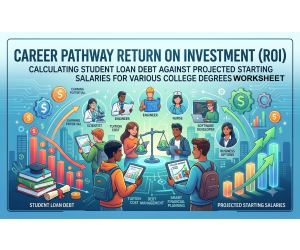
Career Pathway Return on Investment (ROI)
Math, Statistics, Order Of Operations, Money, Measurements, Resources for Teachers, Classroom Management, Community Building, Special Resources, Life Skills, Homeschool Curriculum, Homeschool Templates, Grade 8, 9, 10, 11, 12, Worksheets & Printables, Workbooks, Worksheets, Word Searches, Teacher Tools, Assessments, Lesson Plans, Quizzes and Tests, Quizzes, Tests
Is your student truly prepared for the biggest financial decision of their life? Don't let them fall into the "passion trap" or get mesmerized by prestigious university brochures without understanding the numbers. This comprehensive, no-prep digital curriculum is the most important lesson your high schooler will receive on college and career planning. This 40-page PDF guide and workbook transforms students into the "Chief Financial Officer" of their own future. By applying real-world math and economic principles, students will move from being passive consumers of education to active architects of their financial independence. This resource is a complete mini-unit, broken down into three essential phases: Part 1: The Theoretical Framework: An 11-page "textbook" section that clearly explains complex financial topics in an easy-to-understand format. Topics include: Return on Investment (ROI) for college degrees. The mechanics of student loans (Subsidized vs. Unsubsidized). The "silent killer" of wealth: Interest Capitalization. Gross Income vs. Net (Take-Home) Income. The crucial "Rule of First-Year Salary." Calculating the Debt-to-Income (DTI) ratio. Strategic alternatives like the 2+2 transfer model, trade schools, and scholarships. Part 2: The Student Workbook: Ten detailed worksheets that build on each other to move from theory to practical application. Students will calculate actual costs, analyze debt scenarios, budget monthly payments, and compare the financial outcomes of different career paths (e.g., STEM vs. Arts). Part 3: Visuals & Teacher Resources: Includes three powerful visual aids (bar chart, ROI matrix, and flowchart) for classroom discussion, plus a full Teacher Answer Key for all worksheets, making this a completely no-prep resource for you! Who is this for? This is a must-have resource for teachers of: Personal Finance Economics College and Career Readiness (AVID, etc.) Math (real-world applications) Life Skills High School Counselors and Advisors Homeschooling parents preparing their teens for college. Equip your students with the critical thinking and financial literacy skills they need to make smart, informed decisions that will prevent a lifetime of debt and set them on a path to true financial freedom. Download today and empower your students for a secure future! Keywords: Financial Literacy, Personal Finance, Student Loan Debt, College ROI, Return on Investment, College and Career Readiness, High School Math, Economics, Budgeting, Debt-to-Income Ratio, AVID, Life Skills, Workbook, Project Based Learning, No Prep, Teacher Answer Key, Grades 9, 10, 11, 12. Why Parents/Schools Love It : Empowers Students with Real-World Math: It moves beyond abstract theory and uses concrete calculations that directly apply to a student's immediate future, making learning engaging and relevant. Prevents Catastrophic Financial Mistakes: This single resource can arm a student with the knowledge to avoid tens, or even hundreds, of thousands of dollars in unmanageable debt, providing an immeasurable return on investment for the family. Comprehensive and No-Prep: It’s a complete, self-contained unit. With a textbook, 10 worksheets, visuals, and a full answer key, a teacher or parent can implement it immediately without any additional planning. Builds Critical Thinking & Ownership: It teaches students to think like a "CFO," analyzing data, weighing risks, and making strategic decisions, fostering a sense of responsibility for their own financial well-being. Balances Passion with Practicality: The guide doesn't discourage students from following their dreams; instead, it gives them the tools to finance those dreams intelligently, ensuring their passion doesn't become a "financial prison." Target Audience : Based on the content, vocabulary, and concepts discussed (e.g., FAFSA, college selection, majors), target: Grades: 9th through 12th Grade students. 9th/10th Graders: Excellent for introducing these concepts early, so they can plan their high school courses and activities (like scholarship searching) strategically. 11th/12th Graders: Absolutely critical, as they are actively making these decisions. This resource provides an immediate, practical tool for their real-life choices. Courses: Personal Finance, Economics, College & Career Planning, AVID, Advisory/Homeroom periods, and any Life Skills class. Copyright/Terms of Use: This Book was copyrighted by Syed Hammad Rizvi. This resource is for personal and single classroom use only. You may not alter, redistribute, or sell any part of this resource. In other words, you may not put it on the Internet where it could be publicly found and downloaded. If you want to share this resource with colleagues, please purchase additional licenses from Teachsimple. Thank you for respecting these terms of use. This product is happily brought to you by Syed Hammad Rizvi
Author Creative Book Store
Rating
Tags FinancialLiteracy, PersonalFinance, StudentLoans, StudentDebt, CollegeROI, MoneyManagement, FinancialEducation, Budgeting, DebtFree, DebtFreeJourney
Evaluating Open Source Evidence (OSINT)
Math, Measurements, Money, Statistics, Time, Business, Life Studies, Finance, Career, Home Economics, Grade 6, 7, 8, 9, 10, 11, 12, Worksheets & Printables, Workbooks, Worksheets, Word Searches, Teacher Tools, Assessments, Lesson Plans, Quizzes and Tests, Quizzes, Tests
Transform your students from passive consumers of information into sharp, critical digital investigators! In an age of corporate greenwashing and slick marketing, this comprehensive curriculum on Open Source Intelligence (OSINT) equips high school students with the essential skills to pierce the veil of public relations and uncover factual truth. This is not your average media literacy lesson. This is a deep dive into the real-world tools used by journalists and investigators to hold powerful entities accountable. Students will learn to navigate complex public databases, deconstruct corporate narratives, and synthesize evidence to form their own reasoned conclusions. Move beyond discussing "fake news" and empower your students to actively verify information using primary source data from the SEC, EPA, OSHA, and more. This complete, no-prep unit is perfect for Civics, Economics, Media Literacy, Journalism, and AP-level courses. It's meticulously structured into three phases: Introduction & Methodology: Four engaging chapters that build the theoretical foundation of corporate OSINT, introducing key databases and the C.O.R.E. investigative methodology. Student Workbook: Ten rigorous worksheets, including a final capstone investigation, that turn theory into practice. Students will tackle real-world scenarios, analyze mock press releases, and get hands-on experience with database research. Teacher Resources: Everything you need to teach with confidence, including visual aids (flowcharts and diagrams), a comprehensive answer key with model answers and grading rubrics, and a detailed Teacher Implementation Guide covering pacing, instructional strategies, and crucial ethical frameworks. Equip your students with the 21st-century's most vital skill: the ability to think critically and verify everything. Keywords: Media Literacy, OSINT, Open Source Intelligence, Critical Thinking, Digital Citizenship, Fact-Checking, Corporate Accountability, High School, Research Skills, Civics, AP Government, Economics, Journalism, Fake News, Primary Source, Data Analysis, SEC EDGAR, EPA, Project-Based Learning, No-Prep, Curriculum. Why Parents/Schools Love It: Builds Real-World Skills: This curriculum teaches practical, 21st-century skills in critical thinking, data analysis, and digital verification that are directly applicable to college, careers, and informed citizenship. Comprehensive & Teacher-Friendly: It is a complete, ready-to-use package with student-facing material, visual aids, and a robust teacher guide with answer keys and rubrics, saving educators dozens of hours of prep time. Promotes Ethical Digital Citizenship: The dedicated "Ethical Frameworks" section ensures students learn to use these powerful skills responsibly, focusing on verification and accountability, not online vigilantism. Engaging & Relevant Content: Students investigate timely, relevant issues like environmental claims ("greenwashing") and labor practices, making learning more dynamic and impactful than a standard textbook. Cross-Curricular Application: Its versatile design allows it to be seamlessly integrated into multiple subjects, including Social Studies, English Language Arts, and even STEM, making it a valuable resource for an entire school. Target Audience Analysis : Based on the advanced vocabulary ("epistemological," "fiduciary duty"), complex subject matter (SEC filings, lobbying disclosures), and the explicit "Teacher Implementation Guide" on page 33, this PDF is targeted at: Grade Level: Advanced High School (Grades 10-12) and potentially introductory College/University students. The guide mentions 8th grade, but the content is most suitable for older, more mature students. Specific Classes: AP Government / Civics: Perfect for units on corporate influence, lobbying, and regulatory agencies. Economics: Excellent for analyzing corporate finance, risk, and the gap between marketing and financial reality (Form 10-K). Media Literacy / Digital Citizenship: A cornerstone unit for teaching students to be critical consumers and verifiers of online information. Journalism: An essential, practical toolkit for aspiring investigative reporters. Advanced English / Rhetoric: A fantastic resource for analyzing non-fiction texts (corporate PR vs. legal filings) and understanding persuasive strategies. Computer Science: Can be used in a data literacy or data ethics context, teaching students how to query and interpret structured data from public databases. Copyright/Terms of Use: This Book was copyrighted by Syed Hammad Rizvi. This resource is for personal and single classroom use only. You may not alter, redistribute, or sell any part of this resource. In other words, you may not put it on the Internet where it could be publicly found and downloaded. If you want to share this resource with colleagues, please purchase additional licenses from Teachsimple. Thank you for respecting these terms of use. This product is happily brought to you by Syed Hammad Rizvi
Author Creative Book Store
Rating
Tags OSINT, OpenSourceIntelligence, MediaLiteracy, FactChecking, DigitalLiteracy, CorporateAccountability, VerifyingSources, OSINTforEducation, InvestigativeJournalism, DataLiteracy

Misinformation Literacy & News Verification Worksheets
Science, Technology, Computer Science, Engineering, Resources for Teachers, Classroom Management, STEM, Special Resources, Social Emotional Learning (SEL), Social Skills, Grade 6, 7, 8, 9, 10, 11, 12, Worksheets & Printables, Writing Prompts, Worksheets, Word Searches, Workbooks, Teacher Tools, Lesson Plans, Assessments, Presentations, Diagrams
This curriculum provides a complete and easy-to-use, 38-page Information Literacy and News Validation Curriculum written specifically for the students in Middle School. It includes both Theory Chapters with real-world Case Studies (ex. “The Giant Blue Scorpion”, “Riverton Water Crisis”) to support development of the proprietary C.L.E.A.R. Protocol (Cross-check, Locate, Evaluate, Analyze, Read beyond the Headline), 10 interactive Student Worksheets, Answer Keys with Answer Key Samples and all pedagogical tools needed to utilize each resource (i.e. Information Disorder Spectrum, Cognitive Bias Feedback Loop, Lateral Reading Protocol). It is the best curriculum to teach how to identify Fake News,how to differentiate between Disinformation, Misinformation and Malinformation; how to identify ways to manipulate Emotionally; Visual Forensics; Statistical Literacy; building Echo Chambers; the creation of Synthetic media (Deepfakes); and Digital Citizenship. It contains Teacher Implementation Notes, Assessment Protocols and Printable Resources making it ideal for use with students in Grade levels 6-8 within Language Arts, Social Studies or Digital Citizenship classes, for use at home, or in After School Programs. Why Do Parents & Schools Like It? Develops 21st-century skills for protecting students from online scams, viral hoaxes, and manipulation through social media; however, these critical thinking skills are often missing from many of today's school curriculums. Lowers teacher's prep time by providing worksheets/answer keys / visual aids / assessment tools to meet digital citizenship/media literacy standards already established. Provides students with practical examples of how to understand and use abstract concepts (confirmation bias, lateral reading, false context) through relatable case studies & hands-on activities that middle schoolers often find enjoyable. Encourages responsible use of the Internet by teaching students proper online behavior, developing civic responsibility, and facilitating better dialogue about the news as well as social media between parents and children. Cost-effective, high-quality digital resource that can be used in a traditional classroom, cooperative homeschooling, or a remote-learning setting with one print that can be reused over and over again! The target audience for this PDF will be students in the sixth through eighth-grade range (Grades 6-8 / Middle School). The introduction, case studies, and worksheets all have content that references "middle school peer groups," "Sixth through Eighth Grades," and age-appropriate examples (such as school rumors, playground fears, TikTok fears) throughout the PDFs. This PDF is not appropriate for elementary school students (too advanced) or for high school students (too basic). Copyright/Use Guidelines : Copyrighted by Syed Hammad Rizvi. This resource is for a single classroom or personal use only. No modifications or redistribution, for resale, to be made to the resource. For example, uploading to the internet where it will be publicly available for downloading is not allowed. If you wish to share with colleagues, please obtain additional licenses from Teachsimple. Thank you for honoring these guidelines. Syed Hammad Rizvi was happy to provide this product.
Author Creative Book Store
Rating
Tags MediaLiteracy, MisinformationLiteracy, FakeNewsDetection, NewsVerification, DigitalCitizenship, CriticalThinkingSkills, MiddleSchoolCurriculum, Grades68, 6thGradeResources, 7thGradeResources

Niels Bohr – Scientist Profile & Comprehension Activities - PDF + H5P
Life Sciences, Science, STEM, Social Studies, Biographies, Inventors, Basic Science, Physics, Chemistry, Human Body, Grade 6, 7, 8, 9, 10, 11, Worksheets, Worksheets & Printables, Quizzes, Quizzes and Tests, Teacher Tools, Projects, Activities
Niels Bohr – A Look at One of the Founders of Atomic Theory Informational Text, Student Tasks, and Interactive Quiz (PDF + H5P) 🧪🔬 A ready-to-use classroom resource for grades 7–10 🧪 This material introduces students to Niels Bohr and his ideas about the atom – ideas that still shape how we teach atomic structure today. The text is short and easy to follow, so it works well for younger students or for those who are just starting to learn about atomic models. I’ve used this kind of format when I needed a quick but meaningful activity – for example, during a unit on atomic theory or as part of a lesson on scientists and their discoveries. It’s also been useful in cover lessons, especially when someone without a science background had to step in. Everything is included and explained clearly. What’s in the file: A short reading text about Niels Bohr A profile worksheet for students to fill out Quiz questions with an answer key Two optional tasks: – Students write their own questions – Students answer a partner’s questions You get everything as a printable PDF, a modifiable .docx file (text only), and a simple H5P version for use in digital learning systems How you might use it: Students can read the text alone or in pairs. They then fill in the profile and answer the quiz questions. If there’s still time, they can come up with their own questions about the text and swap them with a classmate. The H5P version is helpful if your students are working online or if you want them to check their answers themselves. It’s a flexible resource that doesn’t need a lot of explanation – and works just as well in regular science lessons as in emergency planning. Have fun exploring the world of science with your students! Warmly, Lernfitness Did You Know? I teach with a certified therapy dog, and together we focus on creating a positive and inspiring learning environment.
Author Lernfitness
Rating
Tags Science, Famous Scientists Lesson, H5P, Interactive Science Exercises, STEM, History, Scientists, Chemistry, Scientific Concepts, Niels Bohr
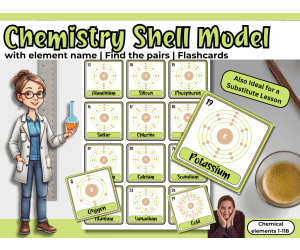
Shell Model – Chemical Elements Flashcards - Element names
STEM, Science, Chemistry, Physics, Life Sciences, Grade 7, 8, 9, 10, 11, 12, Activities, Games, Worksheets & Printables, Task Cards, Quizzes and Tests, Teacher Tools, Word Problems, Word Searches, Worksheets, Flashcards
Shell Model – Chemical Elements Flashcards 118 cards for learning the periodic table Learn atomic structure and the periodic table through play and visual learning 🧪🧠 These flashcards are designed to help students explore the structure of atoms using the shell model. Covering all 118 elements of the periodic table, each card includes the atomic number, element name, symbol, and a visual representation of the electron arrangement in shells. It’s a simple but effective tool for bringing abstract chemistry content into a more visual and interactive format. I’ve used this set in grades 7–10, both in introductory lessons and for revision. What worked especially well was printing the cards twice and using them as a memory game (“Find the Pairs”). Students match element names with their shell models or symbols – and along the way, they start to notice patterns: which elements belong to the same group, how many electrons fit in each shell, and what the outer shells can tell us about chemical reactivity. What’s included: 118 printable flashcards (PDF) – one for each element Each card features: atomic number, element name, chemical symbol, and shell model Suggestions for classroom use (games, sorting tasks, self-study) The cards can be used in a variety of ways: – As a memory game (matching name and shell model) – For group sorting activities (by group, period, metal/non-metal, etc.) – As quick quizzes in pair work – Or as visual aids when introducing atomic theory They’re suitable for different levels of difficulty. Beginners can focus on names and symbols, while more advanced students work with the shell diagrams and explain electron configurations. It’s also a helpful tool for differentiation – everyone works at their own pace, but with the same visual material. This resource comes as a PDF and is easy to print and prepare. Laminating the cards is a good idea if you plan to use them more than once. 📍 Best wishes, Heike from @Lernfitness Did You Know? I teach with a certified therapy dog, and together we create a positive and welcoming learning environment. 🐶
Author Lernfitness
Rating
Tags Educational Card Games, Chemistry, Physics, STEM Science Matching Game, Chemical Elements, Periodic Table Matching Game, Flashcards Chemical Elements, Element Names, Shell Model, Game

Ocean Plastic Pollution – Data Analysis & Advocacy Sheets
Science, Earth and Environmental Sciences, Earth Sciences, Environmental Science, Geology, Space, Life Sciences, Nature & Plants, STEM, Human Body, Grade 6, 7, 8, 9, 10, 11, 12, Worksheets & Printables, Workbooks, Worksheets, Word Searches, Teacher Tools, Assessments, Lesson Plans, Quizzes and Tests, Quizzes, Tests
This 55-page comprehensive, interdisciplinary curriculum will allow you to turn your classroom into an environmental action lab focused on ocean plastic pollution. Designed to bridge cutting-edge marine science with civic advocacy, it provides students with opportunities to move beyond passive learning and into actual environmental action based on evidence. The curriculum consists of three phases that take students through a complete educational process. In Phase 1, Theoretical Framework gives students all of the background knowledge necessary for them as citizens to become advocates for change through evidence-based advocacy strategies (i.e., the Coriolis Effect; chemical properties of polymers; biodegradability; accumulation and magnification of toxins in food webs; marine ecosystems) designed using science and basic tenets of physics & chemistry that are used in designing marine policies. In Phase 2, Application Phase, students have the opportunity to apply what they have learned through 10 worksheets that require analytical thinking skills (i.e., interpreting data sets; calculating numbers; ecological reasoning; evaluating corporations' environmental claims) in the creation of project proposals, respectively, regarding greenwashing, greenhouse gas emission reductions. In Phase 3, Instructional Materials, teacher support is provided (i.e., graphic organizers; rubric; answer keys with rational explanations; pacing guide; differentiation strategies, etc.) for successful implementation of the curriculum across disciplines. Students will have the opportunity to analyze real-world examples of ocean plastic pollution facts, including: the Great Pacific Garbage Patch, Henderson Island, Midway Atoll; develop a quantitative analysis of the rate of time it takes for PVC plastic to decompose; create maps showing the locations of the locations of plastic and non-plastic debris along ocean currents; analyze data related to the successful clean up of beaches and oceans and use such information in forming international legislation that seeks to eliminate as much plastic pollution as possible through public awareness campaigns such as "I Love My Ocean" public service announcements etc. Students compose policy memos formally addressed to elected representatives. The materials will help students build skills and competencies in the areas of data literacy, systems thinking, scientific writing, persuasive communication and authentic political agency through a pressing global issue — marine plastic pollution. Topics Covered: Environmental Science, Earth Science, Marine Biology, Chemistry (Polymer Science), Economics, Civics/Government, ELA (Persuasive Writing, Research), Mathematics (Data Analysis, Percent Calculations, Unit Conversions). You will get: Theoretical Resource: Four Chapters (Pgs. 1 - 10); Structured Worksheets for Students (10 Worksheets with 100+ Questions) (Pgs. 11 - 22); Three High Contrast Pedagogical Visual Diagrams (Lifecycle Flowchart, Bar Chart, Advocacy Framework); Complete Comprehensive Answer Keys for Each Question with Model Response; Graded Rubric (100 Point) for Final Policy Memo Project; Flexible Pacing Guide (20 days of Instruction in a 4 week period); Strategies for Differentiation for 3 Learner Profiles; Cross Curricular Activity Connection (Science, ELA, Math, C.S.S., Art); Teacher's Resource List (documentaries, interactive tools, essential readings); Final Note to Educators with Pedagogy Philosophy. Keywords: ocean plastic pollution, microplastics worksheet, marine debris, environmental science curriculum, ocean gyres lesson, bioaccumulation, biomagnification, greenwashing, single use plastics, Extended Producer Responsibility, policy memo project, STEM environmental education, data analysis science, middle school science, high school environmental science, science resources, civic advocacy project, ocean conservation, sustainability education, plastic pollution unit. PARENTS/TEACHERS ENJOY THIS CURRICULUM VERSION: Interdisciplinary - Covers Several Subjects with One Resource. This PDF Combines Science, Math Writing (ELA), Economics, Social Studies, & Civics into a Single Resource - Teachers Save Time By Not Having to Create Multiple Lesson Plans. Provides Cross-Curricular Value - Administrators/Parents Can Easily See Cross-Curricular Value of Lesson. Teaches Real-World Skills, Not Just Testing. Students Learn to Analyze Data Sets, Recognize Corporate Greenwashing, Develop Legislation &Write Policy Memos to Real See Elected Officials Using Many of the Same Skills That Will Benefit Them as They Enter College/Career &Participate In A Democratic Society. Ready for Implementation- Complete Answer Keys with Detailed Model Responses; Grading Rubric (100 Points), Pacing Guide (4 weeks); Differentiation Strategies for 3 Different Learner Profiles; Cross-Curricular Connections for This Curriculum Make Implementation Possible Immediately After Prep Work is Finished. Addresses An Urgent, Student-Motivating Issue. Ocean plastic pollution is one of the most obvious environmental crises our kids face; this curriculum connects with the concern they currently have & creates meaningful, engaging learning through rigorous science & civic engagement vs passive acknowledgment of a problem. Sufficiently Rigor for Advanced Students While Use Infrastructure to Support Struggling Learners - There Are Strategies for Supporting Struggling Readers, Advanced Learners Please Readers, English Language Learners Located In The Resource. TARGET STUDENT GRADE LEVELS : This PDF is appropriate for the following grade levels based on an in-depth study of various types of complexity factors: vocabulary (CPV), level of math (CPSM), level of writing (CPW), and level of conceptual depth (CPD). Primary Target Grades 7-10 Core Worksheets for Grades 7-8: Worksheets are intended for core subject teachers scaffolding; fill-in-the-blank and short answer sections of worksheets allow for guided reading. Independent Engagement for Grades 9-10: Students will have the ability to fully engage in all theoretical materials, perform calculations, write policy memorandums, and create advocacy campaigns. Secondary Target Grades 11-12 (AP Environmental Science/AP Language) Advanced students in all areas of study will benefit from the economic analysis, sections on international law, critique of greenwashing, and sections on writing policy briefs at college preparatory level. Also Appropriate for: Gifted/Advanced Programs (grades 6 and up) Environmental Clubs/Extracurricular Programs (all ages) College Level Environmental Science 101 (Community College Level) Adult Education/Homeschool (Middle School & High School Level) Copyright/Usage Terms : Despite being created by Syed Hammad Rizvi, this book belongs solely to him, and it may not be modified or sold without his consent. You are allowed to make copies for your use; however, you may not post or upload copies on-line or anywhere else that they would be available to the general public. If you wish to share this book with other educators, you can purchase additional copies of the same license from Teachsimple. By following these rules, you uphold the terms of use. This product has been lovingly produced with the help of Syed Hammad Rizvi
Author Creative Book Store
Rating
Tags OceanPlasticPollution, PlasticPollution, Microplastics, MarineDebris, EnvironmentalScience, MiddleSchoolScience, HighSchoolScience, ScienceTeacher, DigitalDownload, HomeschoolScience

Digital Citizenship & Cybersecurity Threat Simulation Pack
Science, Technology, Computer Science, Engineering, Research, Resources for Teachers, Classroom Management, Community Building, Special Resources, Social Emotional Learning (SEL), Homeschool Curriculum, Homeschool Templates, Grade 9, 10, 11, 12, Worksheets & Printables, Writing Prompts, Worksheets, Word Searches, Teacher Tools, Assessments, Lesson Plans, Quizzes and Tests, Quizzes, Tests
Develop your students’ practical skills in digital security via this complete Digital Citizenship and Cybersecurity Curriculum. This second-to-none Cybersecurity Threat Simulation Pack allows teachers to provide their students with a hands-on learning experience that far exceeds simple “strong password” teachings. Students learn about the psychology of social engineering, spear phishing, cryptography (encryption, decryption, hashing, and the avalanche effect), vulnerability to packet sniffer and evil twin man-in-the-middle attacks, OSINT and metadata risks, the permanence of their digital footprint, ransomware mitigation, synthetic media (deepfakes), and managing credential stuffing attacks. Includes: 4 detailed theory chapters including real-world examples (Operation Phantom Credentials, Midnight Hash Collision, Café Doppelgänger Breach, Overexposed Athlete) 10 high engagement student worksheets including: Social Engineering Autopsy, OSINT Investigation, Cryptographic Frameworks, Ransomware Playbook, Ethics of Hacktivism, Synthetic Media Verification, etc. 7 Knowledge Verification and Assessment Nodes (3 underscored blanks) Complete teacher materials and instructional aids including concept maps (Cybersecurity Threat Taxonomy), etc. Ideal for use as 1-1 or in project-based learning models. Available immediately as PDF downloads. No prep needed! Great for high school digital citizenship; cybersecurity electives; computer science; information technology; and media literacy classes. Keywords: digital citizenship curriculum for high schools, cybersecurity student worksheets, cybersecurity simulation, social engineering lesson plan, OSINT activities, how to teach ransomware, password security curriculum, digital footprint lesson, deepfake verification lessons, ethical hacking for high schools, TpT cybersecurity bundle. Why Schools and Parents Appreciate It: Transforms passive “internet safety” policies into active, high-risk simulation scenarios, which students retain long after the event. No prep, print-ready worksheets and answer blanks supplied equal instant classroom student engagement and assessment. All modern threats are covered (phishing, ransomware, deepfakes, open-source intel [OSINT], and credential stuffing), so that students know how to properly identify real-world attacks. Developing ethical digital citizens and teaching college and career readiness (a few universities are requiring all students become aware of cybersecurity). Saves teachers resources by providing over 40 pages of teacher materials (including an entire curriculum with teacher visuals and answer keys). Intended Audience/Classroom Setting: This resource has been developed specifically for children aged 14-18 years old (i.e., students in grades 9 to 12). The case studies involve high school seniors who are applying for scholarships/financial aid, student-athletes involved in high school football, track coaches (in their respective teams), school district divisions (i.e., regional) and students heading to universities. Given the complexity of the lesson topics (asymmetrical encryption; SHA-256 avalanche effect; MITM/evil twin attacks; OSINT metadata exploitation; ransomware IR playbooks; deep fake epistemological security), it is not suitable for children in grades 6-8 due to their maturity level (14-18) but is ideal for the following: Grades 9-12 Digital Citizenship/Digital Literacy Cybersecurity / Information Security Electives Computer science / ICT classes Media literacy/journalism (synthetic media/OSINT sections) CTE (Career and Technical Education) Cybersecurity Pathways Copyright / Terms of Use: Syed Hammad Rizvi has placed copyright on this book. This resource can be used for private (personal / classroom) use only. You may not change, copy, or sell any portion of this resource. Additionally, you will not put this on the internet for free public access (so users have to pay to download). Please purchase additional licenses through Teachsimple to share this with coworkers. Thank you for complying with these terms of use. This product has been produced with much joy by Syed Hammad Rizvi.
Author Creative Book Store
Rating
Tags DigitalCitizenship, CybersecurityCurriculum, CyberSecurityHighSchool, DigitalCitizenshipCurriculum, CybersecurityForStudents, HighSchoolCybersecurity, DigitalLiteracyCurriculum, CyberThreatSimulation, SocialEngineeringLesson, SpearPhishingWorksheet
Chemistry Class Guidelines – Editable in PowerPoint & KeyNote
STEM, Science, Chemistry, Physics, Life Sciences, Basic Science, Resources for Teachers, Classroom Management, Montessori, Grade 6, 7, 8, 9, 10, 11, 12, Classroom Decor, Banners, Bulletin Boards, Door Decor, Posters, Word Walls, Teacher Tools, Worksheets & Printables, Worksheets, Templates
Chemistry Class Guidelines – Editable in PowerPoint & KeyNote A clear and customizable set of rules to start your chemistry class off right 🧪📋 Whether you're starting with a new class, taking over a course mid-year, or simply want to reset expectations, having a set of clear, student-friendly guidelines can make a big difference. This editable resource gives you the flexibility to present your classroom rules in a structured, visually consistent format – while still adapting the content to your own teaching style. The rules cover core areas of classroom life: from behavior during experiments to notebook organization and grading criteria. You can choose between 12 calming "boho" color themes or two clean black-and-white versions – depending on whether you want something simple, customizable, or a bit more colorful for student binders or digital notebooks. What’s included: Editable PowerPoint and KeyNote files Non-editable PDF for quick printing 12 color themes + 2 black-and-white layouts Sections included: – Materials for class – Homework – Absences – Notebook organization – Classroom behavior – Experiments – Grading How I use it in class: I introduce these rules at the beginning of the term and give students a printed copy or add them to their digital notebooks (e.g. GoodNotes or Notability). Some even choose their favorite color version and use it as a cover page in their binder. We go over each rule together and I invite students to ask questions or offer suggestions, which helps build a shared understanding of expectations. This isn’t a rigid rule sheet – it’s a flexible tool you can shape to fit your classroom. Whether you're teaching in a lab or more theory-based setting, it gives your students something they can refer back to all year long. Just open, adjust, and you’re ready to go. 📍 Best wishes, Heike from @Lernfitness Did You Know? I teach with a certified therapy dog, and together we create a positive and welcoming learning environment. 🐶
Author Lernfitness
Rating
Tags Chemistry, Decoration, Classroom Decor, Banners, Door Decor, Decor, Science Room, Chemistry Class Guidelines, Editable, Rules

The Bio-Design Blueprint A Gamified MicroLearning Series in Biomimicry
Basic Science, Science, Inventors, Theories, Biology, Life Sciences, Engineering, Technology, Life Skills, Special Resources, Grade 6, 7, 8, 9, 10, 11, 12, Worksheets & Printables, Parts of and Anatomy of, Drawing Templates & Outlines, Worksheets, Word Searches, Workbooks, Teacher Tools, Assessments, Lesson Plans, Quizzes and Tests
Introducing The Bio-Design Blueprint! This gamified micro-learning curriculum is an entirely online series of adventures that will give students an interactive experience using the 3.8 billion-year-old R&D of nature to design solutions to today’s biggest STEM problems! Not only does it include 35 pages of engaging theory (with topics such as the kingfisher bullet train, the Namib Desert beetle, spider silk vs. Kevlar, the slime mold Tokyo subway system, coral concrete, mycelium packaging and other examples), but it also has ten student worksheets where students use the theory studied in class to create their own designs, complete with data analysis, application to real-world scenarios and creative design challenges. The Bio-Design Blueprint can be used to teach students about biomimicry, fluid dynamics, structural integrity, swarm intelligence, thermal regulation, the lotus effect, gecko adhesion, structural coloration, photosynthesis technology, impact resistance and closed-loop ecosystems. The curriculum also includes the Eco-City Capstone Project, teacher visual anchors, cognitive maps, and iteration spirals to ensure easy implementation of the curriculum in the classroom. Keywords: biomimicry curriculum, sustainable engineering worksheets, STEM activities, middle school, high school, biology and engineering, gamified science lessons, nature-inspired design, environmental science resources, NGSS biomimicry unit, zero waste engineering, project-based STEM. Digital download available instantly. Ready for Google Classroom! Homeschool-friendly; NO prep required for teachers! Students will fall in love with science as they use the blueprints of our planet to design solutions that will save our planet from sustainability issues! Reasons Schools and Parents Appreciate the Curriculum: Experiential Learning – Real-world examples of biomimicry, gamified worksheets, and hands-on experiences create excitement around STEM–students eagerly anticipate science class. Zero Prep Time for Educators - The complete theory of biomimicry, the ten worksheets, visuals for the capstone projects are fully created for the educator - thus they are ready to go electronically and/or printed. This saves educators hours of planning. Prepares Students for the Future – Students develop their critical thinking skills, creativity, and commitment to a sustainable world. The curriculum is aligned perfectly to the NGSS engineering and life science standards. Curriculum is Differentiated and Inclusive – The curriculum incorporates a variety of activities, including fill-ins, math problems, written responses, and creative design challenges, allowing all students to succeed (ELL, gifted, and neurodiverse). Eco-Friendly and Impactful – Students learn how to turn abstract concepts into solutions for real-world issues (i.e., climate change, waste, energy conservation) - parents appreciate having their children participate in meaningful environmental education. *Target Audience by Grade & Subject (Based on Full Content Analysis, Rigor of Program, Worksheet Use) : Middle School (6-8): Life Science, Environmental Science, Integrated STEM, Project-Based Learning, & Gifted/Talented. High School (9-12): Biology, Physics, Engineering Design, Environmental Science, Sustainability, & STEM/STEAM Electives. *Level (data analysis; calculations; open-ended design challenge; NGSS Cross-Cutting Concepts) allows for Grades 7-10 to be primary users of the program (Core Use); and Grade 6 and 11-12 to fit as differentiated use. Copyright / Terms of Use This book, authored by Syed Hammad Rizvi, is a copyright protected, personal use resource that should only be used in the classroom (for one student) and is NOT authorized for alteration, resale or distribution. More simply stated, you cannot post this resource on the Internet at all, because it would become public access and, therefore, can be downloaded by others. If you wish to share this with other teachers, please purchase additional licenses from Teachsimple. Thank you for following these terms of use. Brought to you by Syed Hammad Rizvi with joy.
Author Creative Book Store
Rating
Tags BiomimicryCurriculum, SustainableEngineering, STEMWorksheets, GamifiedSTEM, BiomimicryLessons, NatureInspiredDesign, NGSSAligned, ProjectBasedLearning, EcoEngineering, BioDesignBlueprint

Julius Lothar Meyer – A Lesser-Known Pioneer of the Periodic Table
Life Sciences, Science, STEM, Social Studies, Biographies, Inventors, Basic Science, Physics, Chemistry, Technology, Grade 6, 7, 8, 9, 10, 11, Worksheets, Worksheets & Printables, Quizzes, Quizzes and Tests, Teacher Tools, Projects, Activities
Julius Lothar Meyer – A Lesser-Known Pioneer of the Periodic Table Comprehension Activities A flexible science resource for grades 7–10 (PDF + H5P) 🧪📖 A printable and digital resource science and cross-curricular teaching 🧪🧠 This resource introduces students to Julius Lothar Meyer, a chemist who developed one of the earliest versions of the periodic table—independently of Mendeleev. While Mendeleev is often more widely recognized, Meyer’s work also played a crucial role in organizing chemical elements and identifying patterns that shaped how we understand atomic structure today. The material offers a short, readable text that gives students an overview of Meyer’s scientific contributions. It’s supported by a set of structured activities that encourage reflection and comprehension. The format is ideal for both subject-specific lessons and non-specialist substitute teaching. What’s included: Informational text about Julius Lothar Meyer Profile worksheet for summarizing key facts Quiz questions with a complete solution key Two optional follow-up tasks: – Students create their own questions – Peer exchange and answer activity File formats: – PDF (for print or digital use) – Editable DOCX (text only) – H5P version (interactive and text-based, no images) How it’s used in the classroom: This resource fits well into a chemistry unit on the history of the periodic table, scientific discovery, or atomic theory. I’ve also used it as an extra reading task for early finishers or as a way to bring biographical context into more abstract content. The H5P version is a helpful option for students working online or independently. It supports self-checking and can be easily uploaded to learning platforms. With no extra prep required, the lesson can be used right away—whether printed, projected, or assigned digitally. A thoughtful way to highlight a scientist whose name isn’t always in the spotlight—but whose impact on chemistry is worth exploring. Have fun exploring the world of science with your students! Warmly, Lernfitness Did You Know? I teach with a certified therapy dog, and together we focus on creating a positive and inspiring learning environment.
Author Lernfitness
Rating
Tags Science, Famous Scientists Lesson, H5P, Interactive Science Exercises, STEM, Scientists, Chemistry, Periodic Table, Julius Lothar Meyer, Mendeleev

Single vs Dual Income Budget: High School Financial Literacy Budgeting
Life Studies, Finance, Home Economics, Math, Addition and Subtraction, Money, Special Resources, Life Skills, Grade 9, 10, 11, 12, Worksheets & Printables, Word Problems, Worksheets, Projects, Activities
This high school financial literacy project lets your students tackle a real-world budgeting decision families make: should both parents work, or should one stay home to do childcare? Students will use critical-thinking and problem-solving skills as they work with these realistic budgets (single income budget vs dual income budget). This task can show your students in 9th, 10th, 11th, or 12th grade how financial literacy and math skills can be incredibly useful in everyday life! How to Use: Print five pages for each student. Go through the first page together and introduce the family in the simulation. Students use the income and income tax information to calculate the net income. Give students time to add up the monthly expenses in each budget (single-income vs dual-income). Discuss what expenses change when both parents work and if those seem reasonable or not. Have students complete the calculations to compare the two budgets on the fourth page. NOTE: In this simulation, there is almost no difference in money left over if both parents work since the extra income is used to pay for childcare, a second car, a cleaner, etc. That does not mean this is always the case! Use the prompts on the fifth page to have a class discussion about this topic. Then, students write their final opinion in a paragraph to sum up their learning. They may have ideas for how to change this budget or scenario to make having both parents work be more financially beneficial. I have included blank spreadsheets as well if you want your students to create their own budgets using salaries and expenses from your geographical area. What’s Included: 9-Page PDF: Ready to Print and Use! Teacher Instructions Introduction to Kat and Alex and their family Single-Income Budget Spreadsheet (with expenses included) Dual-Income Budget Spreadsheet (with expenses included) Comparison of the Budgets Worksheet Reflection (with discussion prompts) Two Blank Budget Spreadsheets (single and dual income) Complete Answer Key Grades to Use With: Grades 9-12 General Studies or Grades 11-12 Special Ed Family and Consumer Sciences/Family Studies Life Skills Applied Math or Consumer Math Career and Personal Planning Financial Literacy Math Skills Required: Only intermediate math skills are required to complete this project: Adding & subtracting money amounts to the hundred thousands (salaries) Dividing by 12 to find monthly amounts (with decimals) An understanding of integers
Author Grace Under Pressure
Rating
Tags Financial Literacy, High School Financial Literacy, Budget, Budgeting, Financial Literacy Project, High School Financial Literacy Project, Two Income, Single Income, Comparing Budgets