



3,984 products added recently
Page 23 - 2nd Grade Assessments
Assess your second graders with evaluations that align with curriculum standards. This collection includes reading comprehension tests, math problem-solving activities, and writing assessments. By implementing these tools, you can support continued growth and address individual learning needs.

 Show filters

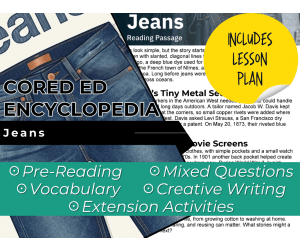
Jeans Reading Comprehension Passage - Cored Ed Encyclopedia
ELA, Reading Comprehension, Reading, Language Development, Vocabulary, History, Social Studies, Technology, Science, Pre-Reading, Grade 2, 3, 4, 5, Worksheets & Printables, Worksheets, Teacher Tools, Centers, Activities, Writing Prompts, Assessments, Quizzes and Tests, Quizzes, Lesson Plans
This Jeans reading comprehension with lesson plan includes: Visualization (on the front cover) Start your lesson by taking a minute to think and share something about the topic. Read the script aloud (slowly), perhaps prepare some music or sound effects. Student close their eyes and let their imaginations wander. Students open their eyes, read the question aloud and give them a few minutes to complete. Ask a few students to share or keep answers until the end to compare with what they learn in the passage. Quick pause—thousands of Cored Education products are included with your TeachSimple membership. Download links and encyclopedia index available here. Pre-Reading Trivia Students will write down one thing they already know about the subject and then read five more facts and discuss. These facts are fun, and the students will enjoy learning about the subject before reading more. Give 1 minute for students to write what they already know (no pressure—best guess is fine). Read the five facts together. After each fact, do ask a student for their opinion, was it surprising? Set a purpose by asking students to highlight/underline one fact they want to learn more about during the reading. Reading Passage The text is a high-interest reading passage with set paragraphs, roughly three to four paragraphs long. It contains a variety of themes about the topic, anywhere from history to technology. The passage is between 250 and 350 words in length. First, ask students to look at the headings and see what they’ll learn about today. What do they know about the topic/heading? First read options: Teacher read-aloud (best for support). Partner reading (paragraph by paragraph). While reading, students underline important details, and vocabulary words they think may come up in the questions section. Mixed Questions The first question page contains four multiple-choice questions, each with a choice of four answers, and three written response questions that require a sentence or two from the student. Students complete the mcqs first independently, then review quickly as a class. For the 3 written responses, try to get students giving the answer with some form of evidence: “I think ___ because the text says ___.” If students get stuck, send them back to check the passage. Vocabulary Questions Practice seven key words from the text in this section across two activities. First section is scrambled words where students will unscramble three words given a clue for each. The second section is a word to meaning matching activity. Before starting, have some students read out words they underlined in the passage. Ask students to say the word and read aloud the sentence(s) around each word. Ask students to do scrambled words and the matching exercise in pairs then go through answers as a class. For the scrambled spelling task, get four pairs to come up to the board and write the words for extra practice with the other student reading out the clue. For the matching task, prompt students to give full sentences: “I matched ___ with ___ because ___.” Creative Writing In this question, the student will be required to write a five to eight sentence paragraph on a question related to the topic. Before starting, ask students write down 3 key ideas they are going to include in their piece. Ask students for ideas to share around the class to help those struggling. Pro writing expectations: 5–8 sentences At least 2 facts or details from the passage At least 2 vocabulary words from the previous page Students read their paragraphs while classmates listen for facts and vocabulary words. Extension Activities This page is optional for fast finishers or to take home. There are several activities, each one requiring a different skill. Do some, do none, do all, completely optional - but you will feel reassured knowing every possibility is planned for. Includes summary writting question and additional facts. Answer Key There are answers for the multiple-choice questions, written response questions have sample answers, vocabulary answers and if there is a summary question then a sample summary will be provided as well. Lesson Plan Included Customized lesson plan for this lesson is included. Lesson Snapshot Title: Jeans Genre: Nonfiction (informational text) Subject: Reading (Informational Text) / Social Studies Primary Topic: Denim, rivets, and how jeans changed over time Estimated Guided Reading Level (A–Z): R What This Lesson Teaches Best Explains what makes denim strong (slanted, diagonal woven lines) and connects denim’s blue color to indigo dye. Builds word/history knowledge by linking “denim” to Nîmes and “jeans” to the port city of Genoa. Shows an invention problem-and-solution story: pockets ripped, so copper rivets were added, leading to a patented idea. Traces how jeans spread from work clothes to popular culture (mines/farms → World War II → 1950s movie stars). Introduces environmental impact through a concrete detail: making and caring for jeans can use thousands of liters of water, so mending/sharing/reusing matters. Learning Goals Identify the main idea and key details about how jeans were made to be tough. Explain why denim is strong and how indigo connects to the story of jeans. Describe the problem Jacob W. Davis noticed and how rivets solved it. Describe at least two ways jeans changed over time, using details and dates from the passage. Explain why mending, sharing, and reusing jeans can matter, based on the passage. Key Vocabulary From the Text denim — strong cloth with slanted, diagonal woven lines. indigo — a deep blue dye used to color denim. rivets — tiny metal pieces that strengthen places that rip. patent — legal protection for a new invention idea. synthetic — made by people, not from nature. FULL CATALOG OF DOWNLOAD LINKS AND ENCYCLOPEDIA INDEX HERE
Author Cored Education
Rating
Tags Vocabulary, Reading Comprehension, Reading Passages, Lesson Plans, Ela Lesson Plans, Reading Comprehension Lesson Plans, Pre-reading, Social Studies Lesson Plans, History, Technology
Reading Comprehension Nonfiction Set 1 - Technology (PPT)
ELA, Reading, Writing, Common Core, Resources for Teachers, Vocabulary, Language Development, Spelling, ESL, Creative Writing, Grade 2, 3, Teacher Tools, Presentations, Tests, Quizzes and Tests, Assessments, Activities
Reading Comprehension Passages Nonfiction Set 1 Overview Engaging nonfiction articles, each with a collection of different activities included. Articles are written for the modern classroom and topics are designed to promote enthusiasm from each student. Each lesson contains a mixed questions section to check understanding, a vocabulary or spelling activity to help remember key language introduced, and a writing exercise. Full answer keys are provided. Passages Include 1.Talking in Code: How the Navajo code talkers helped during WWII. 2.Power From the Sun: How does solar power work? 3.Roller Coasters: The science behind roller coasters. 4.The History of Cars: Who invented the car? Find out in this article. 5.The History of Ferries: Where is the oldest ferry service in the world? 6.The History of Helicopters: The advantages and disadvantages of helicopters. Additional File: History of Cars: Design a Car Printable PPT Version This is the PPT editable and fillable (when not in presentation mode) version. This download is available in GOOGLE Docs, GOOGLE Forms, GOOGLE Slides. PDF, PPT, WORD. FULL CATALOG OF DOWNLOAD LINKS HERE Grade 2/3 Links Fiction Set 1 - Nature Google Docs Google Forms Google Slides PDF PPT Word Guided Reading Materials Fiction Set 2 - Animals Google Docs Google Forms Google Slides PDF PPT Word Guided Reading Materials Fiction Set 3 - Food Google Docs Google Forms Google Slides PDF PPT Word Guided Reading Materials Fiction Set 4 - School Google Docs Google Forms Google Slides PDF PPT Word Guided Reading Materials Fiction Set 5 - Friends Google Docs Google Forms Google Slides PDF PPT Word Guided Reading Materials Fiction Set 6 - Family Google Docs Google Forms Google Slides PDF PPT Word Guided Reading Materials Fiction Set 7 - Sports Google Docs Google Forms Google Slides PDF PPT Word Guided Reading Materials Nonfiction Set 1 - Technology Google Docs Google Forms Google Slides PDF PPT Word Guided Reading Materials Nonfiction Set 2 - Nutrition Google Docs Google Forms Google Slides PDF PPT Word Guided Reading Materials Nonfiction Set 3 - Animals Google Docs Google Forms Google Slides PDF PPT Word Guided Reading Materials Reading Passages Overview Each passage is especially written for Grade 2-3 students, including key vocabulary required for this age group. Topics are varied and are accompanied by colorful graphics. Topics are meant to educate, yet entertain the modern student. These passages are perfect for the modern classroom. Whereas textbooks can become outdated in no time, any changes to technology or the world will result in updates to this product. Mixed Questions The mixed questions section of each lesson includes a variation of fivecomprehension, vocabulary and math questions. In addition, key reading strategies are frequently covered including cause & effect, summarizing, compare & contrast and making conclusions. Three of the questions will be MCQs and two will require a written response of some kind. Full answers and example responses appear at the end of the lesson. Spelling & Vocab Each reading passage contains a variety of words and phrases designed for Grade 2-3 students. Spelling and vocab activities provide the opportunity to build fluency with these words. As it can become quite mundane doing the same activities over and over, each lesson in a set will contain a different spelling and vocab activity . Writing Prompts Writing prompts are designed to continue the theme or lessons learned in the story. Students are persuaded to write in a variety of ways and each prompt includes several cues to help. As with the spelling/vocab section, writing prompts will vary. This includes research pieces, reading responses, poetry and creative writing prompts. Full Answer Keys Full answer keys and sample responses are provided so no matter how busy you are, you know you're covered! Mixed question answers provide evidence from the text, math questions contain the relevant workings. Answers are designed for use by the teacher, but also suitable as a handout to the student. Additional File One lesson will have an additional file. This is something fun to extend the lesson with. For similar downloads and other frees, do check out Cored Group on TeachSimple.
Author Cored Education
Rating
Tags Elementary, Reading, Comprehension, Vocabulary, Answers, Common Core, Spelling, Writing, Passages, Reading Comprehension Presentations

Candy Reading Comprehension Passages and Questions Presentable PDF
ELA, Language Development, Resources for Teachers, Vocabulary, Spelling, Reading Comprehension, Reading, Common Core, Grade 2, 3, 4, 5, Teacher Tools, Centers, Activities, Assessments, Tests, Quizzes and Tests, Presentations, Quizzes
Themed Reading Comprehension Passages Series - Candy This reading comprehension series is built for grades 2 to 5 and keeps things simple, clear, and easy to use. Every title follows a fun, kid-friendly theme and comes with two passage levels, one written for grades 2 to 3 and a more challenging version for grades 4 to 5. Students then work through a mix of follow-up pages that check understanding in different ways: multiple-choice questions, short written responses, scrambled words, a quick summary, and a theme-based word problem. Answer keys are included, so prep stays minimal. Each resource also comes in nine classroom-friendly formats, so you can choose what fits your setup: print or digital, editable or ready to go, and even self-grading options. Because the layout stays consistent, it is easy to plug into whole-class lessons, small groups, literacy centers, morning work, fast finisher tubs, sub plans, or home learning. It is a straightforward way to build comprehension, practice reading skills in context, and strengthen written responses without adding extra steps for you. Candy Lesson List Note: This product has titles different to those in the rest of the themed series. 1. Candy Types 2. Candy Flavors 3. Candy Shapes and Colors 4. Candy Ingredients 5. Candy Fun Facts PRESENTABLE PDF VERSION Run it like a slide show straight from a PDF, with no PowerPoint or extra software needed, just open, project, and teach. Other versions are available in the links list below or in the full catalog. How to Use These Lessons Perfect for: Morning work or early-finisher bins Guided reading blocks or comprehension warmups Literacy centers or small-group rotations Holiday/seasonal review lessons Independent stations, sub plans, or take-home enrichment More Candy Themed Products CROSSWORDS WORDSEARCHES MAZES FULL CATALOG OF DOWNLOAD LINKS HERE Themed Reading Links Addition Animals Around the Home Birthday FORMATS: -FORMAL ASSESSMENT VERSION -PRESENTABLE PDF -PPT -SLIDES - PDF -FILLABLE PDF -WORD -FORMS -DOCS SUPPLEMENTARY MATERIALS (COMING SOON): -VISUAL READING PASSAGE VIDEO -GUIDED LEARNING VIDEO -LESSON PLANS Candy FORMATS: -FORMAL ASSESSMENT VERSION -PRESENTABLE PDF -PPT -SLIDES -PDF -FILLABLE PDF -WORD -FORMS -DOCS SUPPLEMENTARY MATERIALS (COMING SOON): -VISUAL READING PASSAGE VIDEO -GUIDED LEARNING VIDEO -LESSON PLANS Christmas Cinco de Mayo Clothes Colors Days and Months Division Earth Day Easter Easy Mazes Fall Father's Day Food Geography (Set 1) Geography (Set 2) Geography (Set 3) Graduation Health History (Set 1) History (Set 2) History (Set 3) Human Body Kindness Life Skills Mother's Day Multiplication Science (Set 1) Science (Set 2) Science (Set 3) Shapes Social Skills Spring Sports St. Patrick's Day Subtraction Summer Thanksgiving Transport Valentine's Day Winter Free One Lesson Themes Chinese New Year Lunar New Year Halloween Pink Shirt Day Independence Day Juneteenth President's Day Groundhog Day Readings in Depth Structure Each resource is built around a focused sub-theme within the broader topic. Students read two leveled passages (Grades 2–3 and Grades 4–5), then move through a short, consistent sequence of activities that checks understanding and keeps momentum: multiple-choice, brief written responses, a scrambled-words review, a compact summary task, and a light theme-linked word problem. The flow is predictable for students, but varied enough to feel fresh across topics. Each completed resource includes: Two differentiated reading passages (lower and upper level) A multiple-choice comprehension page Short written-response questions A scrambled-words or quick vocabulary check A brief summary activity A simple, theme-connected word problem Answer keys for fast marking and easy self-checking Nine classroom-friendly formats, including print, editable, digital, and self-grading options Themes Included These readings span a wide range of age-appropriate, high-interest topics, such as: Seasons and celebrations Real-world science and nature Community, character, and life skills Everyday high-frequency themes students already enjoy Each title connects to familiar experiences while strengthening comprehension, vocabulary in context, and clear written expression. Easy extensions (optional): Read twice: first for gist, second to highlight key details Write two “right there” questions and swap with a partner Create a 3-bullet fact list or mini mind map Turn the summary into a 3-sentence retell using sequence words Add one extra math question connected to the topic Compare the two levels: what details appear in both? Differentiation tips: Pre-teach 2–3 key words with quick examples Offer sentence starters for written responses Use partner reading: one reads aloud, one tracks evidence Allow highlighting or underlining before answering questions Provide a shorter chunking option for students who need breaks Encourage confident readers to justify answers with a quoted detail For similar downloads and other frees, do check out Cored Group on TeachSimple.
Author Cored Education
Rating
Tags Vocabulary, Spelling, Candy, Candy Activities, Writing Prompts, Word Problems, Reading Comprehension, Candy Reading, Candy Passages, Reading Passages
Science Reading Comprehension: Life Cycles of Organisms (Fillable PDF)
ELA, Reading, Reading Comprehension, Science, Life Sciences, Biology, Common Core, Animals, Human Body, Grade 2, 3, 4, Worksheets & Printables, Worksheets, Assessments, Teacher Tools, Tests, Quizzes and Tests
Reading Passages on Life Cycles of Organisms for Life Science (Biology) Snapshot Genre: Nonfiction Subject: Life Science Primary Topic: Life cycles, reproduction, and heredity in organisms Estimated Guided Reading Level (A–Z): L What This Teaches Best It clearly explains that living things go through life cycles and compares plant and animal life cycles. It teaches the sequence of a flowering plant’s life cycle, including germination, seedling, adult plant, pollination, and seed development. It compares flowering plants and conifers by leaves, pollination, seed structures, and life span. It introduces heredity by distinguishing characteristics, traits, inherited traits, and learned traits. Learning Goals Students will identify common stages in plant and animal life cycles. Students will compare a flowering plant life cycle with a conifer life cycle. Students will explain how fertilization is part of animal development. Students will distinguish between inherited traits and learned traits. Students will use examples from the text to describe how traits are passed from parents to offspring. Part 2 - Life Cycles of Organisms Reading Passage 1: The Life Cycle of Plants Reading Passage 2: The Life Cycle of Animals Reading Passage 3: Heredity FILLABLE PDF VERSION Worksheet-style pages, but with type-in answer boxes so students can complete and save their work digitally. Other versions are available in the links list below or in the full catalog. FULL CATALOG OF DOWNLOAD LINKS HERE Grade 3/4 Links: Physical Science Part 1 - Properties of Objects and Materials Google Docs/Slides/Forms PDF PPT Word Free Supplementary Pack Accompanying Videos Physical Science Part 2 - Position and Motion of Objects Google Docs/Slides/Forms PDF PPT Word Free Supplementary Pack Accompanying Videos Physical Science Part 3 - Light, Heat, Electricity, Magnetism Google Docs/Slides/Forms PDF PPT Word Free Supplementary Pack Accompanying Videos Life Science Part 1 - Characteristics of Organisms Google Docs/Slides/Forms PDF PPT Word Free Supplementary Pack Accompanying Videos Life Science Part 2 - Life Cycles of Organisms Google Docs/Slides/Forms PDF PPT Word Free Supplementary Pack Accompanying Videos Life Science Part 3 - Organisms and Environments Google Docs/Slides/Forms PDF PPT Word Free Supplementary Pack Accompanying Videos Earth Science Part 1 - Properties of Earth Materials Google Docs/Slides/Forms PDF PPT Word Free Supplementary Pack Accompanying Videos Earth Science Part 2 - Changes in the Earth and Sky Google Docs/Slides/Forms PDF PPT Word Free Supplementary Pack Accompanying Videos Earth Science Part 3 - Objects in the Sky Google Docs/Slides/Forms PDF PPT Word Free Supplementary Pack Accompanying Videos For similar products and other frees, do check out Cored Group on TeachSimple .
Author Cored Education
Rating
Tags Science, Elementary, Reading, Comprehension, Vocabulary, Life Science, Biology, Science Assessments, Reading Comprehension Assessments, Vocabulary Assessments
Reading Comprehension Nonfiction Set 2 - Nutrition (Slides)
ELA, Reading, Language Development, Spelling, Common Core, Reading Comprehension, ESL, Vocabulary, Writing, Creative Writing, Grade 2, 3, Teacher Tools, Presentations, Tests, Quizzes and Tests, Assessments, Activities
Reading Comprehension Passages Nonfiction Set 2 Overview Engaging nonfiction articles, each with a collection of different activities included. Articles are written for the modern classroom and topics are designed to promote enthusiasm from each student. Each lesson contains a mixed questions section to check understanding, a vocabulary or spelling activity to help remember key language introduced, and a writing exercise. Full answer keys are provided. Passages Include 1.Proteins: After water, protein makes up most of the weight in our bodies. 2.Carbohydrates: Carbohydrates are the principal source of energy for the body. 3.Fats: What are trans fats? Learn all about them in this lesson. 4.Milk: There are many kinds of milk, each has its own advantages. 5.Potatoes: Did you know potatoes originate from South America? 6.Composting: Read how to make your very own compost heap in this article. Additional File: Milk: Nutritional Values Printable Slides Version This is the Slides editable and fillable version. This download is available in GOOGLE Docs, GOOGLE Forms, GOOGLE Slides. PDF, PPT, WORD. FULL CATALOG OF DOWNLOAD LINKS HERE Grade 2/3 Links Fiction Set 1 - Nature Google Docs Google Forms Google Slides PDF PPT Word Guided Reading Materials Fiction Set 2 - Animals Google Docs Google Forms Google Slides PDF PPT Word Guided Reading Materials Fiction Set 3 - Food Google Docs Google Forms Google Slides PDF PPT Word Guided Reading Materials Fiction Set 4 - School Google Docs Google Forms Google Slides PDF PPT Word Guided Reading Materials Fiction Set 5 - Friends Google Docs Google Forms Google Slides PDF PPT Word Guided Reading Materials Fiction Set 6 - Family Google Docs Google Forms Google Slides PDF PPT Word Guided Reading Materials Fiction Set 7 - Sports Google Docs Google Forms Google Slides PDF PPT Word Guided Reading Materials Nonfiction Set 1 - Technology Google Docs Google Forms Google Slides PDF PPT Word Guided Reading Materials Nonfiction Set 2 - Nutrition Google Docs Google Forms Google Slides PDF PPT Word Guided Reading Materials Nonfiction Set 3 - Animals Google Docs Google Forms Google Slides PDF PPT Word Guided Reading Materials Reading Passages Overview Each passage is especially written for Grade 2-3 students, including key vocabulary required for this age group. Topics are varied and are accompanied by colorful graphics. Topics are meant to educate, yet entertain the modern student. These passages are perfect for the modern classroom. Whereas textbooks can become outdated in no time, any changes to technology or the world will result in updates to this product. Mixed Questions The mixed questions section of each lesson includes a variation of fivecomprehension, vocabulary and math questions. In addition, key reading strategies are frequently covered including cause & effect, summarizing, compare & contrast and making conclusions. Three of the questions will be MCQs and two will require a written response of some kind. Full answers and example responses appear at the end of the lesson. Spelling & Vocab Each reading passage contains a variety of words and phrases designed for Grade 2-3 students. Spelling and vocab activities provide the opportunity to build fluency with these words. As it can become quite mundane doing the same activities over and over, each lesson in a set will contain a different spelling and vocab activity . Writing Prompts Writing prompts are designed to continue the theme or lessons learned in the story. Students are persuaded to write in a variety of ways and each prompt includes several cues to help. As with the spelling/vocab section, writing prompts will vary. This includes research pieces, reading responses, poetry and creative writing prompts. Full Answer Keys Full answer keys and sample responses are provided so no matter how busy you are, you know you're covered! Mixed question answers provide evidence from the text, math questions contain the relevant workings. Answers are designed for use by the teacher, but also suitable as a handout to the student. Additional File One lesson will have an additional file. This is something fun to extend the lesson with. For similar downloads and other frees, do check out Cored Group on TeachSimple.
Author Cored Education
Tags Elementary, Reading, Comprehension, Vocabulary, Answers, Ccss, Common Core, Spelling, Writing, Digital Centers

Behavior Recipe Cards For Kids-- SEL Topics and Assessment Tool
Special Resources, Social Emotional Learning (SEL), Grade 2, 3, 4, Assessments, Teacher Tools
Behavior Recipe Cards For Kids-- SEL Topics and Assessment Tool is a great resource design to have students explain themselves in an organized manner for others to understand them - much like a recipe! These behavior recipe cards are a perfect no prep assessment activity to check kid's understanding on specific SEL topics, Classroom Rules, and even Behavior Expectations! Students will love this activity as this activity incorporates written portions as well as drawing portions, making it a 'recipe' for a good time! Topics Included: ❤️Starting a Conversation ❤️Ending a Conversation ❤️Making a Friend ❤️Being a Good Friend ❤️Staying Focused In Class ❤️Following Rules In The Classroom ❤️Listening To The Teacher ❤️Following The Rules In The Hallway ❤️Following The Rules In The Bathroom ❤️Following The Rules On The Playground ❤️Including Others When using these behavior cards, there are specific topics or tasks that kids will have to write a recipe for. Your students will write down everything they will need for the recipe (task) to happen, explain step by step details of how to perform the task, and then draw a picture of what the task might look like. Ideas for Use: ⭐Individual Lessons ⭐Push-In Lessons ⭐Group Lessons ⭐PBIS Review for behavior expectations ⭐Assessment Tool for students ⭐Morning Meeting Activities After the cards are finished, you will be able to see who understands which tasks and which students might need more help!
Author The Feelings and Friends Teacher
Tags Behavior Worksheets, Behavior Reflection Activities, Behavior Recipe Cards, Recipe Card Activity, Behavior Activities, Behavior Resources, Behavior Management, Kids Recipe Cards
Subject-Verb Agreement Supplementary Materials - Grades 1-2 (PDF)
ELA, Language Development, ESL, Grammar, Common Core, Grade 1, 2, Teacher Tools, Lesson Plans, Outlines, Quizzes, Quizzes and Tests, Tests, Assessments, Worksheets, Worksheets & Printables
Subject-Verb Agreement Supplementary Materials Note: This download DOES NOT include the tests themselves. You can still make use of these materials without them but they are recommended. Download in a format of your choice in the "Links" section below. In the Supplementary Pack Interactive Ice Breakers: Fun, hands-on activities that get students thinking about adjectives right from the start. Guided Practice: Teacher-led exercises that reinforce the day’s lesson, ensuring students can confidently identify and use adjectives. Group and Partner Tasks: Collaborative activities that allow students to work together to solve problems, categorize adjectives, and create descriptive sentences. Independent Worksheets: Structured worksheets that provide individual practice and help solidify understanding of key concepts. Exit Tasks: Quick, reflective activities at the end of each lesson that assess understanding and encourage students to apply what they’ve learned. Subject-Verb Agreement Overview: Includes: Intro to Subject-Verb Agreement Match Subject to Verb Match Verb to Subject Additional Practice Google Docs Google Forms Google Slides PDF PPT Word Free Supplementary Materials Pack FULL CATALOG OF DOWNLOAD LINKS HERE Grade 1/2 Links: Capitalization and Punctuation Google Docs Google Forms Google Slides PDF PPT Word Free Supplementary Materials Pack Adjectives Google Docs Google Forms Google Slides PDF PPT Word Free Supplementary Materials Pack Nouns Google Docs Google Forms Google Slides PDF PPT Word Free Supplementary Materials Pack Pronouns Google Docs Google Forms Google Slides PDF PPT Word Free Supplementary Materials Pack Verbs Google Docs Google Forms Google Slides PDF PPT Word Free Supplementary Materials Pack Prefixes & Suffixes Google Docs Google Forms Google Slides PDF PPT Word Free Supplementary Materials Pack Sentence Structure Google Docs Google Forms Google Slides PDF PPT Word Free Supplementary Materials Pack Subject-Verb Agreement Google Docs Google Forms Google Slides PDF PPT Word Free Supplementary Materials Pack ELA Review Questions Overview Questions have three answer choices. There are a handful of pictures on each test for aesthetic purposes, as well as a review sheet covering most of the topics covered in the product. Introduction or Example Sheet Each topic will include an introduction or example sheet to go through first with your students. Full Answer Keys Full answer keys and sample responses are provided so no matter how busy you are, you know you're covered! For similar downloads and other frees, do check out Cored Group on TeachSimple.
Author Cored Education
Tags Elementary, Reading, Comprehension, Vocabulary, Answers, Ccss, Common Core, Spelling, Writing, Passages
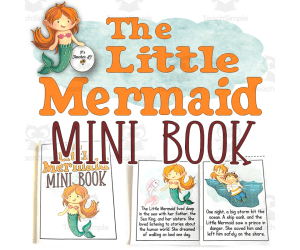
The Little Mermaid Fairy Tale Foldable Mini Book Grade 1 2 3 ELA
ESL, Language Development, ELA, Literary Devices, Literature, Reading Comprehension, Reading, Handwriting, Writing, Grade 1, 2, 3, Activities, Centers, Crafts, Projects, Assessments, Teacher Tools, Literacy Readers
Explore the fun sea of learning through the classic tale of The Little Mermaid through this engaging and meaningful The Little MermaidMini Book Activity Pack made for Grades 1, 2, and 3 students, homeschoolers, and EFL/ESL learners. The mini books included in this set are ideal for reading centers, reading classes, reading comprehension exercises, fairy tale units, writing exercises, story telling and re-telling, supplemental assessment tool, ELA projects, and so much more! What’s Inside: • The Little MermaidStory Mini Book– for story retelling, reading and reading comprehension practice • The Little MermaidStory Mini BookTrace & Read Pages– handwriting practice and motor skills exercise • The Little MermaidMini BookSequencing Booklet– sequencing and sorting exercise, story retelling and reading practice • The Little MermaidMini BookRetell & Reflect Pages– retell practice, creativity and imagination development • The Little MermaidMini BookBlank Create-a-Story Templates– story telling, supporting creative and imaginative thinking skills • The Little MermaidMini BookTeacher Guide + Sample Lesson Plan
Author It's Teacher L
Rating
Tags The Little Mermaid, Fairy Tale Units, ELA Projects, Reading Comprehension, Reading Centers
Prefixes and Suffixes Practice Questions - Grades 1-2 Grammar (Forms)
ELA, Language Development, ESL, Grammar, Common Core, Grade 1, 2, Assessments, Teacher Tools, Tests, Quizzes and Tests
Prefixes and Suffixes Grammar Practice MCQS: 8 lessons, 120 MCQS, 8 forms ELA MCQS Overview: In this series of lessons, students will embark on an engaging exploration of the grammar skills that bring our language to life. These lessons are designed to help students identify, understand, and effectively use language arts skills in their writing and speech. Used with the free supplementary materials available for all topics, each lesson builds on the last, offering a mix of direct instruction, interactive group activities, and independent practice. Through fun and creative tasks, students will learn how to recognize grammar in sentences, understand their role in sentences and use them to enhance their own writing and speech. Prefixes and Suffixes Overview: Includes: Intro to Prefixes Intro to Suffixes Forming Suffixes Determining Affix Word Meaning Forms Version This is the Forms editable and self grading version. This download is available in GOOGLE Docs, GOOGLE Forms, GOOGLE Slides. PDF, PPT, WORD, check the links below for more details. FULL CATALOG OF DOWNLOAD LINKS HERE Grade 1/2 Links: Capitalization and Punctuation Google Docs Google Forms Google Slides PDF PPT Word Free Supplementary Materials Pack Adjectives Google Docs Google Forms Google Slides PDF PPT Word Free Supplementary Materials Pack Nouns Google Docs Google Forms Google Slides PDF PPT Word Free Supplementary Materials Pack Pronouns Google Docs Google Forms Google Slides PDF PPT Word Free Supplementary Materials Pack Verbs Google Docs Google Forms Google Slides PDF PPT Word Free Supplementary Materials Pack Prefixes & Suffixes Google Docs Google Forms Google Slides PDF PPT Word Free Supplementary Materials Pack Sentence Structure Google Docs Google Forms Google Slides PDF PPT Word Free Supplementary Materials Pack Subject-Verb Agreement Google Docs Google Forms Google Slides PDF PPT Word Free Supplementary Materials Pack ELA Review Questions Overview Questions have three answer choices. There are a handful of pictures on each test for aesthetic purposes, as well as a review sheet covering most of the topics covered in the product. Introduction or Example Sheet Each topic will include an introduction or example sheet to go through first with your students. Full Answer Keys Full answer keys and sample responses are provided so no matter how busy you are, you know you're covered! In the Supplementary Pack Interactive Ice Breakers: Fun, hands-on activities that get students thinking about adjectives right from the start. Guided Practice: Teacher-led exercises that reinforce the day’s lesson, ensuring students can confidently identify and use adjectives. Group and Partner Tasks: Collaborative activities that allow students to work together to solve problems, categorize adjectives, and create descriptive sentences. Independent Worksheets: Structured worksheets that provide individual practice and help solidify understanding of key concepts. Exit Tasks: Quick, reflective activities at the end of each lesson that assess understanding and encourage students to apply what they’ve learned. For similar downloads and other frees, do check out Cored Group on TeachSimple.
Author Cored Education
Tags Elementary, Reading, Comprehension, Vocabulary, Answers, Ccss, Common Core, Spelling, Writing, Digital Centers

Deserts Reading Comprehension Passage - Cored Ed Encyclopedia
ELA, Language Development, Reading Comprehension, Reading, Life Sciences, Science, Earth and Environmental Sciences, Technology, Geography, Social Studies, Grade 2, 3, 4, 5, Worksheets & Printables, Worksheets, Teacher Tools, Centers, Activities, Writing Prompts, Assessments, Quizzes and Tests, Quizzes, Lesson Plans
This deserts reading comprehension with lesson plan includes: Visualization (on the front cover) Start your lesson by taking a minute to think and share something about the topic. Read the script aloud (slowly), perhaps prepare some music or sound effects. Student close their eyes and let their imaginations wander. Students open their eyes, read the question aloud and give them a few minutes to complete. Ask a few students to share or keep answers until the end to compare with what they learn in the passage. COMPANION VIDEO NOW AVAILABLE (EMBEDDED AFTER PREVIEW PICTURES IN PRODUCT DESCRIPTION) Quick pause—thousands of Cored Education products are included with your TeachSimple membership. Download links and encyclopedia index available here. Pre-Reading Trivia Students will write down one thing they already know about the subject and then read five more facts and discuss. These facts are fun, and the students will enjoy learning about the subject before reading more. Give 1 minute for students to write what they already know (no pressure—best guess is fine). Read the five facts together. After each fact, do ask a student for their opinion, was it surprising? Set a purpose by asking students to highlight/underline one fact they want to learn more about during the reading. Reading Passage The text is a high-interest reading passage with set paragraphs, roughly three to four paragraphs long. It contains a variety of themes about the topic, anywhere from history to technology. The passage is between 250 and 350 words in length. First, ask students to look at the headings and see what they’ll learn about today. What do they know about the topic/heading? First read options: Teacher read-aloud (best for support). Partner reading (paragraph by paragraph). While reading, students underline important details, and vocabulary words they think may come up in the questions section. Mixed Questions The first question page contains four multiple-choice questions, each with a choice of four answers, and three written response questions that require a sentence or two from the student. Students complete the mcqs first independently, then review quickly as a class. For the 3 written responses, try to get students giving the answer with some form of evidence: “I think ___ because the text says ___.” If students get stuck, send them back to check the passage. Vocabulary Questions Practice seven key words from the text in this section across two activities. First section is scrambled words where students will unscramble three words given a clue for each. The second section is a word to meaning matching activity. Before starting, have some students read out words they underlined in the passage. Ask students to say the word and read aloud the sentence(s) around each word. Ask students to do scrambled words and the matching exercise in pairs then go through answers as a class. For the scrambled spelling task, get four pairs to come up to the board and write the words for extra practice with the other student reading out the clue. For the matching task, prompt students to give full sentences: “I matched ___ with ___ because ___.” Creative Writing In this question, the student will be required to write a five to eight sentence paragraph on a question related to the topic. Before starting, ask students write down 3 key ideas they are going to include in their piece. Ask students for ideas to share around the class to help those struggling. Pro writing expectations: 5–8 sentences At least 2 facts or details from the passage At least 2 vocabulary words from the previous page Students read their paragraphs while classmates listen for facts and vocabulary words. Extension Activities This page is optional for fast finishers or to take home. There are several activities, each one requiring a different skill. Do some, do none, do all, completely optional - but you will feel reassured knowing every possibility is planned for. Includes summary writting question and additional facts. Answer Key There are answers for the multiple-choice questions, written response questions have sample answers, vocabulary answers and if there is a summary question then a sample summary will be provided as well. Lesson Plan Included Customized lesson plan for this lesson is included. Lesson Snapshot Title: Deserts Genre: Nonfiction (informational text with headings) Subject: Earth Science / Life Science / Reading (Informational Text) Primary Topic: Deserts are defined by dryness and survival tricks Estimated Guided Reading Level (A–Z): P What This Lesson Teaches Best Clarifies the key definition: a desert is defined by dryness , not by sand. Explains desert rainfall patterns (often under about 10 inches/25 centimeters per year, sometimes arriving in a quick burst). Builds understanding that deserts can be hot or cold, including Antarctica as the biggest desert on Earth in the passage. Highlights plant and animal adaptations (cacti storing water; plants keeping/curling leaves; rodents getting moisture from seeds; animals hiding in burrows by day and moving at night). Introduces how scientists study deserts today (weather stations, soil samples, satellite pictures) and explains “rain shadow.” Learning Goals Students will explain how the passage defines a desert. Students will describe what the passage says about how much rain many deserts get in a year. Students will identify at least two survival tricks of desert plants from the text. Students will identify at least two survival tricks of desert animals from the text. Students will explain what a “rain shadow” is, using the passage’s description. Students will describe ways deserts are studied today, based on the text. Key Vocabulary From the Text dryness — having very little water or rain. sparse — not many; spread out. burrows — holes in the ground where animals hide. satellite — something in space that takes pictures from above. dunes — hills of sand shaped by wind. FULL CATALOG OF DOWNLOAD LINKS AND ENCYCLOPEDIA INDEX HERE
Author Cored Education
Rating
Tags Vocabulary, Reading Comprehension, Reading Passages, Lesson Plans, Ela Lesson Plans, Reading Comprehension Lesson Plans, Pre-reading, Science Lesson Plans, Earth Science, Geography

Jack and the Beanstalk Fairy Tale Foldable Mini Book Grade 1 2 3 ELA
ESL, Language Development, ELA, Literature, Children’s Literature, Reading Comprehension, Reading, Grade 1, 2, 3, Centers, Activities, Crafts, Projects, Assessments, Teacher Tools
Climb up to a more exciting learning experience with Jack and the Beanstalk Mini Book activity pack. Made for Grades 1, 2 and 3, homeschoolers, and EFL/ESL learners, this resource is ideal for skill building especially for reading, reading comprehension, writing, story retelling, sequencing, fine motor skills, supporting creative and imaginative thinking and more! The activities included in this set can be used for reading classes, reading centers, reading comprehension assessment tool, writing exercises, morning work activities, and early finisher exercises. What’s Inside: •Colored Jack and the Beanstalk Story Mini Book– for story retelling, reading and reading comprehension practice •Jack and the Beanstalk Story Mini BookTrace & Read Pages– handwriting practice and motor skills exercise •Jack and the Beanstalk Mini BookSequencing Booklet– sequencing and sorting exercise, story retelling and reading practice •Jack and the Beanstalk Mini BookRetell & Reflect Pages– retell practice, creativity and imagination development •Jack and the Beanstalk Mini BookBlank Create-a-Story Templates– story telling, supporting creative and imaginative thinking skills •Jack and the Beanstalk Mini BookTeacher Guide + Sample Lesson Plan
Author It's Teacher L
Rating
Tags Jack And The Beanstalk, Fairy Tale Unit, Reading Comprehension Project, ELA Project

Reading Comprehension Fiction Set 3 Sample: Cindy's Tea Party (PPT)
ELA, Reading, Writing, Common Core, ESL, Language Development, Spelling, Reading Comprehension, Creative Writing, Resources for Teachers, Grade 2, 3, Teacher Tools, Presentations, Activities, Assessments, Tests, Quizzes and Tests
Reading Comprehension Passages Fiction Set 3 Sample Overview Fascinating reading comprehension passages, each with an array of activities included. Stories are written for the modern classroom and topics are designed to promote enthusiasm from each student. Each lesson contains a mixed questions section to check understanding, a vocabulary or spelling activity to help remember key language introduced, and a writing exercise. Full answer keys are provided. For a more detailed overview, check the section under the links at the bottom of this description. Passage Included 4.Cindy's Tea Party: Cindy invites some special friends to her tea party. PPT Version This is the PPT editable and fillable (when not in presentation mode) version. This download is available in GOOGLE Docs, GOOGLE Forms, GOOGLE Slides. PDF, PPT, WORD. FULL CATALOG OF DOWNLOAD LINKS HERE Grade 2/3 Links Fiction Set 1 - Nature Google Docs Google Forms Google Slides PDF PPT Word Guided Reading Materials Fiction Set 2 - Animals Google Docs Google Forms Google Slides PDF PPT Word Guided Reading Materials Fiction Set 3 - Food Google Docs Google Forms Google Slides PDF PPT Word Guided Reading Materials Fiction Set 4 - School Google Docs Google Forms Google Slides PDF PPT Word Guided Reading Materials Fiction Set 5 - Friends Google Docs Google Forms Google Slides PDF PPT Word Guided Reading Materials Fiction Set 6 - Family Google Docs Google Forms Google Slides PDF PPT Word Guided Reading Materials Fiction Set 7 - Sports Google Docs Google Forms Google Slides PDF PPT Word Guided Reading Materials Nonfiction Set 1 - Technology Google Docs Google Forms Google Slides PDF PPT Word Guided Reading Materials Nonfiction Set 2 - Nutrition Google Docs Google Forms Google Slides PDF PPT Word Guided Reading Materials Nonfiction Set 3 - Animals Google Docs Google Forms Google Slides PDF PPT Word Guided Reading Materials Reading Passages Overview Each passage is especially written for Grade 2-3 students, including key vocabulary required for this age group. Topics are varied and are accompanied by colorful graphics. Topics are meant to educate, yet entertain the modern student. These passages are perfect for the modern classroom. Whereas textbooks can become outdated in no time, any changes to technology or the world will result in updates to this product. Mixed Questions The mixed questions section of each lesson includes a variation of fivecomprehension, vocabulary and math questions. In addition, key reading strategies are frequently covered including cause & effect, summarizing, compare & contrast and making conclusions. Three of the questions will be MCQs and two will require a written response of some kind. Full answers and example responses appear at the end of the lesson. Spelling & Vocab Each reading passage contains a variety of words and phrases designed for Grade 2-3 students. Spelling and vocab activities provide the opportunity to build fluency with these words. As it can become quite mundane doing the same activities over and over, each lesson in a set will contain a different spelling and vocab activity . Writing Prompts Writing prompts are designed to continue the theme or lessons learned in the story. Students are persuaded to write in a variety of ways and each prompt includes several cues to help. As with the spelling/vocab section, writing prompts will vary. This includes research pieces, reading responses, poetry and creative writing prompts. Full Answer Keys Full answer keys and sample responses are provided so no matter how busy you are, you know you're covered! Mixed question answers provide evidence from the text, math questions contain the relevant workings. Answers are designed for use by the teacher, but also suitable as a handout to the student. Additional File One lesson will have an additional file. This is something fun to extend the lesson with. For similar downloads and other frees, do check out Cored Group on TeachSimple.
Author Cored Education
Tags Elementary, Reading, Comprehension, Vocabulary, Answers, Ccss, Common Core, Spelling, Writing, Passages

Droughts Reading Comprehension Passage - Cored Ed Encyclopedia
ELA, Reading Comprehension, Reading, Science, Technology, Social Studies, History, Earth and Environmental Sciences, Life Sciences, Geography, Grade 2, 3, 4, 5, Worksheets & Printables, Worksheets, Teacher Tools, Centers, Activities, Writing Prompts, Assessments, Quizzes and Tests, Quizzes, Lesson Plans
This droughts reading comprehension with lesson plan includes: Visualization (on the front cover) Start your lesson by taking a minute to think and share something about the topic. Read the script aloud (slowly), perhaps prepare some music or sound effects. Student close their eyes and let their imaginations wander. Students open their eyes, read the question aloud and give them a few minutes to complete. Ask a few students to share or keep answers until the end to compare with what they learn in the passage. Quick pause—thousands of Cored Education products are included with your TeachSimple membership. Download links and encyclopedia index available here. Pre-Reading Trivia Students will write down one thing they already know about the subject and then read five more facts and discuss. These facts are fun, and the students will enjoy learning about the subject before reading more. Give 1 minute for students to write what they already know (no pressure—best guess is fine). Read the five facts together. After each fact, do ask a student for their opinion, was it surprising? Set a purpose by asking students to highlight/underline one fact they want to learn more about during the reading. Reading Passage The text is a high-interest reading passage with set paragraphs, roughly three to four paragraphs long. It contains a variety of themes about the topic, anywhere from history to technology. The passage is between 250 and 350 words in length. First, ask students to look at the headings and see what they’ll learn about today. What do they know about the topic/heading? First read options: Teacher read-aloud (best for support). Partner reading (paragraph by paragraph). While reading, students underline important details, and vocabulary words they think may come up in the questions section. Mixed Questions The first question page contains four multiple-choice questions, each with a choice of four answers, and three written response questions that require a sentence or two from the student. Students complete the mcqs first independently, then review quickly as a class. For the 3 written responses, try to get students giving the answer with some form of evidence: “I think ___ because the text says ___.” If students get stuck, send them back to check the passage. Vocabulary Questions Practice seven key words from the text in this section across two activities. First section is scrambled words where students will unscramble three words given a clue for each. The second section is a word to meaning matching activity. Before starting, have some students read out words they underlined in the passage. Ask students to say the word and read aloud the sentence(s) around each word. Ask students to do scrambled words and the matching exercise in pairs then go through answers as a class. For the scrambled spelling task, get four pairs to come up to the board and write the words for extra practice with the other student reading out the clue. For the matching task, prompt students to give full sentences: “I matched ___ with ___ because ___.” Creative Writing In this question, the student will be required to write a five to eight sentence paragraph on a question related to the topic. Before starting, ask students write down 3 key ideas they are going to include in their piece. Ask students for ideas to share around the class to help those struggling. Pro writing expectations: 5–8 sentences At least 2 facts or details from the passage At least 2 vocabulary words from the previous page Students read their paragraphs while classmates listen for facts and vocabulary words. Extension Activities This page is optional for fast finishers or to take home. There are several activities, each one requiring a different skill. Do some, do none, do all, completely optional - but you will feel reassured knowing every possibility is planned for. Includes summary writting question and additional facts. Answer Key There are answers for the multiple-choice questions, written response questions have sample answers, vocabulary answers and if there is a summary question then a sample summary will be provided as well. Lesson Plan Included Customized lesson plan for this lesson is included. Lesson Snapshot Title: Droughts Genre: Nonfiction (informational text with headings) Subject: Earth Science / Life Science / Reading (Informational Text) Primary Topic: What drought is, types, effects, and tracking Estimated Guided Reading Level (A–Z): Q What This Lesson Teaches Best Defines drought as a stretch of time when a region is drier than normal and can last from days to years. Explains types of drought (meteorological vs. hydrological) and describes what changes in streams, reservoirs, and groundwater. Uses concrete signs/evidence of drought (no puddles, dull grass, cracked ground, animals traveling farther, rivers showing more rocks). Connects history to learning: the Dust Bowl in the 1930s and how it led to soil-saving methods and drought indices. Introduces modern monitoring and responses (rain gauges, river sensors, satellites; fixing leaks, reusing water, collecting rain). Learning Goals Students will define drought using the book’s description and time frames. Students will identify signs of drought described in the passage (e.g., puddles, grass, cracked ground, rivers). Students will explain the difference between meteorological drought and hydrological drought using text evidence. Students will describe what happened during the Dust Bowl and why it mattered for tracking dryness. Students will describe ways droughts are monitored today and one way communities can respond. Key Vocabulary From the Text meteorological — related to weather and rainfall or snow. hydrological — related to water in rivers, reservoirs, and underground. groundwater — water stored under the ground. indices — numbers used to compare and track dryness. evapotranspiration — water moving from land and plants into air. FULL CATALOG OF DOWNLOAD LINKS AND ENCYCLOPEDIA INDEX HERE
Author Cored Education
Rating
Tags Vocabulary, Reading Comprehension, Reading Passages, Lesson Plans, Ela Lesson Plans, Reading Comprehension Lesson Plans, Pre-reading, Science Lesson Plans, Geography, Earth Science

Guided Reading Level H - Clean Hands, Healthy Bodies
ELA, Resources for Teachers, Reading Comprehension, Reading, Health, P.E. & Health, Social Emotional Learning (SEL), Special Resources, Life Skills, Science, Kindergarten, Grade 1, 2, Worksheets & Printables, Worksheets, Teacher Tools, Centers, Activities, Literacy Readers, Quizzes, Quizzes and Tests, Assessments
This Guided Reading Book - Clean Hands, Healthy Bodies (Level H) includes: Guided Reading Color Label (front cover x1) This is a quick way to match the book’s demands to what students can generally handle.. The overall goal is to use the level/color to pick books for several smaller groups. To qualify for a certain level, a student is expected to read a book from that level with about 90–94% accuracy. If a student is consistently accurate and understands, move up a level. If the student is struggling at that level, drop down and add more support. Each student will improve at completely different rates, but it is generally one of the best ways to check progress across the class. DOWNLOAD THE CATALOG TO VIEW ALL GUIDED READING BOOKS AVAILABLE (SORTED LEVELS A-Z) Pre-Reading Question (x1) Teacher asks the prompt aloud, can be while showing the cover or first page. Students share what they already know, or make educated guesses from the cover. Prompt them to use the target vocabulary. Write some of their responses on the board to look back at during the reading. Vocabulary Words (x5) Introduce the five words, best doing it one at a time. Start by saying it, while students repeat and then see if anyone knows what it means before reading further. Read through the meaning and try to briefly connect each word to a picture or gesture so it’s meaningful. Ask students to flip through the book pages and point to where they see each of the vocabulary words. While reading the book pause upon coming across one of the vocab words or read the sentence twice to make sure students understand the word has appeared. Optional: Ask students to raise hands whenever they see/hear one of the new words. Guided Reading Pages (x10) Check the book snapshot (below) for: primary topic - do you need to prep extra reading or intro materials on this? what is taught best - decide on 1-2 bullets to focus on, use the prompt or words provided here for best results. learning goals - what you are checking for students to be able to do after the session, elicit answers using prompts or words provided. key vocabulary (see section above). questions overview - so you know what is coming up and if you need to prep extra materials to assist understanding. Run the lesson You may have already looked at a few of the pages together, but you can show them some of the pictures again first to set meaning. Depending on how much time you have and how familiar your students are with guided reading class, you may want to read the book aloud first with the group first. Students whisper or partner read, while you listen in. If time, do it as a group, one student reading a page each. Use the guided page’s prompts to coach: “Check the picture / does it make sense?” “Point under the words / try the first sound” “Reread the sentence smoothly”. Try to focus more on one student per session (rotating every time), so you can work out if they are ready to move up or need to move down a level. Comprehension Questions (back cover x3) This is your way to check that students didn’t just say the words, but actually understood the text. First, let students answer by pointing to the page/picture and saying a short sentence. After any answer, follow with: “Show me where you found that in the text.” In bigger groups, have partners answer first (10–20 seconds), then call on 2–3 students to share. Differentiation tips: Emerging speakers/struggling readers: oral + pointing On-level: oral in a full sentence Higher: one written sentence or draw + label Book Snapshot Title: Clean Hands, Healthy Bodies Genre: Nonfiction (informational) Subject: Health & Safety / Science Primary Topic: When and how to wash hands to stop germs Estimated Guided Reading Level (A–Z): H What This Book Teaches Best Why washing hands matters: it “keeps germs away” and helps prevent germs from spreading to other people. When to wash hands (before eating, after outdoor play, after using the toilet, after playing with a pet). How to wash hands step-by-step (wet with clean running water, use soap, scrub all areas, rinse, dry). A key procedure detail: scrubbing should last “twenty seconds” to remove germs. The idea of healthy habits: making handwashing a regular habit “protects everyone.” Learning Goals Students will explain one reason the book gives for washing hands, using a detail from the text. Students will identify at least two times the book says hands should be washed. Students will describe the steps for washing hands in order, based on the text. Students will state how long scrubbing should last, according to the book. Students will describe how handwashing helps other people, using the book’s words about spreading germs/protecting everyone. Key Vocabulary From the Text germs — tiny living things that can make you sick. contact — touching something. invisible — cannot be seen. scrub — rub hard to get something clean. protects — keeps safe from harm. Discussion Prompts Pre-reading question: When do you think it is most important to wash your hands? Comprehension questions: Name one time the book says you should wash your hands. How long should scrubbing last when you wash your hands? Why does washing your hands help other people? Printing Tips 1. Best Printing Method (Recommended) “Booklet” Printing (Best if Available) If your printer or PDF viewer supports Booklet Printing , use this. Settings to use: Print mode: Booklet Paper size: Letter or A4 (either works) Orientation: Landscape Print on both sides: Yes Flip on: Short edge Scaling: Fit to printable area Booklet subset: First test: Front sides only Then: Back sides only This will automatically: Pair pages correctly Put the cover on the outside Align everything for folding After printing, fold in half and staple along the spine . 2. If “Booklet” Printing Is NOT Available You can still print this correctly with manual duplex printing . Step-by-step: Open the PDF. Choose Print . Set: Orientation: Landscape Pages per sheet: 1 Print on both sides: Yes Flip on: Short edge Print all pages . Because each PDF page already contains two facing book pages, the result will still fold cleanly into a book. Thousands of Cored Education products are included with your TeachSimple membership. Download links and encyclopedia index available here.
Author Cored Education
Rating
Tags Vocabulary, Reading Comprehension, Reading Passages, Leveled Reading, Nonfiction, Reading, Guided Reading, Health, SEL, Life Skills

Golf Reading Comprehension Passage - Cored Ed Encyclopedia
ELA, Language Development, Resources for Teachers, Reading Comprehension, Reading, Pre-Reading, Writing, Strategies, Sports, P.E. & Health, Grade 2, 3, 4, 5, Worksheets & Printables, Worksheets, Teacher Tools, Centers, Activities, Writing Prompts, Assessments, Tests, Quizzes and Tests, Quizzes
This golf reading comprehension contains the following: Pre-Reading Trivia Students will write down one thing they already know about the subject and then read five more facts and discuss. These facts are fun, and the students will enjoy learning about the subject before reading more. Reading Passage The text is a high-interest reading passage with set paragraphs, roughly three to four paragraphs long. It contains a variety of themes about the topic, anywhere from history to technology. The passage is between 250 and 350 words in length. Mixed Questions The first question page contains four multiple-choice questions, each with a choice of four answers, and three written response questions that require a sentence or two from the student. Creative Writing In this question, the student will be required to write a five to eight sentence paragraph on a question related to the topic. Extension Activities This page is optional for fast finishers. If there are five to ten minutes left at the end of the lesson, the student can choose one of three activities, each one requiring a different skill. Answer Key There are answers for the multiple-choice questions and three written response questions have sample answers. FULL CATALOG OF DOWNLOAD LINKS AND ENCYCLOPEDIA INDEX HERE Cored Ed Encyclopedia Overview The Cored Ed Encyclopedia is a weekly series of lessons that you can pick up and use right away. These short readings fit into whatever time you have available. Each one includes a warm-up, a reading, and a set of questions, but it’s flexible — you can do just the reading, the full lesson, or skip the writing section if you need to. Each lesson focuses on a single topic so students don’t get lost. The writing is clear but never childish, making it perfect for grades two through five. Topics range from animals and science to history, inventions, and everyday things. No matter the level of the student, everyone should take away at least one new idea or fact from each lesson. The materials are easy to print, easy to explain, and require no setup. They work well for whole-class teaching, partner work, or independent study.
Author Cored Education
Rating
Tags Vocabulary, Spelling, Reading Comprehension, Reading Passages, Cored Encyclopedia, Facts, Reading, Creative Writing, Sports, Golf

Reading Comprehension Passages Fiction Set 1 - Nature Presentable PDF
ELA, Reading, Reading Comprehension, Common Core, ESL, Language Development, Spelling, Vocabulary, Writing, Resources for Teachers, Grade 2, 3, Worksheets & Printables, Worksheets, Writing Prompts, Assessments, Teacher Tools, Quizzes, Quizzes and Tests, Centers, Activities
Reading Comprehension Passages Fiction Set 1 Snapshot Genre: Fiction (collection of short nature-themed stories) Subject: Reading (Comprehension) Primary Topic: Nature-themed fiction passages and comprehension practice Estimated Guided Reading Level (A–Z): O What This Teaches Best Character feelings and motivations: Characters want or value something strongly (e.g., Kellie wants snow to use her new sled; Rusty wants to finish his color task; Ross would rather play but ends up enjoying his work). Observation and using the environment for answers: Rusty finds blue and purple by looking more carefully at what’s around him (sky, stream, leaf backs). Cause and effect in everyday situations: Weather and choices affect what happens next (snow finally comes; a thunderstorm ends cherry picking; a volcano eruption changes the climbers’ plans). Nature vocabulary in meaningful contexts: Words connected to seasons, plants, animals, and outdoor features appear across the stories (snow “accumulation,” “canopy,” “eruption,” “perennials,” “marmalade”). Built-in practice pages that match the passages: Each story is followed by questions and skill pages (mixed questions, spelling/vocabulary, short writing prompts) that directly reference details from the story text. Learning Goals Students will recount key events from a selected story in a logical order using details from the text. Students will describe characters’ wants, feelings, and choices and connect them to what happens in the story. Students will identify the setting/season and name text evidence that supports it. Students will explain cause-and-effect relationships shown in the stories (problem → response → outcome). Students will use context clues to determine the meaning of unfamiliar words from the passages. Students will compare information presented in the story (for example, annuals vs. perennials) by stating how they are different using the text’s wording. Passages Include 1.Bring on the Snow: Kellie wants to make it snow. How does she try? 2.Walk through the Woods: A walk in the woods turns into a huge adventure. 3.Nature Photographer: Donna get some amazing snaps in this story. 4.Nature's Beautiful Colors: Rusty enjoys finding out about the colors in nature. 5.Flower Fun: Learn about flower names and colors in this fun lesson. 6.Picking Cherries: Ross spends his day picking cherries but is it worth it? Additional File: Nature Photographer: Drawing Nature Printable PRESENTABLE PDF VERSION Run it like a slide show straight from a PDF, with no PowerPoint or extra software needed, just open, project, and teach. Other versions are available in the links list below or in the full catalog. FULL CATALOG OF DOWNLOAD LINKS HERE For similar downloads and other frees, do check out Cored Group on TeachSimple.
Author Cored Education
Rating
Tags Elementary, Reading, Comprehension, Vocabulary, Common Core, Speling, Writing, Passages, Reading Centers, Reading Comprehension Assessments
UK/Aus Spelling Captitalisation and Punctuation Practice Year 2-3: PDF
ELA, Language Development, ESL, Grammar, Common Core, Resources for Teachers, Grade 1, 2, Worksheets & Printables, Worksheets, Assessments, Teacher Tools, Tests, Quizzes and Tests, Quizzes
THIS IS THE UK/AUS ENGLISH SPELLING VERSION. CHECK THE CATALOG FOR THE ORIGINAL AMERICAN ENGLISH VERSION. Capitalisation and Punctuation Grammar Practice MCQs: 10 Lessons, 150 MCQs, 43 Pages ELA MCQs Overview: This grammar resource gives students plenty of focused practice with two essential writing skills: capitalisation and punctuation. Across 10 lessons and 150 multiple-choice questions, students work through clear, manageable practice that helps them spot mistakes, improve accuracy, and build real confidence over time. The lessons are designed to feel structured without becoming dry or repetitive. Each one builds naturally on the previous lesson, giving students the chance to review, strengthen, and apply what they have learned. With a mix of direct teaching, group work, and independent practice, the resource works well for whole-class lessons, revision, homework, or extra support. This UK/Aus English version is especially useful for schools, teachers, and families working with British-based spelling and language conventions. It is a helpful option for classrooms using UK curriculum expectations, international programmes influenced by British English, or any setting where learners need to practise the correct capitalisation and punctuation forms for that version of English. Captitalisation and Punctuation Overview: Includes: Proper Nouns Opening/Closing Letters Uppercase/Lowercase Dates Punctuation Practice PDF Version This is the PDF uneditable version. This download is available in GOOGLE Docs, GOOGLE Forms, GOOGLE Slides. PDF, PPT, WORD, check the links below for more details. FULL CATALOG OF DOWNLOAD LINKS HERE ELA Review Questions Overview Each review test includes three answer choices for every question. The format is clear and easy for students to follow. A small number of pictures are included on each test to make the pages feel more welcoming and less plain. A review sheet is also included to help students go back over many of the main skills covered in the product. Introduction or Example Sheet Each topic includes an introduction or example sheet to use before students begin. This gives students a clear starting point. It also helps refresh key ideas before they move into the practice. Full Answer Keys Full answer keys are included for easy checking. Sample responses are also provided where needed. This helps save time and makes the resource easier to use, even on busy days. In the Supplementary Pack Interactive Ice Breakers: Simple hands-on activities to help students start thinking about the topic. Guided Practice: Teacher-led work that helps students build understanding before working alone. Group and Partner Tasks: Activities that encourage discussion, shared ideas, and teamwork. Independent Worksheets: Extra practice pages for students to complete by themselves. Exit Tasks: Short end-of-lesson activities to check understanding and review learning. For similar downloads and other frees, do check out Cored Group on TeachSimple.
Author Cored Education
Rating
Tags Elementary, Answers, Test, Mcq, Test Prep, Language Arts, Ela, Grammar, Primary, British English

Reading Comprehension Passages Fiction Set 6 - Family (Fillable PDF)
ELA, Reading, Reading Comprehension, Common Core, Children’s Literature, Literature, Vocabulary, Language Development, Spelling, Writing, Grade 2, 3, Worksheets & Printables, Worksheets, Assessments, Teacher Tools, Tests, Quizzes and Tests, Writing Prompts, Centers, Activities
Reading Comprehension Passages Fiction Set 6 Snapshot Genre: Fiction (short story + comprehension practice) Subject: Reading (Literature) Primary Topic: Family support and problem-solving at home Estimated Guided Reading Level (A–Z): M What This Teaches Best How a character responds when plans change (Molly can’t attend a party because she has a fever). How family members show support through actions (her parents and brother set up games in her room). Sequencing key events across a short narrative with dialogue and action. Understanding setting details and objects that matter to the plot (thermometer, balloons, soda cans, sock ball). Learning Goals Students will identify the problem and explain why it happens in the story. Students will describe how Molly’s family helps her and cite details from the text. Students will retell the story in order, including beginning, middle, and end events. Students will answer questions about key details (who, what, where, why) using the text. Students will use context clues to explain the meaning of unfamiliar words from the story. Passages Include 1.Molly's Home Carnival: It looks like Molly will miss the carnival. Until... 2.Big Bro's Big Idea: Noah's big brother does his best to cheer him up. 3.Denny's Car Wash: Denny wants a new game, but does he get the money for it? 4.Tessa's Grandma: Emma misses her grandma, but Tessa has a great idea. 5.Tom's Canadian Mom: The most important person from Canada is...Tom's mom! 6.Big Brother Woes: Big Brother gets to do whatever he wants. It's just not fair! 7.Tell Us a Story, Grandpa: Grandpa's tales are true family treasures. 8.My Weekend: Read about the author's fun weekend in this interesting story. 9.All in the Picture: Learn how the author has changed in the last 22 years. 10.California 'Coaster: Find out how this author spends his summer vacation. Additional File: Big Bro's Big Idea: Cork Boat Instructions FILLABLE PDF VERSION Worksheet-style pages, but with type-in answer boxes so students can complete and save their work digitally. Other versions are available in the links list below or in the full catalog. FULL CATALOG OF DOWNLOAD LINKS HERE For similar downloads and other frees, do check out Cored Group on TeachSimple.
Author Cored Education
Rating
Tags Elementary, Reading, Comprehension, Vocabulary, Answers, Spelling, Writing, Passages, Reading Centers, Reading Comprehension Assessment
Science Reading Comprehension: Life Cycles of Organisms (PDF)
ELA, Reading, Reading Comprehension, Science, Life Sciences, Biology, Common Core, Animals, Human Body, Grade 2, 3, 4, Worksheets & Printables, Worksheets, Assessments, Teacher Tools, Tests, Quizzes and Tests
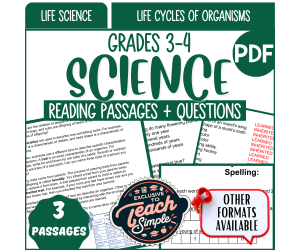
Reading Passages on Life Cycles of Organisms for Life Science (Biology) Life Cycles of Organisms: Reading Passages Life Science (Biology): Whether you're aiming to introduce your students to the world of science or simply seeking an uncomplicated reading resource, this no-prep package is a perfect fit. With its colorful design, user-friendly format, and a diverse range of questions and topics, this science reading worksheet set offers a hassle-free and engaging educational experience. Give it a try today to enrich your curriculum effortlessly! What's inside? Part 2 - Life Cycles of Organisms Reading Passage 1: The Life Cycle of Plants Reading Passage 2: The Life Cycle of Animals Reading Passage 3: Heredity Product Info: 18 PAGES (US English with Answers) PDF Version Teaching Duration: 2 Weeks Science Reading Comprehension Outline: Targeted for students in 3rd and 4th grades, these reading passages are enhanced with illustrations and graphs to elucidate critical points. Each lesson aligns with the Common Core State Standards, allowing you to integrate science reading practice effortlessly, knowing that minimal preparation is needed on your part. Each passage comes with a variety of questions in different formats, including multiple-choice formats, data analysis, and fill-in-the-blanks. The topics covered strike a balance between engaging content and core curriculum-based science subjects. Versatile in application, these lessons are suitable for a variety of settings such as whole-class instruction, morning activities, independent desk work, small group discussions, contingency plans for substitute teachers, homework assignments, or even special holiday-themed tasks. FULL CATALOG OF DOWNLOAD LINKS HERE Grade 3/4 Links: Physical Science Part 1 - Properties of Objects and Materials Google Docs/Slides/Forms PDF PPT Word Free Supplementary Pack Accompanying Videos Physical Science Part 2 - Position and Motion of Objects Google Docs/Slides/Forms PDF PPT Word Free Supplementary Pack Accompanying Videos Physical Science Part 3 - Light, Heat, Electricity, Magnetism Google Docs/Slides/Forms PDF PPT Word Free Supplementary Pack Accompanying Videos Life Science Part 1 - Characteristics of Organisms Google Docs/Slides/Forms PDF PPT Word Free Supplementary Pack Accompanying Videos Life Science Part 2 - Life Cycles of Organisms Google Docs/Slides/Forms PDF PPT Word Free Supplementary Pack Accompanying Videos Life Science Part 3 - Organisms and Environments Google Docs/Slides/Forms PDF PPT Word Free Supplementary Pack Accompanying Videos Earth Science Part 1 - Properties of Earth Materials Google Docs/Slides/Forms PDF PPT Word Free Supplementary Pack Accompanying Videos Earth Science Part 2 - Changes in the Earth and Sky Google Docs/Slides/Forms PDF PPT Word Free Supplementary Pack Accompanying Videos Earth Science Part 3 - Objects in the Sky Google Docs/Slides/Forms PDF PPT Word Free Supplementary Pack Accompanying Videos For similar products and other frees, do check out Cored Group on TeachSimple .
Author Cored Education
Rating
Tags Science, Elementary, Reading, Comprehension, Vocabulary, Life Science, Biology, Science Assessments, Reading Comprehension Assessments, Vocabulary Assessments
The Arid World - Deserts: Guided Reading Level P with Lesson Plan
ELA, Resources for Teachers, Reading Comprehension, Reading, Science, Language Development, Social Studies, Life Sciences, Geography, Earth and Environmental Sciences, Grade 2, 3, 4, Worksheets & Printables, Worksheets, Teacher Tools, Centers, Activities, Literacy Readers, Quizzes, Quizzes and Tests, Assessments, Lesson Plans
This The Arid World - Deserts (level p) guided reading book with lesson plan includes: Guided Reading Color Label (front cover x1) This is a quick way to match the book’s demands to what students can generally handle.. The overall goal is to use the level/color to pick books for several smaller groups. To qualify for a certain level, a student is expected to read a book from that level with about 90–94% accuracy. If a student is consistently accurate and understands, move up a level. If the student is struggling at that level, drop down and add more support. Each student will improve at completely different rates, but it is generally one of the best ways to check progress across the class. DOWNLOAD THE CATALOG TO VIEW ALL GUIDED READING BOOKS AVAILABLE (SORTED LEVELS A-Z) Pre-Reading Question (x1) Teacher asks the prompt aloud, can be while showing the cover or first page. Students share what they already know, or make educated guesses from the cover. Prompt them to use the target vocabulary. Write some of their responses on the board to look back at during the reading. Vocabulary Words (x5) Introduce the five words, best doing it one at a time. Start by saying it, while students repeat and then see if anyone knows what it means before reading further. Read through the meaning and try to briefly connect each word to a picture or gesture so it’s meaningful. Ask students to flip through the book pages and point to where they see each of the vocabulary words. While reading the book pause upon coming across one of the vocab words or read the sentence twice to make sure students understand the word has appeared. Optional: Ask students to raise hands whenever they see/hear one of the new words. Guided Reading Pages (x10) Check the book snapshot (below) for: primary topic - do you need to prep extra reading or intro materials on this? what is taught best - decide on 1-2 bullets to focus on, use the prompt or words provided here for best results. learning goals - what you are checking for students to be able to do after the session, elicit answers using prompts or words provided. key vocabulary (see section above). questions overview - so you know what is coming up and if you need to prep extra materials to assist understanding. Run the lesson You may have already looked at a few of the pages together, but you can show them some of the pictures again first to set meaning. Depending on how much time you have and how familiar your students are with guided reading class, you may want to read the book aloud first with the group first. Students whisper or partner read, while you listen in. If time, do it as a group, one student reading a page each. Use the guided page’s prompts to coach: “Check the picture / does it make sense?” “Point under the words / try the first sound” “Reread the sentence smoothly”. Try to focus more on one student per session (rotating every time), so you can work out if they are ready to move up or need to move down a level. Comprehension Questions (back cover x3) This is your way to check that students didn’t just say the words, but actually understood the text. First, let students answer by pointing to the page/picture and saying a short sentence. After any answer, follow with: “Show me where you found that in the text.” In bigger groups, have partners answer first (10–20 seconds), then call on 2–3 students to share. Differentiation tips: Emerging speakers/struggling readers: oral + pointing On-level: oral in a full sentence Higher: one written sentence or draw + label Book Snapshot Title: The Arid World: Deserts Genre: Nonfiction (informational) Subject: Earth Science Primary Topic: Desert climate, landforms, and survival adaptations Estimated Guided Reading Level (A–Z): P What This Book Teaches Best Defines deserts by very low precipitation and explains how scarce water shapes the environment. Explains extreme temperature changes in hot deserts from day to night and why they happen. Compares hot deserts and cold deserts , including why icy places can still be deserts. Shows how living things adapt to desert conditions , with examples from plants and animals (cactus, fennec fox, camel, sidewinder snake). Describes how wind shapes desert landforms , including how dunes form and move. Learning Goals Students can define a desert using the book’s description of precipitation and water scarcity. Students can explain why temperatures in a hot desert can drop quickly after sunset, based on the text. Students can describe how a cold desert can exist and name the example given in the book. Students can identify at least three desert adaptations and match them to the plant or animal described. Students can describe how wind forms dunes and what the text says dunes do over time. Students can explain what an oasis is and why it supports life in a desert. Key Vocabulary From the Text precipitation — water that falls from the sky, like rain. evaporation — when water turns to vapor and leaves. nocturnal — active at night and resting in daytime. oasis — a fertile desert area with freshwater reaching the surface. dunes — hills of sand formed when wind drops sand. Discussion Prompts Pre-reading question: What challenges do you think plants and animals face in a very dry place? Comprehension questions: How much rain do deserts usually get in a single year, according to the text? Comprehension questions: What does the book say helps the Saguaro cactus conserve water? Comprehension questions: What is an oasis, and where does its freshwater usually come from? Printing Tips 1. Best Printing Method (Recommended) “Booklet” Printing (Best if Available) If your printer or PDF viewer supports Booklet Printing , use this. Settings to use: Print mode: Booklet Paper size: Letter or A4 (either works) Orientation: Landscape Print on both sides: Yes Flip on: Short edge Scaling: Fit to printable area Booklet subset: First test: Front sides only Then: Back sides only This will automatically: Pair pages correctly Put the cover on the outside Align everything for folding After printing, fold in half and staple along the spine . 2. If “Booklet” Printing Is NOT Available You can still print this correctly with manual duplex printing . Step-by-step: Open the PDF. Choose Print . Set: Orientation: Landscape Pages per sheet: 1 Print on both sides: Yes Flip on: Short edge Print all pages . Because each PDF page already contains two facing book pages, the result will still fold cleanly into a book. Thousands of Cored Education products are included with your TeachSimple membership. Download links and encyclopedia index available here.
Author Cored Education
Rating
Tags Reading Comprehension, Reading Passages, Reading, Guided Reading, Guided Reading Lesson Plan, Guided Reading Activity, Pre-reading, Science Lesson Plans, Social Studies Lesson Plans, Earth Science
Reading Comprehension Passages Fiction Set 7 - Sports (Google Slides)
ELA, Reading, Language Development, Spelling, Common Core, Vocabulary, Reading Comprehension, Children’s Literature, Literature, Writing, Grade 2, 3, Teacher Tools, Presentations, Assessments, Tests, Quizzes and Tests, Activities
Reading Comprehension Passages Fiction Set 7 Overview Fascinating reading comprehension passages, each with an array of activities included. Stories are written for the modern classroom and topics are designed to promote enthusiasm from each student. Each lesson contains a mixed questions section to check understanding, a vocabulary or spelling activity to help remember key language introduced, and a writing exercise. Full answer keys are provided. For a more detailed overview, check the section under the links at the bottom of this description. Passages Include 1.Catch It, Dan: Dan is at the ball game and wants to catch a foul ball. 2.Feeling Left Out: Polly isn't invited bowling by her friends and wants to knowwhy. 3.Ian's Friday Nights: Ian wants to be anywhere but the bleachers on Friday nights. 4.Aimee's Dilemma: Soccer or cheerleading? That is the question. 5.A Great Team: Adam & Justin both want to play first base. How will they sortit? 6.Ana's Swimming Party: Jodie can't swim and doesn't want her friends to find out. 7.Touchdown Pythons: Serena loves her first football game. 8.Sam's Passion: Sam talks about his passion for Karate in this passage. 9.Where's My Board: Kerry spends all the story looking for her skateboard. 10.Lacey the Runner: Lacey has dreams to run in the Olympics. Read to find out more. Additional File: Ana's Swimming Party: Invitation Templates Google Slides Version This is the Google Slides editable and fillable version. This download is available in GOOGLE Docs, GOOGLE Forms, GOOGLE Slides. PDF, PPT, WORD. FULL CATALOG OF DOWNLOAD LINKS HERE Grade 2/3 Links Fiction Set 1 - Nature Google Docs Google Forms Google Slides PDF PPT Word Guided Reading Materials Fiction Set 2 - Animals Google Docs Google Forms Google Slides PDF PPT Word Guided Reading Materials Fiction Set 3 - Food Google Docs Google Forms Google Slides PDF PPT Word Guided Reading Materials Fiction Set 4 - School Google Docs Google Forms Google Slides PDF PPT Word Guided Reading Materials Fiction Set 5 - Friends Google Docs Google Forms Google Slides PDF PPT Word Guided Reading Materials Fiction Set 6 - Family Google Docs Google Forms Google Slides PDF PPT Word Guided Reading Materials Fiction Set 7 - Sports Google Docs Google Forms Google Slides PDF PPT Word Guided Reading Materials Nonfiction Set 1 - Technology Google Docs Google Forms Google Slides PDF PPT Word Guided Reading Materials Nonfiction Set 2 - Nutrition Google Docs Google Forms Google Slides PDF PPT Word Guided Reading Materials Nonfiction Set 3 - Animals Google Docs Google Forms Google Slides PDF PPT Word Guided Reading Materials Reading Passages Overview Each passage is especially written for Grade 2-3 students, including key vocabulary required for this age group. Topics are varied and are accompanied by colorful graphics. Topics are meant to educate, yet entertain the modern student. These passages are perfect for the modern classroom. Whereas textbooks can become outdated in no time, any changes to technology or the world will result in updates to this product. Mixed Questions The mixed questions section of each lesson includes a variation of fivecomprehension, vocabulary and math questions. In addition, key reading strategies are frequently covered including cause & effect, summarizing, compare & contrast and making conclusions. Three of the questions will be MCQs and two will require a written response of some kind. Full answers and example responses appear at the end of the lesson. Spelling & Vocab Each reading passage contains a variety of words and phrases designed for Grade 2-3 students. Spelling and vocab activities provide the opportunity to build fluency with these words. As it can become quite mundane doing the same activities over and over, each lesson in a set will contain a different spelling and vocab activity . Writing Prompts Writing prompts are designed to continue the theme or lessons learned in the story. Students are persuaded to write in a variety of ways and each prompt includes several cues to help. As with the spelling/vocab section, writing prompts will vary. This includes research pieces, reading responses, poetry and creative writing prompts. Full Answer Keys Full answer keys and sample responses are provided so no matter how busy you are, you know you're covered! Mixed question answers provide evidence from the text, math questions contain the relevant workings. Answers are designed for use by the teacher, but also suitable as a handout to the student. Additional File One lesson will have an additional file. This is something fun to extend the lesson with. For similar downloads and other frees, do check out Cored Group on TeachSimple.
Author Cored Education
Tags Elementary, Reading, Comprehension, Vocabulary, Answers, Ccss, Common Core, Spelling, Writing, Passages
Dyslexia-Friendly Visual Phonics Decoding
Classroom Management, Resources for Teachers, Community Building, Life Skills, Special Resources, Social Emotional Learning (SEL), Social Skills, Special Education Needs (SEN), Speech Therapy, Science, Kindergarten, Preschool, Grade 1, 2, 3, 4, 5, Worksheets & Printables, Workbooks, Worksheets, Word Searches, Teacher Tools, Lesson Plans, Quizzes and Tests, Quizzes, Tests, Assessments
If your students have difficulty with b/d reversals, visual crowding, or reading anxiety, phonics worksheets often do not work for kids who are neurodivergent because they create a cognitive overload situation. The Visual Phonics Decoding Program is a complete no-frills paradigm shift in reading interventions. Using the proprietary Visuo-Phonological Anchor Model (VPAM), this program creates a connection between auditory processing and the visual-spatial pathways, enabling students (first, second and third graders) to develop automaticity when decoding. The Visual Phonics Decoding packet also follows the principles of the Science of Reading and the cognitive principle of Orthographic Mapping and removes unnecessary visual distractions and replaces them with structured visual anchors. What’s Being Offered In Our 25 Page Complete PDF? Educator Theory and Implementation Manual: A deep dive into the Neurological Structure of Dyslexic Reading, Double-Deficit Hypothesis, and Orthographic Mapping with practical application chapters. Actual Case Studies with Practical Application: Profiles to show how to use these methods with Early Elementary School-Aged Children. Intervention Worksheet Series: Intervention worksheets have been developed utilizing Typographic Grounding, Chromatic Categorization and Spatial Bounding principles. Medial Short Vowels (CVC orthography), Consonant Digraphs (sh, ch, th, wh, ck), Initial Consonant Blends. Teacher Reference Materials/Visual Aids: Contains Visual Aids for Cognitive Orthographic Mapping Protocol and the anatomy of a Dyslexic Friendly Worksheet. Complete Answer Keys and Formative Assessment Protocols. Great For Special Education (SPED) Tier II and Tier III Reading Intervention, Home Schooling & Orton Gillingham Compatible Teaching Methods. Help struggling readers to stop guessing and to have the confidence to code words correctly using decoding! Reasons that Parents/Schools Appreciate It: Elimination of Visual Clutter: Heavy bottom, sans serif fonts, and greater spacing are used strategically to help identify and prevent visual representation of b, d, p, q from being represented as flipping or floating through space. Working Memory Limitations are Bypassed: Students are able to visually lock into a vowel team or digraph without being overwhelmed by using the use of Chromatic Anchor System and bounding boxes. No Fluff & No Distractions: All worksheets were specifically created to conserve as much of a dyslexic child's cognitive energy as possible. Therefore, no clip art, decorative art, or unnecessary instructions are contained to help conserve any cognitive energy from teaching a child to read. Creates Teacher and Parent Power: Also, all worksheets have a clear and complete "Educator Rationales" so parents and teachers can better understand the rationale and methodology for teaching their children. Gives Children the opportunity to Create True Orthographic Mapping: Children are prevented from memorizing and guessing from the visual image or picture, therefore, they are developing the skills to accurately map sounds to letters, which is the basis for long-term efficiency when it comes to reading. Target Audiences: Identify your target audience based on the curriculum's own Tiered Decoding Progression Model (pg. 22) and Introduction (pg. 1). Target Specifically: Grade Levels: 1st, 2nd, and 3rd. Audience: Students with a diagnosis of Dyslexia, students exhibiting signs of reading anxiety, children who are guessing at reading, children struggling with traditional written Phonics, as well as neurodivergent children from all backgrounds. Skills: Students needing support with CVC (consonant-vowel-consonant) words, students needing support with consonant digraphs (sh, ch, th) and students needing support with initial consonant blends. Buyers: Special Education Teachers, Reading Interventionists, Parents Home Schooling, General Education/Primary School Teachers. Terms of Use/Copyright: This Book is the copyright property of Syed Hammad Rizvi. You may only use this resource personally and within a single classroom. You are prohibited from altering, selling, or otherwise distributing any part of this resource. You may not post the entire resource or any part of it on the Internet for access or for download by the general public. If you would like to share this resource with your fellow teachers, you must purchase additional licenses through Teachsimple. Thank you for your support of these terms of use. Syed Hammad Rizvi would like to thank you for using this product.
Author Creative Book Store
Rating
Tags ScienceOfReading, SoR, StructuredLiteracy, OrthographicMapping, Phonics, PhonicsInstruction, PhonemicAwareness, Decoding, ReadingFluency, LiteracyMatters
Gems Reading Comprehension Passage - Cored Ed Encyclopedia
ELA, Reading Comprehension, Reading, Science, Technology, Earth and Environmental Sciences, Pre-Reading, Language Development, Physics, Life Sciences, Grade 2, 3, 4, 5, Worksheets & Printables, Worksheets, Teacher Tools, Centers, Activities, Writing Prompts, Assessments, Quizzes and Tests, Quizzes, Lesson Plans
This gems reading comprehension with lesson plan includes: Visualization (on the front cover) Start your lesson by taking a minute to think and share something about the topic. Read the script aloud (slowly), perhaps prepare some music or sound effects. Student close their eyes and let their imaginations wander. Students open their eyes, read the question aloud and give them a few minutes to complete. Ask a few students to share or keep answers until the end to compare with what they learn in the passage. Quick pause—thousands of Cored Education products are included with your TeachSimple membership. Download links and encyclopedia index available here. Pre-Reading Trivia Students will write down one thing they already know about the subject and then read five more facts and discuss. These facts are fun, and the students will enjoy learning about the subject before reading more. Give 1 minute for students to write what they already know (no pressure—best guess is fine). Read the five facts together. After each fact, do ask a student for their opinion, was it surprising? Set a purpose by asking students to highlight/underline one fact they want to learn more about during the reading. Reading Passage The text is a high-interest reading passage with set paragraphs, roughly three to four paragraphs long. It contains a variety of themes about the topic, anywhere from history to technology. The passage is between 250 and 350 words in length. First, ask students to look at the headings and see what they’ll learn about today. What do they know about the topic/heading? First read options: Teacher read-aloud (best for support). Partner reading (paragraph by paragraph). While reading, students underline important details, and vocabulary words they think may come up in the questions section. Mixed Questions The first question page contains four multiple-choice questions, each with a choice of four answers, and three written response questions that require a sentence or two from the student. Students complete the mcqs first independently, then review quickly as a class. For the 3 written responses, try to get students giving the answer with some form of evidence: “I think ___ because the text says ___.” If students get stuck, send them back to check the passage. Vocabulary Questions Practice seven key words from the text in this section across two activities. First section is scrambled words where students will unscramble three words given a clue for each. The second section is a word to meaning matching activity. Before starting, have some students read out words they underlined in the passage. Ask students to say the word and read aloud the sentence(s) around each word. Ask students to do scrambled words and the matching exercise in pairs then go through answers as a class. For the scrambled spelling task, get four pairs to come up to the board and write the words for extra practice with the other student reading out the clue. For the matching task, prompt students to give full sentences: “I matched ___ with ___ because ___.” Creative Writing In this question, the student will be required to write a five to eight sentence paragraph on a question related to the topic. Before starting, ask students write down 3 key ideas they are going to include in their piece. Ask students for ideas to share around the class to help those struggling. Pro writing expectations: 5–8 sentences At least 2 facts or details from the passage At least 2 vocabulary words from the previous page Students read their paragraphs while classmates listen for facts and vocabulary words. Extension Activities This page is optional for fast finishers or to take home. There are several activities, each one requiring a different skill. Do some, do none, do all, completely optional - but you will feel reassured knowing every possibility is planned for. Includes summary writting question and additional facts. Answer Key There are answers for the multiple-choice questions, written response questions have sample answers, vocabulary answers and if there is a summary question then a sample summary will be provided as well. Lesson Plan Included Customized lesson plan for this lesson is included. Lesson Snapshot Title: Gems Genre: Nonfiction (informational text) Subject: Science Primary Topic: How gems form, are cut, and examined Estimated Guided Reading Level (A–Z): Q What This Lesson Teaches Best Defines what a gemstone is and explains how cutting/polishing helps light travel through it. Explains multiple ways gems can form (heat/pressure underground; melted rock cooling into crystals). Describes how gem cutting changed over time, introducing facets and why angles increase sparkle. Introduces how experts check gems (strong light, magnifier, and looking for tiny clues inside). Uses key describing words— color, cut, clarity, carat —to show how gems are evaluated. Learning Goals Students will explain what a gemstone is using details from the text. Students will describe two ways crystals/gems can form, based on the passage. Students will identify what facets are and explain how they help a gem sparkle. Students will explain what a lapidary does and why angles matter in cutting. Students will describe how gem experts examine gems and what they look for inside. Students will use the words color, cut, clarity, and carat to describe a gem. Key Vocabulary From the Text gemstone — a beautiful crystal or material, cut or polished to shine. minerals — natural materials that can form crystals underground. facets — flat surfaces cut on a gem to guide light. lapidary — a person who plans how a gem is cut. magnifier — a small tool that makes tiny details look bigger. FULL CATALOG OF DOWNLOAD LINKS AND ENCYCLOPEDIA INDEX HERE
Author Cored Education
Rating
Tags Vocabulary, Reading Comprehension, Reading Passages, Lesson Plans, Ela Lesson Plans, Reading Comprehension Lesson Plans, Pre-reading, Science Lesson Plans, Earth Science, Physics

Reading Comprehension Passages Nonfiction Set 2 - Nutrition (PDF)
ELA, Reading, Reading Comprehension, Common Core, ESL, Language Development, Spelling, Vocabulary, Writing, Resources for Teachers, Grade 2, 3, Worksheets & Printables, Worksheets, Assessments, Teacher Tools, Tests, Quizzes and Tests, Centers, Activities
Reading Comprehension Passages Nonfiction Set 2 Overview Engaging nonfiction articles, each with a collection of different activities included. Articles are written for the modern classroom and topics are designed to promote enthusiasm from each student. Each lesson contains a mixed questions section to check understanding, a vocabulary or spelling activity to help remember key language introduced, and a writing exercise. Full answer keys are provided. Passages Include 1.Proteins: After water, protein makes up most of the weight in our bodies. 2.Carbohydrates: Carbohydrates are the principal source of energy for the body. 3.Fats: What are trans fats? Learn all about them in this lesson. 4.Milk: There are many kinds of milk, each has its own advantages. 5.Potatoes: Did you know potatoes originate from South America? 6.Composting: Read how to make your very own compost heap in this article. Additional File: Milk: Nutritional Values Printable PDF Version This is the PDF uneditable version. This download is available in GOOGLE Docs, GOOGLE Forms, GOOGLE Slides. PDF, PPT, WORD. FULL CATALOG OF DOWNLOAD LINKS HERE Grade 2/3 Links Fiction Set 1 - Nature Google Docs Google Forms Google Slides PDF PPT Word Guided Reading Materials Fiction Set 2 - Animals Google Docs Google Forms Google Slides PDF PPT Word Guided Reading Materials Fiction Set 3 - Food Google Docs Google Forms Google Slides PDF PPT Word Guided Reading Materials Fiction Set 4 - School Google Docs Google Forms Google Slides PDF PPT Word Guided Reading Materials Fiction Set 5 - Friends Google Docs Google Forms Google Slides PDF PPT Word Guided Reading Materials Fiction Set 6 - Family Google Docs Google Forms Google Slides PDF PPT Word Guided Reading Materials Fiction Set 7 - Sports Google Docs Google Forms Google Slides PDF PPT Word Guided Reading Materials Nonfiction Set 1 - Technology Google Docs Google Forms Google Slides PDF PPT Word Guided Reading Materials Nonfiction Set 2 - Nutrition Google Docs Google Forms Google Slides PDF PPT Word Guided Reading Materials Nonfiction Set 3 - Animals Google Docs Google Forms Google Slides PDF PPT Word Guided Reading Materials Reading Passages Overview Each passage is especially written for Grade 2-3 students, including key vocabulary required for this age group. Topics are varied and are accompanied by colorful graphics. Topics are meant to educate, yet entertain the modern student. These passages are perfect for the modern classroom. Whereas textbooks can become outdated in no time, any changes to technology or the world will result in updates to this product. Mixed Questions The mixed questions section of each lesson includes a variation of fivecomprehension, vocabulary and math questions. In addition, key reading strategies are frequently covered including cause & effect, summarizing, compare & contrast and making conclusions. Three of the questions will be MCQs and two will require a written response of some kind. Full answers and example responses appear at the end of the lesson. Spelling & Vocab Each reading passage contains a variety of words and phrases designed for Grade 2-3 students. Spelling and vocab activities provide the opportunity to build fluency with these words. As it can become quite mundane doing the same activities over and over, each lesson in a set will contain a different spelling and vocab activity . Writing Prompts Writing prompts are designed to continue the theme or lessons learned in the story. Students are persuaded to write in a variety of ways and each prompt includes several cues to help. As with the spelling/vocab section, writing prompts will vary. This includes research pieces, reading responses, poetry and creative writing prompts. Full Answer Keys Full answer keys and sample responses are provided so no matter how busy you are, you know you're covered! Mixed question answers provide evidence from the text, math questions contain the relevant workings. Answers are designed for use by the teacher, but also suitable as a handout to the student. Additional File One lesson will have an additional file. This is something fun to extend the lesson with. For similar downloads and other frees, do check out Cored Group on TeachSimple.
Author Cored Education
Rating
Tags Elementary, Reading, Comprehension, Vocabulary, Answers, Spelling, Writing, Passages, Reading Centers, Reading Comprehension Assessment