



3,890 products added recently
Page 84 - Lesson Plan Templates
Simplify your preparation with lesson plan templates designed to help you organize objectives, activities, and assessments. These templates provide a structured framework to ensure comprehensive coverage of material. Incorporate them to save time and enhance the effectiveness of your teaching.

 Show filters


I WONDER - Why Do We Yawn | Animated Video Lesson
Biology, Life Sciences, Science, Human Body, Grade 2, 3, 4, 5, 6, 7, 8, Lesson Plans, Teacher Tools
Video Overview The human body is full of fascinating wonders to learn. This video is created to help the students recognize the anatomy and the job of the human body. I WONDER - Why Do We Yawn | Animated Video Lesson Every part and organ in our human body is vital so let's see how important they are. Have you ever imagined how we look like if we didn't have a skeleton? Did you know that because we have our amazing muscles we can stand! Do you know how many teeth do we have? Have you ever wondered about the food journey inside our body? Can you name all the glands in our body? Why do we have skin? Our nervous system is really good at sending signals. Can you tell us more about it? Are you really good at Mathematics, painting, or any other thing? You should really thank your brain about it! The famous five senses are really doing a great work? Can you explain how every sense works? I WONDER - Why Do We Yawn | Animated Video Lesson The video is perfect for encouraging the researching skills for the students, while learning more about our fantastic human body. I WONDER - Why Do We Yawn | Animated Video Lesson This friendly designed video is suitable for students at school, homeschooling, and as a group activity. Format Available in MP4 format.
Author Educational Voice
Tags Why Do We Yawn, Why Do We Yawn Video, Yawn, Yawn Facts, Yawn Facts For Kids, Yawn Video, Yawn Video For Kids, Human Body, Human Body Facts, Human Body Facts For Kids

I WONDER - Who Invented JAVA | Animated Video Lesson
STEM, Science, Computer Science, Technology, Grade 5, 6, 7, 8, 9, 10, 11, Lesson Plans, Teacher Tools
Video Introduction An amazing video designed for the students to learn more about STEM. I WONDER - Who Invented JAVA | Animated Video Lesson Do you like STEM subjects? what is your favorite one? Have you ever tried to plant a seed? If yes, tell us more about it. Or have you ever tried to invent something? If yes, tell us more about it. And how do you think it will help us? Have you ever seen a microorganism under a microscope? What was it? And how it looked like? Mathematics is a marvelous subject. Let' sharpen our brains and solve some equations. Do you like timetable tricks? What is your favorite one? Do you know how to code? Have you ever created an app or a game before? If yes, how was it like? I WONDER - Who Invented JAVA | Animated Video Lesson The video is perfect for encouraging the researching skills for the students, while learning more about this fantastic topic. I WONDER - Who Invented JAVA | Animated Video Lesson This friendly designed video is suitable for students at school, homeschooling, and as a group activity. Format Available in MP4 format.
Author Educational Voice
Tags Who Invented JAVA, Who Invented JAVA Video, JAVA, JAVA Facts, JAVA Facts For Kids, JAVA Video, JAVA Video For Kids, Coding, Coding For Kids, Coding Video

High School Science Weather and the Seasons Reading Passage
ELA, Reading, Writing, Research, Resources for Teachers, Science, Earth and Environmental Sciences, High School, Homeschool Resources, Teacher Tools, Worksheets & Printables, Writing Prompts, Assessments, Lesson Plans, Quizzes and Tests
As a homeschool mom with a 9th grader, I completely get it. Because of my daughter's frustrations with science curriculum that was not rigorous enough, I poured my experience into creating this complete High School Science Weather and the Seasons Reading Passage, Q & A, and Note-Taking Sheets unit. We move way past simple definitions here; your homeschooler will explore the intricate systems that truly govern our planet's climate, from the subtle astronomical forces like Earth’s tilt to the complex impacts of modern human activity. When creating this unit, my goal is simple: to build real critical thinking and analytical muscles, ensuring your student/homeschooler is not just memorizing facts, but truly mastering the dynamic science behind our world. INCLUDED IN THIS RESOURCE: Comprehensive reading passage 20 analytical, question prompts. Full answer key with detailed model responses for all questions. Ten (10) note-taking templates for active learning. TOPICS COVERED: The astronomical foundation (Axial Tilt and Orbit). Distinguishing weather vs. climate. Seasonal weather patterns and atmospheric circulation. Ecosystem reesponses and human adaptation to seasonal change. Beyond just ticking off a high school science credit, my deepest goal with this unit is to equip our kids with the critical scientific literacy they absolutely need for whatever the future holds. When your student/homeschooler digs into the fundamental connections between astronomical physics, atmospheric dynamics, and how our ecosystems respond, they will no't just be learning facts—they will genuinely see the profound, often delicate, interconnectedness of all Earth's systems. As a fellow homeschool mom and resource creator, I truly believe this material provides a strong foundation not just in essential Earth science, but in essential, informed global citizenship. If you and your students/homeschoolers enjoyed this resource, please leave a review. Thank you for your support! Tina - Big Easy Homeschooling Mom
Author Homeschool with Big Easy Homeschooling Mom
Rating
Tags Climate Change Adaptation, Ecosystem Stability, High School Earth Science, Difference Between Weather And Climate, Homeschool Earth Science, Homeschool Science Curriculum, High School Meteorology, Extreme Weather Events Analysis, Seasonal Ecosystem Adaptation, Axial Tilt
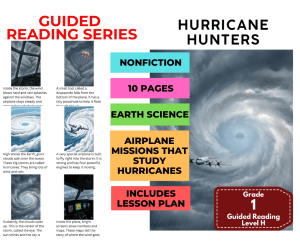
Guided Reading Level H - Hurricane Hunters (with Lesson Plan)
ELA, Resources for Teachers, Reading Comprehension, Reading, Science, Engineering, Technology, Earth and Environmental Sciences, Geography, Social Studies, Grade 1, 2, 3, Worksheets & Printables, Worksheets, Teacher Tools, Centers, Activities, Literacy Readers, Quizzes, Quizzes and Tests, Assessments, Lesson Plans
This Guided Reading Book - Hurricane Hunters (Level H) with lesson plan includes: Guided Reading Color Label (front cover x1) This is a quick way to match the book’s demands to what students can generally handle.. The overall goal is to use the level/color to pick books for several smaller groups. To qualify for a certain level, a student is expected to read a book from that level with about 90–94% accuracy. If a student is consistently accurate and understands, move up a level. If the student is struggling at that level, drop down and add more support. Each student will improve at completely different rates, but it is generally one of the best ways to check progress across the class. DOWNLOAD THE CATALOG TO VIEW ALL GUIDED READING BOOKS AVAILABLE (SORTED LEVELS A-Z) Pre-Reading Question (x1) Teacher asks the prompt aloud, can be while showing the cover or first page. Students share what they already know, or make educated guesses from the cover. Prompt them to use the target vocabulary. Write some of their responses on the board to look back at during the reading. Vocabulary Words (x5) Introduce the five words, best doing it one at a time. Start by saying it, while students repeat and then see if anyone knows what it means before reading further. Read through the meaning and try to briefly connect each word to a picture or gesture so it’s meaningful. Ask students to flip through the book pages and point to where they see each of the vocabulary words. While reading the book pause upon coming across one of the vocab words or read the sentence twice to make sure students understand the word has appeared. Optional: Ask students to raise hands whenever they see/hear one of the new words. Guided Reading Pages (x10) Check the book snapshot (below) for: primary topic - do you need to prep extra reading or intro materials on this? what is taught best - decide on 1-2 bullets to focus on, use the prompt or words provided here for best results. learning goals - what you are checking for students to be able to do after the session, elicit answers using prompts or words provided. key vocabulary (see section above). questions overview - so you know what is coming up and if you need to prep extra materials to assist understanding. Run the lesson You may have already looked at a few of the pages together, but you can show them some of the pictures again first to set meaning. Depending on how much time you have and how familiar your students are with guided reading class, you may want to read the book aloud first with the group first. Students whisper or partner read, while you listen in. If time, do it as a group, one student reading a page each. Use the guided page’s prompts to coach: “Check the picture / does it make sense?” “Point under the words / try the first sound” “Reread the sentence smoothly”. Try to focus more on one student per session (rotating every time), so you can work out if they are ready to move up or need to move down a level. Comprehension Questions (back cover x3) This is your way to check that students didn’t just say the words, but actually understood the text. First, let students answer by pointing to the page/picture and saying a short sentence. After any answer, follow with: “Show me where you found that in the text.” In bigger groups, have partners answer first (10–20 seconds), then call on 2–3 students to share. Differentiation tips: Emerging speakers/struggling readers: oral + pointing On-level: oral in a full sentence Higher: one written sentence or draw + label Book Snapshot Title: Hurricane Hunters Genre: Nonfiction (informational, sequence of events) Subject: Earth Science + Reading (Informational Text) Primary Topic: Airplane missions that study hurricanes Estimated Guided Reading Level (A–Z): H What This Book Teaches Best Defines hurricanes as big storms with lots of wind and rain. Describes how a special airplane flies into a hurricane to learn about the weather. Explains key parts of the storm, including the center called the “eye,” and what it is like. Introduces tools and information-gathering (a “dropsonde,” maps, numbers) used to understand wind and rain. Connects the airplane’s weather information to helping people stay safe on the ground. Learning Goals Students will describe what hurricanes are like using details from the text. Students will explain what the special airplane does to learn about a hurricane’s weather. Students will identify what happens when the plane reaches the center of the storm (the eye). Students will describe how a dropsonde and parachute are used during the flight. Students will explain how the information from the airplane helps people on the ground. Key Vocabulary From the Text hurricanes — very big storms with strong wind and rain. runway — long strip where a plane speeds to take off. dropsonde — small tool that falls from a plane. parachute — cloth that opens to slow something as it falls. eye — the center of the storm. Discussion Prompts Pre-reading question: What do you think a “hurricane hunter” airplane might do during a storm? Comprehension questions: What does the book say hurricanes bring with them? Comprehension questions: What is the eye of the storm like in the text? Comprehension questions: How does the airplane’s information help people on the ground? Printing Tips 1. Best Printing Method (Recommended) “Booklet” Printing (Best if Available) If your printer or PDF viewer supports Booklet Printing , use this. Settings to use: Print mode: Booklet Paper size: Letter or A4 (either works) Orientation: Landscape Print on both sides: Yes Flip on: Short edge Scaling: Fit to printable area Booklet subset: First test: Front sides only Then: Back sides only This will automatically: Pair pages correctly Put the cover on the outside Align everything for folding After printing, fold in half and staple along the spine . 2. If “Booklet” Printing Is NOT Available You can still print this correctly with manual duplex printing . Step-by-step: Open the PDF. Choose Print . Set: Orientation: Landscape Pages per sheet: 1 Print on both sides: Yes Flip on: Short edge Print all pages . Because each PDF page already contains two facing book pages, the result will still fold cleanly into a book. Thousands of Cored Education products are included with your TeachSimple membership. Download links and encyclopedia index available here.
Author Cored Education
Rating
Tags Reading Comprehension, Reading Passages, Reading, Guided Reading, Guided Reading Lesson Plan, Guided Reading Activity, Pre-reading, Science Lesson Plans, Technology, Geography

I WONDER - How Do Walruses Find Food | Animated Video Lesson
STEM, Animals, Life Sciences, Science, Biology, Grade 1, 2, 3, 4, 5, 6, 7, 8, Lesson Plans, Teacher Tools
Video Introduction Animal kingdoms are full of fascinating wonders to learn. This video is designed for the students to learn more about animals in different countries. I WONDER - How Do Walruses Find Food | Animated Video Lesson Do you like animals? what is your favorite one? Do you own a pet? If yes, tell us more about it, like what its name? And what do you like most about it? What are the animal kingdoms? Can you write down the characteristics of each animal class like mammals, birds, reptiles, amphibian, fish and mollusks. Do you know that some animals can sing, can you name any of them? What is the largest and the smallest mammal in the world? What is the largest and the smallest bird in the world? What is the largest and the smallest fish in the world? I WONDER - How Do Walruses Find Food | Animated Video Lesson The video is perfect for encouraging the researching skills for the students, while learning more about these fantastic animals. I WONDER - How Do Walruses Find Food | Animated Video Lesson This friendly designed video is suitable for students at school, homeschooling, and as a group activity. Format Available in MP4 format.
Author Educational Voice
Tags How Do Walruses Find Food, How Do Walruses Find Food Video, Walruses Food, Walruses Food Facts, Walruses Food Facts For Kids, Walruses Food Video, Walruses Food Video For Kids, Walrus

X-Rays Reading Comprehension Passage - Cored Ed Encyclopedia
ELA, Language Development, Reading Comprehension, Reading, Science, Technology, Physics, History, Social Studies, Pre-Reading, Grade 2, 3, 4, 5, Worksheets & Printables, Worksheets, Teacher Tools, Centers, Activities, Writing Prompts, Assessments, Quizzes and Tests, Quizzes, Lesson Plans
This x-rays reading comprehension with lesson plan includes: Visualization (on the front cover) Start your lesson by taking a minute to think and share something about the topic. Read the script aloud (slowly), perhaps prepare some music or sound effects. Student close their eyes and let their imaginations wander. Students open their eyes, read the question aloud and give them a few minutes to complete. Ask a few students to share or keep answers until the end to compare with what they learn in the passage. Quick pause—thousands of Cored Education products are included with your TeachSimple membership. Download links and encyclopedia index available here. Pre-Reading Trivia Students will write down one thing they already know about the subject and then read five more facts and discuss. These facts are fun, and the students will enjoy learning about the subject before reading more. Give 1 minute for students to write what they already know (no pressure—best guess is fine). Read the five facts together. After each fact, do ask a student for their opinion, was it surprising? Set a purpose by asking students to highlight/underline one fact they want to learn more about during the reading. Reading Passage The text is a high-interest reading passage with set paragraphs, roughly three to four paragraphs long. It contains a variety of themes about the topic, anywhere from history to technology. The passage is between 250 and 350 words in length. First, ask students to look at the headings and see what they’ll learn about today. What do they know about the topic/heading? First read options: Teacher read-aloud (best for support). Partner reading (paragraph by paragraph). While reading, students underline important details, and vocabulary words they think may come up in the questions section. Mixed Questions The first question page contains four multiple-choice questions, each with a choice of four answers, and three written response questions that require a sentence or two from the student. Students complete the mcqs first independently, then review quickly as a class. For the 3 written responses, try to get students giving the answer with some form of evidence: “I think ___ because the text says ___.” If students get stuck, send them back to check the passage. Vocabulary Questions Practice seven key words from the text in this section across two activities. First section is scrambled words where students will unscramble three words given a clue for each. The second section is a word to meaning matching activity. Before starting, have some students read out words they underlined in the passage. Ask students to say the word and read aloud the sentence(s) around each word. Ask students to do scrambled words and the matching exercise in pairs then go through answers as a class. For the scrambled spelling task, get four pairs to come up to the board and write the words for extra practice with the other student reading out the clue. For the matching task, prompt students to give full sentences: “I matched ___ with ___ because ___.” Creative Writing In this question, the student will be required to write a five to eight sentence paragraph on a question related to the topic. Before starting, ask students write down 3 key ideas they are going to include in their piece. Ask students for ideas to share around the class to help those struggling. Pro writing expectations: 5–8 sentences At least 2 facts or details from the passage At least 2 vocabulary words from the previous page Students read their paragraphs while classmates listen for facts and vocabulary words. Extension Activities This page is optional for fast finishers or to take home. There are several activities, each one requiring a different skill. Do some, do none, do all, completely optional - but you will feel reassured knowing every possibility is planned for. Includes summary writting question. Answer Key There are answers for the multiple-choice questions, written response questions have sample answers, vocabulary answers and if there is a summary question then a sample summary will be provided as well. Lesson Plan Included Customized lesson plan for this lesson is included. Lesson Snapshot Title: X-Rays Genre: Nonfiction (informational text) Subject: Science (energy, technology, space science) / Informational Reading Primary Topic: Discovering X-rays and how they’re used Estimated Guided Reading Level (A–Z): R Support pages present: Pre-reading trivia; mixed questions; vocabulary page; creative writing; extension activities; answer key What This Lesson Teaches Best How Wilhelm Conrad Röntgen noticed a surprising glow in a dark lab and named the mystery ray “X.” Why X-ray pictures look like “shadow pictures,” with bone and metal stopping rays more than skin and soft tissue. How X-rays help doctors and dentists see inside the body without surgery, and how CT scans use many X-rays from different angles. That X-ray doses are kept as low as possible because X-rays can damage cells. How X-rays are used beyond hospitals, including security scanners and space telescopes on satellites that collect X-rays from hot places near black holes. Learning Goals Students will describe what happened in the lab that made the discovery of X-rays possible. Students will explain why bone and soft tissues show up differently on an X-ray picture. Students will identify how X-rays help doctors or dentists look inside the body without cutting. Students will describe what the text says about safety and why doses are kept low. Students will give an example of an X-ray use outside a doctor’s office found in the passage. Key Vocabulary From the Text invisible — not able to be seen. mystery — something not understood yet. detector — a tool that records the X-rays. tissues — soft parts inside the body. wavelength — the size/length of a wave. FULL CATALOG OF DOWNLOAD LINKS AND ENCYCLOPEDIA INDEX HERE
Author Cored Education
Rating
Tags Vocabulary, Reading Comprehension, Reading Passages, Lesson Plans, Ela Lesson Plans, Reading Comprehension Lesson Plans, Pre-reading, Science Lesson Plans, History Lesson Plans, Physics

I WONDER - What Is A Rechargeable Battery | Animated Video Lesson
Chemistry, Science, Physics, Grade 4, 5, 6, 7, 8, 9, 10, Lesson Plans, Teacher Tools
Video Introduction An amazing activity designed for the students to learn more about STEM. I WONDER - What Is A Rechargeable Battery | Animated Video Lesson Do you like STEM subjects? what is your favorite one? Have you ever tried to plant a seed? If yes, tell us more about it. Or have you ever tried to invent something? If yes, tell us more about it. And how do you think it will help us? Have you ever seen a microorganism under a microscope? What was it? And how it looked like? Mathematics is a marvelous subject. Let' sharpen our brains and solve some equations. Do you like timetable tricks? What is your favorite one? Do you know how to code? Have you ever created an app or a game before? If yes, how was it like? I WONDER - What Is A Rechargeable Battery | Animated Video Lesson The video is perfect for encouraging the researching skills for the students, while learning more about this fantastic topic. I WONDER - What Is A Rechargeable Battery | Animated Video Lesson This friendly designed video is suitable for students at school, homeschooling, and as a group activity. Format Available in MP4 format.
Author Educational Voice
Tags What Is A Rechargeable Battery, What Is A Rechargeable Battery Video, Rechargeable Battery, Rechargeable Battery Facts, Rechargeable Battery Facts For Kids, Rechargeable Battery Video, Rechargeable Battery Video For Kids
I WONDER - Why Are Spiders Not Insects | Animated Video Lesson
STEM, Animals, Life Sciences, Science, Biology, Grade 1, 2, 3, 4, 5, 6, 7, 8, Lesson Plans, Teacher Tools
Video Introduction Animal kingdoms are full of fascinating wonders to learn. This video is designed for the students to learn more about animals in different countries. I WONDER - Why Are Spiders Not Insects | Animated Video Lesson Do you like animals? what is your favorite one? Do you own a pet? If yes, tell us more about it, like what its name? And what do you like most about it? What are the animal kingdoms? Can you write down the characteristics of each animal class like mammals, birds, reptiles, amphibian, fish and mollusks. Do you know that some animals can sing, can you name any of them? What is the largest and the smallest mammal in the world? What is the largest and the smallest bird in the world? What is the largest and the smallest fish in the world? I WONDER - Why Are Spiders Not Insects | Animated Video Lesson The video is perfect for encouraging the researching skills for the students, while learning more about these fantastic animals. I WONDER - Why Are Spiders Not Insects | Animated Video Lesson This friendly designed video is suitable for students at school, homeschooling, and as a group activity. Format Available in MP4 format.
Author Educational Voice
Tags Why Are Spiders Not Insects, Why Are Spiders Not Insects Video, Spiders, Spider, Spiders Video, Spiders Video For Kids, Spiders Facts, Spiders Facts For Kids, Spider Video, Spider Facts

Data Analysis & Probability - Digital Lesson Plan Gr. 6-8 - FLASH-MAC
Math, Statistics, Grade 6, 7, Teacher Tools, Lesson Plans
Data Analysis & Probability - Digital Lesson Plan Gr. 6-8 - FLASH-MAC: An Interactive Learning Experience! Designed specifically for middle school students (grades 6-8), this comprehensive Math program offers over 320 unique activities across more than 80 exciting screen pages, covering all aspects of Data Analysis & Probability in the context of both NCTM and Core Curriculum Math standards. Diving Deep into Important Topics This resource is not just an instruction guide; it's an immersive experience with lessons complemented by extensive drills. Learners can explore various topics such as: Data analysis Probability Mean mode, line plots, bar graphs, circle graphs,and coordinates among others. Versatile Application in Different Settings The program facilitates experiential learning which can be applied to group instruction or small group sessions—or as a tool for reinforcing class topics through homework assignments at home. Tailored Assessment Aids Skill Mastery and Progress Tracking The software includes more than 60 pre- assessment activities, , Around total of 225 procedural proficiency drill problems, In addition to interactive math tools (such as imperial and metric measurement systems) that ensure practical application while promoting self-paced learning. The software is also language-inclusive—with built-in English-Spanish text-to-speech functionality. Incorporating Fun Through Varied Interface Options: Apart from including educative features like printables, interactive lessons and test prep resources, the platform also offers games such as ‘Memory Match Game’, ‘Board Game’ and ‘Spinner Game'—providing a combination of education and entertainment. Regular Assessment Quizzes: Continuous Real-Time Progress Tracking With frequent assessment quizzes after each chapter, tracking progress is simplified for educators. It facilitates identifying learners' strengths and areas of improvement easily—making this software a valuable asset to both public and homeschool educators. In conclusion, Data Analysis & Probability - Digital Lesson Plan Gr. 6-8 - FLASH-MAC is a dynamic digital math program that emphasizes interactivity to provide students an in-depth understanding and strong fundamentals in essential mathematical principles.
Author Classroom Complete Press
Tags Software (Mac)
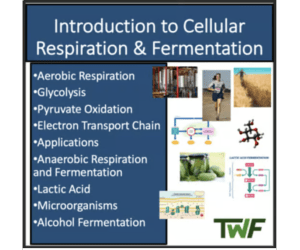
Introduction to Cellular Respiration & Fermentation - Biology lesson
Science, Life Sciences, Biology, Grade 11, 12, Teacher Tools, Lesson Plans
Introduction to Cellular Respiration & Fermentation - High School Biology lesson Your lesson covers everything from aerobic to anaerobic respiration. In order, the lesson teaches; Aerobic Respiration, Glycolysis, Pyruvate Oxidation, Electron Transport Chain, Applications, Anaerobic Respiration and Fermentation, Lactic Acid, Microorganisms, and Alcohol Fermentation. Your lesson includes the teacher and student version of the presentation, six embedded videos, an auto-graded exit ticket, and a student lesson handout so the students can record the notes on a more condensed medium. This lesson is designed to be your go-to resource, whether you're in a traditional classroom or a virtual one. With both a teacher version and a student version, it seamlessly fits into your lesson plans, making learning engaging and adaptable. Assessment made easy We've included an auto-graded Exit Ticket and a quiz with an answer key because I know you don't have an excess of time. I know you don't, because I don't and I know I'll do whatever I can to reduce my grading time. Whether you use PowerPoint or Google Slides, prefer Word or Google Docs, this lesson has you covered. This lesson comes in both Office and Google formats for your convenience. The student version of the presentation has strategically placed blanks for them to fill in as you're teaching. It keeps them active and engaged, encourages discussion, and leaves more time for those "aha" moments.
Author Teach With Fergy
Tags Senior Biology, Biology Lesson, Aerobic Respiration, Glycolysis, Pryuvate, ETC, Anaerobic Respiration, Fermentation

Safe and Unsafe Secrets – Personal Safety Lesson
Special Resources, Life Skills, Social Emotional Learning (SEL), Special Education Needs (SEN), Social Skills, Preschool, Grade 1, 2, Teacher Tools, Lesson Plans
This resource is a personal safety lesson specifically about safe and unsafe secrets. This is such an important skill to learn as asking children to keep unsafe secrets is part of the grooming process from child molesters. This is a key lesson in preventing childhood abuse. In this lesson, you will have a 9-slide Google slide presentation. The flow of the lesson is self-explanatory and there are slide notes to guide you on what to have ready for the students, what to print off, and what handouts should also go home with students. The first part of the lesson is asking students what are words and actions that cause them to feel happy or sad. The next part is a lesson about red light and green light (unsafe and safe) secrets. There are 6 examples the teacher or counselor will read and students will hold up either the red or green light (these handouts are provided). The next step is reviewing safety steps with the students in case someone is asking them to keep an unsafe secret. Students are encouraged to role-play these steps. Lastly, students will draw 2 safe adults besides their parents. The safety steps and safe adult' drawings should go home with students to share with their parents or guardians. After the 9-slide presentation, there are 3 handouts to copy and print out for students in preparation for the lesson. Read the slide show thoroughly before teaching this lesson so you will understand the flow of the lesson and the different activities. Because this is a Google Slide resource, you will be downloading a PDF and clicking on the image on the PDF to access the slide presentation. Once you are prompted to "make a copy", click "yes" and make a copy. You will then have access to the product. Enjoy!
Author Jennifer Moyer Taylor
Rating
Tags Personal Safety, Secrets, School Counseling, Sel, Social Emotional Learning, Safety, Safety Steps, Grooming, Child Abuse Prevention
I WONDER - Why Do Pigs Like Mud | Animated Video Lesson
STEM, Animals, Life Sciences, Science, Biology, Grade 1, 2, 3, 4, 5, 6, 7, 8, Lesson Plans, Teacher Tools
Video Introduction Animal kingdoms are full of fascinating wonders to learn. This video is designed for the students to learn more about animals in different countries. I WONDER - Why Do Pigs Like Mud | Animated Video Lesson Do you like animals? what is your favorite one? Do you own a pet? If yes, tell us more about it, like what its name? And what do you like most about it? What are the animal kingdoms? Can you write down the characteristics of each animal class like mammals, birds, reptiles, amphibian, fish and mollusks. Do you know that some animals can sing, can you name any of them? What is the largest and the smallest mammal in the world? What is the largest and the smallest bird in the world? What is the largest and the smallest fish in the world? I WONDER - Why Do Pigs Like Mud | Animated Video Lesson The video is perfect for encouraging the researching skills for the students, while learning more about these fantastic animals. I WONDER - Why Do Pigs Like Mud | Animated Video Lesson This friendly designed video is suitable for students at school, homeschooling, and as a group activity. Format Available in MP4 format.
Author Educational Voice
Tags Why Do Pigs Like Mud, Why Do Pigs Like Mud Video, Pigs Like Mud, Pigs Like Mud Facts, Pigs Like Mud Facts For Kids, Pigs Like Mud Video, Pigs Like Mud Video For Kids, Pigs, Pig, Pigs Video

Lesson Plan on the Digestive System
Biology, Life Sciences, Science, Human Body, Grade 9, 10, 11, 12, Activities, Worksheets & Printables, Lesson Plans, Teacher Tools
Using the video “How the Digestive System Works”, this captivating 90-minute biology lesson presents the human digestive system to students in Grades 9–12. Students start with a stimulating discussion to activate prior knowledge, then engage in a focused video viewing while taking notes. The teacher subsequently clarifies the function of each organ in digestion, employing diagrams and analogies that are easy to relate to in order to enhance understanding. Students collaborate in pairs to identify parts of the digestive system and trace the path of a sandwich through the body. Single activities strengthen important vocabulary, the order of digestion, nutrient absorption, and frequent digestive problems. Pupils contemplate amusing trivia, including the reasons for stool odor and the workings of stomach acid. The lesson ends with a class review of answers and an exit ticket for personal reflection. This lesson combines visual, collaborative, and critical thinking strategies to ensure that students understand the digestion process and appreciate how their dietary habits affect their health. It is a practical, enlightening, and unforgettable investigation of an essential bodily system.
Author Bright Classroom Ideas Marketplace
Rating
Tags Human, Body, Biology, Digestive, System, Lesson, Plan
Reducing Your Own Carbon Footprint: Footprints At The Mall And In The Trash Gr. 5-8
Science, Earth and Environmental Sciences, Environmental Science, Grade 5, 6, 7, 8, Teacher Tools, Lesson Plans
Reducing Your Own Carbon Footprint: Footprints At The Mall And In The Trash Gr. 5-8 This is an environmentally-focused teaching resource designated to convey essential information about global climate change and the personal actions that contribute to its aggravation. This chapter slice provides learners from grades 5 through 8 a closer examination of their own behaviors with respect to the concept of personal carbon footprints. An inclusive exploration of the greenhouse effect serves as an initial groundwork for further study on the human-induced climate change phenomena. Afterward, students engage with practical applications examining various ways energy is consumed in a common kitchen environment. Farm-to-Table Processing and Travel Impact Appreciation The lesson expands into a detailed discussion on every step's carbon footprint contribution within a farm-to-table process. A section is also allocated to evaluate travel's environmental impact, instructing learners on how to compute travel footprints along with suggesting some reduction strategies. In recognition that waste management significantly affects our environmental influence, students are guided regarding how waste disposal can sustain or even increase one's carbon footprint. Community Responsibility Promotion and Action towards Environmental Preservation Note: Learners are encouraged to compare their individual footprints against community standards—providing them opportunities to become eco-friendly norm promoters within society or foster critical amendments in social contracts for environmental protection. The resource is developed in congruence with Bloom's Taxonomy principles and STEAM initiatives—it introduces supporting contents like graphic organizers for data visualization improvement and comprehension quizzes catering self-assessment needs—making it equally versatile for homeschool or classroom usage centered on individual, small group tasks, or whole class discussions. Highlighting Its Interactivity and Informativeness The 29-page printable resource involves interactive methods for teaching critical topics such as climate change. Crossword puzzles and word searches are exciting additions. More than just being informative, this resource engages developing learners who are entrusted with the pivotal challenge of their generation: "Reducing Your Own Carbon Footprint."
Author Classroom Complete Press
Tags Environment, Science, Protecting The Environment, Carbon Footprint, Science Passage
Measurement: Temperature & Time - FLASH-MAC
Math, Measurements, Grade 3, 4, 5, Teacher Tools, Lesson Plans
Measurement: Temperature & Time - FLASH-MAC A crucial teaching resource, this tool serves both public and private educators as well as those who practice homeschooling. The focus is on basic mathematical concepts in Measurement, namely Temperature and Time, targeting Grade 3 through fifth grade students. A Comprehensive Educational Package: Offering curriculum-based content this platform eases the process of teaching and learning. The journey starts with: Pre- assessment to understand a student's base level Systematic lesson plans for efficient teaching. Interactive Activities: Carefully designed interactive activities such as: Word problems simulating everyday scenarios that enhance practical problem-solving skills. Focused timed drills to empower quick thinking abilities. The use of games like memory match, board game and spinner game for better comprehension. Versatile Assessment Tool: Including a SMART Response assessment tool which aids constant monitoring of the students' progress. Bilingual Support: The package caters to diversity by providing voice overs in both English and Spanish thus taking into account bilingual or Spanish-speaking students.' Ease-Of-Use Flexibility: The package, downloadable on Mac software as one zip file presents teachers with flexibility. In Conclusion- All in all Measurement: Temperature & Time - FLASH-MAC amounts innovative tools designed by experienced educators amalgamating easy accessible captivating modes of learning + .
Author Classroom Complete Press
Tags Distant Learning, Measurement, Measuring Activities, Temperature, Telling Time

I WONDER - What Activities Can You Do At The Grand Canyon
Geography, Social Studies, Grade 3, 4, 5, 6, 7, 8, 9, Lesson Plans, Teacher Tools
Video Introduction An amazing video designed for the students to learn more about famous places in different countries. I WONDER - What Activities Can You Do At The Grand Canyon | Animated Video Lesson What do you know about this place? Do you know in which part of the world it is? Have you ever visited this place? If yes, can you tell us more about your adventure, and what do you like the most about this place? Do you like reading about Geography? What is your favorite country in the whole world? If you are going on a trip where it will be? Which country? What you are going to see there? Does this country has a famous place to visit? I WONDER - What Activities Can You Do At The Grand Canyon | Animated Video Lesson The activity is perfect for encouraging the researching skills for the students, while learning more about this fantastic place. I WONDER - What Activities Can You Do At The Grand Canyon | Animated Video Lesson This friendly designed video is suitable for students at school, homeschooling, and as a group activity. Format Available in MP4 format.
Author Educational Voice
Tags What Activities Can You Do At The Grand Canyon, What Activities Can You Do At The Grand Canyon Video, The Grand Canyon, The Grand Canyon Facts, The Grand Canyon Facts For Kids, The Grand Canyon Video

Volcanoes: A Comprehensive Hands-On Science Unit
Science, Earth and Environmental Sciences, Environmental Science, Grade 4, 5, 6, 7, 8, Teacher Tools, Lesson Plans
The Volcanoes: A Comprehensive Hands-On Science Unit A dependable teaching resource, precisely designed for facilitators intending to provide their students with thorough scientific learning. It suits perfectly for public school instructors as well as homeschoolers educating grades 4-8. Based in the comprehensive scope of environmental science, this well-rounded lesson plan explores the fascinating domain of volcanoes. Beyond Traditional Experiments These lessons move past the typical baking-soda-and-vinegar eruptions activity and aims to deliver an all-inclusive understanding of volcanic science. It elaborately analyzes a volcano's structure, interpreting all its parts, performances and processes during eruption phases while also shedding light on unique factors such as volcanic bombs, hair particles and tears. Focusing on Realistic Threats This unit prominently talks about ecological hazards posed by volcanoes beyond conventional eruptive events—significantly essential in imbibing realism among learners about environmental threats. All About Detailed Learning The unit comprises 32 print-ready PDF pages , decorated with vibrant illustrations and enriching text content for facilitating comprehension among students of varying capabilities across recommended grade levels. Suitable to be taught in both whole group sessions or smaller tutorial discussions Potentially divided into homework assignments when required, Orients towards different learner types promoting methodical knowledge uptake through scientifically grounded pedagogical tactics via adaptable lesson planning options according to a student's grasp rate ensuring acceptable curricular coverage. In summary, The Volcanoes: A Comprehensive Hands-On Science Unit is essentially your go-to resource if you wish your students traverse beyond mere textbook learning. A credible choice for all environment science teachers aiming to add a bit of adventure into their curriculum .
Author Classroom Complete Press
Tags Weather, Volcanoes, Hands-on Science, Experiments, Science Unit

Mother Goose Nursery Rhymes Gr. K-1
ELA, Reading, Grade 1, Teacher Tools, Lesson Plans
Mother Goose Nursery Rhymes Gr. K-1: An Academically Enriching Teaching Resource This teaching unit provides an academically enriching approach to introducing children in the earliest stages of their educational journey to the endless possibilities hidden within the realm of language arts. A valuable tool for educators, it serves to enhance students' early literacy skills especially during those crucial initial months in grade one. An Exciting Journey Towards Language Proficiency Built around timeless nursery rhymes from Mother Goose, this unit isn't just another lesson plan but a tangible bridge towards language proficiency. Learners can tap into their familiarity with verses like 'Humpty Dumpty,' 'Star Light,' ‘Jack Be Nimble,’ ‘Hickory Dickory Dock,’ and others as they discover sight words and develop their literacy competency. A Structured Approach Fostering Communal Learning The distinctive feature of this unit involves building sight word vocabulary and stimulating learners into forming simple sentences. Classroom activities aim at fostering collaboration not only with written words but also oral communication thus advancing dual competencies simultaneously. Leveraging Evaluation: A Key Component in Traditional Education In contrast to mainstream schooling systems that might emphasize continuous progression, this resource reinforces the importance of self-evaluation among learners. This provision makes it a unique tool inclusive of easy-to-follow teacher instructions accompanied by student-centric sections such as: Reading Passages: Learn & practice recognized verses. Fun Activities: Interactive tasks that make learning enjoyable. Rhyme Game: A game based on verses to reinforce learning of sight words. Unit Test: Enables easy assessment for educators while encouraging self-review among students. The Flexibility Advantage The true beauty lies in this unit's adaptability. It can be effectively utilized, be it for guiding an entire class or assigning homework through segmented sections. All content is provided as easy-to-access PDF files, which are perfect for both digital and physical use. Experience the genuine joy of guiding your class through a language art adventure inspired by Mother Goose Nursery Rhymes!
Author Classroom Complete Press
Tags PDF

I WONDER - Who Was Benjamin Franklin | Animated Video Lesson
Biographies, Social Studies, Grade 4, 5, 6, 7, 8, 9, 10, Lesson Plans, Teacher Tools
Video Introduction An amazing video designed for the students to learn more about famous people in different countries. I WONDER - Who Was Benjamin Franklin | Animated Video Lesson Do you know this person? How much do you know about him/her? Who is your idol? Why did you choose this person? Tell us more about him/her? Who is your favorite athlete? Or what is your favorite team? Have you recently heard a story about a famous person? Who was this person? Can you tell us more about him/her. Who is your favorite president, king, or queen? Why you chose that person? In your country, who are the most famous people? What did they do? Can you tell us more about them. What is your favorite invention? Who invented it? Who is your favorite artist? What is the most famous thing he/she have done? What is the most enjoyable you have read before? Who wrote it? I WONDER - Who Was Benjamin Franklin | Animated Video Lesson The video is perfect for encouraging the researching skills for the students, while learning more about this fantastic place. I WONDER - Who Was Benjamin Franklin | Animated Video Lesson This friendly designed video is suitable for students at school, homeschooling, and as a group activity. Format Available in MP4 format.
Author Educational Voice
Rating
Tags Who Was Benjamin Franklin, Who Was Benjamin Franklin Video, Benjamin Franklin, Benjamin Franklin Facts, Benjamin Franklin Video, Benjamin Franklin Video For Kids, Benjamin Franklin Facts For Kids

Data Analysis & Probability - Digital Lesson Plan Gr. 6-8 - FLASH-PC
Math, Statistics, Grade 6, 7, Teacher Tools, Lesson Plans
Data Analysis & Probability - Digital Lesson Plan Gr. 6-8 - FLASH-PC is a comprehensive mathematics teaching resource designed specifically for students in grades 6 through 8. This math program successfully meets the NCTM and Core Curriculum Math standards for Data Analysis & Probability, providing ample course material with over 320 individual activities on approximately 80 vibrant and interactive screens. An ideal tool for modern classrooms, homeschooling, or supplementary home learning situations. This product offers a rich blend of task-oriented and drill-style activities: Over 225 drill exercises, allowing students numerous opportunities to practice and hone their procedural proficiency skills while solving theory-based probability problems. Incorporated graphical elements, including line graphs representing mean values, circle graphs depicting probabilities of various scenarios subtly introduces modern statistics concepts. Pictographs are also embedded to assist students in visualizing how data is presented. About 40 real-world word problems closely based on everyday examples have been added to help learners link theoretical knowledge with practical applications. Built-in math tools, available in both imperial & metric units along with English and Spanish Text-to-Speech functionality make learning accessible to a broad range of learners! The program includes features to monitor students' progress: A preparation test feature allows you to conduct pre- assessments before starting a chapter which hosts around sixty introductory activities. Inclusive summarizing quizzes at the end of each chapter let you measure progress made by the student. Bonus features include printable content along with engaging interactive lessons offering fun breaks such as memory match games or spinner games! We ensured that the Data Analysis & Probability - Digital Lesson Plan Gr. 6-8 - FLASH-PC comes with all necessary components to ensure continuous progress while also making learning enjoyable. In this single product, you will find everything necessary to teach Data Analysis & Probability topics for Grades 6-7 in a holistic and engaging manner.
Author Classroom Complete Press
Tags Software (PC)

I WONDER - What Did Ancient Greeks Eat | Animated Video Lesson
History: Ancient, History, Social Studies, History: Europe, Grade 3, 4, 5, 6, 7, 8, 9, Lesson Plans, Teacher Tools
Video Introduction An amazing video designed for the students to learn more about history. I WONDER - What Did Ancient Greeks Eat | Animated Video Lesson Do you like history? Which topic do you really enjoy about history? Have you ever read an interesting fact about the Vikings? If yes, can you mention them? What do you like most about the Victorian era? Can you name all the Tudors? Have you ever wondered how people used to live in ancient Japan and ancient China? Do you know any interesting facts about ancient Egyptians and the Pharaohs? Have you ever visited South America? What do you know about Incas and Aztecs? Celtic culture was really one of a kind, can you name any of the places that Celts used to live in? Imagine yourself living during the ancient Roman empire, how your life will look like? Ancient Greece was an amazing place to live in. What do you know about ancient Greek life? I WONDER - What Did Ancient Greeks Eat | Animated Video Lesson The video is perfect for encouraging the researching skills for the students, while learning more about history. I WONDER - What Did Ancient Greeks Eat | Animated Video Lesson This friendly designed video is suitable for students at school, homeschooling, and as a group activity. Format Available in MP4 format.
Author Educational Voice
Tags Ancient Greek Food, Ancient Greek Food Facts, Ancient Greek Food Video, Ancient Greek Food Facts For Kids, Ancient Greek Food Video For Kids, What Did Ancient Greeks Eat, What Did Ancient Greeks Eat Video
I WONDER - How Fast Does The Planet Mercury Travel | Animated Video
Space, Earth and Environmental Sciences, Science, Grade 6, 7, 8, 9, 10, 11, 12, Lesson Plans, Teacher Tools
Video Introduction An amazing video designed for the students to learn more about space facts. I WONDER - How Fast Does The Planet Mercury Travel | Animated Video Lesson Do you like reading about space? If yes, what is your favorite topic? What do you know about our solar system? What is the smallest planet in our solar system? What is the biggest planet in our solar system? What is the hottest planet in our solar system? And what is the coldest one? Do you think there are aliens? If yes, what do you think they look like? What do they eat and how they speak to each other? Where do they live? What is a galaxy? And what is a milky way? Have you recently saw a shooting star? If yes, tell us more about it, like when did it happen and where? What is a blackhole? Can a blackhole gets bigger by time? Do you like counting the stars? What do you think a star is made of? I WONDER - How Fast Does The Planet Mercury Travel | Animated Video Lesson The video is perfect for encouraging the researching skills for the students, while learning more about the fantastic space. I WONDER - How Fast Does The Planet Mercury Travel | Animated Video Lesson This friendly designed video is suitable for students at school, homeschooling, and as a group activity. Format Available in MP4 format.
Author Educational Voice
Tags How Fast Does The Planet Mercury Travel, How Fast Does The Planet Mercury Travel Video, Planet Mercury, Planet Mercury Facts, Planet Mercury Facts For Kids, Planet Mercury Video, Planet Mercury Video For Kids

Biochemistry Introduction - Senior High School Biology lesson
Science, Life Sciences, Biology, Grade 11, 12, Teacher Tools, Lesson Plans
Biochemistry Introduction - Senior High School Biology lesson The lesson covers the following topics; Biochemistry, Organic Compounds, Chemical Reactions, Dehydration Reactions, Hydrolysis Reactions, Neutralization Reactions, and Redox Reactions. Your lesson includes the teacher and student version of the presentation, one embedded video, an auto-graded exit ticket, and a student lesson handout so the students can record the notes on a more condensed medium. The lesson is entertaining, engaging, and classroom-tested. This lesson is designed to be your go-to resource, whether you're in a traditional classroom or a virtual one. With both a teacher version and a student version, it seamlessly fits into your lesson plans, making learning engaging and adaptable. Assessment made easy We've included an auto-graded Exit Ticket and a quiz with an answer key – because who doesn't love saving time on grading? Whether you're a PowerPoint pro or a Google Slides user, prefer Word or Google Docs – we've got you covered. This lesson comes in both Office and Google formats for your convenience. The student version of the presentation has strategically placed blanks for them to fill in as you're teaching. It keeps them active and engaged, encourages discussion, and leaves more time for those "aha" moments.
Author Teach With Fergy
Tags Biochemistry, Senior Biology Lesson, Biology Lesson, Senior Biology, Organic Compounds, Dehydration Reactions, Hydrolysis Reaction, Redox Reaction

I WONDER - What Is The Roblox Oof | Animated Video Lesson
Computer Science, Technology, Science, Grade 4, 5, 6, 7, 8, 9, 10, Lesson Plans, Teacher Tools
Video Introduction An amazing video designed for the students to learn more about STEM. I WONDER - What Is The Roblox Oof | Animated Video Lesson Plants world is really fascinating! Do you know that some flowers eat insects? Some other plants like to grow on walls can you mention any? Do you know what is the difference between fungicide and pesticide? If yes, Can you tell us more about it? What is nuclear energy? Is it safe to use it? Do you think it is a clean energy? Have you ever read about potential energy? If yes, tell us what it is? Do you think that potential energy can be converted into another form of energy? How it happens? I WONDER - What Is The Roblox Oof | Animated Video Lesson The video is perfect for encouraging the researching skills for the students, while learning more about this fantastic topic. I WONDER - What Is The Roblox Oof | Animated Video Lesson This friendly designed video is suitable for students at school, homeschooling, and as a group activity. Format Available in MP4 format.
Author Educational Voice
Rating
Tags What Is The Roblox Oof, Roblox Oof, Roblox Oof Facts, Roblox Oof Video, Roblox Oof Facts For Kids, Roblox Oof Video For Kids, Roblox, Roblox Facts, Roblox Video, Roblox Video For Kids