



3,967 products added recently
Page 64 - 2nd Grade Lesson Plans
Enhance your second-grade classroom with lesson plans that build on foundational skills and introduce new concepts. These activities promote critical thinking and creativity across subjects. Implement these plans to keep your students motivated and progressing confidently.

 Show filters

I WONDER - How Do Some Animals Glow | Animated Video Lesson
Life Sciences, Science, Biology, Animals, STEM, Grade 1, 2, 3, 4, 5, 6, 7, 8, Lesson Plans, Teacher Tools
Video Introduction Animal kingdoms are full of fascinating wonders to learn. This video is designed for the students to learn more about animals in different countries. I WONDER - How Do Some Animals Glow | Animated Video Lesson Do you like animals? what is your favorite one? Do you own a pet? If yes, tell us more about it, like what its name? And what do you like most about it? What are the animal kingdoms? Can you write down the characteristics of each animal class like mammals, birds, reptiles, amphibian, fish and mollusks. Do you know that some animals can sing, can you name any of them? What is the largest and the smallest mammal in the world? What is the largest and the smallest bird in the world? What is the largest and the smallest fish in the world? I WONDER - How Do Some Animals Glow | Animated Video Lesson The video is perfect for encouraging the researching skills for the students, while learning more about these fantastic animals. I WONDER - How Do Some Animals Glow | Animated Video Lesson This friendly designed video is suitable for students at school, homeschooling, and as a group activity. Format Available in MP4 format.
Author Educational Voice
Tags How Do Some Animals Glow, How Do Some Animals Glow Video, Glowing Animals, Glowing Animals Facts, Glowing Animals Facts For Kids, Glowing Animals Video, Glowing Animals Video For Kids

I WONDER - What Are The Different Angles Called | Animated Video
STEM, Geometry, Math, Grade 2, 3, 4, 5, 6, 7, 8, Lesson Plans, Teacher Tools
Video Introduction An amazing video designed for the students to learn more about STEM. I WONDER - What Are The Different Angles Called | Animated Video Lesson Do you like STEM subjects? what is your favorite one? Have you ever tried to plant a seed? If yes, tell us more about it. Or have you ever tried to invent something? If yes, tell us more about it. And how do you think it will help us? Have you ever seen a microorganism under a microscope? What was it? And how it looked like? Mathematics is a marvelous subject. Let' sharpen our brains and solve some equations. Do you like timetable tricks? What is your favorite one? Do you know how to code? Have you ever created an app or a game before? If yes, how was it like? I WONDER - What Are The Different Angles Called | Animated Video Lesson The video is perfect for encouraging the researching skills for the students, while learning more about this fantastic topic. I WONDER - What Are The Different Angles Called | Animated Video Lesson This friendly designed video is suitable for students at school, homeschooling, and as a group activity. Format Available in MP4 format.
Author Educational Voice
Tags What Are The Different Angles Called, What Are The Different Angles Called Video, Different Angles, Different Angles Video, Different Angles Video For Kids, Different Angles Facts, Different Angles Facts For Kids

Number & Operations: Counting & Ordering Objects - Practice the Skill 1 - MAC Software
Math, Numbers, Common Core, Kindergarten, Preschool, Grade 1, 2, Teacher Tools, Lesson Plans
Number & Operations: Counting & Ordering Objects - Practice the Skill 1 - MAC Software This teaching resource serves as an engaging platform for students to grasp key concepts in Counting and Ordering Objects, essentials of Number and Operations. Fittingly structured, it offers curriculum -based content that is notably aligned with the Common Core State Standards and NCTM guidelines. Catered for Diverse Learning Levels Designed for Preschool through to Grade 2 learners, it caters mainly to educators in public schools or homeschoolers looking for digital resources to supplement traditional teaching methods. With Practice the Skill timed drill activities included, this software enables students to actively participate, effectively improving their abilities to count objects using real-life images. Dual Language Feature The uniqueness of this versatile resource lies within its dual-language feature. Although English text and voice-over are initially provided, Spanish equivalents have been incorporated as well making it a welcoming tool in classrooms where language diversity exists. In addition to assisting in practicing essential counting skills on their own or within small groups (either at school or home) Educators can utilize these activities as homework assignments or even group competitions due to its time-drill component. This fosters both student motivation and additional practice opportunities outside classroom settings. Likewise invaluable are the math tools bundled with this software – an enriching supplement aimed at fostering mathematical proficiency among young learners. Offered as Mac software packed into a single zip file for convenience sake; teachers can easily unlock a myriad of learning possibilities out there waiting for eager students. A Unique Approach An impressively flexible yet straightforward approach is what makes Number & Operations: Counting & Ordering Objects-Practice the Skill 1 stand out from other educational resources. It encourages interactive learning while complying with STEM initiatives enhancing student understanding gradually but steadily. Let's redefine classroom teachings by integrating effective technology like never before!
Author Classroom Complete Press
Tags Numbers, Operations, Counting, Ordering Objects, Digital Math
I WONDER - Where Does Chocolate Come From | Animated Video Lesson
Geography, Social Studies, Nature & Plants, Life Sciences, Science, Grade 2, 3, 4, 5, 6, 7, 8, Lesson Plans, Teacher Tools
Video Introduction An amazing video designed for the students to learn more about STEM. I WONDER - Where Does Chocolate Come From | Animated Video Lesson Do you like STEM subjects? what is your favorite one? Have you ever tried to plant a seed? If yes, tell us more about it. Or have you ever tried to invent something? If yes, tell us more about it. And how do you think it will help us? Have you ever seen a microorganism under a microscope? What was it? And how it looked like? Mathematics is a marvelous subject. Let' sharpen our brains and solve some equations. Do you like timetable tricks? What is your favorite one? Do you know how to code? Have you ever created an app or a game before? If yes, how was it like? I WONDER - Where Does Chocolate Come From | Animated Video Lesson The video is perfect for encouraging the researching skills for the students, while learning more about this fantastic topic. I WONDER - Where Does Chocolate Come From | Animated Video Lesson This friendly designed video is suitable for students at school, homeschooling, and as a group activity. Format Available in MP4 format.
Author Educational Voice
Rating
Tags Where Does Chocolate Come From, Where Does Chocolate Come From Video, Chocolate, Chocolate Facts, Chocolate Video, Chocolate Facts For Kids, Chocolate Video For Kids, Chocolate Origins
Number & Operations: Fractions - Practice the Skill 3 - MAC Software
Math, Fractions, Common Core, Kindergarten, Preschool, Grade 1, 2, Teacher Tools, Lesson Plans
Introducing The Number & Operations: Fractions - Practice the Skill 3 - MAC Software This advanced tool is a crucial resource for all educators seeking to boost their students' number and operation skills. With it, students can enhance their understanding of numbers and fractions in an engaging, hands-on fashion. User-friendly Tool The easy-to-navigate MAC software offers curriculum -guided contents concentrated on practicing timed drill exercises. This resource can be successfully incorporated into diverse learning environments, whether it's a broad or targeted group setting. Activities included encourage visual recognition and association of shapes with corresponding fractions. This software goes the extra mile by accommodating Spanish-speaking learners; offering both voice-over and text in Spanish. Included within the system are supplementary math tools that help reinforce mathematical concepts effectively. Versatile Use Across Beginner Levels The Number & Operations: Fractions - Practice the Skill 3 - MAC Software effortlessly introduces tech into your lesson planning. It's designed for learners from preschool till grade two hence it's perfect if you're teaching at home or in public education settings. Aligned with Educational Standards Created following Common Core State Standards and STEM initiatives, this product assures users that they are delivering quality experiences that meet current educational standards defined by NCTM (National Council of Teachers of Mathematics). User-Friendly Format The software comes as one zip file suitable for Mac systems which makes its use straightforward. To conclude, the Number & Operations: Fractions - Practice the Skill 3- Mac Software, is an incredibly versatile tool that integrates tech while boosting your students' understanding of number operations involving fractions making it an excellent addition to your teaching resources.
Author Classroom Complete Press
Tags Math Lesson, Numbers Activity, Fractions, Fractions Worksheet, Digital Math

I WONDER - When Was Pasta Invented | Animated Video Lesson
History: Europe, History, Social Studies, Grade 1, 2, 3, 4, 5, 6, 7, 8, Lesson Plans, Teacher Tools
Video Introduction An amazing video designed for the students to learn more about history. I WONDER - When Was Pasta Invented | Animated Video Lesson Do you like history? Which topic do you really enjoy about history? Have you ever read an interesting fact about the Vikings? If yes, can you mention them? What do you like most about the Victorian era? Can you name all the Tudors? Have you ever wondered how people used to live in ancient Japan and ancient China? Do you know any interesting facts about ancient Egyptians and the Pharaohs? Have you ever visited South America? What do you know about Incas and Aztecs? Celtic culture was really one of a kind, can you name any of the places that Celts used to live in? Imagine yourself living during the ancient Roman empire, how your life will look like? Ancient Greece was an amazing place to live in. What do you know about ancient Greek life? I WONDER - When Was Pasta Invented | Animated Video Lesson The video is perfect for encouraging the researching skills for the students, while learning more about history. I WONDER - When Was Pasta Invented | Animated Video Lesson This friendly designed video is suitable for students at school, homeschooling, and as a group activity. Format Available in MP4 format.
Author Educational Voice
Tags When Was Pasta Invented, When Was Pasta Invented Video, Pasta, Pastafacts, Pasta Facts For Kids, Pastavideo, Pasta Video For Kids, History Of Pasta, History Of Pasta For Kids
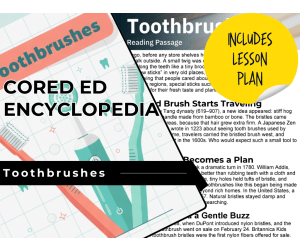
Toothbrushes Reading Comprehension Passage - Cored Ed Encyclopedia
ELA, Language Development, Reading Comprehension, Reading, Science, Technology, Engineering, History, Social Studies, Life Sciences, Grade 2, 3, 4, 5, Worksheets & Printables, Worksheets, Teacher Tools, Centers, Activities, Writing Prompts, Assessments, Quizzes and Tests, Quizzes, Lesson Plans
This toothbrushes reading comprehension includes: Visualization (on the front cover) Start your lesson by taking a minute to think and share something about the topic. Read the script aloud (slowly), perhaps prepare some music or sound effects. Student close their eyes and let their imaginations wander. Students open their eyes, read the question aloud and give them a few minutes to complete. Ask a few students to share or keep answers until the end to compare with what they learn in the passage. Quick pause—thousands of Cored Education products are included with your TeachSimple membership. Download links and encyclopedia index available here. Pre-Reading Trivia Students will write down one thing they already know about the subject and then read five more facts and discuss. These facts are fun, and the students will enjoy learning about the subject before reading more. Give 1 minute for students to write what they already know (no pressure—best guess is fine). Read the five facts together. After each fact, do ask a student for their opinion, was it surprising? Set a purpose by asking students to highlight/underline one fact they want to learn more about during the reading. Reading Passage The text is a high-interest reading passage with set paragraphs, roughly three to four paragraphs long. It contains a variety of themes about the topic, anywhere from history to technology. The passage is between 250 and 350 words in length. First, ask students to look at the headings and see what they’ll learn about today. What do they know about the topic/heading? First read options: Teacher read-aloud (best for support). Partner reading (paragraph by paragraph). While reading, students underline important details, and vocabulary words they think may come up in the questions section. Mixed Questions The first question page contains four multiple-choice questions, each with a choice of four answers, and three written response questions that require a sentence or two from the student. Students complete the mcqs first independently, then review quickly as a class. For the 3 written responses, try to get students giving the answer with some form of evidence: “I think ___ because the text says ___.” If students get stuck, send them back to check the passage. Vocabulary Questions Practice seven key words from the text in this section across two activities. First section is scrambled words where students will unscramble three words given a clue for each. The second section is a word to meaning matching activity. Before starting, have some students read out words they underlined in the passage. Ask students to say the word and read aloud the sentence(s) around each word. Ask students to do scrambled words and the matching exercise in pairs then go through answers as a class. For the scrambled spelling task, get four pairs to come up to the board and write the words for extra practice with the other student reading out the clue. For the matching task, prompt students to give full sentences: “I matched ___ with ___ because ___.” Creative Writing In this question, the student will be required to write a five to eight sentence paragraph on a question related to the topic. Before starting, ask students write down 3 key ideas they are going to include in their piece. Ask students for ideas to share around the class to help those struggling. Pro writing expectations: 5–8 sentences At least 2 facts or details from the passage At least 2 vocabulary words from the previous page Students read their paragraphs while classmates listen for facts and vocabulary words. Extension Activities This page is optional for fast finishers or to take home. There are several activities, each one requiring a different skill. Do some, do none, do all, completely optional - but you will feel reassured knowing every possibility is planned for. Includes summary writting question. Answer Key There are answers for the multiple-choice questions, written response questions have sample answers, vocabulary answers and if there is a summary question then a sample summary will be provided as well. Lesson Plan Included Customized lesson plan for this lesson is included. Lesson Snapshot Title: Toothbrushes Genre: Nonfiction (informational text) Subject: Science (Health & Technology) Primary Topic: How toothbrushes changed over time Estimated Guided Reading Level (A–Z): R What This Lesson Teaches Best Explains how people cleaned teeth before store-bought toothbrushes by chewing a twig until it turned “fuzzy” and rubbing it on teeth. Shows how evidence from the past (archaeologists finding signs in places like Mesopotamia and Egypt) can tell us about tooth care long ago. Traces the history of the bristled brush from China’s Tang dynasty to Europe in the 1600s, highlighting how inventions travel. Describes how toothbrush designs changed to solve problems (for example, natural bristles staying damp and trapping bacteria). Summarizes key innovations—nylon bristles (1938) and the electric toothbrush (1954)—and connects them to the ongoing goal of protecting teeth. Learning Goals Students will describe how a “chew stick” was used to clean teeth long ago. Students will identify evidence in the text that people cared about clean mouths thousands of years ago. Students will explain how the bristled brush began in China and later spread to Europe. Students will summarize how toothbrush-making changed after 1780 using details about materials and design. Students will explain why inventors searched for new bristle materials and what nylon changed. Students will describe how an electric toothbrush helped brushing by adding steady motion. Key Vocabulary From the Text archaeologists — scientists who study the past using old remains. Mesopotamia — an ancient region where people lived long ago. miswak — a special stick used for cleaning teeth. patent — legal rights that protect an invention. bacteria — tiny germs that can cause problems. FULL CATALOG OF DOWNLOAD LINKS AND ENCYCLOPEDIA INDEX HERE
Author Cored Education
Rating
Tags Vocabulary, Reading Comprehension, Reading Passages, Lesson Plans, Ela Lesson Plans, Reading Comprehension Lesson Plans, Pre-reading, History, History Lesson Plans, Toothbrushes

Measurement: Measuring Time - PC Software
Math, Time, Kindergarten, Preschool, Grade 1, 2, Teacher Tools, Lesson Plans
Measurement: Measuring Time - PC Software A resourceful product aimed to make time concepts easier to understand and impart for preschool, kindergarten, Grade 1, and Grade 2 educators. Features: Pre- assessment tool: Helps teachers gauge students' basic understanding of the subject matter. Outcome-based lesson plans: Serve as strong teaching strategies that are concise yet thorough. Real-world word problems:Add practicality to lessons helping students connect theory with real-life scenarios. Timed drill activities:Increase student engagement by improving quick thinking and logical reasoning skills. Creative Learning Components: The Memory Match Game & Board Game - Enhance children's assessment competencies through fun learning techniques The Spinner Game - A creative/testing methodology for children's learning progression. Tailored Language Support : This software offers English voiceover and text standardly, but it also provides Spanish voiceover and text competently addressing bilingual educational needs. This thoughtful integration boosts its usability beyond specific demographics. Aids Teaching : We provide a comprehensive teacher guide for successful integration into lesson structures. Notably there are printable reinforcing materials available serving traditional learning methodologies fostering holistic teaching support for both educators & students alike. This intuitive software makes teaching aspects of Measurement notably simple with interactive tools complementing curriculum-driven techniques broadly suitable in varied class formats as well as homework assignments.This promotes adaptive learners rooted in today's digital age.
Author Classroom Complete Press
Tags Math Lesson Plan, Measuring Time, Time Lesson Plan, Digital Math, Digital Clock

Health Education: Medicine
P.E. & Health, Health, Grade 2, Teacher Tools, Lesson Plans
This PDF describes the difference between prescription medicines and non-prescription, giving examples of each, and identifying rules for the proper use of all medicines. Methods of a healthier living style such as getting better sleep, a well-rounded diet, and more fresh air all contribute to a healthier life.
Author Chuck's Cornucopia
Tags Medicine, Wellness, Health, Doctor, Pharmacy
I WONDER - How Much Of The Earth Is Covered In Water | Animated Video
Geography, Social Studies, Grade 2, 3, 4, 5, 6, 7, 8, Lesson Plans, Teacher Tools
Video Introduction An amazing video designed for the students to learn more about famous places in different countries. I WONDER - How Much Of The Earth Is Covered In Water | Animated Video Lesson What do you know about this place? Do you know in which part of the world it is? Have you ever visited this place? If yes, can you tell us more about your adventure, and what do you like the most about this place? Do you like reading about Geography? What is your favorite country in the whole world? If you are going on a trip where it will be? Which country? What you are going to see there? Does this country has a famous place to visit? I WONDER - How Much Of The Earth Is Covered In Water | Animated Video Lesson The activity is perfect for encouraging the researching skills for the students, while learning more about this fantastic place. I WONDER - How Much Of The Earth Is Covered In Water | Animated Video Lesson This friendly designed video is suitable for students at school, homeschooling, and as a group activity. Format Available in MP4 format.
Author Educational Voice
Tags How Much Of The Earth Is Covered In Water, How Much Of The Earth Is Covered In Water Video, Water On Earth, Water On Earth Video, Water On Earth Facts, Water On Earth Facts For Kids, Water On Earth Video For Kids
I WONDER - What Does The Stomach Do | Animated Video Lesson
Human Body, Life Sciences, Science, Biology, STEM, Grade 1, 2, 3, 4, 5, 6, 7, 8, Lesson Plans, Teacher Tools
Video Overview The human body is full of fascinating wonders to learn. This video is created to help the students recognize the anatomy and the job of the human body. I WONDER - What Does The Stomach Do | Animated Video Lesson Every part and organ in our human body is vital so let's see how important they are. Have you ever imagined how we look like if we didn't have a skeleton? Did you know that because we have our amazing muscles we can stand! Do you know how many teeth do we have? Have you ever wondered about the food journey inside our body? Can you name all the glands in our body? Why do we have skin? Our nervous system is really good at sending signals. Can you tell us more about it? Are you really good at Mathematics, painting, or any other thing? You should really thank your brain about it! The famous five senses are really doing a great work? Can you explain how every sense works? I WONDER - What Does The Stomach Do | Animated Video Lesson The video is perfect for encouraging the researching skills for the students, while learning more about our fantastic human body. I WONDER - What Does The Stomach Do | Animated Video Lesson This friendly designed video is suitable for students at school, homeschooling, and as a group activity. Format Available in MP4 format.
Author Educational Voice
Tags What Does The Stomach Do, What Does The Stomach Do Video, Stomach, Stomach Video, Stomach Facts, Stomach Facts For Kids, Stomach Video For Kids, Digestive System, Digestive System Facts

I WONDER - How Old Can Dogs Live | Animated Video Lesson
STEM, Animals, Life Sciences, Science, Biology, Grade 1, 2, 3, 4, 5, 6, 7, 8, Lesson Plans, Teacher Tools
Video Introduction Animal kingdoms are full of fascinating wonders to learn. This video is designed for the students to learn more about animals in different countries. I WONDER - How Old Can Dogs Live | Animated Video Lesson Do you like animals? what is your favorite one? Do you own a pet? If yes, tell us more about it, like what its name? And what do you like most about it? What are the animal kingdoms? Can you write down the characteristics of each animal class like mammals, birds, reptiles, amphibian, fish and mollusks. Do you know that some animals can sing, can you name any of them? What is the largest and the smallest mammal in the world? What is the largest and the smallest bird in the world? What is the largest and the smallest fish in the world? I WONDER - How Old Can Dogs Live | Animated Video Lesson The video is perfect for encouraging the researching skills for the students, while learning more about these fantastic animals. I WONDER - How Old Can Dogs Live | Animated Video Lesson This friendly designed video is suitable for students at school, homeschooling, and as a group activity. Format Available in MP4 format.
Author Educational Voice
Tags How Old Can Dogs Live, How Old Can Dogs Live Video, Dogs, Dog, Dogs Facts, Dogs Facts For Kids, Dogs Video, Dogs Video For Kids, Dog Facts, Dog Video

Nonfiction glossary lesson rainforest
ELA, Literature, Grade 1, 2, 3, Teacher Tools, Lesson Plans
Introducing a Nonfiction Glossary Lesson for Grades 1-3 This interactive resource teaches students about the nonfiction text feature of glossaries. Through class discussions and engaging activities, students will build their understanding of how glossaries work and why they are useful in nonfiction books. Animated slides, speaker notes, student activity slides, and answer keys provide educators with everything they need to successfully present this lesson to a whole class or small groups. Students will apply reading comprehension, critical thinking, and problem-solving skills as they explore glossaries. This versatile resource can be used as an introduction, recap, enrichment lesson, or for extra support. Suitable for in-person or distance learning, these materials aim to create excitement around nonfiction in a clear, concise, and student-centered way.
Author Ezee 101
Tags Nonfiction, Text Features, Glossary, Lesson, Powerpoint, Google Slides
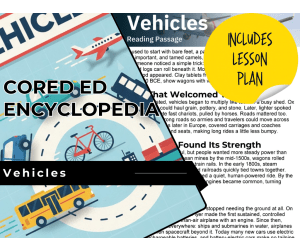
Vehicles Reading Comprehension Passage - Cored Ed Encyclopedia
ELA, Language Development, Reading Comprehension, Reading, Pre-Reading, Science, Technology, Engineering, History, Social Studies, Grade 2, 3, 4, 5, Worksheets & Printables, Worksheets, Teacher Tools, Centers, Activities, Writing Prompts, Assessments, Quizzes and Tests, Quizzes, Lesson Plans
This vehicles reading comprehension with lesson plan includes: Visualization (on the front cover) Start your lesson by taking a minute to think and share something about the topic. Read the script aloud (slowly), perhaps prepare some music or sound effects. Student close their eyes and let their imaginations wander. Students open their eyes, read the question aloud and give them a few minutes to complete. Ask a few students to share or keep answers until the end to compare with what they learn in the passage. Quick pause—thousands of Cored Education products are included with your TeachSimple membership. Download links and encyclopedia index available here. Pre-Reading Trivia Students will write down one thing they already know about the subject and then read five more facts and discuss. These facts are fun, and the students will enjoy learning about the subject before reading more. Give 1 minute for students to write what they already know (no pressure—best guess is fine). Read the five facts together. After each fact, do ask a student for their opinion, was it surprising? Set a purpose by asking students to highlight/underline one fact they want to learn more about during the reading. Reading Passage The text is a high-interest reading passage with set paragraphs, roughly three to four paragraphs long. It contains a variety of themes about the topic, anywhere from history to technology. The passage is between 250 and 350 words in length. First, ask students to look at the headings and see what they’ll learn about today. What do they know about the topic/heading? First read options: Teacher read-aloud (best for support). Partner reading (paragraph by paragraph). While reading, students underline important details, and vocabulary words they think may come up in the questions section. Mixed Questions The first question page contains four multiple-choice questions, each with a choice of four answers, and three written response questions that require a sentence or two from the student. Students complete the mcqs first independently, then review quickly as a class. For the 3 written responses, try to get students giving the answer with some form of evidence: “I think ___ because the text says ___.” If students get stuck, send them back to check the passage. Vocabulary Questions Practice seven key words from the text in this section across two activities. First section is scrambled words where students will unscramble three words given a clue for each. The second section is a word to meaning matching activity. Before starting, have some students read out words they underlined in the passage. Ask students to say the word and read aloud the sentence(s) around each word. Ask students to do scrambled words and the matching exercise in pairs then go through answers as a class. For the scrambled spelling task, get four pairs to come up to the board and write the words for extra practice with the other student reading out the clue. For the matching task, prompt students to give full sentences: “I matched ___ with ___ because ___.” Creative Writing In this question, the student will be required to write a five to eight sentence paragraph on a question related to the topic. Before starting, ask students write down 3 key ideas they are going to include in their piece. Ask students for ideas to share around the class to help those struggling. Pro writing expectations: 5–8 sentences At least 2 facts or details from the passage At least 2 vocabulary words from the previous page Students read their paragraphs while classmates listen for facts and vocabulary words. Extension Activities This page is optional for fast finishers or to take home. There are several activities, each one requiring a different skill. Do some, do none, do all, completely optional - but you will feel reassured knowing every possibility is planned for. Includes summary writting question. Answer Key There are answers for the multiple-choice questions, written response questions have sample answers, vocabulary answers and if there is a summary question then a sample summary will be provided as well. Lesson Plan Included Customized lesson plan for this lesson is included. Lesson Snapshot Title: Vehicles Genre: Nonfiction (Informational text) Subject: Social Studies / Science & Technology Primary Topic: How transportation changed from wheels to flight Estimated Guided Reading Level (A–Z): P Support pages: Pre-reading trivia, mixed questions, vocabulary practice, creative writing, extension activities, and an answer key. Support-page QA check: Some vocab items don’t match the exact word forms in the passage (e.g., chariot vs chariots , battery vs batteries , submarine vs submarines , locomotive vs locomotives ). What This Lesson Teaches Best Sequence of transportation changes over time: Moves from walking/animals, to logs/sledges, to wooden wheels and wagons, to roads and coaches, to steam locomotives, motor vehicles, and airplanes. How inventions improved travel and hauling: Explains how wheels, roads, tracks/railroads, and engines made travel smoother, faster, and able to carry heavier loads. Using headings to organize information: Section headings (“Roads…,” “When Steam…,” “A Lift Into the Air”) help readers track time periods and big shifts. Key historical details in an informational text: Includes dates and examples such as Uruk clay tablets (3700–3500 BCE) and the Wright Flyer flight (December 17, 1903). Modern tech and environmental impact: Notes electric motors, rechargeable batteries, and “no tailpipe exhaust,” ending with a question about helping the planet. Learning Goals Students will describe how people traveled and carried loads before wheels, using details from the passage. Students will identify how wheels changed what vehicles could do (hauling goods and moving more easily). Students will explain how roads and railroads affected travel and connected places, based on the text. Students will summarize the “biggest leap” in travel described in the passage and name the example given. Students will use headings and key details to retell the passage’s main changes in transportation in order. Key Vocabulary From the Text sledge — a sled that helps heavy things slide. Mesopotamia — an ancient region where Uruk was located. spoked — having thin supports connecting wheel center to rim. locomotives — train engines that pull cars on tracks. rechargeable — can be filled with power again. FULL CATALOG OF DOWNLOAD LINKS AND ENCYCLOPEDIA INDEX HERE
Author Cored Education
Rating
Tags Vocabulary, Reading Comprehension, Reading Passages, Lesson Plans, Ela Lesson Plans, Reading Comprehension Lesson Plans, Pre-reading, Science Lesson Plans, Technology, History Lesson Plans

I WONDER - What Is Special About A Mantis Shrimp | Animated Video
STEM, Animals, Life Sciences, Science, Biology, Grade 1, 2, 3, 4, 5, 6, 7, 8, Lesson Plans, Teacher Tools
Video Introduction Animal kingdoms are full of fascinating wonders to learn. This video is designed for the students to learn more about animals in different countries. I WONDER - What Is Special About A Mantis Shrimp | Animated Video Lesson Do you like animals? what is your favorite one? Do you own a pet? If yes, tell us more about it, like what its name? And what do you like most about it? What are the animal kingdoms? Can you write down the characteristics of each animal class like mammals, birds, reptiles, amphibian, fish and mollusks. Do you know that some animals can sing, can you name any of them? What is the largest and the smallest mammal in the world? What is the largest and the smallest bird in the world? What is the largest and the smallest fish in the world? I WONDER - What Is Special About A Mantis Shrimp | Animated Video Lesson The video is perfect for encouraging the researching skills for the students, while learning more about these fantastic animals. I WONDER - What Is Special About A Mantis Shrimp | Animated Video Lesson This friendly designed video is suitable for students at school, homeschooling, and as a group activity. Format Available in MP4 format.
Author Educational Voice
Tags What Is Special About A Mantis Shrimp, What Is Special About A Mantis Shrimp Video, Mantis Shrimp, Mantis Shrimp Facts, Mantis Shrimp Facts For Kids, Mantis Shrimp Video, Mantis Shrimp Video For Kids
I WONDER - Why Is Sleep Important For The Brain | Animated Video
Human Body, Life Sciences, Science, Biology, STEM, Grade 1, 2, 3, 4, 5, 6, 7, 8, Lesson Plans, Teacher Tools
Video Overview The human body is full of fascinating wonders to learn. This video is created to help the students recognize the anatomy and the job of the human body. I WONDER - Why Is Sleep Important For The Brain | Animated Video Lesson Every part and organ in our human body is vital so let's see how important they are. Have you ever imagined how we look like if we didn't have a skeleton? Did you know that because we have our amazing muscles we can stand! Do you know how many teeth do we have? Have you ever wondered about the food journey inside our body? Can you name all the glands in our body? Why do we have skin? Our nervous system is really good at sending signals. Can you tell us more about it? Are you really good at Mathematics, painting, or any other thing? You should really thank your brain about it! The famous five senses are really doing a great work? Can you explain how every sense works? I WONDER - Why Is Sleep Important For The Brain | Animated Video Lesson The video is perfect for encouraging the researching skills for the students, while learning more about our fantastic human body. I WONDER - Why Is Sleep Important For The Brain | Animated Video Lesson This friendly designed video is suitable for students at school, homeschooling, and as a group activity. Format Available in MP4 format.
Author Educational Voice
Tags Why Is Sleep Important For The Brain, Why Is Sleep Important For The Brain Video, Sleep, Sleeping, Sleeping Facts, Sleeping Facts For Kids, Sleeping Video, Brain, Brain Facts, Brain Facts For Kids

I WONDER - Why Are Sloths So Slow | Animated Video Lesson
Animals, Life Sciences, Science, STEM, Grade 1, 2, 3, 4, 5, 6, 7, 8, Lesson Plans, Teacher Tools
Video Introduction Animal kingdoms are full of fascinating wonders to learn. This video is designed for the students to learn more about animals in different countries. I WONDER - Why Are Sloths So Slow | Animated Video Lesson Do you like animals? what is your favorite one? Do you own a pet? If yes, tell us more about it, like what its name? And what do you like most about it? What are the animal kingdoms? Can you write down the characteristics of each animal class like mammals, birds, reptiles, amphibian, fish and mollusks. Do you know that some animals can sing, can you name any of them? What is the largest and the smallest mammal in the world? What is the largest and the smallest bird in the world? What is the largest and the smallest fish in the world? I WONDER - Why Are Sloths So Slow | Animated Video Lesson The video is perfect for encouraging the researching skills for the students, while learning more about these fantastic animals. I WONDER - Why Are Sloths So Slow | Animated Video Lesson This friendly designed video is suitable for students at school, homeschooling, and as a group activity. Format Available in MP4 format.
Author Educational Voice
Tags Why Are Sloths So Slow, Why Are Sloths So Slow Video, Sloths, Sloth, Sloths Facts, Sloths Facts For Kids, Sloths Video, Sloths Video For Kids, Sloths Are So Slow, Sloths Are So Slow Facts
I WONDER - How Can I Work Out The Angles In A Shape
STEM, Geometry, Math, Grade 2, 3, 4, 5, 6, 7, 8, Lesson Plans, Teacher Tools
Video Introduction An amazing video designed for the students to learn more about STEM. I WONDER - How Can I Work Out The Angles In A Shape | Animated Video Lesson Do you like STEM subjects? what is your favorite one? Have you ever tried to plant a seed? If yes, tell us more about it. Or have you ever tried to invent something? If yes, tell us more about it. And how do you think it will help us? Have you ever seen a microorganism under a microscope? What was it? And how it looked like? Mathematics is a marvelous subject. Let' sharpen our brains and solve some equations. Do you like timetable tricks? What is your favorite one? Do you know how to code? Have you ever created an app or a game before? If yes, how was it like? I WONDER - How Can I Work Out The Angles In A Shape | Animated Video Lesson The video is perfect for encouraging the researching skills for the students, while learning more about this fantastic topic. I WONDER - How Can I Work Out The Angles In A Shape | Animated Video Lesson This friendly designed video is suitable for students at school, homeschooling, and as a group activity. Format Available in MP4 format.
Author Educational Voice
Tags How Can I Work Out The Angles In A Shape, How Can I Work Out The Angles In A Shape Video, Angles In A Shape, Angles In A Shape Video, Angles In A Shape Video For Kids, Angles In A Shape Facts, Angles In A Shape Facts For Kids
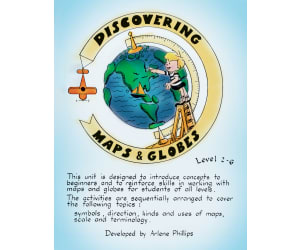
DISCOVERING MAPS & GLOBES Gr. 2-6
Social Studies, Geography, Grade 2, 3, Teacher Tools, Lesson Plans
DISCOVERING MAPS & GLOBES Gr. 2-6 presents an enjoyable and effective approach to introducing fundamental map and globe skills to students from grade 2 through to grade 6. An essential teaching resource, this package adequately addresses learners at all levels, including those who might find geography challenging due to limited exposure. Designed for optimal value for children in both junior and intermediate grades, the material in this package covers: Symbols related to maps and globes Reading directions on maps Different types of maps and their applications Glossary of terms associated with geographic tools Understanding scale on maps and globes This resource encourages active participation from students, with activities designed for varying group sizes - individual learners, small groups or whole classes! The level of flexibility allows teachers greater control over their lesson plan execution. Furthering that flexibility is the fact that these activities are also open-ended enough to be creatively modified based on specific learner needs or classroom dynamics. This gives educators more room for initiative so they can tailor resources according to what would most benefit students' learning journey. This PDF file type comes with enriching lesson plans. The plans can directly integrate into your Social Studies curriculum with a specific focus towards enhancing basic geography skills among your students. In conclusion, DISCOVERING MAPS & GLOBES Gr. 2-6, is not just a teaching tool; it empowers you as an educator by letting your creativity thrive while making Geography enticing and user-friendly even for young learners!
Author Classroom Complete Press
Tags PDF

Word Families: Long Vowels - Digital Lesson Plan Gr. PK-2 | PC Software
ELA, Language Development, Vocabulary, Kindergarten, Preschool, Grade 1, 2, Teacher Tools, Lesson Plans
Word Families: Long Vowels - Digital Lesson Plan Gr. PK-2 | PC Software This dynamic and engaging teaching resource is designed to heighten vocabulary skills, sight word recognition, and comprehension among preschool through second grade students. A user-friendly program contains an 80 screen-page digital lesson plan aimed at strengthening students' grasp of phonetics using real-life imagery. Core Focus & Lessons The core focus is on the pronunciation of long vowel phonograms or word families. Learners delve into lessons, acquainting with the onset and rhyme connection found in word families. This promotes faster reading abilities by perceiving words as recognizable language segments or chunks. Included Interactive Activities Memory match game: It amuses while reinforcing lesson content simultaneously. Crossword puzzles and word search activities: Simulate cognitive skills in a playlike ambiance—a fun space where education thrives subtly yet substantially. Evaluation & Assessment The Comprehension Quiz included challenges learners' retention of current lessons while revisiting past topics briefly enhancing focus on areas needing attention along confirming mastered skills. Note: This resource aligns perfectly with state standardized academic guidelines emphasizing Bloom's Taxonomy's cognitive learning principles enhancing higher-order thinking skills essential for wholesome educational development. User Groups: Who can benefit? An entire classroom setting Tailored especially for educators juggling multiple responsibilities among diverse student groups. //Can be used in small study groups seeking intensive focus on particular aspects //Can assist individual students with homework assignments at home Why Choose This Resource? Delivered as a single zip file, all you need is a PC to employ this impactful teaching resource. Catered for language arts instruction, specifically vocabulary enhancement among Preschool through second grade students, This is not just a lesson plan—it's an act of simplifying education itself!
Author Classroom Complete Press
Tags Digital Lesson Plan, Word Families, Long Vowels Activity, Reading Lesson Plan, Reading Vocabulary
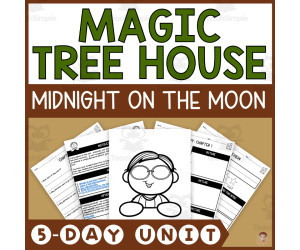
Midnight on the Moon (Magic Tree House #8 Lesson Plan, Videos, Activities)
ELA, Reading, Grade 1, 2, 3, Lesson Plans, Teacher Tools
Midnight on the Moon (Magic Tree House #8 Lesson Plan, Videos, Activities) is a meticulously crafted educational resource aimed at 1st, 2nd, and 3rd-grade teachers as well as homeschooling parents. This study guide includes a variety of activities connected to the story and offers structured teaching procedures. A key feature of this kit its ready-to-use design which encompasses five different days' worth of exercises; making lesson planning effortless. The guide comes with comprehension questions for each chapter that encourage learners to remember details from their readings while also boosting their understanding depth. The plan incorporates vocabulary practice derived from the context of the novel which can enhance student's language skills. This curriculum covers important domains like English Language Arts, Geography, History and Research providing numerous learning opportunities. The package involves pre-reading, during reading and post-reading worksheets for active student involvement throughout their literature journey. An interactive notebook or oral discussions options are provided as an alternative for those who wish to reduce printing cost without compromising student engagement levels. Creative projects are encouraged through various activity suggestions allowing teachers to implement customized pedagogy strategies aimed at improving pupils' learning recall in solo or group settings. Nebulous concepts can be further reinforced by using these resources as homework assignments thus extending classroom-based discourse outside school premises. Inculcating history-centric assignments helps children cultivate crucial research skills whilst expanding their knowledge about worldwide historical narratives through geography studies. Promising future writers learn effective writing schemes via targeted lessons complemented by fun-filled craftivities that could have a positive impact on avid young linguists. Building all the lessons around themes of Language Arts with predominant reading sessions promotes the development of analytical skills and instils virtues like patience among passionate readers. All in all, Midnight on the Moon (Magic Tree House #8 Lesson Plan, Videos, Activities) is a multi-dimensional teaching tool fostering active participation alongside systematic and individualized learning methods. It functions as a guiding light illuminating an interactive learning path for students from their early schooling stages while ensuring they are equipped with crucial skills required for future academic success.
Author Heather Huhman
Tags Magic Tree House, Midnight On The Moon, Lesson Plan, Activities, Vocabulary, Midnight On The Moon

I WONDER - Did Roman Children Wear Jewellery | Animated Video Lesson
History: Europe, History, Social Studies, History: Ancient, Grade 2, 3, 4, 5, 6, 7, 8, Lesson Plans, Teacher Tools
Video Introduction An amazing video designed for the students to learn more about history. I WONDER - Did Roman Children Wear Jewellery | Animated Video Lesson Do you like history? Which topic do you really enjoy about history? Have you ever read an interesting fact about the Vikings? If yes, can you mention them? What do you like most about the Victorian era? Can you name all the Tudors? Have you ever wondered how people used to live in ancient Japan and ancient China? Do you know any interesting facts about ancient Egyptians and the Pharaohs? Have you ever visited South America? What do you know about Incas and Aztecs? Celtic culture was really one of a kind, can you name any of the places that Celts used to live in? Imagine yourself living during the ancient Roman empire, how your life will look like? Ancient Greece was an amazing place to live in. What do you know about ancient Greek life? I WONDER - Did Roman Children Wear Jewellery | Animated Video Lesson The video is perfect for encouraging the researching skills for the students, while learning more about history. I WONDER - Did Roman Children Wear Jewellery | Animated Video Lesson This friendly designed video is suitable for students at school, homeschooling, and as a group activity. Format Available in MP4 format.
Author Educational Voice
Tags Did Roman Children Wear Jewellery, Did Roman Children Wear Jewellery Video, Roman Children, Roman Children Video, Roman Children Video For Kids, Roman Children Facts, Roman Children Facts For Kids

Pony Express: History - Hands On
Social Studies, History, History: USA, Grade 1, 2, 3, 4, Teacher Tools, Lesson Plans
Pony Express: History - Hands On A comprehensive teaching resource designed to engage students actively in learning about an exciting period of American history. Primarily developed for first to fourth graders. This educational tool encompasses subjects like: Social Studies with specific focus on U.S. History. What makes it special? The initiative seamlessly integrates various mediums and practices such as poems, music, games , discussions, arts and creative writing activities. It shifts from traditional passive learning techniques encouraging participation that enhances learning outcomes. Simulating the historical era: In this module focusing on the Pony Express era, students get involved in: - Creating their own petitions—a popular recourse in old times. - Participating in enactments involving Pony Rider puppets representing an actual Pony Express ride. - Involving themselves in a relay race—a tangible demonstration of real-life pony express team's challenges. Reinforcing through sharing: After processing these experiential lessons about history through fun-filled means like a museum exhibit for sharing with friends or family—this package bolsters knowledge retention. All-in-one PDF package includes: - total of 34 readily printable pages serving varying functions across different group sizes. Bolster your active and experiential learning journey using Pony Express: History - Hands On!.
Author Classroom Complete Press
Tags Social Studies, Pony Express, Puppets, American History, Poems
I WONDER - What Job Does The Nose Do In The Respiratory System
Human Body, Life Sciences, Science, Biology, STEM, Grade 1, 2, 3, 4, 5, 6, 7, 8, Lesson Plans, Teacher Tools
Video Overview The human body is full of fascinating wonders to learn. This video is created to help the students recognize the anatomy and the job of the human body. I WONDER - What Job Does The Nose Do In The Respiratory System | Animated Video Lesson Every part and organ in our human body is vital so let's see how important they are. Have you ever imagined how we look like if we didn't have a skeleton? Did you know that because we have our amazing muscles we can stand! Do you know how many teeth do we have? Have you ever wondered about the food journey inside our body? Can you name all the glands in our body? Why do we have skin? Our nervous system is really good at sending signals. Can you tell us more about it? Are you really good at Mathematics, painting, or any other thing? You should really thank your brain about it! The famous five senses are really doing a great work? Can you explain how every sense works? I WONDER - What Job Does The Nose Do In The Respiratory System | Animated Video Lesson The video is perfect for encouraging the researching skills for the students, while learning more about our fantastic human body. I WONDER - What Job Does The Nose Do In The Respiratory System | Animated Video Lesson This friendly designed video is suitable for students at school, homeschooling, and as a group activity. Format Available in MP4 format.
Author Educational Voice
Tags What Job Does The Nose Do In The Respiratory System, What Job Does The Nose Do In The Respiratory System Video, Respiratory System, Respiratory System Facts, Respiratory System Facts For Kids, Respiratory System Video