



Page 54 - 3rd Grade Lesson Plans
Support your third graders' expanding abilities with lesson plans that encourage exploration and deeper understanding. Covering a range of subjects, these resources offer hands-on activities and discussions. Use them to create a vibrant learning atmosphere that fosters enthusiasm.

 Show filters

I WONDER - What Bioluminescent Sea Creatures Exist In The Oceans
STEM, Animals, Life Sciences, Science, Biology, Grade 1, 2, 3, 4, 5, 6, 7, 8, Lesson Plans, Teacher Tools
Video Introduction Animal kingdoms are full of fascinating wonders to learn. This video is designed for the students to learn more about animals in different countries. I WONDER - What Bioluminescent Sea Creatures Exist In The Oceans | Animated Video Lesson Do you like animals? what is your favorite one? Do you own a pet? If yes, tell us more about it, like what its name? And what do you like most about it? What are the animal kingdoms? Can you write down the characteristics of each animal class like mammals, birds, reptiles, amphibian, fish and mollusks. Do you know that some animals can sing, can you name any of them? What is the largest and the smallest mammal in the world? What is the largest and the smallest bird in the world? What is the largest and the smallest fish in the world? I WONDER - What Bioluminescent Sea Creatures Exist In The Oceans | Animated Video Lesson The video is perfect for encouraging the researching skills for the students, while learning more about these fantastic animals. I WONDER - What Bioluminescent Sea Creatures Exist In The Oceans | Animated Video Lesson This friendly designed video is suitable for students at school, homeschooling, and as a group activity. Format Available in MP4 format.
Author Educational Voice
Tags What Bioluminescent Sea Creatures Exist In The Oceans, What Bioluminescent Sea Creatures Exist In The Oceans Video, Bioluminescent Sea Creatures, Bioluminescent Sea Creature, Bioluminescent Sea Creatures Video
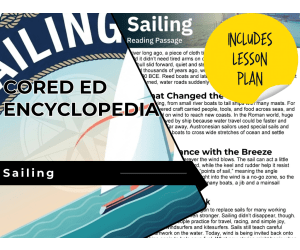
Sailing Reading Comprehension Passage - Cored Ed Encyclopedia
ELA, Language Development, Reading Comprehension, Reading, Pre-Reading, Science, Writing, Engineering, Technology, Physics, Grade 2, 3, 4, 5, Worksheets & Printables, Worksheets, Teacher Tools, Centers, Activities, Writing Prompts, Assessments, Quizzes and Tests, Quizzes, Lesson Plans
This sailing reading comprehension includes: Visualization (on the front cover) Start your lesson by taking a minute to think and share something about the topic. Read the script aloud (slowly), perhaps prepare some music or sound effects. Student close their eyes and let their imaginations wander. Students open their eyes, read the question aloud and give them a few minutes to complete. Ask a few students to share or keep answers until the end to compare with what they learn in the passage. Quick pause—thousands of Cored Education products are included with your TeachSimple membership. Download links and encyclopedia index available here. Pre-Reading Trivia Students will write down one thing they already know about the subject and then read five more facts and discuss. These facts are fun, and the students will enjoy learning about the subject before reading more. Give 1 minute for students to write what they already know (no pressure—best guess is fine). Read the five facts together. After each fact, do ask a student for their opinion, was it surprising? Set a purpose by asking students to highlight/underline one fact they want to learn more about during the reading. Reading Passage The text is a high-interest reading passage with set paragraphs, roughly three to four paragraphs long. It contains a variety of themes about the topic, anywhere from history to technology. The passage is between 250 and 350 words in length. First, ask students to look at the headings and see what they’ll learn about today. What do they know about the topic/heading? First read options: Teacher read-aloud (best for support). Partner reading (paragraph by paragraph). While reading, students underline important details, and vocabulary words they think may come up in the questions section. Mixed Questions The first question page contains four multiple-choice questions, each with a choice of four answers, and three written response questions that require a sentence or two from the student. Students complete the mcqs first independently, then review quickly as a class. For the 3 written responses, try to get students giving the answer with some form of evidence: “I think ___ because the text says ___.” If students get stuck, send them back to check the passage. Vocabulary Questions Practice seven key words from the text in this section across two activities. First section is scrambled words where students will unscramble three words given a clue for each. The second section is a word to meaning matching activity. Before starting, have some students read out words they underlined in the passage. Ask students to say the word and read aloud the sentence(s) around each word. Ask students to do scrambled words and the matching exercise in pairs then go through answers as a class. For the scrambled spelling task, get four pairs to come up to the board and write the words for extra practice with the other student reading out the clue. For the matching task, prompt students to give full sentences: “I matched ___ with ___ because ___.” Creative Writing In this question, the student will be required to write a five to eight sentence paragraph on a question related to the topic. Before starting, ask students write down 3 key ideas they are going to include in their piece. Ask students for ideas to share around the class to help those struggling. Pro writing expectations: 5–8 sentences At least 2 facts or details from the passage At least 2 vocabulary words from the previous page Students read their paragraphs while classmates listen for facts and vocabulary words. Extension Activities This page is optional for fast finishers or to take home. There are several activities, each one requiring a different skill. Do some, do none, do all, completely optional - but you will feel reassured knowing every possibility is planned for. Includes summary writting question. Answer Key There are answers for the multiple-choice questions, written response questions have sample answers, vocabulary answers and if there is a summary question then a sample summary will be provided as well. Lesson Plan Included Customized lesson plan for this lesson is included. Lesson Snapshot Title: Sailing Genre: Nonfiction (informational passage) Subject: Science (Forces & motion) / Social Studies (history of travel) Primary Topic: How wind powers boats and changed travel Estimated Guided Reading Level (A–Z): R What This Lesson Teaches Best How wind pushing on a sail can move a boat without rowing (sail as a “wind catcher” and cloth billowing). How sailing helped people travel farther and move supplies, from early boats to tall ships, including examples from Egypt, the Roman world, and Austronesian sailors. Key sailing concepts that affect movement and direction, including “points of sail,” the “no-go zone,” and zigzagging turns called tacks. How boat parts help sailing work: the sail pulling forward and the keel and rudder helping resist sliding sideways. How technology changed sailing’s role (steam engines replacing sails for many working ships) and how wind is being used again on some cargo ships to save fuel. Learning Goals Explain how wind pressing on a sail can move a boat forward. Describe how sailing grew from river boats to ships that carried people, tools, and food across seas. Identify why sailors use tacks and what the “no-go zone” means in the passage. Describe how the keel and rudder help a sailboat resist sliding sideways. Explain how sailing changed in the late 1800s and how wind is being used again today. Key Vocabulary From the Text hull — the main body of a boat. keel — a strong part that helps stop sliding sideways. rudder — a part that helps steer the boat. tacks — zigzag turns used to move into wind. cargo — goods carried on a ship. FULL CATALOG OF DOWNLOAD LINKS AND ENCYCLOPEDIA INDEX HERE
Author Cored Education
Rating
Tags Vocabulary, Reading Comprehension, Reading Passages, Reading, Creative Writing, Reading Strategies, Writing Prompts, Lesson Plans, Sailing, Engineering

Multiply by "Four" Task Cards - Multiplication Facts 4
Math, Early Math, Numbers, Basic Operations, Multiplication and Division, Multiplication, Grade 1, 2, 3, 4, 5, Teacher Tools, Lesson Plans, Assessments, Quizzes and Tests, Worksheets & Printables, Task Cards, Centers, Activities
Multiplying by 4 doesn’t have to feel like pulling teeth—this set of 60 task cards and 10 worksheets makes learning multiplication both fun and effective! Perfect for mastering the 4-times tables from 1 to 10, this resource is designed to keep your students engaged and on track without adding extra work to your plate. Ways to Use: Warm-Up Activity: Start math lessons with a few task cards to set the tone. Partner Practice: Let students pair up and challenge each other to solve problems. Independent Work: Use the worksheets for focused, quiet practice. Group Games: Turn the task cards into a math relay or scavenger hunt for extra excitement. Homework Helper: Assign worksheets to reinforce concepts at home. Advantages: Focused Mastery: Zeroes in on multiplying by 4, helping students build confidence step by step. Time-Saving: Pre-made and ready to go—because you’ve got enough to do! Engaging & Fun: Creative formats keep kids entertained while they learn. Flexible Use: Perfect for individuals, pairs, or whole-class activities. Progress Tracking: Worksheets make it easy to identify strengths and areas for improvement. Make multiplying by 4 a smooth journey—grab this resource and watch your students thrive!
Author Ponder Palette Plazza
Tags Multiplication, Multiplication Task Cards, Multiplication Worksheets, Math Task Cards, Numbers, Task Cards, Multiply By 4, Math Activities

I WONDER - What Is The Smallest Vertebrate In The World Video
STEM, Animals, Life Sciences, Science, Biology, Grade 1, 2, 3, 4, 5, 6, 7, 8, Lesson Plans, Teacher Tools
Video Introduction Animal kingdoms are full of fascinating wonders to learn. This video is designed for the students to learn more about animals in different countries. I WONDER - What Is The Smallest Vertebrate In The World | Animated Video Lesson Do you like animals? what is your favorite one? Do you own a pet? If yes, tell us more about it, like what its name? And what do you like most about it? What are the animal kingdoms? Can you write down the characteristics of each animal class like mammals, birds, reptiles, amphibian, fish and mollusks. Do you know that some animals can sing, can you name any of them? What is the largest and the smallest mammal in the world? What is the largest and the smallest bird in the world? What is the largest and the smallest fish in the world? I WONDER - What Is The Smallest Vertebrate In The World | Animated Video Lesson The video is perfect for encouraging the researching skills for the students, while learning more about these fantastic animals. I WONDER - What Is The Smallest Vertebrate In The World | Animated Video Lesson This friendly designed video is suitable for students at school, homeschooling, and as a group activity. Format Available in MP4 format.
Author Educational Voice
Tags What Is The Smallest Vertebrate In The World, What Is The Smallest Vertebrate In The World Video, Smallest Vertebrate In The World, Smallest Vertebrate In The World Video, Smallest Vertebrate In The World Facts
Genre Mini-Unit
ELA, Literature, Grade 3, 4, 5, Lesson Plans, Teacher Tools
This resource is a Genre Mini-Unit. Students will learn about and review two genres - fiction and nonfiction. Within these genres, students will be introduced to the different type of texts that fall into these two genres. Students will go on scavenger hunts, set goals, complete a variety of printable activities and much more.
Author Kel's Klass
Tags Genres, Readers Workshop, Literature Packet, Reading Assessments, Library
I WONDER - What is The Smallest Vertebrate In The World
STEM, Animals, Life Sciences, Science, Biology, Grade 1, 2, 3, 4, 5, 6, 7, 8, Lesson Plans, Teacher Tools
Video Introduction Animal kingdoms are full of fascinating wonders to learn. This video is designed for the students to learn more about animals in different countries. I WONDER - What is The Smallest Vertebrate In The World | Animated Video Lesson Do you like animals? what is your favorite one? Do you own a pet? If yes, tell us more about it, like what its name? And what do you like most about it? What are the animal kingdoms? Can you write down the characteristics of each animal class like mammals, birds, reptiles, amphibian, fish and mollusks. Do you know that some animals can sing, can you name any of them? What is the largest and the smallest mammal in the world? What is the largest and the smallest bird in the world? What is the largest and the smallest fish in the world? I WONDER - What is The Smallest Vertebrate In The World | Animated Video Lesson The video is perfect for encouraging the researching skills for the students, while learning more about these fantastic animals. I WONDER - What is The Smallest Vertebrate In The World | Animated Video Lesson This friendly designed video is suitable for students at school, homeschooling, and as a group activity. Format Available in MP4 format.
Author Educational Voice
Tags What Is The Smallest Vertebrate In The World, What Is The Smallest Vertebrate In The World Video, Smallest Vertebrate In The World, Smallest Vertebrate In The World Facts, Smallest Vertebrate In The World Video
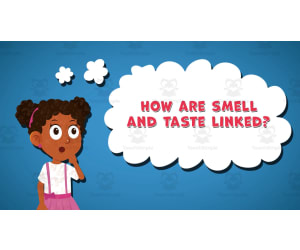
I WONDER - How Are Smell And Taste Linked | Animated Video Lesson
STEM, Biology, Life Sciences, Science, Human Body, Grade 2, 3, 4, 5, 6, 7, 8, Lesson Plans, Teacher Tools
Video Overview The human body is full of fascinating wonders to learn. This video is created to help the students recognize the anatomy and the job of the human body. I WONDER - How Are Smell And Taste Linked | Animated Video Lesson Every part and organ in our human body is vital so let's see how important they are. Have you ever imagined how we look like if we didn't have a skeleton? Did you know that because we have our amazing muscles we can stand! Do you know how many teeth do we have? Have you ever wondered about the food journey inside our body? Can you name all the glands in our body? Why do we have skin? Our nervous system is really good at sending signals. Can you tell us more about it? Are you really good at Mathematics, painting, or any other thing? You should really thank your brain about it! The famous five senses are really doing a great work? Can you explain how every sense works? I WONDER - How Are Smell And Taste Linked | Animated Video Lesson The video is perfect for encouraging the researching skills for the students, while learning more about our fantastic human body. I WONDER - How Are Smell And Taste Linked | Animated Video Lesson This friendly designed video is suitable for students at school, homeschooling, and as a group activity. Format Available in MP4 format.
Author Educational Voice
Tags How Are Smell And Taste Linked, How Are Smell And Taste Linked Video, Smell And Taste, Smell And Taste Facts, Smell And Taste Facts For Kids, Smell And Taste Video, Smell And Taste Video For Kids

I WONDER - Can The Colugo Actually Fly | Animated Video Lesson
STEM, Animals, Life Sciences, Science, Biology, Grade 3, 4, 5, 6, 7, 8, 9, Lesson Plans, Teacher Tools
Video Introduction Animal kingdoms are full of fascinating wonders to learn. This video is designed for the students to learn more about animals in different countries. I WONDER - Can The Colugo Actually Fly | Animated Video Lesson Do you like animals? what is your favorite one? Do you own a pet? If yes, tell us more about it, like what its name? And what do you like most about it? What are the animal kingdoms? Can you write down the characteristics of each animal class like mammals, birds, reptiles, amphibian, fish and mollusks. Do you know that some animals can sing, can you name any of them? What is the largest and the smallest mammal in the world? What is the largest and the smallest bird in the world? What is the largest and the smallest fish in the world? I WONDER - Can The Colugo Actually Fly | Animated Video Lesson The video is perfect for encouraging the researching skills for the students, while learning more about these fantastic animals. I WONDER - Can The Colugo Actually Fly | Animated Video Lesson This friendly designed video is suitable for students at school, homeschooling, and as a group activity. Format Available in MP4 format.
Author Educational Voice
Tags Can The Colugo Actually Fly, Can The Colugo Actually Fly Video, Colugo, Colugo Facts, Colugo Facts For Kids, Colugo Video, Colugo Video For Kids, Flying Colugo, Flying Colugo Video
Geometry: Transformations & Symmetry - Learn the Skill - FLASH-PC
Math, Geometry, Common Core, Grade 3, 4, 5, Teacher Tools, Lesson Plans
Geometry: Transformations & Symmetry - Learn the Skill - FLASH-PC This is a dynamic educational resource designed to assist educators in effectively imparting geometry concepts. It features a robust collection of curriculum-based content, emphasizing real-world word problems that bolster both transference and practical application of geometry principles. This product offers the distinctive advantage of readily available math tools to augment students' understanding and retention rate. This could be an efficient teaching asset for whole classes, small study groups, or even one-on-one tutoring sessions. Compatibility with Standards: Its accord with Common Core State Standards, STEM initiatives, and NCTM guidelines assures educators of its commitment to providing high-quality instruction materials. Multilingual Support:This has been expertly crafted to meet the diverse learning needs in today's classrooms by incorporating voiceovers in English and Spanish along with appropriately translated text versions. The Geometry: Transformations & Symmetry Learn-the-Skill Flash-PC in Lesson Plans This works incredibly well when integrated into lesson plans as it fosters engaging teaching resources that could potentially elevate academic performance while promoting solid comprehension of elementary geometry concepts. Economic Investment for Student's Future Educators can invest wisely in their students' future by tapping into this singular digital educational utility comprising one customized product file. The application helps nurture young minds' development through immersive learning experiences offered by our distinguished Geometry: Transformations & Symmetry tool! A Revolutionized Approach towards Imparting Geometrical Knowledge Initiate a revolutionized approach towards imparting geometrical knowledge using TeachSimple's unique resource! Ready your learners for new academic prospects as they are profusely equipped through this versatile toolkit— best suited for Grade 3 to Grade 5 pupils engaged in Math subjects or subtopics focused on Geometry concepts. The downloadable software is straightforwardly accessible on PCs – designed thoughtfully for swift implementation in varied educational settings.
Author Classroom Complete Press
Tags Software (PC)
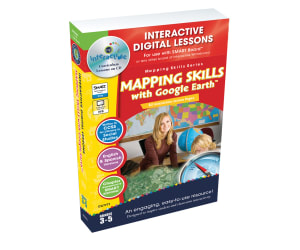
Mapping Skills with Google Earth - Digital Lesson Plan Gr. 3-5 - FLASH-PC
Social Studies, Geography, Grade 3, 4, 5, Teacher Tools, Lesson Plans
Mapping Skills with Google Earth - Digital Lesson Plan Gr. 3-5 - FLASH-PC A comprehensive learning resource perfect for third to fifth-grade educators who teach geography or social studies. This interactive 80 screen-page digital lesson plan provides an in-depth exploration of reading and creating maps. Students will delve into the tangible elements found on a map such as lines of latitude, longitude, as well as unique geographic time zones. Enhancing geographical knowledge, learners get to explore different forms of maps including topographic and choropleth ones which depict physical features and demographical data respectively. The lesson plan also comprises an extensive study about North America's states and provinces along with a worldly view encapsulating various countries contributing to enhancing students' geographical awareness. Designed to work seamlessly on any brand of interactive whiteboard, this resource enables maximum student involvement in the learning process. To make lessons more engaging it includes reading passages, pre-and post-reading activities along with a Google Earth™ component that adds another exciting layer to teaching geographical concepts. Supplementary features such as test prep materials, memory match games, crossword puzzles and word searches turn revision sessions into fun-filled exercises. Supportive videos give more depth to text content while also catering for visual learners. This versatile teaching resource can be seamlessly incorporated into whole group discussions or small group tasks throughout the school days. It could also prove beneficial as insightful homework assignments reinforcing topics covered at school that day. This digital lesson plan is designed specifically for PC use aligning successfully with state standards delivering not just proficient education but fostering boundless enthusiasm towards Social Studies amongst students! Bringing convenience a little closer home for globally diverse classrooms is English and Spanish text-to-speech availability making this tool highly accessible. Finished off by providing an opportunity for comprehension assessment through quizzes ensures solidification of learned material before moving forward ensuring necessary academic achievements according To Bloom's Taxonomy requirements are met.
Author Classroom Complete Press
Tags Software (PC)
100 Little Reading Comprehension Lessons: Fun-to-read stories with skill-building exercises
ELA, Reading, Reading Comprehension, Grade 1, 2, 3, 4, Teacher Tools, Lesson Plans
100 Little Reading Comprehension Lessons: Fun-to-read stories with skill-building exercises A teaching resource tailored for educators seeking to enhance their students' reading skills. Developed to stimulate the curiosity of early learners, this product delivers entertaining and educational content that entices young minds. The book features: 100 captivating short stories, poems, and articles meticulously designed for Grade 1-4 students. Diverse range of texts allowing learners to actively discover new concepts across various themes and genres. Engaging narratives supporting their vocabulary expansion journey in an enjoyable way. Skill-building exercises: Each engaging story presented is also a tool facilitating considerable skill-building exercises. Post-story comprehension questions serve multiple purposes: To review what they have read To provide opportunities for critical analysis. To familiarize students with new words within contexts further enhancing their language acquisition process by connecting novel terms with clear and concise descriptors found in the texts. This comprehensive teaching resource works in diverse instructional setups: whole-class teachings enabling peer learning; small groups providing more focused assistance leading individual progress tracking; or even as homework assignments involving parents into their child's learning path while regularly reviewing student development right from home! Packaging details: The package includes one all-encompassing PDF file containing necessary lesson plans focusing on strengthening comprehension skills. - Easy reproducibility onto physical media - Single-page lessons offer flexibility - Usable between Grades 1-4 "Choosing '100 Little Reading Comprehension Lessons' brings calculated fun into classrooms or home schools alike - offering bite-sized nuggets of knowledge wrapped up within short, exciting narratives promoting love for learning."
Author Classroom Complete Press
Tags PDF
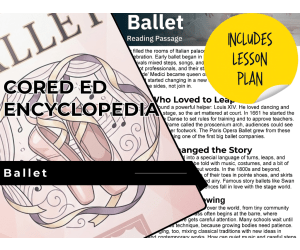
Ballet Reading Comprehension Passage - Cored Ed Encyclopedia
ELA, Language Development, Reading Comprehension, Reading, Social Studies, Writing, Vocabulary, History, Dance, Creative Arts, Grade 2, 3, 4, 5, Worksheets & Printables, Worksheets, Teacher Tools, Centers, Activities, Writing Prompts, Assessments, Quizzes and Tests, Quizzes, Lesson Plans
This ballet reading comprehension with lesson plan includes: Visualization (on the front cover) Start your lesson by taking a minute to think and share something about the topic. Read the script aloud (slowly), perhaps prepare some music or sound effects. Student close their eyes and let their imaginations wander. Students open their eyes, read the question aloud and give them a few minutes to complete. Ask a few students to share or keep answers until the end to compare with what they learn in the passage. COMPANION VIDEO NOW AVAILABLE (EMBEDDED AFTER PREVIEW PICTURES IN PRODUCT DESCRIPTION) Quick pause—thousands of Cored Education products are included with your TeachSimple membership. Download links and encyclopedia index available here. Pre-Reading Trivia Students will write down one thing they already know about the subject and then read five more facts and discuss. These facts are fun, and the students will enjoy learning about the subject before reading more. Give 1 minute for students to write what they already know (no pressure—best guess is fine). Read the five facts together. After each fact, do ask a student for their opinion, was it surprising? Set a purpose by asking students to highlight/underline one fact they want to learn more about during the reading. Reading Passage The text is a high-interest reading passage with set paragraphs, roughly three to four paragraphs long. It contains a variety of themes about the topic, anywhere from history to technology. The passage is between 250 and 350 words in length. First, ask students to look at the headings and see what they’ll learn about today. What do they know about the topic/heading? First read options: Teacher read-aloud (best for support). Partner reading (paragraph by paragraph). While reading, students underline important details, and vocabulary words they think may come up in the questions section. Mixed Questions The first question page contains four multiple-choice questions, each with a choice of four answers, and three written response questions that require a sentence or two from the student. Students complete the mcqs first independently, then review quickly as a class. For the 3 written responses, try to get students giving the answer with some form of evidence: “I think ___ because the text says ___.” If students get stuck, send them back to check the passage. Vocabulary Questions Practice seven key words from the text in this section across two activities. First section is scrambled words where students will unscramble three words given a clue for each. The second section is a word to meaning matching activity. Before starting, have some students read out words they underlined in the passage. Ask students to say the word and read aloud the sentence(s) around each word. Ask students to do scrambled words and the matching exercise in pairs then go through answers as a class. For the scrambled spelling task, get four pairs to come up to the board and write the words for extra practice with the other student reading out the clue. For the matching task, prompt students to give full sentences: “I matched ___ with ___ because ___.” Creative Writing In this question, the student will be required to write a five to eight sentence paragraph on a question related to the topic. Before starting, ask students write down 3 key ideas they are going to include in their piece. Ask students for ideas to share around the class to help those struggling. Pro writing expectations: 5–8 sentences At least 2 facts or details from the passage At least 2 vocabulary words from the previous page Students read their paragraphs while classmates listen for facts and vocabulary words. Extension Activities This page is optional for fast finishers or to take home. There are several activities, each one requiring a different skill. Do some, do none, do all, completely optional - but you will feel reassured knowing every possibility is planned for. Includes summary writting question and additional facts. Answer Key There are answers for the multiple-choice questions, written response questions have sample answers, vocabulary answers and if there is a summary question then a sample summary will be provided as well. Lesson Plan Included Customized lesson plan for this lesson is included. Lesson Snapshot Title: Ballet Genre: Nonfiction (informational passage) Subject: Arts (Dance) / Reading (Informational Text) Primary Topic: How ballet began, changed, and is practiced today Estimated Guided Reading Level (A–Z): S What This Lesson Teaches Best How ballet began in Renaissance palace courts, with dancing as part of celebrations. How ballet shifted from joining in to watching a performance “from the sides.” How ballet grew in France through royal support, including **Louis XIV starting a dance academy to set training rules and approve teachers. How stage design affected what audiences saw (the “proscenium arch” helped viewers see clearer lines and sharper footwork). How ballet tells stories without words using movement plus music, costumes, and a bit of mime, and how pointe shoes and lighter skirts changed the look. Learning Goals Describe where early ballet began and what events it was part of. Explain how ballet changed when people began watching instead of joining in. Identify what happened in 1661 and why it mattered for ballet training. Describe how the proscenium arch affected what audiences could see. Explain how ballet can show feelings and stories “without words,” using details from the text. Describe how ballet is practiced today (studios worldwide, barre work, and careful technique for growing bodies). Key Vocabulary From the Text Renaissance — a time in Europe with art, learning, and change. nobles — people from wealthy or high-ranking families. proscenium — a stage frame that shapes the audience’s view. pointe — dancing on the tips of the toes. barre — a rail dancers hold while practicing in class. FULL CATALOG OF DOWNLOAD LINKS AND ENCYCLOPEDIA INDEX HERE
Author Cored Education
Rating
Tags Vocabulary, Reading Comprehension, Reading Passages, Lesson Plans, Ela Lesson Plans, Reading Comprehension Lesson Plans, Pre-reading, History, Art, Dance Lesson Plans

Emergency Sub Plans for ELA! 5 full days of no prep lessons
ELA, Language Development, Literature, Reading, Writing, Grade 3, 4, 5, Worksheets, Worksheets & Printables, Workbooks, Lesson Plans, Teacher Tools, Writing Prompts
Ready to make substitute days smoother? Grab this ELA sub plan set, print it out, save it for those surprise moments, and know you’ve got excellent ELA work ready to go. Get 1 full week of engaging ELA content ready to use! Having no-prep emergency sub plans on hand is honestly one of the best things you can have ready as a teacher! You never know when you’ll wake up sick, have a family situation pop up, or just need a mental health day, and the last thing you want to do is throw together a pile of random worksheets. This resource takes that stress completely off your plate. Everything in this set is already organized, purposeful, and aligned with real ELA standards, so students stay engaged and on track even when you’re out. If you’re feeling like you might get hit with a substitute day and want to be ready without scrambling, this is your go-to. Inside you’ll find five days of animal-themed reading passages paired with four different ELA activity sheets each day. So one day is a full set: a short nonfiction text, comprehension questions, vocab practice, research, and a creative writing extension. You just print (or upload digitally) and you’re set. I kept everything simple so a substitute teacher can walk in and confidently lead the class — no stress, no piles of notes, no frantic prepping the night before. There’s a teaching guide included, directions are clear, and both printable PDF and digital Easel versions are included. The passages are about unique animals (like axolotls, pangolins, and narwhals) which means students are more likely to stay engaged. My students love anything animal-related! They’ll practice highlighting key details, answering meaningful questions, and writing with purpose. If you’re newer to teaching (or even if you’re a veteran who just wants less prep on an unpredictable days), this pack gives you peace of mind. You’ll walk into the classroom knowing the students will stay on track with reading and writing. Wishing you calm, prepared, and totally in-control sub days ahead! Enjoy Stephanie
Author The Language of Learning
Rating
Tags Sub Plans, Writing Prompts, Vocab, Reading, Close Reading, Substitute Plans, ELA Lessons, Emergency Sub Plans

Turkey life cycle diagram fall thanksgiving bird science unit study
Life Sciences, Science, Biology, Nature & Plants, Kindergarten, Preschool, Grade 1, 2, 3, Coloring Pages, Worksheets, Worksheets & Printables, Parts of and Anatomy of, Flashcards, Diagrams, Teacher Tools, Lesson Plans
Make learning about the turkey life cycle fun and engaging with this printable bird science activity! Students will explore how turkeys grow from eggs into adult birds while learning about the major stages of development, turkey anatomy, habitat, behavior, and interesting facts. I like using this resource during fall science units, Thanksgiving activities, bird studies, animal life cycle lessons, classroom centers, and homeschool learning. It's a low-prep activity that combines animal science with a popular seasonal theme. What You Will Get This printable Turkey Life Cycle resource helps students identify and sequence the major stages of a turkey's growth while building animal science vocabulary and learning fascinating turkey facts. What's Included in this Resource? • Turkey life cycle diagram • Life cycle sequencing activity • Egg, embryo, poult, juvenile, and adult turkey stages • Bird science vocabulary • Turkey habitat and behavior facts • Fun facts about turkeys • Student-friendly printable science activities This resource is perfect for: • Fall science lessons • Thanksgiving classroom activities • Bird life cycle studies • Animal science units • Turkey-themed learning • Science centers • Homeschool learning • Early finisher activities Why you will love this? • Easy to print and use • Connects animal science with a seasonal fall theme • Reinforces life cycle sequencing skills • Builds bird and animal vocabulary • Encourages observation and scientific thinking • Great for Thanksgiving and fall science centers This Turkey Life Cycle activity is a fun way for students to discover how turkeys develop from eggs into adult birds while exploring animal growth, bird science, and fascinating facts about this iconic North American bird.
Author Perfect_Printables
Rating
Tags Life Cycle, Fall Activities, Fall Science, Fall Science Worksheet, Turkey, Turkey Life Cycle, Thanksgiving Activities , Bird Life Cycle, Birds Activities, Bird Body Parts
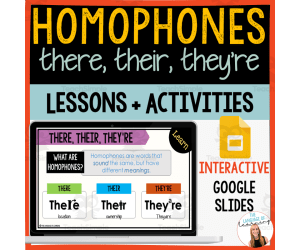
Homophones Interactive Unit
ELA, Grammar, Grade 2, 3, 4, 5, Lesson Plans, Teacher Tools
This resource is a Homophones Interactive Unit . Jam-packed with 26 interactive slides , students will love learning about and practicing with: their, they're and there. This unit can be assigned in Google Classroom.
Author The Language of Learning
Tags Homophones, Digital Lesson, Grammar Practice, Language Review
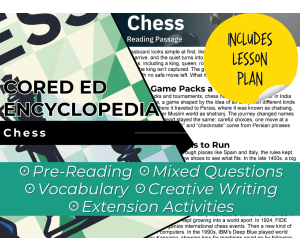
Chess Reading Comprehension Passage - Cored Ed Encyclopedia
ELA, Language Development, Reading Comprehension, Reading, Pre-Reading, Science, Social Studies, Geography, History, Technology, Grade 2, 3, 4, 5, Worksheets & Printables, Worksheets, Teacher Tools, Centers, Activities, Writing Prompts, Assessments, Quizzes and Tests, Quizzes, Lesson Plans
This chess reading comprehension with lesson plan includes: Visualization (on the front cover) Start your lesson by taking a minute to think and share something about the topic. Read the script aloud (slowly), perhaps prepare some music or sound effects. Student close their eyes and let their imaginations wander. Students open their eyes, read the question aloud and give them a few minutes to complete. Ask a few students to share or keep answers until the end to compare with what they learn in the passage. COMPANION VIDEO NOW AVAILABLE (EMBEDDED AFTER PREVIEW PICTURES IN PRODUCT DESCRIPTION) Quick pause—thousands of Cored Education products are included with your TeachSimple membership. Download links and encyclopedia index available here. Pre-Reading Trivia Students will write down one thing they already know about the subject and then read five more facts and discuss. These facts are fun, and the students will enjoy learning about the subject before reading more. Give 1 minute for students to write what they already know (no pressure—best guess is fine). Read the five facts together. After each fact, do ask a student for their opinion, was it surprising? Set a purpose by asking students to highlight/underline one fact they want to learn more about during the reading. Reading Passage The text is a high-interest reading passage with set paragraphs, roughly three to four paragraphs long. It contains a variety of themes about the topic, anywhere from history to technology. The passage is between 250 and 350 words in length. First, ask students to look at the headings and see what they’ll learn about today. What do they know about the topic/heading? First read options: Teacher read-aloud (best for support). Partner reading (paragraph by paragraph). While reading, students underline important details, and vocabulary words they think may come up in the questions section. Mixed Questions The first question page contains four multiple-choice questions, each with a choice of four answers, and three written response questions that require a sentence or two from the student. Students complete the mcqs first independently, then review quickly as a class. For the 3 written responses, try to get students giving the answer with some form of evidence: “I think ___ because the text says ___.” If students get stuck, send them back to check the passage. Vocabulary Questions Practice seven key words from the text in this section across two activities. First section is scrambled words where students will unscramble three words given a clue for each. The second section is a word to meaning matching activity. Before starting, have some students read out words they underlined in the passage. Ask students to say the word and read aloud the sentence(s) around each word. Ask students to do scrambled words and the matching exercise in pairs then go through answers as a class. For the scrambled spelling task, get four pairs to come up to the board and write the words for extra practice with the other student reading out the clue. For the matching task, prompt students to give full sentences: “I matched ___ with ___ because ___.” Creative Writing In this question, the student will be required to write a five to eight sentence paragraph on a question related to the topic. Before starting, ask students write down 3 key ideas they are going to include in their piece. Ask students for ideas to share around the class to help those struggling. Pro writing expectations: 5–8 sentences At least 2 facts or details from the passage At least 2 vocabulary words from the previous page Students read their paragraphs while classmates listen for facts and vocabulary words. Extension Activities This page is optional for fast finishers or to take home. There are several activities, each one requiring a different skill. Do some, do none, do all, completely optional - but you will feel reassured knowing every possibility is planned for. Includes summary writting question and additional facts. Answer Key There are answers for the multiple-choice questions, written response questions have sample answers, vocabulary answers and if there is a summary question then a sample summary will be provided as well. Lesson Plan Included Customized lesson plan for this lesson is included. Lesson Snapshot Title: Chess Genre: Nonfiction (informational passage with headings) Subject: Reading (Informational Text) / Social Studies (history & culture) Primary Topic: How chess works and how it changed over time Estimated Guided Reading Level (A–Z): Q What This Lesson Teaches Best Introduces key basics of the game (64 squares, 16 pieces, and the goal of checkmate). Traces chess’s spread across places and cultures (India → Persia → Muslim world → Europe). Explains how rules changed over time (the queen and bishop gaining powerful moves in the late 1400s). Uses a chronological, heading-based structure to show history in clear sections (early origins, Europe, tournaments, computers). Connects chess to modern competition and technology (international tournaments, FIDE, computers like Deep Blue). Learning Goals Students will describe the chessboard and starting pieces using details from the passage. Students will explain what “checkmate” means in the passage. Students will identify where the passage says chess traveled and what it was called in different places. Students will describe the late-1400s rule change mentioned and how it affected games. Students will summarize how chess moved into public life and became an international sport. Students will explain one way computers affected chess, based on the passage. Key Vocabulary From the Text checkmate — the king is trapped with no safe move. ancestor — something that came earlier than something else. chaturanga — an early India game linked to chess. tournament — a contest with many games. calculating — working things out by thinking ahead. FULL CATALOG OF DOWNLOAD LINKS AND ENCYCLOPEDIA INDEX HERE
Author Cored Education
Rating
Tags Vocabulary, Reading Comprehension, Reading Passages, Lesson Plans, Ela Lesson Plans, Reading Comprehension Lesson Plans, Pre-reading, Geography, Social Studies Lesson Plans, History

Valentine's Day Coloring Activtity - Numbers 1-20
Creative Arts, Graphic Arts, Math, Early Math, Numbers, Kindergarten, Preschool, Grade 1, 2, 3, 4, Worksheets & Printables, Worksheets, Coloring Pages, Teacher Tools, Lesson Plans, Assessments
Love is in the air, and so is one very lost cat! This little feline is on a mission to find its Valentine, but there’s a tiny problem—it can only reach its sweetheart by following the numbers 1 to 20 in the right order. That’s where your students come in! With their number knowledge and a little artistic flair, they’ll help the cat reunite with its special someone. And once the mission is complete? It’s time to color the scene and celebrate a successful cat-tastic love story! Ways to Use: A fun warm-up to get those number brains working A Valentine’s Day activity that secretly reinforces number skills A quiet time task (because love stories don’t need background noise!) A stress-free sub plan that keeps kids engaged and you worry-free Why You’ll Love It: Boosts number sequencing in a sneaky, fun way Encourages creativity (because even cats deserve a colorful love story!) Keeps students focused—which means fewer distractions for you Turns math into an adventure, proving numbers and love actually do mix! So, grab some crayons, hand out this activity, and let your students play Cupid—one number at a time!
Author Ponder Palette Plazza
Tags Coloring, Numbers, Numbers Order, Valentines Day, Valentine Coloring, Number 1 To 20, Valentines Day Math, Valentine Activities, Valentine Math
Continent of Antarctica | Continent of Antarctica Unit Study | Geography Bundle
Social Studies, Geography, Grade 3, 4, 5, 6, 7, Lesson Plans, Teacher Tools
Continent of Antarctica Unit Study | Geography Bundle The 'Continent of Antarctica Unit Study | Geography Bundle' is not just a teaching resource, but a world exploration guide for eager learners. Designed with an interactive and engaging approach, it caters to students from the 3rd grade to the 7th grade focusing predominantly on social studies and specifically geography. About this bundle: The content revolves around everything that makes up Antarctica. A comprehensive brochure filled with vivid photos and detailed descriptions about this icy continent serves as the main attraction, providing kids with real-life visual connections. Moreover, this self-contained bundle holds activities such as: Creating a fact cube, Coloring the flag of Antarctica, Filling out passport pages after studying each portion Assembling an admirable penguin art project . Nurturing Creativity: The unit gives room for students not only to learn but also express their understanding through writing about what they have learned in mini-booklet provided. Educational Benefits: The bundle boasts variations of brochures using metric and imperial measurements along with a colorful political map of Antartica. These features can help dust off any uncertainties related to numerical terms while educating young minds about international political landscapes. Ease Of Use! This resource easily integrates into various learning scenarios – whole group class presentations where everyone learns together; small groups where focused discussion is pivotal; individual assignments at home strengthening retention; or even homeschooling environment sharpening kids' independent research skills. Laminating these knowledge-rich papers can lead them towards longer utility making every bit worth your time & effort invested in creating meaningful learning experiences for your pupils. Wrapping Up: The 'Continent of Antarctica Unit Study | Geography Bundle', with its variety, depth and adaptability stands ready to supplement any teaching methodology making geography both a comprehensive and lively subject for young scholars. Embrace your next journey towards Antarctic exploration with this well-rounded resource in hand, ensuring you cater to the diverse learning needs of your students effortlessly.
Author Simply Schoolgirl
Tags Antarctica, Unit Study, Geography, Interactive, Hands-on, Continent Study, Antarctica Lesson Plans
I WONDER - What Is The Smallest Continent | Animated Video Lesson
Geography, Social Studies, Grade 3, 4, 5, 6, 7, 8, 9, Lesson Plans, Teacher Tools
Video Introduction An amazing video designed for the students to learn more about famous places in different countries. I WONDER - What Is The Smallest Continent | Animated Video Lesson What do you know about this place? Do you know in which part of the world it is? Have you ever visited this place? If yes, can you tell us more about your adventure, and what do you like the most about this place? Do you like reading about Geography? What is your favorite country in the whole world? If you are going on a trip where it will be? Which country? What you are going to see there? Does this country has a famous place to visit? I WONDER - What Is The Smallest Continent | Animated Video Lesson The activity is perfect for encouraging the researching skills for the students, while learning more about this fantastic place. I WONDER - What Is The Smallest Continent | Animated Video Lesson This friendly designed video is suitable for students at school, homeschooling, and as a group activity. Format Available in MP4 format.
Author Educational Voice
Tags What Is The Smallest Continent, What Is The Smallest Continent Video, The Smallest Continent, The Smallest Continent In The World, The Smallest Continent Video, The Smallest Continent Video For Kids

Let’s READ about ZEBRAS
ELA, Reading, Grade 3, 4, 5, Teacher Tools, Lesson Plans
Let's READ about ZEBRAS Let's READ about ZEBRAS is an authentic teaching resource, specifically designed for captivating students in Grade 3 through Grade 5. This comprehensive guide explores the intriguing world of zebras and serves as a pivotal resource for educators focusing on language arts and reading lessons. The resource uses non-fictional material and factual info to enhance children's understanding of the delightful animal kingdom. Zebra Texts This educational package provides two unique, captivating text passages focused on zebras: The zebra - Simpler vocabulary suitable for Grades 2 or 3 or upper elementary students with reading difficulties. Dearing Zebras - More complex sentences for Grade 4 learners or those at higher levels. Tackling Reading Comprehension Strategies Included in the Let’s READ about ZEBRAS bundle are different comprehension strategies noted in red letters on page three. These aim at not only improving understanding but also enhancing recognition and pronunciation skills among children, boosting their confidence level while reading. Inclusive Worksheets Activities Packets Besides these texts is a pack of five engaging worksheets teeming with activities that foster reading comprehension enhancement. These exercises help validate that teachers can gauge student progress effectively while learners can review at their individual pace. Versatile Teaching Ideas Proposal Over Four Days Periods . . . This PDF product proposes an assortment of teaching ideas meant to inspire creativity when delivering lesson plans over four days periods. The goal is to encourage engagement among all levels of readers both individually during whole group settings, optimizing its versatility! Conclusion . . . In essence, Let's READ about ZEBRAS is a blend of educational content poised on strengthening literacy among young learners and sparking their interest in wildlife exploration.
Author Teach To Heaven, Reoulita.com
Tags Zebras, Non-fiction, Reading Comprehension, Vocabulary, Teaching Resource
I WONDER - What Is A Comma | Animated Video Lesson
ELA, Writing, Formal Writing, Creative Writing, Grade 2, 3, 4, 5, 6, 7, 8, Lesson Plans, Teacher Tools
Video Introduction An amazing video designed for the students to learn more about languages. I WONDER - What Is A Comma | Animated Video Lesson Do you enjoy learning English? Which topic do you like the most Grammar, writing, reading, spelling, comprehension, vocabulary or phonics? Have you ever tried to learn any other language? If yes, tell us more about it? How many languages are spoken in the world? What do you think the most interesting one? Can you say Hello in Spanish, French or even Japanese? You can give it a try! Can you name the countries that speaks Portuguese? How many countries speaks Dutch? What is the less spoken language in the whole world? Would you like to learn a new language someday? If yes, which language will you choose? I WONDER - What Is A Comma | Animated Video Lesson The video is perfect for encouraging the researching skills for the students, while learning more about world languages. I WONDER - What Is A Comma | Animated Video Lesson This friendly designed video is suitable for students at school, homeschooling, and as a group activity. Format Available in MP4 format.
Author Educational Voice
Rating
Tags What Is A Comma, What Is A Comma Video, Comma, Comma Facts, Comma Video, Comma Video For Kids, Comma Facts For Kids, English, English Language, English Language Video

I WONDER - How Heavy Are Lions | Animated Video Lesson
Biology, Life Sciences, Science, Animals, STEM, Grade 1, 2, 3, 4, 5, 6, 7, 8, Lesson Plans, Teacher Tools
Video Introduction Animal kingdoms are full of fascinating wonders to learn. This video is designed for the students to learn more about animals in different countries. I WONDER - How Heavy Are Lions | Animated Video Lesson Do you like animals? what is your favorite one? Do you own a pet? If yes, tell us more about it, like what its name? And what do you like most about it? What are the animal kingdoms? Can you write down the characteristics of each animal class like mammals, birds, reptiles, amphibian, fish and mollusks. Do you know that some animals can sing, can you name any of them? What is the largest and the smallest mammal in the world? What is the largest and the smallest bird in the world? What is the largest and the smallest fish in the world? I WONDER - How Heavy Are Lions | Animated Video Lesson The video is perfect for encouraging the researching skills for the students, while learning more about these fantastic animals. I WONDER - How Heavy Are Lions | Animated Video Lesson This friendly designed video is suitable for students at school, homeschooling, and as a group activity. Format Available in MP4 format.
Author Educational Voice
Tags How Heavy Are Lions, How Heavy Are Lions Video, Lions, Lion, Lions Facts, Lions Facts For Kids, Lions Video, Lions Video For Kids, Animals, Animal
I WONDER - Do Dolphins Have Ears | Animated Video Lesson
STEM, Biology, Life Sciences, Science, Animals, Grade 1, 2, 3, 4, 5, Lesson Plans, Teacher Tools
Video Introduction Animal kingdoms are full of fascinating wonders to learn. This video is designed for the students to learn more about animals in different countries. I WONDER - Do Dolphins Have Ears | Animated Video Lesson Do you like animals? what is your favorite one? Do you own a pet? If yes, tell us more about it, like what its name? And what do you like most about it? What are the animal kingdoms? Can you write down the characteristics of each animal class like mammals, birds, reptiles, amphibian, fish and mollusks. Do you know that some animals can sing, can you name any of them? What is the largest and the smallest mammal in the world? What is the largest and the smallest bird in the world? What is the largest and the smallest fish in the world? I WONDER - Do Dolphins Have Ears | Animated Video Lesson The video is perfect for encouraging the researching skills for the students, while learning more about these fantastic animals. I WONDER - Do Dolphins Have Ears | Animated Video Lesson This friendly designed video is suitable for students at school, homeschooling, and as a group activity. Format Available in MP4 format.
Author Educational Voice
Tags Do Dolphins Have Ears, Do Dolphins Have Ears Video, Dolphins Ears, Dolphins' Ears, Dolphins' Ears Facts, Dolphins' Ears Facts For Kids, Dolphins' Ears Video, Dolphins' Ears Video For Kids, Dolphins

Grade 3 Science Curriculum Bundle | NGSS-Aligned Year-Long Lessons
Science, Grade 3, Lesson Plans, Teacher Tools, Worksheets & Printables
Grade 3 NGSS Science Curriculum | Year-Long Science Bundle | 36 Weeks | Print & Digital Looking for a complete Grade 3 NGSS Science curriculum that is engaging, low-prep, and truly aligned to the Next Generation Science Standards? This Grade 3 NGSS Science Curriculum provides everything you need for an entire school year with hands-on investigations, differentiated activities, editable planning tools, assessments, and interactive lessons designed around the 5E instructional model . Whether you're planning your first year teaching Grade 3 science or simply want a curriculum that saves time while keeping students engaged, this comprehensive science bundle has every lesson organized and ready to teach. ⭐ What's Included Complete 36-week Grade 3 NGSS Science Curriculum 10 standards-aligned science units Teacher Guide Year-at-a-Glance Overview Scope & Sequence Editable Pacing Guide NGSS Standards Alignment Guide Teacher Lesson Plans Student Reading Passages Guided Notes Interactive Notebook Activities Hands-on Science Labs STEM Challenges Graphic Organizers Exit Tickets Quizzes Unit Tests Performance Tasks Assessment Rubrics Vocabulary Cards Multi-Version Differentiated Worksheets Full-Color Teaching Slides for every unit Print and digital resources 🔬 How It Works in the Classroom This Grade 3 NGSS Science curriculum follows the research-based 5E instructional model : Engage with real-world science phenomena Explore through hands-on investigations Explain using reading passages and guided instruction Elaborate with STEM challenges and meaningful practice Evaluate through exit tickets, quizzes, unit assessments, and performance tasks Perfect for: Whole-group instruction Small groups Science centers Interactive notebooks Independent practice STEM blocks Substitute plans Print or digital classrooms 🌎 Standards & Learning Goals Students investigate concepts across all Grade 3 NGSS domains, including: Forces & Motion Weather & Climate Life Cycles Ecosystems Traits & Inheritance Engineering Design Earth Systems Habitats Natural Hazards Review & Capstone Projects Students develop understanding through the three dimensions of NGSS by integrating: Science & Engineering Practices Disciplinary Core Ideas Crosscutting Concepts ❤️ Why Teachers Love It ✅ Low-prep lessons ready to teach ✅ Complete year-long curriculum ✅ Fully aligned to Grade 3 NGSS ✅ Print and digital flexibility ✅ Built-in differentiation ✅ Hands-on investigations and STEM activities ✅ Consistent assessment system ✅ Interactive notebook activities included ✅ Vocabulary, labs, slides, worksheets, and assessments all in one purchase ✅ Organized pacing that makes long-term planning simple If you're looking for a Grade 3 NGSS Science Curriculum that combines rigorous standards alignment with engaging, student-centered instruction, this complete bundle is designed to make science planning easier while helping students build lasting scientific understanding.
Author Bright Classroom Ideas Marketplace
Rating
Tags Science, Back To School, Yearlong, Full Year, Curriculum, Lesson, Weekly