



3,969 products added recently
Page 78 - 7th Grade Lesson Plans
Enhance your seventh-grade curriculum with lesson plans that delve deeper into subject matter and promote analytical thinking. These resources offer challenging and interactive activities to keep students engaged. Use them to inspire a love of learning and critical inquiry.

 Show filters


I WONDER - What Did Marie Curie Discover | Animated Video Lesson
Biographies, Social Studies, Inventors, Basic Science, Science, Grade 4, 5, 6, 7, 8, 9, 10, Lesson Plans, Teacher Tools
Video Introduction An amazing video designed for the students to learn more about famous people in different countries. I WONDER - What Did Marie Curie Discover | Animated Video Lesson Do you know this person? How much do you know about him/her? Who is your idol? Why did you choose this person? Tell us more about him/her? Who is your favorite athlete? Or what is your favorite team? Have you recently heard a story about a famous person? Who was this person? Can you tell us more about him/her. Who is your favorite president, king, or queen? Why you chose that person? In your country, who are the most famous people? What did they do? Can you tell us more about them. What is your favorite invention? Who invented it? Who is your favorite artist? What is the most famous thing he/she have done? What is the most enjoyable you have read before? Who wrote it? I WONDER - What Did Marie Curie Discover | Animated Video Lesson The video is perfect for encouraging the researching skills for the students, while learning more about this fantastic place. I WONDER - What Did Marie Curie Discover | Animated Video Lesson This friendly designed video is suitable for students at school, homeschooling, and as a group activity. Format Available in MP4 format.
Author Educational Voice
Rating
Tags Marie Curie, What Did Marie Curie Discover, What Did Marie Curie Discover Video, Marie Curie Video, Marie Curie Facts, Marie Curie Video For Kids, Marie Curie Facts For Kids, Marie Curie Discovery

I WONDER - What Did The Gallimimus Eat | Animated Video Lesson
History: Ancient, History, Social Studies, History: World, Animals, Life Sciences, Science, Grade 4, 5, 6, 7, 8, 9, 10, Lesson Plans, Teacher Tools
Video Introduction An amazing video designed for the students to learn more about dinosaurs in different countries. I WONDER - What Did The Gallimimus Eat | Animated Video Lesson Do you like dinosaurs? what is your favorite one? Do you own a pet? If yes, tell us more about it, like what its name? And what do you like most about it? Do you think that your pet has been evolved from a dinosaur? Can you write down the characteristics of your favourite dinosaur like it's shape, their rivals, where did it use to live and what was their favourite food? What is the largest and the smallest dinosaur that ever found? Why is the T-rex is so famous? Have you ever read any interesting facts about it? Can you name any of the carnivores or herbivores dinosaurs? I WONDER - What Did The Gallimimus Eat | Animated Video Lesson The video is perfect for encouraging the researching skills for the students, while learning more about dinosaurs. I WONDER - What Did The Gallimimus Eat | Animated Video Lesson This friendly designed video is suitable for students at school, homeschooling, and as a group activity. Format Available in MP4 format.
Author Educational Voice
Rating
Tags What Did The Gallimimus Eat, What Did The Gallimimus Eat Video, Gallimimus, Gallimimus Facts, Gallimimus Video, Gallimimus Facts For Kids, Gallimimus Video For Kids, Dinosaurs, Dinosaurs Video
I WONDER - Who Should Designs Keep In Mind | Animated Video Lesson
Theories, Basic Science, Science, Research, STEM, Grade 6, 7, 8, 9, 10, 11, 12, Lesson Plans, Teacher Tools
Video Introduction An amazing video designed for the students to learn more about STEM. I WONDER - Who Should Designs Keep In Mind | Animated Video Lesson Do you like STEM subjects? what is your favorite one? Have you ever tried to plant a seed? If yes, tell us more about it. Or have you ever tried to invent something? If yes, tell us more about it. And how do you think it will help us? Have you ever seen a microorganism under a microscope? What was it? And how it looked like? Mathematics is a marvelous subject. Let' sharpen our brains and solve some equations. Do you like timetable tricks? What is your favorite one? Do you know how to code? Have you ever created an app or a game before? If yes, how was it like? I WONDER - Who Should Designs Keep In Mind | Animated Video Lesson The video is perfect for encouraging the researching skills for the students, while learning more about this fantastic topic. I WONDER - Who Should Designs Keep In Mind | Animated Video Lesson This friendly designed video is suitable for students at school, homeschooling, and as a group activity. Format Available in MP4 format.
Author Educational Voice
Tags Who Should Designs Keep In Mind, Who Should Designs Keep In Mind Video, Designs, Design, Designs Facts, Scientific Design, Scientific Design Video, Scientific Design For Kids, Scientific Design Skill

Space Travel & Technology: Mission to Mars Gr. 5-8
Science, Earth and Environmental Sciences, Space, Grade 5, 6, 7, 8, Teacher Tools, Lesson Plans
Space Travel & Technology: Mission to Mars for Grades 5-8 A top-notch teaching resource targeted towards both public school teachers and homeschool educators. This source brings the fascination of space exploration right into your classroom or home, intending to ignite the spark of scientific curiosity in young scholars. Key Features: An exciting chapter "Mission to Mars" that offers a view into the experiences of an International Space Station (ISS) crew member gearing up for a voyage to Mars. Educational content suitable not just for advanced learners but also beneficial for students who require remedial support. The language employed throughout the text is simple yet effective in maintaining complexity of scientific theories. Beyond merely being reading material, this package provides a plethora of engaging student projects, prep materials, and colourful mini posters that not only solidify understanding but also encourage active participation The learning materials present within this package align with State Standards enhancing curriculum coverage alongside promoting Bloom's Taxonomy and STEM inspired critical thinking abilities. Note: This package is delivered as easily manageable PDF files containing one product file thus ensuring seamless organization within classroom or at home setup In conclusion, mastering these resources allows students to explore not just outer space; it also amplifies their understanding about mankind’s role in it – stirring innovation and paving ways for them as contributors towards future exploration and unraveling cosmic mysteries.
Author Classroom Complete Press
Tags PDF

I WONDER - How Many Teeth Should I Have | Animated Video Lesson
Human Body, Life Sciences, Science, Biology, STEM, Grade 1, 2, 3, 4, 5, 6, 7, 8, Lesson Plans, Teacher Tools
Video Overview The human body is full of fascinating wonders to learn. This video is created to help the students recognize the anatomy and the job of the human body. I WONDER - How Many Teeth Should I Have | Animated Video Lesson Every part and organ in our human body is vital so let's see how important they are. Have you ever imagined how we look like if we didn't have a skeleton? Did you know that because we have our amazing muscles we can stand! Do you know how many teeth do we have? Have you ever wondered about the food journey inside our body? Can you name all the glands in our body? Why do we have skin? Our nervous system is really good at sending signals. Can you tell us more about it? Are you really good at Mathematics, painting, or any other thing? You should really thank your brain about it! The famous five senses are really doing a great work? Can you explain how every sense works? I WONDER - How Many Teeth Should I Have | Animated Video Lesson The video is perfect for encouraging the researching skills for the students, while learning more about our fantastic human body. I WONDER - How Many Teeth Should I Have | Animated Video Lesson This friendly designed video is suitable for students at school, homeschooling, and as a group activity. Format Available in MP4 format.
Author Educational Voice
Tags How Many Teeth Should I Have, How Many Teeth Should I Have Video, Teeth, Teeth Facts, Teeth Facts For Kids, Teeth Video, Teeth Video For Kids, Tooth, Tooth Facts, Tooth Facts For Kids
I WONDER - Can House Plants Reduce Air Pollution | Animated Video
Environmental Science, Earth and Environmental Sciences, Science, Grade 2, 3, 4, 5, 6, 7, 8, Lesson Plans, Teacher Tools
Video Introduction An amazing video designed for the students to learn more about STEM. I WONDER - Can House Plants Reduce Air Pollution | Animated Video Lesson Do you like STEM subjects? what is your favorite one? Have you ever tried to plant a seed? If yes, tell us more about it. Or have you ever tried to invent something? If yes, tell us more about it. And how do you think it will help us? Have you ever seen a microorganism under a microscope? What was it? And how it looked like? Mathematics is a marvelous subject. Let' sharpen our brains and solve some equations. Do you like timetable tricks? What is your favorite one? Do you know how to code? Have you ever created an app or a game before? If yes, how was it like? I WONDER - Can House Plants Reduce Air Pollution | Animated Video Lesson The video is perfect for encouraging the researching skills for the students, while learning more about this fantastic topic. I WONDER - Can House Plants Reduce Air Pollution | Animated Video Lesson This friendly designed video is suitable for students at school, homeschooling, and as a group activity. Format Available in MP4 format.
Author Educational Voice
Tags Can House Plants Reduce Air Pollution, Can House Plants Reduce Air Pollution Video, Plants Reduce Air Pollution, Plants Reduce Air Pollution Facts, Plants Reduce Air Pollution Video, Plants Reduce Air Pollution Facts For Kids
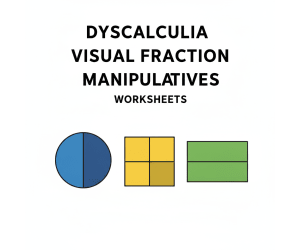
Dyscalculia Visual Fraction Manipulatives
Math, Fractions, Addition and Subtraction, Addition, Subtraction, Graphing, Money, Number Lines, Order Of Operations, Time, Homeschool Curriculum, Homeschool Templates, Grade 3, 4, 5, 6, 7, Worksheets & Printables, Workbooks, Worksheets, Word Searches, Teacher Tools, Assessments, Lesson Plans, Quizzes and Tests, Quizzes, Tests
Change the nature of instruction for fractions, and help all students by using this complete, evidence-based guide for teaching fractions to students who may have any or all of the following: Dyscalculia, Learning Disabilities in Mathematics, or Anxiety with regard to mathematics. Are you an educator or parent looking for an effective way to teach your students with prior difficulties with abstract mathematic concepts? If so, this is the resource for which you have been searching. This is NOT just another worksheet packet. This is a complete neuro-informed intervention system built to circumvent all cognitive barriers common to the students you teach, and create true and lasting understanding of fractions that will be retained for the remainder of the student's educational career. By following the Concrete-Pictorial-Abstract (CPA) framework along with the principles of cognitive science, this guide provides students with a means for teaching fractions in a way that they will finally be able to process and master from their neurodivergent brain perspective. Your students will no longer suffer from mathematics anxiety or the "Whole Number Bias", which results in students believing that 1/8 is greater than 1/3. We use Linear Fraction Bars as a visual aid and High Contrast Visual Mapping to make fractions tangible and explainable to students through the use of their neural systems, thus enabling students to understand fractions as Predictable and Intuitive. We deliberately avoid all of the Circular Fraction Models (i.e., Pizza) that confuse students with poor or absent spatial perception. THIS 37-PAGE COMPREHENSIVE GUIDELINE CONSISTS OF: The Educators Guide: This document consists of an in-depth look at the "why" behind the method in phase one. It will include definitions of the cognitive make-up behind dyscalculia, the incorrectness of standard methods, and the architectural guidelines for creating educational tools, including manipulatives that are compatible with how the brain works. This phase will also include case studies based on individual students that can be utilized in grade-level math classes. The Student Workbook: Phase Two will consist of a sequential ten part set of worksheets that will serve as step-by-step guides for students in grades three through five. In other words, the first page of the ten page guide will help students learn what a numerator and a denominator are before they then will be a part of the worksheet on determining whether two fractions are equal or comparable. The remainder of the pages will continue to follow the same sequence, with the last page covering mixed numbers. The Teacher Resources and Visual Aids Section: This section contains all the resources necessary for teacher's to correctly implement the above two guides. In addition to possessing high-resolution diagnostic diagrams that can be utilized in the classroom, this section also contains an answer key that has been developed with pedagogical notes included, and a clinical implementation guide that contains scripted interventions for how to address common errors made by students. PLEASE NOTE THE FOLLOWING Group: Individuals who provide direct instructional support to students with disabilities and other struggles in mathematics, such as: SE Teachers/Specialists Math Interventionists/ Specialists (Tier 2 & 3) Resource Room/Co-Teach Models Tutor and Educational Therapists Homeschool Parents General Ed Teachers who want to use effective differentiation strategies. Break the cycle of poor math performance. Get your students the tools they need to develop confidence and obtain true mastery of fractions through this master guide through the Math Anxiety. Key Terms: Dyscalculia, Math Intervention, Special Education Math, Fractions, Visual Math, Manipulatives, Math Anxiety, Learning Disabilities, Third, Fourth, Fifth, Grade, Homeschooling, RTI, Math Support, Number Sense, *CPA Framework (Concrete, Picture, Abstract) Teacher’s Guide. Reasons Why Parents/Schools Are Enthusiastic About This Resource: Evidence Based and Neuro-informed: This is truly not just a collection of activities but rather a structured program based on cognitive science; designed specifically to help students whom have dyscalculia. Eliminates Math Anxiety: The clear, visual, step-by-step approach removes uncertainty and abstract confusion which builds student confidence and creates a positive attitude ("I can do math") about math. Comprehensive All-In-One System: The complete package allows educators to save a tremendous amount of time in planning. It contains the theoretical document, the workbook (student-facing) as well as the full answer key that contains additional clinical cues. This resource is ready for immediate use as an intervention resource. Promotes True Understanding, Not Just Rote Memorization: By making fractions physical and visual, this program goes beyond mere memorization of rules and fosters true, deep conceptual understanding, which can be applied to future concepts. Highly Targeted for Intervention: This resource is an excellent Tier 2/3 resource for intervention, special education resource rooms, tutoring, and homeschooling. It provides very powerful and focused support, right where struggling learners require it most. An in-depth analysis of the content, research, and worksheets indicates the primary target audiences are: Special Education Teachers: This is a critical instructional support for teachers within this specialty since the resource was designed specifically for students diagnosed with learning disabilities. Math Interventionists: This resource meets the needs of small groups of students (Tier 2 and Tier 3) who are considerably below grade level in mathematics. Educational Therapists and Tutors: Qualified professionals who provide one-on-one support to students with dyscalculia. Homeschooling Parents: Especially for those children who have a diagnosis or possibly math deficits. Targeted Grade Levels: The component will specifically target grades three, four and five because all of the fractions address fundamental fractions through to adding fractions and mixed numbers, which are all taught at these grade levels. Rewriting Terms: All rights reserved. The author has copyright (Copyrighted by Syed Hammad Rizvi) on this work. A teacher may use this resource for his/her classroom and for private individual use. You may not modify this resource, distribute it, or sell it. You may not publish or make it available on the internet. If you would like to share this resource with your colleagues, please buy additional licenses from Teachsimple. Thank you for being honest and following my copyright terms. This product is made with love by Syed Hammad Rizvi.
Author Creative Book Store
Rating
Tags Dyscalculia, Dyscalculiaresources, Dyscalculiasupport, Mathintervention, Visualmath, Mathmanipulatives, Mathlearningdisability, Specialneedsmath, Neurodivergentlearning, Cpaframework

Up The Creek Without a Paddle | Figurative Language Activity | Micro-Learning Deck
ELA, Reading, Reading Comprehension, Grade 4, 5, 6, 7, Teacher Tools, Lesson Plans
Up The Creek Without a Paddle Figurative Language Learning Activity helps students explore figurative language in an engaging way. This concise yet informative resource allows educators to teach the common idiom "up the creek without a paddle" which refers to being in a difficult situation without any means of resolving it. Through close reading of a passage with accompanying audio, students will comprehend the meaning of this colorful phrase. The deck includes a video lesson explaining the idiom, a reading passage about a boy who finds himself up the creek without a paddle, comprehension questions, and a quick write activity for students to apply their understanding. This versatile resource can be used for whole group instruction, small group work, or independent practice on figurative language.
Author Teach Me This
Tags Figurative Language, Learning Deck, Comprehension, Quick Write, Digital Lesson, Up The Creek Without A Paddle, Up A Creek Without A Paddle, Up Creek Without A Paddle, Without A Paddle Download

I Wonder - How Much Food Is Wasted Every Year | Animated Video Lesson
Environmental Science, Earth and Environmental Sciences, Science, Grade 6, 7, 8, 9, 10, 11, 12, Lesson Plans, Teacher Tools
Video Introduction An amazing video designed for the students to learn more about STEM. I WONDER - How Much Food Is Wasted Every Year | Animated Video Lesson Do you like STEM subjects? what is your favorite one? Have you ever tried to plant a seed? If yes, tell us more about it. Or have you ever tried to invent something? If yes, tell us more about it. And how do you think it will help us? Have you ever seen a microorganism under a microscope? What was it? And how it looked like? Mathematics is a marvelous subject. Let' sharpen our brains and solve some equations. Do you like timetable tricks? What is your favorite one? Do you know how to code? Have you ever created an app or a game before? If yes, how was it like? I WONDER - How Much Food Is Wasted Every Year | Animated Video Lesson The video is perfect for encouraging the researching skills for the students, while learning more about this fantastic topic. I WONDER - How Much Food Is Wasted Every Year | Animated Video Lesson This friendly designed video is suitable for students at school, homeschooling, and as a group activity. Format Available in MP4 format.
Author Educational Voice
Tags How Much Food Is Wasted Every Year, How Much Food Is Wasted Every Year Video, Wasted Food, Wasted Food Facts, Wasted Food Facts For Kids, Wasted Food Video, Wasted Food Video For Kids

I WONDER - What Did The Pyramids Look Like When They Were Built
History: African, History, Social Studies, History: Ancient, Grade 4, 5, 6, 7, 8, 9, 10, Lesson Plans, Teacher Tools
Video Introduction An amazing video designed for the students to learn more about history. I WONDER - What Did The Pyramids Look Like When They Were Built | Animated Video Lesson Do you like history? Which topic do you really enjoy about history? Have you ever read an interesting fact about the Vikings? If yes, can you mention them? What do you like most about the Victorian era? Can you name all the Tudors? Have you ever wondered how people used to live in ancient Japan and ancient China? Do you know any interesting facts about ancient Egyptians and the Pharaohs? Have you ever visited South America? What do you know about Incas and Aztecs? Celtic culture was really one of a kind, can you name any of the places that Celts used to live in? Imagine yourself living during the ancient Roman empire, how your life will look like? Ancient Greece was an amazing place to live in. What do you know about ancient Greek life? I WONDER - What Did The Pyramids Look Like When They Were Built | Animated Video Lesson The video is perfect for encouraging the researching skills for the students, while learning more about history. I WONDER - What Did The Pyramids Look Like When They Were Built | Animated Video Lesson This friendly designed video is suitable for students at school, homeschooling, and as a group activity. Format Available in MP4 format.
Author Educational Voice
Tags What Did The Pyramids Look Like When They Were Built, What Did The Pyramids Look Like When They Were Built Video, Pyramids, Egyptian Pyramids, Egyptian Pyramids Facts, Egyptian Pyramids Video

Cells, Skeletal & Muscular Systems Gr. 5-8
Science, Life Sciences, Human Body, Grade 5, 6, 7, 8, Teacher Tools, Lesson Plans
Cells, Skeletal & Muscular Systems Gr. 5-8 An effective teaching resource designed specifically for students in grades 5 to 8. It offers an engaging way of understanding the intricacies of human anatomy. Key components: Cellular Exploration: The basis of life, learners are guided to build models depicting important cell parts. This practical approach aids apprehension and memorization. Tissue and Organ Discovery: After understanding cells, the learning journey ventures into tissues and organs that form comprehensive systems working together seamlessly within our bodies. Skeletal System Study: A unique interactive approach is applied - designing an alien skeleton using knowledge about human bones– emphasizing not just creative thinking but also a solid understanding of bone structure. Detailed briefings on joints and cartilage offer insights into how they provide mobility within our body. Muscular System Analysis:The differences between various muscles types - skeletal muscle vs smooth muscle vs cardiac muscle are elaborated along with further insight into voluntary versus involuntary movements. This versatile resource can be used in different teaching settings such as full class discussions or smaller group workshops thereby catering to individual learner styles. It even encourages parental engagement through homework tasks. Aligned with Next Generation State Standards while incorporating principles from Bloom's Taxonomy and STEAM initiatives, this product provides numerous hands-on activities like crosswords puzzles word searches comprehension quizzes answer keys etc, Finally there is ready access to a one-file PDF for seamless usage making it a value addition to any science teacher's toolkit.
Author Classroom Complete Press
Tags PDF

Haste Makes Waste | Figurative Language Activity | Micro-Learning Deck
ELA, Reading, Reading Comprehension, Grade 4, 5, 6, 7, Teacher Tools, Lesson Plans
This resource allows students to explore figurative learning in a fun way. The figurative language term for this learning deck is "Haste Makes Waste" Through close reading and a reading passage with audio, your students will better comprehend figurative language! Included: -Video lesson on language concept -Reading passage w/ audio Comprehension -Quick write
Author Teach Me This
Tags Comprehension Lesson, Figurative, Language, Haste Makes Waste, Reading Lesson, It Makes Waste With Haste

Country Study Presentation - Geography - Somalia - Eastern Africa
Social Studies, Economics, First Peoples (Native), Geography, History: African, History, Grade 7, 8, 9, 10, 11, 12, Teacher Tools, Presentations, Lesson Plans
Country Study Presentation - Geography + Social Studies - Somalia - Eastern Africa Try this Teaching Resource on Somalia (Introductory Presentation Lesson - PDF Printable), designed for Geography + African History (East Africa) + Social Studies lessons. Suitable for Grades 7–12 (Middle school and High School students), this Introductory PDF Presentation offers a ready to use lesson that requires little to no preparation. Geography and Social Studies students will learn about Somalia ’s geography, history, culture, language and economy — making it perfect for classroom instruction, homeschooling, or online learning. 📘 Teachers can find the following topics in this Social Studies and Geograhy Teaching resource ✅ Greetings in Arabic + Somali ✅ Geography of Somalia (East Africa) – Key facts, borders, and an interactive Google Maps link to its location. ✅ Quick Facts – Population, capital city, currency and other essential details. ✅ Languages of Somalia : Arabic + Somali - introduction in the languages spoken + basic vocabuary ✅ History Overview – A concise summary of the most important events in the history of Somalia (East Africa) ✅ Geography & Environment – Details about the country’s land area, regions, and climate zones. ✅ Somalia's Economy – paragraph on Somalia ’s industries, exports, currency and economic strengths (East Africa) ✅ Mogadishu – Explore the capital city of Somalia , its famous landmarks, and cultural highlights. ✅ Other Major Cities – A map showcasing additional important cities in Somalia (East Africa) ✅ Somalia's Culture & Traditions – A look at the customs and values that define Somalia (East Africa) ✅ Farewell in Arabic + Somali 🎯 This Geography and Social Studies Teaching Resource can be perfect for: Geography classes Social Studies lessons World cultures units Country study projects Substitute teacher toolbox Digital learning In-class or online teaching 📂 Resource Details Format: PDF Digital Presentation Grade Levels: 7th–12th Grade (Middle School and High School students) Learning with Alan is an educational resource store created to help teachers, educators, and tutors reach their teaching goals while building a fun, engaging, and stimulating learning environment . Because learning should always be meaningful—and fun! 🎓✨ If you want to browse more of my Teaching Resources, click here Learning with Alan!!
Author Learning with Alan
Rating
Tags Social Studies, Country Study, Geography, Africa, Somalia, Introduction, Presentation, Lesson, History, Activity

I WONDER - What Do Brazilian People Wear On New Year's
Geography, Social Studies, Grade 4, 5, 6, 7, 8, 9, 10, Lesson Plans, Teacher Tools
Video Introduction An amazing video designed for the students to learn more about famous places in different countries. I WONDER - What Do Brazilian People Wear On New Year's | Animated Video Lesson Do you like geography?! Let's discover this amazing place and know more about its unique stories. Have you ever visited a unique place or a different country than yours? If yes, tell us about it! If no, tell us what kind of places you would like to visit in the future? Every country has it's own story tell us the story about your country: Where it is located? And when it has been established? I WONDER - What Do Brazilian People Wear On New Year's | Animated Video Lesson The activity is perfect for encouraging the researching skills for the students, while learning more about this fantastic place. I WONDER - What Do Brazilian People Wear On New Year's | Animated Video Lesson This friendly designed video is suitable for students at school, homeschooling, and as a group activity. Format Available in MP4 format.
Author Educational Voice
Rating
Tags What Do Brazilian People Wear On New Year's, Brazilian Celebration , Brazilian Celebrations, Brazilian Culture, Brazilian Culture Facts For Kids, Brazilian New Year's Eve, Brazilian New Years Eve Celebrations
I WONDER - What Is Spain's Geography | Animated Video Lesson
Geography, Social Studies, Grade 6, 7, 8, 9, 10, 11, 12, Lesson Plans, Teacher Tools
Video Introduction An amazing video designed for the students to learn more about famous places in different countries. I WONDER - What Is Spain's Geography | Animated Video Lesson What do you know about this place? Do you know in which part of the world it is? Have you ever visited this place? If yes, can you tell us more about your adventure, and what do you like the most about this place? Do you like reading about Geography? What is your favorite country in the whole world? If you are going on a trip where it will be? Which country? What you are going to see there? Does this country has a famous place to visit? I WONDER - What Is Spain's Geography | Animated Video Lesson The activity is perfect for encouraging the researching skills for the students, while learning more about this fantastic place. I WONDER - What Is Spain's Geography | Animated Video Lesson This friendly designed video is suitable for students at school, homeschooling, and as a group activity. Format Available in MP4 format.
Author Educational Voice
Tags What Is Spain's Geography, What Is Spain's Geography Video, Spain's Geography, Spain's Geography Facts, Spain's Geography Facts For Kids, Spain's Geography Video, Spain's Geography Video For Kids
I WONDER - Are Lakes Part Of The Ocean | Animated Video Lesson
Geography, Social Studies, Grade 2, 3, 4, 5, 6, 7, 8, Lesson Plans, Teacher Tools
Video Introduction An amazing video designed for the students to learn more about famous places in different countries. I WONDER - Are Lakes Part Of The Ocean | Animated Video Lesson What do you know about this place? Do you know in which part of the world it is? Have you ever visited this place? If yes, can you tell us more about your adventure, and what do you like the most about this place? Do you like reading about Geography? What is your favorite country in the whole world? If you are going on a trip where it will be? Which country? What you are going to see there? Does this country has a famous place to visit? I WONDER - Are Lakes Part Of The Ocean | Animated Video Lesson The activity is perfect for encouraging the researching skills for the students, while learning more about this fantastic place. I WONDER - Are Lakes Part Of The Ocean | Animated Video Lesson This friendly designed video is suitable for students at school, homeschooling, and as a group activity. Format Available in MP4 format.
Author Educational Voice
Tags Are Lakes Part Of The Ocean, Are Lakes Part Of The Ocean Video, Lakes, Lake, Lakes Facts, Lakes Video, Ocean, Oceans, Ocean Facts, Ocean Video
I WONDER - What Is Holi | Animated Video Lesson
Geography, Social Studies, Sociology, Grade 6, 7, 8, 9, 10, 11, 12, Lesson Plans, Teacher Tools
Video Introduction An amazing video designed for the students to learn more about famous places in different countries. I WONDER - What Is Holi | Animated Video Lesson What do you know about this place? Do you know in which part of the world it is? Have you ever visited this place? If yes, can you tell us more about your adventure, and what do you like the most about this place? Do you like reading about Geography? What is your favorite country in the whole world? If you are going on a trip where it will be? Which country? What you are going to see there? Does this country has a famous place to visit? I WONDER - What Is Holi | Animated Video Lesson The activity is perfect for encouraging the researching skills for the students, while learning more about this fantastic place. I WONDER - What Is Holi | Animated Video Lesson This friendly designed video is suitable for students at school, homeschooling, and as a group activity. Format Available in MP4 format.
Author Educational Voice
Tags What Is Holi, What Is Holi Video, Holi, Holi Facts, Holi Facts For Kids, Holi Video, Holi Video For Kids, India, India Facts, India Video

All About Danxia Landform | Animated Geography Video Lesson
Social Studies, Geography, Grade 5, 6, 7, 8, Lesson Plans, Teacher Tools
This animated geography video lesson is all about the Danxia Landform. Students will love this engaging and interactive video as they learn more about geographical landforms. This video serves as a great introduction or review video for your learners. This is an 11-minute geography video lesson.
Author Educational Voice
Tags Social Studies Video, Geography Video, Geography Lesson, Landforms, Danxia
I WONDER - What Is A Fluorescent Lightbulb | Animated Video Lesson
Physics, Science, Grade 6, 7, 8, 9, 10, 11, 12, Lesson Plans, Teacher Tools
Video Introduction An amazing activity designed for the students to learn more about STEM. I WONDER - What Is A Fluorescent Lightbulb | Animated Video Lesson Do you like STEM subjects? what is your favorite one? Have you ever tried to plant a seed? If yes, tell us more about it. Or have you ever tried to invent something? If yes, tell us more about it. And how do you think it will help us? Have you ever seen a microorganism under a microscope? What was it? And how it looked like? Mathematics is a marvelous subject. Let' sharpen our brains and solve some equations. Do you like timetable tricks? What is your favorite one? Do you know how to code? Have you ever created an app or a game before? If yes, how was it like? I WONDER - What Is A Fluorescent Lightbulb | Animated Video Lesson The video is perfect for encouraging the researching skills for the students, while learning more about this fantastic topic. I WONDER - What Is A Fluorescent Lightbulb | Animated Video Lesson This friendly designed video is suitable for students at school, homeschooling, and as a group activity. Format Available in MP4 format.
Author Educational Voice
Tags What Is A Fluorescent Lightbulb, What Is A Fluorescent Lightbulb Video, Fluorescent, Fluorescent Lightbulb, Fluorescent Lightbulb Facts, Fluorescent Lightbulb Facts For Kids, Fluorescent Lightbulb Video

Reading Comprehension: Sequencing - FLASH-PC
ELA, Reading, Reading Comprehension, Grade 5, 6, 7, 8, Teacher Tools, Lesson Plans
Reading Comprehension: Sequencing - FLASH-PC The Reading Comprehension: Sequencing - FLASH-PC is an educational tool delicately constructed to boost the comprehension skills of students in Grades 5 through 8 focusing on language arts. Rooted in its core functionality, it enhances the ability of learners to arrange facts accurately within reading contexts. While maintaining its compactness, this resource robustly centers on delivering curriculum-related content through inclusive elements such as: Reading passages Strategically positioned comprehension queries conducted both 'before' and 'after' reading sessions that inspire prediction strategies and checks reflection understanding respectively. These techniques uniquely engage student involvement. Diversified Learning Experience & Classroom Interaction To further diversify the learning experience, printable materials intended for direct inclusion into lesson plans or as additional homework assignments are available. This setup offers teachers a simple way to guide without needing to create worksheets. In addition, vocabulary flashcards incorporated aim at solidifying key terminology studied in context. Also present are graphic organizers that visually arrange data for students who absorb better through such methods ensuring learners of all styles can benefit from this resource. A layer of digital interactivity has been woven into this educational tool via PC software integrated activities encouraging dynamic responses boosting learner's interest in allocated tasks be it within classrooms or remote learning scenarios. Fulfills Varied Teaching Techniques & Caters Individual Needs This resource exhibits significant flexibility catering to different teaching techniques be it for comprehensive classes or smaller group breakout sessions while simultaneously delivering tailored material suiting individual scholar needs. A Beneficial Educational Tool at Your Disposal In conclusion, Reading Comprehension: Sequencing - FLASH-PC stands as a vital asset effectively driving results when teaching fact sequencing under comprehension lessons while aiding in the progressive academic journey of every learner.
Author Classroom Complete Press
Tags Software (PC)

Cells: From Cells to Organisms
Science, Life Sciences, Biology, Common Core, Grade 5, 6, 7, 8, Teacher Tools, Lesson Plans
"Cells: From Cells to Organisms" - A Comprehensive Resource Navigating the realm of biology, particularly the understanding of cells and organisms, can often seem complex and overwhelming. The "Cells: From Cells to Organisms" is a teaching resource aimed at simplifying this vital scientific subject for students in grades 5 through 8. Starting with Basics Begins with plant and animal cells- their structure and function Dives next into single-celled and multicellular organisms A significant unique selling point of this material is its ability to make complex topics like human cell reproduction accessible for young learners using simple yet comprehensive language. Key Features: Simplified explanation of terminologies such as diffusion and osmosis. Promotes experiential learning via reading sections, interactive activities coupled with bright mini posters. Aligns seamlessly with Common Core State Standards borrowing principles from Bloom's Taxonomy. Tailored Lesson Plan For Comprehensive Science Literacy This recourse is designed primarily as a PDF lesson plan that provides precision coupled with engagement without superficiality or oversimplification. It offers both full-class discussions or promotes individual studying habits ensuring comprehensive coverage. Easily Adaptable Content Delivery Styles No matter whether your setup involves public school classrooms or homeschool environments, this downloadable format facilitates efficient learner comprehension and application within a framework of flexible yet structured planning materials under "Cells: From Cells to Organism". Ideal for basic biological concept instillation at an early secondary level through higher levels details enrichment making it an efficient companion for science educators looking to make a noticeable impact. .
Author Classroom Complete Press
Tags PDF
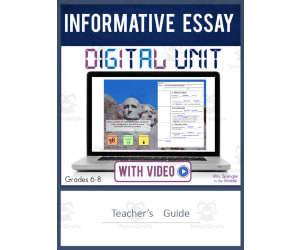
Informative Essay Digital Unit
ELA, Writing, Grade 6, 7, 8, Lesson Plans, Teacher Tools
Discover the Informative Essay Digital Unit, a user-friendly tool designed to teach middle school students how to write informative essays in just TEN days! This all-in-one digital package includes video lessons, guided notes, texts, and organizers to save you time and engage your students. This unit aims to help students create well-organized essays with proper citations. The package has a teacher's guide, digital notebook, introduction video, how-to videos, quizzes , and two non-fiction texts about Mount Rushmore and Pipestone National Monument. The digital unit works smoothly with Google Slides , making it perfect for online learning. It can be assigned to students at their own pace or guided by the teacher, with clear directions for both. The texts are easy to access and read on DocHub. Students will enjoy the fun, guided notes with fill-in-the-blanks, movable pictures, and text boxes. The unit has four parts, each with notes and a video that teaches every step of the writing process, including planning and writing introduction and conclusion paragraphs. You can use the Informative Essay Digital Unit in two ways: guided by the teacher or at the student's own pace. Videos explain both options so that you can pick the best fit for your students. The texts in this unit talk about Mount Rushmore and Pipestone National Monument, asking students to explain why these places are so important that they need national protection. Students will learn the writing process, how to make strong introduction and conclusion paragraphs, and how to write clear body paragraphs with citations and explanations. To use this digital unit, students need access to Google and YouTube. Full directions are provided to help you choose the best way to present the content to your students. Give your middle schoolers the skills they need in essay writing with the Informative Essay Digital Unit!
Author Mrs. Spangler in the Middle
Tags Informative Essay, Essay Writing, September, Digital Unit, Informational Texts
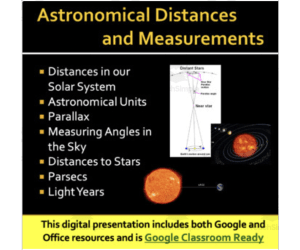
Astronomical Distances and Measurements in Space - Lesson Bundle
Science, Earth and Environmental Sciences, Space, Grade 7, 8, 9, Teacher Tools, Lesson Plans
Title: Astronomical Distances and Measurements in Space - Lesson Bundle The Astronomical Distances and Measurements in Space - Lesson Bundle aims to make teaching the vastness of our universe more tangible. This teaching resource, tailored for Grade 7 to 9 students, is geared towards making comprehension of astronomical distances simpler and more engaging. This comprehensive bundle offers a rich mix of: Textual information Exciting visual aids Interactive content Discussion prompts Videos Homework resources All these ensure that educators have all they need to deliver an effective lesson on astronomical distances and measurements. The course material is thoughtfully spread over one or two days worth of class hours such that it does not overwhelm the students. Inclusions for Teachers: Teachers will appreciate the inclusion of a detailed teacher version as well as student versions of presentations. These help guide the instructors through stimulating discussions on topics like: Solar system dimensions, Astronomical units, The parallax concept, Parallax concept, Among others. Inclusions for Students: Students will enjoy introspecting into intriguing aspects like light years or parsecs as units for cosmic lengths during their hands-on activities prompted by student handouts featured in this package . Furthermore this robust package also includes auto-graded Exit Tickets which serve both as convenient checkpoints during teaching pedagogy along with tracking student progress An impressive feature about these resources is its cross-platform compatibility, as they are available in both Google Drive format for collaborative online learning scenarios and Microsoft Office format for offline educational contexts. In conclusion, this bundle ensures you sail smoothly through complex subjects generating a keen interest among students gathering profound understanding about humongous spatial dimensions marking their journey exploring remarkable cosmic wonders ahead . Note: This product contains multiple file types inclusive of 4 Word documents, 2 powerpoint presentation files,2 PDFs along with a jpeg maintaining utmost versatility and interoperability.
Author Teach With Fergy
Tags Astronomy, Distances, Measurements, Space Exploration, Teaching Resources
I WONDER - Why Did Castles Have Towers | Animated Video
History: African, History, Social Studies, History: Ancient, History: British, History: Asian, History: Europe, History: World, Grade 6, 7, 8, 9, 10, 11, 12, Lesson Plans, Teacher Tools
Video Introduction An amazing video designed for the students to learn more about history. I WONDER - Why Did Castles Have Towers | Animated Video Lesson Do you like history? Which topic do you really enjoy about history? Have you ever read an interesting fact about the Vikings? If yes, can you mention them? What do you like most about the Victorian era? Can you name all the Tudors? Have you ever wondered how people used to live in ancient Japan and ancient China? Do you know any interesting facts about ancient Egyptians and the Pharaohs? Have you ever visited South America? What do you know about Incas and Aztecs? Celtic culture was really one of a kind, can you name any of the places that Celts used to live in? Imagine yourself living during the ancient Roman empire, how your life will look like? Ancient Greece was an amazing place to live in. What do you know about ancient Greek life? I WONDER - Why Did Castles Have Towers | Animated Video Lesson The video is perfect for encouraging the researching skills for the students, while learning more about history. I WONDER - Why Did Castles Have Towers | Animated Video Lesson This friendly designed video is suitable for students at school, homeschooling, and as a group activity. Format Available in MP4 format.
Author Educational Voice
Tags Why Did Castles Have Towers, Why Did Castles Have Towers Video, Castles Towers, Castles Towers Facts, Castles Towers Video, Castles Towers Facts For Kids, Castles Towers Video For Kids, Castles