



2,685 products added recently
Page 11 - Elementary Writing Prompts

 Show filters


Ocean Animal Research Writing Project on SEA TURTLES for K-2nd Grade
Life Studies, ELA, Writing, Creative Writing, Reading, Science, Life Sciences, Animals, Research, Kindergarten, Grade 1, 2, Lesson Plans, Teacher Tools, Presentations, Worksheets & Printables, Worksheets, Writing Prompts
Sea Turtle Animal Research Writing Project for K-2. Engage your K-2 students in learning about sea turtles with this 19-page animal research writing project. Students will read age-appropriate information about sea turtles, examine real-life photos, color pictures, draw a sea turtle habitat, organize facts using writing organizers, and write an informational report on sea turtles. This unit is differentiated for various abilities and for ages K-2nd grade. This project promotes reading, creativity, and early research and writing skills. Use it for whole-class instruction, small groups, or individual assignments. With fun borders and opportunities for students to be creative while building knowledge, this packet offers multi-day engagement to learn about the amazing sea turtle! Here are even more informational resources on report writing for OCEAN ANIMALS. Click on the links below: Animal Research Writing Project on WHALES for K-2nd Grade Animal Research Writing Project on the OCTOPUS for K-2nd Grade Animal Research Writing Project on SEA TURTLES for K-2nd Grade Animal Research Writing Project on ORCAS for K-2nd Grade Animal Research Writing Project on the SHELLFISH for K-2nd Grade Animal Research Writing Project on DOLPHINS for K-2nd Grade Animal Research Writing Project on SEALS for K-2nd Grade Want to teach your students all about Zoo Animals? Check out all these interesting facts about these favorite zoo animals. With the same great photos, facts, habitat drawings, and more. It is a great way to help students to get interested in writing. For Zoo Animal reports, click on the following links below: Animal Research Writing Project on TIGERS for K-2nd Grade Animal Research Writing Project on MONKEYS for K-2nd Grade Animal Research Writing Project on PANDAS for K-2nd Grade Animal Research Writing Project on HIPPOS for K-2nd Grade Animal Research Writing Project on ELEPHANTS for K-2nd Grade Animal Research Writing Project on GIRAFFES for K-2nd Grade
Author K-5 Treasures
Tags Animal Research, Informational Writing, Writing Report, Report On Animals, 1st Grade Writing, 2nd Grade Writing, Ocean Animals, Sea Turtles, Report Of Sea Turtles, Ocean Animal Report

Arctic Animals Endless Creative Writing Prompts
ELA, Writing, Creative Writing, Grade 1, 2, 3, Writing Prompts, Worksheets & Printables
Arctic Animals Endless Creative Writing Prompts This invaluable asset for first-to-third grade teachers blends science and language arts instruction, with an engaging arctic animals theme to help educators create stimulating writing prompts. Key Product Features: Uses the 'somebody wants but so then' (SWBST) approach for low-preparation creative writing prompts that expand students' knowledge of arctic animals while teaching critical language learning components. Offers creative graphic organizers to help channel ideas into compelling narratives. Included rubric versions facilitate quick and thorough post- activity student assessments. Included Arctic Animal Cards The resource features 16 intricately designed arctic animal cards available in both a color and black & white version. These cards cover a wealth of polar fauna, from the sharp-eyed Arctic fox to the majestic Orca, potentially acting as starting points for discussions on biodiversity and wildlife conservation. Bridging Language Learning with Natural World Knowledge This product provides exposure to over 100 common adjectives, verbs, adverbs, prepositions & conjunctions related to each animal card—thus enriching their natural fluency with parts of speech. Versatile Usage:> Suitable as individual assignments or small group exercises encouraging cross-pollination of ideas between students. Fosters constructive classroom discussion promoting analytical thinking among learners while honing oral communication skills. > A Multifaceted Educational Experience: > Easily integrated within Art-based activities or regular science lessons whilst providing targeted scientific knowledge about various arctic animals. Enhance your classrooms with this everything-you-need resource in the realm of creative storytelling.
Author Heather Huhman
Tags Arctic Animals, Creative Writing Prompts, Science Education, Language Arts, Graphic Organizers
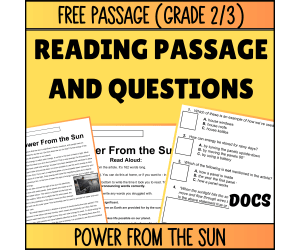
Reading Comprehension Nonfiction Set 1 Sample Power From the Sun Docs
ELA, Reading, Common Core, ESL, Language Development, Writing, Resources for Teachers, Reading Comprehension, Creative Writing, Grade 2, 3, Worksheets & Printables, Worksheets, Writing Prompts, Assessments, Teacher Tools, Tests, Quizzes and Tests, Centers, Activities
Reading Comprehension Passages Nonfiction Set 1 Sample Overview Engaging nonfiction articles, each with a collection of different activities included. Articles are written for the modern classroom and topics are designed to promote enthusiasm from each student. Each lesson contains a mixed questions section to check understanding, a vocabulary or spelling activity to help remember key language introduced, and a writing exercise. Full answer keys are provided. Passage Included 2.Power From the Sun: How does solar power work? Docs Version This is the Docs editable and fillable version. This download is available in GOOGLE Docs, GOOGLE Forms, GOOGLE Slides. PDF, PPT, WORD. FULL CATALOG OF DOWNLOAD LINKS HERE Grade 2/3 Links Fiction Set 1 - Nature Google Docs Google Forms Google Slides PDF PPT Word Guided Reading Materials Fiction Set 2 - Animals Google Docs Google Forms Google Slides PDF PPT Word Guided Reading Materials Fiction Set 3 - Food Google Docs Google Forms Google Slides PDF PPT Word Guided Reading Materials Fiction Set 4 - School Google Docs Google Forms Google Slides PDF PPT Word Guided Reading Materials Fiction Set 5 - Friends Google Docs Google Forms Google Slides PDF PPT Word Guided Reading Materials Fiction Set 6 - Family Google Docs Google Forms Google Slides PDF PPT Word Guided Reading Materials Fiction Set 7 - Sports Google Docs Google Forms Google Slides PDF PPT Word Guided Reading Materials Nonfiction Set 1 - Technology Google Docs Google Forms Google Slides PDF PPT Word Guided Reading Materials Nonfiction Set 2 - Nutrition Google Docs Google Forms Google Slides PDF PPT Word Guided Reading Materials Nonfiction Set 3 - Animals Google Docs Google Forms Google Slides PDF PPT Word Guided Reading Materials Reading Passages Overview Each passage is especially written for Grade 2-3 students, including key vocabulary required for this age group. Topics are varied and are accompanied by colorful graphics. Topics are meant to educate, yet entertain the modern student. These passages are perfect for the modern classroom. Whereas textbooks can become outdated in no time, any changes to technology or the world will result in updates to this product. Mixed Questions The mixed questions section of each lesson includes a variation of fivecomprehension, vocabulary and math questions. In addition, key reading strategies are frequently covered including cause & effect, summarizing, compare & contrast and making conclusions. Three of the questions will be MCQs and two will require a written response of some kind. Full answers and example responses appear at the end of the lesson. Spelling & Vocab Each reading passage contains a variety of words and phrases designed for Grade 2-3 students. Spelling and vocab activities provide the opportunity to build fluency with these words. As it can become quite mundane doing the same activities over and over, each lesson in a set will contain a different spelling and vocab activity . Writing Prompts Writing prompts are designed to continue the theme or lessons learned in the story. Students are persuaded to write in a variety of ways and each prompt includes several cues to help. As with the spelling/vocab section, writing prompts will vary. This includes research pieces, reading responses, poetry and creative writing prompts. Full Answer Keys Full answer keys and sample responses are provided so no matter how busy you are, you know you're covered! Mixed question answers provide evidence from the text, math questions contain the relevant workings. Answers are designed for use by the teacher, but also suitable as a handout to the student. Additional File One lesson will have an additional file. This is something fun to extend the lesson with. For similar downloads and other frees, do check out Cored Group on TeachSimple.
Author Cored Education
Tags Elementary, Reading, Comprehension, Vocabulary, Answers, Ccss, Common Core, Spelling, Writing, Digital Centers

Creative Writing Prompts (Magic Potions and Spells Edition)
ELA, Writing, Creative Writing, Grade 2, 3, 4, Writing Prompts, Worksheets & Printables
Magic potions and spells-themed creative writing activity that is a LOW PREP interactive addition to your writing lessons -- or magic or Halloween unit study. This resource includes magic powers cards, creative writing graphic organizers, writing rubrics, and more. Perfect for second grade, third grade, and fourth grade classrooms, homeschool families, and cooperatives. After printing the cards (4,950 unique combinations of the 100 magical powers), select which graphic organizers you would like students to use, review the rubric with them, and send them off to write. This can be done individually or in small groups so they can bounce ideas off of one another. Students will submit their finished creative writing for teacher assessment .
Author Heather Huhman
Tags Creative Writing, Magic, Magic Potions, Magic Spells, Writing, Halloween, Magic Potions And Spells, Magical Writing Prompts

Writing Prompts Kindergarten to Grade 1
ELA, Writing, Preschool, Kindergarten, Grade 1, Writing Prompts, Worksheets & Printables
Product Description Writing Prompts for Kindergarten to grade 1 is a great writing exercise for young children to learn writing skills, pencils skills, spelling, imagination and learning new vocabulary. This writing prompt exercise can be use as an introduction to a new topic, literacy lessons, literacy centers , and reviewing topics. Direction of use: To prepare the writing prompt for use print out the page(s) you wish to use and cut and laminate for durability. Optional: You can print out into a set and ring bind them in to a book. These sheets can be laminated and bound into a write and wipe book for multiple use and durability. Hand them out to the children in a group or individually, and have them practice their writing and pencil skills. Uses for product Literacy lessons Literacy centers Writing Prompt Reading Writing Spelling Vocabulary Write and wipe book (after being ring bound)
Author Koodles Clubhouse
Tags Writing Prompt, Writing, Worksheets, Creative Writing, Penmanship, Writing Assignment For Kindergarten, Writing Prompts For Kindergarten Students, Creative Writing For Kindergarten, Writing Prompts For Kindergarten, Writing Topics For Kindergarten, Kindergarten Writing Topics, Writing Prompt For Kindergarten
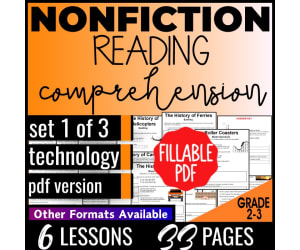
Reading Comprehension Passages Nonfiction Set 1 - Technology: Fillable
ELA, Reading, Reading Comprehension, Common Core, ESL, Language Development, Spelling, Vocabulary, Creative Writing, Writing, Grade 2, 3, Worksheets & Printables, Worksheets, Assessments, Teacher Tools, Tests, Quizzes and Tests, Writing Prompts
Reading Comprehension Passages Nonfiction Set 1 Snapshot Title: Title not stated (collection that includes “Talking in Code”) Genre: Nonfiction (informational articles + comprehension practice) Subject: Reading (Informational Text) / Social Studies Primary Topic: Navajo code talkers and secret wartime communication Estimated Guided Reading Level (A–Z): N What This Teaches Best Explaining how and why a solution was created to solve a real-world problem (the Marines needed a secret code). Comparing two approaches using details (code talkers passing messages in minutes vs. a code machine taking hours). Learning domain vocabulary in context (reservation, unbreakable, corresponded, communicate). Noticing how nonfiction builds understanding with explanations and examples (like “wol-la-chee” representing the letter A). Learning Goals Students will identify the main topic and key details about Navajo code talkers. Students will explain the problem the Marines faced and how it was solved. Students will compare the code talkers to a code machine using text evidence. Students will define important domain words using context from the article. Students will summarize the article in their own words using key details. Key Vocabulary From the Text dilemma — a difficult problem needing a solution. reservation — public land set apart for a special purpose. unbreakable — very strong; cannot be broken. communicate — share information with others. corresponded — matched or connected to something. Passages Include 1.Talking in Code: How the Navajo code talkers helped during WWII. 2.Power From the Sun: How does solar power work? 3.Roller Coasters: The science behind roller coasters. 4.The History of Cars: Who invented the car? Find out in this article. 5.The History of Ferries: Where is the oldest ferry service in the world? 6.The History of Helicopters: The advantages and disadvantages of helicopters. Additional File: History of Cars: Design a Car Printable FILLABLE PDF VERSION Worksheet-style pages, but with type-in answer boxes so students can complete and save their work digitally. Other versions are available in the links list below or in the full catalog. FULL CATALOG OF DOWNLOAD LINKS HERE For similar downloads and other frees, do check out Cored Group on TeachSimple.
Author Cored Education
Rating
Tags Elementary, Reading, Comprehension, Vocabulary, Answers, Common Core, Spelling, Writing, Passages, Reading Comprehension Assessment

Reading Comprehension Nonfiction Set 4 - Nature (Fillable PDF)
ELA, Reading, Reading Comprehension, Common Core, ESL, Language Development, Spelling, Vocabulary, Creative Writing, Writing, Grade 4, 5, Worksheets & Printables, Worksheets, Writing Prompts, Assessments, Teacher Tools, Quizzes and Tests, Tests
Reading Comprehension Passages Nonfiction Set 4 Snapshot Title: READING COMPREHENSION: Nonfiction Grade 4–5 Nature Genre: Nonfiction (informational articles with skill/practice pages) Subject: Reading (Informational Text) / Earth & Life Science Primary Topic: Seasons, plant science, storms, conservation, inland seas Estimated Guided Reading Level (A–Z): T What This Teaches Best Explaining science ideas from informational text (Earth’s tilt and seasons; photosynthesis and leaf color change). Cause-and-effect reasoning in nature systems (less sunlight → less chlorophyll → color changes; warm water + atmospheric conditions → hurricanes). Learning how living things survive and interact with environments (animal winter strategies; dandelions’ taproots and relationships with ladybugs). Understanding environmental responsibility through “reduce, reuse, recycle” and community recycling programs. Building geography/earth science knowledge (Caspian Sea size, salinity, depth regions, surrounding countries, and endemic species). Learning Goals Explain how Earth’s tilt affects daylight and winter temperatures using details from the text. Describe how photosynthesis works and name key parts involved, based on the article. Explain why leaves change color in fall by connecting sunlight, chlorophyll, and other pigments. Describe what conditions must be present for a hurricane to form and name its main parts. Explain what “reduce, reuse, recycle” means and give examples suggested in the text. Identify key facts about the Caspian Sea (size, salinity, depth, or wildlife) using text evidence. Passages Include Best Season: Is winter really the best season? Find out what people do for fun during winter in this article. Changing Leaves: Discover how—and why—leaves change color in the fall. Pesky Weeds: Love them or hate them, dandelions are more helpful than you might think. All About Hurricanes: Learn the basics of hurricanes and how they form. Earth Day: What can we do every day to take better care of our planet? Caspian Sea: What is it, where is it, and why does it matter? Explore the history of the Caspian Sea in this lesson. FULL CATALOG OF DOWNLOAD LINKS HERE FILLABLE PDF VERSION Worksheet-style pages, but with type-in answer boxes so students can complete and save their work digitally. Other versions are available in the links list below or in the full catalog. For similar downloads and other frees, do check out Cored Group on TeachSimple.
Author Cored Education
Rating
Tags Elementary, Reading, Comprehension, Vocabulary, Answers, Common Core, Spelling, Writing, Passages, Reading Comprehension Assessments

WIRITING PROMPT | THE TINNY DRAGON
Writing, ELA, Early Learning, Elementary, High School, Homeschool Resources, Middle School, Not Grade Specific, Adult Education, Writing Prompts, Worksheets & Printables
WIRITING PROMPS | THE TINNY DRAGON INTRODUCTION: At EDITORIAL ARENAS EDUCATIVAS our goal is to create engaging and effective educational resources that help children learn and grow. We invite you to explore our full store and discover a wide range of materials. You'll find resources for reading, writing, math, and Spanish language development! MAIN INFORMATION: 1) What types of activities or content does this document include? This type of document contains educational activities, all specially designed to be developed and understood in an easy and educational way. 2) How can this material support children's learning or development? This material will help our students learn in an educational way. It will support your students by guiding them in a much more playful way to achieve easy and rapid learning. 3) What specific skills are developed using this resource? Students will be able to develop their attention, concentration, creativity, and imagination skills. It will also allow students to develop their cognitive skills such as comprehension, analysis, and others. 4) Who is the ideal audience for this document? This document and/or teaching resource is primarily intended for young students, meaning those between the ages of 5 and 12, in other words, students in early childhood and/or primary education. However, it can also be used by the general public if required. SECONDARY AND COMPLEMENTARY INFORMATION: 1) What main topic does the resource cover? This document has been developed to address a basic topic that children in kindergarten through elementary school should master. This document will also be helpful to the general public who want to learn. 2) What version does this document correspond to? This educational resource is designed in PDF format, which will make your download experience much simpler and easier to use. 3) Is the material designed in color or black and white? This document has been designed in color (if required) or is sometimes created in black and white to make your learning experience easier.
Author EDITORIAL LAURA EDUCA
Rating
Tags FREE, FREE RESOURCES, WRITING, WRITING PROMPS, PROMPS, WRITING RESOURCES, CREATIVE WRITING
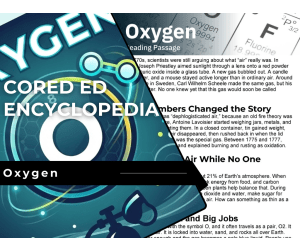
Oxygen Reading Comprehension Passage - Cored Ed Encyclopedia
ELA, Language Development, Resources for Teachers, Reading Comprehension, Reading, Pre-Reading, Writing, Science, Physics, Chemistry, Grade 2, 3, 4, 5, Worksheets & Printables, Worksheets, Teacher Tools, Centers, Activities, Writing Prompts, Assessments, Tests, Quizzes and Tests, Quizzes
This oxygen reading comprehension contains the following: Visualize on the Cover (Teacher Read Aloud Script) Start your lesson by taking a few moments to visualize the topic and share thoughts or feelings about it. Pre-Reading Trivia Students will write down one thing they already know about the subject and then read five more facts and discuss. These facts are fun, and the students will enjoy learning about the subject before reading more. Reading Passage The text is a high-interest reading passage with set paragraphs, roughly three to four paragraphs long. It contains a variety of themes about the topic, anywhere from history to technology. The passage is between 250 and 350 words in length. Mixed Questions The first question page contains four multiple-choice questions, each with a choice of four answers, and three written response questions that require a sentence or two from the student. Vocabulary Questions Practice seven key words from the text in this section across two activities. First section is scrambled words where students will unscramble three words given a clue for each. The second section is a word to meaning matching activity. Creative Writing In this question, the student will be required to write a five to eight sentence paragraph on a question related to the topic. Extension Activities This page is optional for fast finishers or to take home. There are several activities, each one requiring a different skill. Do some, do none, do all, completely optional - but you will feel reassured knowing every possibility is planned for. Includes summary writting question. Answer Key There are answers for the multiple-choice questions, written response questions have sample answers, vocabulary answers and if there is a summary question then a sample summary will be provided as well. FULL CATALOG OF DOWNLOAD LINKS AND ENCYCLOPEDIA INDEX HERE Lesson Snapshot Title: Oxygen Genre: Nonfiction (informational text) Subject: Science (Chemistry / Earth & Life Science) + Reading Informational Text Primary Topic: Discovery, role, and uses of oxygen Estimated Guided Reading Level (A–Z): S What This Lesson Teaches Best How scientists in the 1770s noticed a “new gas” through clues like a candle flaring brighter and a mouse staying active longer than in ordinary air. How Lavoisier’s careful weighing helped show that “air” is made of parts, leading to naming oxygen and explaining burning and rusting as oxidation . How oxygen is invisible yet makes up about 21% of Earth’s atmosphere , and how bodies use it while breathing out carbon dioxide . How photosynthesis helps balance gases: leaves take in carbon dioxide and water, make sugar, and send oxygen back into the air. Where oxygen is found and how people use it (as O and often O₂ , in air and also “locked into” water/sand/rocks, used in hospitals , factories , and rockets ). Learning Goals Students will describe what Joseph Priestley did and what clues suggested the gas was different from ordinary air. Students will explain why Lavoisier weighed jars, metals, and air before and after heating them. Students will explain what the passage says oxidation helps explain. Students will describe the exchange between humans and plants involving oxygen and carbon dioxide. Students will identify at least two places oxygen can be found or used, based on the text. Key Vocabulary From the Text dephlogisticated — Priestley’s name for oxygen under an old fire theory. mercuric — related to mercury; part of “mercuric oxide” in the text. oxidation — a process that explains burning and rusting. atmosphere — the blanket of gases around Earth. photosynthesis — plants make sugar and send oxygen back into the air. Cored Ed Encyclopedia Overview The Cored Ed Encyclopedia is a weekly series of lessons that you can pick up and use right away. These short readings fit into whatever time you have available. Each one includes a warm-up, a reading, and a set of questions, but it’s flexible — you can do just the reading, the full lesson, or skip the writing section if you need to. Each lesson focuses on a single topic so students don’t get lost. The writing is clear but never childish, making it perfect for grades two through five. Topics range from animals and science to history, inventions, and everyday things. No matter the level of the student, everyone should take away at least one new idea or fact from each lesson. The materials are easy to print, easy to explain, and require no setup. They work well for whole-class teaching, partner work, or independent study.
Author Cored Education
Rating
Tags Vocabulary, Spelling, Reading Comprehension, Reading Passages, Reading, Creative Writing, Reading Strategies, Writing Prompts, Oxygen, Physical Science

First Grade Winter Writing Prompts
ELA, Holiday & Seasonal, Writing, Handwriting, Seasons, Winter, Preschool, Grade 1, 2, Writing Prompts, Worksheets & Printables
Transform your first-grade classroom into a hub of creativity with our Printable Writing Prompts designed for simplicity and engagement. These ready-to-go worksheets cater specifically to first-grade students, featuring lined pages that make handwriting practice a breeze while sparking imaginative expression. Witness your students flourish as confident and creative writers. 📝☃️❄️ What is Included? 5 Writing Prompts with Lined Pages and Fun Illustrations Each Writing Prompt is a PDF File that is two pages long. Key Highlights: Handwriting Practice: Our winter writing prompts provide perfectly lined pages, making handwriting practice a seamless and enjoyable experience. Simple and effective, these pages help students develop their writing skills effortlessly. Engaging Winter Illustrations: Bring the magic of winter into your classroom with charming illustrations accompanying each prompt. These visuals are designed to captivate young minds, fostering creativity and maintaining an enjoyable learning atmosphere. Effortless Integration: Designed with busy educators in mind, our worksheets require no additional prep work. Dive straight into engaging activities without the hassle of extensive preparation, allowing you to focus on what truly matters—your students. Versatile Winter Themes: Explore various winter topics, from snowy adventures to festive traditions. Our prompts cover a range of interests, ensuring every child discovers inspiration for their own unique stories. Advantages of Writing Prompts and Handwriting: Stimulate Creativity Easily: Spark creativity effortlessly with engaging prompts that encourage critical thinking and imaginative storytelling. Enhance Language Skills Simply: Develop vocabulary, sentence structure, and effective communication through straightforward writing exercises. Boost Cognitive Growth Simply: Foster cognitive development by engaging brain regions involved in motor skills, memory, and creativity through the simplicity of handwriting. Encourage Personal Expression: Promote confidence and individuality as students express their thoughts in a structured and straightforward manner. Elevate your teaching experience this winter with our Teach Simple First Grade Winter Writing Prompts.
Author Teacher Jenny
Tags First Grade Winter Writing Prompts, First Grade Winter Writing Prompts No Prep, Printable First Grade Winter Writing Prompts, Winter Writing Prompt No Prep, Second Grade Winter Writing Prompts, Writing Prompts, First Grade Writing Prompts
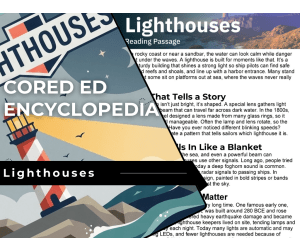
Lighthouses Reading Comprehension Passage - Cored Ed Encyclopedia
ELA, Language Development, Resources for Teachers, Reading Comprehension, Reading, Pre-Reading, Writing, Strategies, Science, Physics, Grade 2, 3, 4, 5, Worksheets & Printables, Worksheets, Teacher Tools, Centers, Activities, Writing Prompts, Assessments, Tests, Quizzes and Tests, Quizzes
This lighthouses reading comprehension contains the following: Visualize on the Cover (Teacher Read Aloud Script) Start your lesson by taking a few moments to visualize the topic and share thoughts or feelings about it. Pre-Reading Trivia Students will write down one thing they already know about the subject and then read five more facts and discuss. These facts are fun, and the students will enjoy learning about the subject before reading more. Reading Passage The text is a high-interest reading passage with set paragraphs, roughly three to four paragraphs long. It contains a variety of themes about the topic, anywhere from history to technology. The passage is between 250 and 350 words in length. Mixed Questions The first question page contains four multiple-choice questions, each with a choice of four answers, and three written response questions that require a sentence or two from the student. Vocabulary Questions Practice seven key words from the text in this section across two activities. First section is scrambled words where students will unscramble three words given a clue for each. The second section is a word to meaning matching activity. Creative Writing In this question, the student will be required to write a five to eight sentence paragraph on a question related to the topic. Extension Activities This page is optional for fast finishers or to take home. There are several activities, each one requiring a different skill. Do some, do none, do all, completely optional - but you will feel reassured knowing every possibility is planned for. Includes summary writting question. Answer Key There are answers for the multiple-choice questions, written response questions have sample answers, vocabulary answers and if there is a summary question then a sample summary will be provided as well. FULL CATALOG OF DOWNLOAD LINKS AND ENCYCLOPEDIA INDEX HERE Lesson Snapshot Title: Lighthouses Genre: Nonfiction (informational text) Subject: Science & Technology / Social Studies (navigation and safety) Primary Topic: Lighthouse signals, fog warnings, and why lighthouses matter Estimated Guided Reading Level (A–Z): P What This Lesson Teaches Best What lighthouses do for ships: help pilots find safe water, avoid reefs and shoals, and line up with a harbor entrance. How lighthouse lights communicate: a strong beam can sweep as the lamp and lens rotate, and timed flashes form patterns that identify a lighthouse. Why special tools are needed in fog: thick fog can hide light, so lighthouses use other signals like foghorns and sometimes radio or radar signals. How lighthouses connect to history and change: the Lighthouse of Alexandria (built around 280 BCE) became ruins after earthquakes, and many modern lights are now automatic and may use LEDs. Learning Goals Students will explain the main job of a lighthouse using details from the passage. Students will describe how a lighthouse lens helps shape and send light into a strong beam. Students will explain how blinking patterns help sailors know which lighthouse they are seeing. Students will identify at least two signals lighthouses can use when fog makes the light hard to see. Students will summarize one way lighthouses have changed from the past to today (keepers, automation, LEDs, navigation). Key Vocabulary From the Text sandbar — a shallow pile of sand near/under water. shoals — shallow water areas that can be dangerous. beam — a strong line of light shining outward. rotate — to turn around in a circle. daymark — bold paint patterns that help in daylight. Cored Ed Encyclopedia Overview The Cored Ed Encyclopedia is a weekly series of lessons that you can pick up and use right away. These short readings fit into whatever time you have available. Each one includes a warm-up, a reading, and a set of questions, but it’s flexible — you can do just the reading, the full lesson, or skip the writing section if you need to. Each lesson focuses on a single topic so students don’t get lost. The writing is clear but never childish, making it perfect for grades two through five. Topics range from animals and science to history, inventions, and everyday things. No matter the level of the student, everyone should take away at least one new idea or fact from each lesson. The materials are easy to print, easy to explain, and require no setup. They work well for whole-class teaching, partner work, or independent study.
Author Cored Education
Rating
Tags Vocabulary, Spelling, Reading Comprehension, Reading Passages, Reading, Creative Writing, Reading Strategies, Writing Prompts, Lighthouses, Physics

Lemonade Reading Comprehension Passage - Cored Ed Encyclopedia
ELA, Language Development, Resources for Teachers, Reading Comprehension, Reading, Pre-Reading, Writing, Strategies, Science, Physics, Grade 2, 3, 4, 5, Worksheets & Printables, Worksheets, Teacher Tools, Centers, Activities, Writing Prompts, Assessments, Tests, Quizzes and Tests, Quizzes
This lemonade reading comprehension contains the following: Visualize on the Cover (Teacher Read Aloud Script) Start your lesson by taking a few moments to visualize the topic and share thoughts or feelings about it. Pre-Reading Trivia Students will write down one thing they already know about the subject and then read five more facts and discuss. These facts are fun, and the students will enjoy learning about the subject before reading more. Reading Passage The text is a high-interest reading passage with set paragraphs, roughly three to four paragraphs long. It contains a variety of themes about the topic, anywhere from history to technology. The passage is between 250 and 350 words in length. Mixed Questions The first question page contains four multiple-choice questions, each with a choice of four answers, and three written response questions that require a sentence or two from the student. Vocabulary Questions Practice seven key words from the text in this section across two activities. First section is scrambled words where students will unscramble three words given a clue for each. The second section is a word to meaning matching activity. Creative Writing In this question, the student will be required to write a five to eight sentence paragraph on a question related to the topic. Extension Activities This page is optional for fast finishers or to take home. There are several activities, each one requiring a different skill. Do some, do none, do all, completely optional - but you will feel reassured knowing every possibility is planned for. Includes summary writting question. Answer Key There are answers for the multiple-choice questions, written response questions have sample answers, vocabulary answers and if there is a summary question then a sample summary will be provided as well. FULL CATALOG OF DOWNLOAD LINKS AND ENCYCLOPEDIA INDEX HERE Lesson Snapshot Title: Lemonade Genre: Nonfiction (informational text) Subject: Reading (Informational Text) / Social Studies (Food history & culture) / Science (mixtures) Primary Topic: What lemonade is, and how it varies by place Estimated Guided Reading Level (A–Z): O What This Lesson Teaches Best What lemonade is usually made from and how flavors can be adjusted (more lemon = sharper; more sugar = softer). Science-connected ideas in everyday life (citric acid, vitamin C, and sugar dissolving with stirring). A brief history of lemon drinks across time and places (12th-century Egypt; 1600s England; 1676 Paris sellers). How the same word can mean different things in different regions (cloudy still drink vs. bubbly lemon soda). Cultural connection: lemonade stands as a summer way for kids to earn money and a “symbol” of warm-weather fun. Learning Goals Describe the typical ingredients in lemonade named in the passage. Explain why lemons taste tart, using the text’s reason. Summarize the historical examples of lemon drinks given (Egypt, England, Paris). Compare what “lemonade” can mean in different places using details from the passage. Describe what happens when sugar dissolves and why stirring helps, according to the text. Key Vocabulary From the Text sweetener — something added to make a drink taste sweet. citric — related to the sour acid found in citrus fruits. zest — tiny bits of the outer lemon peel. dissolves — mixes into liquid and seems to disappear. bubbly — full of bubbles, like soda. Cored Ed Encyclopedia Overview The Cored Ed Encyclopedia is a weekly series of lessons that you can pick up and use right away. These short readings fit into whatever time you have available. Each one includes a warm-up, a reading, and a set of questions, but it’s flexible — you can do just the reading, the full lesson, or skip the writing section if you need to. Each lesson focuses on a single topic so students don’t get lost. The writing is clear but never childish, making it perfect for grades two through five. Topics range from animals and science to history, inventions, and everyday things. No matter the level of the student, everyone should take away at least one new idea or fact from each lesson. The materials are easy to print, easy to explain, and require no setup. They work well for whole-class teaching, partner work, or independent study.
Author Cored Education
Rating
Tags Vocabulary, Spelling, Reading Comprehension, Reading Passages, Reading, Creative Writing, Reading Strategies, Writing Prompts, Lemonade, Physics
Reading Comprehension Nonfiction Set 5 Sample: Stingray (Docs)
ELA, Reading, Common Core, Reading Comprehension, ESL, Language Development, Vocabulary, Creative Writing, Writing, Resources for Teachers, Grade 4, 5, Worksheets & Printables, Worksheets, Writing Prompts, Assessments, Teacher Tools, Tests, Quizzes and Tests, Activities, Centers
Reading Comprehension Passages Nonfiction Set 5 Sample Overview No prep reading comprehension lessons, with enjoyable articles and topics. Each lesson has a blend of post-reading activities. Mixed questions to check overall understanding. Vocabulary activities, plus a writing section. Lessons also contain a bonus extension exercise at the end. Some you may like, some you may not, either way they are there if you wish to use them. Full answer keys are provided. Passage Included 1.Stingray: Close relatives to sharks, read more about this fascinating animal in this article. Docs Version This is the Docs editable and fillable version. This download is available in GOOGLE Docs, GOOGLE Forms, GOOGLE Slides. PDF, PPT, WORD. FULL CATALOG OF DOWNLOAD LINKS HERE Grade 4/5 Links Fiction Set 1 - Animals Google Docs Google Forms Google Slides PDF PPT Word Guided Reading Materials Fiction Set 2 - Family Google Docs Google Forms Google Slides PDF PPT Word Guided Reading Materials Fiction Set 3 - Friends Google Docs Google Forms Google Slides PDF PPT Word Guided Reading Materials Fiction Set 4 - School Google Docs Google Forms Google Slides PDF PPT Word Guided Reading Materials Fiction Set 5 - Sports Google Docs Google Forms Google Slides PDF PPT Word Guided Reading Materials Nonfiction Set 1 - Birds Google Docs Google Forms Google Slides PDF PPT Word Guided Reading Materials Nonfiction Set 2 - Insects Google Docs Google Forms Google Slides PDF PPT Word Guided Reading Materials Nonfiction Set 3 - Mammals Google Docs Google Forms Google Slides PDF PPT Word Guided Reading Materials Nonfiction Set 4 - Nature Google Docs Google Forms Google Slides PDF PPT Word Guided Reading Materials Nonfiction Set 5 - Sea Animals Google Docs Google Forms Google Slides PDF PPT Word Guided Reading Materials Reading Passages Overview Each passage is especially written for Grade 4-5 students, including key vocabulary required for this age group. Topics are varied and are accompanied by colorful graphics. Topics are meant to educate, yet entertain the modern student. These passages are perfect for the modern classroom. Whereas textbooks can become outdated in no time, any changes to technology or the world will result in updates to this product. Mixed Questions The mixed questions section of each lesson includes a variation of five comprehension, vocabulary and math questions. In addition, key reading strategies are frequently covered including cause & effect, summarizing, compare & contrast and making conclusions. Two or three of the questions will be MCQs and other questions will require a written response of some kind. Full answers and example responses appear at the end of the lesson. Spelling & Vocab Each reading passage contains a variety of words and phrases designed for Grade 4-5 students. Spelling and vocab activities provide the opportunity to build fluency with these words. As it can become quite mundane doing the same activities over and over, each lesson in a set will contain a different spelling and vocab activity . Activities include: spelling games, sentence match-ups, mixed-up text and decoding words from the lesson. Writing Prompts Writing prompts are designed to continue the theme or lessons learned in the story. Students are persuaded to write in a variety of ways and each prompt includes several cues to help. As with the spelling/vocab section, writing prompts will vary. This includes research pieces, reading responses, poetry and creative writing prompts. Full Answer Keys Full answer keys and sample responses are provided so no matter how busy you are, you know you're covered! Mixed question answers provide evidence from the text, math questions contain the relevant workings. Answers are designed for use by the teacher, but also suitable as a handout to the student. Just for Fun Each lesson will have a bonus extension exercise. This is something fun to extend the lesson with. You can find these at the end of each lesson, titled Just for Fun. Just for Funs are optional. Some you may like, some you may not. Either way, they are there to do with as you wish. For similar downloads and other frees, do check out Cored Group on TeachSimple.
Author Cored Education
Tags Elementary, Reading, Comprehension, Vocabulary, Answers, Ccss, Common Core, Spelling, Writing, Passages

ALL ABOUT ME | 8 PAGES | MINIBOOK
Special Resources, Creative Writing, Writing, ELA, Classroom Management, Resources for Teachers, Community Building, Early Learning, Elementary, Homeschool Resources, Not Grade Specific, Pre-K, Writing Prompts, Worksheets & Printables, Worksheets
ALL ABOUT ME | 8 PAGES | MINIBOOK THIS RESOURCE HAVE 8 PAGES FOR KIDS. TOPICS: 👤 Basic Information 😊 About Me ❤️ My Favorites 👨👩👧👦 My Family 🏫 School 🌟 Fun Facts ✏️ Draw Yourself! ✍️ My Signature INFORMATION ABOUT THE AUTHOR: Laura Educa Publishing brings together creative and effective educational resources designed for young learners. We strive to make every learning moment feel fun, interactive, and full of discovery. MAIN INFORMATION OF THIS RESOURCE: -Write an engaging introduction for this product. First of all, at EDITORIAL LAURA EDUCA, we are deeply grateful that you have chosen to use one of our products in your learning or teaching process. -Highlight the main learning objective of this resource. Some of the objectives of using this resource could be said to be: -To motivate student learning. - To help students solidify specific knowledge. -Outline the structure and steps included in the activity. For student learning, it is necessary to follow a certain structure that involves the student learning process. Let's begin by mentioning motivation, moving on to the foundation of learning, and finally carrying out the metacognitive step. PLEASE READ CAREFULLY THE EXTRA INFORMATION OF THIS RESOURCE: What tags or keywords are relevant for this resource? Some tags that could define this product are: resources, teaching resources, materials, materials for children, educational materials. How can this product be used, and what variations are possible? This product can be used in many ways. To begin with, you can use it at different points in your lesson, and as I mentioned before, it all depends on your creativity. What standards does this resource align with? This resource has not been designed based on any specific educational standards. What file types are included? This file is only covering one topic, and it only includes the product described in PDF. How many pages are included in total? This product contains 8 pages.
Author EDITORIAL LAURA EDUCA
Rating
Tags FREE, FREE RESOURCES, ALL ABOUT ME, WRITING, ELA, CLASSROOM MANAGEMENT, RESOURCES FOR TEACHERS

Rice Reading Comprehension Passage - Cored Ed Encyclopedia
ELA, Language Development, Reading Comprehension, Reading, Pre-Reading, Science, Writing, Strategies, Life Sciences, Nature & Plants, Grade 2, 3, 4, 5, Worksheets & Printables, Worksheets, Teacher Tools, Centers, Activities, Writing Prompts, Assessments, Quizzes and Tests, Quizzes, Lesson Plans
This rice reading comprehension includes: Visualization (on the front cover) Start your lesson by taking a minute to think and share something about the topic. Read the script aloud (slowly), perhaps prepare some music or sound effects. Student close their eyes and let their imaginations wander. Students open their eyes, read the question aloud and give them a few minutes to complete. Ask a few students to share or keep answers until the end to compare with what they learn in the passage. Quick pause—thousands of Cored Education products are included with your TeachSimple membership. Download links and encyclopedia index available here. Pre-Reading Trivia Students will write down one thing they already know about the subject and then read five more facts and discuss. These facts are fun, and the students will enjoy learning about the subject before reading more. Give 1 minute for students to write what they already know (no pressure—best guess is fine). Read the five facts together. After each fact, do ask a student for their opinion, was it surprising? Set a purpose by asking students to highlight/underline one fact they want to learn more about during the reading. Reading Passage The text is a high-interest reading passage with set paragraphs, roughly three to four paragraphs long. It contains a variety of themes about the topic, anywhere from history to technology. The passage is between 250 and 350 words in length. First, ask students to look at the headings and see what they’ll learn about today. What do they know about the topic/heading? First read options: Teacher read-aloud (best for support). Partner reading (paragraph by paragraph). While reading, students underline important details, and vocabulary words they think may come up in the questions section. Mixed Questions The first question page contains four multiple-choice questions, each with a choice of four answers, and three written response questions that require a sentence or two from the student. Students complete the mcqs first independently, then review quickly as a class. For the 3 written responses, try to get students giving the answer with some form of evidence: “I think ___ because the text says ___.” If students get stuck, send them back to check the passage. Vocabulary Questions Practice seven key words from the text in this section across two activities. First section is scrambled words where students will unscramble three words given a clue for each. The second section is a word to meaning matching activity. Before starting, have some students read out words they underlined in the passage. Ask students to say the word and read aloud the sentence(s) around each word. Ask students to do scrambled words and the matching exercise in pairs then go through answers as a class. For the scrambled spelling task, get four pairs to come up to the board and write the words for extra practice with the other student reading out the clue. For the matching task, prompt students to give full sentences: “I matched ___ with ___ because ___.” Creative Writing In this question, the student will be required to write a five to eight sentence paragraph on a question related to the topic. Before starting, ask students write down 3 key ideas they are going to include in their piece. Ask students for ideas to share around the class to help those struggling. Pro writing expectations: 5–8 sentences At least 2 facts or details from the passage At least 2 vocabulary words from the previous page Students read their paragraphs while classmates listen for facts and vocabulary words. Extension Activities This page is optional for fast finishers or to take home. There are several activities, each one requiring a different skill. Do some, do none, do all, completely optional - but you will feel reassured knowing every possibility is planned for. Includes summary writting question. Answer Key There are answers for the multiple-choice questions, written response questions have sample answers, vocabulary answers and if there is a summary question then a sample summary will be provided as well. Lesson Plan Included Customized lesson plan for this lesson is included. Lesson Snapshot Title: Rice Genre: Nonfiction (informational text) Subject: Science (Life Science/Agriculture) Primary Topic: How rice was grown and spread Estimated Guided Reading Level (A–Z): R What This Lesson Teaches Best How rice changed from a wild grass into a crop as people “saved the best” seeds and planted them over many seasons. How rice paddies work: shallow flooded fields that help rice grow and can slow weeds while protecting tender plants. How rice spread to new places as traders and travelers carried it along rivers and coasts, with rice learning to fit different climates. How rice has different types (including indica and japonica) and how rice continues changing as farmers and scientists work on challenges like floods, droughts, and plant diseases. Using evidence from the passage to check understanding (some support-page answer choices/answer key items do not match the passage exactly). Learning Goals Explain how people changed rice over time by saving and planting the best seeds each season. Describe what a rice paddy is and how shallow flooding helps rice plants. Identify how rice traveled from Asia to other regions through traders and travelers. Compare indica and japonica using details stated in the text. Describe ways rice continues to change because meals depend on it and it must handle floods, droughts, and diseases. Key Vocabulary From the Text wetlands — watery land where plants grow near rivers. shattering — breaking apart and scattering away. paddies — muddy fields with low banks holding shallow water. indica — a group of long-grained rice types. droughts — long times with very little rain. Discussion Prompts Pre-reading question: What do you already know or wonder about rice and how it grows? Comprehension questions: How did saving the best seeds change rice over many seasons? Comprehension questions: What is a rice paddy, and how does shallow water help rice plants? Comprehension questions: According to the passage, how did rice travel far from home to new places? FULL CATALOG OF DOWNLOAD LINKS AND ENCYCLOPEDIA INDEX HERE
Author Cored Education
Rating
Tags Vocabulary, Reading Comprehension, Reading Passages, Reading, Creative Writing, Reading Strategies, Writing Prompts, Lesson Plans, Life Science, Rice
Reading Comprehension Nonfiction Set 2 Sample: Fats (Docs)
ELA, Reading, Common Core, Reading Comprehension, ESL, Language Development, Creative Writing, Writing, Resources for Teachers, Grade 2, 3, Worksheets & Printables, Worksheets, Writing Prompts, Assessments, Teacher Tools, Tests, Quizzes and Tests, Centers, Activities
Reading Comprehension Passages Nonfiction Set 2 Sample Overview Engaging nonfiction articles, each with a collection of different activities included. Articles are written for the modern classroom and topics are designed to promote enthusiasm from each student. Each lesson contains a mixed questions section to check understanding, a vocabulary or spelling activity to help remember key language introduced, and a writing exercise. Full answer keys are provided. Passage Included 3.Fats: What are trans fats? Learn all about them in this lesson. Docs Version This is the Docs editable and fillable version. This download is available in GOOGLE Docs, GOOGLE Forms, GOOGLE Slides. PDF, PPT, WORD. FULL CATALOG OF DOWNLOAD LINKS HERE Grade 2/3 Links Fiction Set 1 - Nature Google Docs Google Forms Google Slides PDF PPT Word Guided Reading Materials Fiction Set 2 - Animals Google Docs Google Forms Google Slides PDF PPT Word Guided Reading Materials Fiction Set 3 - Food Google Docs Google Forms Google Slides PDF PPT Word Guided Reading Materials Fiction Set 4 - School Google Docs Google Forms Google Slides PDF PPT Word Guided Reading Materials Fiction Set 5 - Friends Google Docs Google Forms Google Slides PDF PPT Word Guided Reading Materials Fiction Set 6 - Family Google Docs Google Forms Google Slides PDF PPT Word Guided Reading Materials Fiction Set 7 - Sports Google Docs Google Forms Google Slides PDF PPT Word Guided Reading Materials Nonfiction Set 1 - Technology Google Docs Google Forms Google Slides PDF PPT Word Guided Reading Materials Nonfiction Set 2 - Nutrition Google Docs Google Forms Google Slides PDF PPT Word Guided Reading Materials Nonfiction Set 3 - Animals Google Docs Google Forms Google Slides PDF PPT Word Guided Reading Materials Reading Passages Overview Each passage is especially written for Grade 2-3 students, including key vocabulary required for this age group. Topics are varied and are accompanied by colorful graphics. Topics are meant to educate, yet entertain the modern student. These passages are perfect for the modern classroom. Whereas textbooks can become outdated in no time, any changes to technology or the world will result in updates to this product. Mixed Questions The mixed questions section of each lesson includes a variation of fivecomprehension, vocabulary and math questions. In addition, key reading strategies are frequently covered including cause & effect, summarizing, compare & contrast and making conclusions. Three of the questions will be MCQs and two will require a written response of some kind. Full answers and example responses appear at the end of the lesson. Spelling & Vocab Each reading passage contains a variety of words and phrases designed for Grade 2-3 students. Spelling and vocab activities provide the opportunity to build fluency with these words. As it can become quite mundane doing the same activities over and over, each lesson in a set will contain a different spelling and vocab activity . Writing Prompts Writing prompts are designed to continue the theme or lessons learned in the story. Students are persuaded to write in a variety of ways and each prompt includes several cues to help. As with the spelling/vocab section, writing prompts will vary. This includes research pieces, reading responses, poetry and creative writing prompts. Full Answer Keys Full answer keys and sample responses are provided so no matter how busy you are, you know you're covered! Mixed question answers provide evidence from the text, math questions contain the relevant workings. Answers are designed for use by the teacher, but also suitable as a handout to the student. Additional File One lesson will have an additional file. This is something fun to extend the lesson with. For similar downloads and other frees, do check out Cored Group on TeachSimple.
Author Cored Education
Tags Elementary, Reading, Comprehension, Vocabulary, Answers, Ccss, Common Core, Spelling, Writing, Digital Centers

Winter Writing Prompts for 3rd-5th Grade
Holiday & Seasonal, ELA, Seasons, Winter, Writing, Creative Writing, Formal Writing, Homeschool Curriculum, Grade 3, 4, 5, Writing Prompts, Worksheets & Printables, Worksheets
Winter Writing Prompts for 3rd - 5th Grade This ENGAGING Winter Writing Prompts for January Unit is designed for 3rd through 5th grade. Included in this Winter Writing unit are Opinion, Narrative, and Informative prompts designed to help kids master their writing skills. As students practice their writing skills for each month, season, and holiday, they will improve in all aspects as they learn how to create engaging and interesting writings. These writing prompts are motivating and there are instructions at the top of each opinion, narrative, and informative writing pages to help students master the concepts that align with common core standards. These instructions prompt students to have an introduction, reasons that support their theories, dialog, and conclusions. To help students prepare before they start their writing, they should organize their thoughts with writing organizers. These writing organizers should be used as tools that help guide students accomplish a detailed writing that meets the requirements for common core. This Winter Writing Unit includes 3 Opinion prompts, 3 Narrative Prompts, and 3 Informative / Explanatory Prompts that are centered around fun festive Winter Activities! Also included are 2 different writing organizer pages for each type of writing prompt. It's a GREAT value with fun festive borders to display in at school in the classroom, in the hallway and fun for students to display in their home. Get these interesting and engaging prompts to promote creativity in your students! 30 pages included! Here are a few Examples of The Winter Writing Prompts: What is the Best Addition to Hot Chocolate: Vanilla, Cinnamon, or Marshmallows? Explain why? Is Sledding on a Sleigh or on a Tube Better? Explain your reasons? Animals are often hungry in the winter and may wander near your home. Tell a story about an unusual animal who wanders near your home looking for you to feed it. Birds migrate in the winter. If you were a bird, describe your migration journey. In some parts of the world, it stays dark most of the day in winter. If you had to go to school in the dark, describe your school day. For many writing units for 3rd - 5th grade students and K-2nd grade that are specifically from the K-5 Treasures author of these products that are perfect to use with this rubric, click on the links below: Fall | Back to School Writing Prompt BUNDLE! 3rd-5th Grade Thanksgiving Writing Prompts for 3rd-5th Grade Winter Writing Prompts for 3rd-5th Grade Christmas Writing Prompts for 3rd-5th Grade Martin Luther King Jr. Writing Prompts for 3rd-5th Grade Valentine's Day Writing Activities for 3rd - 5th Grade: Narrative, Opinion, and Informative President's Day Writing Activities for 3rd - 5th Grade: Narrative, Opinion, and Informative Spring Narrative Writing, Spring Opinion Writing, and Spring Informative Writing Prompts for 3rd - 5th Grade Easter Narrative Writing, Easter Opinion Writing, and Easter Informative Writing Prompts for 3rd - 5th Grade K-2nd Grade Writing Units SUMMER ESL Writing Prompts and Drawing for K-2nd Grade Spring Narrative Writing, Spring Opinion Writing, and Spring Informative Writing Prompts with Vocabulary Words for K-2nd Grade For Writing Rubrics, click on the links below: Writing Rubric BUNDLE for 3rd Grade with Checklist Writing Rubric BUNDLE for 4th Grade with Checklist Writing Rubric BUNDLE for 5th Grade with Checklist
Author K-5 Treasures
Tags Narrative Writing, Opinion Writing, Informational Writing, December Writing, January Writing, February Writing, Winter Writing Prompts, Winter Writing, Writing For Winter, Winter

Second Grade Reading Comprehension - Don't Let the Pigeon Stay up Late
ELA, Children’s Literature, Literature, Language Development, Reading Comprehension, Reading, Creative Writing, Writing, Community Building, Resources for Teachers, Kindergarten, Preschool, Grade 1, 2, Centers, Activities, Read Alouds, Lesson Plans, Teacher Tools, Writing Prompts, Worksheets & Printables, Novel Studies
Mo Willems is the author of the Pigeon book series. The books contain large amounts of vocabulary designed for k-2nd graders. However, the pictures are so simple and adorable, they can be enjoyed by people of all ages. I adore this series so much that i have collected all of them despite that my son is almost 20 years old. As a result, I created the first of what I hope to be a series of reading comprehension and guided reading activity packs to make learning more fun for early elementary students as well as special education students and those with special needs in the areas of speech and communication. The book, "Don't Let the Pigeon Stay up Late," is required reading in order for students to complete all of the activities. It is available for purchase at Amazon and at Mo Willems own website. You can also find it at your local library to check out. Students will practice reading and learn about grammar, spelling, and increase vocabulary. Activities include: Open-ended questions, writing prompts, based on the text in the book. Sight word recognition activities 32 Spelling Words 32 Vocabulary Words Alphabetization Fill-in-the-Blank Drawing And More Students will be given the opportunity to search for: 14 CVC words found in the book 14 nouns found in the book 18 sight words found in the book Great for: Reading Centers Literature Centers Guided Reading Read aloud activities Practicing Social and Emotional Skills Pigeon books are written so that the reader is directly being spoken to by the Pigeon. Such fun books! Answer key is included, pdf downloadable, printable file. 15 pages Table of contents is included. Links for further activities beyond this guided reading project are also included.
Author Homeschooling Dietitian Mom
Tags Guided Reading, Reading Comprehension, Early Reading, Second Grade Reading Comprehension, 2nd Grade Reading Comprehension, Reading Strategies

Lobsters Reading Comprehension Passage - Cored Ed Encyclopedia
ELA, Language Development, Resources for Teachers, Reading Comprehension, Reading, Pre-Reading, Writing, Science, Animals, Life Sciences, Grade 2, 3, 4, 5, Worksheets & Printables, Worksheets, Teacher Tools, Centers, Activities, Writing Prompts, Assessments, Tests, Quizzes and Tests, Quizzes
This lobsters reading comprehension contains the following: Visualize on the Cover (Teacher Read Aloud Script) Start your lesson by taking a few moments to visualize the topic and share thoughts or feelings about it. Pre-Reading Trivia Students will write down one thing they already know about the subject and then read five more facts and discuss. These facts are fun, and the students will enjoy learning about the subject before reading more. Reading Passage The text is a high-interest reading passage with set paragraphs, roughly three to four paragraphs long. It contains a variety of themes about the topic, anywhere from history to technology. The passage is between 250 and 350 words in length. Mixed Questions The first question page contains four multiple-choice questions, each with a choice of four answers, and three written response questions that require a sentence or two from the student. Vocabulary Questions Practice seven key words from the text in this section across two activities. First section is scrambled words where students will unscramble three words given a clue for each. The second section is a word to meaning matching activity. Creative Writing In this question, the student will be required to write a five to eight sentence paragraph on a question related to the topic. Extension Activities This page is optional for fast finishers or to take home. There are several activities, each one requiring a different skill. Do some, do none, do all, completely optional - but you will feel reassured knowing every possibility is planned for. Includes summary writting question. Answer Key There are answers for the multiple-choice questions, written response questions have sample answers, vocabulary answers and if there is a summary question then a sample summary will be provided as well. FULL CATALOG OF DOWNLOAD LINKS AND ENCYCLOPEDIA INDEX HERE Lesson Snapshot Title: Lobsters Genre: Nonfiction (informational text) with a short sensory “visualize” opener Subject: Life Science (Animals) / Reading (Informational Text) Primary Topic: Lobster body parts, molting, habitat, and life cycle Estimated Guided Reading Level (A–Z): L What This Lesson Teaches Best Basic lobster classification and habitat: lobsters are crustaceans , related to crabs and shrimp, living on the ocean floor in crevices or burrows . How lobster body parts help them survive: two different “job” claws , antennae with sensors, eyes on stalks , and a strong tail that can flick to shoot backward. Molting as a growth process: a lobster’s exoskeleton can’t stretch, so it molts , leaving it soft and unprotected until the new shell hardens. Day vs. night behavior: hiding among rocks during the day and crawling out at night to hunt or scavenge . Early life stages: females carry thousands of eggs on their swimmerets , and tiny hatchlings float near the surface at first. Learning Goals Identify what kind of animal a lobster is and where it lives, using text evidence. Describe the two different claws and explain what each one does. Explain why lobsters molt and what happens to the lobster during and after molting. Compare what lobsters do during the day versus at night, based on the passage. Describe one way lobsters move or escape danger using their tail. Describe how baby lobsters begin life and what females do with eggs. Key Vocabulary From the Text crustacean — an animal with a hard outer shell. crevice — a narrow crack or small opening in rock. exoskeleton — a hard outer shell that protects the body. molt — shed an old outer covering so a new one grows. scavenge — search for and eat leftover or dead food. Cored Ed Encyclopedia Overview The Cored Ed Encyclopedia is a weekly series of lessons that you can pick up and use right away. These short readings fit into whatever time you have available. Each one includes a warm-up, a reading, and a set of questions, but it’s flexible — you can do just the reading, the full lesson, or skip the writing section if you need to. Each lesson focuses on a single topic so students don’t get lost. The writing is clear but never childish, making it perfect for grades two through five. Topics range from animals and science to history, inventions, and everyday things. No matter the level of the student, everyone should take away at least one new idea or fact from each lesson. The materials are easy to print, easy to explain, and require no setup. They work well for whole-class teaching, partner work, or independent study.
Author Cored Education
Rating
Tags Vocabulary, Spelling, Reading Comprehension, Reading Passages, Reading, Creative Writing, Reading Strategies, Writing Prompts, Lobsters, Animals

Owls Reading Comprehension Passage - Cored Ed Encyclopedia
ELA, Language Development, Resources for Teachers, Reading Comprehension, Reading, Pre-Reading, Writing, Science, Animals, Life Sciences, Grade 2, 3, 4, 5, Worksheets & Printables, Worksheets, Teacher Tools, Centers, Activities, Writing Prompts, Assessments, Tests, Quizzes and Tests, Quizzes
This owls reading comprehension contains the following: Visualize on the Cover (Teacher Read Aloud Script) Start your lesson by taking a few moments to visualize the topic and share thoughts or feelings about it. COMPANION VIDEO NOW AVAILABLE (EMBEDDED AFTER PREVIEW PICTURES IN PRODUCT DESCRIPTION) Pre-Reading Trivia Students will write down one thing they already know about the subject and then read five more facts and discuss. These facts are fun, and the students will enjoy learning about the subject before reading more. Reading Passage The text is a high-interest reading passage with set paragraphs, roughly three to four paragraphs long. It contains a variety of themes about the topic, anywhere from history to technology. The passage is between 250 and 350 words in length. Mixed Questions The first question page contains four multiple-choice questions, each with a choice of four answers, and three written response questions that require a sentence or two from the student. Vocabulary Questions Practice seven key words from the text in this section across two activities. First section is scrambled words where students will unscramble three words given a clue for each. The second section is a word to meaning matching activity. Creative Writing In this question, the student will be required to write a five to eight sentence paragraph on a question related to the topic. Extension Activities This page is optional for fast finishers or to take home. There are several activities, each one requiring a different skill. Do some, do none, do all, completely optional - but you will feel reassured knowing every possibility is planned for. Includes summary writting question. Answer Key There are answers for the multiple-choice questions, written response questions have sample answers, vocabulary answers and if there is a summary question then a sample summary will be provided as well. FULL CATALOG OF DOWNLOAD LINKS AND ENCYCLOPEDIA INDEX HERE Lesson Snapshot Title: Owls Genre: Nonfiction (informational text) Subject: Life Science (animals) / Reading Informational Text Primary Topic: How owls hunt, live, and help ecosystems Estimated Guided Reading Level (A–Z): S What This Lesson Teaches Best How owls are birds of prey in a group called Strigiformes , with more than 200 kinds , and most hunt alone and mostly at night. How an owl’s facial disc works “like a satellite dish” to gather tiny sounds and guide them toward its ears. How owl bodies help hunting: wing feathers let air pass quietly, and owls turn their heads (nearly 270 degrees ) because their eyes stay fixed. How scientists sort owls into two main families— Tytonidae and Strigidae —and how owls live in many habitats worldwide (with a few exceptions). How pellets and nest boxes connect owls to people today (learning what was eaten, helping keep mouse numbers down, and supporting safe nesting). Learning Goals Students will describe what the text says about how many kinds of owls there are and when most owls hunt. Students will explain how a facial disc helps an owl find prey using details from the passage. Students will describe two body features that help owls hunt quietly and accurately. Students will identify the two main owl families named in the text and one detail about each. Students will explain what an owl pellet is and how it helps students and scientists learn. Students will name habitats where owls can live and describe one way people can help owls near fields and barns. Key Vocabulary From the Text Strigiformes — a group name for owls. facial — related to the face. parliament — a name for a group of owls. Tytonidae — the barn owl family. pellets — dry bundles of fur and bones owls cough up. Cored Ed Encyclopedia Overview The Cored Ed Encyclopedia is a weekly series of lessons that you can pick up and use right away. These short readings fit into whatever time you have available. Each one includes a warm-up, a reading, and a set of questions, but it’s flexible — you can do just the reading, the full lesson, or skip the writing section if you need to. Each lesson focuses on a single topic so students don’t get lost. The writing is clear but never childish, making it perfect for grades two through five. Topics range from animals and science to history, inventions, and everyday things. No matter the level of the student, everyone should take away at least one new idea or fact from each lesson. The materials are easy to print, easy to explain, and require no setup. They work well for whole-class teaching, partner work, or independent study.
Author Cored Education
Rating
Tags Vocabulary, Spelling, Reading Comprehension, Reading Passages, Reading, Creative Writing, Reading Strategies, Writing Prompts, Owls, Life Science
Writing Project: Magical Visual Writing Prompts - Photo Ideas
ELA, Writing, Creative Writing, Grade 2, 3, 4, 5, Writing Prompts, Worksheets & Printables
Magical Visual Writing Prompts encourage students to let their imaginations run wild. This resource includes 26 magical photo prompt cards showing images like unicorns and magical forests. Students study an intriguing photo then write a story, description, or caption based on what they see. Use for individual, small group, or whole class creative writing. Differentiate by allowing students to select a photo to spark ideas. Challenge advanced writers to pen multi-paragraph stories while early writers add simple captions. Extend learning using included writing templates tailored to developing writers. Whimsical visuals coupled with open-ended prompts stretch young imaginations while building essential narrative writing skills. Check out other writing resources like summer nonfiction articles, sequencing projects , and seasonal displays from Simply Schoolgirl.
Author Simply Schoolgirl
Tags Writing Prompts, Writing Projects, Visual Writing, Writing Pages, Creative Writing, Photo Templates, Small Group, Early Finisher, Photo Ideas

Dinosaurs Reading Comprehension Passage - Cored Ed Encyclopedia
ELA, Language Development, Resources for Teachers, Reading Comprehension, Reading, Pre-Reading, Writing, Life Sciences, Science, Animals, Grade 2, 3, 4, 5, Worksheets & Printables, Worksheets, Teacher Tools, Centers, Activities, Writing Prompts, Assessments, Tests, Quizzes and Tests, Quizzes
This dinosaurs reading comprehension contains the following: Pre-Reading Trivia Students will write down one thing they already know about the subject and then read five more facts and discuss. These facts are fun, and the students will enjoy learning about the subject before reading more. Reading Passage The text is a high-interest reading passage with set paragraphs, roughly three to four paragraphs long. It contains a variety of themes about the topic, anywhere from history to technology. The passage is between 250 and 350 words in length. Mixed Questions The first question page contains four multiple-choice questions, each with a choice of four answers, and three written response questions that require a sentence or two from the student. Creative Writing In this question, the student will be required to write a five to eight sentence paragraph on a question related to the topic. Extension Activities This page is optional for fast finishers. If there are five to ten minutes left at the end of the lesson, the student can choose one of three activities, each one requiring a different skill. Answer Key There are answers for the multiple-choice questions and three written response questions have sample answers. FULL CATALOG OF DOWNLOAD LINKS AND ENCYCLOPEDIA INDEX HERE Cored Ed Encyclopedia Overview The Cored Ed Encyclopedia is a weekly series of lessons that you can pick up and use right away. These short readings fit into whatever time you have available. Each one includes a warm-up, a reading, and a set of questions, but it’s flexible — you can do just the reading, the full lesson, or skip the writing section if you need to. Each lesson focuses on a single topic so students don’t get lost. The writing is clear but never childish, making it perfect for grades two through five. Topics range from animals and science to history, inventions, and everyday things. No matter the level of the student, everyone should take away at least one new idea or fact from each lesson. The materials are easy to print, easy to explain, and require no setup. They work well for whole-class teaching, partner work, or independent study.
Author Cored Education
Rating
Tags Vocabulary, Spelling, Reading Comprehension, Reading Passages, Cored Encyclopedia, Facts, Reading, Creative Writing, Dinosaurs, Life Science
Reading Comprehension Nonfiction Set 4 - Nature (Word)
ELA, Reading, Reading Comprehension, Common Core, ESL, Language Development, Vocabulary, Spelling, Writing, Resources for Teachers, Grade 4, 5, Worksheets & Printables, Worksheets, Writing Prompts, Teacher Tools, Assessments, Tests, Quizzes and Tests
Reading Comprehension Passages Nonfiction Set 4 Overview No prep reading comprehension lessons, with enjoyable articles and topics. Each lesson has a blend of post-reading activities. Mixed questions to check overall understanding. Vocabulary activities, plus a writing section. Lessons also contain a bonus extension exercise at the end. Some you may like, some you may not, either way they are there if you wish to use them. Full answer keys are provided. Passages Include 1.Best Season: Is winter the best season? What activities do we do? Read more in this article. 2.Changing Leaves: This article explains how and why leaves change in fall. 3.Pesky Weeds: Love them or hate them, dandelions are more useful that you think. 4.All About Hurricanes: Here's all you need to know about hurricanes. 5.Earth Day: What can we do to help our world on a daily basis? 6.Caspian Sea: What? Where? How? Why? Learn about the history of the Caspian Sea in his lesson. Word Version This is the Word editable version. This download is available in GOOGLE Docs, GOOGLE Forms, GOOGLE Slides. PDF, PPT, WORD. FULL CATALOG OF DOWNLOAD LINKS HERE Grade 4/5 Links Fiction Set 1 - Animals Google Docs Google Forms Google Slides PDF PPT Word Guided Reading Materials Fiction Set 2 - Family Google Docs Google Forms Google Slides PDF PPT Word Guided Reading Materials Fiction Set 3 - Friends Google Docs Google Forms Google Slides PDF PPT Word Guided Reading Materials Fiction Set 4 - School Google Docs Google Forms Google Slides PDF PPT Word Guided Reading Materials Fiction Set 5 - Sports Google Docs Google Forms Google Slides PDF PPT Word Guided Reading Materials Nonfiction Set 1 - Birds Google Docs Google Forms Google Slides PDF PPT Word Guided Reading Materials Nonfiction Set 2 - Insects Google Docs Google Forms Google Slides PDF PPT Word Guided Reading Materials Nonfiction Set 3 - Mammals Google Docs Google Forms Google Slides PDF PPT Word Guided Reading Materials Nonfiction Set 4 - Nature Google Docs Google Forms Google Slides PDF PPT Word Guided Reading Materials Nonfiction Set 5 - Sea Animals Google Docs Google Forms Google Slides PDF PPT Word Guided Reading Materials Reading Passages Overview Each passage is especially written for Grade 4-5 students, including key vocabulary required for this age group. Topics are varied and are accompanied by colorful graphics. Topics are meant to educate, yet entertain the modern student. These passages are perfect for the modern classroom. Whereas textbooks can become outdated in no time, any changes to technology or the world will result in updates to this product. Mixed Questions The mixed questions section of each lesson includes a variation of five comprehension, vocabulary and math questions. In addition, key reading strategies are frequently covered including cause & effect, summarizing, compare & contrast and making conclusions. Two or three of the questions will be MCQs and other questions will require a written response of some kind. Full answers and example responses appear at the end of the lesson. Spelling & Vocab Each reading passage contains a variety of words and phrases designed for Grade 4-5 students. Spelling and vocab activities provide the opportunity to build fluency with these words. As it can become quite mundane doing the same activities over and over, each lesson in a set will contain a different spelling and vocab activity . Activities include: spelling games, sentence match-ups, mixed-up text and decoding words from the lesson. Writing Prompts Writing prompts are designed to continue the theme or lessons learned in the story. Students are persuaded to write in a variety of ways and each prompt includes several cues to help. As with the spelling/vocab section, writing prompts will vary. This includes research pieces, reading responses, poetry and creative writing prompts. Full Answer Keys Full answer keys and sample responses are provided so no matter how busy you are, you know you're covered! Mixed question answers provide evidence from the text, math questions contain the relevant workings. Answers are designed for use by the teacher, but also suitable as a handout to the student. Just for Fun Each lesson will have a bonus extension exercise. This is something fun to extend the lesson with. You can find these at the end of each lesson, titled Just for Fun. Just for Funs are optional. Some you may like, some you may not. Either way, they are there to do with as you wish. For similar downloads and other frees, do check out Cored Group on TeachSimple.
Author Cored Education
Tags Elementary, Reading, Comprehension, Vocabulary, Answers, Ccss, Common Core, Spelling, Writing, Passages
Reading Comprehension Fiction Set 3 Sample: Funland (Docs)
ELA, Reading, Common Core, Reading Comprehension, ESL, Language Development, Vocabulary, Creative Writing, Writing, Literature, Grade 4, 5, Worksheets & Printables, Worksheets, Writing Prompts, Assessments, Teacher Tools, Tests, Quizzes and Tests, Centers, Activities
Reading Comprehension Passages Fiction Set 3 Sample Overview No prep reading comprehension lessons, with enjoyable stories and topics. Each lesson has a blend of post-reading activities. Mixed questions to check overall understanding. Vocabulary activities, plus a writing section. Lessons also contain a bonus extension exercise at the end. Some you may like, some you may not, either way they are there if you wish to use them. Full answer keys are provided. Passage Included 5.Funland: Not such a fun day at Funland for the author in this story. Docs Version This is the Docs editable and fillable version. This download is available in GOOGLE Docs, GOOGLE Forms, GOOGLE Slides. PDF, PPT, WORD. FULL CATALOG OF DOWNLOAD LINKS HERE Grade 4/5 Links Fiction Set 1 - Animals Google Docs Google Forms Google Slides PDF PPT Word Guided Reading Materials Fiction Set 2 - Family Google Docs Google Forms Google Slides PDF PPT Word Guided Reading Materials Fiction Set 3 - Friends Google Docs Google Forms Google Slides PDF PPT Word Guided Reading Materials Fiction Set 4 - School Google Docs Google Forms Google Slides PDF PPT Word Guided Reading Materials Fiction Set 5 - Sports Google Docs Google Forms Google Slides PDF PPT Word Guided Reading Materials Nonfiction Set 1 - Birds Google Docs Google Forms Google Slides PDF PPT Word Guided Reading Materials Nonfiction Set 2 - Insects Google Docs Google Forms Google Slides PDF PPT Word Guided Reading Materials Nonfiction Set 3 - Mammals Google Docs Google Forms Google Slides PDF PPT Word Guided Reading Materials Nonfiction Set 4 - Nature Google Docs Google Forms Google Slides PDF PPT Word Guided Reading Materials Nonfiction Set 5 - Sea Animals Google Docs Google Forms Google Slides PDF PPT Word Guided Reading Materials Reading Passages Overview Each passage is especially written for Grade 4-5 students, including key vocabulary required for this age group. Topics are varied and are accompanied by colorful graphics. Topics are meant to educate, yet entertain the modern student. These passages are perfect for the modern classroom. Whereas textbooks can become outdated in no time, any changes to technology or the world will result in updates to this product. Mixed Questions The mixed questions section of each lesson includes a variation of five comprehension, vocabulary and math questions. In addition, key reading strategies are frequently covered including cause & effect, summarizing, compare & contrast and making conclusions. Two or three of the questions will be MCQs and other questions will require a written response of some kind. Full answers and example responses appear at the end of the lesson. Spelling & Vocab Each reading passage contains a variety of words and phrases designed for Grade 4-5 students. Spelling and vocab activities provide the opportunity to build fluency with these words. As it can become quite mundane doing the same activities over and over, each lesson in a set will contain a different spelling and vocab activity . Activities include: spelling games, sentence match-ups, mixed-up text and decoding words from the lesson. Writing Prompts Writing prompts are designed to continue the theme or lessons learned in the story. Students are persuaded to write in a variety of ways and each prompt includes several cues to help. As with the spelling/vocab section, writing prompts will vary. This includes research pieces, reading responses, poetry and creative writing prompts. Full Answer Keys Full answer keys and sample responses are provided so no matter how busy you are, you know you're covered! Mixed question answers provide evidence from the text, math questions contain the relevant workings. Answers are designed for use by the teacher, but also suitable as a handout to the student. Just for Fun Each lesson will have a bonus extension exercise. This is something fun to extend the lesson with. You can find these at the end of each lesson, titled Just for Fun. Just for Funs are optional. Some you may like, some you may not. Either way, they are there to do with as you wish. For similar downloads and other frees, do check out Cored Group on TeachSimple.
Author Cored Education
Tags Elementary, Reading, Comprehension, Vocabulary, Answers, Ccss, Common Core, Spelling, Writing, Digital Centers