



2,686 products added recently
Page 7 - Elementary Writing Prompts

 Show filters

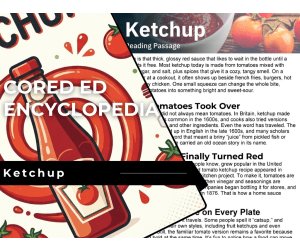
Ketchup Reading Comprehension Passage - Cored Ed Encyclopedia
ELA, Language Development, Resources for Teachers, Reading Comprehension, Reading, Pre-Reading, Writing, History, Social Studies, Strategies, Grade 2, 3, 4, 5, Worksheets & Printables, Worksheets, Teacher Tools, Centers, Activities, Writing Prompts, Assessments, Tests, Quizzes and Tests, Quizzes
This ketchup reading comprehension contains the following: Visualize on the Cover (Teacher Read Aloud Script) Start your lesson by taking a few moments to visualize the topic and share thoughts or feelings about it. Pre-Reading Trivia Students will write down one thing they already know about the subject and then read five more facts and discuss. These facts are fun, and the students will enjoy learning about the subject before reading more. Reading Passage The text is a high-interest reading passage with set paragraphs, roughly three to four paragraphs long. It contains a variety of themes about the topic, anywhere from history to technology. The passage is between 250 and 350 words in length. Mixed Questions The first question page contains four multiple-choice questions, each with a choice of four answers, and three written response questions that require a sentence or two from the student. Vocabulary Questions Practice seven key words from the text in this section across two activities. First section is scrambled words where students will unscramble three words given a clue for each. The second section is a word to meaning matching activity. Creative Writing In this question, the student will be required to write a five to eight sentence paragraph on a question related to the topic. Extension Activities This page is optional for fast finishers or to take home. There are several activities, each one requiring a different skill. Do some, do none, do all, completely optional - but you will feel reassured knowing every possibility is planned for. Includes summary writting question. Answer Key There are answers for the multiple-choice questions, written response questions have sample answers, vocabulary answers and if there is a summary question then a sample summary will be provided as well. FULL CATALOG OF DOWNLOAD LINKS AND ENCYCLOPEDIA INDEX HERE Lesson Snapshot Title: Ketchup Genre: Nonfiction (informational text) Subject: Reading (Informational Text) / Social Studies (Food history & culture) Primary Topic: How ketchup changed over time and place Estimated Guided Reading Level (A–Z): O What This Lesson Teaches Best Explains what ketchup is commonly made from today and how it’s used with different foods. Traces ketchup’s history, including earlier versions that were not made from tomatoes. Connects word meaning and origin by describing how the name “ketchup” traveled across languages and may relate to a Hokkien word. Shows how recipes and food products change over time (homemade cooking → bottled store product; dates and examples included). Highlights how foods can vary across places (different spellings and versions such as fruit or banana ketchup). Learning Goals Students will describe what ketchup is like and what ingredients are named in the text. Students will explain how ketchup long ago could be different from ketchup today, using details from the passage. Students will identify key events/dates in ketchup’s story (1600s, 1812, 1876) and tell what happened at each time. Students will explain why vinegar and seasonings are added, based on the passage. Students will describe how the word “ketchup” is connected to the idea of something “briny,” according to the text. Key Vocabulary From the Text glossy — shiny and smooth-looking. vinegar — sour liquid used in cooking. briny — salty, like seawater. scholars — people who study and learn a lot. staple — something kept often; a regular favorite. Cored Ed Encyclopedia Overview The Cored Ed Encyclopedia is a weekly series of lessons that you can pick up and use right away. These short readings fit into whatever time you have available. Each one includes a warm-up, a reading, and a set of questions, but it’s flexible — you can do just the reading, the full lesson, or skip the writing section if you need to. Each lesson focuses on a single topic so students don’t get lost. The writing is clear but never childish, making it perfect for grades two through five. Topics range from animals and science to history, inventions, and everyday things. No matter the level of the student, everyone should take away at least one new idea or fact from each lesson. The materials are easy to print, easy to explain, and require no setup. They work well for whole-class teaching, partner work, or independent study.
Author Cored Education
Rating
Tags Vocabulary, Spelling, Reading Comprehension, Reading Passages, Reading, Creative Writing, Reading Strategies, Writing Prompts, Ketchup, History

"Zane and the Hurricane" Essay Questions & Writing Prompts Pack
ELA, Reading, Reading Comprehension, Literature, Writing, Grade 4, 5, 6, Writing Prompts, Worksheets & Printables
The Zane and the Hurricane Essay Questions & Writing Prompts Pack is an exceptional resource targeted for educators instructing grades 4-6. These resources primarily focus on Language Arts subjects, especially Comprehension, Literature, Reading, and Writing. It hosts a set of meticulously curated essay questions and writing prompts based on the novel “Zane and the Hurricane” by Rodman Philbrick. This pack trains readers in higher-level thinking skills to promote deeper discussions among learners. It also grants students formidable opportunities to partake in comprehensive writing exercises.The tools inspire learners to engage in evidence-based reasoning while structuring their viewpoints - transforming abstract reading concepts into tangible learning experiences. Contained within this resource are thirteen distinct essay questions constructed with extreme attention to detail.Additionally, included is lined paper which can be utilized as an extension sheet if your student needs extra space beyond what's provided; ensuring that nothing limits your students' creativity or analytical thinking. Versatility of Implementation: A standout feature of this package is its versatility regarding implementation strategies. Educators can employ these resources in a myriad ways best suited towards varying classroom setups: Model 1-2 questions from start-to-end providing a verbal thought process Promote small group or partnered work dynamics for interactive brainstorming sessions Task students independently encouraging self-dependent problem-solving abilities Engage parents through homework assignments that reinforce crucial reading comprehension skills outside the school environment An Ideal Novel Study Guide/ Book Companion : This versatile PDF file type Novel Study Guide/ Book Companion comes equipped with activities making it easier for teachers' direct involvement whether it arises from whole-class collaboration projects or smaller break-away groups. Also stretching as far as home-based assignments; this pack fits effortlessly into any teaching plan you may have mapped out, while keeping engagement levels high across all usage scenarios. The Zane and the Hurricane Essay Questions & Writing Prompts Pack is an invaluable suite of tools for educators aiming to create a fertile, interactive, and comprehensive learning environment for their students - it strengthens learners analytically and fosters a genuine love for literature from a young age.
Author Creatively Gifted
Tags Essay Questions, Writing Prompts, Comprehension, Literature, Reading
Reading Comprehension Nonfiction Set 2 Sample: Fats (Word)
ELA, Reading, Reading Comprehension, Common Core, ESL, Language Development, Creative Writing, Writing, Resources for Teachers, Grade 2, 3, Worksheets & Printables, Worksheets, Writing Prompts, Assessments, Teacher Tools, Tests, Quizzes and Tests
Reading Comprehension Passages Nonfiction Set 2 Sample Overview Engaging nonfiction articles, each with a collection of different activities included. Articles are written for the modern classroom and topics are designed to promote enthusiasm from each student. Each lesson contains a mixed questions section to check understanding, a vocabulary or spelling activity to help remember key language introduced, and a writing exercise. Full answer keys are provided. Passage Included 3.Fats: What are trans fats? Learn all about them in this lesson. Word Version This is the Word editable version. This download is available in GOOGLE Docs, GOOGLE Forms, GOOGLE Slides. PDF, PPT, WORD. FULL CATALOG OF DOWNLOAD LINKS HERE Grade 2/3 Links Fiction Set 1 - Nature Google Docs Google Forms Google Slides PDF PPT Word Guided Reading Materials Fiction Set 2 - Animals Google Docs Google Forms Google Slides PDF PPT Word Guided Reading Materials Fiction Set 3 - Food Google Docs Google Forms Google Slides PDF PPT Word Guided Reading Materials Fiction Set 4 - School Google Docs Google Forms Google Slides PDF PPT Word Guided Reading Materials Fiction Set 5 - Friends Google Docs Google Forms Google Slides PDF PPT Word Guided Reading Materials Fiction Set 6 - Family Google Docs Google Forms Google Slides PDF PPT Word Guided Reading Materials Fiction Set 7 - Sports Google Docs Google Forms Google Slides PDF PPT Word Guided Reading Materials Nonfiction Set 1 - Technology Google Docs Google Forms Google Slides PDF PPT Word Guided Reading Materials Nonfiction Set 2 - Nutrition Google Docs Google Forms Google Slides PDF PPT Word Guided Reading Materials Nonfiction Set 3 - Animals Google Docs Google Forms Google Slides PDF PPT Word Guided Reading Materials Reading Passages Overview Each passage is especially written for Grade 2-3 students, including key vocabulary required for this age group. Topics are varied and are accompanied by colorful graphics. Topics are meant to educate, yet entertain the modern student. These passages are perfect for the modern classroom. Whereas textbooks can become outdated in no time, any changes to technology or the world will result in updates to this product. Mixed Questions The mixed questions section of each lesson includes a variation of fivecomprehension, vocabulary and math questions. In addition, key reading strategies are frequently covered including cause & effect, summarizing, compare & contrast and making conclusions. Three of the questions will be MCQs and two will require a written response of some kind. Full answers and example responses appear at the end of the lesson. Spelling & Vocab Each reading passage contains a variety of words and phrases designed for Grade 2-3 students. Spelling and vocab activities provide the opportunity to build fluency with these words. As it can become quite mundane doing the same activities over and over, each lesson in a set will contain a different spelling and vocab activity . Writing Prompts Writing prompts are designed to continue the theme or lessons learned in the story. Students are persuaded to write in a variety of ways and each prompt includes several cues to help. As with the spelling/vocab section, writing prompts will vary. This includes research pieces, reading responses, poetry and creative writing prompts. Full Answer Keys Full answer keys and sample responses are provided so no matter how busy you are, you know you're covered! Mixed question answers provide evidence from the text, math questions contain the relevant workings. Answers are designed for use by the teacher, but also suitable as a handout to the student. Additional File One lesson will have an additional file. This is something fun to extend the lesson with. For similar downloads and other frees, do check out Cored Group on TeachSimple.
Author Cored Education
Tags Elementary, Reading, Comprehension, Vocabulary, Answers, Ccss, Common Core, Spelling, Writing, Passages
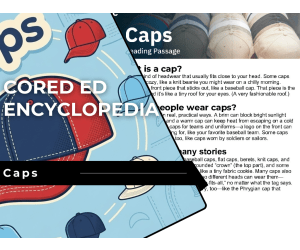
Caps Reading Comprehension Passage - Cored Ed Encyclopedia
ELA, Language Development, Resources for Teachers, Reading Comprehension, Reading, Pre-Reading, Creative Writing, Writing, Strategies, Common Core, Grade 2, 3, 4, 5, Worksheets & Printables, Worksheets, Teacher Tools, Centers, Activities, Writing Prompts, Assessments, Tests, Quizzes and Tests, Quizzes
This caps reading comprehension contains the following: Pre-Reading Trivia Students will write down one thing they already know about the subject and then read five more facts and discuss. These facts are fun, and the students will enjoy learning about the subject before reading more. Reading Passage The text is a high-interest reading passage with set paragraphs, roughly three to four paragraphs long. It contains a variety of themes about the topic, anywhere from history to technology. The passage is between 250 and 350 words in length. Mixed Questions The first question page contains four multiple-choice questions, each with a choice of four answers, and three written response questions that require a sentence or two from the student. Creative Writing In this question, the student will be required to write a five to eight sentence paragraph on a question related to the topic. Extension Activities This page is optional for fast finishers. If there are five to ten minutes left at the end of the lesson, the student can choose one of three activities, each one requiring a different skill. Answer Key There are answers for the multiple-choice questions and three written response questions have sample answers. FULL CATALOG OF DOWNLOAD LINKS AND ENCYCLOPEDIA INDEX HERE Cored Ed Encyclopedia Overview The Cored Ed Encyclopedia is a weekly series of lessons that you can pick up and use right away. These short readings fit into whatever time you have available. Each one includes a warm-up, a reading, and a set of questions, but it’s flexible — you can do just the reading, the full lesson, or skip the writing section if you need to. Each lesson focuses on a single topic so students don’t get lost. The writing is clear but never childish, making it perfect for grades two through five. Topics range from animals and science to history, inventions, and everyday things. No matter the level of the student, everyone should take away at least one new idea or fact from each lesson. The materials are easy to print, easy to explain, and require no setup. They work well for whole-class teaching, partner work, or independent study.
Author Cored Education
Rating
Tags Vocabulary, Spelling, Reading Comprehension, Reading Passages, Cored Encyclopedia, Facts, Reading, Creative Writing, Caps, Pre-reading

The Greatest Americans Research Writing Prompt Bundle
ELA, Social Studies, Writing, History, History: USA, Grade 4, 5, 6, 7, Writing Prompts, Worksheets & Printables
The Greatest Americans Research Writing Prompt Bundle Engage students in writing with this 41-page bundle on famous Americans! Students research historical figures like Rosa Parks, Neil Armstrong, and more using the included writing tips and proofreading guides. Then, they write informational pieces on the famous Americans. Differentiation ideas allow implementation for whole group, partners, or independent work. Extend learning with blank pages for students to research their own historical figure. Check out complementary resources like the Misty Copeland No Prep Packet, Chadwick Boseman No Prep Packet, and more American-themed products from Learn Teach Create. This writing prompt bundle makes informational writing fun!
Author Learn Teach Create
Tags Informative Writing, Greatest Americans, Historical Leaders, Influential Leaders, Writing Prompts, History Writing, Writing Bundle, Small Group
Reading Comprehension Nonfiction Set 2 Sample: Fats (PDF)
ELA, Reading, Reading Comprehension, Common Core, ESL, Language Development, Creative Writing, Writing, Resources for Teachers, Grade 2, 3, Worksheets & Printables, Worksheets, Writing Prompts, Assessments, Teacher Tools, Tests, Quizzes and Tests
Reading Comprehension Passages Nonfiction Set 2 Sample Overview Engaging nonfiction articles, each with a collection of different activities included. Articles are written for the modern classroom and topics are designed to promote enthusiasm from each student. Each lesson contains a mixed questions section to check understanding, a vocabulary or spelling activity to help remember key language introduced, and a writing exercise. Full answer keys are provided. Passage Included 3.Fats: What are trans fats? Learn all about them in this lesson. PDF Version This is the PDF uneditable version. This download is available in GOOGLE Docs, GOOGLE Forms, GOOGLE Slides. PDF, PPT, WORD. FULL CATALOG OF DOWNLOAD LINKS HERE Grade 2/3 Links Fiction Set 1 - Nature Google Docs Google Forms Google Slides PDF PPT Word Guided Reading Materials Fiction Set 2 - Animals Google Docs Google Forms Google Slides PDF PPT Word Guided Reading Materials Fiction Set 3 - Food Google Docs Google Forms Google Slides PDF PPT Word Guided Reading Materials Fiction Set 4 - School Google Docs Google Forms Google Slides PDF PPT Word Guided Reading Materials Fiction Set 5 - Friends Google Docs Google Forms Google Slides PDF PPT Word Guided Reading Materials Fiction Set 6 - Family Google Docs Google Forms Google Slides PDF PPT Word Guided Reading Materials Fiction Set 7 - Sports Google Docs Google Forms Google Slides PDF PPT Word Guided Reading Materials Nonfiction Set 1 - Technology Google Docs Google Forms Google Slides PDF PPT Word Guided Reading Materials Nonfiction Set 2 - Nutrition Google Docs Google Forms Google Slides PDF PPT Word Guided Reading Materials Nonfiction Set 3 - Animals Google Docs Google Forms Google Slides PDF PPT Word Guided Reading Materials Reading Passages Overview Each passage is especially written for Grade 2-3 students, including key vocabulary required for this age group. Topics are varied and are accompanied by colorful graphics. Topics are meant to educate, yet entertain the modern student. These passages are perfect for the modern classroom. Whereas textbooks can become outdated in no time, any changes to technology or the world will result in updates to this product. Mixed Questions The mixed questions section of each lesson includes a variation of fivecomprehension, vocabulary and math questions. In addition, key reading strategies are frequently covered including cause & effect, summarizing, compare & contrast and making conclusions. Three of the questions will be MCQs and two will require a written response of some kind. Full answers and example responses appear at the end of the lesson. Spelling & Vocab Each reading passage contains a variety of words and phrases designed for Grade 2-3 students. Spelling and vocab activities provide the opportunity to build fluency with these words. As it can become quite mundane doing the same activities over and over, each lesson in a set will contain a different spelling and vocab activity . Writing Prompts Writing prompts are designed to continue the theme or lessons learned in the story. Students are persuaded to write in a variety of ways and each prompt includes several cues to help. As with the spelling/vocab section, writing prompts will vary. This includes research pieces, reading responses, poetry and creative writing prompts. Full Answer Keys Full answer keys and sample responses are provided so no matter how busy you are, you know you're covered! Mixed question answers provide evidence from the text, math questions contain the relevant workings. Answers are designed for use by the teacher, but also suitable as a handout to the student. Additional File One lesson will have an additional file. This is something fun to extend the lesson with. For similar downloads and other frees, do check out Cored Group on TeachSimple.
Author Cored Education
Tags Elementary, Reading, Comprehension, Vocabulary, Answers, Ccss, Common Core, Spelling, Writing, Passages
Reading Comprehension and Questions Fiction Set 4 - School (Fillable)
ELA, Reading, Common Core, Spelling, Language Development, Vocabulary, Children’s Literature, Literature, Creative Writing, Writing, Grade 4, 5, Worksheets & Printables, Worksheets, Writing Prompts, Assessments, Teacher Tools, Tests, Quizzes and Tests
Reading Comprehension Passages Fiction Set 4 Snapshot Title: Title not stated Genre: Fiction (short story collection with comprehension/skill pages) Subject: Reading (ELA) Primary Topic: School-based short stories and reading practice Estimated Guided Reading Level (A–Z): Q What This Teaches Best Character change and motivation through school dilemmas (e.g., telling the truth and taking responsibility, welcoming a new student, choosing kindness over winning). Theme and life lessons grounded in realistic situations (touching what isn’t yours, facing fears, not judging by appearances, turning embarrassment into humor, leadership and courage). Plot structure skills (problem/solution and sequencing) across multiple short narratives with clear beginning–middle–end events. Academic vocabulary in context (students meet words like summoned, confronting, sophisticated, derived, and repelled inside the stories). Teacher note (support-page QA): The “President Lina” spelling page includes a clue that appears mismatched with the story’s word choice (the story uses prospects ). Learning Goals Identify key events in a story and retell them in logical order using details from the text. Describe a character’s feelings, choices, and traits using evidence from dialogue and actions. Explain the central lesson or message of a story and connect it to what happens in the plot. Determine the meaning of unfamiliar words using context clues from surrounding sentences. Describe how a problem is introduced and solved in a narrative. Passages Include The Principal: Kaitlin and Diann end up in the principal’s office. Who caused the trouble? Fear: Tyson is trying to act brave, but he’s been worrying a lot lately. Warm Welcome: Follow Juliet as she starts her first day at Westside Elementary. Funny Photos: Darlene and her class come up with a clever plan for their silly photo day pictures. Gold Star: Amber’s class begins a new contest, and the winner earns a gold star. Sub Teacher: Ed isn’t thrilled to meet the substitute teacher—Mr. Strict. President Lina: Lina feels too shy to run for school president, but after some encouragement… Devon’s Science Project: Devon’s project turns into an adventure that just might help save the world. On the Stage: Tera and her class work together to build an adobe stage for their school. Eve’s Amazing Day: Eve has an awesome day at school—read what happens in this lesson. FILLABLE PDF VERSION Worksheet-style pages, but with type-in answer boxes so students can complete and save their work digitally. Other versions are available in the links list below or in the full catalog. . FULL CATALOG OF DOWNLOAD LINKS HERE For similar downloads and other frees, do check out Cored Group on TeachSimple.
Author Cored Education
Rating
Tags Elementary, Reading, Comprehension, Vocabulary, Answers, Common Core, Spelling, Writing, Passages, Reading Comprehension Assessments
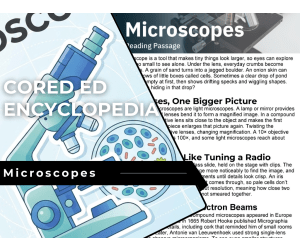
Microscopes Reading Comprehension Passage - Cored Ed Encyclopedia
ELA, Language Development, Resources for Teachers, Reading Comprehension, Reading, Pre-Reading, Science, Writing, Strategies, Physics, Grade 2, 3, 4, 5, Worksheets & Printables, Worksheets, Teacher Tools, Centers, Activities, Writing Prompts, Assessments, Tests, Quizzes and Tests, Quizzes
This microscopes reading comprehension contains the following: Visualize on the Cover (Teacher Read Aloud Script) Start your lesson by taking a few moments to visualize the topic and share thoughts or feelings about it. Pre-Reading Trivia Students will write down one thing they already know about the subject and then read five more facts and discuss. These facts are fun, and the students will enjoy learning about the subject before reading more. Reading Passage The text is a high-interest reading passage with set paragraphs, roughly three to four paragraphs long. It contains a variety of themes about the topic, anywhere from history to technology. The passage is between 250 and 350 words in length. Mixed Questions The first question page contains four multiple-choice questions, each with a choice of four answers, and three written response questions that require a sentence or two from the student. Vocabulary Questions Practice seven key words from the text in this section across two activities. First section is scrambled words where students will unscramble three words given a clue for each. The second section is a word to meaning matching activity. Creative Writing In this question, the student will be required to write a five to eight sentence paragraph on a question related to the topic. Extension Activities This page is optional for fast finishers or to take home. There are several activities, each one requiring a different skill. Do some, do none, do all, completely optional - but you will feel reassured knowing every possibility is planned for. Includes summary writting question. Answer Key There are answers for the multiple-choice questions, written response questions have sample answers, vocabulary answers and if there is a summary question then a sample summary will be provided as well. FULL CATALOG OF DOWNLOAD LINKS AND ENCYCLOPEDIA INDEX HERE Lesson Snapshot Title: Microscopes Genre: Nonfiction Subject: Science (scientific tools) Primary Topic: How microscopes magnify; parts; history Estimated Guided Reading Level (A–Z): Q What This Lesson Teaches Best Explains how microscopes make tiny objects look larger so people can explore what they can’t see with eyes alone. Teaches how a compound microscope uses two lenses (objective lens first, then the eyepiece) to create a bigger picture. Describes key microscope parts and what they do (slide, stage with clips, coarse focus knob, fine focus knob, iris diaphragm). Introduces resolution as an important idea for seeing details clearly, not just making things bigger. Connects science tools to history and innovation (Robert Hooke and Micrographia , Antonie van Leeuwenhoek, and electron microscopes). Learning Goals Describe what a microscope does using details from the passage. Explain how the objective lens and eyepiece work together in a compound microscope. Identify the job of the coarse focus knob and the fine focus knob when making an image look crisp. Explain how the iris diaphragm helps control light when viewing pale samples. Define resolution as the passage describes it and explain why it matters. Compare light microscopes and electron microscopes based on what they use to see tiny structures. Key Vocabulary From the Text Objective — lens close to sample that makes the first enlarged image. Eyepiece — top lens you look through that enlarges the picture again. Diaphragm — part that controls how much light comes through. Resolution — how close two points can be and still look separate. Vacuum — space with no air where samples sit in electron microscopes. Cored Ed Encyclopedia Overview The Cored Ed Encyclopedia is a weekly series of lessons that you can pick up and use right away. These short readings fit into whatever time you have available. Each one includes a warm-up, a reading, and a set of questions, but it’s flexible — you can do just the reading, the full lesson, or skip the writing section if you need to. Each lesson focuses on a single topic so students don’t get lost. The writing is clear but never childish, making it perfect for grades two through five. Topics range from animals and science to history, inventions, and everyday things. No matter the level of the student, everyone should take away at least one new idea or fact from each lesson. The materials are easy to print, easy to explain, and require no setup. They work well for whole-class teaching, partner work, or independent study.
Author Cored Education
Rating
Tags Vocabulary, Spelling, Reading Comprehension, Reading Passages, Reading, Creative Writing, Reading Strategies, Writing Prompts, Microscopes, Physics
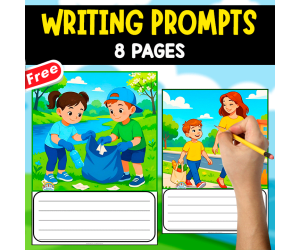
WRITING PROMPT | 8 PAGES | CREATIVE WRITING
Creative Writing, Writing, ELA, Adult Education, Early Learning, Elementary, High School, Homeschool Resources, Middle School, Not Grade Specific, Pre-K, Worksheets & Printables, Writing Prompts
WRITING PROMPT | 8 PAGES | CREATIVE WRITING ABOUT THE AUTHOR: At Laura Educa Publishing, we design and gather meaningful educational resources that support children’s learning journey. We aim to inspire kids to see learning as a fun and exciting experience. MAIN INFORMATION: -Write an engaging introduction for this product. First of all, at EDITORIAL LAURA EDUCA, we are deeply grateful that you have chosen to use one of our products in your learning or teaching process. -Highlight the main learning objective of this resource. Some of the objectives of using this resource could be said to be: -To motivate student learning. - To help students solidify specific knowledge. -Outline the structure and steps included in the activity. For student learning, it is necessary to follow a certain structure that involves the student learning process. Let's begin by mentioning motivation, moving on to the foundation of learning, and finally carrying out the metacognitive step. PLEASE DOWNLOAD TOO THESE RESOURCES: -ANIMAL MAZES: https://teachsimple.com/product/8-free-animals-mazes-in-spanish-for-spanish-learners -TRACING LINES: https://teachsimple.com/product/free-tracing-minibook-with-11-free-pages -SPANISH COLORS: https://teachsimple.com/product/spanish-color-activity-cut-and-paste SECONDARY AND COMPLEMENTARY DESCRIPTION: What tags or keywords are relevant for this resource? Some tags that could define this product are: resources, teaching resources, materials, materials for children, educational materials. How can this product be used, and what variations are possible? This product can be used in many ways. To begin with, you can use it at different points in your lesson, and as I mentioned before, it all depends on your creativity. What standards does this resource align with? This resource has not been designed based on any specific educational standards. What file types are included? This file is only covering one topic, and it only includes the product described in PDF. How many pages are included in total? This product contains 8 pages.
Author EDITORIAL LAURA EDUCA
Rating
Tags FREE, FREE RESOURCES, CREATIVE WRITING, WRITING PROMPT
Reading Comprehension Nonfiction Set 2 - Insects (Fillable PDF)
ELA, Reading, Reading Comprehension, Common Core, ESL, Language Development, Spelling, Vocabulary, Creative Writing, Writing, Grade 4, 5, Worksheets & Printables, Worksheets, Assessments, Teacher Tools, Tests, Quizzes and Tests, Writing Prompts
Reading Comprehension Passages Nonfiction Set 2 Snapshot Title: Reading Comprehension: Nonfiction Grade 4–5 Insects Genre: Nonfiction (informational articles with practice pages) Subject: Reading (Informational Text) / Life Science Primary Topic: Insect and spider traits, behaviors, and survival Estimated Guided Reading Level (A–Z): S What This Teaches Best Comparing animal groups using key traits (e.g., spiders vs. insects: legs, eyes, antennae, exoskeleton). Animal defenses and survival behaviors (tarantula defenses; stink bug “stink blob”; ostrich-like comparisons are not present—this book stays on insects/spiders). Life cycles and roles in colonies (firefly stages; queen/worker/drone roles in ants and bees). Cause/effect and how parts help animals function (grasshoppers hearing through the tympanum; bees turning nectar into honey through evaporation and enzymes). Nonfiction comprehension routines (mixed questions, vocabulary tasks, sequencing/reordering text, and short written responses tied to each article). Learning Goals Explain how spiders and insects are different using details from the text. Describe how an insect or spider protects itself and why the defense helps. Identify the role of a queen, worker, and drone in a colony using text evidence. Describe stages in a life cycle (such as fireflies) using the article’s information. Determine the meaning of science words by using context clues in the passages. Passages Include 1.We Are Not Insects: Spiders ARE NOT insects! Read more in this article. 2.What a Smell: How does the stink bug protect its children? Find out in this lesson. 3.Queen: The ant queen. Sounds elegant. In fact, it isn't! It's a tough job. 4.Summer Singer: How do grasshoppers make noise and why? Read this passage to find out. 5.Fireflies: Why do fireflies flash? Read to learn about this, and more. 6.Bees: Worker bees, house bees. Collecting nectar, storing nectar. What exactly goes on in a bee hive? FULL CATALOG OF DOWNLOAD LINKS HERE FILLABLE PDF VERSION Worksheet-style pages, but with type-in answer boxes so students can complete and save their work digitally. Other versions are available in the links list below or in the full catalog. For similar downloads and other frees, do check out Cored Group on TeachSimple.
Author Cored Education
Rating
Tags Elementary, Reading, Comprehension, Vocabulary, Answers, Common Core, Spelling, Writing, Passages, Reading Comprehension Assessments

Famous Artist Middle School Research Project 5th 6th 7th 8th Grade
Research, ELA, Writing, Formal Writing, Social Studies, Biographies, Creative Arts, Art History, Grade 5, 6, 7, 8, Worksheets & Printables, Worksheets, Writing Prompts, Drawing Templates & Outlines, Teacher Tools, Rubrics, Activities, Projects
Here is a ready-to-go middle school famous artist research project for your students in 5th, 6th, 7th, or 8th grade. Each student will choose a famous artist, complete focused research about their life and artistic style, and create an organized project with paragraphs and visuals to share their learning. How to Use: •Print pages 2-13 for each student. •Page 2 has instructions for the project including spots to write due dates and a checklist to keep students on track. You can assign a specific era for students to pick artists from or give them a list of artists. •Page 3 has seven different prompts for students to research. Each student needs to pick at least four prompts to include in their unique project. •Pages 4-6 are graphic organizers for your students to use as they take notes and record their research sources (page 6 is optional). •Pages 7-9 are templates for students to use to write at least four paragraphs about their artist (page 9 is optional). They could also type and print these paragraphs instead. •Page 10 is for students to use to draw a portrait of their artist. They could choose to use the artist’s style as inspiration. •Page 11 is for students to show samples of the artist’s paintings and style. They can print and glue on some samples and try to recreate some on their own as well. •Page 12 is a title page for the project booklet. •Page 13 is a rubric you can use to assess the project. Let students see it at the beginning of the project so they know what the expectations are. Over several weeks, your students can complete their research, write and proofread their paragraphs, and draw the visual components of their project. They can present their projects to each other, and you can use the rubric to assess them Grades to Use With: This project is designed for middle school students in 5th, 6th, 7th, or 8th grade who are learning about biography writing, famous artists, library research skills and expository writing- specifically expository paragraphs. It could also be used in high school special education classes where appropriate. What's Included: 13-Page PDF: Ready to Print and Use! Complete Teacher Instructions 2 Pages of Student Instructions & Writing Topics 6 Student Graphic Organizers for Note-Taking & Paragraph Writing 2 Student Templates for an Artist Portrait and Samples of Art Project Title Page Marking Rubric
Author Grace Under Pressure
Rating
Tags 5th Grade Project, Famous Artist, Famous Artist Research Project, Famous Artist Research, Artists, Middle School Research Project, 6th Grade Project, Art Project, Paragraph Writing

Ocean Animal Research Writing Project on DOLPHINS for K-2nd Grade
Life Studies, ELA, Writing, Creative Writing, Reading, Science, Life Sciences, Animals, Research, Kindergarten, Grade 1, 2, Lesson Plans, Teacher Tools, Worksheets & Printables, Worksheets, Writing Prompts
Animal Research Writing Project on Dolphins for K-2nd Grade. Engage young learners in reading, writing, and science with this 19-page informational writing unit on dolphins. Students will read leveled texts and examine real life photos to learn facts about these playful marine mammals. Next, they will organize the information using color-coded graphic organizers. Finally, students will write their own informational report on dolphins using differentiated writing pages for K-2. Extension activities allow creativity through coloring, habitat illustration, and cover page design. Implementation ideas included for whole group, small group, centers, or individual work. Check out companion units on whales, seals, sea turtles, and more ocean animals from Teach Simple! Plus, even more units on zoo animals! Here are even more informational resources on report writing for OCEAN ANIMALS. Click on the links below: Animal Research Writing Project on WHALES for K-2nd Grade Animal Research Writing Project on the OCTOPUS for K-2nd Grade Animal Research Writing Project on SEA TURTLES for K-2nd Grade Animal Research Writing Project on ORCAS for K-2nd Grade Animal Research Writing Project on the SHELLFISH for K-2nd Grade Animal Research Writing Project on DOLPHINS for K-2nd Grade Animal Research Writing Project on SEALS for K-2nd Grade Want to teach your students all about Zoo Animals? Check out all these interesting facts about these favorite zoo animals. With the same great photos, facts, habitat drawings, and more. It is a great way to help students to get interested in writing. For Zoo Animal reports, click on the following links below: Animal Research Writing Project on TIGERS for K-2nd Grade Animal Research Writing Project on MONKEYS for K-2nd Grade Animal Research Writing Project on PANDAS for K-2nd Grade Animal Research Writing Project on HIPPOS for K-2nd Grade Animal Research Writing Project on ELEPHANTS for K-2nd Grade Animal Research Writing Project on GIRAFFES for K-2nd Grade
Author K-5 Treasures
Tags Animal Research, Informational Writing, Writing Report, Report On Animals, 1st Grade Writing, 2nd Grade Writing, Dolphins, Report On Dolphins, Ocean Animals, Sea Life

Daily Writing Prompt Cards
ELA, Writing, Preschool, Grade 1, 2, 3, Writing Prompts, Worksheets & Printables
This resource is a set of Daily Writing Prompt Cards. There are 32 prompt cards that you can print, laminate and cut for students to enjoy. You could put these cards on a binder ring and allow students to use them independently for early finishers, morning work and so much more.
Author Top Notch Teaching
Tags Writing Prompts, Task Cards, Daily Writing, Interactive Notebook, Writing Center, Writing Prompt Cards
Writing Prompt Journal, 45-Days Warm-Up, Editable #2
Special Resources, ELA, Holiday & Seasonal, Writing, Creative Writing, Grammar, Seasons, Summer, Grade 1, 2, 3, 4, 5, 6, 7, 8, 9, 10, 11, 12, Writing Prompts, Worksheets & Printables
Ready to get your learners working in a more gentle on-ramp to your class time? Maybe your homeschool already includes instruction, but a gentle warm-up to your learners' writing instruction is a great way to keep them motivated to learn more! It's recommended kids get 30 minutes of writing practice each day. Sometimes this seems overwhelming for the adults in the room, as it requires planning, formatting, and thoughtful composition. This resource has you covered! Choose to print or use the digital version. Objective: Provide done-for-you writing prompts for both younger and older learners. Formats: Use the provided PowerPoint format, or upload the PPT to Google Slides and have students respond by typing their responses. This is a great motivator for students who enjoy typing more than writing by hand. It also provides a more streamlined checking feature for teachers and supervising adults. Grades: Designed for native speakers in grades 2-5, but applicable for learners in grades 6-12 who are beginning their English-learning journey. Variations: This resource is also available in French and Spanish. What you'll get: This resource contains a PowerPoint file with 64 pages. It also has instructions, spaces for writing, and a certificate of completion. What people are saying: "Fun writing prompts. They really encouraged my child to keep writing beyond the first simple sentence! Great resource. Thank you!" -Jessica P. Looking for more English resources? Be sure to check out my debate activities, critical thinking games, and vocabulary lessons and games on Teach Simple! Topics include: -A Superhero's Toolbox -"Bigger & Better" debate -"I Have, Who Has" card game and vocabulary lesson on: food & drink, weather & landforms, numbers, colors, and patterns, Christmas, calendar, and school & classroom vocabulary. Got a request? Feel free to get in touch on socials @melissaisteaching . Happy teaching!
Author Melissa Is Teaching
Tags Writing, Homeschool, Writing Fluency, Writing Stamina, Daily Writing, Writing Prompts, Editing, Summer

Reading Comprehension Nonfiction Set 5 - Sea Animals (PDF)
ELA, Reading, Reading Comprehension, Common Core, Creative Writing, Writing, ESL, Language Development, Spelling, Vocabulary, Grade 4, 5, Worksheets & Printables, Worksheets, Writing Prompts, Assessments, Teacher Tools, Tests, Quizzes and Tests, Centers, Activities
Reading Comprehension Passages Nonfiction Set 5 Overview No prep reading comprehension lessons, with enjoyable articles and topics. Each lesson has a blend of post-reading activities. Mixed questions to check overall understanding. Vocabulary activities, plus a writing section. Lessons also contain a bonus extension exercise at the end. Some you may like, some you may not, either way they are there if you wish to use them. Full answer keys are provided. Passages Include 1.Stingray: Close relatives to sharks, read more about this fascinating animal in this article. 2.That's Electric: How much electricity can an electric eel produce? Find outhere. 3.Whale Shark: The largest fish in the sea. Yes, the largest!! 4.Scared of Sharks: The all you need to know shark passage. If you're not too scared to read it! 5.Under the Sea: Porpoise or dolphin? What's the difference? 6.All About Jellyfish: More people are killed by jellyfish stings every year than from great white shark attacks. PDF Version This is the PDF uneditable version. This download is available in GOOGLE Docs, GOOGLE Forms, GOOGLE Slides. PDF, PPT, WORD. FULL CATALOG OF DOWNLOAD LINKS HERE Grade 4/5 Links Fiction Set 1 - Animals Google Docs Google Forms Google Slides PDF PPT Word Guided Reading Materials Fiction Set 2 - Family Google Docs Google Forms Google Slides PDF PPT Word Guided Reading Materials Fiction Set 3 - Friends Google Docs Google Forms Google Slides PDF PPT Word Guided Reading Materials Fiction Set 4 - School Google Docs Google Forms Google Slides PDF PPT Word Guided Reading Materials Fiction Set 5 - Sports Google Docs Google Forms Google Slides PDF PPT Word Guided Reading Materials Nonfiction Set 1 - Birds Google Docs Google Forms Google Slides PDF PPT Word Guided Reading Materials Nonfiction Set 2 - Insects Google Docs Google Forms Google Slides PDF PPT Word Guided Reading Materials Nonfiction Set 3 - Mammals Google Docs Google Forms Google Slides PDF PPT Word Guided Reading Materials Nonfiction Set 4 - Nature Google Docs Google Forms Google Slides PDF PPT Word Guided Reading Materials Nonfiction Set 5 - Sea Animals Google Docs Google Forms Google Slides PDF PPT Word Guided Reading Materials Reading Passages Overview Each passage is especially written for Grade 4-5 students, including key vocabulary required for this age group. Topics are varied and are accompanied by colorful graphics. Topics are meant to educate, yet entertain the modern student. These passages are perfect for the modern classroom. Whereas textbooks can become outdated in no time, any changes to technology or the world will result in updates to this product. Mixed Questions The mixed questions section of each lesson includes a variation of five comprehension, vocabulary and math questions. In addition, key reading strategies are frequently covered including cause & effect, summarizing, compare & contrast and making conclusions. Two or three of the questions will be MCQs and other questions will require a written response of some kind. Full answers and example responses appear at the end of the lesson. Spelling & Vocab Each reading passage contains a variety of words and phrases designed for Grade 4-5 students. Spelling and vocab activities provide the opportunity to build fluency with these words. As it can become quite mundane doing the same activities over and over, each lesson in a set will contain a different spelling and vocab activity . Activities include: spelling games, sentence match-ups, mixed-up text and decoding words from the lesson. Writing Prompts Writing prompts are designed to continue the theme or lessons learned in the story. Students are persuaded to write in a variety of ways and each prompt includes several cues to help. As with the spelling/vocab section, writing prompts will vary. This includes research pieces, reading responses, poetry and creative writing prompts. Full Answer Keys Full answer keys and sample responses are provided so no matter how busy you are, you know you're covered! Mixed question answers provide evidence from the text, math questions contain the relevant workings. Answers are designed for use by the teacher, but also suitable as a handout to the student. Just for Fun Each lesson will have a bonus extension exercise. This is something fun to extend the lesson with. You can find these at the end of each lesson, titled Just for Fun. Just for Funs are optional. Some you may like, some you may not. Either way, they are there to do with as you wish. For similar downloads and other frees, do check out Cored Group on TeachSimple.
Author Cored Education
Rating
Tags Elementary, Reading, Comprehension, Vocabulary, Common Core, Spelling, Writing, Passages, Reading Centers, Reading Comprehension Assessments

The War That Saved My Life Quizzes, Literary Essays & Quick Writes
ELA, Literature, Reading, Reading Comprehension, Writing, Formal Writing, Creative Writing, Grade 5, 6, 7, Quizzes and Tests, Teacher Tools, Quizzes, Tests, Rubrics, Worksheets & Printables, Novel Studies, Writing Prompts
The War That Saved My Life Chapter Quizzes, Literary Essays & Quick Writes Printable & Digital | Grades 5–7 | Answer Keys Included (PDF Only) When I started teaching The War That Saved My Life, I wanted quick ways to check comprehension and also give my students meaningful writing practice. That’s why I created this resource. It combines chapter quizzes, literary essay prompts, and quick writes to save time and keep assessment simple but effective. There are seven comprehension quizzes organized by chapter sections. Each one includes multiple-choice questions for quick checks, two short responses, and one extended response to encourage text-based answers and critical thinking. The Google Forms versions make digital grading easy, and they’re completely editable, so you can customize questions or scoring as needed. In addition to the quizzes, you’ll find 10 literary essay prompts with a rubric to help guide structured writing about theme, character development, conflict, symbolism, and more. For shorter writing practice, there are 5 quick-write prompts that are perfect for warm-ups or reflection after reading. What’s Included ✔ 7 comprehension quizzes (printable + Google Forms) ✔ 10 literary essay prompts with rubric ✔ 5 quick-write prompts with rubric ✔ Digital Google Slides Student Journal ✔ Answer keys for all PDF quizzes This resource works well for whole-class novel studies, small groups, or independent work. I’ve used it to monitor understanding, prep students for standardized testing, and build their confidence in responding with evidence. Printable and digital versions are included, and answer keys are provided for every quiz in the PDF version.
Author Creatively Gifted
Rating
Tags Reading Comprehension, Literary Essay, Quick Writes, The War That Saved My Life, Comprehension Quizz
Basketball Reading Comprehension Passage - Cored Ed Encyclopedia
ELA, Language Development, Resources for Teachers, Reading Comprehension, Reading, Pre-Reading, Creative Writing, Writing, Sports, P.E. & Health, Grade 2, 3, 4, 5, Worksheets & Printables, Worksheets, Teacher Tools, Centers, Activities, Writing Prompts, Assessments, Tests, Quizzes and Tests, Quizzes
This basketball reading comprehension contains the following: Pre-Reading Trivia Students will write down one thing they already know about the subject and then read five more facts and discuss. These facts are fun, and the students will enjoy learning about the subject before reading more. Reading Passage The text is a high-interest reading passage with set paragraphs, roughly three to four paragraphs long. It contains a variety of themes about the topic, anywhere from history to technology. The passage is between 250 and 350 words in length. Mixed Questions The first question page contains four multiple-choice questions, each with a choice of four answers, and three written response questions that require a sentence or two from the student. Creative Writing In this question, the student will be required to write a five to eight sentence paragraph on a question related to the topic. Extension Activities This page is optional for fast finishers. If there are five to ten minutes left at the end of the lesson, the student can choose one of three activities, each one requiring a different skill. Answer Key There are answers for the multiple-choice questions and three written response questions have sample answers. FULL CATALOG OF DOWNLOAD LINKS AND ENCYCLOPEDIA INDEX HERE Cored Ed Encyclopedia Overview The Cored Ed Encyclopedia is a weekly series of lessons that you can pick up and use right away. These short readings fit into whatever time you have available. Each one includes a warm-up, a reading, and a set of questions, but it’s flexible — you can do just the reading, the full lesson, or skip the writing section if you need to. Each lesson focuses on a single topic so students don’t get lost. The writing is clear but never childish, making it perfect for grades two through five. Topics range from animals and science to history, inventions, and everyday things. No matter the level of the student, everyone should take away at least one new idea or fact from each lesson. The materials are easy to print, easy to explain, and require no setup. They work well for whole-class teaching, partner work, or independent study.
Author Cored Education
Rating
Tags Vocabulary, Spelling, Reading Comprehension, Reading Passages, Cored Encyclopedia, Facts, Reading, Creative Writing, Basketball, Sports

Earphones Reading Comprehension Passage - Cored Ed Encyclopedia
ELA, Language Development, Resources for Teachers, Reading Comprehension, Reading, Pre-Reading, Writing, Science, Physics, Strategies, Grade 2, 3, 4, 5, Worksheets & Printables, Worksheets, Teacher Tools, Centers, Activities, Writing Prompts, Assessments, Tests, Quizzes and Tests, Quizzes
This earphones reading comprehension contains the following: Pre-Reading Trivia Students will write down one thing they already know about the subject and then read five more facts and discuss. These facts are fun, and the students will enjoy learning about the subject before reading more. Reading Passage The text is a high-interest reading passage with set paragraphs, roughly three to four paragraphs long. It contains a variety of themes about the topic, anywhere from history to technology. The passage is between 250 and 350 words in length. Mixed Questions The first question page contains four multiple-choice questions, each with a choice of four answers, and three written response questions that require a sentence or two from the student. Creative Writing In this question, the student will be required to write a five to eight sentence paragraph on a question related to the topic. Extension Activities This page is optional for fast finishers. If there are five to ten minutes left at the end of the lesson, the student can choose one of three activities, each one requiring a different skill. Answer Key There are answers for the multiple-choice questions and three written response questions have sample answers. FULL CATALOG OF DOWNLOAD LINKS AND ENCYCLOPEDIA INDEX HERE Cored Ed Encyclopedia Overview The Cored Ed Encyclopedia is a weekly series of lessons that you can pick up and use right away. These short readings fit into whatever time you have available. Each one includes a warm-up, a reading, and a set of questions, but it’s flexible — you can do just the reading, the full lesson, or skip the writing section if you need to. Each lesson focuses on a single topic so students don’t get lost. The writing is clear but never childish, making it perfect for grades two through five. Topics range from animals and science to history, inventions, and everyday things. No matter the level of the student, everyone should take away at least one new idea or fact from each lesson. The materials are easy to print, easy to explain, and require no setup. They work well for whole-class teaching, partner work, or independent study.
Author Cored Education
Rating
Tags Vocabulary, Spelling, Reading Comprehension, Reading Passages, Cored Encyclopedia, Facts, Reading, Creative Writing, Earphones, Physcial Science
Harps Reading Comprehension Passage - Cored Ed Encyclopedia
ELA, Language Development, Resources for Teachers, Reading Comprehension, Reading, Pre-Reading, Writing, Strategies, Music, Creative Arts, Grade 2, 3, 4, 5, Worksheets & Printables, Worksheets, Teacher Tools, Centers, Activities, Writing Prompts, Assessments, Tests, Quizzes and Tests, Quizzes
This harps reading comprehension contains the following: Pre-Reading Trivia Students will write down one thing they already know about the subject and then read five more facts and discuss. These facts are fun, and the students will enjoy learning about the subject before reading more. Reading Passage The text is a high-interest reading passage with set paragraphs, roughly three to four paragraphs long. It contains a variety of themes about the topic, anywhere from history to technology. The passage is between 250 and 350 words in length. Mixed Questions The first question page contains four multiple-choice questions, each with a choice of four answers, and three written response questions that require a sentence or two from the student. Creative Writing In this question, the student will be required to write a five to eight sentence paragraph on a question related to the topic. Extension Activities This page is optional for fast finishers. If there are five to ten minutes left at the end of the lesson, the student can choose one of three activities, each one requiring a different skill. Answer Key There are answers for the multiple-choice questions and three written response questions have sample answers. FULL CATALOG OF DOWNLOAD LINKS AND ENCYCLOPEDIA INDEX HERE Lesson Snapshot Title: Harps Genre: Nonfiction (informational text) Subject: Music (Informational Reading) Primary Topic: How harps work, types, and early history Estimated Guided Reading Level (A–Z): O What This Lesson Teaches Best Explains what a harp looks like and how it makes sound when strings are plucked. Connects string length and thickness to low and high notes (how pitch changes). Describes the soundboard’s role in helping the sound “ring out.” Introduces harps as an ancient instrument and names early places they were played (Mesopotamia, Egypt, Sumer). Compares types of harps today (lever harps vs. pedal harps) and what levers/pedals do to change pitch. Learning Goals Describe how a harp makes sound using details from the passage. Explain how longer/thicker strings and shorter/thinner strings relate to low and high notes. Identify what the soundboard does for the harp’s sound. Compare lever harps and pedal harps by explaining how each changes pitch. Summarize evidence that harps are very old by naming where early harps were played or found. Key Vocabulary From the Text soundboard — flat wooden part that helps sound ring out. plucking — pulling and releasing strings with fingers to make sound. pitch — how high or low a note sounds. glissando — a swooshing sound moving across many notes. mechanism — parts that work together to change something. Cored Ed Encyclopedia Overview The Cored Ed Encyclopedia is a weekly series of lessons that you can pick up and use right away. These short readings fit into whatever time you have available. Each one includes a warm-up, a reading, and a set of questions, but it’s flexible — you can do just the reading, the full lesson, or skip the writing section if you need to. Each lesson focuses on a single topic so students don’t get lost. The writing is clear but never childish, making it perfect for grades two through five. Topics range from animals and science to history, inventions, and everyday things. No matter the level of the student, everyone should take away at least one new idea or fact from each lesson. The materials are easy to print, easy to explain, and require no setup. They work well for whole-class teaching, partner work, or independent study.
Author Cored Education
Rating
Tags Vocabulary, Spelling, Reading Comprehension, Reading Passages, Reading, Creative Writing, Reading Strategies, Writing Prompts, Harps, Music

Zoo Animal Research Writing Project on MONKEYS for K-2nd Grade
Life Studies, ELA, Writing, Creative Writing, Reading, Science, Life Sciences, Animals, Research, Kindergarten, Grade 1, 2, Activities, Teacher Tools, Lesson Plans, Worksheets & Printables, Worksheets, Coloring Pages, Writing Prompts
Animal Research Writing Project on Monkeys for K-2nd Grade. Engage young learners in reading, writing, and science with this 19-page informational writing project on monkeys. Students will examine real-life photos, read age-appropriate facts, color images, draw habitat scenes, and organize information using writing organizers. Differentiated writing pages allow kids to write at their level. When finished, students and the entire classroom can bind everything together into a customized book. This monkey-themed unit promotes creativity, reading comprehension, and nonfiction writing skills. Implement as whole class, small group, centers, or individual work. Suitable for homeschools or grades Kindergarten, first grade classrooms., and for second graders. Click the links below to view similar units on other zoo animals and to do research on zoo animals. Teachers appreciate the ready-to-use animal units covering reading, note-taking, drafting, illustrating, and publishing. Engage your class in meaningful informational writing with this standards-based project on monkeys. Plus, there are many more zoo animals to research as well in my store: K-5 Treasures! For additional Zoo Animal reports, click on the following links below: Animal Research Writing Project on TIGERS for K-2nd Grade Animal Research Writing Project on MONKEYS for K-2nd Grade Animal Research Writing Project on PANDAS for K-2nd Grade Animal Research Writing Project on HIPPOS for K-2nd Grade Animal Research Writing Project on ELEPHANTS for K-2nd Grade Animal Research Writing Project on GIRAFFES for K-2nd Grade Here are even more informational resources on report writing for OCEAN ANIMALS. Click on the links below: Animal Research Writing Project on WHALES for K-2nd Grade Animal Research Writing Project on the OCTOPUS for K-2nd Grade Animal Research Writing Project on SEA TURTLES for K-2nd Grade Animal Research Writing Project on ORCAS for K-2nd Grade Animal Research Writing Project on the SHELLFISH for K-2nd Grade Animal Research Writing Project on DOLPHINS for K-2nd Grade Animal Research Writing Project on SEALS for K-2nd Grade
Author K-5 Treasures
Tags Animal Research, Informational Writing, Writing Report, Zoo Animals, Report On Animals, Report On Zoo Animals, 1st Grade Writing, 2nd Grade Writing, Monkeys, Report On Monkeys

Reading Comprehension Nonfiction Set 3 Sample: All About Horses (PDF)
ELA, Reading, Reading Comprehension, Common Core, ESL, Language Development, Spelling, Writing, Creative Writing, Resources for Teachers, Grade 4, 5, Worksheets & Printables, Worksheets, Assessments, Teacher Tools, Tests, Quizzes and Tests, Writing Prompts
Reading Comprehension Passages Nonfiction Set 3 Sample Overview No prep reading comprehension lessons, with enjoyable articles and topics. Each lesson has a blend of post-reading activities. Mixed questions to check overall understanding. Vocabulary activities, plus a writing section. Lessons also contain a bonus extension exercise at the end. Some you may like, some you may not, either way they are there if you wish to use them. Full answer keys are provided. Passage Included 3.All About Horses: How is the author preparing to become a vet when she gets older? PDF Version This is the PDF uneditable version. This download is available in GOOGLE Docs, GOOGLE Forms, GOOGLE Slides. PDF, PPT, WORD. FULL CATALOG OF DOWNLOAD LINKS HERE Grade 4/5 Links Fiction Set 1 - Animals Google Docs Google Forms Google Slides PDF PPT Word Guided Reading Materials Fiction Set 2 - Family Google Docs Google Forms Google Slides PDF PPT Word Guided Reading Materials Fiction Set 3 - Friends Google Docs Google Forms Google Slides PDF PPT Word Guided Reading Materials Fiction Set 4 - School Google Docs Google Forms Google Slides PDF PPT Word Guided Reading Materials Fiction Set 5 - Sports Google Docs Google Forms Google Slides PDF PPT Word Guided Reading Materials Nonfiction Set 1 - Birds Google Docs Google Forms Google Slides PDF PPT Word Guided Reading Materials Nonfiction Set 2 - Insects Google Docs Google Forms Google Slides PDF PPT Word Guided Reading Materials Nonfiction Set 3 - Mammals Google Docs Google Forms Google Slides PDF PPT Word Guided Reading Materials Nonfiction Set 4 - Nature Google Docs Google Forms Google Slides PDF PPT Word Guided Reading Materials Nonfiction Set 5 - Sea Animals Google Docs Google Forms Google Slides PDF PPT Word Guided Reading Materials Reading Passages Overview Each passage is especially written for Grade 4-5 students, including key vocabulary required for this age group. Topics are varied and are accompanied by colorful graphics. Topics are meant to educate, yet entertain the modern student. These passages are perfect for the modern classroom. Whereas textbooks can become outdated in no time, any changes to technology or the world will result in updates to this product. Mixed Questions The mixed questions section of each lesson includes a variation of five comprehension, vocabulary and math questions. In addition, key reading strategies are frequently covered including cause & effect, summarizing, compare & contrast and making conclusions. Two or three of the questions will be MCQs and other questions will require a written response of some kind. Full answers and example responses appear at the end of the lesson. Spelling & Vocab Each reading passage contains a variety of words and phrases designed for Grade 4-5 students. Spelling and vocab activities provide the opportunity to build fluency with these words. As it can become quite mundane doing the same activities over and over, each lesson in a set will contain a different spelling and vocab activity . Activities include: spelling games, sentence match-ups, mixed-up text and decoding words from the lesson. Writing Prompts Writing prompts are designed to continue the theme or lessons learned in the story. Students are persuaded to write in a variety of ways and each prompt includes several cues to help. As with the spelling/vocab section, writing prompts will vary. This includes research pieces, reading responses, poetry and creative writing prompts. Full Answer Keys Full answer keys and sample responses are provided so no matter how busy you are, you know you're covered! Mixed question answers provide evidence from the text, math questions contain the relevant workings. Answers are designed for use by the teacher, but also suitable as a handout to the student. Just for Fun Each lesson will have a bonus extension exercise. This is something fun to extend the lesson with. You can find these at the end of each lesson, titled Just for Fun. Just for Funs are optional. Some you may like, some you may not. Either way, they are there to do with as you wish. For similar downloads and other frees, do check out Cored Group on TeachSimple.
Author Cored Education
Tags Elementary, Reading, Comprehension, Vocabulary, Answers, Ccss, Common Core, Spelling, Writing, Passages

Seasonal & Holiday Visual Writing Prompts | Photo Ideas
Holiday & Seasonal, ELA, Writing, Grade 2, 3, 4, 5, Writing Prompts, Worksheets & Printables
Encourage young writers with these fun seasonal and holiday photo prompts! Students study an engaging full-page image then let their imaginations run wild, building stories and making connections. Use the prompts for individual, small group or whole class writing projects. Pack includes 26 photo cards, accompanying early learner templates, writing prompts, and caption activities to target different skills. Extend learning with sequencing projects or display student work on seasonal writing pennant banners . An enjoyable way to inspire giggles and stretch creative muscles across the year! Check out Simply Schoolgirl's store for more neat language arts resources to reinforce foundational skills.
Author Simply Schoolgirl
Tags Seasonal Writing Prompts, Holiday Writing Prompts, Visual Writing Prompts, Photo Templates, Writing Templates, Early Finishers, Photo Prompt Cards

March Writing Prompts - Learning Passport
ELA, Writing, Creative Writing, Grade 2, 3, 4, Writing Prompts, Worksheets & Printables
March Writing Prompts - Learning Passport The instrument serves as an apt teaching resource for educators, especially catering to students in grades 2 through 4. It is a splendid tool that amalgamates language arts and creative writing. The objective lies in furnishing a lively and captivating manner for children to unravel diverse writing topics through well-defined prompts, making it an ideal addition to morning drills, homework tasks or smaller intervention congregations. The March Writing Prompts - Learning Passport, though encompassing merely four double-sided pages solemnly pledges to unfurl a whopping 32 pages of interactive learning exercises! The profoundness of this resource snags learners' imaginations and enhances their writing skills instantly. At the core of the document are 30 unique writing prompts each focused on assorted March themes. Themes such as Women's History Month, Earth Day, Healthy Eating discourses make appearances alongside other unusual ones like Chip and Dip Day or National Pig Day! Apart from honing their capabilities in sentence construction, vocabulary application, these cues also augment students' cultural cognizance by deliberating upon happening events in March. Inventive Passport Stamp System: This handy contraption encourages self-accountability in pupils with its novel passport stamp system. Every time they accomplish one prompt, they secure a passport stamp forging both engagement and accomplishment tracking simultaneously. The easy-to-print (double-sided printing recommended), convenient-to-assemble (cutting out then stapling it into booklet form), attractive-to-colour-in-the-inside illustrations along with stress-free maintenance (only four sheets per student!) agenda makes it quite unrivaled! To sum up: no bells or whistles needed - just expediency at its gross best. Also the obvious relief of fewer loose papers whisking around! This compact little learning passport not only outfits youngsters with motivation but, notably, underlines organization – crucial life lessons indeed! Students can take their passports home proudly exhibiting their accomplishments while continuing the ongoing exploration of literary expression under your guidance back at school. Enjoy teaching to the fullest with the March Writing Prompts - Learning Passport!
Author Knowledge Mobile
Tags Writing Prompts, Creative Writing, Language Arts, Cultural Awareness, Organization
Reading Comprehension Nonfiction Set 1 - Birds (Presentable PDF)
ELA, Reading, Reading Comprehension, Common Core, ESL, Language Development, Vocabulary, Spelling, Creative Writing, Writing, Grade 4, 5, Worksheets & Printables, Worksheets, Assessments, Teacher Tools, Tests, Quizzes and Tests, Writing Prompts, Centers, Activities
Reading Comprehension Passages Nonfiction Set 1 Snapshot Title: READING COMPREHENSION: Nonfiction Grade 4–5 Birds Genre: Nonfiction (informational articles with comprehension practice pages) Subject: Reading (Informational Text) / Life Science Primary Topic: Bird facts, adaptations, and human impact Estimated Guided Reading Level (A–Z): R What This Teaches Best Building knowledge about birds through informational text (flightless birds, ostriches, chickadees, owls, and turkeys). Animal adaptations and survival (e.g., why some birds don’t fly, how ostriches defend themselves, owl hunting features). Cause-and-effect in real-world events (how the Deepwater Horizon oil spill affected birds and why stopping the leak was difficult). Key nonfiction comprehension skills practiced repeatedly through “Mixed Questions” (details, vocabulary-in-context, and explaining ideas from the text). Academic vocabulary in context (terms like nocturnal, sediment, contaminated, predators, and endangered appear in the articles and are reinforced in activities). Learning Goals Explain why some birds are flightless using details from the text. Describe how an ostrich survives predators using information from the article. Identify key facts about chickadees (habitat, behavior, diet, or nesting) and support them with text evidence. Describe owl features that help with hunting and explain how those features work. Compare domesticated and wild turkeys using evidence from the passage. Explain at least two ways an oil spill harms birds, based on the “Oil Spill” text. Passages Include 1.No Fly Zone: An article on birds that cannot fly. 2.Ostrich: Ostrich eggs are big enough to be used as make shift cups! 3.Chickadees: A small, but interesting bird, common to Canada and Northern U.S.A 4.The Owl: What do you know about this mysterious creature? 5.Turkeys: A popular food at Thanksgiving and Christmas. How do Turkeys live? 6.Oil Spill: How did the Deepwater Horizon oil spill effect local birds? FULL CATALOG OF DOWNLOAD LINKS HERE PRESENTABLE PDF VERSION Run it like a slide show straight from a PDF, with no PowerPoint or extra software needed, just open, project, and teach. Other versions are available in the links list below or in the full catalog. For similar downloads and other frees, do check out Cored Group on TeachSimple.
Author Cored Education
Rating
Tags Elementary, Reading, Comprehension, Vocabulary, Common Core, Spelling, Writing, Passages, Reading Centers, Reading Comprehension Assessments