Color Code Coloring Pages





- Grades
- K–1, Elementary
- Pages
- 20
- File type
- Preparation
- Print ready


- Subject
- Math, Early Math, Numbers, Addition
- Topic
- Centers, Printables
- Resource types
- Worksheets & Printables, Workbooks, Worksheets, Coloring Pages
- Preparation
- Print ready
- Standards
- 1.OA.C.6
About this resource
What's inside this resource
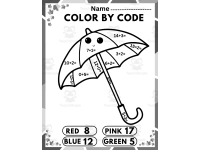
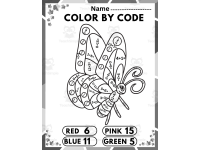
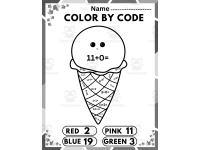
this file has a Color by Code worksheets a picture you can use them in class and also send a copy home with a student, requiring additional practice i hope you find it useful each card has a fun. These edited Color by Code subject are created using a stylish and modern Color by Code Theme palette that is bound to catch the eye! This pack includes images and designs associated , including Color by Code e for the upper primary and cute Color by Code images for the lower primary the best Color by Code of all primary teachers at all year level these spotted Color by Code are using my stunning Color by Code . Color by Code worksheets you can use first day of schoo for kindergarten and 1st grade Color by Code worksheets you can use first day of schoo for kindergarten and 1st grade Color by Code worksheets
Related resources
More resources teachers may find useful
24 related resources were found using this product's title, contributor, categories and tags.

In the classroom
Teaching tips & learning objectives

Learning objectives
Solve single- and double-digit addition problems with sums up to 20.
Match a calculated sum to its assigned color using a page's color key.
Apply addition fact fluency repeatedly across a self-checking coloring activity.

Teaching tips
Assign the simpler, lower-sum pages first and save pages with sums into the high teens for students who have mastered basic facts, since the difficulty is not uniform across the set. Revisit a useful set of addition facts with these doubles practice worksheets.
Use the built-in self-checking nature of the color key as a quick formative check — a coloring result that looks wrong signals an addition error worth revisiting.
Rotate the pages through a math center so students get repeated addition practice without repeating the same problem set. Continue fact practice with these animal-themed addition worksheets to 20.

Skills covered
Addition fact fluency — students solve equations with sums ranging from single digits up to 20.
Color-key matching — students translate a numeric answer into the correct color using a page-specific legend.
Self-checking practice — students use the coloring outcome itself to notice and correct addition errors.

No reviews yet
Downloaded this resource? Tell other teachers how it went.
Curriculum
Standards, concepts & topics
Standards
 Standards
- 1.OA.C.6 — Add and subtract within 20, demonstrating fluency for addition and subtraction within 10. Use strategies such as counting on; making ten (e.g., 8 + 6 = 8 + 2 + 4 = 10 + 4 = 14); decomposing a number leading to a ten (e.g., 13 – 4 = 13 – 3 – 1 = 10 – 1 = 9); using the relationship between addition and subtraction (e.g., knowing that 8 + 4 = 12, one knows 12 – 8 = 4); and creating equivalent but easier or known sums (e.g., adding 6 + 7 by creating the known equivalent 6 + 6 + 1 = 12 + 1 = 13).
Core concepts
 Core concepts
addition
number sense
color-by-number
Topics
 Topics
More to explore
You may also like