Reading Passages on Human Body Systems (PPT)



- Grades
- Grades 5–7
- Pages
- 196
- File type
- Microsoft PowerPoint
- Answer key
- Included


- Subject
- Science, Biology, Human Body, Reading Comprehension
- Topic
- Human body systems, Science passages
- Resource types
- Presentations
- Answer key
- Included
- Standards
- RI.5.1
Product description
From the author
Five editable PowerPoint lessons cover skeletal and muscular, circulatory and respiratory, nervous, digestive and reproductive systems. The decks contain 196 slides in total, including one hidden instruction slide per lesson.
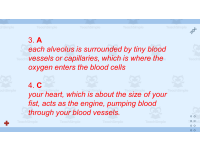
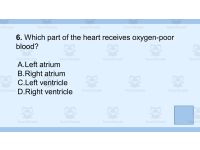
Each lesson combines a reading passage, ten multiple-choice questions and additional written tasks. Across the set, these include sequencing, classification, true-or-false and vocabulary activities. Answer slides include supporting passage quotations for comprehension questions and responses or examples for vocabulary work.
Select lessons for grade 5–6 science reading practice and preview the reproductive-system content for your course. The tasks support using text evidence; lesson length depends on the activities selected.
Related resources
More resources teachers may find useful
24 related resources were found using this product's title, contributor, categories and tags.


In the classroom
Teaching tips & learning objectives

Learning objectives
- Identify structures and functions described in the body-system passages.
- Sequence processes such as movement, circulation and digestion.
- Compare related science terms and classify information from a passage.

Teaching tips
Project the passage slides for whole-class or partner reading, then assign the question slides as independent work — the decks separate passage, questions, and keys cleanly
Use the sequencing tasks (arm movement, the path of blood, the nine-step digestion of a bite of apple) as exit tickets after discussing each passage
Preview Lesson 27 against your school's health-content guidelines before teaching: it covers fertilization, chromosomes, meiosis, and pregnancy directly

Skills covered
Science reading comprehension — students read multi-slide passages on each body system and answer ten multiple-choice questions drawn from passage lines.
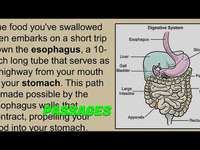
Process sequencing — students order the steps of muscle movement, blood circulation, and the nine-step digestion of a bite of apple.
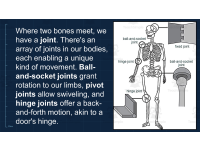
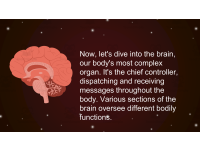
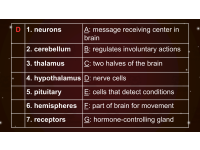
Classification and sorting — students assign joint types, brain parts, red versus white blood cell functions, and mitosis versus meiosis statements to the right category.
Good to know
Questions teachers ask about this resource
How do the lessons check understanding beyond multiple choice?
The lessons follow their ten multiple-choice questions with varied written formats: sequencing tasks (order the steps of arm movement, blood circulation, or digestion), classification tables for joints, brain parts, and blood cells, true/false checks, and short-answer items in the reproductive system lesson.
How is human reproduction handled in Lesson 27?
The passage explains reproduction factually: the four roles of the reproductive system, internal versus external fertilization, the zygote, chromosome counts, and meiosis versus mitosis. Pregnancy is mentioned matter-of-factly, so the lesson pairs naturally with a school-approved health or life-science unit.
Are the vocabulary activities the same in every lesson?
No — each lesson uses a different game: a crossword for the skeletal lesson, sentence match-ups and synonyms for the circulatory lesson, definition matching and antonyms for the nervous system, a magic square for the digestive system, and antonym matching plus sentence writing for the reproductive system.

No reviews yet
Downloaded this resource? Tell other teachers how it went.
Curriculum
Standards, concepts & topics
Standards
 Standards
- RI.5.1
Core concepts
 Core concepts
Human body systems
Reading comprehension
Anatomy
Science vocabulary
 Topics
Explore more
Categories this resource belongs to
Explore related searches
More to explore
You may also like