Types of Bridges Worksheet
- Grades
- Grades 3–4
- Pages
- 4
- File type
- Answer key
- Included


- Subject
- Science
- Topic
- Types of bridges, Bridge diagrams
- Resource types
- Worksheets
- Answer key
- Included
- Standards
- RI.3.1
Product description
From the author
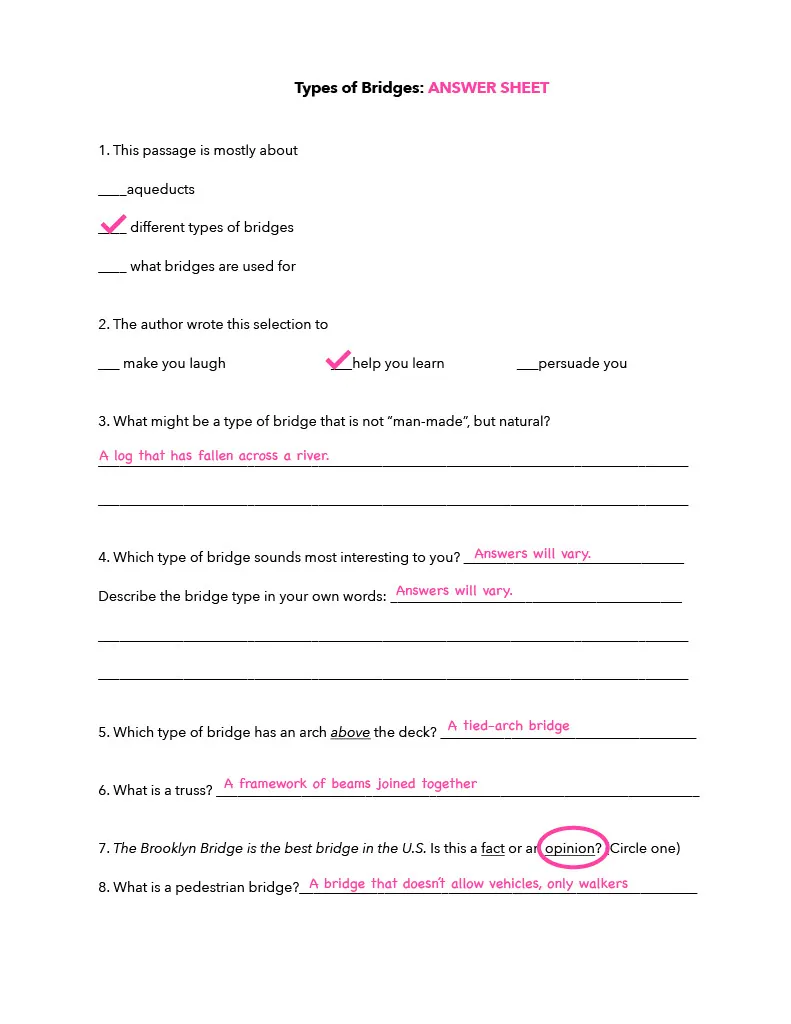
This resource is a Types of Bridges Worksheet.
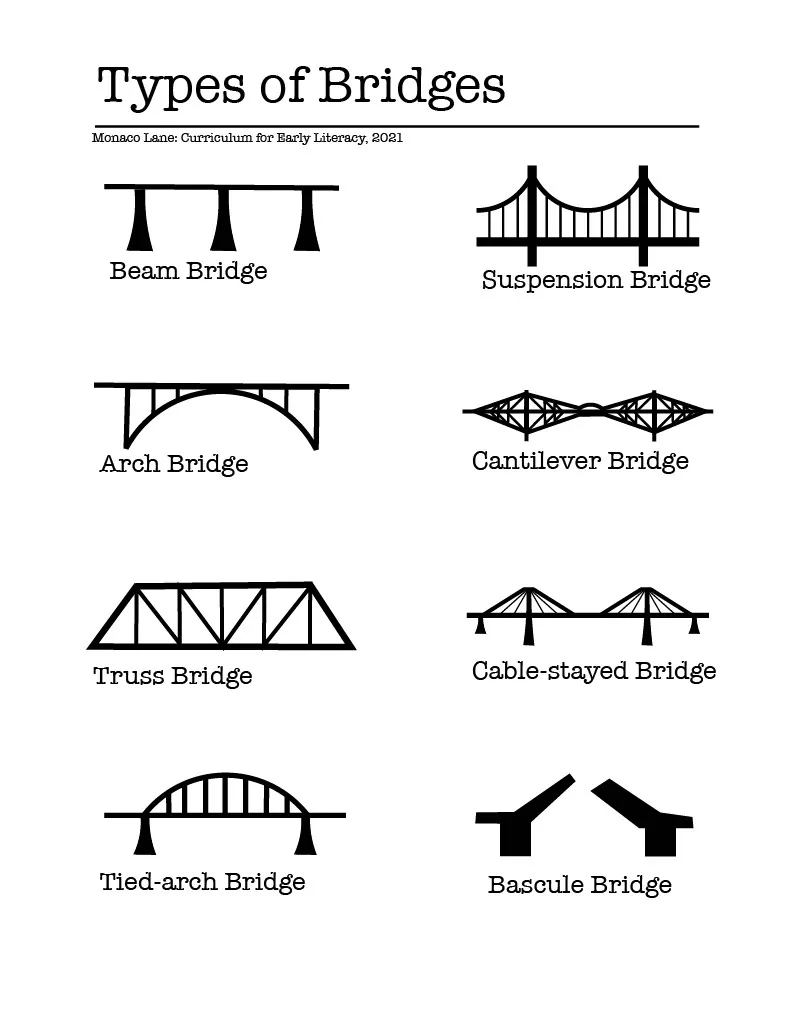
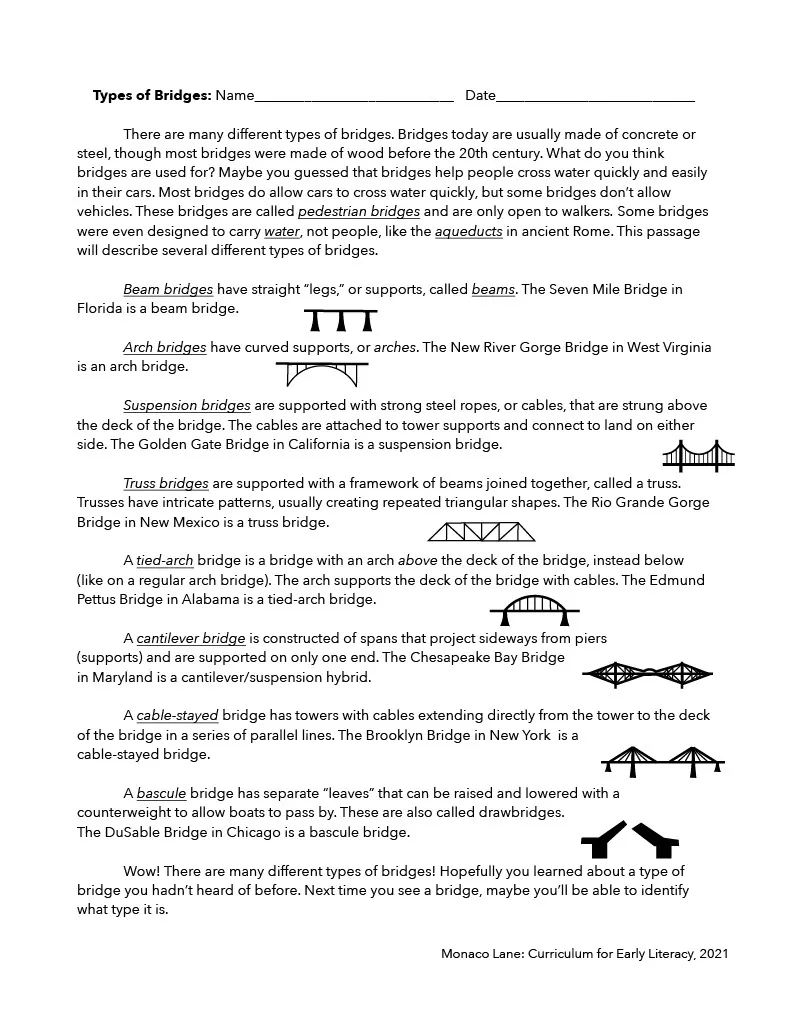
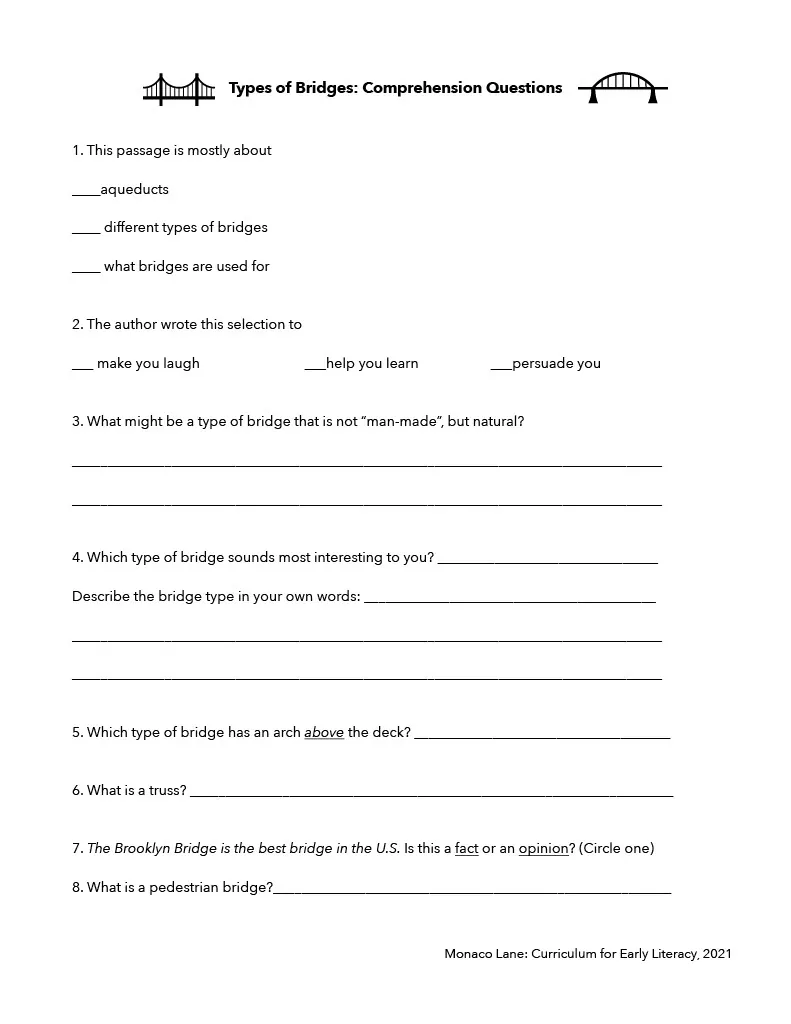
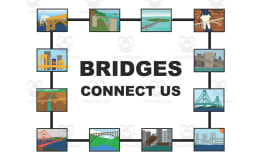
Students will see a poster with 8 types of bridges. They will read a 1-page passage about these bridges then they will answer 8 comprehension questions.
Answer key included.
Related resources
More resources teachers may find useful
24 related resources were found using this product's title, contributor, categories and tags.
In the classroom
Teaching tips & learning objectives

Learning objectives
Compare the bridge labels and structural features shown in the diagrams.
Identify the main idea and purpose of the passage.
Distinguish a statement of fact from an opinion.

Teaching tips
Compare the labeled diagrams before reading the passage.
Use the comprehension questions to discuss main idea, purpose and fact versus opinion.
As an extension, investigate a local bridge using a reliable reference.

Skills covered
Diagram comparison — identify visible beams, arches, cables and trusses.
Reading comprehension — identify the passage’s main idea and purpose.
Fact and opinion — explain why a preference about a bridge is an opinion.

No reviews yet
Downloaded this resource? Tell other teachers how it went.
Curriculum
Standards, concepts & topics
Standards
 Standards
- RI.3.1
Core concepts
 Core concepts
Bridges
Structures
Reading comprehension
Fact vs. opinion
 Topics
More to explore
You may also like